2026-10-26
Premium packaging has become an essential part of the product experience. A gift box is no longer viewed merely as a container used to transport an item from one place to another. It is often the first physical interaction between a customer and a brand, the setting for an unboxing moment, and a visible expression of product value. For jewelry, watches, electronics, business gifts, and seasonal products, the right box can communicate quality before the package is opened.
The 604 Square High-End Specialty Paper Gift Box with Yuppie Texture is designed for this purpose. It combines a clean square structure, art paper-coated cardboard, a leather-like specialty-paper surface, customizable dimensions, and flexible printing options. The result is a packaging solution intended for companies that need a refined appearance without sacrificing practicality, production flexibility, or environmental responsibility.
Manufactured by Zhejiang Shihao Gift Packaging Co., Ltd., the 604 series reflects the capabilities of an experienced paper gift packaging manufacturer. With more than 15 years of industry experience, a 20,000-square-meter production site, approximately 300 employees, professional design resources, and a reported average daily output of about 5,000 gift box sets, the company is positioned to support both customized projects and larger commercial orders.
This article examines the structure, material, appearance, applications, customization options, production strengths, quality considerations, and commercial advantages of the 604 gift box. It also explains why specialty paper packaging can help brands create a more memorable presentation while maintaining a practical and scalable supply chain.
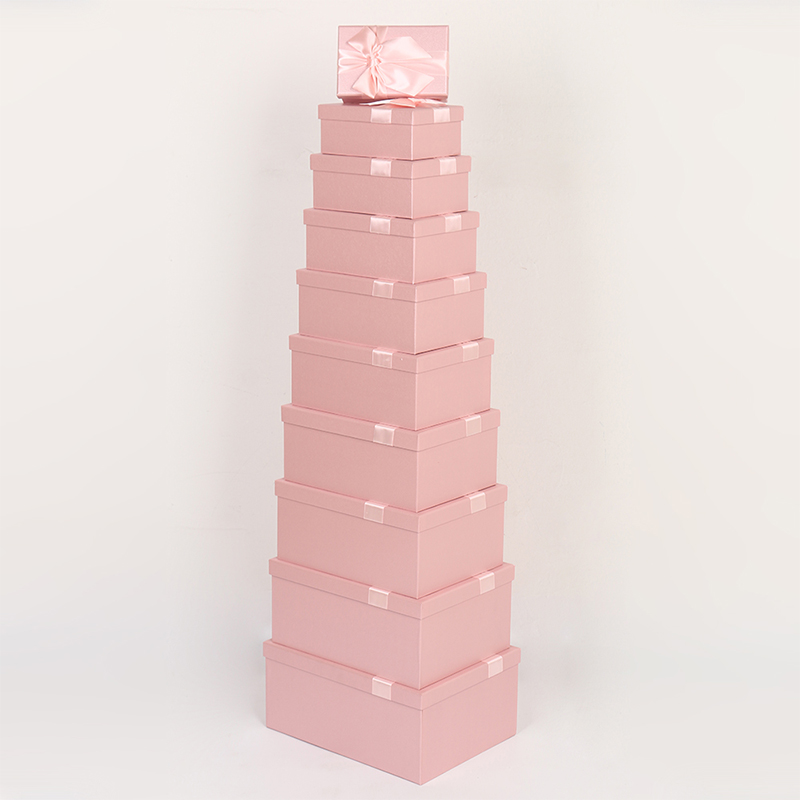
604 Square High-End Specialty Paper Gift Box with Yuppie Texture
The 604 gift box is a square, premium-grade specialty paper box created for high-end presentation and organized gift packaging. Its defining visual feature is the yuppie-textured paper covering. This material has a leather-like surface that provides a tactile finish and a distinctive visual character. Compared with ordinary smooth paperboard, the textured surface gives the box more depth and makes it feel more substantial in the hand.
The product belongs to the high-end specialty paper gift box category. It can also serve as a storage box, a gift container, or a presentation package for products and crafts. The design is intentionally versatile. Its square shape creates a balanced silhouette that works well for many product categories, while the premium exterior allows the box to fit formal, luxury, corporate, and holiday occasions.
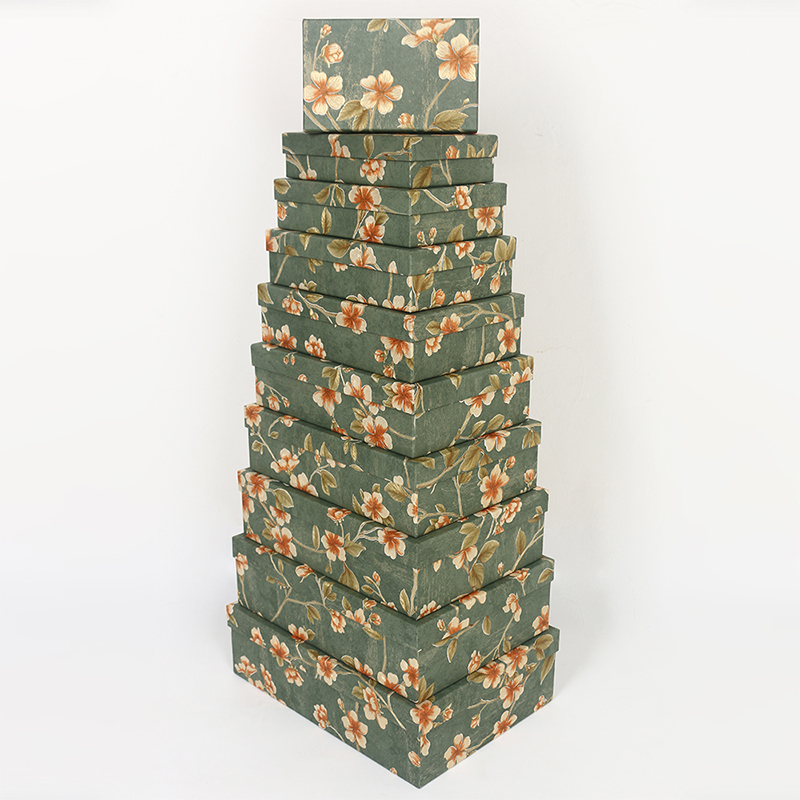
Available dimensions are listed from approximately 34 × 26 × 15.3 centimeters for size 1 to approximately 16.8 × 10.8 × 6.5 centimeters for size 10. This range allows buyers to select a box suitable for smaller accessories, ornaments, jewelry, and other compact products, as well as larger gift combinations. Custom sizes are also available when standard dimensions do not meet a product’s requirements.
The box can be produced in CMYK, Pantone colors, or customized colors. This gives brands control over the visual identity of the finished packaging. A company can select a color that matches its existing brand guidelines, create seasonal packaging, or use a special shade for a limited-edition product.
The 604 model is suitable for gift packaging, storage, gifts, and crafts. It can be used as a retail package, promotional box, corporate gift container, or reusable storage solution. The box’s appearance is formal enough for high-end products but adaptable enough for everyday premium merchandise.
Texture is one of the most effective ways to improve the perceived value of paper packaging. A printed design may communicate color, imagery, and brand messaging, but texture adds a physical dimension that customers can feel. When a customer touches a textured box, the packaging becomes an interactive part of the product experience.
The yuppie texture used for the 604 box has a leather-like visual and tactile effect. It can suggest refinement, durability, and understated luxury without relying on excessive decoration. This is particularly valuable for brands that want premium packaging with a restrained and professional appearance.
Many competing paper boxes use ordinary coated paper with a smooth, uniform finish. Smooth paper can be attractive and economical, but it may not create the same tactile distinction. The specialty surface of the 604 model gives buyers a way to differentiate their packaging on a retail shelf, in a corporate presentation, or during an unboxing experience.
Texture can also help packaging remain visually interesting when the design is simple. A square box with minimal printing may otherwise appear plain. A leather-like surface adds visual richness even when the artwork uses only a logo, a short message, or a single brand color. This makes the box suitable for brands that prefer quiet luxury rather than highly decorative packaging.
The textured paper also supports a broad range of product positioning. It can complement jewelry and watches, where elegance and precision are important. It can support electronics and accessories, where a clean and modern appearance is preferred. It can also work for business gifts, holiday products, handicrafts, and curated gift sets that need a polished outer presentation.
The product information identifies art paper-coated cardboard as the principal material structure. Cardboard provides the body and rigidity needed to protect packaged goods and maintain the box’s shape. Art paper on the surface supports high-quality printing and creates a finished exterior suitable for premium applications.
This combination offers a practical balance between presentation and performance. A box made only from thin paper may be visually attractive but can lack sufficient stiffness. A heavily rigid package may provide strength but add unnecessary weight or cost. Art paper-coated cardboard gives the 604 box a firm structure while retaining the visual flexibility associated with paper packaging.
The square format is another important structural advantage. A balanced square footprint can use internal space efficiently for many types of products. It works well for individual items, paired products, gift assortments, and layered presentations. Depending on the internal design, the box may also accommodate inserts, partitions, wrapped products, cards, or accessories.
Because the product is made from paper-based materials, it can be integrated into packaging programs that prioritize recyclable solutions. The supplied product description identifies the specialty paper material as environmentally friendly and recyclable. Actual recyclability may depend on coatings, adhesives, mixed materials, inserts, and local recycling systems, so buyers should confirm the final material configuration for a particular project.
Paperboard also provides advantages during printing and finishing. It can receive brand graphics, product information, decorative patterns, and corporate messaging. Buyers can choose CMYK printing for detailed imagery or Pantone colors for closer brand-color control. Custom color development may be considered when a distinctive visual identity is required.
The most immediate advantage of the 604 model is its specialty texture. Conventional gift boxes often depend on glossy lamination, matte lamination, or standard coated paper. These finishes are widely used and can be effective, but they may not provide a memorable tactile identity. The yuppie-textured exterior gives the 604 box a more distinctive surface and creates a stronger impression of quality.
Luxury packaging does not always require metallic foil, elaborate patterns, or large decorative elements. The 604 box uses a simpler square form and a textured exterior to achieve a refined appearance. This understated approach can be more suitable for brands that want a modern, professional, or premium image rather than an overly ornate design.
Some specialized boxes are designed for only one product type. A jewelry box may be too small for a gift set, while a large decorative box may not be appropriate for compact electronics or business gifts. The 604 range includes multiple listed sizes and allows custom dimensions, making it more adaptable to different product categories.
Generic packaging can limit a company’s ability to communicate its identity. The 604 box supports custom colors, professional design advice, and custom designs. This allows a buyer to develop packaging that reflects its logo, color palette, product positioning, and campaign theme. A customized box can function as part of the brand system rather than as a neutral container.
Brands increasingly consider the environmental profile of their packaging. The paper-based construction of the 604 box is aligned with the preference for recyclable and renewable material solutions. While responsible packaging requires attention to the complete material specification, paperboard generally gives buyers more flexibility than many plastic-heavy alternatives.
A high-end box is only useful for a commercial brand if it can be produced consistently and delivered at the required volume. The manufacturer’s reported daily capacity of about 5,000 gift box sets, together with its experienced workforce and production site, supports the needs of customers who require repeat orders or multiple packaging sizes.
Packaging development can be challenging for companies that do not have an internal structural or graphic design team. The manufacturer offers professional advice and has an in-house design team. This can help buyers refine dimensions, artwork, construction details, and production files before manufacturing begins. Design support can reduce preventable errors and improve the transition from concept to finished packaging.
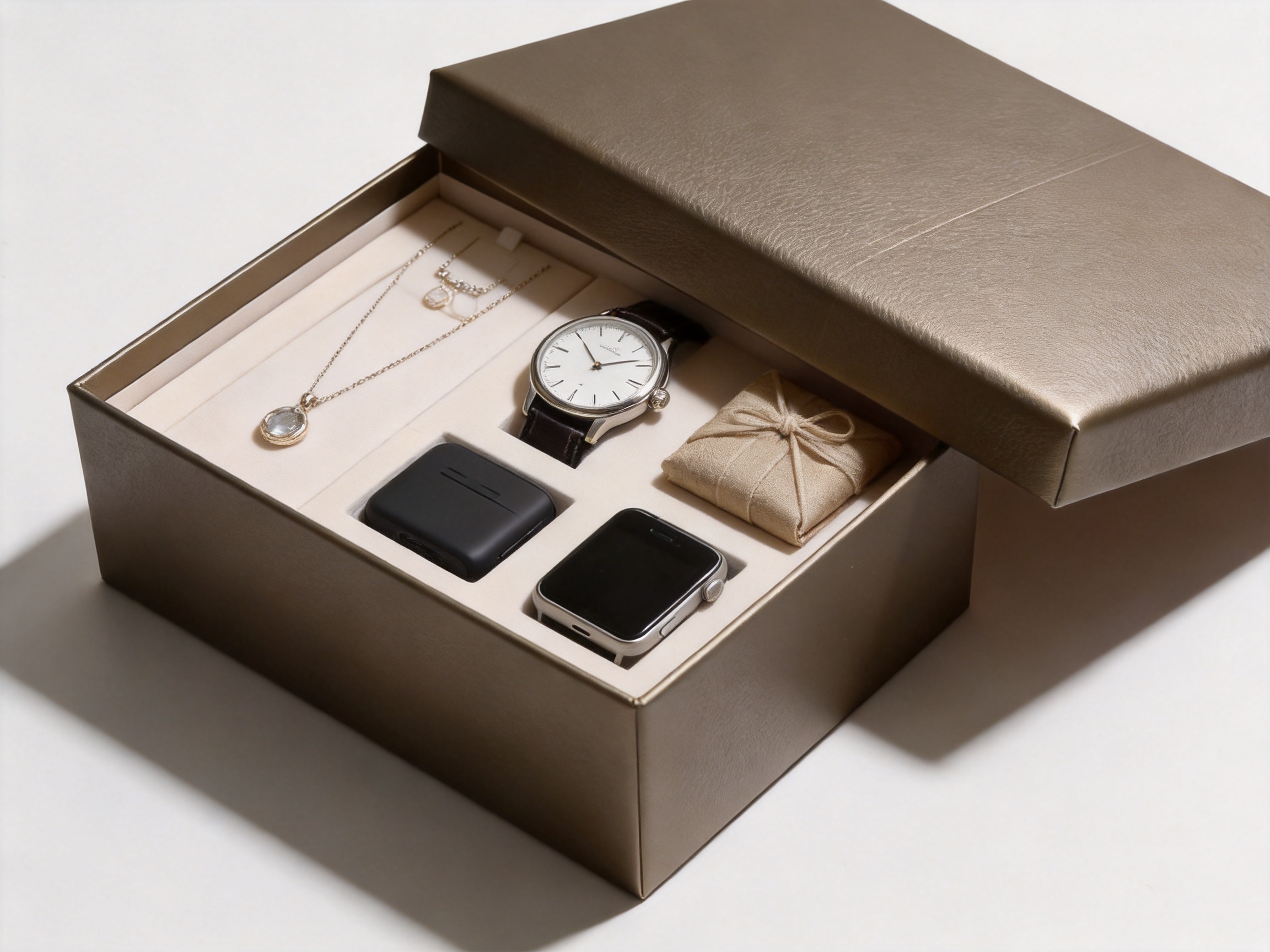
The 604 gift box is supported by the manufacturing resources of Zhejiang Shihao Gift Packaging Co., Ltd. The company is described as an export-oriented manufacturer specializing in the production, research and development, and sales of paper gift packaging boxes. Its product range includes kits, storage boxes, folding boxes, jewelry boxes, and gift boxes.
The company has operated for more than 15 years. This length of experience is important in a packaging project because production quality depends on more than the appearance of a sample. A capable manufacturer must understand material behavior, paper wrapping, cutting, folding, gluing, printing, color consistency, packing, and shipment preparation.
The reported 20,000-square-meter facility provides space for production operations, material handling, quality inspection, development, and finished-goods storage. Approximately 300 employees support the company’s activities. This scale suggests that the manufacturer is equipped to handle more than small, isolated projects and can support ongoing orders for customers in different regions.
The manufacturer reports an average daily production capacity of approximately 5,000 sets of gift boxes. Capacity does not replace quality control, but it is a valuable advantage for brands that need dependable replenishment. Retail campaigns, holiday sales, corporate programs, and new product launches may all require packaging to be available within a defined schedule.
Research and development is another stated strength. The company updates dozens of products weekly and maintains its own design team. This indicates an emphasis on product development rather than relying solely on old packaging formats. For buyers, access to a design-oriented manufacturer can make it easier to explore new structures, textures, seasonal styles, or product-specific solutions.
The manufacturer also identifies BSCI and FSC certifications. BSCI is associated with social compliance assessment, while FSC relates to responsible forest-based material sourcing when the specific material is covered by the relevant certification chain. Buyers should request current certificates and confirm their applicability to the materials and production order. Even so, these credentials demonstrate the company’s attention to recognized business and sourcing standards.
A high-end paper gift box normally moves through several controlled stages. The exact process can vary according to the selected structure, material, artwork, and finishing requirements, but the following sequence illustrates the technical work involved in producing a box like the 604 model.
The process begins with a discussion of the product to be packaged. Buyers typically provide the product’s length, width, height, weight, quantity per box, desired orientation, and any accessories that must be included. The manufacturer can then recommend a suitable box size, structural format, and internal arrangement.
At this stage, the buyer should also confirm the intended application. A presentation box for a luxury watch may require a different internal support system from a holiday gift set. A storage box may prioritize repeated opening and closing, while a promotional gift box may prioritize appearance and efficient assembly.
Structural design determines the box’s external dimensions, wall construction, lid relationship, folding or assembly method, and internal space. The square format of the 604 model provides a strong starting point, but the final structure can be adapted to the product and market requirements.
The in-house design team can offer professional advice during this stage. Experienced structural development helps prevent problems such as an overly tight fit, excessive movement inside the package, weak corners, an unsuitable lid, or dimensions that create unnecessary material waste.
Once the structure is established, the artwork can be prepared for production. The supplied information lists Artificial Intelligence and Core Drawing as accepted design file formats, referring to common vector-based design workflows. Vector artwork is useful for logos, typography, line drawings, and patterns because it can be scaled without losing edge clarity.
Artwork preparation should include accurate dieline placement, bleed areas, safe zones, color specifications, and the location of logos or other design elements. The buyer should approve a final proof before mass production begins. This is especially important when precise brand colors, small text, or multiple panels are involved.
The material selection stage involves confirming the cardboard base, art paper surface, textured specialty paper, color, thickness, and any additional finishing. The selected material must be appropriate for the intended box size and product weight. It should also support the required printing and covering process.
The yuppie texture is a key part of the product’s identity. Buyers should evaluate physical samples before final approval because texture, color, and surface feel are best judged directly. A sample can also help confirm how a printed logo or design appears on the specialty paper.
Printing may use CMYK, Pantone colors, or custom colors depending on the design. CMYK is suitable for photographic images, gradients, and complex artwork. Pantone colors are useful when a brand needs a controlled spot color. Custom colors may be developed for a special campaign or a distinctive brand palette.
Color management is important because the same color can appear different depending on the paper surface, texture, coating, lighting, and viewing conditions. The textured exterior may scatter light differently from a smooth surface. A physical proof or approved color standard can therefore be valuable before the full production run.
After printing and material preparation, paperboard components are cut and creased according to the structural design. Accurate die-cutting helps ensure that panels align correctly. Creasing supports clean folding and reduces the likelihood of uneven edges or visible cracking.
For premium packaging, dimensional accuracy matters because small variations can affect the fit of the lid, the alignment of the surface paper, and the overall appearance of the finished box. Proper tooling and process control are essential for producing consistent results across a larger order.
The printed or textured paper is mounted onto the cardboard structure, and the box components are formed into the final shape. Adhesive application must be controlled so that the surface remains neat and securely attached. Excess adhesive, uneven corners, bubbles, or lifted edges can reduce the perceived quality of a premium box.
Assembly may be completed manually, mechanically, or through a combination of both methods, depending on the box structure and order requirements. Skilled workers are particularly important for specialty packaging because textured surfaces and carefully aligned panels require attention to detail.
Finished boxes should be inspected for dimensions, color, surface defects, corner quality, adhesion, structural stability, and overall appearance. Samples may be checked during production as well as after completion. Inspection helps identify issues before the boxes are packed for shipment.
The product information lists 10 pieces per set and 4 sets per carton, with carton dimensions of approximately 54 × 35 × 33 centimeters. Buyers should confirm the exact packing configuration for the selected size and order because packing details can vary according to the product model and shipping requirements.
Customization is central to the value of a premium gift box. The 604 model can be adapted in several ways, beginning with dimensions. The listed size range provides a selection of standard options, while custom sizes allow the box to be engineered around a specific product.
A close product fit can reduce movement and improve presentation. It can also prevent a buyer from paying for unnecessary empty space. For gift sets, however, additional space may be required for multiple products, tissue paper, cards, ribbons, or protective inserts. The best dimension is therefore determined by both the product and the intended presentation.
Color is another major customization area. Brands may select CMYK printing for detailed visuals, Pantone colors for consistent identity, or customized colors for a special collection. A brand can use a restrained neutral shade for a luxury line, a bright seasonal color for holiday products, or a corporate color for business gifts.
Design content may include a logo, company name, product name, pattern, illustration, message, or care information. The design can be placed on the lid, sides, base, inner panels, or an attached card, depending on the structure. The manufacturer’s design team can help determine how the artwork should be distributed across the box.
Additional finishing can be discussed according to the design and budget. Potential options for premium paper packaging may include decorative printing, special coatings, foil effects, embossing, debossing, ribbons, inserts, or paper sleeves. Any additional finish should be tested with the selected specialty paper to ensure that it produces the intended result.
Customization also includes application-specific internal packaging. Jewelry may need a soft insert or dedicated cavity. Watches may require a support cushion. Electronics may need partitions and protective layers. Gift sets may require compartments to keep individual items organized. The outside box creates the first impression, while the interior determines much of the practical user experience.
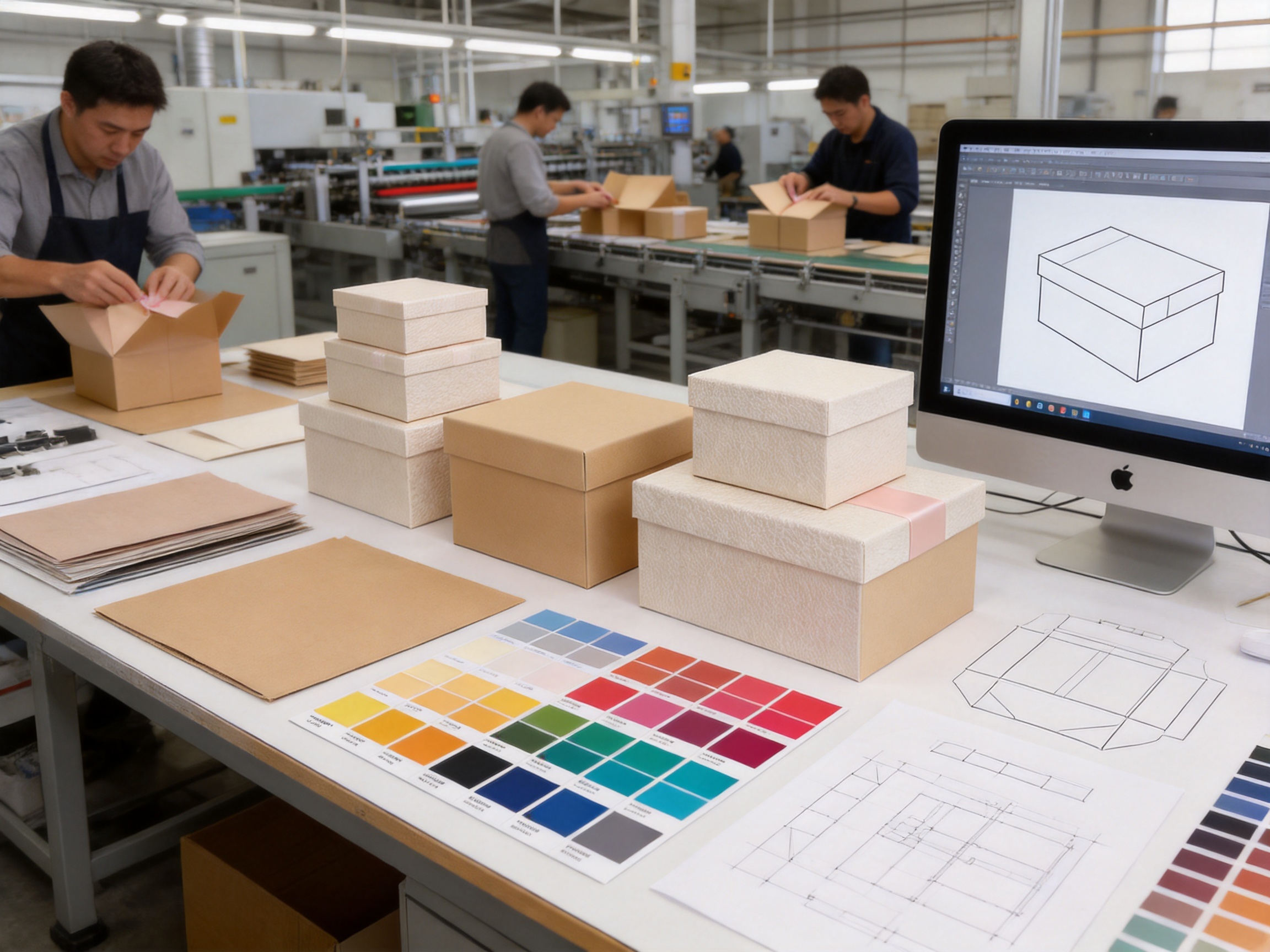
Jewelry packaging benefits from an elegant and tactile exterior. The 604 box can provide a sophisticated setting for bracelets, necklaces, earrings, rings, and curated jewelry sets. A customized insert can keep individual pieces secure and create an organized presentation. The textured exterior reinforces the perception that the contents are valuable and carefully selected.
Watches often require packaging that feels precise, durable, and premium. The square format can accommodate a watch support, instruction card, warranty information, and other accessories. A carefully printed exterior can reinforce the watch brand’s identity while the specialty texture adds a more substantial hand feel.
Small electronics, personal devices, cables, adapters, and technology accessories can be presented in customized paper boxes. A clean square design complements modern products, especially when paired with restrained graphics and a coordinated color scheme. Interior partitions or supports can be developed according to the product’s shape.
Corporate gifts require packaging that represents professionalism. A textured box with a company logo and carefully selected brand color can create a polished presentation for clients, employees, business partners, and event guests. The 604 box can be used for individual gifts or coordinated gift sets.
Holiday packaging often benefits from color customization and short production cycles. The box can be adapted with seasonal graphics, festive colors, printed greetings, or limited-edition artwork. Because the structure is suitable for various product sizes, businesses can create a family of coordinated boxes for different holiday gift combinations.
Handmade products and craft items often need packaging that reflects their individuality. A specialty paper surface can complement artisan products, candles, small decorative objects, stationery, and curated craft collections. The box can serve both as a presentation package and as reusable storage after the gift has been opened.
The square box can also be used for stationery storage and other organized storage applications. Its firm paperboard structure can hold cards, writing accessories, small office items, craft supplies, or collections of related products. A reusable storage function can extend the useful life of the package beyond the initial purchase.
Quality in premium packaging includes appearance, structure, material consistency, and delivery reliability. Buyers should evaluate samples for surface feel, corner formation, color reproduction, lid fit, and overall stability. They should also confirm whether the finished box is suitable for the weight and dimensions of the intended product.
Consistency is particularly important for repeat orders. A brand may place an initial order for a product launch and later reorder the same box for replenishment. The manufacturer should retain approved specifications, color references, artwork, and structural details so that future production can match the original order as closely as possible.
Sustainability should be assessed across the complete package rather than through one material description alone. Paperboard and specialty paper can support recyclable packaging objectives, but buyers should consider coatings, adhesives, plastic inserts, magnets, ribbons, and mixed-material components. Simplifying the package can make recovery easier in some markets.
The manufacturer’s reported FSC and BSCI certifications may be relevant to buyers with responsible sourcing requirements. However, certification status should be checked during procurement, including the certificate scope, validity period, and applicability to the relevant order. Transparent documentation helps companies make accurate sustainability claims.
Export experience is another supply chain advantage. The company’s products are reported to be exported to Europe, the United States, the Middle East, and other regions. International experience may support better communication regarding packaging standards, documentation, carton packing, shipping schedules, and customer requirements.
Delivery time is listed as 7 to 45 days or according to customer requirements. The actual schedule may depend on design approval, sample development, material availability, order quantity, printing and finishing complexity, production capacity, and shipping arrangements. Buyers should establish a written production schedule before confirming a launch date.
The listed minimum order quantity is 300 sets. This quantity may be appropriate for brands testing a new packaging design, launching a product, or supplying a limited promotional program. Companies with larger distribution networks can discuss repeat production, multiple sizes, or scheduled orders according to their sales plans.
Before placing an order, buyers should provide accurate product dimensions and clarify whether the listed dimensions refer to internal or external measurements. They should also state the number of products per box, whether inserts are required, the desired opening experience, and the conditions under which the packaging will be transported and displayed.
Packaging and carton information should be confirmed because the supplied specification contains field labels that appear to be translated or misaligned. It lists 10 pieces per set, 4 sets per carton, and carton dimensions of approximately 54 × 35 × 33 centimeters. These details should be verified against the final purchase order, especially when freight cost and container planning are important.
Artwork approval should be documented. The buyer should check spelling, logo proportions, color references, product information, legal marks, barcode placement, and the orientation of all panels. Once mass production begins, changes may increase cost or affect the delivery schedule.
Sampling is strongly recommended for custom projects. A pre-production sample lets the buyer assess the textured paper, box dimensions, internal fit, color, printing, and overall presentation. For large or long-term programs, the approved sample can serve as a reference for future production runs.
Commercial buyers may also benefit from planning a packaging family. For example, a company could develop several sizes within the 604 range, using the same texture and color system across jewelry, accessories, gift sets, and seasonal products. This creates a consistent brand experience while preserving the flexibility to package different items correctly.
Choosing a packaging manufacturer is not only a decision about price. It is a decision about communication, technical support, repeatability, quality assurance, production capacity, and problem resolution. A supplier with experience in several categories of paper packaging is more likely to understand how different product requirements affect box design.
Zhejiang Shihao Gift Packaging Co., Ltd. combines product development, manufacturing, design support, and export experience. Its product portfolio includes folding boxes, storage boxes, jewelry boxes, kits, and gift boxes. This range can help the company transfer knowledge between different packaging formats and recommend practical solutions for new projects.
The company’s in-house design team is useful for buyers who have a visual concept but need help converting it into a manufacturable box. The design process must balance appearance with paper grain, folding direction, panel alignment, material usage, assembly method, and packing efficiency. Professional input at an early stage can prevent costly changes later.
Production scale also matters when packaging is part of a recurring business. A brand may need a small initial order, followed by larger replenishment orders as sales increase. A manufacturer with established capacity can make this transition more manageable, provided that specifications and quality standards remain controlled.
Finally, a manufacturer with international customers may be familiar with the practical requirements of export packaging. This includes cartonization, protective packing, production scheduling, and communication across time zones and languages. These operational capabilities can be as important as the visual quality of the box itself.
To make the most of the yuppie texture, brands should consider designs that allow the surface to remain visible. A small centered logo, restrained typography, or a single-color print can emphasize the leather-like material. Overly crowded graphics may hide the texture and reduce the understated character of the box.
Color contrast should be selected carefully. Dark printing on a light textured surface can create a clear, traditional appearance, while metallic or light printing on a dark surface may create a more luxurious effect. The final result should be checked on an actual material sample because texture influences how color and fine details appear.
For corporate gifts, the lid can carry the company logo while an inner card communicates a thank-you message or event theme. For retail products, the exterior may use a product name and minimal visual identity, with additional product information placed inside or on an accompanying label.
For seasonal collections, the same box structure can be reused with different colors and artwork. This may reduce development time while allowing a brand to create new visual editions. A coordinated set of sizes can also help maintain a consistent appearance across multiple products.
Interior design should receive the same attention as the exterior. A secure insert, clean compartment layout, or neatly folded tissue arrangement can make the unboxing experience feel intentional. The interior should hold the product in place without making removal difficult.
Before requesting a quotation, the buyer should prepare product dimensions, weight, product quantity, preferred box style, estimated order quantity, target delivery date, artwork requirements, color references, and any interior protection needs.
The buyer should ask the manufacturer to confirm the material construction, texture availability, box dimensions, printing method, finishing options, sample cost, minimum order quantity, production lead time, packing method, carton dimensions, and shipping terms.
For sustainability-related projects, the buyer should request information about paper sourcing, applicable FSC documentation, coatings, adhesives, inserts, and the recyclability of the final configuration in the target market.
For repeat orders, the buyer should establish a reference sample, approved color standard, artwork file, tolerance requirements, inspection method, and process for handling future changes. These details support consistency and reduce misunderstandings.
The listed material is art paper-coated cardboard, combined with a yuppie-textured specialty paper surface. This construction provides a firm paperboard body and a leather-like exterior appearance.
The yuppie texture has a leather-like tactile and visual effect. It adds surface depth and a more premium hand feel than many standard smooth paper finishes.
The box is suitable for jewelry, watches, electronics, gifts, crafts, business gifts, holiday products, and stationery or storage applications. The final suitability depends on the selected size and any required interior insert.
Yes. The product is listed in multiple sizes, ranging from approximately 34 × 26 × 15.3 centimeters to approximately 16.8 × 10.8 × 6.5 centimeters, and custom dimensions can be developed for specific products.
Yes. Available color options include CMYK, Pantone colors, and customized colors. Buyers should approve a color proof or physical sample when exact color consistency is important.
Yes. The manufacturer has an in-house design team and offers professional advice. Custom designs are welcome, and the listed design file formats include Artificial Intelligence and Core Drawing files.
The product description identifies the specialty paper material as environmentally friendly and recyclable. The final recyclability depends on the complete construction, including coatings, adhesives, inserts, and other components, as well as local recycling facilities.
The listed minimum order quantity is 300 sets. Buyers should confirm the quantity for the exact customization, size, and production configuration.
The listed delivery time is 7 to 45 days or according to customer requirements. The final schedule depends on design approval, sampling, materials, order quantity, finishing, and shipping arrangements.
The supplied information lists 10 pieces per set and 4 sets per carton, with carton dimensions of approximately 54 × 35 × 33 centimeters. Because the original specification contains translated or mixed field labels, buyers should confirm the final packing details before ordering.
Yes. The company is described as an export-oriented manufacturer, and its products are reported to be exported to Europe, the United States, the Middle East, and other regions.
The company is described as having BSCI and FSC certifications. Buyers should request current certification documents and verify their scope and applicability to the specific project.
The 604 Square High-End Specialty Paper Gift Box with Yuppie Texture is a versatile premium packaging solution for brands that want more than a standard paper container. Its square structure provides a balanced and adaptable format, while the leather-like specialty surface creates a distinctive tactile experience. Art paper-coated cardboard contributes rigidity, printability, and a professional finish.
The box is suitable for jewelry, watches, electronics, business gifts, holiday products, crafts, stationery, and storage. Its range of standard dimensions, custom sizing capability, CMYK and Pantone color options, and professional design support make it adaptable to different products and branding programs.
Its main competitive advantage is the combination of understated luxury, tactile differentiation, customization, and scalable paper-based manufacturing. Rather than depending solely on elaborate decoration, the design uses material character and balanced structure to create a premium impression.
The manufacturing strengths behind the product further support its commercial value. More than 15 years of experience, a 20,000-square-meter facility, approximately 300 employees, an in-house design team, reported daily capacity of about 5,000 sets, export experience, and stated BSCI and FSC certifications provide a foundation for customized and repeat packaging projects.
For buyers, the best results will come from confirming dimensions, materials, artwork, color standards, inserts, packing details, delivery schedules, and sustainability requirements before production. With careful planning and sample approval, the 604 box can become a reliable part of a brand’s product presentation and a lasting element of the customer’s unboxing experience.
1. Product specification for the 604 Square High-End Specialty Paper Gift Box with Yuppie Texture, supplied by the manufacturer.
2. Company profile and manufacturing information for Zhejiang Shihao Gift Packaging Co., Ltd., including facility size, workforce, product range, export markets, and production capacity.
3. Packaging material and design information covering art paper-coated cardboard, specialty paper textures, CMYK printing, Pantone colors, custom colors, and structural customization.
4. Forest Stewardship Council. General principles for responsible forest-based material sourcing and chain-of-custody practices.
5. Business Social Compliance Initiative. General guidance on social compliance assessment and responsible supply-chain practices.
6. General packaging design principles concerning structural fit, material selection, print preparation, proof approval, quality inspection, and carton packing.
7. General recycling and sustainable packaging guidance concerning paperboard, coatings, adhesives, inserts, mixed materials, and local recovery systems.
Recommended Products

Contact Us

No. 15, Xiayang Road, Huangzhai Town, Jinhua, Zhejiang, China

(+86) 579-84230069

(+86) 13085675766


Products

Gift Box Packaging Manufacturer
 English
 Français
 Español
 عربى