2026-07-02
In seasonal gift packaging, few shapes communicate emotion as directly as the heart. A heart-shaped candy box is more than a container; it is a visual message of affection, care, and celebration. The 1001 Decorative Cardboard Valentine’s Day Heart-Shaped Candy Box is designed for brands, wholesalers, retailers, and gift suppliers that want packaging with strong shelf appeal, practical durability, and meaningful presentation value. With a romantic Valentine’s Day theme, decorative cardboard construction, multiple available sizes, and customizable colors, this product offers a refined solution for candy, chocolate, jewelry, small toys, cosmetics, accessories, and other special gifts.
The product is especially suitable for Valentine’s Day sales campaigns, but its use is not limited to one holiday. Because the heart shape represents love, appreciation, friendship, and celebration, the box can also be used for birthdays, anniversaries, wedding favors, proposal gifts, Mother’s Day gifts, boutique retail packaging, and promotional gift sets. Its framed heart-shaped structure gives the packaging a memorable look, while the sturdy cardboard material helps protect the contents during handling, storage, display, and transportation.
For modern packaging buyers, appearance alone is not enough. A successful gift box must combine emotional design, material reliability, cost efficiency, production consistency, and customization flexibility. This is where the 1001 heart-shaped candy box stands out. It is built to support both attractive consumer presentation and practical commercial distribution. With ten available sizes, a minimum order quantity suitable for wholesale planning, and the ability to customize dimensions and colors, it gives businesses the freedom to match packaging with different product lines and market positioning.
1001 Decorative Cardboard Valentine's Day Heart-Shaped Candy Box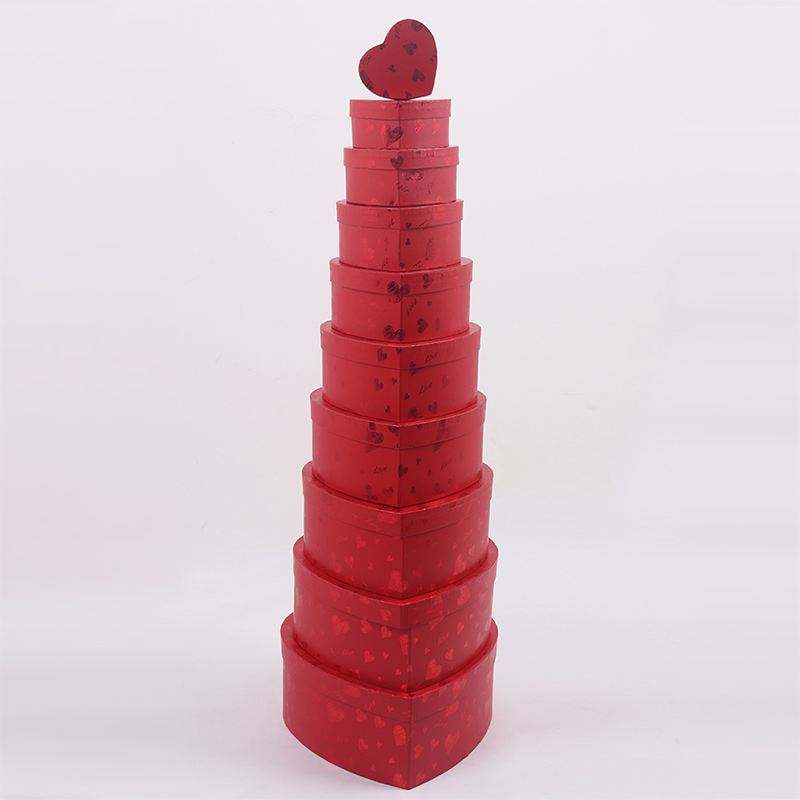
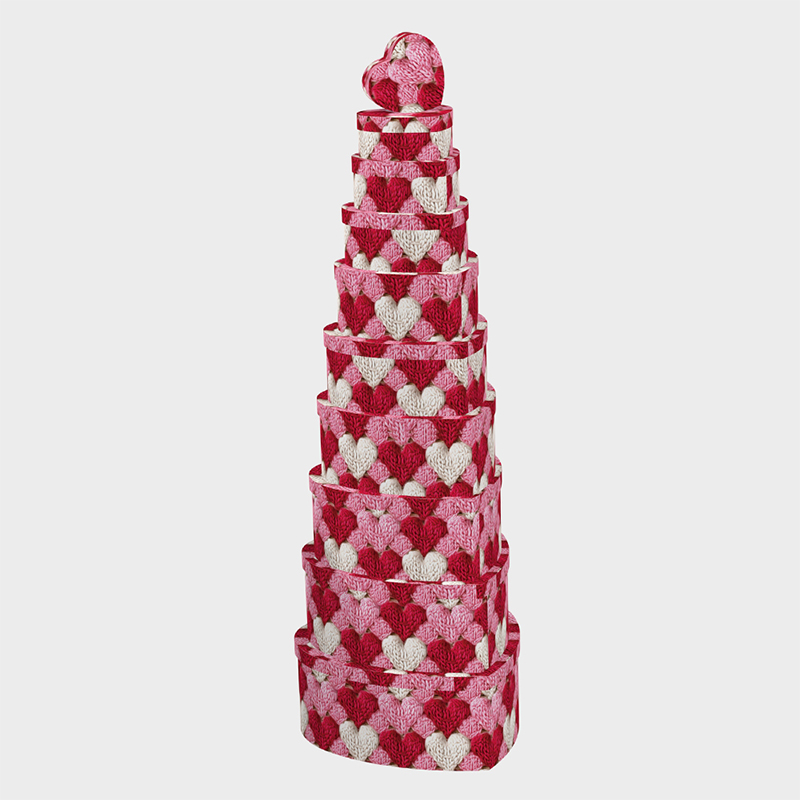
The 1001 Decorative Cardboard Valentine’s Day Heart-Shaped Candy Box is a premium paper gift packaging product made from decorative cardboard. Its primary feature is the heart-shaped framed design, which immediately connects the package with romance and celebration. The box is intended for sweets, candy, chocolates, jewelry, toys, and various small gifts, making it highly versatile for seasonal and everyday retail applications.
The available size range is designed to accommodate gifts of different dimensions. The largest model is approximately 33 x 32.3 x 14 cm, while the smallest is approximately 11 x 10 x 5 cm. This range allows buyers to build complete packaging sets, create tiered gift assortments, or offer multiple product options under one visual style. A retailer, for example, may use the smaller size for single chocolate selections or jewelry items, while using larger sizes for assorted candy collections, plush gifts, or combined holiday gift sets.
The box combines decorative appearance with protective performance. Cardboard is a practical material for gift packaging because it is lightweight, printable, easy to shape, and sufficiently rigid when properly engineered. Compared with thin paper wraps or flimsy plastic containers, a well-made cardboard box provides better structural support and a more premium tactile experience. It also supports sustainable packaging goals because paper-based materials can be recyclable and can align with growing consumer preference for environmentally responsible choices.
| Item Number | 1001 |
| Product Type | Decorative cardboard heart-shaped candy gift box |
| Primary Use | Valentine’s Day candy, chocolate, jewelry, toys, and small gifts |
| Available Sizes | Ten sizes, approximately from 33 x 32.3 x 14 cm to 11 x 10 x 5 cm |
| Minimum Order Quantity | 500 sets |
| Material | Decorative cardboard |
| Customization | Size and color customization available |
| Packaging Reference | 64 x 34 x 45 cm carton reference, 6 sets in cardboard boxes |
Gift packaging has a direct influence on how consumers perceive value. A candy product placed in ordinary packaging may be viewed as a simple snack, while the same candy presented in a heart-shaped decorative box can become a romantic gift. This transformation is central to the commercial value of Valentine’s Day packaging. The package increases the emotional meaning of the product and helps justify a higher perceived value at retail.
The heart shape is universally recognizable. It requires no explanation and carries a strong emotional association. For Valentine’s Day, this symbol is especially powerful because it immediately matches consumer expectations. Buyers often shop quickly during seasonal periods, and packaging that clearly communicates romance can help a product stand out on crowded shelves. A heart-shaped box makes the gift easy to understand, easy to choose, and easy to present.
In online retail, heart-shaped packaging also has important advantages. Product photos with distinctive shapes are more likely to attract attention than standard rectangular boxes. When customers browse marketplace listings or brand websites, a heart-shaped gift box can create an instant visual difference. Its appearance supports social sharing, unboxing photos, and holiday campaign imagery. For brands competing in digital channels, this visual distinction can contribute to stronger engagement and better conversion potential.
The 1001 heart-shaped candy box offers several advantages when compared with conventional candy packaging, generic gift boxes, or low-cost seasonal containers. These advantages are rooted in design, material choice, manufacturing flexibility, and commercial usability.
Many competitor packages rely only on printed Valentine’s Day graphics placed on ordinary box shapes. While printing can be attractive, it does not provide the same immediate emotional impact as a three-dimensional heart-shaped structure. The 1001 box integrates the symbol of love into the physical form of the package. This makes the packaging more memorable and better suited for romantic gifting.
The framed heart design also adds depth and refinement. Instead of appearing flat or disposable, the structure gives the box a decorative presence. This is valuable for retailers because customers often evaluate gift packaging based on whether it feels special enough to give directly. A box that already looks ceremonial reduces the need for extra wrapping and helps improve the overall customer experience.
Some competitor packaging is designed only for one product, such as chocolate trays or single-size candy containers. The 1001 model is more flexible. It can be used for candies, sweets, jewelry, small toys, accessories, gift sets, and boutique items. The availability of ten sizes further increases its adaptability. Businesses can use one design language across multiple product lines, creating a consistent seasonal presentation without developing separate packaging for each item.
This versatility is especially important for wholesalers and distributors. A packaging product that serves multiple customers and categories reduces inventory risk. Retailers can purchase one family of boxes and apply it to different gift combinations throughout the season. The product’s use beyond Valentine’s Day also extends its commercial life, making it suitable for anniversaries, birthdays, weddings, and romantic promotions.
Low-cost seasonal packaging is often made from thin paperboard or light plastic that may deform easily. The 1001 box uses sturdy decorative cardboard designed to protect candies and gifts from crushing and damage during normal handling. This is important for long-distance transportation, warehouse storage, retail display, and consumer carrying.
Protection is not only a logistics concern; it also affects brand reputation. If a gift arrives dented, collapsed, or damaged, the customer’s emotional experience is weakened. A stronger cardboard structure helps maintain the intended appearance from factory to shelf to final recipient. This reliability is particularly valuable for export orders and multi-stage distribution networks.
Many ready-made Valentine’s Day boxes look similar, which can make it difficult for brands to differentiate themselves. The 1001 product supports customization in size and color, allowing businesses to adapt the packaging to brand identity, target market preferences, and product positioning. A luxury chocolate brand may choose rich red, burgundy, gold, or soft pink tones, while a youthful candy brand may prefer brighter color combinations.
Customization helps packaging become part of the brand story rather than a generic container. Color selection, surface decoration, insert planning, and sizing all influence how the consumer interprets the gift. For businesses that compete on presentation, these details can create a meaningful advantage.
Consumers increasingly prefer packaging that avoids unnecessary plastic and supports recyclability. Cardboard-based gift boxes are well aligned with this trend. While actual recyclability depends on local recycling systems and the final material combination, paper-based packaging generally offers a stronger environmental message than single-use plastic alternatives. For brands building sustainable packaging strategies, decorative cardboard provides a practical and consumer-friendly foundation.
The manufacturer’s FSC certification further strengthens confidence in responsible material sourcing practices. In competitive markets, environmental credentials can support buyer trust, especially among European and North American customers who often ask suppliers to meet responsible sourcing and compliance expectations.
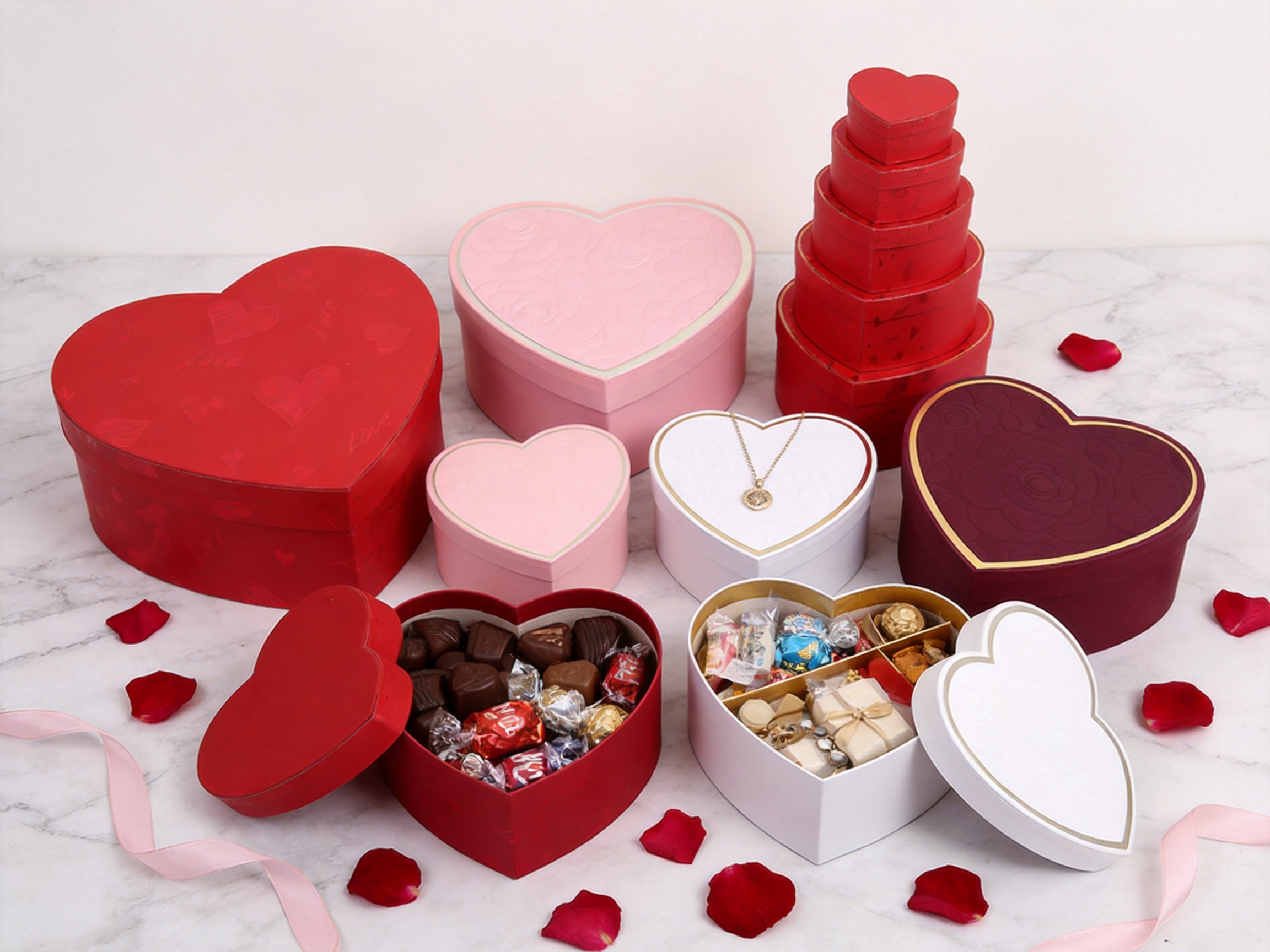
The performance of a gift box depends on more than surface appearance. Material thickness, board stiffness, cutting accuracy, folding precision, bonding quality, and finishing consistency all contribute to the final result. Decorative cardboard is selected because it balances strength, printability, weight, and cost. It can be shaped into decorative structures while still maintaining enough rigidity for protective packaging.
For candy and chocolate packaging, structural stability is particularly important. Candies may be delicate, individually wrapped, or arranged in compartments. If the outer box bends or compresses, the inner presentation can be damaged. A sturdy cardboard shell helps preserve the arrangement and gives the consumer a better unboxing experience. The box also needs to open and close smoothly, especially when used as a premium gift item.
The heart-shaped structure requires accurate forming. Compared with standard square or rectangular boxes, curved and angled shapes demand more careful die-cutting and assembly. Poorly made heart-shaped boxes may show uneven edges, misaligned seams, weak corners, or inconsistent shapes. A professional manufacturing process helps ensure that the decorative form remains clean and attractive across large production quantities.
Surface decoration is another important factor. Valentine’s Day packaging often uses romantic colors, patterns, foil effects, printed motifs, or textured paper. The cardboard must accept decorative treatment consistently. Smooth printing and precise finishing help create a premium look, while poor surface quality can make the product appear cheap. For a gift box intended to express love and care, the visual and tactile quality must support the emotional purpose.
Customization is one of the strongest commercial values of the 1001 heart-shaped candy box. Standard packaging can work for general sales, but customized packaging allows a company to build stronger recognition and align the product with its market strategy. The box can be adjusted in size and color, and additional design elements may be developed according to buyer needs and production feasibility.
Size customization helps match the box precisely to the contents. A candy assortment, for instance, may require a shallow wide box for an elegant display. Jewelry may require a compact box with a refined inner arrangement. A toy gift set may require a deeper size. By adjusting dimensions, businesses can reduce wasted space, improve protection, and enhance presentation.
Color customization is equally important. Red remains a classic choice for Valentine’s Day because it symbolizes passion and love. Pink suggests sweetness and tenderness. White can communicate purity and elegance. Gold accents can add a luxury feeling. Darker tones such as burgundy or deep purple can support premium positioning. The ability to select colors gives buyers control over how the final product is perceived.
Brands may also consider matching the heart-shaped box with ribbons, inner trays, printed cards, product labels, or coordinated outer cartons. These elements can turn a simple candy box into a complete gift packaging system. For retail programs, a consistent packaging family can make shelf displays more cohesive and attractive.
Although designed for Valentine’s Day, the 1001 heart-shaped box has broader commercial potential. The heart symbol is relevant to many occasions where affection, gratitude, or celebration is involved. This extended usability helps businesses reduce seasonal limitations and improve packaging investment value.
Anniversaries are strongly associated with romantic expression. Chocolates, jewelry, keepsakes, and personalized gifts can all be presented in heart-shaped packaging. The decorative cardboard structure helps make the gift feel thoughtful and complete.
For birthdays, especially among couples, close friends, and family members, a heart-shaped box can communicate warmth and affection. It can be used for candy, small accessories, beauty products, handmade gifts, or curated gift sets.
Wedding favors, proposal accessories, bridesmaid gifts, and engagement candies can benefit from romantic packaging. A heart-shaped box fits naturally into wedding themes and can be customized in colors such as ivory, blush, gold, or champagne.
The heart symbol is not limited to romantic love. It can also represent gratitude and family affection. Retailers can use heart-shaped packaging for Mother’s Day chocolates, thank-you gifts, charity events, and appreciation campaigns.
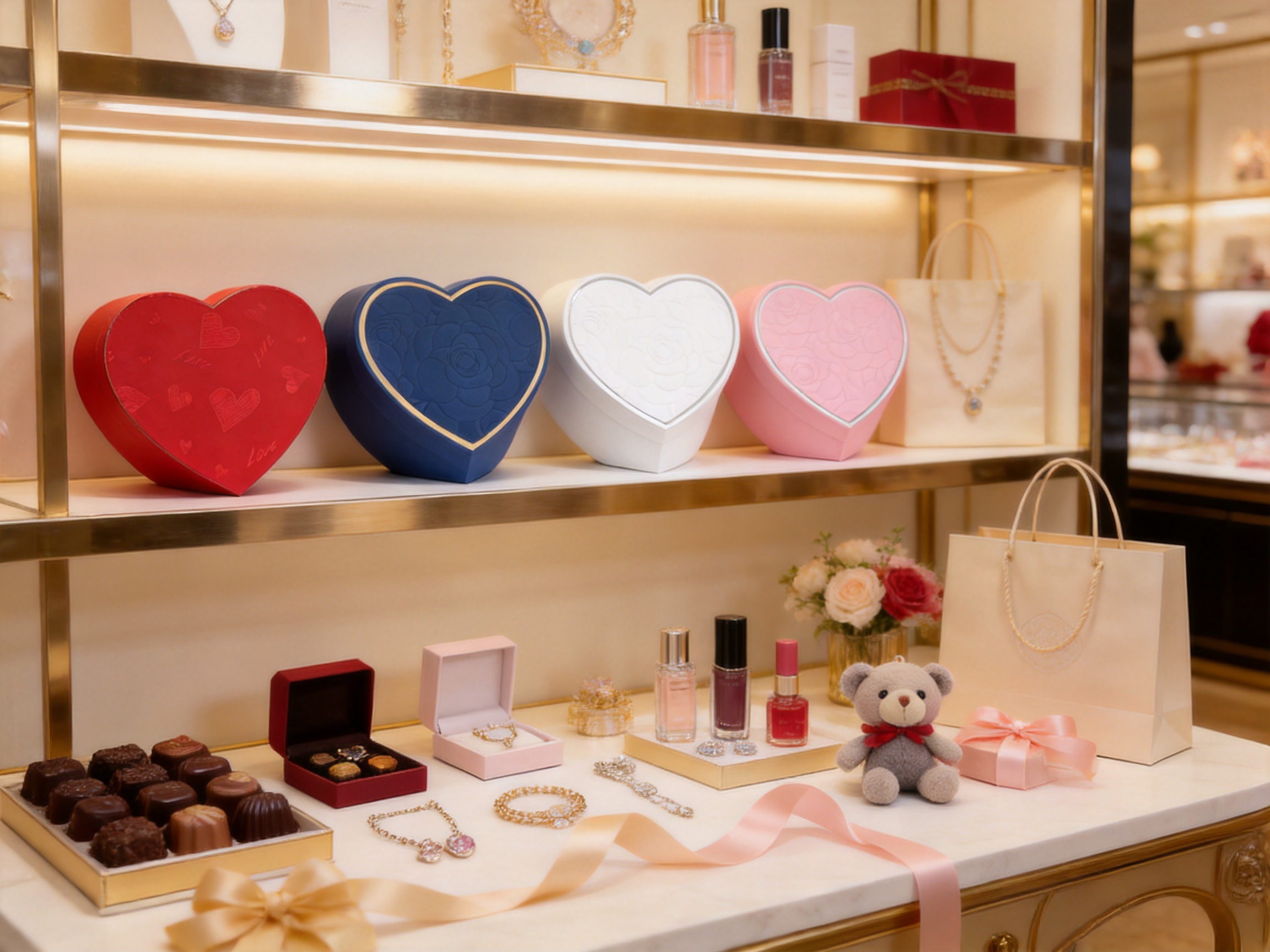
Small boutiques, confectionery shops, jewelry sellers, and cosmetics brands can use the box to create limited-edition gift sets. The distinctive shape makes it suitable for window displays, counter promotions, and online product photography.
A well-designed gift box requires reliable manufacturing support. Zhejiang Shihao Gift Packaging Co., Ltd. is an export-oriented manufacturer specializing in paper gift packaging boxes, integrating production, research and development, and sales. With more than 15 years of experience, the company has developed strong capabilities in gift box design, cardboard processing, assembly, quality control, and customization.
The company operates from a production base of approximately 20,000 square meters and employs around 300 people. This scale supports stable order handling, efficient workflow, and the ability to serve export customers across different markets. For buyers, manufacturing scale matters because it affects delivery reliability, product consistency, and the supplier’s ability to respond to seasonal demand peaks.
Average daily production capacity is about 5,000 sets of gift boxes. This capacity is significant for seasonal products such as Valentine’s Day packaging, where demand can concentrate within short ordering windows. A supplier with strong output can help customers plan promotions with greater confidence and reduce the risk of stock shortages.
The company has advanced equipment and strong research and development capability. In gift packaging production, advanced equipment can improve cutting precision, printing consistency, shaping accuracy, and assembly efficiency. R&D capability supports new product development, structural improvement, and customization projects. For heart-shaped boxes, both equipment and experience are important because the shape is more demanding than ordinary rectangular packaging.
The company’s design team updates dozens of products weekly, giving customers access to fresh packaging concepts and trend-responsive designs. This is especially valuable in gift packaging, where consumer preferences change quickly and seasonal aesthetics are important. A buyer working with a design-driven manufacturer can develop packaging that feels current rather than outdated.
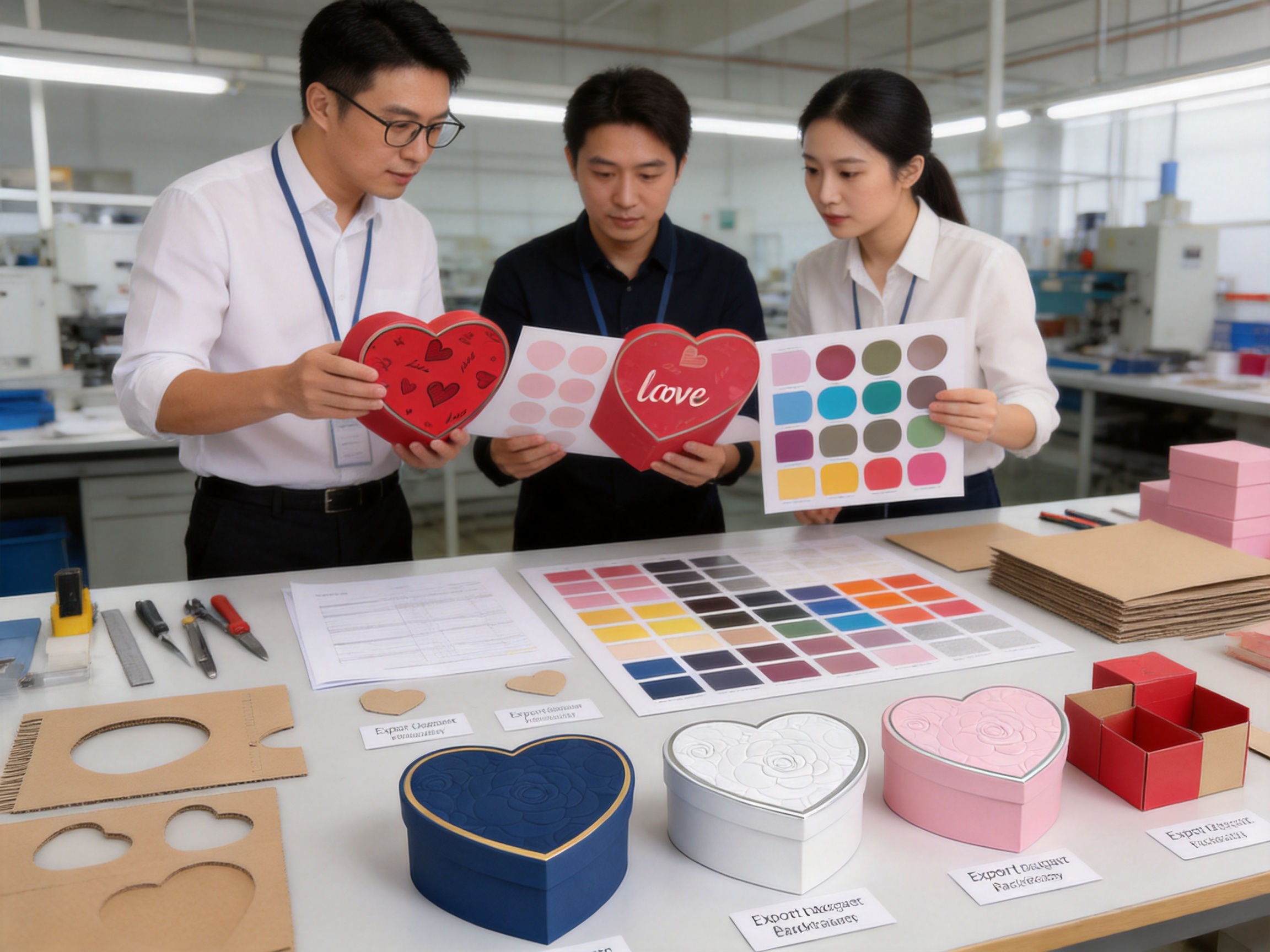
The production of a decorative heart-shaped cardboard candy box involves several stages. Each stage influences the final appearance, strength, and usability of the product. A professional manufacturing process helps ensure that the finished boxes meet commercial expectations in both design and performance.
The process begins with design planning. The intended use, target market, gift dimensions, color theme, and retail positioning are considered. For heart-shaped packaging, the structural design must balance beauty and stability. The curve of the heart, the frame proportion, the lid fit, and the internal space must all be planned carefully.
During this stage, the manufacturer may prepare structural drawings, material recommendations, and sample concepts. If the customer requires a special size, the design team adjusts dimensions to ensure that the product can be manufactured efficiently and used conveniently. Proper structural development helps avoid issues such as weak edges, poor closure, or unnecessary material waste.
Material selection is central to quality. Decorative cardboard must provide the right stiffness, surface finish, and processing performance. The material should be strong enough to protect the contents but not so heavy that it becomes costly or inconvenient. It should also support printing, lamination, decorative paper covering, or other finishing techniques depending on the buyer’s requirements.
For environmentally conscious customers, paper sourcing and recyclability are important considerations. The company’s FSC certification supports responsible sourcing expectations and helps buyers meet sustainability-related procurement requirements.
Surface decoration gives the box its emotional and commercial character. Valentine’s Day packaging may use romantic patterns, festive colors, elegant textures, or luxury accents. Printing accuracy ensures that colors remain consistent across production batches. Surface finishing can improve visual richness and tactile appeal.
Competitor products sometimes suffer from dull colors, uneven printing, or weak surface effects. A controlled production environment helps reduce these risks. For brands, consistent color and finish are essential because packaging is part of the brand image. A small color difference may be noticeable when boxes are displayed together in retail settings.
Heart-shaped packaging requires accurate die-cutting. The curves must be clean, the edges must align, and the box components must fit together correctly. If cutting is inaccurate, the final product may look asymmetrical or may not close properly. Precision equipment helps maintain consistency across large orders.
After cutting, the parts are shaped and assembled. The forming process must preserve the intended heart shape while ensuring the structure is strong. Adhesive application, edge treatment, and frame alignment all affect durability and appearance. Skilled workers and standardized procedures are important for producing attractive, stable boxes.
Quality control is essential in export packaging. Finished boxes should be checked for shape accuracy, surface defects, color consistency, glue strength, fit, cleanliness, and packaging condition. Inspection helps prevent defective products from reaching customers and supports reliable long-term cooperation.
For a decorative gift box, small defects can matter. A scratch, stain, poor seam, or uneven edge may reduce perceived value. A disciplined inspection system helps ensure that the product reflects the quality promised by the brand.
After inspection, boxes are packed for shipment. Proper packing prevents deformation during transportation. The product information references carton packaging of 64 x 34 x 45 cm with 6 sets in cardboard boxes. Export-oriented packing experience helps protect goods through warehousing, loading, international shipping, and final delivery.
Certification is an important factor for international buyers. Zhejiang Shihao Gift Packaging Co., Ltd. has passed BSCI and FSC certifications. These certifications support confidence in social compliance and responsible material sourcing. For buyers serving European, American, and other international markets, such credentials can be essential in supplier qualification.
BSCI certification reflects attention to responsible business practices and social compliance in the supply chain. Many retailers and importers require suppliers to demonstrate compliance with recognized standards. Working with a certified manufacturer can simplify procurement review and reduce compliance risk.
FSC certification supports responsible forest management and traceable paper sourcing. In the packaging industry, this is increasingly important because consumers, retailers, and regulators are paying closer attention to sustainable materials. A paper gift box with responsible sourcing support can strengthen a brand’s environmental message.
Beyond certifications, quality is also reflected in production habits. The company’s long experience, equipment base, skilled workforce, and export history all contribute to dependable manufacturing. For buyers, consistent quality is especially important when placing repeat seasonal orders. A Valentine’s Day packaging program often depends on timing, appearance, and volume accuracy. Reliability can make the difference between a successful promotion and a costly supply problem.
The 1001 heart-shaped candy box supports both product presentation and brand storytelling. Packaging is often the first physical contact between a customer and a product. Before tasting the candy or opening the gift, the customer sees and touches the box. A beautiful box can create anticipation and emotional connection.
For confectionery brands, the box can communicate sweetness, romance, and premium quality. For jewelry brands, it can add ceremonial value to small items. For toy and gift retailers, it can create a ready-to-give package that saves customers time. For promotional campaigns, it can transform an ordinary item into a memorable seasonal gift.
Brand differentiation is increasingly difficult in crowded gift markets. Many products compete on similar ingredients, price points, or functions. Packaging can become the deciding factor. A heart-shaped decorative cardboard box offers a clear visual identity and helps products stand out in store displays, online listings, gift baskets, and social media photos.
The framed heart design is also useful for emotional branding. Brands that want to convey warmth, romance, care, or celebration can use the box as a physical expression of those values. When customers associate a positive gifting experience with the brand, repeat purchase potential may increase.
Wholesalers and importers often need packaging that is attractive, reliable, scalable, and adaptable. The 1001 product meets these needs through its size range, decorative appeal, customization options, and manufacturer support. The minimum order quantity of 500 sets is practical for many commercial buyers, while the production capacity supports larger programs.
For importers, working with an experienced export-oriented manufacturer helps reduce communication and logistics challenges. The company exports to Europe, the United States, the Middle East, and other regions, showing familiarity with international market expectations. Export experience can support better packing, documentation coordination, production scheduling, and quality consistency.
Retail chains benefit from packaging that can create strong seasonal displays. Heart-shaped boxes can be stacked, arranged by size, or combined with other Valentine’s Day products. Their visual impact can improve store atmosphere and encourage impulse purchases. Because the box itself is decorative, it can also reduce the need for additional wrapping services.
Online sellers benefit from the box’s photogenic shape. A distinctive package can make listing images more appealing. If the product arrives in good condition and looks ready for gifting, customer satisfaction and review quality may improve.
To understand the value of the 1001 heart-shaped candy box, it is useful to compare it with several common alternatives.
Plastic containers can be lightweight and transparent, but they often lack the warmth and premium feeling of decorative cardboard. They may also conflict with consumer preference for reduced plastic use. A cardboard heart-shaped box provides a more gift-oriented appearance and a stronger sustainability message.
Paper bags are convenient and low-cost, but they do not provide the same protection or presentation. A bag may hide the product, wrinkle easily, and feel less special. A structured heart-shaped box offers better protection and a more ceremonial gift experience.
Rectangular boxes are efficient and easy to produce, but they are common. For Valentine’s Day and romantic gifting, a heart-shaped box creates a stronger emotional connection. It also offers greater shelf distinction and photographic appeal.
Luxury rigid boxes can be very premium, but they are often more expensive and may not always be necessary for seasonal candy packaging. The 1001 decorative cardboard box offers a balance of beauty, practicality, and cost effectiveness. It delivers a premium gift impression while remaining suitable for broader commercial use.
Sustainability has become a key factor in packaging decisions. Consumers are more aware of packaging waste, and businesses are increasingly expected to choose materials responsibly. Decorative cardboard packaging can help address these concerns by reducing reliance on plastic and supporting recyclable paper-based solutions.
The product’s cardboard material is environmentally friendly in direction and can be recyclable where local systems accept the material. This supports modern consumer expectations and helps brands communicate responsible packaging choices. For companies that sell in markets with strict environmental preferences, paper-based gift boxes can be more acceptable than plastic-heavy alternatives.
FSC certification adds another layer of credibility. It indicates that paper materials can be associated with responsible forest management standards. For retailers and importers, this can support sustainability reporting, supplier assessment, and brand positioning.
However, sustainable packaging is not only about material selection. It also involves efficient sizing, reduced damage rates, longer usability, and thoughtful design. A well-sized gift box reduces unnecessary empty space. A strong box helps prevent product damage and waste. An attractive box may be reused by consumers for storage or keepsakes, extending its life beyond the initial gift moment.
When selecting the 1001 Decorative Cardboard Valentine’s Day Heart-Shaped Candy Box, buyers should consider the intended contents, sales channel, target market, customization needs, order timeline, and display strategy. Proper planning ensures that the packaging supports both product protection and marketing performance.
First, buyers should match the box size to the product. Candy assortments may require inserts or trays to keep items arranged. Jewelry may need soft inner support. Small toys may require deeper space. Choosing the right dimensions improves presentation and reduces movement during transport.
Second, buyers should consider the color scheme. Valentine’s Day markets often favor red and pink, but differentiation may require more unique palettes. Luxury brands may prefer restrained colors with metallic accents, while youth-oriented candy brands may choose bright and playful tones.
Third, buyers should plan production schedules early. Seasonal packaging demand can peak before Valentine’s Day, and customized orders require time for design confirmation, sampling, production, inspection, and shipping. Early planning reduces risk and allows more time for creative development.
Fourth, buyers should evaluate display requirements. If the boxes will be used in retail stores, they should be visually coordinated and easy to arrange. If they will be sold online, packaging must photograph well and withstand shipping conditions.
Zhejiang Shihao Gift Packaging Co., Ltd. offers more than a single product. Its broader capabilities make it a suitable partner for customers seeking long-term packaging development. The company specializes in kits, storage boxes, folding boxes, jewelry boxes, and gift boxes, giving it wide experience across paper packaging categories.
The company’s business philosophy emphasizes innovation, quality, practicality, and benefit. This philosophy is relevant to the 1001 heart-shaped candy box because the product must be beautiful, reliable, useful, and commercially effective. Innovation supports fresh designs; quality protects brand reputation; practicality ensures the box works in real distribution; benefit helps customers achieve market value.
With its own design team, the company can respond to market trends and customer requests. Weekly product updates show active development rather than passive manufacturing. For customers, this means access to new ideas and the possibility of building distinctive packaging collections.
The company’s production scale and export experience support stable supply. International buyers need a manufacturer that understands deadlines, packing requirements, quality expectations, and communication. The ability to export to major global regions demonstrates practical market experience.
For custom printed gift boxes, gift box packaging, and seasonal packaging programs, the company can provide integrated support from design to production. This reduces the complexity of sourcing and helps customers maintain consistency across product lines.
The main purpose is to provide decorative gift packaging for Valentine’s Day candies, chocolates, sweets, jewelry, toys, and small gifts. Its heart-shaped design makes it especially suitable for romantic and emotional gifting occasions.
No. Although it is designed with Valentine’s Day in mind, it is also suitable for anniversaries, birthdays, weddings, engagements, Mother’s Day, boutique gift sets, and promotional packaging. The heart shape has broad emotional meaning.
The heart-shaped framed structure creates a stronger emotional impression and better seasonal relevance. It helps products stand out on shelves and in online photos, while giving customers a ready-to-gift presentation.
Yes. The box is made from sturdy decorative cardboard, which helps protect candies and gifts from crushing or damage during normal handling, storage, and transportation. Proper outer packing further improves shipment protection.
Yes. The product is available in ten sizes, ranging approximately from 33 x 32.3 x 14 cm to 11 x 10 x 5 cm. This makes it suitable for different gift dimensions and product combinations.
Yes. Size and color customization are available to meet different customer needs, brand styles, and market preferences. Customization helps businesses create packaging that better fits their products and brand identity.
The minimum order quantity is 500 sets, making it suitable for wholesalers, retailers, importers, promotional buyers, and brand packaging programs.
Cardboard is lightweight, printable, shapeable, and strong enough for many gift packaging applications. It also supports recyclable and environmentally responsible packaging goals better than many plastic alternatives.
Yes. The manufacturer is export-oriented and serves markets including Europe, the United States, the Middle East, and other regions. This experience supports international order handling and quality expectations.
The company has passed BSCI and FSC certifications. These certifications support confidence in social compliance and responsible paper sourcing, which are important for many international buyers.
The 1001 Decorative Cardboard Valentine’s Day Heart-Shaped Candy Box is a practical and emotionally powerful packaging solution for modern gift markets. Its heart-shaped framed design immediately communicates love and celebration, making it ideal for Valentine’s Day while remaining useful for many other occasions. With ten available sizes, customizable colors and dimensions, sturdy decorative cardboard construction, and an eco-conscious material direction, the product offers a strong balance of beauty, protection, flexibility, and commercial value.
Compared with ordinary rectangular boxes, thin decorative packaging, plastic containers, or simple paper bags, this heart-shaped candy box provides stronger emotional impact, better gift presentation, and improved brand differentiation. It helps transform candies and small gifts into memorable experiences, supporting both retail appeal and customer satisfaction.
Behind the product is a manufacturer with more than 15 years of industry experience, a 20,000-square-meter production base, around 300 employees, advanced equipment, daily production capacity of about 5,000 sets, active design development, and BSCI and FSC certifications. These strengths help ensure that buyers receive not only an attractive product but also reliable manufacturing support for seasonal and customized packaging programs.
For brands, retailers, wholesalers, and importers seeking Valentine’s Day packaging that combines romance, quality, sustainability, and professional production, the 1001 heart-shaped cardboard candy box is a compelling choice. It protects the gift, enhances the message, strengthens brand image, and creates the kind of unboxing moment that customers remember.
Packaging Design: Successful Product Branding from Concept to Shelf, Marianne R. Klimchuk and Sandra A. Krasovec.
Structural Packaging: Design Your Own Boxes and 3-D Forms, Paul Jackson.
Paper and Paperboard Packaging Technology, Mark J. Kirwan.
The Packaging Designer’s Book of Patterns, Lászlo Roth and George L. Wybenga.
Global Packaging Trends, industry research reports on sustainable paper-based packaging and retail gift presentation.
Forest Stewardship Council materials on responsible paper sourcing and chain-of-custody principles.
Business Social Compliance Initiative guidance on responsible sourcing and supplier compliance.
Recommended Products

Contact Us

No. 15, Xiayang Road, Huangzhai Town, Jinhua, Zhejiang, China

(+86) 579-84230069

(+86) 13085675766


Products

Gift Box Packaging Manufacturer
 English
 Français
 Español
 عربى