2026-11-07
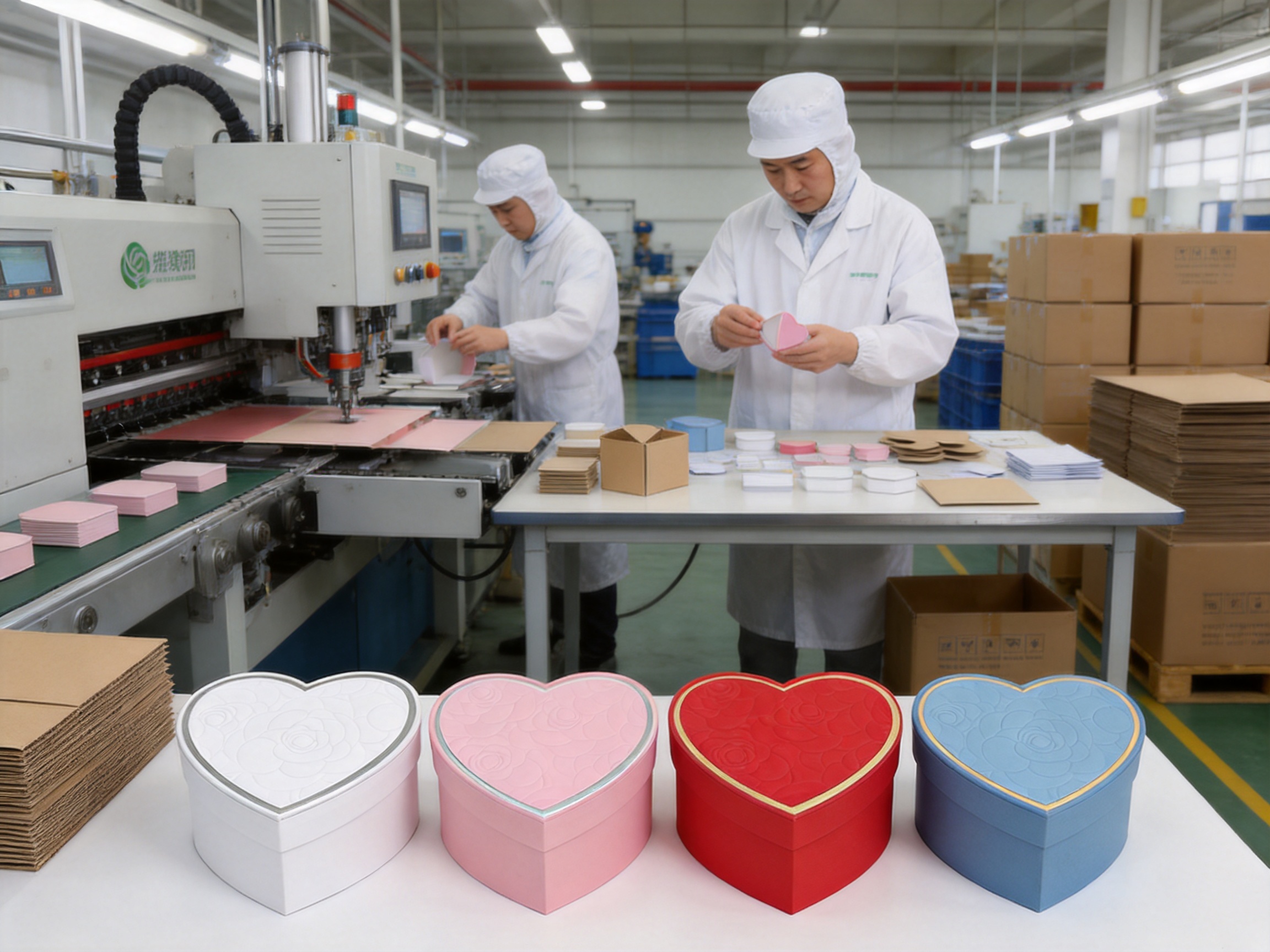
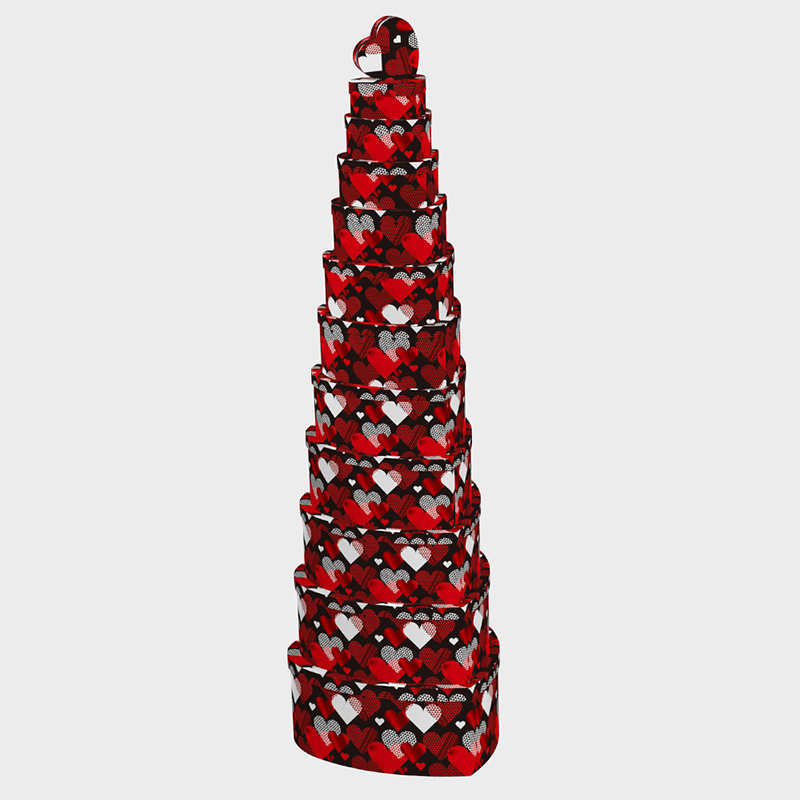
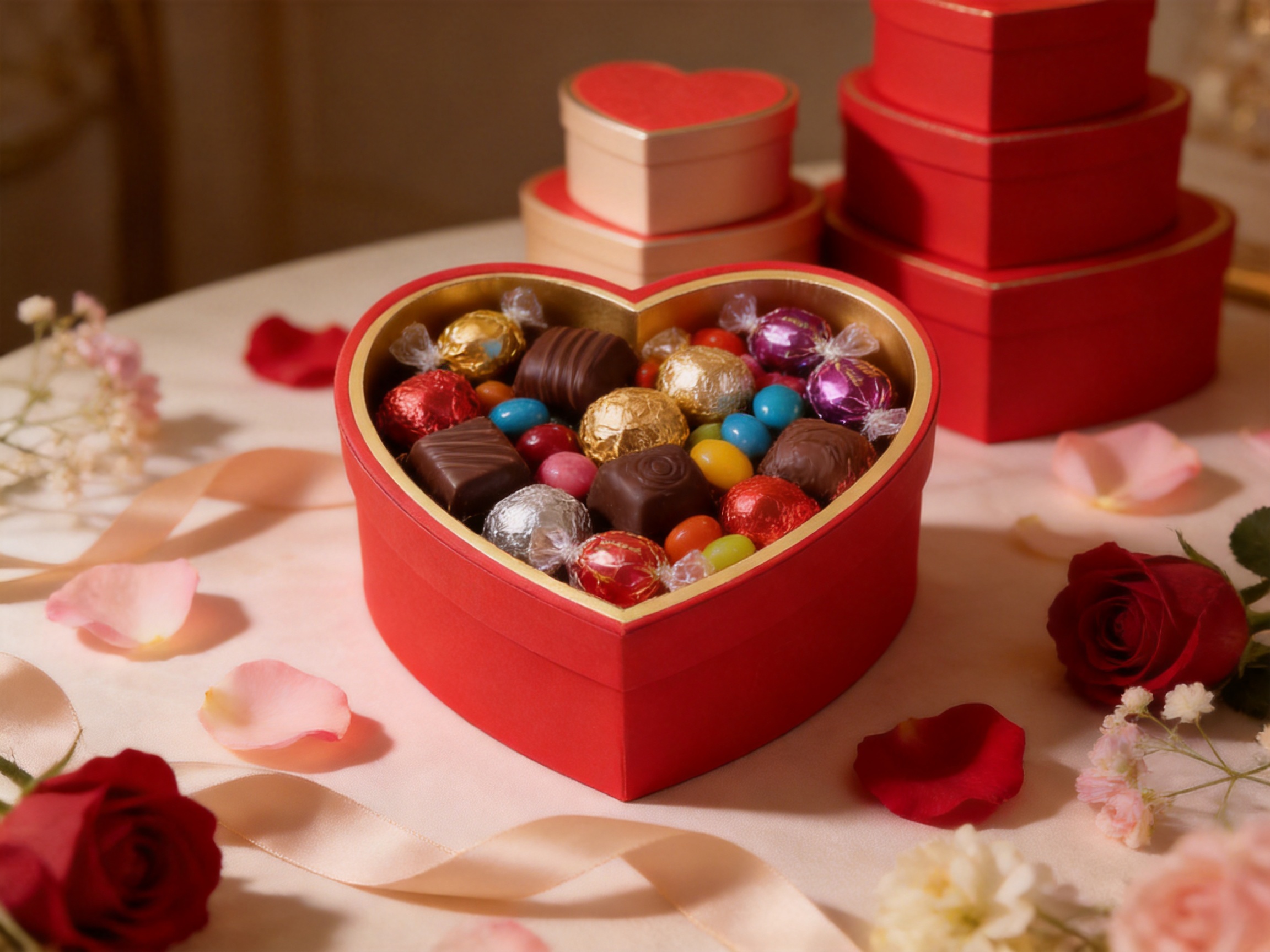
Valentine’s Day packaging is more than a protective container. It is often the first part of a gift that a recipient sees, touches, and remembers. A carefully designed box can establish an emotional connection before the candy, jewelry, toy, or other gift inside is revealed. The 1001 Decorative Cardboard Valentine’s Day Heart-Shaped Candy Box is designed for this exact purpose. Its heart-shaped structure, decorative appearance, sturdy cardboard construction, and adaptable size options give businesses a practical way to present seasonal gifts with greater visual and emotional impact.
Produced by Zhejiang Shihao Gift Packaging Co., Ltd., the box is intended for retailers, confectionery brands, gift companies, promotional businesses, event organizers, and packaging distributors that need attractive Valentine’s Day packaging in commercial quantities. It combines the familiar symbolism of a heart with the efficiency of paper-based packaging production. The result is a gift box that can support romantic product presentation while remaining suitable for customization, transportation, storage, and large-scale purchasing.
This article examines the product’s design, material qualities, size range, applications, manufacturing strengths, customization potential, and advantages over ordinary seasonal packaging. It also explains why a specialized gift box manufacturer can be a valuable partner for businesses that require consistent quality, reliable production capacity, and packaging solutions adapted to different markets.
The 1001 Decorative Cardboard Valentine’s Day Heart-Shaped Candy Box is a paper gift box created around a heart-shaped framed design. The structure is intended to hold sweets and other small presents while giving the package a distinctly romantic appearance. Its visual language is immediately associated with love, affection, Valentine’s Day, anniversaries, and other celebrations centered on personal relationships.
The product is not limited to one type of candy. According to the supplied product information, the box is suitable for toys, sweets, jewelry, and many other kinds of presents. This flexibility makes it useful to businesses that sell different seasonal products or want one packaging style to serve several promotional purposes.
The item is identified by Item Number 1001. It is available in ten sizes, ranging from approximately 33 × 32.3 × 14 centimeters for size 1 to approximately 11 × 10 × 5 centimeters for size 10. The range allows purchasers to select a proportion suitable for a small confectionery assortment, a compact jewelry item, a toy, or a larger Valentine’s Day gift combination.
The minimum order quantity is 500 sets. The stated outer packing information is 64 × 34 × 45 centimeters, with six sets packed in cardboard boxes. These specifications are useful for wholesale purchasers, importers, distributors, and brands planning their shipping and warehouse arrangements.
| Product Detail | Specification |
|---|---|
| Product name | Decorative Cardboard Valentine’s Day Heart-Shaped Candy Box |
| Item number | 1001 |
| Primary material | Decorative cardboard |
| Main design | Heart-shaped framed structure |
| Available sizes | Ten sizes |
| Size range | Approximately 33 × 32.3 × 14 cm to 11 × 10 × 5 cm |
| Recommended contents | Sweets, candy, toys, jewelry, and other presents |
| Minimum order quantity | 500 sets |
| Outer packing information | 64 × 34 × 45 cm; six sets in cardboard boxes |
| Customization | Size and color customization available according to customer requirements |
Shape is one of the fastest ways for packaging to communicate a message. A conventional rectangular box may be efficient, but it usually requires printed words, colors, or graphics to tell consumers that it is intended for Valentine’s Day. A heart-shaped box communicates the central theme immediately. The design creates a direct visual association with affection, romance, and personal expression.
The framed heart structure also gives the box a more distinctive silhouette than a standard folding carton. On a retail shelf, display table, or online product photograph, the outline can help the item stand apart from ordinary candy packaging. This is particularly valuable during a busy seasonal sales period when many products compete for attention through similar red, pink, and decorative themes.
The heart shape supports emotional storytelling. A confectionery brand can position the box as a gift from one partner to another. A jewelry seller can use it to create a romantic presentation for a small accessory. An event organizer can fill it with favors for a wedding, engagement celebration, or anniversary gathering. The shape gives the contents a meaningful context rather than presenting them as an ordinary item in a generic container.
Although the heart is strongly associated with Valentine’s Day, it is not restricted to that holiday. It can be used for birthdays, wedding anniversaries, proposals, romantic celebrations, bridal showers, and other occasions where the packaging needs to convey warmth and affection. This broader usability can help buyers reduce the risk of purchasing a box that has only one narrow selling period.
The product uses decorative cardboard, a material that balances appearance, structure, weight, and processability. Cardboard can be cut, creased, folded, printed, laminated, and assembled into a wide range of shapes. These properties make it especially suitable for gift packaging, where visual design and structural performance must work together.
For a Valentine’s Day box, the material needs to be attractive enough for presentation while strong enough to protect the contents during handling. Decorative cardboard provides a firm surface that can support printed patterns, color treatments, seasonal artwork, and other visual elements. It also gives the box a more substantial feel than thin paper bags or lightweight wrapping sheets.
The stated product information emphasizes that the cardboard is sturdy and durable. This helps reduce the possibility of candies and small gifts being crushed or damaged during normal carrying and transportation. The box is not merely a decorative sleeve; it is intended to function as a protective package as well as a presentation piece.
Cardboard is also relatively efficient to store and transport compared with many rigid materials. Depending on the final configuration and supply arrangement, paper-based packaging can be handled more conveniently in bulk. Its manufacturing compatibility with automated cutting and folding processes also allows a specialized factory to produce repeated shapes with consistent dimensions.
Another important benefit is the material’s relationship with sustainability goals. The product information identifies the cardboard as environmentally friendly and recyclable. While responsible recycling depends on local collection systems, material composition, coatings, inks, and contamination, paper-based packaging is widely recognized as an important option for businesses seeking to reduce dependence on non-paper packaging formats.
Many basic candy boxes use rectangular shapes with seasonal printing. They may be functional, but their emotional message depends heavily on graphics and text. The 1001 box incorporates the Valentine’s Day message into its physical form. The heart-shaped frame helps consumers recognize the purpose of the package even before reading the label.
A distinctive outline can improve visual recognition in retail environments. When multiple gift products are displayed together, the heart form gives this box a clear point of difference. It can also improve product photography by creating a recognizable shape in catalogues, online stores, social media posts, and promotional materials.
Unlike a box designed only for one candy assortment, this product can accommodate sweets, toys, jewelry, and various presents. The ten available size options increase the number of product types that can be packaged. This flexibility is useful for businesses that sell multiple Valentine’s Day collections or operate in more than one market.
Size and color can be customized according to individual customer requirements. This gives brands the opportunity to coordinate the box with an existing visual identity, a specific campaign, a retailer’s seasonal palette, or a special event theme. Customization can also support different product capacities while retaining a common heart-shaped design language.
Some decorative packaging prioritizes appearance but offers limited resistance to compression. This product is described as sturdy and durable, helping protect its contents during carrying and long-distance transportation. The combination of a decorative exterior and a supportive cardboard structure makes it more commercially practical than packaging that is attractive but fragile.
Businesses increasingly consider the environmental profile of their packaging when selecting products for seasonal campaigns. The use of recyclable cardboard can support a more responsible packaging message, especially when combined with thoughtful material specifications and suitable recycling guidance. This can be a useful advantage over packaging made primarily from difficult-to-recycle materials.
One of the product’s most practical features is its ten-size range. Gift packaging rarely works as a universal one-size-fits-all solution. A box that is too large can make a small gift appear lost and may increase material and shipping costs. A box that is too small can damage the contents or make the package difficult to close and present.
The largest listed size is approximately 33 × 32.3 × 14 centimeters. This format may be suitable for a larger candy assortment, several small gifts presented together, a toy, or a carefully arranged Valentine’s Day hamper. The smaller sizes progress toward approximately 11 × 10 × 5 centimeters, offering a compact format for a small quantity of sweets, a jewelry item, or another limited-volume gift.
The range gives brands greater freedom when developing product collections. A confectionery company could use a larger box for a premium assortment and a smaller box for an entry-level product. A gift distributor could offer different box capacities to retailers. A jewelry business could choose a compact size while preserving the same heart-shaped visual identity across its packaging line.
Although the listed dimensions provide a useful guide, buyers should confirm the internal usable space, closure structure, product arrangement, and any insert requirements before placing a production order. Contents should be tested inside the selected size to ensure that the package protects the gift without excessive empty space.
The most direct application is the presentation of Valentine’s Day candy. Chocolate pieces, wrapped sweets, hard candies, truffles, and other confectionery products can be arranged inside the box according to the selected size. The heart-shaped structure strengthens the emotional connection between the candy and the occasion.
For confectionery brands, packaging can help distinguish premium seasonal collections from ordinary everyday products. A decorative heart box may be used for limited editions, gift assortments, corporate orders, or retail promotions. It can also support tiered product offerings based on size, quantity, and decoration.
The smaller sizes may be suitable for presenting jewelry or other small personal accessories. A necklace, bracelet, earrings, pendant, or ring can be placed inside with an appropriate internal insert or protective layer. The heart-shaped exterior can make the presentation feel more personal than a standard commercial carton.
Jewelry sellers should select internal protection carefully because the box itself is not a substitute for a fitted insert. Soft pads, molded paper supports, or other suitable components may be needed to prevent movement and protect delicate surfaces during transportation.
The product information specifically identifies toys as a suitable application. Small plush items, figurines, novelty products, and children’s Valentine’s Day gifts may benefit from a package that looks festive and gift-ready. The larger sizes can provide additional space for products with unusual shapes.
Valentine’s Day is only one opportunity for romantic packaging. The same heart-shaped box can be used for anniversaries, engagement celebrations, proposals, wedding events, and relationship milestones. With customized colors or printed elements, brands can adapt the package to different occasions without abandoning the recognizable heart structure.
Companies sometimes distribute seasonal gifts to employees, clients, partners, or customers. A heart-shaped box filled with sweets can communicate appreciation in a warm and approachable way. Custom color choices may help align the packaging with a corporate identity, while the box can be ordered in a quantity suitable for promotional campaigns.
Wedding planners, event agencies, hotels, and restaurants can use small heart-shaped boxes as guest favors. They may be filled with candy, mints, chocolates, or other small gifts. The decorative structure can contribute to table styling and provide guests with a keepsake-style package after the event.
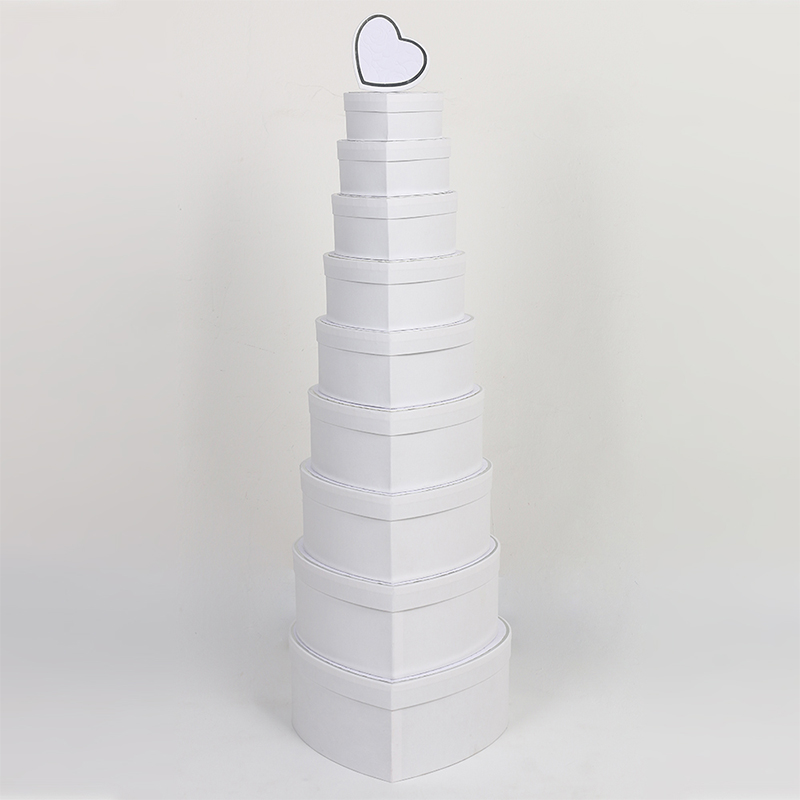
1001 Decorative Cardboard Valentine's Day Heart-Shaped Candy Box
Customization is important in gift packaging because the box is often part of a larger brand experience. The supplied product information confirms that the size and color can be customized. These options allow buyers to adjust the box to their product, sales channel, target market, and campaign theme.
The standard range of ten sizes already supports many applications, but some businesses may require a specific capacity or proportion. A custom size can be considered when the product has unusual dimensions, when a particular quantity of candy must be included, or when the box needs to fit a retail display configuration.
Custom dimensions should be evaluated together with material thickness, folding lines, assembly requirements, shipping cartons, and product weight. Changing the size can influence the box’s structural performance and the number of units that fit into a shipping carton. A professional manufacturer can help assess these factors during development.
Color is one of the most visible elements of seasonal packaging. Traditional Valentine’s Day palettes often include red, pink, white, and related tones, but brands may choose other colors to create a premium, modern, playful, or culturally specific appearance. Custom colors can also help a retailer maintain a consistent visual identity across its seasonal product range.
Color selection should account for the final printing or surface treatment process, the appearance of the cardboard substrate, and the intended sales environment. A color that looks suitable on a digital screen may appear different on printed material. Proofing and sample approval are therefore valuable steps before mass production.
Although the available information specifically confirms size and color customization, buyers can discuss additional packaging requirements with the manufacturer. These may include printed branding, seasonal artwork, interior arrangements, labels, sleeves, inserts, or coordinated shipping cartons, subject to technical review and order conditions.
Brand coordination should not overwhelm the central heart-shaped concept. The strongest designs usually combine recognizable seasonal symbolism with a clear brand presence. The packaging should communicate both the emotional purpose of the gift and the identity of the company selling it.
Zhejiang Shihao Gift Packaging Co., Ltd. is described as an export-oriented manufacturer specializing in the production, research and development, and sales of paper gift packaging boxes. The company has more than 15 years of experience in the field. This background is relevant to purchasers because gift packaging requires more than a visually appealing design. It also requires knowledge of paper materials, cutting, folding, assembly, quality control, packing, and international order coordination.
The company covers approximately 20,000 square meters and employs around 300 people. Its reported average daily production capacity is about 5,000 sets of gift boxes. These figures indicate a manufacturing operation designed to handle repeat orders and commercial-scale projects rather than only small artisanal production.
The company is also described as having advanced equipment and strong research and development capabilities. Modern equipment can improve repeatability in processes such as die cutting, creasing, printing, folding, and assembly. For a product with a distinctive heart-shaped structure, consistent cutting and accurate folding are especially important because even small deviations may affect symmetry, closure, appearance, or fit.
The supplier has its own design team and reportedly updates dozens of products each week. A dedicated design function can help the manufacturer respond to changes in seasonal trends, customer preferences, market requirements, and packaging formats. It also suggests that the company is capable of developing more than one standard product and can support customers seeking differentiated packaging concepts.
For the 1001 heart-shaped box, design capability can contribute to improvements in proportion, structural stability, color coordination, and presentation. It can also help customers adapt the basic concept to different gift categories while retaining a coherent visual identity.
The company is reported to have passed BSCI and FSC certifications. These certifications should be verified for the relevant facility, product, scope, and current validity during procurement, but their inclusion in the company profile indicates attention to social responsibility and responsible forestry-related material sourcing.
For international purchasers, certification information can support supplier evaluation and internal compliance procedures. However, buyers should still define their own quality requirements, inspection standards, approved samples, material specifications, and documentation expectations before production begins.
The company exports to Europe, the United States, the Middle East, and other regions. Experience across multiple markets can help a packaging supplier understand differences in delivery arrangements, product presentation, seasonal calendars, communication practices, and buyer expectations. It may also support more efficient coordination for international orders.
Export experience does not eliminate the need for clear specifications. Purchasers should still confirm labeling, packaging, shipping marks, documentation, delivery terms, and destination requirements. Nevertheless, an established export-oriented manufacturer can provide a stronger starting point than a supplier without international order experience.
The final quality of a heart-shaped gift box depends on the interaction of design, material selection, precision production, assembly, and packing. A professional manufacturing process can be understood as a sequence of controlled stages.
The process begins with the product concept and structural design. The manufacturer evaluates the intended dimensions, heart-shaped frame, folding lines, panels, joining points, and expected contents. At this stage, the design must balance appearance with practical requirements such as stability, assembly, closure, and transport.
For customized orders, the manufacturer can review the customer’s product dimensions and determine whether a standard size is suitable. If not, a revised structure may be developed. Prototypes or samples are important because they allow the buyer to test the fit and presentation before the order moves to mass production.
Cardboard is selected and prepared according to the required thickness, surface, color, and structural performance. The material must be compatible with the intended printing, finishing, cutting, and folding processes. It should also be examined for surface consistency and suitability for the final product.
Material preparation is particularly important for decorative packaging. Uneven surfaces, inconsistent color, or unsuitable rigidity may affect the final appearance. A professional factory can establish material specifications so that repeat orders remain as consistent as possible.
Depending on the confirmed design, decorative elements can be applied to the cardboard through suitable printing or finishing processes. Color accuracy, registration, surface appearance, and resistance to ordinary handling are all relevant quality considerations.
The heart-shaped frame provides a strong foundation for decoration. Seasonal patterns, romantic graphics, brand marks, messages, or simple color blocking can be arranged to emphasize the structure without making the package visually confusing. Premium orders may also explore additional surface treatments, subject to the customer’s requirements and the manufacturer’s technical capabilities.
After printing or material preparation, the cardboard can be die cut into the required shape. Die cutting establishes the outer profile, internal openings, tabs, and other structural features. Creasing creates controlled folding lines that help the box assemble accurately.
Precision at this stage is essential. The heart-shaped outline should remain balanced, and the folding lines must correspond correctly to the design. Inconsistent cutting can lead to irregular edges, while inaccurate creasing may make assembly difficult or affect the finished shape.
Once the pieces are cut and creased, they are folded and assembled according to the structural design. Depending on the box format, this may involve tabs, adhesive points, inserts, or other assembly methods. The final construction should be stable enough for normal handling and attractive enough for direct gift presentation.
Manufacturing teams may inspect the assembled boxes for symmetry, surface quality, edge condition, folding accuracy, and overall appearance. For a heart-shaped product, visual symmetry is a particularly important part of quality perception.
Quality inspection can include checks on dimensions, material, color, print alignment, structural integrity, assembly, and packing. Buyers may establish acceptable tolerance ranges and inspection procedures according to the product’s use and sales channel.
For large orders, consistent inspection helps reduce variations between production batches. It also supports more reliable packing and distribution because properly assembled boxes are less likely to create problems during handling.
The listed packing information indicates that six sets are packed in cardboard boxes measuring approximately 64 × 34 × 45 centimeters. This provides a starting point for logistics planning. Buyers can use the information to estimate warehouse space, shipping volume, carton handling, and delivery arrangements.
Before shipment, cartons should be labeled and arranged according to the purchaser’s requirements. International buyers should confirm shipping marks, carton counts, gross and net weights, documentation, and any destination-specific instructions with the supplier.
Choosing a packaging manufacturer is a strategic decision because packaging affects product protection, brand presentation, inventory planning, and customer satisfaction. A supplier with design, production, and export capabilities can help reduce the number of separate vendors involved in a project.
Shihao’s reported combination of product development, factory production, design resources, certifications, and export experience creates a basis for integrated project coordination. Buyers can discuss the product concept, size, color, material, packing, and delivery requirements with one specialized packaging partner.
The company’s reported daily production capacity of approximately 5,000 sets may be particularly valuable during seasonal demand. Valentine’s Day products operate within a fixed calendar, so late delivery can reduce the commercial value of an order. A manufacturer with established production resources may be better positioned to schedule repeat or larger orders, although lead times should always be confirmed for each project.
The stated minimum order quantity of 500 sets also makes the product more accessible to small and medium-sized brands than packaging that requires extremely large production runs. At the same time, the company’s reported scale may support larger wholesale programs and recurring seasonal orders.
The cardboard construction supports a packaging approach based on a widely used recyclable material. This can help businesses respond to consumer interest in paper-based and more resource-conscious packaging. It also gives the box a natural connection with current efforts to reduce unnecessary plastic use.
Sustainability should be considered across the entire packaging life cycle rather than judged only by the base material. Buyers should review the type of coatings, adhesives, inks, inserts, and added decorative components used in a final version. They should also consider whether the box can be easily separated and placed into local recycling systems after use.
Right-sizing is another important sustainability practice. The availability of ten sizes can help businesses select a box that is more closely matched to the contents. A correctly sized package may reduce unnecessary material, empty space, and transport volume. It can also improve the customer’s unboxing experience by making the product feel intentionally designed.
Responsible sourcing and certification documentation may also be relevant. The supplier is reported to have FSC certification, but customers should request current supporting documents and confirm that the specific materials and production scope meet their own requirements.
Valentine’s Day boxes may travel through several stages before reaching the final customer. They can be moved from the factory to an export warehouse, loaded into shipping containers, transported to a distribution center, and then delivered to a retail store or end consumer. The box therefore needs to maintain its shape and appearance during ordinary logistics operations.
The product description states that the decorative cardboard is sturdy and durable and can effectively protect the candies inside from crushing and damage. This is a useful advantage over very light wrapping formats that may provide little resistance to pressure. Nevertheless, the level of protection depends on the selected size, cardboard specification, internal arrangement, product weight, and outer shipping conditions.
Buyers should test samples with the actual contents. A candy assortment may require internal dividers or food-safe wrapping. Jewelry may need a soft insert. A toy may require additional space to avoid deforming the box. Transportation testing can reveal whether the selected structure and packing method are suitable for the intended distribution route.
The outer carton information is also important for planning. Six sets per cardboard box and the stated carton dimensions provide a preliminary basis for calculating shipping quantities. Final logistics calculations should use confirmed carton dimensions, weights, loading methods, and order volumes.
A gift box should be considered part of the product experience rather than an afterthought. The heart-shaped structure creates the emotional foundation, but the contents, color, message, and presentation should work together.
For a premium candy assortment, the box can be paired with carefully arranged pieces, a small message card, and coordinated tissue or protective material. For a jewelry product, the interior can be organized to make the opening moment feel deliberate and elegant. For a corporate gift, the box can combine a restrained color palette with a discreet logo and a short appreciation message.
The package should also be easy for the recipient to handle. A beautiful box that is difficult to open, unstable when carried, or poorly matched to its contents can weaken the overall experience. Sample testing allows the brand to check how the box looks on a display table, how it feels in the hand, and how it performs when opened and closed.
Photography is another advantage of a distinctive package. The heart shape can serve as a visual centerpiece in online listings, social media campaigns, promotional catalogues, and seasonal advertisements. Consistent use of the same box across product images can help build recognition for a limited-edition collection.
Before choosing a size, buyers should determine the product type, quantity, weight, arrangement, and protection requirements. The dimensions of the gift should be measured carefully, including any inner wrapping or insert.
A sample can help verify the actual appearance, structure, color, capacity, and assembly method. It is especially important for products with a prominent heart-shaped outline because symmetry and visual balance strongly influence perceived quality.
For customized orders, all artwork, color references, logos, text, and seasonal graphics should be reviewed before production. Buyers should understand how colors may appear on the chosen cardboard surface and should approve a suitable proof where necessary.
Purchasers should agree on material requirements, dimensions, tolerances, print quality, structural performance, packing method, carton markings, and inspection procedures. Written specifications reduce misunderstandings and provide a reference for repeat orders.
Valentine’s Day sales are time-sensitive. The order schedule should include design confirmation, sampling, production, inspection, packing, transportation, customs clearance where applicable, and final distribution. Buyers should discuss realistic lead times with the supplier before committing to a launch date.
If environmental claims are part of the marketing plan, the buyer should verify material composition, recyclable components, certification status, and appropriate consumer communication. Clear and accurate claims are preferable to broad statements that cannot be supported.
| Packaging format | Typical strength | Potential limitation | Heart-shaped cardboard box advantage |
|---|---|---|---|
| Plain rectangular carton | Efficient and familiar structure | Less distinctive emotional presentation | Communicates romantic intent through its shape |
| Paper bag | Lightweight and easy to carry | Usually offers less rigid protection | Provides a more structured gift presentation |
| Plastic container | Can offer high visibility and rigidity | May conflict with paper-based sustainability goals | Uses decorative cardboard and supports recyclable-material positioning |
| Rigid specialty box | Premium feel and strong structure | May involve higher weight, cost, or storage volume | Balances decorative impact with paper-based practicality |
| Generic seasonal sleeve | Simple branding and low structural complexity | May not protect or present the gift independently | Functions as both a decorative package and a gift container |
This comparison does not mean that one format is suitable for every product. Packaging choices should depend on the product, budget, market, sustainability goals, and distribution conditions. The key strength of the 1001 box is its combination of emotional shape, decorative quality, structural function, customization, and multiple size options.
The product is well suited to confectionery manufacturers seeking seasonal packaging, particularly those introducing limited-edition Valentine’s Day assortments. It can also serve gift wholesalers that want a flexible product for resale to multiple customer types.
Retailers may use the boxes for private-label collections, in-store gift bundles, or promotional campaigns. Jewelry companies can consider smaller sizes for romantic gift presentation. Event businesses may purchase compact formats for wedding or anniversary favors. Hotels, restaurants, and corporate gift providers can also use customized colors and arrangements for seasonal programs.
Because the minimum order quantity is 500 sets, the product can support campaigns that are larger than a small handmade release but smaller than a national mass-market launch. Larger companies can discuss repeat production, additional sizes, or coordinated packaging programs with the manufacturer.
The product’s export suitability is supported by the supplier’s reported experience in serving Europe, the United States, the Middle East, and other regions. Buyers in these markets should still confirm local compliance requirements and delivery conditions before ordering.
Packaging has the power to influence how consumers evaluate the gift inside. A heart-shaped box can make an ordinary assortment feel more intentional and can reinforce the idea that the product was selected for a special person. This emotional effect may improve perceived value without requiring the contents to change.
For brands, the box can communicate several messages at once: the product is seasonal, the gift is designed for someone special, the company pays attention to presentation, and the package has been created with a recognizable visual concept. These messages can support stronger product differentiation in a crowded Valentine’s Day market.
The package may also encourage social sharing. Recipients often photograph attractive gifts before opening them, particularly when the box has a clear theme and polished appearance. A consistent custom color or brand element can help the package appear in user-generated content without making the design feel overly commercial.
For repeat seasonal programs, the heart shape can become a recognizable annual feature. A company might retain the structure while changing colors, artwork, contents, or messages from one year to the next. This creates continuity while allowing each campaign to feel new.
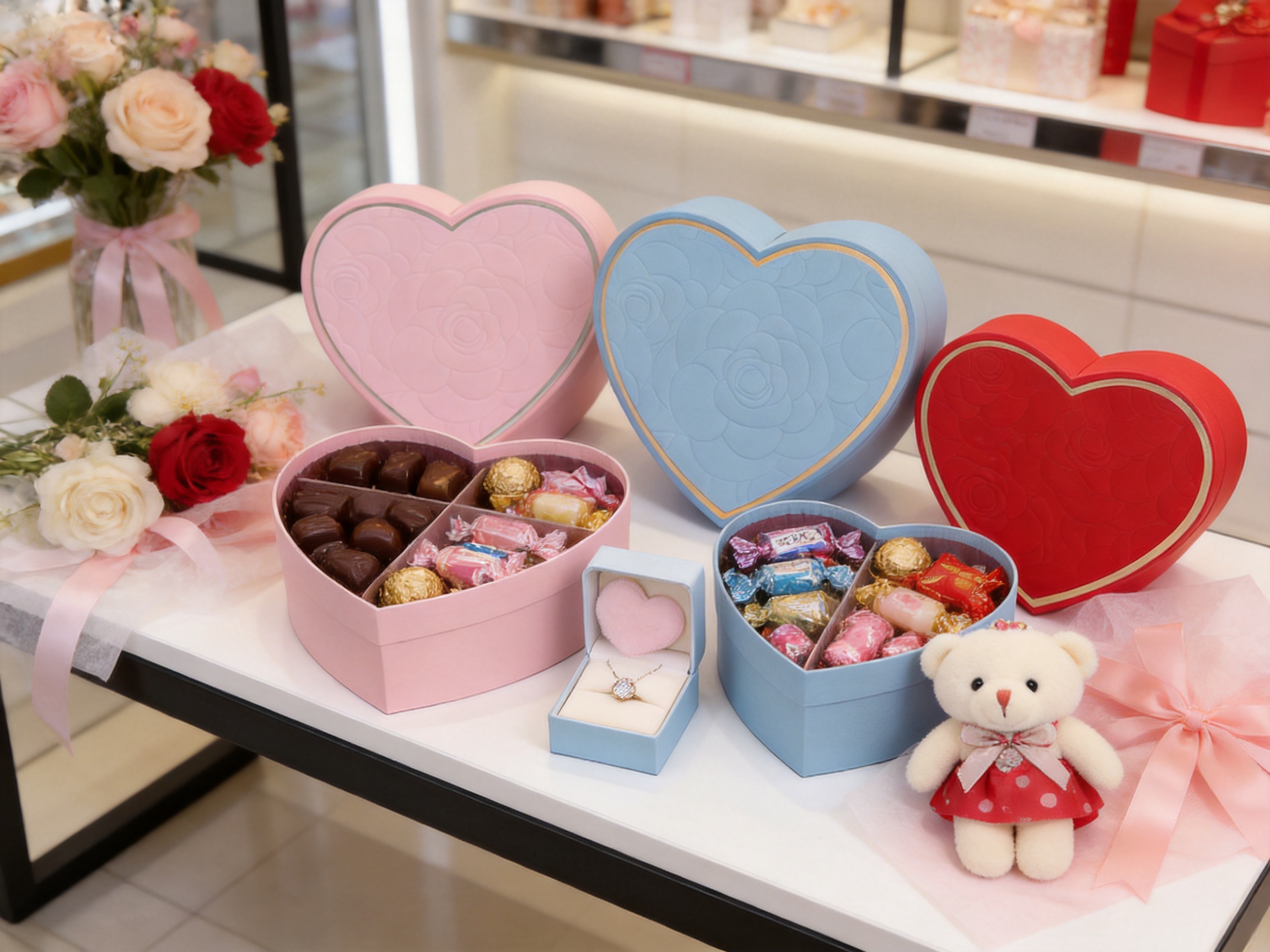
The box is designed for Valentine’s Day candy and gift presentation. It can hold sweets, toys, jewelry, and other presents while creating a romantic and decorative appearance.
The product is available in ten sizes. The listed dimensions range from approximately 33 × 32.3 × 14 centimeters to approximately 11 × 10 × 5 centimeters.
Yes. The supplied product information states that size can be customized according to individual customer requirements. Custom dimensions should be reviewed together with the intended contents and structural requirements.
Yes. Color customization is available. Buyers should confirm color references, artwork, printing details, and sample approval procedures with the manufacturer.
The minimum order quantity is 500 sets.
No. Although it is presented as a candy gift box, the product information also identifies toys, jewelry, and other presents as suitable contents. The correct size and any required internal protection should be selected according to the product.
The product information describes the cardboard as environmentally friendly and recyclable. Actual recyclability can depend on local recycling systems and the final combination of cardboard, coatings, adhesives, inks, and inserts. Buyers should verify the complete specification for their market.
The heart shape communicates love and affection immediately, gives the package a more distinctive appearance than a standard rectangular box, and supports use for Valentine’s Day, anniversaries, birthdays, weddings, and other relationship-focused occasions.
The product description states that the decorative cardboard is sturdy and durable and can help protect the contents during long-distance transportation and carrying. Buyers should still conduct sample and distribution tests using their actual products and shipping conditions.
The listed packing information states that six sets are packed in cardboard boxes. The stated outer carton dimensions are approximately 64 × 34 × 45 centimeters.
The supplier is described as an export-oriented manufacturer with more than 15 years of experience, approximately 20,000 square meters of facilities, around 300 employees, advanced equipment, an in-house design team, and an average daily production capacity of about 5,000 gift box sets.
The company profile states that products are exported to Europe, the United States, the Middle East, and other regions. International buyers should confirm shipping, documentation, certification, and destination requirements for each order.
Buyers should confirm the selected size, material, color, artwork, contents, internal inserts, assembly, quality standards, packing details, quantity, delivery schedule, and any required certification or inspection documentation.
The 1001 Decorative Cardboard Valentine’s Day Heart-Shaped Candy Box offers a strong combination of visual symbolism and practical packaging performance. Its heart-shaped framed design immediately communicates romance, while its decorative cardboard construction provides a supportive and presentable container for candy and other small gifts.
The availability of ten sizes gives businesses flexibility across product categories and price levels. Customizable size and color options allow the box to support different brand identities and seasonal campaigns. Its potential use for sweets, toys, jewelry, anniversaries, corporate gifts, and event favors makes it more versatile than a package designed for only one narrow application.
The supplier’s reported manufacturing strengths add value for commercial buyers. More than 15 years of industry experience, a sizable production facility, approximately 300 employees, advanced equipment, in-house design resources, export experience, BSCI and FSC certifications, and an average daily capacity of about 5,000 gift box sets indicate a factory structured to manage professional packaging projects.
For companies seeking a Valentine’s Day package that is emotionally recognizable, customizable, paper-based, and suitable for wholesale production, this heart-shaped cardboard box is a compelling option. With appropriate sampling, specification control, quality inspection, and logistics planning, it can help transform seasonal gifts into more memorable and commercially effective presentations.
1. Product specification sheet for Item Number 1001, Decorative Cardboard Valentine’s Day Heart-Shaped Candy Box.
2. Supplier-provided company profile for Zhejiang Shihao Gift Packaging Co., Ltd.
3. Supplier-provided information concerning product dimensions, minimum order quantity, outer carton packing, customization, and material characteristics.
4. General packaging design principles concerning product protection, structural packaging, seasonal presentation, and consumer experience.
5. General paper-based packaging and recycling guidance for commercial gift packaging applications.
6. General procurement practices for customized packaging, including sampling, artwork approval, quality inspection, and shipment planning.
Recommended Products

Contact Us

No. 15, Xiayang Road, Huangzhai Town, Jinhua, Zhejiang, China

(+86) 579-84230069

(+86) 13085675766


Products

Gift Box Packaging Manufacturer
 English
 Français
 Español
 عربى