2026-06-30
In the premium confectionery market, packaging is not only a container; it is part of the product experience, part of the gift message, and part of the brand promise. A well-designed chocolate gift box must protect delicate pieces, present them attractively, communicate value immediately, and create an emotional moment when the lid is opened. The SH-04 5x3 Grid Hot Stamping Process Chocolate Gift Box is designed for exactly this purpose. With a gold-toned luxury appearance, a rigid cardboard structure, a refined hot-stamped surface, and a precisely arranged internal tray, it serves high-end chocolate collections, holiday gifts, business presents, luxury dessert sets, and customized food packaging programs.
This article explores the product’s structure, material selection, hot-stamping process, presentation value, manufacturing advantages, customization potential, and competitive strengths. It also explains why this type of rigid gift box can help chocolate brands, confectionery retailers, gift companies, and premium food producers upgrade perceived product value while maintaining practical packaging performance.
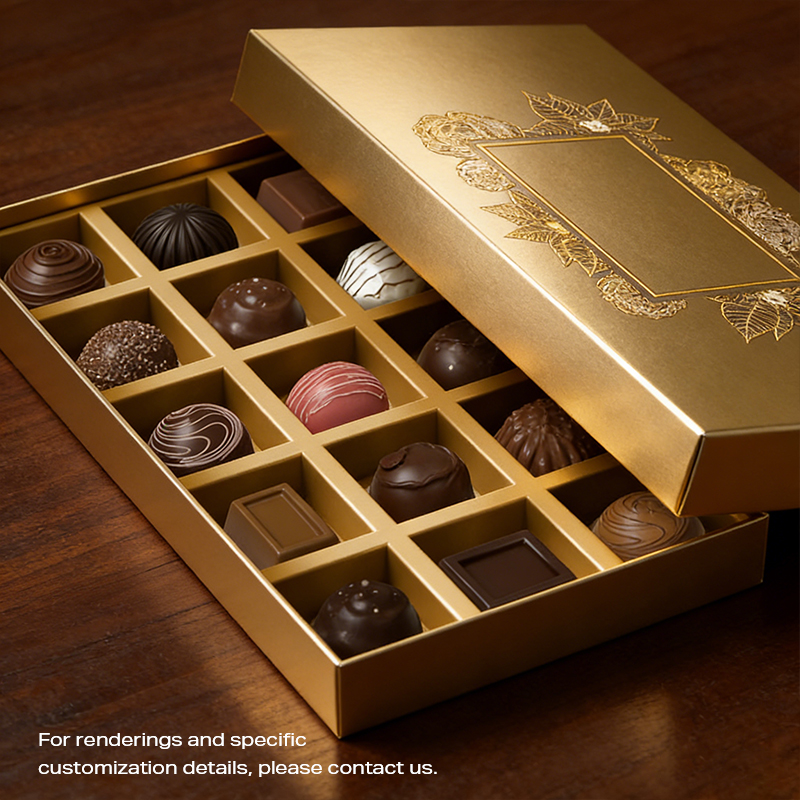
SH-04 5x3 Grid Hot Stamping Process Chocolate Gift Box
The SH-04 Chocolate Gift Box is a lid-and-base style rigid paper packaging solution made for premium chocolate assortments. Its core feature is a neatly organized grid insert, commonly presented in a 5x3 visual layout and customizable for different chocolate counts, shapes, and market requirements. The box is especially suitable for individually separated chocolates, pralines, truffles, filled chocolate pieces, bonbons, and limited-edition dessert gifts.
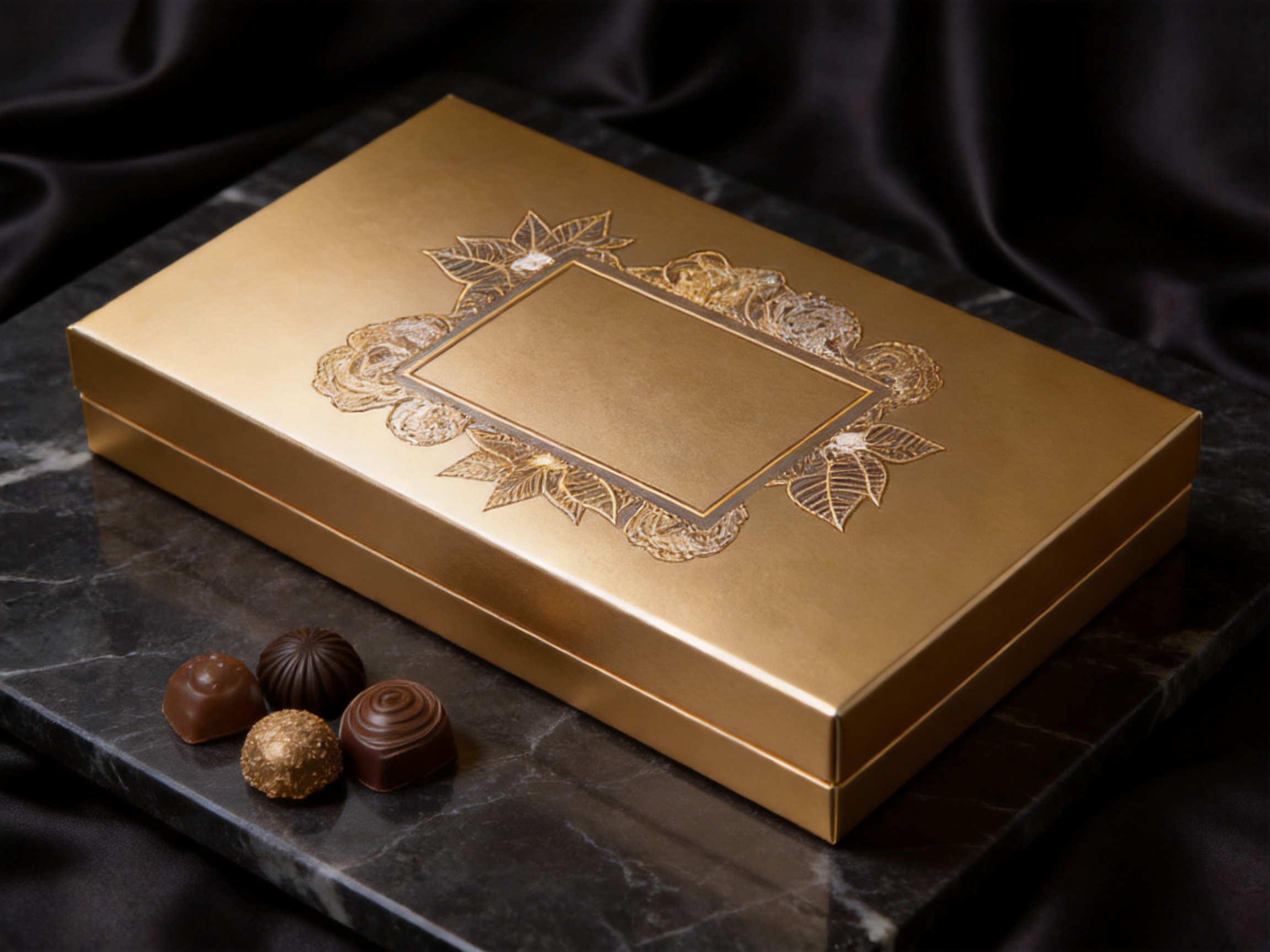
The outer layer uses high-rigidity grey cardboard combined with gold glossy art paper. This material combination gives the box strength, form stability, and a premium surface effect. The box body is finished with glossy film lamination and hot-stamped pattern printing, producing a bright metallic sheen and decorative detail that immediately suggests luxury. Inside, a gold blister tray provides clean separation and secure placement for chocolate pieces.
The standard reference size can be customized around approximately 25–30 cm in length, 20–25 cm in width, and 5–7 cm in height. This makes the product flexible for multiple chocolate formats, including compact high-value selections and larger holiday assortments. The lid-and-base opening method creates a ceremonial unboxing experience: the upper lid lifts away smoothly to reveal the organized grid layout inside.
Unlike simple paper folding boxes, this rigid gift box emphasizes gifting value. Its surface finish, structural thickness, gold-toned interior, and controlled compartment arrangement give the product a retail-ready and gift-ready character. For brands that compete in a market where chocolate quality is judged before tasting, this packaging plays a decisive role in first impressions.
Chocolate is a sensory product. Taste, aroma, texture, and appearance all matter. However, customers often encounter the packaging before they encounter the chocolate itself. In physical retail, online product photography, seasonal gift campaigns, and corporate gifting, packaging acts as the first signal of quality. If the box looks ordinary, the product can be underestimated. If the box looks refined, carefully crafted, and emotionally appealing, the chocolates inside are more likely to be perceived as premium.
High-end chocolate packaging must satisfy several functions at once. It must protect the product from movement and impact. It must separate individual pieces so coatings, decorations, fillings, and shapes remain intact. It must keep the presentation neat throughout transport, retail handling, and gifting. It must also provide enough decorative value to support a higher price point.
The SH-04 box responds to these requirements through a combination of structure and surface craft. The rigid cardboard gives the box a reliable shape. The grid tray keeps chocolates separated. The hot-stamping process creates a prestigious visual effect. The gold color scheme communicates celebration, abundance, and premium value. These features make the box suitable for festive occasions such as Christmas, New Year, Valentine’s Day, Mid-Autumn gifts, wedding favors, corporate events, anniversary promotions, and luxury dessert launches.
For chocolate brands, packaging is also a brand communication tool. A beautifully finished rigid box can become a customer’s memory anchor. Many consumers keep attractive gift boxes for storage or decoration after the chocolates are eaten. This extended life gives the packaging additional promotional value and strengthens brand recall.
The following table summarizes the main specifications and performance features of the SH-04 Chocolate Gift Box.
| Item Number | SH-04 |
| Product Type | Hot-stamped rigid chocolate gift box with grid insert |
| Recommended Use | Premium chocolates, dessert sets, holiday gifts, business gifts, souvenir packaging |
| Reference Dimensions | Approximately 25–30 cm length × 20–25 cm width × 5–7 cm height, customizable |
| Opening Method | Lid and base style |
| Outer Material | High-rigidity grey cardboard with gold glossy art paper |
| Inner Material | Gold blister tray or customized insert |
| Surface Process | Glossy film lamination and hot stamping pattern printing |
| Compartment Design | 5x3 grid visual layout, customizable for different chocolate counts and shapes |
| Main Advantages | Luxury appearance, strong protection, neat separation, premium unboxing experience, customization flexibility |
One of the strongest visual features of this chocolate gift box is its hot-stamped surface. Hot stamping is a decorative process in which metalized foil is transferred onto the packaging surface through heat and pressure. When performed with precision, it produces sharp pattern edges, high reflectivity, and an elegant metallic finish that ordinary ink printing cannot fully imitate.
In the SH-04 box, the hot-stamping process works especially well with the gold glossy art paper and glossy film lamination. The result is a layered shine: the base surface has a bright, smooth finish, while the stamped patterns create depth and highlight contrast. Under retail lighting or photography lighting, this metallic effect helps the box stand out immediately.
Compared with low-cost printed boxes, hot-stamped rigid packaging communicates higher value. Consumers associate metallic details with luxury goods, jewelry packaging, premium cosmetics, ceremonial gifts, and high-end food products. This psychological association benefits chocolate brands because it allows the packaging to elevate the perceived quality of the product before the box is opened.
The durability of the hot-stamped finish is another advantage. A well-executed hot stamping process resists fading better than many purely printed metallic effects. It also provides a tactile and visual richness that can remain attractive through handling, display, and gifting. For products sold as holiday gifts or corporate presents, this durability helps preserve the box’s premium appearance until the final recipient receives it.
Chocolate pieces can be delicate. Decorations may crack, coatings may scratch, and filled centers may deform if the packaging does not provide sufficient protection. The SH-04 box uses high-rigidity grey cardboard as the structural foundation. Grey cardboard is widely used in premium rigid boxes because it offers thickness, stiffness, and shape retention.
The rigid construction gives the box a more substantial hand feel than thin folding cartons. When a customer holds the box, the weight and firmness communicate reliability and value. For shipping and retail handling, the structure also helps reduce compression and deformation. While outer shipping cartons remain important for logistics, a rigid gift box provides an additional protective layer around the chocolates.
The lid-and-base design further contributes to protection. The base holds the tray and chocolates securely, while the lid covers the product fully and shields the interior presentation. The smooth opening and closing motion also supports repeated viewing without damaging the box. This matters in retail counters, showroom displays, and gift selection processes, where boxes may be opened to demonstrate product presentation.
Compared with flimsy plastic containers or basic paperboard sleeves, a rigid cardboard gift box creates a better balance between presentation and protection. It has the decorative appeal required for gifting and the physical strength needed for premium food packaging.
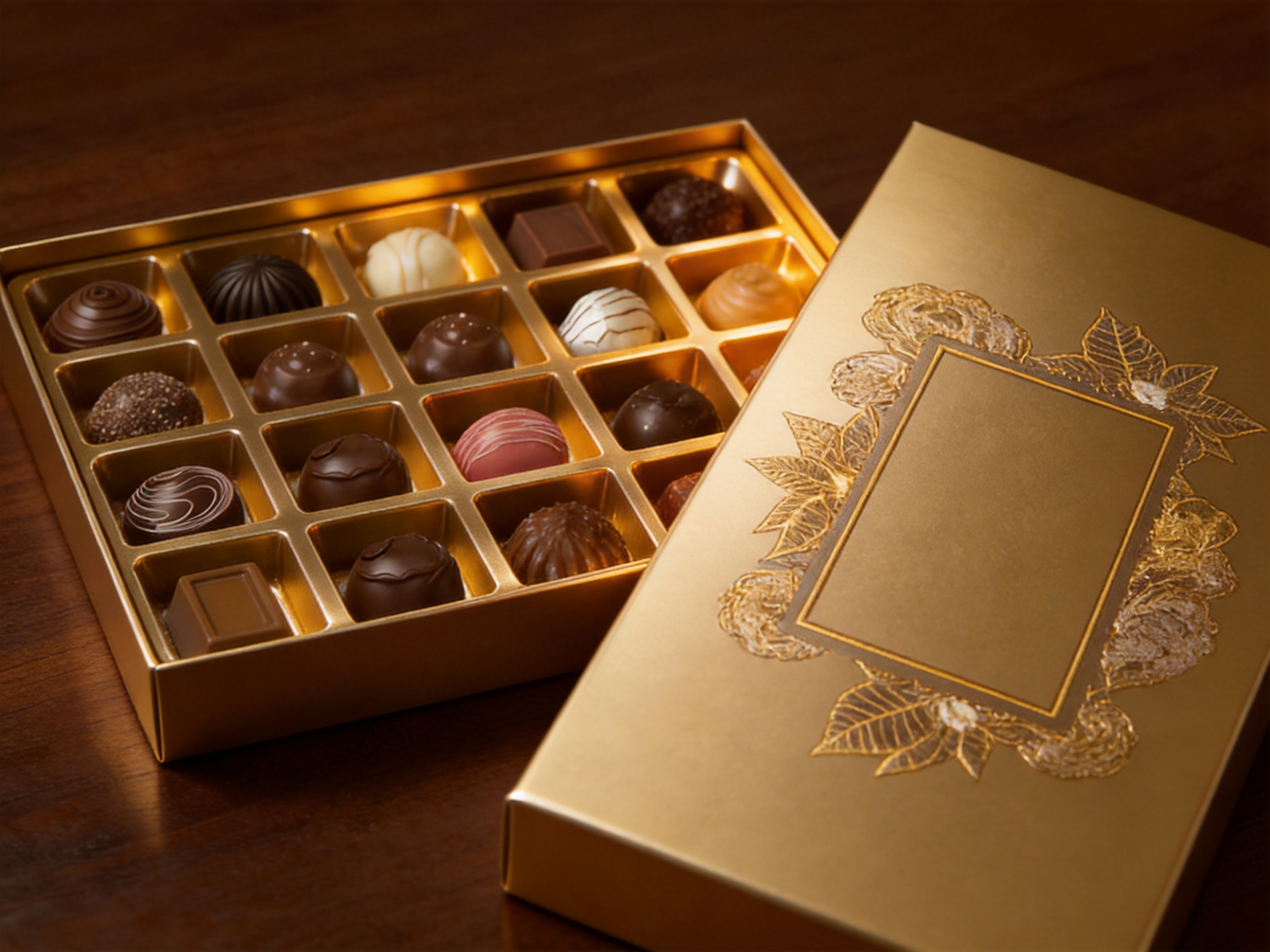
The internal grid arrangement is essential to the product’s functionality. Premium chocolates are often made in different shapes, coatings, colors, and flavor profiles. If they move freely inside the box, the presentation becomes messy and the chocolates may damage one another. The SH-04 grid insert solves this problem by separating individual pieces into dedicated positions.
The 5x3 grid visual format creates order and symmetry. When the lid is removed, the recipient can see each chocolate clearly. This organized presentation makes the assortment easier to appreciate and encourages careful selection. For brands that offer assorted flavors, the layout can also be coordinated with flavor cards, printed guides, or color-coded arrangements.
The gold blister tray enhances the sense of luxury while performing a practical role. It holds each chocolate in place and reduces sliding during movement. Depending on the customer’s needs, the insert can be adapted for round truffles, square pralines, heart-shaped chocolates, rectangular bars, molded seasonal designs, or other specialty pieces.
This custom insert capability is a major advantage over generic stock boxes. A generic box may force the chocolate producer to adjust the product to the packaging. A customized SH-04-style box allows the packaging to be adapted to the product. This improves presentation, reduces damage risk, and helps brands maintain a consistent visual identity.
The chocolate packaging market includes many different solutions, from simple paper cartons and plastic trays to premium rigid boxes. The SH-04 Hot Stamping Chocolate Gift Box is positioned at the high-value end of this market. Its advantages become clear when compared with lower-cost alternatives.
First, the box offers stronger shelf impact. Ordinary printed cartons may depend only on color graphics and flat printing. The SH-04 box uses a metallic hot-stamped finish, gold-toned materials, and a glossy surface to catch light and attract attention. In gift retail, this visual difference can influence purchasing decisions quickly.
Second, the product provides a more premium hand feel. Rigid grey cardboard is noticeably sturdier than thin paperboard. Customers often judge quality through touch as well as sight. A firm, smooth, well-finished box gives the impression that the chocolates inside are also carefully made.
Third, the internal tray creates a professional arrangement. Basic boxes may use simple dividers or no separators at all. The customized grid insert of the SH-04 helps maintain a neat display and protects individual chocolates. This is especially important for decorated and handmade chocolate pieces.
Fourth, the lid-and-base opening style creates a better unboxing ceremony. Sliding sleeves and tuck-end cartons are practical, but they rarely feel ceremonial. A rigid lid-and-base box invites the recipient to lift the cover and reveal the full assortment at once. This creates a stronger emotional response and makes the package more suitable for gifting.
Fifth, the box supports customization. Size, layout, color, surface pattern, logo position, tray form, and finishing options can be adjusted according to product requirements. This allows brands to develop packaging that fits their market position instead of relying on standard packaging formats used by many competitors.
Finally, the box reflects manufacturing precision. Sharp hot-stamping patterns, well-aligned wrapping paper, smooth laminated surfaces, and clean tray fitting all demonstrate production control. In a premium market, these small details separate professional packaging from ordinary packaging.
A premium gift box depends not only on design but also on manufacturing execution. Zhejiang Shihao Gift Packaging Co., Ltd. is an export-oriented manufacturer specializing in paper gift packaging boxes. With more than 15 years of development, the company has built capabilities in research and development, production, customization, and international supply. Its factory covers approximately 20,000 square meters and employs around 300 people, giving it the scale required to support both regular production and customized packaging projects.
The company’s daily production capacity reaches about 5,000 sets of gift boxes on average. This capacity is important for chocolate brands and gift companies that need stable supply during peak seasons. Holiday packaging programs often require strict delivery schedules because missing a seasonal sales window can lead to major losses. A manufacturer with organized production capacity can help customers manage timing more effectively.
The company has advanced equipment and an internal design team. These strengths allow it to update many product designs regularly and provide packaging solutions for different markets. For a product like the SH-04, design and production must work together: the decorative pattern must suit hot stamping, the paper material must accept lamination cleanly, the tray must fit the box dimensions, and the finished box must meet customer expectations for both appearance and function.
Certifications such as BSCI and FSC also support international business requirements. BSCI reflects attention to social compliance in supply chain management, while FSC certification supports responsible paper sourcing. For global chocolate brands, these factors can be important when selecting a packaging supplier, especially in markets where sustainability and responsible sourcing are increasingly valued.
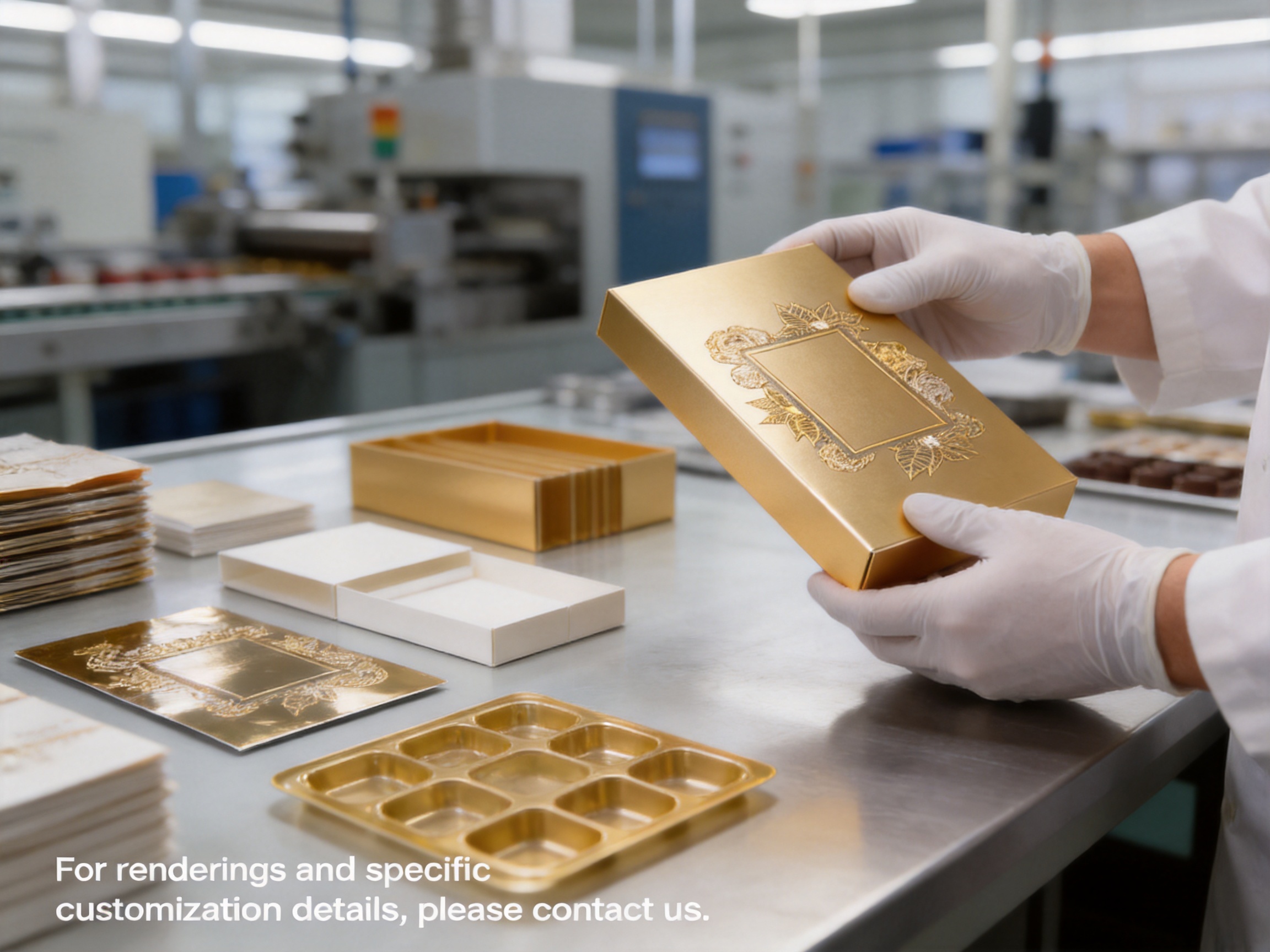
The production of a luxury rigid chocolate box involves multiple stages. Each stage affects the final quality. A well-made SH-04 box is not simply printed and folded; it is engineered, decorated, assembled, inspected, and packaged through a controlled process.
The process begins with product requirements. The customer may provide chocolate dimensions, desired piece count, brand colors, logo files, artwork direction, target price range, and intended sales scenario. The design team then develops a suitable box structure and insert layout. For SH-04-style packaging, the design must consider the lid-and-base fit, tray depth, chocolate height, finger access, paper thickness, and finishing process.
Structural planning is especially important because chocolates must remain stable but also easy to remove. If the tray cavities are too loose, the chocolates may move. If they are too tight, the customer may struggle to take them out. A good design balances security and usability.
High-rigidity grey cardboard is selected for the rigid structure. Gold glossy art paper is prepared for surface wrapping. If required, alternative papers, textures, colors, or specialty finishes can be selected. The inner tray material is prepared according to the required compartment design. Material consistency is critical because thickness variations can affect lid fit and assembly accuracy.
Before hot stamping, the surface design is prepared. Glossy film lamination is applied to the box body to create a smooth, protective layer. This lamination improves visual brightness and helps protect the printed or decorative surface from scuffing. The hot-stamping pattern is then applied using heated dies, pressure, and metallic foil. Precise alignment is required so the decorative elements appear clean and balanced.
The cardboard components are cut to exact dimensions. Clean cutting is necessary for accurate corners and smooth edges. The board is then formed into the lid and base structures. Rigid box production requires careful shaping so that corners are square, surfaces are flat, and the lid fits the base smoothly.
The decorative paper is wrapped around the rigid board. Skilled workmanship and stable equipment are both important at this stage. Wrinkles, bubbles, exposed edges, and misalignment can reduce perceived quality. For luxury packaging, clean wrapping is essential. After wrapping, the lid and base are assembled and checked for fit.
The gold blister tray or customized insert is placed into the base. The tray must fit neatly without warping or excessive movement. The cavity layout should align visually with the box and support the chocolates effectively. For customized orders, samples are usually tested with actual chocolate dimensions before mass production.
Finished boxes are inspected for surface defects, hot-stamping clarity, color consistency, structural accuracy, lid fit, tray placement, and overall appearance. Premium packaging demands careful inspection because visible defects can affect the customer’s perception of the chocolates. Quality control is therefore a key part of the product’s value.
The SH-04 Chocolate Gift Box can be customized in many ways, making it useful for brands with different positioning strategies. Customization is not merely decorative; it can improve product fit, brand recognition, user experience, and market competitiveness.
Size customization allows the box to match the exact dimensions of the chocolates. A boutique chocolatier may need a compact box for handmade truffles, while a corporate gift supplier may need a larger format for a multi-flavor assortment. Height can also be adjusted for taller molded chocolates or layered inserts.
Color customization allows brands to move beyond the standard gold luxury style. Gold is ideal for festive and high-end positioning, but other options such as black and gold, red and gold, champagne, deep green, royal blue, ivory, or metallic silver can be developed for specific markets. Color psychology matters in gift packaging: red suggests celebration, black suggests sophistication, ivory suggests elegance, and green can support natural or sustainable product themes.
Surface process customization can include hot stamping, embossing, debossing, spot UV, matte lamination, glossy lamination, textured paper, metallic paper, and printed patterns. Combining processes can create a more distinctive appearance. For example, a brand logo can be hot-stamped while the background uses a subtle printed pattern. A decorative border can be embossed to create touchable detail.
Insert customization is equally important. The 5x3 layout can be adjusted to different grids, including layouts suitable for 9, 12, 15, 16, 18, or more pieces, depending on product size. Tray cavities can be round, square, rectangular, heart-shaped, oval, or custom molded. Paperboard dividers can also be considered for brands that prefer a paper-based interior.
Branding customization may include logo placement on the lid, inner lid printing, flavor guide cards, ribbons, sleeves, belly bands, greeting cards, or window-free luxury presentation. For corporate gifting, the box can carry event-specific messages or co-branded elements. For seasonal retail, it can be adapted to limited-edition themes.
The SH-04 box is suitable for a wide range of high-end food and gift applications. Although designed primarily for chocolate packaging, its structure and decorative style can support related premium products.
Seasonal gifting is one of the strongest applications. During holidays, consumers look for packaging that feels festive and generous. The gold hot-stamped finish supports celebratory occasions and helps the product stand out among ordinary gift boxes. Whether used for Christmas, New Year, Valentine’s Day, Mother’s Day, or local festivals, the box creates a ready-to-gift appearance.
Corporate gifts must look professional and high value. A rigid hot-stamped chocolate box can communicate respect and appreciation. Companies can customize the lid with a logo, message, or event theme. The organized interior layout gives the gift a polished appearance suitable for clients, employees, partners, and VIP guests.
Premium dessert brands often sell assorted confectionery beyond traditional chocolates, such as small cakes, sweets, nougat, macarons, or specialty candies. With suitable insert customization, the SH-04 box can be adapted for various delicate desserts that require separation and attractive presentation.
Travel retail and regional specialty food packaging often depend on emotional appeal. A luxurious box can help transform local sweets or handmade chocolates into memorable souvenirs. The hot-stamped surface can include cultural patterns, scenic motifs, or festival designs to strengthen the souvenir concept.
When a chocolate brand launches a limited-edition flavor series, packaging must support exclusivity. The SH-04 structure provides a strong base for collectible packaging. Special foil colors, numbered cards, unique tray layouts, and premium inserts can turn the box into part of the limited-edition experience.
Packaging can increase perceived value when it aligns with product quality and target market expectations. The SH-04 box enhances brand value in several ways.
First, it creates visual confidence. Customers often use packaging as a shortcut for judging product quality. A luxurious rigid box suggests that the contents are carefully selected and worth gifting. This can support premium pricing and improve conversion in retail or online environments.
Second, it improves the gifting experience. Gift packaging should reduce the need for additional wrapping. With its gold surface, hot-stamped detail, and structured interior, the SH-04 can be presented directly as a gift. This convenience adds value for consumers who want a beautiful product without extra preparation.
Third, it supports brand differentiation. In competitive chocolate markets, many products may offer similar flavors or ingredient claims. Packaging design can become a visible differentiator. A customized SH-04-style box allows brands to express their identity through color, texture, logo, pattern, and interior arrangement.
Fourth, it encourages social sharing. Attractive packaging is more likely to be photographed and shared online. Unboxing moments, gift displays, and seasonal product photos can help brands gain organic attention. The metallic hot-stamped surface is especially effective in product photography when lighting is controlled properly.
Fifth, it increases retention. Some customers keep premium rigid boxes for storage of jewelry, stationery, keepsakes, or small accessories. When packaging remains in use after the product is consumed, the brand continues to appear in the customer’s environment.
When selecting premium chocolate packaging, professional buyers should evaluate more than appearance. Several quality details reveal whether a box is suitable for high-end use.
The first detail is edge quality. Clean edges show accurate cutting and careful wrapping. Rough edges, exposed grey board, or uneven corners can reduce the luxury feeling.
The second detail is lid fit. A lid-and-base box should open smoothly but not feel loose. If the lid is too tight, it may frustrate users or damage the box. If it is too loose, it may seem poorly made. Proper tolerances are essential.
The third detail is hot-stamping clarity. The foil pattern should have sharp edges and consistent adhesion. Broken foil, blurred details, or misregistration can make the package look cheap. The SH-04 emphasizes precise hot-stamping to create clean, premium decorative effects.
The fourth detail is surface smoothness. Glossy lamination should appear even, without bubbles, scratches, or wrinkles. The reflective surface makes defects more visible, so production control must be strong.
The fifth detail is tray accuracy. Each cavity should fit the intended chocolate shape. The tray should sit flat in the box and support the product without excessive movement. A beautiful outer box cannot compensate for a poorly fitted interior.
The sixth detail is material consistency. Rigid boxes rely on stable board thickness and paper quality. Consistent materials produce consistent structure, appearance, and assembly performance across large orders.
Modern consumers and international buyers increasingly care about responsible sourcing and packaging sustainability. While luxury packaging must look attractive, it should also be developed with material efficiency and responsible supply considerations in mind.
The paper-based rigid structure of the SH-04 box provides a strong foundation for responsible packaging design. FSC certification supports responsible forest management and helps customers meet procurement requirements in many markets. For brands that emphasize environmental responsibility, this certification can be part of the packaging value story.
Customization can also support sustainability. By designing the box to fit the chocolates accurately, brands can reduce unnecessary internal movement and avoid oversized packaging. Proper sizing can reduce material waste, improve carton loading efficiency, and support better logistics planning.
Material options can be adjusted according to customer priorities. Some customers may prefer paperboard inserts instead of plastic trays, while others may require blister trays for better product protection and presentation. The best choice depends on product type, market regulations, shelf life requirements, and consumer expectations.
Durability is another form of sustainability. A rigid gift box that customers reuse has a longer useful life than disposable packaging. If the box is attractive enough to be kept, it can reduce the perception of waste and extend brand exposure.
International chocolate and gift packaging projects require more than attractive samples. They require stable production, communication, compliance awareness, packaging safety, and delivery management. Zhejiang Shihao Gift Packaging Co., Ltd. exports products to Europe, the United States, the Middle East, and other regions. This export experience helps the company understand the expectations of different markets.
European buyers often emphasize responsible sourcing, understated luxury, accurate quality control, and efficient logistics. American buyers may focus on brand customization, retail impact, seasonal promotions, and reliable delivery schedules. Middle Eastern markets often appreciate rich decorative effects, metallic finishes, and gift packaging that communicates celebration and status. The SH-04 box, with its gold finish and hot-stamped decoration, is especially suitable for markets where festive luxury is valued.
Export production also requires attention to packing methods. Finished rigid boxes must be protected from moisture, crushing, abrasion, and surface scratches during transport. Proper outer cartons, inner wrapping, stacking methods, and palletization can help maintain quality until arrival. A manufacturer with export experience can recommend packing solutions that reduce shipping damage.
Communication is another important factor. Custom packaging involves artwork confirmation, sample approval, material selection, production scheduling, inspection, and shipment coordination. A strong design and sales support team can make this process more efficient for overseas customers.
Some buyers may consider using general printing factories for chocolate boxes. However, rigid gift packaging requires specialized knowledge and equipment. A specialized gift packaging manufacturer offers several advantages.
First, it understands box structure. Rigid boxes, storage boxes, folding boxes, jewelry boxes, and food gift boxes each have different requirements. Experience across these categories helps the manufacturer recommend suitable structures for different products.
Second, it understands finishing compatibility. Hot stamping, lamination, art paper, grey board, and trays must work together. A process that looks good in a design file may not perform well on a certain paper surface. Experienced manufacturers can identify risks before mass production.
Third, it can support customization from concept to delivery. Customers may not know the exact box size, tray layout, or finish combination they need. A manufacturer with design capabilities can turn product requirements into practical packaging solutions.
Fourth, it provides scalability. A small workshop may produce samples beautifully but struggle with large orders. A factory with around 300 employees, advanced equipment, and daily production capacity of about 5,000 sets is better positioned for commercial packaging programs.
Fifth, it can maintain quality consistency. Premium brands need repeated orders to match previous batches. Specialized production systems and quality control procedures help reduce variation in color, structure, and finishing.
To get the best results from a SH-04-style gift box, chocolate brands should consider several design recommendations during development.
Begin with the chocolate dimensions. Measure length, width, height, and shape variation accurately. Include decorations, toppings, or wrappers in the measurement. The tray cavity should be designed around the real finished chocolate, not only the mold size.
Define the gifting occasion. A box for Valentine’s Day may use romantic colors and heart-shaped layouts. A corporate gift may need a restrained luxury style with clean branding. A holiday box may use festive patterns and stronger metallic effects. The occasion should guide the design language.
Choose the right foil tone. Gold is classic, but different gold foils produce different impressions. Bright yellow gold feels festive and bold. Champagne gold feels refined and modern. Rose gold feels romantic and fashionable. Selecting the correct foil improves brand alignment.
Control logo placement. A premium box does not always need oversized branding. In many luxury products, subtle logos and refined patterns create a stronger effect than loud graphics. Hot stamping is ideal for elegant logo presentation.
Plan the inner experience. The first view after opening is crucial. Consider tray color, flavor arrangement, printed insert cards, and the contrast between chocolate colors and the tray. Dark chocolates can look especially rich against gold interiors, while colorful bonbons can stand out in a symmetrical grid.
Consider photography. E-commerce and catalog sales depend heavily on images. Reflective surfaces can be beautiful but require proper lighting. During design, brands should think about how the box will appear in product photos, social media content, and promotional displays.
Premium rigid boxes usually cost more than simple folding cartons, but cost should be evaluated in relation to product positioning and sales value. For high-end chocolates, packaging is part of the product offering. A better box can support a higher retail price, improve gift appeal, reduce product damage, and strengthen brand image.
The SH-04 box delivers value through multiple dimensions. Its rigid structure supports protection. Its hot-stamped finish supports luxury perception. Its grid insert supports presentation quality. Its customization options support brand differentiation. These benefits can justify the investment for brands targeting premium customers.
Cost can be managed through intelligent design choices. For example, standardizing box dimensions across several product lines can improve production efficiency. Selecting one strong decorative process instead of many unnecessary processes can control expense while maintaining impact. Optimizing tray layout can reduce wasted space and improve material use. Ordering according to seasonal forecasts can also help manage production schedules and unit costs.
Professional packaging development is about balance. The most expensive design is not always the best design. The best design is the one that supports the product’s market position, protects the contents, attracts the target customer, and performs reliably in production and logistics.
Buyers interested in the SH-04 Chocolate Gift Box should prepare clear information before requesting a quotation or sample. This helps the manufacturer provide accurate recommendations.
Important information includes chocolate size, piece count, desired box dimensions, target quantity, preferred material, surface finish, logo artwork, tray type, delivery deadline, export destination, and any food-contact or sustainability requirements. If possible, buyers should provide actual chocolate samples or detailed drawings. This allows the insert to be tested accurately.
Sampling is strongly recommended before mass production. A sample allows the buyer to check lid fit, tray layout, surface finish, color, logo size, and overall presentation. For hot stamping, sample approval is especially important because metallic foil appearance can vary depending on material, lighting, and pattern detail.
Buyers should also confirm packing methods and shipping requirements. Rigid boxes must be protected carefully, especially when glossy surfaces and metallic details are used. Clear communication about carton packing, quantity per carton, pallet requirements, and shipping conditions can reduce transportation risk.
The box combines rigid grey cardboard, gold glossy art paper, hot-stamped decoration, glossy lamination, and a customized grid insert. This combination provides strength, luxury appearance, and organized product presentation, making it suitable for high-end chocolate assortments and gift sets.
Yes. Although the product is commonly described with a 5x3 grid visual layout, the insert can be adjusted according to chocolate size, shape, and piece count. Custom layouts can support different assortments, including round truffles, square pralines, molded chocolates, or mixed dessert items.
Hot stamping transfers metallic foil onto the surface using heat and pressure. It creates a brighter, sharper, and more luxurious metallic effect than many ordinary printed metallic inks. It also provides excellent visual contrast and a premium tactile impression.
Yes. The rigid lid-and-base structure, gold-toned finish, and organized interior make it highly suitable for business gifts. Logos, messages, event themes, and custom inserts can be added to create a professional corporate gift package.
The outer structure uses high-rigidity grey cardboard with gold glossy art paper. The surface can include glossy film lamination and hot-stamped pattern printing. The inner lining commonly uses a gold blister tray, though insert options can be customized.
Yes. The reference dimensions are approximately 25–30 cm in length, 20–25 cm in width, and 5–7 cm in height, but the size can be customized according to the chocolate product and customer requirements.
It is ideal for premium chocolate brands, boutique confectionery shops, holiday gift suppliers, corporate gift companies, luxury dessert producers, souvenir brands, and seasonal retail programs.
Yes. Zhejiang Shihao Gift Packaging Co., Ltd. is an export-oriented manufacturer with experience supplying markets such as Europe, the United States, and the Middle East. The company has production capacity, design capabilities, and international packaging experience.
Compared with ordinary folding cartons, this rigid gift box offers stronger structure, better hand feel, more luxurious surface finishing, improved product separation, and a more memorable unboxing experience. It is better suited for premium gifting and higher-value chocolate products.
Yes. FSC-certified paper sourcing and customized material planning can support responsible packaging goals. Depending on customer priorities, insert materials and box dimensions can be optimized to improve material efficiency and align with market expectations.
The SH-04 5x3 Grid Hot Stamping Process Chocolate Gift Box is more than a decorative container. It is a complete presentation system for premium confectionery. Its rigid cardboard structure protects delicate chocolates, while the grid insert maintains order and separation. Its gold glossy surface, hot-stamped patterns, and smooth lid-and-base opening style create a luxury unboxing experience that strengthens gift value.
For brands competing in the high-end chocolate market, packaging quality can directly influence customer perception, retail appeal, and gift suitability. The SH-04 box helps communicate craftsmanship, celebration, and premium value before the first chocolate is tasted. Its customizable dimensions, insert layout, branding elements, and surface finishes allow it to serve different product lines and market strategies.
Behind the product is the manufacturing strength of Zhejiang Shihao Gift Packaging Co., Ltd., an experienced paper gift packaging manufacturer with advanced equipment, design capability, export experience, BSCI and FSC certifications, and stable production capacity. These strengths are important for buyers who need not only attractive samples but also reliable mass production and consistent quality.
In a market where presentation can determine whether a product is chosen, gifted, photographed, remembered, and repurchased, the SH-04 Chocolate Gift Box offers a strong competitive advantage. It combines luxury aesthetics, practical protection, manufacturing precision, and customization flexibility, making it a compelling choice for premium chocolate packaging, holiday gift sets, business gifts, and luxury dessert collections.
1. Soroka, W. Fundamentals of Packaging Technology. Institute of Packaging Professionals.
2. Yam, K. L. The Wiley Encyclopedia of Packaging Technology. Wiley.
3. Robertson, G. L. Food Packaging: Principles and Practice. CRC Press.
4. Twede, D., and Selke, S. Cartons, Crates and Corrugated Board: Handbook of Paper and Wood Packaging Technology. DEStech Publications.
5. Klimchuk, M. R., and Krasovec, S. A. Packaging Design: Successful Product Branding from Concept to Shelf. Wiley.
Recommended Products

Contact Us

No. 15, Xiayang Road, Huangzhai Town, Jinhua, Zhejiang, China

(+86) 579-84230069

(+86) 13085675766


Products

Gift Box Packaging Manufacturer
 English
 Français
 Español
 عربى