2026-11-05
Jewelry packaging performs two important functions at the same time. It protects a valuable product during storage, transportation, and presentation, while also communicating the character of the brand behind that product. For rings, earrings, pendants, bracelets, and other small ornaments, the packaging is often the first physical interaction a customer has with a jewelry company. A well-designed box can make a product feel more exclusive, create a memorable unboxing experience, and reinforce trust in the quality of the item inside.
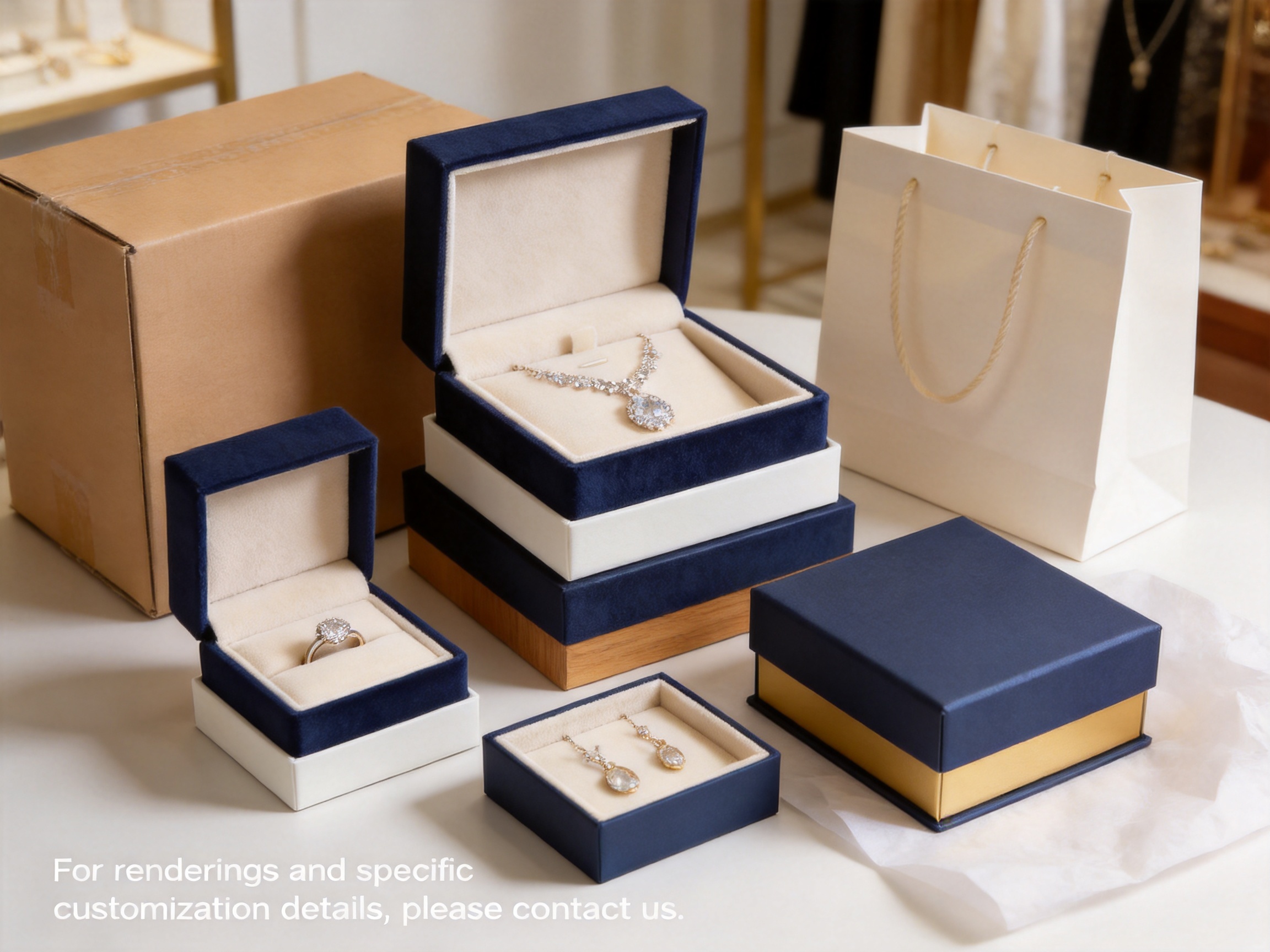
The SHJGB-04 navy blue top-and-bottom lid jewelry gift box is designed for brands that need a refined combination of appearance, structure, interior softness, and customization. Its deep navy blue exterior creates an elegant and confident visual identity. The finely textured paper surface provides the look and tactile impression of a premium material, while the faux suede lining offers a soft interior environment for jewelry. The two-part lid-and-base construction is straightforward, durable, and suitable for a broad range of jewelry packaging applications.
Manufactured by Zhejiang Shihao Gift Packaging Co., Ltd., the SHJGB-04 reflects the company’s focus on paper gift packaging, product development, export manufacturing, and customized packaging solutions. With more than 15 years of experience, a 20,000-square-meter production site, approximately 300 employees, advanced equipment, and an average daily production capacity of about 5,000 gift box sets, the manufacturer is equipped to support both product development and volume production.
This article examines the design value, material advantages, manufacturing strengths, customization possibilities, sustainability considerations, and commercial applications of the SHJGB-04 jewelry gift box. It also explains why a top-and-bottom lid structure can be a competitive alternative to ordinary folding cartons, basic paperboard boxes, and less carefully finished jewelry packaging.
The SHJGB-04 is a top-and-bottom jewelry gift box, also commonly called a lid-and-base box. The design consists of two separate parts: a fitted upper lid and a lower base that holds the jewelry insert. When closed, the lid covers the base and creates a compact protective enclosure. When opened, the two-part format provides a deliberate presentation sequence that is well suited to gift giving and retail display.
The exterior is presented in a deep navy blue color. Navy is widely associated with sophistication, reliability, confidence, and premium positioning. Compared with very bright colors, navy blue is easier to integrate into luxury, classic, corporate, and modern brand identities. It can also serve as a neutral foundation for gold, silver, white, copper, or embossed branding elements.
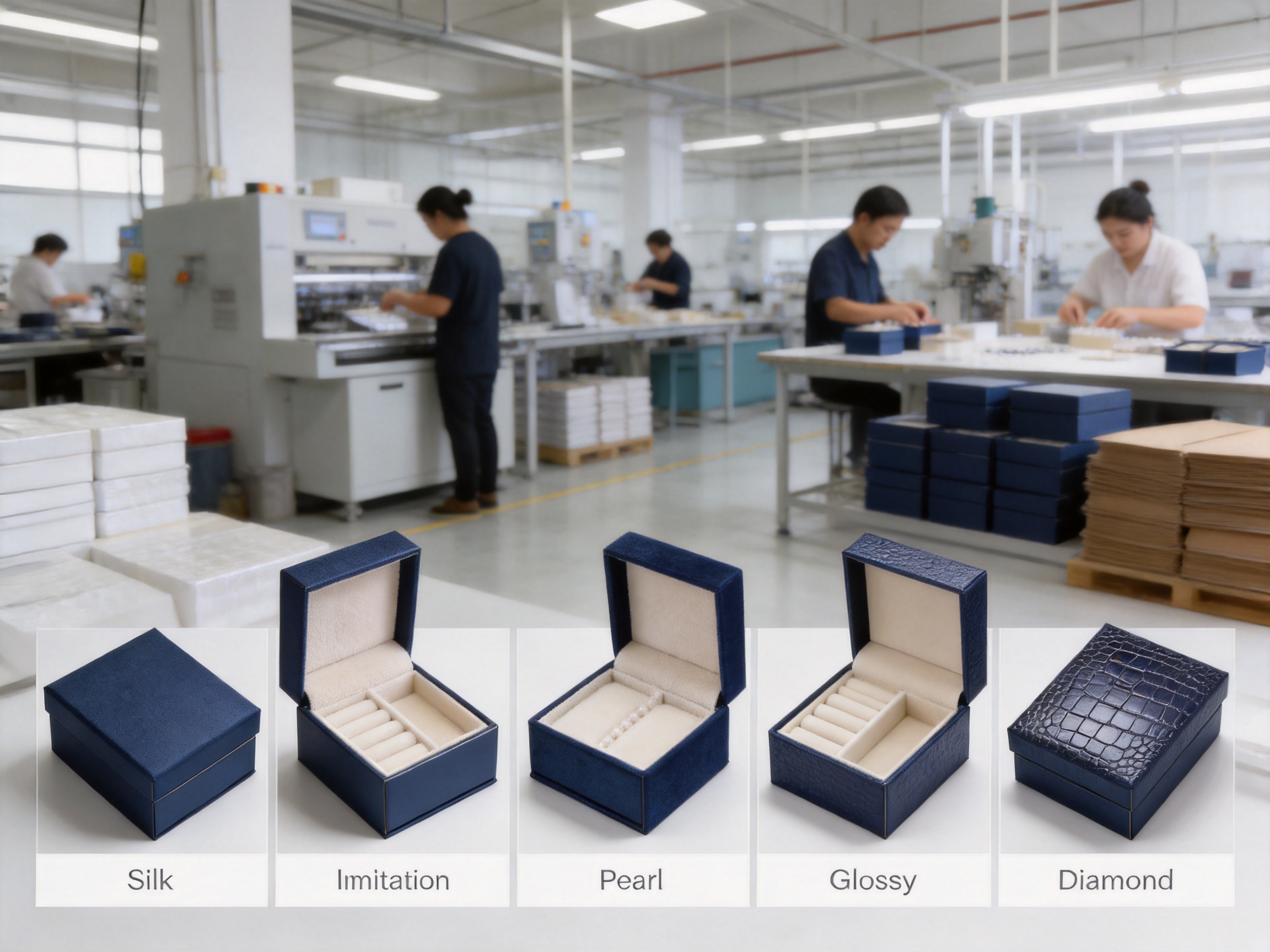
The surface uses a special textured paper material. Available texture directions include silk texture, imitation leather lychee texture, pearl texture, glossy crocodile texture, and diamond texture. These options allow buyers to select a surface that matches the style of their jewelry collection. A silk texture may support a restrained and elegant identity, while an imitation leather texture can create a more substantial and durable visual impression. Pearl, crocodile, and diamond textures can add distinctive visual interest when a stronger decorative effect is required.
The interior is lined with faux suede. This material is valued for its soft touch and its ability to create a refined background for jewelry. The low-gloss, velvety appearance of faux suede can help metal, gemstones, enamel, and polished surfaces stand out. It also gives the inside of the box a warmer and more luxurious character than an unlined paperboard interior.
The product is intended for rings, pendants, earrings, bracelets, and other small ornaments. Depending on the project, the interior layout can be adapted to accommodate the shape, quantity, and presentation requirements of the jewelry. This makes the SHJGB-04 useful for individual product packaging, gift sets, seasonal collections, promotional releases, and customized retail programs.
| Product Attribute | Specification or Capability |
| Model | SHJGB-04 |
| Box Structure | Top-and-bottom lid with separate base |
| Exterior Color | Deep navy blue |
| Exterior Material | Special textured paper |
| Texture Options | Silk, imitation leather lychee, pearl, glossy crocodile, and diamond textures |
| Interior Lining | Faux suede |
| Suitable Jewelry | Rings, pendants, earrings, bracelets, and other small ornaments |
| Logo | Customizable |
| Customization | Interior layouts, brand finishes, and material options can be developed according to project requirements |
The structure of a jewelry box has a direct influence on perceived quality. A simple folding carton may be efficient for lightweight products, but it does not always provide the same sense of occasion as a rigid or semi-rigid lid-and-base presentation box. The SHJGB-04 uses a two-part format that creates a clear opening action. The customer lifts the lid, reveals the interior, and encounters the jewelry in a controlled presentation environment.
This opening sequence is especially valuable for gifts. The box can be opened slowly and intentionally, allowing the packaging to become part of the experience rather than merely a disposable shipping container. For jewelry brands, this offers an opportunity to connect the physical packaging with important moments such as birthdays, anniversaries, proposals, weddings, holidays, and personal milestones.
The separate lid and base also provide a clean visual division between the outside and inside of the package. The dark navy exterior establishes a strong first impression, while the lighter or contrasting faux suede interior can direct attention toward the jewelry. This contrast helps prevent the box from appearing visually flat and gives the product a more carefully designed setting.
Another benefit is the perceived solidity of the format. Customers often associate a fitted lid and sturdy base with durability and value. Even when the package is made primarily from paper-based materials, the construction can communicate greater substance than a thin paper sleeve or standard folding carton. This can support higher-value jewelry positioning and help a brand differentiate itself in a crowded marketplace.
Compared with a hinged box, a top-and-bottom box may also provide a more flexible visual identity. The lid and base can be coordinated in one color or designed with contrasting finishes. The outside may carry a logo, pattern, or metallic detail, while the interior can be optimized for product support. This separation allows packaging teams to plan the outer branding and inner jewelry presentation as two connected but distinct design areas.
Navy blue is a particularly practical color for jewelry packaging because it combines luxury appeal with broad market compatibility. It can suit men’s jewelry, women’s jewelry, unisex collections, wedding jewelry, watches, accessories, and corporate gift programs. Unlike colors that strongly communicate a particular season or demographic, navy can be used across multiple collections and sales channels.
The color also works effectively with common jewelry materials. Gold jewelry can appear warmer and more prominent against navy. Silver and platinum tones can achieve a crisp, modern contrast. Colored gemstones can become visual focal points without competing with a highly saturated package color. This versatility gives brands more freedom when expanding product lines or changing collection themes.
A flat, untextured surface can look ordinary, particularly when the jewelry itself is highly detailed. The SHJGB-04 offers several special texture options that increase tactile and visual interest. Texture gives customers something to feel when they handle the package, and this physical interaction can strengthen the perception of quality.
Texture can also help conceal minor handling marks more effectively than a completely smooth surface, depending on the selected finish and color. More importantly, it creates differentiation on a retail counter or in product photography. A textured navy box can look more dimensional under lighting, making the package easier to recognize in promotional images and social media content.
The texture selection should be coordinated with the character of the jewelry brand. A silk-like surface may be suitable for delicate jewelry and understated luxury. An imitation leather lychee texture can support a classic or heritage-inspired collection. Pearl or diamond textures may work well for bridal, festive, or glamorous designs. A glossy crocodile-style texture can create a stronger fashion-oriented statement, provided that the finish aligns with the company’s overall visual identity.
The logo is customizable, allowing the package to become a direct extension of the brand. Depending on the selected production method and project requirements, branding may be planned through printing, foil-style effects, embossing, debossing, labels, or other decorative treatments. Final options should be confirmed during the design and sampling stage because the best technique depends on the logo size, artwork complexity, surface texture, color contrast, order quantity, and required finish.
A well-positioned logo can create recognition without overwhelming the jewelry presentation. On a navy background, metallic gold, silver, rose gold, white, or a carefully selected light color can generate strong contrast. Minimal branding can support a high-end aesthetic, while larger decorative treatment may be appropriate for fashion collections, event packaging, or limited-edition campaigns.
Customization also allows a buyer to coordinate the jewelry box with shopping bags, certificates, pouches, tissue paper, display trays, and shipping cartons. Consistency across these items can make a smaller or emerging jewelry brand appear more established and professionally organized.
The interior is one of the most important parts of a jewelry box because it directly surrounds the product. The SHJGB-04 uses faux suede lining to create a soft and visually rich environment. The material’s velvety surface can help reduce the harsh appearance of exposed paperboard and provide a comfortable background for delicate jewelry.
Faux suede is particularly suitable for presentation because it has a subdued finish. Highly reflective interior materials can create distracting glare under retail lighting or photography. A soft, low-gloss lining generally allows attention to remain on the jewelry. The tactile experience is also important: when a customer touches the interior, the material reinforces the impression that the product has been intentionally protected and presented.
The interior can be configured for different jewelry categories. Ring slots can hold a ring upright and keep it visible when the lid is opened. Earring arrangements can use paired supports or shaped inserts to maintain alignment. Pendant layouts can include a central display area with support points for chains. Bracelet packaging may require a wider or longer insert, while sets may need multiple compartments or a layered presentation.
Interior customization should be based on the actual jewelry dimensions, weight, shape, and movement requirements. A correct fit can prevent the product from shifting unnecessarily inside the box. It can also improve the customer’s first impression because the jewelry appears organized rather than loosely placed. For brands that sell multiple product categories, a family of inserts can be developed around the same exterior box style.
The contrast between a navy exterior and a faux suede interior can support a “reveal” effect. The outside communicates structure and prestige, while the interior communicates softness and care. This combination can be more persuasive than relying on exterior decoration alone.
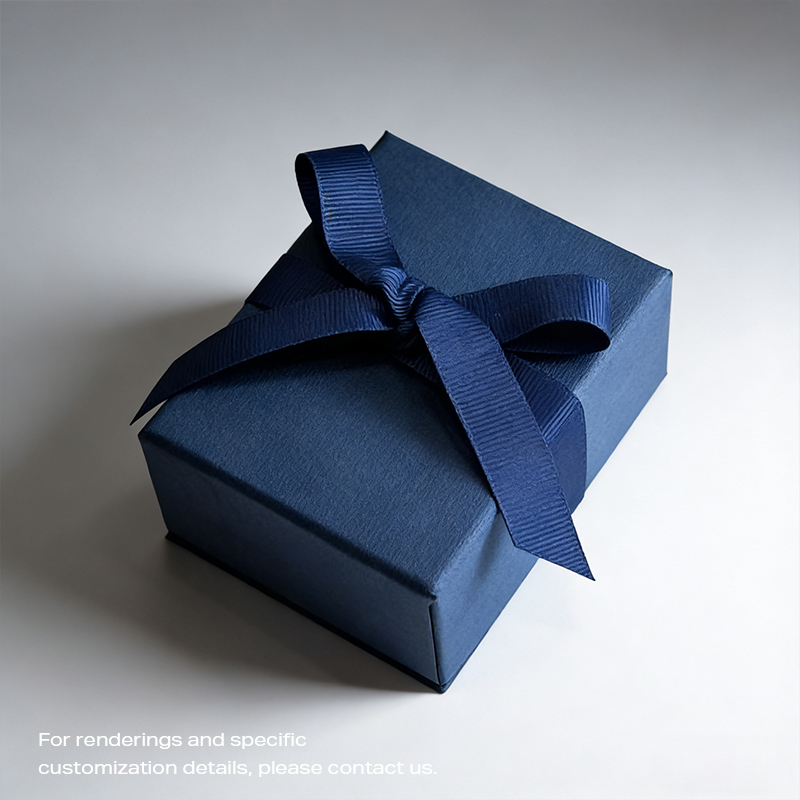
SHJGB-04 Navy Blue Top And Bottom Lid With Faux Leather Suede Lining, Jewelry Gift Box
Jewelry boxes must balance presentation with practical protection. Although packaging cannot eliminate every risk associated with transportation or handling, a well-constructed lid-and-base box can provide a stable enclosure for small products. The fitted structure helps keep the jewelry inside a defined space, and the interior insert can be adapted to reduce unnecessary movement.
The two-part design also makes the box easy to understand. Customers do not need to operate a complex mechanism. The lid lifts from the base, the product is revealed, and the box can be closed again after use. This simplicity is beneficial for retail staff, gift recipients, and consumers who want to store the jewelry in its original packaging.
Reusable packaging is another practical advantage. Customers may keep a jewelry box for future storage, especially when the box has a durable exterior and an attractive appearance. Continued use can extend the functional life of the packaging and keep the brand visible in the customer’s home. In this respect, a premium box may provide more value than packaging designed only for immediate disposal.
For retailers, the compact format can help simplify product organization. Individual boxes can be placed in drawers, display cabinets, shipping cartons, or gift-wrapping areas. The consistent form can also support a coordinated shelf appearance when several jewelry collections are displayed together.
Packaging performance depends on the final dimensions, paperboard construction, insert design, adhesive selection, finishing process, and transportation conditions. Buyers should work with the manufacturer to confirm the required size, weight tolerance, protective expectations, and shipping method. Sampling and testing are recommended before mass production, particularly for valuable jewelry or international distribution.
Zhejiang Shihao Gift Packaging Co., Ltd. has more than 15 years of experience in the production, research and development, and sales of paper gift packaging boxes. This background is important because jewelry packaging requires more than a visually attractive concept. It requires practical knowledge of paper materials, box construction, lining, decoration, assembly, quality control, and large-scale production planning.
Experience can reduce common development problems such as inaccurate fitting, uneven corners, unsuitable insert dimensions, weak adhesion, inconsistent color, and decorative finishes that do not perform as expected. An established manufacturer can help identify these issues during the sampling and engineering stages, before they become expensive mass-production problems.
The company’s product range includes kits, storage boxes, folding boxes, jewelry boxes, and gift boxes. This broad product experience provides a useful foundation for buyers who need more than one packaging format. A jewelry brand may require a ring box for one collection, a larger gift set for another, and a storage or presentation box for accessories. Working with a manufacturer that understands several related categories can improve design consistency across the product range.
The manufacturer covers approximately 20,000 square meters and employs around 300 people. A facility of this scale can support the coordinated movement of materials, production equipment, assembly operations, quality checks, storage, and shipping preparation. The workforce also provides the labor capacity needed for products that require careful folding, lining, finishing, and inspection.
Gift boxes often contain multiple production steps. Paper or board may first be cut or prepared, followed by surface wrapping, forming, gluing, lining, insert assembly, decoration, inspection, and packing. The ability to manage these stages in an organized production environment is essential for consistent output. It also makes it easier to schedule repeat orders and coordinate packaging programs with product launches.
The company reports an average daily production capacity of about 5,000 sets of gift boxes. This capacity can be valuable for established jewelry companies, wholesalers, retailers, promotional buyers, and brands preparing for seasonal demand. Actual output will depend on product complexity, order specifications, material availability, quality requirements, and production scheduling, but the stated capacity demonstrates a foundation for volume-oriented manufacturing.
Packaging design must respond to changing consumer expectations, new material preferences, brand trends, and product requirements. Shihao maintains its own design team and updates dozens of products weekly, according to the supplied company information. This indicates an active approach to product development rather than reliance only on a fixed catalog.
For buyers, access to design and development support can make customization more efficient. A company may begin with the SHJGB-04 structure and modify the exterior color, surface texture, insert configuration, logo treatment, or material selection. The manufacturer can then help translate the concept into a production-ready design.
Research and development is also useful when a buyer wants to create a packaging family. A single jewelry brand may need several box sizes that share the same navy color, texture, logo treatment, and interior language. A coordinated development process can help maintain a consistent appearance while adapting each box to a particular product.
The company exports products to Europe, the United States, the Middle East, and other regions. International experience may support a better understanding of different packaging expectations, design preferences, communication requirements, and shipping conditions. It can also help a manufacturer work with overseas buyers on artwork approval, product specifications, packing arrangements, and production schedules.
Global buyers often require clear documentation and dependable coordination. Product drawings, material confirmations, samples, color references, logo files, carton specifications, and inspection criteria should be managed carefully. A manufacturer with export experience is more likely to be familiar with the practical steps needed to move a customized packaging order from concept to shipment.
Shihao has passed BSCI and FSC certifications according to the supplied company information. BSCI is associated with social compliance assessment, while FSC relates to responsible forest management and certified material supply chains. Certification details, scope, validity, and product applicability should always be confirmed for a specific order, but these credentials can be important starting points for buyers with supplier responsibility and sourcing requirements.
The SHJGB-04 can also be developed with eco-friendly material options. Sustainable packaging is not limited to one material choice. It may involve responsibly sourced paper, reduced unnecessary components, optimized dimensions, recyclable elements, lower-waste production planning, or materials selected according to the buyer’s local recycling infrastructure.
Buyers should evaluate the complete packaging system rather than focusing only on one sustainability claim. The lining, adhesive, coatings, decorative elements, insert materials, and shipping components can all affect recyclability and environmental performance. A clear discussion with the manufacturer can help identify a practical balance between luxury appearance, durability, cost, and responsible material use.
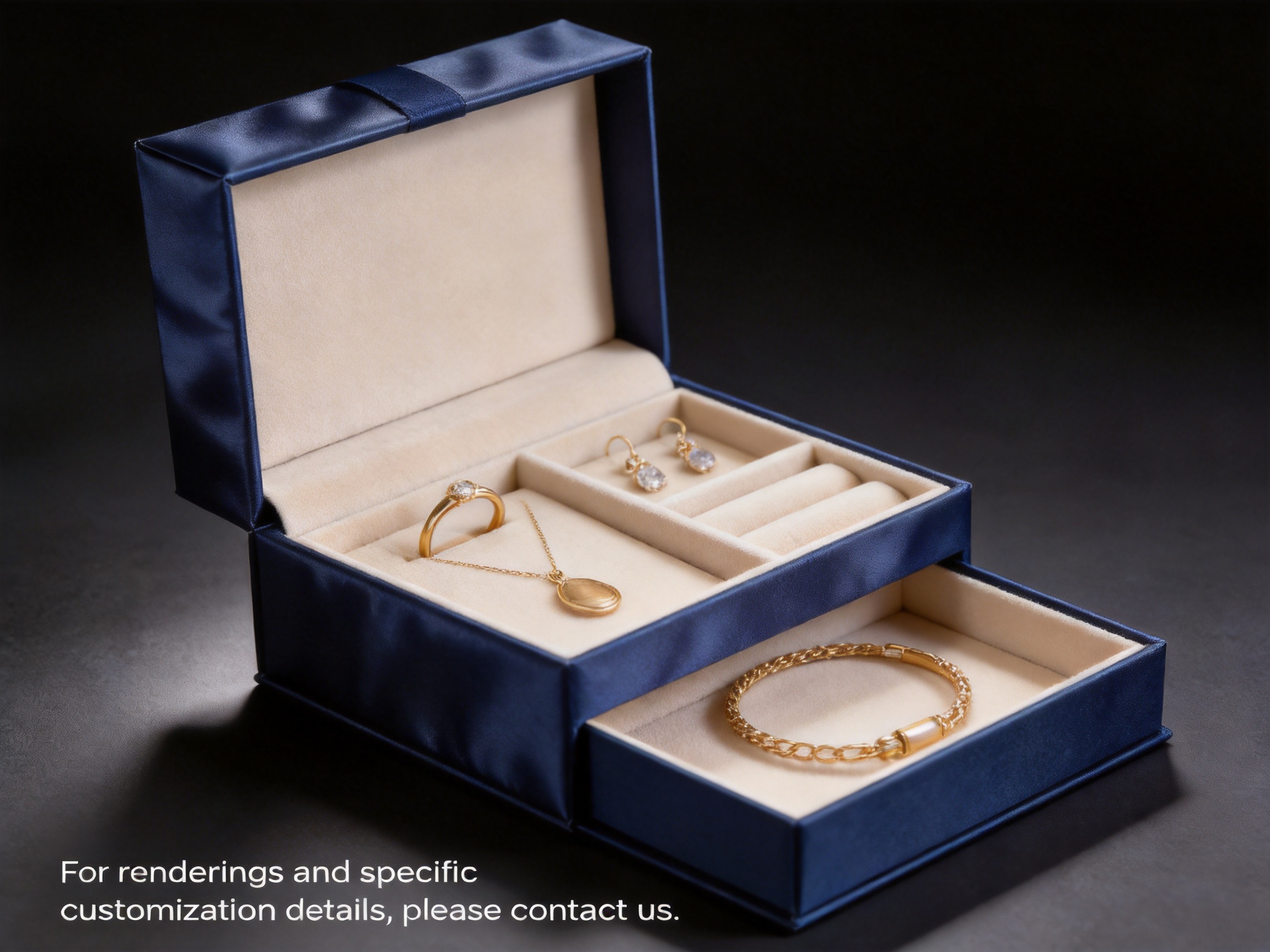
The SHJGB-04 is a useful starting point for customization because its core structure is clear and adaptable. A buyer may preserve the navy blue top-and-bottom design while changing selected details to match a particular brand strategy. Customization should be planned early because each modification may affect tooling, sampling, material purchasing, production time, and final cost.
Jewelry products vary greatly in size. A delicate ring requires a different insert from a wide bracelet or a pendant with a long chain. The outer dimensions of the box should be selected to provide adequate product space without creating unnecessary empty volume. A well-proportioned box can improve presentation, reduce material use, and make transportation more efficient.
Size decisions should consider not only the jewelry but also the insert thickness, protective clearance, logo placement, opening action, and shipping carton arrangement. A sample box containing the actual product is the best way to assess proportion before mass production.
Interior layouts may be designed for single items, coordinated sets, or multiple pieces. Ring slots, earring supports, pendant compartments, bracelet cushions, removable trays, and multi-piece layouts are all possible directions for development, subject to the final design and manufacturing process.
For a jewelry collection with several product categories, it may be efficient to retain one recognizable exterior while using interchangeable or category-specific inserts. This approach can help the brand maintain visual consistency without forcing every product into the same interior layout.
Branding can be subtle or prominent. A small centered logo may support a minimalist luxury position. A repeated pattern or decorative border may be more suitable for fashion-oriented packaging. Foil-like metallic details can communicate celebration and premium value, while a tone-on-tone logo can produce a quieter and more contemporary effect.
When applying a logo to textured paper, the artwork and decoration method should be tested. Fine details may appear differently on silk, lychee, pearl, crocodile, or diamond textures. Sampling helps confirm legibility, alignment, color contrast, and visual balance.
Navy blue can remain the primary color while secondary colors are introduced inside the box or through branding. White, cream, gray, black, gold, silver, and muted blush tones can create different impressions. The final combination should be checked under the lighting conditions used in retail stores, showrooms, photography studios, and online product images.
Color approval should be based on physical samples whenever possible. Digital screens cannot always reproduce the exact appearance of paper texture, metallic decoration, or faux suede. A physical standard sample can serve as a reference for future production orders.
Retail jewelry brands can use the SHJGB-04 for individual products displayed in stores, boutiques, department stores, and online fulfillment programs. Its premium appearance can help elevate the presentation of both affordable luxury and higher-value collections. A consistent box style can make the brand more recognizable across different product lines.
Bridal jewelry benefits from packaging that feels ceremonial and carefully considered. Navy blue can offer an elegant alternative to standard white or ivory packaging, especially when combined with metallic logo details or a light faux suede interior. The box can be used for rings, earrings, pendants, or coordinated wedding gifts.
The top-and-bottom format is naturally suited to gift giving. Brands can use customized sleeves, labels, inserts, or seasonal artwork to adapt the same basic box for Christmas, Valentine’s Day, anniversaries, Mother’s Day, birthdays, and other occasions. This can provide flexibility without requiring an entirely new structural concept for every campaign.
Companies that provide commemorative jewelry, awards, branded accessories, or event gifts can use customized boxes to make the presentation more professional. A logo, event date, message, or special color can be added to create a package connected to the occasion. The sturdy appearance may also be useful when the item is presented during a ceremony or formal business event.
For online jewelry businesses, packaging contributes to the unboxing experience. Customers encounter the box without the assistance of a sales associate, so the structure, branding, and interior presentation must communicate value immediately. The SHJGB-04 can be combined with suitable outer shipping protection to create a more complete e-commerce packaging system.
A successful customized packaging project normally begins with a detailed product brief. The brief should include the jewelry type, required box dimensions, target quantity, preferred texture, color reference, logo artwork, interior layout, material preferences, shipping destination, and expected delivery schedule.
The next step is usually structural and visual sampling. A blank structural sample can confirm dimensions, lid fit, opening action, and insert capacity. A printed or finished sample can then evaluate the navy color, texture, logo treatment, lining, and overall appearance. If the jewelry is available, it should be placed in the sample box so that movement, visibility, and presentation can be judged accurately.
Quality checks may focus on several areas:
1. The lid should fit the base consistently without being excessively loose or difficult to remove.
2. Corners and edges should appear clean and properly covered.
3. The textured paper should be applied evenly without obvious wrinkles, bubbles, lifting, or misalignment.
4. The faux suede should be securely fitted and free from visible contamination or excessive loose fibers.
5. The insert should hold the jewelry securely while allowing the customer to remove it conveniently.
6. Logo decoration should be positioned consistently and remain legible.
7. Color and texture should remain within the approved sample standard.
8. Finished boxes should be packed to reduce damage during storage and transportation.
Quality expectations should be agreed upon before mass production. It is useful to define acceptable tolerances for dimensions, color variation, logo position, surface appearance, and assembly. For international orders, the packaging should also be evaluated in relation to the planned shipping route and outer carton configuration.
The SHJGB-04 can offer several advantages over basic jewelry packaging formats. A thin folding carton may be economical, but it can provide less structural presence and a less memorable opening experience. The top-and-bottom format creates a more substantial presentation and can better support a premium retail position.
A plain paperboard box may protect the product adequately but offer limited tactile appeal. The SHJGB-04 adds texture to the exterior and softness to the interior, creating a more complete sensory experience. This combination can be particularly important for products whose value is communicated through craftsmanship and detail.
Some low-cost jewelry boxes use generic inserts that do not fit the product properly. Customizable layouts provide a stronger opportunity to match the packaging to the jewelry. A well-fitted insert can improve product visibility, reduce movement, and make the opening experience look more deliberate.
Another competitive advantage is design flexibility. The same base concept can be adapted through texture, logo, color coordination, interior layout, and material selection. This makes it possible to create a distinctive brand package without starting from an entirely new structure for every order.
Manufacturing scale is also relevant. A supplier with a substantial facility, experienced workforce, design team, export background, and reported capacity of about 5,000 sets per day may be better positioned to support repeat orders and larger programs than a very small workshop. Buyers should still conduct their own assessment, request samples, and confirm production standards, but the manufacturer’s infrastructure provides a useful foundation for commercial cooperation.
Premium packaging and sustainability do not have to be opposing goals. A reusable jewelry box can remain useful after the initial purchase, extending its service life. The customer may use it for jewelry storage, travel, gifting, or collection organization. A package that remains in use for a longer period can provide more functional value than a package intended for immediate disposal.
Paper-based packaging also offers opportunities for responsible material planning. Buyers can discuss certified paper sources, reduced material waste, recyclable components, efficient sizing, and the use of eco-friendly options with the manufacturer. FSC-related sourcing may be relevant to buyers that require responsible forest material documentation.
At the same time, sustainability should be evaluated realistically. Faux suede, coatings, adhesives, metallic decorations, and mixed-material inserts may affect recycling routes. A brand seeking a specific environmental profile should define its requirements clearly and confirm whether the complete finished package meets those requirements in the target market.
Material optimization can also produce practical benefits. A box that is appropriately sized for the jewelry may use fewer resources, occupy less space in shipping cartons, and reduce unnecessary air during transportation. Efficient packing can lower handling costs and improve warehouse organization while maintaining an attractive presentation.
Companies considering the SHJGB-04 should begin by identifying the product category and desired customer experience. A ring package, a pendant package, and a bracelet package may all use the same exterior language but require different internal solutions.
After defining the application, the buyer should select the preferred texture and confirm the navy color direction. The company logo should be supplied in a suitable digital format, with clear instructions concerning size, position, color, and decorative effect. If the buyer has brand guidelines, these should be shared during the early design stage.
The next stage is structural development. Measurements should be taken from the actual jewelry, including width, height, thickness, chain length, and any delicate or protruding elements. These dimensions will guide the base, lid, insert, and clearance requirements.
Once a prototype is prepared, the buyer should test the box in realistic conditions. The jewelry should be inserted and removed repeatedly. The lid should be opened and closed. The package should be handled by people who represent the intended customer. If the product will be shipped through e-commerce channels, it should be evaluated inside the planned outer shipping package.
After approval, the buyer and manufacturer should confirm final specifications, including materials, dimensions, decoration, quantity, packaging method, inspection requirements, and delivery schedule. Keeping an approved reference sample can support consistency in repeat production.
The box is suitable for rings, pendants, earrings, bracelets, and other small ornaments. The internal layout can be customized according to the specific jewelry dimensions and presentation requirements.
The product is presented in a deep navy blue finish, but customized color coordination may be discussed for a specific project. Buyers should confirm the exact color reference and approve a physical sample before mass production.
Available special textured paper options include silk texture, imitation leather lychee texture, pearl texture, glossy crocodile texture, and diamond texture. The most appropriate choice depends on the brand style, desired tactile effect, and logo treatment.
Yes. The logo is customizable. The final decoration method should be selected according to the artwork, surface texture, color contrast, quantity, and desired appearance. Sampling is recommended to confirm the result.
Yes. Interior layouts can be developed for rings, earrings, pendants, bracelets, sets, and other small ornaments. The insert should be designed using the actual product dimensions to achieve an appropriate fit.
Faux suede provides a soft, velvety surface and a refined visual background. It can help create a more luxurious presentation while supporting the careful placement of jewelry inside the box.
The navy blue color, textured exterior, faux suede lining, fitted lid-and-base structure, and customizable branding make the box suitable for premium and luxury-oriented presentations. The final suitability depends on the selected materials, finishes, dimensions, and quality requirements.
Yes, it can be used as the presentation box within an e-commerce packaging system. However, the box should be placed inside suitable protective shipping packaging to reduce the risk of damage during transportation.
The company reports an average daily production capacity of approximately 5,000 gift box sets. Actual order capacity and lead time depend on the product design, quantity, materials, decoration, and production schedule. Buyers should confirm these details for each project.
The company provides eco-friendly material options and reports FSC-related certification. Buyers should specify their sustainability requirements and confirm the certification scope, material documentation, and recyclability of the complete finished package.
Buyers should confirm the dimensions, lid fit, texture, color, logo position, interior insert, material composition, packaging method, quantity, inspection standards, and delivery schedule. An approved physical sample is strongly recommended.
The separate lid-and-base structure creates a more substantial presentation, while the textured exterior and faux suede interior add tactile and visual value. The format is also well suited to reusable storage and premium gift-giving experiences.
The SHJGB-04 navy blue top-and-bottom jewelry gift box is designed for brands that want packaging to communicate elegance, protection, and attention to detail. Its deep navy exterior provides a versatile premium appearance, while the selection of textured paper surfaces creates a more distinctive tactile experience than an ordinary flat carton. Inside, the faux suede lining gives jewelry a soft and carefully considered presentation environment.
The fitted lid-and-base construction supports gift giving, retail presentation, storage, and e-commerce fulfillment. Customizable logos, surface finishes, interior layouts, and material options allow the box to be adapted to different jewelry categories and brand identities. These features give it a practical advantage over generic packaging that offers little opportunity for differentiation.
The product is supported by Zhejiang Shihao Gift Packaging Co., Ltd., a manufacturer with more than 15 years of industry experience, a 20,000-square-meter facility, approximately 300 employees, an in-house design team, international export experience, BSCI and FSC certifications, and a reported daily production capacity of about 5,000 gift box sets. These capabilities provide a foundation for product development, customized manufacturing, repeat orders, and large-scale packaging programs.
For jewelry companies, the value of a box extends beyond protection. Packaging can influence perceived quality, support brand recognition, encourage customer loyalty, and transform the act of opening a product into a memorable experience. With its combination of navy blue styling, textured paper, faux suede lining, adaptable structure, and manufacturing support, the SHJGB-04 offers a balanced solution for brands seeking premium jewelry packaging with practical customization potential.
1. Product specification sheet for SHJGB-04, including model, material, application, logo customization, and texture options.
2. Manufacturer profile of Zhejiang Shihao Gift Packaging Co., Ltd., including company history, facility size, workforce, product range, production capacity, export markets, and design capabilities.
3. FSC principles and responsible forest-based material sourcing guidance.
4. BSCI social compliance and responsible supply chain assessment framework.
5. General packaging development practices for jewelry presentation boxes, including structural sampling, insert design, branding approval, and production quality inspection.
Recommended Products

Contact Us

No. 15, Xiayang Road, Huangzhai Town, Jinhua, Zhejiang, China

(+86) 579-84230069

(+86) 13085675766


Products

Gift Box Packaging Manufacturer
 English
 Français
 Español
 عربى