2026-10-31
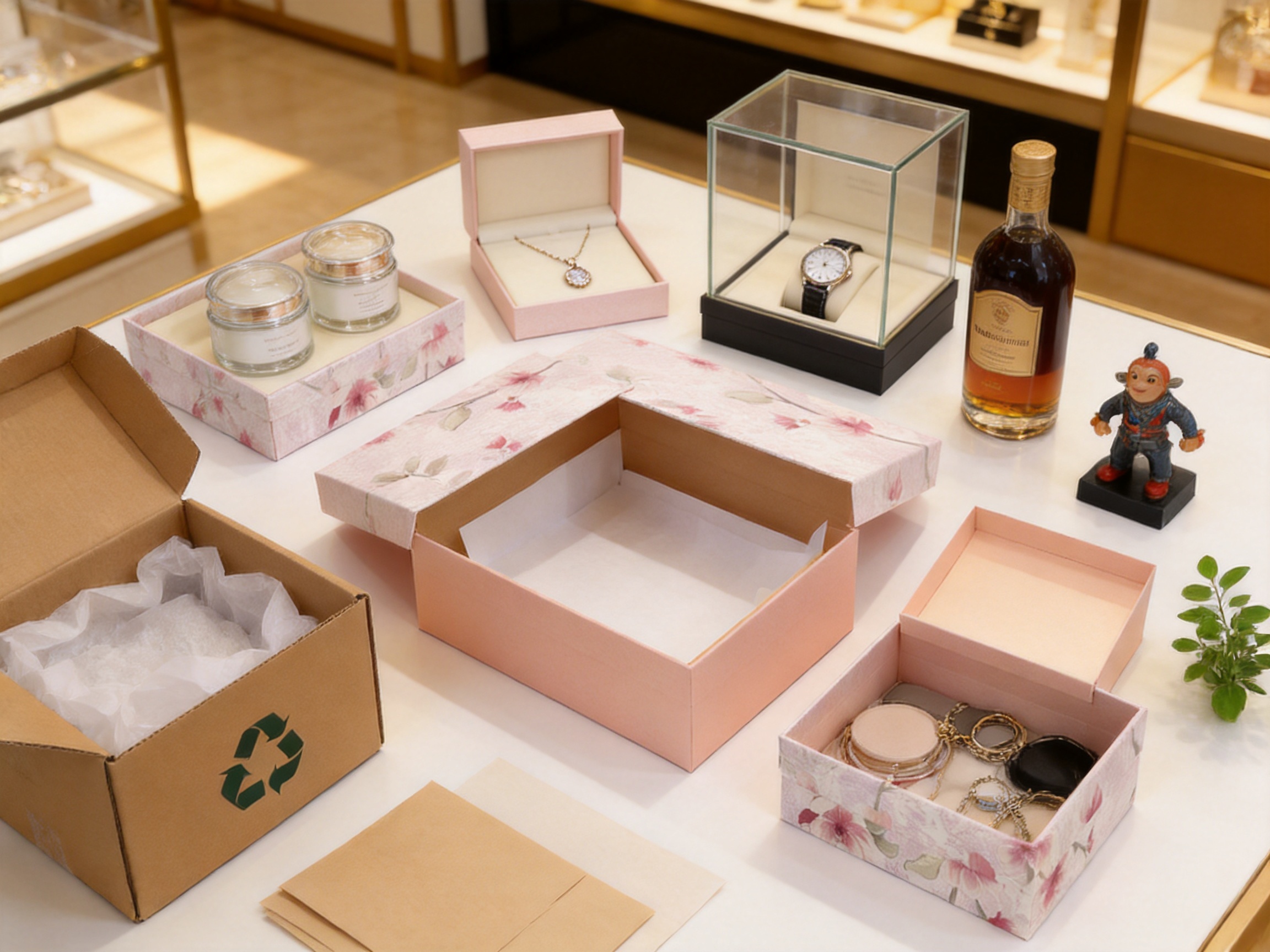
Premium packaging is no longer limited to protecting a product during transportation. It has become an important part of product presentation, customer experience, brand recognition, and perceived value. For companies selling cosmetics, jewelry, electronics, alcoholic beverages, collectibles, and other premium goods, the box is often the first physical point of contact between the customer and the product. A well-designed package can create anticipation before the product is opened, communicate quality before the product is used, and leave a lasting impression after the purchase.
The 1016 Grid Lychee Pattern Embossed Roller High-Grade Specialty Paper Gift Box is designed for this exact purpose. Combining specialty paper, a structured checkered lychee-pattern embossed surface, customizable dimensions, protective strength, and recyclable material characteristics, this gift box provides a practical and visually distinctive packaging solution for high-end products. Its embossed finish gives the surface depth and texture, while its paper construction supports efficient customization and responsible packaging goals.
Manufactured by Zhejiang Shihao Gift Packaging Co., Ltd., the product is part of a broader range of paper gift packaging solutions that includes gift boxes, storage boxes, folding boxes, jewelry boxes, kits, and other specialty packaging formats. With more than 15 years of manufacturing experience, a 20,000-square-meter production facility, approximately 300 employees, advanced equipment, and an average daily output of about 5,000 gift box sets, the manufacturer has developed the capabilities needed to support both standard and customized packaging programs.
This article examines the design, material, production technology, customization potential, protection capabilities, sustainability advantages, and commercial applications of the 1016 embossed specialty paper gift box. It also explains why a carefully engineered embossed paper box can offer advantages over ordinary printed cartons, basic folding boxes, and less distinctive packaging alternatives.
Packaging performs several functions at the same time. It must protect the contents, support logistics, communicate product positioning, and create a positive emotional response. In a competitive market, these functions are closely connected. A box that appears weak or generic may reduce the perceived value of the product inside, even when the product itself is carefully designed and manufactured.
Premium packaging helps solve this problem by creating a stronger relationship between appearance and perceived quality. A textured surface, precise construction, carefully selected material, and appropriate proportions can communicate refinement before the customer sees the product. This is particularly important for products purchased as gifts, because the packaging contributes directly to the act of giving.
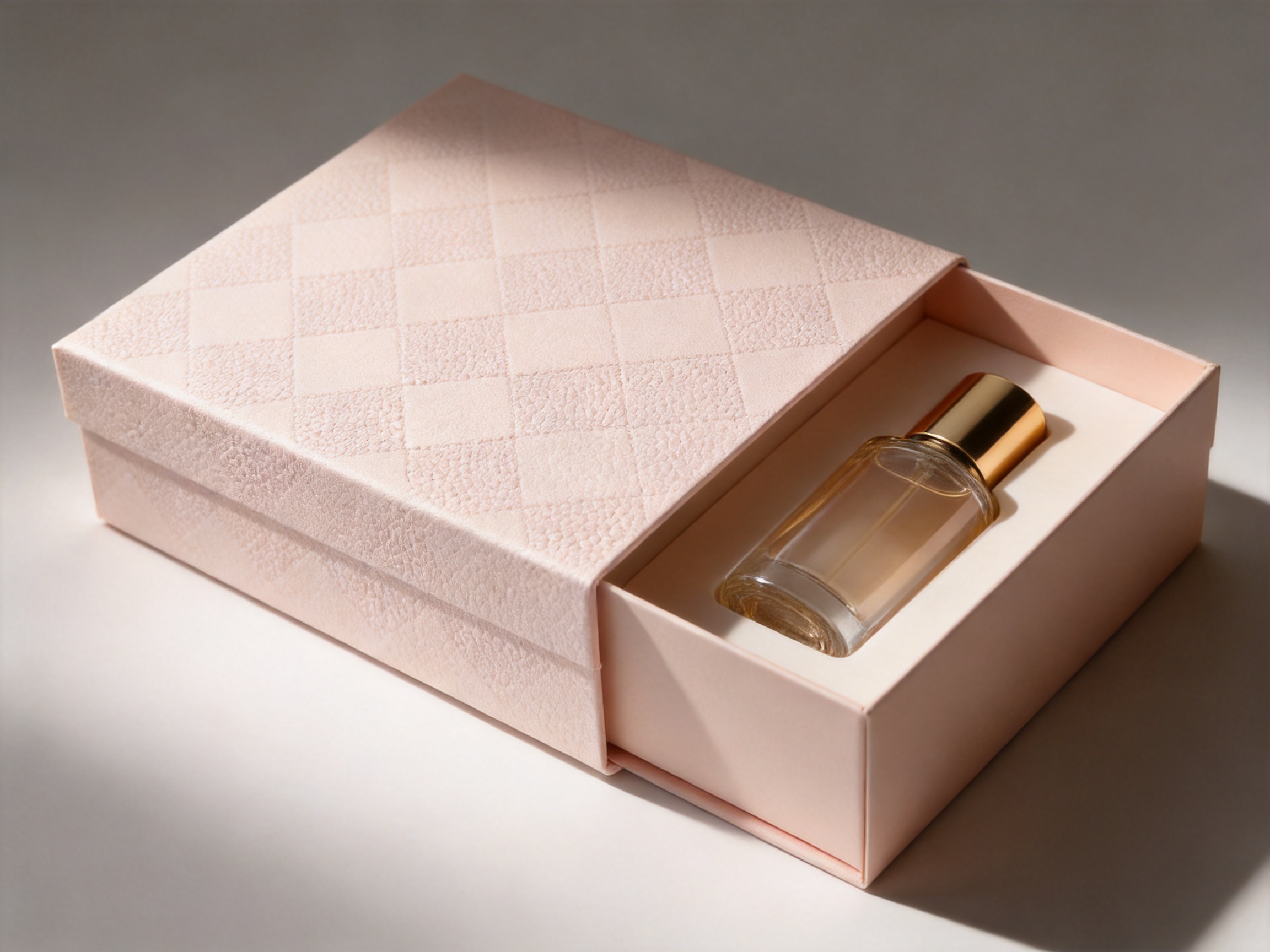
The 1016 gift box uses a high-grade specialty paper surface with a checkered lychee pattern produced through an embossing roller process. This design provides more than simple decoration. The raised texture catches light at different angles, creates subtle shadow variation, and gives the package a tactile character. When a customer holds the box, the surface does not feel flat or visually ordinary. Instead, it presents a more sophisticated and memorable experience.
For businesses, premium packaging can also support product differentiation. Many products compete within similar price ranges and categories. A distinctive box helps a product stand apart on retail shelves, in showroom displays, in online product photography, and during unboxing. The 1016 design is especially suitable for brands that want their packaging to express quality without relying solely on heavy decorative components or complicated structural features.
The 1016 product is a high-end specialty paper gift box featuring a grid-based lychee pattern embossed onto the outer surface. The item number is 1016#, and the primary material is specialty paper. The product can be manufactured in different sizes according to the dimensions of the packaged item and the customer’s structural requirements.
The available size range extends from approximately 20 × 12.5 × 4.7 centimeters for the smaller specification identified as 10# to approximately 37 × 27 × 11 centimeters for the larger specification identified as 1#. This range allows the same design concept to serve several packaging purposes. Smaller versions can be used for delicate gifts, cosmetics, accessories, or compact collectibles. Larger versions may accommodate sets, gift combinations, electronics, bottles, or products requiring additional internal protection.
The box is supplied at a packing quantity of six sets per carton, with a listed carton volume of 0.101 cubic meters. These logistics details are useful for wholesalers, importers, distributors, and purchasing departments calculating storage requirements, shipping arrangements, and order quantities.
| Product Attribute | Specification |
|---|---|
| Item number | 1016# |
| Primary material | Specialty paper |
| Surface treatment | Grid lychee-pattern embossing |
| Small listed size | 20 × 12.5 × 4.7 cm |
| Large listed size | 37 × 27 × 11 cm |
| Packing quantity | 6 sets per carton |
| Carton volume | 0.101 cubic meters per carton |
| Customization | Size and packaging details can be developed according to customer requirements |
The combination of a recognizable surface pattern and adaptable dimensions makes the 1016 box suitable for businesses that need a premium appearance across multiple product sizes. Rather than using completely different packaging concepts for every product, a company may develop a coordinated range based on the same embossed design language.
The most distinctive characteristic of this gift box is its checkered lychee-pattern embossed finish. Embossing changes the surface profile of the paper by pressing a pattern into or onto the material. This creates a controlled relief effect that can be seen and felt.
A flat printed image can communicate color, graphics, and text, but it does not provide the same physical response as a textured surface. By contrast, the lychee pattern introduces dimensionality. Light reflects differently from the raised and recessed areas, giving the box a more dynamic appearance. The customer can also feel the pattern while handling the package, adding a sensory element that printed packaging does not provide on its own.
The grid structure gives the pattern visual order. The regular arrangement helps the box appear neat, balanced, and carefully engineered, while the lychee-inspired texture softens the geometric effect with a more organic surface impression. This combination makes the design versatile. It can support elegant, modern, classic, or natural packaging styles depending on the color, printing, finishing, and structural configuration selected by the customer.
Texture can also influence how a product is remembered. Customers often associate tactile surfaces with craftsmanship and attention to detail. A textured box may remain in use after the original product has been removed, particularly when it is strong enough to function as a storage container. In this way, the box can continue to provide value beyond the initial sale.
Compared with a basic uncoated carton, the embossed 1016 design offers a more developed visual identity. Compared with a package that depends entirely on metallic effects or complex embellishment, it can create a premium impression through material structure itself. This may help businesses achieve a refined appearance while maintaining flexibility in decoration and production planning.
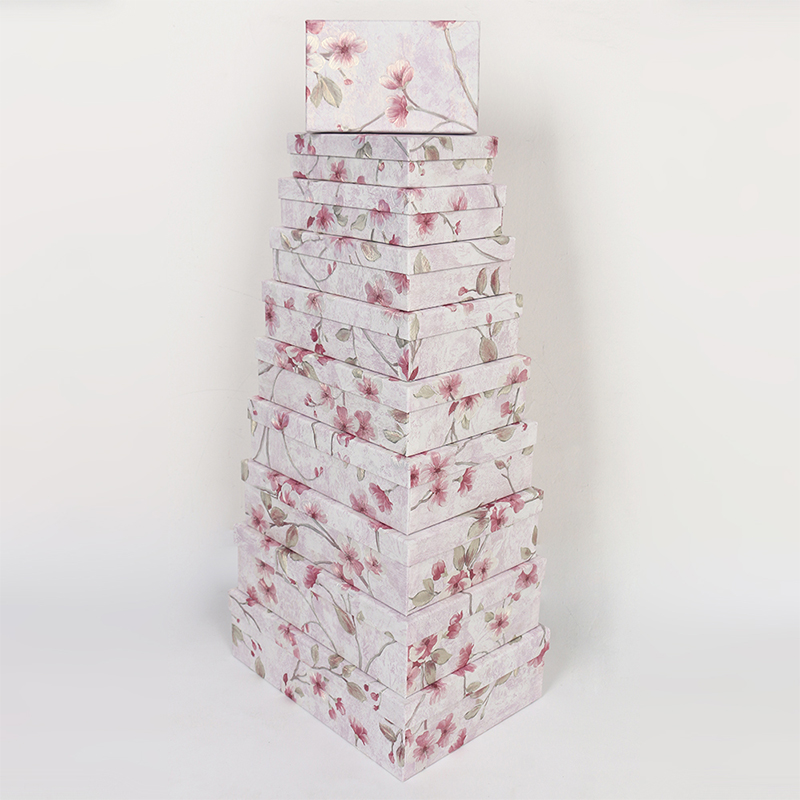
1016 Grid Lychee Pattern Embossed Roller High-Grade Specialty Paper Gift Box
Specialty paper is selected when ordinary paperboard does not provide the desired combination of appearance, surface quality, printability, or tactile character. The material used for the 1016 gift box supports the embossed finish and provides a suitable base for premium packaging construction.
One advantage of specialty paper is its ability to support a wide range of finishing approaches. Depending on the customer’s design, the surface may be combined with printing, color matching, logos, decorative elements, or other post-processing techniques. The embossing itself creates a strong visual foundation, meaning that the box can appear distinctive even when the decoration is relatively restrained.
Specialty paper is also compatible with paper-based packaging systems that are easier to handle, store, and transport than some heavier alternatives. A well-constructed paper gift box can provide a favorable balance between presentation and practical logistics. It can be designed to fit the product closely, reducing unnecessary space and helping companies manage shipping volume.
Another important characteristic is the possibility of recycling. The product description identifies the specialty paper as environmentally friendly and easily recyclable, supporting the growing demand for more sustainable packaging. Actual recyclability can depend on the final combination of paper, adhesives, coatings, inks, and additional components, so packaging buyers should confirm the precise material configuration for their intended market. Nevertheless, a paper-based structure provides a strong foundation for responsible packaging development.
For businesses attempting to reduce dependence on excessive plastic packaging, a specialty paper gift box can be an attractive alternative. It can preserve a premium appearance while supporting a more paper-centered packaging strategy. This is increasingly relevant as consumers, retailers, and regulators pay greater attention to packaging waste and material choices.
The embossed pattern is produced through an embossing roller process. In this process, a patterned roller applies controlled pressure to the paper surface, forming a repeated texture. The accuracy of the roller pattern, the condition of the specialty paper, pressure control, alignment, and production speed all influence the final result.
A professional embossing process must balance visual depth with material stability. If the pressure is too low, the pattern may appear weak or inconsistent. If the pressure is too high, the paper may crack, deform, or lose its clean appearance. Proper process control helps achieve a clear pattern while preserving the structural integrity of the sheet.
The repeated nature of a roller-based process is particularly valuable for commercial production. Once the roller and production parameters have been properly prepared, the pattern can be reproduced across a series of sheets with a high degree of consistency. This is important for businesses placing recurring orders or developing packaging for several product lines.
Surface consistency also affects the final assembly of the box. If the embossed texture varies significantly from sheet to sheet, the finished packages may not present a uniform appearance. Reliable material preparation and process monitoring help ensure that the grid structure remains visually coherent across the order.
The embossing roller approach is one of the product’s important advantages over packaging that uses only manual surface decoration. Manual techniques may be suitable for limited artisan projects, but repeatable roller production is better suited to commercial quantities requiring consistent appearance, predictable delivery, and controlled unit costs.
Although the surface appearance is a major feature, the gift box must also protect the product inside. The specialty paper material is described as durable and resistant to pressure. These characteristics are important during stacking, transportation, warehouse storage, retail handling, and final delivery to the consumer.
Protection begins with the box structure and the relationship between the box dimensions and the product. A box that is too large may allow excessive movement, while a box that is too small may place pressure on the contents or make closing difficult. Custom sizing allows the manufacturer and customer to develop a better fit for each product type.
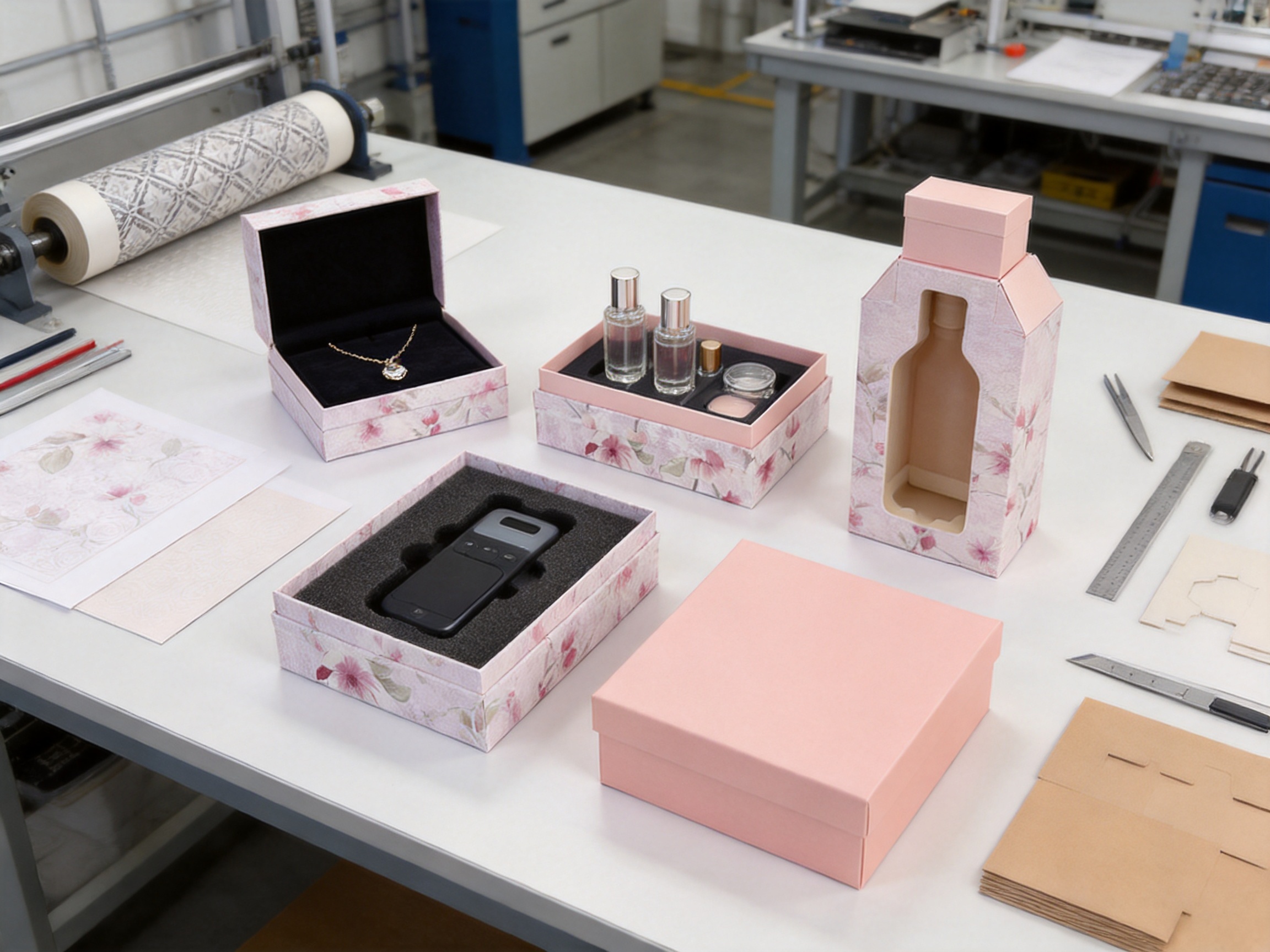
For fragile or valuable items, the outer box can be combined with internal supports such as inserts, trays, paperboard partitions, molded components, cushions, or compartments. These internal components can help prevent direct contact between the product and the box walls. They can also control movement and improve the presentation when the package is opened.
The listed size range supports different internal layouts. A compact box may be appropriate for a single small item, while a larger version may be configured for a product set. For alcoholic beverages or electronics, additional protective structures may be required depending on the product’s weight, shape, and fragility. The outer embossed gift box provides the presentation layer, while the internal packaging system can be engineered to address product-specific protection requirements.
Pressure resistance is particularly relevant to long-distance transportation. Packages may be stacked, moved through distribution centers, loaded into vehicles, or stored in varying conditions. A durable paper-based structure helps reduce the risk of deformation, provided that the box is correctly designed and packed for the weight of the contents.
One of the strongest commercial advantages of the 1016 gift box is its adaptability. The dimensions can be customized to suit the customer’s product. This is important because premium goods vary considerably in size, weight, shape, and presentation requirements.
For cosmetics, the box may be designed for a single bottle, a skincare set, a fragrance collection, or a seasonal gift kit. Internal compartments can separate multiple items and help create a clean visual arrangement. The embossed surface can support a luxurious positioning without requiring a highly complex outer structure.
For jewelry, smaller dimensions and carefully designed inserts can help hold rings, bracelets, necklaces, watches, or other accessories. The box can be sized to avoid unnecessary internal space, while the surface texture provides a more substantial presentation than a plain small carton.
For electronics, the structure may need to accommodate the device, accessories, cables, manuals, and protective inserts. Larger sizes within the available range can be developed for product bundles or gift editions. The outer surface gives the package a premium appearance, while the inner structure can be designed for organized presentation and impact reduction.
For alcoholic beverages, the box may be customized to fit one bottle or a collection. Bottle packaging requires special attention to weight distribution, internal support, and transportation safety. A strong outer structure and appropriately engineered inserts can help improve stability. The embossed surface can also contribute to the ceremonial character associated with premium wine, spirits, and seasonal liquor gifts.
For business gifts and promotional programs, the box can be developed as part of a coordinated packaging system. Different sizes may be used for different customer tiers or product combinations while retaining the same surface identity. This allows a company to create a consistent packaging family rather than a collection of unrelated boxes.
| Product Category | Possible Packaging Configuration | Primary Packaging Benefit |
|---|---|---|
| Cosmetics and skincare | Single-item box or multi-product set with inserts | Premium presentation and organized product placement |
| Jewelry and watches | Compact box with protective tray or cushioning | Elegant tactile finish and secure presentation |
| Consumer electronics | Medium or large box with internal compartments | Professional appearance and space for accessories |
| Wine and spirits | Single-bottle or gift-set structure with reinforced support | Luxury appearance and improved transport organization |
| Business gifts | Customized size and printed corporate presentation | Brand professionalism and memorable gifting experience |
| Collectibles | Protective box with storage-oriented dimensions | Long-term reuse and enhanced perceived value |
Customization may also involve color, printing, logo placement, closure style, interior arrangement, and surface finishing. The exact options should be confirmed during product development because requirements can vary according to order volume, market, and intended application.
Ordinary printed cartons remain useful for many products, especially where low cost, high-volume efficiency, and basic protection are the primary objectives. However, they may not provide enough differentiation for premium goods. A flat surface can appear familiar or interchangeable, particularly when several competing products use similar dimensions and printing styles.
The 1016 gift box introduces a physical surface feature that is immediately distinguishable. The checkered lychee embossing gives the box depth without requiring the entire design to depend on elaborate graphics. This can help create a more sophisticated appearance and strengthen the connection between packaging and product value.
Another advantage is tactile communication. Customers may not consciously analyze every packaging feature, but the feel of a product package contributes to their overall judgment. A textured surface can suggest quality, care, and durability. This is especially beneficial in gift-oriented categories where the package forms part of the emotional presentation.
The 1016 box also provides more opportunities for reuse than a thin disposable carton, depending on its final construction. A customer may use it to store small personal items, accessories, documents, or collectibles. Continued use can extend the practical life of the package and increase the number of times the surface and design are seen.
Compared with packaging that relies primarily on plastic components, the specialty paper structure supports a more natural material impression and may align better with sustainability goals. It also offers a paper-based platform for printing and customization. For companies seeking to balance luxury presentation with recyclable material strategies, this combination can be commercially valuable.
Generic stock boxes can provide convenience, but they may restrict the ability of a product to communicate a distinct identity. Standard dimensions may not fit the product closely, and the available finishes may not match the desired market position. When multiple businesses use similar stock packaging, the result can be a less memorable customer experience.
The 1016 design offers a recognizable surface treatment that can serve as a foundation for a customized packaging program. The customer can work with the manufacturer to determine suitable dimensions and product-specific details. This creates more control over presentation while retaining the efficiency of an established packaging concept.
A customized box can also reduce the need for excessive filler material. When the box is developed around the actual product and internal structure, the package may use space more efficiently. This can improve presentation and may contribute to more organized logistics, although the final result depends on the product and protection requirements.
Stock boxes are often selected mainly for immediate availability. A custom packaging partnership focuses more broadly on design development, repeatability, production quality, and long-term supply. For companies building a premium product line, these factors can be more important than choosing the quickest generic option.
The capabilities of the manufacturer are an important part of the product’s value. Zhejiang Shihao Gift Packaging Co., Ltd. is an export-oriented producer specializing in the research, development, production, and sales of paper gift packaging boxes. Its experience covers a broad range of packaging categories, including kits, storage boxes, folding boxes, jewelry boxes, and gift boxes.
The company has operated for more than 15 years, giving it substantial experience with the practical requirements of packaging development and production. Long-term manufacturing experience can support better understanding of material behavior, structural design, surface finishing, production scheduling, quality control, and export preparation.
The company’s facility covers approximately 20,000 square meters and employs around 300 people. This scale provides a foundation for coordinating design, sampling, production, inspection, packing, and shipment. It also supports the ability to manage multiple packaging projects and product styles rather than relying only on a small workshop model.
Advanced equipment contributes to the manufacturer’s production capabilities. For a product such as the 1016 embossed gift box, equipment quality can influence cutting precision, embossing consistency, printing alignment, folding accuracy, gluing, and final assembly. A well-equipped factory can establish repeatable processes that are more suitable for commercial orders.
The reported average daily capacity is approximately 5,000 sets of gift boxes. Capacity does not replace quality, but it indicates that the supplier is structured to support larger orders and recurring production programs. Businesses with seasonal demand, promotional campaigns, or international distribution may benefit from working with a manufacturer capable of planning production at commercial scale.
Packaging development often begins with an idea rather than a finished specification. A customer may know the product size, target price, market position, and desired appearance but need assistance translating those goals into an effective box structure. A manufacturer with its own design team can help bridge this gap.
The supplier maintains an internal design team and updates dozens of products weekly. This indicates an active approach to product development and market responsiveness. Continuous design activity can help the manufacturer identify new styles, material combinations, structural formats, and finishing techniques.
For the 1016 gift box, design support may involve selecting suitable dimensions, confirming the outer structure, planning internal inserts, positioning printed elements, evaluating the embossed pattern, and preparing production-ready files. It may also include reviewing whether the proposed package is appropriate for transportation, storage, retail display, and customer use.
Good packaging design must balance several objectives. A box may look attractive but be difficult to assemble. It may protect the product but use excessive material. It may be structurally efficient but fail to communicate a premium image. Development experience helps bring these considerations together before mass production begins.
For international customers, design support can also help adapt packaging to different market preferences. Color, typography, dimensions, opening experience, and sustainability expectations may vary by region. A manufacturer serving Europe, the United States, the Middle East, and other export markets can draw on experience with diverse customer requirements while still confirming final specifications with each buyer.
Quality control is essential for embossed specialty paper packaging because both appearance and structure must remain consistent. The surface pattern should be clear, the paper should remain free from significant damage, and the finished box should maintain accurate dimensions and clean assembly.
Quality checks may be applied at several stages. Incoming material inspection can verify paper quality, color, thickness, and surface suitability. During embossing, operators can monitor pattern clarity, alignment, and pressure effects. During printing or finishing, color and registration can be reviewed. During die cutting and assembly, dimensions, folds, corners, and adhesive application can be checked.
Finished product inspection may include visual review, measurement, opening and closing tests, structural checks, and carton packing verification. When a product is intended for long-distance export, packaging teams may also consider stacking conditions, carton strength, moisture exposure, and handling risks.
The manufacturer has passed BSCI and FSC certifications according to the provided company information. BSCI is associated with social compliance evaluation in supply chains, while FSC certification relates to responsible forest management and certified forest-based materials. Buyers should verify the current scope and applicability of any certification for a specific order, material, or production site. Even so, these certifications indicate that social and material responsibility are part of the supplier’s broader operating framework.
Quality control is particularly important when a company is developing a coordinated family of boxes. Customers expect different sizes in the same series to have consistent color, texture, construction, and finishing. Reliable production controls help protect that consistency and support long-term brand presentation.
Sustainability has become a central consideration in packaging decisions. Customers, retailers, and businesses increasingly evaluate not only the appearance and cost of a package but also its material composition, recyclability, resource use, and end-of-life options.
The 1016 gift box uses specialty paper and is described as environmentally friendly and easily recyclable. Paper-based packaging can support sustainability objectives when it is responsibly sourced, efficiently designed, and not combined with unnecessary non-paper components. The FSC-related certification information provided by the manufacturer may be relevant to buyers seeking certified paper supply, subject to verification for the specific order.
Material efficiency is another important consideration. Custom sizing can help avoid excessive empty space and reduce the need for unnecessary filler. A well-planned structure may also improve shipping efficiency by allowing more organized carton packing. These benefits depend on the final dimensions, internal protection, and product requirements, but they should be considered during design development.
Reusability can extend the practical life of a gift box. A durable textured box may be retained for storage, organization, or future gifting. Reuse does not eliminate the need for responsible disposal, but it can increase the value obtained from the original material and improve the customer’s perception of the packaging.
Companies should evaluate the full packaging system rather than focusing on one material characteristic alone. Inks, coatings, magnets, ribbons, foams, plastic windows, adhesives, and inserts can affect recyclability. Working with the manufacturer during the early design stage allows customers to explore a more coherent and responsible material solution.
E-commerce has increased the importance of packaging performance. A gift box may pass through multiple handling points before reaching the customer, including warehouse picking, carton consolidation, courier transportation, delivery vehicles, and final unpacking. The box must therefore balance presentation quality with practical protection.
The 1016 structure can serve as a premium inner package within a stronger shipping carton. This approach protects the embossed surface during transportation while allowing the customer to experience the decorative box when opening the delivery. The outer shipping carton can be selected according to the product’s weight, fragility, and distribution conditions.
Accurate sizing is valuable in e-commerce because excessive movement inside the package can lead to damage or poor presentation. Internal inserts can hold the product in position and prevent the gift box from being crushed by shifting contents. The manufacturer can work with the customer to establish suitable internal arrangements for each product.
The embossed finish may also support online marketing. Product photography can capture the pattern’s shadows and surface depth, making the box visually distinctive in catalogs, web stores, social media, and promotional campaigns. When customers receive a package that resembles the images used in marketing, the consistency can strengthen confidence in the product.
For export shipments, buyers should consider carton configuration, palletization, moisture protection, labeling, and destination-market requirements. The supplier’s experience exporting to Europe, the United States, the Middle East, and other regions can support communication about these logistics factors, although the importer remains responsible for confirming local compliance requirements.
Unboxing is an important part of the customer journey, especially for gifts and premium products. The customer notices the outer package, the way it opens, the arrangement of the contents, the quality of the materials, and the care reflected in small details.
The 1016 embossed surface establishes a strong first impression before the box is opened. Its tactile pattern gives the customer something to see and feel, making the experience more engaging than opening a basic flat carton. If the inside is designed with matching paper, inserts, printed messages, or organized compartments, the package can create a complete presentation from exterior to interior.
For gift products, the box can reduce the need for additional wrapping because it already has a decorative and premium appearance. For direct-to-consumer brands, it can help transform delivery into a shareable experience. Customers may photograph the box, include it in reviews, or retain it for storage, extending the visibility of the packaging beyond the original purchase.
A successful unboxing experience should remain practical. The box should open smoothly, hold the product securely, and avoid unnecessary complexity. Design details should support the product rather than make the package difficult to use. The manufacturer’s structural and production experience can help balance visual impact with usability.
Businesses considering the 1016 gift box should begin by defining the product and the intended customer experience. Important information includes the product’s length, width, height, weight, fragility, quantity per package, opening method, and any internal accessories.
The next step is to determine the desired packaging position. A luxury cosmetic set may require a different structure from a corporate gift or a collectible. Buyers should also identify preferred colors, printing requirements, logo placement, surface finishing, and sustainability goals.
A prototype or sample should then be developed. Sampling allows the customer to evaluate the size, embossing appearance, color, closure, internal fit, and overall presentation. It is much easier to revise the design during the sample stage than after mass production has begun.
After the structure is approved, production specifications should be documented. These may include material details, dimensions, tolerances, artwork files, finishing requirements, packing instructions, carton marks, and inspection standards. Clear specifications help reduce misunderstandings and improve repeat-order consistency.
Before final shipment, the buyer and supplier should confirm the quantity, carton packing, delivery schedule, shipping documents, and quality inspection arrangements. For international orders, communication should also address export packaging, destination requirements, and any certifications needed for the target market.
| Topic | Questions for the Buyer and Manufacturer |
|---|---|
| Product fit | What are the exact product dimensions, weight, and internal support requirements? |
| Size | Which customized box dimensions provide the best balance of fit and protection? |
| Material | What specialty paper, thickness, coating, and additional components will be used? |
| Embossing | How deep should the lychee pattern appear, and how should it align with the design? |
| Printing | What colors, logos, artwork, and printed messages are required? |
| Interior | Are inserts, trays, dividers, cushions, or compartments necessary? |
| Sustainability | Which components are recyclable, certified, or subject to special disposal requirements? |
| Logistics | How many sets are packed per carton, and what are the carton volume and shipping details? |
| Quality | What inspection criteria will be used for appearance, dimensions, assembly, and packing? |
The 1016 gift box combines several qualities that are difficult to achieve through a basic packaging format. Its embossed specialty paper surface provides both visual and tactile differentiation. Its grid lychee pattern creates a refined design language that can suit a variety of premium products. Its size can be customized, allowing the structure to be adapted to different product categories and internal arrangements.
The box also addresses practical business requirements. The material is durable and pressure resistant, supporting product protection during transportation and storage. The paper-based construction aligns with recyclable packaging goals. The product can be used for business gifts, holiday gifts, personal collections, retail products, and promotional programs.
The manufacturer adds further value through production experience, design support, equipment, factory capacity, export knowledge, and certification-related systems. These capabilities are important because a premium package must be produced consistently, not merely designed attractively. The ability to develop samples, coordinate customization, and support larger orders makes the product suitable for both established brands and businesses developing new packaging programs.
Compared with competitors that offer only flat printed cartons, generic stock boxes, or limited customization, the 1016 solution provides a more complete combination of texture, adaptability, protection, and manufacturing support. The precise advantage for each buyer will depend on product requirements, order volume, design choices, and final material configuration, but the product offers a strong foundation for high-end paper packaging.
The 1016 is a high-end specialty paper gift box with a checkered lychee-pattern embossed surface. It is designed for premium products and can be customized in size according to the customer’s product and packaging requirements.
The listed primary material is specialty paper. The final construction may include additional paper grades, adhesives, inserts, coatings, or decorative components depending on the customer’s design. These details should be confirmed during product development.
The lychee pattern is created through embossing, which forms a physical texture on the paper surface. Unlike a flat printed image, the embossed pattern can be seen and felt, giving the box greater depth and tactile appeal.
Yes. The product description states that the gift box size can be customized. The listed specifications range from approximately 20 × 12.5 × 4.7 centimeters to approximately 37 × 27 × 11 centimeters, while other dimensions may be developed according to the product and order requirements.
The box is suitable for cosmetics, jewelry, electronics, alcoholic beverages, business gifts, holiday gifts, personal collectibles, and other premium products. Internal inserts can be developed when the product requires additional organization or protection.
The specialty paper is described as environmentally friendly and easily recyclable. The actual recyclability of the completed package depends on all components, including coatings, adhesives, inserts, ribbons, magnets, and other materials. Buyers should confirm the final configuration for their intended market.
The material is described as durable and pressure resistant, making it suitable for transportation and storage. Protection also depends on correct sizing, internal supports, shipping cartons, stacking conditions, and the fragility of the product.
The listed packing quantity is six sets per carton. The stated carton volume is 0.101 cubic meters per carton.
Customized packaging solutions are available, and artwork, branding, color, size, and other details can be discussed with the manufacturer. Final options depend on the required specification, production process, and order quantity.
The supplier has more than 15 years of experience, a production facility covering approximately 20,000 square meters, around 300 employees, advanced equipment, an internal design team, and an average daily capacity of approximately 5,000 gift box sets. It also exports to multiple international regions and reports BSCI and FSC certifications.
Depending on the final structure and product size, the box may be reused for storing accessories, personal items, documents, or collectibles. Reusability can increase the practical value and service life of the package.
Buyers should provide product dimensions, weight, quantity, desired box style, artwork, color requirements, internal protection needs, expected order quantity, destination market, and target delivery schedule. Product samples or technical drawings can make the quotation and development process more accurate.
The 1016 Grid Lychee Pattern Embossed Roller High-Grade Specialty Paper Gift Box is a premium packaging solution built around texture, adaptability, and practical performance. Its checkered lychee embossing gives the surface a refined identity, while the specialty paper provides a suitable foundation for customization, protection, and paper-based sustainability objectives.
The product is appropriate for a broad range of high-value applications, including cosmetics, jewelry, electronics, alcoholic beverages, business gifts, holiday collections, and personal collectibles. Its customizable size range allows businesses to create packaging that fits their products more effectively, and internal structures can be developed for additional protection and organization.
Its advantages over ordinary printed cartons and generic stock boxes come from the combination of tactile embossing, distinctive appearance, adaptable dimensions, durable construction, and potential recyclability. These benefits are supported by a manufacturer with extensive experience, advanced production equipment, design resources, commercial capacity, export knowledge, and certification-related systems.
For companies seeking to improve product presentation, strengthen brand recall, and provide a more memorable unboxing experience, the 1016 embossed specialty paper gift box offers a balanced and scalable packaging platform. With careful specification, sampling, and quality control, it can help transform a simple container into a meaningful part of the product experience.
1. Product specification and supplied description for the 1016 Grid Lychee Pattern Embossed Roller High-Grade Specialty Paper Gift Box.
2. Packaging design principles relating to structure, material selection, product protection, and consumer presentation.
3. General technical practices for paper embossing, roller finishing, die cutting, folding, gluing, and gift box assembly.
4. General guidance concerning paper-based packaging recyclability and responsible material selection.
5. Company-provided manufacturing information concerning factory capacity, design resources, export experience, BSCI certification, and FSC certification.
6. General supply-chain considerations for premium packaging, international shipping, carton packing, storage, and product protection.
Recommended Products

Contact Us

No. 15, Xiayang Road, Huangzhai Town, Jinhua, Zhejiang, China

(+86) 579-84230069

(+86) 13085675766


Products

Gift Box Packaging Manufacturer
 English
 Français
 Español
 عربى