2026-07-31
Valentine’s Day gifting is closely connected with emotion, presentation, and personal meaning. Although candy, chocolate, jewelry, toys, and small keepsakes remain popular gifts, the packaging often determines the recipient’s first impression. A thoughtfully designed box can transform an ordinary confectionery item into a complete romantic experience. The 1001 Decorative Cardboard Valentine’s Day Heart-Shaped Candy Box is developed for this purpose: it combines a recognizable symbol of love with practical protective packaging and flexible customization options.
Designed in the shape of a heart, the box communicates affection before it is even opened. Its decorative cardboard construction gives brands, retailers, confectionery producers, florists, event planners, and gift suppliers a versatile packaging solution for seasonal campaigns and special occasions. The product is suitable for candies and sweets, while its range of available dimensions also allows it to accommodate jewelry, toys, small accessories, and other presents.
Unlike generic rectangular cartons, this heart-shaped gift box creates a stronger emotional connection between the package and the occasion. The form is immediately associated with love, celebration, and personal care. This makes it particularly useful for Valentine’s Day collections, anniversary gifts, wedding favors, romantic event packaging, and birthday presentations.
The product is manufactured by Zhejiang Shihao Gift Packaging Co., Ltd., an export-oriented paper packaging manufacturer with more than 15 years of industry experience. The company operates a 20,000-square-meter facility, employs approximately 300 people, and maintains substantial production, research, development, and customization capabilities. Its product portfolio includes storage boxes, folding boxes, jewelry boxes, gift boxes, and other paper packaging solutions.
This article examines the structure, appearance, application value, customization potential, manufacturing strengths, quality considerations, logistics information, and commercial advantages of the 1001 heart-shaped candy box. It also explains why an experienced packaging partner can be important when businesses need consistent quality, scalable production, and packaging that communicates a clear brand message.
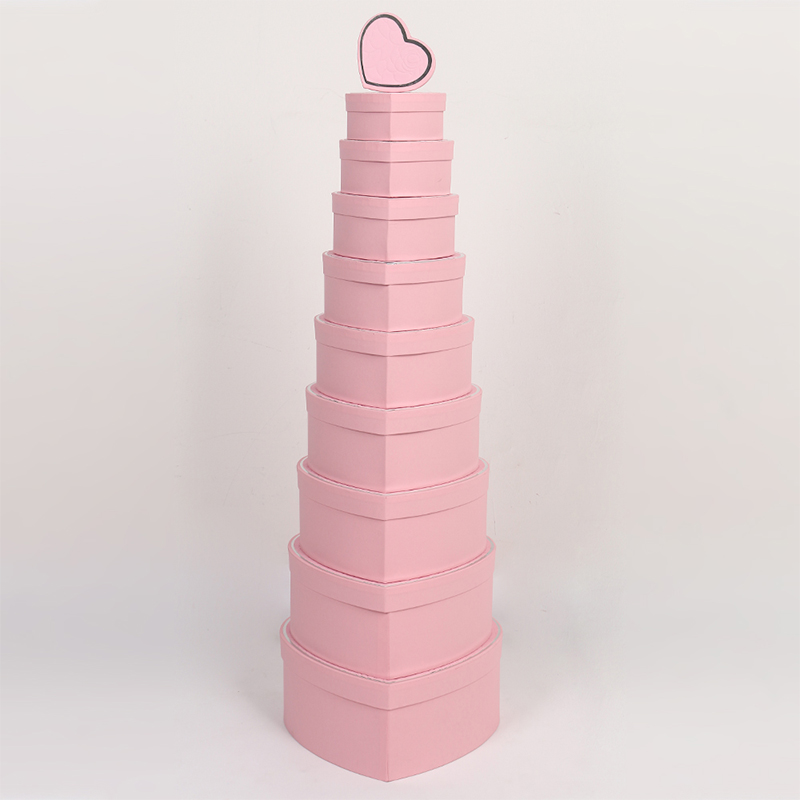
1001 Decorative Cardboard Valentine's Day Heart-Shaped Candy Box
The 1001 Decorative Cardboard Valentine’s Day Heart-Shaped Candy Box is a paper-based gift package created for the presentation and protection of sweets and small gifts. Its central design feature is a heart-shaped frame, which gives the product a distinctive silhouette and establishes an immediate connection with Valentine’s Day.
The product is identified by item number 1001 and is listed under the category of Valentine’s Day gift boxes. It can also be considered part of the broader gift packaging, paper products, and stationery storage box categories because its structural concept can be adapted for multiple packaging purposes.
The box is available in ten sizes. The stated dimension range extends from approximately 33 × 32.3 × 14 centimeters for size 1 to approximately 11 × 10 × 5 centimeters for size 10. This range gives buyers the opportunity to match the packaging to the volume and type of product being presented.
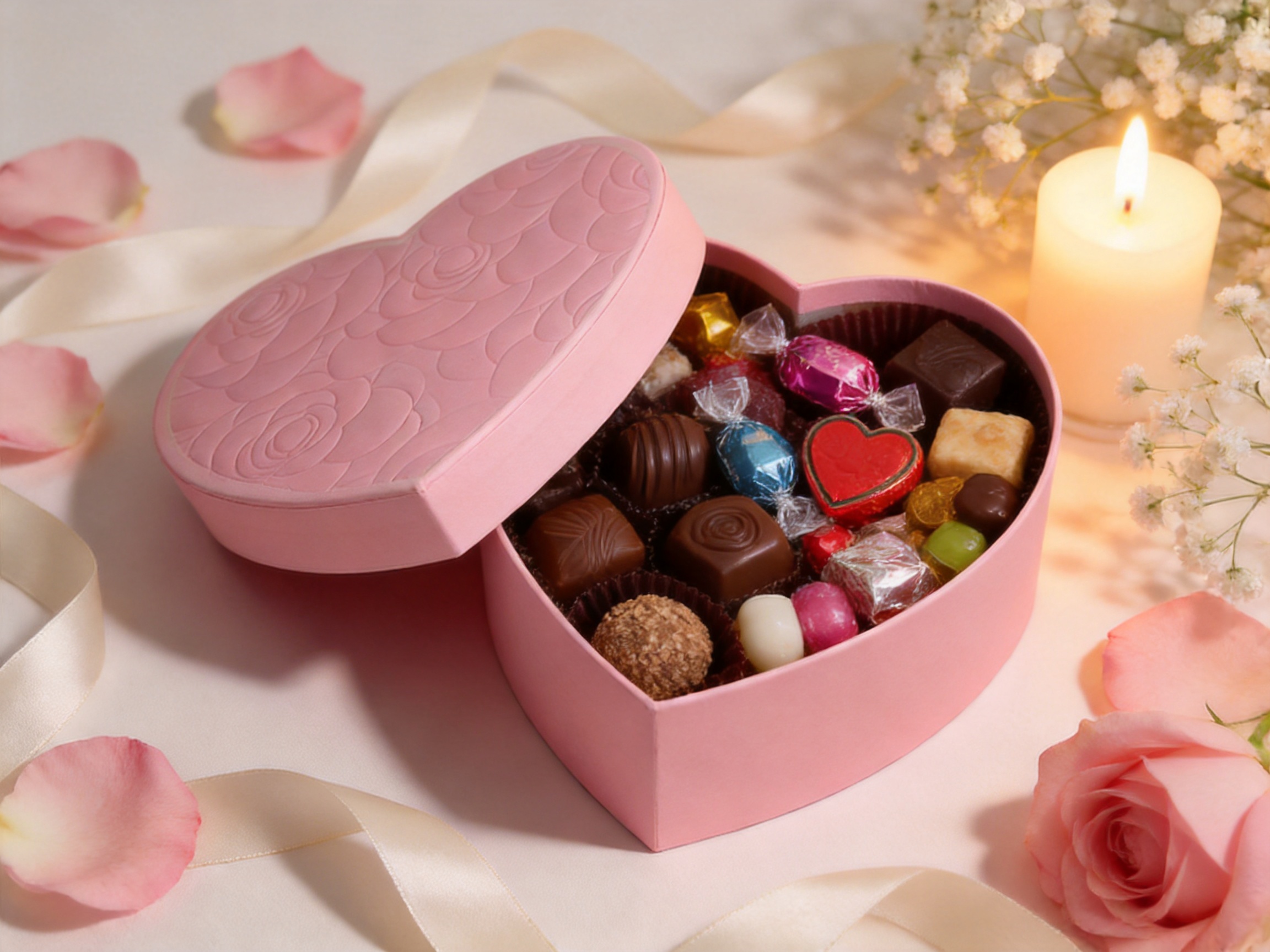
The different sizes are useful for businesses that sell gift collections with varying contents. A large heart-shaped box may hold assorted chocolates, multiple candy pieces, a plush toy, or a combination gift set. A smaller version may be more appropriate for truffles, jewelry, individual confectionery items, small accessories, or compact promotional gifts.
The design is described as premium and expertly crafted. This does not mean that the package is limited to luxury applications. Instead, it provides a presentation-oriented structure that can be positioned in several market segments, from affordable seasonal candy promotions to high-end romantic gift collections.
The size and color can be customized according to customer requirements. This flexibility is valuable for businesses that want to coordinate packaging with a brand palette, a particular Valentine’s Day campaign, a retail display, or a custom product theme. Customization may also assist companies that need packaging suitable for different product dimensions or regional market preferences.
| Specification | Details |
|---|---|
| Product name | 1001 Decorative Cardboard Valentine’s Day Heart-Shaped Candy Box |
| Item number | 1001 |
| Primary category | Valentine’s Day gift boxes |
| Material | Decorative cardboard |
| Available sizes | Ten size options |
| Approximate size range | 33 × 32.3 × 14 cm to 11 × 10 × 5 cm |
| Customization | Size and color customization available |
| Recommended contents | Candy, sweets, toys, jewelry, and general small gifts |
| Minimum order quantity | 500 sets |
| Outer packing information | 64 × 34 × 45 cm; six sets in cardboard boxes |
The product information demonstrates that this is not simply a decorative container. It is a scalable packaging item intended for commercial purchasing. The ten-size structure, minimum order quantity of 500 sets, and export-oriented manufacturing background make it suitable for retailers, wholesalers, packaging distributors, and businesses planning seasonal inventory.
The heart is one of the most universally understood symbols of love. In packaging design, a heart-shaped structure can communicate the purpose of a product without requiring extensive text. When a customer sees the box, the shape immediately suggests affection, romance, and celebration.
This emotional clarity is a significant advantage over ordinary packaging. A standard square box may protect its contents effectively, but it does not necessarily communicate why the gift is being presented. The heart-shaped box adds a visual message that strengthens the relationship between the package, the product, and the occasion.
For confectionery brands, this design can help create a stronger seasonal identity. Valentine’s Day products frequently compete for attention in supermarkets, department stores, specialty candy shops, online marketplaces, and temporary promotional displays. A distinctive silhouette can make a product more recognizable among rows of conventional packages.
The heart-shaped frame also creates opportunities for visual storytelling. It can be combined with romantic color schemes, decorative patterns, printed greetings, ribbons, labels, inserts, or coordinated gift bags. Depending on the customer’s requirements, the overall presentation can be positioned as playful, elegant, modern, traditional, or premium.
For brands, packaging is more than a protective layer. It is a communication tool. A visually relevant package can reinforce the values that a company wants to express, including warmth, thoughtfulness, creativity, and attention to detail. The 1001 box supports this type of emotional branding because its shape is directly connected with the message of the occasion.
Generic boxes are often selected because they are easy to source and simple to stack. However, they may look interchangeable and may require additional decorations to make them suitable for Valentine’s Day. A heart-shaped box begins with an occasion-specific form, reducing the need for extensive external decoration.
Compared with plain cartons, the 1001 box offers a more memorable unboxing experience. The recipient can recognize the seasonal theme immediately, and the shape itself becomes part of the gift. This is particularly helpful when the box is used for products whose emotional value is greater than their physical size, such as chocolates, handwritten notes, jewelry, or small keepsakes.
The box can also help a retailer create a cohesive seasonal display. Multiple sizes can be arranged together to produce a graduated presentation. Smaller boxes may serve as entry-level products, while larger boxes can hold premium assortments or combination gifts. This allows a business to offer a broader price range without abandoning a unified visual identity.
Another advantage is adaptability. While the product is designed for Valentine’s Day, the heart-shaped concept can also be used for anniversaries, weddings, engagements, birthdays, romantic proposals, and other celebrations involving affection. A company may therefore use the design for more than one promotional period, depending on the printing, color, and decorative treatment selected.
Decorative cardboard is widely used in gift packaging because it offers a balance between appearance, formability, protection, and cost. It can be shaped into attractive structures while remaining light enough for handling and transportation. For businesses that ship seasonal gift products, weight and volume are important commercial considerations.
In the 1001 box, the cardboard structure is intended to protect the contents from crushing and damage during normal handling. This is important for candies and other small gifts, which may be affected by pressure, impact, or movement during warehousing and delivery. A carefully formed box creates a defined space around the product and helps maintain a presentable appearance.
The material also supports decorative finishing. Cardboard surfaces can be printed, colored, coated, folded, or combined with other paper components. This provides a practical foundation for custom branding, seasonal patterns, printed messages, and retail-ready presentation.
Another benefit is the relatively low weight of paper packaging compared with many rigid alternatives. Lighter packaging can reduce handling effort and may support more efficient shipping. It can also make the product easier for customers to carry after purchase, which is useful for retail stores, event venues, and gift counters.
The cardboard is described as environmentally friendly and recyclable. While the sustainability of a complete package depends on the exact materials, coatings, adhesives, printing methods, and local recycling systems used, paper-based packaging generally gives businesses a practical foundation for reducing reliance on less recyclable packaging formats.
Consumers are increasingly interested in the environmental characteristics of products and packaging. A recyclable cardboard gift box can support a brand’s sustainability communication when the company provides accurate material information and avoids unnecessary mixed-material components. It may also be reused by customers for storing small items, letters, accessories, or additional gifts.
A successful gift box needs to perform two functions at the same time. It must protect the contents, and it must make the product look attractive. Packaging that performs only one of these functions may create problems. A highly protective container that looks unattractive can weaken the gift experience, while a beautiful package with insufficient strength can arrive damaged.
The 1001 box is designed to combine structural usefulness with decorative presentation. Its cardboard body provides a protective enclosure, while the heart-shaped frame adds visual value. This combination is especially suitable for products where presentation is an important part of the purchase decision.
For candy producers, the box can be used with suitable internal arrangements, such as paper inserts, trays, dividers, or protective wrapping, depending on the contents. These internal components can help prevent movement and improve the appearance of assorted products. The appropriate internal design should be selected according to the size, shape, weight, and food-contact requirements of the product being packed.
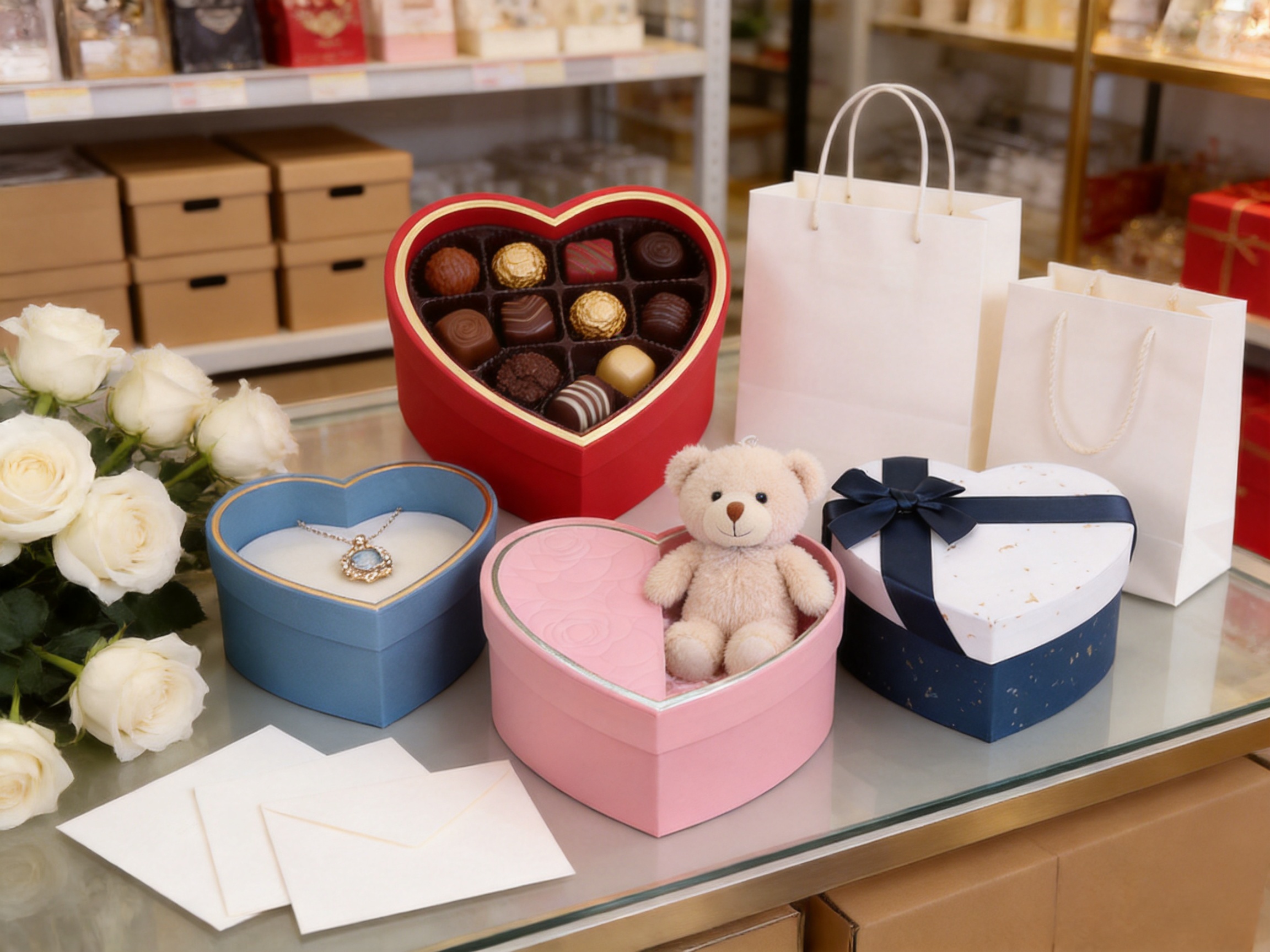
For jewelry and small accessories, a smaller size may be paired with an inner cushion, paper insert, or fitted compartment. For toys or novelty gifts, a larger size may provide enough room for a shaped product and additional decorative material. This versatility allows buyers to consider the package as part of a broader presentation system rather than as a single-use candy container.
One of the strongest practical features of the product is its availability in ten sizes. Packaging programs often involve several product dimensions, and using only one box size can create unnecessary empty space or make larger products impossible to package attractively.
The size range from approximately 33 × 32.3 × 14 centimeters to approximately 11 × 10 × 5 centimeters provides a useful selection for different applications. Buyers can select a larger format for family-sized candy assortments, gift bundles, plush items, and decorative collections. Smaller formats may be suitable for individual treats, compact jewelry, promotional samples, or small thank-you gifts.
Right-sizing packaging offers several benefits. It can improve the appearance of the product because the contents do not look lost inside an oversized container. It can also reduce the need for excessive filling materials and help businesses use shelf space more efficiently. During transportation, a closer fit may help limit unnecessary movement, although the final packaging configuration should always be tested for the specific product.
The ten-size system can also support product line organization. A company may establish a small, medium, and large Valentine’s Day series while retaining the same heart-shaped visual language. Customers can then understand the relationship between different products more easily, and retailers can create a coordinated display.
Customization is important because packaging requirements differ from one business to another. A candy manufacturer may require a particular internal capacity, while a gift retailer may need a box that fits an existing display fixture. A jewelry company may prioritize compact dimensions, whereas a promotional agency may need a larger box for a themed event kit.
The product’s size customization option allows buyers to discuss their specific application with the manufacturer. This can help improve product fit and reduce compromises between appearance and function. Custom dimensions may also support special product bundles that cannot be accommodated by standard packaging.
Color customization provides another way to distinguish a brand. Traditional Valentine’s Day colors may include red, pink, white, burgundy, and related shades, but brands can also select colors that match their existing identity. A minimalist black-and-white design, a pastel collection, or a metallic-inspired palette may appeal to different target markets.
Color decisions should be considered alongside printing, surface finish, lighting conditions, and the visual environment in which the box will be displayed. A color that looks attractive on a digital screen may appear different on printed cardboard. Professional sampling and approval procedures are therefore useful before mass production.
The heart-shaped box is naturally associated with Valentine’s Day, but its use is not limited to one calendar event. Its central symbol also suits anniversaries, wedding celebrations, engagement parties, bridal showers, romantic proposals, and couple-oriented promotional campaigns.
For birthdays, the package can be used when the gift has a personal or affectionate meaning. It may be suitable for children’s candy gifts, friendship-themed products, or birthday gift sets. With customized colors and graphics, the box can be adapted to the age and personality of the recipient.
Wedding businesses may use the box for favors containing chocolates, sweets, mints, small gifts, or thank-you items. The heart form aligns naturally with wedding themes and can be coordinated with invitations, table decorations, floral arrangements, and other event materials.
Florists and gift shops can use the box as part of a combined offering. A heart-shaped candy box may be sold with flowers, a greeting card, a small plush toy, or a jewelry item. This creates an opportunity to increase the value of a gift package without requiring a completely new structural design.
Corporate and promotional users may also find applications for the product. Businesses can use customized heart-shaped boxes for customer appreciation events, employee gifts, hospitality programs, or limited-edition campaign items. The printed surface can help communicate a message while the box itself remains useful after the original contents have been removed.
Specialty retailers may use the boxes for handmade soaps, small cosmetics, candles, craft products, or boutique accessories, provided that the package is matched with appropriate inner protection and product compliance requirements. The decorative shape can help small brands present their products in a more distinctive way.
The quality of a gift box depends not only on its design but also on the manufacturer’s ability to reproduce that design consistently. Heart-shaped structures can require careful control of cutting, folding, forming, printing, assembly, and inspection. Small inconsistencies may affect the symmetry of the shape, the fit of the components, or the overall appearance on a retail shelf.
Zhejiang Shihao Gift Packaging Co., Ltd. has more than 15 years of experience in the production, research and development, and sales of paper gift packaging boxes. This long-term specialization provides an important foundation for handling packaging projects that require both decorative quality and repeatable manufacturing.
The company’s facility covers approximately 20,000 square meters and employs around 300 people. This scale supports the coordination of design, production planning, quality management, assembly, packing, and export logistics. An organized production structure can be especially valuable for seasonal orders, where delivery schedules are connected to fixed promotional dates.
The company reports an average daily production capacity of about 5,000 sets of gift boxes. Capacity at this level can help support wholesale and export orders while allowing the manufacturer to handle multiple product models. Buyers should still confirm production schedules, material availability, artwork approval times, and shipping requirements for each project.
Packaging trends change quickly. Seasonal colors, consumer preferences, retail formats, and sustainability expectations can all influence the success of a gift box. A manufacturer with an active design and research capability can respond more effectively to these changes.
The company has its own design team and updates dozens of products weekly. This indicates an ongoing product development approach rather than reliance on a static catalog. For customers, such a design environment may provide useful inspiration when they are developing new seasonal collections or looking for alternatives to standard packaging.
Design development can include structural concepts, decorative treatments, size variations, material choices, and presentation details. For the 1001 box, the heart-shaped structure provides a recognizable foundation that can be adapted through colors, printed artwork, and dimensions.
Working with an experienced design team may also reduce the risk of impractical artwork or structural decisions. A design needs to be attractive, but it must also be manufacturable, packable, transportable, and suitable for the intended sales channel. Early technical communication can help align creative goals with production realities.
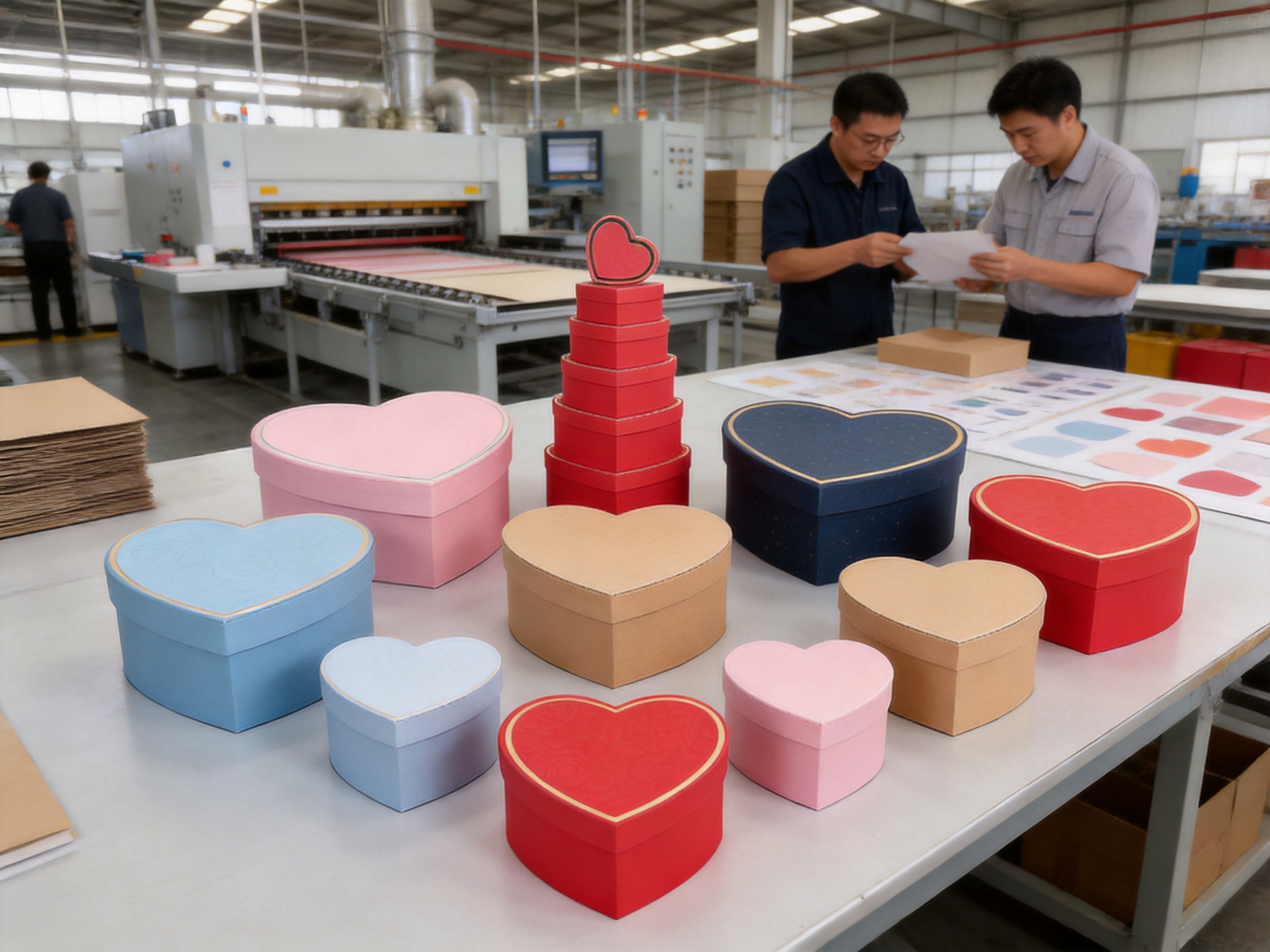
The production of a decorative cardboard gift box generally involves several coordinated stages. The exact process depends on the final construction and customization requirements, but a professional workflow typically begins with product consultation, artwork or structural confirmation, material planning, and prototype or sample review.
After the specifications are approved, cardboard and related materials are prepared according to the required dimensions. Printing, if included, must be aligned with the cutting and folding layout. Accurate registration is important for decorative packaging because misaligned graphics can be visible on the finished product.
Die-cutting or precision cutting creates the heart-shaped outline and other structural components. This stage requires attention to the shape’s symmetry and edge quality. Folding and forming then convert the flat components into the intended three-dimensional structure.
Assembly may involve folding, gluing, inserting frames, adding decorative components, or fitting inner parts. The process must be organized so that each box maintains the correct shape and remains stable during handling. For seasonal gift boxes, the assembly process also needs to preserve the decorative details that create the product’s visual appeal.
Quality inspection can be conducted at different points in the process. Materials may be checked before production, printed components may be reviewed during manufacturing, and finished boxes may be inspected for appearance, dimensions, assembly, and packing condition. A final review helps identify issues before goods are prepared for shipment.
The company’s advanced equipment and production capabilities support this type of coordinated workflow. While specific machinery and inspection standards may vary by order, the combination of equipment, experienced personnel, and design resources can help improve consistency across large production runs.
For importers and international buyers, supplier qualification is an important part of packaging procurement. Businesses often need to evaluate production experience, factory capacity, quality systems, ethical sourcing, environmental practices, and export experience before placing a substantial order.
Zhejiang Shihao Gift Packaging Co., Ltd. has passed BSCI and FSC certifications. These certifications are relevant to different aspects of responsible business and material sourcing. BSCI is associated with social compliance and responsible working conditions, while FSC certification relates to responsibly sourced forest-based materials when the certified material chain is applicable to the product.
Certification should always be reviewed in relation to the specific order, material, and documentation required by the buyer. Nevertheless, the company’s certification background provides an additional point of reference for businesses seeking a more accountable packaging supply chain.
Responsible production is increasingly important in the gift packaging industry. Retailers and consumers want attractive products, but they also expect manufacturers to consider resource use, recyclability, labor conditions, and long-term environmental impact. Cardboard packaging, efficient production planning, and credible sourcing systems can all contribute to a more responsible product strategy.
Before placing an order, buyers should confirm the finished dimensions, material thickness, color specifications, printing requirements, structural details, assembly method, and internal components. These factors can affect both appearance and performance.
It is also useful to request a sample or pre-production approval when the package includes custom colors, logos, complex graphics, or non-standard dimensions. A physical sample allows the buyer to evaluate the shape, size, surface appearance, closure, and compatibility with the intended contents.
Packaging tests should reflect the product’s real use. If the boxes will be shipped over long distances, the buyer may wish to evaluate stacking, compression, vibration, handling, and moisture exposure. If the package will contain food products, the buyer must also confirm that the internal materials and finishing meet the applicable requirements for the target market.
The product description emphasizes that the cardboard is sturdy and durable and can protect candies from crushing and damage. Even so, the final performance depends on the contents, packing method, shipping configuration, and environmental conditions. Proper testing helps ensure that the chosen size and internal arrangement are appropriate.
The 1001 heart-shaped candy box provides several commercial advantages for brands. First, its distinctive structure can improve shelf visibility. Products with unusual but relevant silhouettes may attract attention more effectively than identical rectangular packages, especially in crowded seasonal displays.
Second, the design can strengthen perceived value. A gift box that looks carefully designed may encourage customers to view the contents as more special, even when the contents themselves are familiar. This is particularly useful for chocolates, candies, and other products where presentation can influence purchasing decisions.
Third, customization allows the packaging to become part of the brand identity. Printed logos, color systems, seasonal graphics, and personalized messages can help customers associate the romantic gift experience with a particular company. Consistent design across boxes, bags, cards, and displays can further reinforce recognition.
Fourth, the ten available sizes support product diversification. A retailer can create several gift levels using a consistent package family. A confectionery brand can offer single-item, standard assortment, and premium assortment options. A gift supplier can combine the boxes with different contents for multiple price points.
Fifth, the recyclable cardboard material aligns with the preferences of customers who are increasingly conscious of packaging waste. An attractive package that can be reused or recycled may create a better post-purchase impression than a package designed only for disposal.
The unboxing experience begins before the lid or opening structure is touched. It includes the visual appearance, the feel of the material, the shape of the box, the arrangement of the contents, and the message communicated by the packaging. A heart-shaped box naturally adds anticipation because it signals that the package has been selected for an emotional occasion.
Brands can enhance the experience by arranging the contents neatly, adding a message card, using tissue paper or a fitted insert, and coordinating the outside design with the product inside. The package should open smoothly and remain stable during presentation. Small details can influence whether the recipient keeps the box for later use.
Reusable packaging can extend the relationship between the customer and the brand. Once the candy has been consumed, the box may be used to store letters, jewelry, photographs, craft materials, or small personal items. This continued use can keep the brand’s visual identity in the customer’s environment for a longer period.
The minimum order quantity for the 1001 product is 500 sets. This quantity is suitable for wholesalers, retailers, seasonal gift suppliers, confectionery brands, and event organizers that need commercial volumes rather than individual units.
Buyers should plan orders well in advance of Valentine’s Day. Seasonal packaging demand can increase during the months leading up to the holiday, and custom artwork, sampling, production, inspection, and transportation each require time. Early planning gives the buyer more opportunity to adjust the design and avoid urgent production decisions.
The stated outer packing dimensions are 64 × 34 × 45 centimeters, with six sets in cardboard boxes. This information can support preliminary calculations for warehousing, container planning, freight quotations, and receiving operations. Final logistics details should be confirmed with the supplier because packing quantities may depend on the selected size and order configuration.
For export orders, the buyer should clarify the shipping method, trade terms, destination port or warehouse, documentation, carton markings, pallet requirements, and insurance responsibilities. The supplier’s experience in exporting to Europe, the United States, the Middle East, and other regions can help facilitate communication, but the importer remains responsible for confirming the requirements of the destination market.
Warehouse planning should consider the seasonal nature of the product. Businesses may need to receive packaging before the Valentine’s Day production period, store it in a dry area, and protect it from crushing or excessive humidity. Cartons should be stacked according to their strength and should not be exposed to conditions that could deform the cardboard.
Seasonal packaging involves a balance between availability and excess inventory. Ordering too little can lead to missed sales opportunities, while ordering too much can leave a business with unused stock after the holiday. The ten-size range can help companies order quantities according to the expected demand for different gift categories.
Businesses may also plan for secondary applications. If a portion of the stock remains after Valentine’s Day, customized or neutral color versions may continue to be used for anniversaries, birthdays, weddings, or general romantic gifts. This flexibility can reduce the risk associated with a narrowly defined seasonal design.
Retailers should consider how many boxes are needed for online orders, physical stores, promotional bundles, and replacement stock. Additional units may be useful for quality control, showroom displays, photography, or customer service needs.
Choosing a packaging supplier involves more than comparing unit prices. A lower price may not be beneficial if the supplier cannot maintain shape accuracy, deliver on schedule, manage custom artwork, or provide reliable communication. An experienced manufacturer can offer value through better planning, fewer production problems, and more consistent finished goods.
Zhejiang Shihao Gift Packaging Co., Ltd. has developed its business around paper gift packaging. Its experience covers product research and development, design, manufacturing, sales, and export. This specialization means that the company is familiar with the practical requirements of gift boxes rather than treating them as an occasional product category.
The company’s size, workforce, equipment, and design team provide a foundation for supporting both standard products and customized packaging solutions. Its stated daily capacity of approximately 5,000 sets can help accommodate commercial orders, while its product development activity can offer buyers a broader range of ideas.
The company also emphasizes innovation, quality, practicality, and business benefit. These principles are relevant to buyers who need packaging that is visually attractive but also commercially realistic. A gift box must look good, protect the contents, fit the sales channel, and remain manageable in production and logistics.
For international buyers, export experience is another advantage. Familiarity with overseas markets can help a supplier understand the importance of packaging consistency, carton packing, documentation, communication across time zones, and delivery planning. Buyers should still define their requirements clearly and confirm every commercial detail before production.
A structured customization workflow can improve the final result. The first step is to define the product that will be placed inside the box. Buyers should provide the product’s length, width, height, weight, fragility, quantity, and any internal presentation requirements.
The second step is to select a suitable size from the available range or discuss a custom dimension. Choosing a box that is too small can create pressure and damage, while choosing one that is too large can make the contents move excessively and reduce the visual impact.
The third step is to determine the visual direction. This includes color, artwork, logo placement, text, patterns, finishes, and any additional decorative elements. The design should reflect both the Valentine’s Day theme and the brand’s identity.
The fourth step is to review the structural and visual sample. Buyers should check the heart shape, symmetry, opening method, assembly quality, color accuracy, printed details, and compatibility with the intended contents.
The fifth step is to confirm production specifications, minimum order quantity, packing method, delivery schedule, inspection requirements, and shipping arrangements. Written confirmation reduces misunderstandings during mass production.
The final step is to monitor production and approve the finished goods according to the agreed standards. For repeat orders, maintaining approved artwork, specifications, and quality records can make future purchasing more efficient.
The box is made of decorative cardboard. The material is selected to provide an attractive surface, practical structural support, and protection for candies and small gifts. It is also described as environmentally friendly and recyclable, subject to the final material configuration and local recycling conditions.
There are ten available sizes. The approximate dimensions range from 33 × 32.3 × 14 centimeters for the largest listed size to 11 × 10 × 5 centimeters for the smallest listed size. Buyers should confirm the exact size required for their contents before ordering.
Yes. The size can be customized according to the customer’s requirements. Custom dimensions are useful when the box must fit a particular candy assortment, jewelry item, toy, promotional gift, or retail display.
Yes. Color customization is available. Customers can discuss colors that match their brand identity, Valentine’s Day campaign, seasonal collection, or event theme.
The box is primarily designed for candies and sweets. The product information also identifies toys, jewelry, and general presents as suitable applications. The contents should be matched with the appropriate size and, when necessary, an inner tray, insert, cushion, or protective wrapping.
The minimum order quantity is 500 sets. This makes the product more appropriate for commercial buyers, wholesalers, retailers, gift suppliers, confectionery producers, and event organizers.
No. Although the heart shape is especially suitable for Valentine’s Day, the box can also be used for anniversaries, weddings, birthdays, proposals, romantic events, customer appreciation gifts, and other occasions connected with affection or celebration.
The heart shape creates immediate visual recognition and communicates love without requiring extensive explanation. It can improve seasonal shelf visibility, enhance perceived gift value, support emotional branding, and create a more memorable unboxing experience than a plain rectangular carton.
Yes. The decorative design and carefully presented structure can support premium candy assortments, jewelry, boutique gifts, and other higher-value products. The final premium appearance will also depend on the selected material, printing, color, finishing, inner arrangement, and quality standards.
Buyers should confirm the dimensions, material, color, artwork, printing, structure, opening method, internal components, packing quantity, minimum order quantity, production schedule, inspection requirements, and shipping arrangements. A physical sample or pre-production approval is recommended for customized orders.
Zhejiang Shihao Gift Packaging Co., Ltd. is an export-oriented manufacturer whose products are exported to Europe, the United States, the Middle East, and other regions. Buyers should discuss destination-specific documentation, shipping terms, compliance requirements, and packing specifications directly with the manufacturer.
The company has passed BSCI and FSC certifications. Buyers should confirm the current validity and applicability of the relevant certification documents to their specific materials and order requirements.
The boxes should be stored in a clean, dry environment away from excessive humidity, direct water exposure, and crushing pressure. Cartons should be stacked carefully, and storage conditions should be selected according to the final product configuration and shipping requirements.
The 1001 Decorative Cardboard Valentine’s Day Heart-Shaped Candy Box combines emotional design with practical packaging performance. Its heart-shaped frame creates an immediate connection with love and celebration, while its decorative cardboard structure provides a lightweight and presentable enclosure for candies, sweets, jewelry, toys, and other small gifts.
The availability of ten sizes gives buyers flexibility when developing different product collections. Size and color customization allows the box to support brand identity, retail presentation, and occasion-specific campaigns. The recyclable cardboard material also provides a practical foundation for packaging programs that value responsible material choices.
Compared with generic gift boxes, the product offers stronger thematic relevance, greater visual distinction, and a more memorable unboxing experience. It can help brands communicate warmth, care, creativity, and attention to detail while providing retailers with a product family suitable for different price levels and gift formats.
The manufacturer’s more than 15 years of paper packaging experience, 20,000-square-meter facility, approximately 300 employees, advanced equipment, design team, export background, and reported daily capacity of about 5,000 sets provide important support for commercial buyers. BSCI and FSC certifications further contribute to the company’s suitability for customers seeking responsible and internationally oriented packaging production.
For businesses preparing Valentine’s Day collections or romantic gift programs, the 1001 heart-shaped box offers a combination of symbolism, customization, protection, and scalability. With careful product matching, sampling, quality confirmation, and advance order planning, it can become a valuable part of a seasonal packaging strategy and a memorable part of the recipient’s gift experience.
1. Product specification materials for Item 1001, Decorative Cardboard Valentine’s Day Heart-Shaped Candy Box.
2. Manufacturer-provided information concerning product categories, size options, minimum order quantity, and carton packing.
3. Manufacturer company profile concerning production experience, facility area, workforce, equipment, export markets, and product development capabilities.
4. BSCI social compliance framework information.
5. FSC principles concerning responsible forest-based material sourcing and supply-chain certification.
6. General packaging design principles concerning structural protection, right-sized packaging, visual merchandising, and gift presentation.
7. General paper packaging sustainability guidance concerning recyclability, material selection, and responsible packaging communication.
Recommended Products

Contact Us

No. 15, Xiayang Road, Huangzhai Town, Jinhua, Zhejiang, China

(+86) 579-84230069

(+86) 13085675766


Products

Gift Box Packaging Manufacturer
 English
 Français
 Español
 عربى