2026-08-01
Packaging plays a central role in the way a gift, bouquet, wedding favor, or special keepsake is presented. Before a recipient sees the item inside, the box communicates quality, care, style, and occasion. For weddings and floral gifts in particular, packaging must do more than provide basic protection. It should preserve delicate contents, support an elegant presentation, create a memorable opening experience, and reflect the visual identity of a florist, wedding planner, retailer, or private label brand.
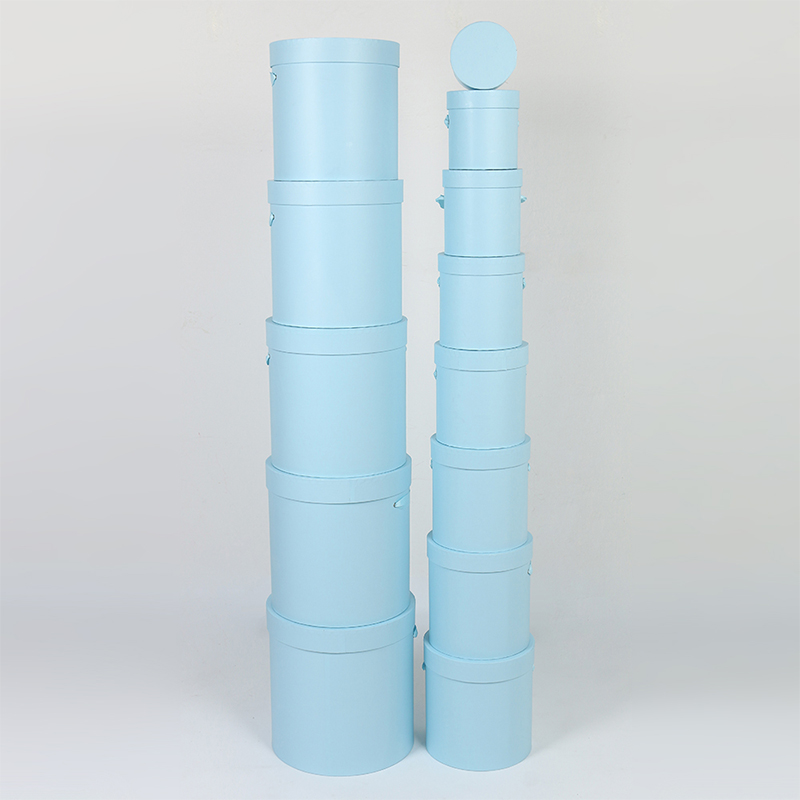
The 3412 reusable wedding gift box and flower box with ribbon is designed to meet these requirements through a combination of rigid paperboard construction, a round multi-layered structure, a refined matte surface, protective interior support, and decorative ribbon detailing. Its adaptable design makes it suitable for bouquets, floral arrangements, wedding favors, celebration gifts, seasonal products, and other premium presentation applications.
Unlike ordinary disposable cartons or thin folding boxes, this rigid round gift box is intended to become part of the gift experience. Its vertical form offers visual presence, while the layered construction supports different gift sizes and presentation formats. The recyclable paperboard body contributes to a more responsible packaging strategy, and the surface can be customized with branding, wedding graphics, embossing, stamping, gold foil, and UV coating.
For businesses searching for a reliable custom gift box manufacturer, this product also represents a broader manufacturing capability. The supplier behind the box provides design development, sampling, production, finishing, quality control, and export support through an integrated process. This gives buyers a practical route from a packaging concept to a finished product prepared for commercial distribution.
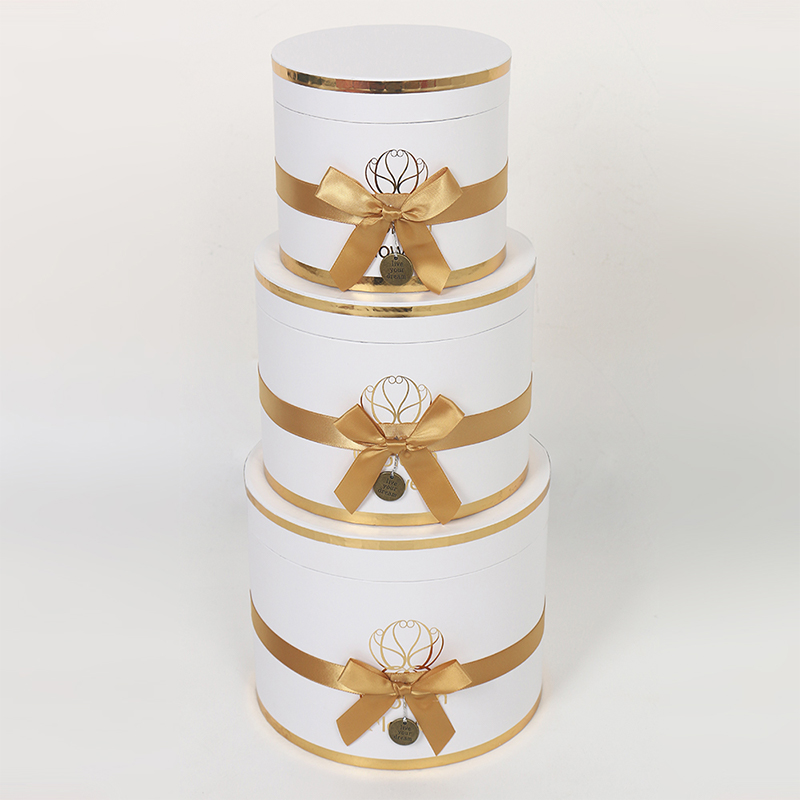
3412 Reusable Wedding Gift Box Flower Box With Ribbon
Wedding and floral products are unusually sensitive to presentation. A bouquet may be beautiful, but an unsuitable package can flatten the arrangement, damage petals, create moisture-related problems, or make the product appear less valuable. Wedding favors and event gifts face a similar challenge: they must be transported efficiently while still looking polished when placed on a reception table or handed to a guest.
Specialized packaging begins with an understanding of the product’s physical and emotional requirements. Flowers are often fragile, irregularly shaped, and difficult to secure inside conventional rectangular cartons. They may also need sufficient internal space to prevent crushing. Wedding favors can vary from small accessories and confectionery to candles, cosmetics, jewelry, keepsakes, and promotional gifts. A box intended for these uses must offer adaptability without losing structural stability.
The 3412 design addresses these needs through a cylindrical form and a multi-layered arrangement. The round shape gives floral products a natural presentation profile and avoids the overly industrial appearance of standard shipping cartons. It can frame a bouquet or gift in a way that feels intentional and ceremonial. The layered design also allows users to select an appropriate configuration for different product dimensions and presentation requirements.
Appearance is equally important. Weddings are associated with refinement, romance, and attention to detail. A package with a carefully finished surface and coordinated ribbon can complement a wedding color palette, floral theme, or brand identity. It can also help a retailer create a consistent premium image across different product collections.
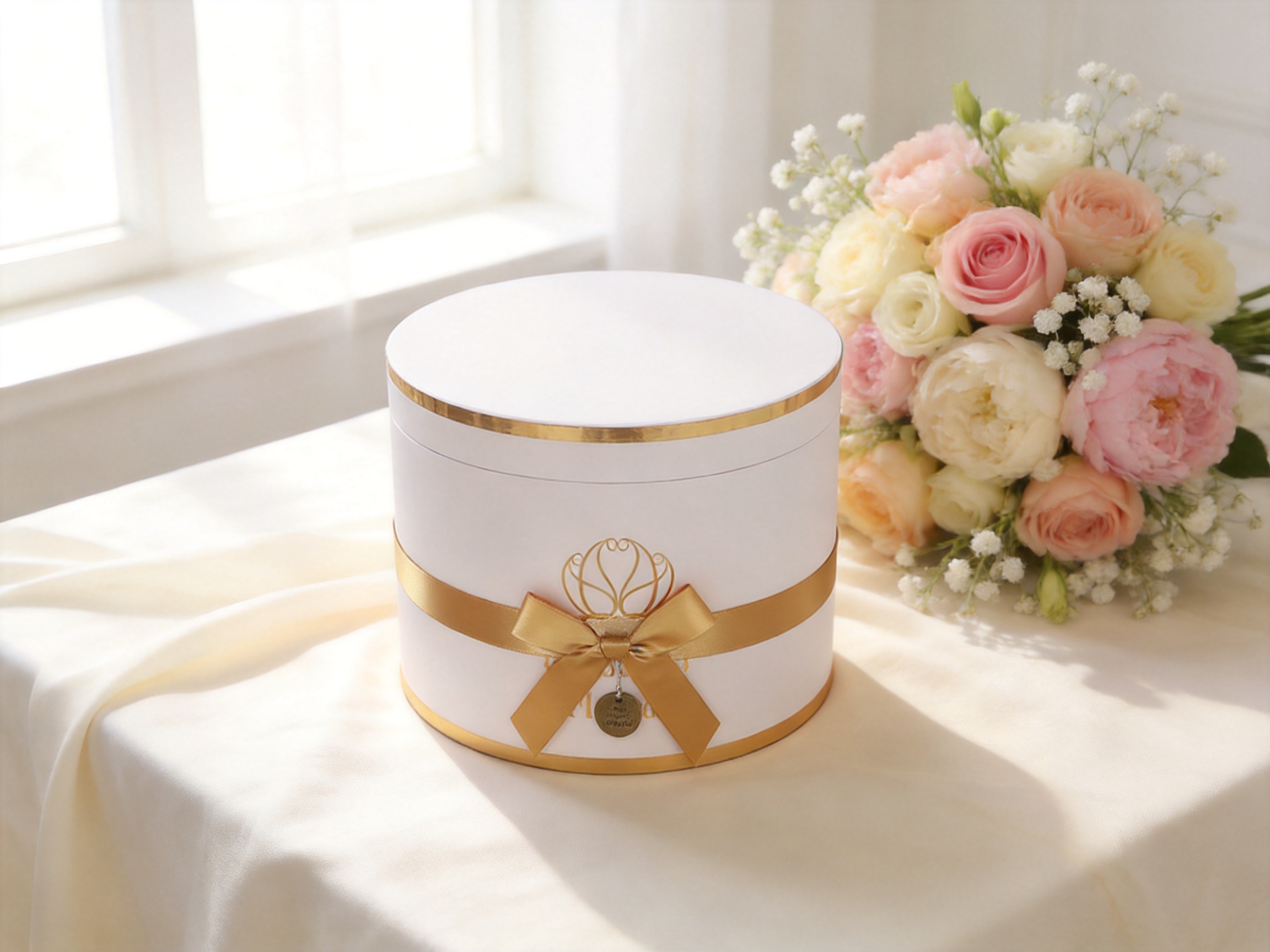
The 3412 reusable wedding gift box is a round rigid box made primarily from paperboard. It is categorized as a flower gift box and is suitable for both floral packaging and general gift presentation. The structure is designed for repeated handling and may be reused by the recipient for storage, keepsakes, accessories, or future gifting.
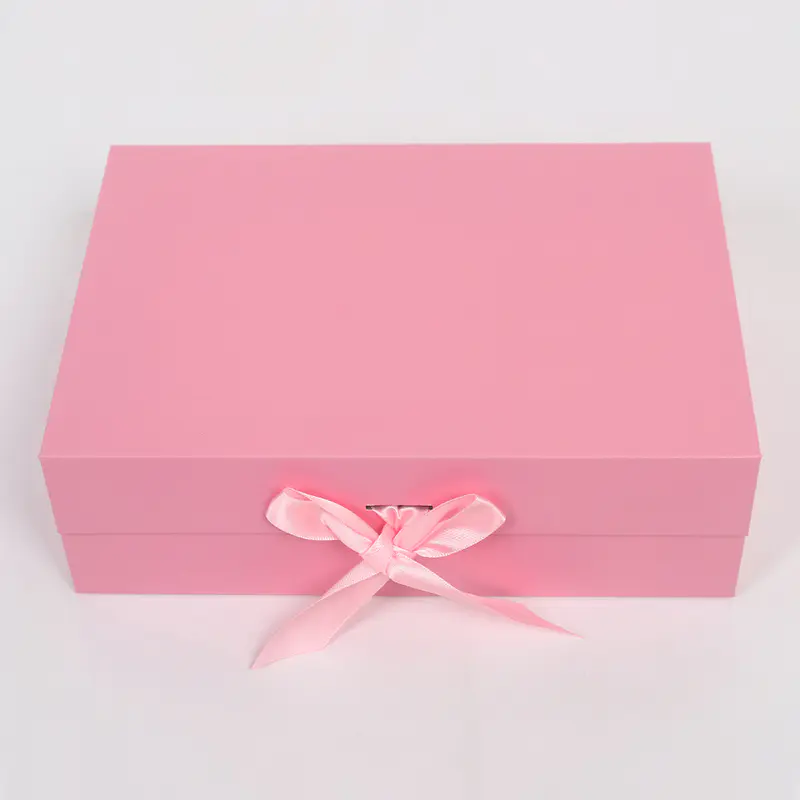
The box includes ribbon as a decorative accessory. This detail adds visual softness to the rigid body and helps communicate the purpose of the package. Depending on the selected design, the ribbon may function as a lid accent, closure detail, carrying feature, or decorative bow. Ribbon color and style can be coordinated with the printed surface, wedding theme, seasonal campaign, or brand palette.
The exterior is described as having a UV-coated matte finish. This combination provides a smooth, understated appearance while adding practical resistance to everyday surface marks and scratches. The matte texture reduces excessive glare and gives the box a tactile quality that is often associated with premium packaging.
The internal liner is paperboard, creating a coordinated structural system rather than relying only on a thin disposable insert. A cushioned inner lining can help protect delicate products and reduce unwanted movement during handling. For flowers, interior support is particularly important because the arrangement should remain visually attractive from the moment it is packaged until it reaches the recipient.
Customization is accepted across the product. Buyers may request printed logos, wedding elements, decorative patterns, color treatments, and finishing effects. Available printing and surface treatments include embossing, matte lamination, stamping, gold foil, and UV coating. These options allow a standard box structure to become a distinctive packaging solution for a florist, wedding service provider, gift retailer, cosmetics company, hotel, or event organizer.
| Product Attribute | Specification or Capability |
| Product Type | Reusable wedding gift box and flower box |
| Shape | Round |
| Construction | Rigid paperboard box |
| Primary Material Feature | Recycled materials and recyclable cardboard options |
| Interior Material | Paperboard liner |
| Decorative Accessory | Ribbon |
| Surface Finish | UV coating and matte treatment |
| Available Printing Processes | Embossing, stamping, gold foil, matte lamination, and UV coating |
| Typical Applications | Flowers, bouquets, wedding favors, gifts, keepsakes, and premium retail products |
| Customization | Custom design, logo printing, wedding graphics, colors, and finishing details |
| Order Type | Custom orders accepted |
One of the most important differences between this box and many low-cost alternatives is its rigid paperboard construction. Thin paper bags, flexible cartons, and lightweight folding boxes may be economical, but they can bend, collapse, or lose their shape when used for larger floral arrangements and premium gifts. A rigid box maintains a stronger visual profile and offers greater resistance to compression during handling.
Structural stability is especially valuable in wholesale and retail operations. Products may pass through multiple stages, including assembly, storage, delivery, display, and final presentation. A package that retains its shape through these stages reduces the risk of a disappointing customer experience. The rigid format also helps the box stand upright on shelves, reception tables, gift counters, and event displays.
Many standard gift boxes are rectangular because rectangular formats are easy to manufacture and stack. However, flowers and decorative arrangements often have a radial or rounded visual character. The cylindrical format of the 3412 box creates a closer relationship between the container and the bouquet. It can make the arrangement feel more abundant and balanced while offering a distinctive alternative to common square boxes.
The round profile is also useful for brands that want their packaging to be immediately recognizable. A unique silhouette can serve as a visual signature, especially when combined with a consistent logo, ribbon color, or decorative pattern. In a competitive retail environment, shape can help a product stand apart before the package is opened.
The multi-layered structure provides flexibility for different gift sizes and configurations. Rather than limiting the package to one narrow product category, the design can support a range of floral and gift applications. Buyers can work with the supplier to determine the suitable dimensions, inner support, and layered arrangement for their products.
This flexibility can reduce the need for a large number of completely different box styles. A business may use related versions of the design for small wedding favors, medium floral gifts, and larger presentation arrangements. A coordinated product family helps simplify visual merchandising and reinforces brand consistency.
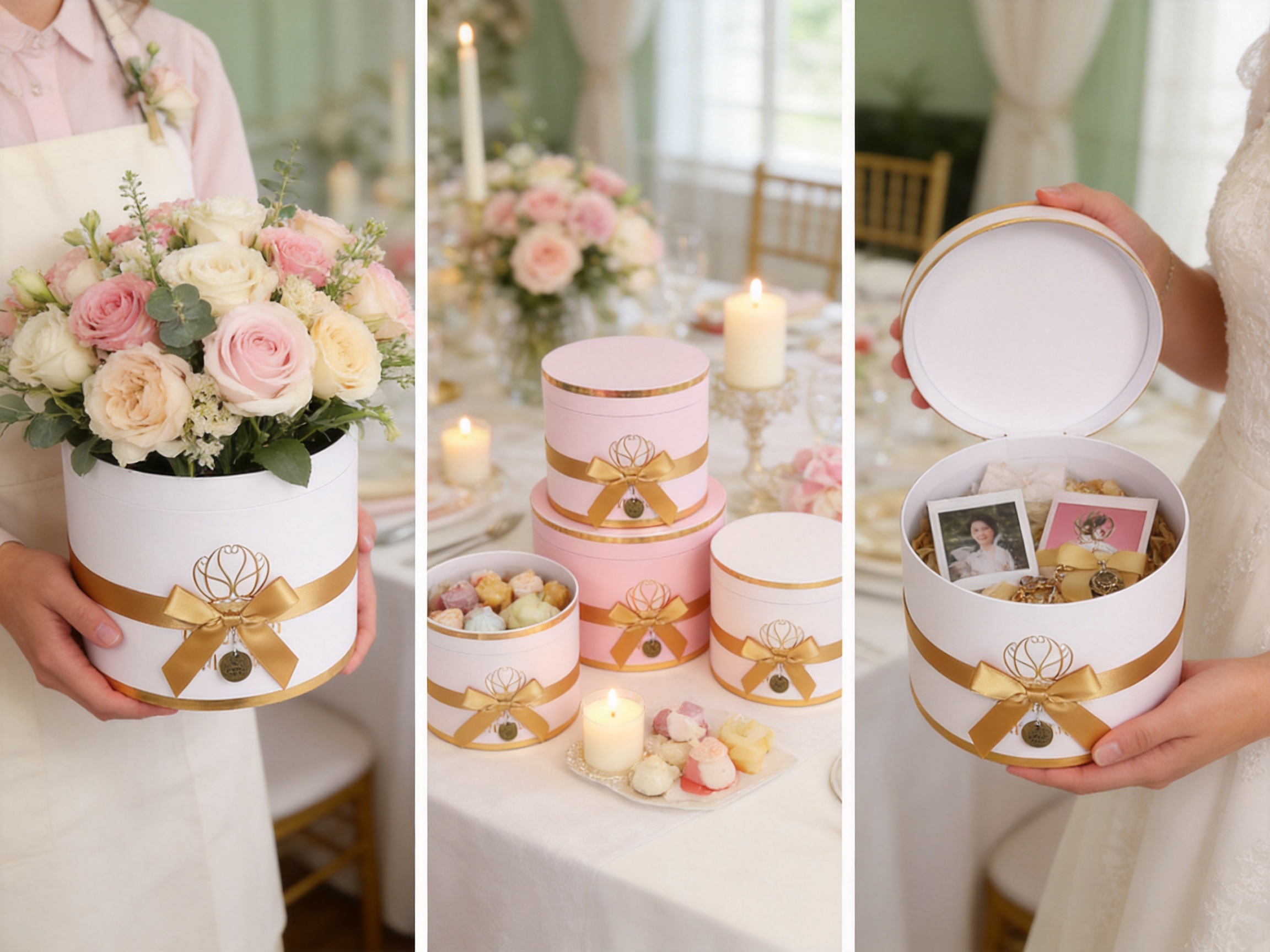
Many event packages are discarded immediately after use. A reusable rigid box offers a longer product life. After a bouquet has been removed, the recipient can use the box to store photographs, jewelry, ribbons, stationery, accessories, cosmetics, or other personal items. Reuse increases the practical value of the original purchase and allows the brand or event theme to remain visible in the recipient’s home.
Reusability can also support a more sustainable packaging message. It does not eliminate the need for responsible material selection or recycling, but it encourages the package to remain useful for a longer period. For brands seeking to communicate care, quality, and environmental awareness, a reusable paperboard gift box can provide a stronger story than a single-use wrapper.
The matte UV-coated surface combines refined appearance with practical performance. Matte finishes are often chosen for luxury packaging because they provide a softer visual effect than high-gloss coatings. They can make colors appear more sophisticated and can help metallic details or embossed marks stand out with greater contrast.
UV coating adds another level of surface protection. It can improve resistance to scuffing and make the exterior easier to clean during ordinary handling. This is useful for packages that may be moved between production areas, warehouses, retail shelves, and event venues before reaching the final recipient.
A ribbon can transform the visual character of a box. It introduces texture, movement, and a handcrafted feeling while reinforcing the emotional purpose of the package. For wedding applications, ribbon can be matched to the wedding colors, bridesmaid accessories, table settings, invitation design, or floral tones.
In commercial use, the ribbon also helps distinguish the product from standard retail packaging. A customer can identify the package as a gift before seeing the contents. This supports impulse purchases, seasonal collections, subscription gifts, bridal packages, and premium order fulfillment.
The box uses paperboard and emphasizes recycled materials. Paperboard is a widely used packaging substrate because it offers a useful balance of printability, structural performance, and workability. It can be cut, wrapped, laminated, embossed, stamped, and assembled into a variety of rigid forms.
Recycled and recyclable paper-based materials can help brands reduce reliance on less sustainable packaging formats. However, material selection should always be evaluated together with coatings, adhesives, ribbons, liners, and other components. Buyers should discuss the complete packaging specification with the manufacturer when they have particular recycling, certification, or market compliance requirements.
A sustainable packaging strategy is not limited to material choice. Product durability, reuse, efficient production, optimized dimensions, responsible sourcing, and reduced waste during manufacturing are also important. A box that protects a fragile bouquet and prevents product damage may contribute to lower waste throughout the distribution process.
The supplier has experience with FSC-related certification requirements and has passed BSCI and FSC certifications according to the provided company information. These credentials can be relevant for buyers that need responsible sourcing and social compliance documentation. Specific certification scope, current validity, material chain requirements, and project applicability should be confirmed during the quotation and approval process.
For businesses marketing the box as an environmentally conscious product, accurate communication is essential. Claims should correspond to the actual materials, coatings, accessories, and certifications used in the final production run. The manufacturer can assist buyers in aligning artwork, material specifications, and documentation with the intended market.
Embossing raises selected areas of the surface to create a three-dimensional effect. It can be used for logos, initials, floral patterns, wedding dates, monograms, or decorative borders. Embossed details are visible through both sight and touch, making them effective on a matte surface.
Stamping can produce a clean, defined mark for branding or decorative artwork. It is suitable for logos, short messages, collection names, and graphic elements. The final appearance depends on the selected substrate, ink, pressure, artwork, and production method.
Gold foil is widely associated with celebration and luxury. It can emphasize wedding initials, names, dates, premium product lines, and limited-edition designs. Gold foil may be used as a focal accent rather than covering the entire box, allowing the packaging to remain elegant and visually balanced.
Matte lamination creates a smooth, low-reflection surface and can support a sophisticated tactile experience. It may also help protect printed artwork from ordinary abrasion. Buyers should select lamination based on the desired appearance, handling conditions, and sustainability requirements of the target market.
UV coating can be applied to the overall surface or selected areas. A spot UV effect can create contrast by combining matte and glossy details. For example, a logo, flower motif, or brand pattern may receive a subtle glossy highlight while the surrounding area remains matte.
These finishing processes can be used individually or in combination. A common premium design might pair a matte base with embossed artwork and a small gold foil logo. Another design could use a soft neutral color, spot UV floral details, and a contrasting ribbon. The appropriate combination depends on the brand position, budget, order quantity, and intended customer experience.
The primary application is floral presentation. The round box can be used for bouquets, preserved flowers, artificial arrangements, or carefully prepared fresh floral gifts. Internal cushioning and suitable sizing help reduce movement and protect the arrangement while maintaining an attractive opening experience.
Florists can use customized versions for bridal bouquets, anniversary flowers, proposal gifts, wedding party arrangements, and premium delivery services. The box can be printed with the florist’s logo and contact identity, turning each delivery into a brand impression.
Wedding favors often require packaging that is decorative but practical. The box can hold small gifts such as candles, sweets, soaps, accessories, mini bottles, ornaments, or personalized keepsakes. Printed wedding names, dates, initials, or venue motifs can make the package part of the event design.
For larger weddings, coordinated packaging can help unify tables and guest areas. A consistent box design may be produced in multiple colors or sizes while retaining the same visual language. This approach allows planners to meet different favor requirements without creating an unrelated appearance for each item.
Engagement and proposal gifts often require a strong sense of occasion. A rigid round box with a ribbon can add anticipation and ceremony to the moment. Depending on its dimensions and inner structure, it may be used for floral arrangements, keepsakes, accessories, or a combination of small gifts.
The design is not limited to weddings. It can be used for anniversaries, Valentine’s Day, birthdays, bridal showers, baby showers, and other celebrations. The artwork and ribbon can be changed to suit each campaign, allowing the same basic packaging platform to support multiple product launches.
Premium retailers can use the box for cosmetics, fragrance accessories, fashion items, jewelry-related gifts, stationery, and curated gift sets. Its rigid construction and finishing options allow the box to serve as a secondary storage container after purchase. This is especially valuable for brands that want packaging to remain visible and useful beyond the initial transaction.
Hotels, resorts, event agencies, and corporations can customize the box for hospitality gifts, conference packages, client appreciation programs, and holiday campaigns. A logo, message, or event identity can be combined with a suitable ribbon and color scheme. The finished product can then be used to present flowers, confectionery, promotional gifts, or commemorative items.
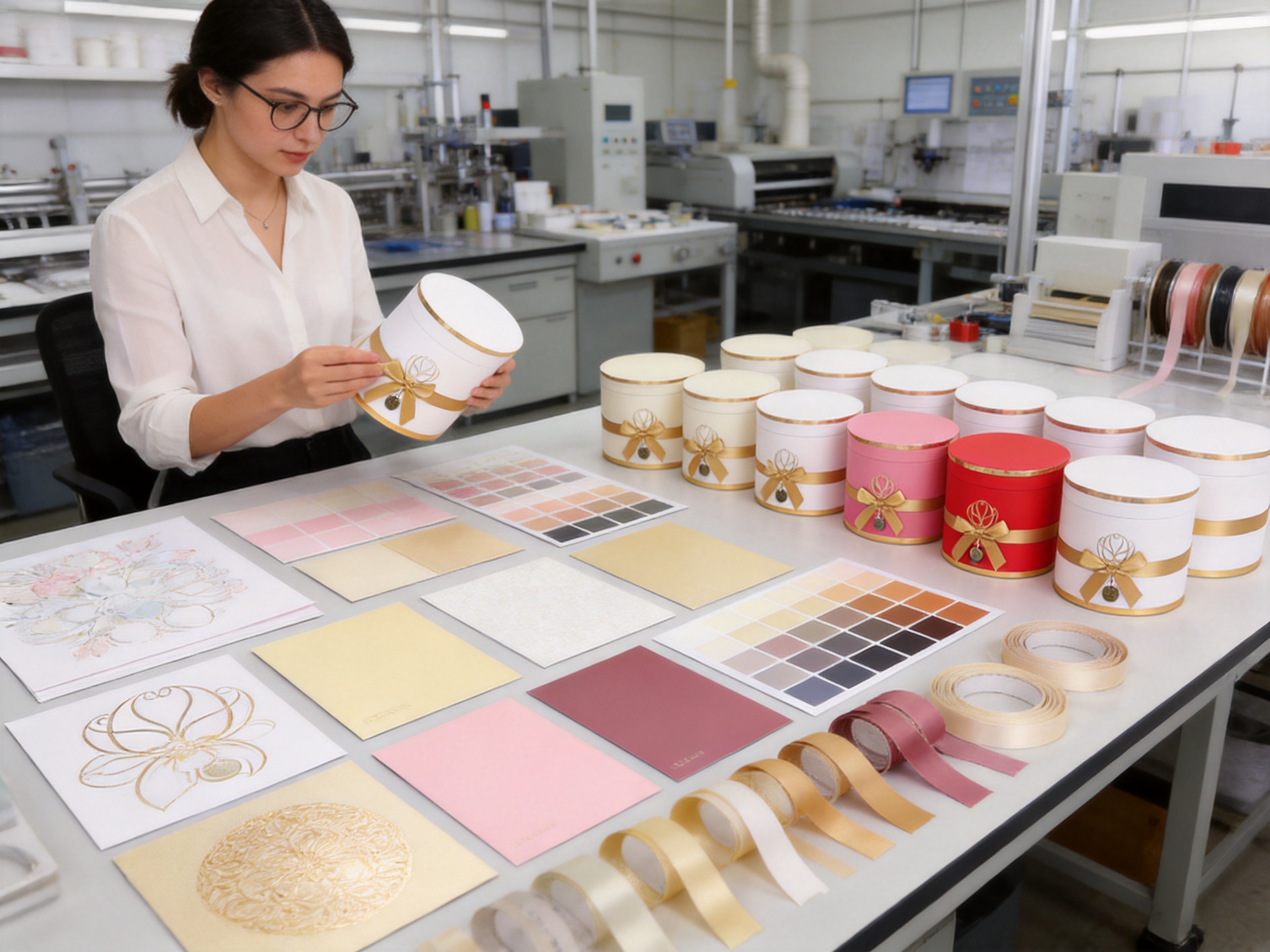
A premium packaging result depends on more than the visible design. It requires consistent material preparation, accurate cutting, stable forming, precise wrapping, reliable finishing, and careful inspection. An integrated manufacturing process makes it easier to control these stages and reduce communication gaps between design, production, and quality teams.
Production begins with understanding the customer’s application. The manufacturer evaluates the intended contents, box dimensions, structural requirements, surface artwork, ribbon specifications, target price, order quantity, and delivery market. This information is used to develop a suitable design rather than simply applying a logo to an unsuitable standard box.
For floral packaging, special attention should be given to internal clearance, cushioning, opening direction, moisture exposure, and the method used to secure the bouquet. For wedding favors, the focus may be on presentation, stacking, table placement, and efficient assembly. Each application requires a slightly different balance between appearance and function.
Sampling allows buyers to evaluate the physical product before mass production. A sample can reveal whether the dimensions are appropriate, whether the ribbon is proportionate, whether the lid or layered sections fit correctly, and whether the printed colors match the brand identity.
Sampling is also important for finishing approval. Embossing depth, foil placement, matte texture, UV effects, and logo scale can appear different on a physical box than on a digital proof. A structured approval process helps reduce the possibility of expensive changes after production begins.
Paperboard selection affects strength, appearance, print quality, and finishing performance. The production team must coordinate the board grade, thickness, surface treatment, liner, adhesive, and outer wrap. Material preparation should be consistent across the order so that the finished boxes have a uniform appearance.
When recycled materials are specified, the manufacturer must also ensure that the selected board is compatible with the intended structure and finishing processes. Paper fibers, surface smoothness, and stiffness can influence how the box behaves during cutting, wrapping, embossing, and assembly.
Accurate cutting is essential for a round rigid box. Small dimensional variations can affect the fit between components, the alignment of wrapped paper, and the appearance of the finished edge. Controlled forming helps maintain the cylindrical profile and ensures that the box remains stable when placed on a surface.
Multi-layered structures require additional coordination because each layer must align with the others. Consistent tolerances are necessary to prevent uneven edges, loose components, or difficult opening and closing. Experienced production teams can adjust the process according to the selected dimensions and materials.
The outer paper must be applied smoothly and accurately to avoid bubbles, wrinkles, lifting edges, or visible misalignment. Printed artwork must be positioned carefully around the curved surface. Logos and patterns should be prepared with the box geometry in mind so that they appear balanced when viewed from different angles.
Color management is another important consideration. The appearance of a printed color can change according to paper surface, coating, ink, lighting, and viewing conditions. Professional sampling and production controls help maintain consistency between the approved sample and the finished order.
After the primary print stage, selected boxes may receive embossing, stamping, foil, lamination, or UV coating. Each process requires suitable registration and handling. Decorative effects should be inspected for clarity, adhesion, position, and consistency across the batch.
Finishing is not only decorative. It can influence the tactile quality, surface resistance, and perceived value of the package. The manufacturer’s ability to coordinate several processes within one production system can simplify project management for buyers seeking a complex premium design.
Ribbon must be selected and installed in proportion to the box. Its width, texture, color, attachment method, and placement all affect the final appearance. During assembly, the ribbon should be checked for loose ends, uneven positioning, fraying, and inconsistent tension.
For high-volume wedding orders, assembly consistency is especially important. A single event may require hundreds or thousands of boxes, and differences in ribbon placement can become noticeable when the packages are displayed together. Standardized work instructions and inspection procedures help maintain a uniform result.
Final inspection may cover dimensions, structural stability, surface cleanliness, print registration, color consistency, finishing quality, ribbon attachment, liner placement, and packaging for shipment. Quality control should identify both functional and cosmetic issues before the products leave the factory.
The advantage of working with a vertically integrated manufacturer is that feedback can move quickly between departments. If a sample reveals a structural issue, the design and production teams can collaborate on a correction. If a finishing effect does not meet expectations, the process can be reviewed before the entire order is completed.
The supplier is an export-oriented manufacturer specializing in paper gift packaging boxes, including kits, storage boxes, folding boxes, jewelry boxes, and gift boxes. The company has more than 15 years of industry experience and operates a facility covering approximately 20,000 square meters.
Its workforce includes around 300 employees, supported by advanced equipment and dedicated research and development capabilities. The reported average daily production capacity is approximately 5,000 sets of gift boxes. This scale is valuable for buyers that need dependable production planning, repeat orders, or large event quantities.
A dedicated design team updates dozens of products weekly and develops packaging solutions for different markets. This design activity can benefit customers that have a general concept but need assistance translating it into a manufacturable box. It can also help brands explore seasonal variations, new colorways, structural changes, and alternative finishing combinations.
Global export experience is another important strength. Products are supplied to Europe, the United States, the Middle East, and other regions. International experience can help the manufacturer understand different packaging expectations, artwork requirements, logistics considerations, and customer service standards.
Vertical integration supports end-to-end control from design and sampling to mass production. Rather than dividing the project among unrelated suppliers, buyers can communicate with one primary manufacturing partner. This can simplify approvals, reduce coordination time, and improve accountability when a project includes structural design, printing, finishing, accessories, and assembly.
BSCI and FSC certifications are also part of the company’s stated credentials. These certifications may support customers with social responsibility and responsible material sourcing objectives. Buyers should request current documentation and confirm whether the specific materials and production order fall within the required certification scope.
Customization should begin with the purpose of the box. A wedding planner may want a romantic, elegant design that matches a complete event identity. A florist may prefer a recognizable brand color and logo that can be used throughout the year. A luxury retailer may prioritize a restrained surface with minimal branding and a high-quality tactile finish.
Color is one of the most visible customization decisions. Soft ivory, blush, champagne, white, sage, lavender, and muted metallic palettes are often suitable for wedding and floral applications, but the final choice should reflect the customer’s brand and target audience. The manufacturer can work with approved color references and physical samples to improve consistency.
Graphic design should account for the round structure. Artwork that looks correct on a flat screen may appear distorted or poorly balanced when wrapped around a cylinder. Logos should be positioned where they are easy to see, and repeating patterns should be aligned carefully around the circumference.
Ribbon selection offers another opportunity for differentiation. A satin ribbon may communicate luxury, while cotton or textured ribbon can create a more natural, handmade appearance. The ribbon can match the box, contrast with it, or introduce the accent color used throughout the event design.
Finishing should be selected according to the desired level of visual emphasis. Embossing can create a quiet premium effect, while gold foil creates a more celebratory impression. Spot UV can highlight a logo or pattern without changing the overall matte character of the package. Combining too many effects may reduce clarity, so the design should retain a clear focal point.
Before requesting a quotation, buyers should prepare basic information about the intended application. This may include the product type, approximate dimensions, desired box quantity, preferred paperboard, color references, logo files, ribbon requirements, finishing options, delivery destination, and target completion date.
For flower packaging, it is helpful to provide details about the bouquet diameter, stem length, moisture protection, arrangement style, and whether the flowers are fresh, preserved, or artificial. For wedding favors, buyers should provide the size and weight of the favor, the number of units per event, and how the boxes will be displayed or distributed.
Artwork should ideally be supplied in a professional editable format. Clear vector logos and high-resolution images help the design and prepress teams prepare accurate proofs. Buyers should review spelling, dates, names, colors, and dimensions carefully before approving the sample.
Packaging testing should be considered for larger orders. A practical test may include opening and closing the box repeatedly, placing the intended product inside, evaluating movement, checking the ribbon, and simulating ordinary transport. If the box will be shipped internationally, buyers may also wish to review the outer shipping cartons and pallet configuration.
Lead time depends on the complexity of the project, sample requirements, order quantity, material availability, finishing processes, and production schedule. Early communication is particularly important for weddings because event dates are fixed. Allowing time for design approval, sampling, production, inspection, shipping, and contingency planning can reduce last-minute risk.
| Packaging Format | Typical Strength | Potential Limitation Compared With the 3412 Design |
| Thin Folding Carton | Lightweight and economical | Usually offers less rigidity, lower reuse value, and a less substantial presentation |
| Paper Bag | Easy to carry and quick to produce | Provides limited protection for delicate arrangements and may not create a premium opening experience |
| Plastic Container | Can offer moisture resistance and visibility | May be less aligned with paper-based sustainability goals and can feel less distinctive for weddings |
| Standard Rectangular Rigid Box | Strong and suitable for many products | May not complement rounded floral arrangements or provide the same visual differentiation |
| Basic Cylindrical Box | Offers a rounded form | May lack multi-layer flexibility, premium finishing options, ribbon detailing, or integrated customization support |
| 3412 Round Rigid Gift Box | Combines structure, round geometry, reusable value, ribbon decoration, and custom finishing | Requires more careful planning and may have a higher initial packaging investment than basic cartons |
The comparison shows that the product is not designed to compete primarily on the lowest unit price. Its value comes from the combination of protection, presentation, durability, customization, and reuse. For premium gifting, the packaging cost should be considered alongside the potential benefits of stronger brand perception, lower product damage, improved customer satisfaction, and a more memorable unboxing experience.
Packaging is often the first physical contact between a customer and a brand. A well-designed box can communicate that the company pays attention to detail and values the recipient. The 3412 structure gives businesses a substantial surface area for visual identity while maintaining an elegant form suitable for special occasions.
Custom printing can include the company logo, brand name, social media identity, collection name, or a short message. For wedding orders, the design can focus on the couple’s names, date, initials, or event theme. For retail products, consistent branding can turn the box into a recognizable asset that supports repeat purchases.
The opening experience is also important. A ribbon creates a moment of anticipation, while the rigid lid and layered structure can make the unboxing process feel deliberate. When the interior is arranged carefully, the recipient sees the product in a controlled and attractive way rather than finding it loose inside an oversized carton.
Reusable packaging extends this experience. Each time the recipient uses the box for storage, the original brand or event identity may remain visible. This creates a longer period of brand exposure and gives the package a practical role after the gift has served its first purpose.
Because the box is made from paperboard, it should be protected from excessive moisture and prolonged exposure to water. Fresh floral products may require an internal moisture barrier, suitable wrapping, or a separate water-holding system. Buyers should discuss the exact flower packaging method with the manufacturer instead of assuming that the outer box alone is designed to contain liquid.
For long-term reuse, the recipient should store the box in a dry environment away from direct heat and heavy pressure. Dust can generally be removed with a soft, dry cloth. Cleaning products should be avoided unless the surface treatment has been tested for compatibility.
When the box eventually reaches the end of its useful life, the paperboard components may be recyclable depending on local facilities and the presence of coatings, adhesives, ribbon, and other materials. Users should separate components where practical and follow local recycling guidance.
Custom packaging projects can become complicated when several suppliers are involved. One company may produce the rigid box, another may handle printing, another may supply the ribbon, and a separate contractor may assemble the final product. Every additional handoff creates opportunities for delays, inconsistent specifications, and unclear responsibility.
An integrated supplier can manage more of these activities through one coordinated workflow. The customer can discuss the structure, artwork, paperboard, finishing, ribbon, liner, and packing requirements with a single project team. This can improve communication and make it easier to keep the final product aligned with the approved sample.
Integrated manufacturing is particularly useful when buyers require multiple product sizes, seasonal designs, or repeat orders. Once the structural specifications and quality standards have been established, later production runs can follow a documented reference. This supports greater consistency across collections and events.
The manufacturer’s combination of design capability, production scale, export experience, and quality control provides a practical foundation for businesses seeking custom packaging at commercial volume. Customers can use the 3412 design as supplied or develop a modified version with different dimensions, colors, artwork, accessories, or finishing details.
Before approving a production order, buyers should confirm that the round box has the correct internal and external dimensions. The lid, layers, and liner should fit securely without excessive looseness or difficulty during opening. The box should remain stable when placed on a flat surface.
The outer surface should be checked for smooth wrapping, clean edges, consistent color, and correct artwork placement. Printed logos should be legible, and any embossing or foil should match the approved sample in position and appearance.
The ribbon should be reviewed for color, width, length, attachment, symmetry, and overall condition. If a bow is included, its shape should be consistent across the order. Loose threads, fraying, stains, and uneven placement should be addressed before shipment.
The interior should be suitable for the intended product. A flower arrangement should not be compressed, and a wedding favor should not move excessively during normal handling. If cushioning or an insert is required, its dimensions and material should be included in the approved specification.
Finally, the shipping configuration should be reviewed. Rigid boxes can be protected with suitable separators, inner cartons, or outer cartons to reduce scuffing and compression during transport. Proper packing is part of overall product quality because an excellent box can still be damaged if it is not prepared for shipment.
The box is designed for floral gifts, bouquets, wedding favors, celebration gifts, keepsakes, and other premium presentation applications. Its round rigid structure makes it especially suitable for flowers and products that benefit from an elegant, ceremonial package.
Yes. The rigid paperboard construction is intended to provide a durable package that can be reused for storage, future gifting, accessories, photographs, stationery, or other personal items. Actual service life depends on handling, moisture exposure, and storage conditions.
Yes. Custom orders are accepted, and the box can be adapted with logos, brand artwork, wedding names, dates, initials, patterns, and other decorative elements. Buyers should provide artwork and design specifications for review before sampling.
Available options include embossing, stamping, gold foil, matte lamination, and UV coating. These processes may be used individually or combined to create a distinctive surface treatment.
Yes. Ribbon is listed as an accessory for the product. The color, material, width, placement, and design can be discussed during customization so that the ribbon coordinates with the box and the intended occasion.
The box is suitable for floral presentation, but fresh flowers may require an appropriate internal moisture-control method. A florist should use suitable wrapping, a water source, or a protective insert when necessary. The exact packaging method should be confirmed with the manufacturer according to the flower type and delivery conditions.
The round shape complements the natural form of bouquets and floral arrangements. It also creates a distinctive presentation compared with common rectangular cartons and can help a brand develop a recognizable packaging profile.
The product emphasizes recycled materials and recyclable cardboard options. Recyclability may depend on the final combination of paperboard, coatings, adhesives, liner, and ribbon, as well as local recycling facilities. Buyers should confirm the exact specification and make market-appropriate claims.
Custom packaging development can include changes to dimensions, colors, artwork, liners, and finishing details. The available range should be confirmed based on the intended product, order quantity, and manufacturing requirements.
The supplier provides end-to-end customization from design and sampling through mass production and quality control. A sample is recommended before large-scale production so buyers can assess structure, appearance, ribbon details, and finishing effects.
Florists, wedding planners, event agencies, gift retailers, luxury boutiques, hotels, resorts, cosmetics brands, jewelry businesses, corporations, and private label companies can use the box for customized presentation and gifting programs.
An inquiry should include the intended application, box dimensions, product dimensions, quantity, material preferences, logo or artwork, ribbon requirements, finishing options, delivery destination, and desired schedule. Product samples or reference images may also help the manufacturer understand the project.
The 3412 reusable wedding gift box and flower box with ribbon combines the visual appeal required for weddings with the structural performance expected from premium rigid packaging. Its round multi-layered form is well suited to bouquets and ceremonial gifts, while the paperboard construction provides a more substantial alternative to thin cartons and disposable bags.
Its strongest advantages include a distinctive cylindrical silhouette, reusable value, recyclable material positioning, protective interior support, matte UV-coated surface, ribbon decoration, and extensive customization potential. Embossing, stamping, gold foil, matte lamination, and UV finishing allow businesses to create packaging that reflects their own visual identity rather than relying on a generic stock appearance.
The product is supported by a manufacturer with more than 15 years of experience, a large production facility, approximately 300 employees, advanced equipment, design and research capabilities, significant daily output, and international export experience. Vertical integration from concept development and sampling to mass production and quality control provides buyers with a more coordinated route to custom packaging.
For florists, wedding professionals, retailers, and brands that want packaging to become part of the product experience, this gift box offers a balanced solution. It protects the contents, elevates presentation, supports branding, and remains useful after the original gift has been opened. With the right dimensions, materials, artwork, ribbon, and finishing combination, it can become a memorable packaging platform for romantic occasions and premium gift programs.
1. Product specification sheet for the 3412 reusable wedding gift box and flower box with ribbon.
2. Manufacturer-provided information on paperboard materials, rigid box construction, recycled materials, and customization services.
3. Manufacturer-provided information on printing and finishing processes, including embossing, stamping, gold foil, matte lamination, and UV coating.
4. Manufacturer-provided company profile covering design, sampling, production capacity, quality control, export markets, and research and development capabilities.
5. General packaging industry principles concerning rigid paperboard construction, floral protection, reusable packaging, and premium gift presentation.
Recommended Products

Contact Us

No. 15, Xiayang Road, Huangzhai Town, Jinhua, Zhejiang, China

(+86) 579-84230069

(+86) 13085675766


Products

Gift Box Packaging Manufacturer
 English
 Français
 Español
 عربى