2026-09-15
Premium packaging is no longer viewed as a simple protective layer around a product. In competitive markets, the gift box has become part of the product experience, a visible representation of quality, and an important communication tool for the brand behind it. The 1016 Grid Lychee Pattern Embossed High-Grade Specialty Paper Gift Box is designed for businesses that require more than ordinary packaging. It combines a distinctive tactile surface, a refined visual structure, durable specialty paper, flexible sizing, and professional manufacturing support in one versatile packaging solution.
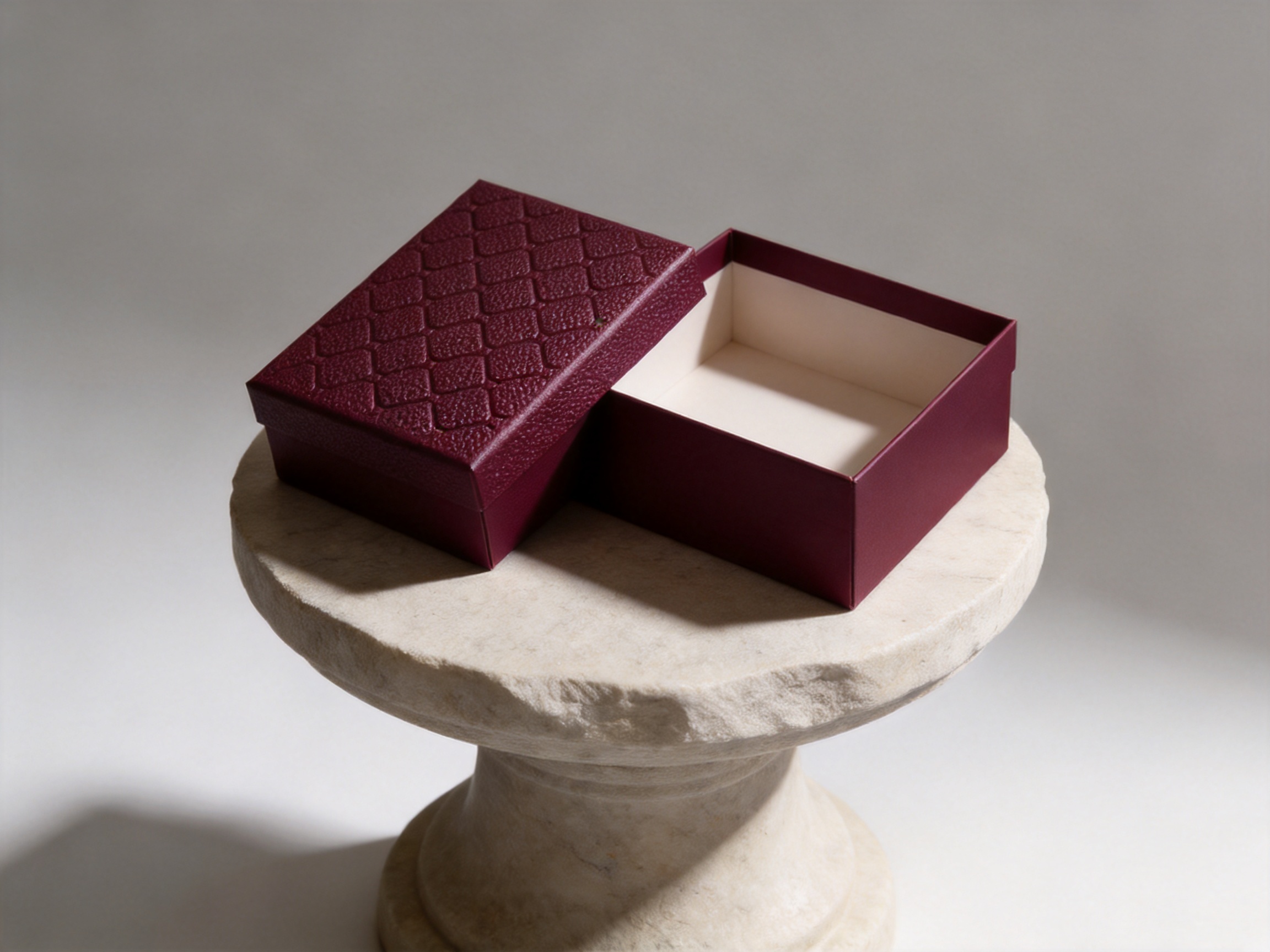
Featuring a checkered lychee-pattern embossed finish, this gift box creates an immediate impression of elegance. The pattern is produced through an embossing roller process that presses a carefully developed texture into the surface of the specialty paper. The result is a structured grid appearance with a natural, leather-like visual character and a pleasant tactile sensation. Unlike flat printed packaging, the embossed finish interacts with light and touch, giving the box greater depth and a more memorable presentation.
The 1016 series is suitable for high-end cosmetics, jewelry, electronics, alcoholic beverages, business gifts, holiday collections, personal keepsakes, and many other premium products. Its size can be customized for different product dimensions, while its durable paper construction supports safe handling, storage, and transportation. For brands seeking a gift box manufacturer with large-scale production capability, design resources, export experience, and sustainable material options, this product offers a strong foundation for customized packaging programs.
The 1016 gift box belongs to the high-end specialty paper gift box category. Its defining characteristic is the grid lychee pattern created by embossing rather than relying only on ink or surface coating. This process produces a raised and recessed texture across the paper, creating a finish that can be appreciated visually and physically.
The checkered arrangement gives the packaging a balanced and orderly appearance. Each section of the pattern contributes to a consistent overall surface, allowing the box to appear polished from every angle. The lychee-inspired texture adds warmth and richness, making the box suitable for products positioned in the luxury, lifestyle, beauty, fashion, food, beverage, and corporate gift sectors.
The box is manufactured from specialty paper selected for appearance, strength, workability, and compatibility with finishing processes. Specialty paper can provide a more distinctive character than standard coated paperboard because it offers unique fibers, grain effects, colors, and surface qualities. When combined with embossing, it becomes a packaging material with both visual and tactile identity.
The product is available in a range of dimensions. The listed minimum size is 20 x 12.5 x 4.7 centimeters, while the listed maximum size is 37 x 27 x 11 centimeters. These specifications demonstrate the range of the standard size system, while custom dimensions can be developed according to the product being packaged. This makes the 1016 series suitable for compact luxury items as well as larger gift sets and presentation packages.
| Product Attribute | Specification |
|---|---|
| Item number | 1016# |
| Product category | High-end specialty paper gift boxes |
| Primary material | Specialty paper |
| Surface finish | Grid lychee-pattern embossed roller texture |
| Minimum listed size | 20 x 12.5 x 4.7 cm |
| Maximum listed size | 37 x 27 x 11 cm |
| Packing quantity | 6 sets per carton |
| Carton volume | 0.101 cubic metres per carton |
| Customization | Size, structure, color, finishing, and branding options may be discussed according to project requirements |
The greatest competitive advantage of the 1016 gift box is its surface treatment. Many conventional gift boxes use a flat printed image, a basic matte coating, or a uniform laminated surface. Although these finishes can be effective, they may not provide enough depth to distinguish a product in a crowded retail or gifting environment. The embossed lychee pattern introduces another dimension: the package can be seen, touched, and remembered.
The grid structure adds visual order. A regular pattern creates a sense of precision and balance, which is valuable for products that need to communicate professionalism and reliability. At the same time, the lychee texture prevents the surface from appearing overly plain. The combination of structure and organic texture creates a finish that is refined without being excessively decorative.
Embossing also changes the way light reflects across the packaging. Raised areas catch highlights, while recessed areas create subtle shadows. This interaction can make the box look different under showroom lighting, daylight, photography lighting, or indoor event lighting. Such variation adds richness to product displays and can help the box appear more premium in online product photography.
The tactile experience is equally important. A customer who receives a gift box often handles it before opening it. The texture provides an immediate impression of material quality and care. A smooth, flat box may feel ordinary, while an embossed surface can communicate that the package has been specially designed. This first physical interaction contributes to anticipation and improves the unboxing experience.
Compared with decorative effects that depend entirely on metallic foil or heavy ink coverage, embossing can create a premium appearance through the structure of the paper itself. It can also be combined with other finishing methods where appropriate, including printing, foil stamping, spot effects, ribbon applications, labels, and customized logos. This gives brands flexibility when developing a packaging identity.
The lychee pattern is also versatile across product categories. Its texture can complement a luxury skincare collection, a jewelry presentation box, a premium tea or beverage set, a technology accessory, or a corporate gift. It is distinctive enough to support a high-end positioning but sufficiently neutral to adapt to different visual identities and color systems.
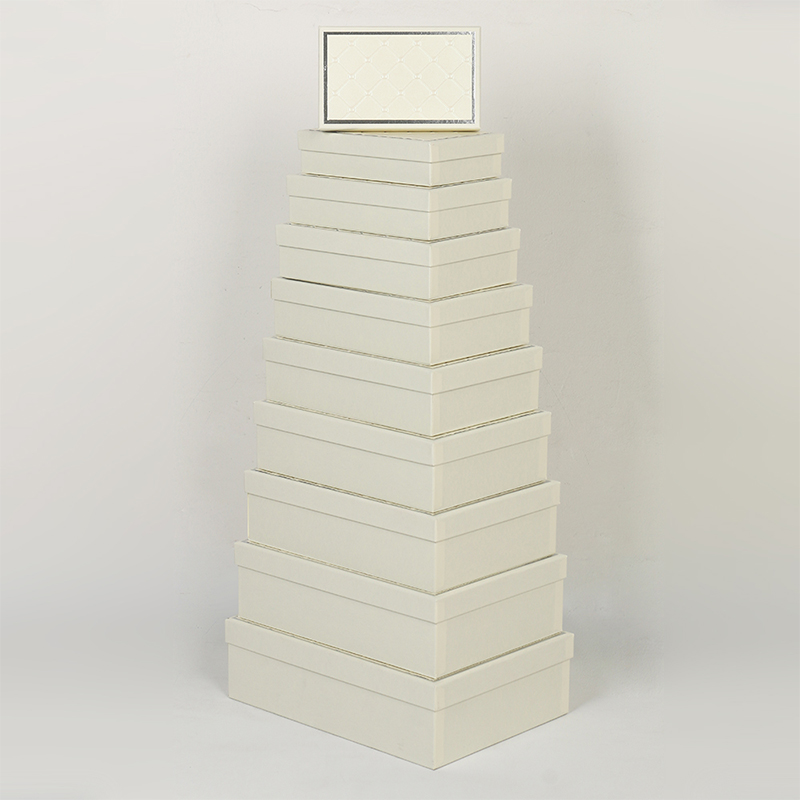
1016 Grid Lychee Pattern Embossed Roller High-Grade Specialty Paper Gift Box
Material selection determines much of a gift box’s appearance, performance, and environmental profile. The 1016 series uses specialty paper because it offers a combination of aesthetic flexibility and practical performance. Specialty paper can be developed in different colors, weights, finishes, and surface characters, allowing the packaging to be matched to a product’s market position.
For luxury packaging, the material must do more than hold a printed design. It should contribute to the overall sensory experience. The paper should look consistent, feel substantial, accept embossing cleanly, and maintain its visual quality during handling. A well-selected specialty paper provides the foundation for the embossed pattern and supports the box’s overall structural integrity.
The material is also compatible with more sustainable packaging objectives. Paper-based packaging is widely recognized for its recyclability when it is designed and processed appropriately. Compared with packaging solutions that rely heavily on plastic components, specialty paper gift boxes can help brands communicate a more responsible packaging direction. The exact recyclability of a finished package depends on the materials, coatings, adhesives, inserts, and local recycling systems, but paper remains an important option for businesses seeking to reduce unnecessary plastic use.
Environmental responsibility is increasingly connected to consumer expectations. Customers may evaluate not only the product itself but also the amount and type of packaging used. A specialty paper gift box can provide an attractive presentation while supporting a more considered material strategy. It is particularly suitable for brands that want premium packaging without making sustainability an afterthought.
The paper must nevertheless be selected according to the intended application. Products with significant weight, fragile components, or long-distance shipping requirements may require appropriate board thickness, internal supports, reinforced construction, or custom inserts. During product development, the manufacturer can assess the relationship between paper type, box dimensions, product weight, and transportation conditions.
A premium gift box must be attractive, but it must also protect the product inside. The 1016 specialty paper construction is designed to provide useful pressure resistance and dependable handling performance. This is important for products that may be stored in warehouses, moved through distribution channels, displayed in retail environments, or shipped internationally.
The embossed surface can contribute to a stronger perception of material substance, while the underlying paper structure provides the actual basis for rigidity and protection. A correctly engineered box helps reduce the risk of crushing, scuffing, deformation, and other damage associated with ordinary handling. The box can also be designed with internal compartments, trays, cushions, sleeves, or other protective elements when the product requires additional stability.
Protection begins with accurate sizing. If a product moves excessively inside a box, it may be exposed to impact damage. If the fit is too tight, the product may be difficult to insert or remove, and pressure may be placed on the packaging. Custom sizing allows the manufacturer to balance presentation, protection, material consumption, and shipping efficiency.
The range from 20 x 12.5 x 4.7 centimeters to 37 x 27 x 11 centimeters covers multiple packaging applications. Smaller formats may be suitable for jewelry, compact cosmetics, personal accessories, small electronics, or collectible items. Larger formats can accommodate gift sets, bottles, grouped products, seasonal collections, and corporate presentation packages.
Long-distance transportation also requires attention to carton packing. The standard information indicates a packing quantity of six sets per carton and a carton volume of 0.101 cubic metres. These details help buyers estimate warehouse requirements, shipping arrangements, and logistics costs. For larger projects, packaging specifications can be reviewed together with carton strength, palletization, protective wrapping, and loading plans.
Cosmetic and skincare products depend heavily on presentation. Consumers often associate a carefully designed package with product quality, formulation value, and brand credibility. The 1016 box can be used for facial care sets, fragrances, beauty tools, makeup collections, body care products, and seasonal gift combinations.
The embossed texture is especially suitable for beauty brands that want to create a sophisticated and tactile package. The surface can be paired with soft neutral colors, deep jewel tones, natural shades, or bold brand colors. A printed logo, foil detail, or minimal label can be added without losing the visual importance of the paper texture.
Jewelry packaging requires a balance between elegance and protection. A presentation box should make the item feel special while holding it securely. The 1016 structure can be adapted for jewelry sets, watches, fashion accessories, small leather goods, and other valuable personal items.
Internal inserts can be developed to hold rings, bracelets, necklaces, earrings, or watches in a stable position. The exterior embossing gives the package a premium identity, while the interior can be customized to match the product’s material and color. Velvet-like paper, molded paper, foam, card supports, or other insert solutions may be considered according to product needs.
Technology products are often associated with precision and modern design. A textured specialty paper box can soften the technical character of an electronic product while maintaining a professional appearance. It may be used for headphones, smart accessories, small devices, charging products, premium cables, or limited-edition technology sets.
For electronics, the internal structure is particularly important. The package may require precise cutouts, protective support, cable organization, instruction placement, or separation between accessories. The exterior can remain elegant and minimal while the interior delivers a functional and organized unboxing experience.
Premium beverages are frequently purchased as gifts, especially during holidays, business events, celebrations, and corporate exchanges. The 1016 box can be adapted for bottles, tasting collections, specialty drinks, tea products, confectionery, and gourmet gift assortments.
Because bottles and food products may be relatively heavy, the structure, board weight, internal support, and carrying conditions should be evaluated carefully. A customized insert can help prevent movement, while the textured exterior can make the package more appropriate for premium retail and gifting occasions.
Corporate gifts require packaging that communicates professionalism without appearing generic. The checkered lychee pattern provides a refined base for company logos, event themes, seasonal colors, or limited-edition graphics. The box can be used for employee gifts, customer appreciation packages, conference items, promotional collections, or executive gift sets.
For holidays, the same structure can be adapted using different colors, ribbons, printed sleeves, labels, or interior arrangements. This allows a company to maintain packaging consistency while developing special editions for different campaigns and markets.
A gift box may remain useful after the original product has been removed. The 1016 box can serve as a storage container for photographs, letters, accessories, souvenirs, cards, or small personal collections. Its durable specialty paper and attractive finish encourage reuse, which can extend the functional life of the packaging and support a more sustainable consumption pattern.
Standard packaging can be useful for quick product launches, but customized packaging provides stronger brand differentiation. The 1016 series can be developed around the specific requirements of a brand, product, market, and sales channel. Customization may include dimensions, construction, color, printing, logo treatment, interior fittings, closure style, and finishing combinations.
Size customization is the first consideration. A package should be large enough to protect the product and create a suitable presentation, but not unnecessarily oversized. Excess space can increase material use, transportation volume, and shipping costs. A carefully developed custom size can create a more precise fit and a more efficient supply chain.
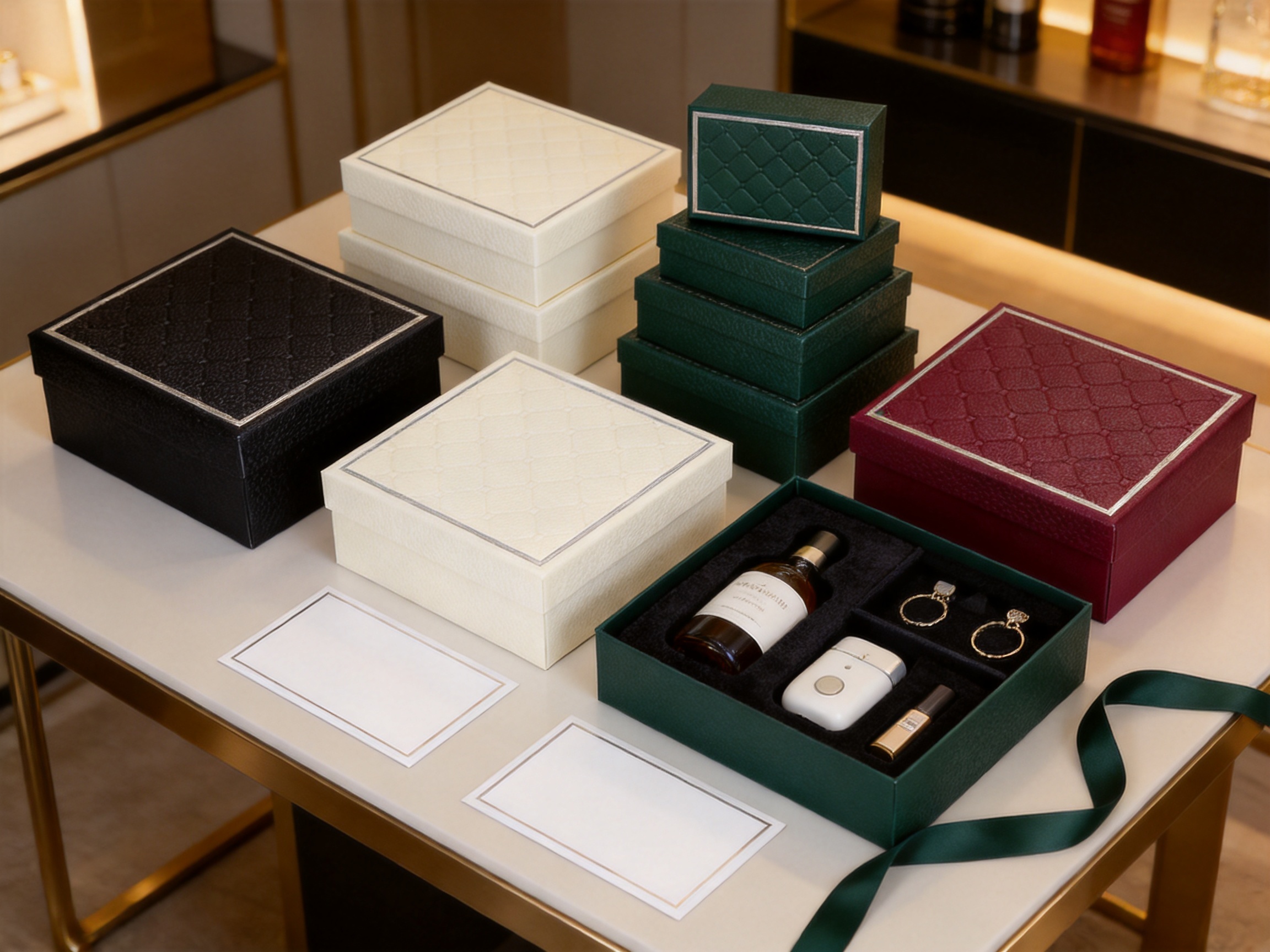
Color selection can significantly change the personality of the box. Deep black, navy, burgundy, dark green, or charcoal may support a luxury or masculine positioning. Ivory, cream, blush, pale blue, or warm gray may communicate softness and elegance. Brighter colors can be considered for youth-oriented, seasonal, or promotional collections.
Branding can be applied through printed logos, debossed or embossed marks, foil stamping, labels, sleeves, paper bands, or other decorative approaches. The most effective solution depends on the desired appearance, order quantity, budget, and production schedule. The lychee pattern can remain the primary visual feature, or it can serve as a subtle background beneath a more prominent brand mark.
Interior customization is equally important. A premium exterior should be matched by a well-organized interior. Compartments, trays, holders, cards, product information, certificates, and accessories can be arranged to guide the customer through the unboxing process. For gift sets, the interior layout can create a clear visual hierarchy and prevent items from shifting during transport.
Customization also supports regional market needs. Different markets may prefer different dimensions, colors, language panels, cultural motifs, opening styles, and product configurations. A manufacturer with export experience can help coordinate packaging specifications for international distribution while considering production consistency across multiple batches.
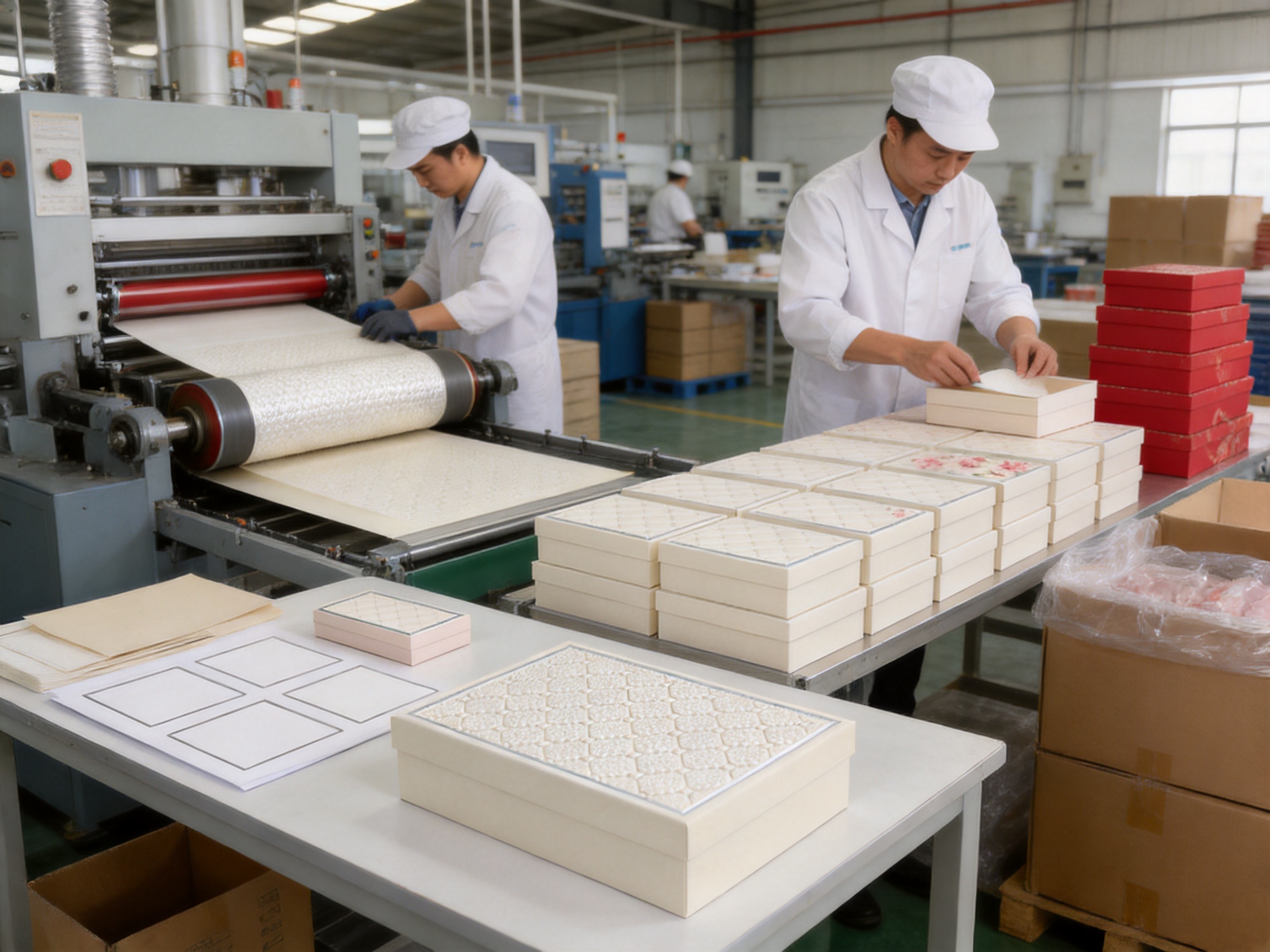
The quality of an embossed paper gift box depends on many connected production stages. A reliable manufacturing process begins with material preparation and continues through structural development, embossing, printing or surface finishing, assembly, inspection, packing, and shipment. Each stage must be managed carefully to maintain consistency between the approved sample and the final production batch.
The process begins with an understanding of the product and its packaging objectives. The manufacturer evaluates product dimensions, weight, fragility, opening experience, storage conditions, shipping requirements, and visual positioning. Based on this information, the box structure can be developed to balance appearance, protection, production feasibility, and cost.
Structural development may include dieline preparation, fold planning, panel arrangement, lid or sleeve design, base construction, insert development, and closure testing. For customized orders, digital drawings or physical samples may be used to confirm the size and fit before mass production begins.
Paper preparation involves checking the selected material for color, thickness, surface quality, moisture condition, and compatibility with the planned finishing process. Consistency is important because differences in paper quality can influence embossing depth, folding behavior, adhesive performance, and final appearance.
Material inspection helps reduce problems such as uneven texture, surface marks, color variation, weak folding areas, or inconsistent bonding. For large orders, production teams may establish approved material standards so that repeat orders can maintain a similar appearance.
The signature lychee texture is created through an embossing roller. During this process, the paper passes through a controlled roller system that presses the grid pattern into the material. Pressure, alignment, speed, and material condition must be coordinated to achieve a clean and consistent result.
Insufficient pressure may create a weak or uneven pattern, while excessive pressure may damage the paper or create undesirable deformation. Roller alignment is also important because the checkered pattern should remain visually regular across the surface. Skilled operators and appropriate equipment help ensure that the texture remains consistent from sheet to sheet.
The embossed paper is then evaluated for clarity, depth, repeat consistency, and surface integrity. Particular attention may be paid to corners, edges, folds, and areas that will later receive printing or adhesive. These checks help ensure that the finished box presents a uniform appearance.
Depending on the project, the embossed paper can be used in its natural form or combined with additional decoration. Printing may be applied before or after certain production stages, depending on the design and technical requirements. Logo placement, color matching, registration, and surface adhesion should be confirmed during sampling.
Additional finishing may include foil stamping, spot gloss, matte effects, coated details, die-cut labels, ribbons, paper bands, or decorative attachments. The purpose of finishing is not to add unnecessary complexity but to support the brand message and create a coherent visual result. A restrained logo on a textured surface may be more effective than excessive decoration.
After surface treatment, the paper or board is cut according to the approved structure. Accurate cutting ensures that the panels align correctly and that the box maintains its intended dimensions. Folding and forming must be controlled so that corners remain clean and the lid or closure operates smoothly.
Assembly may include wrapping, gluing, fitting inserts, installing magnetic or ribbon closures, applying labels, and completing interior components. Production staff inspect the box at different points to identify misalignment, adhesive marks, loose sections, surface damage, or structural defects.
Final quality control typically reviews appearance, dimensions, surface texture, color, branding accuracy, structural stability, opening function, and packing condition. Sample checks can be conducted throughout the production run rather than waiting until the end. This allows potential issues to be identified earlier and reduces the risk of large-scale rework.
Finished boxes are packed according to the agreed shipping method. The listed packing quantity is six sets per carton, with a carton volume of 0.101 cubic metres. Depending on the product design and destination, protective materials may be used to reduce rubbing, crushing, moisture exposure, or movement during transportation.
Choosing a gift box supplier involves more than comparing unit prices. The manufacturer’s design ability, equipment, production organization, quality systems, communication, and export experience can strongly influence the result. A supplier with broad capabilities is better positioned to manage the relationship between appearance, structure, cost, quantity, and delivery.
Zhejiang Shihao Gift Packaging Co., Ltd. is an export-oriented manufacturer specializing in paper gift packaging boxes. The company has more than 15 years of experience in production, research and development, and sales. Its facility covers approximately 20,000 square meters and employs around 300 people. This scale provides the resources needed to support both standard products and customized projects.
The company’s reported average daily production capacity is approximately 5,000 sets of gift boxes. Such capacity can be valuable for brands that require stable supply, seasonal replenishment, large promotional orders, or multiple product lines. Production scale can also help coordinate material purchasing, scheduling, assembly, inspection, and shipment more efficiently.
Advanced equipment supports the manufacturing process from material handling and embossing to cutting, forming, finishing, and packing. Equipment alone does not determine quality, but modern machinery combined with experienced personnel can improve repeatability, efficiency, and production control. This is especially important for the 1016 box, where surface texture and structural precision are central to the product’s value.
The company also maintains its own design team and updates dozens of products weekly. This design capability can help buyers review different packaging directions, explore new structures, and adapt existing products to specific market requirements. Rather than treating packaging as a fixed commodity, the manufacturer can participate in product presentation and brand development.
The product range includes kits, storage boxes, folding boxes, jewelry boxes, and gift boxes. Experience across these categories gives the manufacturer practical knowledge of different materials, closures, internal structures, and presentation requirements. Such experience can be applied when developing a custom 1016 box for a particular product category.
BSCI and FSC certifications are also reported as part of the company’s credentials. These certifications can support buyer due diligence and help demonstrate attention to social responsibility and responsible material sourcing. Certification requirements and scope should always be confirmed for the specific order, material, facility, and documentation needed by the buyer.
The 1016 box offers several advantages when compared with basic packaging options or suppliers focused only on low-cost production.
Ordinary printed paper boxes may communicate information, but they often lack tactile distinction. The embossed lychee pattern gives the 1016 series a physical character that can improve perceived value and support a more memorable unboxing experience.
Some packaging designs are limited to one product category. The 1016 box is adaptable for cosmetics, jewelry, electronics, beverages, corporate gifts, seasonal products, and personal collections. This flexibility helps a manufacturer serve different industries without sacrificing a premium appearance.
Off-the-shelf packaging can force brands to accept excess space or an unsuitable fit. The ability to customize dimensions allows buyers to develop a package around the actual product. This can improve protection, reduce movement, enhance shelf appearance, and help control material and freight costs.
Some decorative boxes focus heavily on appearance and provide limited protection. Others are functional but visually unremarkable. The 1016 design aims to combine premium presentation with durable specialty paper and pressure resistance, creating a more balanced packaging solution.
A supplier with an established factory, design team, production workforce, and export experience can offer more than a finished sample. It can help with development, material selection, revisions, production planning, quality control, and logistics coordination. This reduces the number of separate vendors a buyer may need to manage.
Specialty paper provides a paper-based alternative to packaging formats that rely extensively on plastic. When designed with recyclable components and appropriate finishing choices, the box can support a brand’s sustainability goals while retaining a premium appearance.
A successful custom packaging project begins with a complete product brief. Buyers should provide product dimensions, weight, quantity, fragility, usage conditions, desired opening style, target market, branding requirements, and expected order volume. Clear information helps the manufacturer recommend an appropriate structure and avoid unnecessary revisions.
The next step is to define the visual direction. This may include preferred colors, logo files, reference packaging, surface finish, interior style, and desired customer impression. If the box is intended for luxury retail, corporate gifting, hospitality, e-commerce, or seasonal campaigns, those contexts should be explained because each may require a different balance between visual impact and durability.
Sampling is an important stage. A physical sample can reveal whether the size feels appropriate, whether the embossing is sufficiently visible, whether the lid operates correctly, and whether the interior holds the product securely. Buyers should evaluate both the closed box and the complete opening experience.
Quality standards should be agreed upon before mass production. These may cover acceptable color variation, embossing consistency, edge quality, glue visibility, dimensional tolerance, logo position, insert fit, and carton packing. Written standards help align the buyer and manufacturer and make final inspection more objective.
Production scheduling should account for material preparation, sampling, approval, manufacturing, inspection, and shipping. Seasonal products require additional planning because demand often rises sharply before holidays and promotional periods. Early communication gives the manufacturer more time to secure materials and organize production capacity.
Finally, buyers should consider repeat orders. If a package will be reordered, specifications, artwork, material references, and approved samples should be retained. Consistent documentation helps maintain the appearance of future batches while allowing controlled improvements when necessary.
The opening of a gift box is a sequence of sensory and visual moments. The customer notices the outer appearance, touches the surface, lifts the lid or sleeve, discovers the interior, and interacts with the product and accessories. Every part of this sequence can influence how the brand is remembered.
The 1016 embossed surface begins this experience before the box is opened. The texture signals that the package has been considered rather than treated as disposable transport material. The pattern can also become a recognizable design element across a product collection.
Inside the box, layout and order are essential. A product should be easy to remove without damaging the package. Accessories, instruction cards, certificates, and promotional materials should have defined positions. When the interior is organized, the customer experiences the packaging as intentional and professional.
Brand recall is strengthened when the package uses consistent materials, colors, typography, and finishing across multiple products. The embossed pattern can serve as a common foundation while different sizes and interior arrangements accommodate different items. This creates product-family recognition without requiring every package to look identical.
Packaging can also encourage social sharing. Premium gift boxes are frequently photographed during unboxing and displayed in online content. A distinctive texture, clean logo treatment, and attractive interior can improve the visual quality of such content and extend the brand experience beyond the original purchaser.
Many gift boxes are discarded immediately after opening because they are weak, plain, or difficult to reuse. A durable and visually appealing box has a greater chance of being retained. Customers may use it to store jewelry, stationery, photographs, small electronics, keepsakes, or other personal items.
Reuse adds practical value to the original package. It can also help reduce the speed at which packaging enters the waste stream. Although reuse depends on consumer behavior, manufacturers and brands can encourage it through strong construction, useful dimensions, easy opening, and a design that remains attractive after the product has been removed.
The 1016 series is listed under product categories that include gift boxes, other paper products, and stationery storage boxes. This reflects its potential beyond one-time gift presentation. With suitable dimensions and interior design, the same aesthetic concept can support storage-oriented packaging and collectible product organization.
International buyers should review the product’s dimensions, carton quantity, carton volume, material specifications, finishing options, and shipping requirements before placing an order. These details influence container planning, warehouse capacity, freight calculations, and retail handling.
Import regulations and sustainability requirements may differ by destination. Buyers should confirm whether specific paper sources, inks, coatings, adhesives, labels, or inserts must meet local standards. If a certification or testing report is required, it should be discussed early so that the correct materials and documents can be prepared.
Communication is also important when the project includes multiple languages or markets. Artwork should be checked for spelling, translation, legal information, barcode placement, and color accuracy before approval. A professional manufacturer can coordinate production files, but the buyer remains responsible for confirming the correctness of brand and regulatory content.
Shipping tests may be useful for fragile or high-value products. A packaging design that performs well in a showroom may require additional protection during international transportation. Drop testing, compression evaluation, vibration assessment, or trial shipment can help identify risks before a large-scale launch.
For buyers seeking direct communication, the manufacturer provides sales contact channels, telephone support, email communication, and WhatsApp contact. These channels can be used to discuss product specifications, customization, sampling, order planning, and export arrangements.
The primary difference is the grid lychee-pattern embossed finish. Instead of using only a flat printed surface, the box has a tactile texture created through an embossing roller. This gives it greater visual depth, a more distinctive feel, and a stronger premium presentation.
The box is made from specialty paper. The specific paper grade, thickness, color, and finishing combination can be discussed according to the product, structure, order quantity, and desired appearance.
Yes. The listed standard range extends from 20 x 12.5 x 4.7 centimeters to 37 x 27 x 11 centimeters, and customized dimensions can be developed according to the packaged product. Custom sizing helps improve fit, protection, appearance, and shipping efficiency.
The box is suitable for high-end cosmetics, skincare products, jewelry, watches, electronics, alcoholic beverages, gourmet gifts, corporate gifts, holiday collections, personal accessories, and collectible items. Internal inserts can be considered for products that need additional support.
Yes. Branding options may include printed logos, foil details, labels, paper bands, sleeves, or other appropriate finishing methods. The best option depends on the brand identity, design, budget, production quantity, and required appearance.
The specialty paper material is paper-based and can support recyclable packaging objectives. The final environmental performance depends on the complete packaging design, including coatings, adhesives, inserts, and decorative components, as well as local recycling infrastructure. Buyers should confirm the required sustainability specifications for their market.
The specialty paper is described as durable and pressure-resistant, making the box suitable for handling, storage, and long-distance transportation when correctly designed. Product weight, fragility, internal support, carton packing, and shipping conditions should be evaluated for each application.
The listed packing quantity is six sets per carton, and the carton volume is 0.101 cubic metres per carton. Final packing details may depend on the customized structure, order configuration, and shipping plan.
Yes. Its attractive surface and durable paper construction make it suitable for reuse as a stationery box, keepsake container, jewelry organizer, accessory box, or general household storage box, depending on the size and interior design.
The supplier is an export-oriented paper gift packaging manufacturer with more than 15 years of experience, a facility of approximately 20,000 square meters, around 300 employees, advanced equipment, an internal design team, and an average reported daily production capacity of approximately 5,000 gift box sets. It also offers product development and customized packaging solutions.
The company reports BSCI and FSC certifications. Buyers should confirm the current certification status, applicable scope, certificate documentation, and material requirements for their specific order.
A buyer should provide the product dimensions, weight, quantity, intended use, preferred style, branding files, target market, shipping requirements, and desired delivery schedule. The manufacturer can then advise on structure, material, embossing, interior design, sampling, and production planning.
The 1016 Grid Lychee Pattern Embossed High-Grade Specialty Paper Gift Box combines a distinctive embossed surface with the practical benefits of durable paper packaging. Its checkered lychee texture creates a refined visual identity and a memorable tactile experience, while the specialty paper construction supports protection, customization, and a more sustainable packaging direction.
Its flexibility makes it suitable for cosmetics, jewelry, electronics, beverages, corporate gifts, holiday products, collectibles, and storage applications. Custom sizing, branding, interior fittings, colors, and finishing methods allow the box to be adapted to a wide range of product and market requirements.
The product is supported by an experienced manufacturer with substantial production capacity, advanced equipment, an internal design team, export experience, and reported BSCI and FSC certifications. These capabilities are important for buyers that require reliable quality, consistent production, customized development, and scalable supply.
For brands seeking packaging that looks premium, feels distinctive, protects the product, and supports stronger brand recall, the 1016 specialty paper gift box provides a practical and visually compelling solution. It is not simply a container; it is a structured part of the customer experience and a flexible platform for high-end product presentation.
1. Product specification sheet for Item 1016#, specialty paper gift box, including dimensions, material, packing quantity, and carton volume.
2. Manufacturer-provided company profile for Zhejiang Shihao Gift Packaging Co., Ltd., including production history, facility scale, workforce, equipment, product categories, and export capability.
3. Manufacturer-provided information regarding BSCI and FSC certification credentials.
4. General packaging engineering principles concerning paperboard structure, embossing, product protection, carton packing, and transportation performance.
5. General sustainable packaging guidance concerning paper-based materials, recyclability, material selection, and packaging reuse.
Recommended Products

Contact Us

No. 15, Xiayang Road, Huangzhai Town, Jinhua, Zhejiang, China

(+86) 579-84230069

(+86) 13085675766


Products

Gift Box Packaging Manufacturer
 English
 Français
 Español
 عربى