2026-10-28
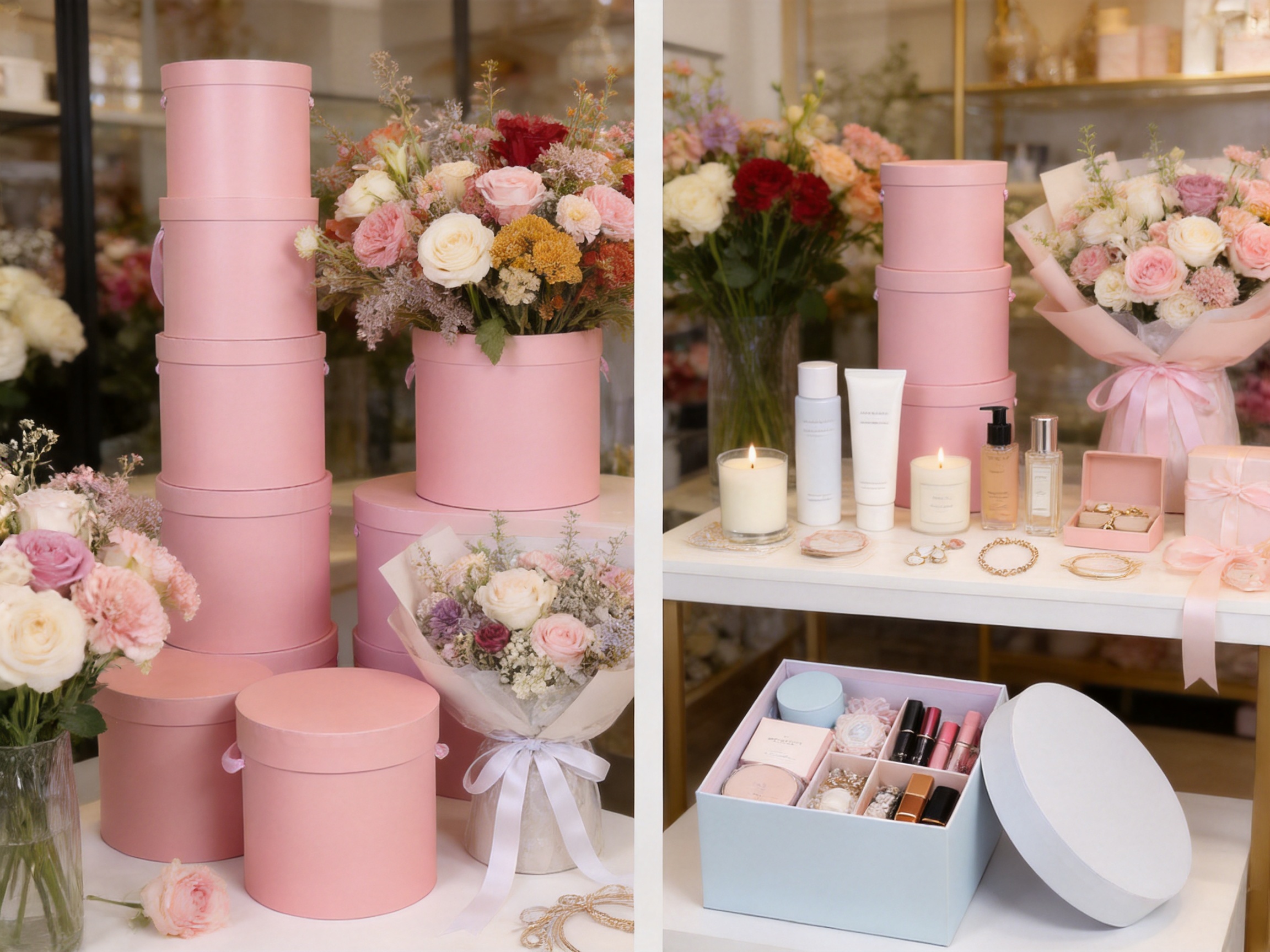
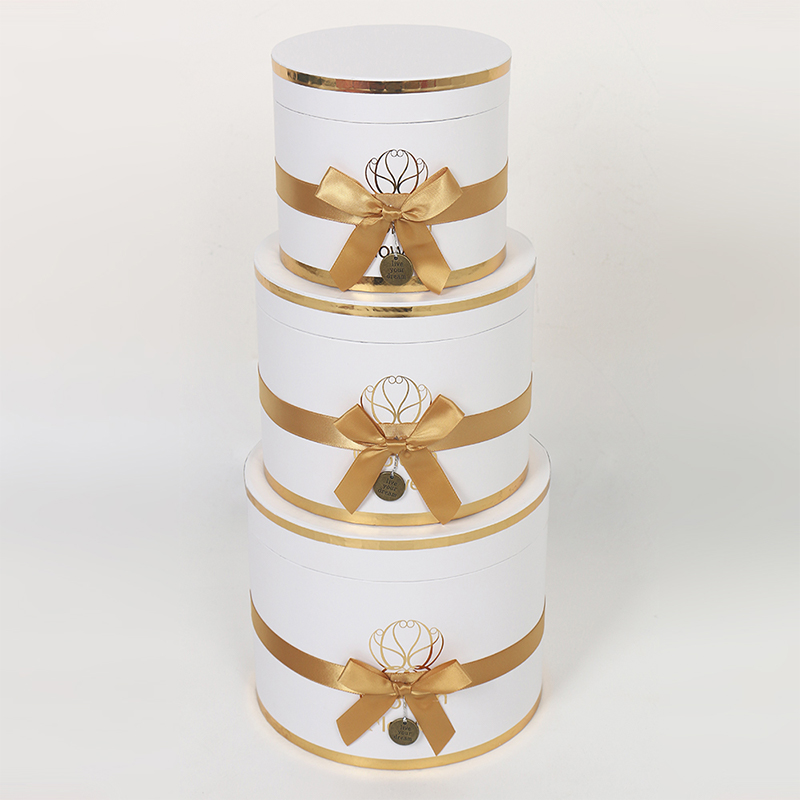
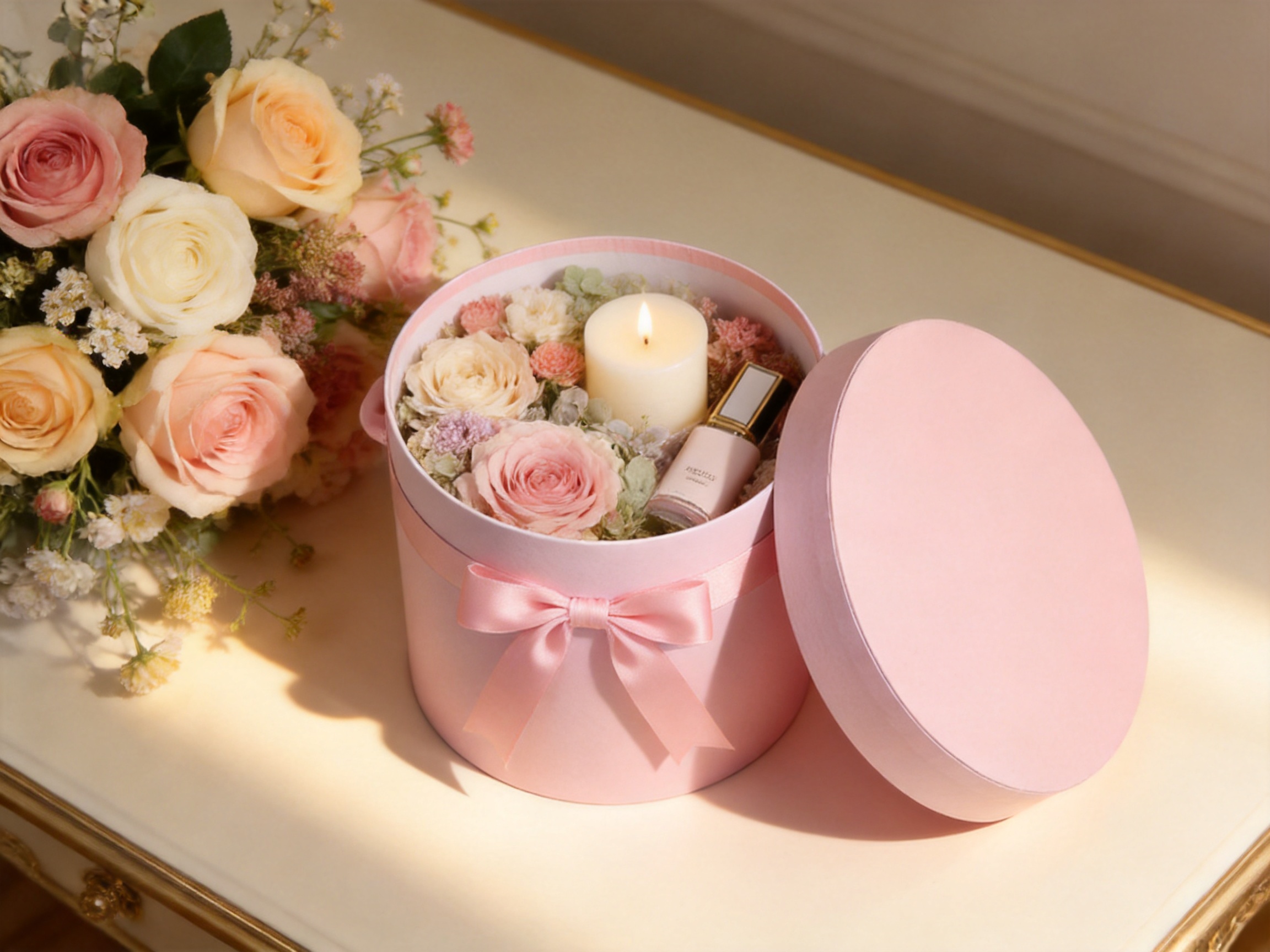
The 1301 Round Floral Hat Gift Box with Rose Ribbon is designed for brands, florists, retailers, event planners, and gift suppliers seeking packaging that combines visual charm, practical performance, and dependable production quality. Its rounded hat-box silhouette gives it a distinctive presence, while the floral decoration and rose-colored ribbon create an elegant presentation suitable for many occasions.
Unlike ordinary rectangular cartons, this round floral gift box is designed to become part of the gift experience. The packaging does more than protect the item inside. It creates anticipation, communicates care, and gives the recipient a memorable unboxing moment. This makes it especially suitable for flower gifts, cosmetics, fashion accessories, wedding favors, seasonal presents, and premium promotional products.
Manufactured by Zhejiang Shihao Gift Packaging Co., Ltd., the 1301 series reflects the capabilities of an experienced paper packaging manufacturer with more than 15 years of industry experience. The company combines product development, structural design, printing, finishing, assembly, quality management, and export services in one coordinated production system.
The 1301 Round Floral Hat Gift Box is categorized as a flower gift box and is also suitable for broader gift packaging applications. Its design is based on a rounded container form inspired by a classic hat box. This structure offers a softer visual impression than sharp-cornered packaging and creates a more fashionable appearance for floral arrangements and carefully selected gifts.
The exterior features a floral pattern that contributes to the product’s decorative identity. The pattern can coordinate naturally with flowers, beauty products, fashion items, and romantic gift themes. A rose ribbon is used as an ornamental and functional element, adding softness while helping the package communicate elegance and affection.
The box is produced from cardboard and art paper. This combination provides a useful balance between structural support and surface quality. Cardboard forms the base of the package, while art paper provides a smooth and attractive surface for printing, coating, color reproduction, and decorative finishing.
The standard product range includes multiple sizes, from approximately 29.5 × 30.1 centimeters for size 1 to approximately 11.5 × 12.1 centimeters for size 13. This broad size range allows buyers to choose a format suited to different flower arrangements, gift dimensions, retail displays, and promotional requirements.
| Product Attribute | Specification |
| Project Number | 1301 |
| Product Type | Round floral hat gift box |
| Primary Application | Flower gifts, gift packaging, retail presentation, seasonal packaging |
| Style | Fashion |
| Material | Cardboard and art paper |
| Available Dimensions | Approximately 29.5 × 30.1 cm to 11.5 × 12.1 cm |
| Minimum Order Quantity | 300 sets |
| Standard Packaging | One set in an OPP bag; sets packed in a cardboard box |
| Approximate Carton Volume | 61 × 31 × 32 cm |
| Customization | Custom designs are welcome |
| Design Support | In-house design team and professional packaging advice |
The shape of a package plays an important role in how customers evaluate a product. Rectangular boxes remain common because they are efficient to stack and transport, but they can also look ordinary when used for premium gifts. The round hat-box format introduces a more decorative and expressive alternative.
A round box has a naturally soft visual language. Its curved outline avoids the rigid, industrial appearance associated with standard cartons. For flower arrangements, this shape is especially appropriate because it echoes the organic forms found in petals, bouquets, and floral compositions.
The rounded silhouette also helps a product stand out in retail environments. When several packages are placed together, a circular or cylindrical profile can attract attention among rows of conventional square and rectangular boxes. This can benefit florists, gift shops, department stores, beauty retailers, and event displays.
The hat-box structure is also associated with presentation and occasion-based gifting. Consumers often expect more from packaging used for birthdays, anniversaries, Valentine’s Day, Mother’s Day, weddings, and holiday celebrations. The 1301 design supports this expectation by combining decorative graphics with a recognizable premium gift-box form.
One of the main advantages of the 1301 box over plain paper cartons is its immediate visual differentiation. A basic box may protect a product, but the 1301 model contributes to the identity of the gift itself. The floral artwork, rounded shape, and rose ribbon work together to create a unified presentation rather than a simple shipping container.
This differentiation can be valuable for businesses competing in crowded markets. When customers compare similar products, the appearance of the packaging can influence perceived quality and purchase confidence. A carefully designed box suggests that the contents have been selected and prepared with equal care.
Many flower packages rely on transparent wrapping, paper sleeves, or ordinary baskets. These formats can be effective, but they may not always provide the sense of refinement required for premium floral gifting. The 1301 box offers a more structured presentation that can help flowers appear curated and intentionally arranged.
The box can be used for bouquets, preserved flowers, artificial flowers, compact floral arrangements, and selected decorative items. Depending on the internal arrangement and size chosen, it may also accommodate complementary products such as chocolates, candles, skincare items, greeting cards, or small accessories.
Attractive gift packaging often has value after the original gift has been removed. A recipient may reuse the box for accessories, stationery, keepsakes, cosmetics, photographs, or household items. This extended use can improve the perceived value of the packaging and strengthen the emotional memory associated with the gift.
For brands, reusable packaging can also increase the number of times a logo, pattern, or visual identity is seen in the customer’s environment. When a package remains useful, it does not immediately become disposable waste after delivery. Its continued presence may support positive brand recognition and customer satisfaction.
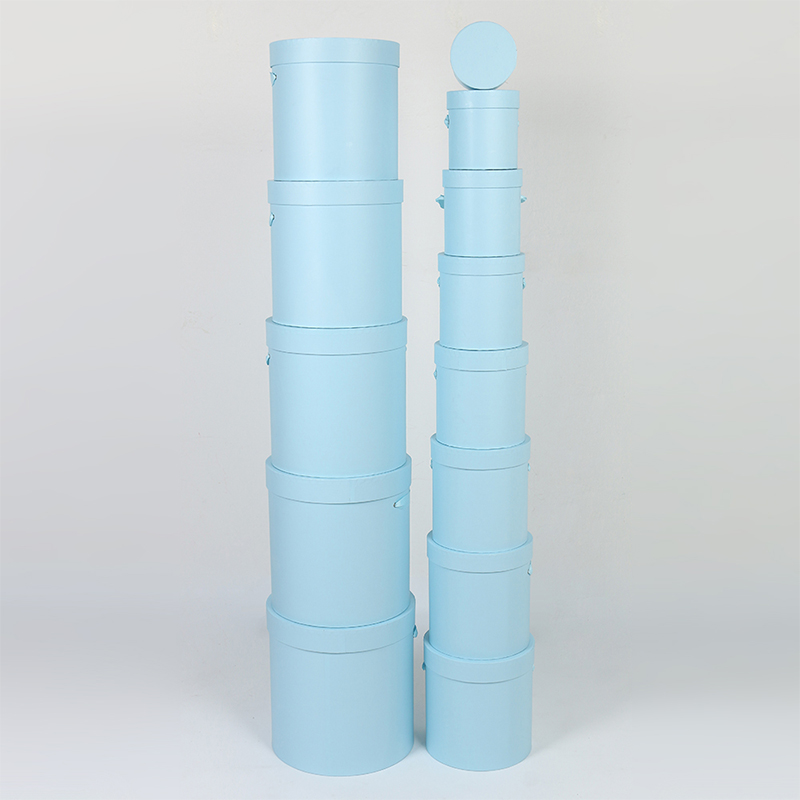
1301 Round Floral Hat Gift Box with Rose Ribbon
The strength of the 1301 design comes from the coordination of several details rather than from one decorative feature alone. The floral print establishes the theme, the rounded profile provides the structural identity, and the rose ribbon completes the presentation. Together, these elements create a product that feels coordinated and occasion-ready.
The floral pattern gives the box a romantic and decorative appearance. Floral graphics are broadly applicable because they can be associated with affection, beauty, celebration, nature, and hospitality. The same basic product can therefore be positioned for different markets through color selection, artwork changes, and complementary product styling.
For a florist, the floral pattern can reinforce the natural contents of the package. For a beauty brand, it can suggest softness and femininity. For a wedding supplier, it can support a romantic visual theme. For a seasonal retailer, the pattern can be adapted to suit a particular campaign or holiday collection.
The rose ribbon adds a tactile and visual accent. Ribbon is an effective packaging detail because it immediately communicates gift value and provides a familiar finishing touch. It can help the box look complete at the point of sale without requiring additional wrapping by the customer.
The ribbon also creates opportunities for color coordination. A rose-colored ribbon can complement pink, cream, red, white, lavender, or neutral floral products. For customized orders, buyers may discuss alternative ribbon colors or related decorative treatments according to project requirements and production feasibility.
The curved structure softens the overall design and provides a more distinctive profile than a standard folding carton. It can look elegant on a gift table, inside a retail display, or in a photography setting. The smooth outline also works well with floral arrangements because it avoids visual competition with the irregular contours of leaves and petals.
Art paper provides a suitable surface for decorative printing and finishing. Its smooth face can support clear patterns, controlled color reproduction, and a refined tactile impression. Depending on the finalized specification, surface treatments may be considered to improve appearance, handling, or resistance to ordinary scuffing during packing and display.
The 1301 box uses cardboard and art paper, two materials commonly selected for quality paper packaging because they offer a practical combination of strength, printability, and design flexibility.
Cardboard provides the body of the package and helps it maintain its shape during handling. A gift box must be strong enough to support its contents, withstand routine movement, and retain a presentable appearance from production through delivery. The appropriate cardboard specification helps balance these requirements with the desired size, weight, and cost of the finished product.
For floral packaging, structural support is particularly important. Flowers and arrangements may vary in weight and shape, while moisture protection and internal support may also need to be considered depending on the product application. Buyers should confirm the intended contents and handling conditions when finalizing a custom order.
Art paper contributes to the visual quality of the package. Its smooth surface is suitable for printed designs and helps decorative elements appear more consistent. It can also support a more refined hand-feel than uncoated, low-grade packaging material.
The combination of cardboard and art paper allows the box to present a premium exterior while maintaining a practical internal structure. This is one reason the product can serve both decorative and commercial objectives.
Paper-based packaging can be customized in many ways. Buyers may develop different artwork, colors, patterns, logos, seasonal graphics, and printed messages. Structural elements can also be reviewed for specific applications, provided the requested changes are evaluated against production requirements, order quantity, and intended use.
This flexibility gives the 1301 model an advantage over packaging that is available only in one fixed appearance. A standard design can be used for immediate purchasing, while a custom version can support a retailer’s own visual identity or a brand’s packaging campaign.
The quality of a gift box depends not only on its design but also on the manufacturer’s ability to convert that design into consistent, repeatable production. Zhejiang Shihao Gift Packaging Co., Ltd. is an export-oriented manufacturer specializing in the production, research and development, and sales of paper gift packaging boxes.
The company has more than 15 years of experience in the sector and operates across approximately 20,000 square meters. Its workforce includes around 300 employees, supporting product development, manufacturing, quality control, order management, and export operations.
Its reported average daily production capacity is approximately 5,000 sets of gift boxes. This capacity is important for buyers that require continuity of supply, seasonal replenishment, or the ability to scale a successful packaging project. Production capacity alone does not replace quality management, but it can help reduce the risk of supply interruptions when supported by organized planning and appropriate inspection procedures.
An in-house design team allows the manufacturer to provide professional advice during the development stage. This can be useful when a buyer has a general idea but needs assistance with artwork preparation, structural adjustments, size selection, or production feasibility.
Integrated design support may also shorten communication cycles. Instead of separating design work from manufacturing discussions, the buyer can review the project with a supplier that understands both visual requirements and production limitations. This can help identify potential issues before mass production begins.
The company states that design documents can be provided in formats including artificial intelligence and core rendering files. Such files can support the preparation and review of custom packaging artwork, although buyers should confirm exact file requirements before submitting final production documents.
Gift packaging usually involves multiple stages, including material preparation, cutting, printing, forming, assembly, ribbon application, inspection, and packing. Coordinating these steps is essential for maintaining consistent dimensions and appearance.
A manufacturer with experience in export packaging can also understand the importance of protective packing, carton organization, labeling, and shipment preparation. These factors influence whether the product arrives ready for distribution and whether the customer can efficiently manage inventory after receipt.
The company reports strong research and development capabilities and updates dozens of products weekly. Continuous product development is valuable in the gift packaging industry because market preferences change quickly. Retailers and brands often need packaging that reflects current colors, occasions, materials, and consumption trends.
For buyers, this ongoing development can provide access to new product ideas while still allowing the stability of an experienced supplier. It may also make it easier to adapt a successful packaging format for other product categories or seasonal collections.
The manufacturer has passed BSCI and FSC certifications according to the supplied company information. BSCI is associated with social compliance and ethical business practices in supply chains, while FSC certification relates to responsible forest management and controlled material sourcing.
Certification details should always be verified for the specific facility, scope, and current validity relevant to a purchasing project. Nevertheless, the presence of these certifications indicates that social responsibility and material traceability are considered within the company’s broader operating system.
Although exact production parameters may vary according to the final order, a professional paper gift-box manufacturing process generally follows a sequence of controlled steps. Understanding this process helps buyers evaluate suppliers and make better decisions about customization, lead time, and quality expectations.
The first stage is the review of the product structure and artwork. For the 1301 box, this includes confirming the round profile, size, decorative areas, ribbon placement, and intended use. If the buyer requests a custom design, the manufacturer checks whether the artwork and structure are suitable for production.
At this stage, important questions include the required internal capacity, the type of item to be packed, the desired visual effect, the color system, the number of sizes, and the expected delivery schedule. Early clarification can reduce later changes and help the manufacturer prepare accurate production documentation.
Cardboard and art paper are selected according to the required structure and appearance. Material preparation may include checking thickness, surface condition, color, and compatibility with printing or adhesive processes.
Consistent material selection is essential because changes in paper thickness or surface quality can influence the final dimensions, folding behavior, color appearance, and overall strength of the box.
The floral pattern and other graphics are applied to the art paper during the printing stage. The manufacturer must manage color consistency, registration, clarity, and the relationship between the artwork and the curved final form.
Surface treatment may be used when a project requires a particular tactile or visual effect. The appropriate treatment depends on the desired appearance, budget, handling conditions, and compatibility with the chosen paper and printing method.
After printing, the material is cut and prepared for forming. The round shape requires accurate control because uneven cutting or inconsistent forming can affect the symmetry of the finished product.
Precision at this stage helps ensure that the package has a clean silhouette and that the lid, base, or related components fit appropriately. It also reduces waste and supports more efficient production during larger orders.
Assembly brings the separate components together. Adhesive application, alignment, edge finishing, and shape retention are important factors. The goal is to produce a box that looks neat from every visible angle and remains stable during routine use.
For a decorative gift box, assembly quality is highly visible. Misaligned paper, lifted edges, adhesive marks, or uneven seams can reduce the premium impression even when the artwork itself is attractive.
The rose ribbon is positioned and secured as part of the final presentation. Its placement must be consistent so that the finished boxes have a uniform appearance. Ribbon tension, alignment, and connection points should be reviewed during quality inspection.
Quality inspection may include checking dimensions, structure, surface appearance, print clarity, color consistency, ribbon placement, cleanliness, and packaging condition. Buyers should establish inspection criteria before mass production, particularly when the project involves customized artwork or multiple sizes.
The standard packing method places one set in an OPP bag, followed by packing the sets in a cardboard box. Individual packaging helps reduce surface contact and can protect the finished product from dust or minor handling marks. Outer cartons support storage and transportation.
The reported carton volume of approximately 61 × 31 × 32 centimeters provides a reference for logistics planning. Actual carton arrangements may vary according to the final product mix, order quantity, and packing method.
The 1301 box competes not only with other decorative gift boxes but also with low-cost cartons, paper bags, plastic containers, baskets, and generic flower wraps. Its advantages become clearer when the complete customer experience is considered.
Plain cartons are often selected primarily for cost and basic protection. They may not offer the visual impact required for a premium gift. The 1301 box is designed to be seen, handled, photographed, and remembered. This can improve the perceived value of the gift and help a retailer create a stronger display.
Wrapping paper and film can provide flexibility, but they may not protect the presentation as effectively as a structured box. The round hat-box design maintains a defined form and can provide a more organized appearance during delivery, display, and gifting.
Plastic packaging may provide certain functional advantages, but it does not always communicate the same warmth or craftsmanship as paper gift packaging. Cardboard and art paper offer a more tactile and visually expressive alternative for brands that want to emphasize design, celebration, or responsible packaging choices.
A fixed-design package may be suitable for one campaign but difficult to adapt for different markets. The 1301 model can serve as a design platform for custom artwork, color combinations, printed messages, or brand-specific presentation. This adaptability can help buyers use the same basic structure across several product lines.
Some packaging is optimized for shipping efficiency, while the 1301 box is optimized for emotional presentation as well as practical use. The floral design and ribbon are especially relevant to gifts that communicate love, appreciation, congratulations, sympathy, celebration, or friendship.
The 1301 Round Floral Hat Gift Box can be positioned in multiple markets because its design is decorative without being limited to one specific product.
Florists can use the box for preserved flower arrangements, artificial bouquets, compact fresh arrangements, and premium flower collections. The round shape can help distinguish a special-order product from standard bouquet wrapping.
Flower shops may also use different sizes for different price levels. A smaller box could serve as an entry-level gift format, while a larger model could be used for more substantial arrangements or bundled gifts.
Cosmetics, skincare, fragrance accessories, bath products, and personal care gift sets can benefit from floral presentation. The box can be coordinated with a brand’s visual identity through custom printing, color selection, and ribbon details.
Event planners and wedding suppliers can use customized versions for guest gifts, bridesmaid gifts, table favors, anniversary events, and celebration packages. A floral design can complement wedding themes, while customized colors and messages can create a more personal result.
Retailers can use the box as a premium gift-wrapping option or as the primary package for seasonal collections. Its distinctive shape may add variety to store displays and encourage customers to select a more elevated presentation.
Businesses can adapt the box for client gifts, employee recognition, holiday packages, hospitality programs, or branded promotional products. A logo, campaign message, or custom pattern can be incorporated into the artwork, subject to design and production review.
The product category includes stationery storage boxes, and the 1301 design can also inspire applications for cards, notebooks, desk accessories, craft items, and small lifestyle products. The circular format is particularly suitable for collections that benefit from an ornamental presentation.
Customization is one of the strongest reasons to work directly with a professional packaging manufacturer. The standard 1301 design provides a ready-made concept, but buyers may develop a version that better reflects their market, brand, or campaign.
| Customization Area | Possible Direction | Business Benefit |
| Artwork | Floral themes, logos, seasonal illustrations, patterns, messages | Stronger brand recognition and campaign relevance |
| Color | Brand colors, holiday palettes, wedding colors, neutral tones | Better coordination with products and displays |
| Ribbon | Rose, pastel, neutral, or brand-specific color options | Improved visual consistency and gift appeal |
| Size | Selection from available formats or development of a suitable size | Better fit for different products and arrangements |
| Interior Arrangement | Protective inserts, dividers, or product-specific supports | Improved organization and protection |
| Surface Finish | Finish selected according to appearance and handling needs | Enhanced tactile and visual quality |
| Printed Message | Greeting, care instructions, brand story, or event information | More meaningful customer communication |
Custom projects should be discussed early because design changes can affect material consumption, tooling, printing preparation, assembly time, packaging, and minimum order requirements. The stated minimum order quantity is 300 sets, which provides a practical starting point for retailers, wholesalers, event suppliers, and emerging brands.
Packaging is often the first physical contact a customer has with a product. Before the contents are revealed, the package communicates expectations about quality, price, care, and brand personality. A well-made gift box can therefore support brand value beyond its immediate protective function.
The floral artwork, ribbon, and rounded structure show that the business has considered presentation rather than selecting the cheapest available container. This attention to detail can influence how customers perceive the product inside.
Distinctive packaging is more likely to appear in photographs and social media content. Customers may photograph the box before opening it, during an event, or as part of a gift presentation. This can generate additional exposure for a brand when the packaging includes recognizable design elements.
Packaging cannot replace product quality, but it can support a premium positioning when the contents and presentation are consistent. A decorative hat box may help businesses create gift sets with higher perceived value than the same contents presented in plain packaging.
A recognizable package can help customers remember where a gift came from. This is particularly useful for florists, boutique retailers, online sellers, and seasonal businesses that depend on repeat purchases and recommendations.
Businesses considering the 1301 box should evaluate the product according to application, quantity, customization, logistics, and quality expectations.
Before selecting a size, buyers should identify the dimensions, weight, shape, and handling sensitivity of the product to be packed. Flower arrangements may need additional internal support, while dry gifts may require a different fit. Accurate product information helps the manufacturer recommend a suitable format.
The product range covers multiple dimensions. Buyers should determine whether they need one standard size or a combination of sizes. A mixed size program can support different price points, but it may require more complex inventory management.
Custom artwork should be prepared in an agreed file format and checked for dimensions, color, text, image quality, and bleed requirements. The manufacturer’s in-house design team can provide professional advice, but the buyer should approve final proofs carefully before mass production.
A sample can help confirm the appearance, structure, ribbon placement, paper feel, and product fit. For customized orders, a sample is especially useful because digital artwork may not fully represent the final printed and assembled package.
Quality standards should cover acceptable color variation, dimensional tolerance, surface marks, adhesive visibility, ribbon position, print alignment, and packing condition. Defining these points before production helps both parties evaluate the finished goods consistently.
Gift packaging demand often increases before Valentine’s Day, Mother’s Day, Christmas, wedding seasons, and other regional holidays. Buyers should allow time for design confirmation, sampling, production, inspection, and transportation. Early planning can reduce the risk of urgent production costs or missed sales periods.
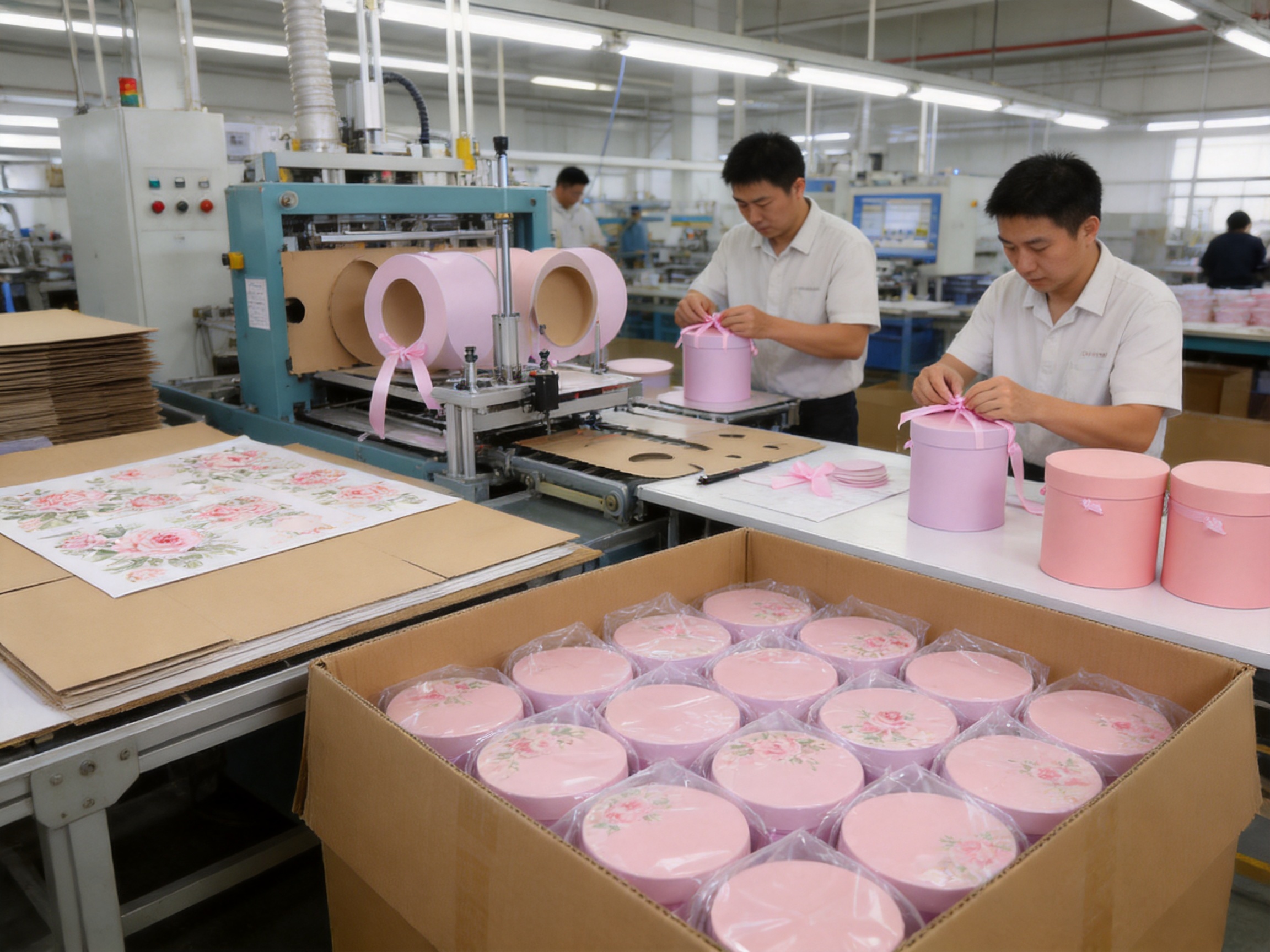
The standard packing arrangement places each set in an OPP bag and then places the sets in a cardboard box. This approach helps organize the products during handling and provides a basic protective barrier against dust and minor surface contact.
Because paper products can be affected by humidity, storage conditions should be considered. Boxes should be stored in a clean, dry environment away from direct water exposure, excessive heat, and prolonged compression. Proper warehouse organization can help preserve shape, surface quality, and ribbon appearance.
During transportation, outer cartons should be handled in a way that minimizes crushing and excessive moisture exposure. Buyers should communicate their distribution conditions to the supplier if the products will travel through challenging climates or require extended storage.
The approximate carton volume of 61 × 31 × 32 centimeters can be used as an initial reference for shipping calculations. Final logistics planning should be based on the confirmed packing list, actual carton count, product mix, and destination requirements.
For a decorative paper gift box, quality is both functional and visual. A box may be structurally usable but still fail to meet customer expectations if the printing, shape, or finishing appears inconsistent.
Consistent dimensions help ensure that the box fits the intended product and maintains a uniform appearance on shelves or at events. Measurements should be checked across the relevant size range.
The round silhouette should appear balanced, with clean curves and no obvious distortion. The lid and base, where applicable, should align correctly and maintain the intended presentation.
Floral graphics should be clear, with acceptable color consistency and accurate alignment. Text, logos, and fine design elements should be checked for readability and positioning.
The art paper should be inspected for visible scratches, wrinkles, stains, bubbles, lifted edges, or other defects. Since the package is designed for presentation, surface condition has a direct influence on perceived quality.
The rose ribbon should be positioned consistently and securely. Loose, uneven, or damaged ribbon can reduce the elegance of the finished package.
Adhesive points and formed areas should hold under normal handling. The box should remain stable when empty and when loaded with the intended product, provided that the contents remain within the designed capacity.
Paper-based gift packaging can support sustainability goals when materials are responsibly sourced, efficiently used, and managed through appropriate end-of-life systems. The company’s reported FSC certification is relevant to buyers who require evidence related to responsible paper sourcing.
However, sustainability should be evaluated across the entire packaging system. Buyers should consider the paper specification, coatings, adhesives, ribbon material, protective bags, carton design, transport efficiency, and local recycling conditions. A package with a paper body may still include components that require separate disposal or may not be accepted by every recycling system.
The reusable character of a decorative gift box can also contribute to a longer useful life. Recipients may repurpose the box for storage instead of discarding it immediately. Businesses can encourage this behavior by designing attractive, durable packaging and communicating reuse ideas where appropriate.
For customers with specific environmental requirements, it is advisable to discuss material options, certification documentation, packaging alternatives, and production feasibility with the manufacturer before finalizing the order.
Choosing a packaging supplier involves more than comparing unit prices. The supplier’s experience can affect design development, communication, quality consistency, production stability, and problem resolution.
An experienced manufacturer is more likely to understand the practical relationship between artwork, paper, structure, printing, assembly, and logistics. This can reduce the chance that an attractive concept becomes difficult or expensive to produce.
Shihao’s combination of an in-house design team, paper gift-box specialization, substantial production area, approximately 300 employees, and reported daily output of around 5,000 sets provides a foundation for handling both standard and customized projects.
The company’s export orientation is also relevant for international buyers. Experience serving Europe, the United States, the Middle East, and other regions may help the manufacturer understand different packaging expectations, communication practices, and shipment requirements.
Its product range includes kits, storage boxes, folding boxes, jewelry boxes, and gift boxes. This broader portfolio may allow buyers to develop coordinated packaging programs instead of sourcing every box type from a separate supplier.
The 1301 box is particularly suitable for buyers that value appearance, customization, and presentation quality.
Flower shops seeking a premium alternative to conventional bouquet wrapping.
Gift retailers looking for a distinctive round package for seasonal merchandise.
Beauty brands developing floral-themed gift sets.
Wedding planners requiring customized packaging for guests or bridal parties.
Corporate gift suppliers preparing elegant promotional packages.
Online sellers seeking packaging that photographs well during unboxing.
Wholesalers searching for a fashionable gift-box format with a manageable minimum order.
Event and hospitality businesses creating coordinated celebration packages.
It is primarily designed for flower gifts and can also be used for cosmetics, small lifestyle products, wedding gifts, seasonal presents, promotional items, and other products requiring an elegant presentation.
The 1301 model uses a rounded hat-box silhouette, floral decoration, and a rose ribbon. These features create a softer, more distinctive, and more romantic appearance than a plain rectangular carton.
The product is made from cardboard and art paper. Cardboard provides structural support, while art paper provides a smooth printable exterior suitable for decorative designs.
The stated dimensions range from approximately 29.5 × 30.1 centimeters for size 1 to approximately 11.5 × 12.1 centimeters for size 13. Buyers should confirm the final size chart and product fit before ordering.
Yes. Custom designs are welcome. Buyers may discuss artwork, colors, printed messages, sizes, ribbon details, and other packaging requirements with the manufacturer’s design and sales teams.
The stated minimum order quantity is 300 sets. The final quantity requirements may depend on the selected size, custom artwork, materials, and production details.
Yes. The company has an in-house design team and offers professional advice. Design documents can be prepared or reviewed using formats such as artificial intelligence and core rendering files, subject to confirmation of project requirements.
The standard arrangement is one set in an OPP bag, followed by packing in a cardboard box. Final packing details should be confirmed for the specific order.
It may be suitable depending on the flower arrangement, moisture conditions, internal protection, and handling requirements. Buyers should discuss the intended flower type and packaging environment with the manufacturer before using it for fresh products.
Yes. Its structured and decorative design makes it suitable for storing accessories, stationery, cosmetics, photographs, keepsakes, and other small items after the original gift has been removed.
Important points include dimensions, roundness, symmetry, print clarity, color consistency, surface condition, ribbon placement, adhesive quality, assembly strength, and outer-carton protection.
The company is described as an export-oriented manufacturer whose products are exported to Europe, the United States, the Middle East, and other regions. International buyers should confirm current shipping, documentation, and destination-specific requirements for each order.
The supplied company information states that the manufacturer has passed BSCI and FSC certifications. Buyers requiring certification verification should request current documentation applicable to the relevant facility and product materials.
They should prepare the intended product dimensions, quantity, artwork, preferred colors, ribbon requirements, delivery schedule, quality standards, and any environmental or certification requirements. A pre-production sample is recommended for customized projects.
The 1301 Round Floral Hat Gift Box with Rose Ribbon offers a strong combination of decorative appeal, practical structure, customization potential, and production support. Its rounded silhouette helps it stand apart from ordinary rectangular cartons, while the floral pattern and rose ribbon create a refined presentation suited to emotional and occasion-based gifting.
The use of cardboard and art paper provides a balance between strength and surface quality. Multiple size options support different flower arrangements and gift products, while the minimum order quantity of 300 sets offers accessibility for many retailers, wholesalers, florists, event suppliers, and growing brands.
Its greatest advantage is that it functions as more than a protective container. It contributes to the identity of the gift, improves the unboxing experience, supports premium positioning, and may remain useful after the original purchase. For businesses seeking packaging that can be seen, remembered, and reused, this format provides a practical and attractive solution.
The manufacturing capabilities behind the product further strengthen its commercial value. With more than 15 years of experience, an approximately 20,000-square-meter facility, around 300 employees, an in-house design team, reported daily output of about 5,000 sets, and experience serving international markets, Zhejiang Shihao Gift Packaging Co., Ltd. is equipped to support both standard products and customized packaging programs.
For the best results, buyers should confirm size, product fit, artwork, materials, ribbon details, sample approval, inspection criteria, packing, and delivery requirements before production. When these factors are carefully coordinated, the 1301 gift box can help transform a simple product into a more complete, elegant, and memorable gifting experience.
1. Product specification information for Project 1301, Round Floral Hat Gift Box with Rose Ribbon.
2. Manufacturer-provided company profile for Zhejiang Shihao Gift Packaging Co., Ltd.
3. Manufacturer-provided information regarding cardboard and art paper packaging materials.
4. Manufacturer-provided information regarding BSCI and FSC certification status.
5. General packaging industry principles concerning paperboard structure, gift presentation, quality inspection, and packaging logistics.
Recommended Products

Contact Us

No. 15, Xiayang Road, Huangzhai Town, Jinhua, Zhejiang, China

(+86) 579-84230069

(+86) 13085675766


Products

Gift Box Packaging Manufacturer
 English
 Français
 Español
 عربى