2026-10-20
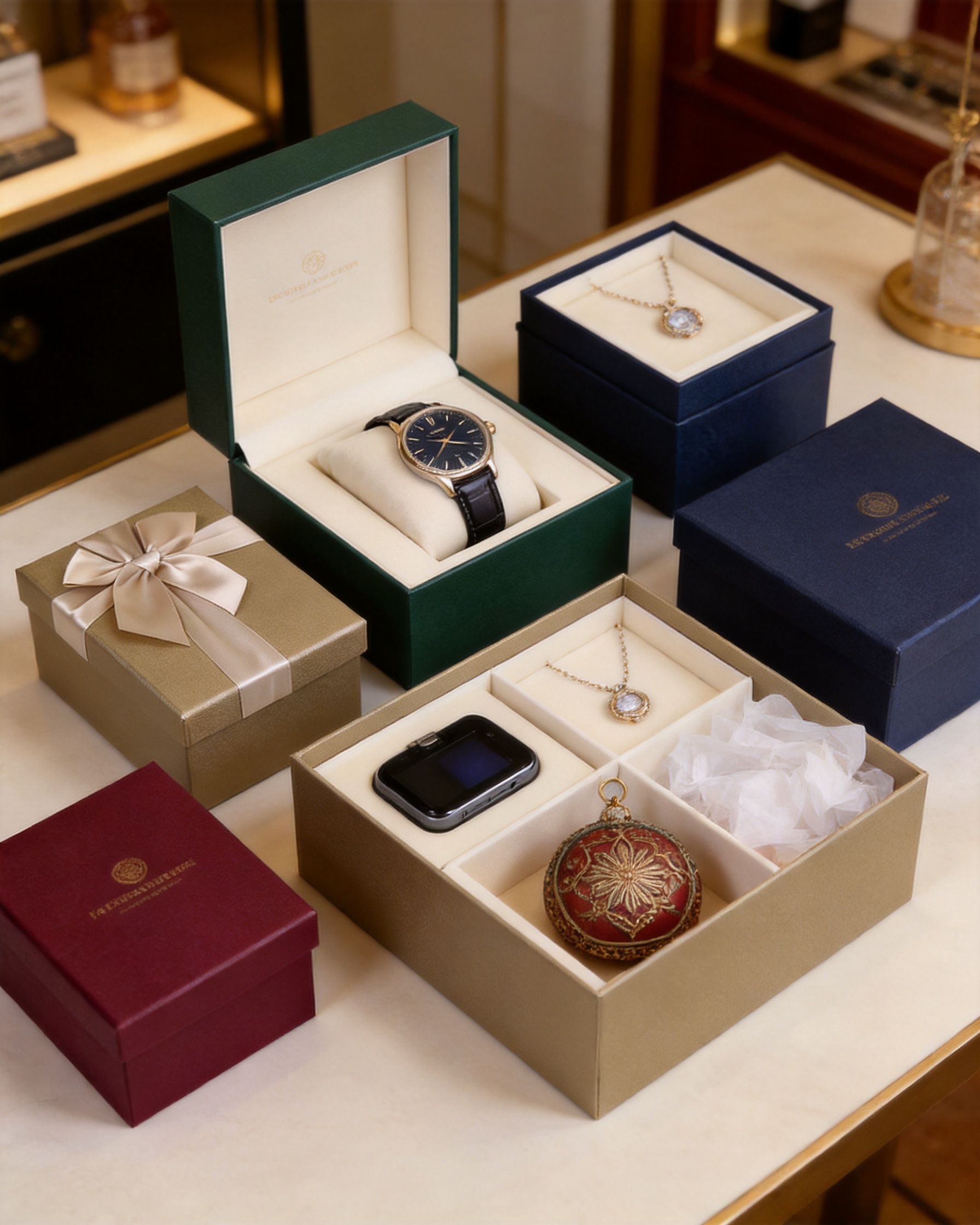
Premium packaging is no longer limited to protecting a product during storage and transportation. In competitive retail, e-commerce, hospitality, jewelry, electronics, and corporate gifting markets, the package is part of the product experience. It introduces the brand, shapes the customer’s first impression, influences perceived value, and contributes to the memorable moment of opening a gift. The 604 Square High-End Specialty Paper Gift Box with Yuppie Texture is designed for businesses that need packaging with a refined appearance, a distinctive tactile surface, flexible sizing, and dependable large-scale production support.
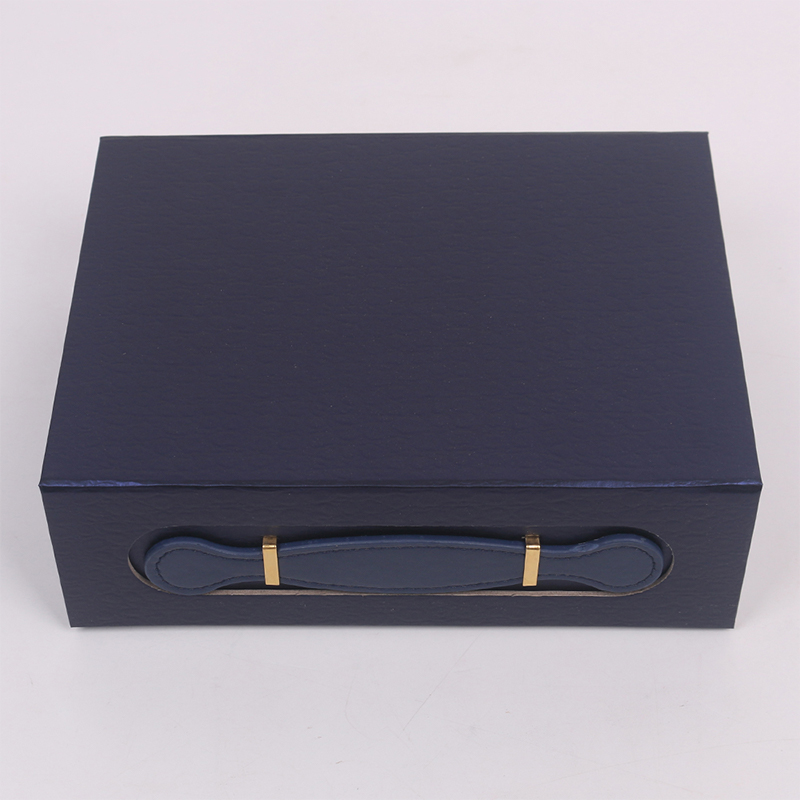
This square specialty paper gift box combines an elegant geometric structure with a leather-like yuppie texture. Its visual character is understated rather than excessively decorative, making it appropriate for premium products that rely on sophistication, restraint, and quality. The box can be customized for different dimensions, colors, printing requirements, and branding applications. It is suitable for jewelry, watches, electronics, ornaments, crafts, business gifts, seasonal presents, and a wide range of carefully selected retail products.
Behind the product is a manufacturing organization with more than 15 years of experience in paper gift packaging. Zhejiang Shihao Gift Packaging Co., Ltd. operates an approximately 20,000-square-meter facility, employs around 300 people, and reports an average daily production capacity of about 5,000 sets of gift boxes. Its design team, production resources, export experience, and BSCI and FSC certifications support customers that require consistent quality and responsible sourcing. Together, these capabilities make the 604 box more than a standard paper container: it is a customizable packaging solution developed for brands that want a high-end presentation without losing manufacturing practicality.
The 604 box is based on a square form. Square packaging offers a balanced visual appearance, efficient presentation on shelves and display tables, and a versatile internal footprint for many product categories. Its regular proportions can make product arrangement easier, particularly when a collection includes coordinated sizes. The shape is also well suited to gift presentation because it creates a sense of symmetry and order when the lid is opened.
The defining design feature is the yuppie-textured specialty paper. The surface has a leather-like character that can be seen and felt. Unlike a completely smooth coated surface, textured paper introduces depth and tactile contrast. Customers can recognize the package through touch, while the surface helps the box look more substantial and distinctive in photographs, retail displays, and unboxing videos.
The texture is intentionally associated with a premium, business-oriented style. It can communicate confidence, maturity, and restrained luxury without requiring excessive metallic decoration or complicated structural effects. This makes the box suitable for brands that want a sophisticated package with a quiet visual identity. It can support minimalist logos, classic typography, monochrome printing, metallic accents, or carefully selected corporate colors.
The specialty paper is applied over a cardboard structure. This construction allows the package to combine a polished exterior with a stable supporting core. The paper surface carries the visual and tactile identity, while the cardboard contributes rigidity and shape retention. For products that need more presentation quality than a lightweight folding carton can provide, this type of construction offers a practical middle ground between simple paper packaging and much more expensive rigid luxury packaging.
| Project number | 604# |
| Product type | Square high-end specialty paper gift box |
| Surface material | Art paper-coated cardboard surface with yuppie texture |
| Available colors | CMYK, Pantone colors, and custom colors |
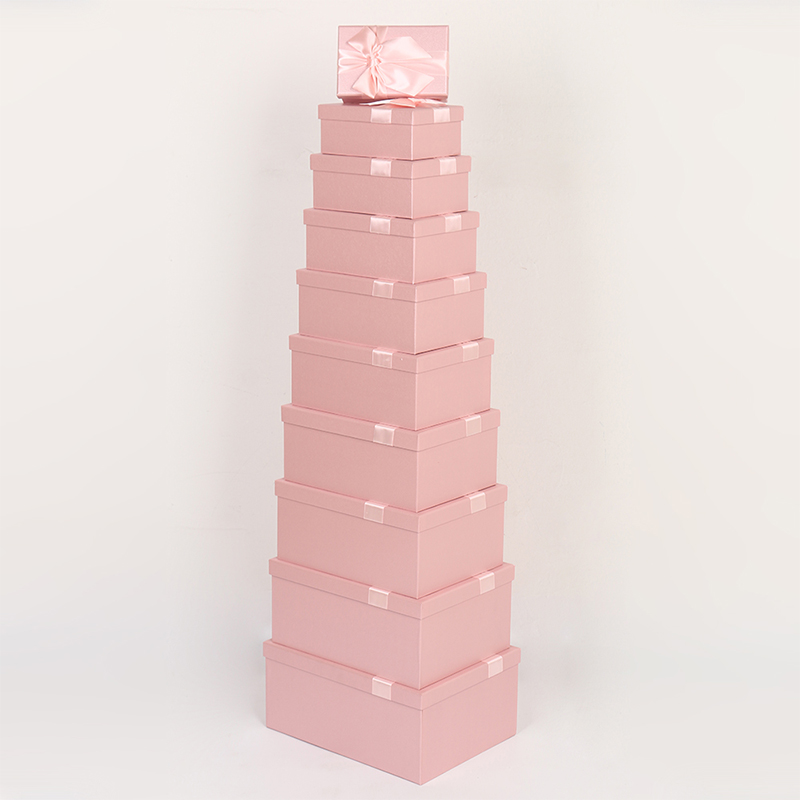
| Available dimensions | Approximately 34 × 26 × 15.3 cm for size 1 through 16.8 × 10.8 × 6.5 cm for size 10 |
| Design support | Professional advice, in-house design team, and custom designs |
| Suggested applications | Gift packaging, storage, gifts, crafts, jewelry, watches, electronics, and business gifts |
| Typical delivery period | 7–45 days or according to customer requirements |
| Minimum order quantity | 300 sets |
| Packaging quantity | 10 pieces per set; carton and packing arrangements should be confirmed during order review |
| Design file formats | Artificial Intelligence and CorelDRAW files are accepted |
The dimensions listed for the product represent a range of ten available size options rather than one fixed box size. This is important for buyers because product fit is one of the most decisive factors in packaging performance. A jewelry brand may need a compact box, while an electronics accessory, gift set, or larger ornament may require a deeper format. The availability of multiple sizes allows the same surface style and brand identity to be carried across a product family.
Final dimensions, internal tolerances, closure details, insert requirements, and the number of units per shipping carton should be confirmed before production. Packaging specifications can change according to product weight, protective inserts, lid construction, printing coverage, and export requirements. A professional pre-production review helps prevent fit problems and ensures that the final product matches the intended customer experience.
Many conventional gift boxes rely on smooth coated paper, basic matte lamination, or simple printed graphics. These options can be effective, but they may look similar across competing products. The yuppie texture provides a more recognizable tactile identity. When a customer picks up the box, the leather-like surface gives immediate sensory feedback. This tactile detail can make the packaging feel more carefully designed and more valuable.
Tactile recognition is especially useful for brands that want their packaging to be remembered. A customer may encounter dozens of smooth boxes in a retail environment, but a box with a subtle leather-like grain can create a more individual impression. The effect does not depend entirely on color or elaborate artwork, so it can remain consistent across different seasonal designs and product lines.
Luxury packaging does not always need to be bright, heavily embellished, or covered with foil. In many markets, buyers prefer a more restrained appearance that suggests quality through material selection and craftsmanship. The 604 box supports this approach. Its square structure is clean, and its textured surface adds sophistication without making the package visually overwhelming.
This understated style is suitable for watches, jewelry, premium accessories, electronics, corporate gifts, and lifestyle products. It can appeal to customers who associate luxury with simplicity, precision, and material authenticity. The box can also be matched with dark colors, neutral tones, deep jewel shades, or carefully selected brand palettes to create different visual moods while maintaining the same fundamental structure.
Packaging influences how consumers judge the product inside. A box that feels thin, unstable, or generic may reduce the perceived value of the contents. By contrast, a structured cardboard gift box with a specialty paper surface can establish a stronger quality expectation before the product is revealed.
The 604 design helps create this impression through several coordinated elements: a stable square structure, a tactile outer surface, premium paper covering, custom color options, and the possibility of professional graphic design. These elements give brands multiple ways to support the desired market position. The result is packaging that can make an ordinary product presentation feel more deliberate and a premium product feel appropriately protected.
The product uses a cardboard base with an art paper-coated exterior. Cardboard is widely used in gift packaging because it offers structural support while remaining suitable for printing and paper covering. Compared with very thin paperboard packaging, a rigid-feeling cardboard construction can improve shape retention, stackability, and presentation. It also provides a stable foundation for the specialty paper surface.
The art paper-coated surface supports clear graphic reproduction and a refined finish. It can be produced with CMYK printing, Pantone colors, or custom colors depending on the branding strategy. This is useful for companies that need accurate color coordination across packaging, labels, promotional materials, and retail displays.
The specialty paper surface also provides an opportunity to differentiate the box without relying solely on complex structural engineering. Competing boxes may use standard paper and attempt to create a premium effect through additional decoration. The 604 box begins with a more distinctive surface material, giving the package a premium foundation before logos, patterns, or decorative details are applied.
For products that are sensitive to presentation, the construction can be combined with internal trays, paperboard inserts, foam components, fabric lining, or other protective elements. The exact insert should be developed according to the product’s dimensions, weight, fragility, and unboxing requirements. Because the manufacturer has an in-house design team, customers can discuss the complete packaging system instead of treating the outer box as an isolated component.
Size customization is one of the most important advantages of the 604 product. A box that is too large can make a product look lost inside, increase shipping volume, and require excessive filler. A box that is too small can damage the item, weaken the closure, or create an uncomfortable opening experience. The available size range helps customers select a more appropriate format.
Businesses can use different dimensions for different product categories while maintaining one consistent visual identity. For example, a jewelry collection may use a compact box, a watch collection may use a medium format with a shaped insert, and a corporate gift set may use a larger square box. Coordinated sizing makes a product family look organized and helps customers identify the brand across multiple items.
The box supports CMYK, Pantone, and custom colors. CMYK printing is appropriate for full-color images, gradients, illustrations, and detailed visual compositions. Pantone colors are useful when precise spot-color matching is important. Custom colors can be developed for brands with specific visual standards or special campaign requirements.
Color selection should consider the texture of the specialty paper. Textured surfaces can affect how light is reflected and how a color is perceived. A color that looks flat on a screen may have more depth on the physical box. For this reason, brands should request samples or approve a color proof before mass production. A physical sample helps evaluate texture, color, logo size, contrast, and overall balance.
Custom branding can include a logo, slogan, product name, pattern, product information, or seasonal artwork. The square format offers a clean area for centered logos and balanced layouts. A restrained design can highlight the tactile paper, while a more expressive design can use the box as a visual storytelling tool.
The manufacturer provides professional advice through its in-house design team. This support can be valuable for customers that have a brand concept but do not yet have production-ready artwork. The team can help translate a visual idea into a practical packaging design, consider the relationship between the artwork and the box structure, and prepare files for manufacturing.
Customers with existing artwork can submit design files in Artificial Intelligence or CorelDRAW formats. Production files should include correct dimensions, bleed areas, color information, folding or assembly details, and any requirements for special finishes. Early technical review reduces the risk of printing errors and makes the approval process more efficient.
The appearance of the 604 box is important, but structural function should receive equal attention. Customers can discuss the opening style, lid fit, internal support, product positioning, and storage requirements. The final structure can be planned to make the product easy to remove while preventing unnecessary movement during transportation.
For jewelry, an insert may hold a necklace, ring, bracelet, or pair of earrings in a fixed position. For watches, the interior may need a shaped cushion or support. Electronics may require a more protective layout for the product, charger, cable, and documentation. Gifts and crafts may need a simple platform that emphasizes presentation while keeping the contents secure.
These details are where professional packaging development creates an advantage over generic wholesale boxes. A standard box may be inexpensive at first, but it can require extra filler, produce a poor unboxing experience, or fail to present the product correctly. Customized structure can improve both appearance and operational efficiency.
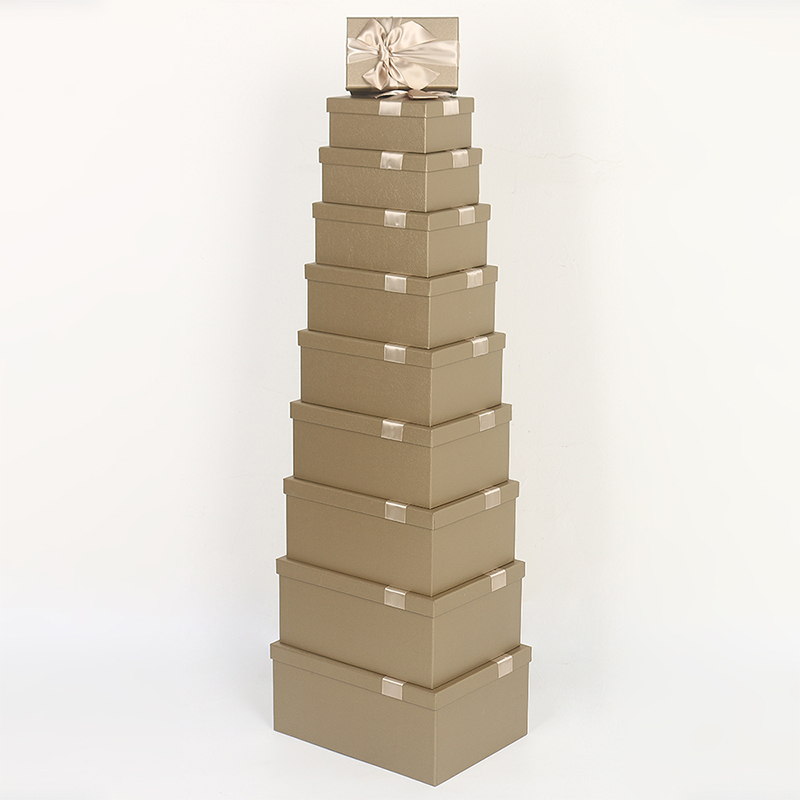
604 Square High-End Specialty Paper Gift Box with Yuppie Texture
Jewelry products depend heavily on presentation. Customers expect the packaging to reflect delicacy, value, and attention to detail. The 604 box offers a refined exterior that can support jewelry brands at different price points. A textured paper surface can create an elegant contrast with polished metal, gemstones, or delicate finishing.
The box can be adapted for earrings, rings, bracelets, pendants, and small jewelry collections. The internal design should hold each item securely and prevent contact damage. Brand colors, foil details, printed liners, or custom inserts can further distinguish the package.
Watches often require packaging that looks substantial and protects a precision product. The square structure offers enough visual presence for a watch presentation, while a custom cushion or fitted insert can keep the watch stable. The exterior can be customized with a restrained logo treatment, a dark color palette, or a corporate design suitable for both retail and gifting.
For watch brands, the opening sequence is particularly important. A carefully designed interior can reveal the timepiece in a centered position, provide space for instructions or warranty information, and make the box useful for later storage. This supports both the original gift experience and the long-term relationship between the customer and the brand.
Small electronics, personal accessories, wireless devices, and related products can benefit from a package that combines structure with a premium appearance. The box can be configured to accommodate the main product, cables, charging equipment, manuals, and accessories. An organized interior reduces movement and helps customers understand the contents immediately.
The textured exterior can also help an electronics brand move away from a purely technical appearance. Instead of presenting the product in a generic carton, the brand can create a more gift-oriented or lifestyle-focused experience. This may be particularly valuable for premium accessories, limited editions, smart devices, and corporate technology gifts.
Corporate gifts need packaging that looks professional and aligns with the organization’s identity. A square specialty paper box can be customized with corporate colors, logos, event themes, or campaign artwork. The leather-like texture provides a mature appearance that suits executive gifts, employee recognition items, client gifts, and conference packages.
Because custom sizes are available, the box can be developed for different gift contents, from small desk accessories to curated gift collections. A consistent packaging system can help a company present a unified image across annual events and seasonal campaigns.
Seasonal gift packaging must attract attention while remaining flexible enough for changing designs. The 604 structure can be adapted for holidays, anniversaries, cultural celebrations, promotional events, and limited-edition collections. Seasonal graphics can be printed on the same basic box format, allowing the brand to retain recognition while refreshing the artwork.
The specialty paper texture is also appropriate for gift sets that need to feel more premium than ordinary seasonal cartons. A simple change in color, ribbon treatment, printed pattern, or internal insert can create a new presentation without requiring the brand to develop an entirely different packaging system.
Crafts, ornaments, collectibles, and small decorative products often benefit from packaging that communicates care and individuality. The square shape can create a stable display format, while custom inserts can protect fragile or irregular products. The tactile exterior helps reinforce the handmade or curated character of the item.
Standard smooth boxes are widely available and may be suitable for basic packaging needs. However, they often provide limited differentiation. The yuppie texture gives the 604 box a surface identity that can make it more noticeable. It provides an immediate material cue that the package belongs to a higher-value product category.
Some premium packaging suppliers offer beautiful but highly standardized boxes with limited dimensions. These products may force brands to compromise on product fit or purchase separate structures for each product. The 604 product offers a wider customization path, including multiple size options, custom colors, custom artwork, and design support.
This flexibility can simplify packaging development for companies that sell several products. Instead of sourcing unrelated boxes from different suppliers, a brand can establish a coordinated packaging family based on one sophisticated material concept.
Highly complex rigid packaging can create a dramatic unboxing effect, but it may also involve higher material usage, greater assembly complexity, and increased shipping volume. The 604 box offers a premium appearance through its surface and structure without requiring unnecessary visual complexity. This can be advantageous for brands seeking a balance between luxury, cost control, production efficiency, and responsible material use.
Brand continuity is easier to achieve when packaging can be customized across sizes and color systems. A consistent texture and box shape can make products recognizable even when the contents differ. This supports shelf presence, online presentation, corporate identity, and repeat purchase behavior.
The specialty paper material is described as environmentally friendly and recyclable. Paper-based packaging can support brands that are reducing dependence on plastic or seeking more recyclable presentation materials. However, responsible packaging decisions should consider the complete construction, including coatings, adhesives, inserts, laminations, inks, and mixed materials. Buyers should confirm the recyclability requirements of their target markets and request relevant material documentation when needed.
Zhejiang Shihao Gift Packaging Co., Ltd. has more than 15 years of experience in the production, research and development, and sales of paper gift packaging boxes. Long-term specialization matters because gift packaging requires coordination between design, paper selection, printing, structural assembly, quality control, and export logistics.
A manufacturer that focuses on packaging can identify practical issues earlier than a general printing supplier. These issues may include paper grain direction, corner finishing, surface consistency, lid tolerance, insert fit, color variation, and carton loading. Experience helps transform a design concept into a product that can be produced repeatedly and shipped safely.
The company’s approximately 20,000-square-meter facility and workforce of around 300 people provide a substantial operating base. A larger production organization can support multiple orders, coordinate specialized processes, and maintain dedicated attention to design, production, inspection, and export preparation.
Capacity is particularly important for brands that need to scale after a successful launch. A supplier may be able to produce a small sample but struggle with a larger order. The reported average daily production capacity of about 5,000 sets indicates that the manufacturer has resources designed for commercial volume rather than only small artisanal runs.
The in-house design team is one of the product’s key advantages. Packaging development often involves more than placing a logo on a template. The design must account for dimensions, paper behavior, printing areas, assembly requirements, opening experience, product protection, and shipping efficiency.
Professional advice can help customers make decisions before production begins. The design team can assist with selecting a suitable size, refining artwork, coordinating colors, and planning structural details. This reduces the burden on buyers that may not have a dedicated packaging engineer or production specialist.
The company reports updating dozens of products weekly. This indicates an active approach to product development and market response. Regular development can help the manufacturer understand changing trends in colors, textures, shapes, storage functions, and gifting occasions.
For customers, an active research and development environment can create opportunities to adapt an existing model rather than beginning from zero. The 604 box can serve as a foundation for a customized project, while the manufacturer’s broader product knowledge can support new structures or coordinated packaging ranges.
The products are exported to Europe, the United States, the Middle East, and other regions. Export experience requires attention to packaging protection, carton organization, documentation, production schedules, and communication across markets. It also means the manufacturer has experience supporting customers with different design preferences, quality expectations, and commercial requirements.
International experience can be especially useful for companies that are importing packaging for the first time. Clear communication about dimensions, samples, artwork, shipping marks, inspection standards, and delivery schedules helps reduce misunderstandings during the project.
The company has passed BSCI and FSC certifications according to the supplied information. BSCI is associated with social compliance practices, while FSC certification relates to responsible forest-based material sourcing within the applicable certified supply chain. Buyers should confirm the current validity, scope, and documentation of certifications for the specific order and material selection.
These credentials can support procurement teams that evaluate suppliers according to social responsibility and material sourcing requirements. They are particularly relevant for brands selling in markets where customers and retailers increasingly expect transparent and responsible packaging practices.
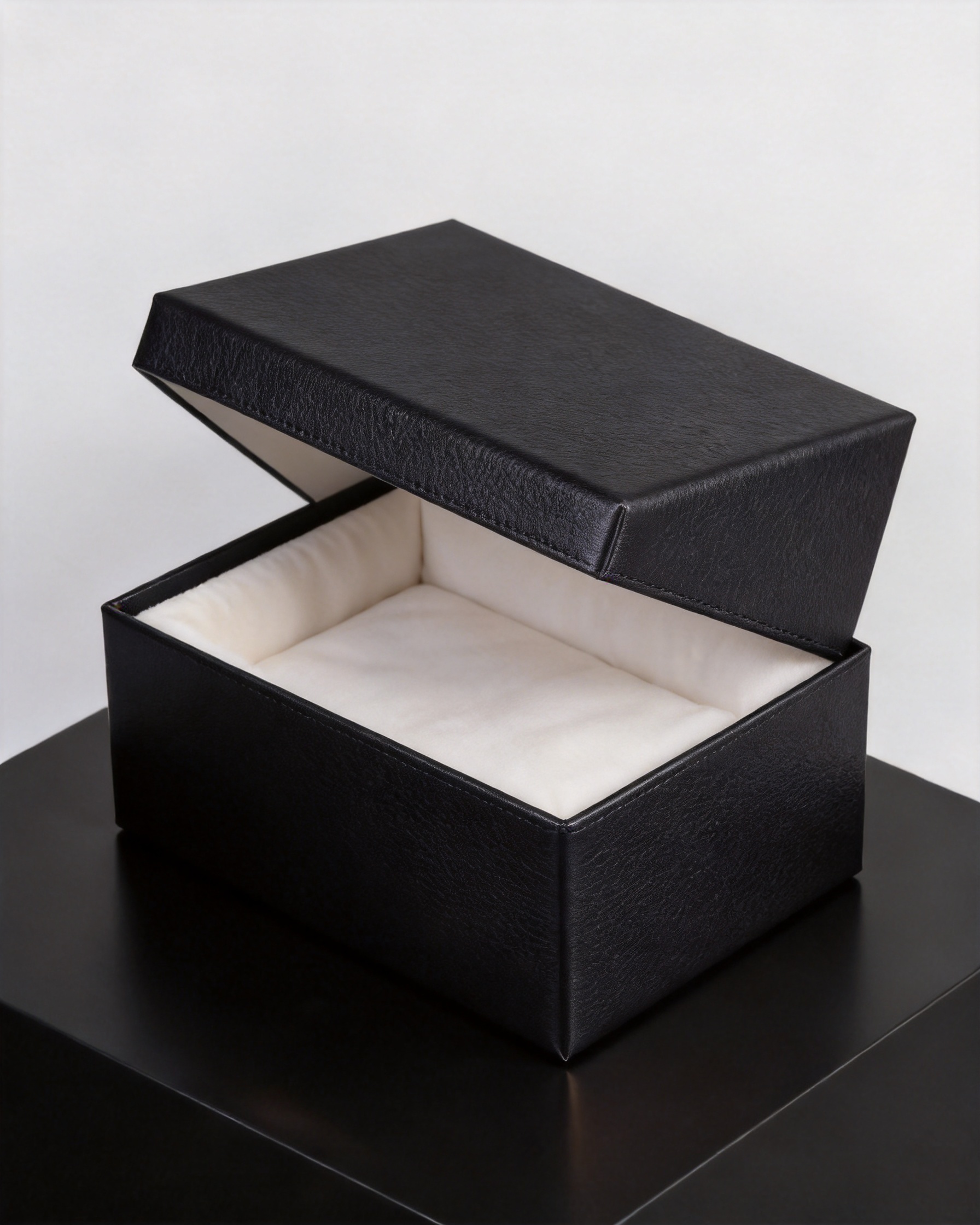
The process begins with a review of the customer’s product, target market, quantity, size requirements, artwork, and desired presentation. The manufacturer can evaluate whether the selected dimensions are suitable and whether an insert or internal support is needed. This stage is also where customers should explain special requirements such as moisture sensitivity, gift wrapping, retail display, shipping conditions, and storage after opening.
After the requirements are understood, the box structure is developed or adapted. The design team considers the square proportions, wall construction, lid fit, fold or assembly points, and internal space. A prototype or sample allows the customer to test the product fit and evaluate the opening experience.
Prototyping is valuable because a digital drawing cannot fully communicate the feel of the specialty paper, the rigidity of the cardboard, or the practical relationship between the product and the box. A physical sample can reveal whether the product is centered, whether the lid opens smoothly, and whether the texture and color create the intended impression.
The cardboard base and specialty paper surface are selected according to the required appearance and performance. The paper must be compatible with the intended printing and covering processes. Its texture should remain visually consistent, and the covering process must be controlled to avoid wrinkles, bubbles, exposed edges, or uneven corners.
Material selection may also consider the desired balance between rigidity, weight, sustainability, and shipping cost. If a customer has specific environmental requirements, the material composition and finishing system should be reviewed before approval.
Artwork is prepared for CMYK, Pantone, or custom color production. Color management is important because the textured surface can influence visual perception. The manufacturer and customer should agree on color references, proofs, and acceptable tolerances before mass production.
Printing quality includes more than color accuracy. Fine text should remain legible, logos should be positioned correctly, and graphic elements should align with the box structure. Any design that crosses edges or corners requires careful preparation to maintain visual continuity after assembly.
The printed specialty paper is applied to the cardboard components, followed by structural assembly. The process requires accuracy at corners, edges, and joining points. Consistent pressure and alignment help create a clean finished appearance. For a premium box, minor inconsistencies can be visible, so production discipline is essential.
Assembly may include the attachment of lids, bases, inserts, trays, cushions, or other internal components. The exact workflow depends on the approved design. A well-organized assembly process helps maintain uniformity across large orders and reduces the likelihood of missing or misaligned parts.
Quality control should evaluate dimensions, color, texture, surface cleanliness, structural alignment, opening and closing performance, product fit, and packaging condition. Samples from production may be compared with the approved reference sample. Any customer-specific inspection criteria should be agreed before manufacturing begins.
For export orders, quality control should also consider carton strength, quantity accuracy, labeling, and protection during handling. Quality is not limited to the individual gift box; it includes the condition in which the boxes arrive at the customer’s facility.
The supplied information indicates a packing arrangement of 10 pieces per set and references carton quantities and carton dimensions. Because the original specification contains fields that may require clarification, customers should confirm the final packing method, unit count, carton size, gross weight, and shipping marks before shipment.
Correct packing protects the textured surface from abrasion and helps prevent crushing during transportation. Boxes may require protective separators, inner bags, or carefully arranged cartons depending on the structure and shipping route. Good export packing contributes to lower damage rates and more efficient warehouse handling.
Buyers should review the surface texture under different lighting conditions. A premium textured paper should appear consistent from box to box, without obvious patches, scratches, dirt, or irregular covering. The texture should support the design rather than interfere with the logo or printed artwork.
Dimensional accuracy should also be checked. The product should fit securely without excessive pressure. If an insert is used, the insert should hold the item firmly while allowing a smooth removal experience. The lid should not be so tight that it damages the box, nor so loose that it opens during handling.
Color approval is best conducted using a physical sample or production proof. Digital displays vary significantly, and the texture can change the appearance of printed colors. Pantone references or approved color standards should be used where color consistency is commercially important.
Customers should also confirm the expected tolerances for handmade or semi-handmade assembly, especially for boxes with wrapped corners and multiple structural components. Defining acceptable standards in advance helps align the manufacturer’s production team with the customer’s expectations.
Before requesting a quotation, provide the product’s length, width, height, weight, fragility, and internal accessories. Explain whether the box will be used for retail display, direct gifting, e-commerce delivery, storage, or event distribution. This information allows the manufacturer to recommend a more appropriate structure.
Select one of the available size ranges or request a custom dimension. Consider the amount of empty space that will remain around the product, the need for protective material, and the way the box will be displayed. An efficient fit can reduce material waste and shipping volume while improving presentation.
Provide final or preliminary artwork in an accepted design format. Include logo files, color references, typography, patterns, and any required regulatory or product information. Early submission gives the design team time to check scale, positioning, bleed, and print feasibility.
A pre-production sample should be evaluated for surface feel, color, dimensions, structure, logo placement, interior fit, and opening experience. The sample should be tested with the actual product whenever possible. Approval should be documented clearly so that mass production can be compared against the agreed standard.
The minimum order quantity is listed as 300 sets, and the delivery period is approximately 7 to 45 days depending on customer requirements. The final schedule may depend on design approval, material availability, order quantity, printing complexity, sample requirements, and shipping arrangements. Buyers should confirm the quotation, payment terms, packaging quantities, carton dimensions, shipping port, and delivery responsibilities in writing.
Paper-based gift packaging can contribute to a more responsible packaging strategy when the materials and finishing processes are selected carefully. The 604 box uses specialty paper and cardboard, materials that are familiar to many recycling systems. Its durable structure may also allow customers to reuse the box for storage, extending its useful life beyond the initial gift-opening moment.
Reuse is particularly relevant for jewelry, watches, crafts, keepsakes, and corporate gifts. A box that remains attractive after opening may be used to store personal items rather than discarded immediately. The square format can make it convenient for organizing accessories, documents, small objects, or seasonal decorations.
Brands should avoid making environmental claims without confirming the complete material specification. Paper coatings, adhesives, laminations, metallic components, foam inserts, and mixed-material accessories may affect recyclability. A responsible project should balance premium appearance, durability, material efficiency, and end-of-life considerations.
FSC-related sourcing credentials and responsible supply chain documentation can help procurement teams assess the material origin. Customers should request current supporting documentation where certification is a requirement for their market or retail partner.
The 604 product benefits from a combination of product design and manufacturing infrastructure. The box offers a specialized surface, multiple size options, color flexibility, and applications across several premium categories. The manufacturer adds design support, export experience, substantial production resources, and a history focused on paper gift packaging.
This combination is important because attractive packaging must also be manufacturable. A design may look impressive in a concept image but create problems during paper covering, assembly, packing, or transportation. An experienced manufacturer can identify these issues earlier and recommend practical alternatives.
The company’s reported production capacity can support customers that begin with a moderate order and later expand. Its range of kits, storage boxes, folding boxes, jewelry boxes, and gift boxes also suggests familiarity with multiple packaging formats. This broader knowledge can be useful when a customer needs a coordinated packaging program rather than a single standalone box.
For international buyers, the company’s export orientation and established contact channels can simplify communication during quotation, sampling, production, and shipment. Customers can work directly with the manufacturer to discuss designs, specifications, quantities, schedules, and packaging requirements.
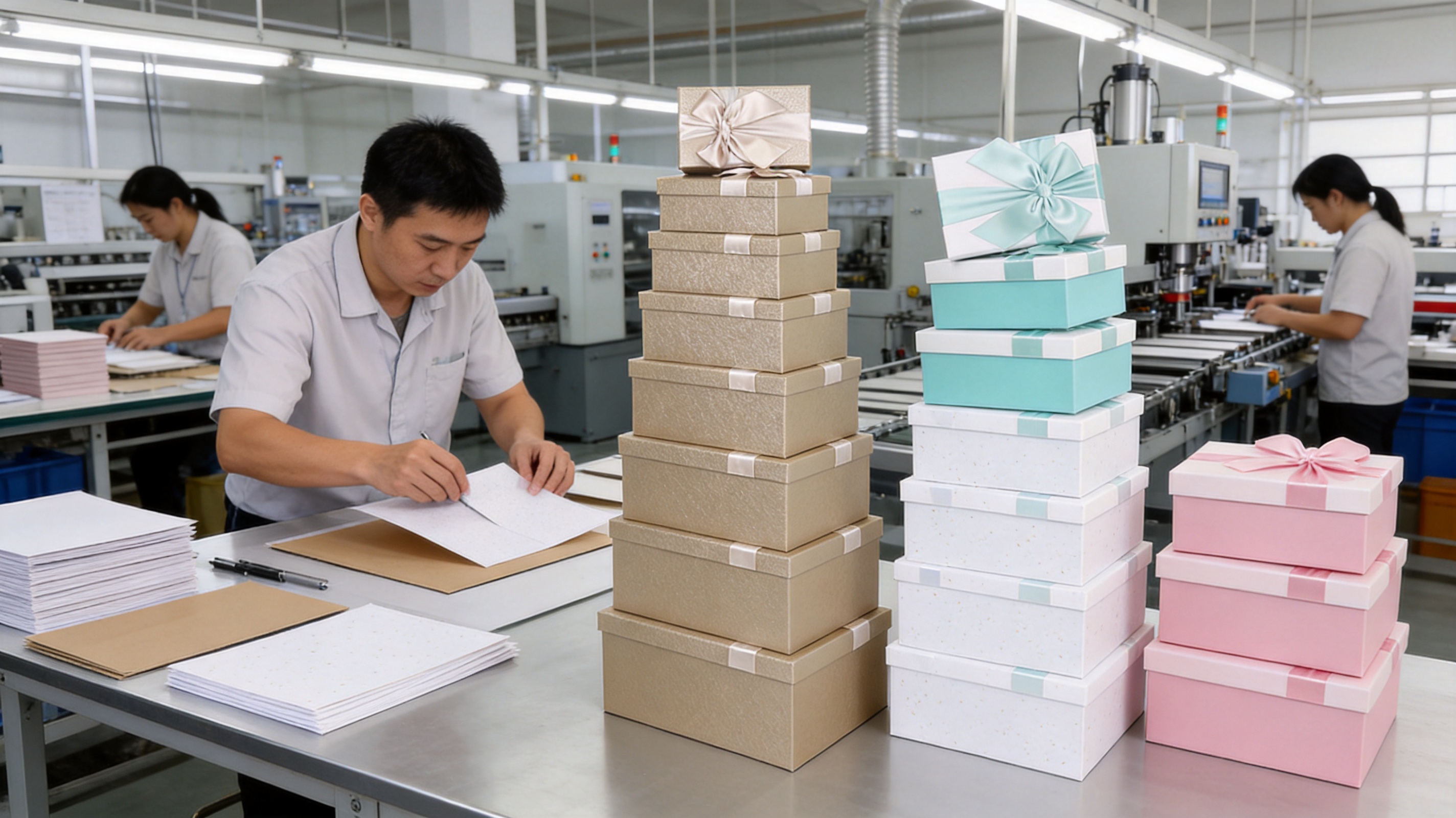
The main feature is its square premium structure covered with specialty paper featuring a leather-like yuppie texture. The surface creates a distinctive tactile and visual effect that supports high-end product presentation.
The box is suitable for jewelry, watches, electronics, ornaments, crafts, business gifts, holiday gifts, and other premium products. The final suitability depends on the selected size, product weight, and interior insert design.
Yes. The product is available in multiple sizes, with listed dimensions ranging from approximately 34 × 26 × 15.3 cm to 16.8 × 10.8 × 6.5 cm. Custom dimensions can be discussed according to the product and packaging requirements.
The box uses a cardboard structure with an art paper-coated specialty surface. The exterior paper provides the visual and tactile finish, while the cardboard supports the shape and rigidity of the box.
CMYK, Pantone colors, and custom colors are available. A physical proof is recommended when accurate brand color matching is important.
Yes. Logos, patterns, product names, slogans, seasonal artwork, and other branding elements can be incorporated into the design. The in-house design team can provide professional advice on artwork preparation and placement.
Yes. The company has its own design team and offers professional advice. Customers may provide existing artwork or develop a customized design with support from the manufacturer.
The listed design file formats are Artificial Intelligence and CorelDRAW. Customers should confirm technical requirements, including bleed, color mode, dimensions, and outlined fonts, before submitting final artwork.
The listed minimum order quantity is 300 sets. The exact number of boxes per set and the final packing configuration should be confirmed during quotation and order review.
The stated delivery period is 7 to 45 days or according to customer requirements. The actual schedule can depend on design complexity, sample approval, material availability, order quantity, and shipping arrangements.
The specialty paper material is described as environmentally friendly and recyclable. However, final recyclability depends on the complete packaging construction, including coatings, adhesives, inserts, and mixed materials. Buyers should request detailed material information for market-specific claims.
Yes. An internal insert can be considered for jewelry, watches, electronics, crafts, and other products that need positioning or protection. The insert design should be developed according to the product’s size, shape, and fragility.
It differs through its specialty yuppie-textured paper, leather-like tactile effect, premium cardboard construction, multiple size options, professional customization support, and suitability for high-end product presentation. It is designed to create a stronger sensory and brand experience than a basic smooth box.
Customers should confirm the final dimensions, material composition, surface finish, artwork, color standard, internal insert, quantity, packing method, carton dimensions, delivery schedule, payment terms, shipping arrangements, and quality requirements. A physical sample should be approved before mass production whenever possible.
The 604 Square High-End Specialty Paper Gift Box with Yuppie Texture is a versatile packaging solution for brands that want understated luxury, tactile differentiation, and practical customization. Its square structure provides a balanced presentation, while the leather-like specialty paper creates a memorable surface that can help products stand apart from standard smooth gift boxes.
The box is suitable for jewelry, watches, electronics, crafts, corporate gifts, holiday products, and many other premium applications. Multiple size options, CMYK and Pantone color support, custom designs, and professional design assistance make it adaptable to different product lines and markets. Its cardboard construction provides a stable foundation, while the paper-based exterior supports a refined appearance and potential reuse.
The manufacturer strengthens the product proposition through more than 15 years of specialization, an approximately 20,000-square-meter facility, around 300 employees, reported daily production capacity of about 5,000 sets, an in-house design team, international export experience, and BSCI and FSC certifications. These capabilities help connect creative packaging design with reliable commercial manufacturing.
For companies seeking packaging that feels premium without relying on excessive complexity, the 604 box offers a strong balance of appearance, customization, functionality, and production support. With proper sampling, specification review, and quality control, it can become a consistent packaging platform that strengthens product presentation and reinforces long-term brand value.
1. Product specification sheet for Project 604#, including material, dimensions, color options, applications, minimum order quantity, and delivery information.
2. Manufacturer-provided company profile for Zhejiang Shihao Gift Packaging Co., Ltd., including facility size, workforce, production capacity, export markets, product categories, and design capabilities.
3. Manufacturer-provided information concerning BSCI and FSC certifications and responsible packaging production.
4. General packaging design and quality-control principles for paperboard gift boxes, including product fit, color proofing, structural testing, surface inspection, and export packing.
5. General guidance on paper-based packaging sustainability, recyclability, responsible sourcing, reuse, and evaluation of mixed-material components.
Recommended Products

Contact Us

No. 15, Xiayang Road, Huangzhai Town, Jinhua, Zhejiang, China

(+86) 579-84230069

(+86) 13085675766


Products

Gift Box Packaging Manufacturer
 English
 Français
 Español
 عربى