2026-10-21
Gift packaging has evolved from a temporary covering into an important part of product presentation, customer experience, and brand communication. Buyers increasingly expect packaging to look attractive, feel substantial, protect its contents, and remain useful after the gift has been opened. The 813 Cylindrical Velvet Fabric Storage Gift Box responds to these expectations with a distinctive round format, a soft velvet exterior, a rigid paperboard structure, and a reusable design suitable for both presentation and storage.
Unlike ordinary rectangular cartons, the cylindrical format gives this gift box an immediately recognizable silhouette. Its rounded profile creates a more memorable unboxing experience while also allowing the box to be used for many different products, including gifts, accessories, crafts, keepsakes, stationery, and small retail collections. The product is available in multiple sizes and can be produced in custom colors for different markets, seasons, occasions, and brand identities.
The 813 model is manufactured by Zhejiang Shihao Gift Packaging Co., Ltd., an export-oriented packaging manufacturer with more than 15 years of experience in paper gift packaging. The company combines product development, structural design, material sourcing, printing, finishing, assembly, quality control, and export logistics in one coordinated manufacturing operation. This integrated approach helps customers move from an initial packaging idea to a finished product with fewer communication gaps and better control over consistency.
For businesses searching for a custom gift box manufacturer, the 813 cylindrical velvet box offers a practical balance of luxury appearance, durability, customization, storage value, and production flexibility. It can be used as a premium gift container, a boutique retail package, a seasonal presentation box, or a reusable organizer that continues to represent the product long after purchase.
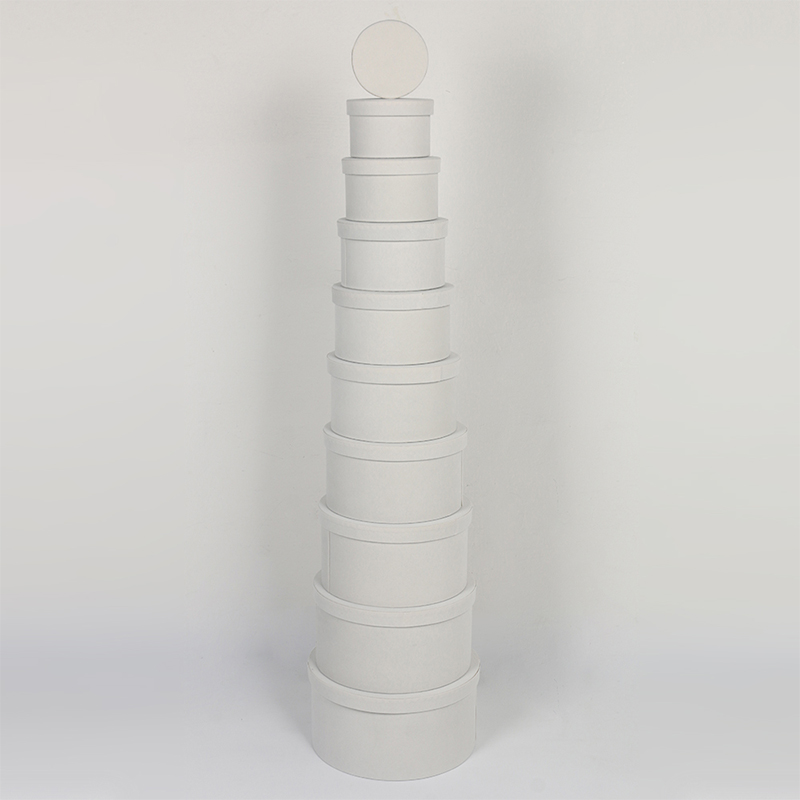
813 Cylindrical Velvet Fabric Storage Gift Box
The 813 Cylindrical Velvet Fabric Storage Gift Box is designed around three central ideas: visual distinction, tactile quality, and continued usefulness. Its cylindrical body creates a modern alternative to standard square and rectangular gift boxes. The velvet fabric surface gives the package a soft hand feel and a refined appearance, while the rigid board structure supports the shape and provides a stable enclosure for the contents.
The design is suitable for companies that want packaging to communicate elegance without relying only on complicated decorative elements. The texture of velvet naturally catches and reflects light differently from smooth paper, which gives the surface depth and visual richness. Even when the box uses a relatively simple silhouette, the material helps it appear more substantial and premium.
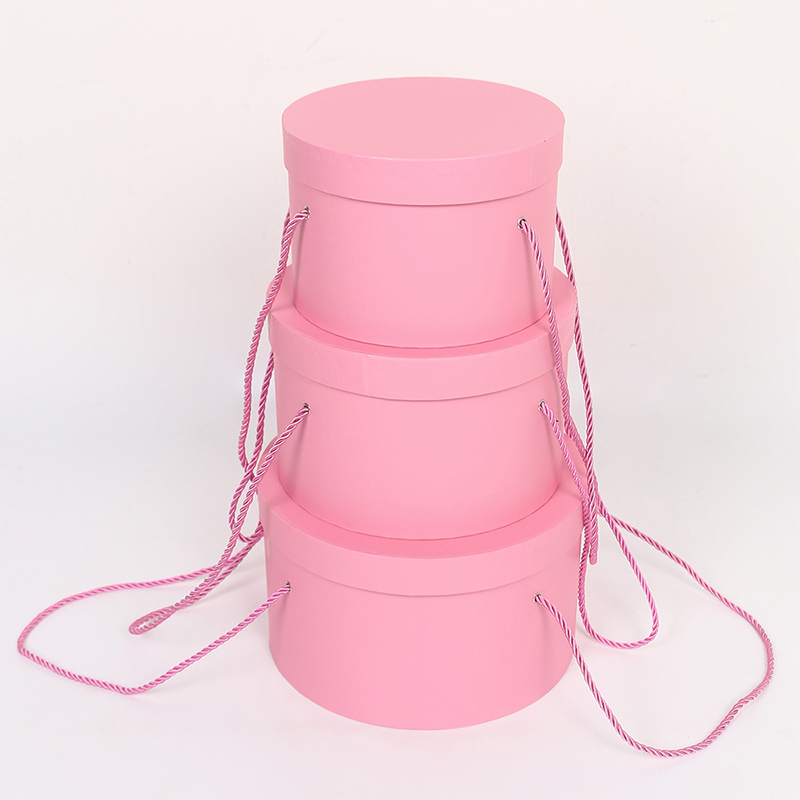
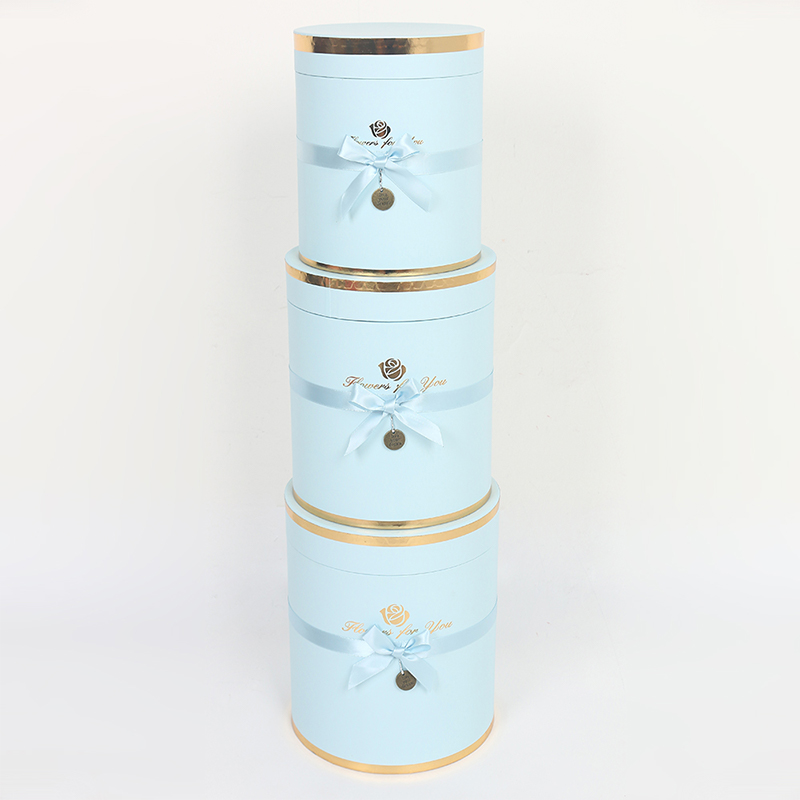
The cylindrical form also contributes to efficient presentation. Several boxes can be arranged together as a coordinated product display, and the different available sizes can be combined into a tiered or nested arrangement. Retailers can use the format to create an attractive shelf presentation, while event planners and gift suppliers can use it for themed packaging collections.
The product is listed as a velvet gift box and is also categorized under gift boxes, other paper products, and stationery storage boxes. This broad application range reflects the fact that the container is not limited to one product type. Depending on size, interior arrangement, and customization, it can package personal gifts, handmade products, stationery items, small accessories, promotional items, and craft products.
The stated structural material is an art paper-coated cardboard surface. In practical packaging terms, the cardboard provides the rigid body needed to maintain the cylindrical profile, while the external velvet fabric contributes the soft, high-end finish described for the product. This combination allows the box to achieve a more luxurious appearance than an uncoated paper carton while retaining the lightweight and customizable properties associated with paper-based packaging.
A rigid paperboard structure is important for premium packaging because it helps the container resist deformation during handling, stacking, and transport. The box is more stable than a thin folding carton and can be reused by the recipient. The paperboard surface also provides a suitable foundation for coordinated internal components, labels, sleeves, printed inserts, or other packaging accessories when a project requires them.
The 813 model is offered in three listed size options. The available specifications are 3# at approximately 13.5 by 13.5 centimeters, 2# at approximately 16 by 15 centimeters, and 1# at approximately 18 by 17 centimeters. These dimensions allow buyers to select a size according to the product being packed, the desired presentation effect, and the amount of internal protection required.
| Model | Listed dimensions | Typical packaging consideration |
|---|---|---|
| 3# | Approximately 13.5 × 13.5 cm | Suitable for compact gifts, small accessories, keepsakes, and selected stationery items |
| 2# | Approximately 16 × 15 cm | Suitable for medium-sized gift assortments and craft products |
| 1# | Approximately 18 × 17 cm | Suitable for larger presentation sets and more spacious product arrangements |
Because packaging dimensions can be interpreted differently depending on whether measurements refer to the external body, internal cavity, lid, or finished assembly, buyers should confirm final technical drawings before mass production. The manufacturer’s in-house design team can help verify fit, clearances, inserts, and assembly requirements for a specific product.
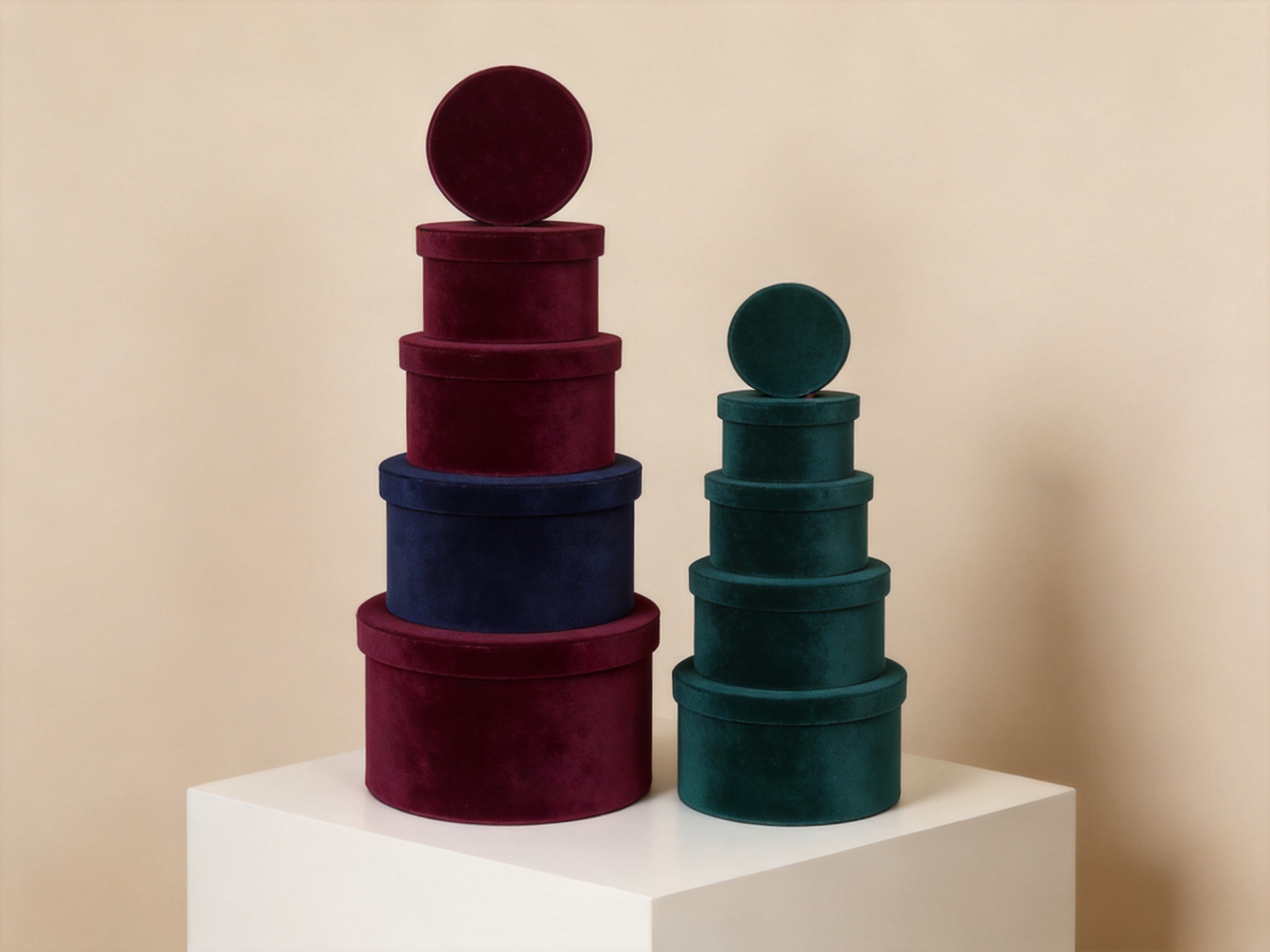
One of the strongest advantages of the 813 box is its nontraditional shape. Rectangular gift boxes remain widely used because they are easy to manufacture and stack, but their familiarity can make it difficult for a product to stand out. A cylindrical box creates a different visual rhythm on a display and can make the package more recognizable from a distance.
The round body is especially useful for products that benefit from a softer or more decorative presentation. It can complement beauty products, handcrafted items, festive gifts, accessories, commemorative products, and premium stationery. It may also be used for products that have a naturally rounded or tubular form, allowing the packaging and the item to feel visually connected.
The product description emphasizes that the cylindrical shape saves space and is easy to stack and carry. A cylindrical container can be arranged vertically or horizontally, depending on the retail environment and the product display. Its compact profile makes it suitable for gift tables, boutique counters, seasonal displays, and storage shelves.
Although the box has a decorative appearance, its purpose is not purely visual. A reusable cylindrical container can become part of a home organization system after the original gift is removed. It may hold stationery, ribbons, craft materials, small toys, accessories, documents, or personal keepsakes. This second life increases the practical value of the packaging and can extend the period during which the customer interacts with the package.
Packaging is often the first physical contact a customer has with a product. A soft velvet surface creates a sensory experience before the box is opened. The recipient can feel the difference between fabric-covered packaging and a basic printed carton, which helps communicate care and quality.
The cylindrical profile also changes the opening experience. Rather than presenting a familiar rectangular lid, the package creates a more distinctive reveal. This can be valuable for gift-giving occasions, influencer campaigns, retail launches, wedding favors, holiday programs, and corporate appreciation gifts. A unique opening sequence can make the product more memorable and more suitable for photography or social media presentation.
Velvet is valued in packaging because it combines visual depth with a soft tactile quality. The surface can appear rich and elegant under retail lighting, while the fabric texture gives the box a warmer and more personal feel than a plain laminated board. This makes velvet particularly suitable for packaging where emotional presentation is important.
The material can be coordinated with a wide range of color directions. The available color approach includes CMYK, Pantone colors, and custom colors, allowing buyers to request a finish that aligns with a brand identity or event theme. Popular applications may include deep jewel tones for luxury collections, soft neutrals for lifestyle products, bright colors for festive packaging, or custom shades developed for a seasonal campaign.
A conventional printed carton depends mainly on graphics, typography, and surface coating to communicate value. The 813 box can use those elements as well, but the fabric finish adds another layer of differentiation. The package can feel more like a keepsake than a disposable shipping container.
The contrast between a rigid form and a soft outer surface is also visually effective. The box retains a clean, structured outline while presenting a warmer, more tactile exterior. This combination can help brands position a product as thoughtful, giftable, collectible, or premium without requiring excessive decoration.
The product information describes the velvet surface as wear-resistant, durable, easy to clean, and suitable for repeated use. As with all fabric-finished packaging, care instructions should be matched to the specific fabric, color, adhesive system, and production finish selected for an order. Buyers should test the final sample under realistic handling conditions before approving large-scale production.
In daily use, the box can be kept clean with gentle handling and appropriate dry or minimally damp cleaning methods. Avoiding strong chemicals, excessive moisture, and rough abrasion is generally advisable for maintaining the appearance of a fabric-covered package. The rigid internal structure supports repeated opening and closing, while the fabric finish helps preserve a soft and premium visual impression when properly maintained.
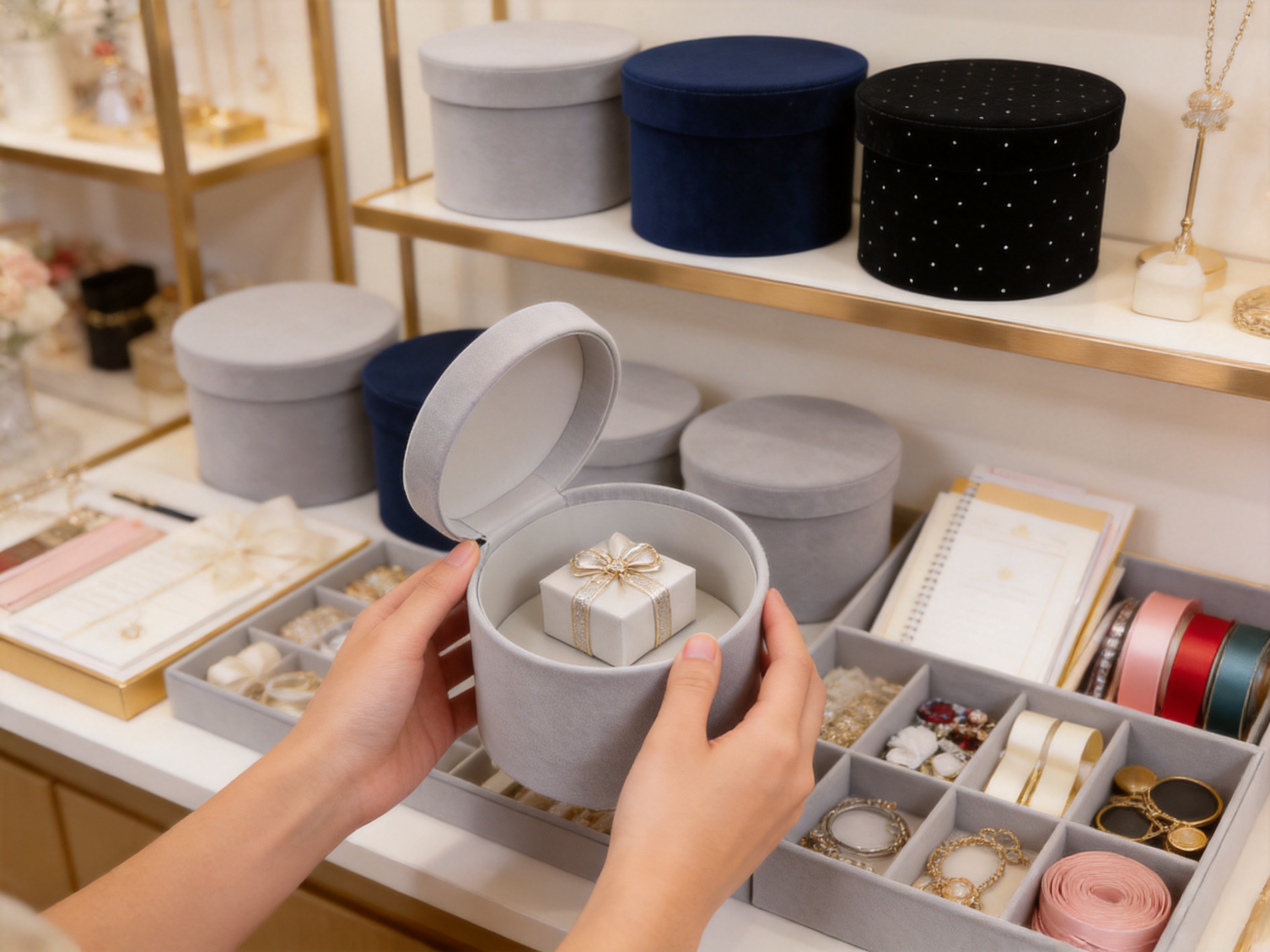
One of the most important product advantages is that the box can continue to serve a useful purpose after the original gift has been removed. A package that becomes a storage container is less likely to be immediately discarded. This can improve the customer’s perception of value and support a more responsible approach to packaging design.
The 813 box can be used for household organization, stationery storage, craft supplies, small collections, accessories, and other personal items. In a retail setting, the reusable function can be highlighted as part of the product story. A customer is not purchasing only an attractive outer package; they are also receiving a container that can be incorporated into everyday life.
Reuse does not automatically make a packaging product sustainable, and responsible evaluation should consider material selection, production efficiency, shipping, lifespan, and end-of-life handling. However, designing a box for repeated use is a practical way to increase the functional life of packaging. The paper-based structure, custom production model, and reusable format allow buyers to consider the complete packaging lifecycle rather than focusing only on the moment of purchase.
Brands can print or attach simple instructions explaining possible secondary uses. For example, packaging may be promoted as a stationery organizer, keepsake container, accessory holder, or storage box. Retail staff and product pages can also explain that the box is designed to be retained and reused.
For corporate gifting, the reusable function can reinforce a message of long-term appreciation. For wedding or event packaging, recipients can use the boxes to store photographs, invitations, jewelry, or small memories from the occasion. For craft brands, the container can later hold sewing supplies, beads, tools, or finished pieces.
The 813 cylindrical velvet gift box is versatile enough to serve both consumer-facing and business-to-business packaging programs. Its use depends on the dimensions, interior fit, selected color, and any additional design features requested by the buyer.
The most direct application is premium gift packaging. The velvet finish and distinctive silhouette can make an ordinary gift feel more intentional and special. The box is appropriate for birthdays, anniversaries, holidays, seasonal promotions, employee appreciation, customer loyalty programs, and celebration events.
Gift suppliers can use multiple sizes to create coordinated packaging collections. A single color family with three size variations can create a consistent visual identity while accommodating different products. Alternatively, several velvet colors can be used to identify product categories, seasons, or customer segments.
Boutique retailers often need packaging that reinforces a premium store environment. The 813 box can help create a cohesive presentation for selected product lines, especially where tactile materials and decorative details influence purchasing decisions. It can be displayed individually, grouped by color, or arranged in size-based tiers.
The box may also support limited-edition launches. A custom color or special finish can distinguish a seasonal collection from a standard product line. Because the design is already visually distinctive, a brand may be able to achieve a strong presentation without adding excessive printed graphics.
The product category includes stationery storage boxes, making the design relevant to pens, cards, craft materials, ribbons, paper accessories, and small creative tools. After purchase, the container can remain useful as an organizer for a desk, studio, classroom, or home workspace.
Stationery brands can use the box for curated writing sets, greeting card collections, premium notebooks, or themed paper assortments. Craft businesses can use it for packaged kits, handmade components, or creative workshop materials. The reusable storage function may be especially attractive to customers who value organization and presentation equally.
Companies often require gift packaging that looks polished and can accommodate brand colors. The 813 model can be adapted for corporate gift programs, conference items, hospitality gifts, executive presents, and promotional product bundles. A custom color or coordinated artwork can help the packaging reflect a company’s visual standards.
Corporate buyers should consider the total package, including the product, internal protection, logo placement, printed inserts, and delivery method. The manufacturer’s design team can help coordinate those components so that the final presentation looks intentional rather than assembled from unrelated parts.
The soft finish and choice of colors make the box suitable for wedding favors, celebration gifts, commemorative items, and event keepsakes. Buyers can request a palette that matches the event theme and may use the boxes for small gifts, handmade favors, or guest mementos.
For events, packaging consistency is particularly important. A manufacturer with coordinated production and assembly capabilities can help ensure that a large quantity of boxes has consistent color, shape, finish, and packing arrangement.
Customization is central to the value of a professional packaging project. The 813 model provides a starting structure, but customers can develop a more specific result through color selection, artwork, sizing, internal arrangements, and design details.
The listed color options include CMYK, Pantone colors, and custom colors. CMYK is useful for process printing and image-based artwork, while Pantone references help buyers specify a more controlled color target. Custom colors may be developed for a brand palette, seasonal collection, event theme, or market preference.
Color approval should be based on physical samples whenever possible. Fabric texture, lighting, production batches, and surrounding materials can affect how a color appears. A professional sampling process helps the buyer evaluate the actual surface rather than relying only on a digital monitor.
The company has an in-house design team and offers professional advice. Custom designs are welcome, and design files may be prepared using Adobe Illustrator or CorelDRAW. These capabilities are useful for customers that already have brand artwork as well as for buyers that need support developing a complete packaging concept.
Design development may include logo placement, typography, decorative patterns, labels, internal compartments, inserts, sleeves, tags, and coordinated accessories. The designer should also consider production limitations such as fabric direction, seam placement, adhesive areas, tolerance, lid fit, and the relationship between the outer dimensions and the internal usable space.
Although the standard product description focuses on the outer box, interior configuration is often decisive for packaging performance. Depending on the packed item, customers may need a basic open cavity, a fitted insert, a paperboard support, a foam component, a fabric lining, or a printed card.
The right interior solution protects the product while maintaining the desired presentation. It can prevent movement during transport, create a neat opening arrangement, and make the contents easier to remove. Buyers should provide product dimensions, weight, fragility, orientation, and presentation requirements during the design stage.
The quality of a custom gift box depends not only on its appearance but also on the manufacturer’s ability to manage the full production process. Zhejiang Shihao Gift Packaging Co., Ltd. is described as an export-oriented manufacturer specializing in the research, development, production, and sales of paper gift packaging boxes.
The company was established more than 15 years ago and operates from a facility covering approximately 20,000 square meters. Its workforce includes around 300 employees, supported by advanced equipment and dedicated research and development capabilities. The stated average daily production capacity is about 5,000 sets of gift boxes.
These resources are important for buyers that need repeat orders, coordinated product families, or larger seasonal programs. A factory with its own design and production capabilities can help reduce the delays that occur when design, sourcing, assembly, and quality inspection are distributed among unrelated suppliers.
An integrated process begins with understanding the customer’s product and market. The design team can review the intended use, dimensions, color direction, branding, and target price before preparing a structure or sample. This is more effective than selecting a standard box without considering how it will function in the final application.
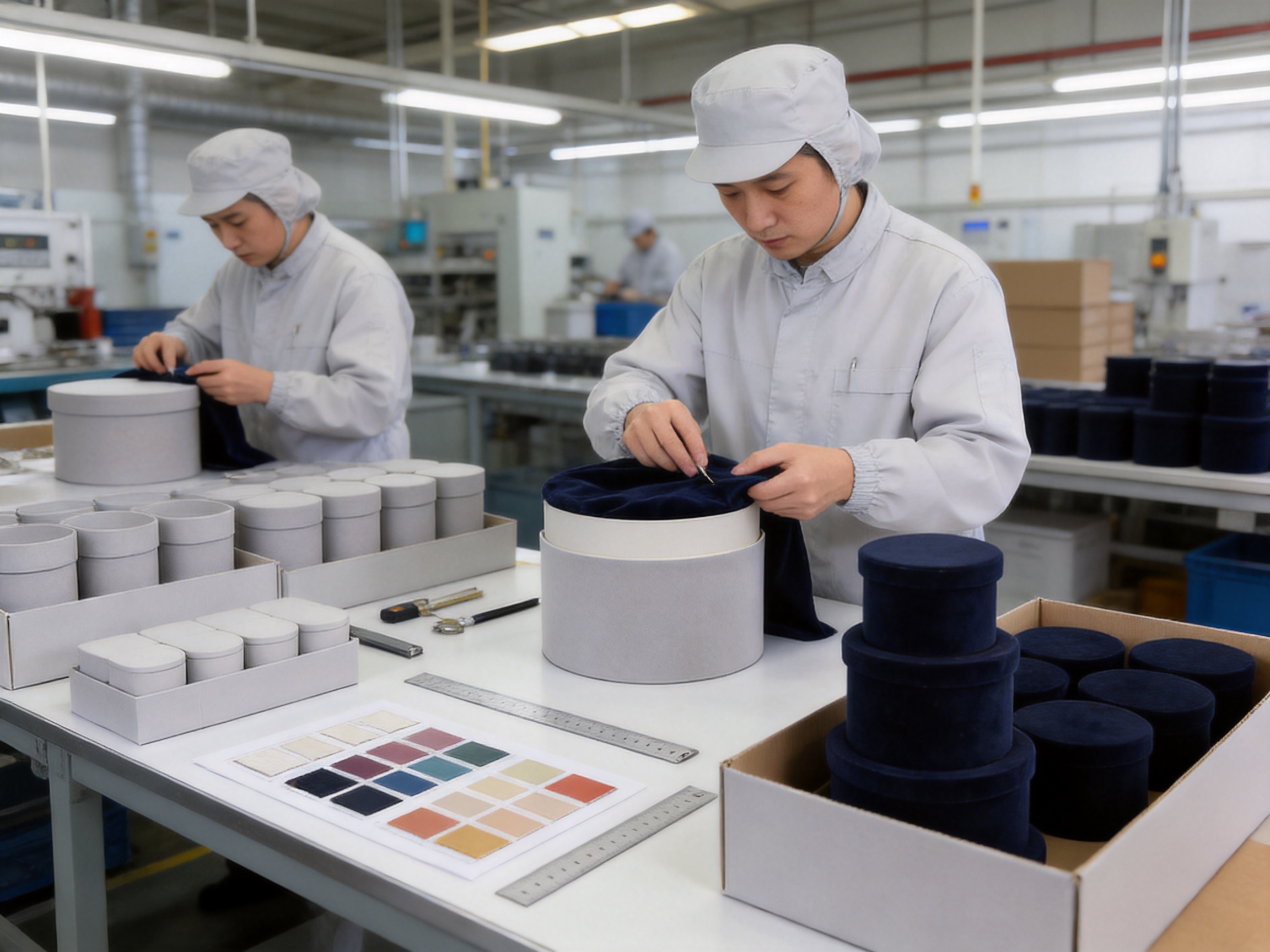
Once the design has been confirmed, production planning can address material preparation, printing or color matching, fabric covering, structural forming, assembly, inspection, and carton packing. Each step affects the final result. For a cylindrical box, alignment and surface consistency are especially important because irregular seams or uneven covering can be more visible on a curved body.
Cylindrical packaging requires attention to roundness, vertical alignment, lid fit, fabric tension, edge finishing, and consistent dimensions. The paperboard body must be formed accurately so that the finished box remains stable. The outer fabric should be applied smoothly, with careful control around joints and edges.
Quality checks may include inspection of surface cleanliness, fabric adhesion, color consistency, structural stability, lid movement, dimensional tolerance, and overall appearance. The exact inspection standards should be confirmed with the buyer during the project because different applications have different priorities.
The stated minimum order quantity is 300 sets. The product is packed at three pieces per set, with 24 sets per carton. This format is suitable for buyers that want a coordinated three-piece size assortment. If a project requires different quantities, mixed sizes, or separate color configurations, the packing plan should be discussed before quotation and production.
The listed delivery time is 7 to 45 days or according to customer requirements. The final schedule may depend on design approval, sample confirmation, material availability, order quantity, color matching, production complexity, and shipping arrangements. Early approval of artwork and samples is one of the most effective ways to reduce avoidable delays.
Export packaging must protect the product while using space efficiently. The listed packing arrangement is three pieces per set and 24 sets per carton. The stated carton dimensions are approximately 74 by 38 by 55 centimeters, with a carton volume of about 0.155 cubic meters.
| Logistics item | Listed information |
|---|---|
| Pieces per set | 3 pieces |
| Sets per carton | 24 sets |
| Approximate carton dimensions | 74 × 38 × 55 cm |
| Approximate carton volume | 0.155 CBM |
| Primary port | Ningbo, or another port according to customer requirements |
For international buyers, carton planning affects freight cost, warehouse space, handling efficiency, and delivery risk. The cylindrical shape should be packed so that the boxes do not rub excessively against one another or become compressed during transport. Appropriate separators, protective wrapping, and stable carton loading can help preserve the fabric surface and shape.
Customers should confirm whether the quoted carton dimensions include all protective materials and whether the final shipment will use the standard three-piece set configuration. If a project involves mixed products, urgent delivery, or special export labeling, these requirements should be included in the production plan at the quotation stage.
Quality consistency is particularly important for fabric-covered gift boxes because surface flaws can be visible and difficult to correct after assembly. Buyers should assess the quality of the sample for shape, color, texture, seams, edges, lid fit, cleanliness, and resistance to ordinary handling.
The manufacturer is reported to have passed BSCI and FSC certifications. BSCI relates to social compliance and responsible supply-chain practices, while FSC certification concerns responsible forest-based material sourcing within the applicable certified supply chain. Buyers should request current certification information and verify that the specific materials and production arrangements in an order are covered by the relevant documentation.
Certifications are valuable, but they should form part of a wider quality and responsibility review. A professional buyer may also evaluate factory communication, sampling discipline, production records, packaging tests, material declarations, inspection procedures, and after-sales support.
Important checkpoints may include the following:
1. The cylindrical body should remain stable and free from obvious deformation.
2. The velvet surface should be clean, evenly applied, and consistent in appearance.
3. The lid should fit correctly without excessive looseness or difficult removal.
4. Edges, seams, and transitions should be neatly finished.
5. Color should remain consistent across the order within the agreed tolerance.
6. The box should be appropriate for the weight and dimensions of the intended contents.
7. Carton packing should protect the product during ordinary export handling.
8. Any printed or branded details should be checked against approved artwork.
The 813 model has several advantages when compared with basic paper cartons, low-cost disposable packaging, and standard rectangular gift boxes. The first is its combination of form and texture. A cylindrical body provides visual differentiation, while velvet introduces a tactile element that many ordinary cartons do not provide.
The second advantage is reusability. A disposable package may perform adequately during the initial sale but offer little value afterward. The 813 box can become a storage container, allowing the customer to retain it and use it repeatedly. This creates a longer relationship between the user and the packaging.
The third advantage is the balance between premium appearance and paper-based construction. Some rigid luxury packaging relies on heavy materials or complex components that increase weight and shipping cost. The paperboard-based structure of this product can provide firmness and presentation quality while remaining suitable for scalable production.
The fourth advantage is customization. Customers can request CMYK, Pantone, or custom colors and can work with an in-house design team. This is valuable for buyers that need a packaging solution aligned with a specific brand system rather than a generic stock box.
The fifth advantage is manufacturing support. A supplier with design, development, production, and export experience can help address issues that may not be visible in a catalog image. These include dimension accuracy, material coordination, sampling, production scheduling, carton packing, and shipping arrangements.
| Comparison factor | 813 cylindrical velvet box | Basic rectangular paper carton | Typical disposable package |
|---|---|---|---|
| Visual distinction | High because of the cylindrical profile and velvet surface | Moderate, depending mainly on printing | Often limited |
| Tactile experience | Soft fabric texture with a premium feel | Usually paper or laminate texture | Usually focused on low-cost handling |
| Reusable value | Designed for continued storage use | May be reusable, but often less specialized | Usually intended for one-time use |
| Customization | Custom colors, artwork, sizes, and design support | Often customizable, but with a more conventional structure | May prioritize speed and cost over differentiation |
| Application range | Gifts, retail, stationery, crafts, storage, and events | General packaging applications | Short-term product protection or presentation |
Every packaging format has appropriate uses, and the best option depends on budget, product dimensions, brand positioning, and logistics. The 813 box is most compelling when the buyer values presentation, tactile quality, reuse, and differentiation alongside basic product protection.
A well-managed packaging project begins with a clear specification. Buyers should prepare information about the product to be packed, including length, width, height, weight, fragility, quantity per box, orientation, and any internal support requirements.
The next step is to define the visual direction. This may include target colors, preferred velvet texture, logo placement, printed artwork, seasonal references, and examples of packaging styles that match the intended market. If a Pantone reference or custom color is important, it should be identified early.
After the design concept is prepared, the buyer should review a technical drawing and sample. The sample should be assessed for both appearance and function. It is not enough to confirm that the box looks attractive; the buyer should place the actual product inside, check fit and removal, test the lid, examine the surface under different lighting, and consider how the box will be handled by customers.
Before placing a production order, confirm the following points:
1. Selected model and size: 1#, 2#, or 3#.
2. Whether the listed dimensions meet the required internal capacity.
3. Velvet color, paperboard color, and any printed color references.
4. Logo, artwork, label, insert, and accessory requirements.
5. Product fit, internal protection, and presentation orientation.
6. Quantity, minimum order requirement, and set configuration.
7. Sample approval procedure and acceptable production tolerances.
8. Carton packing, shipping marks, and export documentation.
9. Delivery schedule and destination port or delivery method.
10. Payment terms and inspection arrangements.
The listed minimum order quantity is 300 sets, making the product suitable for retailers, distributors, event organizers, corporate buyers, and established brands that need a meaningful production run. A smaller trial order may require separate negotiation, especially if it involves custom materials, special colors, or unique structural changes.
The stated payment terms are generally T/T, with other payment methods negotiable. Buyers should confirm the exact payment schedule, deposit requirements, balance timing, sample charges, tooling or development charges, and shipping terms in the formal quotation or sales contract.
Clear communication is especially important when producing a tactile and shape-sensitive package. Written approval should cover the final color, dimensions, artwork, materials, construction, packing method, and delivery target. Keeping a reference sample or approved production standard can also help maintain consistency for repeat orders.
The manufacturer’s primary port is Ningbo, although other arrangements may be available according to customer requirements. Buyers should coordinate shipping plans early, particularly for seasonal orders, trade-show programs, holiday campaigns, and event packaging with a fixed delivery date.
Zhejiang Shihao Gift Packaging Co., Ltd. is located at No. 15, Xiayang Road, Huangzhai Town, Jinhua, Zhejiang, China. The company specializes in paper gift packaging and supplies products for international markets, including Europe, the United States, the Middle East, and other regions.
Its product range includes kits, storage boxes, folding boxes, jewelry boxes, and gift boxes. This broader portfolio gives the company experience with different packaging structures, materials, finishes, and market requirements. The company’s stated business philosophy emphasizes innovation, quality, practicality, and benefit, which aligns with the 813 model’s combination of appearance and continued use.
The company maintains its own design team and updates numerous products each week. This ongoing development activity can benefit buyers that want current packaging styles or need assistance adapting an existing product to a specific market. An internal design resource also makes it easier to discuss practical production questions before the order reaches the factory floor.
With approximately 20,000 square meters of facilities, around 300 employees, and an average daily production capacity of about 5,000 gift box sets, the company is positioned to support both standard and customized projects. The actual capacity available for a specific order will depend on factory scheduling, materials, product complexity, and the required delivery date.
The 813 is a cylindrical reusable gift and storage box with a velvet fabric exterior and a rigid paperboard-based structure. It is designed for gift packaging, retail presentation, stationery storage, crafts, keepsakes, and other small products.
The listed sizes are 3# at approximately 13.5 by 13.5 centimeters, 2# at approximately 16 by 15 centimeters, and 1# at approximately 18 by 17 centimeters. Final usable internal dimensions should be confirmed with a technical drawing before production.
Yes. The listed color options include CMYK, Pantone colors, and custom colors. Buyers should approve a physical sample when accurate color matching is important.
Yes. Custom designs are welcome, and the company has an in-house design team that can provide professional advice. Design files may be prepared using Adobe Illustrator or CorelDRAW.
The box can be used for gifts, accessories, craft items, stationery, keepsakes, promotional products, event favors, and other products that fit the selected dimensions. The buyer should confirm the product size and internal protection requirements during development.
Yes. The product is designed to function as both gift packaging and a storage box. After the original contents are removed, it can be reused for stationery, crafts, accessories, small collections, or household organization.
The listed minimum order quantity is 300 sets. Since the standard packing information specifies three pieces per set, buyers should confirm whether the order will use the standard assortment or a customized quantity arrangement.
The listed arrangement is three pieces per set and 24 sets per carton. The stated carton dimensions are approximately 74 by 38 by 55 centimeters, with a volume of about 0.155 cubic meters.
The listed delivery time is 7 to 45 days or according to customer requirements. The final schedule depends on design approval, sample confirmation, order quantity, material availability, color requirements, and shipping arrangements.
Yes. The company is described as an export-oriented manufacturer serving Europe, the United States, the Middle East, and other regions. Ningbo is the stated port, while other shipping arrangements may be discussed according to customer requirements.
The general payment term is T/T, with other payment methods negotiable. Exact terms should be confirmed in the formal quotation and sales agreement.
The company is reported to have passed BSCI and FSC certifications. Buyers should request current documentation and confirm the scope and applicability of the certifications for their specific order.
Buyers should check the box dimensions, lid fit, surface texture, color, seams, edges, structural stability, product fit, internal protection, and overall appearance. The actual product should be placed inside the sample before approval.
Its main differences are the cylindrical silhouette, velvet fabric surface, tactile quality, reusable storage function, and suitability for custom colors and designs. These features can help create a more memorable and premium presentation.
The 813 Cylindrical Velvet Fabric Storage Gift Box is a strong option for brands and buyers that want packaging to do more than protect a product temporarily. Its cylindrical structure creates visual distinction, its velvet exterior contributes a luxurious tactile experience, and its rigid paperboard construction supports practical repeated use.
The product is suitable for gift packaging, boutique retail, stationery storage, craft products, corporate programs, weddings, events, and keepsakes. Its three size options provide flexibility, while CMYK, Pantone, and custom color capabilities allow the package to be aligned with different brand identities and market themes.
Its main competitive advantage is the combination of premium presentation and continuing utility. Instead of becoming waste immediately after unboxing, the container can remain in the customer’s home or workspace as a storage product. This supports perceived value and gives the brand a longer-lasting physical presence.
The manufacturer’s design team, production facilities, export experience, stated certifications, and capacity of approximately 5,000 gift box sets per day provide additional support for custom packaging programs. Buyers that confirm dimensions, colors, artwork, samples, packing, and delivery requirements early can use the 813 model as the foundation for a reliable and differentiated packaging solution.
For businesses seeking custom printed gift boxes, reusable storage packaging, or a premium alternative to conventional cartons, the 813 model offers a balanced combination of appearance, functionality, customization, and manufacturing support.
1. Product specification sheet for the 813 Cylindrical Velvet Fabric Storage Gift Box, including materials, dimensions, applications, packing, and commercial terms.
2. Zhejiang Shihao Gift Packaging Co., Ltd. company profile and manufacturing overview.
3. FSC principles and general guidance for responsible forest-based material sourcing.
4. BSCI framework materials concerning social compliance and responsible supply-chain management.
5. General packaging development practices for rigid paperboard boxes, fabric-covered packaging, sampling, inspection, and export carton planning.
6. General principles of reusable packaging design, lifecycle thinking, and customer-focused unboxing experience.
Recommended Products

Contact Us

No. 15, Xiayang Road, Huangzhai Town, Jinhua, Zhejiang, China

(+86) 579-84230069

(+86) 13085675766


Products

Gift Box Packaging Manufacturer
 English
 Français
 Español
 عربى