2026-09-22

The 813 Cylindrical Velvet Fabric Storage Gift Box combines refined presentation, practical storage, durable construction, and flexible customization in one versatile packaging solution. Designed for brands that want more than a disposable container, this cylindrical gift box provides an elevated unboxing experience while remaining useful after the original gift has been opened.
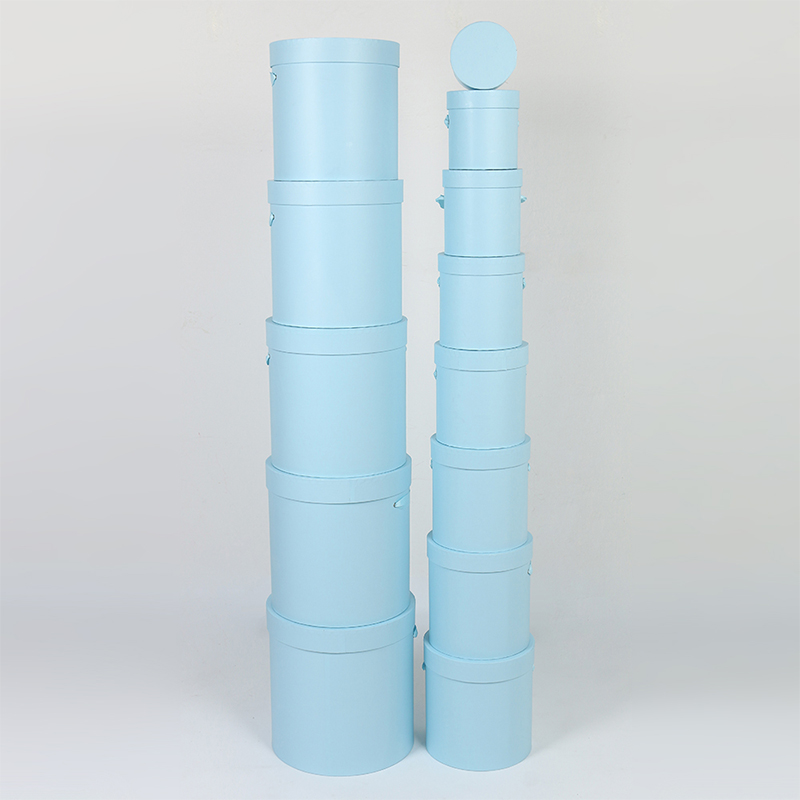
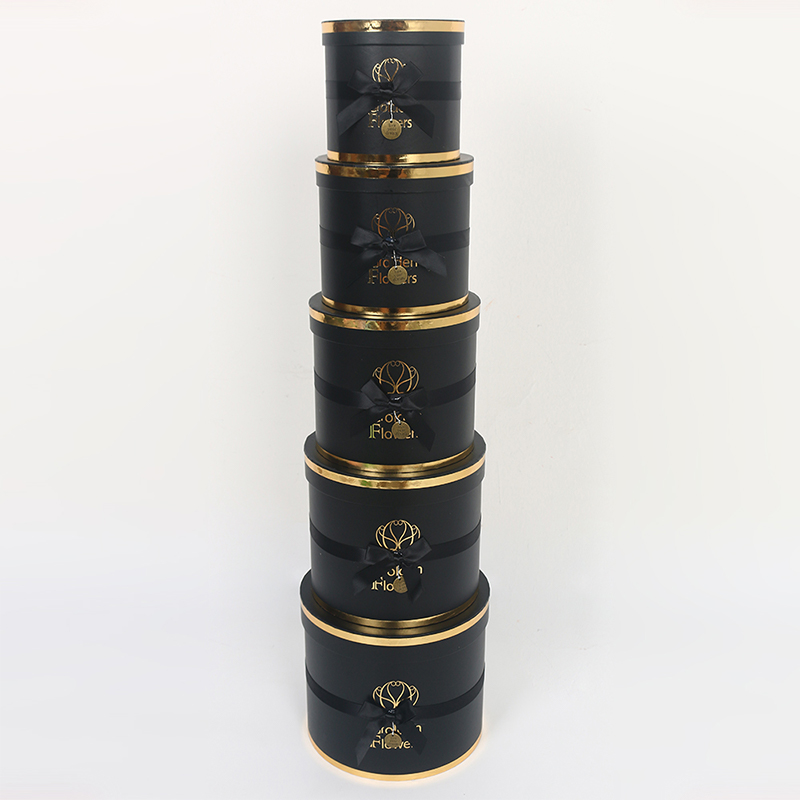
Its rounded silhouette gives the box a distinctive appearance compared with conventional square and rectangular gift packaging. The cylindrical structure uses space efficiently, can be stacked with ease, and offers a comfortable shape for carrying. Covered with a soft velvet-style fabric and supported by a rigid paperboard structure, the box delivers a tactile experience that immediately communicates quality.
The 813 model is suitable for gift packaging, storage applications, gifts, crafts, seasonal collections, promotional campaigns, and premium retail presentation. It can be produced in a wide range of colors, including CMYK, Pantone, and customized shades. This makes it suitable for businesses that require packaging to match a brand identity, product collection, event theme, or seasonal campaign.
Packaging plays an important role in how customers evaluate a product. Before they see the contents, customers notice the box shape, surface, color, construction, and opening experience. A distinctive package can make an ordinary product appear more considered, while a weak package may reduce the perceived value of the item inside.
Cylindrical packaging offers a useful alternative to standard rigid boxes. Its curved profile creates a more memorable visual impression and can make a product stand out on a retail shelf, display table, or gift presentation area. The shape is particularly suitable for products that are round, rolled, cylindrical, or arranged in sets, but it can also be used for many items that traditionally come in rectangular boxes.
The rounded design also provides practical advantages. Cylindrical boxes can be stacked vertically or grouped together in sets. Their smooth outer profile is comfortable to hold and less likely to catch on clothing or other packaging during handling. For customers, the shape feels different from ordinary cartons and contributes to a more memorable unboxing experience.
The 813 model extends these benefits through a fabric-covered exterior. Velvet fabric creates depth, softness, and visual richness. Under retail lighting, the surface can produce subtle changes in tone as the fibers reflect light from different directions. This gives the packaging an elegant appearance without requiring complicated decoration on every surface.
Unlike single-use packaging that is often discarded immediately, a reusable cylindrical storage box can continue to provide value after the initial purchase. Customers may use it to store accessories, small household objects, keepsakes, stationery, craft materials, or personal items. This extended use supports a more sustainable packaging approach and helps the box remain visible in the customer’s home or office.
| Product Model | 813 |
| Product Type | Cylindrical velvet fabric storage gift box |
| Project Number | 813# |
| Main Structure | Rigid paperboard body with a decorative fabric-covered exterior |
| Available Colors | CMYK, Pantone colors, and customized colors |
| Available Dimensions | 18 × 17 cm, 16 × 15 cm, and 13.5 × 13.5 cm |
| Primary Applications | Gift packaging, storage, gifts, crafts, retail presentation, and promotional packaging |
| Minimum Order Quantity | 300 sets |
| Standard Packing | 3 pieces per set; 24 sets per carton |
| Carton Dimensions | 74 × 38 × 55 cm |
| Approximate Carton Volume | 0.155 CBM |
| Typical Delivery Time | 7 to 45 days, or according to customer requirements |
| Export Port | Ningbo, or another port according to customer requirements |
| Payment Terms | Generally T/T; other methods may be negotiated |
The three listed size options allow buyers to select a format that fits different product assortments and presentation requirements. The largest option measures approximately 18 × 17 cm, the medium option measures approximately 16 × 15 cm, and the smaller option measures approximately 13.5 × 13.5 cm. Buyers should confirm whether the listed measurements refer to external dimensions, internal dimensions, or the overall assembled size before production.
Because the boxes are supplied in sets, they can be used for coordinated product collections, multi-item gift programs, or different size requirements within one campaign. A set-based approach also helps retailers create a consistent visual presentation while giving customers a choice of packaging sizes.
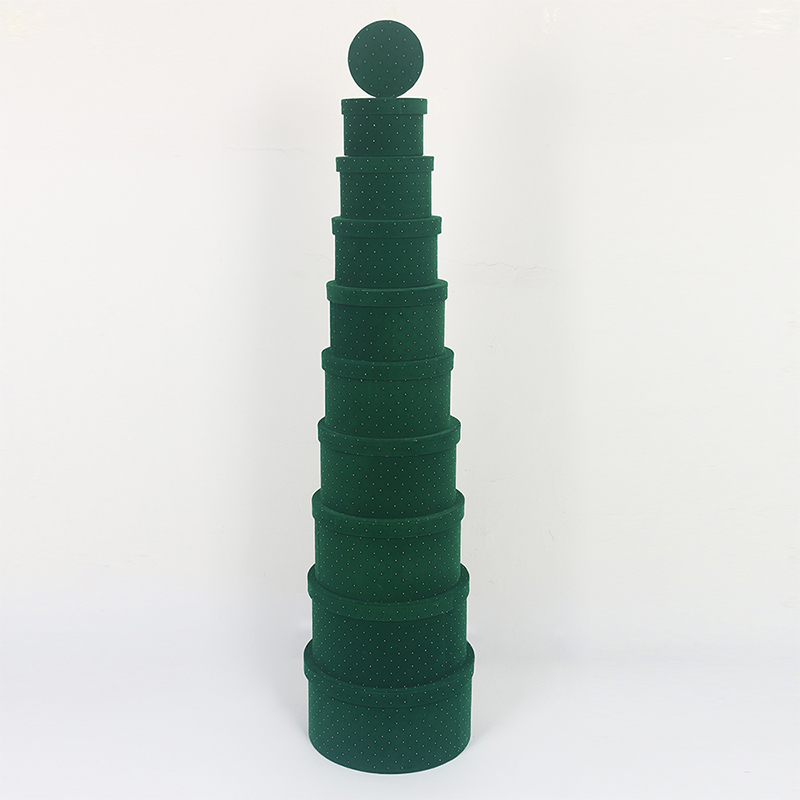
813 Cylindrical Velvet Fabric Storage Gift Box
The exterior surface is one of the most important features of the 813 gift box. Velvet fabric provides a soft and comfortable feel that immediately differentiates the product from ordinary coated paper cartons. When customers touch the box, the material reinforces the impression that the package contains something special.
Tactile quality is increasingly important in premium packaging. Customers interact with packages through sight and touch before they reach the product. A velvet-style covering creates a sensory connection that printed paper alone cannot easily reproduce. Its fine surface texture provides a gentle, smooth sensation and adds a sense of warmth to the opening experience.
The fabric surface also has strong visual potential. Color appears deeper and more dimensional on a textile surface than on a flat sheet of standard paper. Depending on the selected color and lighting conditions, the box may present a subtle sheen or a rich matte appearance. This makes the material appropriate for products positioned around luxury, elegance, celebration, personal care, fashion, lifestyle, and gifting.
Another advantage is the ability to coordinate the fabric color with a brand’s existing visual identity. Customers can request standard color references, Pantone colors, CMYK-based color specifications, or custom color development. Color matching should be evaluated using approved samples because the appearance of a color can vary according to fabric texture, lighting, production batch, and viewing conditions.
Velvet fabric can also be combined with other decorative elements. Depending on the required design, brands may consider metallic logos, printed labels, ribbons, embossing, debossing, foil accents, hangtags, interior inserts, or custom closures. Each additional process should be reviewed with the manufacturer to confirm its suitability for the curved surface and the selected material.
The 813 box uses an art paper-coated cardboard or paperboard-based structure beneath its decorative exterior. This rigid foundation gives the box stability and helps it retain its cylindrical shape during handling, storage, transportation, and display.
A rigid paperboard structure is an effective choice for premium packaging because it provides a balance between strength, appearance, weight, and manufacturability. Compared with thin folding cartons, rigid construction is less likely to collapse when used repeatedly. Compared with heavier materials, paperboard is relatively efficient to process, decorate, pack, and ship.
The board supports the outer fabric and creates a firm surface for the lid and body. This is important because a premium gift box should feel solid when lifted. A weak or flexible structure can make the package appear inexpensive, even when the outer material is attractive. The rigid body of the 813 model helps deliver a more substantial opening experience.
Paperboard construction also gives manufacturers flexibility in forming different sizes and proportions. The circular body can be produced with controlled dimensions, while the outer covering can be carefully applied to create a smooth finish. Proper alignment is especially important on cylindrical packaging because small errors may be visible around the full circumference of the box.
For customers concerned about responsible packaging, paperboard is a practical base material because it can be sourced from renewable fiber and is compatible with established recycling systems in many markets. The actual recyclability of the finished box depends on the complete material combination, including fabric, adhesives, coatings, inserts, and decorative components. Buyers should discuss material composition and recycling requirements with the manufacturer when environmental claims are important to the project.
Rectangular gift boxes remain widely used, but their familiarity can make it difficult for a new product to stand out. The cylindrical format of the 813 model provides immediate visual differentiation. It can make a product display look more varied and can help a gift collection appear more creative.
Standard printed cartons communicate through graphics, text, and color. The 813 box adds a physical experience through its velvet surface. Customers can feel the softness before opening the package, which can strengthen the perception of quality and create a more memorable interaction.
Many ordinary gift boxes are used once and then discarded. The 813 design is intended to function as a storage container after the original product has been removed. Reusability can improve customer satisfaction and give the package a longer functional life.
The color and decoration options make the box suitable for birthdays, holidays, weddings, anniversaries, corporate gifts, product launches, retail promotions, and everyday premium presentation. A single structural design can support multiple campaigns through changes in color, branding, and interior arrangement.
The availability of multiple sizes allows brands to create a family of related packages. Coordinated cylindrical boxes can be used for product bundles, gift sets, subscription programs, or collections containing items with different dimensions.
The box is not limited to the moment of gifting. It can become a container for jewelry, cosmetics, stationery, craft supplies, ribbons, small accessories, keepsakes, or other personal items. This secondary function gives the customer an additional reason to retain the packaging.
Beauty and personal care brands can use cylindrical velvet boxes for premium skincare sets, fragrance accessories, cosmetic collections, grooming products, and limited-edition releases. The soft covering supports a luxurious brand position, while the internal layout can be customized to protect bottles, jars, tubes, or accessories.
The cylindrical format can provide an attractive alternative to conventional jewelry boxes. It may be used for bracelets, scarves, hair accessories, brooches, small leather goods, fashion details, or coordinated accessory sets. Additional inserts can help secure delicate items and prevent movement during transportation.
Companies often require packaging that communicates appreciation and professionalism. A velvet storage gift box can be used for employee awards, client gifts, event souvenirs, commemorative products, or branded promotional collections. Color matching and customized branding help ensure that the package aligns with corporate identity standards.
The 813 box is suitable for wedding favors, anniversary gifts, holiday presents, and other ceremonial occasions. Soft fabric, coordinated colors, and decorative details can create a refined appearance for event-based packaging. Different sizes can be used for guest gifts, bridal party gifts, or premium invitation accessories.
Because the box can be reused as a storage container, it is well suited to stationery, writing accessories, craft tools, decorative materials, and creative gift sets. A buyer may continue using the box to organize pens, clips, threads, beads, cards, or small components after the original purchase.
With appropriate internal protection and compliance review, cylindrical packaging may be considered for selected dry goods, tea-related gifts, confectionery sets, or specialty products. Food-contact suitability should never be assumed solely from the exterior material. Brands should confirm whether an inner bag, tray, liner, or barrier is required for the intended product.
Retailers can use the box for limited editions, seasonal collections, festival packaging, and premium gift bundles. Since the exterior color can be customized, the same basic structure can be adapted for spring, winter, holiday, anniversary, or brand milestone campaigns.
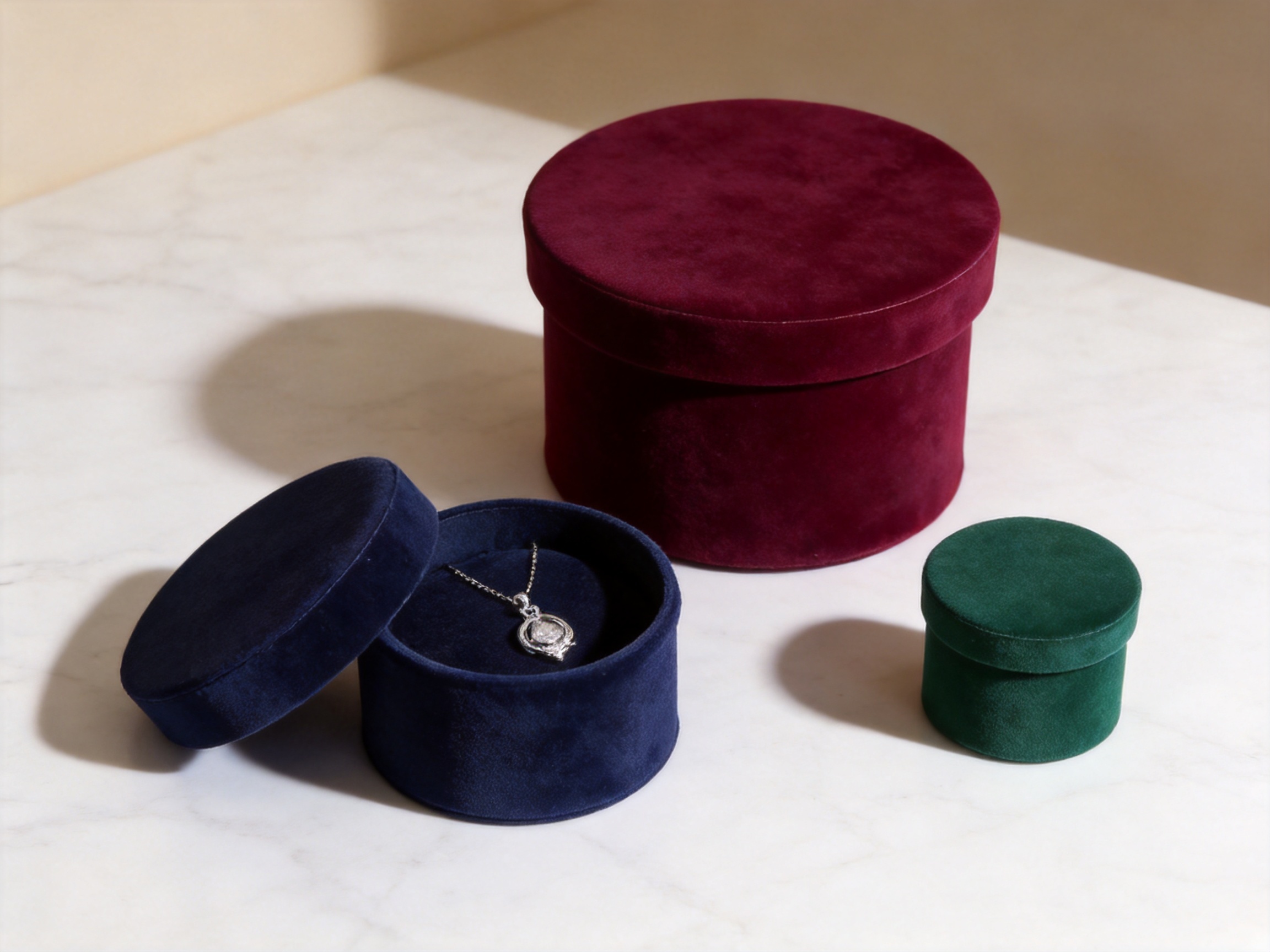
Customization is a major advantage for brands that need packaging to perform both a functional and marketing role. The manufacturer offers professional design advice through an in-house design team, while customers may also provide their own artwork and specifications.
Custom design can begin with the intended product dimensions, required protection, opening method, color palette, logo placement, interior organization, and target retail environment. The manufacturer can then evaluate whether the proposed concept is suitable for cylindrical production and recommend adjustments where necessary.
Structural options may include changes to the box height, diameter, lid construction, wall thickness, interior insert, opening style, and set configuration. The three standard sizes provide a starting point, but custom dimensions may be considered according to order requirements and manufacturing feasibility.
When developing custom dimensions, it is important to consider both the product and the customer’s hand. A box that is technically large enough for the item may still be uncomfortable to hold if the diameter is excessive. Likewise, an opening that is too tight may make the package difficult to use, while excessive clearance may allow the contents to move during transport.
Color is one of the most visible customization elements. Buyers may specify CMYK colors, Pantone references, or custom colors. For fabric-covered packaging, the approved color should be evaluated on the actual covering material rather than only on a digital screen or paper proof.
Brands should also consider the relationship between the exterior color and any printed or metallic decoration. A dark velvet surface may create strong contrast with gold or silver accents, while a lighter surface may support a softer, more understated design. The manufacturer’s design team can help evaluate combinations before mass production.
Brand marks can be incorporated in several ways depending on the material, quantity, design, and budget. Possible approaches may include a printed label, attached plaque, foil decoration, embossed element, debossed detail, ribbon, hangtag, or custom-printed insert. The selected method should be tested on a sample to confirm visual clarity and adhesion.
Because the body is curved, logos placed on the circumference should be designed with appropriate scale and spacing. A very wide mark may appear distorted when viewed from the side, while a small mark may lose visibility. The design team can help determine the most effective location, often on the lid, front-facing area, or a separate label.
The interior is just as important as the exterior. A premium package should hold the product securely and present it attractively when opened. Inserts may be designed from paperboard, foam, fabric, molded pulp, or other suitable materials, depending on the product’s fragility and presentation requirements.
An effective insert prevents excessive movement, protects sensitive surfaces, and guides the customer’s attention toward the product. For a multi-item gift set, the insert can separate individual pieces and create a logical arrangement. For a single product, it can raise the item slightly so that it is easy to remove.
Customers should provide accurate product samples or technical drawings during the development stage. Important information includes product length, width, height, diameter, weight, surface sensitivity, and any accessories packed inside. Accurate data reduces the risk of an insert that is too loose, too tight, or difficult to assemble.
The quality of a premium cylindrical gift box depends on more than the visible fabric. It is the result of coordinated material selection, structural forming, surface application, decoration, assembly, inspection, and packing. An experienced manufacturer must control each stage to maintain consistency across production batches.
Production begins with a review of the customer’s requirements. The design team examines the dimensions, materials, color references, decoration method, interior arrangement, order quantity, and delivery expectations. The team also checks whether the proposed structure can be assembled efficiently and whether the finished box will meet the intended performance requirements.
This stage is especially important for custom cylindrical packaging because the curved structure affects material cutting, covering, logo placement, lid fit, and interior insert design. Early engineering review can prevent avoidable changes after sampling begins.
The paperboard, art paper, velvet fabric, adhesives, inserts, and decorative components are selected according to the approved design. Material quality affects the strength, surface appearance, color consistency, odor, bonding performance, and long-term usability of the finished box.
The covering fabric should be evaluated for softness, density, color, surface uniformity, and resistance to handling. The paperboard should provide sufficient rigidity for the selected dimensions. Adhesives should be appropriate for bonding the selected materials without causing visible staining, lifting, bubbling, or odor problems.
The paperboard components are cut according to the approved dimensions. Accurate cutting is essential because the cylindrical body must maintain a consistent diameter and the lid must fit properly. Poor dimensional control can result in gaps, excessive tightness, uneven edges, or a box that does not sit level.
The cut components are then formed into the required cylindrical structure. During this stage, production personnel monitor roundness, vertical alignment, edge condition, and structural firmness. The objective is to create a stable base for the exterior covering.
The velvet fabric is prepared and applied to the rigid body. This process requires careful tension control. If the material is applied too loosely, wrinkles or air pockets may appear. If it is pulled too tightly, the surface may distort or the edges may become uneven.
The covering must be aligned so that the seam, edge, and decorative areas appear consistent. Production staff check for visible creases, fiber damage, adhesive marks, color variation, and exposed board. On a cylindrical product, the covering process must be consistent around the complete circumference rather than only on a flat front panel.
The lid is assembled and matched with the body. The fit should provide a secure closure while remaining comfortable for the user to open. The lid must also align visually with the cylindrical body, especially when the fabric direction, color, or logo placement is important.
Depending on the final design, additional components may be attached at this stage. These could include labels, ribbons, decorative trims, interior holders, dividers, or customized inserts. Each component should be checked for alignment and secure attachment.
Branding is completed using the approved decoration process. The production team checks position, color, registration, adhesion, surface cleanliness, and overall visual balance. On a soft fabric surface, the decoration process must be selected carefully to avoid flattening, damaging, or unevenly covering the textile fibers.
Finished boxes undergo visual and functional inspection. Typical checkpoints include dimensions, roundness, lid fit, surface cleanliness, fabric consistency, seam quality, logo position, structural stability, and packaging quantity. Products that do not meet the approved standard should be separated for correction or rejection.
For custom orders, the approved pre-production sample serves as an important reference. Buyers should retain a sample or documented approval record so that the production team can compare mass-produced goods against the confirmed design.
The standard packing arrangement is three pieces per set and 24 sets per carton. Correct packing protects the fabric surface from friction, compression, dust, and moisture during transportation. Carton loading should distribute weight evenly and avoid excessive pressure on the lids or side walls.
The listed carton dimensions are approximately 74 × 38 × 55 cm, with a volume of about 0.155 cubic meters. Buyers should confirm the final packing configuration before shipment because custom sizes, inserts, protective materials, or different quantities per carton may change the shipping volume.
The manufacturer, Zhejiang Shihao Gift Packaging Co., Ltd., is an export-oriented packaging producer with more than 15 years of experience in the design, research, development, and manufacture of paper gift packaging. Its stated facilities cover approximately 20,000 square meters and employ around 300 people.
The company operates with advanced equipment and reports an average daily production capacity of approximately 5,000 sets of gift boxes. This scale can be valuable for buyers that need stable supply, repeat production, seasonal capacity, or coordinated product launches across multiple markets.
An established factory structure can also support better communication between design, engineering, production, quality control, and shipping teams. This integrated approach helps reduce delays caused by transferring work between unrelated suppliers. It also gives customers a single manufacturing partner for structural development, material selection, decoration, assembly, and packing.
The company has its own in-house design team and updates numerous products on a regular basis. For customers that do not have a complete packaging design, this internal capability can provide support from initial concept through production preparation. For customers with existing artwork, the design team can assist with adapting files to the cylindrical structure and selected production process.
The company reports BSCI and FSC certifications. These certifications may support supplier qualification and responsible sourcing programs, although buyers should request current certification documents, scope information, and applicability to the specific order. Certification requirements often vary by market, customer, and product category.
Export experience is another important capability. The company states that its products are supplied to Europe, the United States, the Middle East, and other regions. Experience with international customers may help with export documentation, carton planning, production communication, inspection arrangements, and shipping coordination.
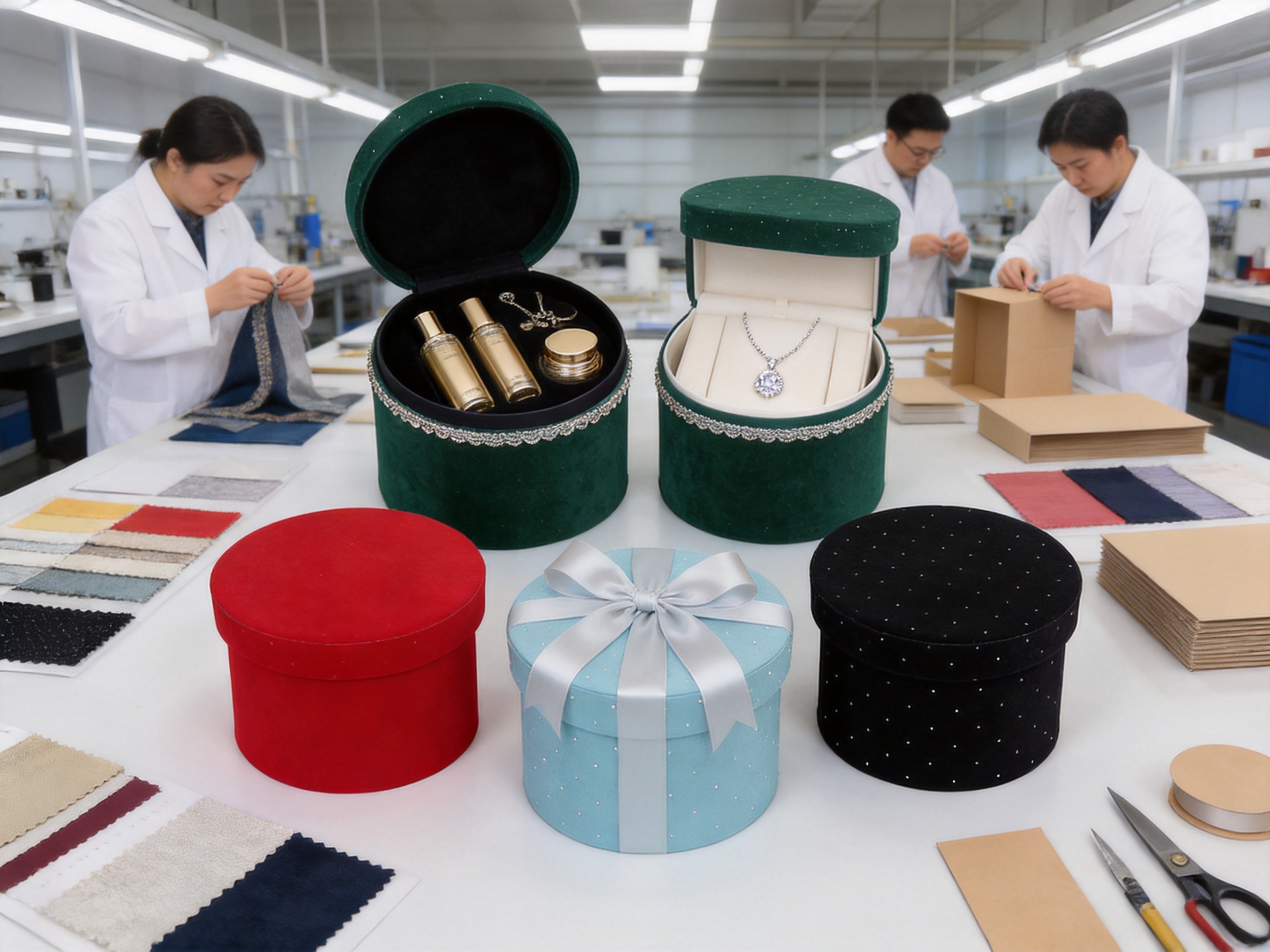
A premium gift box must look attractive at the point of sale, but its practical value depends on how well it performs during handling and repeated use. The rigid paperboard body helps the 813 model maintain its shape, while the fabric covering adds a protective and decorative layer.
Durability depends on several factors, including board thickness, adhesive quality, fabric construction, lid fit, edge finishing, product weight, and frequency of use. The box is designed for repeated use, but it should still be handled appropriately. Excessive moisture, sharp objects, heavy loads, or rough compression may damage the fabric or structure.
Velvet fabric is generally easy to maintain when treated carefully. Dust can often be removed with a soft brush or dry cloth. Spills should be addressed promptly using a gentle cleaning method recommended for the specific fabric. Harsh chemicals, excessive water, aggressive rubbing, and high heat may affect the color or texture.
For products that will be stored in humid environments, buyers should discuss moisture-resistant materials, protective inner packaging, desiccants, or special shipping requirements. The standard product description does not automatically guarantee performance in extreme humidity or temperature conditions.
Reusability is one of the product’s strongest functional benefits. Once the original contents have been removed, customers can use the cylindrical box for organization and storage. This continued use can make the packaging feel more valuable and can extend brand exposure when the box remains visible in a customer’s home, office, dressing area, or studio.
Packaging sustainability should be evaluated through the entire product life cycle rather than by focusing on one material alone. The 813 box offers several positive characteristics: it is reusable, uses a paperboard-based structure, can replace some single-use packaging formats, and may be supplied with responsibly sourced paper materials when specified and documented.
Reuse is especially important because it allows the package to provide value beyond the first opening. A customer who uses the box for storage may delay disposal and reduce the need for an additional small container. The practical storage function also makes the packaging more relevant to customers who prefer products with lasting utility.
Material separation should be considered during design. A combination of fabric, paperboard, adhesive, metal decoration, plastic components, and foam inserts may be more difficult to recycle than a simple paper carton. Buyers seeking improved end-of-life performance should discuss whether certain components can be reduced, replaced, removed, or made easier to separate.
Responsible sourcing claims should be supported by documentation. If FSC-certified paperboard is required, the buyer should confirm the certification status of the specific materials and the applicable chain-of-custody documentation. Similarly, environmental claims about adhesives, inks, coatings, or fabric should be based on verified technical information rather than assumptions.
Efficient shipping also contributes to sustainability. The cylindrical design can be stacked, and standard carton planning can help use transportation space effectively. Buyers should optimize the quantity per carton without placing excessive compression on the boxes. A well-designed packing method can reduce damage, returns, and unnecessary replacement shipments.
The standard minimum order quantity is 300 sets. This quantity is suitable for many retail launches, corporate gifting programs, seasonal collections, and promotional campaigns. Buyers should clarify whether the minimum applies to one color, one size, one design, or a combined order across multiple configurations.
Delivery time is listed as 7 to 45 days or according to customer requirements. The actual schedule may depend on design approval, sampling, material availability, order quantity, decoration complexity, production capacity, inspection, and shipping arrangements. A realistic project schedule should include time for artwork confirmation and sample approval before the formal production period begins.
To receive an accurate quotation and production recommendation, buyers should provide the following information:
1. Product dimensions, weight, and quantity.
2. Required box dimensions and preferred size option.
3. Desired fabric color and color reference.
4. Logo artwork and preferred branding method.
5. Interior insert requirements.
6. Intended market and required compliance documents.
7. Estimated order quantity and repeat-order expectations.
8. Target delivery date and destination.
9. Carton, labeling, and shipping requirements.
10. Sustainability or certification requirements.
Artwork can be supplied in Adobe Illustrator or CorelDRAW formats according to the stated design information. Vector artwork is generally preferred for logos and line graphics because it can be scaled without losing sharpness. Buyers should ensure that text is converted to outlines or that the required fonts are supplied.
A physical sample is recommended before mass production, especially when the order involves custom colors, curved-surface branding, delicate products, or multiple interior components. The sample allows the buyer to assess the actual fabric, color, dimensions, lid fit, decoration, and product presentation.
Sample approval should be documented clearly. Any changes requested after approval may affect the cost or schedule. Buyers should also understand that minor variation may occur between a sample and mass production due to material batches, production conditions, and color characteristics. The acceptable tolerance should be discussed in advance.
Premium packaging contributes to brand value in several ways. First, it creates a strong first impression. A distinctive cylindrical form and soft fabric surface can make the product appear more carefully designed before the customer even sees the contents.
Second, packaging can communicate positioning. A brand selling a premium product must ensure that its presentation supports the expected price and quality. A rigid velvet-covered box can reinforce messages of elegance, care, exclusivity, and attention to detail.
Third, the box can support social sharing and word-of-mouth promotion. Customers are more likely to photograph or retain packaging that looks unusual and attractive. A memorable unboxing experience can therefore generate additional exposure through personal recommendations and online content.
Fourth, reusability keeps the brand present after the initial purchase. If the box is used on a desk, shelf, dressing table, or storage area, the customer may continue to see the brand mark or color scheme. This repeated visibility can strengthen recognition without requiring additional advertising space.
Finally, a coordinated packaging family can make a brand appear more organized and professional. Different sizes, colors, and interior configurations can be developed from the same cylindrical concept, giving a product range a consistent visual language.
| Packaging Option | Main Strength | Potential Limitation | Positioning |
| Standard Folding Carton | Lightweight and economical | Usually less rigid and less reusable | Mass-market and efficient |
| Plain Rigid Paper Box | Strong and stable structure | May offer less tactile distinction | Premium and versatile |
| Plastic Container | Moisture resistance and durability | May have weaker environmental perception | Functional and protective |
| Wooden Box | Very solid and distinctive | Heavier, potentially more expensive, and less efficient to ship | Luxury and specialty use |
| 813 Velvet Cylindrical Box | Soft tactile surface, rigid structure, reusable design, and distinctive shape | Requires careful material and surface care | Premium gifting and reusable storage |
The 813 model is not intended to replace every packaging format. Its strongest position is in applications where appearance, tactile quality, presentation, and reuse are more important than the lowest possible unit cost. It is particularly appropriate for products that benefit from an elevated gift experience.
To preserve the appearance of the finished box, keep it away from prolonged exposure to water, high humidity, direct heat, and strong sunlight. Store empty boxes in a clean, dry environment with sufficient ventilation. Avoid placing heavy objects on top of the cylindrical body or lid.
When cleaning, use a soft, dry cloth or a fabric-appropriate brush. Test any cleaning method on an inconspicuous area before treating the visible surface. Do not saturate the paperboard structure with water, as moisture may weaken the board or affect adhesive bonding.
For retail display, avoid sharp shelves or rough surfaces that may snag the fabric. If boxes are stacked, ensure that the stack is stable and does not exceed the recommended height for safe handling. During internal warehouse movement, use protective dividers or sleeves if the surface is likely to rub against other products.
It is designed for gift packaging, storage, gifts, crafts, retail presentation, promotional products, seasonal collections, and premium product sets. Its reusable structure allows customers to continue using the box after opening the original gift.
The product information identifies an art paper-coated cardboard or paperboard surface and describes a velvet fabric exterior. In practical terms, the product should be understood as a rigid paperboard-based cylindrical box with a decorative velvet-style fabric covering. Buyers should confirm the exact material composition and thickness for a specific order.
The listed sizes are approximately 18 × 17 cm, 16 × 15 cm, and 13.5 × 13.5 cm. Buyers should confirm whether these measurements are internal or external and should provide product dimensions before finalizing the structure.
Yes. Available color options include CMYK, Pantone colors, and customized colors. A physical color sample or approved production swatch is recommended because fabric texture and lighting can influence the final appearance.
Custom branding may be developed according to the selected design and decoration process. Possible options can include labels, printed elements, foil details, embossed or debossed effects, ribbons, and other components. The manufacturer should evaluate the logo placement and decoration method on the curved fabric-covered surface.
Interior inserts and holders can be considered for individual products or multi-item gift sets. Buyers should provide accurate product measurements, weight, fragility information, and presentation preferences so that the insert can be designed correctly.
Yes. The rigid cylindrical structure and durable exterior are intended to support repeated use. Customers can use the box to store stationery, accessories, craft materials, keepsakes, cosmetics, or other small objects.
The stated minimum order quantity is 300 sets. Buyers should confirm whether the minimum applies separately to each color, size, and design.
The standard packing information states three pieces per set and 24 sets per carton. This means a standard carton may contain 72 individual boxes, subject to confirmation for the final configuration.
The listed delivery time is 7 to 45 days or according to customer requirements. The final schedule depends on design approval, material preparation, order quantity, production planning, inspection, and shipping arrangements.
The stated export port is Ningbo, although another port may be arranged according to customer requirements and the shipping plan.
Yes. The company has an in-house design team and welcomes custom designs. Customers may provide artwork in Adobe Illustrator or CorelDRAW formats, while the design team can also provide professional advice during development.
The exterior packaging may be considered for selected food gift applications, but food-contact suitability should not be assumed. Buyers must confirm the need for inner liners, bags, trays, barriers, or compliance documentation according to the product and destination market.
Buyers should confirm the exact dimensions, material composition, color, decoration, interior insert, quantity, packing method, delivery schedule, certification requirements, and inspection standard. A pre-production sample is strongly recommended for customized orders.
Developing a premium gift box involves many technical details that are not always visible in a product photograph. An experienced manufacturer understands how paperboard, fabric, adhesives, decoration, and assembly interact. This knowledge helps prevent problems such as uneven covering, poor lid fit, color inconsistency, weak bonding, distorted logos, and inefficient packing.
A factory with design and production capabilities under one organization can also shorten the communication path. Instead of sending structural questions to one supplier and decorative questions to another, the buyer can work with a coordinated team. This is especially useful when the product requires custom dimensions or a complex interior.
Large-scale production capability may provide additional advantages for repeat orders. Once the design, materials, and quality standard have been confirmed, the manufacturer can use established production references for subsequent batches. This can improve consistency and support expansion into new colors, sizes, or product collections.
Export experience is equally valuable. International packaging orders involve more than manufacturing. They may require careful carton measurements, shipping marks, documentation, inspection coordination, and communication across time zones. A supplier accustomed to export business is better positioned to support these requirements.
The 813 Cylindrical Velvet Fabric Storage Gift Box offers a strong combination of visual elegance, tactile appeal, structural stability, and long-term usefulness. Its cylindrical form differentiates it from conventional packaging, while the velvet-style exterior creates a premium experience that customers can see and feel.
The rigid paperboard construction supports the box during handling and repeated use. Multiple sizes, flexible color selection, custom design support, and potential interior customization make the model suitable for many industries and occasions. Its ability to become a storage container after gifting adds practical value and supports a more reusable approach to packaging.
For brands, the product provides more than a protective container. It can function as part of the product presentation, a retail display element, a promotional tool, and a continuing reminder of the brand in the customer’s daily environment. Compared with ordinary folding cartons, it offers greater tactile distinction and a more memorable shape. Compared with heavier specialty containers, it can provide a more efficient paperboard-based alternative.
The manufacturer’s experience, in-house design team, reported production capacity, export background, and certification programs provide a foundation for developing customized orders. Buyers should confirm all technical details, request samples, and establish clear quality standards before mass production. With appropriate design and manufacturing control, the 813 model can help businesses deliver a more refined unboxing experience while giving customers a package they can continue to use.
1. Product specification information for the 813 cylindrical velvet fabric storage gift box, including dimensions, material, color, packing, and ordering details.
2. Company-provided manufacturing profile for Zhejiang Shihao Gift Packaging Co., Ltd., including factory experience, production capacity, design services, export markets, and certification information.
3. General packaging engineering principles for rigid paperboard boxes, cylindrical structures, decorative fabric application, and protective inserts.
4. General guidance on reusable packaging design, material selection, storage performance, and end-of-life considerations.
5. General quality-control practices for customized gift packaging, including sample approval, dimensional inspection, surface inspection, assembly checks, and shipping preparation.
Recommended Products

Contact Us

No. 15, Xiayang Road, Huangzhai Town, Jinhua, Zhejiang, China

(+86) 579-84230069

(+86) 13085675766


Products

Gift Box Packaging Manufacturer
 English
 Français
 Español
 عربى