2026-09-21
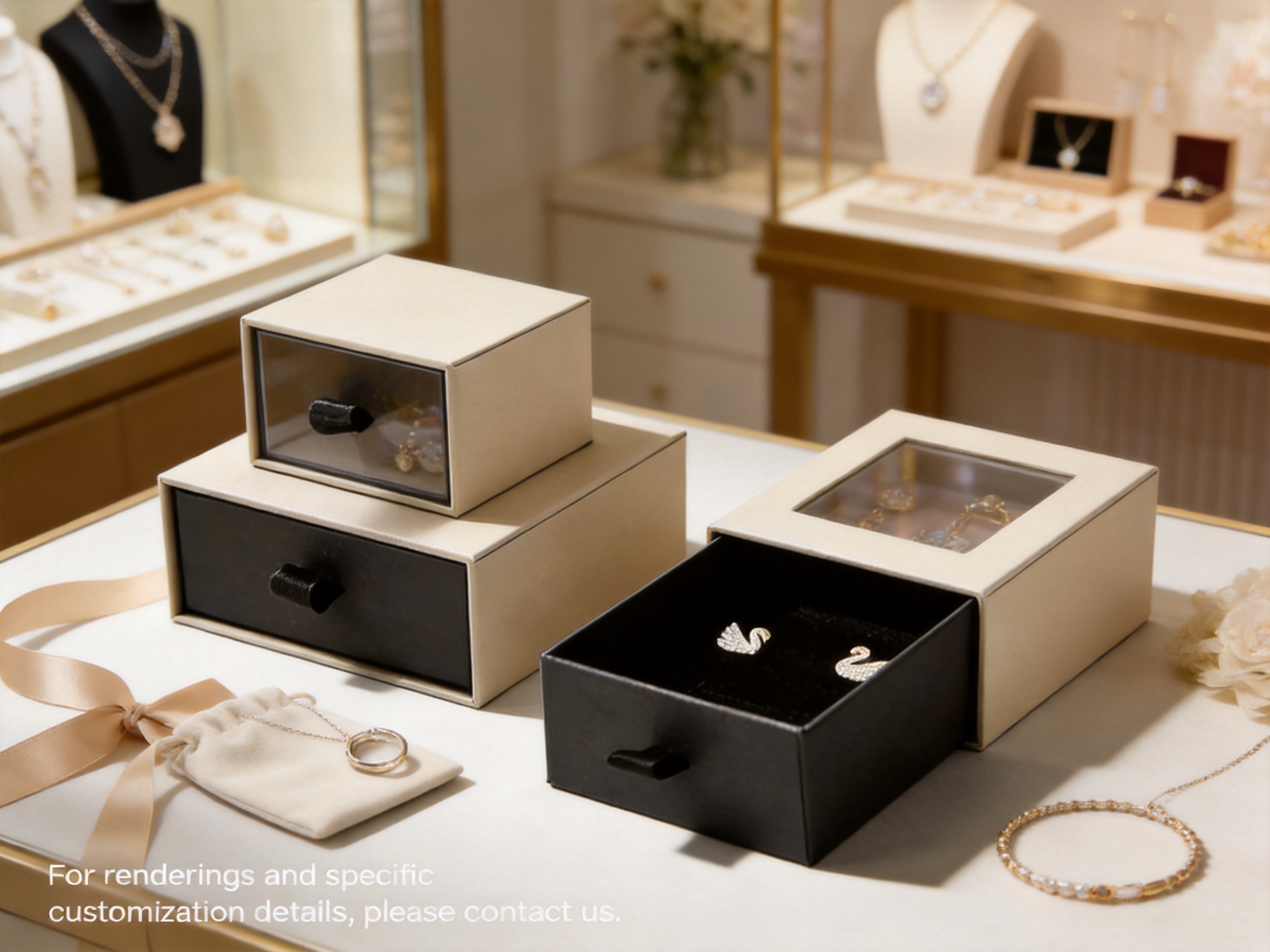
Jewelry packaging is far more than a container. It is the first physical point of contact between a customer and a jewelry brand, and it plays an important role in shaping perceptions of value, quality, and care. A well-designed jewelry box protects delicate products during storage and transportation while also creating a memorable presentation moment when the package is opened. The SHJGB-02 Paper Jewelry Pull-out Box is designed to meet these requirements through a combination of rigid paper construction, a practical side-opening drawer format, and a high-transparency viewing window.
Designed for rings, necklaces, bracelets, and other small jewelry items, this pull-out box provides a refined alternative to ordinary folding cartons and basic presentation cases. Its compact structure makes it suitable for retail displays, e-commerce orders, promotional campaigns, seasonal collections, and customized gift programs. At the same time, its interior can be adapted with plush velvet, precision-cut EVA, or other protective inserts to accommodate different jewelry shapes and presentation requirements.
The box is available in sky blue, beige, and gray, with several size options intended for different types of jewelry and product arrangements. Its external surface can also be customized through printing, foil stamping, embossing, and other finishing techniques. These options allow businesses to transform a functional package into a recognizable extension of their visual identity.
Behind the product is a professional manufacturing organization with more than 15 years of experience in paper gift packaging. The company operates a 20,000-square-meter production site, employs approximately 300 people, and maintains an average daily production capacity of about 5,000 gift box sets. Its design, research, production, and export capabilities support both standard packaging programs and specialized customer projects.
Jewelry is often small, delicate, high-value, and emotionally significant. A package must therefore address several challenges at the same time. It must prevent movement, reduce the risk of surface damage, present the product attractively, and remain sufficiently durable during handling. Jewelry packaging must also support a premium experience without creating unnecessary complexity for retailers, brands, or end users.
Many ordinary paper boxes provide only limited protection. A simple carton may prevent dust from reaching the product, but it may not hold a ring securely or stop a necklace from shifting during delivery. Other boxes may offer strong protection but lack visual appeal, making the product presentation feel generic. The SHJGB-02 addresses these concerns by combining a rigid paper body, a structured pull-out mechanism, and a customizable interior.
The side-opening drawer format creates a controlled and deliberate opening movement. Instead of lifting a loose lid or unfolding multiple panels, the customer pulls the inner section outward to reveal the jewelry. This motion helps create an organized unboxing sequence and can make a small product feel more substantial. The structure is especially effective for gift packaging because it adds a sense of ceremony without requiring complicated assembly by the user.
The viewing window is another important feature. It allows the jewelry to remain visible while inside the box, which can be useful for retail display, inventory identification, and gift presentation. Customers can see the product before opening the package, while the transparent section helps keep the jewelry as the visual focus. When combined with a carefully selected insert and premium surface finishing, the window can create a display effect that is both practical and luxurious.
The box is made from high-quality rigid paper materials designed to provide a firm and stable structure. Compared with lightweight folding cartons, rigid paper packaging generally offers a more substantial hand feel and greater resistance to deformation. This is particularly valuable for jewelry because the packaging should communicate security and quality before the customer even sees the product.
A rigid structure also supports a more consistent appearance on shelves and during shipping. The box can maintain its shape when properly packed and handled, helping reduce the risk of a tired, crushed, or low-value presentation. For jewelry brands, this structural quality is important because packaging damage can negatively affect the perceived condition of the product inside.
The pull-out drawer design gives the box a distinctive functional identity. Its side-opening format separates it from conventional top-opening boxes and creates a more engaging customer interaction. The internal section can be pulled out smoothly to display the jewelry, while the outer shell remains a protective frame around the presentation area.
This format is suitable for many commercial applications. It can be used for individual jewelry sales, branded gift sets, wedding and anniversary products, limited-edition collections, corporate gifts, and seasonal promotions. The drawer structure can also be coordinated with printed messaging, brand colors, collection names, or product information to make the opening experience more coherent.
The high-transparency viewing window allows the jewelry to remain visible without requiring the box to be fully opened. This feature can support product display in boutiques, counters, trade show environments, and online order fulfillment operations. Staff can identify the contents more easily, while customers can immediately understand what the package contains.
Visibility is particularly useful for gift occasions. A purchaser may want to verify the jewelry before giving it to someone else, while the recipient can see the product as part of the initial presentation. The window also reduces the need to open and close the box repeatedly during retail handling, which can help preserve the appearance of the package.
The interior can be designed around the jewelry being packaged. Plush velvet inserts can create a soft, traditional jewelry presentation, while precision-cut EVA inserts can provide a more exact fit and enhanced resistance to movement. The appropriate choice depends on the product type, desired appearance, target price, and protection requirements.
Ring slots, necklace channels, bracelet supports, and multi-piece compartments can be incorporated into the internal layout. A custom insert helps keep each item positioned correctly, reducing unnecessary movement and potential contact between jewelry pieces. It also improves the visual order of the presentation, which is important when the box is opened in front of a customer or gift recipient.
The SHJGB-02 is available in several dimensions: 5 by 5 by 3.5 centimeters, 7.5 by 7.5 by 3.5 centimeters, 7 by 9 by 3.5 centimeters, and 9 by 9 by 3.5 centimeters. These options allow buyers to select a format suitable for different products and presentation requirements.
The smaller size may be appropriate for individual rings, small pendants, or compact promotional jewelry. Medium formats can accommodate larger ring arrangements, earrings, or selected necklace designs. The larger square option can provide additional room for bracelets, coordinated sets, or a more spacious presentation. Exact suitability depends on the jewelry dimensions and the required insert design, so sampling is recommended before mass production.
Sky blue, beige, and gray are available as standard color choices. Sky blue can create a fresh, light, and contemporary impression. Beige offers a warm and understated appearance that may work well with classic or natural brand identities. Gray provides a neutral, modern, and versatile foundation for both minimalist and premium designs.
Color is not merely decorative. It can influence how customers interpret the product and can help organize different collections or price levels. A brand may use one color for everyday jewelry, another for wedding products, and a third for limited editions. Additional customization may be possible depending on the selected production process, materials, order quantity, and artwork requirements.
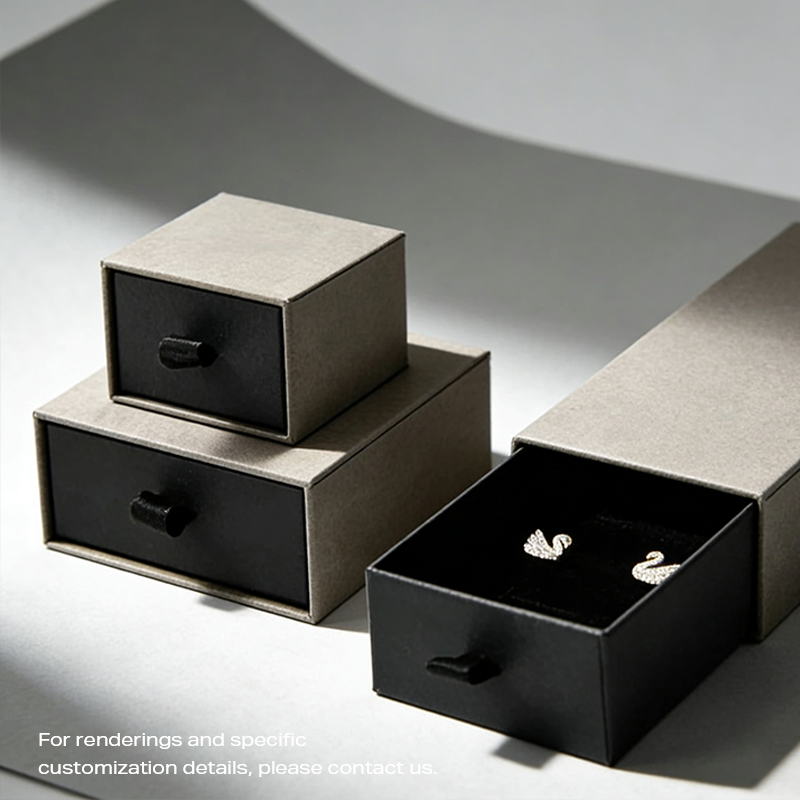
SHJGB-02 Paper Jewelry Pull-out Box
Basic folding cartons are often selected because they are economical and easy to store. However, they may lack the rigidity and tactile quality expected for premium jewelry. The SHJGB-02 offers a more substantial structure, giving the customer a stronger impression of value and care. Its drawer movement and viewing window further distinguish it from an ordinary printed carton.
For brands selling jewelry as a gift, presentation quality can influence the customer’s perception of the entire purchase. A stronger box may help communicate that the product deserves special attention. This can be especially valuable for engagement rings, anniversary jewelry, personalized pieces, and products positioned as luxury or semi-luxury gifts.
Traditional lift-off boxes have a familiar structure, but the opening experience can be relatively predictable. The pull-out drawer introduces a different interaction. The customer engages with the package through a smooth outward movement, gradually revealing the product. This can make the unboxing experience feel more intentional and can help a brand stand out in a crowded market.
The drawer design may also be easier to integrate into visual merchandising. A partially opened box can display the product while maintaining the overall identity of the packaging. In a retail setting, several boxes can be arranged with their windows facing forward, allowing the products to remain visible without exposing them completely.
Many closed jewelry boxes require the lid to be opened before the contents can be identified. The viewing window of the SHJGB-02 provides an immediate visual connection with the product. This is an advantage for both customers and retail staff, particularly when multiple styles, colors, or sizes are being handled at the same time.
Visibility can also improve the gifting process. A customer can confirm that the correct item is inside, and the recipient can appreciate the jewelry before operating the drawer. When the insert, artwork, and window are designed together, the package can function as a small display case rather than merely a transport container.
Generic jewelry boxes often include a fixed interior that works for only a narrow range of products. The SHJGB-02 can be adapted to different jewelry categories through custom inserts. This makes it easier for a brand to maintain a consistent exterior package while changing the internal support for rings, necklaces, bracelets, or mixed sets.
Interior customization also creates opportunities for better brand presentation. Velvet can provide a soft and traditional look, while EVA can be shaped to create clean, precise, modern compartments. The insert color can be coordinated with the outer paper, logo treatment, or product collection. This level of customization helps reduce the visual gap between packaging and product design.
Jewelry is frequently connected with personal stories, celebrations, milestones, and emotional occasions. Packaging should be able to support those associations. The SHJGB-02 can be customized with printed graphics, messages, patterns, collection information, and brand identifiers, allowing the package to contribute to the product story.
A carefully designed box can communicate themes such as romance, elegance, sustainability, heritage, modernity, or craftsmanship. The packaging may include a short message inside the drawer, a care instruction card, or a visual motif that connects the jewelry to a broader campaign. This gives the box a role in customer communication rather than limiting it to protection.
For businesses seeking more responsible paper packaging solutions, FSC-certified materials and printing programs may be incorporated where applicable. FSC certification relates to responsible forest management and can help businesses support more transparent material sourcing. It may also assist brands in communicating environmental commitments to customers and commercial partners.
Sustainability claims should always be based on the exact materials, certifications, and production arrangements used for a specific order. Buyers should confirm the certification scope, approved artwork, and documentation requirements during the quotation and sampling stages. When properly specified, responsibly sourced paper can support both environmental objectives and premium visual presentation.
Foil stamping can be used to add metallic or specialty accents to logos, names, borders, decorative patterns, and product information. Gold, silver, rose gold, and other effects may be considered depending on the selected material and production process. Foil is particularly effective on jewelry packaging because metallic details can echo the appearance of the jewelry itself.
Foil stamping should be applied with restraint. A small logo or thin border may create a more refined effect than covering the entire surface with metallic decoration. The final appearance depends on paper color, artwork size, line thickness, foil type, pressure, temperature, and registration accuracy. A physical sample is recommended for important projects.
Embossing raises selected areas of the paper surface, while debossing presses them inward. These techniques create a tactile dimension that customers can feel as well as see. They can be used for logos, symbols, patterns, monograms, or collection names.
Embossing is well suited to understated premium packaging. Even when the color contrast is low, the change in surface height can produce a visible effect under different lighting conditions. When combined with foil stamping, it can create a layered finish in which the logo is both tactile and reflective.
Full-color printing allows packaging buyers to create a distinctive visual identity. Patterns, illustrations, photographs, gradients, and restrained typography can all be considered depending on the brand’s positioning. The available sky blue, beige, and gray colors can act as a starting point, while custom printed artwork can provide greater differentiation.
Good packaging artwork should account for the drawer structure, window position, folds, seams, and insert placement. Important text and logos should not be positioned where they may be hidden or interrupted. The design team should also review color consistency, image resolution, bleed areas, and the effect of finishing processes before production begins.
| Product Name | SHJGB-02 Paper Jewelry Pull-out Box |
| Product Category | Jewelry Gift Box |
| Structure | Side-opening pull-out drawer with a high-transparency viewing window |
| Primary Material | High-quality rigid paper |
| Available Colors | Sky blue, beige, and gray |
| Available Sizes | 5 × 5 × 3.5 cm; 7.5 × 7.5 × 3.5 cm; 7 × 9 × 3.5 cm; 9 × 9 × 3.5 cm |
| Interior Options | Custom-fitted plush velvet or precision-cut EVA inserts |
| Suitable Products | Rings, necklaces, bracelets, and other small jewelry items |
| Customization | Printing, foil stamping, embossing, insert design, and other finishing options |
| Typical Uses | Retail jewelry, gifts, e-commerce orders, promotional collections, and seasonal packaging |
A major advantage of working with an experienced packaging manufacturer is the ability to connect product design with production planning. Jewelry packaging is affected by many details, including board thickness, window placement, drawer tolerances, insert dimensions, finishing registration, and packing methods. When these factors are reviewed together, the risk of avoidable production problems can be reduced.
The manufacturer behind the SHJGB-02 maintains its own design team and updates dozens of products weekly. This indicates an active approach to product development rather than relying only on a fixed catalog. A design-oriented manufacturing partner can help buyers evaluate structure, artwork, material selection, and presentation objectives before a project moves into mass production.
The company operates across approximately 20,000 square meters and employs around 300 people. This scale supports the coordination of material preparation, printing, forming, assembly, inspection, and packing. It also provides a foundation for handling different order sizes and a broad range of paper gift packaging categories.
The stated average daily production capacity is approximately 5,000 sets of gift boxes. Capacity is only one part of manufacturing performance, but it can be important for customers managing product launches, seasonal demand, retail replenishment, and promotional campaigns. Buyers should still confirm actual lead times based on order quantity, material availability, finishing complexity, and production schedules.
The company is an export-oriented manufacturer serving Europe, the United States, the Middle East, and other regions. International packaging production requires attention to more than appearance. It may involve export packing, documentation, material requirements, product protection during long-distance transportation, and communication across different time zones and business practices.
Experience with international customers can help a manufacturer understand the importance of clear specifications, approved samples, inspection procedures, and reliable shipment preparation. For jewelry brands that operate across multiple markets, this experience may simplify the process of creating packaging for different distribution channels.
The company has passed BSCI and FSC certifications. BSCI is associated with social compliance and ethical business practices in supply chains, while FSC certification supports responsible forest management and traceability for relevant forest-based materials. Certification details should be verified for the specific facility, product, material, and order scope.
Responsible manufacturing is increasingly important in the packaging industry. Buyers are evaluating not only how a box looks but also how it is sourced, produced, packed, and disposed of. Paper-based rigid packaging can support sustainability strategies when responsibly sourced materials, efficient structures, appropriate inks, and practical shipping methods are selected.
The company emphasizes research, development, and continuous product updates. In packaging, research and development can involve new box structures, improved drawer movement, more efficient material use, updated insert systems, refined finishing methods, and designs suitable for changing market trends.
For a jewelry brand, an active R&D partner can be valuable when the company needs packaging for a new collection or wants to refresh an existing product line. The manufacturer may be able to adapt a proven structure while changing the size, insert, color, finish, or printed artwork. This approach can offer more efficiency than developing every packaging component from the beginning.
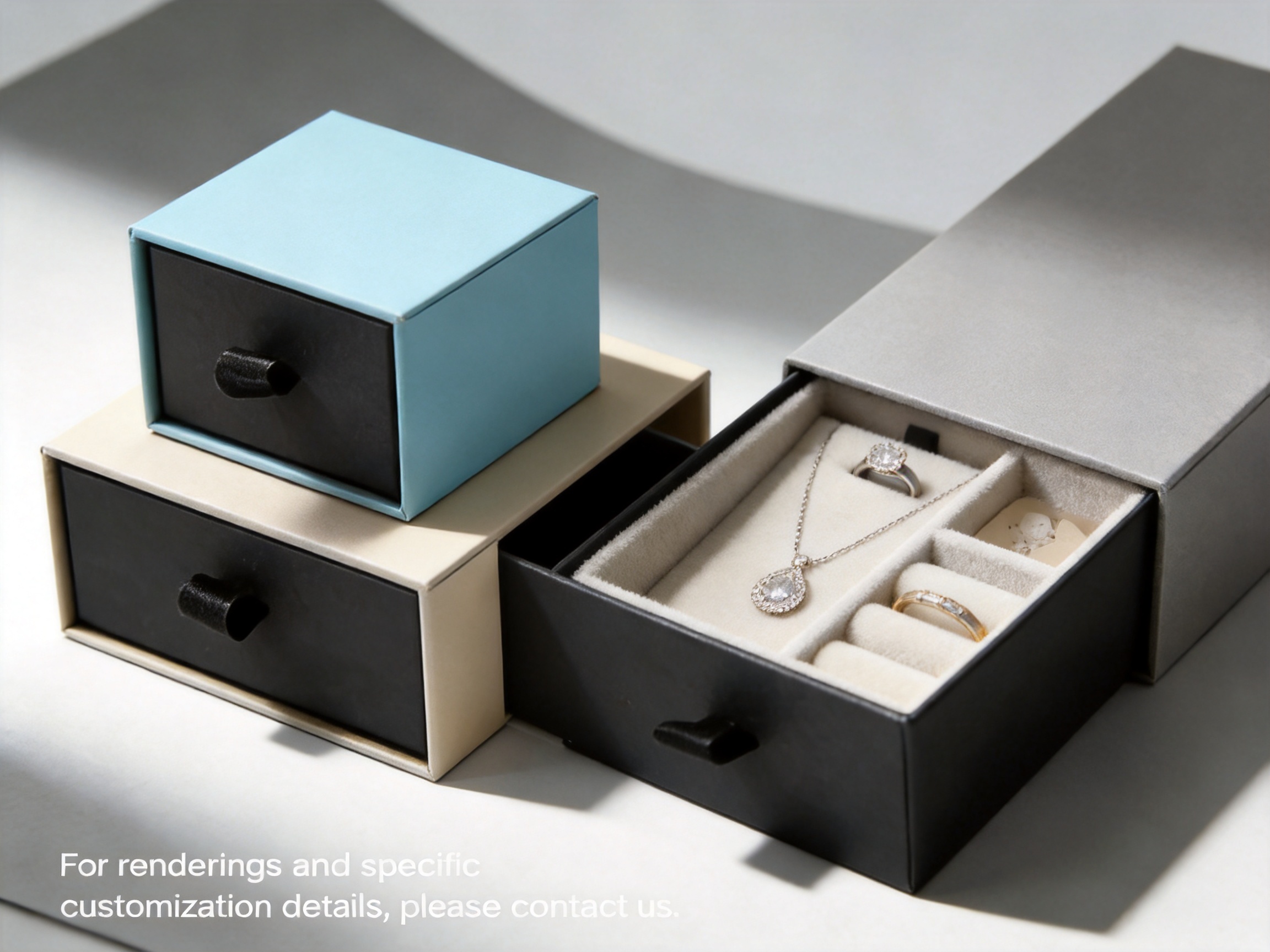
The process begins with a review of the jewelry product and the intended market. The buyer should provide the jewelry dimensions, weight, quantity per box, display expectations, shipping conditions, preferred materials, color requirements, artwork, and target price. Information about rings, necklaces, bracelets, or mixed sets will influence the insert design and internal structure.
At this stage, the manufacturer can also clarify whether the box is intended for retail display, online shipping, luxury gifting, promotional distribution, or a combination of uses. Each application may have different priorities. A boutique display box may emphasize visibility and surface finishing, while an e-commerce package may require more attention to internal stability and outer shipping protection.
After the requirements are understood, the structural design is developed around the selected size and drawer configuration. The manufacturer reviews the dimensions of the outer shell, inner tray, viewing window, pull-out clearance, and insert. The design should balance a secure fit with smooth operation.
Drawer movement is especially important. If the fit is too tight, the customer may find the box difficult to open. If it is too loose, the drawer may move during transport or fail to create a premium impression. Sampling allows the manufacturer and buyer to evaluate these details physically and make adjustments before mass production.
Paperboard, rigid paper components, window materials, insert materials, adhesives, and finishing elements are selected according to the project requirements. Material choices affect stiffness, surface appearance, weight, print quality, sustainability credentials, and production cost.
The insert must provide both support and visual harmony. Velvet may be selected for its soft touch and traditional jewelry association. EVA may be chosen when a precise shape, clean edges, and firm retention are more important. The insert color and texture should complement the jewelry and the exterior design rather than competing with the product.
Once the structural design and materials are approved, printed components can be prepared. Artwork is checked for size, color, placement, and compatibility with the box structure. Foil stamping, embossing, debossing, or other effects may be added according to the approved specifications.
Finishing operations require careful control because small jewelry boxes often contain fine details and limited surface area. A slightly misplaced logo or uneven metallic line can be more noticeable on a compact package. Production teams therefore need to coordinate artwork files, tooling, printing, and finishing registration.
The transparent viewing window is installed as part of the box assembly. Its position must align with the jewelry presentation area and remain securely attached during normal handling. The window should be clean and clear, without visible contamination that could reduce the visual quality of the product display.
The rigid paper components are then formed and assembled into the outer shell and drawer. The production team checks corner alignment, surface condition, drawer fit, and overall appearance. Depending on the order, assembly may include the installation of custom inserts, ribbons, labels, cards, or other accessories.
Finished boxes should be inspected for structural defects, printing issues, surface marks, window clarity, insert accuracy, and drawer function. Sample-based or order-specific inspection criteria can be agreed upon before production. This is particularly important for products with high-visibility finishes or complex custom inserts.
After inspection, the boxes are packed to reduce the risk of compression, scratching, moisture exposure, or movement during transportation. Export orders may require additional carton protection and pallet planning. The final packing method should reflect the shipping distance, handling conditions, and customer receiving process.
Dimensional accuracy affects the fit of both the jewelry and the drawer. A box that is too small may damage the insert or place pressure on the product. A box that is too large may allow movement and reduce the quality of the presentation. Consistent dimensions also help brands maintain a uniform appearance across multiple product batches.
The drawer should open smoothly and close securely. The pull-out movement should not cause the inner tray to tilt or catch on the outer shell. Buyers should test the box with the actual insert and jewelry because the weight and friction of the finished configuration may differ from an empty sample.
The outer surface should be reviewed for color consistency, clean edges, accurate logo placement, and freedom from visible scuffs or stains. If a project includes foil or embossing, the relief and metallic effect should be checked under normal retail lighting. A signed or approved sample can serve as a reference for mass production.
The insert should hold the jewelry securely without causing pressure marks or making removal unnecessarily difficult. Ring slots should be appropriately sized, necklace channels should minimize tangling, and bracelet supports should prevent excessive movement. The insert must also remain properly positioned inside the drawer during repeated opening and closing.
The viewing window is central to the presentation, so its clarity and alignment should be inspected carefully. Scratches, bubbles, dust, or wrinkles can distract from the jewelry. The window should also remain securely attached during normal use and transportation.
The SHJGB-02 can be used for jewelry sold through independent boutiques, department stores, specialty retailers, and branded counters. The viewing window helps display the product, while the pull-out structure provides an attractive customer interaction. A consistent box design can also help organize a complete collection across different jewelry categories.
Online customers cannot physically examine packaging before purchase, so the unboxing experience becomes especially important. A well-constructed drawer box can help create a positive first impression when the order arrives. The custom insert can reduce movement during delivery, while the rigid paper structure supports a more premium experience than a simple mailer or thin carton.
For e-commerce use, the jewelry box may need to be placed inside an additional shipping carton or protective mailer. The box itself is designed for presentation and product organization, but the complete shipping system should be evaluated separately. Outer packaging, cushioning, and moisture protection may be required depending on the transportation route.
Jewelry associated with weddings, engagements, anniversaries, birthdays, and other milestones benefits from packaging with a strong ceremonial quality. The drawer opening can create a gradual reveal, while foil stamping or embossing can add a personal or celebratory detail. The box may also be customized with dates, initials, short messages, or collection-specific artwork.
Companies may use jewelry or small accessories as awards, commemorative gifts, employee recognition items, or promotional products. A customized box can communicate the importance of the occasion and provide a practical way to protect the item. The external surface can be coordinated with corporate colors, event themes, or campaign graphics.
Seasonal packaging can create urgency and visual distinction. A jewelry brand may use different colors, patterns, inserts, or finishing effects for holiday collections, spring launches, cultural celebrations, or limited editions. Because the basic drawer structure is versatile, the exterior design can change without requiring a completely different packaging concept.
The package should be designed around the actual jewelry rather than a general product category. Buyers should provide accurate measurements, including the longest, widest, and highest points of the product. They should also explain whether the jewelry includes chains, charms, stones, clasps, tags, or protective wrapping.
The interior should match the jewelry’s physical characteristics and the intended visual style. Velvet is often associated with softness and classic luxury, while EVA can offer precise shaping and a clean modern appearance. If several jewelry types will share the same box, the insert may require a multi-purpose layout or removable components.
Finishing can make packaging more distinctive, but decoration should not interfere with usability. The drawer must remain easy to open, the window must remain clear, and printed information must be legible. A restrained combination of color, texture, foil, and embossing may be more effective than using every available technique at once.
A physical sample allows the buyer to evaluate proportions, color, material feel, insert fit, window clarity, and drawer performance. Digital renderings are useful during early design, but they cannot fully show the stiffness of the paper, the friction of the drawer, or the tactile effect of embossing.
Before approving the order, the buyer should confirm minimum quantities, production lead time, sample charges, artwork requirements, packing methods, inspection standards, and shipping terms. If the packaging is intended for a product launch, sufficient time should be reserved for revisions and approval.
Paper-based packaging can support sustainability goals when the materials and manufacturing process are selected responsibly. The use of paper allows brands to create a premium structure without relying exclusively on plastic cases. FSC-related material options may support responsible sourcing, while durable packaging can encourage customers to reuse the box for jewelry storage.
The box’s storage value is particularly relevant. Because the design is rigid and visually attractive, customers may keep it after the initial purchase to protect jewelry at home or during travel. Continued use can extend the practical life of the package and reinforce the connection between the customer and the brand.
Sustainability should be evaluated across the complete packaging system. Material source, coatings, adhesives, inserts, window components, shipping cartons, and end-of-life handling all contribute to the overall impact. Buyers should discuss material composition and recycling considerations with the manufacturer rather than relying on general assumptions.
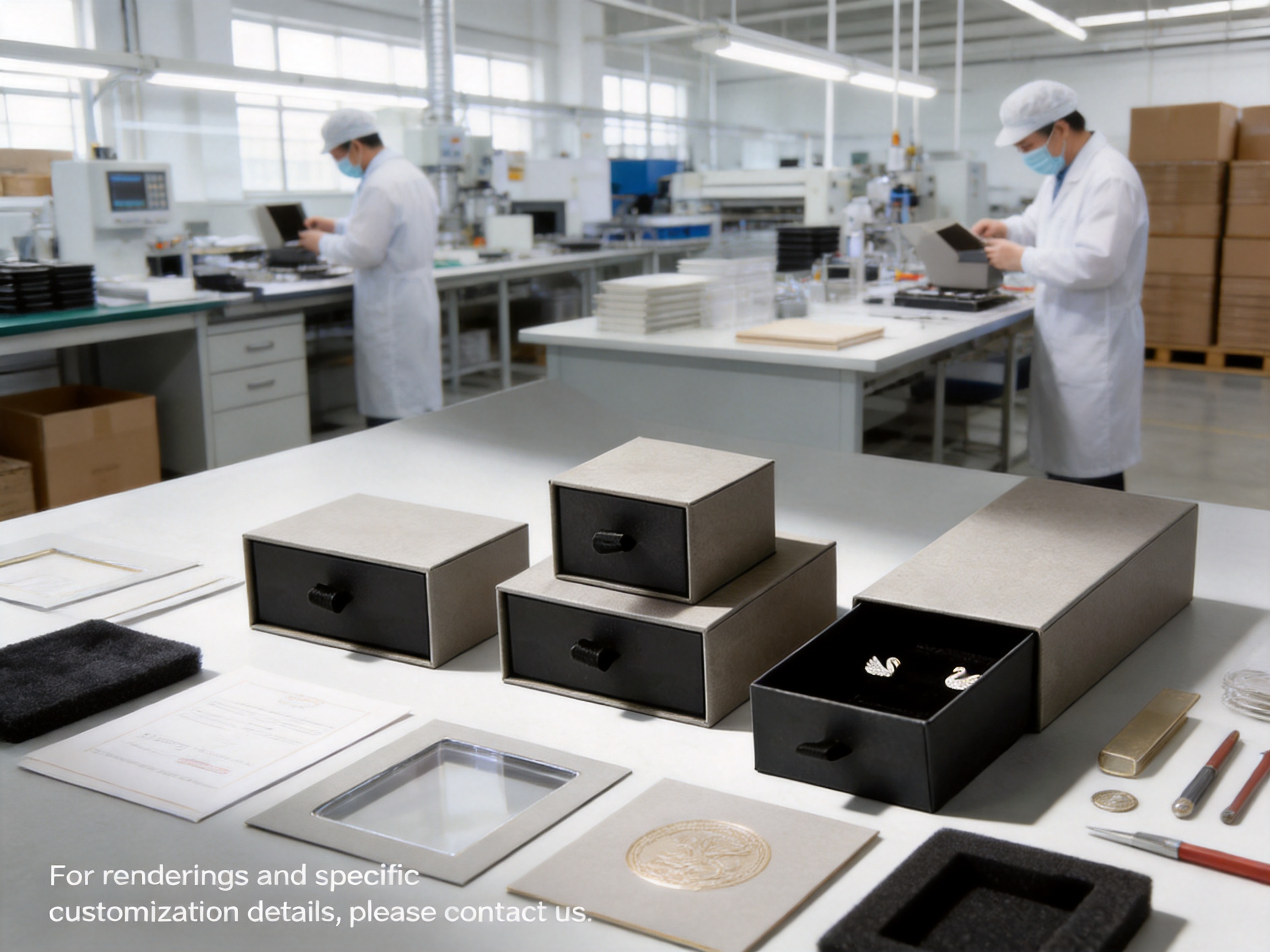
The quality of a jewelry box depends on the relationship between design, material, equipment, skilled labor, and quality control. A supplier that only provides basic conversion may not be able to support complex window structures, fitted inserts, or advanced finishing. A manufacturer with its own design team, R&D capability, production facilities, and export experience can provide more complete project support.
The manufacturer of the SHJGB-02 has developed a broad portfolio that includes kits, storage boxes, folding boxes, jewelry boxes, and gift boxes. This category experience can help the company understand how different structures behave in production and how packaging requirements change between product types.
Its stated business philosophy emphasizes innovation, quality, practicality, and benefit. These principles are relevant to jewelry packaging because a successful box must combine visual appeal with efficient production and reliable daily use. A package that looks attractive but fails to protect the jewelry is not successful, while a highly protective box that does not support the brand may miss an important commercial opportunity.
The box is designed for various jewelry products, including rings, necklaces, bracelets, and other small jewelry items. The most suitable interior depends on the product’s dimensions, shape, and weight. Custom velvet or EVA inserts can be developed to improve retention and presentation.
The box uses a side-opening pull-out drawer structure. The inner section slides outward from the outer shell, creating a controlled reveal of the jewelry. This differs from a conventional top-opening box and provides a more distinctive unboxing experience.
Yes. The design includes a high-transparency viewing window that allows the jewelry to remain visible inside the package. The window can support retail display, product identification, and gift presentation.
The listed sizes are 5 by 5 by 3.5 centimeters, 7.5 by 7.5 by 3.5 centimeters, 7 by 9 by 3.5 centimeters, and 9 by 9 by 3.5 centimeters. Buyers should compare these dimensions with the actual jewelry and insert design before selecting a size.
Standard color options include sky blue, beige, and gray. Custom printed surfaces and other color requirements may be discussed according to the project specifications, order quantity, materials, and finishing process.
Yes. The interior can be custom-fitted with plush velvet or precision-cut EVA inserts. The design may include ring slots, necklace channels, bracelet supports, or compartments for multiple pieces, depending on the jewelry collection.
Yes. The box can be customized through printing and finishing techniques such as foil stamping and embossing. Artwork should be prepared according to the box structure and reviewed through a sample before mass production.
It can be used as a presentation box for e-commerce jewelry orders. However, the jewelry box may require additional outer shipping protection to withstand the conditions of parcel delivery. The complete shipping configuration should be tested before commercial launch.
The SHJGB-02 provides a more rigid structure, a distinctive drawer opening, a high-transparency viewing window, and customizable protective inserts. These features can improve product protection, presentation quality, brand differentiation, and the overall unboxing experience.
Yes. Its rigid structure and fitted interior can make it suitable for continued jewelry storage. Customers may reuse the box to organize and protect pieces at home or while traveling, depending on the jewelry type and storage conditions.
Useful information includes jewelry dimensions, product photographs, required quantity, box size, preferred color, insert material, artwork, finishing requirements, target market, packaging application, and delivery schedule. Providing complete information helps the manufacturer recommend a more accurate structure and quotation.
Yes. A sample is strongly recommended for checking the fit, drawer movement, window clarity, color, surface finish, insert design, and overall presentation. Sampling is particularly important when the packaging includes multiple finishing processes or delicate jewelry products.
The SHJGB-02 Paper Jewelry Pull-out Box combines protection, visibility, customization, and presentation in one compact jewelry packaging format. Its rigid paper construction provides a substantial feel, while the side-opening drawer creates a distinctive and memorable opening experience. The high-transparency window keeps the jewelry visible, and the option of plush velvet or precision-cut EVA inserts allows the interior to be adapted to different products.
Compared with basic folding cartons and conventional lift-off boxes, this design offers stronger visual differentiation and greater flexibility for premium presentation. Its available sizes and colors support a range of jewelry applications, while printing, foil stamping, embossing, and responsible material options provide opportunities for brand development.
The manufacturing foundation behind the product is equally important. More than 15 years of experience, a 20,000-square-meter facility, approximately 300 employees, an average daily capacity of about 5,000 gift box sets, an in-house design team, and export experience provide a strong basis for customized packaging programs. BSCI and FSC certifications further support responsible manufacturing and sourcing considerations, subject to verification for each specific project.
For jewelry brands seeking packaging that protects delicate products while strengthening the customer experience, the SHJGB-02 offers a practical and refined solution. Its combination of structure, visibility, tactile finishing, and interior customization makes it suitable for retail collections, e-commerce orders, gifts, special occasions, and limited-edition launches.
1. Product specification materials for the SHJGB-02 Paper Jewelry Pull-out Box.
2. Company information and manufacturing capability profile supplied for Zhejiang Shihao Gift Packaging Co., Ltd.
3. General packaging design principles concerning rigid paper structures, protective inserts, and jewelry presentation.
4. FSC principles concerning responsible forest management and certified paper sourcing.
5. BSCI-related guidance concerning social compliance and responsible supply-chain practices.
6. General quality-control practices for custom printed paper gift packaging, rigid boxes, windows, and fitted inserts.
Recommended Products

Contact Us

No. 15, Xiayang Road, Huangzhai Town, Jinhua, Zhejiang, China

(+86) 579-84230069

(+86) 13085675766


Products

Gift Box Packaging Manufacturer
 English
 Français
 Español
 عربى