2026-07-22
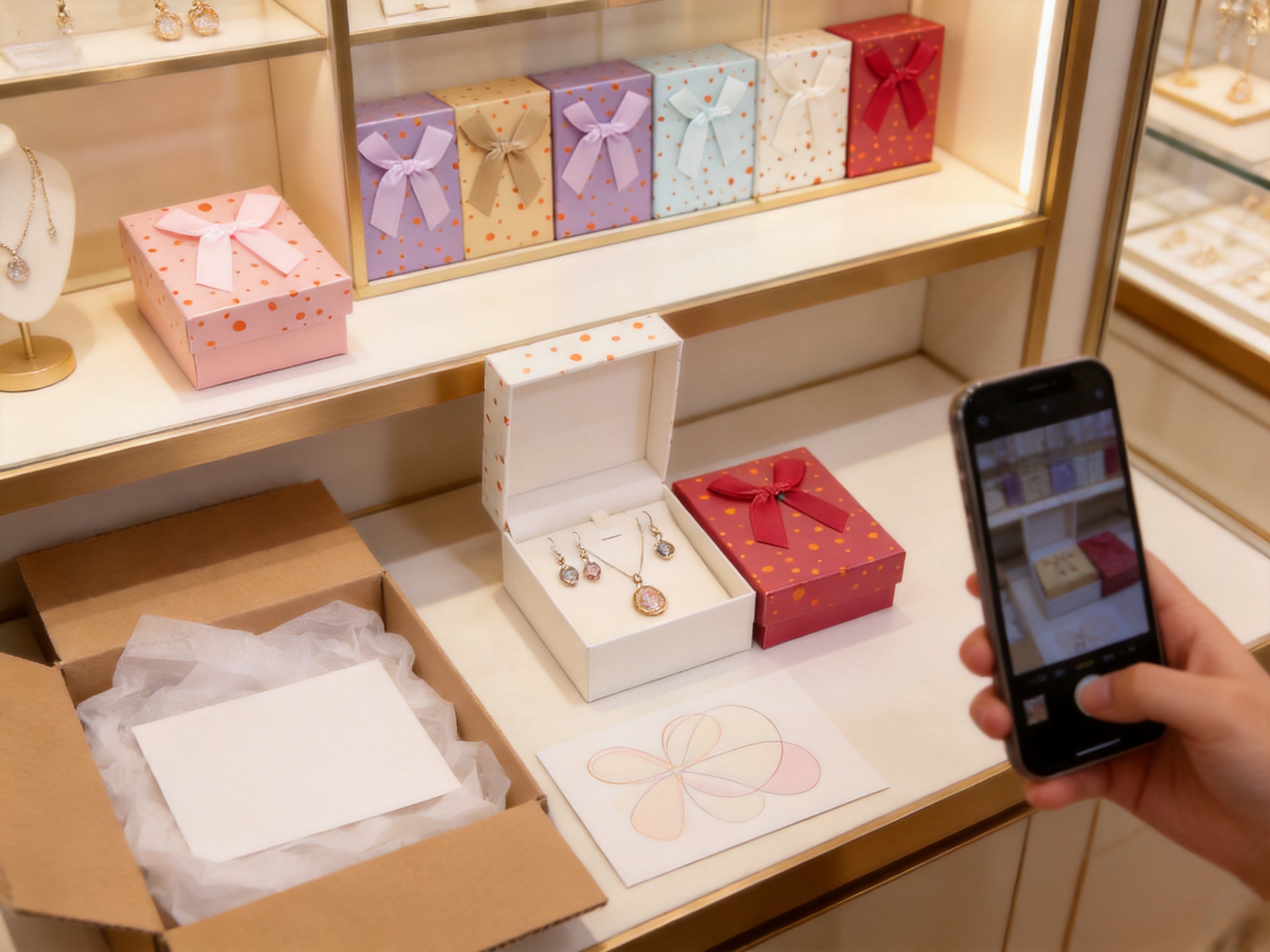
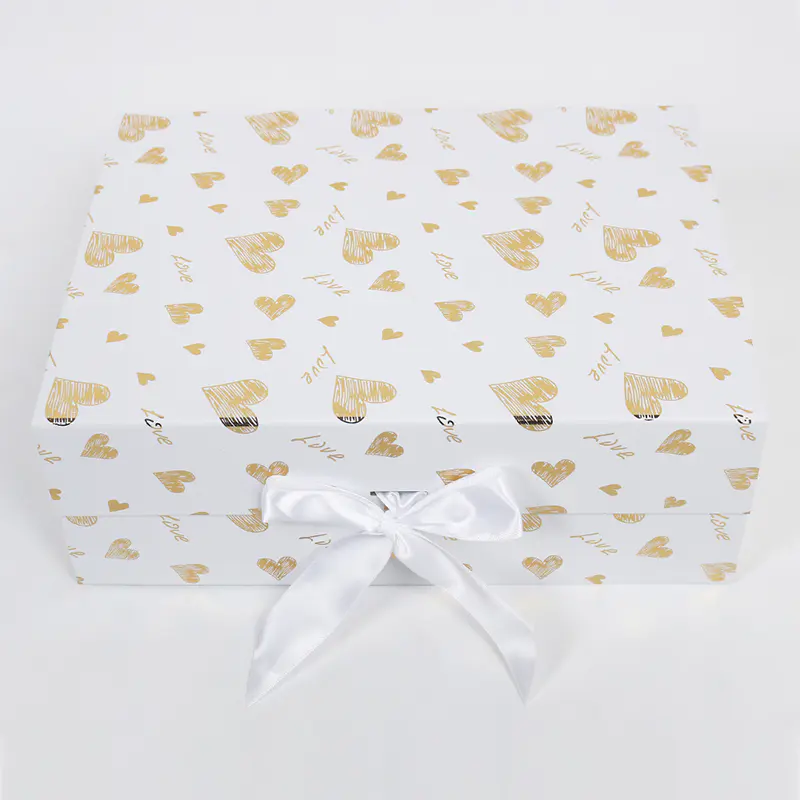
Packaging is often the first physical point of contact between a customer and a jewelry product. Before a bracelet, ring, pair of earrings, pendant, or small accessory is examined in detail, the customer notices the box that presents it. A well-designed package can communicate care, quality, style, and value before the product itself is opened. The A-7 Rectangular Polka Dot Small Jewelry Gift Box with Bow Ribbon is designed to make that first impression memorable while providing a practical enclosure for small jewelry and accessory items.
This rectangular jewelry gift box combines a compact structure, decorative polka-dot graphics, and an attached bow ribbon. The result is packaging that functions as both a protective container and part of the gift presentation. Its visual appeal makes it suitable for personal celebrations, retail counters, jewelry boutiques, online orders, seasonal promotions, and branded packaging programs. Instead of treating the box as a disposable outer layer, the design turns the package into an important part of the customer experience.
Manufactured by Zhejiang Shihao Gift Packaging Co., Ltd., an export-oriented paper packaging producer in Jinhua, Zhejiang, China, the product is supported by more than 15 years of manufacturing experience, an approximately 20,000-square-meter facility, around 300 employees, advanced production equipment, and an average daily capacity of approximately 5,000 sets of gift boxes. The company also reports BSCI and FSC certifications, an internal design team, and experience supplying customers in Europe, the United States, the Middle East, and other international markets.
This article examines the design, functional advantages, application possibilities, customization potential, manufacturing strengths, quality considerations, sustainability features, and purchasing value of the A-7 jewelry gift box. It also explains why a carefully engineered paper gift box can help jewelry businesses improve presentation, strengthen brand recognition, and create a more satisfying unboxing experience.
The A-7 is a small rectangular jewelry gift box created for compact products that need a neat, attractive, and presentation-ready package. Its proportions are suitable for a variety of jewelry pieces and small accessories, while its rectangular shape helps the package sit securely on retail shelves, display trays, counters, and shipping cartons.
The defining visual element is the polka-dot pattern. Polka dots create a friendly, decorative, and recognizable appearance without making the package excessively complicated. Depending on the selected color combination and printing treatment, the pattern can convey playful elegance, youthful energy, vintage charm, or modern simplicity. This flexibility allows the same basic packaging structure to serve different product categories and customer demographics.
A bow ribbon completes the design. The ribbon gives the box an immediately recognizable gift appearance and adds a tactile detail that customers can see and handle. It can also make the package easier to lift, open, arrange, or display. More importantly, the bow creates an emotional association with celebration. A customer receiving a ribbon-wrapped jewelry box is likely to interpret the package as a prepared gift rather than simply a storage container.
The box belongs to the jewelry gift box category, but its use is not limited to one type of jewelry. It may be used for earrings, rings, pendants, bracelets, charms, brooches, small watches, hair accessories, cosmetic accessories, keepsakes, and other lightweight products. The exact interior configuration should be selected according to the product dimensions, weight, shape, and protection requirements.
| Product Element | Function | Customer Benefit |
|---|---|---|
| Rectangular box structure | Provides a stable enclosure for small products | Helps prevent unnecessary movement and creates an orderly presentation |
| Polka-dot exterior pattern | Adds decorative identity to the package | Improves shelf appeal and makes the gift visually distinctive |
| Bow ribbon | Provides a decorative finishing element and handling point | Strengthens the gift impression and enhances the opening experience |
| Paper-based construction | Supports a lightweight packaging format | Offers practical handling, storage, and shipping advantages |
| Customizable production approach | Allows changes to artwork, color, size, and finishing | Helps businesses align packaging with their brand and product range |
| Small jewelry-oriented format | Matches the requirements of compact products | Reduces excess space and supports a more intentional presentation |
Shape has a direct effect on the way packaging is stored, transported, displayed, and used. A rectangular box is one of the most efficient formats for retail and logistics because straight edges allow packages to be arranged closely together. Compared with irregularly shaped packaging, a rectangular jewelry box can make better use of counter space, drawer space, display trays, and shipping cartons.
The rectangular structure also gives the interior a predictable footprint. This is useful when the packaging must hold an insert, jewelry pad, compartment, or folded support. A jeweler can organize several units in a display case while maintaining visual consistency. Online retailers can place individual boxes into protective mailers or larger cartons with less wasted space.
For customers, the rectangular shape creates a familiar and practical opening experience. The box can be placed on a table, held with one hand, or arranged alongside a greeting card and other gift elements. Its balanced geometry also provides a broad surface for printed patterns, brand marks, care information, product details, or seasonal artwork.
The compact format is especially useful for small jewelry products because it helps the package feel appropriately proportioned. An oversized box can make a small product appear lost inside the package, while an excessively small box may look restrictive or difficult to open. A properly selected rectangular box creates a visual relationship between the item and its enclosure, allowing the product to feel carefully selected and intentionally presented.
Polka dots are a strong decorative choice because they are simple enough to be widely understood but distinctive enough to create a recognizable appearance. The repeated circular pattern can soften the rigid geometry of a rectangular box. This contrast between structured form and playful graphics makes the packaging visually interesting.
In jewelry packaging, visual balance is important. Jewelry is often associated with beauty, celebration, self-expression, and personal meaning. A plain box may provide protection but fail to communicate those emotional qualities. The polka-dot surface helps close that gap by adding color, rhythm, and personality before the box is opened.
The pattern can also be adapted to different market positions. Soft colors and small dots may be suitable for delicate jewelry, bridal accessories, or feminine gift collections. High-contrast colors can support youthful fashion jewelry or seasonal campaigns. Neutral combinations can create a more understated appearance for boutique collections. Metallic, glossy, matte, or specialty printing treatments can further change the character of the package.
Another advantage is pattern recognition. In a retail display containing many small products, a repeated polka-dot design can help a collection stand out. When the same design language is applied across several box sizes, customers may quickly associate the pattern with a particular jewelry line or store. This can contribute to visual consistency and brand recall without requiring a large amount of text.
The design is also suitable for gifting occasions. Birthdays, anniversaries, holidays, graduations, weddings, and personal milestones all benefit from packaging that appears celebratory. The polka-dot pattern and bow ribbon work together to create a finished appearance that may reduce the need for additional wrapping paper or decorative accessories.
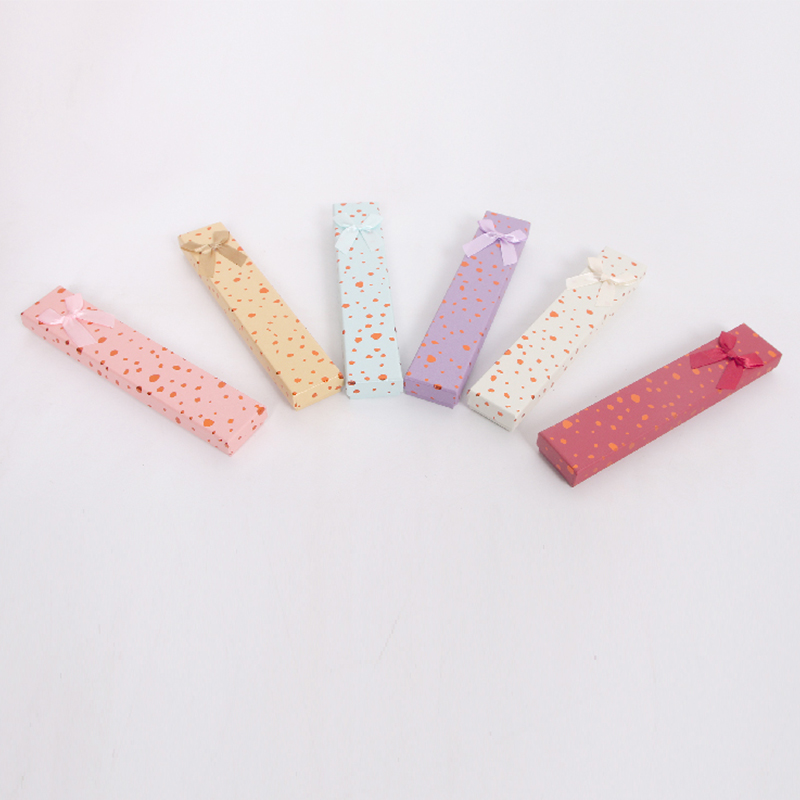
A-7 Rectangular Polka Dot Small Jewelry Gift Box with Bow Ribbon
A bow ribbon is more than an ornament attached to the outside of a package. It contributes to the way the customer perceives, handles, and remembers the product. In a small jewelry package, where the physical box may be compact, the ribbon provides a high-impact detail that increases visual richness without requiring a complex structure.
The bow immediately communicates gift readiness. A customer can present the box directly to another person without adding a separate ribbon or wrapping layer. For retailers, this can simplify the final packaging process at the point of sale. Staff members may be able to place the jewelry inside the box, close it, and present it as a complete gift package.
The ribbon also creates a tactile interaction. Customers often touch or adjust the bow before opening the box. This small action slows down the opening process and adds anticipation. In an online retail environment, the bow can become an attractive detail in product photography, social media content, customer-generated images, and unboxing videos.
From a merchandising perspective, the ribbon provides a visual focal point. It can help the package look more dimensional and premium than a flat printed carton. When several boxes are displayed together, the bows create a coordinated presentation that draws attention from different viewing angles.
Ribbon selection can be adapted to a brand’s requirements. Possible considerations include ribbon color, width, sheen, texture, tying style, and coordination with the printed polka-dot pattern. A retailer may use contrasting ribbon colors for a lively appearance or matching tones for a more refined presentation. Seasonal colors can also support holiday collections and limited-edition campaigns.
Plain jewelry boxes are useful when the primary goal is basic containment. However, they may require additional wrapping, labels, stickers, tissue paper, or decorative bags before they are suitable for presentation. The A-7 design combines containment and decoration in one package, helping businesses achieve a more complete appearance with fewer added elements.
One major advantage is immediate shelf impact. A plain box may blend into a display, while a polka-dot exterior creates a recognizable visual surface. This can be particularly valuable for small retailers and online brands that need packaging to support product differentiation.
A second advantage is the emotional value of the bow ribbon. Jewelry is commonly purchased for meaningful occasions, and the package should reflect that significance. A ribbon-wrapped box can make a modest accessory feel more personal and gift-ready. The packaging does not replace the value of the jewelry, but it helps frame the purchase as an experience rather than a transaction.
A third advantage is convenience. Retail employees do not need to apply separate wrapping materials for every order. Consumers can also reuse the box for storing small jewelry, hair accessories, pins, buttons, keepsakes, or other personal items. When packaging remains useful after purchase, the customer may retain it longer and continue associating it with the original product.
The A-7 can also offer stronger visual consistency than a mixture of generic boxes and unrelated wrapping materials. A standardized box design creates a more professional appearance across product lines. Consistency is especially important for businesses operating physical stores, online shops, subscription services, gift programs, and multi-location retail operations.
Oversized jewelry packaging can create several problems. It may require more paper, occupy more storage space, increase shipping volume, and make a small jewelry item appear disconnected from its package. An irregular package may attract attention, but it can also be difficult to stack, organize, and protect during transportation.
The compact rectangular design offers a more efficient alternative for many small jewelry products. Its format supports orderly storage and can reduce unnecessary empty space. While the exact material consumption and shipping savings depend on the final specifications, right-sized packaging generally helps businesses manage logistics more effectively.
Rectangular packaging can also simplify inventory management. Boxes can be counted, stacked, labeled, and separated by product category more easily than unusual forms. Retail teams may spend less time arranging stock, and warehouses can use standard shelving and carton systems more efficiently.
For e-commerce businesses, packaging volume is an important consideration. A compact box can fit into a smaller protective mailer, although appropriate cushioning and shipping tests remain necessary. Reducing unused space may help improve packing efficiency and create a more deliberate unboxing experience for the customer.
The A-7 jewelry gift box can be considered for many products that fit within a small rectangular presentation format. Rings may be supported by a suitable insert or slot. Earrings can be placed in pairs or mounted on a small card. Pendants may be arranged on a pad or backing card to prevent tangling. Bracelets and charms can be positioned according to their length and shape.
The package may also suit small fashion accessories, including hair clips, brooches, key charms, decorative pins, small watches, and compact beauty accessories. Businesses should confirm the internal dimensions and insert design before placing an order, particularly when the product has unusual proportions or requires additional protection.
For jewelry stores, the box can be used at the point of sale. A staff member may place the selected item inside, add a care card or authenticity document, close the box, and present it to the customer. The exterior design can help transform a routine sales process into a more polished service experience.
For online brands, the box can become part of the delivery identity. Customers often photograph attractive packages when they receive an order. A decorated box with a bow may provide a more appealing subject for social media posts than an unmarked carton. The package can therefore support organic visibility when customers share their purchases.
For event organizers, the box may be used for wedding favors, anniversary gifts, promotional jewelry, corporate gifts, or commemorative accessories. Custom printing can make the packaging correspond with an event theme, date, initials, message, or campaign identity.
Packaging has a direct relationship with merchandising. Small jewelry items can be difficult to display because of their size. A decorative box gives each item a larger visual footprint and helps create a coherent retail arrangement. The polka-dot pattern provides a repeated background element, while the ribbon adds height and texture.
Boxes can be displayed individually, in grouped color arrangements, or alongside open sample units. A retailer may keep some boxes closed to show the gift-ready appearance and open others to display the jewelry itself. This combination can communicate both presentation quality and product visibility.
The design may also support tiered collections. A business could use the A-7 format for entry-level or compact jewelry and coordinate it with larger boxes for necklaces, sets, or premium products. A common pattern, color palette, or ribbon style can unify the range while allowing different box structures to serve different product sizes.
At trade shows and exhibitions, packaging can help a company appear more organized and professional. Products presented in consistent boxes may be easier for buyers to understand and remember. The box can also serve as a physical sample of a supplier’s printing, structural, and finishing capabilities.
Customization is important for jewelry brands because packaging must reflect the identity of the product. A basic polka-dot structure can be adapted through artwork, color, size, material selection, insert configuration, ribbon treatment, and additional finishing.
Artwork customization may include a company logo, brand name, tagline, pattern variation, product illustration, seasonal message, or collection symbol. The placement of printed information should be planned carefully so that it complements the polka-dot design instead of competing with it.
Color customization can help match the packaging to a brand’s established palette. Some businesses may prefer a single signature color, while others may use different colors for separate collections. Color coding can help customers and retail staff identify product categories quickly.
Size customization is useful when a company sells jewelry in several dimensions. A coordinated family of rectangular boxes can maintain consistent branding while accommodating rings, earrings, bracelets, pendants, and gift sets. The appropriate size should be determined through physical product samples and packing trials.
Interior customization may include a foam pad, paperboard insert, velvet-like lining, card holder, slit, compartment, or other support. The choice depends on the product’s shape, surface sensitivity, weight, and presentation requirements. A well-designed insert should hold the jewelry securely while allowing the customer to remove it easily.
Finishing options may include matte or gloss coating, selective highlighting, foil effects, embossing, debossing, textured paper, special laminations, or other decorative treatments. These options should be selected according to the desired market position and budget. The goal is not to add every possible effect, but to choose details that improve the customer’s perception and support the brand message.
Ribbon customization can further distinguish the package. A matching ribbon can create a unified appearance, while a contrasting ribbon can make the bow a focal point. The choice of ribbon should account for color stability, tying consistency, handling, and compatibility with the box surface.
Custom packaging is a practical brand communication tool. Customers may encounter a jewelry brand through a website, social media post, retail store, marketplace listing, or recommendation. The package is one of the first physical objects that confirms whether the brand experience matches the promise made in advertising.
A consistent box design can improve recognition across sales channels. When customers see the same color scheme, pattern, logo placement, or ribbon treatment in stores and online content, the brand becomes easier to remember. This is particularly helpful for smaller businesses that compete with larger companies for attention.
Packaging can also communicate market positioning. A carefully printed and neatly assembled gift box may support a premium image, even when the design remains simple. The perception of quality is influenced by multiple details, including print clarity, color consistency, edge alignment, ribbon placement, surface feel, and the relationship between the box and the product.
For repeat customers, a recognizable package can create continuity. A customer who has previously received a well-presented jewelry order may expect the same standard in future purchases. Meeting that expectation can strengthen trust and encourage repeat business.
The company’s customization-oriented approach allows businesses to develop packaging solutions for different markets rather than selecting only from a fixed catalog. This is valuable when customers need different languages, regional preferences, seasonal themes, or product-specific structures.
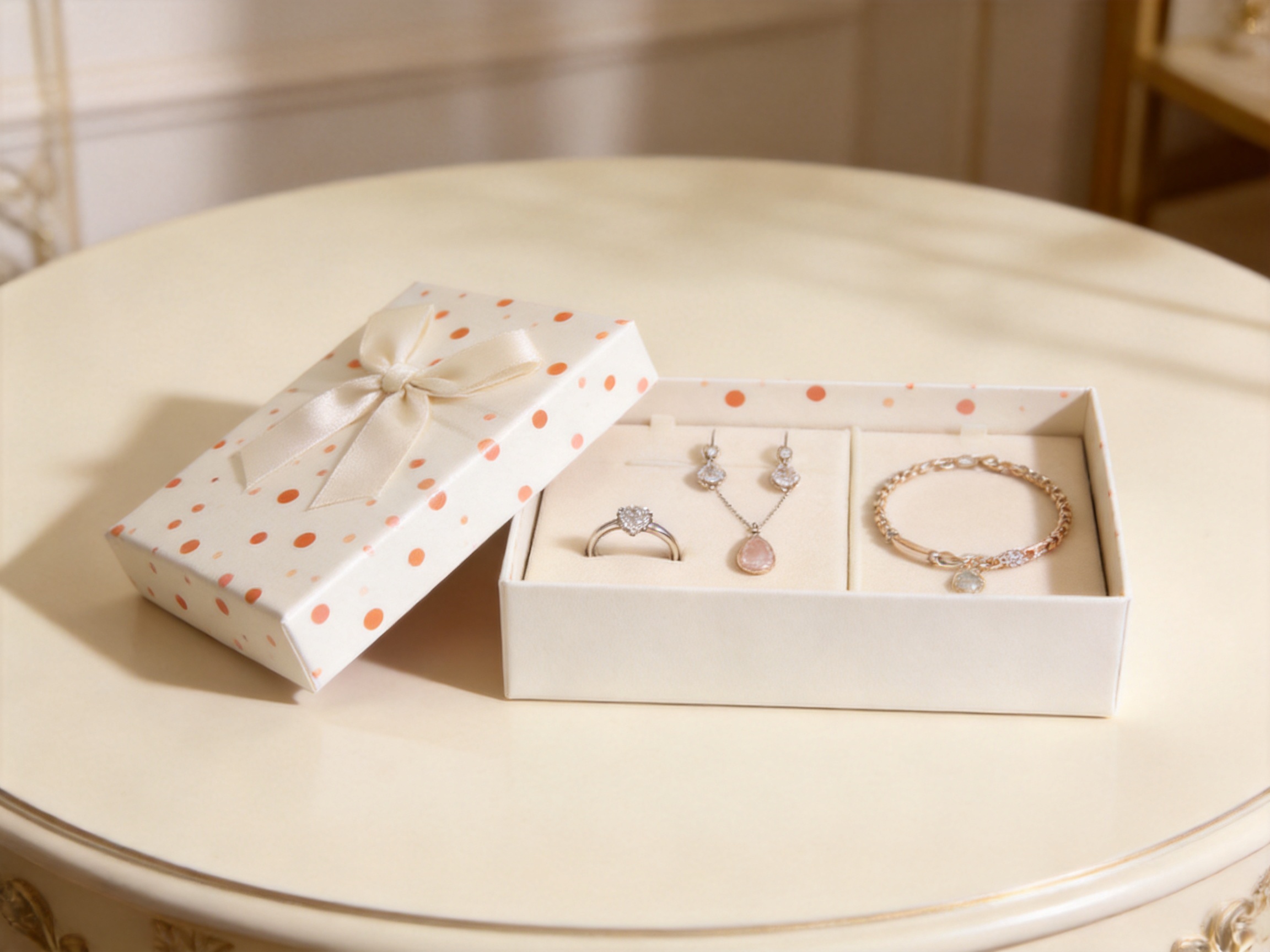
The quality of a jewelry gift box depends on more than the visible artwork. Structural accuracy, material selection, printing control, folding precision, adhesive application, ribbon attachment, inspection, and packing all influence the final result. Zhejiang Shihao Gift Packaging Co., Ltd. supports its packaging products through an integrated manufacturing and development operation.
The company has operated for more than 15 years and specializes in paper gift packaging boxes. This experience is relevant because repeated production across many box types helps a manufacturer understand common problems such as inaccurate folding, weak corners, inconsistent color, poor lid fit, surface scuffing, and ribbon misalignment.
The reported facility covers approximately 20,000 square meters and employs around 300 people. A facility of this scale can support coordinated activities including design development, sampling, material preparation, printing, die cutting, forming, assembly, quality inspection, and export packing. Integrated operations may also make communication between departments more direct during custom projects.
The company reports an average daily production capacity of approximately 5,000 sets of gift boxes. This capacity is useful for customers that need recurring supply or larger promotional quantities. Capacity alone does not guarantee suitability for every order, but it indicates that the manufacturer is equipped to handle more than occasional small-batch production.
Advanced equipment supports production consistency. In paper packaging, machinery must maintain accurate registration, cutting, creasing, folding, and forming across repeated units. Reliable equipment can reduce variation between boxes and improve the efficiency of larger production runs.
The company also maintains an internal design team and updates dozens of products weekly. This design activity can benefit customers that want new styles, seasonal packaging, improved structures, or market-specific ideas. A supplier with design capability can contribute during the development stage instead of simply producing artwork supplied by the buyer.
Production begins with an understanding of the product to be packaged. The jewelry’s dimensions, weight, fragility, surface finish, and desired presentation determine the box size and internal support. At this stage, the manufacturer and buyer can discuss whether the box should open from the top, use a lid structure, include an insert, or provide space for a card or accessory.
The rectangular format must be balanced carefully. If the box is too tight, the jewelry may be difficult to insert or remove. If it is too loose, the product may shift during handling. The ribbon and exterior artwork must also be considered because they affect the final appearance and, in some cases, the overall packing dimensions.
Paperboard and related packaging materials are selected according to strength, surface quality, printing requirements, folding behavior, and sustainability objectives. The material must be suitable for the intended structure and finish. For jewelry packaging, a clean surface is particularly important because marks, scratches, or uneven coating may be more visible on a small decorative box.
Material selection can also influence the tactile impression. Smooth paper may create a clean modern appearance, while textured paper can add depth. Coated surfaces may improve color reproduction or resistance to handling. When FSC-certified materials are specified and available for the project, they can support responsible sourcing objectives.
The polka-dot design requires accurate repeat placement and consistent color reproduction. Artwork files should be prepared according to the manufacturer’s technical requirements, including dimensions, bleed, resolution, color mode, and logo placement. Proofing is important because colors can appear differently on screens and printed materials.
During printing, operators monitor registration, ink coverage, surface quality, and consistency from sheet to sheet. A regular pattern makes variation easy to notice, so careful control is important. If the design includes a logo or additional text, its alignment with the box structure must also be checked.
After printing, the paperboard is cut and creased according to the structural design. Die cutting creates the outline, while creasing provides controlled folding points. Accurate die cutting helps ensure that corners meet properly and that the final box maintains its intended proportions.
Creasing quality is particularly important for decorative boxes. Poorly positioned or overly deep creases can cause cracking, uneven folds, or visible distortion on the printed surface. Correct pressure and tooling help the board fold cleanly and preserve the appearance of the polka-dot pattern.
The cut components are folded and formed into the box structure. Adhesive or other assembly methods are applied at designated points. The goal is to achieve secure joints, clean edges, and a stable final shape.
Assembly workers or automated equipment may install inserts, pads, labels, or other interior components. If the package includes a ribbon bow, the ribbon must be attached consistently so that its position, tension, and appearance remain uniform across the production batch.
Ribbon application is a detail-oriented step because the bow is highly visible. The ribbon should be positioned so that it complements the lid or front face of the box. Consistent tying, trimming, and attachment help maintain a professional appearance.
Manufacturers may use production fixtures, templates, or standardized procedures to improve consistency. Inspection should verify that the bow is secure, the ribbon is not excessively loose or damaged, and the finished package can be handled without the decorative element becoming detached.
Quality inspection may cover dimensions, structural integrity, surface appearance, printing accuracy, color consistency, lid fit, adhesive condition, ribbon placement, and overall cleanliness. For custom orders, inspection should also compare the finished units with the approved sample or specification sheet.
Sampling plans can be used for larger production runs, while additional checks may be appropriate for new structures or high-value campaigns. Businesses should discuss inspection standards with the manufacturer before production begins so that acceptance criteria are clear.
Finished boxes are arranged for protection during storage and transportation. Packing methods should prevent crushing, abrasion, moisture exposure, and deformation. The bow ribbon may require additional consideration because pressure from tightly packed cartons could flatten or distort it.
Export packing also requires attention to carton labeling, quantity accuracy, pallet configuration, and documentation. The manufacturer’s experience exporting to Europe, the United States, the Middle East, and other regions can help support international order coordination.
Jewelry packaging should be visually attractive, but appearance is only one part of quality. The box should be structurally stable enough for normal handling, storage, and presentation. Corners should remain reasonably crisp, joints should not separate easily, and the lid should open and close as intended.
The interior must be compatible with the jewelry. Some jewelry surfaces can be scratched by rough materials, loose fibers, or poorly finished inserts. Buyers should provide product samples or detailed specifications so that the interior configuration can be evaluated before mass production.
Print quality should be examined under normal retail lighting. The polka-dot pattern should be clear, consistent, and free from obvious smearing or registration errors. If the brand logo is included, its position should be checked against the approved artwork.
Ribbon quality includes more than color. The ribbon should have an appropriate texture and width, and the bow should remain attached during ordinary handling. The finished package should be tested by opening, closing, carrying, stacking, and placing it into a shipping or presentation environment.
A pre-production sample is strongly recommended for customized projects. A sample allows the buyer to verify the actual dimensions, visual balance, product fit, insert arrangement, ribbon appearance, and overall customer experience before approving a full order.
Paper-based packaging can support sustainability goals when materials are responsibly sourced, structures are efficiently designed, and production waste is managed appropriately. FSC certification is relevant because it provides a framework for responsible forest management and chain-of-custody controls. Buyers should confirm the certification scope and material requirements for their specific order.
The compact rectangular design may help reduce unnecessary package volume compared with oversized formats. Efficient sizing can support better storage and transportation utilization. However, actual environmental performance depends on the full product specification, including material thickness, coatings, inserts, ribbons, inks, shipping distance, and end-of-life practices.
Businesses should consider whether all decorative elements are necessary and whether selected materials can be separated or recycled in their target market. A paper box with additional ribbons, laminations, or mixed components may require different disposal treatment than a simple uncoated paperboard package.
Responsible packaging development should balance appearance, protection, durability, and material use. A package that is too weak may result in product damage and replacement shipments, while a package that is unnecessarily large may consume additional resources. The right solution is one that protects the jewelry adequately while avoiding avoidable excess.
Shihao’s reported FSC and BSCI certifications provide useful starting points for customers evaluating sourcing and social responsibility. Buyers should request current documentation, confirm whether it applies to the planned materials and facility, and include sustainability requirements in the purchase specification.
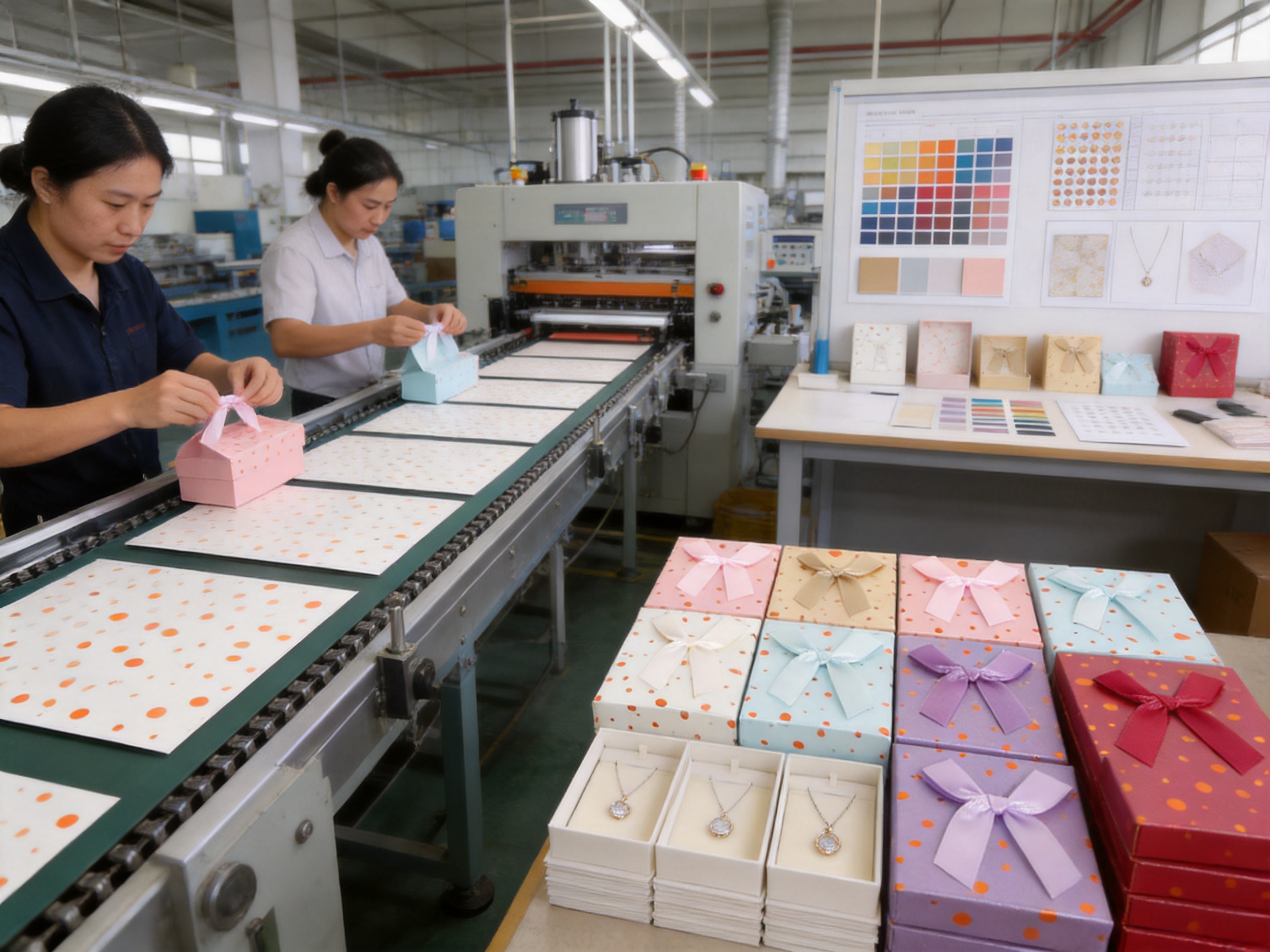
Boutiques can use the A-7 box as a standard presentation package for selected products. The decorative appearance can help create a consistent in-store identity, while the compact format supports organized counter and storage areas. A boutique may also use custom colors to coordinate the box with its interior design.
Online stores can use the box to improve the moment when the customer receives an order. E-commerce buyers cannot touch the product before purchase, so the delivery experience becomes especially important. A decorated box can create a stronger sense of occasion and make the order feel more thoughtfully prepared.
Wholesale suppliers can use custom packaging to differentiate product collections supplied to retailers. A consistent box can help retailers display products more professionally and may reduce the additional packaging work required at the store level.
Businesses ordering small jewelry items for events, employee recognition, customer appreciation, or promotional campaigns can use custom printing to add dates, messages, logos, or campaign themes. The bow ribbon makes the package suitable for direct presentation at events.
Wedding favors, bridesmaid gifts, anniversary accessories, and other celebration products benefit from packaging that already looks decorative. Color and artwork customization can help align the boxes with invitations, event decorations, or a particular ceremony theme.
Retailers can adapt the pattern and ribbon treatment for holidays, spring collections, birthdays, festivals, or limited-edition campaigns. Seasonal packaging can give an existing jewelry product a new presentation without requiring a completely different structural format.
Before requesting a quotation, buyers should prepare accurate product information. This should include the jewelry dimensions, approximate weight, quantity, preferred box style, desired insert, artwork requirements, ribbon preferences, delivery destination, and expected order frequency.
It is helpful to provide physical samples or clear photographs of the jewelry. Photographs alone may not show thickness, sharp edges, flexibility, or surface sensitivity. A physical sample allows the manufacturer to test fit and determine whether additional support is needed.
Buyers should also define the intended use of the package. A box used only for retail display may have different requirements from one shipped directly to consumers. E-commerce packaging may need additional outer protection, while a boutique package may focus more heavily on immediate presentation.
Artwork should be reviewed carefully before printing. The buyer should confirm spelling, logo proportions, color references, pattern scale, legal information, and any required symbols. A physical or digital proof should be approved by the responsible decision-maker to reduce the risk of costly corrections later.
Order planning should include sample approval, production lead time, shipping time, inspection, and possible seasonal demand. Jewelry packaging is often required during holidays and promotional periods, when production schedules can become more constrained. Early planning gives the manufacturer more time to source materials and complete quality checks.
| Packaging Option | Presentation Level | Storage Efficiency | Customization Potential | Best Use |
|---|---|---|---|---|
| Plain generic jewelry box | Basic | Generally efficient | Limited | Routine, low-cost packaging |
| Decorated rectangular box with bow | Gift-ready and distinctive | Generally efficient | High | Retail jewelry, gifts, events, and e-commerce |
| Oversized rigid gift box | Premium and substantial | Less efficient | High | Large jewelry sets or luxury presentation |
| Irregular novelty box | Highly distinctive | More difficult to stack | High | Limited campaigns and special collections |
| Paper pouch or envelope | Simple and lightweight | Very efficient | Moderate | Lightweight accessories and low-volume packaging |
The A-7 occupies a useful middle position. It offers more personality than a plain generic box while avoiding many of the storage and shipping disadvantages associated with oversized or irregular packaging. It can be adapted for a broad range of jewelry and accessory products without requiring an excessively elaborate structure.
A strong product concept can lose value if manufacturing execution is inconsistent. The supplier must understand how to translate artwork and structural requirements into repeatable production. This is particularly important for a box with a repeated pattern and visible bow, because small variations may be noticeable to customers.
A manufacturer with design and development capabilities can help identify practical improvements before production. For example, the supplier may recommend changes to the insert, paper thickness, fold position, ribbon attachment, or finishing method. These recommendations can improve both appearance and production stability.
Production scale is also important for brands that expect growth. A supplier capable of producing approximately 5,000 gift box sets per day may be better positioned to support larger repeat orders than a small workshop with limited equipment. At the same time, buyers should confirm minimum order quantities, sampling policies, quality procedures, communication arrangements, and delivery schedules.
Export experience can simplify international purchasing. Documentation, carton packing, shipping coordination, and communication across time zones all affect the success of an order. Shihao’s stated export markets include Europe, the United States, the Middle East, and other regions, indicating experience with international customer requirements.
Certifications and responsible business programs can provide additional information about the supplier’s operating standards. BSCI relates to social compliance assessment, while FSC concerns responsible forest product sourcing. These credentials should be checked for current validity and relevance to the specific project, but they can be important factors in supplier evaluation.
Unboxing is increasingly important because customers often share their purchases through photographs and videos. The opening sequence should be simple, attractive, and consistent with the product’s positioning. The A-7 box contributes to this sequence through its patterned exterior, compact form, and bow ribbon.
The box can create anticipation before the lid is opened. The customer sees the pattern, notices the bow, and handles the package as a gift object. When the jewelry is arranged neatly inside, the package supports a gradual reveal that can feel more personal than receiving an item in a plain protective carton.
A memorable unboxing experience can encourage positive reviews and customer sharing, although packaging should never be viewed as a substitute for product quality or service. The most effective approach is to make the package complement the jewelry, shipping protection, brand communication, and after-sales experience.
The box may also have a useful afterlife. Customers can store jewelry in it, use it for small keepsakes, or preserve it as part of a gift memory. Continued use increases the period during which the package remains associated with the brand or occasion.
Choose the internal size based on the actual jewelry rather than estimating from product category alone. Rings, earrings, bracelets, and pendants require different support arrangements. A correctly fitted insert improves both protection and presentation.
Coordinate the polka-dot colors with the jewelry collection. Bright patterns may suit fashion accessories, while softer or more neutral combinations may work better for classic or premium products. The ribbon should reinforce the same visual direction.
Use a physical sample to evaluate the box under retail lighting and during normal handling. Check the lid, corners, printed surfaces, bow, interior fit, and compatibility with the intended shipping carton.
Consider the complete packaging system. The jewelry box may need to be placed inside a protective bag, mailer, or outer carton. Ensure that the chosen shipping materials do not crush the bow or cause the printed surface to rub against rough materials.
Request clear production specifications. These may include box dimensions, paper type, thickness, printing method, finishing, insert material, ribbon specification, packing quantity, inspection standard, and tolerance requirements.
Plan for repeat orders by recording the approved sample and artwork details. A formal specification file can help maintain consistency when production is repeated months later or when the order is assigned to a different production schedule.
The A-7 is designed for small jewelry and accessories, including earrings, rings, pendants, bracelets, charms, brooches, and similar lightweight products. The final suitability depends on the product’s dimensions and the selected interior insert.
Its main distinguishing features are the rectangular presentation format, polka-dot exterior design, and bow ribbon. These elements create a gift-ready appearance while maintaining a practical structure for storage and display.
Customization may be available for artwork, colors, dimensions, inserts, printing, finishing, and ribbon treatments. Buyers should discuss their specifications with the manufacturer and approve a sample before mass production.
Yes. Its decorative appearance can support counter displays, product presentation, customer gifting, and coordinated jewelry collections. The rectangular structure also makes it convenient to arrange and store.
Yes. The box can enhance the delivery and unboxing experience for e-commerce customers. However, it should be placed inside suitable protective shipping packaging to prevent crushing, abrasion, or ribbon deformation.
The ribbon is primarily decorative, but it can also provide a convenient handling point and help customers identify the package as gift-ready. Its main value is the combination of visual appeal, tactile interaction, and emotional presentation.
Buyers should confirm the jewelry dimensions, internal fit, insert design, box material, printing, color, ribbon, finishing, order quantity, delivery schedule, packing method, and quality requirements. A physical sample is recommended for customized orders.
Zhejiang Shihao Gift Packaging Co., Ltd. reports more than 15 years of experience in paper gift packaging, a facility of approximately 20,000 square meters, around 300 employees, advanced equipment, and an average daily capacity of approximately 5,000 gift box sets.
The company states that its products are exported to Europe, the United States, the Middle East, and other regions. International buyers should confirm current shipping, documentation, compliance, and order terms for each project.
The company reports FSC and BSCI certifications. Buyers should request current documentation and verify whether the certification scope applies to the planned materials, production site, and order requirements.
It may also be suitable for small accessories, keepsakes, hair ornaments, pins, charms, promotional items, and compact gifts, provided that the product fits securely and the interior protection is appropriate.
The buyer should retain the approved sample, artwork files, color references, material information, ribbon specifications, and inspection criteria. These records help the manufacturer reproduce the intended appearance in future orders.
The A-7 Rectangular Polka Dot Small Jewelry Gift Box with Bow Ribbon is a practical and visually expressive packaging solution for jewelry and small accessories. Its rectangular structure supports efficient storage and organized display, while the polka-dot pattern gives the package a recognizable decorative identity. The bow ribbon adds a gift-ready finish, creates a more engaging unboxing moment, and helps the package stand out from plain alternatives.
For jewelry stores, online brands, wholesalers, event planners, and promotional buyers, the box can serve several functions at once. It can protect and organize a small product, improve presentation, support retail merchandising, reduce the need for additional wrapping, and reinforce a consistent brand experience. Its customizable structure also allows businesses to adapt the design to different colors, collections, occasions, and market requirements.
The product is supported by a manufacturer with reported long-term industry experience, an approximately 20,000-square-meter facility, around 300 employees, advanced equipment, internal design capabilities, international export experience, FSC and BSCI certifications, and an average daily production capacity of approximately 5,000 gift box sets. These strengths provide a foundation for both standard and customized packaging programs.
The best results come from treating packaging development as a complete process. Product dimensions, interior support, artwork, materials, ribbon details, printing, quality inspection, sustainability requirements, shipping protection, and delivery planning should all be considered together. With the right specifications and sample approval, the A-7 design can help jewelry businesses turn a small package into a distinctive part of the product experience.
1. Product information supplied for the A-7 Rectangular Polka Dot Small Jewelry Gift Box with Bow Ribbon.
2. Company profile and manufacturing information supplied for Zhejiang Shihao Gift Packaging Co., Ltd.
3. General principles of paperboard packaging structure, folding, die cutting, and box assembly.
4. FSC principles concerning responsible forest product sourcing and chain-of-custody practices.
5. BSCI-related guidance concerning social compliance and responsible supply-chain assessment.
6. General retail merchandising practices for jewelry, accessories, and gift packaging.
7. General e-commerce packaging and unboxing experience considerations.
Recommended Products

Contact Us

No. 15, Xiayang Road, Huangzhai Town, Jinhua, Zhejiang, China

(+86) 579-84230069

(+86) 13085675766


Products

Gift Box Packaging Manufacturer
 English
 Français
 Español
 عربى