2026-08-28
Gift packaging is no longer limited to protecting a product during transportation. It has become an important part of product presentation, brand communication, customer experience, and environmental responsibility. A well-designed gift box can influence purchasing decisions, strengthen perceived value, and create a memorable unboxing moment. At the same time, businesses and consumers are increasingly looking for packaging that reduces waste, uses more responsible materials, and remains practical throughout storage, transportation, and presentation.
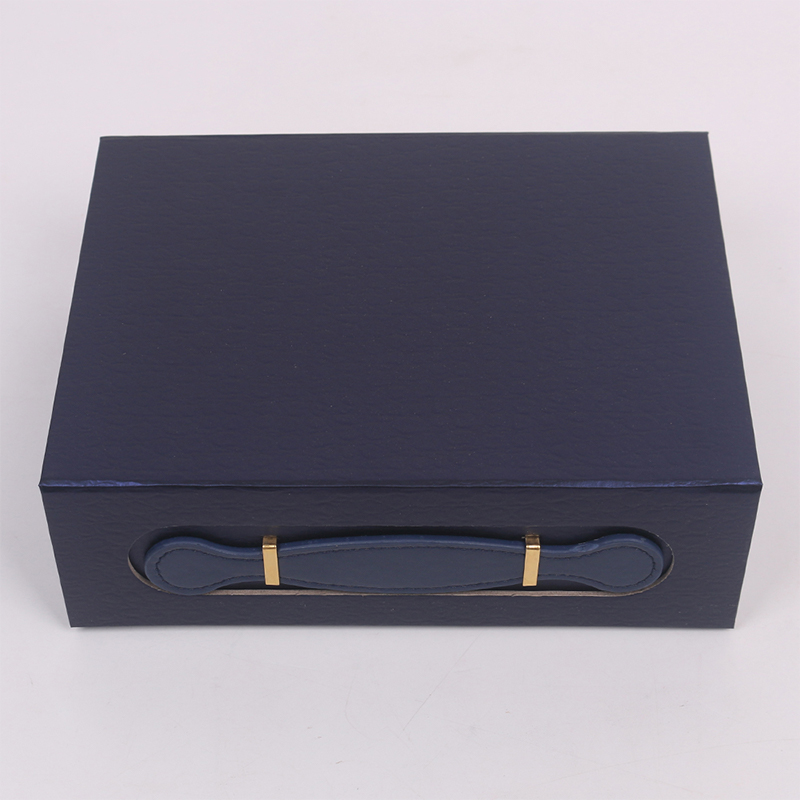
The Z226 biodegradable laminated embossed art paper magnetic folding gift box is designed to address these changing expectations. It combines a rigid cardboard structure, an attractive embossed art paper exterior, a convenient magnetic closure, and a folding construction that helps reduce storage volume. The result is a gift packaging solution that balances visual sophistication, structural protection, ease of use, and sustainability-oriented design.
This type of folding gift box is suitable for business gifts, personal presents, stationery collections, beauty products, accessories, retail packaging, seasonal promotions, and many other applications. Its dimensions of 28.2 × 20.2 × 9.2 cm provide a practical format for medium-sized products, while its customizable colors, surface treatment, and artwork make it suitable for a broad range of markets and product styles.
Packaging is often the first physical contact a customer has with a product. Before the product is used, the box communicates quality, positioning, and attention to detail. A weak or poorly constructed package can reduce the perceived value of even a high-quality product. In contrast, a carefully made box can make an ordinary presentation feel premium and can reinforce the identity of a retailer, manufacturer, event, or product line.
Traditional packaging decisions frequently focused on cost and basic protection. Modern packaging development requires a wider evaluation. Buyers now consider material selection, recyclability, manufacturing quality, storage efficiency, visual appeal, opening experience, customization, and end-of-life impact. These factors are especially important for gift packaging because the box itself is part of the gift-giving experience.
The Z226 folding gift box responds to this broader set of requirements through a combination of material engineering and practical construction. It uses 1200gsm sturdy cardboard as its structural foundation and is laminated with 128gsm art paper on the surface. The rigid board gives the box strength and stability, while the art paper provides a smooth printable surface suitable for colors, graphics, textures, and premium finishing effects.
Unlike many simple folding cartons, a rigid magnetic folding box can create a stronger sense of occasion. Its opening action is more deliberate, its structure feels more substantial, and its exterior can be finished with an embossed texture that gives the package a tactile quality. These details help the box stand apart from low-cost packaging made from thin paperboard or basic plastic materials.
The Z226 is a biodegradable laminated embossed art paper magnetic folding gift box categorized as a folding gift box. It is designed to be delivered and stored in a folded format before use, allowing businesses to manage warehouse space and shipping volume more efficiently than with fully assembled rigid boxes.
When opened and formed, the box presents a stable gift packaging structure. Its magnetic closure helps keep the lid aligned and closed without requiring glue, tape, strings, or additional fastening accessories during normal use. This contributes to a cleaner appearance and makes the opening and closing process more convenient for the end user.
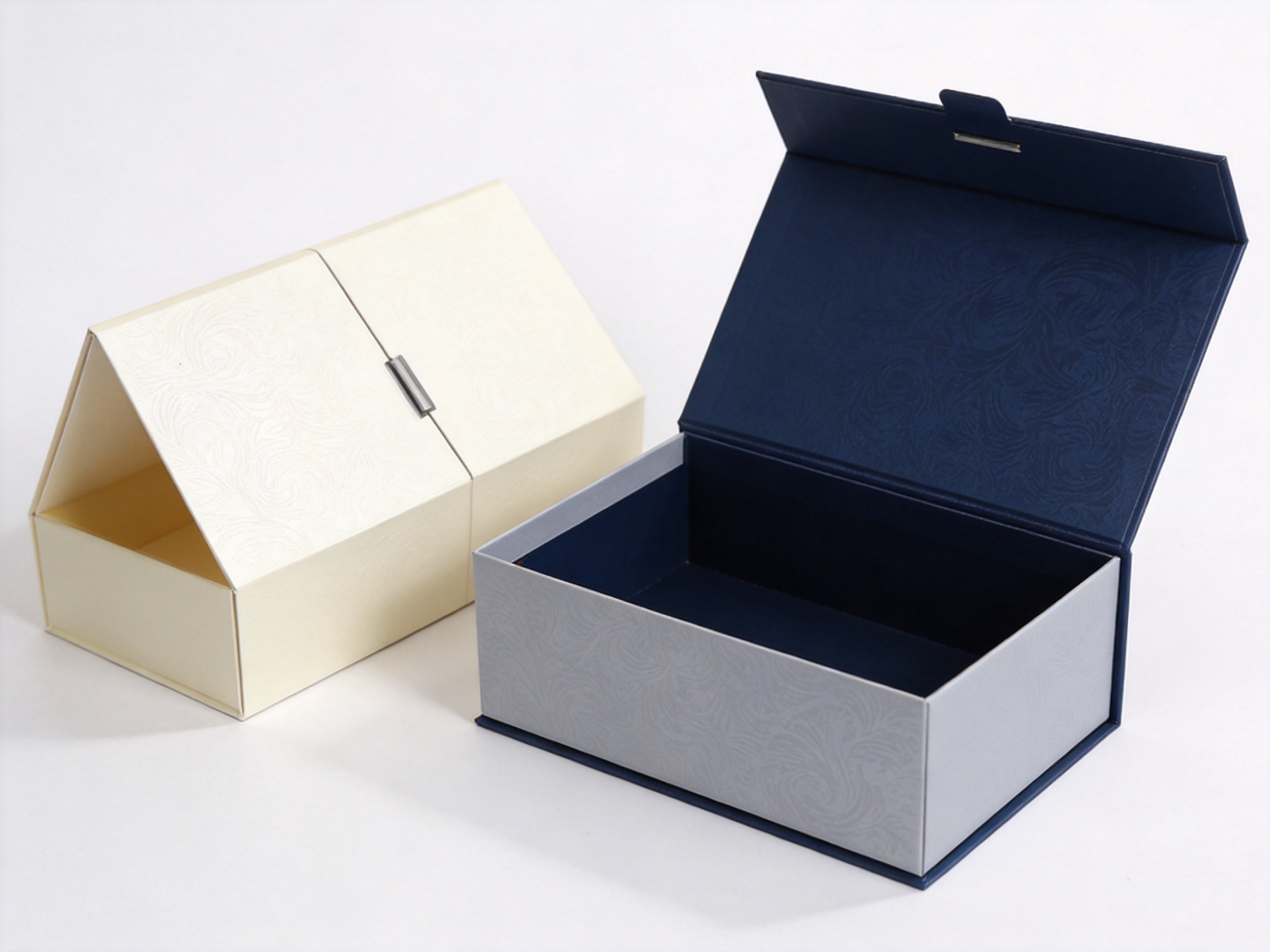
The external surface is made from embossed art paper. Embossing creates raised or recessed patterns that can be felt by hand and seen under changing light. Depending on the selected design, embossing may be used for logos, decorative borders, geometric patterns, botanical motifs, textures, or complete surface treatments. This gives designers an additional tool beyond color and printing.
The inner and structural materials are selected with biodegradability and reduced reliance on conventional plastic components in mind. While the exact environmental performance of any finished package depends on the selected coatings, inks, adhesives, and local recycling systems, the product is positioned as an eco-conscious alternative to packaging that uses a greater proportion of traditional plastics.
The standard product information includes a minimum order quantity of 1,000 pieces, making the box appropriate for commercial packaging programs, seasonal product launches, corporate gifting campaigns, retail collections, and customized promotional projects.
| Product type | Biodegradable laminated embossed art paper magnetic folding gift box |
| Category | Folding gift box |
| Structural material | 1200gsm sturdy cardboard |
| Surface material | 128gsm laminated art paper |
| Dimensions | 28.2 × 20.2 × 9.2 cm |
| Closure system | Integrated magnetic closure |
| Color options | Color library selections or custom colors |
| Artwork options | Custom artwork and professional design support |
| Minimum order quantity | 1,000 pieces |
| Design file formats | AI or CorelDRAW files |
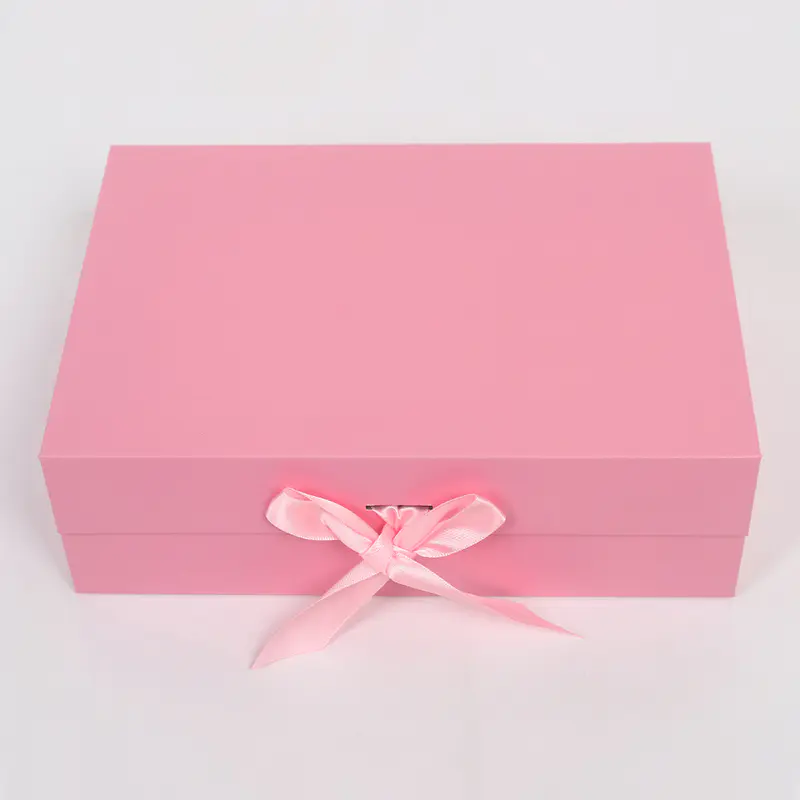
Z226 Biodegradable Laminated Embossed Art Paper Magnetic Folding Gift Box
The folding format is one of the most important practical advantages of the Z226. A fully assembled rigid gift box occupies much more volume before it reaches the customer or production line. This can increase warehouse requirements, container utilization, freight costs, and the risk of deformation during long-distance transportation.
A folding box can be shipped and stored in a flatter condition. When the packaging is needed, it can be opened and shaped into its final form. This approach allows importers, distributors, retailers, and fulfillment teams to keep more packaging units in a limited space. It is particularly useful for businesses that experience seasonal demand and need to hold packaging inventory before a holiday or promotional period.
The folding structure also supports more efficient handling. Staff can place products into the boxes as needed without assembling a complex package from multiple separate components. The integrated design reduces the number of loose parts that may be misplaced during packing operations.
From a logistics perspective, a folding structure may help reduce the amount of empty space around each unit. Although final freight efficiency depends on carton dimensions, packing method, order quantity, and product configuration, the ability to fold packaging before use generally creates more flexibility than a permanently formed box.
Another advantage is visual consistency. Because the folding panels, lid, base, and closure are designed as one coordinated package, the finished box can maintain a unified appearance. This is different from packaging assembled from a base, a separate lid, an insert, and external fastening materials, where inconsistent alignment can affect the presentation.
The magnetic closure provides a smooth and intuitive user experience. Magnets guide the lid toward the correct position and help it remain closed during ordinary handling. This is more convenient than packaging that requires adhesive strips, strings, buckles, or complicated locking tabs.
For consumers, a magnetic closure can make the box easier to open and close repeatedly. This is valuable when the box is intended to be reused for storage, keepsakes, stationery, accessories, or other personal items. The closure also avoids the torn-paper appearance that may result when adhesive strips are opened quickly.
For businesses, the magnetic system can reduce the number of packing steps. There is no need for the operator to apply tape to every box or verify that a separate ribbon is tied correctly. Fewer manual steps can contribute to a more consistent packing workflow and may lower the likelihood of presentation defects.
The magnetic design also creates a premium sensory impression. A properly aligned lid closes with a controlled movement, helping the package feel refined rather than disposable. This type of detail is especially valuable for premium gifts, corporate presentations, limited-edition products, and luxury-oriented retail programs.
The outer surface of a gift box is central to its appearance. Art paper is widely used in premium packaging because it offers a suitable base for high-quality printing, smooth color reproduction, decorative treatments, and finishing processes. In the Z226, the art paper is laminated onto the sturdy cardboard structure, creating a finished surface that combines printed design with physical protection.
Embossing adds a dimensional feature that cannot be achieved through flat printing alone. A raised logo can make a brand mark more noticeable without relying exclusively on metallic ink or a bright color. A subtle pattern can create a sophisticated texture across the lid. A recessed detail can provide contrast and depth. These possibilities allow the same basic box structure to serve many different product categories.
Texture also affects how a customer evaluates quality. When a person touches an embossed surface, the packaging communicates a sense of craftsmanship and intentional design. The tactile response can strengthen memory of the product and make the unboxing process more engaging.
Embossing can be combined with other finishing options, subject to design review and production feasibility. Potential combinations may include matte or gloss lamination, foil details, spot effects, printed patterns, debossed areas, or selective texture. The most effective designs usually maintain balance. Excessive decoration can make a box appear crowded, while carefully positioned embossing can emphasize the most important visual elements.
Businesses can select colors from an available color library or provide custom color requirements. This is important for companies that need packaging to match an existing identity system, product family, seasonal palette, or campaign theme. Color matching should be evaluated using approved physical samples where exact appearance is critical, because paper surfaces, lamination, lighting, and printing methods can affect the final result.
Custom artwork is also supported. Designers may create an individual box for a specific product or develop a family of boxes using a consistent visual language. A single format can be adapted for different collections by changing the print design, embossing pattern, color, or internal arrangement.
Artwork can be supplied in AI or CorelDRAW formats. Vector-based files are preferred for logos, line art, text, and dieline-related elements because they can be scaled with greater accuracy. Before production, all artwork should be checked for bleed, safe margins, fold lines, magnetic component placement, embossing boundaries, color specifications, and image resolution.
The environmental value of packaging depends on its complete life cycle, including raw material production, conversion, printing, transportation, use, and disposal. No single material feature can answer every sustainability question. However, replacing unnecessary plastic components with paper-based structures and designing packaging for efficient transportation are practical steps toward more responsible packaging development.
The Z226 is developed around biodegradable materials and a paper-based outer construction. Its cardboard structure and art paper surface provide a familiar material pathway for businesses seeking alternatives to packaging dominated by conventional plastics. Paper-based packaging may also be more compatible with established recycling systems in regions that collect and process paperboard materials.
The folding construction supports sustainability in another way by helping reduce storage and transportation volume. When more units can be packed into a shipping space, the number of shipments, vehicle loads, or warehouse movements required for a given quantity may be reduced. Actual environmental savings depend on logistics conditions, but efficient dimensional design is an important part of responsible packaging engineering.
The box is also suitable for reuse. A durable magnetic folding package may continue to serve the customer after the original product has been removed. It can be used for stationery, photographs, small accessories, cosmetics, documents, personal keepsakes, or household organization. Reuse extends the functional life of the packaging and can improve the customer's perception of value.
Businesses should communicate environmental claims carefully and accurately. Terms such as biodegradable, recyclable, compostable, and FSC-certified may refer to different standards, materials, or supply-chain conditions. Packaging buyers should confirm the specific composition of the final product, the type of lamination, the adhesive system, available certifications, and local disposal requirements before making detailed environmental statements.
A magnetic folding gift box can reduce the need for additional external tape, plastic wrapping, or decorative fastening materials. This can simplify the packaging system and create a cleaner appearance. However, product protection requirements must always be considered. If the packaged item is fragile, moisture-sensitive, or exposed to rough shipping conditions, an appropriate insert or protective layer may still be necessary.
The best sustainable packaging solution is not simply the package with the fewest materials. It is the package that uses materials efficiently, protects the product adequately, avoids unnecessary components, and can be handled responsibly at the end of its useful life. The Z226 provides a strong foundation for this type of balanced approach.
Companies evaluating gift boxes often compare folding rigid boxes with plastic boxes, ordinary folding cartons, fixed rigid boxes, and fabric or paper bags. Each format has advantages, but the Z226 combines several desirable features in one package.
| Packaging format | Typical strengths | Common limitations | Positioning of the Z226 |
| Thin plastic box | Lightweight and moisture resistant | May provide a less premium appearance and greater reliance on plastic | Offers a more tactile paper-based presentation |
| Basic folding carton | Low cost and efficient shipping | Usually less rigid and less luxurious | Adds sturdy cardboard, embossing, and magnetic closure |
| Fully assembled rigid box | Strong structure and premium appearance | Requires more storage and shipping volume | Retains a rigid presentation while folding for logistics |
| Paper bag | Simple and lightweight | Limited protection and lower structural stability | Provides stronger product support and reusable storage value |
| Ribbon-tie gift box | Decorative and familiar | Requires manual tying and may loosen during handling | Uses a convenient integrated magnetic closure |
Compared with a standard folding carton, the Z226 provides a more substantial unboxing experience. The 1200gsm cardboard gives the package a stronger body, while the laminated art paper and embossed treatment provide more opportunities for premium visual communication.
Compared with a conventional rigid box, the folding structure can provide better warehouse and freight flexibility. This is particularly valuable for businesses importing large quantities or selling products through multiple distribution channels. A package that stores efficiently can help reduce operational pressure without requiring the business to give up a high-quality presentation.
Compared with plastic packaging, the paper-based construction may appeal to customers who prefer more natural-looking or sustainability-oriented materials. The embossed paper surface also creates a warmer and more tactile appearance than many smooth molded plastic alternatives.
Compared with ribbon-based packaging, the magnetic closure supports faster packing and a neater presentation. Ribbons can still be used as optional decoration in some designs, but they do not need to serve as the primary closure mechanism.
The quality of a gift box depends not only on its design but also on the manufacturer's ability to convert that design into consistent production. Zhejiang Shihao Gift Packaging Co., Ltd. is an export-oriented manufacturer specializing in paper gift packaging boxes, product research and development, and sales. The company has more than 15 years of industry experience, providing a substantial foundation for handling customized packaging projects.
The company operates across approximately 20,000 square meters and employs around 300 people. This scale supports the coordination of design, sampling, material preparation, printing, surface finishing, die cutting, folding, assembly, inspection, packing, and shipment. Its reported average daily production capacity is approximately 5,000 sets of gift boxes.
A manufacturer with integrated capabilities can offer advantages over suppliers that outsource every stage of production. Internal coordination may help improve communication between design and manufacturing teams, reduce delays caused by multiple external vendors, and make it easier to identify and correct production issues. It can also support more consistent control over color, structure, finishing, and assembly.
The company has its own in-house design team and updates dozens of products weekly. This product development activity helps the manufacturer understand current packaging trends, emerging finishing preferences, retail requirements, and practical construction methods.
In-house designers can assist customers with more than decoration. They can provide guidance on structural proportions, opening methods, artwork placement, material selection, fold behavior, insert concepts, and production feasibility. This is especially helpful when a customer has a general concept but has not yet prepared a complete dieline or manufacturing file.
Professional design support can also reduce the risk of errors before mass production. A box may look attractive on a computer screen but fail in production if a logo crosses a fold, an embossing area is too close to an edge, a magnet is placed incorrectly, or a color is not suitable for the selected surface. Early technical review helps transform a visual idea into a manufacturable product.
The Z226 combines 1200gsm cardboard with 128gsm art paper. These materials must be compatible with lamination, printing, embossing, folding, and magnetic assembly. The board must provide enough rigidity while remaining suitable for the folding areas. The surface paper must adhere evenly and maintain a clean appearance around corners and edges.
Production coordination is important because each process can influence the next. Printing must be completed with suitable allowances for trimming and wrapping. Lamination must be even and free from bubbles or lifting. Embossing pressure must be sufficient to create a visible texture without cracking the paper. Folding must follow accurate crease positions. Magnetic components must be aligned so that the lid closes smoothly.
Integrated manufacturing experience allows the supplier to evaluate these relationships rather than treating every step as an isolated operation. This is one of the key differences between a packaging factory with complete process knowledge and a trading company that simply passes files between unrelated subcontractors.
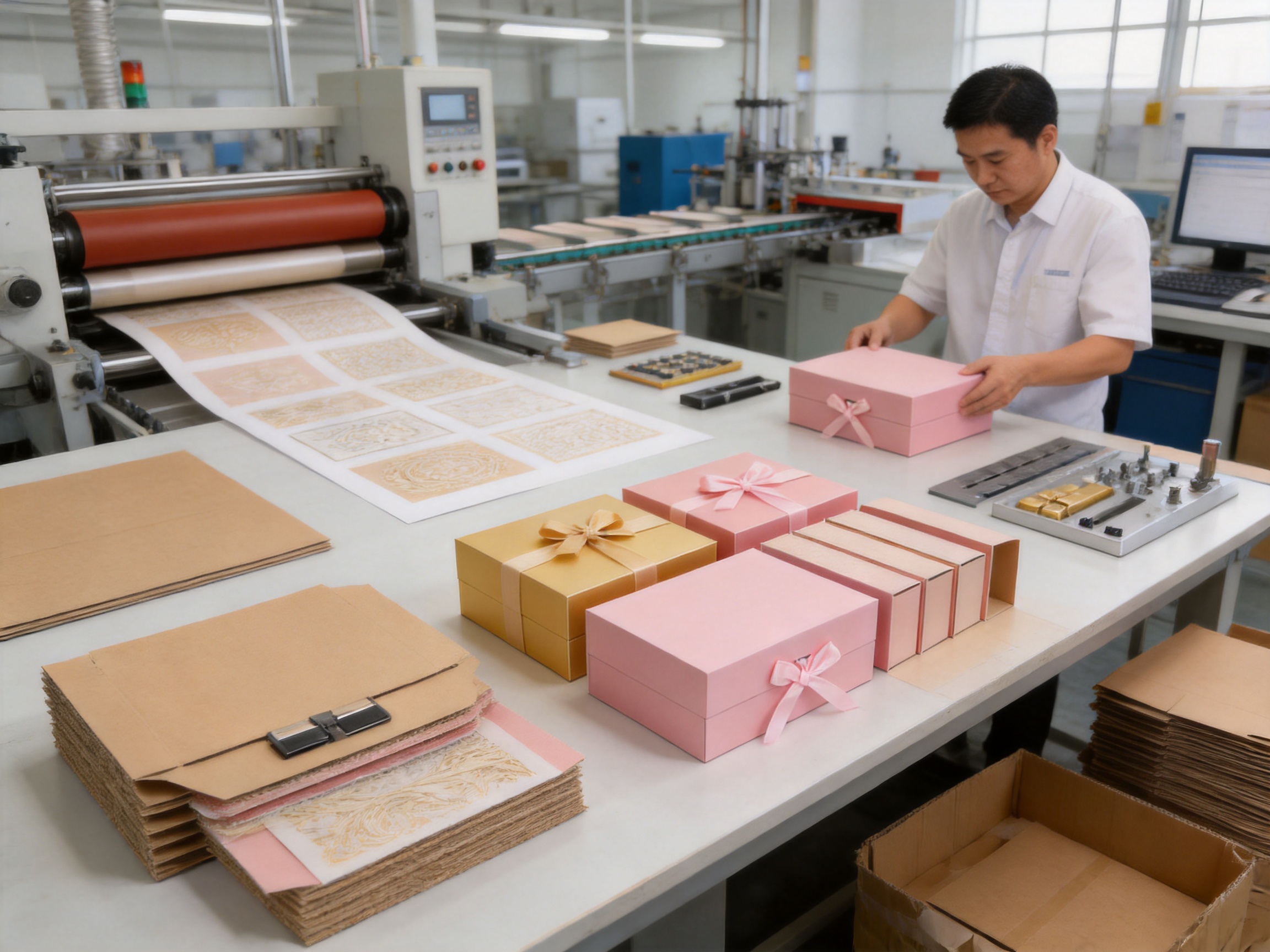
Quality control should begin with incoming materials and continue through finished-product inspection. For the Z226, important inspection points include cardboard thickness, art paper quality, color consistency, lamination uniformity, embossing clarity, structural dimensions, fold accuracy, magnet placement, surface cleanliness, and overall assembly.
Cardboard should be checked for thickness, stiffness, flatness, and visible defects. The 1200gsm specification indicates a substantial board, but actual performance also depends on fiber composition, moisture condition, caliper consistency, and how the board responds to folding and wrapping.
Art paper should be evaluated for surface smoothness, printability, color response, and compatibility with lamination. If custom colors are required, approved color samples should be retained as a reference for production comparison.
Printing inspection should verify registration, image sharpness, text clarity, color consistency, and the absence of visible marks. For embossed designs, the raised or recessed elements should be clear and correctly positioned. Edges should remain clean, and the paper should not show excessive cracking caused by unsuitable pressure or grain direction.
Lamination should be checked for bubbles, wrinkles, lifting, uneven gloss, scratches, and edge separation. Surface defects are highly visible on premium gift packaging, so inspection standards should be agreed upon before mass production.
Finished dimensions should be measured to verify that the box matches the approved sample and technical drawing. The folding panels should open and close correctly. The lid should align with the base, and the magnetic closure should hold the box shut without excessive force.
Functional testing may include repeated opening and closing, visual inspection after folding, basic load evaluation, and transportation simulation when appropriate. The exact tests should reflect the product being packaged. A box for lightweight stationery may require different testing from a box for heavier accessories or multiple products.
Customization is one of the strongest advantages of working with a specialized gift box manufacturer. A standard dimension can be used as a starting point, but customers may request changes to the external color, printed artwork, embossing pattern, surface finish, internal arrangement, closure appearance, or product-specific inserts.
Custom color selection allows packaging to match a corporate identity, product category, holiday theme, wedding palette, or limited-edition campaign. Neutral colors such as white, black, cream, gray, and kraft-inspired tones can create a restrained premium appearance. Strong colors can make the package more energetic and suitable for promotional products or youth-oriented collections.
Embossing can be customized to emphasize a logo, create an all-over pattern, or add a subtle tactile detail to selected areas. A brand may use the same embossed mark across several box sizes to create a recognizable packaging family.
Interior customization can also be considered. Depending on the product, the box may include paperboard supports, compartments, trays, wrapped inserts, or protective cushions. Internal components should be designed to hold the product securely while maintaining the sustainability and visual goals of the overall packaging system.
Custom packaging development generally involves several stages: concept discussion, structural proposal, artwork preparation, prototype or sample production, sample approval, production planning, mass manufacturing, inspection, and shipment. Clear communication at each stage helps prevent misunderstandings about color, dimensions, finishing, and functional requirements.
Corporate gifts need to communicate professionalism and thoughtfulness. A magnetic folding box can package employee recognition items, client gifts, event materials, promotional collections, or executive accessories. Embossed artwork can add a discreet corporate identity without making the package appear overly promotional.
The dimensions of the Z226 make it suitable for stationery sets, notebooks, writing instruments, desk accessories, greeting cards, paper goods, and organized office collections. After the original products are removed, the box can be reused as a stationery storage box, helping extend its usefulness.
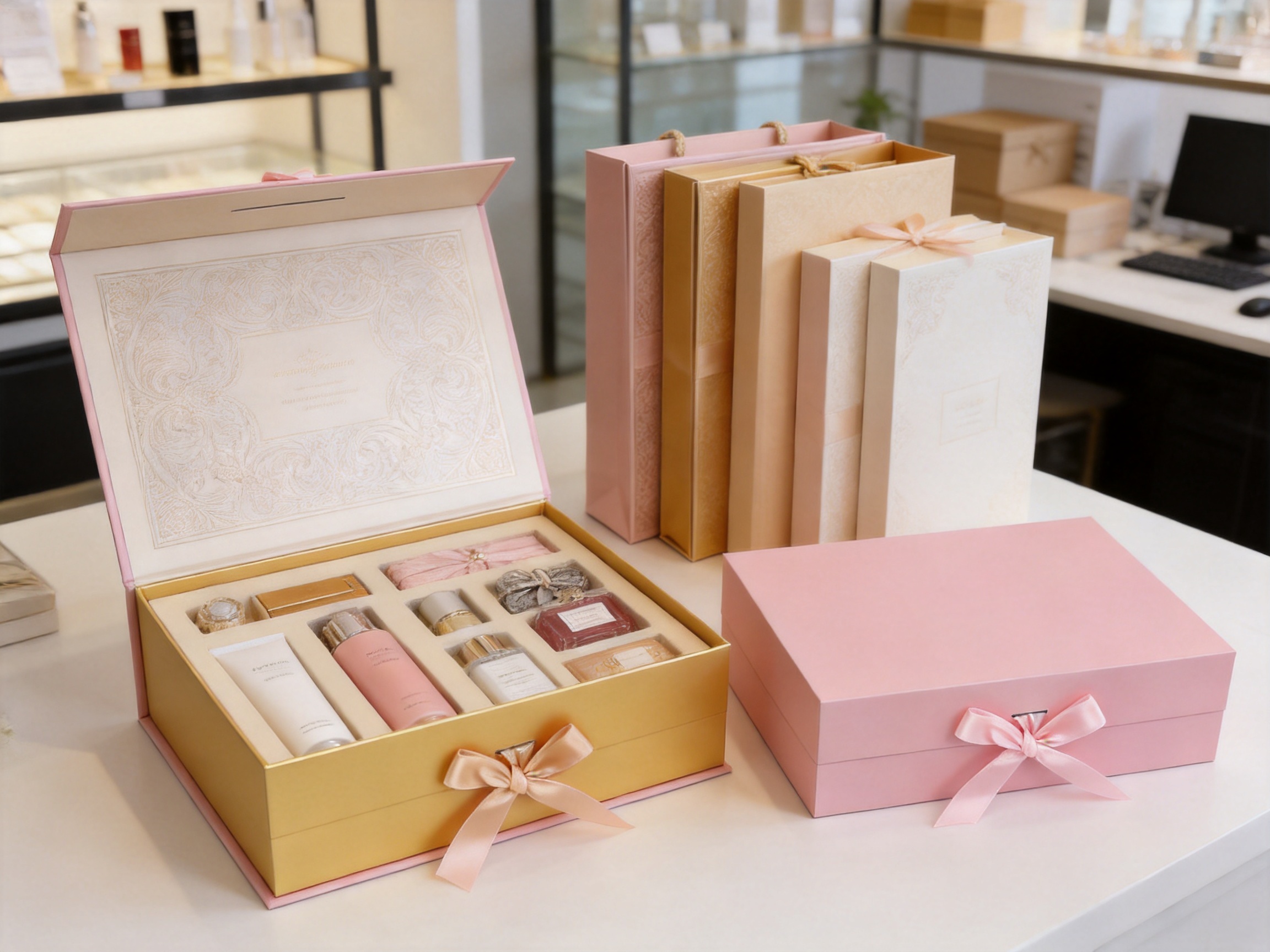
Beauty products often rely heavily on presentation. A tactile embossed surface and coordinated color design can support a premium positioning for skincare sets, fragrance collections, cosmetics, grooming accessories, and wellness products. Appropriate internal inserts can keep bottles, jars, and small items organized.
Although jewelry often requires smaller specialized boxes, the Z226 format may be used for a larger accessory collection, gift set, scarf, wallet, belt, fashion accessory, or coordinated presentation kit. The rigid board helps create a stronger presentation than a simple paper sleeve or bag.
Seasonal campaigns benefit from customizable packaging because a consistent box structure can be adapted for different events. Spring patterns, wedding designs, festive colors, anniversary graphics, and limited-edition artwork can all be developed using the same basic folding format.
Retailers can use the box for products that need a premium shelf presence. E-commerce businesses can also benefit from its gift-ready appearance. However, online sellers should test the complete shipping configuration, including outer cartons and protective materials, to ensure that the finished gift box arrives without corner damage, surface scratches, or deformation.
Packaging logistics are often overlooked during the design stage. A beautiful box may become expensive or difficult to manage if it requires excessive storage space or has a complicated assembly process. The folding format of the Z226 addresses this issue by allowing the packaging to remain compact before use.
Businesses can organize folded boxes in cartons and store them in a smaller area than fully assembled rigid boxes would require. This can be beneficial for retailers with limited backroom space, fulfillment centers handling multiple product lines, and importers managing inventory across different locations.
The compact format may also help simplify shipping planning. Carton quantities, pallet configurations, and container loading can be optimized around the folded dimensions. Final results will depend on the box structure and packing method, so a logistics review should be performed for each order.
Reduced volume does not mean that quality must be sacrificed. The box is designed to fold for transportation and then present a structured appearance during use. This combination is a major competitive advantage for businesses seeking premium packaging with more manageable logistics.
Customers should provide editable vector artwork whenever possible. AI and CorelDRAW files allow the production team to inspect individual design elements, adjust technical details, and prepare the artwork for printing and finishing. Raster images may still be used for photographs or complex illustrations, but they should have sufficient resolution for the intended print size.
Artwork should be organized clearly. Separate layers can be used for printed graphics, dielines, embossing, foil, cut lines, fold lines, and special instructions. Text should be converted to outlines if font availability may be an issue. Important logos and text should remain within safe areas and away from cuts, folds, corners, and magnetic components.
Color requirements should be specified clearly. If a brand uses a standardized color system, the reference should be identified. Physical proofs are recommended when color accuracy is important because the final result can vary according to the paper, ink, lamination, lighting, and viewing environment.
Customers should also indicate the intended product weight and dimensions. The external size of the box alone does not determine whether it is suitable. The product must fit comfortably, and any insert should be allowed for in the internal measurements. A small amount of clearance may be needed for easy loading and removal, while excessive space can allow the product to move during shipping.
A successful custom packaging project begins with a detailed product brief. The brief should identify the product dimensions, weight, quantity, target market, desired appearance, environmental objectives, delivery location, expected order schedule, and budget range.
The next stage is structural and visual confirmation. The manufacturer can review whether the standard Z226 dimensions are suitable or whether modifications are needed. The customer can then provide artwork or request design assistance. If special embossing, colors, inserts, or finishes are required, they should be discussed before a quotation is finalized.
Sampling is an important stage because digital drawings cannot fully communicate the feel of the finished material. A physical sample can show the rigidity of the cardboard, the texture of the embossing, the behavior of the magnetic closure, the accuracy of the folding structure, and the overall visual balance.
After sample approval, mass production can be scheduled. The minimum order quantity for the standard product is 1,000 pieces. Production timing depends on artwork readiness, material availability, order quantity, finishing requirements, sampling needs, and shipping arrangements.
For large or time-sensitive projects, customers should plan with sufficient lead time. Seasonal packaging should be ordered well before the selling period. It is also wise to confirm whether future reorders will use the same materials, colors, and finishing standards so that packaging remains consistent across production batches.
Packaging manufacturing involves many small details that influence the final result. An experienced supplier is more likely to understand how paper grain, board thickness, lamination, embossing, folding, and magnetic placement interact. This knowledge can help prevent structural failures and visual inconsistencies.
More than 15 years of manufacturing experience gives Zhejiang Shihao Gift Packaging Co., Ltd. a broad base of project knowledge. Its product range includes kits, storage boxes, folding boxes, jewelry boxes, and gift boxes. Experience across several packaging categories can help the company recommend appropriate structures for different products and market requirements.
The company exports to Europe, the United States, the Middle East, and other regions. International export experience requires attention to communication, documentation, packing quality, production schedules, and destination-market expectations. It also gives the manufacturer exposure to different design preferences and technical requirements.
The company's BSCI and FSC certifications are additional indicators of its commitment to recognized social responsibility and forest-related supply-chain standards. Buyers should review the scope and validity of applicable certifications for the specific project, but such credentials can support supplier evaluation and responsible sourcing programs.
The combination of a design team, production facilities, export experience, and customized service allows the company to support customers from initial concept through delivery. This integrated approach can be more efficient than coordinating separate designers, printers, finishing suppliers, and assemblers.
Finished boxes should be stored in a dry, clean environment away from direct sunlight, water, excessive humidity, and strong heat. Paper-based products can absorb moisture, which may affect flatness, surface appearance, folding performance, and adhesive strength.
Boxes should remain properly packed until use. Heavy objects should not be placed on top of cartons if they may compress the folded structures or damage the embossed surface. During handling, clean gloves may be useful for very light-colored or premium laminated surfaces where fingerprints are easily visible.
When forming the box, operators should follow the intended fold lines rather than forcing panels in the wrong direction. The lid should be aligned naturally with the magnetic closure. Excessive twisting or pulling may affect the folding points or magnetic components.
For long-term reuse, consumers should avoid exposing the box to water or excessive humidity. A dry cloth can be used to remove dust from the surface. These simple practices can help maintain the appearance and function of the package beyond its initial presentation purpose.
The box uses 1200gsm sturdy cardboard as its structural material and 128gsm art paper laminated onto the surface. Its design also incorporates biodegradable material considerations and reduces dependence on conventional plastic packaging components.
The listed dimensions are 28.2 × 20.2 × 9.2 cm. Buyers should confirm whether these are the appropriate external or finished dimensions for their product and should provide product measurements before final approval.
The integrated magnetic folding design is intended to simplify opening and closing without requiring the user to apply glue or tape. Specific factory assembly methods may still involve adhesives within the manufacturing process, depending on the construction and material requirements.
Yes. Customers can select colors from a color library or request custom designs. Artwork can include logos, product graphics, patterns, text, and embossed elements. Professional design assistance is available for projects that need technical or visual support.
AI and CorelDRAW files are identified as suitable design formats. Vector artwork is recommended for logos, text, line drawings, and other elements requiring precise reproduction.
The listed minimum order quantity is 1,000 pieces. The final order requirements may depend on the degree of customization, materials, finishing processes, and production plan.
Yes. Its rigid structure and magnetic closure make it suitable for reuse as a storage box for stationery, documents, accessories, keepsakes, or other small items. Reuse can extend the functional life of the packaging.
The box can be stored and transported in a folded condition, which generally requires less space than a fully assembled rigid box. This may improve warehouse organization and shipping efficiency, although exact savings depend on carton design, order quantity, and loading arrangements.
The product is described as using biodegradable materials and as an environmentally friendly alternative to traditional plastic packaging. Buyers should confirm the exact composition of the laminate, magnets, adhesives, inks, and any inserts before making a plastic-free or fully recyclable claim.
Internal inserts can be discussed as part of a customized packaging project. The insert should be designed according to the product's dimensions, weight, fragility, presentation requirements, and environmental objectives.
Potential applications include corporate gifting, stationery, office accessories, beauty products, personal care collections, fashion accessories, retail products, event gifts, holiday packaging, and e-commerce gift sets.
Embossing creates a raised or recessed tactile effect. It can highlight a logo, add depth to a pattern, improve visual differentiation, and make the box feel more premium when handled.
An experienced manufacturer understands how materials and processes interact. This can improve structural reliability, surface quality, color consistency, sampling accuracy, production planning, and communication during customized projects.
The manufacturer is described as having passed BSCI and FSC certifications. Buyers should request current documentation and confirm that the relevant certification scope applies to the materials and production requirements of their order.
A sample should be checked for dimensions, product fit, board rigidity, surface appearance, embossing quality, color, folding accuracy, magnetic closure performance, corner finishing, and compatibility with the intended packing and shipping process.
Before placing an order, buyers should confirm the product dimensions and internal capacity. The packaged item should fit securely without excessive pressure or unnecessary empty space. If multiple products are packed together, the arrangement should be tested with the intended insert or divider.
Buyers should define the desired surface appearance, including matte or gloss effects, embossing location, color references, printed artwork, and any optional finishing. It is helpful to identify which details are essential and which can be adjusted if a more efficient production method is recommended.
Environmental expectations should also be documented. Buyers may wish to ask about the board source, paper certification, lamination type, adhesive composition, ink system, recyclability, biodegradability conditions, and recommended disposal pathway. These questions help ensure that marketing claims accurately reflect the finished package.
Operational requirements should include order quantity, delivery destination, target date, packing method, carton configuration, and acceptable quality tolerances. A written specification reduces the chance of different parties interpreting the project differently.
Finally, buyers should consider the complete customer experience. The box should not only look attractive in photographs; it should open naturally, protect the product, close securely, and remain useful after the initial unboxing. A successful package performs well at every stage from factory to customer.
The Z226 biodegradable laminated embossed art paper magnetic folding gift box offers a balanced solution for businesses seeking premium presentation, practical logistics, and a more environmentally responsible material direction. Its 1200gsm cardboard structure provides substantial support, while the laminated 128gsm art paper creates a suitable surface for color, printing, and embossed decoration.
The magnetic closure improves convenience and creates a refined opening experience. The folding construction helps reduce storage and transportation volume compared with fully assembled rigid boxes. The reusable format can provide additional value after the original product has been removed, particularly when the box is used for stationery, accessories, documents, or keepsakes.
Its advantages become stronger when combined with the capabilities of an experienced manufacturing partner. With more than 15 years in the industry, approximately 20,000 square meters of production space, around 300 employees, in-house design resources, international export experience, and reported daily output of about 5,000 gift box sets, Zhejiang Shihao Gift Packaging Co., Ltd. is equipped to support both standard and customized packaging programs.
For brands, retailers, event organizers, and product manufacturers, this packaging format provides an opportunity to create a memorable presentation without ignoring practical concerns. With careful material verification, accurate artwork preparation, suitable sampling, and clear quality standards, the Z226 can serve as a strong foundation for modern gift packaging projects.
1. Product specification information for the Z226 biodegradable laminated embossed art paper magnetic folding gift box.
2. Packaging design and converting principles for paperboard folding boxes.
3. General guidance on paper-based packaging materials, surface finishing, and structural design.
4. Sustainable packaging evaluation principles, including material sourcing, logistics efficiency, reuse, and end-of-life considerations.
5. Quality-control practices for printed, laminated, embossed, and magnetically closed gift packaging.
6. Manufacturer-provided company information concerning production capacity, design services, export markets, and certification credentials.
Recommended Products

Contact Us

No. 15, Xiayang Road, Huangzhai Town, Jinhua, Zhejiang, China

(+86) 579-84230069

(+86) 13085675766


Products

Gift Box Packaging Manufacturer
 English
 Français
 Español
 عربى