2026-08-29
Seasonal packaging plays an important role in how a gift is presented, protected, and remembered. During Christmas and New Year celebrations, the package often becomes part of the gift itself. A well-designed box can create anticipation before it is opened, strengthen the emotional value of the contents, and help a business communicate quality through every detail. The 605 Square Handmade Cardboard Printed Rigid Christmas and New Year Gift Box Packaging is designed for precisely this purpose.
This square rigid gift box combines a strong cardboard structure, a smooth art paper-coated surface, festive printed decoration, and careful handmade finishing. It is suitable for candies, chocolates, ornaments, small accessories, corporate holiday gifts, seasonal merchandise, and other products that require an attractive and dependable presentation. Its practical construction allows it to be stacked, displayed, stored, and transported efficiently, while its printed exterior gives it a distinctive seasonal identity.
Manufactured by Zhejiang Shihao Gift Packaging Co., Ltd., the 605 series reflects the capabilities of an experienced paper packaging producer with more than 15 years of industry experience. The company operates a large production facility, maintains an in-house design team, and supplies packaging to customers in Europe, the United States, the Middle East, and other markets. Its production strengths include product development, structural design, printing, finishing, assembly, quality management, and customized packaging services.
For buyers seeking packaging that offers more than basic protection, this square Christmas box provides a balanced combination of appearance, durability, customization, and commercial practicality. It is an especially useful option for retailers, gift suppliers, corporate buyers, wholesalers, event organizers, and brands preparing seasonal collections.
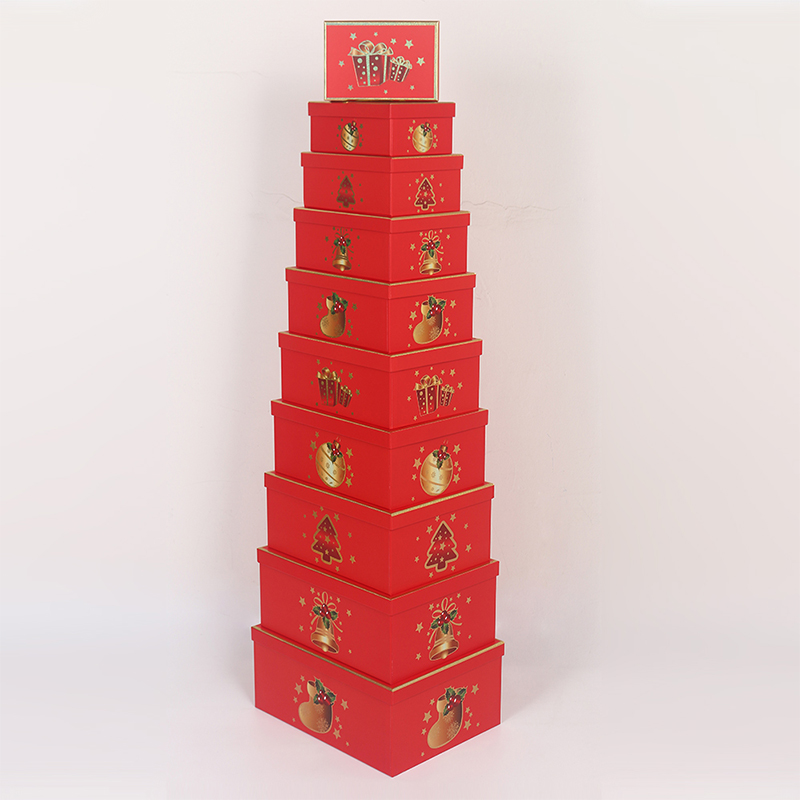
605 Square Handmade Cardboard Printed Rigid Christmas and New Year Gift Box Packaging
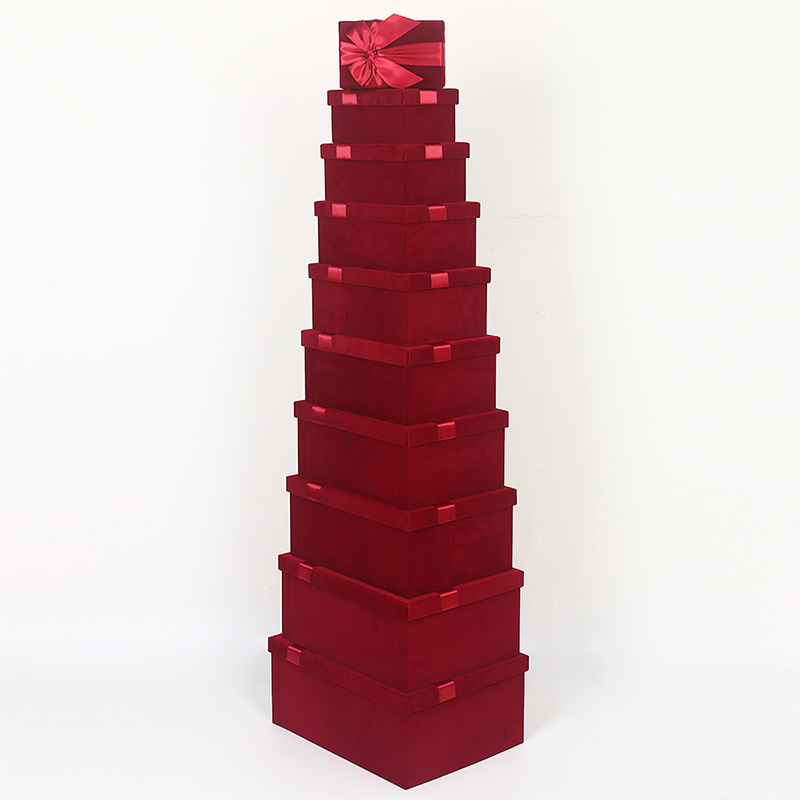
The 605 Square Handmade Cardboard Printed Rigid Christmas and New Year Gift Box is a reusable-style presentation box produced from rigid cardboard with an art paper-coated outer surface. Its square form gives it a clean, balanced appearance and makes it convenient to arrange in retail displays or warehouse storage. The rigid construction also helps the box maintain its shape when filled with suitable products.
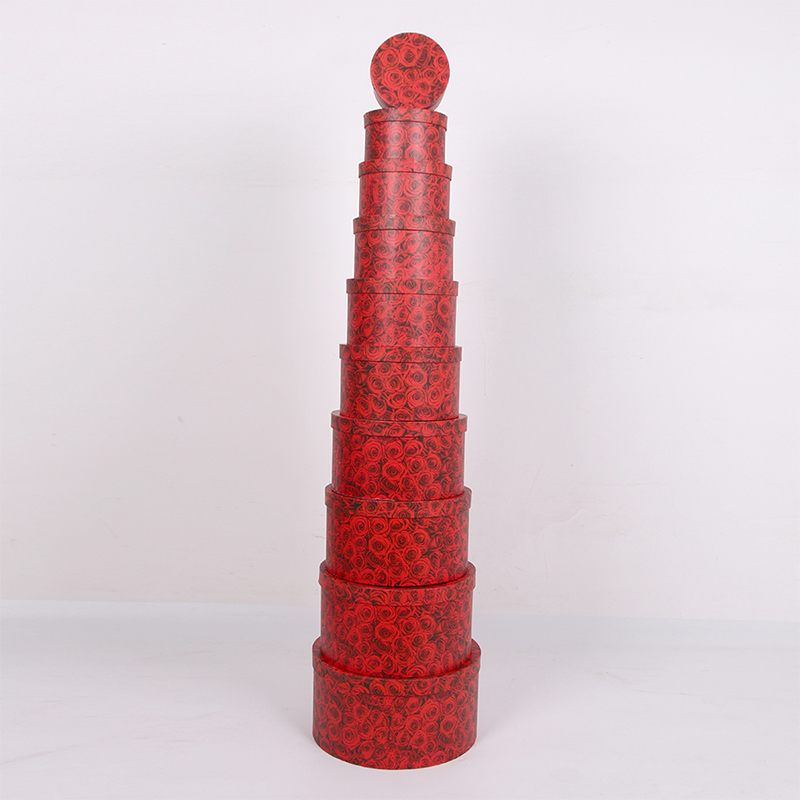
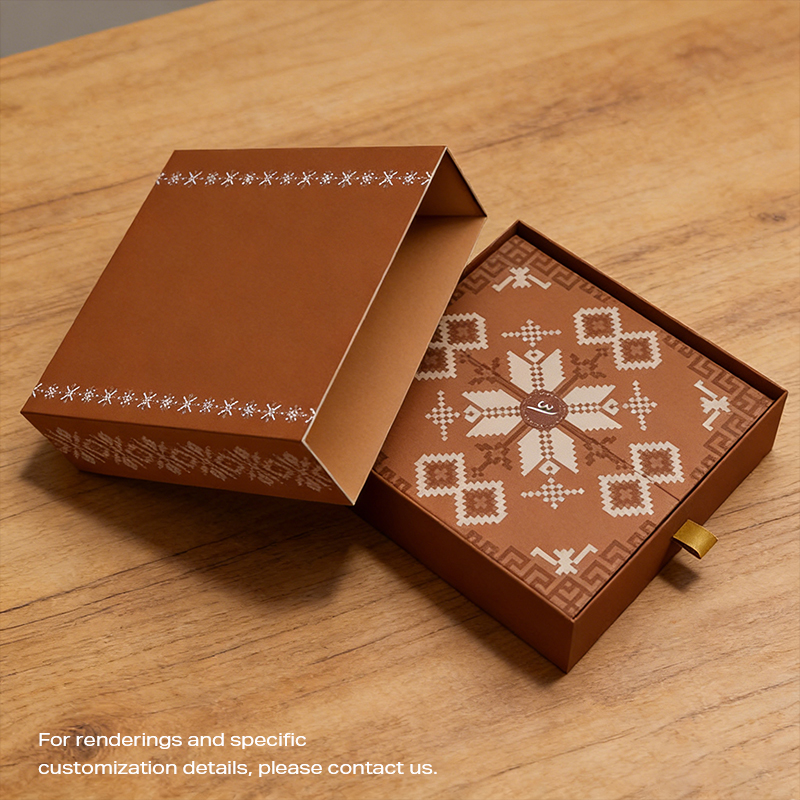
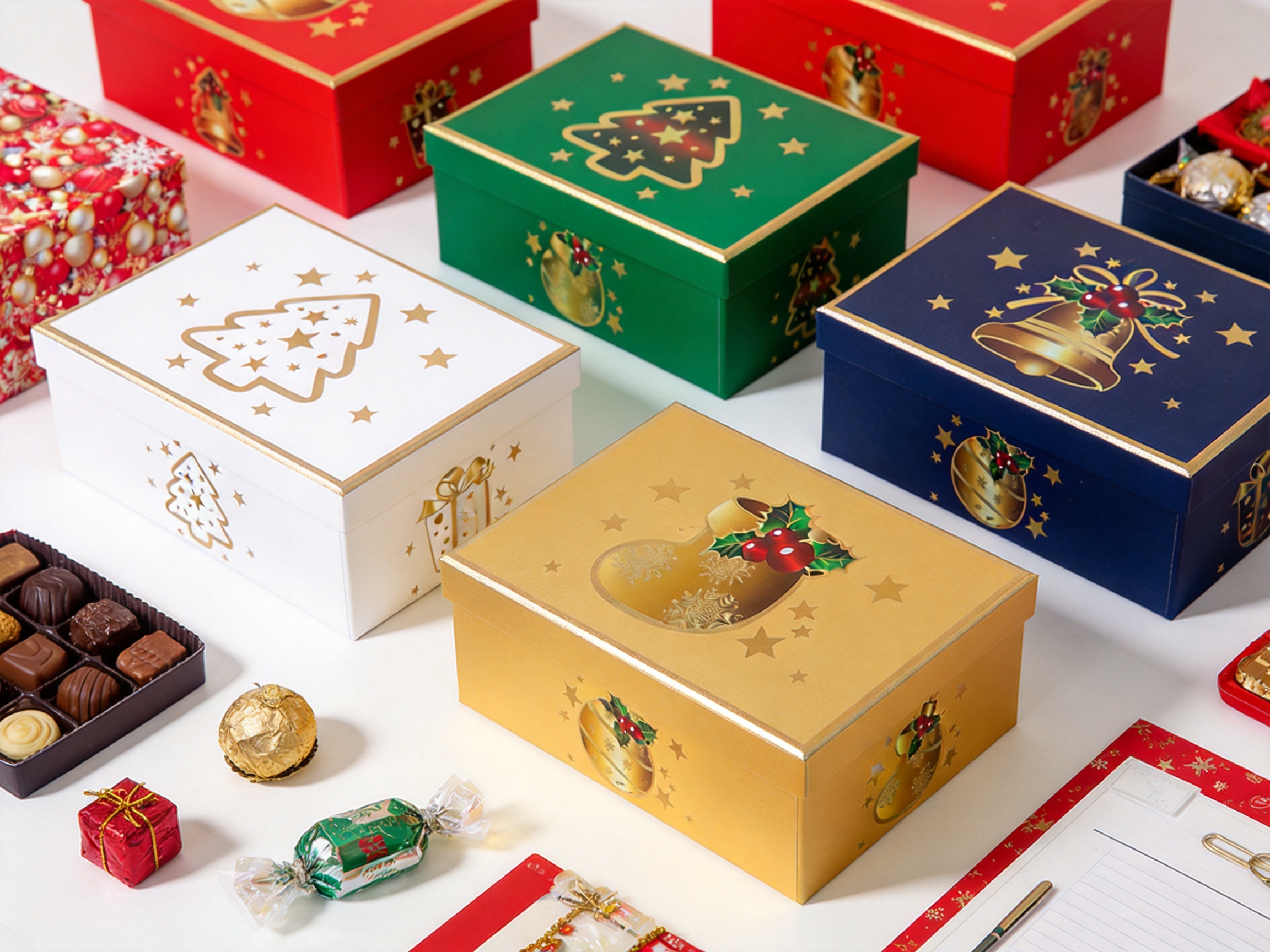
The exterior can be printed with festive imagery, including Christmas trees, snowflakes, stars, ornaments, winter patterns, gift motifs, and New Year decorations. These visual elements can be adapted to a seasonal campaign, a private-label brand, a corporate identity, or a specific product theme. Depending on the customer’s requirements, the surface may be produced using CMYK colors, Pantone colors, or customized colors.
The box is identified as project number 605#. The available size range is listed from approximately 37.5 × 29 × 16 centimeters for size 1# to approximately 19 × 13 × 7.5 centimeters for size 10#. This range allows buyers to select a format that is appropriate for different product dimensions and gifting scenarios. Exact size selection, structural details, and artwork can be discussed during the quotation and sampling stages.
The product is intended for gift packaging, storage, gifts, and crafts. It is supplied in sets of 10 pieces, with four sets per carton. The listed carton dimensions are approximately 59.5 × 38.5 × 35 centimeters, and the stated carton volume is approximately 0.08 cubic meters. The minimum order quantity is 300 sets, while the expected delivery period is approximately 7 to 45 days or according to the customer’s requirements and order conditions.
| Product Name | 605 Square Handmade Cardboard Printed Rigid Christmas and New Year Gift Box |
| Project Number | 605# |
| Primary Material | Rigid cardboard with an art paper-coated surface |
| Shape | Square |
| Color Options | CMYK, Pantone colors, and customized colors |
| Available Dimensions | Approximately 37.5 × 29 × 16 cm to 19 × 13 × 7.5 cm |
| Main Applications | Gift packaging, storage, gifts, crafts, seasonal merchandise, and corporate gifting |
| Packaging Quantity | 10 pieces per set |
| Carton Packing | 4 sets per carton |
| Minimum Order Quantity | 300 sets |
| Estimated Delivery | 7 to 45 days or according to customer requirements |
One of the main benefits of the 605 box is its ability to combine structural simplicity with strong visual impact. The square shape offers a broad, organized surface for artwork. Unlike irregular packaging formats, a square box provides clear front, side, top, and bottom panels that can be coordinated into one complete visual story.
For Christmas collections, the packaging may feature traditional red, green, white, gold, silver, or deep blue color combinations. A New Year collection may use metallic accents, stars, fireworks, clocks, confetti, or elegant geometric patterns. Because the product supports CMYK, Pantone, and custom colors, buyers can develop packaging that corresponds closely with an existing brand palette or seasonal marketing campaign.
Festive printed packaging can also help products stand out in a crowded retail environment. During the holiday season, shelves, gift counters, online product photographs, and promotional displays are filled with competing products. A carefully planned box can attract attention through contrast, color balance, pattern scale, and surface clarity. It can make a modest product appear more considered and can help premium products communicate their value before the customer opens the package.
The art paper-coated surface provides a suitable foundation for detailed printing and a refined tactile experience. A smooth outer surface supports sharper visual reproduction than an untreated, rough board surface. It also gives the box a cleaner appearance when used for product photography, retail display, subscription gifting, and corporate presentation.
The design team can support customers who already have finished artwork as well as customers who need guidance during development. Design files are accepted in commonly used professional formats, including Artificial Intelligence and Core Drawing files. The company’s in-house design team can also offer advice on the relationship between artwork, box structure, print area, folding or assembly requirements, and production feasibility.
Presentation is important, but seasonal packaging must also protect the products inside. The rigid cardboard construction of the 605 box gives it greater shape stability than many lightweight folding cartons. This makes it appropriate for small gifts and merchandise that should remain organized and presentable during handling, storage, and transport.
A rigid box can reduce the risk of visible crushing caused by ordinary stacking pressure when the packaging is properly specified and packed. It can also provide a more substantial hand feel, which is particularly valuable for premium chocolates, gift sets, ornaments, cosmetics, accessories, and corporate gifts. When a recipient lifts a rigid box, the material communicates a sense of solidity and preparation.
The box is not intended to replace specialized protective packaging for fragile, heavy, wet, or exceptionally sensitive products. However, for suitable lightweight and medium-light gift items, it offers a useful combination of containment and presentation. Internal inserts, paper padding, dividers, or other protective components may be considered when the product requires additional positioning or cushioning.
The square structure also supports practical stacking. Retailers and distributors can arrange multiple units in rows, while warehouses can use the regular shape to improve carton organization. In comparison with unusual or highly tapered packaging, the consistent geometry of the 605 series may help simplify storage and display planning.
Product protection depends on several factors, including the selected size, board specification, product weight, closure structure, internal fit, shipping conditions, and carton arrangement. For this reason, buyers should provide accurate product dimensions and usage information when requesting a quotation. The manufacturer can then recommend a suitable size and confirm whether sampling is needed before mass production.
Many basic seasonal packages are made from relatively thin paperboard and are designed primarily for low-cost retail use. These cartons can be efficient for lightweight products, but they may not provide the strong tactile impression or shape retention expected from a premium gift. The 605 rigid box offers a more substantial structure, helping the package feel more valuable and durable.
Plain storage boxes may protect products but often provide little seasonal emotion. The printed surface of the 605 box can incorporate festive themes that support the occasion and create a stronger unboxing experience. The packaging can be designed to feel warm, luxurious, playful, traditional, modern, or corporate depending on the selected artwork and color system.
Some suppliers offer seasonal boxes with fixed patterns that cannot be adjusted for different markets or brands. The 605 project supports custom artwork and color choices, giving customers more control over the final presentation. A buyer can develop separate versions for different product categories, regions, campaigns, or customer groups while maintaining the same basic box structure.
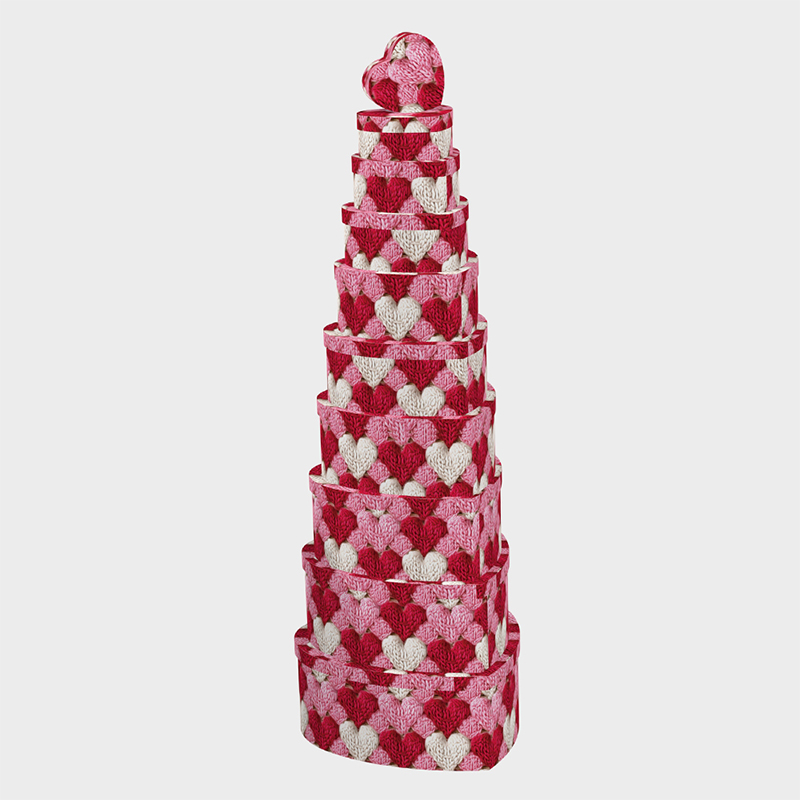
The listed range from size 1# to size 10# gives buyers access to multiple formats within the same project family. This can help a business create a coordinated product line rather than using unrelated boxes for each item. A consistent family of sizes and visual treatments may improve shelf organization and strengthen brand recognition.
The combination of rigid board, handmade finishing, and printed artwork creates a more elevated package than a simple disposable wrapper. For corporate gifts and high-end seasonal products, this distinction is important. A package that looks and feels carefully produced may improve the recipient’s perception of the contents and the organization presenting them.
Although the 605 box is developed for Christmas and New Year applications, its structure can support other seasonal and celebratory uses. With revised artwork, it may be adapted for anniversaries, weddings, birthdays, cultural festivals, retail promotions, and general gift collections. Some recipients may also reuse a rigid box for storage, crafts, accessories, or household items, extending its practical life after the original gift has been opened.
The quality of a rigid gift box is determined not only by its materials but also by the consistency of the manufacturing process. A professional production workflow normally begins with customer communication and structural planning, followed by artwork confirmation, material preparation, printing, cutting, forming, wrapping, assembly, inspection, and packing. Each stage contributes to the final appearance and performance of the package.
The manufacturing process begins with a review of the customer’s product, desired box size, target market, visual direction, quantity, delivery schedule, and budget. The supplier assesses whether the requested product will fit securely inside the chosen box format and whether the selected structure is suitable for handling and shipping.
At this stage, the in-house design team can advise on dimensions, panel proportions, artwork placement, and production limitations. Structural planning is particularly important for seasonal projects because delivery schedules are often tied to fixed retail dates. Early confirmation helps reduce the risk of late changes, inaccurate artwork, or unsuitable material selections.
Once the design direction is confirmed, artwork is prepared for production. The design team checks the dimensions, panel arrangement, bleed areas, fold or wrap positions, color specifications, and image quality. Files supplied in Artificial Intelligence or Core Drawing formats can be examined and adjusted for production requirements.
Prepress review helps ensure that important text, logos, patterns, and decorative elements do not fall into unsuitable areas. It also helps confirm whether a customer’s selected colors can be reproduced consistently using CMYK or whether specific Pantone references should be used. This process is particularly valuable for branded packaging, where color consistency contributes to recognition and credibility.
The box uses rigid cardboard with an art paper-coated surface. The cardboard provides the structural body, while the coated paper creates the printable outer layer and refined surface appearance. Material preparation includes checking the board condition, paper quality, dimensions, and suitability for the planned forming and wrapping process.
Material selection must be matched to the size and intended use of the box. Larger formats, heavier contents, and more demanding shipping conditions may require additional structural consideration. The manufacturer’s experience in paper gift packaging allows the material system to be evaluated as part of the complete product rather than as an isolated component.
The printed surface is produced according to the approved artwork and color requirements. CMYK printing can support full-color illustrations, gradients, photographs, and complex seasonal compositions. Pantone colors may be selected when a more specific brand or decorative color target is needed. Custom color discussions can help customers achieve a closer match to their marketing materials and product identity.
Printing quality depends on artwork preparation, paper coating, ink control, machine calibration, drying conditions, and inspection. Seasonal motifs often include fine lines, small decorative elements, and contrasting color areas. Consistent production control helps preserve the clarity and balance of these details across a large order.
After printing, the material is processed into the required panels and components. Accurate cutting is necessary for clean edges, correct alignment, and consistent dimensions. The rigid board and printed paper must be matched carefully so that the outer design remains visually balanced after the box is formed.
Forming operations establish the square structure and help the box maintain its shape. The quality of this stage affects the fit of the lid or other components, the appearance of corners, and the overall stability of the finished package. Inconsistent forming can lead to uneven edges or misalignment, so experienced operators and suitable equipment are important.
The handmade aspect of the 605 box contributes to its refined appearance. Skilled workers carefully wrap and finish the printed paper around the rigid board, paying attention to edges, corners, surface smoothness, and alignment. Handmade finishing is especially useful for products that require a premium presentation and close attention to small details.
Handwork does not mean the product lacks industrial consistency. In a professional factory environment, manual operations can be combined with standardized procedures, trained staff, production instructions, and inspection checkpoints. This approach allows the manufacturer to preserve the careful appearance associated with handmade packaging while maintaining the capacity required for commercial orders.
After the main components are formed and finished, the boxes are assembled and inspected. Quality checks may focus on dimensions, surface cleanliness, corner condition, printing alignment, color appearance, structural firmness, and overall presentation. Boxes with visible defects can be separated before packing.
Inspection is particularly important for holiday products because seasonal packaging is often displayed prominently and purchased as a complete gift experience. A small issue on the outer surface can be highly visible. Reliable inspection helps protect the customer’s brand reputation and reduces avoidable quality complaints.
The finished boxes are packed in sets of 10 pieces and then arranged into shipping cartons, with four sets per carton according to the supplied specifications. Carton packing should protect the boxes from dust, compression, movement, and handling damage during transportation. The listed carton dimensions and approximate volume provide a reference for logistics planning and freight estimation.
Buyers should confirm the final packing configuration before placing a mass-production order, especially when they require a particular pallet arrangement, export carton marking, barcode label, or warehouse handling procedure. Packaging details can be coordinated with the supplier according to the destination market and distribution requirements.
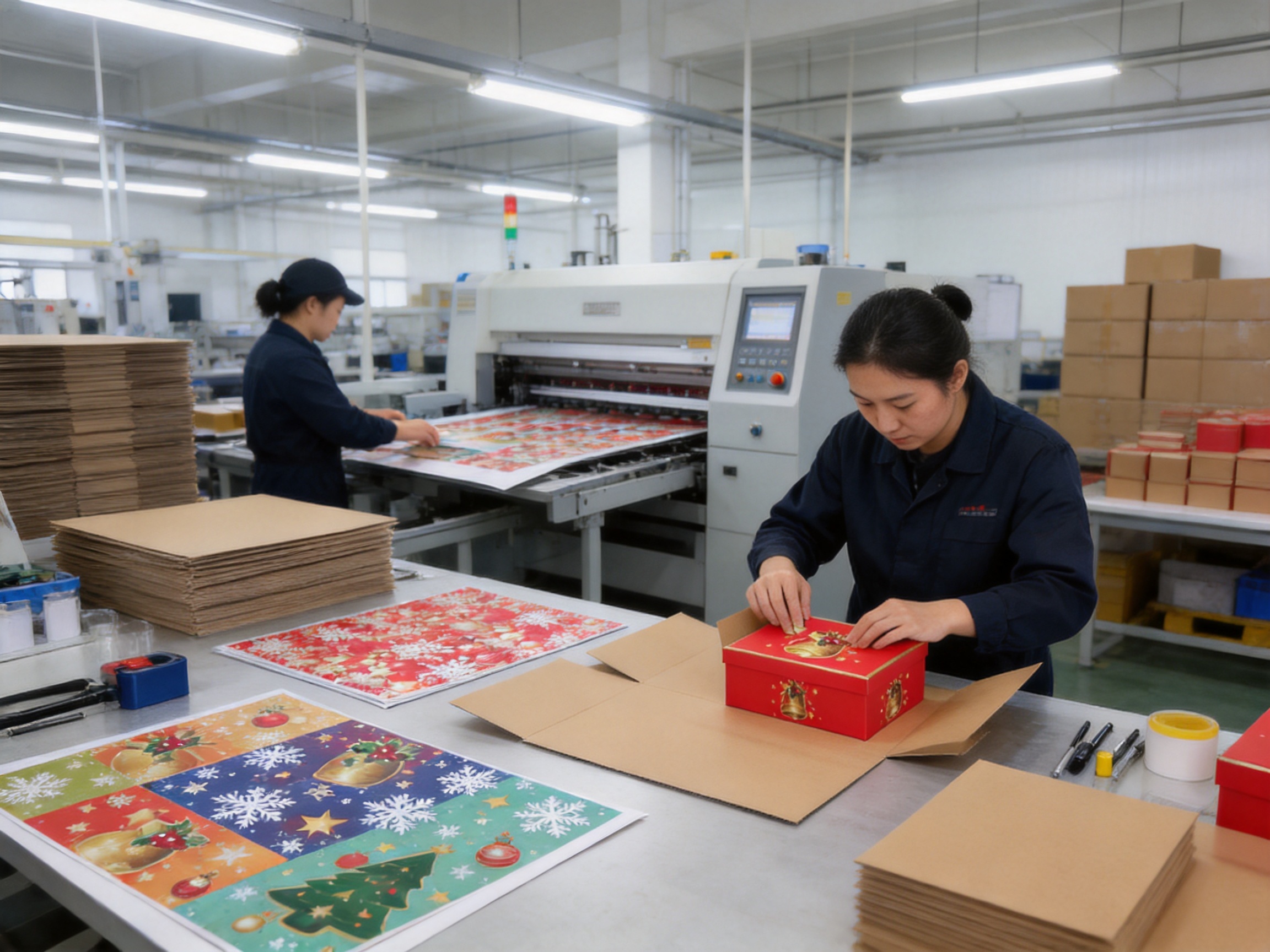
Zhejiang Shihao Gift Packaging Co., Ltd. is an export-oriented manufacturer specializing in the production, research and development, and sales of paper gift packaging boxes. The company was founded more than 15 years ago, giving it substantial experience in developing packaging for different product categories, markets, and commercial requirements.
The company’s facility covers approximately 20,000 square meters and employs around 300 people. This scale supports a broad range of activities, including design, material management, production, assembly, inspection, warehousing, and order coordination. A substantial workforce also allows the manufacturer to support multiple projects and product variations while maintaining specialized roles across the workflow.
The reported average daily production capacity is approximately 5,000 sets of gift boxes. Capacity at this level can be valuable for seasonal orders, where customers may need a significant quantity within a defined period. Production planning remains dependent on order size, structure, artwork, material availability, sampling, and the seasonal production schedule, but established capacity provides a stronger foundation for reliable delivery.
The company exports products to Europe, the United States, the Middle East, and other regions. International experience can help a packaging supplier understand the importance of export packing, communication, production documentation, delivery coordination, and market-specific expectations. It also exposes the manufacturer to different design preferences and packaging requirements.
Shihao has passed BSCI and FSC certifications according to the supplied company information. These certifications can support customer procurement requirements related to social responsibility and responsible forestry-related material sourcing. Buyers should request current certification documentation and confirm the precise scope and validity applicable to a specific project.
The company also maintains its own design team and updates dozens of products weekly. This product development activity indicates an emphasis on trend awareness and ongoing innovation. For customers who want packaging that feels current rather than generic, an active design team can provide useful ideas related to seasonal color schemes, decorative patterns, structure, and market presentation.
Its product range includes kits, storage boxes, folding boxes, jewelry boxes, gift boxes, and other paper packaging formats. This broader manufacturing background is useful because it gives the company experience with different structures, materials, assembly methods, and customer applications. A buyer developing a full packaging program may be able to source multiple related products from one supplier.
Customization is one of the strongest commercial advantages of the 605 series. Although the box has a defined square rigid structure, many details can be adapted to meet a brand’s requirements. Customization begins with dimensions and can extend to artwork, colors, internal arrangement, finishing details, quantity, and packing instructions.
The available sizes provide a starting point for many small and medium gift products. Customers should provide the length, width, height, and approximate weight of the intended contents. If the product requires an insert or additional protective material, those components should be included in the dimensional discussion. Accurate information helps the manufacturer recommend a box that is neither excessively tight nor unnecessarily large.
Customers may submit their own artwork or work with the supplier’s design team to develop a new concept. A company logo, seasonal message, product name, pattern, illustration, or promotional statement can be incorporated into the design. For corporate gifts, artwork may combine a company identity with subtle holiday elements so that the package feels festive without losing professional character.
CMYK printing is suitable for many full-color designs, while Pantone colors may be helpful when precise color matching is important. Custom colors can be discussed for campaigns that require a distinctive visual identity. Color selection should be reviewed in relation to the coated paper surface, printing method, viewing conditions, and any approved physical sample.
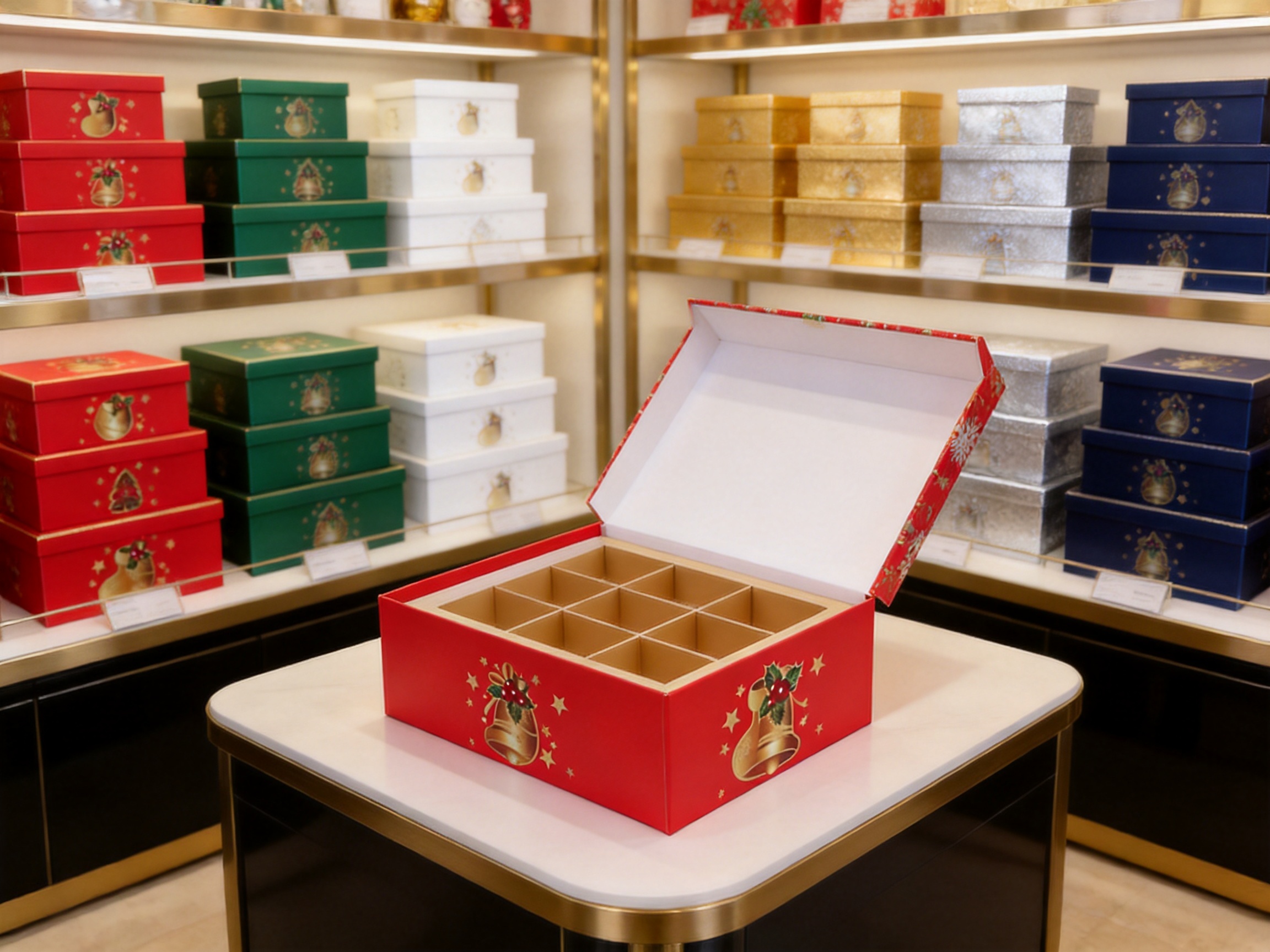
The outer box can be paired with an internal tray, divider, insert, paper wrap, or other organization component when necessary. An internal solution can prevent movement, separate multiple products, and create a more orderly presentation. The appropriate insert depends on the product’s shape, fragility, weight, and desired unboxing sequence.
Customers may discuss the desired visual character of the box, such as traditional, elegant, luxurious, playful, minimalist, rustic, or environmentally focused. The final treatment should be selected with the product, target audience, retail environment, and budget in mind. A carefully restrained design can be as effective as a highly decorative one when the visual hierarchy is clear.
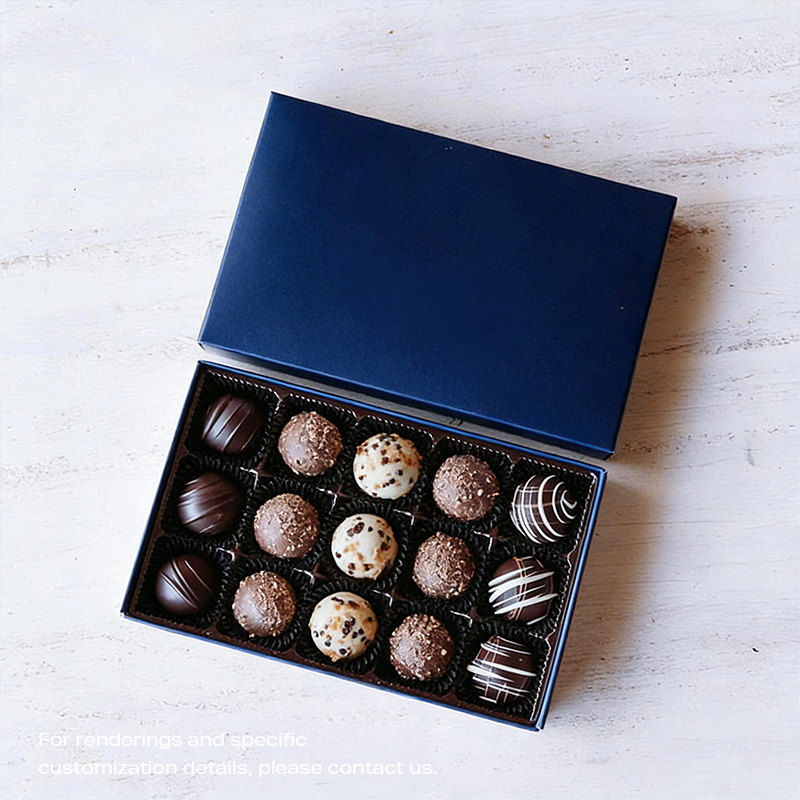
The 605 box is suitable for seasonal confectionery, chocolate assortments, cookies, candies, and similar gifts when the internal dimensions and food-contact requirements are properly addressed. A separate food-safe inner wrap or tray may be required depending on the product and applicable regulations. The rigid exterior can give a confectionery set a more premium appearance than a simple paper sleeve.
Christmas ornaments, small decorations, collectibles, and craft items can benefit from an organized rigid box. The square structure provides room for printed seasonal graphics, while internal separators can help keep individual pieces apart. The box can also serve as a practical storage solution after the holiday season.
Corporate buyers often need packaging that communicates appreciation, professionalism, and attention to detail. A customized 605 box can carry a company logo, a seasonal greeting, or a campaign theme. It can be used for employee gifts, client appreciation packages, event souvenirs, partner gifts, and internal recognition programs.
Retailers can use the box for coordinated collections that include several related items. For example, a seasonal set may contain accessories, stationery, small household products, personal care items, or craft materials. A consistent box family can help the retailer create a recognizable holiday collection across several product sizes.
The product category includes stationery storage boxes and other paper products, making the format suitable for notebooks, cards, writing tools, labels, small office accessories, and creative supplies. Depending on the product dimensions, the box may support both presentation and secondary storage after purchase.
Event organizers and promotional agencies can use customized seasonal boxes for launches, marketing campaigns, conferences, charity programs, and customer engagement activities. A professionally printed rigid box may improve the perceived value of a promotional item and encourage recipients to retain the package.
Paper-based rigid packaging offers a material profile that many brands find attractive when developing alternatives to certain plastic-heavy presentation formats. Cardboard can be printed, folded, wrapped, stored, and handled efficiently. Its suitability for recycling depends on the final material combination, coatings, adhesives, decorative treatments, and local recycling infrastructure.
The supplied company information states that Shihao has passed FSC certification. FSC-related certification can provide evidence of responsible forestry chain-of-custody practices when the certified material and transaction are covered by the relevant documentation. Buyers with sustainability requirements should confirm the exact certification details, material sources, and labeling permissions before making environmental claims.
Sustainable packaging decisions should consider the entire product life cycle. A durable rigid box may have a longer useful life than a thin disposable carton, particularly when consumers reuse it for storage. At the same time, a rigid box may use more material than a lightweight folding carton. The best choice depends on the product, expected reuse, shipping requirements, customer expectations, and end-of-life options.
Material efficiency can be improved by selecting an appropriate size, reducing unnecessary empty space, and avoiding excessive decorative components when they do not contribute meaningful value. A well-fitted box can reduce wasted volume during transport and may help lower the amount of protective filler needed. These decisions should be considered during the design stage rather than after production has begun.
A successful custom packaging project benefits from clear information at the beginning. Buyers should prepare the product dimensions, product weight, quantity, target delivery date, intended market, artwork files, preferred colors, and any special compliance or packing requirements. Photographs or physical samples of the product can also help the manufacturer understand the packaging challenge.
The first step is usually to confirm the appropriate size and structure. The listed range provides several standard references, but a customized size may be considered when a product does not fit efficiently. The selected size should allow adequate clearance without creating excessive movement. If the box will be used for a set containing multiple items, the arrangement should be planned before the outer artwork is finalized.
The next step is artwork and color confirmation. Customers should indicate whether they require CMYK printing, Pantone color matching, or another custom color approach. A proof or sample may be recommended, especially for high-volume orders, important brand colors, complex illustrations, or premium retail applications.
Sampling can help confirm the actual dimensions, surface appearance, color balance, corner quality, opening experience, and internal fit. It can also reveal practical issues that may not be obvious in a digital drawing. The sampling schedule should be coordinated with the production plan because seasonal orders are often governed by strict deadlines.
After the sample and specifications are approved, the manufacturer can prepare the mass-production plan. The minimum order quantity is listed as 300 sets. Buyers should confirm the final quantity in pieces and sets, because the standard packing configuration is 10 pieces per set. They should also confirm whether mixed sizes, mixed artwork, or multiple color versions are acceptable within one order.
Delivery is listed as 7 to 45 days or according to customer requirements. The actual time may vary according to product complexity, order quantity, sampling approval, raw material availability, artwork changes, production load, and shipping arrangements. Customers should provide a realistic required arrival date and allow additional time for transportation, customs procedures, and distribution.
| Information Needed from Buyer | Reason for Confirmation |
| Product length, width, and height | To select or develop a suitable box size |
| Product weight and fragility | To evaluate structure and internal protection |
| Quantity and order mix | To plan materials, production, and packing |
| Artwork files | To prepare accurate printing and panel placement |
| Color requirements | To determine CMYK, Pantone, or custom color treatment |
| Target market | To consider presentation, labeling, and procurement expectations |
| Required delivery date | To coordinate sampling, production, and logistics |
| Internal insert requirements | To organize and protect the contents |
Packaging is an important part of a product’s commercial value. A premium rigid box can support a higher perceived price because it changes the customer’s first impression and adds substance to the purchasing experience. This is particularly relevant during the holiday season, when shoppers often compare products based on appearance as well as function.
The 605 box can also help brands create a consistent seasonal identity. A business may use one visual theme across several box sizes, maintaining recognizable colors, motifs, and typography. This approach can make a collection appear more organized and professionally managed, whether it is displayed in a physical shop, photographed for electronic commerce, or distributed as a corporate gift.
For wholesalers and importers, the availability of multiple dimensions can simplify product planning. Rather than sourcing completely different packaging designs for every item, a buyer may use the 605 structure as a platform for a group of related products. This can reduce design repetition and create a clearer purchasing system, although each final project should still be evaluated for fit and performance.
For manufacturers of gifts and crafts, customized packaging can be a way to distinguish products from low-cost alternatives. The outer box can communicate the story of a collection, identify the maker, explain the occasion, or reinforce the handmade character of the contents. In this way, packaging is not merely a container but a marketing tool and a part of the product’s presentation.
The unboxing process is a sequence of physical and visual interactions. The customer first notices the box from a distance, then touches the surface, lifts or opens the structure, discovers the product, and decides whether the package is worth keeping. The 605 box supports this sequence through its rigid body, printed surface, square proportions, and potential for coordinated internal presentation.
A clean outer surface can create a positive first impression before the package is opened. Smooth edges and careful finishing communicate manufacturing care. Seasonal graphics establish an emotional context, helping the recipient associate the gift with celebration, warmth, generosity, and occasion.
The box can also be designed to support a gradual reveal. A printed message on the exterior may introduce the theme, while the inside can present the contents in an orderly way. A well-fitted product or insert can reduce movement and make the opening experience feel intentional. These details can be especially meaningful for corporate gifts and products purchased for family celebrations.
Reusable packaging may provide additional value after the gift has been opened. Recipients can use the box for cards, ornaments, craft supplies, jewelry, stationery, photographs, or other small objects. Reuse is not guaranteed and depends on the design, durability, and consumer preference, but rigid boxes are generally more suitable for secondary storage than very thin paper wrappers.
The box is made from rigid cardboard with an art paper-coated outer surface. The cardboard provides structural strength, while the coated paper supports printed artwork and gives the exterior a smooth, refined appearance.
The 605 box uses a square design. Its regular shape supports organized stacking, straightforward display planning, and a balanced area for printed Christmas and New Year graphics.
The box is suitable for small gifts such as candies, chocolates, ornaments, crafts, stationery, accessories, and selected corporate gift items. The correct size and any internal insert should be confirmed according to the product’s dimensions, weight, and fragility.
Yes. Custom designs are welcome. Customers may provide their own artwork or request professional advice from the supplier’s in-house design team. Artwork should be supplied in an appropriate professional format and reviewed for production suitability before printing.
The listed color options include CMYK, Pantone colors, and custom colors. The best option depends on the complexity of the artwork, the need for brand color matching, and the desired visual result.
The stated range extends from approximately 37.5 × 29 × 16 centimeters for size 1# to approximately 19 × 13 × 7.5 centimeters for size 10#. Buyers should confirm the exact selected size and internal capacity before ordering.
It may be used for suitable food gifts such as chocolates, candies, and cookies when the product is protected by an appropriate food-safe inner package or insert. Food-contact requirements should be reviewed according to the product, destination market, and applicable regulations. The outer printed box should not automatically be assumed to be a direct food-contact surface.
The listed minimum order quantity is 300 sets. Since the standard packing configuration is 10 pieces per set, the buyer should confirm the final number of individual boxes and whether multiple sizes or designs can be combined.
The listed configuration is 10 pieces per set and four sets per carton. The stated carton dimensions are approximately 59.5 × 38.5 × 35 centimeters, with an approximate volume of 0.08 cubic meters. Final packing details should be confirmed for each order.
The stated delivery time is 7 to 45 days or according to customer requirements. Actual timing may depend on artwork approval, sampling, order quantity, material preparation, production capacity, and shipping arrangements.
An insert or internal organizer may be considered when the product needs extra protection or separation. The design must be developed around the actual product dimensions and should be confirmed during the sampling and quotation stages.
The company is an export-oriented manufacturer and reports supplying customers in Europe, the United States, the Middle East, and other regions. International buyers should confirm shipping terms, export documentation, carton markings, and destination-specific requirements for each order.
The supplied company information states that the manufacturer has passed BSCI and FSC certifications. Buyers should request current documentation and verify the scope, validity, and relevance of each certification for their particular project.
Yes. With a suitable design and careful handling, the rigid box may be reused for stationery, ornaments, craft supplies, cards, accessories, or other small items. Its secondary use depends on the final construction and the recipient’s needs.
The 605 series is a strong option for businesses that want seasonal packaging with a more premium appearance than a basic paper carton. Its rigid cardboard construction supports shape retention, while the art paper-coated surface provides a clean base for detailed festive artwork. The square format is easy to display and stack, and the size range gives buyers flexibility for different gift items.
Its greatest advantage is the balance between standardization and customization. The project offers a proven structural concept, but customers can still adapt dimensions, colors, artwork, and applications. This can help shorten the development process without forcing a brand to accept a completely generic product.
The supplier’s factory experience further strengthens the product’s value. An in-house design team, a large manufacturing facility, approximately 300 employees, reported daily capacity of around 5,000 sets, international export experience, and certification credentials provide a substantial foundation for custom packaging projects. Customers can work with a manufacturer capable of supporting the process from concept development through mass production.
For retailers, the box can enhance shelf appeal. For corporate buyers, it can present a thoughtful and professional gift. For wholesalers, it can provide a coordinated range of sizes. For product brands, it can become a recognizable part of a holiday identity. For recipients, it can create a more memorable opening experience and potentially offer useful storage after the celebration.
The 605 Square Handmade Cardboard Printed Rigid Christmas and New Year Gift Box Packaging brings together festive design, rigid cardboard strength, customization flexibility, and practical commercial packing. It is designed to protect and present appropriate gift products while helping brands communicate seasonal value through color, pattern, structure, and finishing quality.
Compared with ordinary folding cartons or plain storage boxes, it offers a more substantial tactile experience, improved visual presence, and greater potential for premium gifting. Its square construction supports stacking and display, while the range of available sizes makes it adaptable to candies, chocolates, ornaments, stationery, crafts, accessories, and corporate gifts.
The manufacturing capabilities of Zhejiang Shihao Gift Packaging Co., Ltd. add further confidence for buyers seeking an experienced custom packaging partner. With more than 15 years of industry experience, a large facility, an in-house design team, export capabilities, broad product expertise, and reported BSCI and FSC certifications, the company can support packaging projects that require both creative development and organized production.
Before ordering, buyers should confirm the selected dimensions, product fit, artwork, color system, internal protection, packing configuration, minimum quantity, sample requirements, and delivery schedule. With these details carefully coordinated, the 605 box can serve as an attractive and dependable foundation for Christmas, New Year, corporate, retail, and other seasonal gift packaging programs.
1. Product specification information for Project 605#, including material, color options, dimensions, applications, packaging quantity, minimum order quantity, and delivery information.
2. Company profile information for Zhejiang Shihao Gift Packaging Co., Ltd., including manufacturing history, facility size, workforce, production capacity, export markets, product categories, design capabilities, and certification statements.
3. General principles of paperboard packaging design, including structural stability, product fit, print preparation, surface finishing, storage, and transport considerations.
4. General guidance on responsible paper sourcing, certification review, packaging reuse, material efficiency, and end-of-life considerations.
5. General seasonal merchandising principles related to holiday presentation, retail visibility, corporate gifting, and consumer unboxing experiences.
Recommended Products

Contact Us

No. 15, Xiayang Road, Huangzhai Town, Jinhua, Zhejiang, China

(+86) 579-84230069

(+86) 13085675766


Products

Gift Box Packaging Manufacturer
 English
 Français
 Español
 عربى