2026-08-19
Packaging is often the first physical interaction a customer has with a skincare brand. Before a serum is applied, a lotion is tested, or a cream becomes part of a daily routine, the customer encounters the package. Its structure, finish, opening experience, and visual presentation can influence expectations about product quality, brand credibility, and value. For this reason, a well-designed skincare gift box is more than a protective container. It is a communication tool, a presentation platform, and an important part of the customer experience.
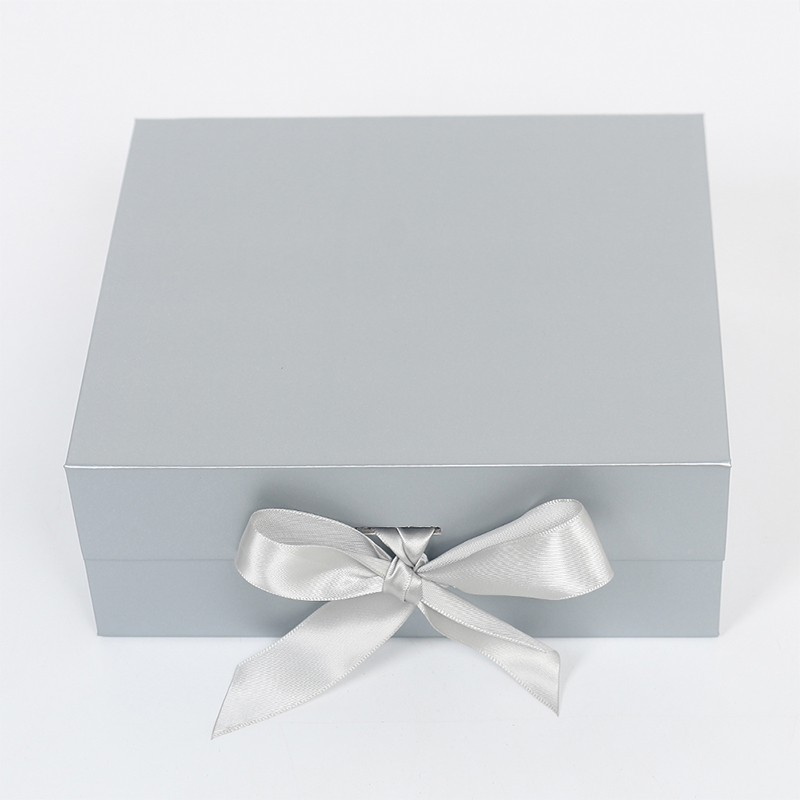
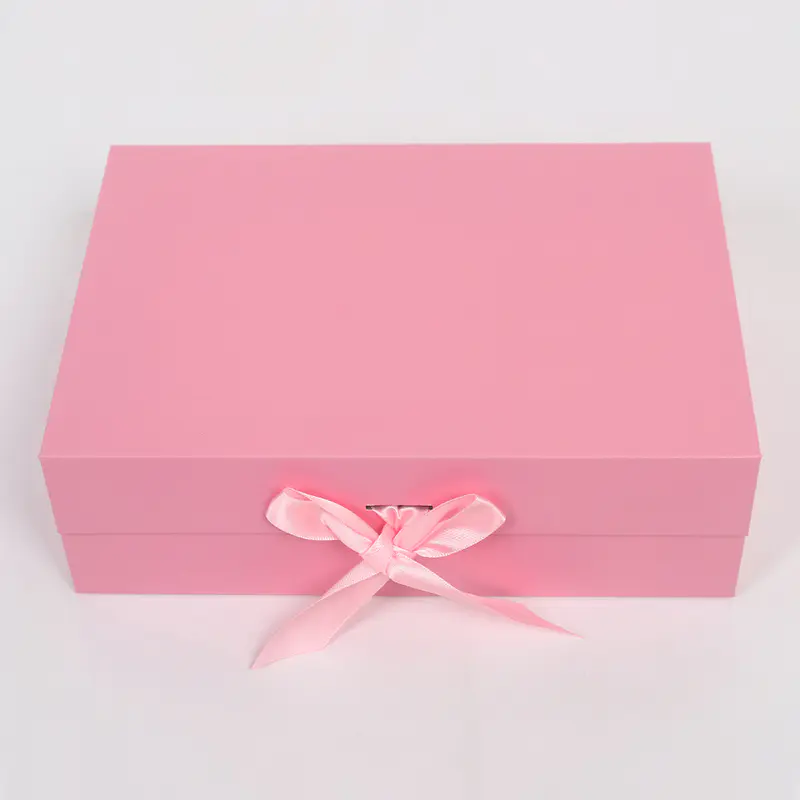
The SHC-02 white customizable flip-top skincare gift box set is designed for brands that require an elegant, protective, and adaptable packaging solution for small and medium-sized skincare products. Manufactured by Zhejiang Shihao Gift Packaging Co., Ltd., this cosmetic gift box combines a rigid gray board structure, high-quality specialty white cardboard, a matte white exterior, customizable printing, and an internal tray that can be adapted to different product shapes.
Its lid-and-base construction provides a refined presentation, while the flip-top opening and magnetic closure create a convenient and secure unboxing experience. The exterior can be customized with logos, product images, thematic artwork, and decorative finishing processes such as hot stamping, embossing, UV printing, and screen printing. Inside, foam, EVA, pulp molding, and other tray materials can be selected to accommodate serums, lotions, creams, essential oils, ampoules, and other compact skincare products.
For beauty companies launching a new product collection, preparing a holiday gift set, developing a trial-size program, or organizing a brand event, this box offers a balance of appearance, protection, and production practicality. Its clean white surface supports a broad range of visual identities, from minimalist clinical skincare to luxurious botanical or premium beauty concepts.
Skincare packaging must satisfy several requirements at the same time. It needs to protect the products during handling and transportation, organize multiple items inside one presentation unit, communicate the character of the brand, and make the opening process feel intentional. When a package fails in any of these areas, the customer may perceive the product as less valuable, even when the formula itself is excellent.
Gift packaging has an additional responsibility. It must be suitable not only for the purchaser but also for the recipient. A gift box should be visually appealing before opening, easy to handle, stable during delivery, and memorable after the lid is lifted. The arrangement of the products inside should appear orderly rather than accidental. Bottles should remain in their intended positions, and the interior should provide enough cushioning to reduce movement and impact.
The SHC-02 format addresses these needs through a rigid box body, a structured lid, an optional customized insert, and a smooth magnetic closure. The result is a package that can function as both a protective shipping component and a premium gift presentation. Unlike a simple folding carton, a rigid flip-top box creates a more substantial physical presence and can be retained by the customer for storage or future use.
For skincare brands, this retained value can be especially useful. Customers may reuse a durable box for cosmetics, jewelry, travel items, accessories, or other small products. A reusable box continues to display the brand’s visual identity beyond the original purchase, extending the effect of the packaging and making the overall product experience more practical.
The SHC-02 is a white cosmetic gift box intended for small and medium-sized skincare sets. Its standard dimensions are approximately 15–18 centimeters in length, 10–12 centimeters in width, and 3–5 centimeters in height. These dimensions are suitable for compact product combinations, although the structure can be customized according to the dimensions and arrangement of the customer’s products.
The box uses a lid-and-base style with a flip-top opening. A magnetic closure helps keep the lid securely positioned when the box is closed while allowing the recipient to open it smoothly. This creates a more controlled opening motion than a loose slipcase or a conventional folding carton.
The external construction is based on high-rigidity white cardboard or gray board combined with matte white art paper. The rigid board gives the box a firm body and helps it resist compression during normal handling. The specialty white paper provides a clean surface for printed graphics and finishing treatments, while the matte lamination creates a soft, refined appearance that limits excessive glare.
The interior is not limited to one standard configuration. Brands can request a custom tray made from foam, EVA, pulp molding, or other suitable materials. The insert can be designed around the shape, diameter, height, and quantity of the bottles or containers being packaged. This flexibility is important because skincare products vary considerably in form. A set may include a tall serum bottle, a short cream jar, a narrow ampoule, or several sample containers with different dimensions.
| Product Attribute | Specification or Available Option |
| Item Number | SHC-02 |
| Product Type | Customizable flip-top cosmetic gift box |
| Standard Size | Approximately 15–18 cm × 10–12 cm × 3–5 cm |
| Size Flexibility | Dimensions can be customized according to the product set |
| Opening Style | Lid and base with flip-top opening |
| Closure | Magnetic closure |
| Main Structure | High-rigidity gray board or white cardboard |
| Outer Covering | Specialty white cardboard or matte white art paper |
| Surface Finish | Full white matte lamination |
| Decorative Options | Hot stamping, embossing, UV printing, screen printing, and custom graphics |
| Interior Options | Foam, EVA, pulp molding, and other customized trays |
| Typical Applications | Serums, lotions, creams, essential oils, ampoules, trial packs, holiday gifts, and mini skincare sets |
A rigid box structure provides greater firmness than many lightweight paper cartons. The high-hardness board helps the package maintain its shape when handled, stacked, or transported. This is particularly valuable for skincare products packaged in glass or other breakable containers. Although packaging design must always be matched to the specific distribution environment, a rigid box can offer a more stable protective foundation for a customized internal tray.
The box walls also support the overall arrangement of the product set. When several bottles are placed together, the rigid outer structure helps prevent the package from collapsing inward. The insert then works with the box body to limit movement and keep the products aligned.
Presentation is one of the most visible differences between a premium rigid box and a basic carton. The SHC-02 is designed to look structured when closed and organized when opened. Its lid and base remain visually connected, allowing the package to unfold as one complete presentation rather than separating into loose components.
This design is helpful for gift sets that need to be displayed in retail environments, photographed for digital campaigns, or presented during brand events. The white exterior creates a neutral background that can support different visual themes without forcing the brand into a particular color direction.
The flip-top format provides a straightforward opening motion. The user can lift the lid and view the contents without removing a separate cover or sliding an inner tray out of the package. The magnetic closure helps the lid remain closed during storage and handling, while the opening action adds a sense of refinement to the unboxing process.
For gift packaging, this small mechanical detail can have a meaningful effect. A closure that aligns neatly and opens with controlled resistance feels more deliberate than a package that depends on a loose tuck flap. The magnetic system also supports repeated opening and closing when the box is reused.
The rigid construction and neutral white appearance can make the box suitable for secondary storage. Customers may use it to organize small beauty products, travel accessories, sample containers, jewelry, stationery, or personal items. Reusability can improve the perceived value of the package while helping brands communicate a more considered approach to material use.
Whether a particular box is reused depends on the customer, the final material selection, and the product’s distribution conditions. Nevertheless, a durable presentation box offers more reuse potential than a disposable package designed only for short-term transport.
Skincare collections rarely follow one universal product format. A brand may offer a three-piece starter kit, a collection of sample-size bottles, a serum and cream combination, or a seasonal set containing several small products. The packaging therefore needs to adapt to the product rather than forcing every product into the same cavity layout.
The standard SHC-02 dimensions provide a reference for small and medium-sized sets, but custom sizing is available. A brand can provide the length, width, height, diameter, and quantity of the products to be packaged. The box structure can then be developed around the required arrangement.
Custom dimensions can help reduce unnecessary empty space. A box that is too large may allow products to shift during transport and may appear inefficient. A box that is too small may create pressure on the bottles or make the opening experience uncomfortable. Proper sizing helps establish a better relationship between the products and the package.
The insert is one of the most important elements in a multi-product gift box. It determines how the products are positioned, separated, and revealed. Foam can provide a soft and protective surface for delicate containers. EVA can be shaped into precise cavities and may be suitable for products requiring a firm fit. Pulp molding can offer a paper-based alternative with a naturally molded appearance and potential sustainability advantages, depending on the selected material and production specifications.
The choice of tray should be based on the product’s weight, shape, fragility, surface finish, and intended market position. A premium glass bottle may require close-fitting support, while lightweight plastic sample containers may need a simpler arrangement. The tray design should also consider how easily the customer can remove each product without damaging the insert or scratching the container.
The box can be configured for a range of compact skincare products, including serums, lotions, creams, essential oils, ampoules, and sample bottles. It can also be used for trial packs, introductory collections, and small promotional sets.
For a serum-focused package, the insert may use narrow cavities arranged in a row or grid. For a routine-based set, the layout may separate cleansing, treatment, moisturizing, and supplementary products. For a gift collection, the arrangement may emphasize visual balance, with the largest product positioned as the focal point and smaller products placed around it.
Packaging design can also incorporate space for instruction cards, product information, brand messages, or promotional materials. These additions should be planned early so that the interior remains organized and the lid closes properly.
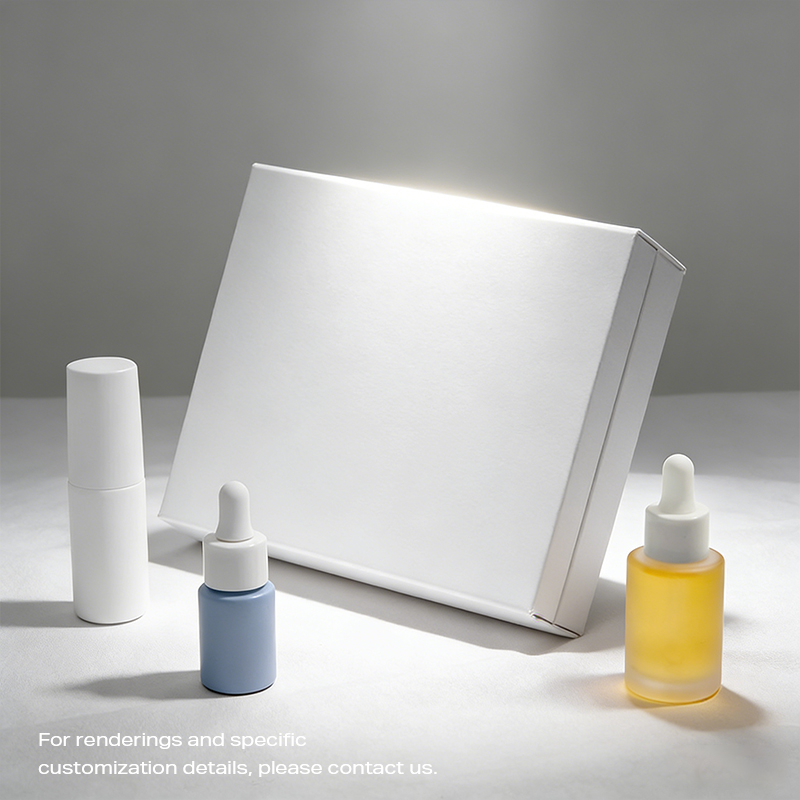
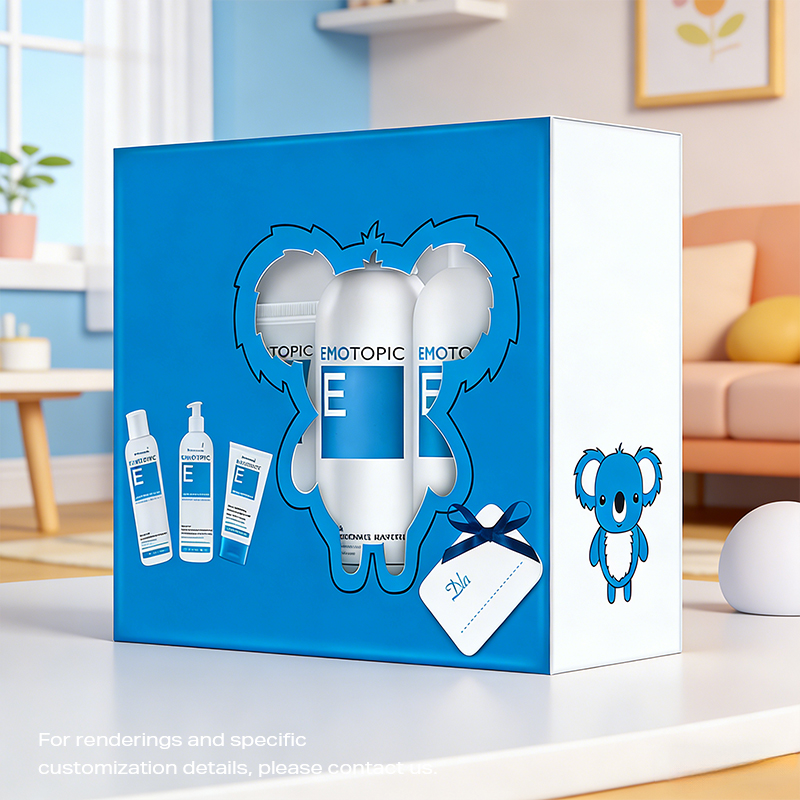
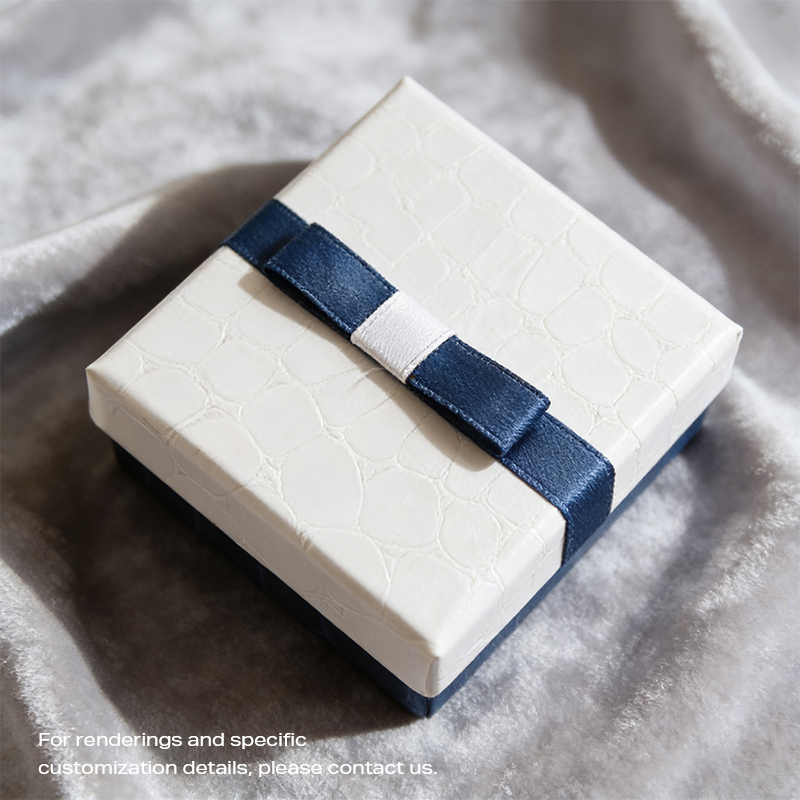
SHC-02 White Customizable Flip-Top Skincare Gift Box Set with Picture/Logo Printing
White is widely used in skincare packaging because it can communicate cleanliness, simplicity, purity, and modernity. However, the effectiveness of a white package depends on the quality of the substrate, printing, coating, and assembly. An uneven surface or inconsistent color can make a premium concept appear less refined.
The SHC-02 uses a white outer presentation with full matte lamination. The matte effect reduces strong reflections and provides a softer visual impression than a high-gloss surface. It can also create a tactile difference that supports minimalist, clinical, natural, or luxury skincare branding.
A white base is especially useful for brands that want flexibility in artwork. Dark typography can create a sharp contrast. Pastel colors can produce a gentle and approachable appearance. Metallic foil can emphasize premium positioning. Embossed logos can create subtle dimensionality without adding a large amount of color. Botanical illustrations, product photography, geometric patterns, and seasonal graphics can also be applied to the same basic box structure.
The external surface can be customized with a company logo, product name, product images, ingredient-related graphics, campaign artwork, or other visual elements. Brands can choose between a restrained logo-centered design and a more decorative full-surface composition.
Printing should be evaluated according to the intended visual result. A high-contrast logo may be suitable for a simple premium package, while detailed artwork may require careful color management and proofing. Product images can be used for promotional gift sets, but they should be positioned so that important visual details are not interrupted by folds, edges, or closure components.
Hot stamping can add a metallic or special-color accent to selected elements such as logos, borders, product names, or decorative lines. Gold, silver, copper, and other foil effects may be used to create a luxury appearance. The process is most effective when applied selectively. Excessive foil coverage can reduce visual clarity, while small, carefully positioned accents can guide attention to the brand or product name.
Embossing creates a raised or recessed effect on the paper surface. It can make a logo or pattern more tactile and can support a premium unboxing experience. Embossing is particularly suitable for clean designs in which the texture itself becomes part of the visual identity.
UV printing can help create sharp graphic effects and may be used for selected artwork or raised visual details, depending on the production specification. Screen printing can provide a distinctive ink appearance and may be appropriate for bold logos, special colors, or targeted graphic applications. The final method should be selected according to the artwork, quantity, substrate, color requirements, and desired surface effect.
Offering several finishing processes gives brands more control over differentiation. Two companies may use the same white flip-top format but achieve completely different market impressions through typography, color, foil, texture, and image treatment.
A premium box is the result of coordinated material selection, structural engineering, printing, finishing, assembly, and inspection. A visually attractive concept can lose its value if the corners are uneven, the lid does not align, the magnet is poorly positioned, or the printed color varies significantly between production batches.
Zhejiang Shihao Gift Packaging Co., Ltd. operates as an export-oriented manufacturer specializing in paper gift packaging boxes. The company has more than 15 years of experience in production, research and development, and sales. Its reported facilities cover approximately 20,000 square meters, with around 300 employees and advanced equipment supporting large-scale production.
The company maintains a complete automated production line for gift packaging. Automation can support repeatability across major manufacturing stages, including paper processing, printing-related operations, forming, and assembly. In practical terms, a controlled production line helps reduce variation and supports stable output when a customer places a bulk order.
For custom packaging, consistency is particularly important. A brand may order an initial launch quantity and later reorder the same box for seasonal promotions or ongoing sales. If the white tone, logo placement, surface finish, or structural dimensions change noticeably, the packaging may appear inconsistent across different retail periods. Production control and standardized procedures help reduce this risk.
Color consistency is a key concern for printed packaging. White substrates can make subtle color differences visible, especially when the design contains large areas of pale tones, neutral backgrounds, or fine gradients. A manufacturer with established production procedures can use proofing, process monitoring, and inspection to help maintain a more consistent result.
Color control should still be managed collaboratively. Customers should provide accurate artwork files, confirm color references, review proofs where appropriate, and communicate expectations for special colors or metallic effects. Different substrates and finishing methods can affect the final appearance, so the approved sample should be treated as an important reference.
Quality inspection should cover more than the printed exterior. The box needs to be checked for board firmness, corner alignment, lid movement, magnetic closure, surface cleanliness, insert fit, and overall appearance. Internal trays should be tested with the actual product containers whenever possible.
For a gift box set, inspection may also include checking whether all components fit within the package without excessive pressure. The lid should close correctly after the products and any information cards are inserted. The box should open smoothly, and the internal arrangement should remain stable during normal handling.
The company reports an average daily production capacity of approximately 5,000 gift box sets. Capacity at this level can be valuable for brands planning large promotional events, retail launches, holiday campaigns, or multi-market distribution. A manufacturer with sufficient production resources may be better positioned to manage repeat orders and time-sensitive projects than a small workshop with limited equipment.
Delivery timing depends on many factors, including box complexity, material availability, artwork approval, order quantity, finishing requirements, and shipping arrangements. Nevertheless, an established production system with dedicated equipment and personnel can provide a stronger foundation for stable bulk-order scheduling.
The SHC-02 offers several potential advantages over simpler packaging formats. A basic folding carton is often lightweight, economical, and easy to store flat, but it may provide less rigidity and a less substantial opening experience. A generic gift box may look attractive, but it may not offer the same level of customization for internal product placement or brand-specific finishing.
The rigid board construction gives the box a firmer feel in the hand. Customers can notice this difference immediately when lifting the package or opening the lid. A stronger physical presence can support premium price positioning because the package feels more intentional and durable.
Custom inserts allow the brand to design a specific product arrangement. Instead of placing several items loosely inside a carton, each product can have a designated position. This improves visual order and can reduce movement during transport.
The white matte exterior provides a broad canvas for printed images, logos, foil, embossing, UV effects, and screen printing. This allows brands to create a package that reflects their own identity rather than relying on a pre-existing generic design.
The flip-top lid and magnetic closure create a sequence: the customer receives the box, sees the outer design, opens the lid, and discovers the arranged products. This sequence can be incorporated into social media content, influencer campaigns, retail demonstrations, and gifting occasions.
When a product line expands, the same basic structural format can sometimes be adapted for additional sizes or configurations. A brand may use one visual family for a trial kit, a seasonal set, a limited edition, and a retail bundle. This creates continuity while allowing each package to accommodate a different product combination.
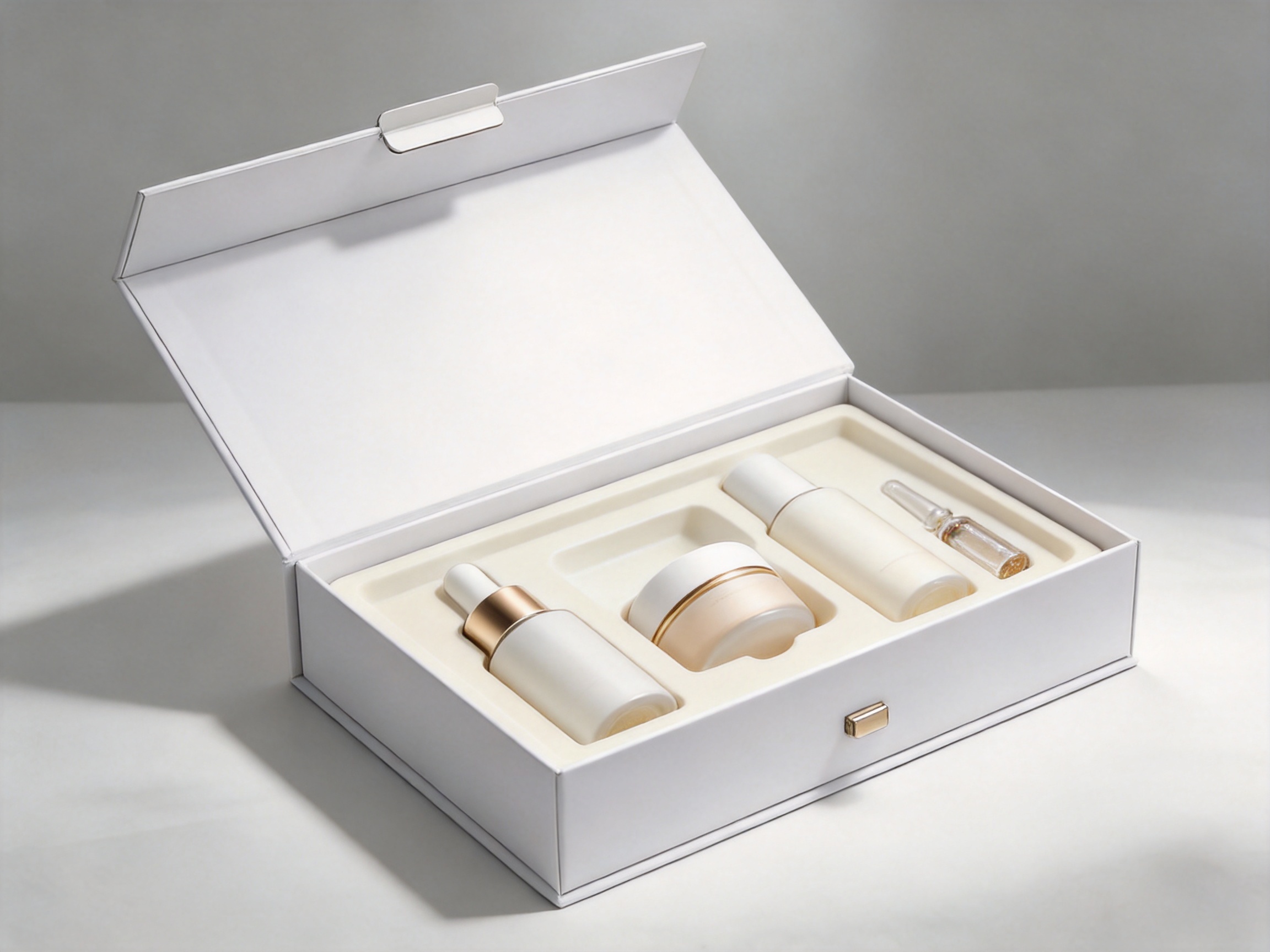
A new skincare product often needs a presentation that introduces the formula, the brand story, and the intended routine. A custom gift box can combine the main product with samples, complementary products, or printed educational materials. The rigid format helps the launch set look complete and carefully planned.
For a product launch, the exterior may use the new product’s key visual identity, while the interior presents the products in the order in which they should be used. This can turn the package into a guided discovery experience rather than simply a container.
Holiday packaging needs to feel special without necessarily requiring a completely new structural design. The SHC-02 can be customized with seasonal colors, festive artwork, metallic accents, or limited-edition graphics. The underlying white box structure can remain consistent while the artwork changes for different occasions.
This approach may help brands control development time and maintain a recognizable packaging family. Seasonal versions can be produced for year-end gifting, spring promotions, anniversaries, Valentine’s Day, or other campaign periods.
Small and medium-sized sample bottles can be arranged inside a compact box to create a more premium alternative to loose sachets or unstructured sample bundles. A trial pack can introduce customers to a complete routine, a product category, or a new collection.
The box can include short usage instructions, a product sequence card, or a message encouraging customers to explore the full-size range. Because the package is more substantial than a disposable sample envelope, it can help position the trial experience as a curated introduction to the brand.
Beauty companies often distribute products at exhibitions, press events, training sessions, influencer meetings, and retail activations. A customized gift box can combine several event materials with skincare products while presenting the contents in an organized format.
The outer logo and visual design can reinforce brand recognition when the box is photographed or carried through an event venue. The box may also be used for corporate gifting when a company wants to present wellness, beauty, or personal-care products in a more polished format.
Gift-ready packaging can support both physical retail and online sales. In a store, the box may help a product set stand out on a shelf or display table. In e-commerce, it can reduce the need for separate gift wrapping and provide a more memorable arrival experience.
For online distribution, brands should evaluate the box together with the shipping carton and protective materials. A premium gift box should be protected from crushing, moisture, friction, and surface damage during fulfillment. The product packaging and transport packaging should be treated as complementary systems.
Successful packaging development begins with accurate product information. The customer should provide the exact dimensions and weight of each bottle, jar, tube, or ampoule. Closure types, pumps, caps, droppers, and irregular shapes should be included in the measurements because they can affect the insert design and the available internal height.
Brands should also determine whether the box will be used primarily for retail display, gifting, shipping, event distribution, or a combination of these purposes. The intended use influences the required strength, insert material, finishing, and outer dimensions.
Artwork should be prepared according to the manufacturer’s technical requirements. Important considerations may include bleed, safe areas, dieline placement, color mode, image resolution, foil zones, embossing outlines, and the position of text relative to folds and edges.
Designers should avoid placing small text too close to the lid seam or corner. Logos intended for embossing or hot stamping should be evaluated for line thickness and minimum detail. Product images should be tested against the selected paper and finish to confirm that the visual result matches the intended concept.
The inside of the box deserves the same attention as the exterior. A well-designed interior may use a contrasting color, a printed message, a soft lining, or a carefully shaped tray. The customer should be able to understand where to grip the lid and how to remove the products without excessive force.
Product orientation also matters. Labels should face the same direction when possible, and the arrangement should reflect the brand’s desired hierarchy. A visually balanced interior can make the contents appear more valuable and easier to understand.
Material choice should take into account appearance, rigidity, weight, product protection, cost, sustainability objectives, and destination-market expectations. Gray board with a white paper covering can provide a firm base and a clean printed surface. Foam and EVA may support precise fit and cushioning, while pulp molding may be considered when a paper-based internal solution is preferred.
Brands should request complete material information when sustainability claims are important. FSC certification, recycled content, coatings, adhesives, magnets, foams, and mixed-material components may all affect disposal and recycling considerations. Clear communication prevents the final package from making environmental claims that cannot be properly supported.
A prototype is valuable before bulk production. It allows the customer to check product fit, lid alignment, magnet strength, tray appearance, artwork placement, and overall size. The prototype should be evaluated using the actual product containers rather than similar substitutes whenever possible.
Testing may include opening and closing the box repeatedly, lifting it by the base, checking product movement, and observing how it looks under retail or photographic lighting. If the package will be shipped, a practical distribution test should be considered with the planned outer carton and protective materials.
Custom packaging involves more than selecting an attractive sample from a catalog. It requires coordination between design, materials, production engineering, printing, finishing, assembly, quality control, and logistics. An experienced manufacturer can help identify problems before they become expensive production issues.
Zhejiang Shihao Gift Packaging Co., Ltd. has specialized in paper gift packaging for more than 15 years. The company’s product range includes kits, storage boxes, folding boxes, jewelry boxes, and gift boxes. This broad experience can support customers whose packaging needs change across product categories or campaign types.
The company has its own design team and reports updating dozens of products weekly. An internal design capability can be useful for customers that need help adapting a standard format, improving an insert layout, creating a new structural concept, or preparing packaging for a specific market.
Its reported export activity covers Europe, the United States, the Middle East, and other regions. Experience with international customers may help the company understand the importance of communication, production documentation, packaging consistency, and delivery coordination. Export projects still require customers to confirm their own destination-market requirements, but an experienced supplier can provide a practical starting point.
The company also reports BSCI and FSC certifications. Customers should request current certification documentation and confirm which facility, material, or production scope is covered by each certification. Proper verification is especially important when certification is part of a retailer requirement or a brand sustainability program.
Although specific production procedures may vary according to the order, a typical workflow for a custom rigid cosmetic gift box includes several coordinated stages.
The process begins with the customer’s product dimensions, quantity, target market, artwork, expected order volume, and desired finishing. The manufacturer reviews the requirements and determines whether the standard SHC-02 format is appropriate or whether modifications are needed.
The box dimensions, lid depth, base structure, closure position, and internal tray are developed around the product set. The goal is to create a package that closes correctly, presents the contents attractively, and provides suitable support during handling.
The board, covering paper, lamination, tray material, magnet, printing method, and decorative processes are confirmed. At this stage, the brand should also communicate any requirements relating to recycled materials, FSC-certified paper, coatings, or restricted substances.
Customer artwork is placed on the approved structural template. Printing areas, folds, seams, foil zones, and embossed details are checked. A proof or sample may be prepared for review before mass production.
The rigid board is cut and prepared for forming. Accurate cutting and assembly are important for the final shape, corner quality, lid alignment, and overall stability of the box.
The outer covering is printed or decorated according to the approved specification. Matte lamination can be applied to create the intended surface effect, followed by optional hot stamping, embossing, UV printing, or screen printing.
The printed covering is mounted onto the rigid board structure. The lid, base, hinge area, and edges are formed and assembled. Careful workmanship is needed to keep the exterior clean and the corners even.
The magnetic closure is positioned within the lid and base. The customized internal tray is installed and checked against the product samples. The completed box should open smoothly, close securely, and hold the products in the approved arrangement.
Finished boxes are inspected for appearance, construction, printing, closure function, tray fit, and cleanliness. Products are then packed for shipment according to the agreed logistics plan.
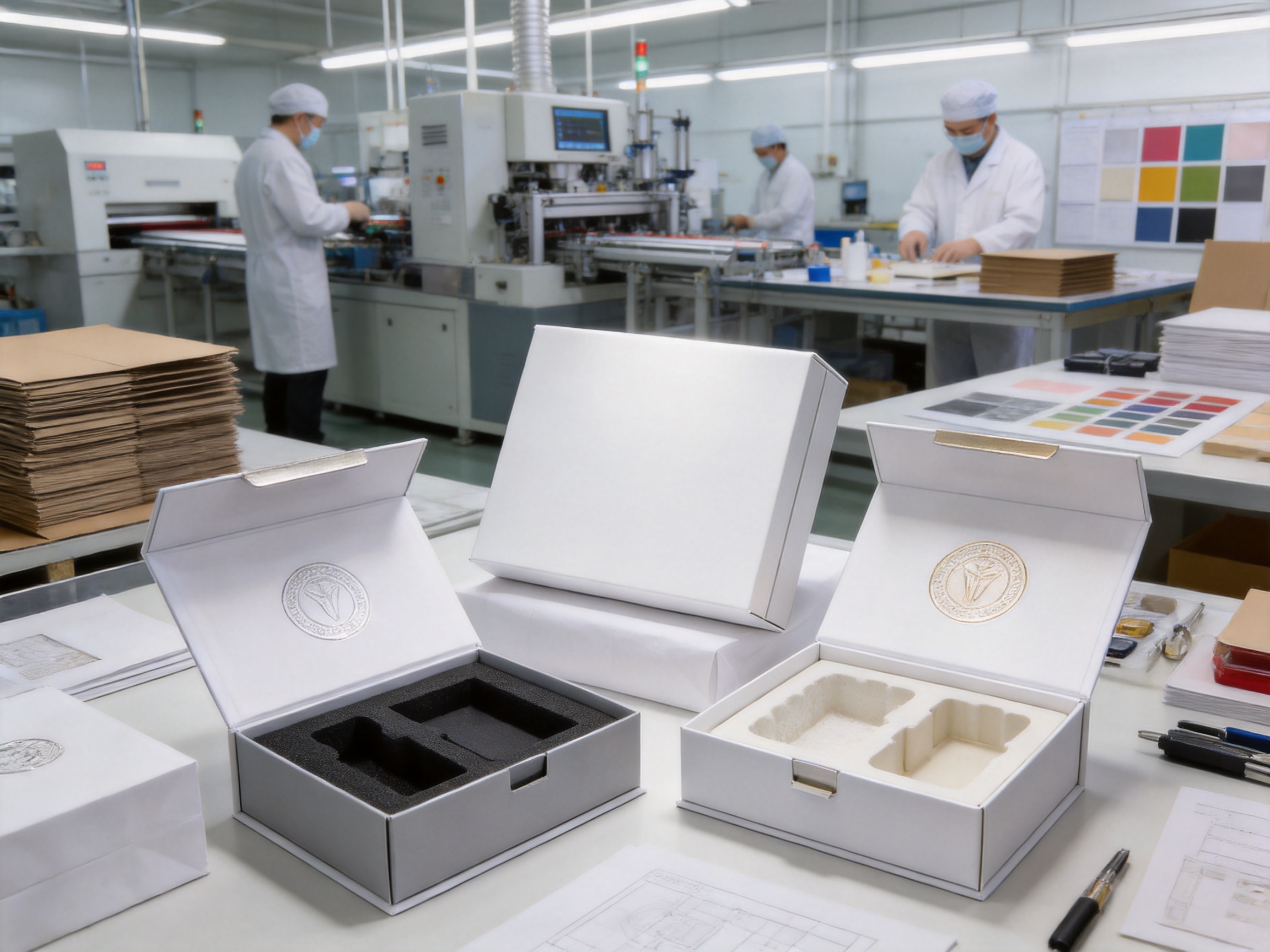
For a growing beauty brand, packaging must support both marketing and operations. The SHC-02 can contribute to a coherent visual identity, reliable product organization, and a more premium customer experience.
Its customizable exterior allows the brand to align the box with existing bottles, labels, websites, retail displays, and advertising campaigns. A unified visual system can make a product collection easier to recognize and can help separate it from competitors using generic packaging.
The custom insert can also reduce the visual confusion that sometimes occurs in multi-product bundles. When each product has a designated location, the customer can understand the collection more quickly. This is useful for skincare routines in which products are intended to be used in a particular order.
The rigid structure may support a higher perceived value, which can be important for gift sets and limited-edition releases. A premium box does not replace product quality, but it can frame the product quality and create a stronger first impression.
From an operational perspective, working with a manufacturer that offers both standard formats and custom development may reduce the need to coordinate separate suppliers for structural production, printing, finishing, and assembly. Consolidated production can simplify communication, although the final decision should be based on quality, price, lead time, minimum order quantity, and service requirements.
| Feature | SHC-02 Rigid Flip-Top Box | Basic Folding Carton | Generic Ready-Made Gift Box |
| Structural Rigidity | High-rigidity board structure | Usually lighter and more flexible | Depends on stock design and material |
| Product Fit | Custom tray options for specific products | May use a simple insert or no insert | Limited to available internal dimensions |
| Opening Experience | Flip-top opening with magnetic closure | Usually tuck flap or folding opening | Varies by standard design |
| Brand Customization | Printing, images, logo, foil, embossing, UV, and screen printing | Commonly printed, with selected finishing options | May allow limited logo or label application |
| Gift Presentation | Designed for premium multi-product presentation | Functional but often less substantial | Can be attractive but may appear less distinctive |
| Reusable Potential | Suitable for secondary storage when properly maintained | Generally lower due to lighter construction | Varies according to material and construction |
| Best Use | Skincare gift sets, launches, events, and premium trial packs | Single products and cost-sensitive retail packaging | Fast deployment with limited customization |
This comparison is not intended to suggest that one packaging format is suitable for every product. Folding cartons may be preferable for lightweight, high-volume products, while ready-made boxes may be useful for short-term or small-scale programs. The SHC-02 is most valuable when a brand needs a more substantial package, a customized internal layout, and a distinctive unboxing experience.
Responsible packaging decisions should consider the complete package rather than focusing on one material or one certification. The board, paper covering, lamination, adhesive, magnet, tray, ink, and shipping materials all contribute to the package’s environmental profile.
The company reports FSC certification and offers paper gift packaging solutions. FSC-certified materials may support responsible forestry claims when the correct certified materials and chain-of-custody requirements are used. Customers should confirm the specific material options and documentation for each order before using certification marks or sustainability statements in marketing.
Pulp molding may be considered for customers seeking a paper-based tray option. It can provide a shaped internal support system and may align with certain material-reduction or fiber-based packaging strategies. However, the actual recyclability of a finished package depends on coatings, adhesives, mixed components, and local waste infrastructure.
Foam and EVA may be preferred when precise cushioning and product protection are the highest priorities. A sustainability decision should therefore balance protection, product loss prevention, material selection, package weight, reuse potential, and end-of-life handling. Damaged skincare products create their own environmental and economic costs, so packaging should not be weakened solely to reduce material content.
Brands can also improve responsible packaging performance by selecting appropriate dimensions, avoiding unnecessary empty space, designing inserts efficiently, and evaluating whether the rigid box can be reused. Clear and accurate communication is essential. Environmental claims should be based on verifiable specifications rather than general assumptions.
Before requesting a quotation, a brand should prepare a concise packaging brief. The brief should include product photographs, exact dimensions, product quantity, estimated order volume, target delivery date, shipping destination, preferred materials, artwork requirements, and any applicable certifications.
It is also useful to identify the primary objective of the package. A box intended for a luxury gift campaign may prioritize premium finishing and visual impact. A box intended for e-commerce may prioritize structural protection and shipping efficiency. A box for a retail trial kit may focus on compact dimensions and clear product organization.
Customers should ask for clarification regarding minimum order quantities, sampling charges, tooling or mold fees, production lead time, packaging methods, inspection standards, and shipping terms. These details can affect the total project cost and schedule.
Artwork approval should be completed before mass production begins. Any changes after board cutting, printing, or finishing may cause delays or additional expenses. A signed or formally approved sample can provide a useful reference for production quality.
For repeat orders, brands should retain approved samples, artwork files, color references, product measurements, and inspection notes. This documentation can make future reorders more consistent and can help the manufacturer identify whether a change is intentional or accidental.
The box is suitable for small and medium-sized skincare products such as serums, lotions, creams, essential oils, ampoules, and sample bottles. The internal tray can be customized according to the dimensions and arrangement of the selected products.
Yes. The listed dimensions are standard reference dimensions for compact product sets. The length, width, and height can be adjusted according to the product combination, insert structure, and presentation requirements.
The SHC-02 uses a lid-and-base structure with a flip-top opening. A magnetic closure helps secure the lid and provides a smooth opening and closing experience.
Yes. The outer surface can be customized with a logo, product name, product images, artwork, or other brand-related visuals. The final design should be prepared according to the manufacturer’s artwork specifications.
Available options include hot stamping, embossing, UV printing, and screen printing. The appropriate process depends on the artwork, substrate, desired visual effect, order quantity, and production specification.
Foam, EVA, pulp molding, and other customized tray materials may be used. The correct option depends on the product’s weight, shape, fragility, surface finish, protection requirements, and sustainability objectives.
The standard process is described as full white matte lamination. This creates a softer, lower-reflection appearance. Other finishes may be discussed if a different visual or tactile effect is required.
Yes. The structure can be customized with holiday artwork, seasonal colors, foil accents, themed images, and other campaign elements. It is also suitable for new product sets, trial packs, promotional gifts, and brand events.
The rigid construction may allow the box to be reused for storing small items after the original skincare products have been removed. Reuse depends on the box condition, material selection, and the customer’s needs.
Customers should provide product dimensions, product photographs, quantity, preferred box size, tray requirements, artwork, finishing preferences, target delivery date, destination, and any material or certification requirements.
A prototype or pre-production sample should be requested whenever possible. The actual skincare containers should be placed inside the sample to verify fit, product removal, lid closure, magnetic alignment, and the overall appearance of the set.
The company operates an automated production line and reports an average daily capacity of approximately 5,000 gift box sets. Actual production timing depends on the order quantity, structure, materials, finishing processes, artwork approval, and shipping plan.
The company reports BSCI and FSC certifications. Customers should request current documentation and confirm the specific scope and applicable materials before using certification-related statements in commercial communication.
The SHC-02 white customizable flip-top skincare gift box set is designed for brands that want more than a basic container. Its rigid gray board and white cardboard construction provide a firm and polished foundation. The matte white exterior offers a flexible surface for logos, product images, and thematic artwork. Hot stamping, embossing, UV printing, and screen printing create additional opportunities for differentiation.
The flip-top lid and magnetic closure support a refined opening experience, while customized foam, EVA, pulp molding, or other inserts can organize and protect serums, lotions, creams, ampoules, essential oils, and sample bottles. These features make the format suitable for new product launches, holiday gifts, mini skincare collections, trial packs, retail bundles, and brand events.
Its main advantage over simpler or generic packaging is the combination of structural strength, product-specific organization, visual customization, and scalable manufacturing support. The box can help a beauty brand create a stronger first impression while improving the way products are presented and handled.
Zhejiang Shihao Gift Packaging Co., Ltd. brings more than 15 years of industry experience, an export-oriented production background, a reported 20,000-square-meter facility, approximately 300 employees, automated production capabilities, an internal design team, and experience serving international markets. Its reported BSCI and FSC certifications may also support customers with appropriate compliance and material requirements, subject to verification for each project.
For the best result, brands should approach the box as a complete packaging system. Product dimensions, insert design, materials, artwork, finishing, quality control, shipping protection, and end-of-life considerations should all be reviewed together. With careful planning and accurate product information, the SHC-02 can become a practical and premium packaging platform for skincare brands seeking a memorable presentation and dependable bulk production.
1. Zhejiang Shihao Gift Packaging Co., Ltd. Product information and technical description for the SHC-02 customizable cosmetic gift box.
2. Zhejiang Shihao Gift Packaging Co., Ltd. Corporate profile and manufacturing capability information.
3. Forest Stewardship Council. General principles for responsible forest-based materials and chain-of-custody certification.
4. Business Social Compliance Initiative. General principles relating to social compliance and responsible supply-chain assessment.
5. Packaging design and development practices for rigid paperboard gift boxes, including structural sampling, insert fitting, printing, finishing, and quality inspection.
6. General cosmetic packaging guidelines concerning product protection, presentation, labeling coordination, transport handling, and consumer unboxing experience.
Recommended Products

Contact Us

No. 15, Xiayang Road, Huangzhai Town, Jinhua, Zhejiang, China

(+86) 579-84230069

(+86) 13085675766


Products

Gift Box Packaging Manufacturer
 English
 Français
 Español
 عربى