2026-08-18
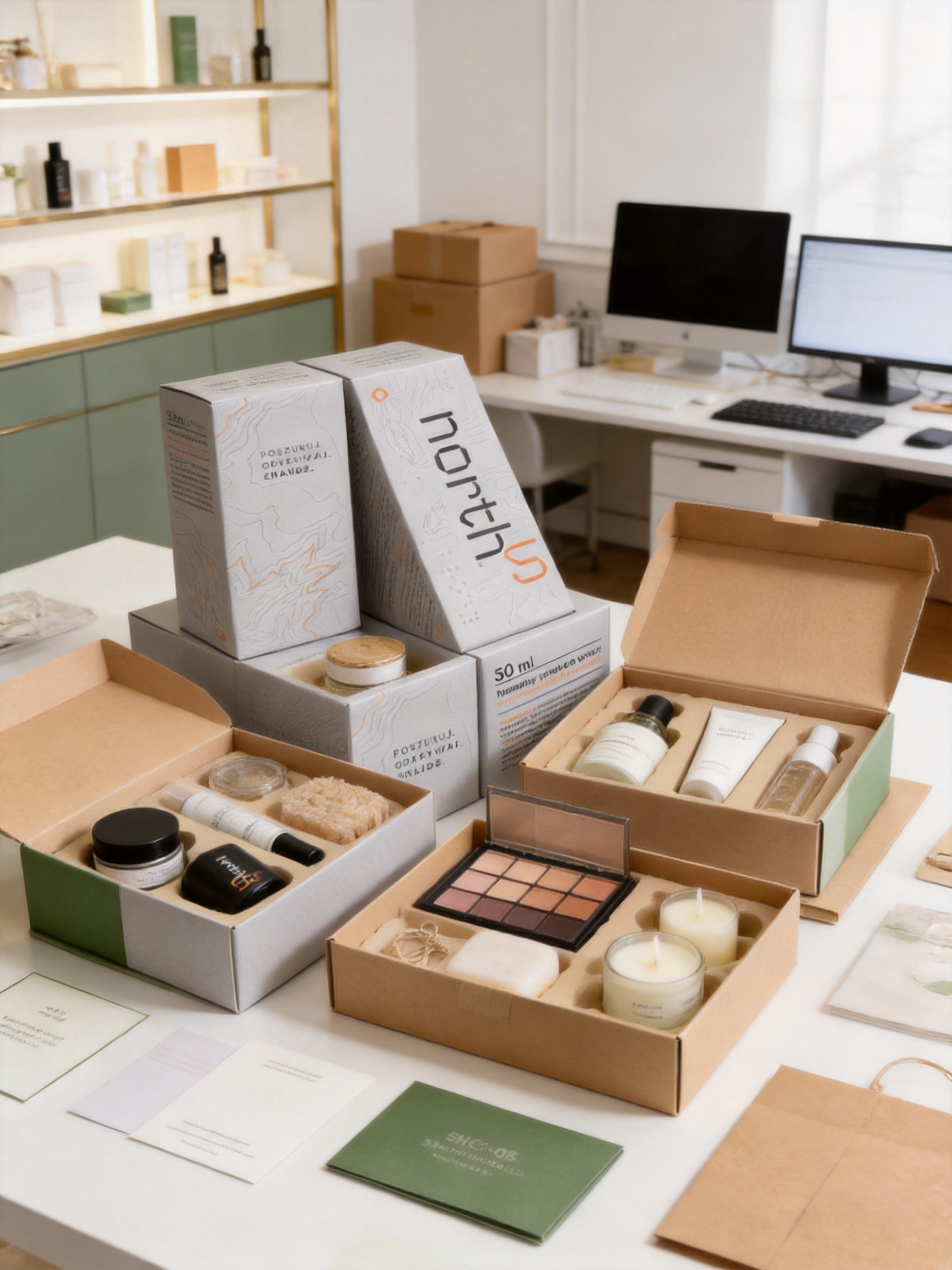
Packaging is one of the most important parts of the cosmetic buying experience. Before a customer opens a product, the box has already communicated information about quality, positioning, sustainability, craftsmanship, and brand personality. For this reason, a cosmetic gift box is not simply a container. It is a presentation tool, a protective structure, a marketing asset, and an important part of the customer’s unboxing experience.
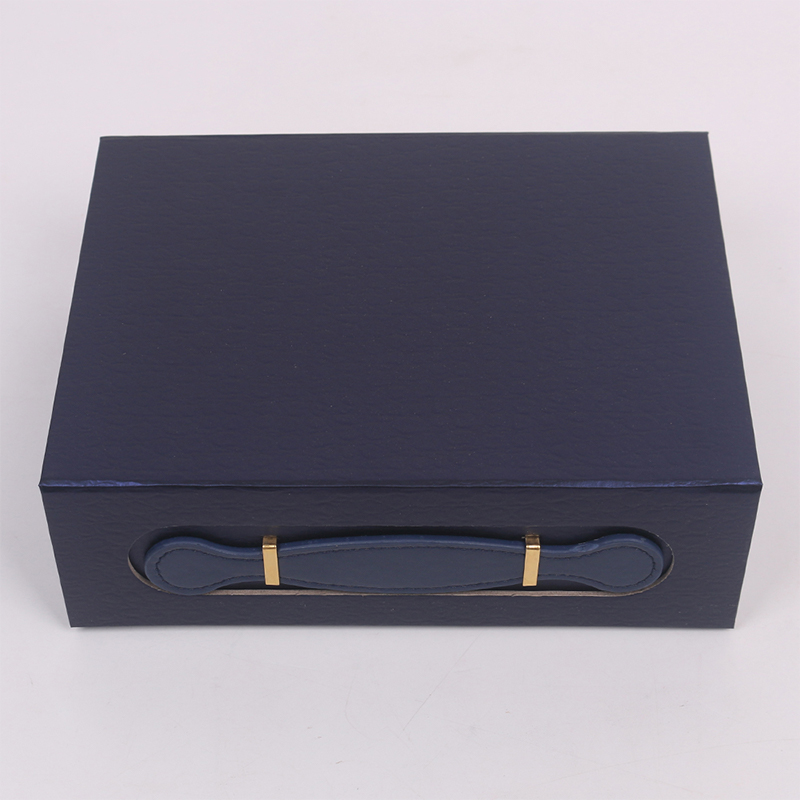
The SHC-08 Cosmetic Gift Box is designed for brands that need attractive, practical, and customizable packaging for beauty and personal-care products. It belongs to the gift box category and can be developed for cosmetic gift sets, skincare collections, makeup combinations, fragrance assortments, bath products, promotional bundles, and seasonal product launches. Its paper-based structure provides a balance between visual appeal, protection, transport efficiency, and brand flexibility.
Produced by Zhejiang Shihao Gift Packaging Co., Ltd., the box benefits from the capabilities of an export-oriented packaging manufacturer with more than 15 years of industry experience. The company operates a production facility covering approximately 20,000 square meters, employs around 300 people, and maintains an average daily production capacity of about 5,000 sets of gift boxes. These resources allow the manufacturer to serve both developing brands and established international customers that require consistent quality, customized design, and dependable production schedules.
This article examines the product’s structure, design potential, manufacturing process, quality advantages, customization options, sustainability considerations, and commercial applications. It also explains why a specialized cosmetic gift box manufacturer can offer greater value than a general packaging supplier.
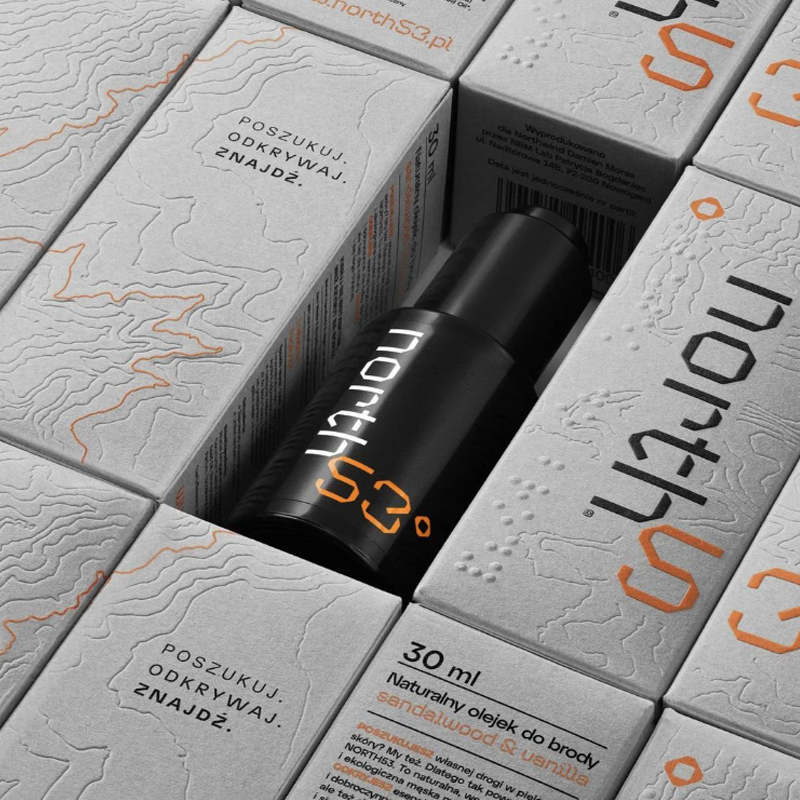
SHC-08 Cosmetic Gift Box
The SHC-08 Cosmetic Gift Box is a paper packaging solution developed for the presentation of cosmetic products and coordinated gift sets. Its primary purpose is to organize products attractively while protecting them during handling, storage, shipping, and retail display. The packaging can be adapted to accommodate different product combinations, including jars, bottles, tubes, palettes, accessories, sample products, and promotional items.
A cosmetic gift box must perform several functions at the same time. It should be visually appealing enough to attract attention, strong enough to withstand transportation, flexible enough to support different product dimensions, and practical enough for efficient assembly and storage. It should also provide enough surface area for branding, product information, decorative graphics, and regulatory details.
The SHC-08 model is especially suitable for businesses seeking a premium presentation without relying exclusively on plastic packaging or overly complex rigid structures. Paperboard-based gift packaging can deliver a refined appearance through printing, color, surface treatment, structural design, and carefully selected inserts. This makes it appropriate for cosmetic companies that want to create a memorable presentation while maintaining control over production cost and logistics.
The box can be considered for a wide range of cosmetic and personal-care applications. Typical uses include skincare gift sets containing cleansers, serums, creams, masks, and moisturizers. It can also be used for makeup collections featuring lipstick, blush, eyeshadow, mascara, foundation, or makeup tools.
Fragrance companies may use this type of packaging for perfume and body-care combinations. Bath and wellness brands can create gift boxes for bath bombs, soaps, essential oils, candles, and body lotions. Hair-care companies may use the structure for shampoo, conditioner, styling products, brushes, or treatment kits.
The product is also suitable for limited-edition collections, holiday packaging, corporate gifts, influencer campaigns, subscription boxes, product launch kits, hotel amenities, and promotional sample sets. Because cosmetic packaging often changes according to season, campaign, or target market, customization is an important part of the product’s commercial value.
Cosmetic products are frequently purchased as gifts, which means the exterior presentation can influence the perceived value of the contents. A well-designed box creates a clear visual hierarchy: the customer sees the brand identity first, then the product collection, and finally the individual items inside. When the internal arrangement is carefully planned, the opening process becomes orderly and enjoyable rather than confusing or inconvenient.
Protection is equally important. Cosmetic containers may be made from glass, plastic, metal, or ceramic, and some products are vulnerable to scratches, leakage, crushing, or impact. A properly engineered box can reduce movement inside the package and create separation between individual items. Inserts, partitions, trays, paperboard supports, or folded internal components may be selected according to the product dimensions and protection requirements.
The final structure should be tested according to the product’s weight, fragility, filling method, distribution route, and expected handling conditions. A gift box intended for a premium retail counter may require a different construction from one designed for international e-commerce shipping. The manufacturer’s design and development team can help evaluate these requirements before mass production.
Many cosmetic products are packaged in standard cartons or simple folding boxes. These formats can be cost-effective, but they may not provide enough differentiation for premium collections or gift-oriented products. The SHC-08 Cosmetic Gift Box offers several potential advantages over ordinary packaging formats.
Standard packaging often provides limited space for storytelling and visual design. A custom gift box can use its lid, side panels, front panel, inner tray, and removable components to create a coordinated presentation. This gives brands more opportunities to communicate their identity and make the product recognizable from a distance.
Color selection, typography, imagery, patterns, and finishing details can be combined to reflect a brand’s market position. A minimalist design may communicate clean beauty and scientific credibility. Soft colors and refined illustrations may support a skincare or wellness concept. Metallic effects, dark tones, and textured papers may be used for luxury fragrance or premium cosmetics.
Cosmetic gift sets often contain several products with different shapes and sizes. Placing these products together without internal organization can make the package appear untidy and can increase the risk of movement during transportation. A custom box can be designed around the exact product combination, allowing each item to occupy a defined position.
Organized presentation also improves the customer’s first impression. The products can be arranged in a logical order, with the primary item placed in the most visible position and supporting products positioned around it. Accessories, instruction cards, promotional leaflets, and samples can be integrated without making the box appear overcrowded.
A gift box provides more communication space than a small individual carton. In addition to the logo and product name, the packaging can include brand values, usage information, ingredients, campaign messages, origin statements, and customer-care details. This is particularly useful for new brands that need to establish trust quickly.
Packaging can also communicate consistency across product lines. A company may use the same box structure for multiple collections while changing colors, graphics, or internal arrangements. This creates a recognizable family appearance and simplifies future product launches.
The unboxing process can influence customer satisfaction, social media sharing, repeat purchases, and word-of-mouth promotion. A well-designed cosmetic gift box can create a sequence of discovery as the customer opens the outer structure, sees the arranged products, removes an inner tray, or finds a printed message beneath the first layer.
This experience is especially relevant to beauty brands that sell through online channels. When a customer records or photographs the package, the box becomes part of the brand’s public image. A carefully finished package can therefore provide marketing value beyond its original protective function.
Premium appearance does not always require an excessively complicated construction. A skilled manufacturer can recommend practical combinations of paperboard, printing, inserts, and finishing techniques. By prioritizing the most visible elements, a brand can create a luxury impression while avoiding unnecessary material or processing costs.
Paper-based gift boxes may also be easier to store and transport than some fully assembled rigid packages. Folding or partially folding structures can reduce shipping volume, while efficient nesting and packing methods may help reduce freight costs. The most appropriate solution depends on the intended product positioning and logistics model.
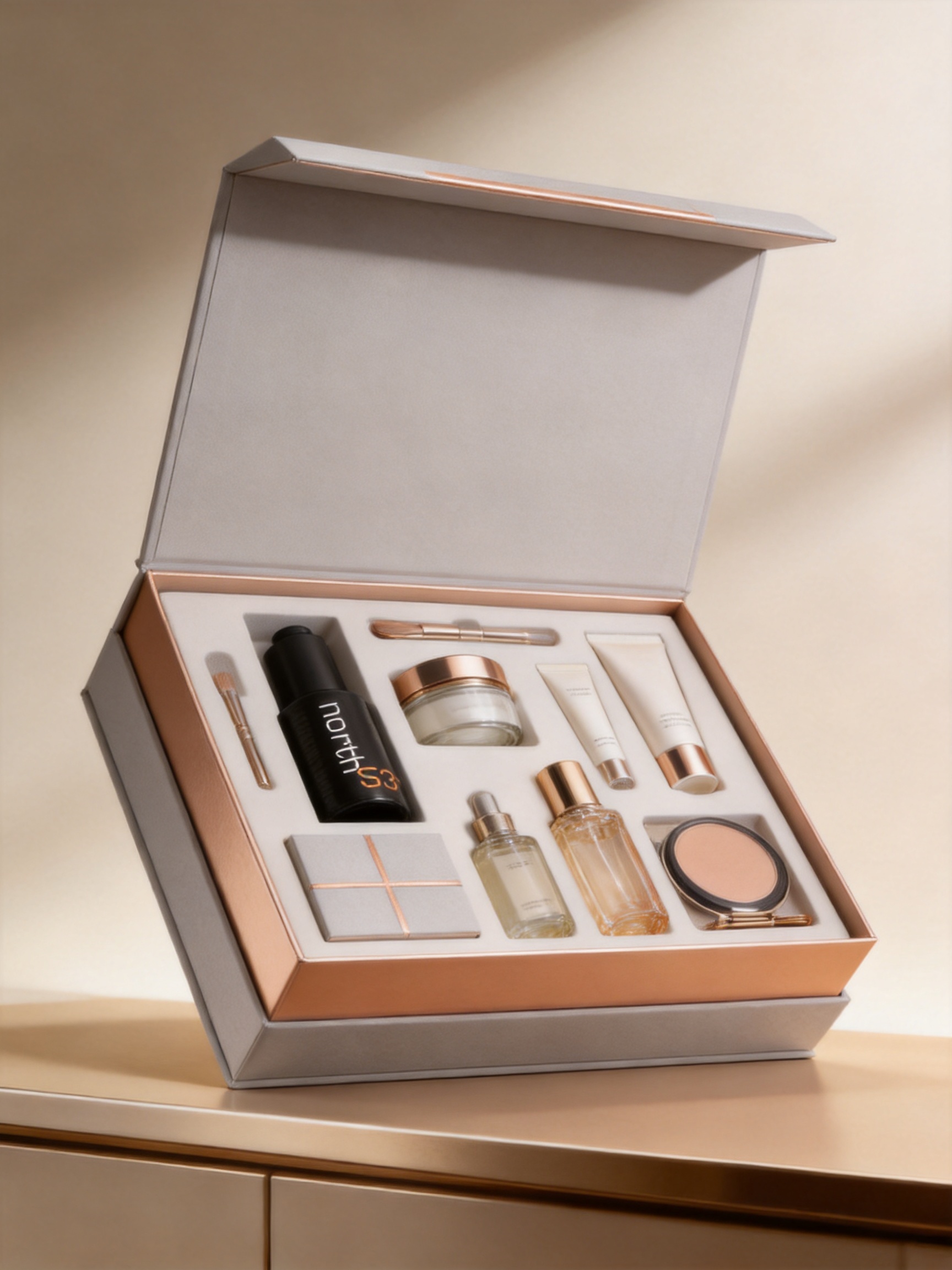
Customization is one of the central strengths of a professional gift box manufacturer. The SHC-08 Cosmetic Gift Box can be developed according to a buyer’s requirements for dimensions, colors, artwork, materials, internal layout, finishing, and packaging method. Customization should begin with a clear understanding of the product and the intended market.
The external dimensions should be determined by the size, weight, and number of products placed inside. A box that is too large may create unnecessary movement and increase material and shipping costs. A box that is too small may place pressure on the products or make the opening experience uncomfortable. Accurate measurements are therefore essential.
Structural design may include a hinged lid, lift-off lid, drawer-style opening, folding panels, magnetic closure, ribbon pull, removable tray, or other presentation features. The final choice should consider the product’s price level, customer expectations, assembly requirements, and distribution environment.
For cosmetic gift sets, internal components are often as important as the exterior. Paperboard inserts, molded pulp supports, folded dividers, and custom trays can be designed to keep bottles and containers separated. The insert may be printed, wrapped, coated, or left in a natural paper finish depending on the desired appearance.
Material selection affects strength, surface appearance, print performance, weight, and sustainability. Different paperboards may be used for the outer structure and the internal components. The manufacturer can evaluate the required thickness and stiffness according to the product load and box dimensions.
Coated paper can provide a smooth surface for detailed graphics and bright colors. Textured or specialty papers may create a more tactile luxury effect. Kraft-style papers can support a natural or environmentally conscious brand identity. Recycled-content materials may be considered where they meet the required appearance and performance standards.
Material choices should also account for the production process. A paper that looks attractive in a sample may behave differently during creasing, folding, lamination, or gluing. Experienced production engineers can identify potential issues before mass production and recommend materials that provide a reliable balance between appearance and manufacturability.
Printing is a major element of cosmetic packaging design. High-quality graphics can make the difference between a generic box and a premium brand presentation. Artwork may include logos, illustrations, patterns, ingredient-related graphics, photographs, icons, and decorative backgrounds.
Color management is important because cosmetic brands often rely on specific shades to maintain visual consistency. The manufacturer should review artwork files, printing specifications, color references, and proofing requirements before production. Samples can help the buyer evaluate how the selected colors appear on the actual paper surface rather than on a computer screen.
Designers should also consider how colors interact with finishing treatments. A matte surface may soften colors, while gloss lamination can increase visual intensity. Metallic foil may be affected by the background tone and paper texture. These details should be coordinated during the pre-production stage.
Finishing techniques can add visual depth, tactile appeal, and visual distinction. Options may include matte lamination, gloss lamination, spot effects, embossing, debossing, foil stamping, varnish, textured coatings, and specialty paper wrapping.
Matte finishes are often used for modern, understated, and sophisticated packaging. Gloss finishes can create a brighter and more colorful appearance. Embossing and debossing allow selected elements to be felt by touch, which can reinforce the perception of quality. Foil details may highlight a logo, product name, border, or decorative pattern.
Finishing should be used strategically. Too many effects may make the package appear visually crowded or increase production complexity without improving the customer experience. A professional packaging team can help determine which details produce the strongest result within the available budget.
The opening method influences how customers interact with the box. A simple folding structure may be appropriate for high-volume promotional sets, while a more elaborate lid or drawer mechanism may suit a luxury collection. Closures can be selected for appearance, security, convenience, and repeat usability.
A box designed for gifting should be easy to open without damaging the outer surface. At the same time, it should remain securely closed during shipping and storage. The right balance may require testing different paper thicknesses, magnets, ribbons, tabs, or structural locking features.
The quality of a cosmetic gift box depends on more than the final printed appearance. It is the result of coordinated design, material selection, production control, finishing, assembly, inspection, and packing. Zhejiang Shihao Gift Packaging Co., Ltd. combines design development and manufacturing resources to support this complete process.
Production begins with an understanding of the customer’s requirements. The manufacturer reviews the product dimensions, quantity, intended use, artwork, preferred materials, target market, packaging budget, and delivery expectations. This stage helps identify whether the proposed design is practical and whether the packaging will adequately protect the contents.
For a cosmetic gift set, the manufacturer may need information about each individual item, including weight, shape, surface sensitivity, closure type, and arrangement. If the package will be shipped internationally or distributed through e-commerce, additional attention may be given to compression, impact, and handling risks.
After the requirements are confirmed, the box structure can be developed. Engineers prepare cutting layouts, folding lines, insert patterns, and assembly instructions. A sample or prototype is then produced so the buyer can evaluate the dimensions and appearance.
Prototyping helps identify problems that may not be visible in a digital drawing. Products may fit too tightly, the lid may not align correctly, or the insert may require additional support. The sample stage allows these issues to be corrected before tooling and mass production.
Prototype testing may include opening and closing the box repeatedly, checking the placement of every product, evaluating the stability of inserts, and reviewing how the package behaves when lifted or moved. For fragile products, additional transportation simulation may be appropriate.
Artwork is checked before printing to ensure that dimensions, bleed areas, text, images, and color specifications are suitable for production. Important brand elements should be positioned carefully so they are not lost in folding, trimming, gluing, or structural overlaps.
At this stage, the manufacturer can also verify that small text remains readable and that fine lines will reproduce correctly on the selected paper. A digital proof or physical sample may be used to confirm the visual direction. Careful pre-press preparation reduces waste and helps maintain consistency during the production run.
Once the artwork is approved, the paperboard is printed according to the selected specifications. The printing stage must maintain alignment, color consistency, and image clarity across the production batch. For multi-part packaging, the various components should be coordinated so that their colors and graphics appear consistent.
After printing, the box may receive lamination, varnish, foil, embossing, or other surface treatments. These processes require accurate registration and controlled handling. The surface must remain clean and free from visible defects such as scratches, bubbles, dust marks, color variation, or uneven coating.
Die-cutting shapes the printed material according to the approved structural design. Creasing creates controlled folding lines so the box can be assembled accurately. Precision at this stage is essential because even small deviations can affect the fit of the lid, the alignment of the panels, or the stability of the insert.
Experienced operators and appropriate equipment help ensure that cutting edges are clean and folding lines are consistent. The production team should also monitor the direction of the paper grain, since grain orientation can affect folding performance and structural strength.
Depending on the design, components may be folded and glued by machine, by hand, or through a combination of both methods. Automated equipment can support speed and consistency for suitable structures, while skilled manual assembly may be necessary for intricate gift boxes, specialty finishes, or complex internal arrangements.
Adhesive selection and application are important for long-term durability. Excess adhesive can affect the appearance of the box, while insufficient adhesive may cause panels to separate. Operators should inspect glued joints and ensure that the components remain aligned during curing and handling.
For gift boxes with multiple inserts or decorative elements, assembly must follow a clear sequence. Work instructions and quality checkpoints can help reduce variation between units. The final assembled package should open and close smoothly and maintain its shape during normal use.
Finished boxes are inspected for printing quality, structural accuracy, surface defects, adhesive marks, color consistency, and assembly quality. The inspection process may also verify product fit and the positioning of internal components.
Products that pass inspection are packed according to the customer’s requirements. Proper packing helps prevent dust, moisture exposure, compression, and surface damage during storage and transportation. Export orders may require additional attention to carton strength, palletization, labeling, and shipment organization.
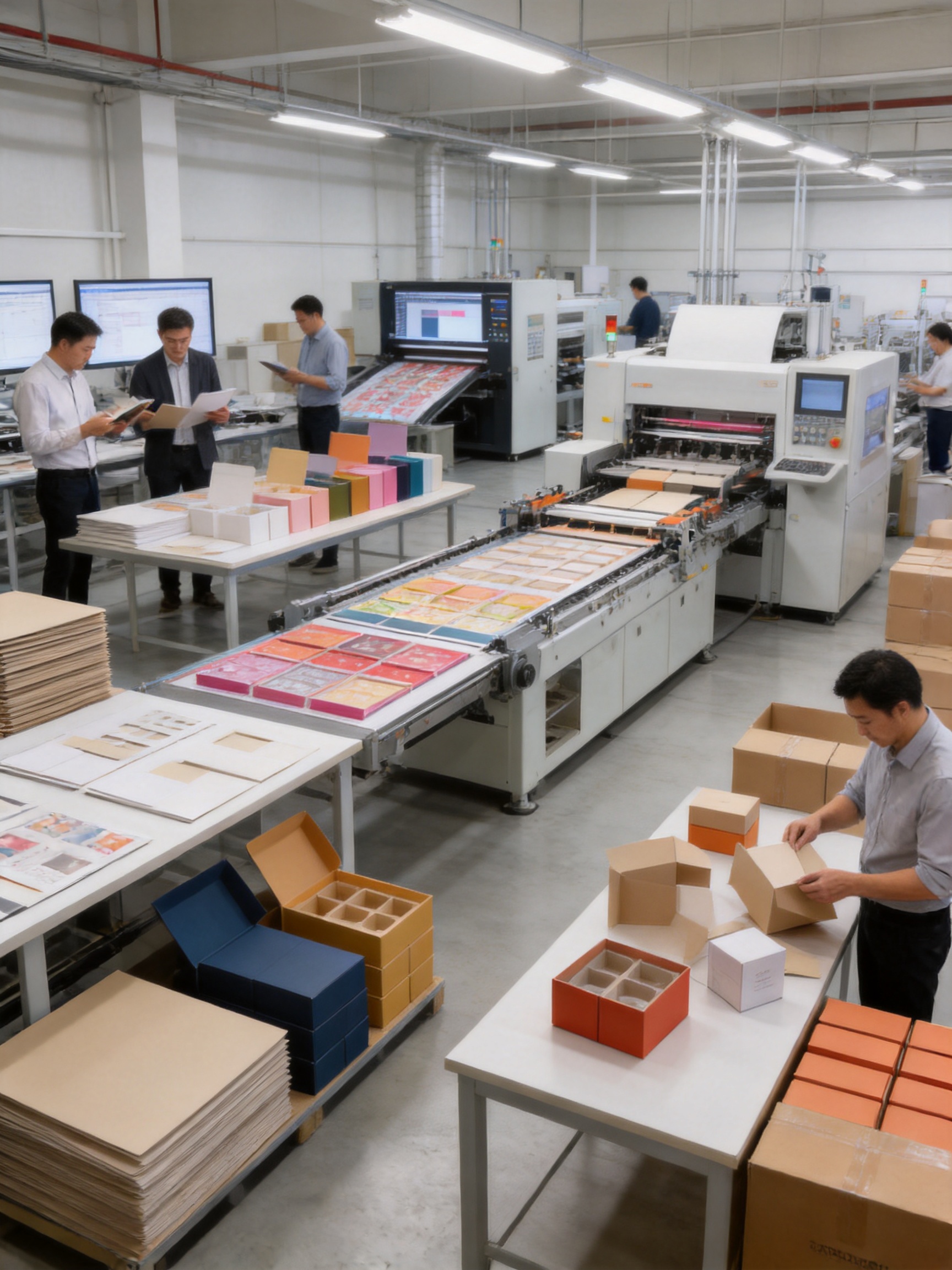
A specialized manufacturer offers advantages that are difficult to achieve through a general trading company or an inexperienced packaging supplier. Zhejiang Shihao Gift Packaging Co., Ltd. has developed its capabilities around paper gift packaging, including kits, storage boxes, folding boxes, jewelry boxes, and gift boxes. This specialization provides relevant experience for cosmetic packaging projects.
Long-term experience helps a manufacturer understand the practical differences between attractive concepts and production-ready packaging. Over more than 15 years, the company has worked with different paper materials, box structures, printing effects, product categories, and export requirements.
This experience can shorten the development process because common design problems may be identified earlier. It can also help buyers select realistic materials and finishes rather than discovering limitations after mass production has begun.
The company’s approximately 20,000-square-meter facility provides space for design development, production, assembly, inspection, storage, and order management. A suitable production environment supports better workflow organization and allows different stages of manufacturing to be coordinated more efficiently.
Space and equipment capacity are particularly valuable for larger cosmetic campaigns, seasonal orders, and customers that need several packaging designs produced in parallel. They also help the manufacturer manage repeat orders with greater consistency.
With around 300 employees, the company has personnel supporting design, engineering, production, quality control, administration, and export operations. Its own design team updates dozens of products weekly, demonstrating an active approach to packaging development and market trends.
A strong design team can contribute beyond basic artwork production. It can advise on box proportions, visual hierarchy, insert arrangements, material combinations, and finishing choices. This is useful for brands that have a product concept but need assistance translating it into a manufacturable package.
An average daily capacity of approximately 5,000 sets allows the company to support both standard production and larger customized orders. Capacity alone does not guarantee quality, but when it is combined with process control and inspection, it provides buyers with greater confidence in production scheduling.
High capacity can also be beneficial for rapidly growing cosmetic brands. A company may begin with a limited launch quantity and later require much larger volumes for retail expansion, seasonal sales, or international distribution. Working with a manufacturer that can scale production may reduce the need to change suppliers as demand grows.
The company exports to Europe, the United States, the Middle East, and other regions. International experience requires attention to communication, documentation, packaging protection, shipment coordination, and customer expectations in different markets.
Export experience can help reduce misunderstandings during the quotation, sampling, approval, production, and shipping stages. It also means the supplier is familiar with the importance of accurate specifications and reliable delivery for overseas customers.
The company has passed BSCI and FSC certifications. These certifications are meaningful indicators of social responsibility and responsible material sourcing when applied to the relevant products and supply chain processes. Buyers should still confirm the current scope and validity of certifications for a specific order.
For cosmetic brands, certification information may support internal supplier evaluation and sustainability communication. FSC-related sourcing can be particularly relevant for brands that want paper packaging connected with responsible forest management. BSCI-related assessment can provide information about social compliance practices within the supply chain.
When comparing cosmetic gift box manufacturers, buyers should look beyond the lowest unit price. The real value of a supplier includes design support, production reliability, quality consistency, communication, customization ability, certification, and long-term scalability.
A supplier focused on paper gift packaging is more likely to understand the details of premium box production than a supplier that handles unrelated packaging categories. This includes knowledge of folding behavior, insert construction, surface finishing, gift presentation, and assembly quality.
Specialization can also improve the consultation process. The manufacturer can discuss the relationship between product protection and visual presentation, rather than treating the box as a simple printed container.
When design, sampling, engineering, and manufacturing are coordinated within one organization, communication can be more efficient. Design changes can be reviewed with production limitations in mind, and engineering feedback can be incorporated before the final quotation or sample approval.
In contrast, a supplier that outsources several stages may face delays or inconsistencies when a structure needs to be revised. Integrated management does not eliminate every risk, but it can make responsibility clearer and improve response speed.
Some suppliers offer only a limited range of standard models, while others accept custom projects but lack the equipment or expertise to control complex production. A manufacturer with design resources and broad paper packaging experience can provide a more balanced customization service.
This means the buyer can adapt the structure, graphics, materials, and finishing while still using a production method that is practical for the required quantity and budget. The goal is not customization for its own sake, but a package that supports the product and the commercial strategy.
Cosmetic businesses may have changing order requirements. A small brand may need a first production run for market testing, while an established company may need high-volume seasonal packaging. A manufacturer with substantial production capacity and export experience may be better prepared to support these different stages.
Before placing an order, buyers should discuss minimum order quantities, sample costs, production lead times, capacity allocation, and repeat-order procedures. Clear planning helps ensure that the manufacturer’s strengths match the project’s actual requirements.
Packaging defects can damage a brand’s reputation even when the cosmetic product itself is excellent. Misaligned printing, weak glue joints, scratched surfaces, inaccurate colors, or poorly fitted inserts may create customer complaints and increase replacement costs.
A professional supplier understands that packaging quality is part of brand protection. Inspection procedures, sample approval, production records, and clear acceptance standards can help reduce quality variation. Buyers should request information about these procedures before confirming an order.
The SHC-08 Cosmetic Gift Box can support several commercial strategies. Its value is not limited to one type of cosmetic product or one sales channel.
Retail gift sets are often purchased during holidays, birthdays, anniversaries, and special events. Packaging needs to communicate gift value immediately. A coordinated box can make a collection appear more complete and desirable than separate products displayed together.
Retail packaging should be designed for shelf visibility. Important branding and product information should be clear from the front or top view, while the overall structure should be stable enough for store handling. The package should also be easy for retail staff to stock and arrange.
E-commerce brands rely on packaging to replace much of the physical experience that would normally occur in a store. The customer cannot touch the product before buying, so the delivered package becomes a critical point of contact.
For online sales, the box should balance beauty with transport protection. Decorative details are valuable, but they should not compromise structural strength. Internal supports may be required to reduce movement and protect fragile containers during delivery.
Seasonal packaging can create urgency and encourage gift purchases. The same basic structure may be adapted with different artwork for holidays, anniversaries, cultural events, or limited-edition collaborations.
Because seasonal products often operate under tight deadlines, early communication is important. Artwork approval, sample development, material purchasing, production, and shipping should be planned backward from the launch date.
Cosmetic gift boxes can be used for corporate appreciation programs, hotel welcome kits, event gifts, media packages, and promotional campaigns. In these applications, the box may contain a combination of branded cosmetics, brochures, cards, and accessories.
Corporate packaging often requires careful logo placement and consistent color reproduction. It may also require individual labeling or customized inserts. A manufacturer experienced in export orders can help coordinate these requirements.
Subscription services need packaging that can support recurring deliveries while maintaining a recognizable identity. A custom gift box can be designed as a reusable or repeatable presentation format, with interchangeable inserts or seasonal printed sleeves.
For subscription businesses, efficiency is especially important. The package should be easy to assemble, safe to ship, and consistent across repeated production runs. A practical structural design may reduce packing labor and improve customer satisfaction.
Sustainability is becoming increasingly important in cosmetic packaging. Customers, retailers, and regulators are paying more attention to materials, waste, sourcing, recyclability, and responsible manufacturing. A paper gift box can support sustainability goals, but the overall design must be evaluated carefully.
Material reduction is one possible approach. A box should use enough material to provide the necessary protection and presentation, but excessive layers, oversized dimensions, and unnecessary decorative components may increase waste. Structural engineering can help identify where material can be reduced without weakening the package.
Paper-based packaging may also be easier to integrate into established paper recycling systems than packaging made from mixed materials. However, coatings, laminations, foils, adhesives, and plastic components can affect recycling conditions. Buyers should discuss the desired end-of-life characteristics with the manufacturer before selecting finishes.
FSC certification may support responsible paper sourcing when the relevant materials and production documentation meet the required standards. Brands should communicate sustainability claims accurately and avoid broad statements that cannot be verified. The manufacturer can provide information for supplier assessment, while the brand remains responsible for appropriate marketing claims in its target market.
Sustainable packaging should also consider logistics. Efficient dimensions can reduce empty space in shipping cartons and improve pallet utilization. Lighter packaging may reduce transportation impact, although weight reduction should not compromise the protection of cosmetic products. A balanced approach considers the full life cycle of the package.
Buyers can improve the efficiency of a custom packaging project by preparing complete information before requesting a quotation. The following details are particularly useful:
First, provide the product dimensions, weight, quantity, shape, and material. If the set includes several products, list each item separately and explain the preferred arrangement. Photographs or physical samples can help the manufacturer understand unusual shapes or surface sensitivities.
Second, provide the desired box dimensions or explain the preferred presentation. If the buyer has a reference package, it should be used as inspiration rather than copied without considering the actual product requirements. A packaging engineer may recommend changes that improve strength, assembly, or cost.
Third, provide artwork in a suitable editable format and identify all required text. Cosmetic packaging may need product names, ingredients, usage information, warnings, batch information, recycling symbols, barcodes, and other market-specific details. These requirements should be checked before printing.
Fourth, identify the expected order quantity, target delivery date, destination, and sales channel. A box for a local boutique, an international retailer, and an e-commerce warehouse may need different protection and packing methods.
Fifth, discuss the preferred materials and finishing effects. If sustainability is important, specify whether the project requires FSC-related materials, recycled content, plastic reduction, recyclable construction, or particular coating limitations.
Finally, approve a physical sample before mass production whenever possible. The sample should be checked with the actual cosmetic products, not only with empty containers or digital measurements. The buyer should evaluate fit, opening performance, color, surface quality, insert stability, and overall appearance.
| Evaluation Area | SHC-08 Cosmetic Gift Box Consideration | Commercial Benefit |
|---|---|---|
| Primary use | Cosmetic gift sets, skincare collections, makeup kits, fragrance packages, and personal-care products | Supports multiple product categories and campaign types |
| Structure | Custom paper gift box structure with adaptable internal organization | Allows product-specific fit and improved presentation |
| Branding | Customized artwork, colors, logos, graphics, and printed messaging | Strengthens brand recognition and shelf appeal |
| Finishing | Potential options include matte, gloss, embossing, debossing, foil, varnish, and specialty papers | Creates a differentiated premium appearance |
| Protection | Custom inserts, partitions, trays, and supports may be developed according to product requirements | Reduces movement, scratching, and impact risk |
| Manufacturing experience | More than 15 years in paper gift packaging production | Supports practical design and production problem-solving |
| Production scale | Approximately 20,000-square-meter facility and average daily capacity of about 5,000 gift box sets | Suitable for development orders and larger commercial programs |
| Workforce | Approximately 300 employees across design, production, quality, and export functions | Improves project coordination and scalability |
| Market coverage | Exports to Europe, the United States, the Middle East, and other markets | Provides experience with international customer requirements |
| Certification | BSCI and FSC certifications reported by the manufacturer | Supports social-compliance and responsible-sourcing evaluations |
A successful cosmetic gift box begins with a clear concept rather than a collection of decorative effects. The design should answer several questions: Who is the customer? What is the product’s price position? Is the box intended for gifting, retail display, online delivery, or all three? What should the customer feel when opening it? How will the package differ from competing products?
Luxury does not always mean excessive decoration. For some brands, luxury is expressed through restrained typography, precise alignment, thick paperboard, subtle embossing, and a calm color palette. For other brands, luxury may involve rich graphics, metallic details, multiple layers, and dramatic opening features.
Cosmetic packaging should also reflect the product category. A botanical skincare collection may benefit from natural colors, botanical illustrations, and tactile paper. A clinical skincare product may require a more structured and technical appearance. A youthful makeup collection may use bold colors and playful graphics. The box structure should reinforce the visual message rather than compete with it.
Internal presentation deserves equal attention. The first visible product should be positioned intentionally. Cards, samples, and accessories should have defined locations. If the customer must remove several components before reaching the main product, the sequence should feel deliberate rather than inconvenient.
Successful design also considers the second life of the package. Some consumers reuse attractive boxes for jewelry, stationery, photographs, accessories, or household organization. A durable and practical gift box can therefore remain useful after the cosmetics have been consumed, extending the relationship between the customer and the brand.
Quality control should begin with the approved sample and continue through every production stage. The main quality priorities for a cosmetic gift box include dimensional accuracy, color consistency, clean cutting, reliable creasing, strong adhesive joints, smooth finishing, correct assembly, and proper product fit.
Color variation can occur because of paper differences, ink density, machine settings, environmental conditions, or finishing treatments. The production team should establish a reference sample and compare finished output against the approved standard.
Structural accuracy is also essential. A lid that is too tight may be difficult to open, while a lid that is too loose may open during transportation. Inserts must remain stable without making product removal difficult. Folding lines should be positioned correctly so that panels meet cleanly.
Surface inspection should identify scratches, dents, bubbles, stains, glue marks, foil misalignment, uneven embossing, and other visible defects. The acceptable defect level should be agreed upon before production, especially for luxury packaging where small imperfections may be highly noticeable.
Finished packaging should be packed in a way that protects it from compression and abrasion. Carton loading should avoid excessive pressure on decorative surfaces. If the package includes delicate finishing, additional protective layers may be appropriate during shipment.
Clear communication is especially important for customized export packaging. Buyers should provide a written specification that includes product details, artwork requirements, dimensions, materials, finishing, packing method, quantity, and delivery expectations.
Questions should be resolved before sampling whenever possible. For example, the buyer should ask whether the quoted price includes inserts, assembly, special finishing, individual polybags, export cartons, or other components. It is also useful to confirm whether the price is based on a standard material or a specific grade of paperboard.
Sample approval should be documented clearly. If changes are made after approval, the updated version should be identified so that the factory does not work from an outdated file. A revision code, approval date, or signed sample record can help prevent confusion.
Communication should also cover repeat orders. Brands should know whether the same materials and finishing specifications can be maintained for future production. If the box is part of a long-term product line, it may be beneficial to preserve approved color references, structural drawings, and inspection standards.
The box is suitable for many cosmetic and personal-care products, including skincare items, makeup, fragrance, bath products, body-care products, hair-care products, sample sets, and promotional kits. The final internal layout should be developed according to the exact product dimensions and protection requirements.
Yes. Customization may include logos, product names, colors, patterns, illustrations, marketing messages, and regulatory information. The artwork should be supplied in an appropriate production format and reviewed before printing.
Yes. Internal trays, dividers, folded supports, and other paper-based components can be developed to fit the products. A customized insert can improve product stability and create a more organized unboxing experience.
The box can be developed for premium and luxury cosmetic positioning through appropriate structural design, paper selection, printing, and finishing. Options such as embossing, foil stamping, specialty paper, and precise internal presentation may increase the perceived value of the package.
It can be considered for e-commerce use, but the structure should be evaluated according to the shipping environment. Fragile or heavy products may require stronger inserts, additional outer shipping protection, or transportation testing. A gift box designed only for retail display may need modifications for parcel delivery.
Zhejiang Shihao Gift Packaging Co., Ltd. reports having passed BSCI and FSC certifications. Buyers should request current certification details and confirm whether the specific materials and production arrangements for their order are covered.
The company exports to Europe, the United States, the Middle East, and other regions. Its export experience supports communication and order coordination for overseas customers. Buyers should still confirm shipping terms, documentation, lead times, carton specifications, and destination requirements for each project.
Useful quotation information includes the required box style, dimensions, product quantity, internal arrangement, materials, printing, finishing, order quantity, destination, artwork status, and target delivery date. Product samples or accurate measurements can help improve quotation accuracy.
Yes. A physical sample is strongly recommended for customized packaging. The buyer should test the sample with the actual products and review fit, structure, color, finishing, opening performance, and assembly before approving mass production.
Yes. The structure can be adapted for holiday designs, promotional campaigns, special collaborations, anniversaries, and limited-edition product combinations. Seasonal projects should be planned early because artwork approval, material preparation, sampling, production, and shipping require time.
Paper-based packaging can support waste-reduction and responsible-sourcing objectives, but environmental performance depends on the complete design. Paper type, coatings, laminations, adhesives, inserts, material quantity, and shipping efficiency should all be considered. Sustainability claims should be based on verifiable information.
A specialized manufacturer can provide relevant experience in structure, materials, printing, finishing, inserts, assembly, and quality control. This helps transform a cosmetic packaging idea into a practical product that can be produced consistently and delivered at the required scale.
The SHC-08 Cosmetic Gift Box is a flexible packaging solution for brands that want to combine product protection, visual presentation, and customized brand communication. It can support skincare sets, makeup collections, fragrance packages, bath products, promotional kits, seasonal releases, and other cosmetic applications.
Its main advantages come from the ability to customize the structure, internal organization, artwork, materials, and finishing. Compared with ordinary cosmetic cartons, a purpose-designed gift box can improve shelf appeal, strengthen product organization, create a more memorable unboxing experience, and add long-term marketing value.
The manufacturing capabilities behind the product are equally important. Zhejiang Shihao Gift Packaging Co., Ltd. offers more than 15 years of experience, a production facility of approximately 20,000 square meters, a workforce of around 300 people, an average daily capacity of about 5,000 gift box sets, an in-house design team, international export experience, and reported BSCI and FSC certifications.
For buyers, the best results will come from early cooperation between the brand, packaging designer, and manufacturer. Accurate product measurements, clear artwork, realistic material choices, physical sampling, and defined quality standards can reduce risk and improve the final outcome.
In a competitive beauty market, the package is often the first physical experience a customer has with a product. A well-developed cosmetic gift box can protect the contents, communicate quality, support sustainability goals, and turn an ordinary purchase into a memorable brand experience.
1. Company-provided product information for the SHC-08 Cosmetic Gift Box.
2. Company-provided manufacturing profile for Zhejiang Shihao Gift Packaging Co., Ltd.
3. General principles of paperboard packaging structure, folding carton engineering, and packaging production management.
4. General guidance on cosmetic packaging design, product presentation, and unboxing experience.
5. General information concerning responsible paper sourcing, FSC certification, and social-compliance assessment.
6. General packaging quality-control practices for printing, die-cutting, folding, gluing, assembly, and export packing.
Recommended Products

Contact Us

No. 15, Xiayang Road, Huangzhai Town, Jinhua, Zhejiang, China

(+86) 579-84230069

(+86) 13085675766


Products

Gift Box Packaging Manufacturer
 English
 Français
 Español
 عربى