2026-09-28
Valentine’s Day packaging plays an important role in the way a gift is presented, remembered, and shared. A well-designed box does more than hold candy. It creates anticipation, communicates affection, supports a brand’s visual identity, and turns a simple product into a meaningful gift experience. The 1001 Decorative Cardboard Valentine’s Day Heart-Shaped Candy Box is designed around these principles, combining a recognizable romantic shape with practical cardboard construction, multiple size options, and flexible customization.
Developed for candy, sweets, jewelry, toys, small presents, and other seasonal products, this heart-shaped gift box provides a visually distinctive alternative to standard square or rectangular packaging. Its framed heart design immediately connects the package with love, romance, and celebration. At the same time, the rigid decorative cardboard structure offers a useful balance between appearance, protection, transportability, and production efficiency.
The product is manufactured by Zhejiang Shihao Gift Packaging Co., Ltd., an export-oriented paper packaging manufacturer with more than 15 years of experience in the gift packaging industry. The company operates from a 20,000-square-meter facility, employs approximately 300 people, and maintains design, research, development, and production capabilities for international customers. Its product range includes kits, storage boxes, folding boxes, jewelry boxes, and many other types of gift packaging.
This article examines the design value, construction, customization possibilities, manufacturing strengths, sustainability considerations, logistics, and commercial applications of the heart-shaped candy box. It also explains why a specialized manufacturer can provide advantages over generic packaging suppliers and how this product can help retailers, confectionery brands, gift companies, and promotional businesses create a stronger Valentine’s Day presentation.
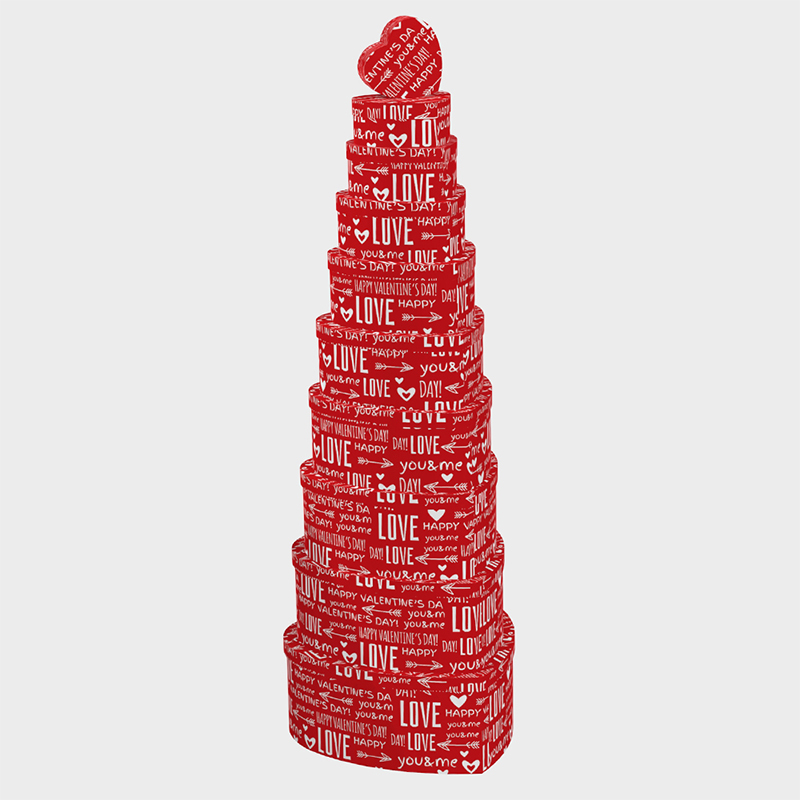
1001 Decorative Cardboard Valentine's Day Heart-Shaped Candy Box
The 1001 Decorative Cardboard Valentine’s Day Heart-Shaped Candy Box is a seasonal gift container centered on a heart-shaped frame. The design is immediately recognizable and supports the emotional meaning of Valentine’s Day. Unlike plain packaging that requires additional labels or decorations to communicate its purpose, the heart silhouette itself establishes the theme before the recipient opens the box.
The package is made from decorative cardboard selected for its combination of visual quality and structural practicality. Cardboard allows the box to be shaped, printed, folded, finished, and customized in ways that are difficult to achieve with ordinary plastic containers. It also provides an appealing tactile surface that can support printed graphics, romantic patterns, brand marks, seasonal messages, and other decorative elements.
The heart-shaped frame serves several purposes at once. First, it creates a strong shelf presence. A heart outline is visually different from the dominant rectangular formats commonly used in confectionery packaging. Second, it reinforces the emotional purpose of the gift. Third, it gives brands a distinctive form that can be adapted to different colors, themes, and product assortments. Finally, the frame can contribute to the perceived value of the package by giving it a more specialized and carefully designed appearance.
The box is suitable for Valentine’s Day candy, chocolate assortments, cookies, small toys, jewelry, cosmetics, and other compact presents. Its flexibility means that buyers do not need to limit the product to a single category. A confectionery company may use it for chocolate truffles, while a gift retailer may fill it with jewelry, keepsakes, or a combination of small products.
The product information identifies ten available sizes. The listed dimensions range from approximately 33 × 32.3 × 14 centimeters for size 1 to approximately 11 × 10 × 5 centimeters for size 10. This range allows customers to select a format suitable for different gift dimensions, filling quantities, and retail price points.
The minimum order quantity is 500 sets. This quantity is appropriate for wholesalers, retailers, seasonal gift businesses, confectionery brands, promotional distributors, and companies preparing a coordinated Valentine’s Day campaign. It provides access to customized production while remaining more practical than extremely large minimum quantities often associated with specialized packaging.
Packaging is part of the product experience, particularly when the item is purchased as a gift. Consumers often make an initial judgment based on shape, color, finish, and presentation before they evaluate the contents. A heart-shaped package provides an instant emotional signal that can strengthen the connection between the product and the occasion.
The heart is widely associated with affection, caring, friendship, romance, and emotional generosity. For Valentine’s Day, this symbolism is especially relevant. A heart-shaped box can make a product feel more intentional than candy placed in a generic container. The package tells the recipient that the gift has been selected and prepared for a personal occasion.
For retailers, the heart shape can also make displays more visually engaging. Several heart-shaped packages arranged together can create an obvious seasonal presentation in a store, showroom, online product photograph, or promotional campaign. The shape can help products stand out among conventional boxes, bags, and plastic tubs.
The design is also suitable for different levels of branding. A minimalist version can use a single color and a small logo to create an elegant appearance. A more decorative version can include floral graphics, romantic messages, ribbons, patterns, metallic effects, or printed illustrations. Because the structure provides a clear visual theme, brands can develop a consistent collection around it without losing the fundamental recognition of the heart form.
Another important advantage is the potential for emotional differentiation. Many candy products are similar in flavor, size, and price. Packaging can help distinguish one assortment from another. A distinctive heart-shaped box may encourage consumers to view the product as a complete gift rather than merely a food item. This can support premium positioning and increase the perceived value of the contents.
Generic square and rectangular boxes are versatile, but they do not automatically communicate Valentine’s Day. Retailers often need to depend on printed graphics, stickers, ribbons, or point-of-sale signs to establish the seasonal message. The heart-shaped structure communicates the occasion through its physical form, reducing the need for excessive decoration.
This does not eliminate the value of printing or finishing. Instead, it gives those features a strong foundation. A heart shape combined with coordinated artwork can create a more complete and memorable presentation than artwork alone.
In competitive retail environments, shape is one of the fastest elements noticed by shoppers. A heart-shaped box can break up rows of ordinary packaging and attract attention from a distance. Its silhouette can also be recognized in product photography, social media posts, gift guides, and online marketplace listings.
For seasonal merchandising, visual impact can affect how quickly shoppers understand the product’s purpose. A package that clearly communicates “Valentine’s Day gift” may require less explanation and can help customers make faster purchasing decisions.
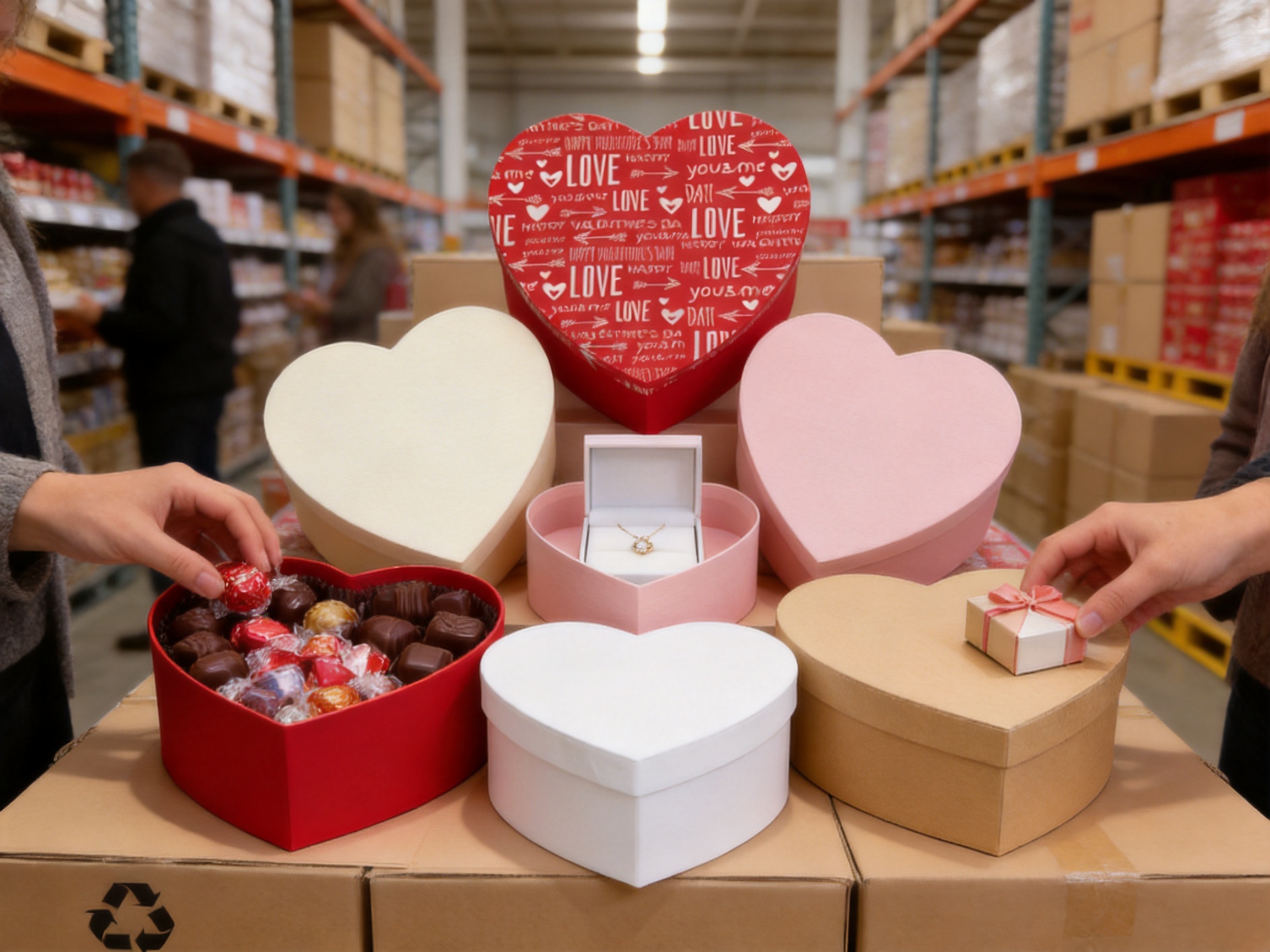
One of the practical differences between this product and a single-size decorative box is the availability of ten size options. A small version can hold a compact chocolate assortment, jewelry item, or personal keepsake. Larger versions can accommodate multiple sweets, toys, or a combination of products.
Multiple size options also allow a brand to create a product family. A retailer may offer small, medium, and large gift sets with consistent styling. This creates an organized visual identity while allowing different prices and filling quantities. It can also support upselling, as consumers may choose a larger size for a more substantial gift.
Decorative cardboard offers more protection than thin paper wrapping or unsupported gift bags. A properly constructed box helps reduce the risk of crushing, surface damage, and product movement during ordinary handling. This is particularly useful for sweets, chocolates, small toys, and other products that need to arrive in presentable condition.
The structure is also useful for long-distance transportation. While packaging must always be matched with suitable internal protection and shipping cartons, a sturdy cardboard gift box provides a more reliable starting point than a lightweight decorative sleeve. The product information specifically identifies the box as suitable for carrying and transportation.
A carefully finished cardboard box can increase the perceived quality of the product inside. Consumers frequently associate clean construction, balanced proportions, and coordinated decoration with greater care and value. This is especially important for gifts, because the external presentation contributes to the recipient’s first impression.
The 1001 design combines a decorative surface with a framed heart structure, giving it a more developed appearance than a plain carton. For brands, this can help position ordinary candy or small items as curated gift products.
The size and color of the boxes can be customized according to customer requirements. This flexibility is important because Valentine’s Day packaging is not identical in every market. Some customers may prefer soft pink and cream colors, while others may request bold red, deep burgundy, white, gold, or a modern monochrome scheme.
Customization may also support regional preferences, private-label requirements, special retail campaigns, and corporate gifting. A manufacturer with design and production experience can help convert a general heart-shaped concept into packaging aligned with a customer’s product, audience, and sales channel.
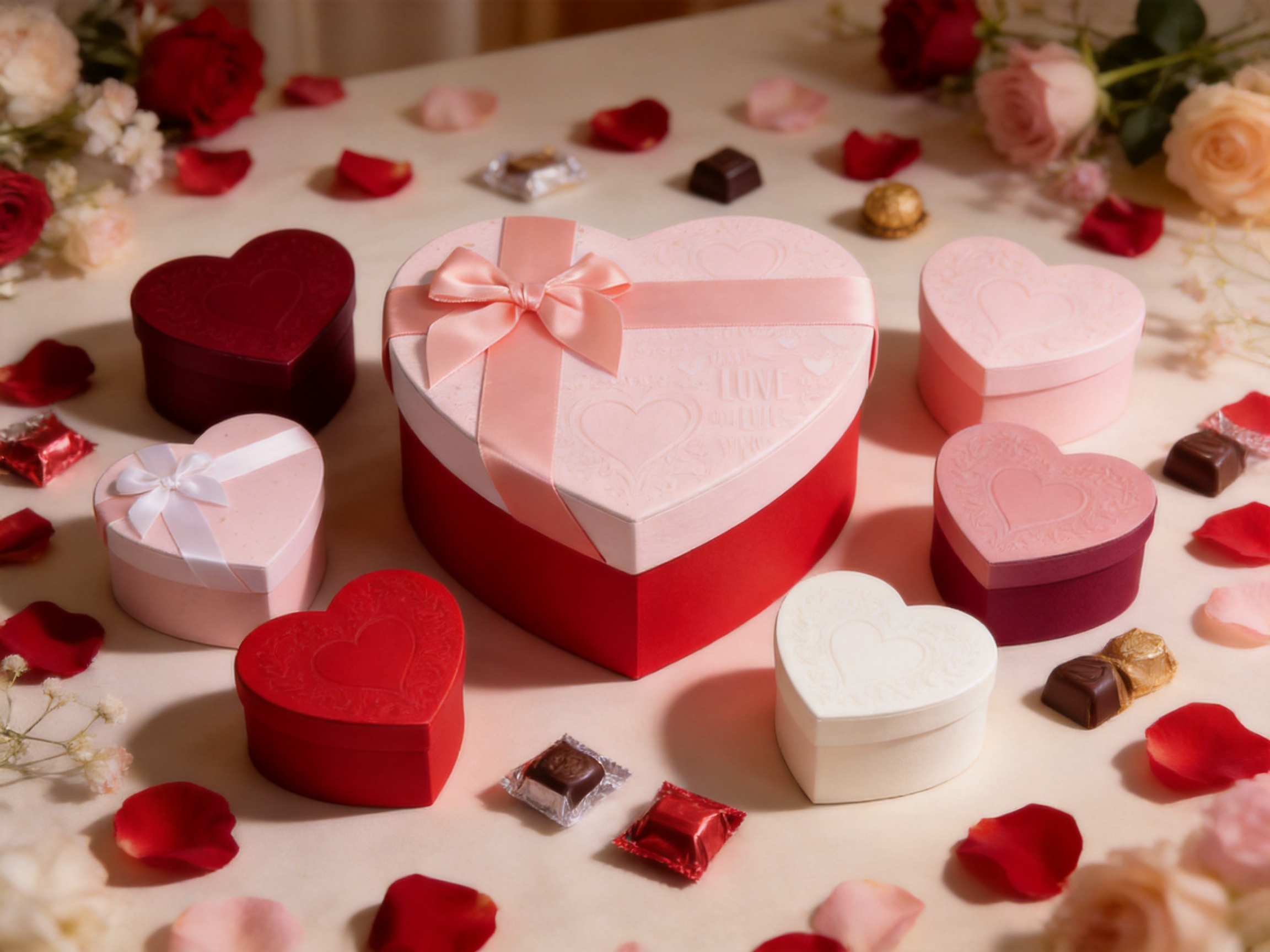
Decorative cardboard is the central material used in the product. It is widely used in gift packaging because it offers a practical combination of printability, formability, weight, and structural performance. The material can support a wide range of surface treatments while remaining easier to process and transport than many rigid alternatives.
For a candy box, material selection must address more than appearance. The box should maintain its shape during filling, storage, display, and delivery. It should also provide an appropriate surface for graphics and finishing. The cardboard must be converted accurately so that panels, folds, and joining areas align correctly.
The heart-shaped frame requires careful attention to symmetry and proportion. If the two sides of the heart are uneven, the product may look less professional. Precise cutting and forming are therefore important parts of the manufacturing process. Consistency becomes even more important when hundreds or thousands of units are displayed together.
The box can be supplied for use with a wide variety of internal products. Depending on the customer’s requirements, internal arrangements may include loose candy, individually wrapped chocolates, small bags, trays, inserts, or protective paper components. Customers should confirm the intended contents, weight, and filling method during the development stage so that the selected size and structure are appropriate.
The cardboard construction can also support different finishing approaches. A smooth printed surface may create a clean contemporary appearance, while textured paper, special coatings, foil details, or added decorative elements may create a more luxurious effect. The most suitable finish depends on the customer’s budget, target market, product value, and desired brand image.
Because the package is made from paper-based material, it can support sustainability messaging more naturally than packaging made entirely from non-paper materials. However, actual recyclability depends on the specific inks, coatings, laminates, adhesives, and local recycling systems used. Responsible product communication should therefore identify the final material configuration accurately.
Production begins with the development of the package structure and appearance. The customer’s intended contents, dimensions, decoration, quantity, and sales channel are considered before final specifications are approved. For the heart-shaped box, design development includes the outline of the heart, the framed areas, the opening method, the internal space, and the way the box will be packed for shipment.
A professional packaging manufacturer can identify structural issues before mass production. For example, the design may need reinforcement if the box will carry a heavy assortment. The depth may need adjustment if the candy is individually wrapped. The opening may require additional clearance if the customer wants a tray or insert. Early technical review helps reduce material waste and production delays.
Once the structure is established, artwork is prepared for the selected panels and surfaces. Artwork preparation requires accurate attention to cutting lines, fold lines, bleed areas, text placement, color specifications, and logo proportions. Seasonal packaging often includes small decorative details, so printing files must be checked carefully for clarity and alignment.
For private-label projects, artwork approval is particularly important. The manufacturer and customer should confirm the spelling of messages, color expectations, barcode information, legal statements, and any required product details before printing. This process protects both parties from avoidable rework.
The selected cardboard is prepared according to the approved specification. Material selection can be influenced by the desired rigidity, surface appearance, thickness, color, print performance, and final box size. Larger boxes or boxes intended for heavier contents may require a stronger construction than smaller candy packages.
Consistent material preparation supports stable production. Variations in moisture, thickness, surface quality, or flatness can affect printing, cutting, folding, and assembly. Experienced manufacturers use established material-handling procedures to help keep these factors under control.
Printing gives the package its visual identity. Depending on the design, the box may include seasonal colors, illustrations, greeting messages, logos, patterns, or product information. The manufacturer’s design and production capabilities support customized packaging rather than limiting buyers to a fixed catalog appearance.
Decorative treatment may include coatings or other finishing methods selected to enhance color, tactile quality, or visual contrast. A matte surface can provide a refined appearance, while a glossy finish can emphasize bright Valentine’s Day colors. Special details may be used to highlight the heart frame, brand mark, or selected graphic elements.
Finishing should be chosen with practical considerations in mind. A highly decorative treatment may increase cost or require additional production time. The ideal result is one that enhances the design without compromising folding, assembly, stacking, or recyclability objectives.
After printing and finishing, the cardboard is cut into the required shape. Die-cutting is especially important for the heart-shaped design because the external contour and framed areas must be clean and consistent. Accurate cutting supports smooth assembly and prevents rough edges from reducing the perceived quality of the package.
Forming and folding transform the flat printed material into a three-dimensional container. The manufacturing team must ensure that the fold lines are correctly positioned and that the heart shape remains balanced after assembly. This stage directly affects the box’s appearance, stability, and ability to accommodate the intended contents.
Depending on the selected construction, assembly may involve folding, gluing, inserting components, or preparing the box in a kit form. The product information describes kit assembler dimensions, indicating that the packaging can be supplied and prepared in a format suitable for assembly and handling.
Inspection should cover print quality, color consistency, cutting accuracy, structural alignment, surface condition, assembly strength, and overall appearance. For seasonal products, timing is critical, so quality control must be integrated into the production schedule rather than treated as a final afterthought.
Finished boxes are packed into shipping cartons to protect them during transportation and storage. The listed outer dimensions are approximately 64 × 34 × 45 centimeters, with six sets in cardboard boxes. These packing details help buyers estimate warehouse requirements, shipping arrangements, and handling procedures.
Customers should confirm whether the quoted packing configuration applies to their selected size and customization. Different sizes, assembly conditions, and product configurations may influence the final carton quantity. A manufacturer’s logistics team can provide the appropriate packing information for the specific order.
Zhejiang Shihao Gift Packaging Co., Ltd. has more than 15 years of experience in the production, research, development, and sale of paper gift packaging boxes. This experience is valuable for customers who need more than a basic packaging supplier. Seasonal gift packaging often requires design coordination, sampling, structural review, production planning, quality control, and export preparation.
The company’s facility covers approximately 20,000 square meters and employs around 300 people. A production base of this scale can support coordinated work across design, material preparation, printing, converting, assembly, inspection, and packing. It also provides a foundation for managing different product categories and customer programs at the same time.
The reported average daily production capacity is approximately 5,000 sets of gift boxes. Capacity alone does not guarantee quality, but it indicates that the manufacturer has experience organizing larger production schedules. This can be important for Valentine’s Day, when demand is seasonal and delivery deadlines are fixed.
The company maintains its own design team and updates dozens of products weekly. For customers, an internal design capability can make communication more efficient. It may also help buyers explore variations in size, color, structure, and decoration without starting from an entirely undeveloped concept.
Shihao reports BSCI and FSC certifications. BSCI relates to social compliance practices, while FSC certification is associated with responsible forest-based material sourcing under applicable certification requirements. Customers should request current certification documentation and confirm which materials and facilities are covered for a particular order.
The manufacturer exports products to Europe, the United States, the Middle East, and other regions. International experience can help with export documentation, carton planning, communication across time zones, and product expectations in different markets. It may also be useful for customers who are launching a Valentine’s Day packaging program across several countries.
The company’s product portfolio includes kits, storage boxes, folding boxes, jewelry boxes, and gift boxes. This broader experience is relevant because the heart-shaped candy box may be only one component of a wider packaging collection. A customer can potentially develop matching formats for jewelry, promotional gifts, seasonal sets, or other product lines through the same manufacturer.
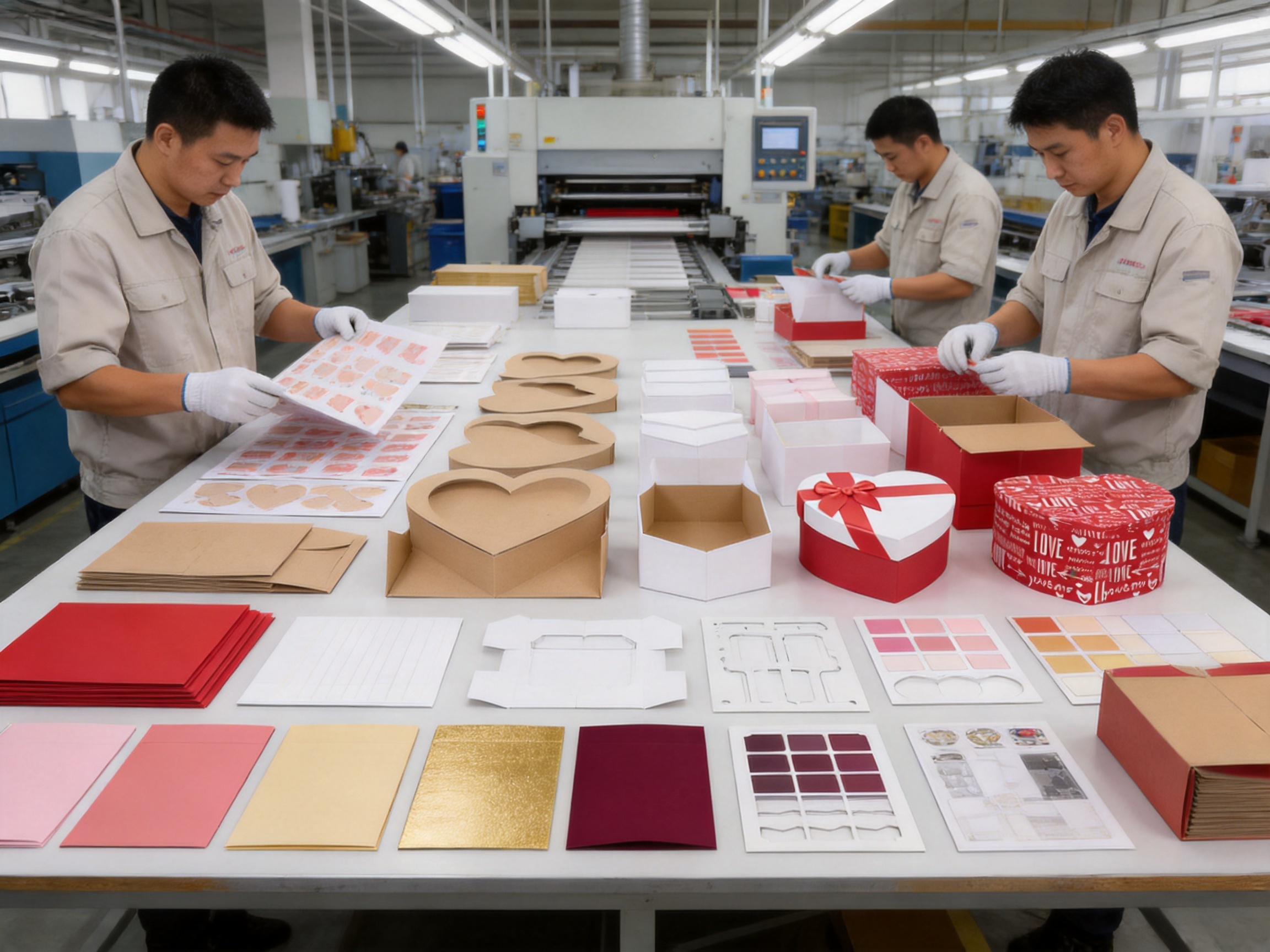
The standard product is available in ten sizes, offering a starting point for different gift dimensions. Customers can select a size according to the volume and weight of the contents, the desired retail price, and the visual proportions of the finished gift set.
Where a standard size does not meet a particular requirement, customers may discuss customized dimensions. Custom sizing should be based on actual product samples whenever possible. This helps ensure that the candy, insert, or gift item fits securely without excessive empty space or unnecessary material use.
Color is one of the most visible ways to adapt the heart-shaped box to a brand or market. Classic Valentine’s Day colors include red, pink, white, and combinations of these shades, but brands may choose other palettes to create a distinctive position. Burgundy can suggest elegance, pastel tones can suggest softness, and metallic accents can support a premium appearance.
Color selection should consider the product inside, the retail environment, the intended audience, and the printing process. It is also important to approve physical samples when color accuracy is critical, because screen displays and printed materials may not appear identical.
Logos, brand names, short messages, patterns, illustrations, and product information can be integrated into the package design. A brand may choose subtle identification for a luxury gift or more prominent branding for a promotional campaign. The heart frame can also be used as a visual area for a message or emblem.
For private-label orders, the packaging can be designed to match an existing product line. Consistency in typography, colors, imagery, and finishing helps the Valentine’s Day edition look like part of the broader brand family.
Customers may need different depths, opening methods, internal spaces, or assembly formats depending on the gift contents. Structural adjustments can help the package fit the product more securely and improve the opening experience.
When requesting a structural change, buyers should provide accurate product measurements and explain how the package will be filled. Information about the expected product weight, wrapping, insert requirements, and shipping conditions can help the manufacturer recommend a practical construction.
Decorative finishes may be used to create contrast, emphasize specific design elements, or increase tactile appeal. The appropriate finish depends on the desired market position. A simple printed box may be ideal for high-volume candy sales, while a more elaborate finish may be suitable for premium chocolates or jewelry.
Finishing options should be evaluated against cost, lead time, durability, and sustainability considerations. The best packaging is not necessarily the most elaborate. It is the package that delivers an appropriate visual and physical experience for the product and customer.
The primary application is Valentine’s Day candy and chocolate packaging. The box can hold assorted sweets, individually wrapped chocolates, confectionery pieces, and other compact treats. Its heart shape makes it particularly suitable for products sold as romantic gifts, couple’s gifts, or seasonal surprises.
Jewelry is another suitable application. Small jewelry items are often purchased for personal occasions, and a heart-shaped box can reinforce the emotional value of rings, earrings, pendants, bracelets, or small accessories. Depending on the item, an internal insert may be required to keep the product in place.
The box may also be used for small toys and novelty gifts. Retailers can create Valentine’s Day gift sets for children, friends, or family members by combining the heart-shaped package with an appropriate insert and colorful printed design.
Beauty and personal-care products can be packaged in larger sizes if the dimensions and structure are suitable. Small soaps, bath products, accessories, and sample collections may fit well within a decorative heart-shaped format.
Corporate and promotional gifting is another possible application. Companies may use customized boxes for employee gifts, customer appreciation programs, event giveaways, or seasonal campaigns. The design can communicate warmth and appreciation while allowing the organization’s logo and message to remain visible.
Although the product is designed for Valentine’s Day, its heart shape can be adapted for anniversaries, birthdays, weddings, engagement celebrations, friendship gifts, and other occasions associated with affection. A change in color and printing can make the same structural concept appropriate for multiple seasonal campaigns.
Paper-based packaging is increasingly important as brands and consumers seek alternatives to packaging formats that rely heavily on non-renewable materials. Decorative cardboard can be a responsible option because paper fibers may be sourced from managed forestry systems and the material can often enter established recycling streams.
The company reports FSC certification, which is relevant to customers seeking responsibly sourced paper materials. Certification details should be reviewed for the specific order, including the scope of certification and the status of the materials used. Clear documentation helps brands make accurate sustainability claims.
The use of cardboard can also reduce the visual and material dominance of plastic in a gift presentation. A well-designed box may be reused for storage, keepsakes, stationery, or small household items after the original candy has been consumed. This second use can extend the functional life of the package.
Design efficiency is another aspect of responsible packaging. Selecting an appropriate size helps avoid unnecessary empty space and reduces the amount of material used per product. A range of ten sizes gives customers more opportunity to match the package with the actual contents rather than using one oversized box for every gift.
Sustainability should be considered throughout the package lifecycle. Customers should review the composition of coatings, laminations, adhesives, ribbons, inserts, and other components. If recyclability is a priority, a simpler paper-based configuration may be preferable to a package that combines several difficult-to-separate materials.
Responsible packaging also requires efficient shipping. The listed carton configuration can help buyers plan logistics, while careful nesting or flat packing may reduce transportation volume when the structure permits it. Final shipping efficiency depends on the selected size, assembly condition, order quantity, and carton design.
Successful custom packaging projects begin with a clear product brief. The brief should state the intended contents, target quantity, preferred size, desired colors, artwork requirements, finishing preferences, delivery destination, and planned launch date. Providing complete information early allows the manufacturer to evaluate the project more accurately.
Buyers should identify whether they need the boxes assembled, partially assembled, or supplied in a kit format. The choice affects labor, packing volume, transportation, storage, and final preparation. It may also influence the most suitable construction.
Sampling is recommended before mass production, especially when the package has customized dimensions or complex decoration. A physical sample can be checked for appearance, fit, opening behavior, structural strength, and compatibility with the filling process.
Artwork approval should be completed before production begins. The buyer should review logos, color references, written messages, dimensions, barcode information, and any regulatory text. Changes after production has started may increase cost and affect delivery schedules.
The minimum order quantity is 500 sets. Buyers should confirm whether the MOQ applies per size, per color, per design, or per combined order. These conditions may vary according to the level of customization and the production plan.
Delivery planning is especially important for Valentine’s Day because the selling period is limited. Buyers should allow time for design confirmation, sampling, material preparation, production, inspection, export packing, transportation, customs procedures, and local distribution. Ordering well before the seasonal sales period reduces the risk of missing the retail window.
Packaging buyers should also confirm the final carton dimensions and quantity per carton for their selected version. The product information lists cartons measuring approximately 64 × 34 × 45 centimeters with six sets in cardboard boxes. This information is useful for initial planning, but final logistics data should be confirmed on the commercial order documents.
A customized heart-shaped box can increase the commercial value of a product in several ways. It can improve product differentiation, support premium pricing, encourage gift purchases, and make a product more suitable for seasonal displays. These benefits are particularly relevant when the contents themselves are common or widely available.
The box also supports product bundling. A brand can combine candy with a greeting card, small accessory, jewelry item, toy, or promotional insert. A well-planned bundle may create a higher average transaction value than a single product sold in ordinary packaging.
Distinctive packaging can support online marketing as well. The heart shape is easy to recognize in photographs and short videos. It can become a visual feature in social media campaigns, gift guides, influencer content, and online store banners. Consistent packaging across several sizes can make a campaign appear more professional.
For retailers, the product can be offered at several price levels. Small boxes may serve as affordable impulse gifts, while larger sizes can be positioned as premium assortments. The ten-size range provides a foundation for this tiered strategy.
For manufacturers of confectionery products, customized boxes can also support limited editions. A special print, colorway, or finish can be used for a particular Valentine’s Day collection without requiring a complete change to the product itself. This creates urgency and gives customers a reason to purchase during the seasonal period.
Working with an experienced manufacturer can reduce the complexity of custom packaging development. A company that handles design, material selection, printing, converting, assembly, quality inspection, and export packing can provide more coordinated support than a supplier that performs only one stage.
Experience is particularly important for shaped packaging. Heart-shaped designs require accurate cutting, folding, and assembly. Minor structural errors can affect symmetry, fit, and appearance. A manufacturer with a portfolio of gift boxes and related products is more likely to understand the practical challenges of these formats.
Production scale is another consideration. Seasonal orders may need to be completed within a narrow timeframe. A manufacturer with approximately 300 employees and a reported daily output of about 5,000 gift box sets has an operational base suited to organized production planning.
International export experience can help customers manage cross-border orders. Shihao reports sales to Europe, the United States, the Middle East, and other regions. This background may support clearer communication regarding packing, documentation, and shipment preparation.
The company’s design team and frequent product updates can also help customers explore new ideas. Instead of selecting only from standard packaging, buyers can discuss modifications that better suit their product and market. This is valuable for brands seeking a package that feels original rather than generic.
Finally, reported BSCI and FSC certifications provide useful points for customers evaluating social and material sourcing considerations. As with all certifications, buyers should verify current documents and confirm their applicability to the specific project.
| Packaging Format | Visual Identity | Protection and Structure | Customization Potential | Suitable Applications |
|---|---|---|---|---|
| Heart-shaped decorative cardboard box | Strong Valentine’s Day and romantic recognition | Provides a structured container for sweets and small gifts | Multiple sizes, colors, printed designs, and finishing options | Candy, chocolate, jewelry, toys, promotional gifts, and seasonal sets |
| Plain rectangular carton | General-purpose appearance | Usually practical and stackable | Can be printed and finished in many ways | Everyday retail products and general gift packaging |
| Paper gift bag | Flexible and often economical | Less rigid and may provide limited product protection | Print, handles, tissue, and labels can be customized | Lightweight gifts and quick retail presentation |
| Plastic container | May provide product visibility | Can offer rigidity, depending on the material | Shape and decoration may require specialized tooling | Food, novelty products, and products requiring visibility |
| Fabric pouch | Soft and reusable appearance | Limited protection against crushing | Color, embroidery, printing, and closures | Jewelry, small accessories, and lightweight gifts |
The comparison shows that no single package format is ideal for every product. The heart-shaped cardboard box is especially strong when emotional presentation, seasonal recognition, and customization are priorities. It combines the decorative appeal of a gift package with the structure needed for many small products.
The box is designed primarily for Valentine’s Day candy and gift packaging. It can also be used for chocolate, sweets, jewelry, toys, small presents, promotional items, and other compact products.
The product information lists ten available sizes. The stated dimensions range from approximately 33 × 32.3 × 14 centimeters for size 1 to approximately 11 × 10 × 5 centimeters for size 10.
Customization is available for customer requirements, and the listed product information states that size and color can be customized. Buyers should provide accurate product measurements and confirm the final structure with the manufacturer before production.
The listed minimum order quantity is 500 sets. Buyers should confirm whether the minimum applies separately to each size, color, or printed design.
The box is made from decorative cardboard. The final material configuration may vary according to the selected thickness, printing, coating, finishing, adhesive, and internal components.
The cardboard construction is designed to help protect the contents during handling and transportation. Appropriate internal protection and outer shipping cartons should still be selected according to the product weight, fragility, and shipping method.
Yes. The product can be customized with colors, printed designs, branding, seasonal messages, and other artwork requirements, subject to production review and artwork approval.
Yes. The stated applications include toys, sweets, jewelry, and many other presents. The actual suitability depends on the dimensions, weight, and protection requirements of the intended product.
The listed carton dimensions are approximately 64 × 34 × 45 centimeters, with six sets in cardboard boxes. Final packing details should be confirmed for the selected size and order configuration.
The company reports having its own design team and regularly updating its product range. Customers can discuss structural, visual, and customization requirements during project development.
The company reports BSCI and FSC certifications. Buyers should request current certification documents and confirm their scope and applicability to the materials and production facility used for the order.
Yes. With suitable colors and graphics, the heart-shaped box can be adapted for anniversaries, birthdays, weddings, engagement celebrations, friendship gifts, and other occasions involving affection or celebration.
Buyers should provide complete product measurements, approve a physical sample, submit accurate artwork, confirm the desired material and finish, and allow sufficient time for production and delivery. Clear communication at the beginning of the project helps reduce revisions and delays.
The 1001 Decorative Cardboard Valentine’s Day Heart-Shaped Candy Box combines emotional design with practical packaging performance. Its heart-shaped frame immediately communicates love and celebration, while its decorative cardboard construction provides a structured and customizable format for candy, chocolate, jewelry, toys, and other small gifts.
The availability of ten sizes gives brands and retailers flexibility when creating different product assortments. Custom colors, printed artwork, branding, structural adjustments, and decorative finishes allow the same basic design to serve a wide range of markets and price levels. Compared with generic gift boxes, the heart-shaped format offers stronger seasonal recognition, more distinctive shelf presence, and greater potential for emotional product positioning.
The product is supported by the manufacturing capabilities of Zhejiang Shihao Gift Packaging Co., Ltd., an experienced paper gift packaging manufacturer with a 20,000-square-meter facility, approximately 300 employees, a reported average daily capacity of about 5,000 gift box sets, an in-house design team, and international export experience. Its reported BSCI and FSC certifications also provide useful information for buyers evaluating social compliance and responsible material sourcing.
For brands preparing a Valentine’s Day collection, the box can serve as more than a container. It can become a central part of the gift concept, supporting product differentiation, premium presentation, seasonal merchandising, and memorable unboxing experiences. With careful size selection, accurate artwork, appropriate internal protection, and timely production planning, this heart-shaped cardboard package can help transform ordinary sweets or small gifts into a more personal and commercially compelling offering.
1. Product specification sheet for Item 1001, Decorative Cardboard Valentine’s Day Heart-Shaped Candy Box.
2. Manufacturer-provided product information covering dimensions, minimum order quantity, packing details, applications, and customization options.
3. Manufacturer company profile for Zhejiang Shihao Gift Packaging Co., Ltd., including facility size, workforce, production capacity, export markets, product categories, and design capabilities.
4. Forest Stewardship Council, general principles for responsible forest-based material sourcing and chain-of-custody practices.
5. Business Social Compliance Initiative, general guidance on social compliance and responsible supply-chain evaluation.
6. General packaging development practices for paperboard gift boxes, including structural design, printing, die-cutting, folding, assembly, inspection, and export packing.
Recommended Products

Contact Us

No. 15, Xiayang Road, Huangzhai Town, Jinhua, Zhejiang, China

(+86) 579-84230069

(+86) 13085675766


Products

Gift Box Packaging Manufacturer
 English
 Français
 Español
 عربى