2026-09-27
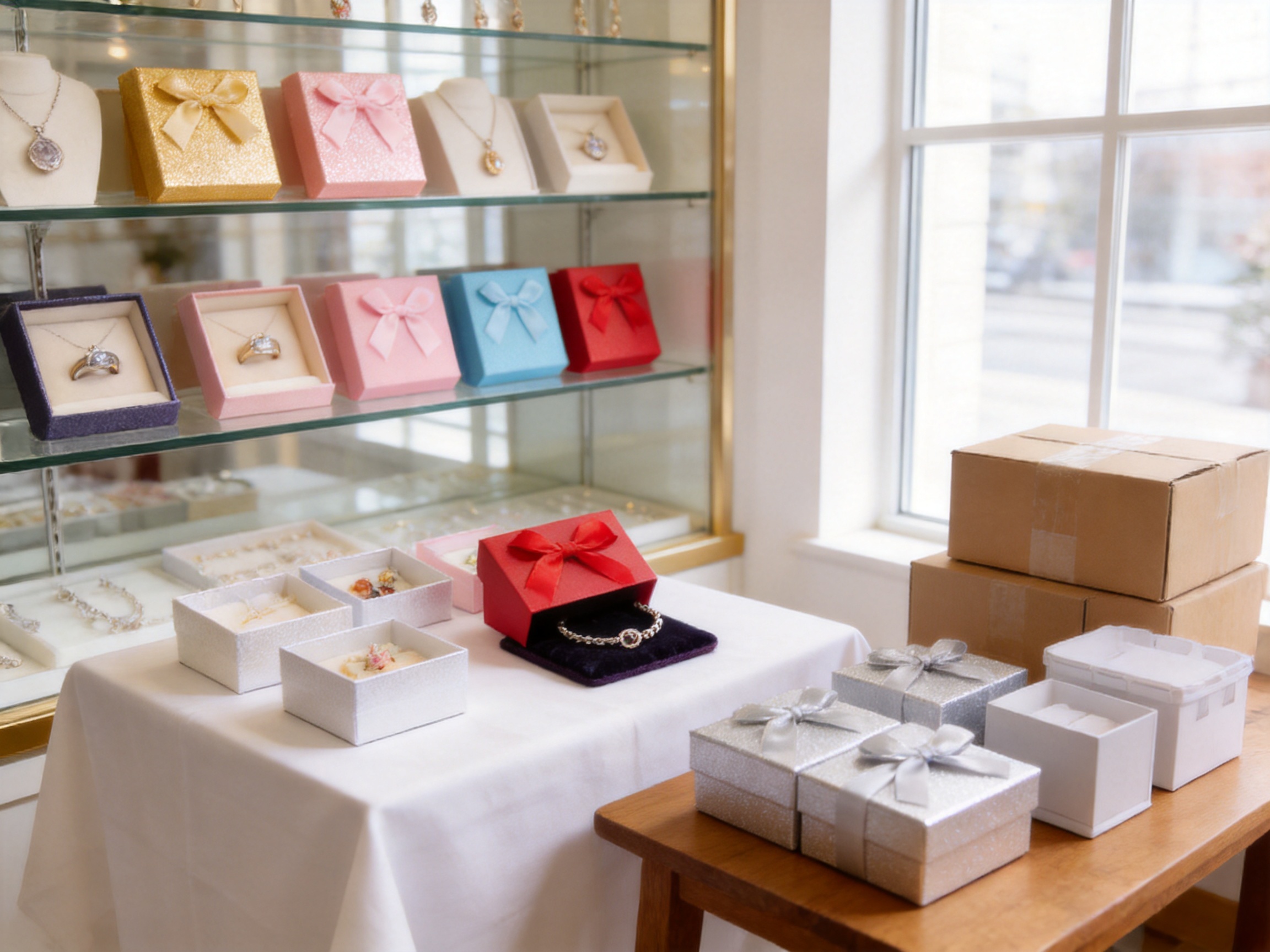
In the jewelry and gift packaging market, a box is more than a container. It is the first physical expression of a product’s value, the protective layer that preserves presentation, and an important part of the recipient’s experience. A well-designed jewelry gift box can make a modest item feel special, strengthen a retailer’s visual identity, and create a sense of anticipation before the gift is even opened. The HY-1 square top-and-bottom cover glitter paper jewelry gift box with ribbon bow has been developed around these practical and emotional requirements.
The HY-1 combines a clean square structure, a separate lid and base, a reflective glitter-paper exterior, and a decorative ribbon bow. These features give the box a polished appearance while keeping its construction straightforward, adaptable, and suitable for a wide range of jewelry presentations. It can be used for earrings, rings, pendants, bracelets, small accessories, keepsakes, and carefully selected gift items. Its proportions can also be adapted for different products and market preferences.
For wholesalers, jewelry brands, retailers, event planners, and importers, this type of packaging offers a useful balance between visual impact and manufacturing practicality. The box has enough decorative detail to appear premium, yet its classic form is familiar to consumers and efficient for production. Compared with plain paper cartons, plastic cases, or overly complicated rigid structures, the HY-1 offers a more refined presentation without depending on excessive structural complexity.
The square format is one of the most versatile shapes in gift packaging. Its balanced proportions create a stable visual impression and make it suitable for products that need to be presented neatly in the center of the box. Jewelry often benefits from this arrangement because the item can be positioned as a focal point rather than being lost in a long or irregular package.
The HY-1 uses a classic top-and-bottom cover structure. The base and lid are manufactured as separate components, allowing the lid to be lifted away from the bottom section. This opening method is simple for consumers to understand and provides a more deliberate unboxing motion than a basic folding carton. When the lid is removed, the jewelry is revealed gradually, creating a small but meaningful moment of ceremony.
The separate-lid design also gives the box a dependable appearance on a retail shelf. The lid covers the edges of the inner base, helping the finished package look complete and orderly. With the correct material thickness and fitting tolerance, the lid can open smoothly while remaining secure during normal handling, transportation, and display.
A square structure can also make inventory planning easier. Boxes with a regular footprint can be stacked efficiently, arranged in shipping cartons, and displayed in groups. Retailers may place several color or size variations together without creating an unbalanced presentation. For online sellers and fulfillment operations, a regular box shape can simplify packing procedures and help reduce unnecessary void space when the outer shipping carton is selected appropriately.
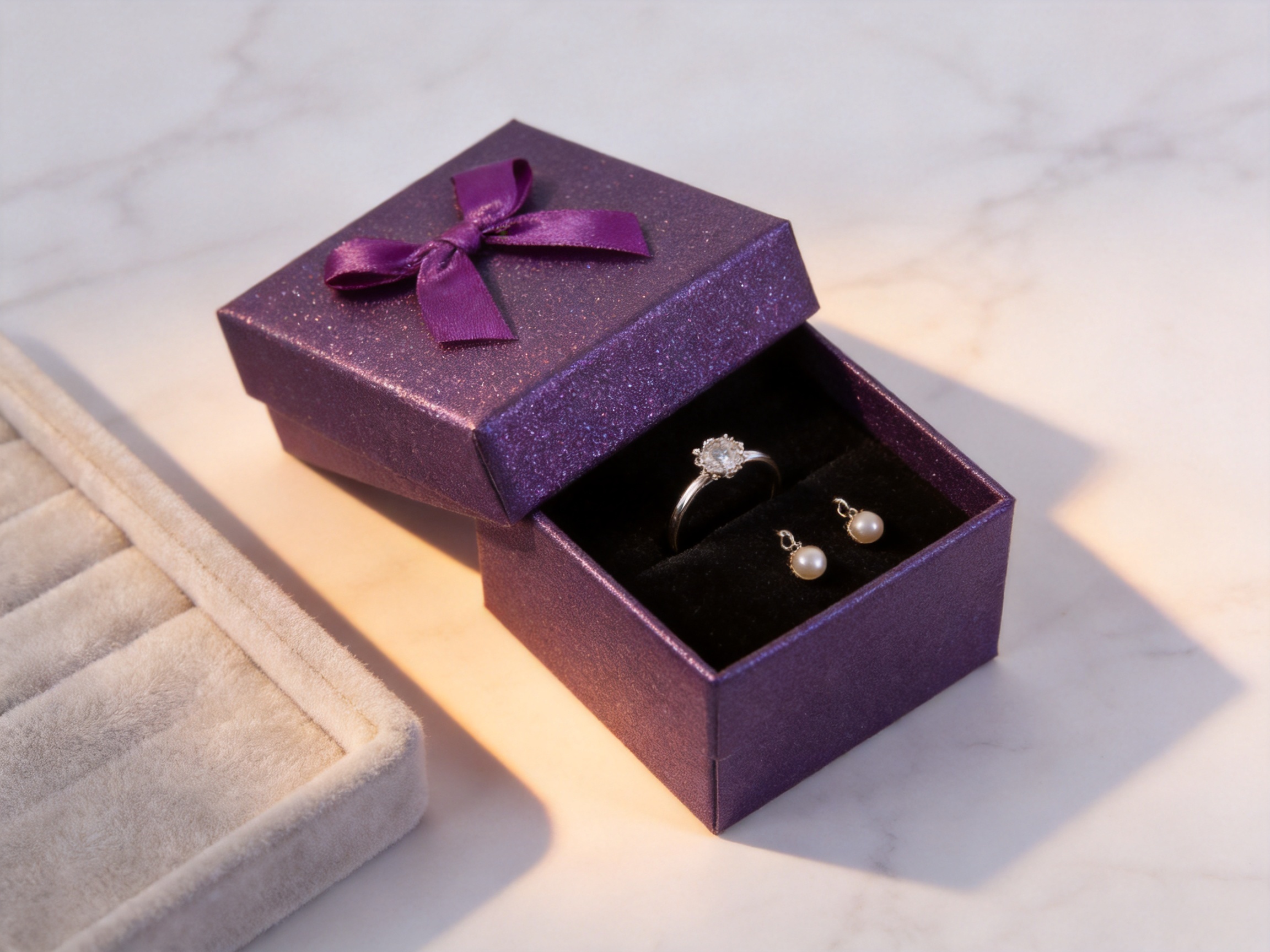
The outer glitter paper is the defining visual feature of the HY-1. Its fine reflective surface catches and scatters light, creating a delicate shimmer that changes as the box is moved or viewed from different angles. This effect gives the package a sense of depth and liveliness that a completely matte surface may not provide.
Glitter paper is especially effective for jewelry packaging because jewelry itself is associated with brightness, reflection, celebration, and personal significance. The surface of the box can reinforce these associations before the customer sees the item inside. A pendant, pair of earrings, ring, or bracelet can therefore be introduced through packaging that visually relates to the character of the product.
At the same time, the glitter effect can be controlled through color selection, paper grade, particle density, and finishing choices. A soft neutral shade may create an elegant and understated appearance, while a brighter tone may be appropriate for festive collections, seasonal promotions, or special event favors. The material does not have to look excessive; when combined with a simple square form, it can remain refined and commercially versatile.
This is one of the product’s advantages over heavily decorated competitors. Some jewelry boxes depend on numerous printed elements, complex patterns, metallic foils, or molded components to attract attention. These approaches can be effective, but they may also increase production complexity and make the package less adaptable to different brands. The HY-1 obtains much of its visual appeal from the surface material and ribbon detail, allowing the structure to remain clean and broadly applicable.
The glitter paper exterior also provides a strong foundation for customization. Depending on the order requirements, buyers can discuss color matching, ribbon selection, logo application, printing, labels, interior supports, and other presentation details. The final result can be coordinated with a jewelry brand’s color palette or with the theme of a wedding, holiday, birthday, anniversary, or promotional campaign.
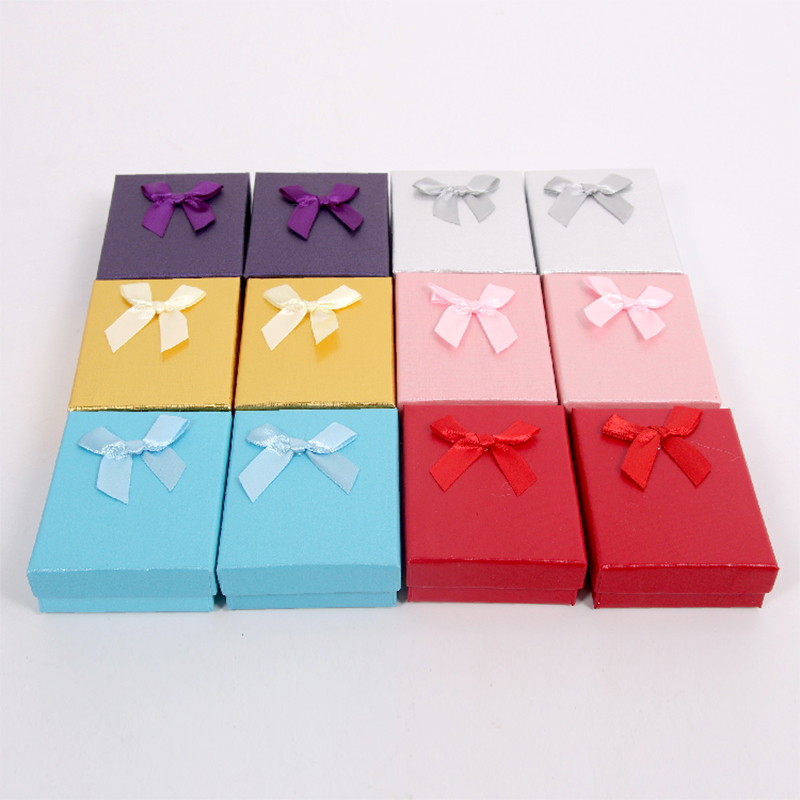
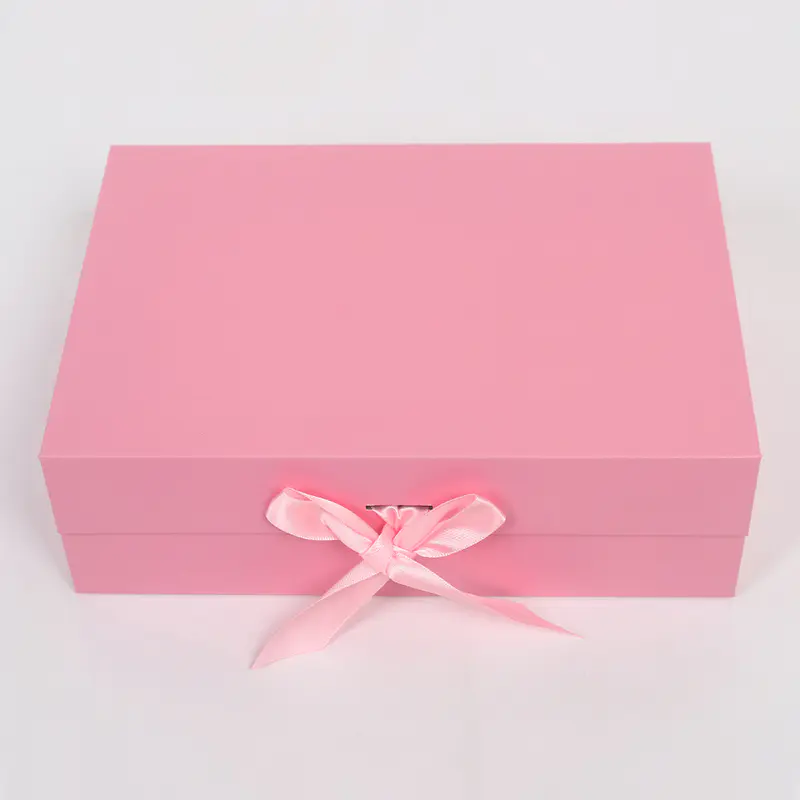
HY-1 Square Top and Bottom Cover Glitter Paper Jewelry Gift Box with Ribbon Bow
The ribbon bow positioned on the lid gives the HY-1 a recognizable gift-ready character. Rather than looking like a generic storage container, the box communicates that it has been prepared for presentation. The bow suggests thoughtfulness and makes the package suitable for direct gifting without requiring an additional wrapping step.
A bow also creates a visual center on the lid. The square surface provides a calm and symmetrical background, while the ribbon introduces a soft, handcrafted accent. This contrast between the structured box and the flexible textile decoration makes the package feel more dimensional. It can be especially useful for jewelry brands that want a romantic, celebratory, or boutique-oriented presentation.
Ribbon color and material can be adjusted to support different market positions. Satin-like ribbon may create a smooth and elegant appearance. Grosgrain-style ribbon can provide more visible texture and a stronger handcrafted impression. A narrow ribbon may look delicate and minimal, while a wider ribbon may produce a more prominent festive effect. Color coordination can be used to distinguish product collections, seasonal campaigns, or different jewelry categories.
The bow also contributes to the unboxing sequence. The recipient first sees the glittering lid and ribbon, then lifts the cover, and finally discovers the jewelry inside. This sequence creates anticipation. The packaging is not merely opened and discarded immediately; it becomes part of the occasion. For gifts exchanged at weddings, birthdays, anniversaries, holidays, and other personal events, that emotional contribution can be as valuable as the protective function of the box.
Compared with printed images of a bow, a physical ribbon has a tactile quality that customers can see and feel. Compared with a permanently molded decoration, it can offer more flexibility in color and style. This combination of visual softness and practical customization helps the HY-1 compete with both inexpensive commercial packaging and more elaborate premium boxes.
Although the exterior is a major part of the product’s appeal, jewelry packaging must also provide a suitable interior presentation. The square base creates an organized area in which an insert, pad, tray, or shaped support may be placed according to the product being packaged.
Rings may be presented with a slit insert or cushioned ring support. Earrings can be displayed on a small card or soft pad. Pendants may be arranged with a central support to help keep the chain or cord orderly. Bracelets and other small accessories can be placed on a larger insert or in a carefully fitted inner compartment. The appropriate solution depends on the jewelry dimensions, weight, material, and desired customer experience.
This adaptability is important because jewelry businesses rarely sell only one product. A brand may offer several collections with different sizes and shapes. A packaging supplier that can coordinate the outer box with the inner support helps the buyer create a more unified product range. The HY-1 can therefore serve as a foundation for multiple packaging programs rather than as a single-purpose box.
The base and lid should be matched carefully with the internal components. A well-fitted insert should hold the jewelry securely while leaving enough room for clean presentation. It should not press heavily against delicate surfaces, and it should allow the customer to remove the product without frustration. For production orders, buyers should provide accurate product dimensions, material information, photographs, and usage requirements so that the inner configuration can be evaluated correctly.
In addition to jewelry, the box may be suitable for other small premium items. Potential applications include hair accessories, compact beauty products, small handcrafted objects, keepsakes, decorative tokens, and selected promotional gifts. The final suitability depends on the item’s size, weight, fragility, and required level of protection.
The market contains many packaging options, including folding cartons, plastic cases, metal tins, velvet pouches, magnetic rigid boxes, and molded jewelry containers. Each alternative has strengths, but the HY-1 offers a distinctive combination of decorative appeal, straightforward construction, and customization potential.
| Packaging option | Typical strength | Potential limitation | HY-1 advantage |
|---|---|---|---|
| Plain folding carton | Low weight and economical shipping | May appear basic or less gift-oriented | Glitter paper and ribbon provide a more premium presentation |
| Plastic jewelry case | Clear visibility and convenient molding | May feel less personal and less aligned with paper-based sustainability goals | Paper construction offers a warmer, more giftable appearance |
| Velvet pouch | Soft texture and compact storage | Limited protection and less structured display | Square base and lid provide a defined presentation format |
| Metal tin | Durability and reusability | Higher weight and a less traditional gift-box appearance | Paper box is lighter and supports a broader decorative style |
| Magnetic rigid box | Strong premium impression | More complex construction and potentially higher cost | Separate lid and base provide an elegant experience with simpler operation |
| Molded jewelry case | Product-specific fitting | Less flexible when collections change | Interior inserts and exterior details can be adapted for different products |
The HY-1 is not intended to replace every type of jewelry packaging. Instead, it occupies a practical position between basic cartons and highly engineered luxury cases. It can provide an elevated appearance for brands that want more than a simple printed box, while avoiding some of the material weight, structural complexity, and narrow product specialization associated with other formats.
Its strongest competitive advantage is the relationship between structure and decoration. The square box is uncomplicated enough for efficient production, while the glitter surface and ribbon bow create a higher perceived value. This means the product can be used for accessible jewelry lines as well as for gift-focused collections that require more visual distinction.
Consistent gift packaging begins with disciplined manufacturing. A decorative box can only perform well when its paper, board, adhesive, cutting, forming, finishing, and assembly processes are coordinated. For a product such as the HY-1, visual details and structural accuracy must be managed together.
The process begins with the selection and preparation of paper and supporting board. The outer glitter paper must have an appearance that is consistent across the production batch. Important considerations include color, surface texture, reflective quality, flexibility, and compatibility with the selected adhesive. The supporting board must offer enough rigidity to maintain the square shape while remaining suitable for accurate cutting and covering.
Material inspection helps reduce problems such as visible color variation, surface scratches, uneven glitter distribution, creasing, or weak bonding. When a customer requests a customized color or coordinated ribbon, the materials can be evaluated together so that the finished package has a unified appearance.
Precise cutting determines the dimensions of the lid, base, covering paper, and any additional components. Creasing or scoring lines must be positioned accurately so that the paper folds cleanly around the board. Poorly controlled creasing can cause cracked surfaces, irregular corners, or visible tension marks, especially when decorative paper is used.
For a square top-and-bottom box, dimensional accuracy is particularly important. If the base is too large, the lid may fit loosely. If it is too small, the lid may be difficult to remove or may damage the edges during repeated use. Controlled cutting and forming help establish the balance between secure closure and convenient opening.
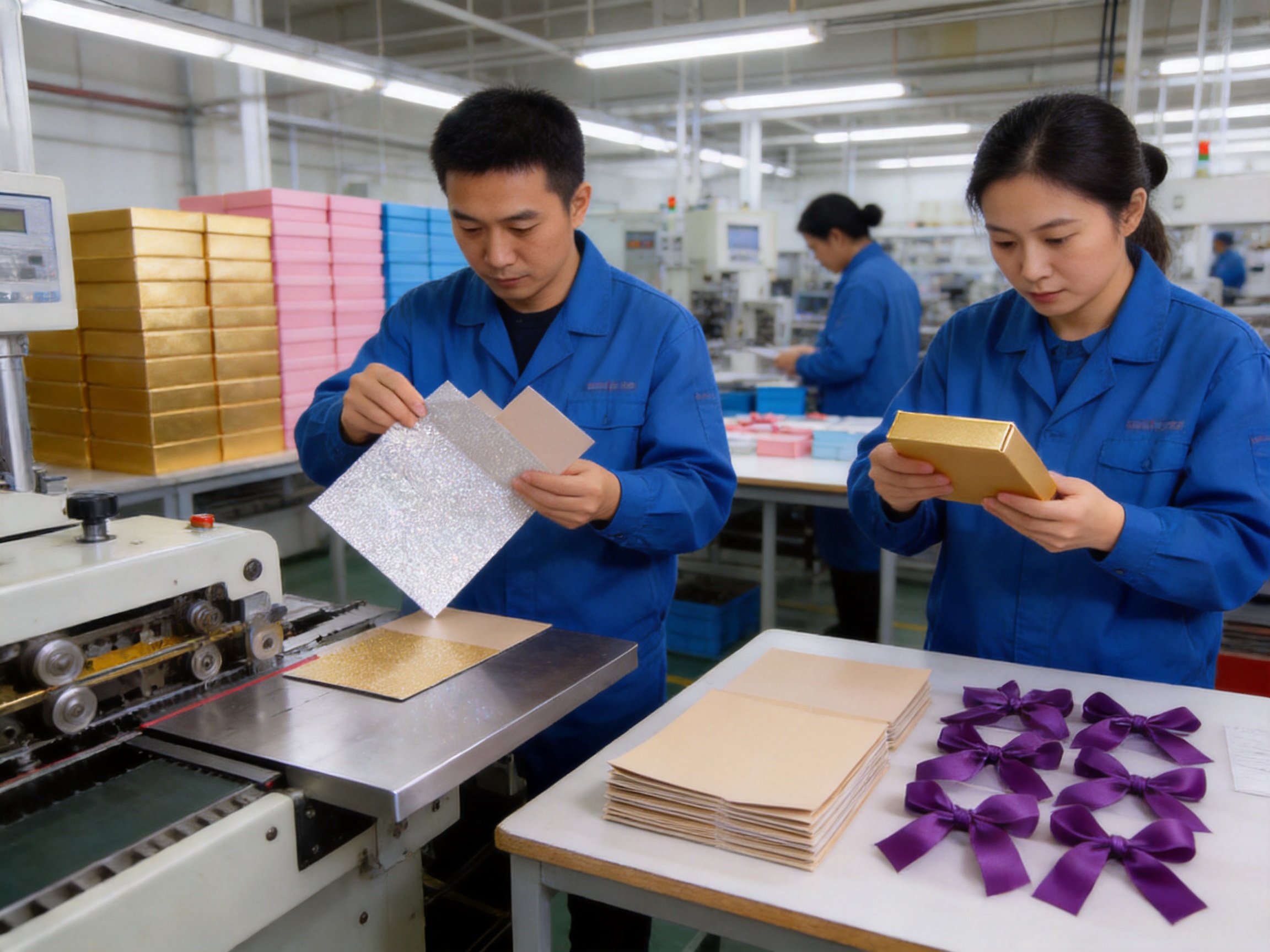
After cutting, the glitter paper is applied to the prepared board or structural components. The paper must be aligned so that the reflective surface appears even and the corners are neatly wrapped. Edge finishing is a critical quality point because the edges are among the first areas customers notice when handling the box.
Skilled operators and suitable equipment work together during this stage. Machine-assisted processing can improve repeatability, while trained personnel can identify delicate material behavior and correct issues that may not be visible through automated measurement alone. The objective is a smooth surface, clean corners, stable adhesion, and a consistent relationship between the lid and base.
The ribbon is cut according to the planned bow size and placement. The bow may be formed separately and then attached to the lid, or it may be assembled during the lid-finishing process. Placement should be centered and secure, with enough consistency across the batch to maintain a professional appearance.
Ribbon attachment requires attention to adhesive selection and curing time. The bonding method must hold during handling and transportation without leaving visible marks on the glitter paper. At the same time, the attachment should not create an overly rigid or bulky area that affects stacking or presentation.
Once the lid, base, ribbon, and interior components are ready, the parts are assembled and inspected. Quality personnel may review dimensions, lid fit, surface appearance, corner formation, bow position, adhesion, and general cleanliness. Sampling procedures can be used during large orders, while additional inspection may be arranged for specialized or high-value projects.
Finished boxes are then packed in a way that helps protect the glitter surface and ribbon during storage and shipment. Appropriate packing is important because decorative materials may be vulnerable to pressure, friction, moisture, and contamination. Shipping cartons should be selected to reduce movement while avoiding excessive compression.
The manufacturer behind the HY-1 is an export-oriented paper gift packaging producer with more than 15 years of experience in production, research and development, and sales. Its reported facility covers approximately 20,000 square meters and employs around 300 people. These resources support a production environment in which design, sampling, material preparation, manufacturing, quality control, and order coordination can be managed as connected activities.
An experienced factory offers more than a large production floor. It can provide a repeatable system for turning a packaging idea into a commercial product. Designers can review appearance and structure. Technical staff can assess material compatibility. Production teams can plan cutting, covering, assembly, and packing. Sales and export personnel can coordinate specifications and documentation with overseas buyers.
The company reports an average daily production capacity of approximately 5,000 sets of gift boxes. Capacity of this scale can be valuable for importers and brands that need consistent supply across multiple sales channels. It may also help support promotional campaigns, seasonal demand, and repeat orders when planning is completed in advance.
Large capacity must be combined with quality management. A high output level has value only when dimensions, color, adhesion, and decoration remain consistent. For this reason, buyers should evaluate not only stated capacity but also sample quality, communication procedures, production controls, packaging methods, and the factory’s ability to manage the specific requirements of the order.
The manufacturer also maintains its own design team and reports updating dozens of products weekly. This ongoing development can benefit customers that need fresh packaging concepts or want to respond quickly to changing market trends. A buyer may begin with the HY-1 structure and then explore alternative sizes, colors, interior layouts, ribbon styles, or related box categories.
The company’s product range includes kits, storage boxes, folding boxes, jewelry boxes, and gift boxes. This broader portfolio indicates experience across several paper packaging structures. Such experience can be useful when a customer requires a coordinated packaging family rather than one isolated product. A jewelry box, product sleeve, storage case, and gift carton can be developed with related materials and visual details.
Customization is one of the most important reasons to work with a specialized gift box manufacturer. The HY-1 can serve as a standard product reference, but its commercial value increases when the buyer adapts it to a specific target market or product line.
The dimensions should be selected according to the jewelry and the desired interior presentation. A compact ring box requires a different proportion from a box intended for a bracelet or a gift set. The square format can be adjusted while retaining the essential relationship between lid and base. Buyers should confirm the usable internal dimensions rather than relying only on external measurements.
Color is a major part of brand recognition. A jewelry company may choose a signature shade, while a retailer may request several colors for different collections. Buyers can discuss available paper colors, matching requirements, sample approval, and the expected appearance under different lighting conditions.
The ribbon may be matched to the box color or deliberately contrasted for stronger visual impact. Buyers can consider ribbon width, texture, sheen, bow size, and attachment position. For wedding packaging, soft or romantic tones may be appropriate. For holiday promotions, richer or brighter colors may create a more celebratory effect. For a minimalist jewelry label, a narrow ribbon in a restrained color may be preferable.
Although the HY-1 already attracts attention through its material and bow, additional brand elements may be considered. These can include a logo, printed message, sticker, hangtag, interior card, or coordinated outer carton. The placement should be selected carefully so that the brand identity enhances rather than competes with the glitter surface and ribbon.
Custom inserts can improve both security and presentation. Foam, paperboard, molded pulp, fabric-covered supports, or other suitable materials may be considered depending on the jewelry. A buyer should communicate whether the product needs a ring slit, earring holes, a chain support, a compartment, or a soft protective layer.
Customization normally requires a clear approval process. Buyers should request a sample or prototype, confirm color and dimensions, review the bow placement, and approve the final specifications before mass production. Lead times, minimum order quantities, packing details, shipping terms, and inspection standards should also be confirmed in writing.
Paper gift packaging is increasingly evaluated from both aesthetic and environmental perspectives. Customers want an attractive box, but many also want materials and manufacturing practices that align with responsible purchasing goals. Paper-based packaging can support these goals when materials are selected carefully and when unnecessary components are avoided.
The manufacturer reports BSCI and FSC certifications. These certifications can provide buyers with useful information about social responsibility and responsible forest-based material sourcing, subject to the scope, validity, and documentation applicable to a specific order. Importers should request current certification details and verify that the relevant products, materials, and facilities are covered.
The HY-1’s paper structure can offer an alternative to packaging that relies heavily on plastic. Its gift-box appearance may also encourage reuse for jewelry storage, keepsakes, or small personal items. A box that remains attractive after the original gift is opened has a longer practical life and can become part of the recipient’s storage environment.
Sustainability should nevertheless be assessed as a complete system. Buyers should consider the paper grade, coatings, adhesives, ribbon material, insert composition, printing process, shipping carton, and end-of-life options. A decorative glitter surface may involve materials that affect recycling conditions, so appropriate technical information should be requested for markets with specific recycling requirements.
Export readiness involves more than product quality. International buyers may need accurate carton dimensions, gross and net weights, packing quantities, product specifications, commercial documentation, and reliable communication during production. An experienced export-oriented supplier can help coordinate these requirements and reduce avoidable errors between factory production and overseas distribution.
The HY-1 is suitable for jewelry brands that want to improve the presentation of standard collections. A coordinated box can help a brand appear more established, especially when the packaging is used consistently across an online store, physical retail counter, trade show, or social media campaign.
Independent jewelry designers may use the box for direct customer orders. The ribbon bow allows the package to arrive gift-ready, which can be helpful when the buyer is purchasing jewelry for another person. A small business may also choose different ribbon colors to create a recognizable packaging signature without redesigning the entire structure.
Wedding and event planners can use customized boxes for favors, bridesmaid gifts, commemorative jewelry, or guest keepsakes. The square format is easy to arrange on tables, in gift bags, or in presentation trays. Matching the glitter paper and ribbon to the event palette can help create a cohesive visual theme.
Retailers may select the box for holiday gift programs, birthday promotions, anniversary collections, or limited-edition launches. The decorative surface helps distinguish a seasonal presentation from everyday packaging. Because the basic structure remains familiar, customers can still understand how to open and use it easily.
Corporate and promotional buyers may also consider the box for small branded gifts. When paired with appropriate jewelry or accessories, it can deliver a more personal presentation than a standard promotional carton. The exterior can be coordinated with campaign colors, while an interior card can explain the brand message or occasion.
A sample review is an essential step when purchasing customized gift boxes. Photographs can show the overall style, but they cannot fully communicate the glitter texture, lid fit, ribbon attachment, paper stiffness, or interior usability. Buyers should handle a physical sample whenever possible.
Begin by checking the external dimensions and comparing them with the jewelry product. Measure the usable inner space, not only the outside of the box. Confirm that the jewelry and insert fit without excessive pressure or unwanted movement. If the box is intended for multiple products, test the largest and smallest planned items.
Next, open and close the lid several times. The movement should feel smooth and controlled. The lid should not be so tight that it damages the edges or so loose that it falls off during normal handling. Inspect the corners and edges after repeated opening to identify possible surface cracking or separation.
Examine the glitter paper under different lighting. Check whether the color is even, whether the reflective effect matches the approved sample, and whether there are visible scratches, bare areas, wrinkles, or stains. Because glitter paper naturally reflects light, minor visual differences may appear at different angles, but the overall surface should remain consistent.
Inspect the ribbon bow from the front, side, and top. It should be positioned according to the agreed specification and attached firmly. The loops should have a balanced appearance, and the ribbon should not show excessive fraying or adhesive residue. If the product will be stacked, test whether the bow creates pressure points or affects carton packing.
Finally, review the internal presentation. The insert should hold the jewelry securely and allow the customer to remove it without damaging the product. A packaging sample should be tested in a realistic shipping simulation when the jewelry is fragile or high value. This may include vibration, stacking, handling, and exposure to ordinary warehouse conditions.
A successful packaging project depends on accurate communication. Buyers should provide the jewelry type, product dimensions, weight, material, quantity, target market, preferred color, ribbon requirements, logo needs, interior expectations, and estimated order volume. Reference photographs can help explain the desired appearance, but written specifications are also important.
It is advisable to separate fixed requirements from flexible preferences. Fixed requirements may include internal dimensions, logo color, certification documentation, packaging regulations, or a specific delivery date. Flexible preferences may include alternative ribbon textures, available glitter-paper shades, or minor structural recommendations from the factory.
Buyers should ask for a quotation that clearly identifies tooling or sampling costs, unit price, minimum order quantity, production time, packing method, payment terms, and shipping arrangements. If the box is customized, the quotation should specify what is included and what may create additional costs.
Sample approval should be documented. A final approved sample, color reference, technical drawing, or signed specification can help reduce misunderstandings during mass production. Changes made after approval may affect the schedule and cost, so revisions should be reviewed promptly.
For repeat orders, buyers can establish a quality standard based on the first approved production. Maintaining records of paper color, ribbon type, dimensions, insert design, and packing configuration can help improve consistency. Regular communication is particularly valuable before peak seasons when production schedules may become more demanding.
The box can be adapted for rings, earrings, pendants, bracelets, and other small jewelry products. The correct interior insert and dimensions depend on the product. Buyers should provide the exact jewelry measurements so that the base and internal support can be matched appropriately.
Yes. The reflective surface gives the package a more decorative and upscale appearance, particularly when paired with a carefully selected ribbon and a clean interior insert. The final premium impression depends on the paper quality, color consistency, construction accuracy, and overall finishing.
The ribbon material, color, width, bow size, and placement can be discussed as part of a customized order. The best choice depends on the brand style, occasion, box size, and desired visual effect. A sample should be approved before mass production.
Yes. The HY-1 uses a top-and-bottom cover structure in which the lid and base are separate components. This gives the box a classic opening experience and allows the jewelry to be revealed when the lid is lifted away.
Yes. It may be suitable for wedding favors, birthday gifts, holiday promotions, anniversary items, keepsakes, accessories, and selected small promotional products. Suitability depends on the size, weight, fragility, and interior requirements of the item.
Branding options should be discussed with the manufacturer according to the chosen paper, color, logo size, placement, and finishing method. A logo may be added to the lid, an interior card, a label, or another suitable area. Buyers should approve a sample because reflective paper can affect how certain printing or finishing methods appear.
Useful information includes the required quantity, box dimensions, jewelry dimensions, preferred paper color, ribbon requirements, interior configuration, logo artwork, destination market, packing expectations, and desired delivery schedule. More complete information generally allows the factory to provide a more accurate proposal.
Buyers should approve a pre-production sample, establish clear specifications, request suitable quality-control procedures, and confirm how finished boxes will be packed. For important projects, an inspection plan can be agreed upon before production. Consistent communication between approval and shipment is also valuable.
Paper packaging can support sustainability goals, especially when it replaces unnecessary plastic and is designed for reuse. However, the complete material system should be evaluated, including glitter coatings, adhesives, ribbon, inserts, and recycling conditions in the destination market. Buyers should request relevant material and certification information.
The HY-1 adds a reflective glitter-paper exterior and a physical ribbon bow to a structured square lid-and-base design. These features create a more gift-oriented presentation and a stronger unboxing moment than a plain carton, while maintaining a relatively straightforward structure suitable for scalable production.
The HY-1 square top-and-bottom cover glitter paper jewelry gift box combines decorative appeal with practical packaging performance. Its square shape supports organized presentation, its separate lid and base create a familiar and ceremonial opening experience, and its glitter paper provides a refined reflective finish. The ribbon bow completes the gift-ready appearance and can be adapted to different colors, materials, and occasions.
Its competitive strength comes from balance. The box is more distinctive than a basic folding carton, more personal than a plastic case, lighter and more gift-oriented than a metal container, and less structurally complicated than some premium magnetic boxes. At the same time, the design can be adapted for different jewelry types, sizes, interiors, brands, retail programs, and event themes.
The manufacturing partner adds value through established paper-packaging experience, a reported 20,000-square-meter facility, approximately 300 employees, an average daily capacity of about 5,000 gift-box sets, an in-house design team, export experience, and reported BSCI and FSC certifications. These capabilities can support customers that require not only an attractive sample but also reliable development, repeatable production, customization, and international order coordination.
For jewelry companies and gift-product buyers, the most effective approach is to treat the box as part of the product experience rather than as an afterthought. By selecting the right size, insert, glitter-paper color, ribbon style, branding treatment, and quality standard, buyers can turn the HY-1 into packaging that protects the item, communicates value, and makes the act of giving more memorable.
1. Product specification and descriptive materials for the HY-1 square top-and-bottom cover glitter paper jewelry gift box with ribbon bow.
2. Company-provided information concerning paper gift packaging production, research and development, export operations, facility scale, workforce, product categories, and manufacturing capacity.
3. General packaging engineering principles concerning board selection, paper covering, creasing, adhesive application, dimensional tolerance, assembly, and quality inspection.
4. General guidance on jewelry presentation, gift packaging design, customer unboxing experience, and retail packaging customization.
5. General information regarding responsible forest-based material sourcing and social-compliance certification in the paper packaging industry.
Recommended Products

Contact Us

No. 15, Xiayang Road, Huangzhai Town, Jinhua, Zhejiang, China

(+86) 579-84230069

(+86) 13085675766


Products

Gift Box Packaging Manufacturer
 English
 Français
 Español
 عربى