2026-09-05
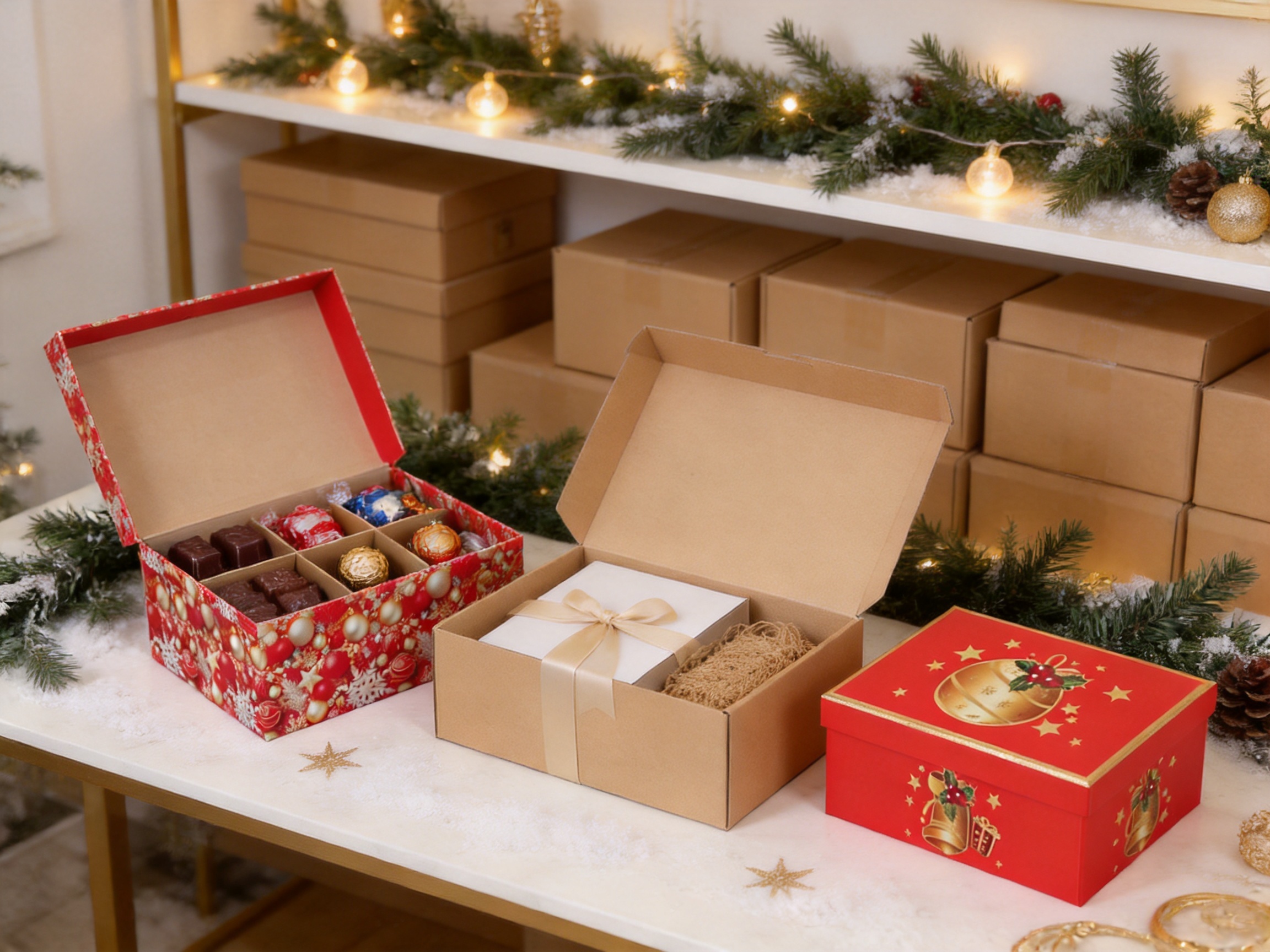
Seasonal packaging plays an important role in how a gift is presented, protected, and remembered. A well-designed box can turn an ordinary product into a more attractive gift, create a stronger emotional connection, and help a brand stand out during the busiest selling periods of the year. The 605 Square Handmade Cardboard Printed Rigid Christmas and New Year Gift Box Packaging is developed for precisely this purpose. It combines rigid cardboard construction, festive printing, handcrafted finishing, and flexible customization in one practical packaging solution.
Designed for Christmas gifts, New Year products, corporate presents, candies, chocolates, ornaments, crafts, and other small-to-medium items, this packaging series offers a balance between visual appeal and structural performance. Its square form supports efficient stacking and display, while the rigid construction helps reduce the risk of crushing during handling, storage, and transportation. The printed exterior provides a festive presentation without requiring complicated additional wrapping.
The 605 series is manufactured by Zhejiang Shihao Gift Packaging Co., Ltd., an export-oriented paper packaging manufacturer with more than fifteen years of experience. The company operates a production base covering approximately 20,000 square meters, employs around 300 people, and maintains an average daily production capacity of approximately 5,000 sets of gift boxes. Its manufacturing, design, and development capabilities allow buyers to order a standard product or create a customized version based on market requirements.
This article examines the product’s construction, appearance, applications, customization options, quality advantages, manufacturing process, supply capability, and suitability for different buyers. It also compares the practical benefits of rigid printed packaging with more basic seasonal alternatives and explains the key issues that should be confirmed before placing a production order.
The 605 series is a square handmade rigid gift box made from cardboard with an art paper-coated surface. It is intended to create a premium presentation while remaining suitable for efficient production and commercial distribution. The square profile gives the packaging a balanced appearance and makes it convenient to arrange in retail displays, warehouse stacks, gift collections, and shipping cartons.
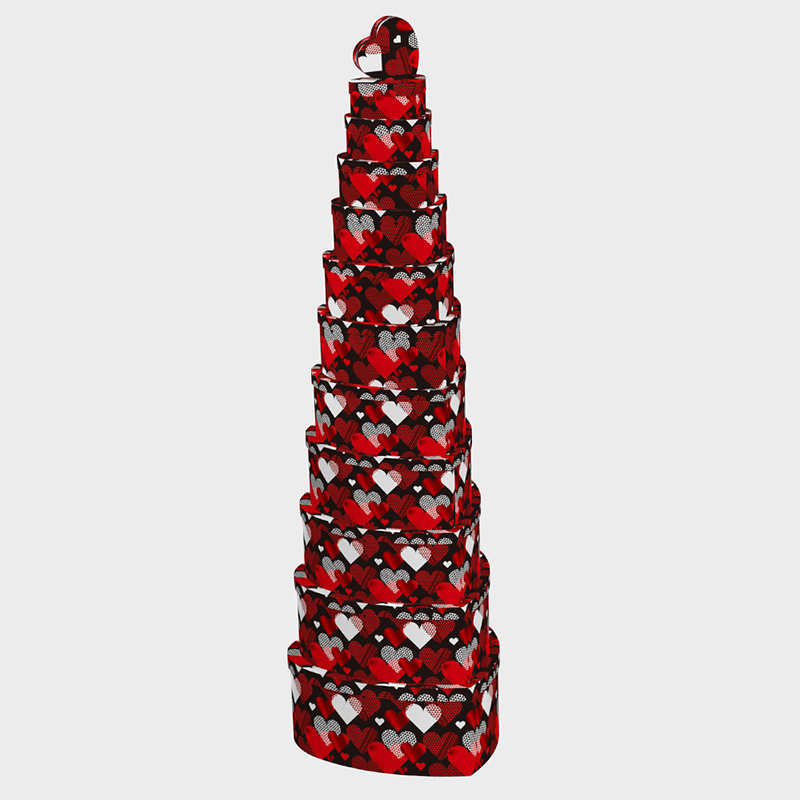
The box is available in a range of sizes. The supplied specification identifies size options from 1# through 10#, with the largest listed size measuring approximately 37.5 x 29 x 16 centimeters and the smallest listed size measuring approximately 19 x 13 x 7.5 centimeters. This range gives buyers more flexibility when packaging different product dimensions. Instead of forcing every item into one standard box, purchasers can select a more suitable size for the contents and reduce unnecessary internal space.
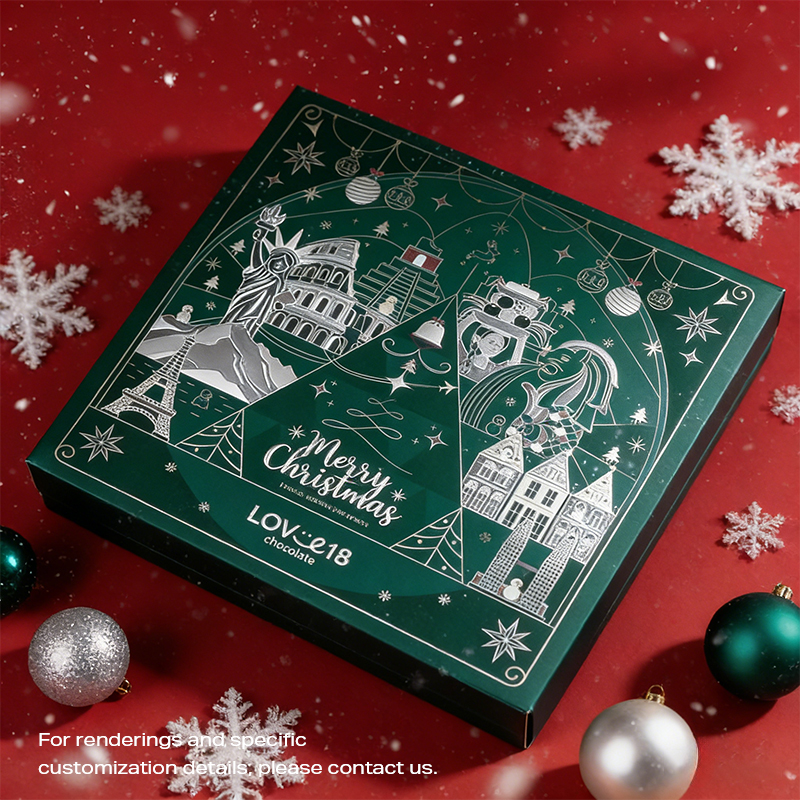
The product is described as a Christmas and New Year gift box. Its printed surface can incorporate Christmas trees, snowflakes, stars, ornaments, seasonal lettering, winter patterns, gift illustrations, or New Year decorative elements. Buyers can use existing festive themes or submit their own artwork for a private-label design. Custom colors, CMYK printing, and Pantone colors are supported according to the project requirements.
Each box is produced with attention to smooth edges and clean workmanship. These details are especially important for rigid packaging because poorly finished corners, uneven wrapping, or rough edges can reduce the perceived value of the item inside. Handmade finishing also allows the production team to pay attention to visual alignment, surface condition, and the overall presentation of each box.
The product can be used as an individual gift container or as part of a larger seasonal packaging program. Retailers may use it for holiday product collections, while brands can print logos, campaign messages, and product information on the exterior or interior. Gift distributors can also use the series for corporate gift programs and customized employee or customer packages.
The main structural advantage of the 605 box is its rigid cardboard construction. Compared with thin paper bags, lightweight folding cartons, or simple wrapping paper, rigid cardboard provides greater resistance to bending and compression. This is valuable when the box must travel through multiple stages of handling, including packing, stacking, loading, unloading, retail storage, and final delivery.
Rigid construction is particularly useful for products that can be scratched, dented, or deformed. Chocolates, candles, ornaments, small accessories, craft products, promotional items, and selected personal goods can benefit from the additional stability of a firm outer package. The box does not replace protective inserts when the contents are fragile, but it provides a stronger external structure than many basic seasonal packaging formats.
The firm body also helps preserve the box’s shape after filling. A flexible bag can sag or wrinkle when the contents do not fill the entire package, whereas a rigid box maintains a more organized appearance. This improves presentation on shelves, in gift baskets, and during unboxing.
The surface is made with art paper-coated cardboard. A coated paper surface provides a smoother printing area and supports clearer reproduction of decorative graphics. Fine lines, small lettering, logos, gradients, and seasonal illustrations can be presented more cleanly than on a rough, uncoated surface.
The coated exterior also supports a more refined visual impression. It can be combined with carefully selected colors and finishing options to create a premium appearance. Depending on the final specification, buyers may request additional treatments such as matte or gloss lamination, foil accents, embossing, debossing, spot coating, or other decorative effects. These additions should be confirmed during quotation and sampling because they can affect price, lead time, minimum order quantity, and production feasibility.
The handmade element of the product contributes to its premium character. Hand-finishing is valuable for rigid boxes because the process includes several steps that require careful alignment and attention to corners, edges, wrapping, and assembly. A cleanly finished box can communicate quality before the customer opens it.
Handmade production does not mean the product is produced without machinery. In a modern packaging factory, cutting, printing, board preparation, gluing, and other processes may be supported by specialized equipment, while selected assembly and finishing stages receive manual inspection or manual handling. This combination allows the manufacturer to use industrial production methods while retaining close attention to presentation quality.
The square structure gives the 605 box a versatile and stable format. Square and near-square boxes can be arranged in orderly rows, stacked in columns, or combined with other sizes in a holiday display. The form is suitable for gift sets because it creates a clear visual boundary around the product and can support a centered design composition.
For retailers, the regular shape can simplify shelf planning. For warehouses, it can help create more predictable stacking patterns. For gift packers, the box offers a consistent base for adding ribbons, labels, cards, sleeves, or other accessories. The design is visually neutral enough to support different product categories while still allowing festive artwork to establish the seasonal theme.
The printed exterior is one of the most important selling features of the product. Christmas and New Year packaging must communicate its purpose quickly, especially in a crowded seasonal retail environment. Trees, snowflakes, stars, ornaments, winter landscapes, and holiday greetings can create immediate recognition.
Designers can select colors according to the desired market position. Traditional red, green, gold, silver, white, and dark blue palettes can produce a classic holiday appearance. Softer neutral colors may suit minimalist brands, while bright combinations can appeal to children’s gifts and family-oriented products. Pantone matching is useful when a buyer needs the printed package to remain consistent with an established brand color.
Custom printing also creates space for corporate identity. A company logo, campaign slogan, brand story, website-free product information, or seasonal thank-you message may be integrated into the design. When printing is planned properly, the box can serve both as a protective package and as a marketing tool.
Many basic gift packages require additional wrapping paper, bags, or decorative sleeves to look festive. The 605 series can reduce the need for these extra layers because its exterior is already designed to provide a finished seasonal presentation. This may help simplify packing operations and reduce the number of separate packaging components used in a gift program.
Eliminating unnecessary secondary wrapping can also improve packing consistency. Staff members can place the product directly into the box, close or assemble the package according to the selected structure, and prepare it for distribution. The exact workflow depends on the final box construction and whether internal inserts or accessories are included.
For buyers seeking an upscale appearance, the rigid structure and custom-printed surface offer a stronger foundation than a plain carton with a removable sticker. A sticker can identify a brand, but a fully printed box presents the design across a larger visual area and can create a more cohesive customer experience.
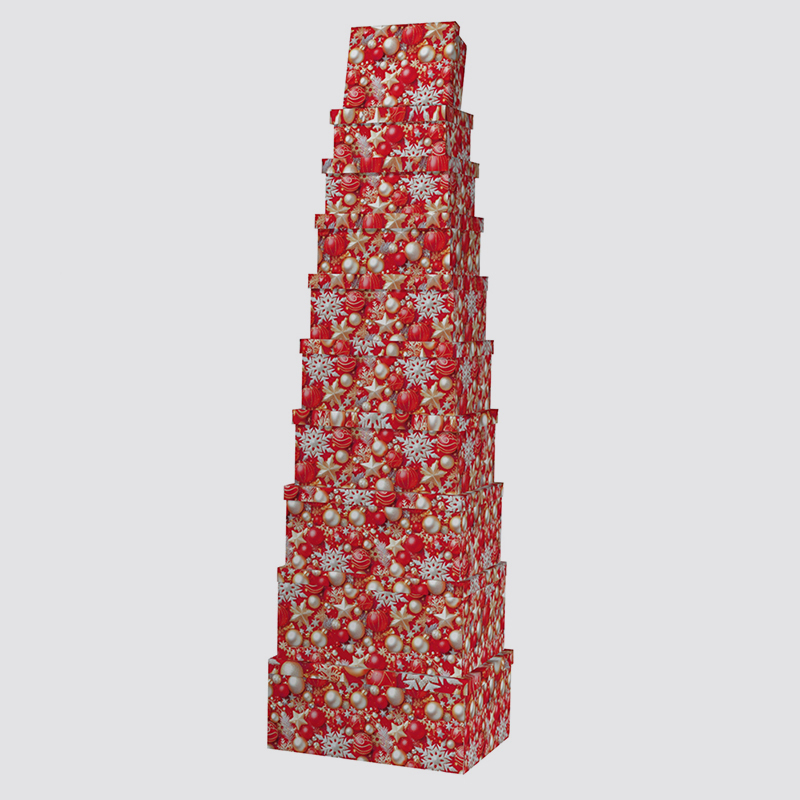
605 Square Handmade Cardboard Printed Rigid Christmas and New Year Gift Box Packaging
Folding cartons are often economical and lightweight, but they generally provide less resistance to compression than rigid boxes. Their fold lines can also become visible or weakened after repeated handling. The 605 rigid format offers a firmer structure and a more substantial feel, which can be important for higher-value gifts and corporate packaging.
Folding cartons remain useful for lightweight products and high-volume price-sensitive applications. However, when the packaging itself is part of the customer experience, a rigid box can provide a more memorable opening process. The buyer should therefore select the format according to the product value, shipping conditions, desired presentation, and budget.
Paper bags are convenient for irregular items and can be easy to carry, but they do not provide the same level of product protection or display stability. A bag may crease, collapse, or lose its shape when placed beneath heavier goods. The rigid square box is more suitable when the contents need a defined protective enclosure.
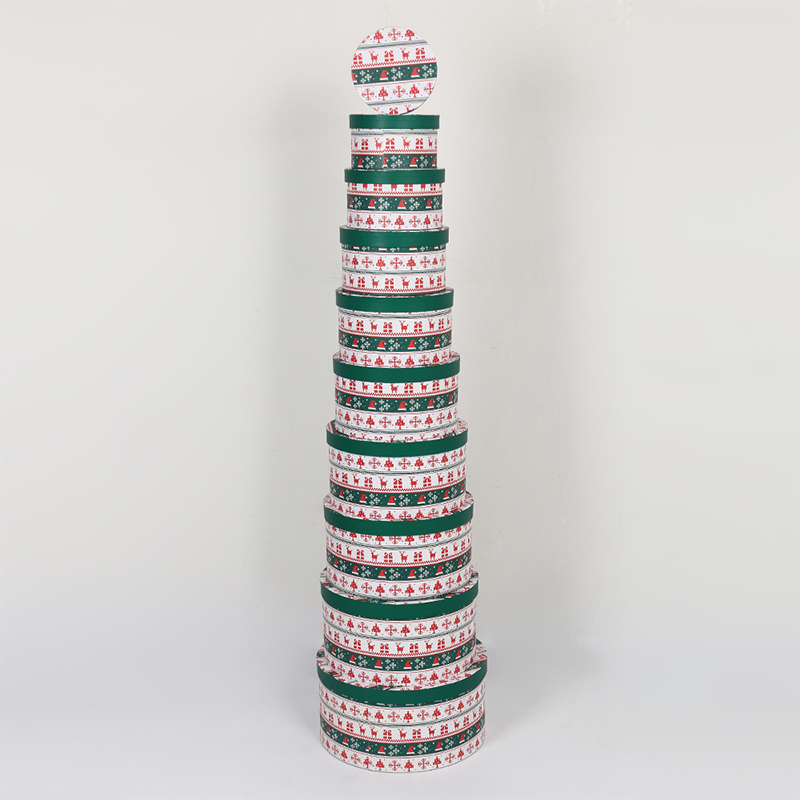
The box can also be stored and displayed before purchase. A retailer can arrange several boxes in a neat stack or place them in a display tower. Paper bags usually require additional support or a separate display structure to achieve a similar effect.
A plain box may provide adequate protection, but it does not immediately communicate the holiday purpose of the product. Buyers would need to add stickers, ribbons, sleeves, labels, or other decorations. The 605 product integrates the festive theme into the main exterior, making the package more visually complete.
Printing directly on the outer paper can also support stronger brand consistency. Seasonal artwork, product information, color strategy, and logo placement can be planned as one design system rather than assembled from unrelated components.
Plastic packaging can offer visibility and moisture resistance, but it may not provide the same paper-based appearance or tactile experience as a rigid cardboard gift box. Many brands prefer paper packaging because it supports a more traditional, premium, and craft-oriented presentation. The 605 series is also compatible with FSC-certified material programs when the relevant material and chain-of-custody requirements are specified and confirmed.
Material selection should always reflect the product’s needs. If the contents are highly sensitive to moisture, additional inner protection may be necessary. Nevertheless, for dry goods, gifts, crafts, and decorative items, rigid paperboard can provide a strong combination of appearance, structure, and printability.
The manufacturer supports CMYK printing, Pantone colors, and custom colors. CMYK printing is suitable for designs containing multiple colors, photographs, illustrations, and gradients. Pantone colors are useful when a buyer needs closer control over a specific brand tone. Custom color development may be considered for a campaign or a specialized seasonal collection.
Color decisions should be made with the selected paper, coating, and finishing method in mind. The same color may appear different on a matte surface, a gloss surface, or an uncoated area. A physical sample or color proof is recommended for important projects, especially when the packaging must match existing retail materials.
Shihao has an in-house design team that can provide professional advice. This is helpful for buyers who have a general concept but do not yet have finalized artwork, dielines, structural drawings, or production-ready files. The team can help convert a marketing idea into a practical packaging design.
Custom designs are welcome. The supplied information identifies Adobe Illustrator and CorelDRAW-type production files as acceptable design formats. Buyers should provide vector artwork whenever possible, including outlined fonts, linked or embedded images, specified color values, and clear information about the intended finishing effects.
Structural customization may include size adjustments, changes to the opening method, internal compartments, inserts, ribbons, handles, sleeves, or coordinated accessories. Any change to the structure should be reviewed for board strength, assembly efficiency, packing speed, storage volume, and shipping cost.
The box can be designed for a broad Christmas market or a specific brand campaign. A general festive design may be suitable for wholesalers and distributors, while private-label artwork can make the same basic structure distinctive to a retailer or product company.
Branding may include a logo, short greeting, product category, limited-edition message, corporate identity, or information about the gift collection. Buyers should avoid overcrowding the surface. A balanced design with clear hierarchy usually produces a more premium result than placing too many elements on every panel.
The available range from 1# to 10# gives buyers a practical starting point. The largest listed dimension is approximately 37.5 x 29 x 16 centimeters, while the smallest is approximately 19 x 13 x 7.5 centimeters. Because dimensions may be interpreted differently depending on whether they refer to internal, external, or assembled measurements, buyers should request a confirmed dimensional drawing before mass production.
Correct size selection is important for both presentation and logistics. A box that is too large can allow the contents to move during transportation and may require additional filling material. A box that is too small can damage the product or create an untidy appearance. The ideal internal space should allow the item to be inserted comfortably while minimizing unnecessary movement.
The following table summarizes the main information supplied for the 605 series. Final commercial specifications should be confirmed on the approved quotation, technical drawing, purchase order, and pre-production sample.
| Specification | Provided Information |
|---|---|
| Project number | 605# |
| Product type | Square handmade rigid Christmas and New Year gift box |
| Main material | Art paper-coated cardboard surface |
| Printing colors | CMYK, Pantone colors, and custom colors |
| Available size range | 1# to 10# |
| Largest listed size | Approximately 37.5 x 29 x 16 cm |
| Smallest listed size | Approximately 19 x 13 x 7.5 cm |
| Application | Gift packaging, storage, gifts, and crafts |
| Packaging quantity | 10 pieces per set |
| Outer carton information | Four sets per carton; approximately 59.5 x 38.5 x 35 cm |
| Minimum order quantity | 300 sets |
| Indicative delivery time | 7 to 45 days or according to customer requirements |
| Design support | In-house design assistance and custom artwork development |
| Common applications | Christmas gifts, New Year gifts, candy, chocolate, ornaments, crafts, and corporate gifts |
The delivery time range is broad because production schedules depend on order quantity, artwork approval, material availability, sample requirements, printing complexity, finishing processes, and shipping arrangements. Buyers should request a project-specific production schedule rather than relying only on a general lead-time estimate.
Retailers can use the 605 box for holiday gift collections that require a consistent visual identity. Several sizes can be used for different products while maintaining the same printing theme. For example, a small box may hold confectionery or ornaments, while a larger size may accommodate a combination gift or a decorative product.
A coordinated range creates a stronger shelf presence than unrelated packages. Customers can recognize the collection quickly, compare sizes, and choose a gift according to their budget and intended recipient.
Chocolate, candy, cookies, and other dry confectionery products are common applications for festive gift boxes. The rigid structure can help protect the external presentation, while the printed surface communicates the seasonal theme. Food-contact requirements must be considered separately. If the product will directly contact food, the buyer should specify the required inner liner, food-safe paper, barrier material, and applicable compliance documentation.
In many cases, the box is used as secondary packaging around an individually wrapped product or an inner tray. This approach combines product protection, hygiene control, and premium presentation. The suitability of the internal materials should be reviewed according to the destination market and product type.
Corporate buyers often need packaging that communicates appreciation and professionalism. A custom-printed rigid box can include a company identity, seasonal message, or event theme. It can be used for employee gifts, customer appreciation packages, business partner gifts, conference merchandise, and promotional campaigns.
For corporate orders, consistency is particularly important. The box should maintain accurate color reproduction, clean logo placement, and uniform construction across the production batch. A pre-production sample is recommended when the package forms part of a major annual campaign.
Handmade ornaments, small craft products, decorative accessories, and seasonal keepsakes can benefit from rigid packaging. The box protects the item from some external pressure and provides a more attractive storage solution after the holiday season.
If the product has fragile surfaces or delicate components, an insert may be required. Foam, paperboard dividers, molded pulp, tissue, or other protective materials can be evaluated based on the product’s shape and the desired sustainability profile.
The square box can serve as an outer package for a coordinated gift set. Businesses may combine several small items, such as accessories, samples, snacks, stationery, or promotional products. The box can then function as both transport packaging and a reusable storage container.
When a gift set contains multiple components, the internal layout should be tested carefully. Products should not collide during transportation, and the arrangement should look organized when the lid or opening is first revealed. A well-designed insert can improve the unboxing experience and reduce movement.
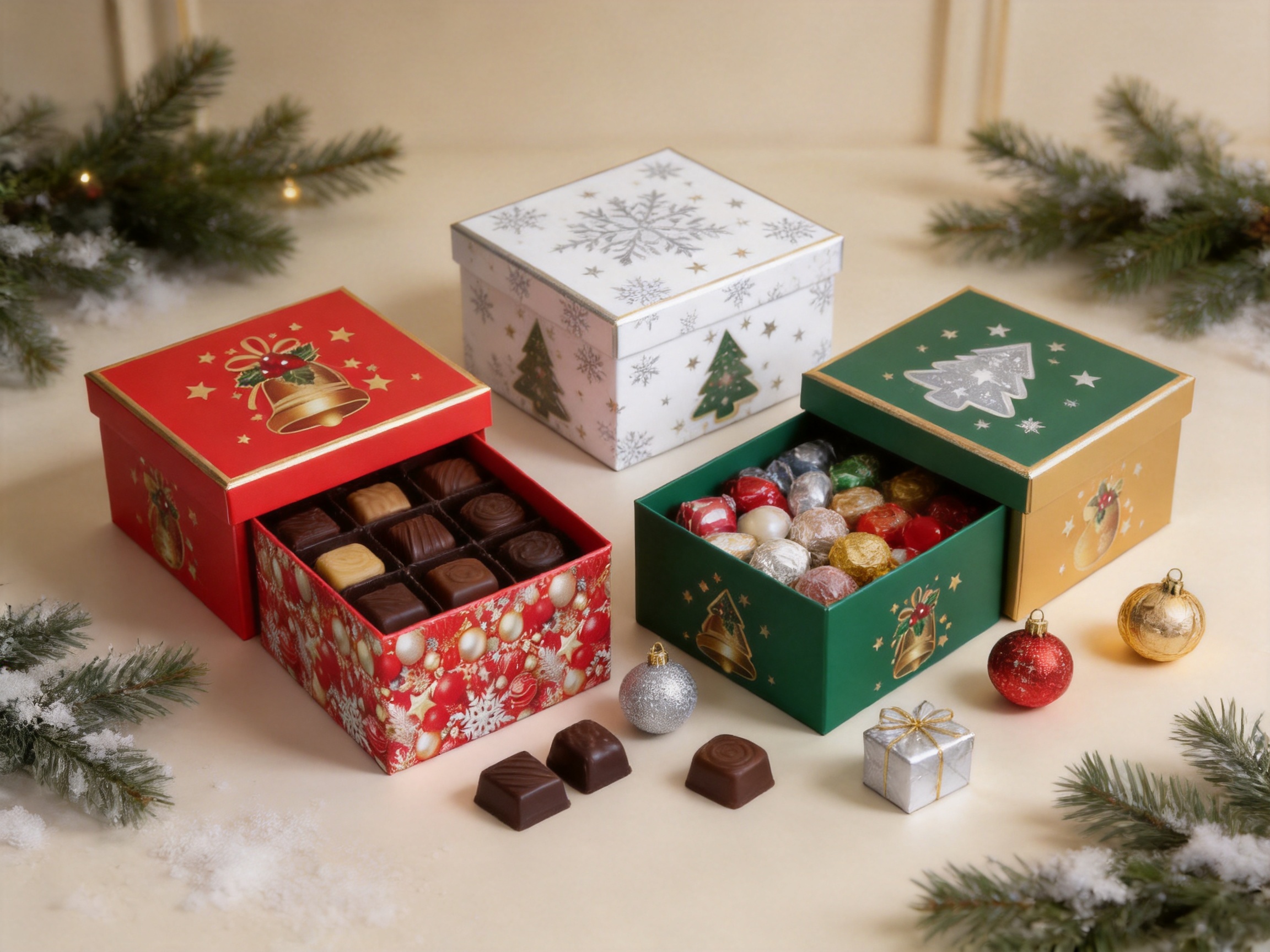
Zhejiang Shihao Gift Packaging Co., Ltd. has more than fifteen years of experience in paper gift packaging. Long-term operation in this field provides practical knowledge of board selection, printing, structural development, finishing, assembly, packing, and export preparation.
Experience is especially valuable for customized packaging because the final product depends on many connected decisions. A design that looks attractive on a computer screen may not be efficient to assemble or may require a material thickness that is unsuitable for shipping. An experienced packaging manufacturer can identify these issues earlier and recommend adjustments before large-scale production.
The company has its own design team and updates dozens of products weekly. This ongoing development activity supports both standard product improvement and customized product creation. Buyers can seek assistance with artwork preparation, structural concepts, seasonal themes, and practical production considerations.
An integrated design process can reduce communication gaps between an outside designer and a manufacturing facility. The same organization can review whether the proposed design is compatible with printing equipment, board construction, hand-finishing requirements, and packing methods.
The company covers approximately 20,000 square meters and employs around 300 people. Its reported average daily production capacity is approximately 5,000 sets of gift boxes. This scale can be useful for buyers who need repeat orders, seasonal volume, or coordinated production across several box styles.
Production scale does not remove the need for quality control. Instead, it makes process management more important. Large orders require clear work instructions, approved samples, inspection standards, production scheduling, material planning, and accurate packing records. Buyers should discuss these controls during the order process.
The company exports products to Europe, the United States, the Middle East, and other regions. Export experience can help a supplier understand the importance of carton packing, shipping coordination, product documentation, destination requirements, and communication across different markets.
International buyers should still specify all required standards and documents. Requirements vary according to the destination, application, material, product contents, labeling, and customer expectations. Export experience is an advantage, but project-specific compliance must be confirmed in writing.
Shihao has passed BSCI and FSC certifications according to the supplied company information. BSCI relates to social compliance and responsible working conditions within the applicable assessment framework. FSC relates to responsible forest-based material sourcing when the relevant certified materials and supply-chain requirements are used.
Certification claims should be matched to the specific order. Buyers who require FSC packaging should confirm the certificate status, product scope, claim requirements, and documentation that will accompany the shipment. Similarly, social compliance requirements may depend on the buyer’s own supplier code or market policy.
Production begins with a review of the buyer’s requirements. The manufacturer evaluates the selected size, box style, board structure, printing method, surface treatment, order quantity, packaging quantity, delivery destination, and target schedule.
At this stage, buyers should provide product dimensions, product weight, internal protection requirements, expected sales channel, artwork status, and desired visual style. Early information helps the factory recommend an appropriate construction rather than simply reproducing an unsuitable drawing.
The design team converts the concept into a production structure. This includes determining board dimensions, wrapping allowances, folding or assembly requirements, lid or closure details, and any internal components. The selected cardboard must provide enough stiffness for the box size and intended contents.
Material planning also considers surface appearance and printing performance. The art paper coating should be compatible with the planned colors and finishing effects. If the customer requests a sustainability claim, the material source and certification route should be checked before approval.
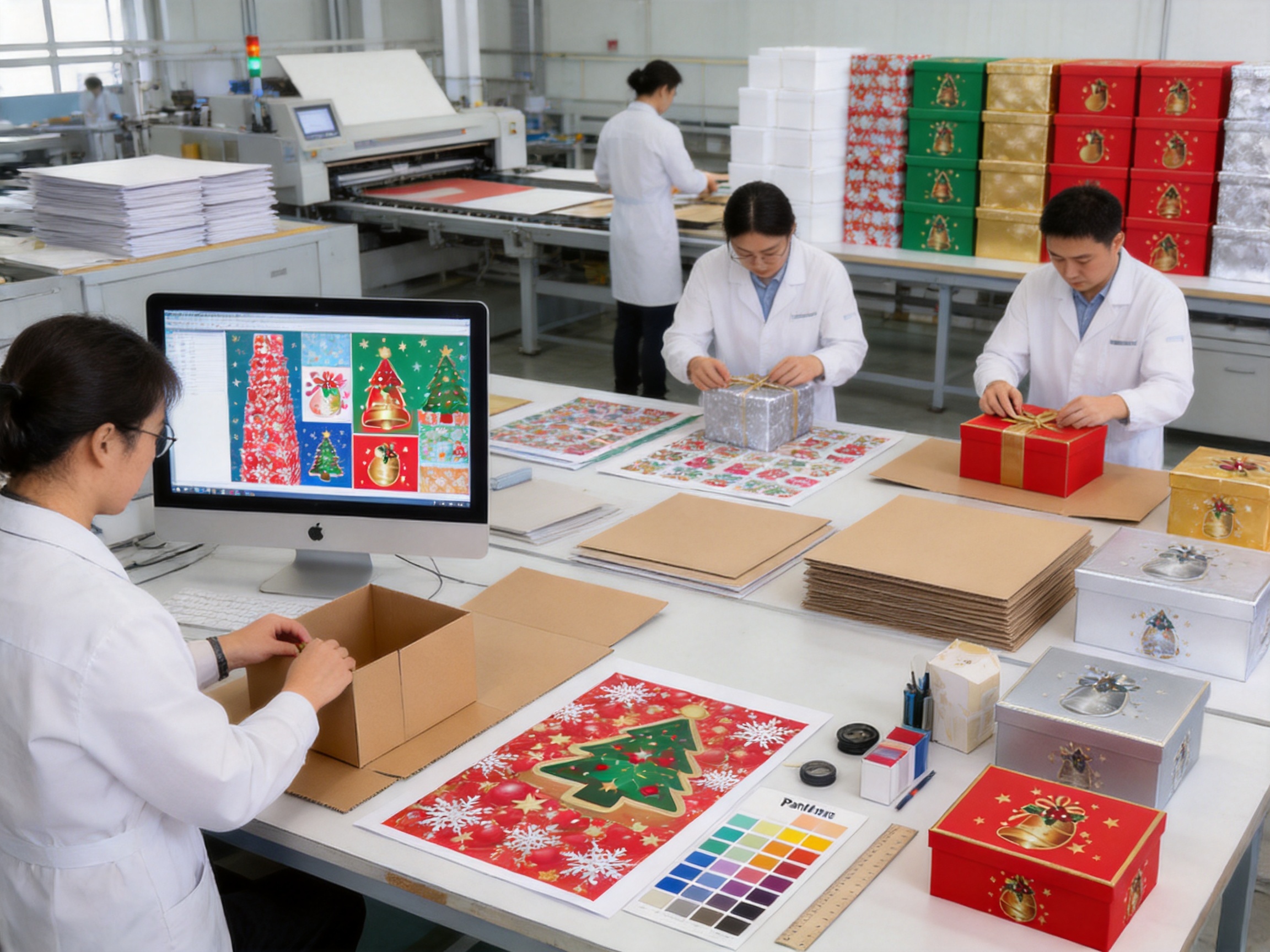
Artwork is prepared for production using suitable vector-based files. The team checks dimensions, bleed, safe areas, color information, image resolution, typography, and the position of logos or text. A proof or sample may be provided so the buyer can review the visual result before mass production.
Proofing is essential for seasonal packaging because holiday graphics often contain small decorative details and multiple colors. A proof allows the buyer to verify the spelling of greetings, the accuracy of dates, the placement of brand marks, and the overall balance of the design.
The approved artwork is printed on the selected art paper-coated surface. Printing may use CMYK, Pantone colors, or a combination according to the design. Operators monitor registration, color consistency, surface cleanliness, and image clarity throughout the production run.
Printing quality affects the perceived value of the entire package. Misaligned panels, uneven color, visible streaks, or damaged surfaces can undermine an otherwise strong structure. For this reason, printing inspection should be coordinated with later assembly and finishing inspections.
Printed material and rigid board are cut according to the approved structure. Accurate cutting is needed to achieve consistent dimensions and clean corners. The board is then prepared for wrapping, forming, or assembly.
Small dimensional deviations can become visible when several panels meet at a corner. Careful tooling, equipment maintenance, and operator inspection help reduce these problems. The acceptable tolerance should be agreed according to the box structure and buyer’s quality standard.
The printed paper is applied to the rigid board, and the components are assembled using suitable adhesive and production methods. Manual handling is often important at this stage because the operator must align the printed surface, fold edges neatly, and ensure that corners are properly covered.
Adhesive control is also important. Too little adhesive can lead to lifting or separation, while excessive adhesive can create marks, wrinkles, or uneven surfaces. The factory should maintain suitable drying or curing conditions before the boxes are packed.
Finished boxes are checked for smooth edges, clean corners, surface condition, printing appearance, structural stability, and overall presentation. Hand-finishing allows workers to identify issues that may not be obvious during automated operations.
Inspection may be performed at several stages rather than only at the end. Incoming materials, printed sheets, formed components, assembled boxes, and packed cartons can each receive different checks. This approach helps identify the source of a problem and reduces the number of defective units reaching the final packing stage.
The supplied packing information identifies ten pieces per set and four sets per carton. The listed carton dimensions are approximately 59.5 x 38.5 x 35 centimeters. These figures should be reconfirmed for the exact size, box structure, and order configuration because different size options may require different carton arrangements.
Proper packing helps protect the finished boxes from dust, compression, moisture exposure, and handling damage. Carton labels, quantity records, and shipping marks should be agreed before dispatch. The final shipment plan should also account for the selected transport method and destination requirements.
A pre-production sample is one of the most effective ways to reduce risk. Buyers can assess the actual dimensions, rigidity, printing color, corner quality, opening experience, internal space, and compatibility with the product contents.
The sample should be reviewed under realistic conditions. Place the intended products inside, close the box, stack several units, and evaluate whether the package remains attractive and stable. If the product will be shipped by parcel or courier, a transportation test may also be appropriate.
Inspect the surface for color consistency, clean registration, smooth coating, correct text, and accurate logo reproduction. Seasonal messages should be checked carefully because a spelling mistake or incorrect year can make an entire batch unusable for its intended campaign.
Check whether the box opens and closes smoothly and whether the lid or assembled sections remain secure. Corners should be properly covered, and there should be no obvious warping or separation. The box should support the weight of the intended product without collapsing during normal handling.
Before final approval, buyers should confirm the number of pieces per set, sets per carton, carton dimensions, gross and net weight, pallet requirements if applicable, and shipping marks. The product information supplied for the 605 series contains several logistical fields that should be clarified in the final commercial documents.
In particular, the original record presents carton, port, payment, sampling date, and CBM information in a mixed format. Buyers should request a corrected packing list and quotation that clearly separates port of loading, payment terms, sample timing, carton dimensions, and carton volume. This is a normal and important step in international purchasing.
The listed minimum order quantity is 300 sets. Since the packaging information identifies ten pieces per set, buyers should confirm whether the minimum applies to one size, one printed design, or a combined order across several sizes. Custom printing, special materials, and additional finishing may alter the effective minimum quantity.
The indicated delivery time is seven to forty-five days or according to customer requirements. A short schedule may be possible for an existing design with available materials, while a new custom project may require additional time for artwork, sampling, material preparation, production, inspection, and export packing.
Seasonal orders should be planned well before the intended selling period. Christmas and New Year demand can create pressure on printing, board supply, finishing, and shipping capacity. Early approval gives the factory more time to solve design issues and helps reduce the risk of last-minute transport problems.
A useful inquiry should include the desired size, quantity, product dimensions, approximate product weight, box style, printing requirements, artwork status, preferred material, surface treatment, internal insert requirements, packaging quantity, delivery destination, and target arrival date.
Buyers should also identify whether the box is for direct food contact, whether FSC material is required, whether a social compliance audit is necessary, and whether a specific inspection standard will be used. Clear information allows the manufacturer to prepare a more accurate quotation and schedule.
Cost is influenced by board thickness, box size, paper type, printing colors, coatings, special finishing, inserts, labor, order quantity, packing method, and shipping volume. Buyers can control costs by simplifying the structure, selecting a standard size, reducing unnecessary finishing, increasing order volume, or using a coordinated design across several products.
However, cost reduction should not compromise the box’s basic purpose. If the packaging is too weak, poorly printed, or difficult to assemble, the apparent savings may be offset by product damage, customer complaints, repacking work, or reduced brand value.
Unboxing begins before the customer sees the product. The texture, firmness, artwork, proportions, and opening method all influence expectations. A rigid printed box can make the customer feel that the item has been carefully selected and prepared, which is particularly appropriate for Christmas and New Year gifts.
The square structure gives the package a deliberate appearance. The festive print creates anticipation, and the rigid body provides a reassuring sense of quality. If the interior is arranged neatly, the opening process can become part of the gift itself rather than merely a step required to reach the product.
For brands, this experience has marketing value. Customers may reuse a well-made box for storage, decoration, or future gifting. A reusable package can keep the brand visible after the original product has been consumed or removed.
Corporate buyers can also benefit from this effect. A carefully designed box helps communicate appreciation, professionalism, and attention to detail. The packaging becomes part of the message rather than an afterthought.
Paperboard packaging can support sustainability objectives when materials are responsibly sourced, efficiently designed, and appropriately disposed of or reused. The use of an FSC-related supply option may help buyers meet responsible sourcing policies, subject to order-specific certification and claim requirements.
Material efficiency should be considered during structural design. A box that fits the product closely can reduce empty space, lower the quantity of protective filling, and improve carton utilization. Efficient packing may also reduce transportation volume per unit.
The buyer should evaluate all components, including coatings, adhesives, inserts, ribbons, laminations, and mixed-material accessories. A box may be paper-based while still containing non-paper elements that affect recycling. If recyclability is a central requirement, the complete packaging system should be reviewed rather than only the main board.
Durability is another sustainability factor. A rigid box that is reused for storage or future gifting may provide more value over its useful life than a package designed only for one brief use. Strong construction and timeless design can extend the period during which the package remains useful.
The box uses rigid cardboard with an art paper-coated surface. The coated paper supports clear printing and a refined appearance, while the rigid board provides a firm structure for gift presentation and protection.
The box is suitable for candies, chocolates, ornaments, crafts, small gifts, promotional items, corporate presents, and other products that fit within the selected size. Fragile or heavy contents may require an internal insert or additional protection.
The listed range runs from size 1# to size 10#. The largest listed dimension is approximately 37.5 x 29 x 16 centimeters, and the smallest is approximately 19 x 13 x 7.5 centimeters. Buyers should confirm whether the dimensions refer to internal or external measurements before ordering.
Yes. Custom designs are welcome, and the manufacturer has an in-house design team that can provide professional advice. Buyers can submit their own artwork or request assistance with design development, seasonal graphics, branding, and production preparation.
The supplied information lists CMYK, Pantone colors, and custom colors. The best option depends on the artwork, brand color requirements, surface treatment, and production budget. A physical proof is recommended when color accuracy is important.
The listed minimum order quantity is 300 sets. Because the product is packed at ten pieces per set, the buyer should confirm how the minimum is calculated for different sizes, designs, and custom finishes.
The indicated delivery time is seven to forty-five days or according to customer requirements. The exact schedule depends on artwork approval, sampling, material availability, order quantity, production complexity, and shipping arrangements.
It may be suitable as secondary packaging for individually wrapped food products, but direct food contact requires specific material and compliance confirmation. Buyers should identify the food application at the quotation stage and request appropriate inner materials and documentation.
Yes. A logo, corporate message, seasonal greeting, or campaign artwork can be included in the custom print design. Buyers should provide high-quality artwork and approve a proof before mass production.
The company reports FSC certification and can discuss paper-based material options. Buyers requiring FSC claims should confirm the certificate scope, material availability, and documentation for the specific order. Other sustainability requirements should also be specified in advance.
The supplied information identifies ten pieces per set and four sets per carton, with a listed carton size of approximately 59.5 x 38.5 x 35 centimeters. These details should be reconfirmed because carton packing can vary by box size, order configuration, and final product structure.
Yes, if the artwork is adapted. A New Year design, winter theme, birthday design, wedding theme, corporate campaign, or general premium gift pattern can use the same basic rigid packaging concept. A neutral design may also extend the product’s selling period beyond the holiday season.
The 605 Square Handmade Cardboard Printed Rigid Christmas and New Year Gift Box Packaging is designed to combine festive appearance, structural stability, flexible customization, and commercial practicality. Its rigid cardboard body offers greater firmness than many lightweight seasonal alternatives, while the art paper-coated surface supports attractive CMYK, Pantone, and custom-color printing.
The square design helps with stacking, display, storage, and gift presentation. The handmade finishing process focuses attention on edges, corners, alignment, and overall appearance. A choice of sizes from 1# to 10# gives buyers the flexibility to package different products, while custom artwork allows the box to support both seasonal themes and brand identity.
Zhejiang Shihao Gift Packaging Co., Ltd. strengthens the product proposition through long-term industry experience, in-house design support, production scale, export experience, and reported BSCI and FSC certifications. Its approximately 20,000-square-meter facility, workforce of around 300 employees, and stated daily capacity of about 5,000 gift box sets provide a foundation for both standard and customized orders.
For the best result, buyers should confirm the exact structure, dimensions, material grade, printing method, surface treatment, packing configuration, certification requirements, delivery schedule, and quality standard before production. A physical sample and clear commercial documentation are especially important for seasonal projects.
When these details are managed carefully, the 605 series can do more than hold a gift. It can protect the product, strengthen the retail presentation, support brand communication, improve the unboxing experience, and provide a reusable package that continues to create value after the holiday has ended.
1. Product specification record for Project 605#, including material, dimensions, colors, applications, packaging quantity, minimum order quantity, and delivery information.
2. Company profile and manufacturing information supplied by Zhejiang Shihao Gift Packaging Co., Ltd.
3. General packaging design principles for rigid paperboard boxes, including structural protection, print preparation, packaging ergonomics, and display planning.
4. General guidance on FSC-certified forest-based materials and responsible paper packaging procurement.
5. General guidance on social compliance assessment practices in international manufacturing supply chains.
Recommended Products

Contact Us

No. 15, Xiayang Road, Huangzhai Town, Jinhua, Zhejiang, China

(+86) 579-84230069

(+86) 13085675766


Products

Gift Box Packaging Manufacturer
 English
 Français
 Español
 عربى