2026-08-21
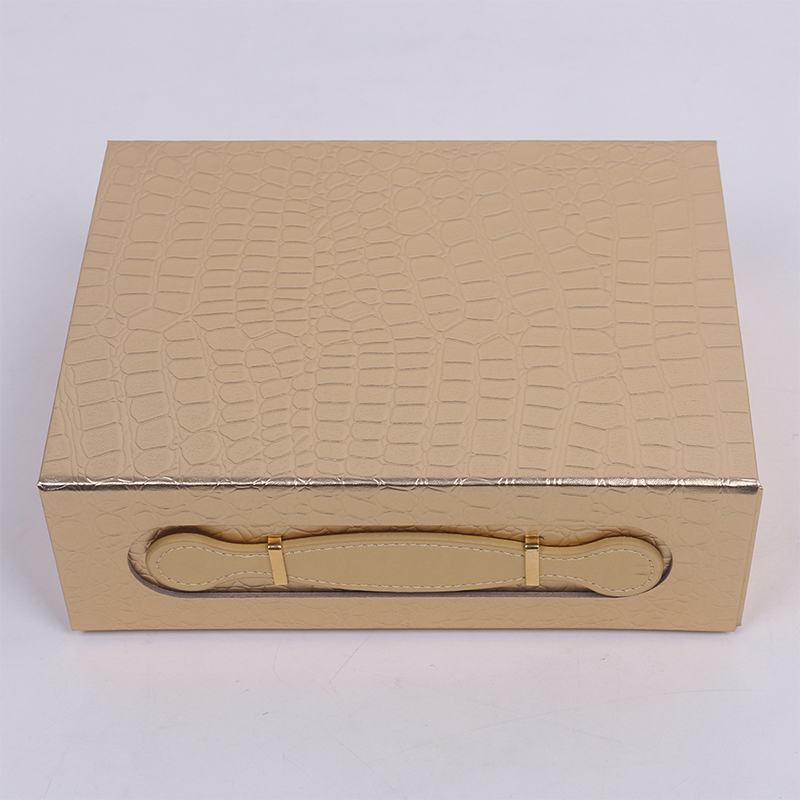
Packaging is no longer simply a protective layer around a product. For many brands, retailers, event organizers, and gift suppliers, packaging is part of the customer experience. The shape, texture, opening method, printed message, and sustainability profile of a box can influence how a product is perceived before it is even opened. The Z262 Foldable Magnetic Recycled Paper Box With Ribbon And Card Window responds to these expectations by combining practical storage efficiency, refined presentation, customization potential, and responsible material selection in one versatile folding gift box.
Designed for small gifts, souvenirs, seasonal products, promotional items, and lightweight merchandise, this box brings together several features that are often purchased separately. It uses recycled cardboard as its core material, folds flat for transportation and storage, closes with an integrated magnetic mechanism, includes a ribbon for an elegant finishing touch, and provides a transparent card window for greeting cards, brand cards, or promotional inserts. A matte laminated surface completes the design with a smooth appearance and improved resistance to everyday scratches.
The product is manufactured by Zhejiang Shihao Gift Packaging Co., Ltd., an export-oriented paper packaging manufacturer with more than 15 years of industry experience. The company operates a 20,000-square-meter facility, employs approximately 300 people, and maintains design, research, production, and sales capabilities under one organization. Its products are exported to Europe, the United States, the Middle East, and other markets, while certifications such as BSCI and FSC support its commitment to responsible business practices and sustainable paper sourcing.
This article examines the design, performance, customization opportunities, manufacturing advantages, and commercial applications of the Z262 box. It also explains why a foldable magnetic box can offer practical advantages over conventional rigid boxes, basic folding cartons, and less flexible packaging formats.
The Z262 is a folding gift box developed for buyers who want the presentation quality of a premium box without the storage and shipping burden commonly associated with rigid packaging. When delivered flat, the box occupies considerably less volume than a permanently assembled box. When needed, it can be unfolded into a stable three-dimensional structure suitable for packing selected gifts and lightweight products.
Its design is based on a balance between visual refinement and operational efficiency. The box does not rely on excessive decorative elements to create a premium impression. Instead, it uses a coordinated combination of a matte surface, magnetic closure, ribbon, and transparent card window. Each feature performs a practical or aesthetic role, and together they create a coherent packaging experience.
The recycled cardboard core gives the structure a firm foundation while supporting the environmental positioning expected by many modern buyers. The material is suitable for paper-based packaging programs that aim to reduce dependence on virgin resources. At the same time, the cardboard provides enough rigidity for the box to maintain its form after unfolding, helping protect contents during handling, display, and gifting.
The box is available within a product family identified by the item codes Z262, Z263, Z264, Z265, and Z266. The listed sizes range from compact formats for small merchandise to larger options for broader gift presentations. This family approach gives buyers an opportunity to select a suitable dimension while maintaining a consistent visual language across multiple product sizes.
| Product element | Function and commercial benefit |
| Recycled cardboard core | Provides structure while supporting paper-based and environmentally conscious packaging programs |
| Foldable construction | Reduces storage and transportation volume before assembly |
| Magnetic closure | Creates a smooth opening and secure closing experience |
| Ribbon detail | Adds elegance and assists with opening or presentation |
| Transparent card window | Allows greeting cards, brand cards, messages, or promotional inserts to be displayed |
| Matte lamination | Creates a restrained premium appearance and improves surface scratch resistance |
| Custom printing and finishing | Supports brand identity, seasonal themes, event messages, and promotional design |
Rather than treating packaging as a disposable container, the design positions the box as part of the product story. The card window can communicate a personal greeting, product information, or campaign message. The ribbon can support a festive or upscale visual theme. The magnetic closure can make the first opening feel more deliberate than opening an ordinary tuck-end carton.
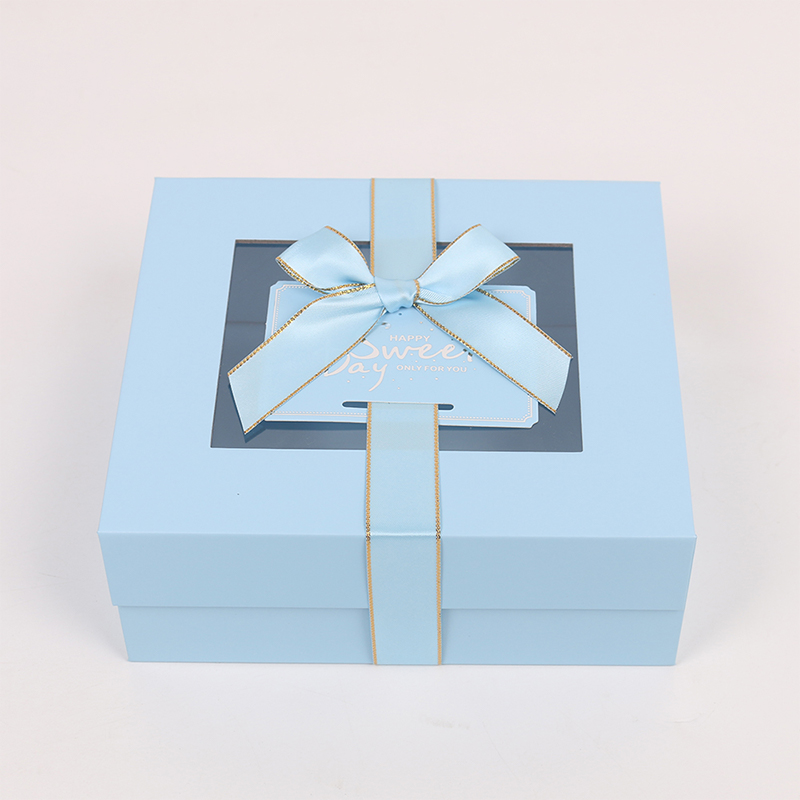
Z262 Foldable Magnetic Recycled Paper Box With Ribbon And Card Window
Material selection is one of the most important decisions in packaging development. Buyers increasingly evaluate not only appearance and price, but also the source and perceived environmental impact of the materials used. The Z262 uses recycled cardboard as its core material, offering a paper-based alternative for brands that want to communicate a more responsible packaging direction.
Recycled cardboard can help reduce the need for entirely virgin fiber inputs and can support packaging strategies that prioritize renewable or recyclable paper materials. Although the total environmental performance of any package depends on factors such as sourcing, coatings, inks, logistics, reuse, and end-of-life treatment, a recycled paper core provides a meaningful foundation for brands seeking to reduce the use of plastic-heavy packaging formats.
The FSC certification associated with the manufacturer further supports responsible forestry and paper-sourcing expectations. Certification does not eliminate the need for buyers to review their own supply-chain requirements, but it provides an important reference point when developing packaging for customers who value traceability and responsible material management.
The product’s sustainable value is also connected to its foldable structure. A box that ships and stores flat can reduce the space required before final assembly. Lower volume can make warehouse organization easier and may improve carton utilization during transportation. For importers, distributors, and retailers managing multiple packaging styles, this space-saving characteristic can contribute to more efficient inventory planning.
It is important to describe the product accurately. The Z262 is not presented as a completely material-free or impact-free package. It includes lamination, magnetic components, ribbon, and other elements that contribute to its function and appearance. However, its recycled cardboard core and foldable construction provide clear advantages for brands comparing it with heavily plastic-based packaging or large permanently assembled rigid boxes.
For companies with sustainability communication goals, the box can be incorporated into a broader packaging plan. A brand may pair the recycled paper structure with water-based or carefully selected printing systems, right-sized dimensions, limited decorative materials, and clear disposal instructions. The result can be a more balanced package that combines premium presentation with a conscious material story.
Different markets interpret sustainability in different ways. In some regions, consumers focus on recycled content and recyclable paper. In others, buyers pay particular attention to certified sourcing, efficient logistics, or reduced packaging volume. The Z262 gives purchasing teams a flexible starting point because it combines recycled board with a folding format and customizable surface treatment.
For wedding favors and event packaging, the box can help organizers select a paper-based option that fits a natural, elegant, or minimalist theme. For holiday gifting, the card window can carry seasonal artwork or a personal message. For corporate gifts, the company logo and brand colors can be added while retaining the material’s restrained paper appearance.
This flexibility is valuable because sustainability should not require a brand to sacrifice presentation quality. A box that looks unfinished or fragile may not achieve the desired customer response. The matte lamination, magnetic closure, and ribbon allow the Z262 to maintain a premium visual and tactile impression while preserving a paper-centered structure.
One of the product’s strongest advantages over traditional rigid gift boxes is its ability to fold flat. Permanently assembled rigid boxes can look impressive, but they often occupy substantial space during production storage, international shipping, and retail backroom handling. The Z262 addresses this problem by remaining compact before use and becoming a stable gift box when unfolded.
Flat storage can be especially valuable for wholesalers, importers, and brands purchasing packaging in large quantities. The product specification lists a minimum order quantity of 1,000 pieces, which means that storage planning can have a meaningful effect on operational cost. A foldable format allows purchasers to receive a larger quantity without immediately dedicating the same volume that fully assembled boxes would require.
The design can also support more efficient seasonal preparation. A retailer may order packaging before a holiday campaign begins, store the boxes in a compact condition, and assemble them closer to the time of product packing. Event organizers can keep flat-packed boxes in a warehouse or venue area and unfold them as needed. This approach can help reduce clutter and make packaging operations more adaptable.
Compared with basic flat cartons, however, the Z262 offers a more elevated presentation. A standard folding carton may be efficient but can lack the visual impact associated with a gift-opening experience. The magnetic closure and ribbon add detail without requiring the buyer to manage a separate lid, adhesive tape, or complicated locking structure.
The box is also practical for brands that sell several gift sizes. The available size range includes approximately 20 × 18.2 × 8 cm, 28.2 × 20.2 × 9.2 cm, 33 × 25 × 12 cm, 33.5 × 26 × 15.5 cm, and 39 × 28 × 17.8 cm formats. Buyers should confirm the exact correspondence between dimensions and item codes before placing an order, but the range demonstrates that the product family can support different gift volumes and presentation requirements.
| Listed size | Potential packaging application |
| 20 × 18.2 × 8 cm | Small souvenirs, accessories, compact promotional gifts, and personal keepsakes |
| 28.2 × 20.2 × 9.2 cm | Medium gift sets, apparel accessories, candles, and curated retail products |
| 33 × 25 × 12 cm | Larger gift combinations, seasonal packages, and corporate presentation sets |
| 33.5 × 26 × 15.5 cm | Higher-volume lightweight products and presentation-oriented gift assortments |
| 39 × 28 × 17.8 cm | Large gift combinations, event packages, and multi-item promotional kits |
These dimensions are only a starting point. The manufacturer offers size customization, allowing the box to be adjusted for a particular product. Accurate product measurements, including internal clearance, insert requirements, and closure allowance, should be confirmed during the design stage.
Flat-packed boxes can be arranged in layers, sorted by model, and stored according to campaign or customer. This can make inventory identification easier than managing multiple stacks of assembled boxes. It may also reduce the risk of boxes being crushed simply because they are occupying excessive warehouse space.
The listed packaging information provides useful planning references. For example, Z262 is specified as one piece per OPP bag, 72 pieces per carton, with a carton volume of approximately 0.05 cubic meters. Other models are listed at 48, 32, or 24 pieces per carton, with carton volumes of approximately 0.05 to 0.06 cubic meters. Final packing details should be verified with the supplier because changes in materials, size, accessories, or export requirements may affect carton quantities.
For international buyers, these details help purchasing teams estimate warehouse requirements and compare shipping plans. A packaging manufacturer that can discuss carton packing, sample preparation, product dimensions, and customization in the same process can reduce communication gaps between design and logistics teams.
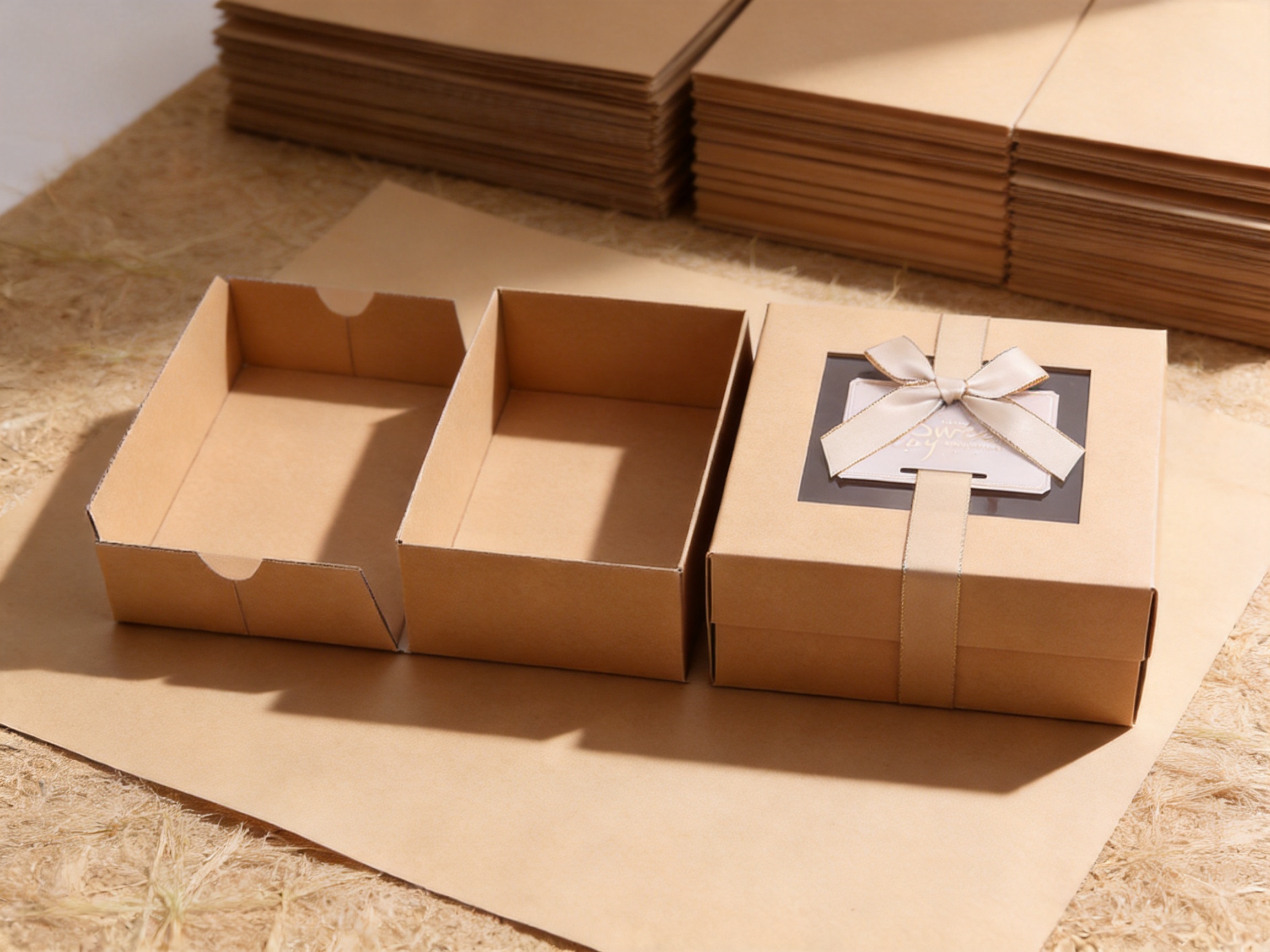
The most visible difference between the Z262 and an ordinary paper box is the combination of its presentation features. The magnetic closure creates a controlled opening and closing action. Instead of relying solely on a tuck flap or loose lid, the box closes with a gentle magnetic alignment that can make the package feel more refined.
Magnetic closures are particularly suitable for gift packaging because they can be opened repeatedly. A recipient may open the box to view the product, remove an item, and later use the box for storage. This reusability can extend the functional life of the packaging beyond the first unboxing moment.
The ribbon adds a tactile and visual accent. It can complement the brand’s color scheme, match a wedding or holiday theme, or provide contrast against the matte laminated surface. Depending on the final design, the ribbon can also assist with lifting or opening the package. Its role is not merely decorative; it helps communicate that the box was designed for gifting rather than ordinary transportation.
The transparent card window is another practical feature. A greeting card, brand card, care message, event invitation, or promotional insert can be positioned where the recipient sees it immediately. This gives the buyer more communication space without requiring extensive printing across the entire exterior of the box.
For corporate and promotional packaging, the window can present a company message or campaign slogan. For weddings, it can display the names and date of the couple. For holidays, it can hold a seasonal greeting. For retail products, it can show a brand card or a brief product story. The window therefore supports personalization while maintaining a clean exterior design.
Compared with a fully printed box that uses every visible surface for graphics, the card window can create a more flexible communication system. The outer box may remain consistent throughout the year, while the inserted card changes for different campaigns, seasons, or customer groups. This can help brands avoid producing a completely new box for every message.
Premium packaging does not always require a heavy, multi-part rigid construction. In many cases, the experience is shaped by a few carefully selected details. The Z262 uses the magnetic closure, ribbon, matte surface, and card window to create this effect while retaining the efficiency of a foldable paper box.
This approach may be more suitable than a large rigid box for products that are lightweight or moderately sized. A heavy box can add unnecessary material and freight weight, while a basic carton may fail to convey the desired value. The Z262 occupies a middle position: it is more expressive than a standard shipping carton and more space-efficient than many permanently assembled rigid boxes.
The matte lamination finish gives the box a smooth, understated appearance. Unlike a high-gloss finish that emphasizes reflection, matte lamination creates a softer visual impression and can support luxury, natural, minimalist, or contemporary brand themes.
Surface finish affects how consumers perceive color, texture, and quality. Matte packaging can make printed graphics appear more controlled and less visually aggressive. It is suitable for brands that want an elegant appearance for jewelry accessories, cosmetics, wellness gifts, lifestyle products, stationery, and corporate merchandise.
Matte lamination also improves resistance to everyday surface scratches. This is useful during packing, storage, retail display, and gifting. It does not make the box indestructible, and buyers should still confirm performance requirements for their specific distribution environment. Nevertheless, the finish provides a practical layer of protection while enhancing the overall appearance.
Customization can be applied to the surface through printing and special finishing processes. The manufacturer identifies UV printing and hot stamping among the available options. UV printing can be used for sharp logos, detailed graphics, or selected highlight areas. Hot stamping can add metallic or special-color accents that reinforce a premium brand identity.
The design team can help buyers evaluate the relationship between artwork, box dimensions, closure placement, ribbon position, and card-window layout. This is important because a design that looks attractive on a flat digital file may not produce the same result after folding. Fold lines, corners, magnetic components, and the visual balance of the lid must all be considered before mass production.
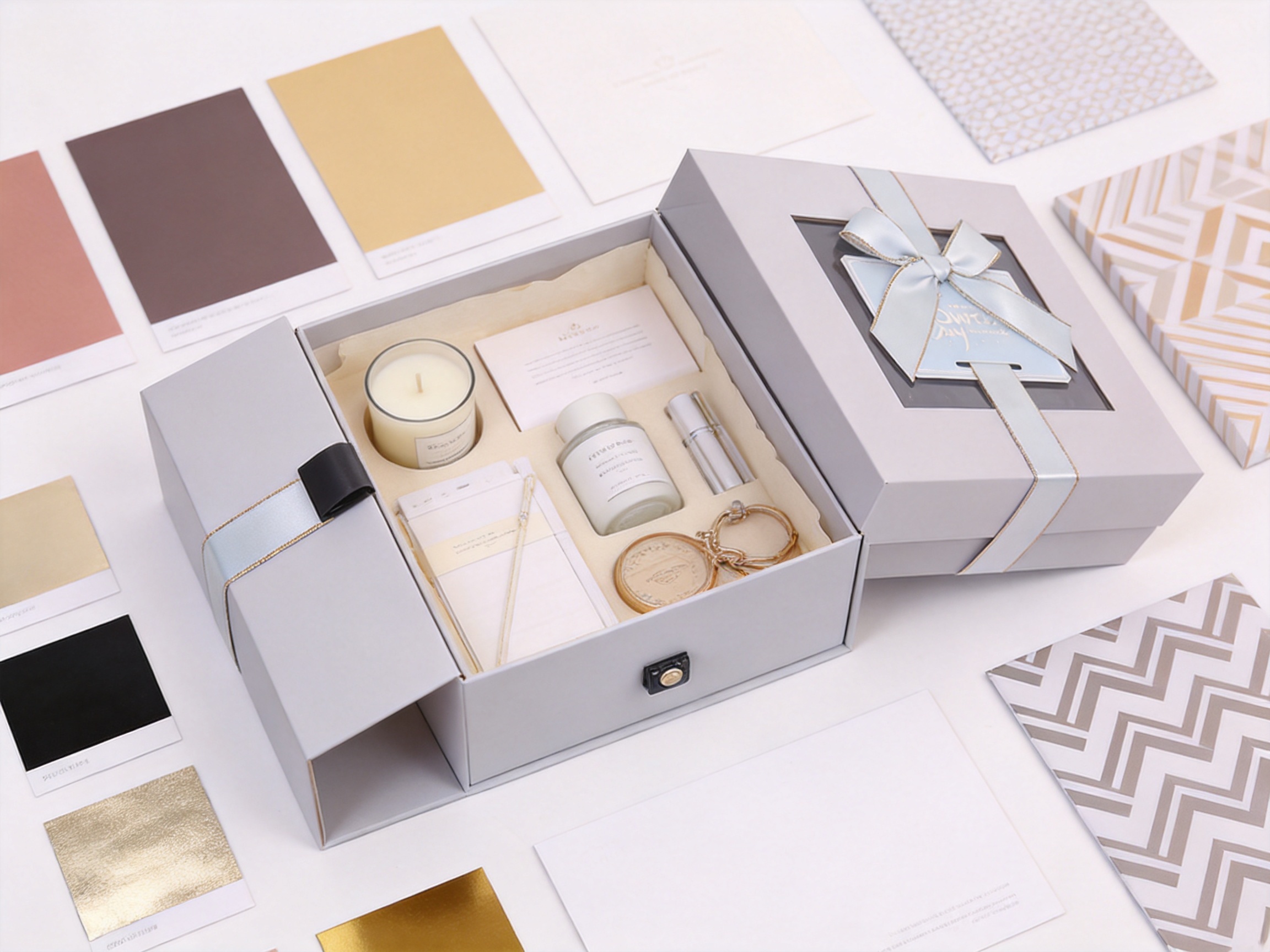
Customization is one of the central commercial benefits of this packaging format. The manufacturer allows adjustments in size and color, and customized designs are welcomed. Buyers can choose from the company’s color bank or submit a custom design for review. This gives brands more control over the relationship between packaging and product identity.
Size customization is especially important when the box is used for a product that must remain stable inside the package. An oversized box may allow the contents to move during transportation, while an undersized box can create pressure on the lid or closure. A correctly proportioned box can reduce wasted space, improve presentation, and make the product feel intentionally packaged.
Color development can follow a brand palette, seasonal campaign, event theme, or product category. A neutral matte box may support a high-end minimalist collection, while a brighter color can suit children’s gifts, festive promotions, or creative stationery. Buyers should provide clear color references and approve physical samples when accurate color reproduction is important.
Brand logos and thematic elements can be incorporated through UV printing, hot stamping, and other finishing methods. A restrained logo on the lid may be appropriate for premium corporate gifting. A larger seasonal pattern may suit holiday packaging. A small metallic mark can provide distinction without overwhelming the recycled paper structure.
The transparent card window creates an additional customization opportunity. Because the card can be replaced or updated, the same box structure may serve several product lines. A manufacturer can produce a stable base package while the buyer manages different card designs for different markets or campaigns.
Zhejiang Shihao Gift Packaging Co., Ltd. states that it has its own design team and provides professional suggestions. This is a significant advantage for buyers who have a general packaging concept but need help converting it into a manufacturable product.
Packaging design requires more than placing a logo on a template. The designer must consider board thickness, folding sequence, magnetic positioning, ribbon attachment, window size, printing tolerances, edge coverage, internal clearance, and carton packing. Early technical guidance can reduce rework and help the finished package match the original design intention.
The company reports updating dozens of products weekly, which indicates an active product development environment. For buyers seeking new packaging ideas, this type of ongoing development can provide access to current folding structures, decorative approaches, and market-oriented concepts.
Design files can be supplied in AI or CorelDRAW formats. Buyers should prepare vector artwork whenever possible, include accurate color specifications, identify finishing areas clearly, and provide dimensions in a consistent unit. If a design includes a card window, ribbon, or metallic finish, these elements should be marked separately in the artwork to prevent production misunderstandings.
A packaging product is only as reliable as the manufacturing process behind it. The Z262 combines multiple components and production steps, including paperboard preparation, structural forming, surface lamination, printing, magnetic installation, ribbon attachment, window integration, folding, inspection, and final packing. Managing these steps consistently requires organized production and experienced technical staff.
The manufacturer operates a facility covering approximately 20,000 square meters and employs around 300 people. This scale supports the coordination of design, material preparation, production, quality control, packing, and export logistics. The company also reports advanced equipment and an average daily production capacity of approximately 5,000 sets of gift boxes.
Production capacity is valuable for customers that need consistent repeat orders or seasonal volumes. A small initial order may develop into a larger program involving multiple sizes, colors, or product lines. A manufacturer with established production resources is better positioned to plan these requirements than a supplier that relies entirely on fragmented outsourcing.
The stated minimum order quantity is 1,000 pieces. This quantity is suitable for many wholesale, retail, event, and brand programs, although it may be higher than the needs of a small personal project. Buyers should discuss the exact production schedule, material availability, artwork approval process, and shipping timeline before confirming an order.
Integrated manufacturing can improve communication. When the same supplier handles design support and production, the team can evaluate whether a proposed structure is compatible with available equipment and assembly methods. It can also identify potential problems before the sample stage, such as difficult folding points, unsuitable ribbon positions, or artwork that crosses a closure area.
Quality control should cover both visual and functional criteria. For the Z262, relevant checks may include board flatness, accurate folding, clean laminated surfaces, consistent color, secure magnetic closure, correct ribbon placement, proper card-window attachment, edge finishing, and overall dimensional accuracy. Packaging should also be inspected for damage before being placed into transport cartons.
Buyers should agree on quality standards in writing. A sample can establish the approved appearance, but a complete specification should also identify acceptable tolerances, color expectations, accessory requirements, packing method, labeling, and inspection procedures. This is particularly important for custom products where the final result differs from a standard catalog sample.
The company’s BSCI and FSC certifications provide additional reference points for customers evaluating social responsibility and paper sourcing. Certifications should be reviewed according to the buyer’s compliance requirements, destination market, and procurement policies. They are most effective when combined with clear specifications, production communication, and inspection arrangements.
Choosing packaging involves balancing cost, appearance, storage, protection, and brand impact. The Z262 has a distinct position among several common alternatives.
Ordinary folding cartons are often efficient and economical, but they may use simple tuck flaps or locking tabs. Their opening experience can feel more functional than ceremonial. The Z262 adds magnetic closure, ribbon detailing, and a card window, which makes it more appropriate for direct gifting and premium presentation.
The trade-off is that magnetic components and decorative details can create a higher unit cost than a basic carton. However, brands selling higher-value products or seeking stronger presentation may consider the additional cost justified by the improved perceived value and customer experience.
Rigid boxes are known for their strength and premium feel, but they are usually delivered in an assembled form. This can increase shipping volume, storage requirements, and handling complexity. The Z262 offers a more logistics-friendly alternative by folding flat before use.
A rigid box may be the better choice for heavy products or highly structured presentation sets. The Z262 is more suitable for lightweight products, souvenirs, compact gifts, stationery, and gift combinations that do not require a heavy-duty container. The final selection should be based on product weight, distribution conditions, and the desired balance between luxury and efficiency.
Plastic packaging can provide moisture resistance and visibility, but it may be less aligned with a paper-based sustainability message. The Z262 offers a more tactile and gift-oriented alternative using a recycled cardboard core. Its card window can provide selected visibility or information without requiring the entire package to be made from transparent plastic.
As with all packaging choices, buyers should evaluate the actual product environment. If the contents are exposed to high humidity, liquid leakage, or demanding outdoor conditions, additional protective solutions may be necessary. For dry, lightweight gifts and indoor retail or event use, the paper-based format can be highly appropriate.
Fabric bags and drawstring pouches can be flexible and reusable, but they may not provide the same structural support or display surface as a box. The Z262 offers a stable presentation platform, a printable exterior, an information window, and a more formal opening experience.
| Packaging format | Main strength | Potential limitation | Best suited to |
| Z262 foldable magnetic box | Premium presentation with flat storage and customization | More components than a basic carton; best for lightweight products | Gifts, souvenirs, corporate packages, events, and retail presentation |
| Basic folding carton | Simple structure and economical production | Less distinctive opening experience | High-volume standard retail packaging |
| Traditional rigid box | Strong structure and substantial luxury feel | Large shipping and storage volume | Heavy or high-value products requiring rigid protection |
| Plastic box or pouch | Visibility and possible moisture resistance | May conflict with paper-centered sustainability goals | Products requiring visibility or specialized protection |
| Fabric bag | Soft, flexible, and potentially reusable | Limited structure and printable surface | Soft goods, accessories, and casual promotional items |
The Z262 is suitable for many occasions because its design can be customized without changing its fundamental structure. Its dimensions and internal configuration should be selected according to the product, but the box can serve several broad packaging categories.
Wedding favors, anniversary gifts, engagement keepsakes, and event souvenirs benefit from packaging that feels personal. A ribbon can match the event palette, while the card window can display names, dates, thank-you messages, or short greetings. A matte surface can support a romantic, minimalist, botanical, or classic design.
Event planners can also use the boxes for guest gifts, VIP packages, table favors, or welcome kits. Because the boxes can be stored flat, they may be transported to a venue and assembled close to the event date.
Holiday packaging often requires strong visual recognition and flexible messaging. The same box structure can support Christmas, New Year, Valentine’s Day, Mother’s Day, regional festivals, or limited-edition campaigns. A replaceable card insert allows the message to change without redesigning every structural element.
For brands with several seasonal products, consistent box dimensions can help maintain a recognizable packaging family. Different colors, ribbons, and card designs can distinguish product collections while preserving operational familiarity.
Corporate gifting requires a professional appearance, reliable quality, and clear brand communication. The Z262 can present employee gifts, client appreciation packages, event souvenirs, promotional merchandise, or partner welcome kits. UV printing or hot stamping can be used to add a logo, campaign mark, or corporate message.
The magnetic opening and card window can help create a more deliberate unboxing moment. A company can place a thank-you note, product explanation, or sustainability statement in the visible card area. This makes the packaging part of the communication strategy rather than merely a protective container.
The product category includes stationery storage boxes and other paper products. The box can be adapted for notebooks, writing accessories, greeting cards, desk items, creative kits, small art supplies, and other lightweight products. Its paper construction and matte appearance are naturally compatible with stationery and lifestyle branding.
Souvenir suppliers often need packaging that communicates place, culture, and occasion. A custom printed exterior can carry local illustrations, landmarks, maps, or regional patterns. The card window can hold a story card, certificate, or origin message that adds context to the item inside.
While the box should be matched carefully to the weight and protection needs of the product, its compact sizes can be suitable for lightweight accessories, beauty gift sets, skincare samples, or personal-care merchandise. Internal inserts can be discussed during customization if the product requires separation or improved stability.
A successful packaging project begins with a clear product brief. Buyers should identify the product dimensions, weight, quantity, intended market, desired visual style, printing requirements, and distribution conditions. If the box will contain multiple items, the buyer should provide the arrangement and any internal insert requirements.
The next stage is structural review. The manufacturer can advise on the most suitable size, folding configuration, closure placement, card-window dimensions, and ribbon position. At this point, buyers should confirm whether the listed standard sizes are adequate or whether a custom size is needed.
Artwork preparation follows structural confirmation. Vector files in AI or CorelDRAW format are preferred for professional production. Logos, text, background graphics, UV printing areas, hot-stamping areas, and window positions should be clearly identified. If a design uses special colors, buyers should provide recognized color references and approve a physical sample when necessary.
Sampling is listed at approximately 3 to 5 days. The sample stage allows the buyer to review the box’s dimensions, folding action, color, surface finish, ribbon, card window, and magnetic closure. It is important to test the sample with the actual product or a representative dummy because a box can appear correct while still requiring adjustment for product clearance.
After sample approval, the production order can proceed. The listed MOQ is 1,000 pieces. Production planning should include the approved sample, artwork version, color standards, accessory details, carton packing requirements, and delivery destination. Any changes after approval should be documented to avoid confusion between the sample and mass production version.
Final inspection should evaluate both appearance and function. A practical inspection checklist can include:
• Correct box size and model identification.
• Clean and even matte lamination.
• Accurate printing and readable text.
• Correct placement of UV printing or hot stamping.
• Smooth folding without excessive cracking or deformation.
• Secure and correctly aligned magnetic closure.
• Properly attached ribbon with consistent positioning.
• Clear and firmly attached transparent card window.
• Correct quantity per export carton.
• Protection against moisture, crushing, and surface damage during shipment.
This process is useful for both first-time buyers and established brands. Clear preparation reduces the risk of delays and improves the possibility that the delivered packaging will match the intended brand presentation.
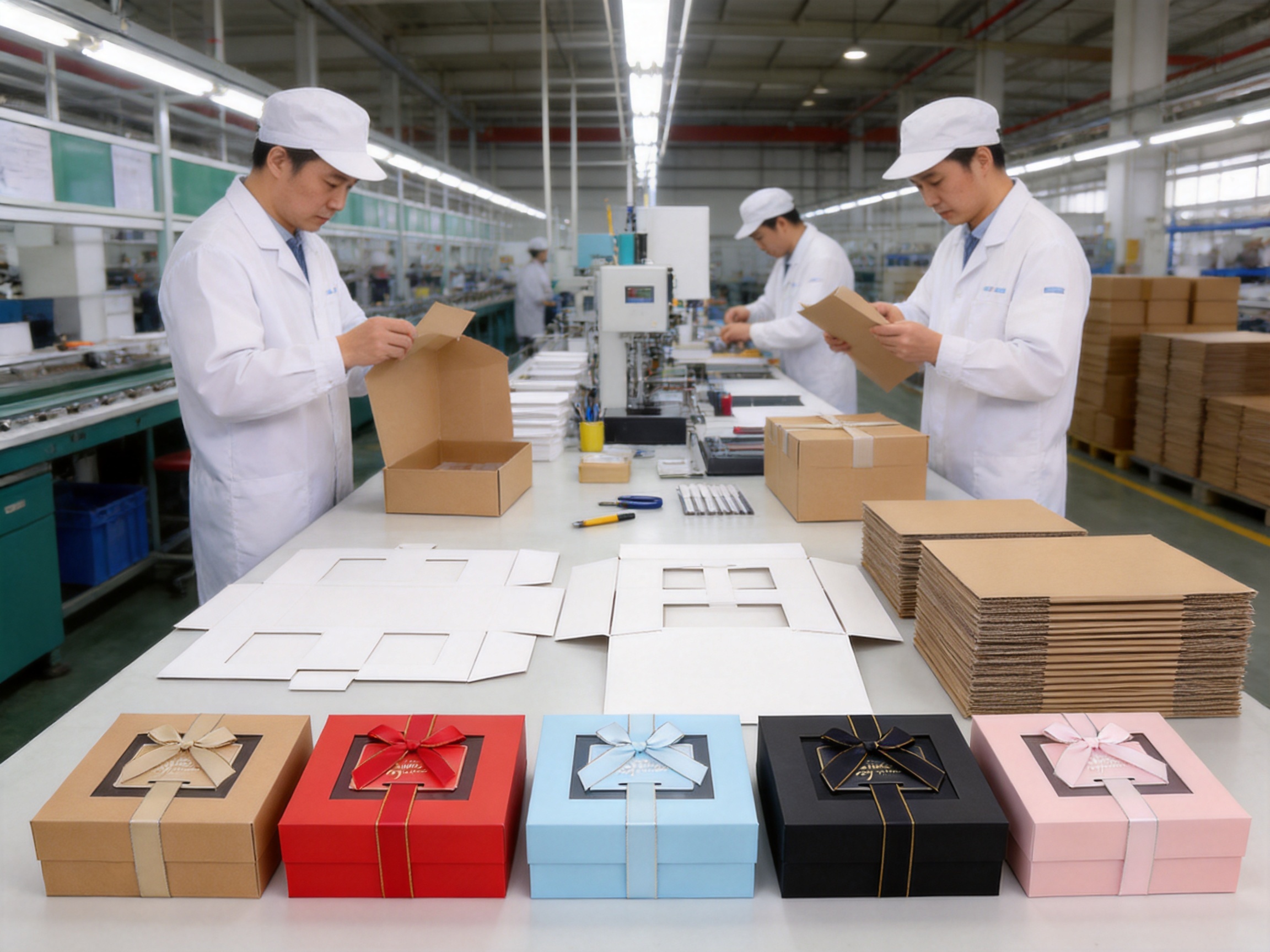
The supplier’s key strength is its combination of product development, production scale, export experience, and customization capability. Buyers do not have to select between a design studio and a factory for this type of project. The company provides professional design suggestions, accepts customized designs, and manufactures paper gift packaging for international markets.
More than 15 years of experience can help a manufacturer understand recurring production challenges in paper packaging. Folding structures, laminated surfaces, magnets, ribbons, windows, and special printing all require attention to detail. Experience does not replace project-specific quality control, but it can improve the supplier’s ability to anticipate common issues.
The company’s approximately 20,000-square-meter facility and workforce of around 300 people provide a foundation for handling production programs at commercial scale. An average daily capacity of about 5,000 gift box sets indicates that the supplier is equipped for more than occasional small-batch work.
The company exports to Europe, the United States, the Middle East, and other regions. International export experience can be valuable because overseas orders require attention to carton packing, documentation, communication across time zones, product labeling, and transport protection. Buyers should still confirm the requirements of their specific destination country.
BSCI certification can be relevant to customers with social compliance requirements, while FSC certification supports buyers seeking responsibly sourced paper materials. These certifications should be checked for validity and scope as part of the procurement process, but their presence demonstrates that the supplier is familiar with recognized international expectations.
The supplier’s product range includes kits, storage boxes, folding boxes, jewelry boxes, and gift boxes. This broad category experience can benefit buyers who need several packaging formats from one source. A brand may begin with the Z262 and later request matching packaging for another product line, creating consistency across a broader collection.
The primary function of a gift box is to present and protect its contents. The Z262 is intended for small gifts, souvenirs, and lightweight products, so it should be matched to appropriate product weights and handling conditions. Its recycled cardboard structure provides form and support, while the closure helps keep the lid secured during ordinary handling.
For products that can move inside the box, the buyer may request a suitable insert, paper support, or custom internal layout. This can improve both protection and visual presentation. An insert may be especially helpful for sets containing several small items, delicate accessories, or products that need to remain aligned.
Matte lamination helps protect the exterior from minor scratches, but packaging should still be handled and stored in a dry, clean environment. Paper-based products can be affected by humidity, water exposure, compression, and unsuitable stacking. Export cartons should be planned to prevent excessive pressure on the folded boxes.
The magnetic closure should be reviewed during sampling and inspection. The lid should align smoothly, close securely, and open without excessive force. Ribbon attachment should also be checked because the ribbon is both a visual element and a frequently handled component. The card window should remain clear and firmly attached after folding and transport.
These checks help distinguish a well-executed customized package from a generic box with added decoration. The details may appear small, but they directly affect the recipient’s impression of quality.
Packaging can increase perceived product value by creating anticipation and communicating care. The Z262 supports this purpose through a combination of visual and functional details. A matte finish can signal refinement. A ribbon can suggest a gift occasion. A card window can provide a personal message. A magnetic closure can make opening more memorable.
For brands, these details can strengthen identity at the moment when the customer first interacts physically with the product. In an e-commerce environment, packaging is often the first tangible brand touchpoint after purchase. A carefully customized box can contribute to reviews, social sharing, repeat purchase interest, and customer recall.
The box also creates opportunities for storytelling. The card window can introduce the brand, explain the product’s origin, communicate care instructions, or highlight the use of recycled cardboard. A short message can make the package feel more personal without requiring a complicated structural redesign.
From a retail perspective, the box can support shelf differentiation. A consistent color system, recognizable logo placement, and distinctive ribbon can help products stand apart from plain cartons. From a corporate perspective, the same features can make a gift feel more intentional and aligned with the organization’s image.
The box uses recycled cardboard as its core material. It also includes a matte laminated surface, a magnetic closure, a ribbon, and a transparent card window. Buyers should confirm the complete material specification for their customized version, especially if they have particular recycling, coating, or compliance requirements.
The Z262 is designed as a foldable box. It can be stored and transported in a flat condition and unfolded into a stable box when required. The exact assembly method and folding sequence should be reviewed with the supplier during the sample stage.
It is suitable for lightweight gifts, souvenirs, stationery items, small lifestyle products, corporate merchandise, event favors, and selected gift sets. Product weight, dimensions, fragility, and distribution conditions should be reviewed before selecting the final structure.
Yes. Custom size adjustments are available. The listed product family includes several dimensions, but buyers can discuss a custom size based on the actual product, internal clearance, inserts, and presentation requirements.
Yes. Buyers may choose from the supplier’s color bank or submit a customized design. For important brand colors, physical sample approval is recommended because screen colors may not accurately represent the final printed result.
The product description identifies UV printing, hot stamping, and other processes as available customization options. Buyers should specify the logo position, artwork, special finishing areas, and desired appearance during the design review.
The listed MOQ is 1,000 pieces. The final quantity may depend on the selected model, custom size, material, printing method, and production arrangement, so buyers should confirm the commercial quotation directly with the supplier.
The listed sample time is approximately 3 to 5 days. This refers to the sample preparation stage and may not include artwork finalization, shipping, design revisions, or approval time.
The manufacturer identifies AI and CorelDRAW as suitable design file formats. Vector artwork is recommended, with printing, hot stamping, UV areas, window positions, and ribbon details clearly marked.
The Z262 provides a premium opening experience while folding flat for storage and transportation. A traditional rigid box may offer greater permanent rigidity, but it usually takes up more space before use. The better option depends on product weight, protection needs, shipping conditions, and presentation goals.
The window allows a greeting card, brand card, event message, promotional insert, or product information card to be displayed on the top of the box. It gives brands a flexible communication area that can be changed for different occasions.
The recycled cardboard core, paper-based structure, foldable design, and FSC-associated sourcing credentials make the box suitable for many sustainability-focused packaging programs. Buyers should evaluate the complete package, including lamination, magnets, ribbon, inks, shipping, and end-of-life requirements.
Yes. The manufacturer is export-oriented and reports shipments to Europe, the United States, the Middle East, and other regions. Buyers should confirm destination-specific documentation, labeling, compliance, and shipping arrangements for each order.
The product family includes multiple models and listed sizes, making coordinated size programs possible. Buyers should confirm whether one artwork layout can be adapted across the selected dimensions and whether different models require separate sampling.
Before placing a production order, buyers should confirm the internal and external dimensions of the package. The external dimensions affect shelf space and shipping, while internal dimensions determine whether the product fits securely. If the box includes an insert, the insert should be tested together with the product and the closing mechanism.
Buyers should also clarify the desired paperboard thickness, recycled content expectations, lamination requirements, color standards, printing method, ribbon specification, magnetic strength, and card-window material. These details can influence the unit price and production schedule.
It is advisable to approve a physical sample rather than relying exclusively on a digital proof. The sample allows teams to evaluate the weight, folding action, tactile surface, magnetic closure, and visual relationship between the card window and the printed artwork.
For large campaigns, an inspection plan should be agreed before production. The plan can define the acceptable limits for color variation, printing defects, surface marks, misalignment, folding errors, ribbon placement, and carton damage. Early agreement makes the quality review more objective.
Finally, buyers should consider how the boxes will be assembled and packed. If a retailer or event team will perform the assembly, the folding process should be simple and repeatable. If the boxes will be prepared at the factory, the buyer should confirm whether they will ship flat or assembled and how this affects carton quantities and freight volume.
The Z262 Foldable Magnetic Recycled Paper Box With Ribbon And Card Window offers a practical alternative for brands that want more than a basic folding carton but need greater logistics efficiency than a conventional rigid box can provide. Its recycled cardboard core supports a paper-based packaging direction, while its foldable structure helps reduce storage and transportation volume before use.
The magnetic closure, ribbon, transparent card window, and matte lamination work together to create a refined presentation. These features can be adapted for weddings, holidays, corporate gifts, souvenirs, stationery, lifestyle products, and promotional campaigns. Size and color customization, UV printing, hot stamping, and design support provide additional opportunities for brand differentiation.
The supplier strengthens the product proposition through more than 15 years of manufacturing experience, a 20,000-square-meter facility, approximately 300 employees, advanced equipment, an average daily capacity of about 5,000 gift box sets, and export experience across multiple international markets. Its BSCI and FSC certifications provide useful references for buyers reviewing social responsibility and responsible paper sourcing.
For purchasers, the greatest advantage is the balance between appearance and efficiency. The box can look special without requiring a permanently assembled rigid structure. It can carry a personal or commercial message without redesigning the entire package for every campaign. It can support sustainability discussions without abandoning the tactile and visual qualities expected from premium gifting.
With careful product measurement, appropriate customization, physical sampling, and clear quality specifications, the Z262 can become a dependable packaging platform for brands seeking stronger presentation, efficient logistics, and more responsible paper-based design.
1. Product specification for the Z262 Foldable Magnetic Recycled Paper Box With Ribbon And Card Window, including materials, sizes, customization options, MOQ, sampling time, and carton packing information.
2. Company profile of Zhejiang Shihao Gift Packaging Co., Ltd., including facility size, workforce, production capacity, export markets, product categories, and design capabilities.
3. FSC principles and criteria for responsible forest management and paper-product supply chains.
4. BSCI principles concerning social compliance and responsible supply-chain management.
5. General packaging design practices concerning structural efficiency, recycled paperboard, surface finishing, transport optimization, and gift presentation.
Recommended Products

Contact Us

No. 15, Xiayang Road, Huangzhai Town, Jinhua, Zhejiang, China

(+86) 579-84230069

(+86) 13085675766


Products

Gift Box Packaging Manufacturer
 English
 Français
 Español
 عربى