2026-08-13
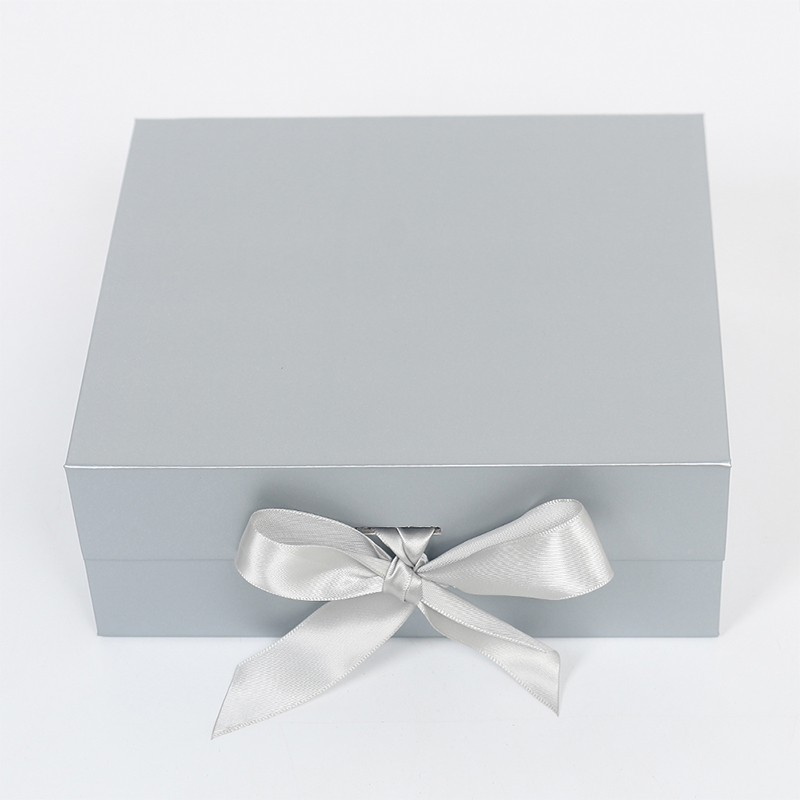
Gift packaging has evolved from a simple protective covering into an important part of the customer experience. A well-designed gift box protects the product, communicates quality, supports seasonal marketing, and creates a memorable moment when the package is opened. At the same time, brands and retailers are under increasing pressure to reduce unnecessary plastic, improve material traceability, and select packaging that reflects environmental responsibility. The 1201 monochrome UV-coated recycled cardboard laminated holiday gift box addresses these needs through a combination of recycled paperboard, refined surface finishing, structural rigidity, flexible customization, and efficient production.
This gift box is suitable for Valentine's Day, Christmas, New Year's celebrations, corporate gifting, personal keepsakes, stationery storage, and many other applications. Its monochrome appearance provides a clean and contemporary visual identity, while UV coating and lamination improve the surface's resistance to abrasion and moisture. The result is packaging that combines practical protection with a premium presentation.
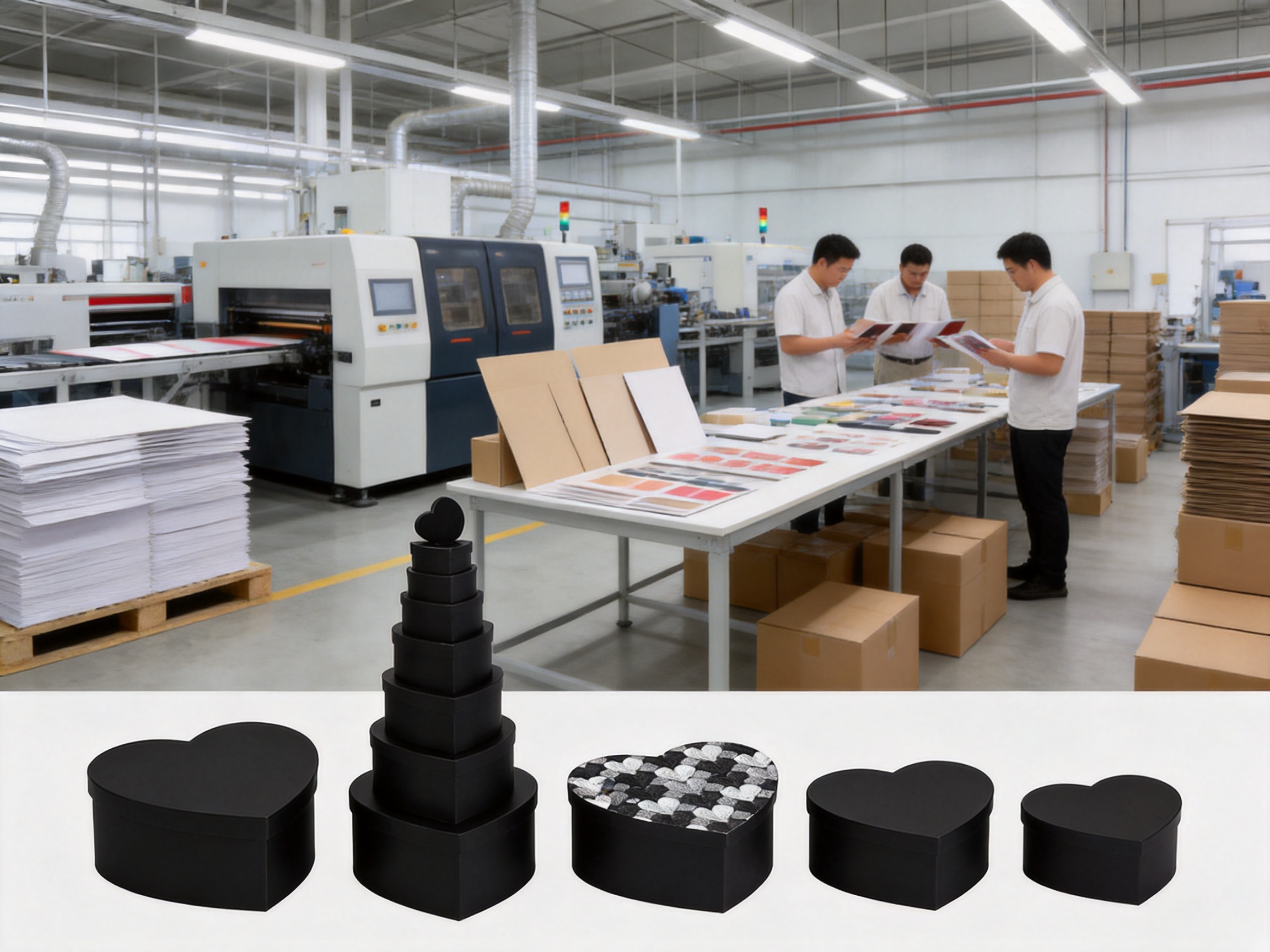
Manufactured by Zhejiang Shihao Gift Packaging Co., Ltd., the product is part of a broader range of paper-based packaging solutions, including folding boxes, storage boxes, jewelry boxes, gift boxes, and customized kits. The manufacturer has more than 15 years of experience, an approximately 20,000-square-meter production site, a workforce of around 300 employees, professional design capabilities, and an average daily production capacity of approximately 5,000 sets of gift boxes. These resources support both standard product development and customized packaging projects for international customers.
The 1201 gift box is a laminated recycled cardboard box designed for holiday and general gift packaging. Its structure begins with a cardboard base and an art paper-coated surface. Recycled cardboard provides a practical balance between strength, weight, and environmental performance. The art paper surface creates a smooth foundation for printing, color reproduction, coating, and lamination.
The monochrome design is one of the product's most distinctive visual features. Rather than relying on complex multicolor graphics, the box uses a single-color or restrained color concept to create a modern and coordinated appearance. Customers can select CMYK colors, Pantone colors, or custom colors according to their branding requirements and seasonal themes.
UV coating adds a carefully controlled surface finish. Depending on the selected design, UV treatment can create a smooth, slightly glossy, or selectively highlighted effect. It also helps improve resistance to scuffing and surface moisture. Lamination further reinforces the exterior, giving the box a smoother feel and greater rigidity while helping the printed surface remain attractive during handling and transportation.
The product is offered in a range of sizes. The listed dimensions extend from approximately 33 by 32.3 by 14 centimeters for size 1 to approximately 11 by 10 by 5 centimeters for size 10. This range allows the product family to accommodate different gifts, small collections, personal accessories, stationery items, and seasonal merchandise.
The box can be used for gift wrapping, storage, gifts, and crafts. It can also be adapted for promotional campaigns, retail displays, subscription packages, event favors, and corporate gift programs. Custom dimensions, artwork, color schemes, and patterns are available for buyers who need packaging aligned with a particular product line or market.
Packaging decisions influence both the visible customer experience and the broader environmental footprint of a product. Recycled cardboard is an important material choice because it can reduce reliance on newly produced fiber and support the continued use of recovered paper resources. While the exact environmental benefit depends on the paper supply chain, manufacturing energy, transportation, ink, coatings, and end-of-life handling, recycled paperboard is widely recognized as a practical material for more responsible packaging design.
The use of recycled cardboard does not mean that the box must appear ordinary or low quality. Modern paperboard production, printing, lamination, and surface finishing can transform a recycled base material into a refined packaging product. The 1201 box demonstrates this principle by combining a recycled cardboard core with an art paper-coated exterior and premium finishing processes.
For brands, this material choice can support sustainability messaging without sacrificing presentation. A company can communicate that its packaging strategy considers resource efficiency while still offering customers a box that feels structured, attractive, and suitable for reuse. This is especially relevant in markets where consumers are paying closer attention to packaging waste and corporate environmental commitments.
Recycled cardboard also offers practical benefits. It is relatively lightweight compared with many rigid plastic or metal alternatives, which can help reduce storage requirements and transportation weight. When a box is designed appropriately, the material can provide enough rigidity for gift packaging while remaining easy to handle and stack.
Another advantage is the familiarity of paper-based packaging within established recycling systems. Local recycling rules vary, and laminated or coated materials may require specific handling, so accurate disposal guidance remains important. Nevertheless, paperboard packaging is generally easier for consumers to understand and integrate into paper recovery streams than mixed-material packaging containing several permanently bonded components.
For a holiday gift box, recycled cardboard also contributes to the emotional message of the product. Seasonal gifts often carry themes of care, thoughtfulness, and responsibility. A responsibly selected paper-based package can reinforce those themes and help brands appeal to customers who want attractive gifts with a more considered packaging profile.
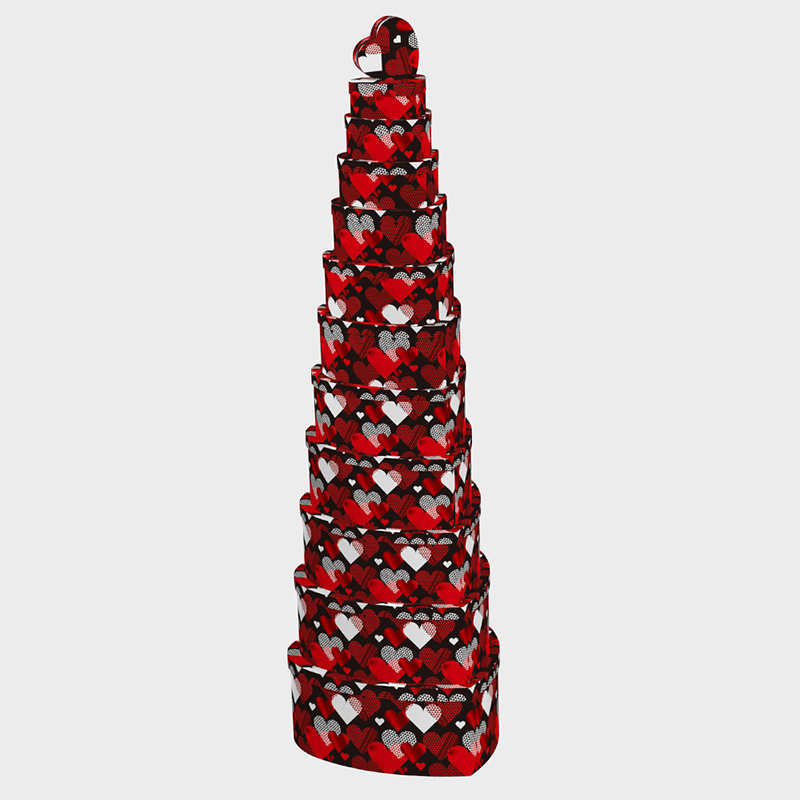
1201 Monochrome UV Coated Recycled Cardboard Laminated Holiday Gift Box
Monochrome packaging uses one dominant color or a limited tonal palette to create visual consistency. This approach is particularly effective when a brand wants its product to appear modern, elegant, calm, or premium. The 1201 gift box can be produced in CMYK colors, Pantone colors, or custom colors, providing flexibility for both seasonal collections and permanent brand packaging.
Compared with highly detailed designs, a monochrome layout can be easier to coordinate across multiple box sizes. A single visual system may be applied to sizes ranging from compact gift boxes to larger presentation formats. This creates a consistent product family even when the dimensions, contents, or retail channels differ.
Monochrome design can also provide a strong background for typography, logos, patterns, foil details, embossing, or other decorative elements. Although the standard concept emphasizes a single-color appearance, customers can discuss additional finishing requirements with the design and production team. The restrained base design gives these details greater visual impact without making the box look crowded.
For Valentine's Day packaging, colors such as red, pink, burgundy, cream, or soft purple can communicate affection and celebration. Christmas packaging may use green, red, white, gold, or deep blue. New Year's collections can benefit from black, silver, gold, or other sophisticated color combinations. Corporate gift packaging can use a company color or a neutral tone that complements the brand's identity.
The simplicity of the design is also commercially useful. Consumers often make rapid visual judgments when browsing shelves, online product pages, or gift displays. A clean box with consistent color and clear branding can be easier to recognize than a package with excessive visual information. A well-executed monochrome design can therefore support shelf appeal, online photography, and coordinated merchandising.
Another advantage is seasonal adaptability. The same basic box structure can be produced in different colors and patterns for different holidays without requiring a completely new packaging concept. This can help retailers and wholesalers create seasonal collections while maintaining manufacturing efficiency.
Surface finishing has a direct effect on how packaging looks and feels. The 1201 gift box uses UV coating and lamination to improve the appearance and performance of the paperboard exterior. These processes are not merely decorative; they can also help the box withstand the normal demands of production, storage, transportation, display, and customer handling.
UV coating is cured using ultraviolet light after the coating has been applied to the printed surface. This allows the finish to harden quickly and can produce a smooth, visually attractive exterior. The coating may enhance color depth and create a more polished appearance than untreated paperboard.
One practical benefit is improved resistance to abrasion. Gift boxes are frequently moved between manufacturing lines, cartons, warehouses, delivery vehicles, retail shelves, and customers' homes. A surface that is more resistant to rubbing and minor scuffing is more likely to retain its intended appearance throughout this journey.
UV coating can also improve resistance to limited surface moisture. It does not turn a paper box into a waterproof container, and the degree of protection depends on the coating specification, application quality, seams, and exposure conditions. However, it can help protect the printed exterior from brief contact with moisture and everyday handling.
Lamination places a thin protective film over the printed paper surface. This process produces a smoother and more consistent exterior while helping the paperboard resist minor scratches, handling marks, and surface wear. Lamination can also add a more substantial tactile quality, which is valuable for premium gift packaging.
Because lamination reinforces the outer surface, it can contribute to the perceived rigidity of the box. A more rigid exterior helps the package maintain its shape and reduces the risk of visual deformation. This is important when the box is used to present delicate gifts, handcrafted products, cosmetics, accessories, stationery, or collectibles.
UV coating and lamination together create a layered finishing strategy. The UV coating contributes to surface hardness, visual clarity, and a premium appearance, while lamination provides an additional protective layer and a smoother hand feel. The exact combination can be adjusted according to the customer's visual and functional requirements.
Compared with an uncoated paper box, the finished 1201 product can offer a more refined presentation and better resistance to ordinary handling. Compared with packaging made entirely from plastic or thick composite materials, it retains the visual warmth and printability of paper while supporting a lighter, paper-based construction.
For brands selling premium gifts, this surface quality can influence perceived value. Customers often evaluate a package through several senses: they see the color and graphics, feel the smoothness and rigidity, and judge whether the box appears appropriate for the gift inside. A well-finished box can make the entire product feel more intentional and professionally presented.
A gift box must do more than look attractive. It must protect the contents from ordinary compression, abrasion, movement, and handling during the distribution cycle. The laminated cardboard construction of the 1201 box offers a practical protective shell for a wide range of lightweight and moderately compact products.
The rigid surface helps prevent the box from appearing flimsy when held or displayed. It can also help maintain internal space so that the product does not become unnecessarily compressed. Depending on the contents, buyers may add tissue paper, inserts, dividers, molded paper components, or other internal protection.
The product is suitable for gifts and crafts, which may include handmade items, accessories, small personal products, decorative objects, stationery, and seasonal merchandise. It can also be used as a storage box after the original gift has been opened. A reusable box extends the useful life of the packaging and can make the customer's experience more positive.
For transportation, the combination of lightweight paperboard and surface reinforcement offers a balance between protection and logistics efficiency. Heavier packaging may provide greater impact resistance, but it can also increase freight costs and storage demands. The 1201 design aims to provide useful rigidity without creating unnecessary material weight.
Packaging performance always depends on selecting the correct size and internal configuration. A box that is too large may allow the product to move during transit, while a box that is too small may place pressure on the contents. The available size range and custom dimension service allow customers to select a more appropriate fit for their products.
The standard size range for the 1201 series extends from approximately 33 by 32.3 by 14 centimeters to approximately 11 by 10 by 5 centimeters. These dimensions provide a starting point for product selection, but the manufacturer also accepts customized size requirements.
Custom sizing is valuable for businesses that need packaging to match a particular product. A well-fitted box can reduce empty space, improve presentation, and help lower the need for additional filling materials. It can also support more efficient palletization and carton packing when the packaging is being manufactured at scale.
Customization may include box dimensions, color, pattern, printed graphics, surface finish, internal components, and packaging configuration. Customers can submit design files in commonly used professional formats, including artificial intelligence and core drawing files. The in-house design team can also provide professional advice for buyers who need assistance developing a practical and visually effective package.
Professional design support is an important advantage over suppliers that only accept finished artwork. Packaging files must account for cutting lines, folds, bleed areas, safe zones, color management, material thickness, and finishing tolerances. Early technical review can reduce the risk of printing errors, misaligned graphics, weak folds, or unsuitable proportions.
Custom packaging can also be tailored to different markets. A Valentine's Day box for a luxury retailer may require a subtle color palette and restrained decoration, while a mass-market seasonal product may need brighter graphics and high-visibility branding. The same basic product category can therefore serve different price points and audiences through changes in artwork, color, finishing, and internal presentation.
| Specification | Available Information | Customer Benefit |
| Product number | 1201# | Provides a clear reference for quotation and sampling |
| Primary construction | Recycled cardboard with art paper-coated surface | Balances paper-based sustainability, printability, and rigidity |
| Color options | CMYK, Pantone colors, and custom colors | Supports seasonal and brand-specific color matching |
| Standard dimensions | Approximately 33 × 32.3 × 14 cm to 11 × 10 × 5 cm | Accommodates multiple gift and storage applications |
| Design service | In-house design team and custom artwork support | Helps develop technically suitable packaging files |
| Applications | Gift wrapping, storage, gifts, and crafts | Allows use across several product categories |
| Sampling time | Approximately 1–3 working days | Supports faster evaluation before mass production |
| Delivery period | Approximately 7–45 days or according to requirements | Allows planning for standard and customized orders |
| Minimum order quantity | 300 pieces | Accessible for many wholesale and business projects |
| Standard packing | 10 pieces per set and four sets per carton | Facilitates organized handling and shipment |
Many basic gift boxes are produced from uncoated paperboard with limited finishing. These products may be economical, but they can be more vulnerable to scuffing, moisture marks, surface wear, and loss of shape. The 1201 model improves on this basic format through its coated and laminated exterior.
The first advantage is presentation. The smooth, finished surface gives the box a more polished appearance than untreated cardboard. The monochrome design also creates a cleaner and more deliberate visual identity, which is suitable for premium and seasonal products.
The second advantage is handling durability. A gift box may be touched repeatedly before purchase, placed in shopping bags, stacked in storage, or transported through several distribution stages. UV coating and lamination help the package retain a consistent appearance under these conditions.
The third advantage is customization. Standard gift boxes often offer limited colors and sizes. The 1201 product supports CMYK, Pantone, and custom color requirements, along with custom dimensions and patterns. This gives brands more control over their visual identity and product presentation.
The fourth advantage is versatility. Although the product is listed under Valentine's Day gift boxes, the design can be adapted for Christmas, New Year's celebrations, corporate gifts, personal collections, stationery, and crafts. Buyers do not need to restrict the package to one holiday or one product category.
The fifth advantage is the balance between quality and logistics. The paperboard structure is lightweight compared with many heavy rigid packaging alternatives. At the same time, lamination and surface treatment give the box a more substantial feel than a thin folding carton. This balance can help reduce storage and transportation burdens while preserving a premium appearance.
Plastic packaging can provide moisture resistance and durability, but it may create challenges related to material perception, recycling complexity, and brand positioning. For businesses seeking a warmer and more tactile presentation, paperboard gift boxes can be a stronger fit.
Paper has a natural visual association with stationery, craftsmanship, gifting, and sustainability. It can be printed with precise graphics and finished with coatings that create gloss, softness, or contrast. This makes it suitable for brands that want a more editorial, artisanal, or premium appearance.
The recycled cardboard base also supports a paper-first material strategy. Although the UV coating and lamination must be considered when evaluating end-of-life recycling, the product remains centered on a cardboard structure rather than a fully plastic shell. Buyers can discuss material specifications and disposal considerations with the manufacturer when developing a project for markets with particular environmental requirements.
Another difference is reusability. A well-constructed gift box can be retained by the recipient for storage, organization, or future gifting. Plastic packaging may be durable, but it does not always provide the same perceived value or emotional connection as an attractive paper box designed for reuse.
The product also offers strong branding potential. A monochrome box with a carefully selected color and finish can communicate quality without depending on large amounts of decorative material. This can help brands create an elevated presentation while keeping the design visually disciplined.
The performance of customized packaging depends heavily on the supplier's manufacturing capabilities. A strong design is not enough if the factory cannot maintain color consistency, dimensional accuracy, surface quality, production schedules, and packing standards. Zhejiang Shihao Gift Packaging Co., Ltd. combines product development, design, manufacturing, and export experience within one organization.
The company was founded more than 15 years ago and operates an approximately 20,000-square-meter facility. With around 300 employees and advanced equipment, it has the personnel and infrastructure required to manage a broad product range. Its reported average daily production capacity is approximately 5,000 sets of gift boxes, supporting both regular orders and larger seasonal programs.
A production environment of this scale can provide several benefits. It may help the factory allocate dedicated resources for printing, cutting, folding, laminating, finishing, inspection, and packing. It can also support more systematic production planning during peak periods such as Valentine's Day, Christmas, and New Year's campaigns.
The manufacturer's in-house design team is another important strength. Customers can receive assistance with artwork preparation, structural development, color selection, and packaging practicality. This integrated approach can reduce communication delays that sometimes occur when a buyer works with separate designers, printers, converters, and packers.
The company updates dozens of products weekly, indicating an active product development process. Regular development is useful in the gift packaging market because customer preferences, holiday themes, retail formats, and sustainability expectations change frequently. A supplier that continuously develops new styles may offer more inspiration and faster adaptation for private-label and custom projects.
Shihao also reports BSCI and FSC certifications. Buyers should request current certification documents and confirm the scope and applicability of each certification for their specific order. When properly maintained and relevant to the supplied material and facility, such certifications can provide additional confidence regarding social compliance and responsible forestry-related sourcing.
A professional gift box order generally passes through several stages. The first stage is requirement confirmation. The customer provides the intended use, product dimensions, target quantity, preferred material, color requirements, finishing preferences, delivery destination, and expected schedule. This information allows the manufacturer to recommend an appropriate construction.
The second stage is structural and graphic development. The design team checks the dimensions, fold lines, artwork placement, print areas, and finishing zones. If the customer supplies an existing design, the factory can review whether it is suitable for the selected material and production method. If the customer needs a new design, the in-house team can develop a proposal based on the product and target market.
The third stage is sampling. The listed sampling date is approximately one to three working days, although the exact time may vary according to the complexity of the structure, material availability, artwork readiness, and finishing requirements. A sample allows the buyer to review dimensions, color, surface quality, opening experience, and compatibility with the intended product.
The fourth stage is material preparation and printing. Recycled cardboard and the selected art paper-coated surface are prepared according to the approved specifications. Printing may use CMYK, Pantone, or custom colors. Color management is especially important for monochrome designs because a small variation in tone can influence the overall appearance of the collection.
The fifth stage is lamination and UV finishing. The printed components receive the agreed surface treatment. The production team must control application consistency, curing, adhesion, and alignment. Finishing quality is reviewed to ensure that the surface is smooth, visually uniform, and free from obvious defects.
The sixth stage is die-cutting, creasing, folding, and assembly. These operations convert printed sheets into finished box components. Accurate cutting and creasing are essential for clean edges, reliable folding, and proper alignment. The box must also maintain its intended shape after assembly.
The seventh stage is inspection and packing. Finished pieces are checked for appearance, dimensions, structural condition, and packaging quantity. The listed standard configuration is 10 pieces per set and four sets per carton. Carton dimensions may vary according to the specific packing arrangement, with listed examples of approximately 66 by 34 by 30 centimeters and 66 by 34 by 45 centimeters.
The final stage is shipment. The stated delivery period is approximately 7 to 45 days or according to customer requirements. Actual timing depends on order size, customization, production scheduling, sample approval, material procurement, shipping arrangements, and destination requirements.
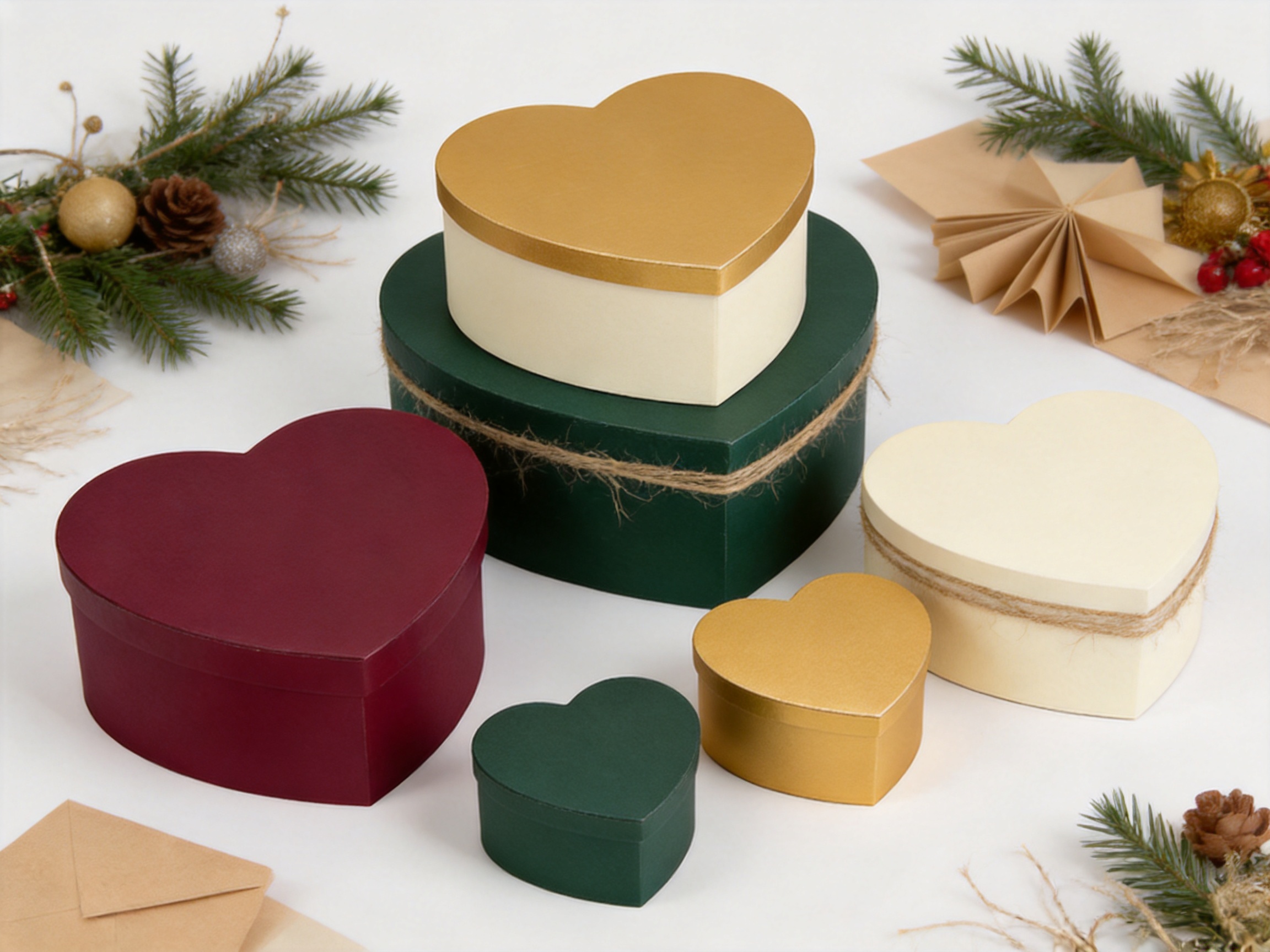
Quality control for laminated gift boxes should evaluate more than appearance alone. The supplier and buyer should agree on measurable standards before production begins. Important checkpoints may include board thickness, dimensions, color tolerance, print registration, coating uniformity, lamination adhesion, edge quality, fold accuracy, and carton packing.
Color control is particularly important for monochrome packaging. A color that is slightly too warm, cool, dark, or light can create inconsistency across a shipment. Pantone references, approved digital artwork, physical samples, and agreed tolerances can help reduce uncertainty. Buyers should understand that color may appear different on screens, printed samples, and final production materials.
Surface inspection should look for scratches, bubbles, wrinkles, dust, uneven coating, peeling, and visible marks. Since UV coating and lamination are central to the product's value, surface defects can affect both the visual impression and the customer's perception of quality.
Structural inspection should confirm that the box folds correctly, maintains its shape, and accommodates the intended contents. If an insert or protective component is required, it should be tested together with the box rather than evaluated separately. A product that fits well during sampling may require adjustment if its production dimensions or internal materials change.
Packing inspection is also important. The number of pieces per set and sets per carton should be confirmed, and cartons should be strong enough for the anticipated shipping conditions. Buyers may request photographs, inspection reports, or pre-shipment samples according to their procurement procedures.
The product is especially suitable for Valentine's Day because its monochrome appearance can be adapted to romantic colors and elegant patterns. It can hold small personal gifts, handmade products, accessories, confectionery with appropriate internal protection, stationery, crafts, or curated gift collections.
For Valentine's campaigns, the box can support coordinated packaging across several product sizes. A retailer may use a small version for individual items, a medium box for paired products, and a larger size for multi-item gift sets. Consistent color and design help shoppers recognize the collection.
The same box can be adapted for Christmas and New Year's collections through changes in color, graphics, and decorative details. A deep red or green version may suit traditional holiday products, while metallic-inspired colors or dark monochrome tones can create a more contemporary appearance.
Seasonal packaging often needs to be prepared in advance because demand is concentrated within a limited period. The supplier's range of standard sizes, design support, and scalable production capacity can help buyers plan seasonal orders more efficiently.
Corporate gifts require packaging that looks organized, professional, and consistent with a company's identity. Custom colors and printed graphics allow the box to carry a corporate logo, campaign message, or event theme. The clean monochrome format is suitable for business settings because it can appear refined without being overly decorative.
Corporate buyers may also use the boxes for employee appreciation programs, client gifts, product launches, conferences, and annual celebrations. The box can contribute to brand recognition while communicating attention to detail.
After the gift is opened, the box can be reused to store stationery, craft materials, keepsakes, photographs, accessories, or small household items. This secondary use can extend the packaging's functional life and reduce the likelihood that it will be discarded immediately.
For stationery brands and retailers, the box can serve as both product packaging and an organizational container. Custom sizing may be used to accommodate notebooks, cards, pens, craft supplies, or coordinated stationery sets.
Craft businesses and collectors often need packaging that protects items while presenting them attractively. The 1201 box can be adapted for handmade products, limited-edition goods, small art objects, collectibles, and giftable craft sets. Its surface can be printed with collection names, edition information, or artistic patterns.
Packaging cost is influenced by material usage, construction, printing, finishing, labor, order quantity, tooling, packing, and transportation. The 1201 product is designed to offer a premium surface and practical rigidity without the weight of heavier packaging formats. This may help control freight and storage costs, especially when shipping large quantities.
Lightweight paperboard is easier for workers to handle during packing and fulfillment. It can also reduce the physical burden associated with moving cartons through warehouses and distribution centers. A well-planned size range can improve inventory management by allowing different products to use related packaging formats.
The standard carton configurations provide a starting point for shipment planning. Buyers should confirm the final carton dimensions, gross weight, number of pieces, and loading arrangement before placing a large order. These details are important for calculating freight, warehouse capacity, pallet utilization, and import documentation.
The minimum order quantity is listed as 300 pieces. This level may be suitable for small and medium-sized brands, seasonal tests, regional campaigns, and customized product launches. Larger buyers may benefit from improved unit economics through higher-volume production, but smaller buyers can still evaluate the product without committing to an extremely large initial quantity.
Delivery is stated as approximately 7 to 45 days or according to customer requirements. Since customized packaging involves several approval stages, buyers should provide artwork and specifications early. Holiday orders should be scheduled with additional time for sampling, revisions, production, inspection, export arrangements, and possible transportation delays.
Packaging is one of the few marketing tools that physically accompanies the customer into the home or office. A gift box may be photographed, shared on social media, reused for storage, or displayed on a shelf. Its visual quality can therefore extend brand exposure beyond the original point of sale.
The monochrome format creates a recognizable foundation for brand identity. A company can select a signature color and apply it across several sizes and seasonal collections. This makes the packaging easier to associate with the brand and can help create a cohesive unboxing experience.
The use of recycled cardboard can also support responsible brand communication. Brands should present sustainability claims accurately and avoid implying that a coated or laminated package has no environmental impact. Clear, specific statements about recycled content, responsible sourcing, reuse, and disposal are more credible than broad, unsupported claims.
For premium brands, the tactile experience of a smooth laminated surface can strengthen the perceived value of the product. For mass-market brands, a consistent and attractive box can improve shelf presence without requiring extremely complex decoration. For online sellers, the box can help create more appealing product photography and improve the customer's first impression upon delivery.
Buyers should begin by measuring the product, including any protective wrap, insert, or accessory that will be placed inside the box. The internal dimensions should provide enough clearance for easy packing without allowing excessive movement. If the gift is fragile, additional protection should be tested during sample evaluation.
The next decision is color. CMYK printing can support photographic and process-color artwork, while Pantone colors are useful when precise brand color matching is important. Custom colors may be discussed for special campaigns. Buyers should approve a physical sample whenever color consistency is commercially significant.
Surface finishing should be selected according to the desired visual effect and handling conditions. UV coating may be appropriate for a crisp, polished appearance and additional surface resistance. Lamination can provide a smoother hand feel and increased surface protection. The manufacturer can advise on the most suitable combination for the planned use.
Buyers should also consider the box's second life. If reuse is a priority, the structure should be durable, easy to open, and visually attractive after the original product has been removed. A reusable box may provide greater value to the customer and support a more sustainable packaging narrative.
Finally, the buyer should confirm the order quantity, sampling schedule, delivery destination, payment terms, carton configuration, and required documentation. The standard payment method is generally T/T, although other payment methods may be discussed according to the project.
The strongest competitive advantage of the 1201 gift box is its combination of features rather than one isolated specification. It brings together recycled cardboard, an art paper-coated surface, monochrome design, UV coating, lamination, standard size flexibility, custom development, and international manufacturing experience.
Some suppliers may offer low-cost uncoated boxes but lack premium finishing. Others may provide attractive rigid boxes but use heavier materials and require higher minimum quantities. Some may offer printing but not structural design support. The 1201 product is positioned between these options, offering a practical paper-based construction with a more refined finish and a relatively accessible minimum order quantity.
The manufacturer’s integrated capabilities further strengthen the offer. In-house design, sampling, production, finishing, inspection, and export support can simplify procurement. Instead of coordinating multiple independent suppliers, customers can work with one packaging partner for a more unified process.
Production scale is also important for seasonal reliability. A factory with substantial equipment, personnel, and daily output can be better prepared for campaigns that require thousands of units within a defined schedule. Of course, buyers should still confirm current capacity and production timing before placing time-sensitive orders.
The product's broad application range is another advantage. A box that can be used for Valentine's Day, Christmas, New Year's, corporate gifting, storage, stationery, and crafts offers greater flexibility than packaging designed for only one narrow application. This allows buyers to adapt the same product concept to different markets and sales opportunities.
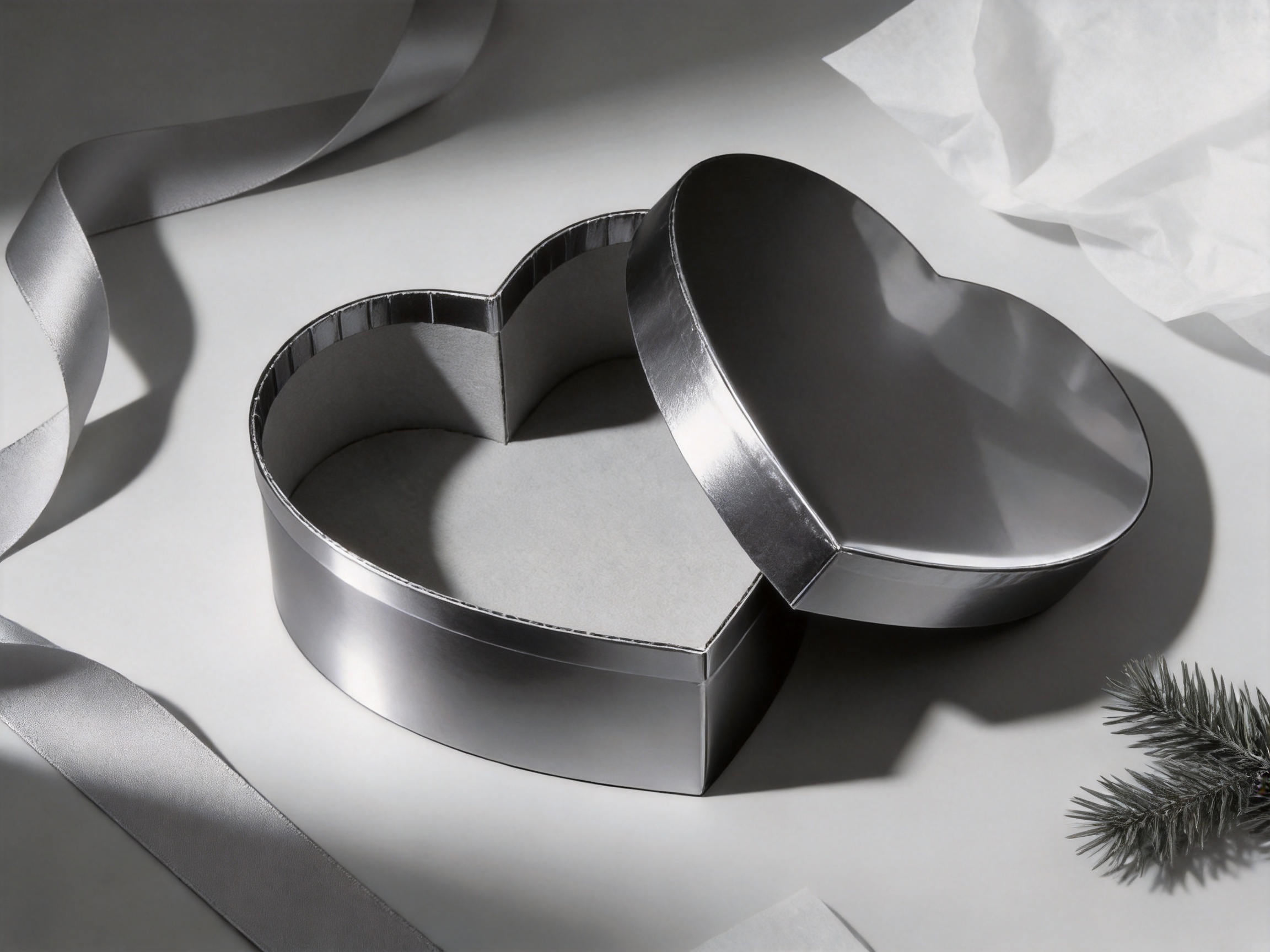
The box uses recycled cardboard as its primary structure and has an art paper-coated surface. The exterior can receive UV coating and lamination to improve smoothness, appearance, surface resistance, and rigidity.
No. Although it is listed as a Valentine's Day gift box, it can also be customized for Christmas, New Year's celebrations, corporate gifts, personal collections, crafts, stationery, and general gift packaging.
Yes. Available color options include CMYK, Pantone colors, and custom colors. Buyers should provide suitable color references and approve a sample when precise color matching is important.
Yes. The product has standard sizes ranging from approximately 33 by 32.3 by 14 centimeters to approximately 11 by 10 by 5 centimeters, and customized dimensions can be discussed according to the product and order requirements.
UV coating can provide a smooth and polished appearance while improving resistance to abrasion and limited surface moisture. It also helps enhance the visual depth of printed colors. It should not be treated as a guarantee that the box is waterproof.
Lamination creates a protective film over the printed surface. It can improve smoothness, tactile quality, surface protection, and perceived rigidity. It also helps the box maintain a more refined appearance during handling.
The listed minimum order quantity is 300 pieces. The final quantity, packing method, and pricing should be confirmed for each customized project.
The listed sampling time is approximately one to three working days. Actual timing may vary depending on artwork readiness, structure complexity, material availability, and finishing requirements.
The listed delivery period is approximately 7 to 45 days or according to customer requirements. Buyers should allow additional time for artwork approval, sample revisions, production scheduling, inspection, and shipping.
Yes. The manufacturer has an in-house design team that can provide professional advice. Custom designs are welcome, and customers can submit design files in suitable professional formats such as artificial intelligence or core drawing files.
Yes. Its rigid laminated construction makes it suitable for continued use as a storage box for stationery, crafts, keepsakes, accessories, and other small items. Reuse depends on the selected size, contents, and handling conditions.
The product uses recycled cardboard and is designed as a paper-based packaging option. This can support more responsible material selection, but the environmental profile also depends on coatings, lamination, production energy, transportation, and end-of-life handling. Buyers should confirm recycled content and relevant certification details for their specific order.
The product is manufactured by Zhejiang Shihao Gift Packaging Co., Ltd. in Jinhua, Zhejiang, China. The company serves international markets and exports packaging products to Europe, the United States, the Middle East, and other regions.
The listed configuration is 10 pieces per set and four sets per carton. Carton dimensions may vary by product size and packing arrangement, so the final shipment details should be confirmed before production.
The company generally uses T/T payment terms. Other payment methods may be discussed according to customer requirements and order conditions.
Businesses considering this product should prepare a complete packaging brief before requesting a quotation. The brief should include the product dimensions, intended holiday or market, expected quantity, preferred color, artwork status, surface finish, delivery destination, and target completion date.
It is advisable to request a sample before approving mass production. The sample should be evaluated for color, surface feel, box dimensions, opening and closing behavior, product fit, structural stability, and overall presentation. If the box will be transported through parcel delivery or export shipment, a basic handling test can also provide useful information.
Buyers should communicate any special requirements at the beginning of the project. These may include FSC-related documentation, recycled content expectations, specific packaging labels, barcode placement, insert requirements, carton markings, or inspection procedures. Early communication makes it easier for the factory to incorporate these requirements into the design and production plan.
For seasonal campaigns, ordering should begin well before the selling period. Valentine's Day, Christmas, and New Year's products often require production, shipping, and distribution within tight windows. Early sampling and approval provide greater flexibility if artwork or structural revisions are necessary.
The 1201 monochrome UV-coated recycled cardboard laminated holiday gift box is a versatile packaging solution for brands, retailers, wholesalers, and corporate buyers seeking an attractive paper-based alternative to ordinary cartons and plastic-heavy packaging. Its recycled cardboard structure supports a more responsible material strategy, while the art paper-coated surface provides a suitable foundation for clean printing and refined finishing.
UV coating improves the visual quality and helps resist everyday abrasion and limited surface moisture. Lamination adds smoothness, tactile appeal, and additional surface protection. Together, these processes create a box that feels more premium and remains more presentable during handling, storage, transportation, and display.
The monochrome format is easy to adapt for Valentine's Day, Christmas, New Year's celebrations, corporate gifts, stationery, crafts, storage, and personal collections. Multiple standard sizes, custom dimensions, CMYK and Pantone color options, custom artwork, and in-house design support make the product suitable for a wide range of commercial requirements.
The manufacturer's experience, production capacity, design resources, reported BSCI and FSC certifications, and export capability provide additional support for international packaging projects. With a listed minimum order quantity of 300 pieces and sampling available in approximately one to three working days, the product can be considered by both emerging brands and established buyers.
For organizations that want gift packaging to combine sustainability, durability, customization, and visual consistency, this box offers a practical and competitive foundation. The best results will come from early specification planning, physical sample approval, accurate color communication, and close coordination with the manufacturer throughout production.
1. Product specification sheet for the 1201 monochrome UV-coated recycled cardboard laminated holiday gift box.
2. Packaging material and finishing information supplied by the manufacturer.
3. Recycled paperboard packaging design and application principles.
4. General guidance on UV-cured coatings for printed paper packaging.
5. General guidance on lamination processes for folding and rigid paperboard boxes.
6. Sustainable packaging design principles for consumer products and seasonal gift programs.
7. International packaging quality-control practices covering color, dimensions, finishing, assembly, and shipment preparation.
Recommended Products

Contact Us

No. 15, Xiayang Road, Huangzhai Town, Jinhua, Zhejiang, China

(+86) 579-84230069

(+86) 13085675766


Products

Gift Box Packaging Manufacturer
 English
 Français
 Español
 عربى