2026-08-14
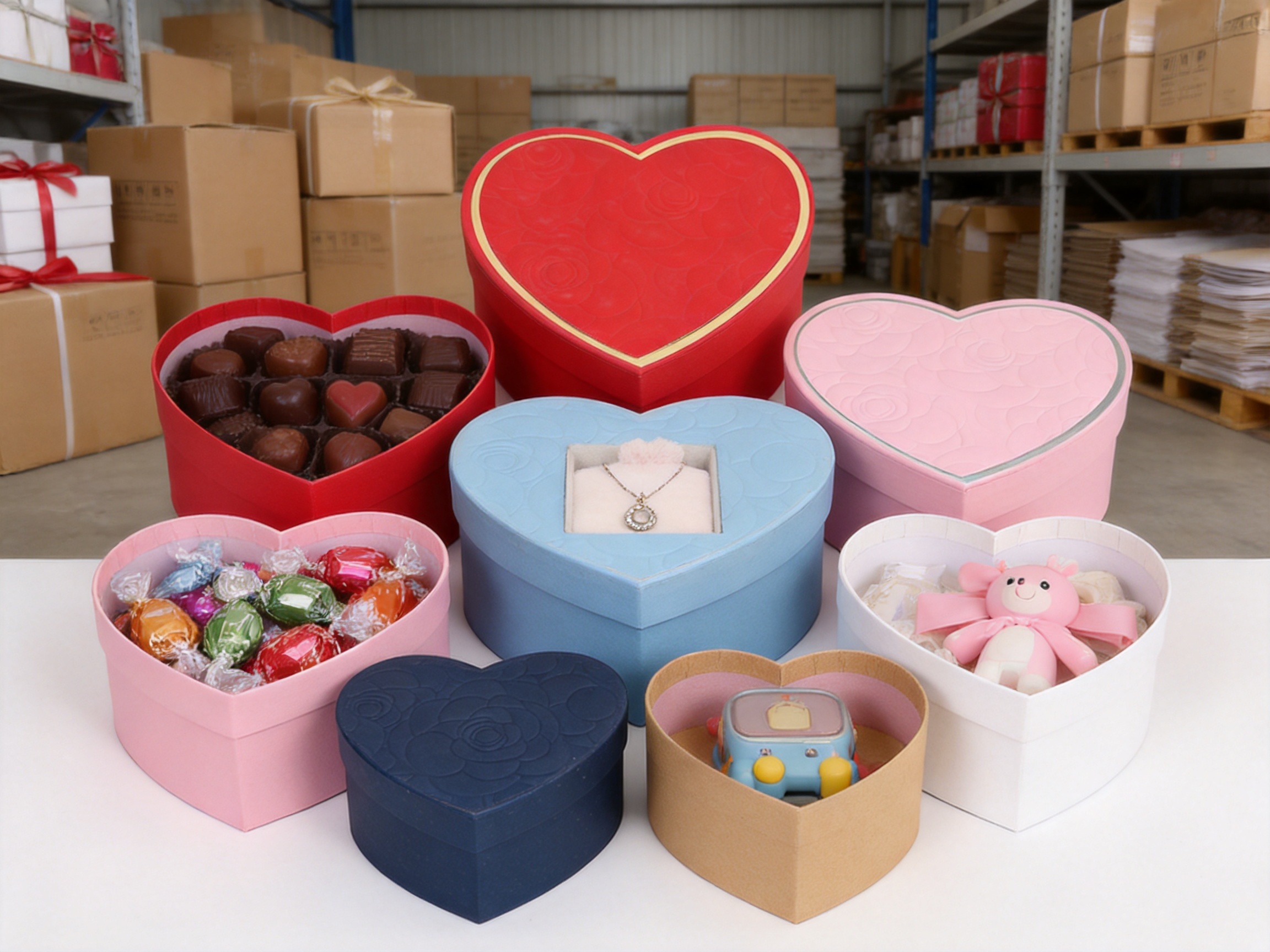
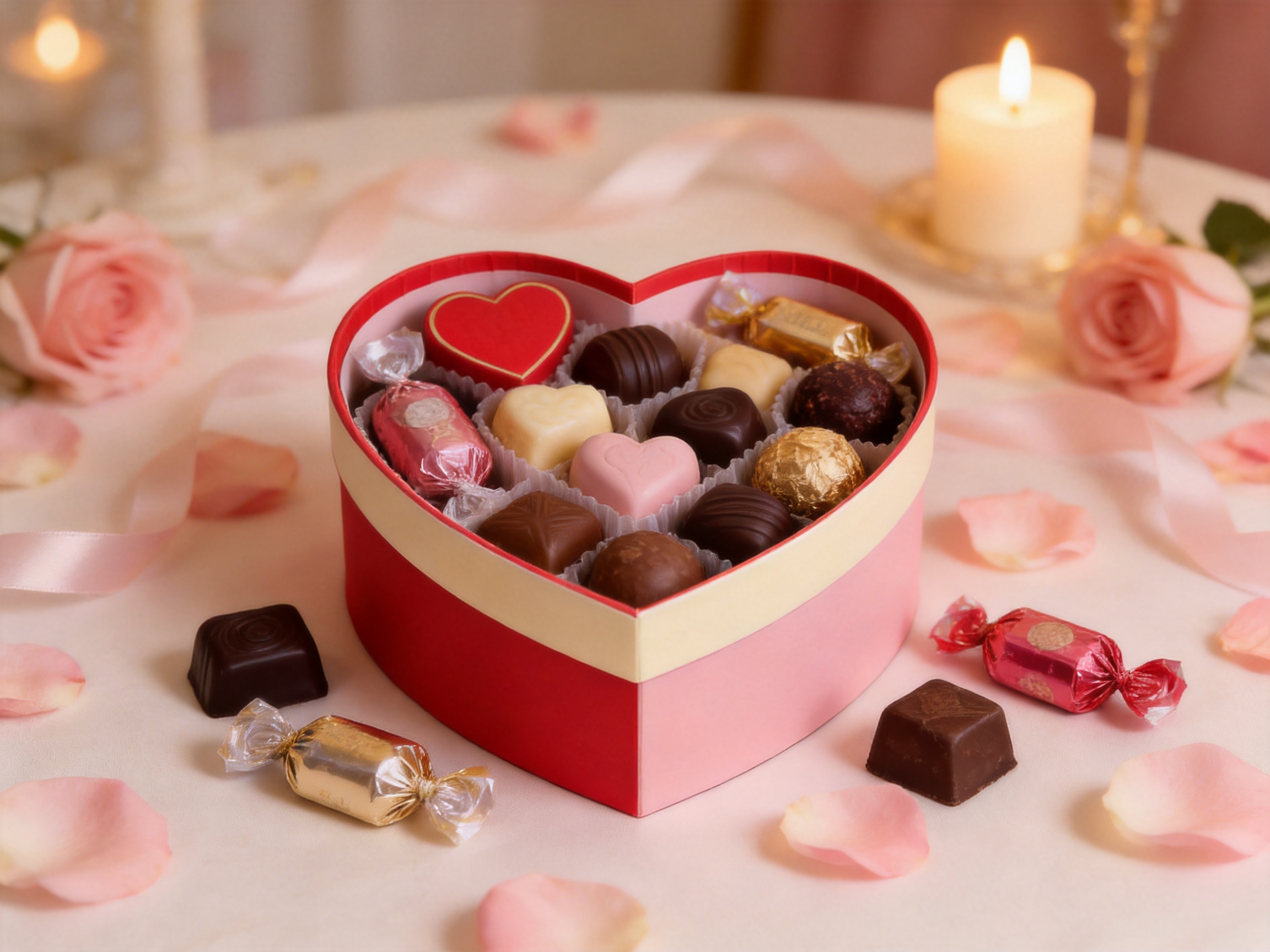
Valentine’s Day packaging is more than a container for sweets. It is part of the emotional experience surrounding the gift. The shape, color, texture, opening method, and overall presentation can influence how a recipient feels before the first candy is even tasted. For confectionery brands, retailers, event planners, and gift distributors, the right package must therefore combine visual appeal, dependable protection, efficient production, and commercial flexibility.
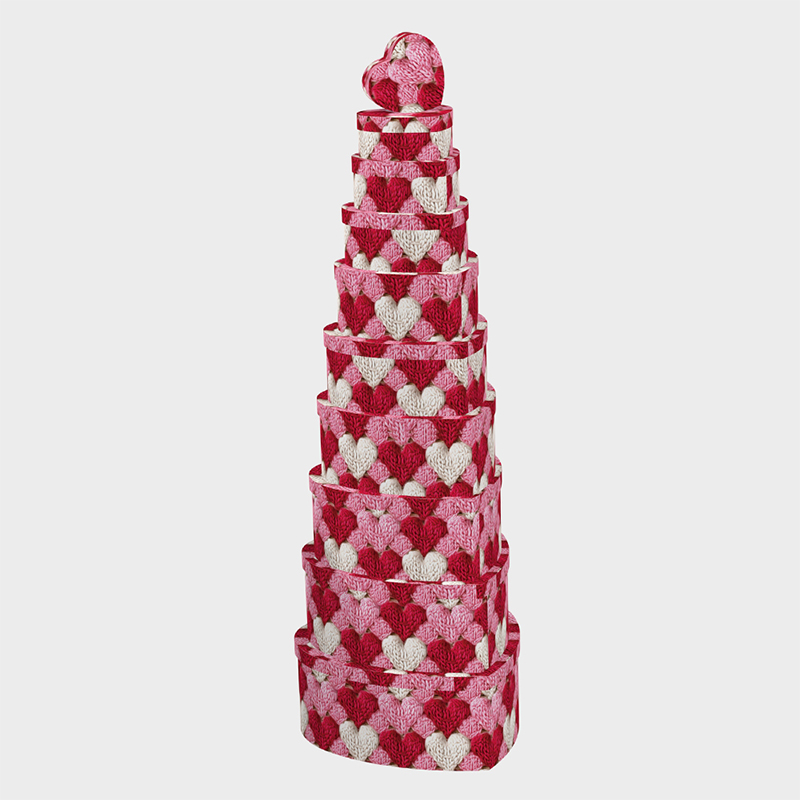
The decorative cardboard Valentine’s Day heart-shaped candy box, item number 1001, is designed to meet these requirements. Its heart-shaped frame communicates affection immediately, while its durable paperboard construction provides a practical enclosure for candies, small toys, jewelry, and other presents. Available in ten sizes, the box can accommodate different product dimensions and support a broad range of retail and promotional applications.
Manufactured by Zhejiang Shihao Gift Packaging Co., Ltd., this packaging solution reflects more than a seasonal design concept. It represents a structured approach to gift box development that combines design capabilities, paper-based production, customization, quality control, export experience, and environmentally responsible materials. With a minimum order quantity of 500 sets, the product is suitable for businesses seeking coordinated seasonal packaging rather than small-scale individual purchases.
This article examines the product’s design advantages, material performance, customization opportunities, manufacturing strengths, logistics characteristics, and commercial applications. It also explains why a heart-shaped cardboard package can offer stronger emotional and branding value than ordinary rectangular candy boxes.
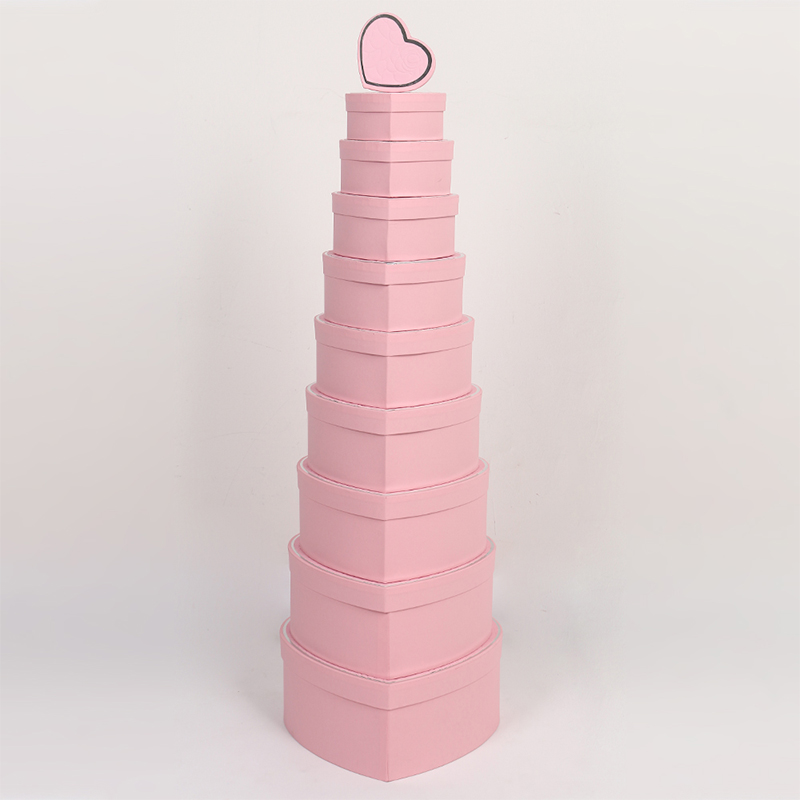
1001 Decorative Cardboard Valentine's Day Heart-Shaped Candy Box
The central feature of item 1001 is its heart-shaped frame. The heart is one of the most recognizable visual symbols of love, care, affection, and celebration. By integrating this shape into the structure or presentation of the package, the box communicates its intended purpose without relying solely on printed wording or decorative graphics.
This immediate visual message is especially valuable during Valentine’s Day sales campaigns. Consumers often make quick decisions based on shelf presentation, online product photographs, or gift display arrangements. A heart-shaped box can stand apart from conventional square or rectangular packaging because its silhouette is associated directly with the occasion.
The package is designed for candy gifting, but its usefulness extends beyond confectionery products. The supplied product information identifies toys, sweets, jewelry, and various presents as suitable contents. This versatility allows a retailer or brand to use the same structural concept for multiple product categories, reducing the need to develop a completely different package for every seasonal promotion.
The decorative appearance also gives the box a more elevated presentation than plain folding cartons. While ordinary candy packaging may prioritize only low-cost containment, a framed heart-shaped box is intended to be retained, displayed, or reused. This can increase the perceived value of the product inside and help transform a modest gift into a more memorable experience.
Packaging creates an important connection between a product and its recipient. A standard container may protect the contents, but a purpose-designed Valentine’s Day box can also establish a mood. The heart shape suggests intimacy and warmth, while decorative paperboard surfaces create opportunities for colors, patterns, messages, logos, and seasonal artwork.
Compared with generic packaging, the 1001 design offers a stronger occasion-specific identity. A business selling chocolates, gummies, truffles, cookies, or small personal gifts can use the box to communicate that the product was prepared specifically for Valentine’s Day. This supports premium positioning and can make the item more suitable for gifting.
The design can also support different market segments. A soft color palette and delicate graphics may appeal to romantic gift buyers, while brighter colors and playful illustrations may be used for children’s candy, school exchanges, or family celebrations. For corporate campaigns, the same box structure can be customized with brand colors and a restrained decorative style.
The box is made from decorative cardboard, a paper-based material widely used for gift packaging because it balances appearance, structural performance, printability, and recyclability. When properly selected and processed, cardboard can provide enough rigidity to protect lightweight products while remaining easier to handle and transport than heavier packaging materials.
For a Valentine’s Day candy box, material performance is important because the package may pass through multiple stages before reaching the recipient. It may be filled at a production facility, packed into a shipping carton, transported to a warehouse, placed on a retail display, carried home, and finally opened during a celebration. The cardboard structure helps reduce the risk of crushing and surface damage during normal handling.
The decorative paperboard surface also offers a suitable base for printing and finishing. Product-specific graphics, romantic patterns, seasonal illustrations, foil accents, coatings, labels, and other visual elements may be considered according to the customer’s requirements. Since the size and color can be customized, the box can be adapted to different brand identities and product assortments.
The box is intended to provide a protective outer layer around the contents. Its rigid paperboard construction helps shield candies from compression caused by routine handling and stacking. Although the exact internal structure should be selected according to the product, the outer box can be combined with inserts, trays, wrappers, or protective liners when additional separation is needed.
For chocolates and other sensitive confectionery, the internal packaging remains responsible for food contact and freshness requirements. The outer heart-shaped box contributes primarily to presentation and physical protection. Buyers should confirm the intended food-contact arrangement, coating specifications, and compliance requirements for their target market before placing a production order.
The box may also be suitable for non-food contents such as costume jewelry, small accessories, toys, keepsakes, and promotional items. These applications benefit from the box’s attractive shape and gift-oriented appearance. A brand can use the same design language across several product lines while changing the dimensions, interior fittings, or printed artwork.
Paperboard is commonly selected by businesses seeking packaging options that align with consumer interest in recyclable materials. The product information describes the cardboard as environmentally friendly and recyclable. This gives buyers an opportunity to support a paper-based packaging strategy, particularly when unnecessary plastic components are avoided or reduced.
However, the actual recyclability of a finished package may depend on the coatings, laminations, adhesives, inks, metallic effects, and local recycling systems used in the destination market. For this reason, customers should discuss the complete material specification with the manufacturer. A packaging solution can be designed to preserve visual quality while maintaining a practical sustainability profile.
The company’s FSC certification is also relevant to customers who are evaluating responsible paper sourcing. Certification requirements and scope should be confirmed for the specific order, but the company’s certification background demonstrates awareness of supply-chain responsibility and sustainable packaging expectations.
One of the strongest advantages of item 1001 is its range of available dimensions. The product is offered in ten sizes, from approximately 33 × 32.3 × 14 centimeters for size 1 to approximately 11 × 10 × 5 centimeters for size 10. This range allows buyers to select a format that matches the volume, quantity, and presentation requirements of their products.
A small heart-shaped box may be appropriate for individual chocolates, sample packs, jewelry, or compact promotional gifts. A medium size may hold a selection of candies or a small toy. The larger sizes can accommodate more generous assortments, layered gift arrangements, or multiple products presented as a coordinated Valentine’s Day set.
| Item | Specification |
|---|---|
| Product name | Decorative cardboard Valentine’s Day heart-shaped candy box |
| Item number | 1001 |
| Available sizes | Ten sizes |
| Approximate size range | 33 × 32.3 × 14 cm to 11 × 10 × 5 cm |
| Primary application | Valentine’s Day candy and gift packaging |
| Additional applications | Toys, sweets, jewelry, accessories, and assorted presents |
| Minimum order quantity | 500 sets |
| Outer packing information | 64 × 34 × 45 cm; six sets in cardboard boxes |
The availability of multiple sizes is commercially important because packaging that is too large can increase material usage, shipping volume, and product movement inside the box. Packaging that is too small may compromise presentation or fail to hold the required quantity. A selection of ten formats gives buyers greater control over product fit and display proportions.
It also supports product line development. A confectionery company can create a tiered Valentine’s Day range using small, medium, and large boxes. The visual identity can remain consistent while the contents and retail price vary. This approach can simplify marketing and make the collection easier for consumers to understand.
The product information states that size and color can be customized. This is an important advantage over stock packaging that offers only one fixed format. Custom dimensions can help brands optimize the relationship between the box and its contents, while color customization allows the package to match a particular campaign, corporate palette, or retail environment.
Customization may be especially useful for businesses with unusual product shapes or carefully arranged candy assortments. A brand can discuss the required internal capacity, product weight, closure style, artwork, and transport conditions with the manufacturer during the development process.
As with any custom packaging project, buyers should prepare accurate product samples or dimensional drawings. Information about the product’s length, width, height, weight, fragility, and filling method helps the factory recommend a suitable structure. Early confirmation can reduce revisions and support more predictable production planning.
Conventional rectangular gift boxes remain useful for many products, but they may not provide the same immediate emotional impact as a heart-shaped package. The primary advantage of item 1001 is its ability to combine recognizable seasonal symbolism with practical gift-box functionality.
Retail displays often contain many competing products with similar colors and dimensions. A heart-shaped outline can create a visual break among standard cartons. This distinctiveness may help attract attention from shoppers who are browsing quickly for a Valentine’s Day gift.
In e-commerce, the silhouette can also improve product recognition in catalog images and promotional banners. A heart-shaped package communicates the seasonal theme even when the product title is shortened or the image is viewed at a small size. The structure can therefore support both physical retail and digital merchandising.
A package with a decorative frame and occasion-specific shape can make the contents feel more special. Consumers often evaluate the complete gift rather than the product alone. When the outer package looks thoughtful and carefully designed, the recipient may perceive greater effort and emotional value.
This effect can support premium pricing when the product quality, filling, printing, and finishing are consistent with the presentation. The box does not need to be excessively complicated to create value. A well-proportioned heart shape, attractive artwork, and clean assembly can be more persuasive than unnecessary decorative elements.
Seasonal packaging can make a product easier to promote because the design already reflects the relevant occasion. A heart-shaped Valentine’s Day box can be used in gift guides, holiday displays, social media campaigns, window arrangements, and bundled promotions.
It can also support limited-edition strategies. A brand may produce a special color, print pattern, or message for one Valentine’s Day campaign, creating a sense of exclusivity without changing the underlying product category. After the campaign, the structure may be adapted for anniversaries, weddings, birthdays, or other affectionate celebrations.
Zhejiang Shihao Gift Packaging Co., Ltd. is an export-oriented manufacturer specializing in paper gift packaging boxes. According to the provided company information, it has more than 15 years of experience in production, research and development, and sales. The company operates across approximately 20,000 square meters and employs around 300 people.
This scale provides several potential advantages for buyers. A manufacturer with dedicated personnel, production equipment, design resources, and export experience can coordinate the different stages of a packaging project more efficiently than a trading organization that relies entirely on unrelated subcontractors.
The company has its own design team and reports that it updates dozens of products weekly. This indicates an active approach to product development and market response. For seasonal packaging, design speed can be important because trends, colors, retail programs, and promotional schedules may change quickly.
An in-house design capability can help customers refine the structural form, decorative appearance, dimensions, and artwork direction. It may also make it easier to develop related packaging in the same visual family, such as matching candy boxes, storage boxes, jewelry boxes, folding cartons, and gift sets.
For item 1001, the design team’s role can extend beyond the heart-shaped exterior. It may include the adjustment of proportions, selection of decorative treatments, preparation of artwork layouts, packaging inserts, and recommendations for efficient assembly and transportation. Buyers should request drawings, prototypes, and production samples before approving a final specification.
The company reports an average daily production capacity of approximately 5,000 gift box sets. A meaningful production capacity can help support seasonal orders, especially when customers need packaging before a fixed holiday sales period.
Capacity alone does not guarantee that every order will be completed on a particular schedule. Lead time depends on material availability, artwork approval, order volume, product complexity, printing and finishing requirements, and the factory’s production calendar. Nevertheless, the stated capacity suggests that the manufacturer has established resources for handling ongoing commercial production.
For buyers planning a Valentine’s Day launch, early communication remains essential. Artwork, color references, size selection, pre-production samples, order confirmation, and shipping arrangements should be completed well before the desired delivery date.
The company has passed BSCI and FSC certifications according to the supplied information. BSCI is associated with social compliance and responsible working conditions within the supply chain, while FSC certification relates to responsible forest management and paper sourcing under applicable certification requirements.
These certifications can be valuable to importers, retailers, and brands that maintain supplier evaluation programs. They may help support internal procurement policies and sustainability statements, although customers should verify the current validity, scope, certificate details, and applicability to the specific materials and production site involved in their order.
Quality control should address both appearance and function. Relevant inspection points may include cardboard thickness, color consistency, print registration, cutting accuracy, edge quality, frame alignment, adhesive strength, assembly, surface cleanliness, size tolerance, and carton packing. A clear inspection standard should be agreed upon before mass production.
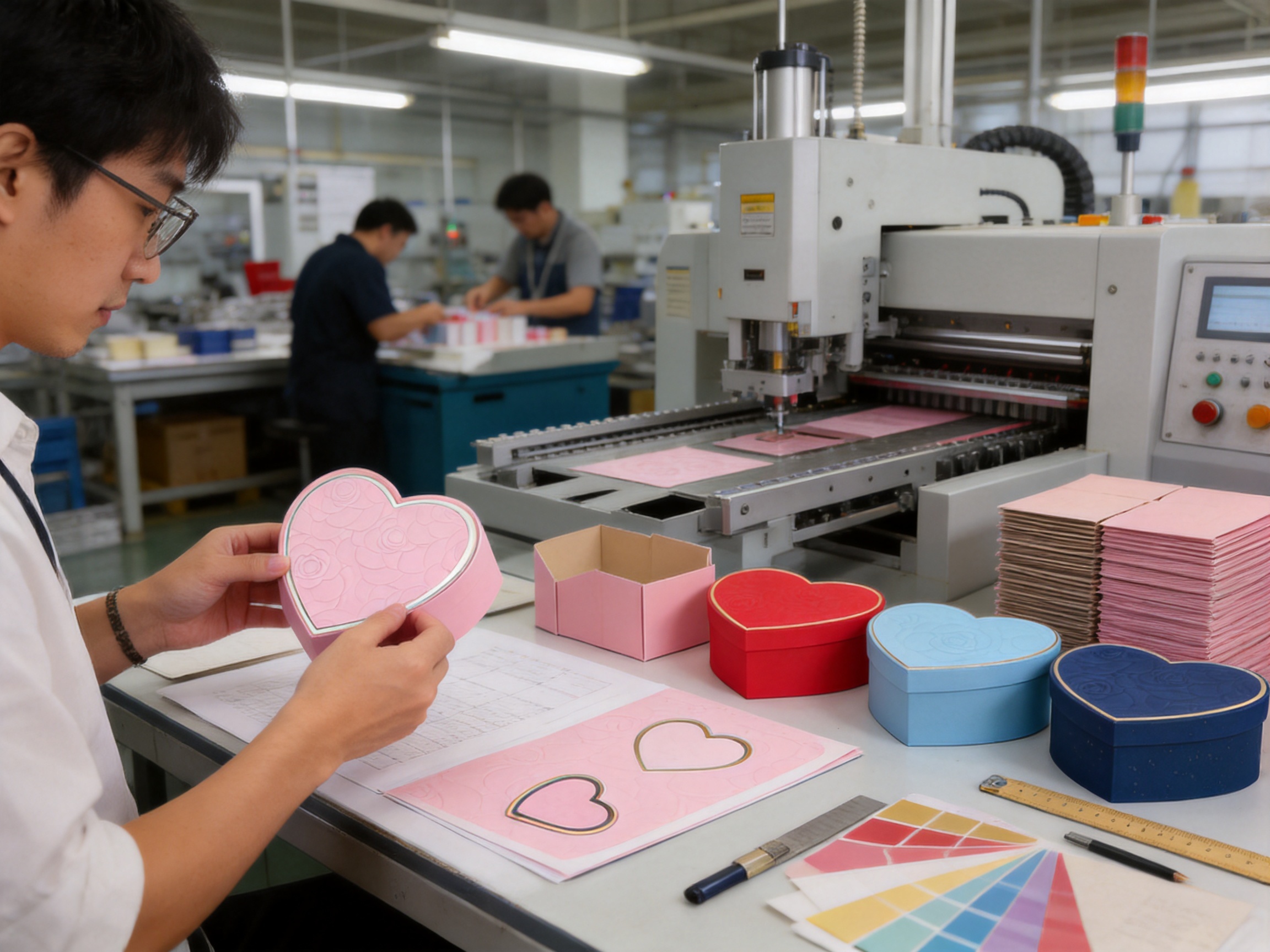
The manufacturing process for a decorative cardboard gift box generally begins with product analysis and structural design. The customer’s product dimensions, required quantity, display orientation, opening method, and branding objectives are reviewed. The manufacturer then develops a cutting pattern or structural drawing that defines the panels, folds, tabs, frame, and assembly points.
The first stage is to understand what the box must contain and how it will be used. For candy packaging, the factory may need information about the number of pieces, individual wrapping, tray requirements, and whether the box will be sold empty or filled by the customer. For jewelry or small gifts, the assessment may focus on internal support and presentation.
Transport conditions should also be considered. If the product will be shipped over long distances, the design may require stronger board, better internal support, protective wrapping, or more efficient master-carton packing. The outer box must be attractive, but it must also survive ordinary logistics handling.
After the requirements are defined, a structural drawing or prototype can be prepared. Sampling is particularly important for an unusual shape such as a heart. The sample allows the customer to evaluate the overall proportions, opening experience, product fit, stability, and visual balance.
A prototype may reveal issues that are difficult to identify on a flat drawing. For example, the heart point may need reinforcement, the frame may require a more precise alignment, or the selected size may not leave enough space for the desired contents. Resolving these issues before mass production can reduce waste and improve final consistency.
Once the structure is approved, paperboard is prepared according to the required specification. Decorative graphics may then be printed using a method suited to the order volume, color requirements, surface finish, and artwork complexity. Customers should provide clear files, color references, logos, text, and regulatory information where applicable.
Color management is important for seasonal packaging because Valentine’s Day designs often use strong reds, pinks, purples, whites, metallic accents, or pastel tones. The approved sample should serve as a reference for mass production. If precise brand color matching is required, the buyer and manufacturer should establish an agreed tolerance and inspection procedure.
Printed paperboard is cut and creased into the required components. Die-cutting creates the heart-shaped outline and other structural features, while creasing helps the material fold accurately. For a framed design, cutting precision is essential because irregular edges or misaligned layers may affect the appearance of the finished box.
Forming and assembly transform the flat components into a three-dimensional package. Depending on the structure, this may involve folding, gluing, inserting, pressing, or fitting several parts together. The production team must maintain consistent pressure and alignment so that the boxes have a uniform shape.
Optional finishing processes may include protective coatings, special textures, metallic effects, embossing, or other decorative treatments. The selected finish should support the intended visual identity without creating unnecessary complications for recycling, assembly, or cost control.
Finished boxes are inspected before packing. Quality checks can be performed during production as well as at the end of the line. The purpose is to identify defects early, maintain consistent output, and reduce the risk of shipping nonconforming goods.
The supplied logistics information lists outer dimensions of approximately 64 × 34 × 45 centimeters, with six sets in cardboard boxes. This information provides a starting point for freight planning, warehouse allocation, and container calculations. Final packing details should be confirmed according to the selected size, order quantity, assembly condition, and shipping method.
Appropriate packing can help prevent surface scuffing, deformation, moisture exposure, and edge damage. Buyers should request confirmation of the packing method, carton markings, gross and net weights, and shipping documentation before dispatch.
Customization is one of the main reasons to select a professional gift box manufacturer rather than purchase generic packaging. Item 1001 can be adapted in several ways, subject to technical review, order quantity, and production feasibility.
The color scheme can be developed around the Valentine’s Day theme or adjusted to reflect a particular brand identity. A luxury confectionery company may prefer deep red, burgundy, cream, or metallic details. A children’s candy brand may choose bright pink, purple, yellow, or illustrated characters. A minimalist brand may use a neutral base with a small heart motif and a discreet logo.
Artwork can include brand marks, product names, seasonal greetings, ingredient information, promotional messages, social responsibility statements, or retail barcodes. Text should be carefully proofread before printing, particularly when the packaging will be exported to markets with specific labeling requirements.
Customers can discuss changes to the dimensions, internal capacity, frame proportions, closure, and presentation arrangement. The ten standard sizes provide a convenient starting point, but custom sizing may be appropriate for products with unusual dimensions or specific retail requirements.
Internal components may include paperboard dividers, trays, sleeves, cards, or fitted supports. These elements can organize candies and prevent movement while improving the unboxing experience. The choice depends on the product, budget, desired appearance, and material objectives.
The surface treatment affects how the package looks and feels. Matte finishes can create a refined and contemporary appearance, while gloss can emphasize color intensity. Embossing may add a tactile heart, logo, or decorative border. Foil effects can create a more luxurious impression, although buyers should evaluate their cost and environmental implications.
The best finish is not necessarily the most elaborate one. It should be selected according to the product’s market position, intended retail price, target customer, and required production schedule. A simple, well-executed finish often produces a stronger result than multiple decorative processes applied without a clear design purpose.
Although the product is presented as a Valentine’s Day candy box, its design supports a wider range of applications. This flexibility can help customers use the packaging across different sales channels and seasonal occasions.
The most direct application is packaging for chocolates, gummies, hard candies, caramels, cookies, and other sweets. The heart shape is naturally compatible with Valentine’s Day assortments. It can be used for single gifts, family-sized selections, sample packs, corporate giveaways, or promotional bundles.
The package may be sold empty to confectionery producers that fill and seal it themselves, or it may be incorporated into a finished gift set. The appropriate food-contact arrangement should be confirmed, particularly if candies will touch any internal component.
The box can also present necklaces, bracelets, earrings, hair accessories, compact cosmetics, or keepsakes. In these applications, a soft insert or fitted interior may be needed to hold the item in place. The decorative exterior can make a relatively small product feel more substantial and gift-ready.
Small toys, puzzles, collectible items, and novelty gifts can be packaged in the box for Valentine’s Day promotions or party exchanges. Bright artwork and playful graphics can shift the design from romantic luxury toward family-friendly celebration.
The heart shape is not limited to February. It can be used for anniversaries, wedding favors, bridal events, proposals, engagement celebrations, birthdays, and other occasions associated with affection. By changing the printed artwork, colors, and message, a business can extend the box’s commercial life beyond one holiday.
Companies may use customized heart-shaped boxes for employee appreciation, customer loyalty campaigns, hospitality gifts, or seasonal promotions. A logo and brand message can be integrated without eliminating the emotional character of the design. This allows the package to feel personal while still supporting corporate recognition.
The minimum order quantity for item 1001 is 500 sets. This quantity is suitable for small and medium-sized commercial campaigns, local retailers, online gift sellers, event organizers, and brands testing a new seasonal package. It is higher than an individual consumer purchase but lower than the volume required by some large-scale industrial packaging programs.
Buyers should evaluate their expected sales volume, promotional calendar, storage capacity, and possible repeat orders before confirming the quantity. Valentine’s Day demand is seasonal, so purchasing too many boxes can create leftover inventory, while purchasing too few may result in missed sales opportunities.
Because the product is available in multiple sizes, the minimum quantity should be discussed in relation to size combinations. Buyers should confirm whether the minimum applies to one size, one design, one color, or the total order. Custom printing, special materials, and additional inserts may also influence the final order threshold.
The listed outer carton dimensions of approximately 64 × 34 × 45 centimeters, with six sets in cardboard boxes, can assist with preliminary freight calculations. However, final carton information should be provided after the exact product specification is approved. Different sizes or assembly conditions may alter the packing volume.
For international orders, procurement planning should include artwork approval, sample confirmation, production lead time, inspection, export documentation, freight booking, customs clearance, and delivery to the final warehouse. A seasonal product should not be scheduled solely around the factory completion date; sufficient time must be reserved for transportation and unexpected delays.
Many buyers are seeking packaging that reduces dependence on plastic and communicates responsible material choices. The use of decorative cardboard gives item 1001 a paper-based foundation that can fit within a recyclable packaging strategy when the complete construction is appropriately specified.
Sustainability should be considered throughout the product life cycle. Important questions include where the paperboard comes from, whether the material is certified, how much material is used, whether coatings can be recycled, how the box is packed for transportation, and whether the recipient can separate different components after use.
The company’s FSC certification background can support discussions about responsible paper sourcing. Its experience with paper gift packaging also gives customers a basis for evaluating paperboard alternatives, structural efficiency, and decorative treatments.
Reducing unnecessary empty space is another practical sustainability measure. The availability of ten sizes helps customers select a better fit for their products, potentially lowering material use and transportation volume. A well-fitted box can also reduce the need for excessive internal fillers.
Durability contributes to sustainability as well. If a decorative box is attractive and strong enough to be reused for keepsakes, stationery, accessories, or small household items, its useful life may extend beyond the original gift occasion. Reusability can add value without requiring a more complex structure.
Gift packaging is a direct physical expression of a brand. Customers handle it, view it, photograph it, and associate it with the product inside. A carefully designed heart-shaped box can therefore contribute to brand recognition and emotional positioning.
For premium food brands, the box can reinforce craftsmanship and exclusivity. For emerging brands, it can create a distinctive identity without requiring an entirely new product format. For retailers, coordinated heart-shaped packaging can help unify a seasonal display across multiple gift products.
The box can also support post-purchase visibility. Recipients may keep the package on a desk, shelf, or dressing table, where its heart-shaped design remains visible after the candy has been consumed. If the brand name and visual identity are integrated tastefully, the packaging can continue to remind the user of the original purchase.
Emotional connection is particularly relevant during Valentine’s Day, when consumers are purchasing not only an object but also a message. A package that visually expresses affection can help the brand participate in that emotional exchange. This is a competitive advantage that ordinary functional cartons may not offer as strongly.
Before mass production, buyers should establish a written product specification. The specification may include the selected size, board type, thickness, color references, printing method, finish, internal components, assembly requirements, packing method, quantity, and acceptable tolerances.
A pre-production sample should be reviewed for appearance and function. The box should be checked with the actual product or a representative sample. Buyers should confirm that the contents fit securely, the heart-shaped frame is aligned, the box opens and closes as intended, and the finished package can be packed efficiently.
During mass production, inspection may focus on several categories:
Structural quality: Check that the box is stable, properly formed, and free from major deformation.
Dimensional accuracy: Confirm the length, width, height, and internal capacity against the approved specification.
Print quality: Examine color consistency, registration, image sharpness, text legibility, and logo placement.
Surface quality: Look for scratches, stains, peeling, excessive glue, uneven coatings, and visible handling marks.
Assembly quality: Ensure that folds, tabs, joints, frames, and closures are aligned and secure.
Packing quality: Verify that cartons are correctly labeled and that the boxes are protected against compression and moisture during transit.
For export orders, third-party inspection may be considered when the project is large, highly customized, or subject to strict retailer requirements. Inspection standards should be agreed in advance rather than introduced after production is complete.
When comparing this product with competing Valentine’s Day boxes, buyers should evaluate more than the unit price. The total value includes design differentiation, size flexibility, production reliability, customization support, material suitability, quality control, and export service.
The heart-shaped frame provides a clear visual advantage over generic rectangular boxes. The ten-size range offers more flexibility than a single stock format. Customizable size and color allow the package to support different products and brand identities. The cardboard construction provides a balance of decorative appearance and practical protection.
The manufacturer’s reported production capacity, design team, certification background, and international export experience may also reduce supplier risk. A company that can support structural development, artwork coordination, production, inspection, and packing under one organization may provide a more consistent process than a fragmented supply chain.
The company’s broad product portfolio is another potential advantage. Its products include kits, storage boxes, folding boxes, jewelry boxes, and gift boxes. This means a buyer that begins with a Valentine’s Day candy box may later be able to develop coordinated packaging for other product categories or occasions.
Finally, the 500-set minimum order quantity can be attractive to businesses that need a commercial quantity but do not want to commit immediately to very large volumes. Buyers should compare the minimum order, customization rules, sample policy, lead time, and quality terms with competing suppliers before making a final decision.
Chocolate and candy producers can use the box for seasonal assortments, gift collections, and premium limited editions. Different sizes can correspond to different quantities and price points.
Gift shops can fill the boxes with candies, small accessories, cosmetics, or coordinated gifts. The heart shape supports easy seasonal merchandising and can be paired with cards, ribbons, and display baskets.
E-commerce businesses can use customized packaging to improve product photography and create a stronger unboxing experience. The distinctive shape can help listings stand out in search results and social media posts.
Wedding planners, party suppliers, and event companies can adapt the boxes for favors, table gifts, bridal events, engagement parties, or anniversary celebrations.
Companies can order customized boxes for promotional campaigns, client gifts, employee appreciation programs, and holiday events. Artwork can be tailored to the brand while preserving the warm symbolism of the heart.
A successful custom packaging order depends on accurate communication between the buyer and manufacturer. The following checklist can help organize the project:
First, define the product to be packaged. Provide the contents, dimensions, weight, quantity, fragility, and any internal arrangement requirements.
Second, select the preferred box size. If the product does not fit one of the ten available sizes, discuss a custom dimension.
Third, confirm the cardboard specification, color, printing, finishing, and any recycled or certified material requirements.
Fourth, provide editable artwork files, brand guidelines, logos, written copy, barcodes, and any required regulatory information.
Fifth, request a structural drawing and physical sample. Review the sample using the actual product whenever possible.
Sixth, agree on the minimum order quantity, unit pricing, tooling or sampling charges, production lead time, payment terms, and shipping conditions.
Seventh, confirm the inspection procedure and acceptable quality standards before mass production begins.
Finally, approve the packing details and shipping documents. The carton quantity, carton dimensions, weights, labels, and destination information should be checked carefully.
Clear communication at each stage helps prevent misunderstandings and supports a smoother transition from concept to finished packaging.
The primary use is Valentine’s Day candy and gift packaging. Its heart-shaped frame makes it particularly suitable for chocolates, sweets, and romantic gift assortments.
Yes. The product information identifies toys, sweets, jewelry, and various presents as suitable applications. The internal design should be reviewed according to the size, weight, and fragility of the selected contents.
The product is available in ten sizes. The listed approximate range extends from 33 × 32.3 × 14 centimeters to 11 × 10 × 5 centimeters. Buyers should confirm the exact dimensions of each size before ordering.
Yes. The provided information states that the size can be customized. Custom dimensions should be discussed with the manufacturer and confirmed through a structural drawing or sample.
Yes. Color customization is available, and buyers can discuss printed graphics, brand elements, seasonal artwork, and finishing options with the factory.
The minimum order quantity is 500 sets. Buyers should confirm whether this quantity applies to one size, one color, one design, or a combined order.
The product is described as environmentally friendly and recyclable. Actual recyclability depends on the complete material construction, including coatings, laminations, adhesives, and local recycling facilities. These details should be confirmed for the specific order.
The box is an outer gift package for candy and should not automatically be assumed to be suitable for direct food contact. Buyers should confirm food-contact materials, coatings, liners, and applicable compliance requirements with the manufacturer.
The heart shape communicates the Valentine’s Day theme immediately, creates stronger shelf presence, and can increase the perceived emotional and gift value of the contents. It also supports seasonal branding and memorable unboxing experiences.
Yes. By changing the artwork and colors, the design can be adapted for birthdays, anniversaries, weddings, engagement celebrations, party favors, and other special occasions. The box may also be reused for small personal items.
The company reports BSCI and FSC certifications. Buyers should request current certificate information and confirm the scope and relevance of each certification to the intended order.
The company has its own design team and specializes in research, development, and customized paper gift packaging solutions. Buyers can discuss structural and visual requirements during the development process.
Customers should check the approved sample, dimensions, product fit, color, artwork, frame alignment, assembly, surface quality, finish, internal components, and packing method. Written approval should be provided only after these points are confirmed.
The cardboard construction is described as sturdy and suitable for carrying and long-distance transportation. Final shipping performance depends on the selected material, product weight, assembly condition, and outer-carton protection, so the shipping configuration should be confirmed with the manufacturer.
The decorative cardboard Valentine’s Day heart-shaped candy box combines emotional design with practical packaging performance. Its heart-shaped frame gives it an immediate seasonal identity, while the paperboard construction supports protection, customization, printing, and potential recyclability.
The ten available sizes make the design adaptable to different gift formats, from small jewelry and individual sweets to larger assortments and coordinated presents. Customizable dimensions and colors allow brands to maintain a recognizable identity while developing packaging for particular products, campaigns, and markets.
Its advantages become more significant when considered alongside the manufacturer’s capabilities. Zhejiang Shihao Gift Packaging Co., Ltd. brings more than 15 years of industry experience, an approximately 20,000-square-meter production base, around 300 employees, an in-house design team, reported daily production capacity of approximately 5,000 sets, and experience exporting to Europe, the United States, the Middle East, and other regions.
The company’s BSCI and FSC certification background, broad product portfolio, and focus on customized packaging provide additional support for commercial buyers. Customers can work with the manufacturer to develop packaging that is visually distinctive, structurally appropriate, and aligned with sustainability and branding objectives.
For confectionery companies, gift retailers, online sellers, event suppliers, and corporate buyers, item 1001 offers a practical way to turn a seasonal product into a complete gift presentation. Its strongest competitive advantage is the combination of a recognizable romantic shape, flexible sizing, paper-based construction, customization potential, and manufacturer-supported production.
When supported by accurate specifications, careful sampling, quality inspection, and timely logistics planning, this heart-shaped box can help brands create a more attractive Valentine’s Day offering and a more memorable experience for the final recipient.
1. Product specification for item 1001, Decorative Cardboard Valentine’s Day Heart-Shaped Candy Box.
2. Manufacturer-provided dimensions, minimum order quantity, and outer-carton information for item 1001.
3. Company profile and manufacturing capability information supplied by Zhejiang Shihao Gift Packaging Co., Ltd.
4. General principles of paperboard gift-box design, structural packaging, and transport protection.
5. General guidance on recyclable paper packaging, responsible paper sourcing, and sustainable packaging development.
6. General quality-control practices for printed paperboard packaging, including dimensional, visual, structural, and packing inspections.
Recommended Products

Contact Us

No. 15, Xiayang Road, Huangzhai Town, Jinhua, Zhejiang, China

(+86) 579-84230069

(+86) 13085675766


Products

Gift Box Packaging Manufacturer
 English
 Français
 Español
 عربى