2026-11-11
Gift packaging has evolved from a simple protective container into an important part of the customer experience. A well-designed box protects its contents, communicates the personality of a brand, enhances the value of the gift, and supports responsible environmental practices. The 1201 Monochrome UV-Coated Recycled Cardboard Laminated Holiday Gift Box responds to these requirements with a practical combination of recycled cardboard, art paper coating, monochrome printing, UV finishing, and lamination.
Designed for Valentine’s Day and adaptable to Christmas, New Year’s celebrations, corporate gifting, retail presentation, personal collections, and craft storage, this gift box offers more than seasonal decoration. Its structured cardboard construction creates a reliable protective shell, while its smooth laminated surface provides a refined tactile experience. The UV-coated exterior adds visual depth and improves resistance to everyday abrasion and moisture.
Unlike many low-cost seasonal packages that are designed for one-time use, this product can be developed as a reusable presentation or storage box. Its size range, custom colour options, and adaptable surface design make it suitable for different product categories and market positions. It can be used for gifts, confectionery, cosmetics, accessories, stationery, keepsakes, and other items requiring attractive and organized packaging.
Manufactured by an experienced paper packaging producer with design, research, production, and export capabilities, the 1201 series combines modern finishing processes with flexible customization. The result is a packaging solution that balances sustainability, appearance, durability, logistics efficiency, and commercial presentation.
The 1201 gift box is made primarily from recycled cardboard with an art paper-coated surface. This construction provides a stable foundation for printing and finishing while helping reduce reliance on newly produced paper materials. The outer surface can be produced in CMYK, Pantone, or customized colours, allowing buyers to coordinate the box with a holiday campaign, brand identity, product line, or retail environment.
The box uses a monochrome visual approach. Monochrome packaging does not necessarily mean plain or limited. A single-colour or restrained colour concept can create a strong visual identity through contrast, texture, typography, pattern, embossing, and gloss variation. It can appear elegant, modern, minimalist, romantic, playful, or sophisticated depending on the selected colour and graphic treatment.
UV coating and lamination contribute to the box’s premium appearance and practical performance. UV coating creates a durable cured surface that can emphasize selected design areas or support an overall glossy finish. Lamination adds a protective film over the printed surface, helping the box resist scuffing, handling marks, and light moisture exposure. Together, these processes create a smoother and more rigid package than an untreated paperboard box.
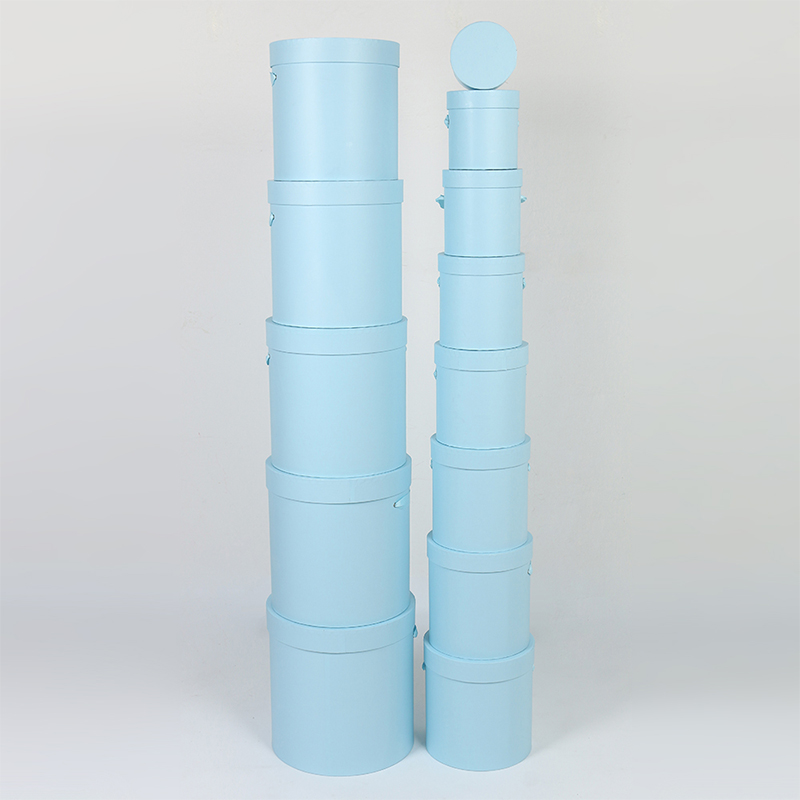
The 1201 range includes multiple sizes, from approximately 33 by 32.3 by 14 centimetres for the largest listed option to approximately 11 by 10 by 5 centimetres for the smallest. This size range allows customers to select a package that is proportionate to the product inside. Proper sizing can reduce unnecessary void space, improve shelf presentation, and help control shipping volume.
| Product item | 1201 Monochrome UV-Coated Recycled Cardboard Laminated Holiday Gift Box |
| Project number | 1201# |
| Primary material | Recycled cardboard with an art paper-coated surface |
| Colour options | CMYK, Pantone colours, and custom colours |
| Size range | Approximately 33 × 32.3 × 14 cm to 11 × 10 × 5 cm |
| Main applications | Gift wrapping, storage, gifts, crafts, collections, and seasonal presentation |
| Customization | Custom size, pattern, colour, and artwork support |
| Artwork formats | Artificial Intelligence and CorelDRAW files |
| Sampling time | Approximately 1–3 working days |
| Production time | Approximately 7–45 days or according to customer requirements |
| Minimum order quantity | 300 sets or units as agreed for the project |
| Packaging configuration | 10 pieces per set; carton configurations available according to size |
Material selection is one of the most important decisions in packaging development. Recycled cardboard offers a practical way to reduce the environmental burden associated with packaging while retaining the structural properties required for gift presentation. It can be engineered into a firm box that supports printing, coating, folding, assembly, and transportation.
Using recycled cardboard can help reduce demand for virgin fibre and supports a more circular approach to paper packaging. For businesses with environmental commitments, the material provides a visible way to communicate responsible sourcing and reduced material impact. The packaging itself becomes part of the brand story, particularly when it is paired with clear sustainability messaging and responsible disposal instructions.
Recycled materials also support the growing expectations of consumers and buyers. Retailers, distributors, and corporate procurement departments increasingly assess packaging according to material use, recyclability, responsible sourcing, and waste reduction. A recycled cardboard gift box can therefore support both consumer-facing appeal and business-to-business sustainability objectives.
The use of recycled cardboard does not require a compromise in appearance. With a properly prepared art paper surface, the box can provide a clean base for detailed printing and consistent colour reproduction. UV coating and lamination further refine the surface, creating a polished package suitable for premium retail environments and special events.
Material sustainability is most effective when combined with thoughtful box engineering. A box that is the correct size, durable enough for repeated handling, and suitable for reuse can reduce the likelihood of damage and premature disposal. The 1201 product is designed with these practical considerations in mind.
Many holiday gift boxes compete for attention through complex illustrations, multiple colours, metallic effects, and highly decorative patterns. Although these approaches can be effective, they can also create visual clutter. The monochrome design direction of the 1201 series offers an alternative: a focused, recognizable, and adaptable appearance.
A monochrome package can create strong shelf impact by using one dominant colour supported by tonal variations, gloss contrasts, or carefully selected typography. For Valentine’s Day, colours such as red, burgundy, blush, soft pink, black, cream, or deep violet can communicate romance and elegance. For Christmas, green, red, white, silver, or midnight blue can establish a seasonal atmosphere. For corporate gifts, a brand-specific colour can reinforce recognition.
The restrained design also allows the contents to remain central to the customer experience. A simple exterior can make the package appear more premium, especially when the colour is consistent and the finish is smooth. Minimalism can communicate quality because it suggests deliberate design rather than excessive decoration.
Another advantage is the product’s adaptability across sales channels. A monochrome gift box can work in physical retail, online product photography, corporate gift programmes, subscription packages, and event presentation. The same structural format can support different campaigns through changes in colour, artwork, labels, ribbons, inserts, and printed messages.
Compared with generic boxes that use fixed seasonal graphics, a customizable monochrome package can have a longer commercial life. Buyers can develop several colourways or artwork versions while retaining the same basic packaging structure. This may simplify product planning and help create a coherent packaging family.
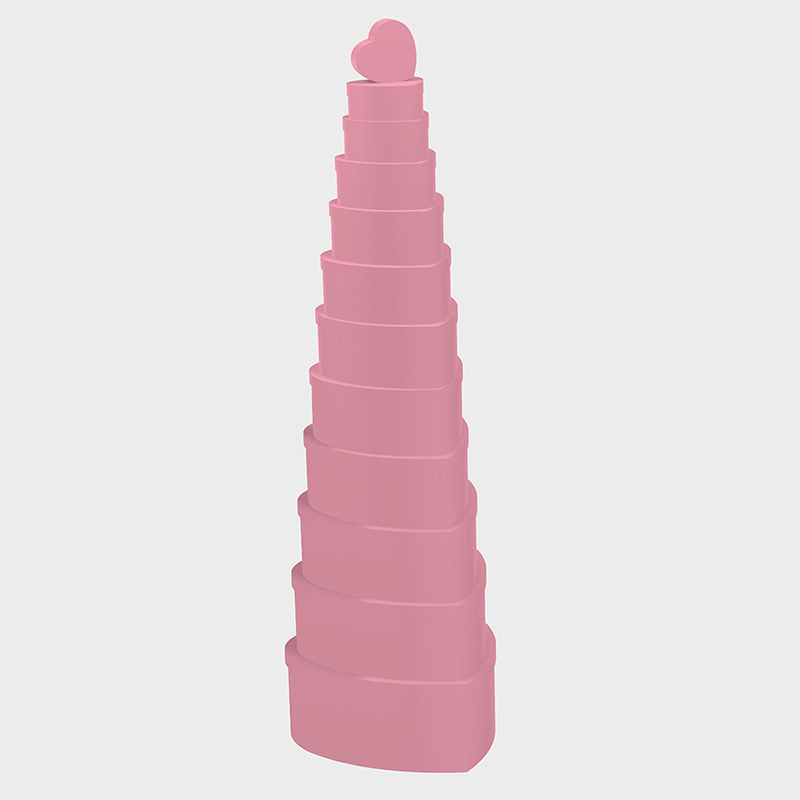
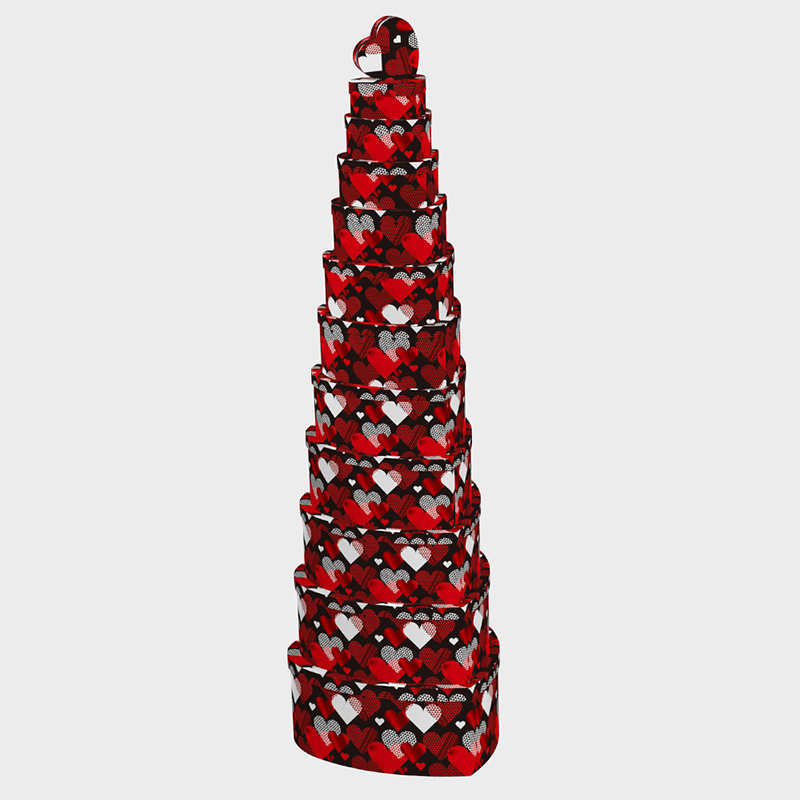
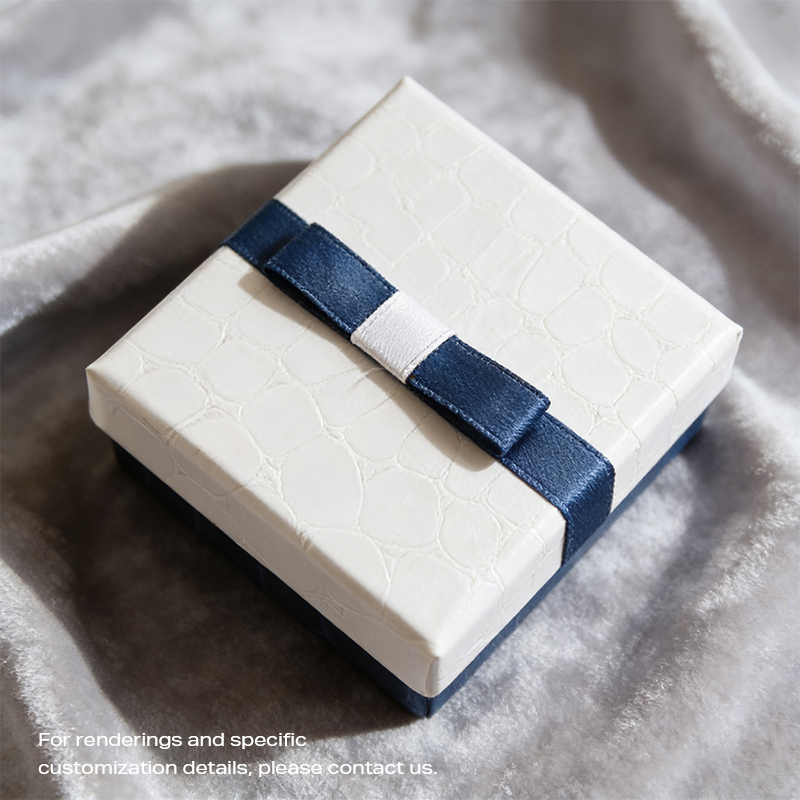
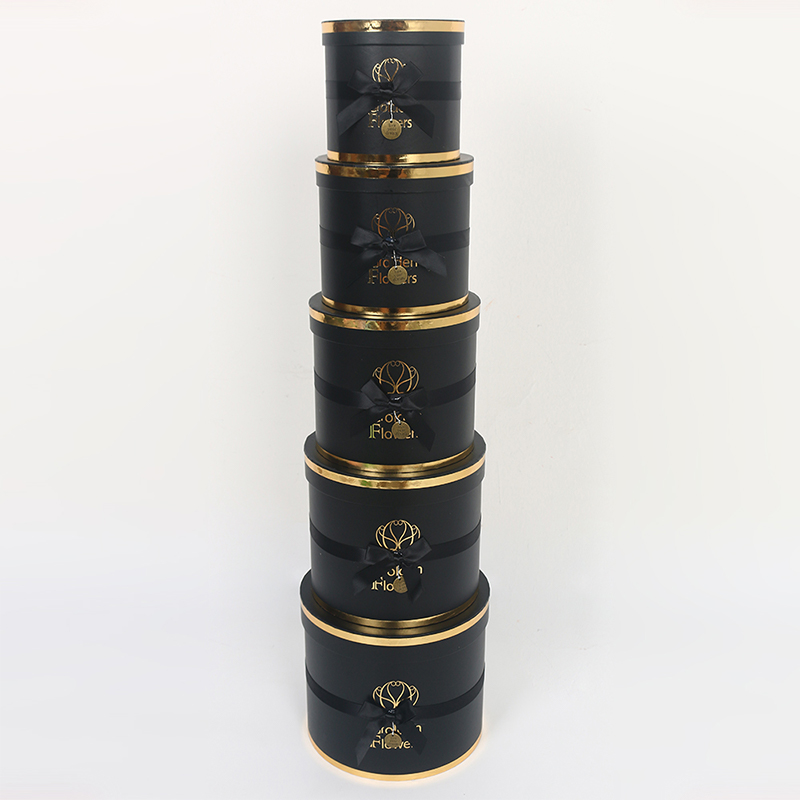
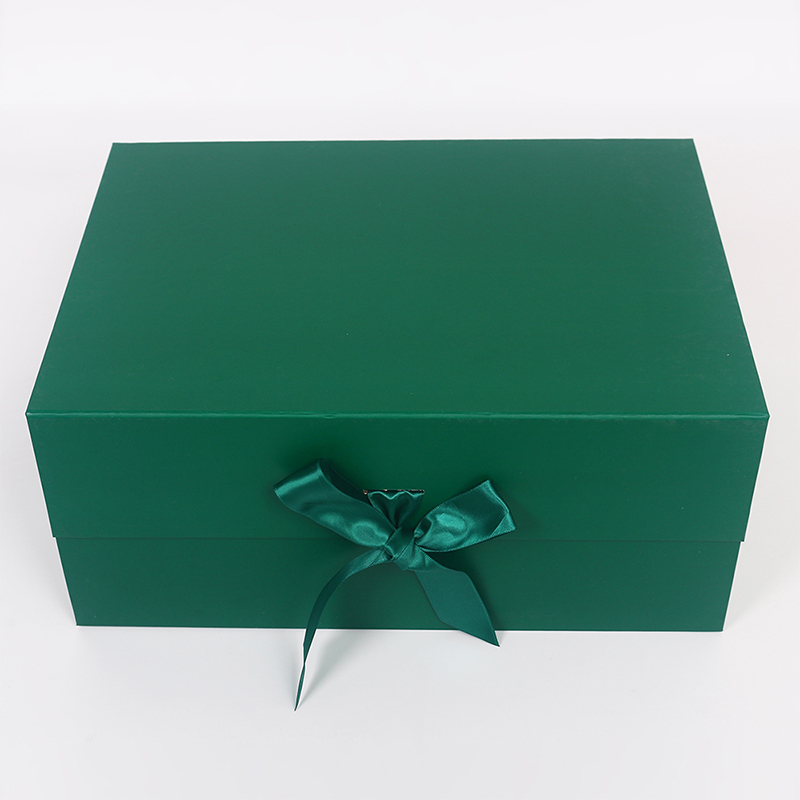
1201 Monochrome UV Coated Recycled Cardboard Laminated Holiday Gift Box
Surface finishing has a direct effect on both the appearance and service life of a gift box. The 1201 series combines UV coating with lamination to create a surface that is more refined and resistant than untreated paperboard.
UV coating is cured using ultraviolet light, producing a hardened finish on the printed surface. It can increase gloss, sharpen visual contrast, and give colours a more vivid appearance. Depending on the design, UV coating can be applied broadly or used selectively to highlight logos, patterns, text, borders, or decorative details.
The coating also improves resistance to surface abrasion. Gift boxes may be moved through manufacturing lines, packed into cartons, transported across regions, placed on shelves, and handled by customers. A stronger surface helps reduce the visible effects of routine contact. It can also support a cleaner appearance when the box is stored or reused.
Lamination adds another protective layer. It helps shield the printed paper surface from scuffs and minor moisture exposure while contributing to rigidity. The laminated finish feels smoother in the hand and can improve the perceived value of the package. This tactile quality is especially important for gift packaging, where the unboxing process often begins before the box is opened.
The combination of these processes creates a balanced finish. UV coating provides a cured, visually enhanced surface, while lamination supports overall protection and structure. The exact finish can be adapted according to the customer’s preferred appearance, product positioning, and budget.
It is important to understand that coating and lamination do not make paper packaging waterproof or suitable for immersion. They are intended to improve resistance to light moisture, handling, and surface wear. For products with leakage risk, direct food contact requirements, or exposure to extreme humidity, additional testing and material selection should be discussed during development.
A gift box must protect its contents while also presenting them attractively. Recycled cardboard provides a firm base that can be engineered into a stable structure. Lamination contributes additional rigidity, helping the box maintain its shape during storage, handling, and transportation.
The right dimensions are essential to protection. An oversized package can allow the contents to move excessively, increasing the risk of impact damage. An undersized package can place pressure on the product and make assembly difficult. The available size range helps buyers select a closer fit or request a customized dimension for a particular item.
The box can be developed with interior components when required. Depending on the product, suitable inserts may include paperboard supports, dividers, trays, folded paper cushions, or custom-shaped compartments. These additions can separate multiple gifts and create a more organized unboxing experience.
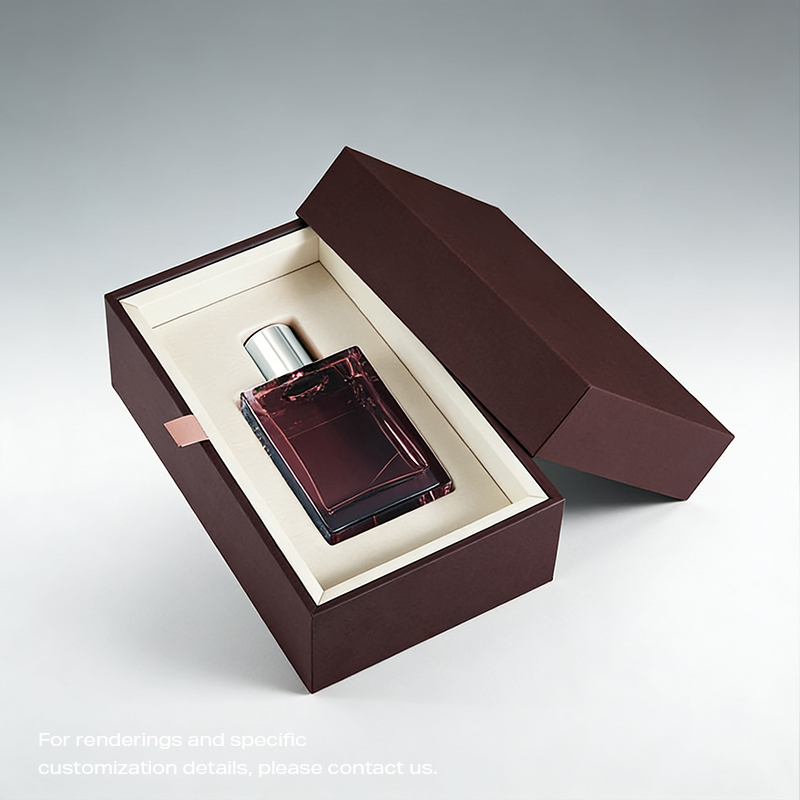
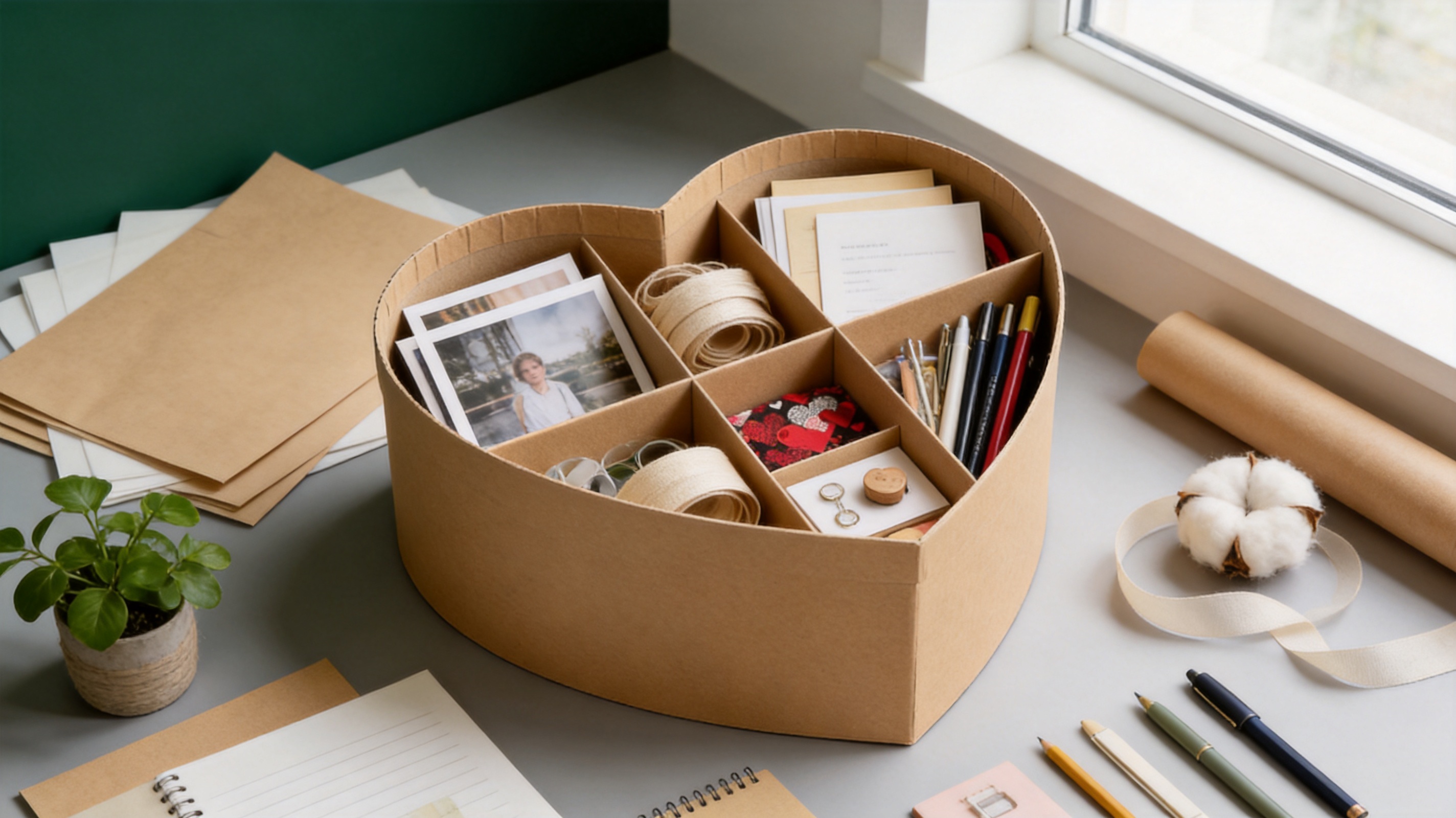
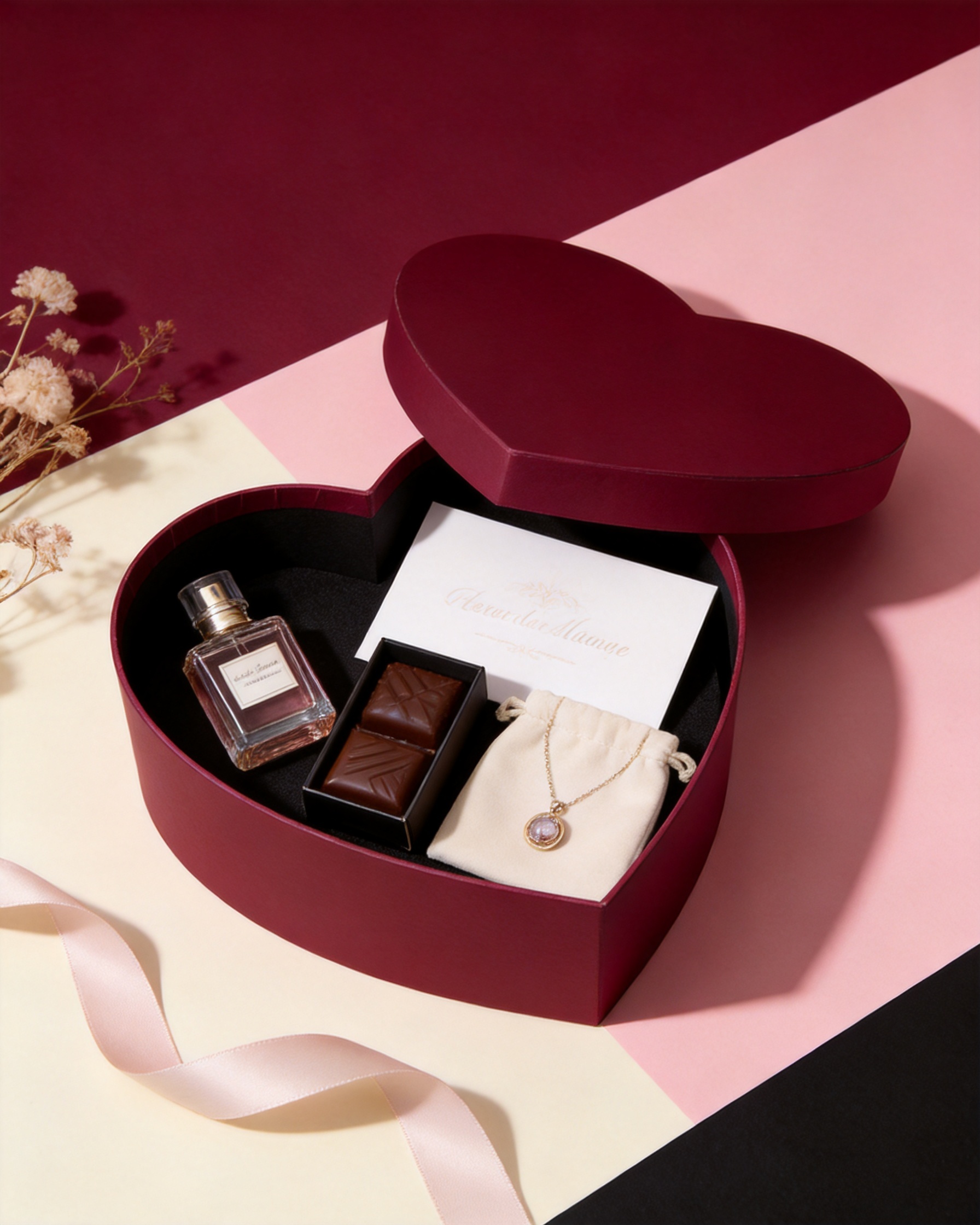
For Valentine’s Day gift sets, the box may hold items such as cosmetics, fragrance products, accessories, confectionery, small electronics, stationery, or personal keepsakes. For corporate gifts, it can present several coordinated items in a unified arrangement. For craft and storage uses, the box can organize photographs, cards, ribbons, small tools, or collectible objects.
A well-protected package also supports logistics efficiency. Fewer damaged boxes and products can reduce replacement costs, customer complaints, and reverse logistics. Strong surface finishing can help maintain a professional appearance from the factory through delivery to the final recipient.
Customization is one of the strongest commercial advantages of the 1201 product. The manufacturer offers professional design support through an in-house design team, while customers may also provide their own artwork. This enables the packaging to be developed for different industries, markets, and seasonal campaigns.
Custom size is useful when a buyer has a specific product portfolio. Rather than forcing multiple products into one standard box, the buyer can request dimensions that improve fit and presentation. Custom sizing may also help optimize carton packing, pallet utilization, and shipping volume.
Colour customization is available through CMYK, Pantone, and other agreed colour specifications. CMYK printing supports photographic images, gradients, and multi-colour artwork. Pantone colours can be useful when brand consistency is important. Custom colour development may be evaluated through proofing and sampling before mass production.
Pattern customization allows the box to reflect different themes. A Valentine’s Day design might use hearts, florals, romantic typography, or abstract tonal graphics. A New Year’s version could use geometric patterns, celebratory symbols, or metallic-inspired artwork. A corporate edition might feature a restrained logo treatment and a brand message.
Artwork can be prepared in Artificial Intelligence or CorelDRAW formats according to the supplied specifications. The design team can provide professional advice regarding layout, print areas, colour separation, finishing placement, and production feasibility. Early technical review helps reduce errors and supports a smoother transition from concept to sample.
Custom packaging is particularly valuable for businesses seeking stronger differentiation. A generic box may be functional, but a purpose-designed box can make a product immediately recognizable. It can also support premium pricing by creating a more complete and memorable presentation.
The product is listed within the Valentine’s Day gift box category, making it suitable for romantic product collections and seasonal retail campaigns. Its monochrome appearance can be adapted to romantic colour palettes, while lamination and UV finishing add a polished quality appropriate for premium gifts.
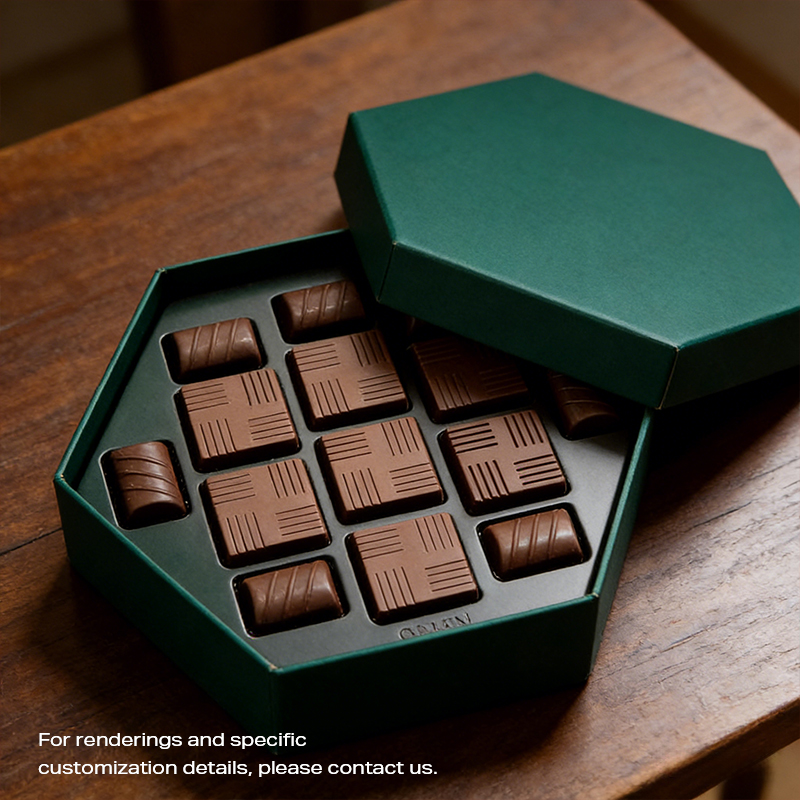
The box may be used for jewellery, beauty products, chocolates, accessories, greeting cards, personal care items, or curated gift sets. A custom insert can keep individual items organized, while printed messages or patterns can create an emotional connection with the recipient.
The same structure can be redesigned for Christmas and New Year programmes. Seasonal colours, festive patterns, and customized messages can transform the basic format without requiring an entirely new packaging concept. This adaptability can simplify seasonal sourcing for businesses that sell across several holidays.
The surface durability is also useful during peak-season distribution, when packages often pass through multiple handling stages. A box that maintains its visual quality can contribute to a better customer experience during high-volume sales periods.
Corporate gifts require a professional appearance and reliable presentation. A monochrome laminated box can be developed in a company colour with restrained branding, making it suitable for employee gifts, client appreciation programmes, conferences, product launches, and business events.
The box can hold coordinated items such as notebooks, pens, accessories, promotional products, food gifts, or small technology products. The design team can help organize the external and internal presentation so that the package communicates consistency and attention to detail.
The product category includes stationery storage box applications. Its firm construction and attractive finish make it suitable for storing cards, envelopes, writing instruments, craft supplies, photographs, small tools, and decorative materials.
Reusable storage extends the useful life of the package beyond the initial gift occasion. This supports a lower-waste approach and gives the recipient a practical reason to retain the box. It also allows the packaging to remain visible in the home or office, creating longer-lasting brand exposure when printed with company artwork.
Retailers can use the box as part of coordinated collections. Several sizes or colours can be displayed together, creating a visually unified merchandising presentation. Individual customers may also use the boxes for collectibles, letters, photographs, souvenirs, and other sentimental items.
The ability to serve both presentation and storage purposes helps distinguish this box from disposable packaging. It becomes a useful object rather than only a temporary wrapping material.
The 1201 series offers several advantages compared with basic untreated paperboard boxes or fixed-design seasonal packaging.
First, the recycled cardboard material supports a more responsible packaging strategy. Buyers can reduce their dependence on conventional virgin-material packaging while still obtaining a structured box suitable for commercial presentation.
Second, the UV-coated and laminated surface provides a more premium appearance and improved resistance to routine handling. A simple uncoated box may absorb marks, lose surface quality, or appear less refined after transportation. The finished 1201 surface is designed to remain smoother and more presentable.
Third, customization improves market relevance. Standard boxes are limited by fixed colours, dimensions, and artwork. The 1201 product can be developed for specific products, campaigns, brands, and consumer groups.
Fourth, the range of sizes allows better product fit. This can improve protection and reduce unnecessary internal space. It also helps retailers create a consistent packaging system for products with different dimensions.
Fifth, the box can support reuse. A reusable package creates additional value for customers and may reduce the amount of packaging discarded immediately after opening.
Sixth, the manufacturer’s integrated design and production capabilities simplify project coordination. Customers can receive advice on artwork and construction from a team familiar with the manufacturing process, rather than managing every stage through unrelated suppliers.
| Comparison factor | Basic uncoated paper box | Fixed seasonal box | 1201 customized gift box |
| Surface appearance | Simple and less protected | Depends on standard artwork | Monochrome, premium, and customizable |
| Material direction | May use conventional board | Varies by supplier | Recycled cardboard foundation |
| Moisture and abrasion resistance | Limited | May be limited | Improved through UV coating and lamination |
| Brand customization | Often restricted | Usually unavailable | Custom colours, patterns, sizes, and artwork |
| Reuse potential | Lower when structure is weak | Varies | Suitable for storage and repeated use |
| Application range | Basic packaging | Specific holiday campaign | Holidays, corporate gifts, retail, crafts, and storage |
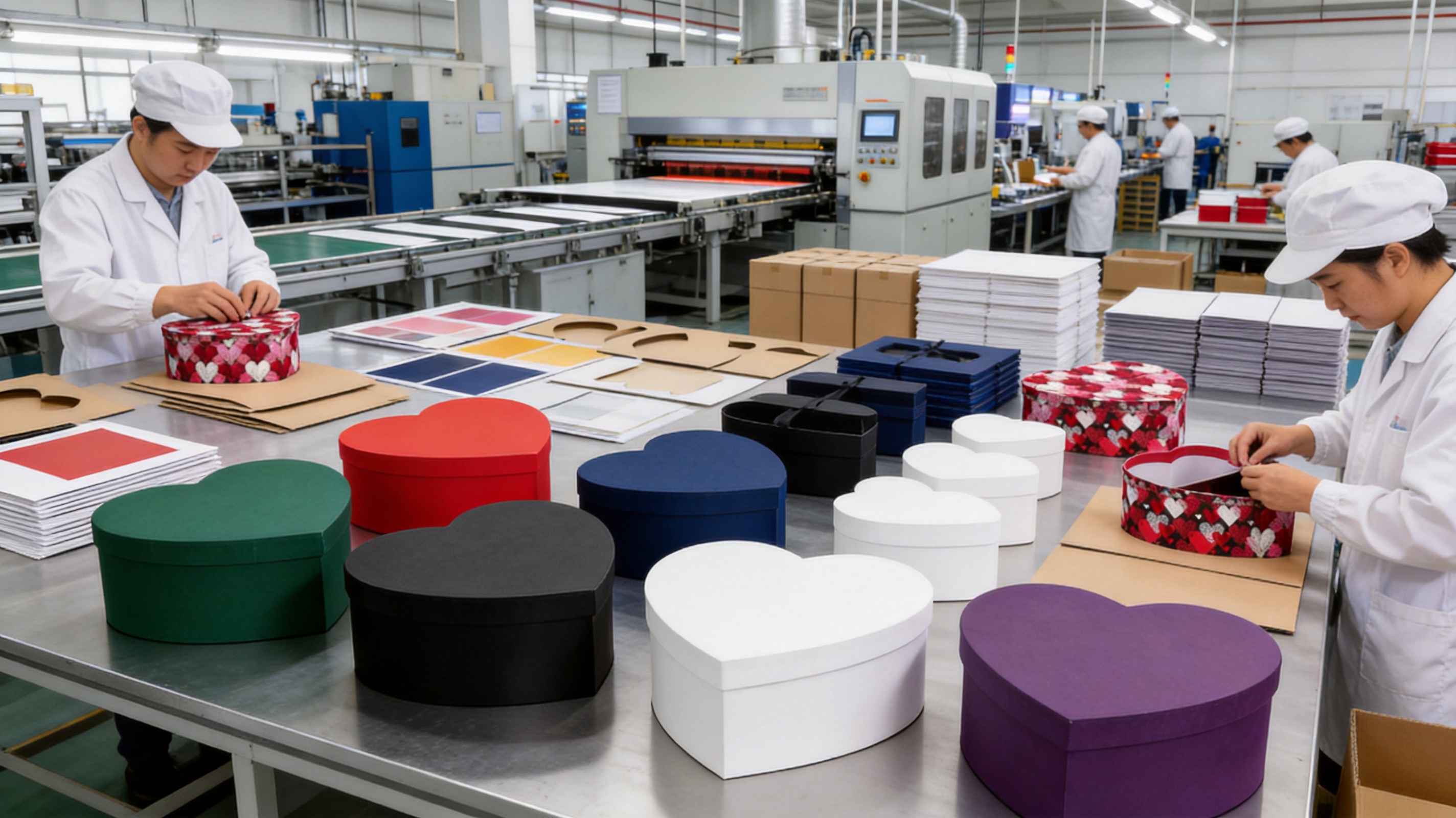
The product is manufactured by Zhejiang Shihao Gift Packaging Co., Ltd., an export-oriented paper packaging producer specializing in research, development, production, and sales. The company has more than 15 years of experience in paper gift packaging and operates from a facility covering approximately 20,000 square metres.
Its workforce of around 300 employees supports an organized production structure with dedicated expertise across design, printing, finishing, assembly, quality control, and export coordination. The reported average daily production capacity is approximately 5,000 sets of gift boxes, providing a useful foundation for both regular orders and larger seasonal programmes.
Advanced equipment supports the production of different paper packaging formats. This is important because gift boxes require precise control across several stages. Board preparation, printing, coating, lamination, die cutting, creasing, folding, gluing, assembly, and packing must work together to produce a consistent final package.
The manufacturer’s in-house design team provides an additional advantage. Packaging design is not only an artistic task; it must also account for the limitations and opportunities of materials and machinery. A design team connected to the production environment can identify potential issues earlier, recommend suitable finishes, and help translate a visual concept into a manufacturable structure.
The company updates dozens of products weekly, demonstrating an active approach to product development and market response. This can benefit customers seeking current packaging styles, seasonal concepts, or solutions adapted to changing consumer expectations.
Export experience is another important capability. The company serves markets in Europe, the United States, the Middle East, and other regions. International order management requires attention to documentation, packaging protection, production schedules, communication, and shipping coordination. Experience with overseas customers can support smoother project execution.
The manufacturer has passed BSCI and FSC certifications according to the supplied company information. These certifications and related systems can support buyer requirements concerning social responsibility and responsible forestry-related sourcing. Customers should confirm the applicable certification scope and documentation for each specific order.
Production begins with a review of the customer’s requirements, including dimensions, material, colour, artwork, finishing, intended application, order quantity, and delivery schedule. The design team checks whether the supplied files can be used for printing and whether important graphic elements are positioned correctly.
At this stage, the team can advise on bleed areas, safe margins, fold lines, glue flaps, image resolution, colour settings, and finishing locations. Early review helps reduce the risk of text being placed too close to an edge or artwork being interrupted by a fold.
Recycled cardboard is selected according to the required structure and dimensions. The board must provide sufficient stiffness while remaining suitable for cutting, creasing, folding, and assembly. The art paper-coated surface provides a smooth base for colour reproduction and finishing.
Material preparation also involves considering the intended product weight and transportation conditions. A box for lightweight stationery may require different structural specifications from a box designed for several glass or metal products. Custom development allows the material and structure to be matched to the application.
Artwork is printed using the agreed colour system. CMYK is suitable for many full-colour designs, while Pantone matching can support stronger brand colour consistency. Proofing allows the customer and production team to review the appearance before larger-scale manufacturing.
Colour control is especially important for monochrome products. When a design relies on one dominant colour, inconsistency becomes more noticeable. Consistent ink application, material preparation, and process control help maintain a uniform result across the production batch.
After printing, the surface receives the selected finishing treatment. UV coating is cured to create a hard, visually refined surface. Lamination is applied to protect the printed paper and strengthen the tactile quality of the box.
The selected finish may be adjusted to suit the desired visual effect. A high-gloss appearance can make colours more vivid and reflective, while other finish combinations may create a more restrained premium look. Customers can discuss the appropriate treatment during sampling.
The laminated board is cut into the required shape and creased along folding lines. Accurate die cutting is essential for a clean outline, while precise creasing helps the box fold correctly without unnecessary cracking or distortion.
For custom formats, the die must be developed according to the approved structural drawing. The design team can coordinate the relationship between printed artwork and the die line, ensuring that logos, patterns, and text appear in the intended locations after assembly.
Following cutting and creasing, the box components are folded and glued or otherwise assembled according to the approved structure. Quality checks at this stage can identify issues such as weak adhesion, misalignment, uneven corners, or incorrect folding.
Assembly accuracy affects both appearance and function. A well-assembled box should sit evenly, maintain its shape, and close as intended. It should also provide a consistent appearance when displayed alongside other units.
Finished boxes are inspected for print quality, surface damage, dimensional accuracy, structural integrity, and assembly consistency. Accepted units are then packed according to the agreed configuration, such as 10 pieces per set and multiple sets per carton where appropriate.
Carton packing protects the boxes during inland transportation, export handling, and delivery. Carton dimensions and loading arrangements can be reviewed to support efficient shipping and warehouse planning.
Sampling is an important part of customized packaging development. The stated sampling time is approximately one to three working days, depending on the project requirements and artwork readiness. A sample allows the buyer to assess size, colour, material feel, folding, finishing, and overall appearance before mass production.
Sampling also provides an opportunity to check how the box interacts with the actual product. The buyer can verify whether the contents fit properly, whether an insert is necessary, and whether the package provides the desired level of presentation.
Quality assurance should address both visual and structural characteristics. Visual checks may include colour consistency, print registration, coating uniformity, lamination smoothness, edge cleanliness, and artwork alignment. Structural checks may include dimensions, folding accuracy, adhesion, opening and closing performance, and resistance to ordinary handling.
For international buyers, the approved sample can serve as a reference for production. Buyers may wish to specify tolerances, inspection standards, carton markings, and testing requirements before confirming the order. Clear approval procedures help align expectations between the customer and manufacturer.
Consistent quality is particularly important for large seasonal orders. Holiday campaigns often have fixed launch dates, and packaging defects can affect sales schedules. Working with a manufacturer that combines design support, production capacity, and inspection procedures can reduce project risk.
The product is designed from lightweight paper-based materials, which can help reduce handling difficulty and transportation costs compared with heavier packaging materials. Its flat or semi-assembled format, where applicable, can also support more efficient storage and shipment.
The supplied packaging information includes carton dimensions of approximately 66 by 34 by 30 centimetres and 66 by 34 by 45 centimetres for different configurations. The listed carton volumes are approximately 0.066 and 0.1 cubic metres. Exact packing details should be confirmed according to the selected size and order configuration.
Delivery time is generally stated as approximately 7–45 days or according to customer requirements. The final schedule may depend on order quantity, artwork approval, material preparation, finishing complexity, sampling, production workload, and shipping arrangements.
The manufacturer can arrange shipment through Ningbo or another agreed port according to customer requirements. International buyers should confirm the suitable port, trade terms, shipping documentation, carton markings, and delivery responsibilities before production begins.
Proper storage is also important. Finished paper boxes should be kept in a dry, clean environment away from direct water exposure, excessive humidity, and extreme temperature changes. Keeping cartons level and avoiding heavy pressure can help preserve the shape and surface quality.
Packaging can influence purchase decisions before the customer evaluates the product inside. A polished gift box communicates care, quality, and occasion relevance. The 1201 series supports this communication through its refined monochrome design, protective finish, and customizable presentation.
For brands, the box can function as a silent marketing tool. A logo, colour scheme, message, pattern, or distinctive structure can increase recognition. If the recipient reuses the box for storage, the brand may continue to receive visibility after the original product has been consumed or removed.
For retailers, a coordinated range of boxes can create a stronger visual merchandising system. Different sizes can be displayed together, while a consistent colour direction helps customers identify related products. Customized packaging can also make gift selection easier by clearly communicating the intended occasion.
For e-commerce sellers, packaging contributes to the unboxing experience. Customers often share attractive packages through photographs and social media content. Although the box itself cannot guarantee online exposure, a thoughtful design can encourage positive impressions and strengthen perceived product value.
For corporate buyers, customized gift boxes can support relationship-building initiatives. A professional box helps present corporate gifts in an organized manner and can be adapted for different events without losing brand consistency.
The first step is to define the product that will be placed inside the box. Record its length, width, height, weight, fragility, and quantity. Determine whether it needs an insert, protective wrap, divider, or additional cushion.
The second step is to select the preferred size and structure. A close fit usually creates a cleaner presentation and may improve transportation efficiency. If the product does not match the listed dimensions, a custom size can be discussed.
The third step is to establish the visual direction. Decide whether the design should be romantic, festive, corporate, minimalist, luxurious, playful, or natural. Select the dominant colour and determine whether additional tonal shades or accent colours are required.
The fourth step is to prepare the artwork. Supply vector files where possible and ensure that logos, text, patterns, and legal information are accurate. Confirm whether the artwork should use CMYK, Pantone, or another specified colour system.
The fifth step is to choose the finish. Discuss the balance between gloss, surface protection, tactile quality, and budget. Confirm whether UV coating should cover the entire surface or emphasize selected areas.
The sixth step is to request a sample. Inspect the sample with the actual product, not only as an empty box. Review the fit, appearance, opening experience, surface quality, and overall suitability for the target market.
The final step is to confirm production and logistics details. These include quantity, packaging configuration, carton dimensions, delivery schedule, port, payment terms, inspection requirements, and shipping documents.
The box uses recycled cardboard as its primary structural material and has an art paper-coated surface. The exterior can receive UV coating and lamination to improve appearance, surface smoothness, and resistance to routine handling.
No. Although it is listed in the Valentine’s Day gift box category, the design can be customized for Christmas, New Year’s celebrations, corporate gifting, retail collections, personal keepsakes, stationery storage, and craft organization.
Yes. Colour options include CMYK, Pantone colours, and custom colours subject to production review and sample approval. Buyers should provide accurate colour references when brand consistency is important.
Yes. The listed 1201 range includes several sizes, and custom dimensions can be developed for products with specific requirements. Custom sizing should be reviewed together with the product measurements and desired internal protection.
UV coating creates a cured surface that can improve visual brightness, surface hardness, and resistance to abrasion. It can be used as an overall finish or applied selectively to highlight design elements, depending on the project.
Lamination helps protect the printed surface from scuffs and light moisture exposure while making the surface smoother and the board more rigid. It does not make the box completely waterproof.
Yes. Its firm construction and finished surface make it suitable for continued use as a storage box for stationery, crafts, photographs, accessories, keepsakes, and other small items.
The supplied information lists Artificial Intelligence and CorelDRAW files. Buyers should confirm file specifications, colour settings, bleed requirements, and die-line arrangements with the design team before production.
The stated sampling time is approximately one to three working days. The actual time may vary according to artwork readiness, structural complexity, material availability, and the requested finishing process.
The listed delivery time is approximately seven to forty-five days or according to customer requirements. The schedule should be confirmed after specifications, quantity, artwork, sample approval, and shipping arrangements are finalized.
The stated minimum order quantity is 300 episodes, understood in the supplied product information as units or sets depending on the final packaging arrangement. Buyers should confirm the exact commercial unit before placing an order.
Yes. The manufacturer has an in-house design team that can provide professional advice. Customers may submit custom artwork, or they can work with the design team to develop a suitable size, pattern, colour, and finishing solution.
The product is manufactured in Jinhua, Zhejiang, China, by an export-oriented paper gift packaging producer with experience in design, research, production, and international sales.
Yes. The company information states that products are exported to Europe, the United States, the Middle East, and other regions. Port and shipping arrangements can be discussed according to the customer’s requirements.
The 1201 Monochrome UV-Coated Recycled Cardboard Laminated Holiday Gift Box is a versatile packaging solution for companies seeking a balance between visual quality, material responsibility, protection, and customization. Its recycled cardboard foundation supports a more sustainable packaging direction, while the art paper surface provides a suitable base for detailed colour printing and brand design.
UV coating and lamination improve the package’s tactile quality and resistance to ordinary handling. The monochrome design creates a clean and adaptable visual identity that can be developed for Valentine’s Day, Christmas, New Year’s celebrations, corporate gifts, retail programmes, stationery storage, crafts, and personal collections.
The product’s strongest commercial advantage is its flexibility. Custom dimensions, CMYK or Pantone colours, custom artwork, professional design guidance, and multiple finishing possibilities allow buyers to develop packaging that reflects specific products and markets. The ability to reuse the box after gifting adds practical value and supports a longer product life.
Behind the product is a manufacturer with more than 15 years of industry experience, a substantial production facility, an in-house design team, international export experience, reported BSCI and FSC certifications, and an average daily capacity of approximately 5,000 sets. These strengths provide a foundation for reliable development and scalable production.
For brands and retailers, the 1201 box offers an opportunity to make packaging part of the product experience. It can protect the contents, enhance the unboxing moment, strengthen brand recognition, and communicate a considered approach to sustainability. With appropriate customization and quality control, it can serve as a practical and premium alternative to ordinary seasonal gift packaging.
1. Product specification information for the 1201 Monochrome UV-Coated Recycled Cardboard Laminated Holiday Gift Box.
2. Manufacturer-provided company profile and production capability information.
3. General principles of recycled paperboard packaging design and responsible material selection.
4. General packaging guidance concerning UV coating, lamination, surface protection, and paperboard finishing.
5. General packaging development practices covering artwork preparation, sampling, inspection, carton packing, and international delivery planning.
Recommended Products

Contact Us

No. 15, Xiayang Road, Huangzhai Town, Jinhua, Zhejiang, China

(+86) 579-84230069

(+86) 13085675766


Products

Gift Box Packaging Manufacturer
 English
 Français
 Español
 عربى