2026-08-03
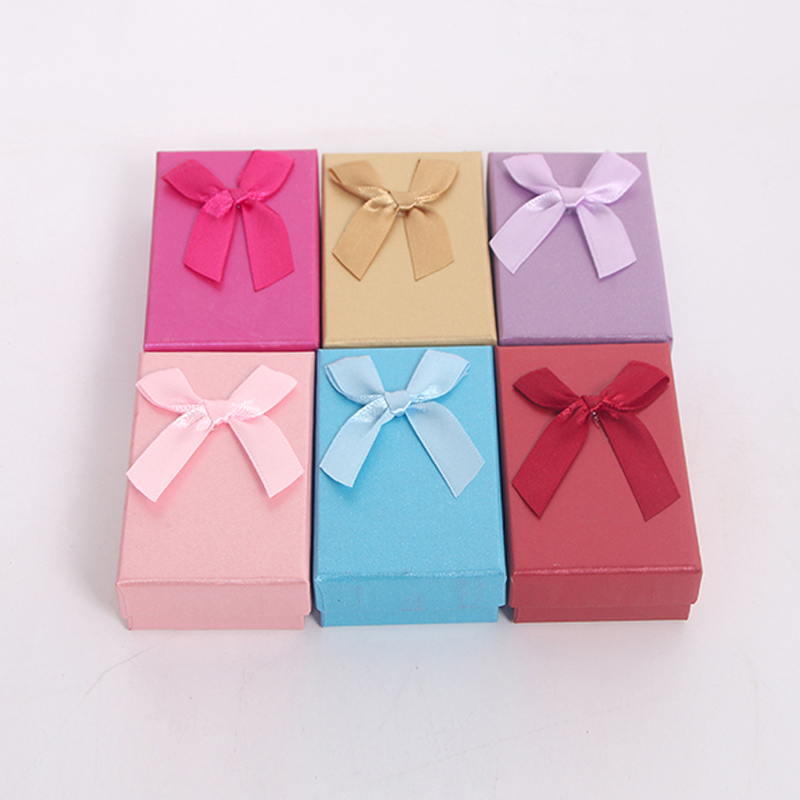
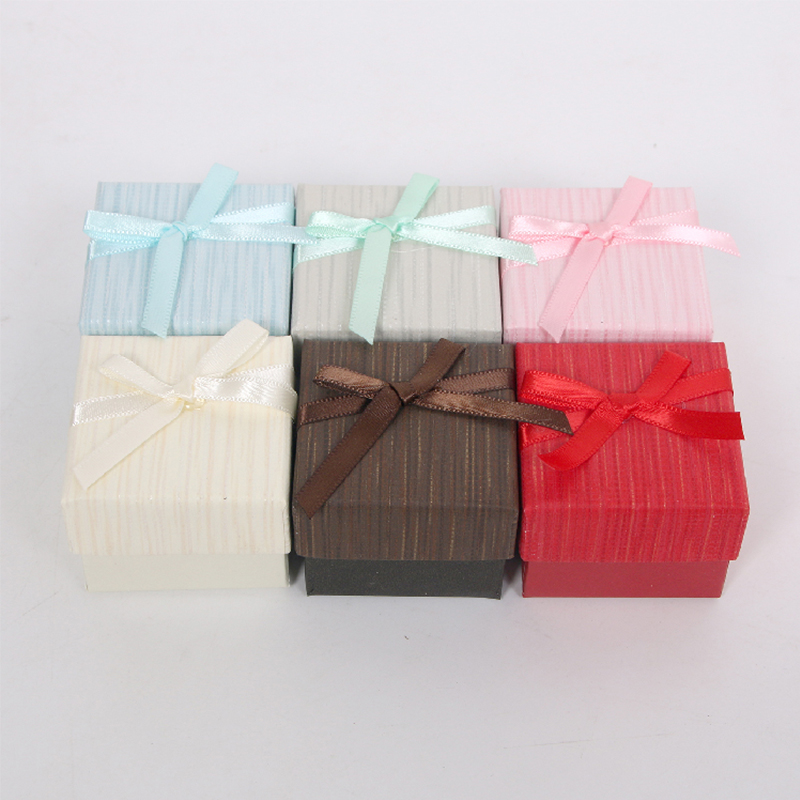
A-7 Rectangular Polka Dot Small Jewelry Gift Box with Bow Ribbon
Packaging is often the first physical impression a customer receives from a jewelry brand. Before a necklace, pair of earrings, bracelet, ring, or small accessory is examined closely, the customer sees the box, feels its structure, notices its colors, and responds to the way the product is presented. A well-designed jewelry gift box can therefore do much more than protect an item. It can create anticipation, strengthen perceived value, support brand identity, and turn an ordinary purchase into a memorable gifting experience.
The A-7 Rectangular Polka-Dot Small Jewelry Gift Box with Bow Ribbon is designed for this exact purpose. It combines a compact rectangular structure with a decorative polka-dot exterior and an attractive ribbon bow. The result is a packaging solution that balances appearance, function, portability, and presentation value. It is suitable for jewelry retailers, accessory brands, gift shops, online sellers, event planners, and individuals who want a refined way to present small gifts.
Unlike plain stock boxes that may look generic or unfinished, this design arrives with visual character. The polka-dot surface gives the packaging a lively and approachable appearance, while the bow ribbon adds a traditional gift-giving detail. At the same time, the rectangular format remains practical and easy to store, ship, display, and arrange in retail environments.
This article examines the product’s design advantages, practical applications, customization potential, quality considerations, and manufacturing background. It also explains why a professional paper packaging manufacturer with strong production capabilities can provide greater value than a supplier focused only on low-cost, standard packaging.
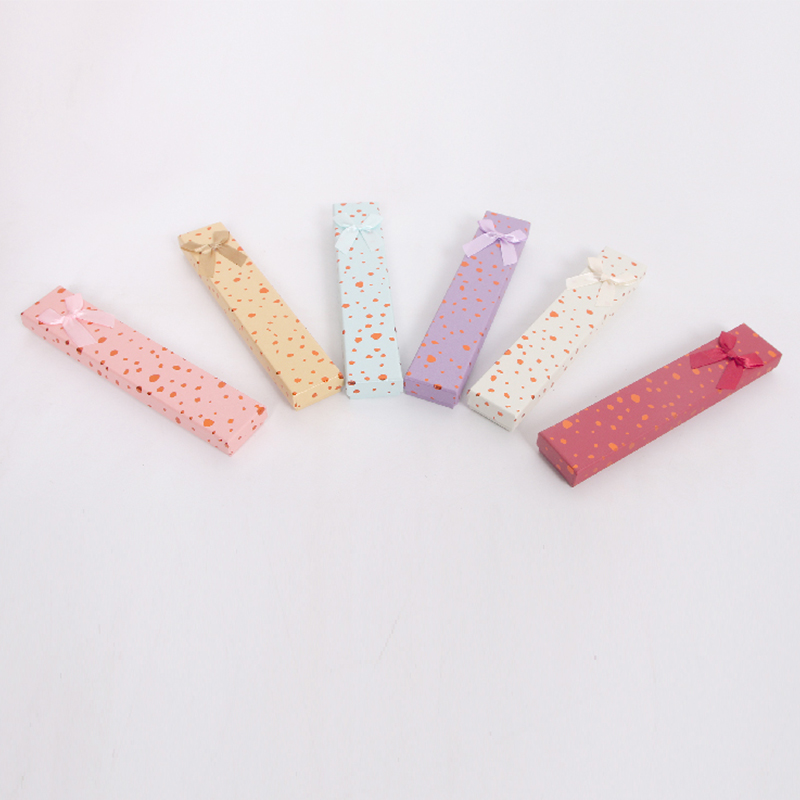
The A-7 jewelry gift box is a small rectangular paper packaging product created for jewelry and other compact accessories. Its design is centered on three visual and functional elements: a stable rectangular body, a polka-dot decorative pattern, and a ribbon bow that contributes both ornamentation and handling convenience.
The rectangular format is particularly useful because it can accommodate a broad range of small products. Depending on the interior insert and final configuration, it may be used for earrings, pendants, bracelets, small chains, rings, charms, brooches, hair accessories, or other lightweight gifts. The shape also makes the box easy to align with other products on shelves, in drawers, in shipping cartons, or on display counters.
The product images and model references indicate several dimensional configurations associated with the A-7 design family. Exact dimensions, internal inserts, materials, and finishing details should be confirmed with the manufacturer before ordering, especially when the box is intended for a particular jewelry size or a branded retail program.
The exterior polka-dot pattern gives the box a decorative surface without requiring complex structural shaping. This is an important advantage. The packaging can remain relatively simple to manufacture while still producing a distinctive visual effect. The bow ribbon provides a second decorative layer, making the box appear ready for gifting rather than merely ready for storage.
For retailers, this means the box can be used directly at the point of sale. For online sellers, it can improve the unboxing moment. For gift buyers, it reduces the need for additional wrapping. For jewelry brands, it offers a foundation that can be customized with color, printed graphics, labels, logos, or coordinated accessories.
The compact rectangular structure is one of the product’s most practical features. It offers a defined internal space for small jewelry items and helps prevent the contents from moving excessively during handling. Compared with loose pouches or soft wrapping, a structured box provides a stronger sense of order and protection.
A rectangular box is also efficient from a logistical perspective. Straight edges make it easier to pack multiple units together, optimize carton space, and arrange products in rows. Retailers can stack or line up the boxes without the wasted gaps that may occur with irregular or rounded packaging. This can be valuable for businesses that maintain large inventories or ship many small orders.
The shape also supports consistent branding. A company can use the same basic box structure for several product categories while changing the insert, printed artwork, ribbon color, or outer dimensions. This creates a coherent product family without requiring a completely different packaging system for every item.
The polka-dot pattern adds visual energy to the packaging. It can create an impression that is cheerful, fashionable, playful, or vintage-inspired, depending on the colors and scale of the dots. This makes the box suitable for a wide range of consumer segments, including fashion jewelry, costume accessories, seasonal gifts, birthday presents, and lifestyle products.
A patterned exterior has an advantage over a completely plain surface because it can appear finished even when no additional printing is applied. This helps small businesses and retailers achieve a stronger presentation without investing immediately in a fully customized package. At the same time, the pattern can be adapted through different color combinations and print treatments when a more individualized result is required.
The design is also versatile across age groups. A soft color palette can create an elegant and gentle appearance, while brighter colors can appeal to younger customers or festive campaigns. Black-and-white dots may support a modern or minimalist identity, whereas metallic accents or coordinated ribbons can make the packaging more luxurious.
The ribbon bow gives the box a recognizable gift presentation. It communicates that the package is intended to be opened and enjoyed, not simply used as a temporary container. This small detail can increase perceived value and make the recipient feel that the gift has been thoughtfully prepared.
The ribbon also contributes to the product’s visual height and texture. Paper packaging can sometimes appear flat when viewed from a distance, but a bow provides a three-dimensional element that attracts attention on a retail counter or product photography set. It can also be coordinated with a brand’s primary or seasonal colors.
From a practical standpoint, the ribbon can help the user identify the opening area or handle the box during presentation. The precise ribbon construction and attachment method should be confirmed for each production order, but the decorative concept itself is well suited to personal gifts, promotional packaging, and special-event merchandising.
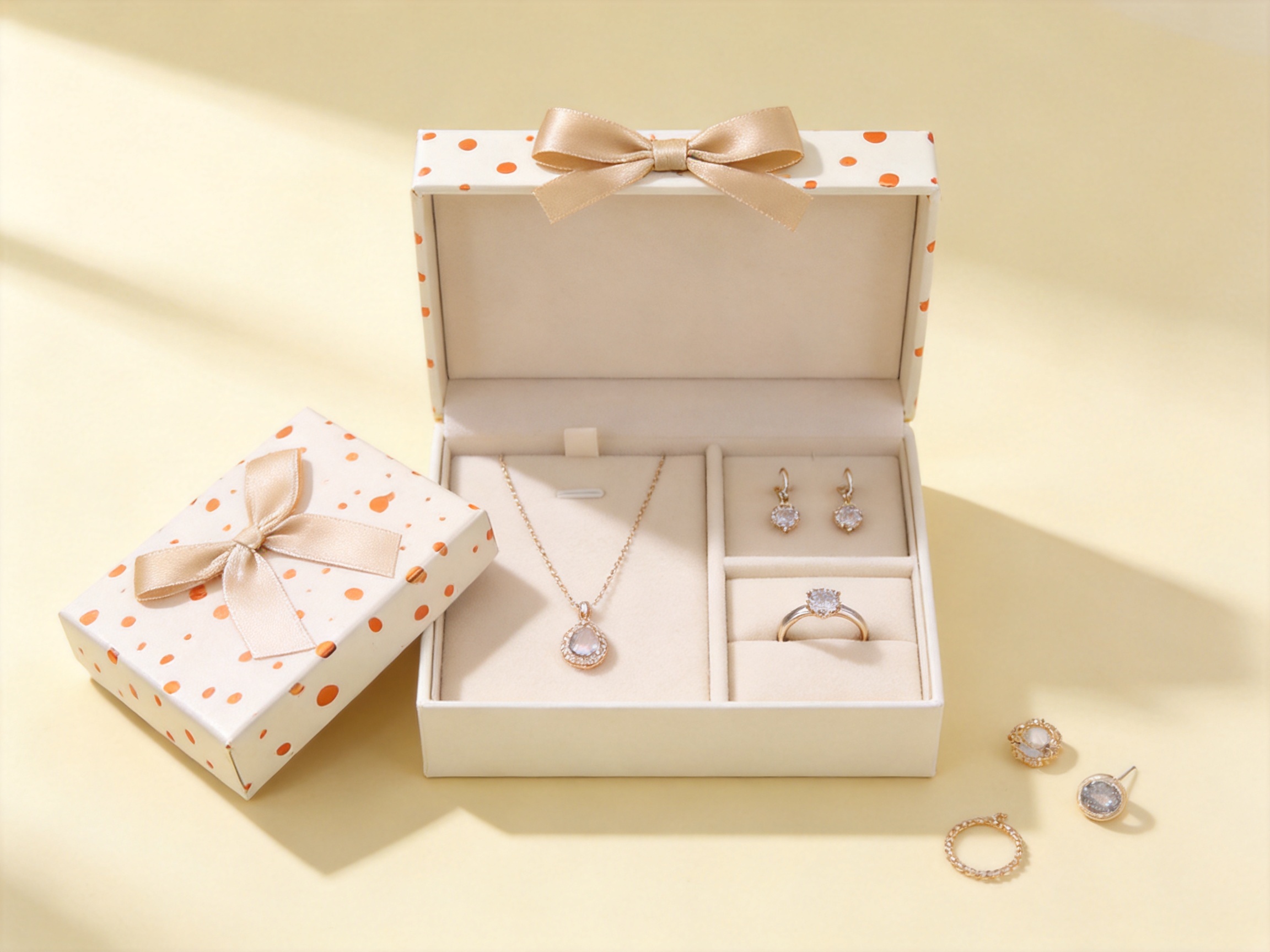
The box is intended for small jewelry and accessories. A properly fitted interior can help keep an item centered, reduce contact with the outer walls, and present the product in an attractive position when the lid is opened. The internal structure may vary according to the item being packaged. For example, a ring requires a different support arrangement from a bracelet or a pair of earrings.
When ordering, buyers should provide the product dimensions, weight, shape, and preferred display orientation. A professional packaging manufacturer can then recommend an insert, pad, slot, compartment, or other internal solution. This approach is more reliable than selecting a box based only on exterior measurements.
| Feature | Practical Benefit | Typical Business Value |
|---|---|---|
| Rectangular form | Easy storage, stacking, and carton packing | Improved inventory and shipping efficiency |
| Polka-dot pattern | Decorative appearance without a plain stock look | Higher shelf and gifting appeal |
| Ribbon bow | Ready-to-present gift appearance | Stronger emotional value and unboxing experience |
| Compact size | Designed for jewelry and small accessories | Suitable for retail counters, events, and e-commerce |
| Customizable format | Can be adapted to products and brand requirements | Consistent packaging across product lines |
Many standard jewelry boxes are designed primarily for basic containment. They may provide adequate protection but lack decorative details, gifting appeal, or a memorable visual identity. The A-7 design addresses these limitations by combining a functional structure with an intentionally decorative presentation.
A plain box typically depends on a label, sticker, or printed logo to create interest. While these elements remain useful, they may not be enough to produce a premium presentation. The polka-dot surface and bow ribbon create an attractive appearance before the customer even sees the brand mark.
This is especially valuable for businesses selling products in boutiques, gift stores, craft markets, social media shops, and online marketplaces. Attractive packaging can help a product stand out in photographs and can encourage customers to share their purchase on social platforms. A distinctive box may become part of the perceived product experience rather than an item that is immediately discarded.
Consumers often purchase jewelry as a gift for birthdays, anniversaries, holidays, graduations, engagements, weddings, and other personal occasions. If the product arrives in an ordinary box, the buyer may need to purchase additional wrapping paper, ribbons, or gift bags. A bow-adorned box reduces this extra effort.
The packaging is not intended to replace every form of outer shipping protection, but it can function as the presentation layer inside a mailer or parcel. This creates a more complete gifting solution. For retail stores, it can also shorten the time needed to prepare an item at checkout.
Perceived value is influenced by multiple factors, including product quality, presentation, consistency, and the care shown in preparation. A decorative box can make a modestly priced accessory feel more complete and considered. It does not change the intrinsic value of the jewelry, but it improves the way the product is introduced to the customer.
This advantage is important for emerging brands that compete with larger companies. A thoughtfully designed package can help a small jewelry business look more professional and establish a clearer market position without requiring an extremely complex box structure.
A standard jewelry box may be designed for one particular product or retail setting. The A-7 design can be used in multiple contexts. It may serve as point-of-sale packaging, a gift-ready package, an influencer mailer insert, an event favor box, or a presentation package for corporate and promotional gifts.
Its flexibility can reduce the number of packaging styles a business needs to manage. By using the same structural family with different inserts and printed finishes, a company can support several jewelry categories while maintaining a consistent visual language.
Unboxing has become an important part of e-commerce marketing. Customers frequently evaluate the quality of a purchase through the entire delivery experience, not only through the product itself. A box with a patterned exterior and ribbon bow can create a moment of anticipation as the parcel is opened.
For online jewelry sellers, the package may appear in customer photographs, video reviews, product demonstrations, and social media posts. A recognizable packaging style can support organic brand exposure. This is a competitive advantage over generic packaging that disappears into the background.
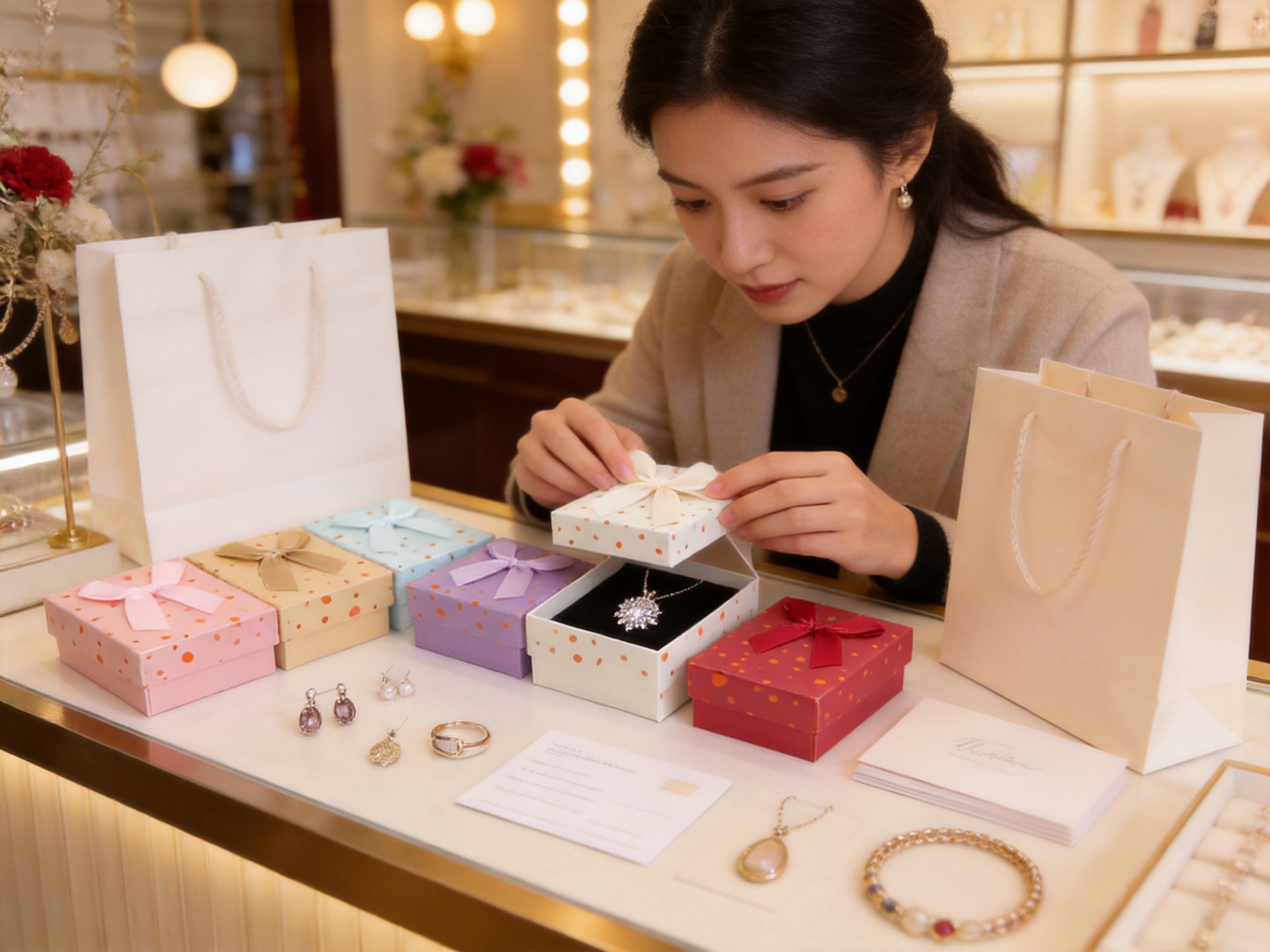
Jewelry stores can use the A-7 box for selected products, seasonal promotions, or gift purchases. It can be placed at the sales counter, used during special campaigns, or offered as an upgraded presentation option. The bow ribbon makes the package immediately appropriate for customers buying a present.
Retailers may also coordinate the box with shopping bags, tissue paper, thank-you cards, and display signage. A consistent color system can make the store appear more organized and reinforce the impression of a carefully managed brand.
Online jewelry sellers need packaging that can perform well in both photographs and physical delivery. The A-7 box offers a visually appealing presentation that can be shown in product listings or promotional content. When the customer receives the package, the design can confirm the quality suggested by the online presentation.
For e-commerce use, the jewelry box should be placed inside a suitable shipping carton, padded mailer, or protective outer package. The gift box is primarily the presentation and product-protection layer; it should not be expected to replace the full shipping system. Businesses should conduct drop, compression, vibration, and moisture exposure tests according to their logistics conditions.
Although intended for jewelry, the compact format can also support selected fashion accessories. Examples may include hair clips, small scarves, charms, pins, key accessories, compact beauty items, and other lightweight products. The suitability depends on the internal space and the ability of the insert to hold the product securely.
The box can be used for wedding favors, bridesmaid gifts, party jewelry, event souvenirs, and small appreciation gifts. Coordinated ribbons and printed surfaces can help event organizers create a unified theme. The compact shape is convenient for arranging large quantities on tables, in welcome bags, or at guest settings.
Companies may use small jewelry or accessory boxes for recognition gifts, promotional campaigns, employee appreciation programs, and customer loyalty initiatives. The exterior can potentially be adapted with a logo, message, color scheme, or campaign artwork. This allows a small gift to carry a clear corporate identity without requiring excessive packaging material.
One of the key advantages of working with a specialized gift box manufacturer is the ability to adapt a standard concept to a particular market or product. Customization should begin with the intended use rather than with decoration alone. A successful package must fit the product, survive normal handling, communicate the brand, and remain commercially practical.
The external dimensions can be adjusted to match different jewelry products. A shallow box may be suitable for earrings or rings, while a longer format may be more appropriate for a pendant, bracelet, or chain. Internal inserts can be shaped to secure the item and improve the visual presentation.
Buyers should consider the product’s dimensions with all attachments included. Clasps, chains, backing cards, protective films, and fabric pouches can affect the space required. A small amount of clearance is usually necessary, but excessive empty space may allow the item to shift during transport.
The polka-dot motif can be produced in different visual directions. The dots may be small and delicate, large and playful, evenly arranged, or combined with other graphic elements. Color selection should reflect the target market and the jewelry style. Soft neutral colors may suit classic accessories, while vivid contrasts may be suitable for fashion-led collections.
Color consistency is particularly important for repeat orders. Buyers should request production samples or approved color references when exact appearance is essential. Differences in paper stock, ink, lighting, and finishing can influence the final result.
The ribbon is one of the most visible customizable components. Options may include different colors, widths, textures, and finishes. Satin can create a smooth and elegant appearance, while textured or matte ribbon may communicate a more natural or contemporary style.
The ribbon should be selected according to the box size and intended handling conditions. A ribbon that is too wide may overpower a small package, while one that is too narrow may not create the desired visual effect. The attachment method should also be reviewed to ensure that the bow remains neat throughout storage and presentation.
A logo can be added through printing, foil stamping, embossing, debossing, labels, or other finishing methods. The best method depends on the paper surface, order quantity, budget, and desired brand image. A subtle logo can preserve the decorative charm of the polka-dot pattern, while a more prominent mark can make the box function as a stronger brand asset.
Branding should be placed where it will remain visible but not interfere with the opening experience. The lid, front panel, ribbon center, or an interior message area may all be considered. Businesses should evaluate the complete box from multiple angles before approving the final layout.
Interior inserts may be made from paperboard, molded paper, foam, fabric, or other appropriate materials. The selection should reflect product protection requirements, sustainability objectives, and the desired tactile experience.
Additional components may include care cards, authenticity cards, thank-you notes, small envelopes, or product information sheets. These materials can be designed to fit inside the box without creating excessive bulk. When the full packaging system is planned together, the customer receives a more coordinated and professional experience.
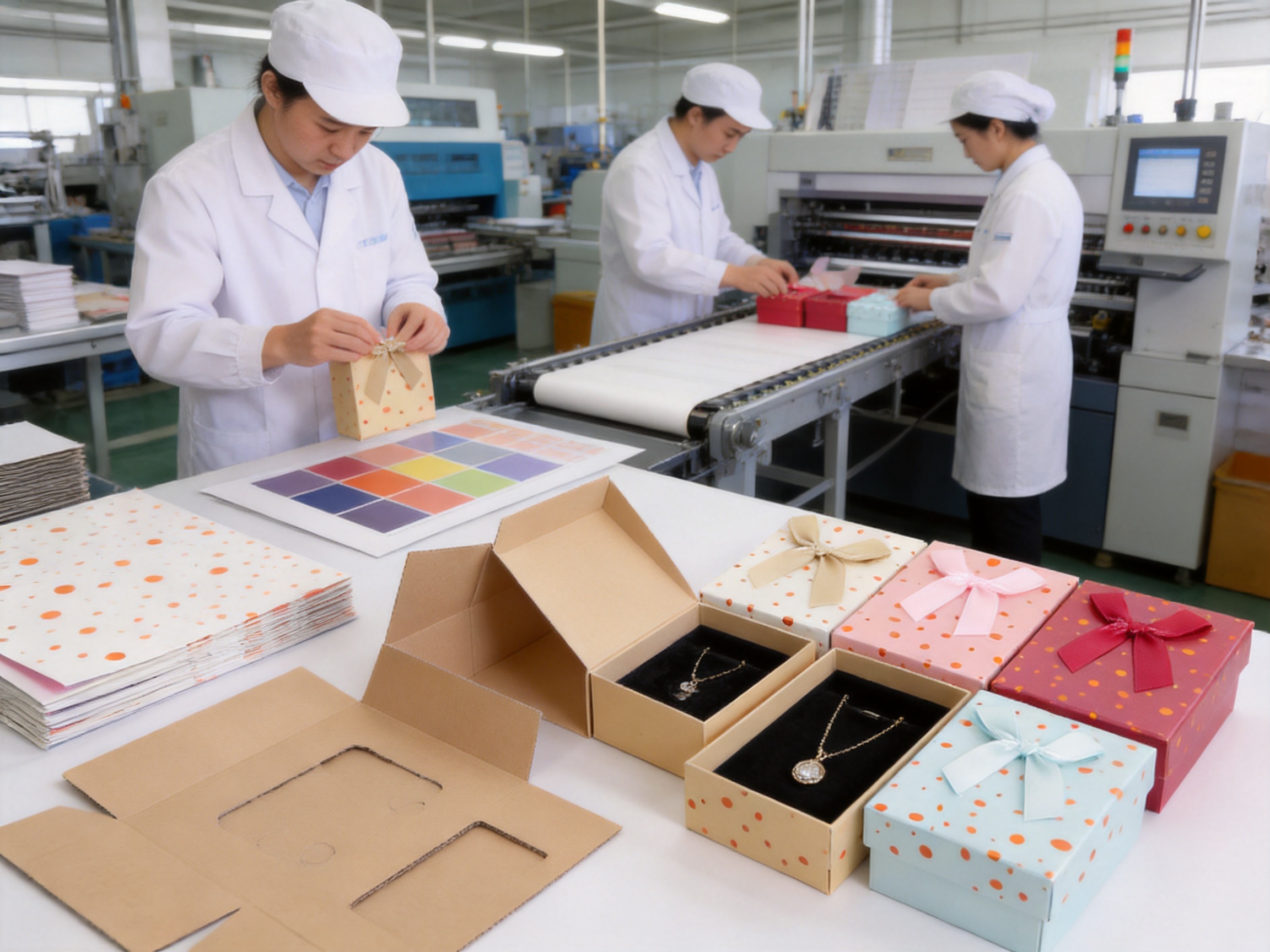
The final quality of a jewelry gift box depends on more than the printed surface. It is the result of multiple processes, including material selection, artwork preparation, printing, cutting, folding, forming, assembly, ribbon attachment, inspection, and packing. A manufacturer with integrated capabilities can coordinate these stages more effectively than a supplier that outsources every operation.
Production begins with a review of the product concept and technical requirements. The manufacturer evaluates the desired dimensions, construction, paper materials, pattern, ribbon, insert, logo, and packaging quantity. This stage is important because small jewelry boxes often require precise proportions. A minor change in lid overlap, insert depth, or fold position can affect the final user experience.
Technical drawings and prototypes help confirm whether the jewelry fits correctly and whether the box opens and closes smoothly. Sampling also allows buyers to judge the color, surface, rigidity, ribbon placement, and overall appearance before mass production begins.
Paperboard selection influences strength, folding performance, print quality, surface feel, and environmental characteristics. The appropriate material depends on the box structure, product weight, shipping conditions, and desired visual result.
A professional manufacturer can help select a paper material that balances appearance and performance. Excessively thin material may reduce structural stability, while an unnecessarily heavy board can increase cost and shipping weight. The goal is to achieve enough rigidity for the intended use without compromising efficiency.
For buyers with sustainability requirements, certified or responsibly sourced paper options may be considered. Zhejiang Shihao Gift Packaging Co., Ltd. reports FSC certification, which can support customers seeking packaging made within recognized responsible forestry systems. Certification details, scope, and product applicability should always be confirmed for the specific order.
The polka-dot appearance requires accurate printing or the use of a pre-printed decorative paper. Depending on the design, the surface may include additional treatments such as matte or gloss coating, lamination, foil accents, embossing, or spot effects.
Printing consistency is especially important when multiple boxes are displayed together. Uneven color density, misaligned patterns, or inconsistent registration can reduce the perceived quality of the package. Quality control should therefore include visual inspection under appropriate lighting and comparison with approved samples.
After printing, paperboard components are cut according to the approved structural design. Die-cutting must be precise so that the panels, tabs, and folds align correctly during assembly. Poor cutting can result in rough edges, loose corners, uneven lids, or visible gaps.
Folding and forming create the three-dimensional box. This process requires attention to crease depth and alignment. If creases are too shallow, the paper may resist folding; if they are too deep, the surface may crack or appear damaged. Experienced production teams can adjust equipment and methods according to the selected paper and structure.
Assembly brings the printed and cut components together. Depending on the design, this may involve folding, gluing, fitting, inserting internal supports, and attaching the ribbon bow. The ribbon should be positioned consistently from unit to unit, especially when the boxes are used in a premium retail environment.
Adhesive selection and application also matter. Excess adhesive can create stains or hard spots, while insufficient adhesive may cause separation during handling. A controlled assembly process reduces these risks and helps maintain a clean appearance.
Finished boxes should be checked for dimensions, structural integrity, print quality, surface damage, ribbon position, cleanliness, and opening performance. Sampling plans may be used for larger orders, while special projects may require more extensive inspection.
Proper packing protects the boxes before they reach the customer. Products should be arranged to reduce crushing, friction, and deformation during storage and transportation. Carton configuration should be considered together with the box’s final use, particularly when the packaging will travel internationally.
| Manufacturing Stage | Primary Quality Focus | Potential Risk if Poorly Controlled |
|---|---|---|
| Design development | Correct size, proportions, and product fit | Jewelry does not fit or appears poorly positioned |
| Material selection | Strength, surface quality, and suitable weight | Weak structure or unnecessary cost |
| Printing | Color, registration, and pattern consistency | Uneven or unprofessional visual appearance |
| Die-cutting | Accurate edges, tabs, and fold lines | Misaligned panels and rough construction |
| Assembly | Clean folds, secure adhesive, and ribbon placement | Loose components or inconsistent presentation |
| Final inspection | Appearance, dimensions, and functionality | Defects reaching retail or end customers |
| Export packing | Protection against compression and movement | Damage during storage or transportation |
Zhejiang Shihao Gift Packaging Co., Ltd. is presented as an export-oriented manufacturer specializing in paper gift packaging boxes. According to the supplied company information, the business has more than 15 years of experience in production, research and development, and sales. This combination is relevant to buyers who need more than a simple catalog product.
The company reportedly operates across approximately 20,000 square meters and employs around 300 people. It also reports advanced equipment and an average daily production capacity of approximately 5,000 sets of gift boxes. These figures indicate a manufacturing organization capable of supporting both product development and larger-scale production programs, subject to specific order requirements and scheduling.
A manufacturer with its own design and development capabilities can help customers improve a packaging concept before it enters production. This may include recommendations for box dimensions, insert design, ribbon coordination, paper selection, and finishing methods.
The supplied company information states that its design team updates dozens of products weekly. For customers, this suggests access to a broad and frequently refreshed product base. It can be useful for businesses looking for seasonal packaging, current design directions, or a starting point for custom development.
Production capacity matters when a packaging design becomes part of a regular sales program. A supplier may successfully produce a small sample order but struggle to maintain consistent quality and delivery performance at higher volumes. The reported daily capacity of approximately 5,000 sets provides an indication that the company is structured to handle ongoing production.
Capacity should not be considered only in terms of quantity. It also includes the ability to manage materials, coordinate multiple production stages, maintain quality standards, and pack finished goods correctly. These factors are particularly important for export customers that must plan inventory around seasonal demand.
The company reports exporting products to Europe, the United States, the Middle East, and other regions. Export experience can help a manufacturer understand the importance of carton protection, documentation, production communication, and delivery coordination.
International buyers should still confirm all order-specific requirements, including packaging regulations, labeling, material declarations, testing needs, customs documentation, and delivery terms. However, a supplier familiar with overseas markets may be better positioned to support these discussions.
The supplied company profile states that the manufacturer has passed BSCI and FSC certifications. BSCI-related compliance can be relevant to buyers evaluating social responsibility and workplace standards in the supply chain. FSC certification can be relevant to customers seeking paper products connected to responsible forestry practices.
Certifications should be reviewed carefully. Buyers may need to verify certificate validity, scope, product coverage, and whether the specific materials used in a particular order qualify. Responsible sourcing is strongest when certification, material traceability, manufacturing controls, and transparent documentation are considered together.
Markets differ in color preferences, gifting traditions, product categories, sustainability expectations, and retail presentation. A manufacturer that serves multiple regions may have broader experience in adapting packaging concepts to different customer requirements.
For the A-7 box, regional customization might include softer colors for a romantic gifting collection, stronger contrast for fashion accessories, festive artwork for holiday campaigns, or restrained printing for a luxury jewelry line. The underlying rectangular structure can remain familiar while the visual details change according to the target market.
Commercial packaging must perform consistently across hundreds or thousands of units. A single attractive sample is not enough. Retailers and brands need repeatability in size, color, folding, ribbon placement, and structural integrity.
The A-7 design offers several characteristics that can support commercial consistency. Its rectangular form is straightforward to measure and inspect. Its printed pattern can be compared against approved artwork. Its ribbon position can be standardized through assembly guidelines. Its compact size can simplify carton packing and inventory organization.
Consistency also affects customer trust. If a customer receives one gift box with a neat bow and another with a crooked or loose ribbon, the difference may influence their perception of the seller. Standardized production procedures help reduce such variations.
For brands that reorder regularly, it is helpful to retain approved samples, color references, artwork files, technical drawings, and production specifications. This creates a reference system for future orders and makes it easier to identify acceptable tolerances.
Paper gift packaging can support sustainability goals when it is designed, sourced, and disposed of responsibly. The A-7 box uses a paper-based presentation concept, which may be easier to integrate into paper recycling systems than packaging made from mixed materials. Nevertheless, sustainability depends on the complete construction.
Coatings, laminations, adhesives, ribbons, foam inserts, and metal components can affect recyclability. Buyers should discuss the full material composition with the manufacturer if recycling performance or environmental claims are important. A box should not be described as recyclable without understanding the local recycling system and the separation requirements for its components.
Material efficiency is another consideration. A compact box that fits the jewelry closely can reduce unnecessary paper use and shipping volume. Appropriate dimensions may also allow more units to fit into a carton, potentially reducing transportation impact per package.
Durability is part of sustainability as well. Packaging that protects the product and remains attractive during use is less likely to be replaced immediately. A well-made gift box may also be reused for storing jewelry, keepsakes, photographs, or other small items, extending its practical life beyond the original gift.
Customers seeking more sustainable solutions should discuss certified paper, recycled content, water-based or lower-impact finishes, minimal plastic use, and removable ribbon components. The best choice depends on the intended market, technical requirements, and available disposal infrastructure.
Before requesting a quotation, buyers should prepare basic product information. This includes the jewelry type, product dimensions, weight, quantity, desired box color, ribbon preference, branding requirements, internal insert, delivery destination, and target delivery date.
It is useful to explain whether the box will be used for retail display, e-commerce fulfillment, event gifting, or a combination of purposes. A box intended for a boutique counter may emphasize appearance, while one used for international shipping may require additional structural reinforcement or a stronger outer carton.
Buyers should request a pre-production sample when the project involves custom printing, special colors, logo finishing, or a new insert. The sample should be evaluated with the actual jewelry product, not only as an empty box. Important checks include lid fit, jewelry positioning, opening effort, ribbon appearance, interior cleanliness, and compatibility with secondary packaging.
Order quantities can affect the selection of printing methods, finishing options, and unit pricing. Standard designs may offer a lower entry quantity, while highly customized projects may require tooling or larger production runs. A professional supplier should explain these relationships clearly.
Communication about tolerances is also important. Paper products naturally involve small variations caused by material thickness, folding, printing, and assembly. Buyers should agree in advance on acceptable tolerances for dimensions, color, print registration, ribbon placement, and cosmetic imperfections.
The A-7 box can be integrated into a broader visual merchandising system. Jewelry stores may arrange boxes by color, collection, occasion, or product type. A group of coordinated polka-dot boxes can create a lively display while still keeping the products organized.
For online sellers, the box can be photographed closed, partially open, and fully open. Images should show the relationship between the jewelry and the packaging so customers understand the complete purchase experience. The ribbon bow can be used as a visual detail in close-up photography.
Brands can also include a small message inside the lid or on an insert. Examples might communicate care instructions, a thank-you note, a sustainability statement, or a seasonal greeting. These details can increase the emotional connection without adding substantial material.
When the packaging is customized, visual consistency should extend across all touchpoints. The box pattern, ribbon, website graphics, product cards, shipping materials, and social media images should support the same general identity. This makes the package more recognizable and helps customers associate the visual style with the brand.
A gift box creates a sequence of customer interactions. The recipient first sees the outer presentation, then handles the box, notices the texture and ribbon, opens the lid, and discovers the jewelry inside. Each step contributes to the perceived quality of the purchase.
The A-7 design supports this sequence through contrast between a patterned exterior and the product inside. The polka dots create an immediate decorative impression, while the bow signals that the package contains something special. If the interior is clean and appropriately fitted, the opening moment becomes more satisfying.
For jewelry brands, this experience can influence repeat purchases and recommendations. Customers may remember not only the item but also how it was presented. A well-designed box can therefore support customer retention, especially when combined with reliable product quality and good service.
The unboxing experience should remain practical. Excessive decoration that makes the box difficult to open, causes ribbon damage, or adds unnecessary bulk can reduce satisfaction. The strongest packaging designs combine visual appeal with intuitive handling.
Velvet pouches are lightweight and flexible, but they may provide less structure and less visual presence during gifting. Jewelry can shift inside a pouch, and the pouch may require an additional box or bag for presentation. The A-7 box offers a more defined display and can be placed directly on a counter or gift table.
Plain folding cartons may be economical and efficient, but they often require additional wrapping or decorative elements. The A-7 box builds decoration into the package through its polka-dot pattern and ribbon bow. This can reduce preparation time and improve the product’s presentation at the point of sale.
Rigid boxes can provide a highly substantial feel, but they may involve greater material use, higher cost, and increased shipping weight. The A-7 design offers a balance between decorative presentation and practical efficiency. It may be particularly appropriate for businesses that want an elevated appearance without adopting a very heavy or elaborate structure.
Plastic containers may offer visibility or impact resistance, but they can provide a different emotional and environmental impression. A paper-based gift box often feels more appropriate for personal gifting and can align more naturally with paper-focused branding. The best choice depends on the product, market, shipping requirements, and sustainability objectives.
| Jewelry or Accessory | Recommended Packaging Approach | Important Consideration |
|---|---|---|
| Earrings | Use a compact insert with paired slots or a backing card | Prevent movement and keep the pair aligned |
| Rings | Use a ring slot or shaped cushion | Keep the ring upright and visible when opened |
| Pendants | Use a card, groove, or soft support for the chain | Reduce tangling and maintain a neat display |
| Bracelets | Use a longer insert or wrap support | Confirm length and clasp clearance |
| Charms | Use a small cushion, card, or compartment | Prevent small items from shifting inside the box |
| Fashion accessories | Use a customized insert based on product shape | Check height, width, and surface protection |
Small brands often need packaging that looks professional without requiring a complex development program. A decorative stock-inspired design can provide a strong starting point. The polka-dot surface and ribbon bow already create a finished appearance, while smaller branding additions can make the box more distinctive.
For a new business, the box can also help establish a repeatable customer experience. Using the same package for every order creates consistency and reduces the need to make individual wrapping decisions. As sales grow, the brand can move toward more extensive customization while retaining the basic structural concept.
Established retailers may use the box as part of a seasonal collection, a special gifting range, or a limited-edition campaign. Because the structure is compact and adaptable, it can supplement existing packaging without replacing the entire packaging system.
Retailers can also use different ribbon colors to distinguish collections or price levels. This creates visual organization while keeping the underlying package consistent.
Large-volume buyers generally focus on consistency, production capacity, lead time, quality control, and export packing. A manufacturer with reported large-scale facilities and an established production workforce may be better suited to these needs than a small workshop with limited equipment.
High-volume customers should establish clear approval procedures, inspection standards, carton specifications, and reorder conditions. These measures help maintain consistency over time and reduce misunderstandings between the buyer and supplier.
The difference between a decorative concept and a successful commercial product is often found in manufacturing execution. A bow that is attractive in a sample must remain attractive after packing and transport. A printed pattern must remain consistent across production batches. A box that looks good must also open smoothly and hold the product securely.
Professional manufacturing supports these requirements through equipment, trained workers, documented processes, sampling, inspection, and production management. It also makes it easier to develop variations of the same design for different product sizes or markets.
Zhejiang Shihao Gift Packaging Co., Ltd. describes itself as a manufacturer specializing in paper gift packaging, storage boxes, folding boxes, jewelry boxes, and other related products. Its reported experience, design resources, equipment, production capacity, export activity, and certifications create a foundation for serving customers that need both standard and customized packaging.
For buyers, the greatest advantage is not simply access to one gift box model. It is the ability to work with a supplier that can potentially support the complete packaging process, from initial concept and prototype development to production, inspection, and export preparation.
Paper gift boxes should be stored in a clean, dry environment away from direct sunlight, excessive humidity, and heavy compression. Moisture can affect paper rigidity, adhesives, printed color, and ribbon appearance. Heavy objects should not be placed on top of cartons for extended periods.
During retail handling, staff should avoid dragging the boxes across rough surfaces or pulling the ribbon excessively. If the box is used in a shipping process, it should be placed inside a protective outer package with sufficient cushioning and space control.
Jewelry should be checked for sharp edges or components that could scratch the interior. If the product contains oils, liquids, or materials that may transfer color, an appropriate protective layer should be used between the product and the paper insert.
The box is designed for small jewelry and accessories, including earrings, rings, pendants, bracelets, charms, and similar lightweight items. The exact suitability depends on the product dimensions and the internal insert. Buyers should provide actual product measurements before confirming the final box size.
Yes. The polka-dot pattern and bow ribbon give the box a gift-ready appearance. It can be used as the presentation package for birthdays, anniversaries, holidays, weddings, and other occasions. For shipping, it should still be placed inside a suitable protective outer package.
Customization may be available for paper color, printed artwork, and other surface details. The final options depend on the order quantity, printing method, material selection, and production requirements. A sample should be approved when exact color matching is important.
Ribbon color and style may be customized according to the design and order requirements. Buyers should confirm the available ribbon materials, widths, finishes, and attachment methods with the manufacturer.
Branding may be added through printing, labels, foil, embossing, debossing, or other suitable processes. The best method depends on the paper surface, artwork, quantity, budget, and desired appearance.
Yes, an insert should be selected according to the jewelry type. Ring slots, earring cards, pendant supports, bracelet cushions, compartments, and other formats may be considered. The insert must be tested with the actual product to confirm fit and presentation.
It can be used as the presentation box inside an e-commerce shipment. However, the box itself should not be treated as the complete shipping package. A protective mailer or carton is recommended to reduce the risk of crushing, moisture exposure, and surface damage during delivery.
The main difference is the combination of the rectangular structure with a polka-dot exterior and bow ribbon. These elements create greater visual appeal, stronger gifting convenience, and a more memorable unboxing experience than a plain box with no decorative treatment.
The paper-based construction may support sustainability objectives, but the complete material composition must be reviewed. Buyers should ask about paper sourcing, recycled content, coatings, adhesives, ribbons, inserts, and recyclability in the target market. The supplied company information reports FSC certification, which may be relevant to responsible paper sourcing requirements.
Useful information includes product type, jewelry dimensions, product weight, quantity, preferred box size, artwork, logo, ribbon color, insert requirements, delivery destination, packaging standards, and target schedule. Providing these details early helps the manufacturer recommend an appropriate solution.
A prototype or pre-production sample is strongly recommended for customized projects. It allows the buyer to test product fit, opening performance, color, ribbon placement, print quality, and compatibility with shipping materials before mass production.
It may be suitable for compact accessories, small keepsakes, event favors, promotional items, and selected beauty or lifestyle products. The product must be evaluated for size, weight, shape, and surface compatibility before use.
The A-7 Rectangular Polka-Dot Small Jewelry Gift Box with Bow Ribbon is a strong option for businesses seeking compact packaging with an attractive gift presentation. Its rectangular structure supports efficient storage and organization, while the polka-dot pattern adds personality and the bow ribbon creates an immediate sense of occasion.
Its main competitive advantage is the balance between decorative appeal and practical usability. It is more expressive than a plain stock box, more gift-ready than a basic folding carton, and potentially more lightweight and efficient than a heavily rigid luxury package. This balance makes it suitable for jewelry stores, e-commerce sellers, fashion accessory brands, events, promotions, and personal gifting.
The product becomes even more valuable when supported by professional customization and manufacturing. Zhejiang Shihao Gift Packaging Co., Ltd. reports more than 15 years of experience, a large production facility, approximately 300 employees, advanced equipment, substantial daily capacity, export experience, design resources, and BSCI and FSC certifications. These reported strengths can support buyers looking for a packaging partner capable of handling development, production, quality control, and international supply requirements.
For the best result, buyers should treat the box as part of a complete packaging system. Product fit, insert design, paper selection, ribbon quality, printing, shipping protection, sustainability, and brand presentation should all be considered together. When these elements are coordinated, the A-7 box can do more than hold jewelry. It can communicate care, improve the customer experience, and help a small product make a stronger impression.
1. Product specifications and descriptive materials for the A-7 Rectangular Polka-Dot Small Jewelry Gift Box with Bow Ribbon.
2. Company profile and manufacturing information supplied for Zhejiang Shihao Gift Packaging Co., Ltd.
3. General principles of paperboard packaging design, structural development, printing, die-cutting, folding, and assembly.
4. General guidance on jewelry packaging, product presentation, retail merchandising, and e-commerce unboxing experiences.
5. General considerations for FSC-certified paper sourcing, responsible packaging materials, and packaging recyclability.
Recommended Products

Contact Us

No. 15, Xiayang Road, Huangzhai Town, Jinhua, Zhejiang, China

(+86) 579-84230069

(+86) 13085675766


Products

Gift Box Packaging Manufacturer
 English
 Français
 Español
 عربى