2026-07-29
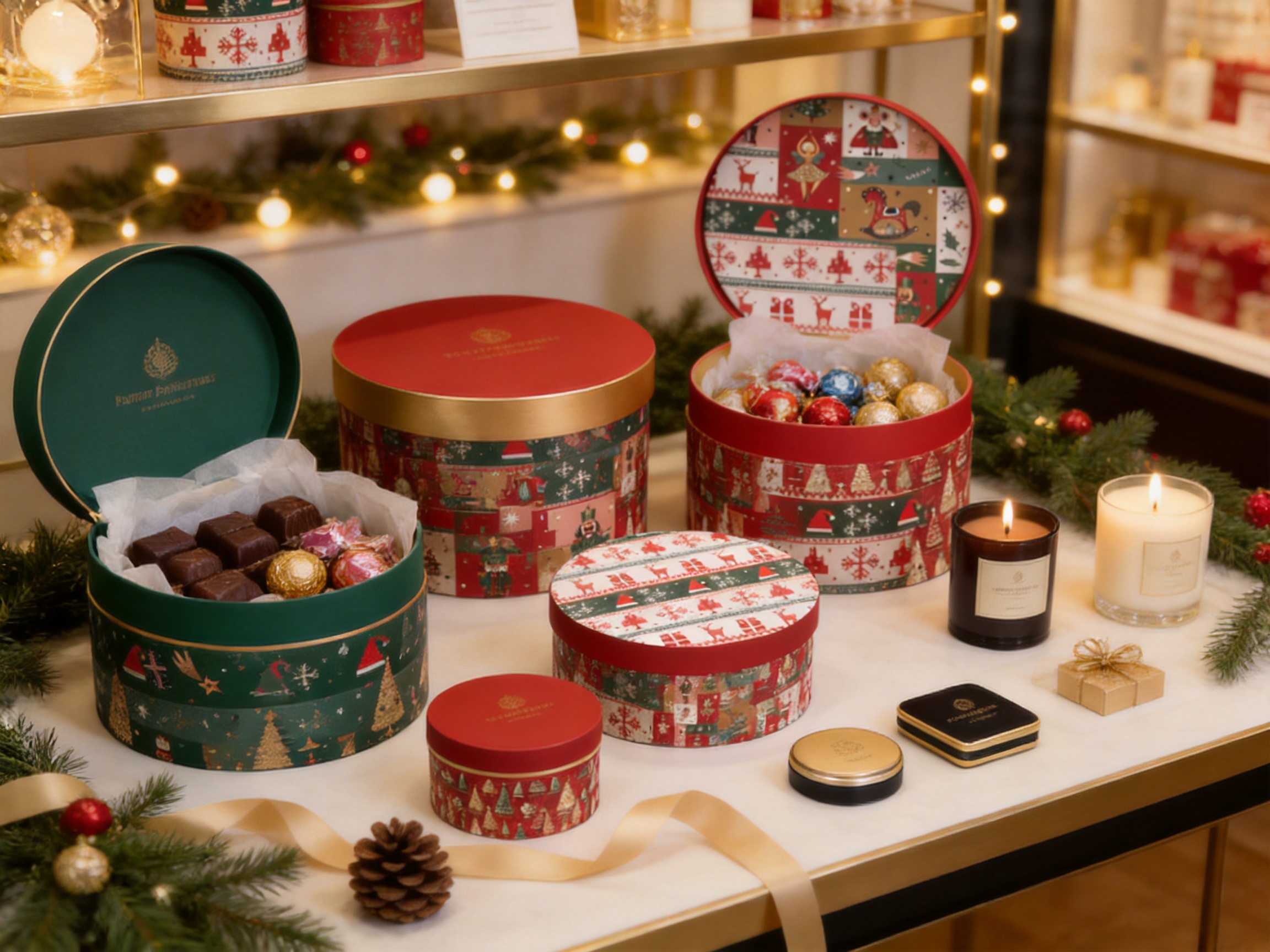
Packaging has become an essential part of the holiday gifting experience. A well-designed gift box does more than protect its contents; it creates anticipation, communicates quality, and reinforces the emotional value of the gift inside. The 813 Round Coated Paper Christmas Pattern Gift Box is designed around these principles, combining a festive appearance with practical construction, customizable decoration, and scalable manufacturing support.
Created for Christmas chocolates, candies, ornaments, small personal gifts, corporate presents, and seasonal retail collections, this round gift box offers an attractive alternative to ordinary rectangular cartons and basic folding packages. Its circular profile provides a distinctive presentation, while coated paper, cardboard construction, matte lamination, and gold foil stamping contribute to a premium visual and tactile experience.
The product is manufactured by Zhejiang Shihao Gift Packaging Co., Ltd., an export-oriented paper packaging manufacturer with more than 15 years of experience. The company operates a 20,000-square-meter production facility, employs approximately 300 people, and has an average daily production capacity of about 5,000 gift box sets. Its production capabilities, design resources, certifications, and international experience allow buyers to develop both standard seasonal packaging and fully customized gift box programs.
The 813 gift box is a round Christmas packaging solution made from coated paper and cardboard. Its outer surface can feature seasonal artwork, including Christmas trees, snowflakes, stars, ornaments, decorative patterns, or warm holiday lighting effects. The design can be adapted for different customer requirements, making the product suitable for private-label brands, promotional campaigns, department stores, confectionery companies, corporate gifting programs, and specialty retailers.
The package combines two important visual treatments. Matte lamination creates a smooth, subdued surface with a refined finish, while gold foil stamping adds bright metallic highlights to selected design elements. The contrast between the soft matte background and reflective gold details gives the box a more dimensional appearance than conventional single-process printing.
The round format is one of the product’s most noticeable advantages. Many gift boxes use familiar square or rectangular structures. Although those formats remain practical, a cylindrical or round presentation can make a product appear more distinctive on shelves, gift tables, and online product pages. The circular shape is especially suitable for sweets, candles, ornaments, accessories, and other compact items associated with holiday gifting.
| Project Number | 813 |
| Product Type | Round Christmas gift box |
| Primary Material | Coated paper and cardboard |
| Surface Finish | Matte lamination with gold foil stamping |
| Available Size Range | From approximately 35 × 17.3 cm to 15.3 × 8.7 cm, depending on size specification |
| Customization | Patterns, text, logos, dimensions, and packaging design |
| Design File Support | Adobe Illustrator and CorelDRAW-compatible files |
| Sampling Period | Approximately 5–7 days |
| Typical Applications | Chocolates, candies, ornaments, corporate gifts, seasonal retail products, and promotional items |
Packaging shape has a direct influence on how consumers perceive a product. A round box tends to appear softer, more decorative, and more gift-oriented than a standard angular carton. The absence of sharp visual corners can support a warm and celebratory brand identity, which is particularly relevant during Christmas and other seasonal occasions.
The circular structure also creates a natural focal point. Printed artwork can flow around the surface, allowing designers to arrange snowflakes, stars, ribbons, trees, and other motifs in a continuous pattern. Logos and greetings can be positioned prominently without competing with the hard visual divisions created by rectangular panels.
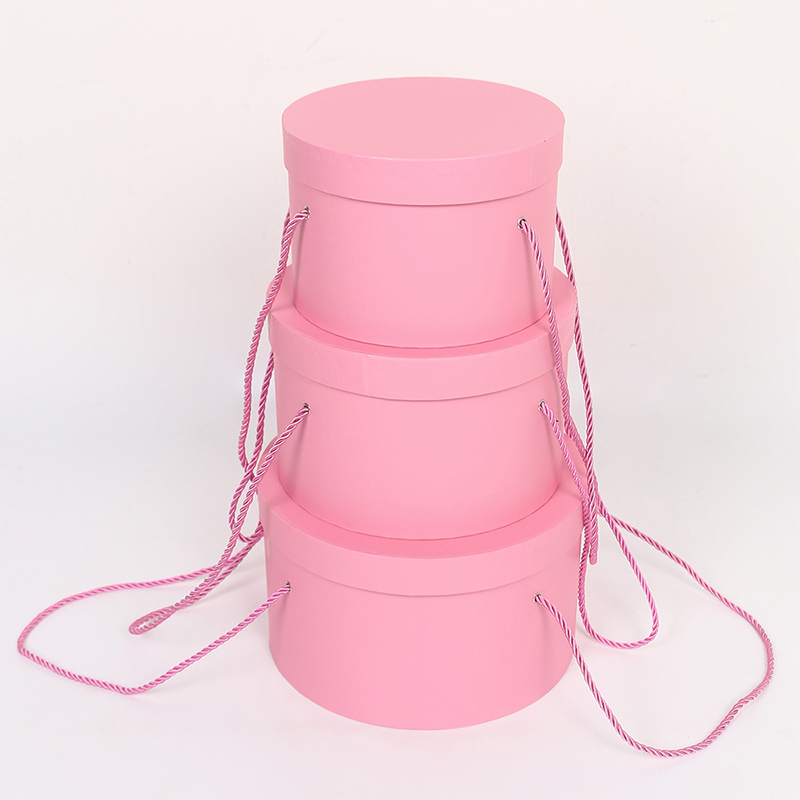
From a merchandising perspective, round boxes can be arranged in individual displays, grouped by size, or stacked as coordinated collections. A series of graduated sizes can create a visually appealing tower, while several identical boxes can form a consistent holiday display. The product information identifies a range of sizes, allowing buyers to select dimensions appropriate for different contents and price points.
The round shape also supports flexible product positioning. A confectionery brand may use a wider version for assorted chocolates, while a narrower version may be used for candy, tea, small accessories, or decorative ornaments. This adaptability allows one packaging concept to serve multiple product categories without losing visual consistency.
The 813 box uses coated paper combined with cardboard. Coated paper provides a suitable surface for detailed printing and decorative finishing, while the cardboard structure gives the package the rigidity required for presentation and everyday handling. This combination is commonly used in premium paper packaging because it balances appearance, structural support, and production flexibility.
Cardboard reinforcement helps the box retain its shape during filling, transport, display, and gifting. Compared with thin paper-only packaging, a cardboard-supported structure is less likely to collapse or appear weak when placed on a shelf. It also provides a more substantial unboxing experience, which can influence customer impressions of the product and the brand behind it.
The coated outer layer supports high-quality graphics. Christmas artwork often contains fine lines, contrast between light and dark tones, and small decorative features. A suitable coated surface helps these elements appear cleaner and more defined. It also provides an effective base for matte lamination and foil decoration.
Material selection can be adjusted according to the intended contents, distribution conditions, and market requirements. For lightweight products such as candies or small ornaments, a standard structure may be sufficient. For heavier gift sets or products that will be transported over longer distances, buyers can discuss the appropriate board construction and internal support with the manufacturer’s design and production teams.
The box is primarily an outer presentation package, so the contents should be selected and packed according to their own protection requirements. Internal trays, paper inserts, wrapping sheets, dividers, or other components may be considered where necessary. These additions can be developed as part of a complete custom packaging project.
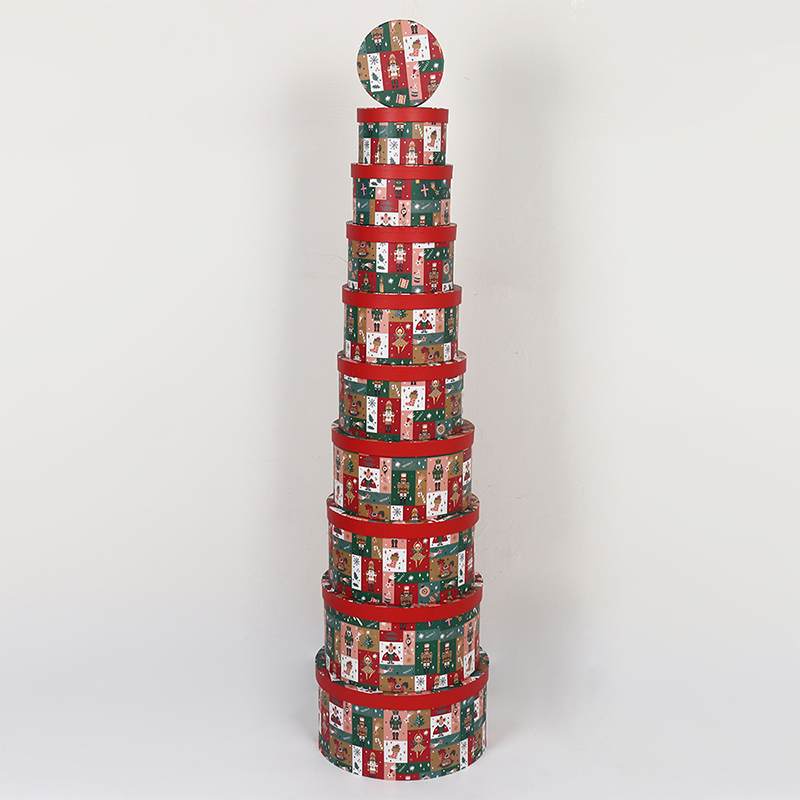
813 Round Coated Paper Christmas Pattern Gift Box With Gold Foil Stamping And Matte Lamination
Matte lamination is one of the defining characteristics of this gift box. Unlike a high-gloss finish, matte lamination reduces surface reflection and creates a softer visual effect. This makes the package appear more elegant and less visually aggressive, which is useful for premium holiday collections and brands that want a sophisticated presentation.
The matte surface also creates a pleasant tactile impression. When a customer picks up the box, the finish feels smooth and controlled rather than overly shiny or slippery. This tactile quality contributes to the perception of craftsmanship and can make the unboxing process feel more deliberate.
Matte lamination can be particularly effective when used with deep red, forest green, navy, white, cream, or other traditional Christmas colors. It gives saturated colors a more luxurious appearance and allows gold foil details to stand out with greater contrast. Designers can also use pale backgrounds and subtle patterns to create a quiet, modern seasonal look.
Another benefit is visual consistency. Holiday displays often include strong lighting, reflective decorations, and metallic ornaments. A fully glossy box may produce unwanted glare in retail or photography settings. The matte finish provides a calmer surface that can make printed artwork and logos easier to view from different angles.
Although matte lamination is attractive, it should be considered as part of a complete design system. Very small text, delicate lines, and low-contrast colors should be tested during sampling. The manufacturer’s in-house design team can advise on artwork scale, color combinations, foil placement, and finishing compatibility before mass production.
Gold foil stamping adds a bright metallic accent to the surface of the box. It can be applied to Christmas greetings, brand names, logos, borders, snowflakes, stars, ribbons, or selected elements of the main pattern. Rather than covering the entire surface, foil is generally most effective when used selectively to guide attention and create contrast.
The combination of matte lamination and gold foil is an important competitive advantage over ordinary printed gift boxes. Standard ink printing can reproduce attractive patterns, but metallic foil provides a different level of visual impact. When light moves across the package, the foil catches the eye and creates a premium effect that is difficult to achieve with flat color alone.
Gold foil is also highly appropriate for the holiday season. Gold is associated with celebration, warmth, luxury, and special occasions. When paired with Christmas imagery, it can make a modest gift appear more valuable and carefully prepared. This makes the box suitable for both affordable seasonal products and higher-end corporate or boutique gift programs.
Foil stamping can be incorporated into a wide range of design directions. A traditional design may use gold foil for a decorative frame and classic greeting. A contemporary design may use a simple logo, geometric snowflake, or minimal line pattern. A children’s collection may combine foil stars with colorful illustrations. The process is flexible enough to support different brand identities while preserving the product’s premium character.
The standard concept is based on Christmas patterns, but the product is not limited to one fixed artwork. Customers can personalize patterns, text, logos, colors, and other visual elements according to their market and sales channel. This is especially valuable for brands that need seasonal packaging aligned with an existing identity.
Traditional Christmas artwork may include evergreen trees, snowflakes, bells, gift ribbons, stars, holly leaves, reindeer, ornaments, or winter landscapes. These elements can be combined into a dense repeating pattern or arranged as a central illustration. The choice depends on whether the box is intended to look playful, classic, luxurious, natural, or modern.
Corporate buyers may prefer a restrained design with a small logo, a short greeting, and carefully controlled use of gold foil. Retail brands may choose stronger color contrast and a more recognizable shelf pattern. Hotels, restaurants, bakeries, and event organizers may add a company message or event date to create a personalized gift experience.
Customization can also support regional preferences. Different markets may favor different colors, greetings, illustrations, and levels of decoration. A manufacturer with export experience can help customers adapt the packaging concept for Europe, the United States, the Middle East, and other regions. This reduces the need to rely on a single universal design when a more localized approach could improve customer response.
Artwork preparation is an important part of the process. The company supports design files prepared with Adobe Illustrator or CorelDRAW-compatible software. Customers should provide high-resolution artwork, vector logos where possible, clear color references, and precise instructions for foil areas. If the buyer does not have finished artwork, the in-house design team can provide professional advice and assist with development.
The 813 gift box offers several advantages over basic paper cartons and unprinted seasonal packaging. The first is differentiation. A round structure immediately creates a distinct silhouette, helping the product stand apart from rectangular competitors in a crowded holiday display.
The second advantage is surface quality. Coated paper allows refined graphics, matte lamination creates a soft premium feel, and gold foil stamping introduces reflective detail. A basic carton with one-color printing may be functional, but it usually cannot deliver the same combination of texture, contrast, and visual depth.
The third advantage is customization. Many off-the-shelf seasonal boxes are limited to predetermined designs and sizes. The 813 product can be adapted with customer artwork, text, logos, and potentially different dimensions. This gives brands greater control over how the packaging supports their positioning and promotional objectives.
The fourth advantage is product range flexibility. The available size specifications indicate multiple options, allowing buyers to create coordinated packaging for different gift contents. A family of related sizes can support assorted products while maintaining a consistent seasonal identity.
The fifth advantage is manufacturing support. Buyers are not required to manage every technical detail independently. The supplier provides design assistance, sampling, production capability, and export experience. This integrated approach can be more efficient than sourcing design, printing, finishing, assembly, and packaging from separate vendors.
Compared with plastic containers, the paper-based structure offers a more traditional gift presentation and may align better with brands seeking paper packaging solutions. Coated paper and cardboard can also support printed storytelling, seasonal illustrations, and tactile finishing in ways that are difficult to reproduce on a plain plastic container.
Zhejiang Shihao Gift Packaging Co., Ltd. is an export-oriented manufacturer specializing in the production, research and development, and sales of paper gift packaging boxes. More than 15 years of industry experience provide a foundation for understanding materials, structural design, printing, finishing, assembly, and international order requirements.
The company’s facility covers approximately 20,000 square meters and employs around 300 people. This scale supports coordinated work across design, sampling, production, quality management, and order fulfillment. A larger manufacturing organization can be particularly valuable for buyers who require repeat orders, multiple size variations, or coordinated delivery for seasonal campaigns.
The reported average daily production capacity is approximately 5,000 sets of gift boxes. This capacity can support both regular production programs and seasonal demand increases. Christmas packaging is often ordered within a limited selling window, so production planning and schedule control are especially important. Early communication about quantities, artwork approval, sample confirmation, and delivery requirements helps reduce seasonal risk.
The company also updates dozens of products weekly through its design and research capabilities. This product development activity is relevant to buyers seeking current packaging trends rather than outdated seasonal formats. New patterns, structures, and finishing combinations can be evaluated for different markets and target customers.
Production strength is not limited to machinery or physical output. It also includes the ability to translate a concept into a manufacturable package. A strong packaging manufacturer must consider the relationship between artwork, curved or round surfaces, material behavior, foil placement, lamination, structural stability, and final assembly. The company’s in-house design team can provide advice at this stage, helping customers avoid unnecessary production problems.
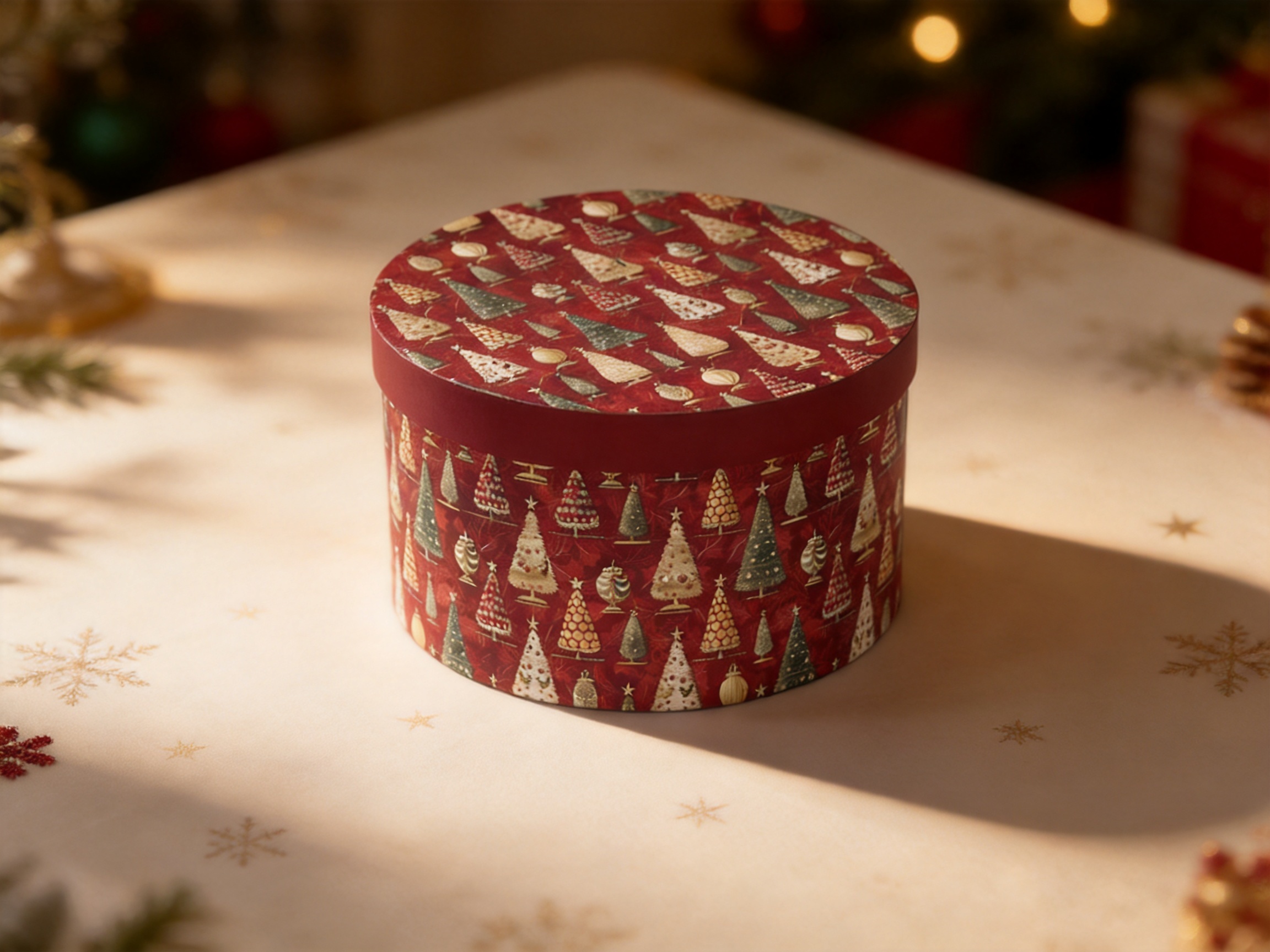
The process begins with a discussion of the customer’s product, target market, preferred dimensions, quantity, budget, delivery schedule, and visual direction. Buyers may submit an existing design or request a new concept. The design team can advise on the suitability of different materials, patterns, printing methods, and finishing treatments.
Once the basic concept is defined, the structure is reviewed according to the intended contents and packaging requirements. The round shape must be planned carefully so that the outer paper covering, cardboard support, lid, base, and any additional components align correctly. The dimensions should account for the product inside, protective materials, and the desired presentation.
Artwork is prepared using vector-based design files whenever possible. This supports clean reproduction of logos, text, borders, and foil elements. The design team reviews bleed areas, print placement, color separation, foil boundaries, and the relationship between the artwork and the round surface.
Samples are generally prepared within approximately 5–7 days, subject to design complexity and confirmation of specifications. Sampling allows buyers to evaluate the dimensions, structure, surface finish, colors, foil effect, lid fit, and overall appearance before approving mass production.
After sample approval, production files and specifications are finalized. Material quantities, printing requirements, lamination, foil stamping, cutting, forming, assembly, and packing are coordinated. Clear approval at this stage is essential because changes made after production begins may affect cost and schedule.
The coated paper is printed with the approved Christmas pattern or customized artwork. Matte lamination is then applied to create the desired surface effect. Gold foil stamping is performed on the designated areas, adding metallic accents to the design. The order of operations and technical settings are managed according to the selected materials and finishing requirements.
Printed components are converted into the round box structure and combined with the cardboard support. Assembly requires attention to alignment, edge finishing, shape consistency, and lid fit. A well-assembled box should look balanced from all sides and provide a stable presentation when filled.
Finished boxes are reviewed for visible printing issues, foil placement, lamination quality, structural defects, and assembly consistency. Products are then packed for shipment according to the agreed requirements. For export orders, packing methods should be selected to reduce the possibility of crushing, surface abrasion, or deformation during handling and transportation.
Buyers evaluating a round Christmas gift box should consider both appearance and function. A beautiful surface cannot compensate for a weak structure, poor lid fit, or inconsistent assembly. Conversely, a rigid package with unattractive graphics may fail to create the desired emotional response. The value of the 813 product comes from the combination of construction and decoration.
During sample approval, customers should check whether the box stands evenly on a flat surface. They should also examine whether the lid opens and closes smoothly, whether the edges are properly finished, and whether the dimensions are suitable for the intended product. If the contents are fragile, the buyer should confirm whether additional inner protection is needed.
Surface quality should be assessed under different lighting conditions. Matte lamination should appear even and free from obvious bubbles, wrinkles, or contamination. Foil stamping should be positioned accurately, with clean edges and appropriate coverage. Printed Christmas patterns should maintain consistent color and registration across the box.
Customer logos and text deserve special attention. Small lettering may lose clarity if it is placed on a complex pattern or if the foil area is too fine. Designers should use adequate line thickness and sufficient contrast. The sampling stage provides an opportunity to enlarge text, simplify artwork, or adjust the foil treatment before mass production.
For large orders, buyers may request agreed inspection standards and reference samples. Quality requirements should be documented before production, including acceptable color variation, dimensional tolerance, surface defects, packaging method, and labeling. Clear specifications create a shared basis for supplier and customer evaluation.
The 813 box is suitable for chocolate and confectionery packaging. A round presentation can make assorted chocolates, truffles, cookies, candies, and seasonal sweets feel more special. The box may be used for individual retail products, gift assortments, employee gifts, or promotional campaigns.
It can also package Christmas ornaments and small decorative items. The circular shape provides an appropriate visual connection with ornaments, while the cardboard construction offers a more substantial container than a simple paper sleeve. Inner protection should be considered for fragile glass, ceramic, or delicate decorative products.
Corporate gifting is another important application. Businesses can customize the box with their logo, a holiday greeting, or a message for clients and employees. Gold foil can be used to create a formal appearance, while the matte finish keeps the design understated. Multiple sizes can support different gift levels or recipient categories.
Retailers can use the box for private-label Christmas collections. A coordinated set of printed round boxes can help establish a recognizable seasonal shelf presence. Retail packaging teams may choose different artwork colors for separate product flavors, gift values, or customer groups while retaining the same structural format.
Hotels, restaurants, bakeries, event planners, and hospitality companies may also use customized versions for seasonal welcome gifts, table favors, take-home treats, or conference packages. The ability to add a company identity makes the packaging more than a container; it becomes part of the customer communication experience.
The box may be adapted for small accessories, candles, soaps, stationery items, or other compact products. Buyers should confirm product compatibility with the manufacturer, particularly where the contents are heavy, oily, moisture-sensitive, or likely to require internal protection.
Paper-based packaging is increasingly selected by brands that want a material associated with renewable resources, printability, and responsible disposal. The 813 box uses coated paper and cardboard, making it appropriate for companies exploring paper gift packaging as an alternative to packaging formats dominated by plastic or mixed materials.
The company has passed BSCI and FSC certifications, according to the provided company information. These certifications can support buyer due diligence and responsible sourcing discussions, although customers should confirm the scope, validity, and applicability of specific certification documents for each order and material specification.
Sustainability depends on more than the primary material. Buyers should also review inks, laminations, foils, adhesives, inserts, protective components, and shipping materials. A packaging project can be improved by minimizing unnecessary components, selecting appropriately sized boxes, reducing empty space, and designing structures that avoid excessive material use.
The round format should be evaluated according to the product it protects. If the shape allows a better fit or eliminates additional inner packaging, it may contribute to material efficiency. If it creates excessive unused volume, the design team can review alternative dimensions. Responsible packaging decisions should balance presentation, protection, logistics, and end-of-life considerations.
Customers serving markets with specific environmental regulations should communicate those requirements before production. Material declarations, certification requests, packaging labeling, and recycling guidance may vary by destination. Early discussion helps ensure that the selected construction and finishing methods are appropriate for the target market.
One of the strongest advantages of the supplier is the integration of design, development, manufacturing, and export support. When these functions are handled by one experienced manufacturer, communication can be more direct. The customer does not need to translate design instructions between multiple independent companies or coordinate separate production schedules.
The in-house design team can identify potential problems before they become expensive. For example, designers can review whether a logo is suitable for foil stamping, whether a pattern will align correctly around a round box, whether a selected color will work with matte lamination, and whether the structure is appropriate for the contents.
Sampling also becomes more efficient when the same organization can move from concept to physical prototype. The 5–7-day sampling period provides a practical opportunity to test the design before finalizing a larger seasonal order. A physical sample is particularly important for round packaging because screen images cannot fully communicate curvature, surface feel, lid fit, and metallic reflection.
Production capacity supports repeatability. Once a design has been approved, the manufacturer can produce additional quantities using the documented specifications. This is useful for brands that launch an initial holiday collection and then require replenishment, or for businesses that use similar packaging across multiple markets.
Export experience is also important. International orders involve communication across time zones, shipping documentation, payment arrangements, packaging requirements, and destination-specific expectations. The company accepts wire transfers, letters of credit, and other payment methods, giving buyers flexibility when establishing commercial terms.
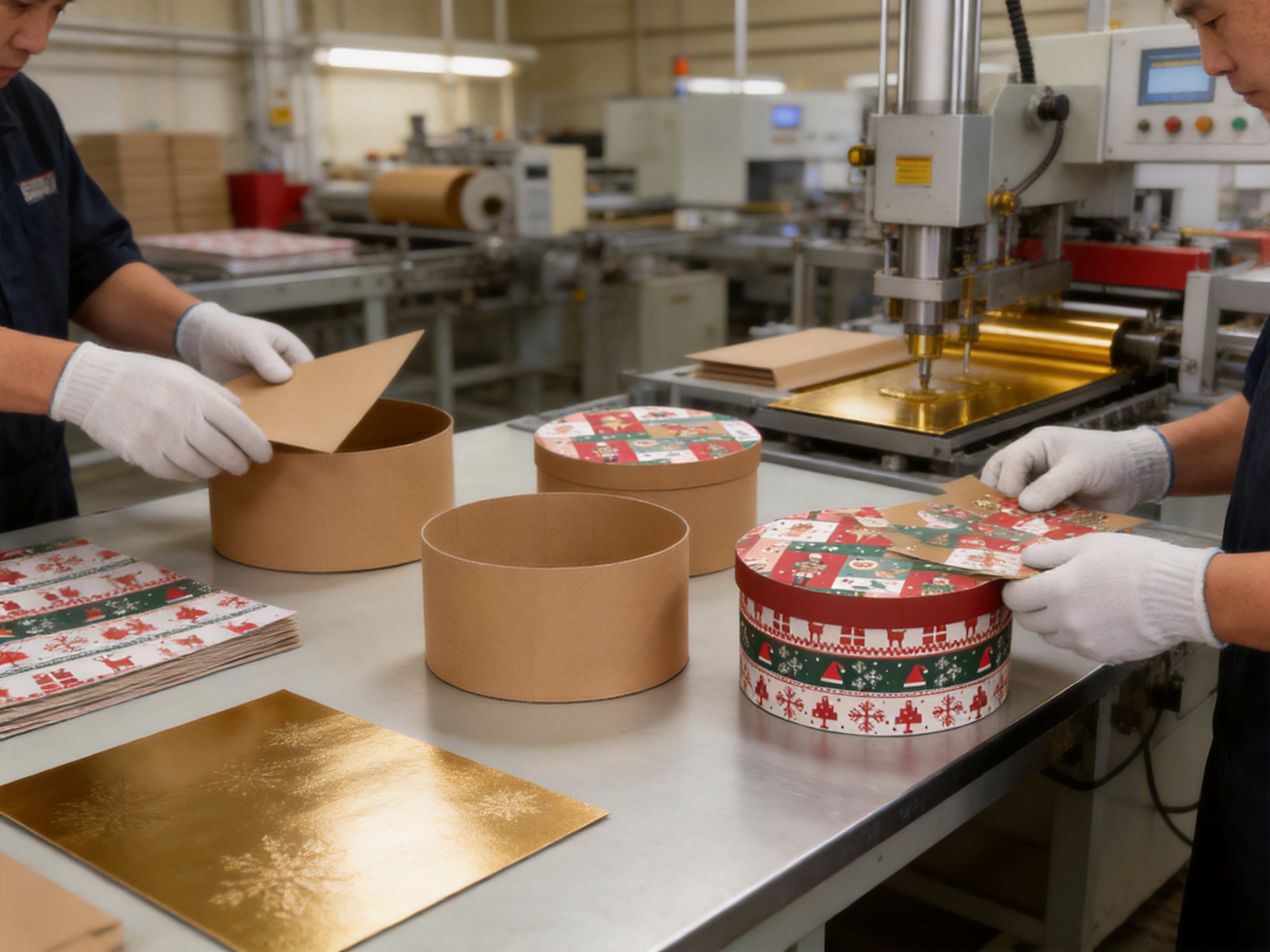
Customers should begin by preparing a clear product brief. The brief should identify the contents, approximate weight, desired box dimensions, quantity, destination market, preferred artwork, finishing requirements, and target delivery date. The more complete the initial information, the more accurately the manufacturer can recommend a structure and quotation.
Artwork should be submitted in a suitable editable format. Vector files are recommended for logos, text, line drawings, and foil elements. Buyers should clearly mark which parts require gold foil and which areas should remain printed only. If the artwork includes color references, standardized color information should be supplied where possible.
Size selection should be based on the actual product rather than the external appearance alone. The buyer should measure the contents, consider protective wrapping, and allow enough room for convenient insertion and removal. If several products will be packed together, an internal layout should be discussed during structural development.
Seasonal orders should be planned well in advance. Christmas products often have a concentrated selling period, and international shipping schedules can be affected by port congestion, holidays, customs processing, and peak-season demand. Early sampling and approval provide more time for production, inspection, and transportation.
Buyers should request a quotation that clearly identifies the main cost factors. These may include material, dimensions, printing coverage, matte lamination, foil stamping area, mold or tooling requirements, sample charges, packaging, and shipping. Comparing quotations is most meaningful when all specifications are equivalent.
Payment terms should be agreed in writing before production. The manufacturer supports wire transfers, letters of credit, and other payment arrangements. Customers should also confirm the production lead time, sample approval procedure, inspection process, shipping method, and responsibility for freight and customs-related charges.
Gift packaging acts as a physical expression of a brand. Consumers often see the package before they see the product, and the quality of the box can influence their expectations. The 813 design gives brands a practical platform for communicating festive warmth, quality, and attention to detail.
Gold foil can highlight the brand name without overwhelming the seasonal artwork. A logo positioned on the lid may be visible when the gift is displayed, while a secondary message can be printed on the side or inside. This creates multiple opportunities for brand communication without requiring a large label or additional promotional card.
The box is also suitable for photography and social media presentation. Matte surfaces can create a controlled appearance under studio lighting, while gold foil provides highlights that attract attention in close-up images. A distinctive round package can become part of the visual identity of a holiday campaign.
For e-commerce, packaging can support customer reviews and unboxing content. A carefully designed box creates a more memorable delivery experience and may encourage customers to share photographs or videos. The packaging should therefore be considered not only as a shipping component but also as an important part of the product experience after purchase.
Customization enables seasonal continuity. A brand can use the same basic structural concept in multiple years while changing the artwork, greeting, or foil arrangement. This approach preserves recognition while allowing each Christmas collection to feel new.
Luxury collections may use restrained colors, generous negative space, minimal typography, and carefully placed gold foil. Deep green, burgundy, midnight blue, ivory, and black can create an elegant background for metallic details. The matte surface is particularly effective for this style.
Traditional collections may feature recognizable Christmas trees, snowflakes, bells, stars, ribbons, and warm seasonal colors. Repeating patterns can create a cheerful appearance suitable for family gifting, supermarkets, department stores, and confectionery displays.
Children’s designs can use brighter colors, friendly characters, playful typography, and larger illustrations. Gold foil may be reserved for stars or small decorative accents. The round format can support a whimsical appearance and may be especially attractive for candy or small toy packaging.
Corporate packaging generally benefits from a balanced design. A company logo, short greeting, and selected foil detail can create a professional appearance without making the box look like an advertisement. The structure is suitable for client gifts, employee appreciation programs, and end-of-year events.
Brands emphasizing natural products may select muted greens, kraft-inspired tones, cream, off-white, and botanical Christmas illustrations. The paper and cardboard construction can support a natural packaging message, while the final design should communicate sustainability accurately and avoid unsupported environmental claims.
The box is made from coated paper and cardboard. The coated paper supports detailed printing and decorative finishing, while the cardboard provides structural rigidity and a more substantial gift presentation.
Its round shape, matte lamination, and gold foil stamping create a more distinctive and premium presentation. It can also be customized with customer artwork, text, logos, and selected dimensions, offering more flexibility than many standard off-the-shelf boxes.
The box is suitable for chocolates, candies, ornaments, small personal gifts, corporate gifts, and other compact products. The exact size and internal protection should be selected according to the weight, shape, and fragility of the contents.
Yes. Customers can customize patterns, text, brand logos, colors, and other artwork elements. The supplier also has an in-house design team that can provide professional advice and support custom design development.
The provided information identifies Adobe Illustrator and CorelDRAW-compatible design files as supported formats. Vector artwork is recommended for logos, typography, line drawings, and areas that will receive foil stamping.
The stated sampling period is approximately 5–7 days. The actual schedule may depend on artwork complexity, structural requirements, finishing methods, and the speed of specification confirmation.
Matte lamination creates a smooth, refined surface with reduced glare. It gives the box a softer tactile quality and provides a strong contrast with reflective gold foil details.
Gold foil can be used on logos, Christmas greetings, snowflakes, stars, borders, ribbons, or other selected design elements. The final application should be confirmed through artwork review and sampling.
The product information identifies a range from approximately 35 × 17.3 cm to 15.3 × 8.7 cm, depending on the specified size. Buyers should confirm the exact dimensions, structure, and quantity requirements with the manufacturer.
Yes. The company is described as an export-oriented manufacturer whose products are supplied to Europe, the United States, the Middle East, and other regions. International payment options include wire transfers, letters of credit, and other agreed methods.
The company information states that the manufacturer has passed BSCI and FSC certifications. Customers should request current documentation and confirm the relevance of each certification to their specific order and material requirements.
Buyers should confirm the product dimensions, quantity, artwork, finishing requirements, target market, delivery destination, and required arrival date as early as possible. Early sampling and approval are recommended because seasonal demand and international shipping schedules can affect lead times.
The 813 Round Coated Paper Christmas Pattern Gift Box combines a distinctive round structure with coated paper, cardboard reinforcement, matte lamination, and gold foil stamping. These elements work together to create packaging that is festive, tactile, visually refined, and suitable for a broad range of holiday products.
Its strongest advantages over ordinary gift boxes are the recognizable shape, premium surface treatment, customization potential, and availability of multiple size options. The product can support luxury collections, corporate gifts, confectionery programs, retail Christmas ranges, hospitality packages, and personalized promotional campaigns.
The manufacturing capabilities behind the product add further value. Zhejiang Shihao Gift Packaging Co., Ltd. provides design assistance, sampling, production, and export support through an established organization with more than 15 years of experience, a 20,000-square-meter facility, approximately 300 employees, and reported daily production capacity of about 5,000 gift box sets.
For buyers seeking a seasonal package that offers more than basic containment, this product provides a balanced combination of presentation and practicality. With thoughtful artwork, accurate sampling, appropriate dimensions, and coordinated production planning, the 813 gift box can help turn a holiday product into a more memorable and commercially effective gift experience.
1. Product specification sheet for Project 813, Round Coated Paper Christmas Pattern Gift Box.
2. Manufacturer-provided company profile for Zhejiang Shihao Gift Packaging Co., Ltd.
3. General packaging design principles for paperboard gift boxes and seasonal retail packaging.
4. General guidance on paper packaging materials, surface finishing, matte lamination, and foil stamping.
5. General considerations for international packaging procurement, sampling, quality inspection, and seasonal order planning.
Recommended Products

Contact Us

No. 15, Xiayang Road, Huangzhai Town, Jinhua, Zhejiang, China

(+86) 579-84230069

(+86) 13085675766


Products

Gift Box Packaging Manufacturer
 English
 Français
 Español
 عربى