2026-09-13
Jewelry packaging is no longer limited to protecting a product during transportation. In today’s competitive gift and accessories markets, a jewelry box must also communicate quality, create an emotional response, support brand presentation, and provide practical value after the gift has been opened. The HY-6 six-color ring and necklace jewelry box with bow decoration is designed around these combined requirements. It brings together compact storage, refined presentation, color variety, and flexible production options in one adaptable packaging solution.
Created for rings, necklaces, and other small jewelry pieces, this jewelry gift box combines an organized interior with an elegant exterior. Its bow decoration adds an immediate sense of occasion, while the available six-color selection makes it easier for buyers, retailers, and gift brands to coordinate packaging with different product collections, holidays, customer preferences, or visual identities. The box is suitable for personal jewelry storage, retail presentation, seasonal gifting, birthday gifts, wedding-related accessories, and customized packaging programs.
The product is available in several size formats, including compact ring-box dimensions and larger options suitable for a ring-and-necklace presentation. Versions with and without the cross bow tie are also available. This creates a useful balance between decorative impact and practical flexibility. Buyers who want a romantic, ready-to-gift appearance can select the bow version, while those who prefer a simpler appearance or want to add their own branding elements can select the bow-free version.
Beyond the product itself, the manufacturing capabilities behind this jewelry box are important for professional buyers. Zhejiang Shihao Gift Packaging Co., Ltd. is an export-oriented paper gift packaging manufacturer with more than 15 years of experience, a 20,000-square-meter production area, approximately 300 employees, and an average daily production capacity of about 5,000 gift box sets. Its product development, production, and customization capabilities support the needs of wholesalers, jewelry brands, gift companies, retailers, and importers seeking dependable packaging supply.
This article examines the product’s structure, visual appeal, functional benefits, size options, customization potential, manufacturing strengths, quality considerations, and competitive advantages. It also explains how the box can support a more memorable unboxing experience while helping businesses improve efficiency in sourcing and packaging design.
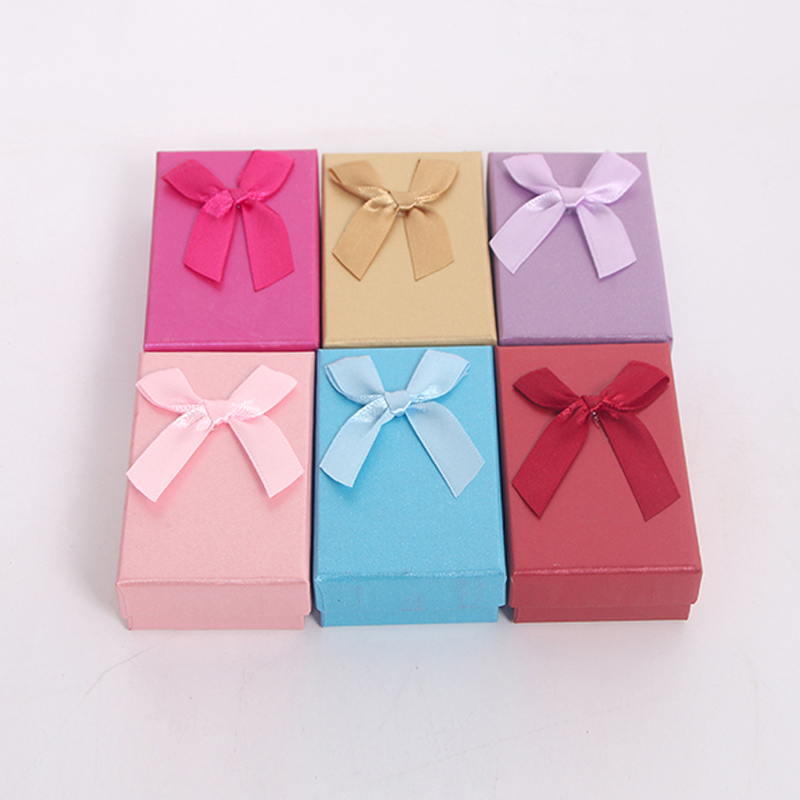
HY-6 Six-Color Ring Necklace Jewelry Box with Bow Decoration
The HY-6 is a jewelry gift box designed primarily for rings and necklaces. Its compact format makes it suitable for small jewelry items that require careful organization and attractive presentation. Rather than using an oversized container with unused internal space, the box is structured around the needs of small accessories. This helps create a visually focused presentation in which the jewelry remains the center of attention.
The product combines two important functions: storage and display. As a storage box, it helps keep jewelry in a defined location and reduces the likelihood of items becoming misplaced. As a display box, it provides a presentable setting for a ring, necklace, or coordinated jewelry combination. This dual-purpose construction gives the box value after the initial sale or gift occasion, because the recipient can continue using it for home organization and jewelry protection.
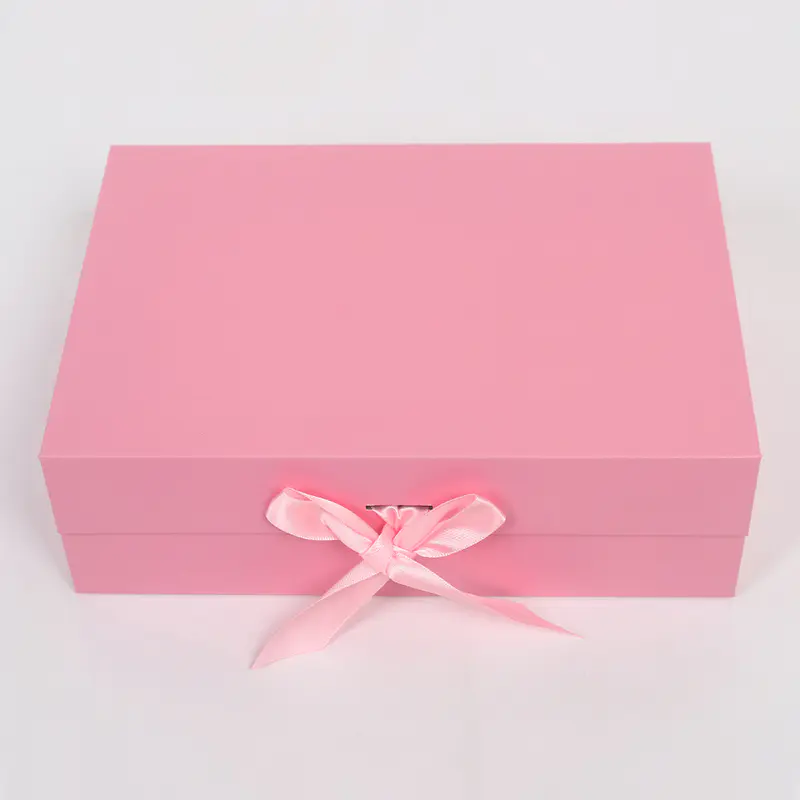
The outer appearance is enhanced by a bow decoration on selected versions. A bow immediately suggests celebration, affection, and gift-giving. This detail can reduce the need for additional wrapping, especially when the box is used for birthdays, anniversaries, holidays, proposals, weddings, or other meaningful events. The decorative element also helps the package stand out in retail displays and product photography.
Six color choices provide additional flexibility. Color variety allows a buyer to use different colors for different jewelry series, price points, seasons, or customer groups. A light and delicate color may be suitable for romantic jewelry, while a stronger or deeper color may be better for luxury-inspired collections. Multiple colors can also create a coordinated retail display that appears more dynamic than a single-color packaging range.
The surface may be produced in vibrant colors or with an elegant texture. This gives brands and distributors an opportunity to select a finish that matches the perceived value and style of the jewelry inside. A smooth and bright surface can create a youthful, modern impression. A textured surface can provide a more tactile and premium feeling. The box can therefore be positioned for a range of product categories rather than only one specific jewelry style.
One of the main advantages of the HY-6 is its gift-ready visual language. A jewelry package must communicate the importance of the item before the recipient sees the jewelry itself. The bow decoration helps achieve this by adding a recognizable gift symbol to the lid. Unlike a plain storage container, a bow-adorned box creates anticipation and makes the opening process feel more ceremonial.
This is especially valuable for small jewelry products. Rings and necklaces can be physically small, but they often carry significant emotional meaning. A carefully designed box gives the product greater presence and prevents a valuable or sentimental item from appearing lost inside ordinary packaging. The box helps transform a small accessory into a complete gift experience.
The available formats are designed around compact jewelry presentation. Options include approximately 5 × 5 × 3.5 centimeters, 8 × 5 × 2.5 centimeters, 7 × 9 × 3 centimeters, 21 × 4 × 2 centimeters, 9 × 9 × 3 centimeters, 9 × 8.5 × 5.5 centimeters, and 12 × 16 × 2.8 centimeters. These dimensions offer different proportions for different jewelry arrangements and presentation requirements.
Smaller square formats can be useful for individual ring presentation or compact gift packaging. Longer formats may be more suitable for a necklace or a slender jewelry arrangement. Larger rectangular options create more room for combined presentation, supplementary inserts, or a more visually spacious layout. The availability of several sizes helps buyers avoid forcing every product into one universal box.
Many competing jewelry boxes are offered in only one or two standard colors. A six-color product range provides more opportunities for merchandising and product differentiation. Retailers can assign colors to specific collections, while jewelry brands can use color to reinforce packaging consistency across multiple product lines.
Color coordination can also assist with inventory organization. For example, different colors may distinguish rings from necklaces, standard collections from limited editions, or different seasonal campaigns. In a physical store, a coordinated color wall can attract attention and improve shelf presentation. In e-commerce photography, color variation can make a product range appear broader and more thoughtfully developed.
Visual design is important, but tactile quality also affects how packaging is perceived. A textured surface can add depth and improve the sense of craftsmanship. When a customer picks up a jewelry box, the surface finish contributes to the first impression of the product inside. A well-selected texture can make the packaging feel more substantial and distinguish it from inexpensive generic containers.
Texture may also help reduce the visibility of minor handling marks compared with highly smooth surfaces. For wholesale and retail buyers, this can be a practical consideration during transportation, shelf handling, and repeated customer contact. The exact finish should be selected according to the intended market, product positioning, and design requirements.
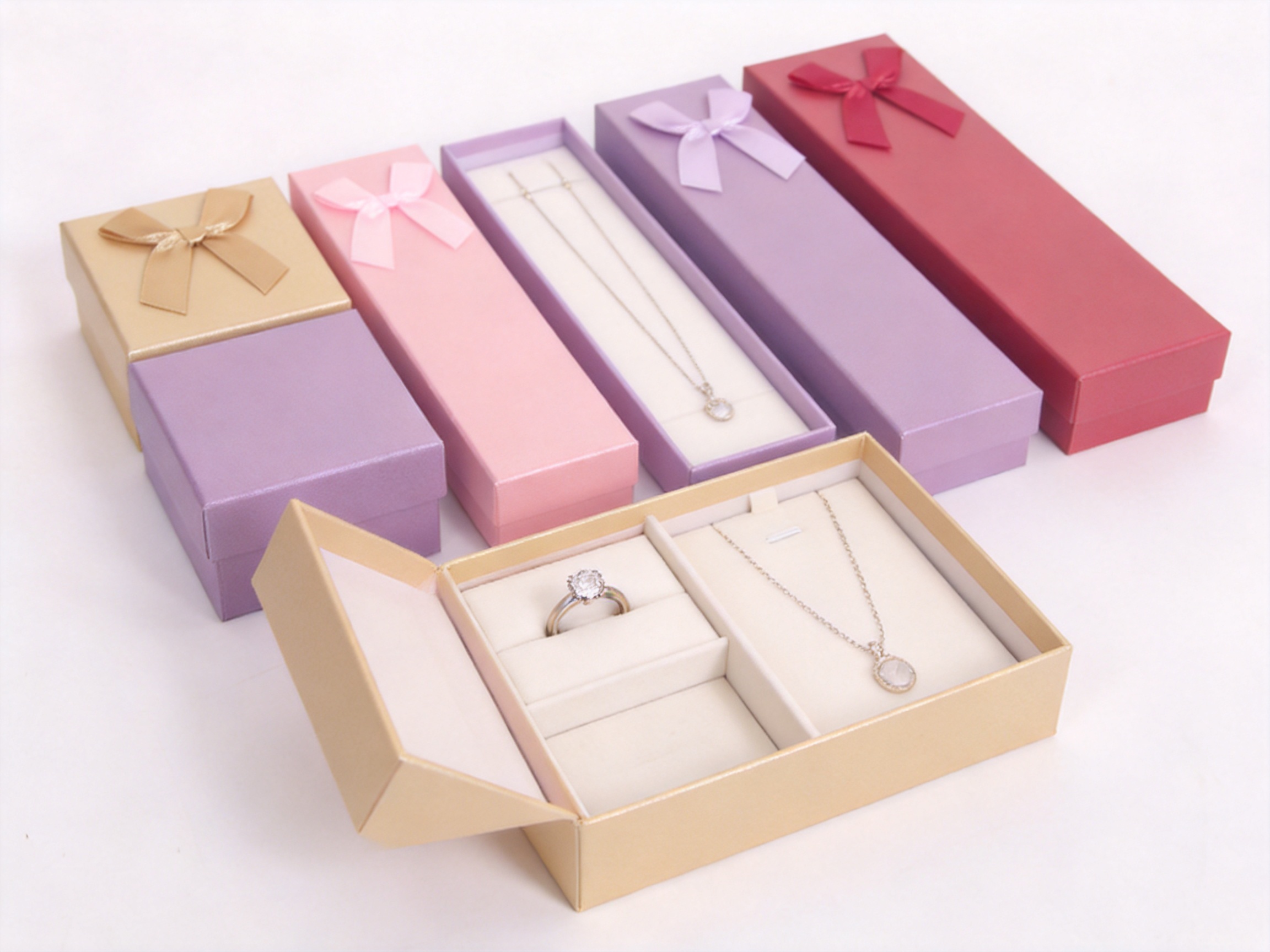
The box is designed with clearly defined internal compartments for jewelry storage and presentation. Defined compartments are especially important for rings and necklaces because these items can easily move around inside a box during handling. A ring may shift away from its intended position, while a necklace may become tangled if it is not properly supported.
By creating a more organized interior, the box helps the jewelry remain visually arranged and easier to access. This improves the presentation at the moment of opening and supports continued storage after the gift has been received. The internal structure also makes it easier for retailers to place products consistently in the box during packing and fulfillment.
Jewelry surfaces can be sensitive to friction, especially when pieces rub against one another or against unsuitable packaging materials. A compartment-based interior reduces unnecessary movement and helps separate individual items. For necklaces, a structured presentation area can help limit tangling and make the product easier for the recipient to remove.
The box should not be considered a replacement for all jewelry care procedures, such as cleaning, moisture control, or specialist protective wrapping. However, its organized structure offers a more appropriate environment than an unlined open carton or an unstructured paper envelope. For ordinary gift presentation and daily storage, this is a meaningful functional advantage.
Packaging that remains useful after purchase can contribute to better customer satisfaction. A disposable box may be attractive for one occasion but quickly lose its value. A jewelry storage box, by contrast, can become part of the recipient’s regular organization system. It can hold a favorite ring, a necklace received as a gift, or small pieces that need to be kept in one place.
This continued use strengthens the relationship between the packaging and the jewelry brand. Every time the recipient reopens the box, the original purchase or gift experience may be recalled. For brands, this creates a longer period of visual and emotional contact than packaging that is immediately discarded.
The product information identifies HY-6 and HY-6A versions across several dimensions. The main distinction is whether the box includes the cross bow tie. This gives buyers a practical choice between a decorated presentation and a simpler configuration. The version with a bow is suited to ready-to-gift applications, while the version without a bow can be used when the customer wants a cleaner appearance or plans to apply additional decoration.
| Factory Item Number | Approximate Size | Bow Configuration | Typical Application |
|---|---|---|---|
| HY-6 | 5 × 5 × 3.5 cm | Cross bow tie | Compact ring presentation |
| HY-6A | 5 × 5 × 3.5 cm | Without cross bow tie | Simple ring packaging |
| HY-6 | 8 × 5 × 2.5 cm | Cross bow tie | Slender jewelry presentation |
| HY-6A | 8 × 5 × 2.5 cm | Without cross bow tie | Minimal jewelry packaging |
| HY-6 | 7 × 9 × 3 cm | Cross bow tie | Ring or compact jewelry set |
| HY-6A | 7 × 9 × 3 cm | Without cross bow tie | Flexible retail presentation |
| HY-6 | 21 × 4 × 2 cm | Cross bow tie | Long necklace presentation |
| HY-6A | 21 × 4 × 2 cm | Without cross bow tie | Long-format jewelry packaging |
| HY-6 | 9 × 9 × 3 cm | Cross bow tie | Square gift presentation |
| HY-6A | 9 × 9 × 3 cm | Without cross bow tie | Square storage application |
| HY-6 | 9 × 8.5 × 5.5 cm | Cross bow tie | Roomier jewelry presentation |
| HY-6A | 9 × 8.5 × 5.5 cm | Without cross bow tie | Expanded storage format |
| HY-6 | 12 × 16 × 2.8 cm | Cross bow tie | Larger ring-and-necklace display |
| HY-6A | 12 × 16 × 2.8 cm | Without cross bow tie | Larger customized presentation |
The dimensions should be evaluated alongside the actual jewelry dimensions, insert structure, and presentation plan. A product that fits perfectly in one format may look undersized in another. Professional buyers should therefore confirm internal measurements, packaging tolerances, and sample fit before approving mass production.
A basic ring box often provides only a single-purpose compartment. While that may be adequate for one ring, it limits the packaging’s usefulness for broader jewelry programs. The HY-6 range offers multiple dimensions and can support ring, necklace, and combined jewelry presentations. This broader format selection can reduce the need to source entirely different box designs for every product type.
The product also provides a choice between bow and bow-free versions. This is a competitive advantage for buyers serving several sales channels. A romantic gift shop may prefer the decorated option, while a modern jewelry label may choose the clean option for branding or direct printing. One product family can therefore support different market positions.
Packaging competitors that focus only on basic protection may overlook the emotional role of jewelry. The bow decoration gives this box a stronger connection to celebration and affection. The customer does not need to add a separate decorative layer to make the package appear gift-ready. This can shorten packing time and create a more consistent presentation.
For retailers, emotional communication can also improve the perceived value of an item. A well-presented small product may appear more complete and more suitable for gifting. The package becomes part of the merchandise rather than an afterthought.
The six-color availability distinguishes the product from packaging ranges with limited visual choices. Buyers can create more varied displays and align the box with seasonal or collection-specific themes. Color diversity can also help support private-label programs in which packaging must be adapted to a particular market identity.
When selecting colors for large orders, buyers should discuss color references, surface treatments, acceptable variation, and sample approval procedures. Clear color control is important because printed or coated surfaces may appear different under various lighting conditions. A professional manufacturing process should include communication and approval steps before production begins.
Importers and wholesalers often face the challenge of managing many packaging suppliers and product codes. A family of related jewelry boxes in several sizes can simplify procurement. Instead of purchasing a small square box from one supplier, a long necklace box from another, and a decorated gift box from a third, a buyer may consolidate more of the program within one product range.
Supplier consolidation can reduce communication complexity, streamline quality discussions, and make shipping coordination easier. It may also support a more unified packaging appearance across different jewelry products. The value of this advantage depends on order quantities, production schedules, and the buyer’s specific purchasing plan.
Zhejiang Shihao Gift Packaging Co., Ltd. has more than 15 years of experience in the production, research and development, and sales of paper gift packaging boxes. Long-term experience is valuable in packaging manufacturing because successful production requires coordination among structural design, material selection, printing or surface finishing, assembly, inspection, and export preparation.
An experienced supplier is more likely to understand the practical problems that can affect a finished box, including inaccurate dimensions, weak folding points, uneven surface treatment, unsuitable inserts, misaligned decoration, and inconsistent color. Experience does not eliminate every production risk, but it supports better process planning and more effective communication with customers.
The company operates across approximately 20,000 square meters. A production area of this scale provides room for organized material handling, manufacturing equipment, assembly operations, quality inspection, finished-goods storage, and shipping preparation. For buyers, the importance of factory space lies not only in size but also in how effectively the space supports workflow and production control.
Gift packaging often involves multiple stages rather than a single automated operation. Paperboard or related materials may need to be cut, shaped, wrapped, printed, finished, assembled, decorated, inspected, and packed. Adequate space can help separate these stages and reduce congestion between incoming materials and completed products.
The company employs around 300 people. A workforce of this size can support different functions, including product development, engineering, purchasing, production management, machine operation, hand assembly, quality inspection, warehouse coordination, and customer service. Jewelry gift boxes frequently require detail-oriented assembly, especially when bows, inserts, or decorative surface treatments are involved.
Human skill remains important even when advanced equipment is used. Operators and inspectors must recognize whether a box has been correctly formed, whether the lid closes properly, whether the bow is positioned consistently, and whether the surface meets the approved standard. A balanced combination of equipment and trained personnel is particularly relevant for gift packaging, where appearance is a major part of product value.
The reported average daily production capacity is about 5,000 sets of gift boxes. This capacity can be important for wholesalers, chain retailers, promotional campaigns, and brands preparing for seasonal demand. Christmas, Valentine’s Day, wedding seasons, Mother’s Day, and other gifting periods can create sharp increases in packaging requirements.
Capacity should always be considered together with product complexity, order quantity, customization level, and production scheduling. A standard item may move through production more quickly than a highly customized item with multiple finishes. Nevertheless, a strong daily capacity indicates that the manufacturer has experience handling volume and coordinating larger orders.
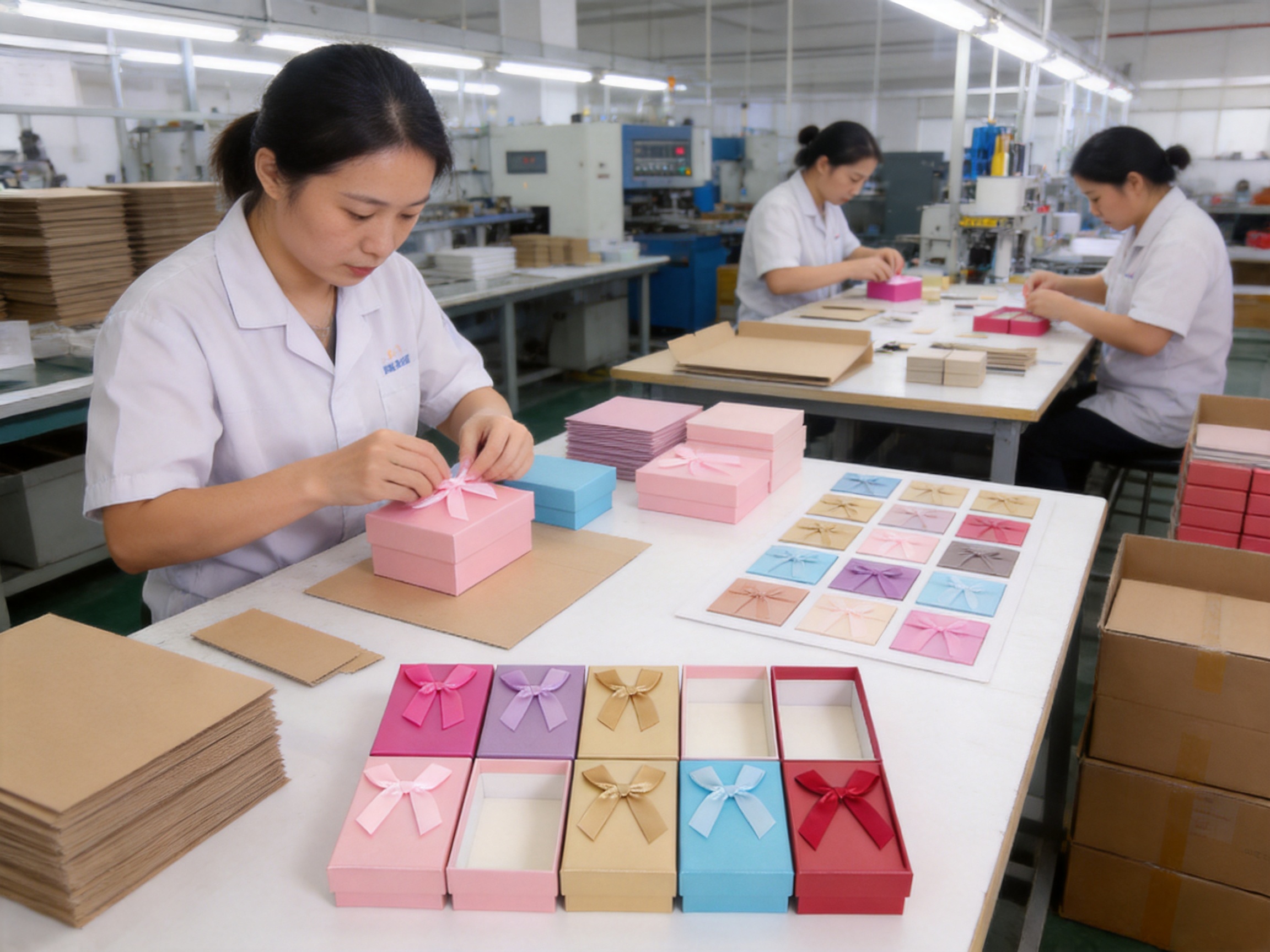
The company maintains its own design team and updates dozens of products weekly. This product development capability supports a faster response to changes in market preference. Jewelry packaging trends can shift from ornate and traditional designs toward minimal, sustainable, textured, or multifunctional formats. A supplier with an active design function can offer more than a fixed catalog of old-style packaging.
For the HY-6 range, structural planning involves selecting appropriate dimensions, arranging the interior, defining the lid and base relationship, and determining how the bow decoration integrates with the finished box. The goal is to create a product that is attractive but also practical to assemble, pack, transport, and use.
Paper gift boxes depend on accurate material preparation. Cutting accuracy affects the alignment of panels, the appearance of corners, the fit of the lid, and the consistency of the final dimensions. Inaccurate cutting can produce visible gaps, uneven edges, or a lid that is too tight or too loose.
A controlled cutting process helps ensure that repeated units follow the approved structure. It also supports efficient material usage by organizing cutting patterns and reducing unnecessary waste. For professional buyers, consistent cutting is one of the foundations of a reliable box program.
After cutting, box components must be formed and assembled. Depending on the construction, this may involve folding, mounting, wrapping, bonding, pressing, or other operations. Small jewelry boxes require particular attention because slight misalignment can be noticeable on a compact surface.
The assembly process should maintain clean edges, stable bonding, accurate angles, and a smooth relationship between the lid and base. A well-assembled box should open and close without excessive resistance while still feeling secure. The interior should remain properly positioned so that the jewelry presentation is not disturbed during handling.
Surface finishing influences both appearance and perceived quality. The HY-6 may be produced with vibrant colors or an elegant texture, allowing buyers to select a finish according to their market positioning. Finishing operations must be controlled to maintain even coverage and consistent appearance across a production batch.
Surface quality is especially important for gift boxes because customers often inspect them closely. Uneven color, visible marks, bubbling, peeling, or poorly finished corners can reduce confidence in the product. A professional factory should therefore incorporate visual inspection and sample comparison into the production process.
The cross bow tie is a defining feature of the decorated version. Its position, shape, tension, and attachment must be consistent from box to box. A bow that is loose, crooked, compressed, or poorly attached can weaken the premium impression of the packaging.
Decorative accuracy is often supported by a combination of standardized procedures and manual inspection. The factory may use defined placement references, production samples, and operator guidelines to keep the decoration consistent. For large orders, buyers should request approval samples that show the final bow appearance before mass production begins.
Quality control for jewelry gift boxes should cover both structure and appearance. Typical inspection points may include dimensions, lid fit, surface finish, color consistency, bow placement, internal compartment alignment, bonding strength, cleanliness, and packaging for shipment.
Order coordination is equally important. Buyers need clear communication about item numbers, dimensions, bow configurations, color selection, packaging quantities, production lead times, shipping marks, and documentation. An export-oriented manufacturer with established procedures can help reduce misunderstandings between design approval and final delivery.
The six standard colors provide a convenient starting point, but professional buyers may also require color adjustments. A jewelry brand may have a defined palette that must be reflected in its packaging. A retailer may request colors that match a seasonal campaign. A promotional customer may want a distinctive tone for an event or product launch.
Color customization should be handled through physical samples or agreed color references. Digital images are useful for initial communication but cannot always reproduce the exact appearance of a finished surface. Sample approval is therefore recommended for important branding programs.
Custom printed gift boxes can help transform a general jewelry box into a recognizable brand asset. Depending on the construction and order requirements, buyers may discuss logos, names, slogans, patterns, labels, or other printed elements. Branding may be placed on the lid, inner surface, insert, sleeve, or an accompanying card.
The right branding approach depends on the intended visual style. A discreet logo can preserve a refined appearance, while a more prominent printed pattern may be suitable for fashion jewelry or youthful collections. The manufacturer’s design team can assist with adapting branding to the available surface and structural limitations.
The listed formats cover a broad range, but some jewelry products may need a different internal arrangement. A necklace with a large pendant, a ring with a wide setting, or a coordinated set may require additional clearance. Buyers should provide accurate product dimensions and, when possible, physical samples or detailed drawings.
Interior adjustments may include changing the insert position, increasing usable depth, creating a longer presentation area, or separating multiple pieces. Any modification should be evaluated for stability, appearance, production feasibility, and shipping efficiency.
The HY-6A version without the cross bow tie offers a cleaner alternative. Bow-free packaging may be preferred by minimalist jewelry labels, men’s accessory brands, contemporary retailers, or buyers who want to add their own ribbon or decorative element during fulfillment.
This version can also be useful when packaging must be stacked closely for storage and transportation. Removing an exterior bow may make cartons easier to organize, although the final decision depends on the actual packaging method and bow dimensions. Buyers should test packed samples to confirm the most efficient shipping configuration.
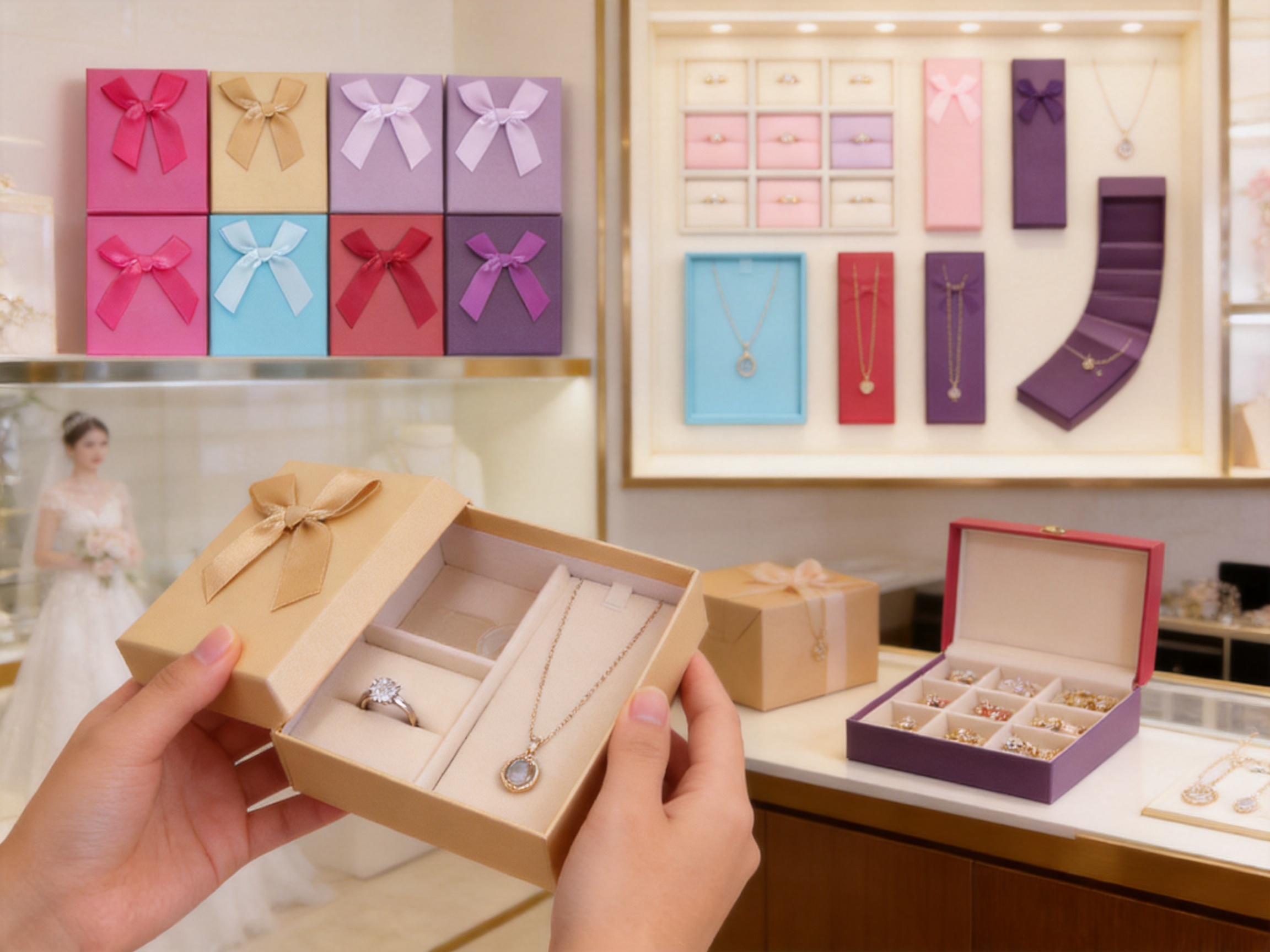
Jewelry stores can use the box for rings, necklaces, small pendants, and gift-oriented accessory collections. The decorated version can be offered as part of a premium gift service, while the bow-free version can support everyday retail packaging. A store can also use different colors to distinguish collections or create an attractive display arrangement.
Online jewelry sellers need packaging that looks appealing when opened by the customer. Since the buyer cannot physically inspect the product before purchase, the unboxing experience becomes an important part of perceived value. A bow-decorated box can produce a strong visual moment when the parcel is opened.
For e-commerce, protective outer shipping packaging remains necessary. The jewelry box itself should be placed inside a suitable mailer or carton with adequate cushioning. The compact size of the HY-6 range can help sellers create a neat internal package without using excessive empty space.
Rings and necklaces are closely associated with proposals, anniversaries, weddings, and milestone celebrations. The bow decoration naturally complements these occasions. A longer format may be considered for a necklace, while a compact square box may be suitable for an individual ring.
Wedding planners, event suppliers, and jewelry retailers can use different colors to coordinate with wedding themes. Personalized printing or accompanying cards can further connect the packaging to a couple, event, or campaign.
The product is also suitable for holiday and birthday gift packaging. Six-color availability supports seasonal merchandising, while the bow helps the product appear ready for presentation. Retailers may prepare color-based gift selections for Valentine’s Day, Christmas, Mother’s Day, or other occasions.
Companies sometimes distribute small jewelry-related gifts, commemorative accessories, or promotional items. A compact gift box can make such items appear more complete and professionally prepared. Corporate branding, customized colors, and coordinated inserts may help align the package with an event or campaign identity.
Unboxing is the sequence through which a customer receives, opens, and discovers a product. Jewelry packaging has a special role in this sequence because the product is often associated with emotion, personal identity, and celebration. The box should therefore provide a sense of anticipation without overwhelming the jewelry itself.
The bow creates an initial visual cue. The compact proportions make the package easy to hold. The structured interior helps reveal the jewelry in an organized position. The combination of these elements can make the unboxing process feel intentional and polished.
Perceived value is not determined only by the material cost of the jewelry. Presentation, protection, design, and usability also influence how customers assess a purchase. A thoughtfully designed box can help small jewelry items feel more substantial and gift-worthy. This is particularly important for online retailers, where packaging is one of the first physical contact points after purchase.
For brands, a consistent unboxing experience can support customer recall. Customers may photograph attractive packaging, share it on social media, or keep the box for later use. Although no packaging can guarantee customer advocacy, a distinctive and functional design creates more opportunities for positive interaction than a plain disposable container.
Paper gift packaging is often selected because it can offer a more material-conscious alternative to some plastic-heavy packaging formats. The company reports FSC and BSCI certifications, which are relevant to responsible sourcing and social compliance considerations. Buyers should confirm the specific certification scope, product applicability, and current documentation for their order.
Packaging sustainability should be assessed across the whole product life cycle. Important factors include the paper or board source, coatings, adhesives, decorative elements, insert materials, packaging density, transport efficiency, and end-of-life disposal. A box that is appropriately sized for the jewelry can reduce unnecessary material use and shipping volume compared with an oversized package.
The continued storage function of the HY-6 may also extend the useful life of the packaging. If the recipient keeps using the box to organize jewelry, the package provides value beyond the original transaction. Reusable packaging can be a practical part of a broader sustainability strategy, although buyers should evaluate the full material composition and local recycling conditions.
Companies seeking more responsible packaging should discuss material choices and finishing options with the manufacturer at the design stage. Some surface treatments, laminations, ribbons, or mixed-material components may affect recyclability. Early communication makes it easier to balance appearance, durability, product protection, and environmental objectives.
Before placing a production order, buyers should measure the jewelry carefully. The external dimensions of a box do not automatically indicate the usable interior space. Ring height, necklace length, pendant size, chain thickness, and insert position can all influence fit.
A physical sample evaluation is recommended. Place the jewelry inside the box, close and reopen the lid, turn the box gently, and inspect whether the item remains correctly positioned. This simple process can reveal issues that are not visible in a drawing or product photograph.
Color and texture should be reviewed under lighting conditions similar to those used in stores, showrooms, photography studios, and homes. A color that appears correct on a computer monitor may look different on a finished coated surface. Buyers should compare the approved sample with production output whenever possible.
For the bow version, buyers should inspect the attachment point and confirm that the bow remains secure during normal handling. The bow should retain an attractive shape after packing and transportation. Carton design should also prevent excessive pressure on the decoration.
Jewelry boxes are small, but large quantities can create significant shipping volume. Buyers should ask for information about inner cartons, master cartons, packing quantities, carton dimensions, and gross weight. Efficient carton packing can help reduce freight costs and limit movement during transportation.
A clear approval process helps align expectations between buyer and manufacturer. The process may include artwork approval, material or color approval, structural sample approval, pre-production confirmation, and final inspection. Written specifications should identify the item number, size, bow configuration, finish, quantity, and acceptable quality standard.
Working directly with a manufacturer can provide advantages over purchasing through multiple layers of intermediaries. Direct communication may make it easier to discuss custom dimensions, color requirements, branding, sample development, and production schedules. It can also provide a clearer understanding of the factory’s capabilities and limitations.
Factory direct sourcing can support better cost analysis because buyers can evaluate the relationship between material selection, decoration, order quantity, and production complexity. The lowest unit price is not always the most economical solution. A slightly more refined package may generate better customer response, while an efficient structure may reduce transport and assembly expenses.
Direct contact also helps businesses develop long-term packaging programs. Once a manufacturer understands a brand’s preferred colors, dimensions, quality standards, and shipping requirements, future orders may become easier to coordinate. A stable supplier relationship can be particularly valuable during seasonal demand peaks.
Zhejiang Shihao Gift Packaging Co., Ltd. is located in Jinhua, Zhejiang, China, and serves international buyers as an export-oriented manufacturer. Its products are reported to be exported to Europe, the United States, the Middle East, and other regions. International experience can help a supplier understand the documentation, packaging, communication, and scheduling expectations associated with overseas orders.
The company’s product range includes kits, storage boxes, folding boxes, jewelry boxes, and gift boxes. This breadth is useful for buyers who need more than one type of paper packaging. A jewelry brand may require ring boxes for one collection, folding boxes for another, and storage or presentation boxes for a broader gift set. A supplier with multiple related categories may support a more consistent sourcing strategy.
The company also reports advanced equipment, strong research and development capabilities, and an average daily production capacity of approximately 5,000 gift box sets. These capabilities are relevant to both standard and customized packaging projects. Equipment supports repeatability, while the design team helps adapt structures and visual concepts to different markets.
BSCI and FSC certifications are stated as part of the company’s credentials. Buyers should request current certification documents and verify whether the required standards apply to the specific production site and order. Nevertheless, the stated certifications indicate that social responsibility and responsible forestry considerations form part of the company’s manufacturing profile.
Compared with a plain paper envelope, the HY-6 provides stronger structure, more formal presentation, and better organization for jewelry. An envelope may be lightweight and inexpensive, but it generally offers less protection from crushing and less support for display. It also does not provide the same reusable storage value.
Compared with a generic plastic case, the paper gift box can offer a warmer and more gift-oriented appearance. Plastic cases may provide visibility or rigidity, but they may not communicate the same sense of ceremony or tactile elegance. The final choice depends on the jewelry category, sustainability objectives, and target customer.
Compared with a single-format jewelry box, the HY-6 family offers more size options. This flexibility can help buyers match the box to different products rather than accepting an ill-fitting universal format. The bow and bow-free alternatives further increase the range of possible applications.
Compared with highly complicated luxury packaging, the HY-6 may offer a more practical balance between decorative appeal and manufacturing efficiency. It provides a recognizable premium detail without requiring an excessively large or multilayered package. This balance can be valuable for mid-range jewelry, promotional products, and large-volume gift programs.
The approximately 5 × 5 × 3.5-centimeter format is suited to compact ring presentation. It can be used when the jewelry is small and the brand wants a concentrated, intimate display. The bow version may work particularly well for engagement, anniversary, or birthday gifting.
The approximately 8 × 5 × 2.5-centimeter format has a longer, slimmer profile. It may be considered for jewelry that requires a narrow presentation area. Its proportions can also be useful when the retailer wants a box that occupies less space in a display drawer or shipping package.
The approximately 7 × 9 × 3-centimeter and 9 × 9 × 3-centimeter formats offer broader square or near-square presentation areas. They may be suitable for rings, small sets, pendants, or jewelry that benefits from additional visual spacing.
The approximately 21 × 4 × 2-centimeter format is the longest listed option. Its proportions make it a natural candidate for necklace-oriented presentation, particularly when the chain or pendant needs to be arranged in a linear format.
The approximately 9 × 8.5 × 5.5-centimeter and 12 × 16 × 2.8-centimeter formats provide larger presentation areas. These may be appropriate for combined ring-and-necklace displays, more spacious gift arrangements, or packaging programs that require additional room for inserts and presentation cards.
The box is designed primarily for rings and necklaces. Depending on the selected size and internal arrangement, it may also be used for pendants, small jewelry sets, and other compact accessories.
The product is described as available in six colors. Buyers should confirm the current color options, color references, and minimum order requirements with the manufacturer before placing an order.
No. The HY-6 versions include the cross bow tie, while the HY-6A versions are listed without the cross bow tie. This allows buyers to choose between a gift-ready decorated appearance and a simpler presentation.
The listed approximate sizes include 5 × 5 × 3.5 centimeters, 8 × 5 × 2.5 centimeters, 7 × 9 × 3 centimeters, 21 × 4 × 2 centimeters, 9 × 9 × 3 centimeters, 9 × 8.5 × 5.5 centimeters, and 12 × 16 × 2.8 centimeters.
The product is suitable for discussions about customized colors, surface finishes, branding, dimensions, and internal presentation. The exact options depend on order quantity, structural requirements, materials, and production feasibility. Buyers should request samples and technical confirmation before mass production.
Yes. Its compact structure, decorative bow option, color variety, and organized interior make it suitable for jewelry retail displays. The box can be arranged individually or used as part of a coordinated collection presentation.
Yes. The box can serve as an attractive inner package for e-commerce jewelry orders. It should be placed inside suitable protective shipping packaging to reduce the risk of crushing, abrasion, or moisture exposure during delivery.
Yes. Its storage function allows the recipient to continue using it for jewelry organization after the original gifting occasion. Reusability may improve customer satisfaction and extend the practical life of the packaging.
Buyers should confirm jewelry fit, external and internal dimensions, color, surface finish, bow placement, insert construction, branding requirements, packing quantities, carton specifications, production schedule, and quality approval procedures.
The manufacturer is located in Jinhua, Zhejiang, China. It serves international markets and reports exports to Europe, the United States, the Middle East, and other regions.
The company reports BSCI and FSC certifications. Buyers should request current documentation and confirm the relevance of those certifications to the intended order and production site.
The HY-6 six-color ring and necklace jewelry box offers a practical and visually appealing solution for jewelry presentation, gifting, and storage. Its most notable strengths include a gift-ready bow decoration, six-color availability, multiple size options, defined interior compartments, and a choice between decorated and bow-free versions. These features make it more adaptable than a basic single-purpose ring box or a plain disposable package.
The box supports the emotional value of jewelry by giving small items a more substantial and memorable presentation. At the same time, its reusable storage function provides value beyond the moment of purchase. Retailers, jewelry brands, wholesalers, e-commerce sellers, event suppliers, and gift companies can use the range across multiple occasions and product categories.
The manufacturing background further strengthens the product’s commercial potential. With more than 15 years of experience, a large production area, approximately 300 employees, an active design team, advanced equipment, international export experience, and reported BSCI and FSC certifications, Zhejiang Shihao Gift Packaging Co., Ltd. is positioned to support both standard and customized gift packaging programs.
For buyers, the best results will come from combining the appropriate box size with accurate jewelry measurements, clear color and finish specifications, approved samples, and a defined inspection process. When these steps are followed, the HY-6 can become more than a container. It can function as a presentation tool, a branding touchpoint, a storage accessory, and a practical component of a complete jewelry customer experience.
1. Product specification information for the HY-6 six-color ring and necklace jewelry box, including available sizes, bow configurations, and product applications.
2. Zhejiang Shihao Gift Packaging Co., Ltd. company profile, including manufacturing history, facility area, workforce, production capacity, product categories, and export markets.
3. General principles of paper gift box structural design, including dimensional accuracy, compartment organization, lid fit, surface finishing, and assembly control.
4. General jewelry packaging and presentation practices concerning product protection, storage organization, retail display, and unboxing experience.
5. General considerations for FSC-certified material sourcing and BSCI-related social compliance evaluation in international packaging procurement.
Recommended Products

Contact Us

No. 15, Xiayang Road, Huangzhai Town, Jinhua, Zhejiang, China

(+86) 579-84230069

(+86) 13085675766


Products

Gift Box Packaging Manufacturer
 English
 Français
 Español
 عربى