2026-10-15
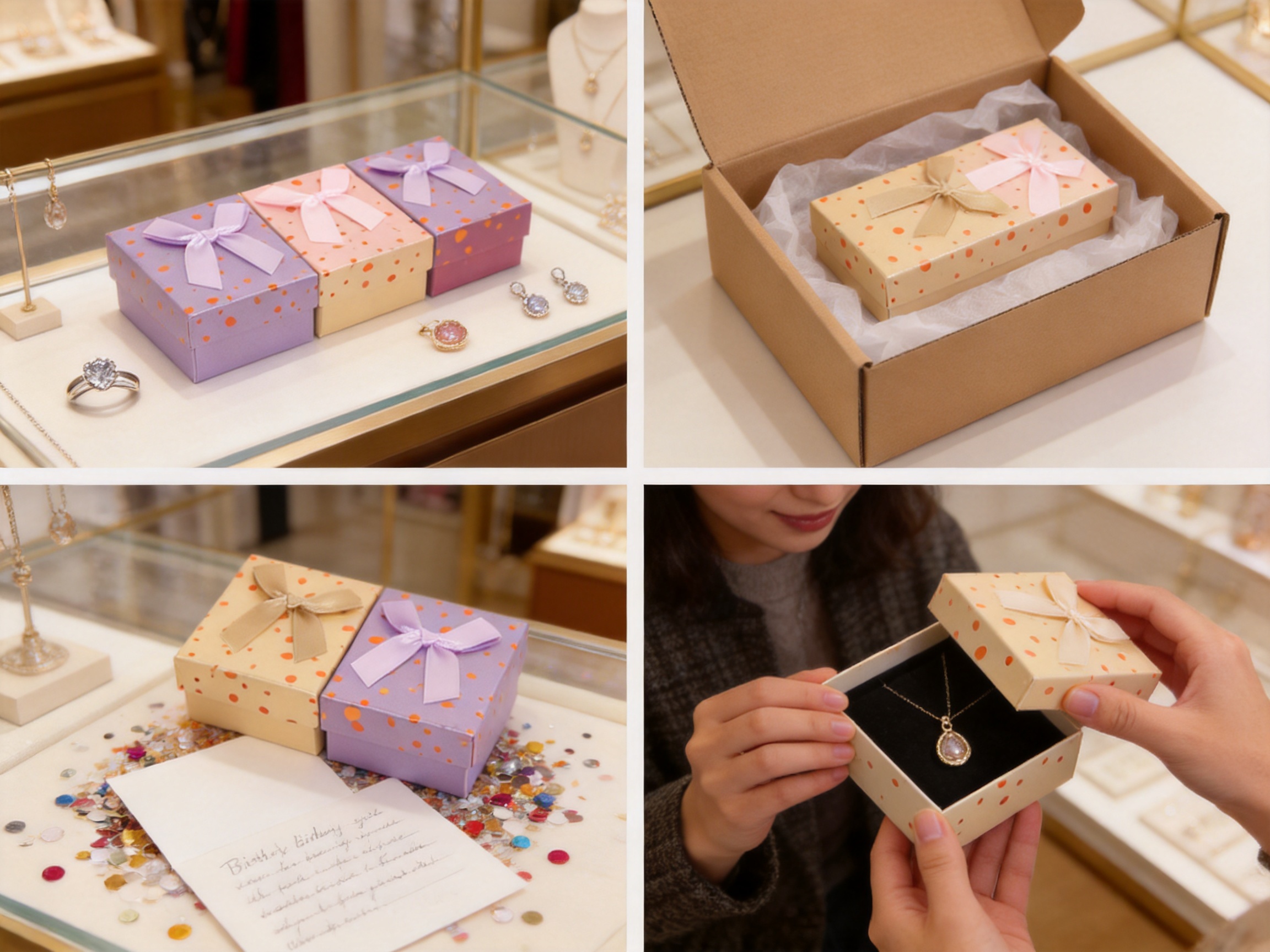
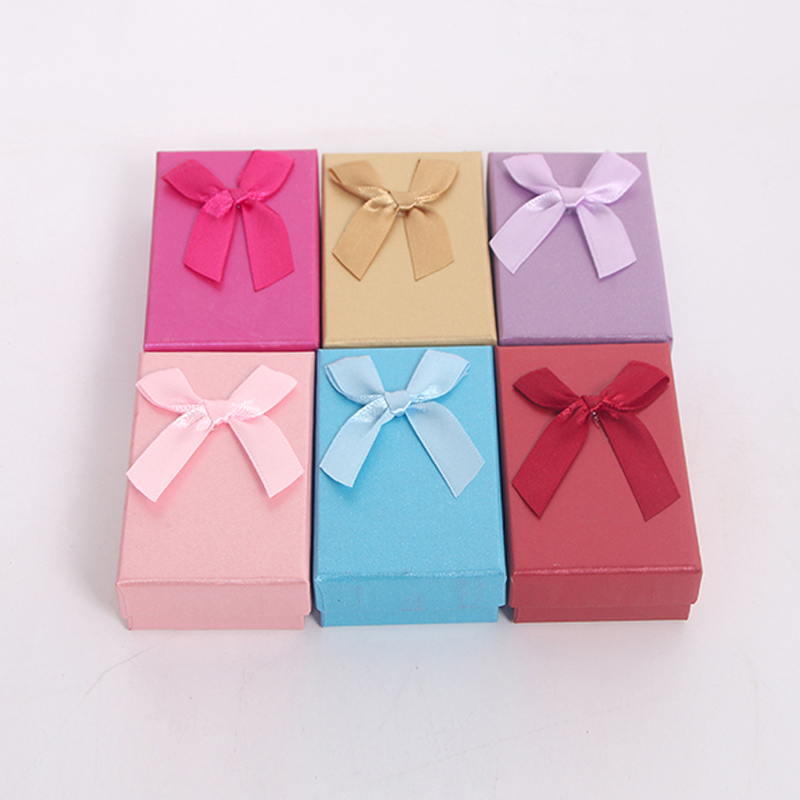
Jewelry packaging performs two important jobs at the same time. It protects a valuable or delicate item, and it communicates the character of the gift, retailer, or jewelry brand before the recipient sees what is inside. The A-7 Rectangular Polka Dot Small Jewelry Gift Box with Bow Ribbon is designed around both purposes. Its compact rectangular structure provides a practical space for small jewelry and accessories, while its polka-dot surface and decorative ribbon bow give the package a cheerful, refined, and gift-ready appearance.
Unlike plain utility boxes that simply contain an item, the A-7 combines presentation, protection, portability, and branding potential in one format. It can be used for earrings, rings, pendants, bracelets, small accessories, and selected fashion jewelry. It is equally appropriate for personal occasions and commercial jewelry presentation. A birthday gift, holiday purchase, anniversary present, boutique product, or promotional jewelry item can all benefit from a package that looks intentional and complete.
Manufactured by Zhejiang Shihao Gift Packaging Co., Ltd., the box reflects the capabilities of an established paper gift packaging producer with more than fifteen years of industry experience. The company combines product development, design, printing, paper processing, assembly, quality control, and export services to support customers seeking both standard packaging and customized solutions. Its large production site, experienced workforce, specialized equipment, and international certifications provide a strong foundation for consistent packaging production.
This article examines the design value, functional advantages, manufacturing strengths, customization opportunities, and commercial applications of the A-7 jewelry gift box. It also explains why a carefully designed small box can influence perceived product quality, customer satisfaction, brand recognition, and repeat purchasing.
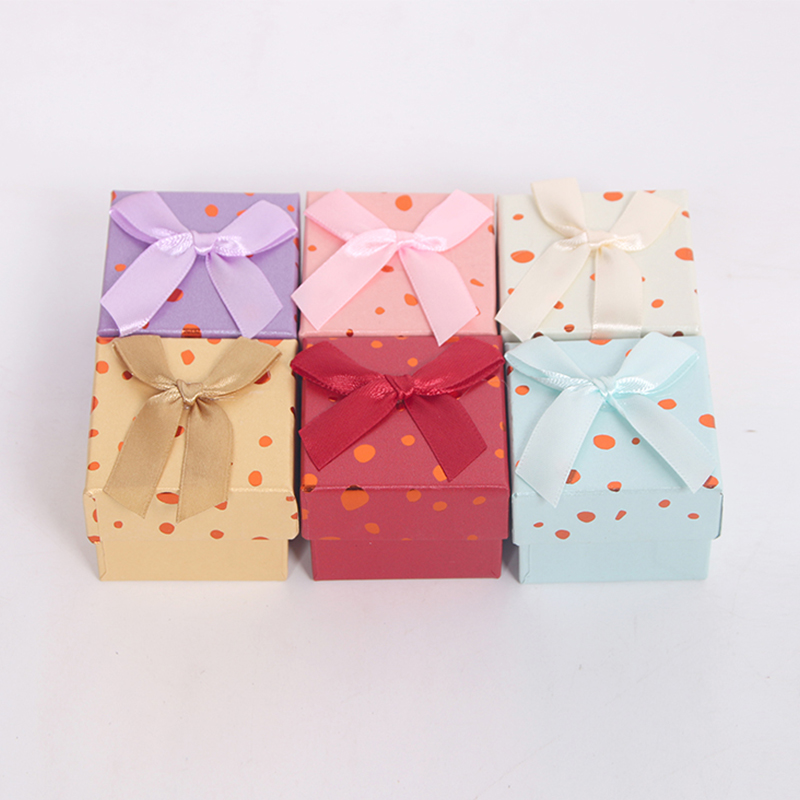
A-7 Rectangular Polka Dot Small Jewelry Gift Box with Bow Ribbon
Jewelry is often purchased for emotional reasons. A customer may be celebrating a birthday, expressing affection, marking an anniversary, rewarding a personal achievement, or selecting a meaningful present for a friend. Because of this emotional context, packaging is not merely a protective layer. It becomes part of the product experience and can influence how the buyer and recipient evaluate the gift.
A well-designed jewelry box creates anticipation. The recipient notices the shape, surface, color, closure, ribbon, and overall neatness before opening the box. These details establish expectations about the item inside. When the package feels polished and attractive, even a small piece of jewelry can appear more considered and valuable.
For retailers, packaging also supports merchandising. A collection of coordinated jewelry boxes can make a counter, display case, or online product image look more professional. A recognizable box format can help customers associate the package with a particular store or product category. In this way, packaging continues to communicate after the sale, especially when the recipient carries it, stores it, or shares it in photographs.
The A-7 box is suited to this role because its form is compact but visually distinctive. The rectangular shape is easy to stack, arrange, transport, and photograph. The polka-dot pattern adds visual energy without requiring complex structural decoration. The bow ribbon supplies a gift-oriented finishing detail that helps the package feel ready for presentation immediately after purchase.
The A-7 is a small rectangular jewelry gift box designed for attractive presentation and practical storage. Its exterior is characterized by a polka-dot pattern, while a ribbon bow provides a decorative accent. The design can accommodate a range of small jewelry products and accessories, making it suitable for jewelry stores, gift retailers, e-commerce sellers, event planners, and consumers purchasing personal gifts.
The rectangular form offers several practical advantages. It provides a stable base, uses shelf and shipping space efficiently, and can be arranged in rows without the irregular gaps created by round or unusually shaped packaging. A rectangular box is also easy to wrap, label, photograph, and integrate into larger gift sets.
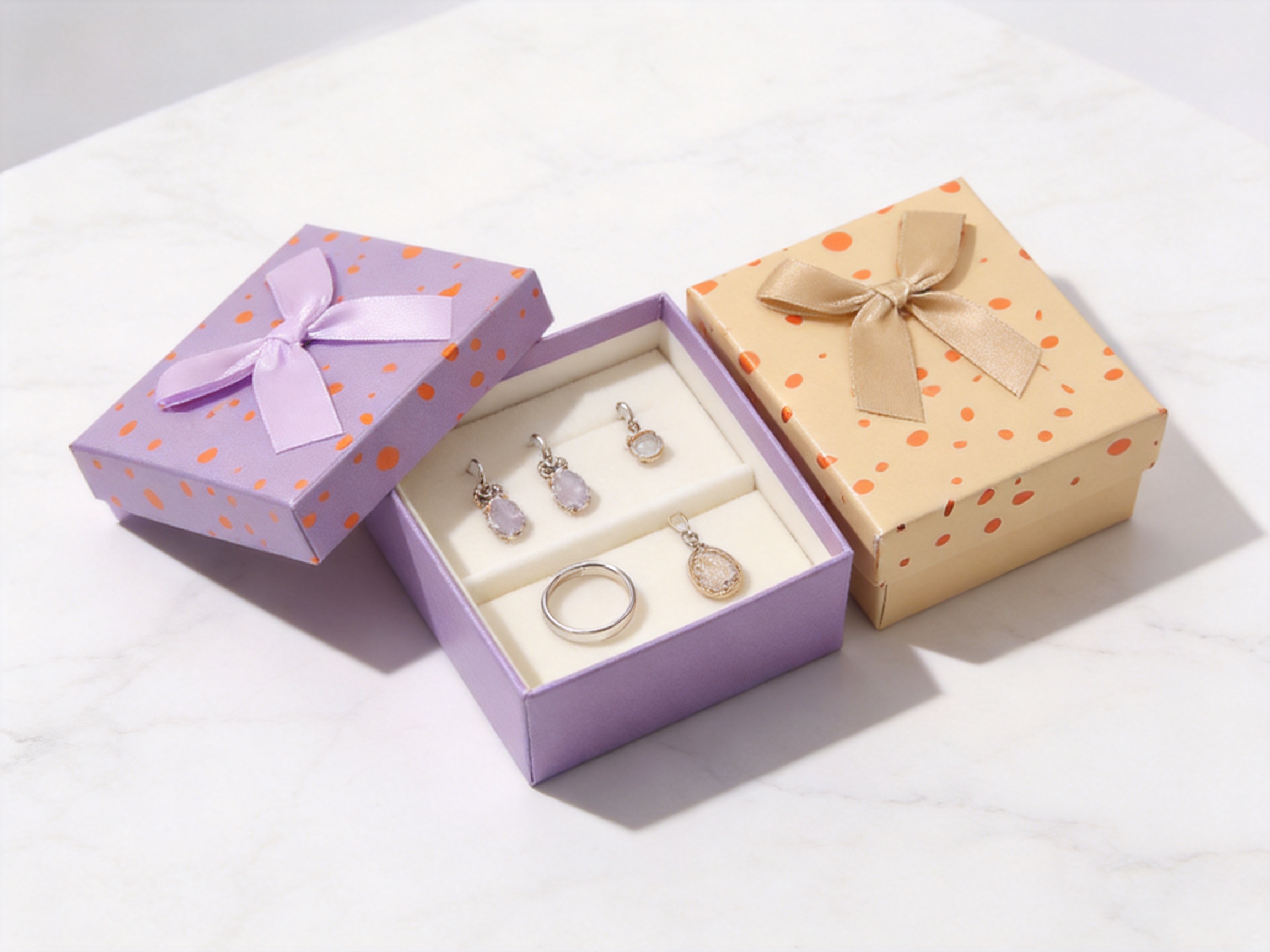
Inside, the box can be adapted to the product being presented. Depending on the required packaging configuration, jewelry may be supported by an insert, pad, slot, or fitted interior component. This helps reduce unnecessary movement during handling and keeps the item visually organized when the lid is opened. A suitable interior is particularly useful for earrings, rings, pendants, and other pieces that could become tangled or displaced in an empty box.
The external decoration makes the A-7 different from basic single-color jewelry packaging. Polka dots can create a youthful, friendly, fashionable, or playful impression depending on their scale, color combination, and placement. The ribbon bow adds softness and a handcrafted gift feeling. Together, these details make the box appropriate for both everyday retail sales and special occasions.
| Feature | Practical Function | Customer or Brand Benefit |
|---|---|---|
| Rectangular box structure | Provides a stable, stackable package for small jewelry | Supports organized storage, transport, and display |
| Polka-dot exterior | Adds pattern and visual recognition | Creates a more distinctive presentation than plain packaging |
| Ribbon bow | Acts as a decorative finishing element | Enhances gift appeal and creates a ready-to-present appearance |
| Compact format | Uses materials and shipping space efficiently | Suitable for jewelry counters, mail orders, and gift occasions |
| Adaptable interior | Can support different small jewelry items | Improves organization and helps reduce product movement |
| Customizable paper packaging platform | Allows changes to artwork, colors, and branding | Helps retailers build a consistent visual identity |
Plain jewelry boxes can be practical, but they may not communicate a strong identity. A simple surface without pattern, texture, or decorative detail often depends entirely on the jewelry itself to create visual appeal. The A-7 takes a different approach by making the package part of the presentation.
The polka-dot design draws attention without making the box difficult to use. Patterned packaging can be recognized quickly in a display area, particularly when multiple boxes are arranged together. It also provides a more attractive background for product photography and social media content. For online sellers, the appearance of the package can help create a more complete unboxing image and give customers an experience that feels closer to a physical boutique purchase.
The ribbon bow is one of the most noticeable advantages of the A-7 format. A conventional box may require additional wrapping paper, a separate bag, or a decorative ribbon before it is suitable for gifting. The bow helps reduce that extra step. The box itself already communicates that it is intended for a special presentation.
This is valuable for retail customers who want convenience. A purchaser can select a jewelry item, receive it in the decorated box, and present it with little or no additional packaging work. For retailers, the gift-ready format can also reduce the time required for counter service during busy seasons such as holidays, anniversaries, and graduation periods.
Packaging is a form of nonverbal communication. A polka-dot pattern may suggest warmth, friendliness, celebration, and modern style. A bow may suggest care, generosity, and occasion. These associations can support the emotional value of a small piece of jewelry.
The box is therefore more than a container. It helps frame the purchase as an experience. When the recipient opens a package that has been carefully decorated, the action of unwrapping becomes part of the gift. This can improve the perceived thoughtfulness of the sender and create a stronger memory of the purchase.
Jewelry retailers frequently work with limited display space. Small packages must be attractive while remaining easy to organize. The rectangular format of the A-7 allows stores to arrange boxes in lines, grids, or coordinated groups. The pattern and bow help the package remain visible without requiring a large display structure.
For seasonal collections, different colorways or printed variations can be used to separate themes. A retailer might use one pattern for birthday gifts, another for holiday jewelry, and a third for everyday fashion accessories. The same basic box structure can support a range of campaigns while maintaining operational simplicity.
Jewelry is small, but it is not always easy to package. Chains can tangle, earrings can become separated, rings can move from their intended position, and delicate decorative elements can be scratched by contact with other materials. A suitable gift box must therefore combine attractive presentation with an organized interior.
The rectangular design of the A-7 creates a defined area for the jewelry item. Unlike a loose bag or oversized carton, a fitted small box can keep the product in a consistent position. This is especially important when the box is moved through retail handling, shipping, display, and gift presentation.
A suitable insert can be selected according to the jewelry type. Ring supports can hold a ring upright or centered. Earring inserts can keep pairs together and visible. Pendant supports can help display the chain and central ornament without excessive tangling. Small accessory items can be held in a padded or compartmentalized interior when needed.
The box also provides a protective barrier against common handling conditions. It can help shield the product from direct contact with surrounding objects and reduce the risk of misplacement during storage. Although packaging should always be matched to the fragility and value of the product, a structured paper gift box offers a more orderly solution than unstructured wrapping.
Good packaging protection is not only about preventing damage. It also protects the visual condition of the product. Jewelry that arrives neatly positioned and free from avoidable marks creates a stronger first impression. When the customer opens the package, the item is more likely to look as the seller intended.
The A-7 format is appropriate for a broad selection of compact jewelry and accessory products. The exact interior configuration can be adjusted according to product requirements, but typical applications include rings, earrings, pendants, small bracelets, charms, brooches, pins, and selected fashion accessories.
For rings, the box can provide a centered presentation that directs attention to the stone, setting, or decorative surface. For earrings, an insert can maintain the pair together and make the product easier to view. For pendants, the inner arrangement can help prevent the chain from becoming excessively tangled while keeping the pendant visible when the box is opened.
Small bracelets may require more interior space or a specific support configuration. In those cases, the box should be matched with an insert that prevents unnecessary pressure on the bracelet while keeping it arranged. Retailers should communicate the jewelry dimensions, material, and desired presentation to the packaging supplier before finalizing the structure.
The box can also be used for non-jewelry items that share similar size requirements. Examples may include hair accessories, small cosmetic tools, collectible ornaments, pins, key charms, and other lightweight gifts. This versatility allows a retailer to use a consistent packaging style across related product categories.
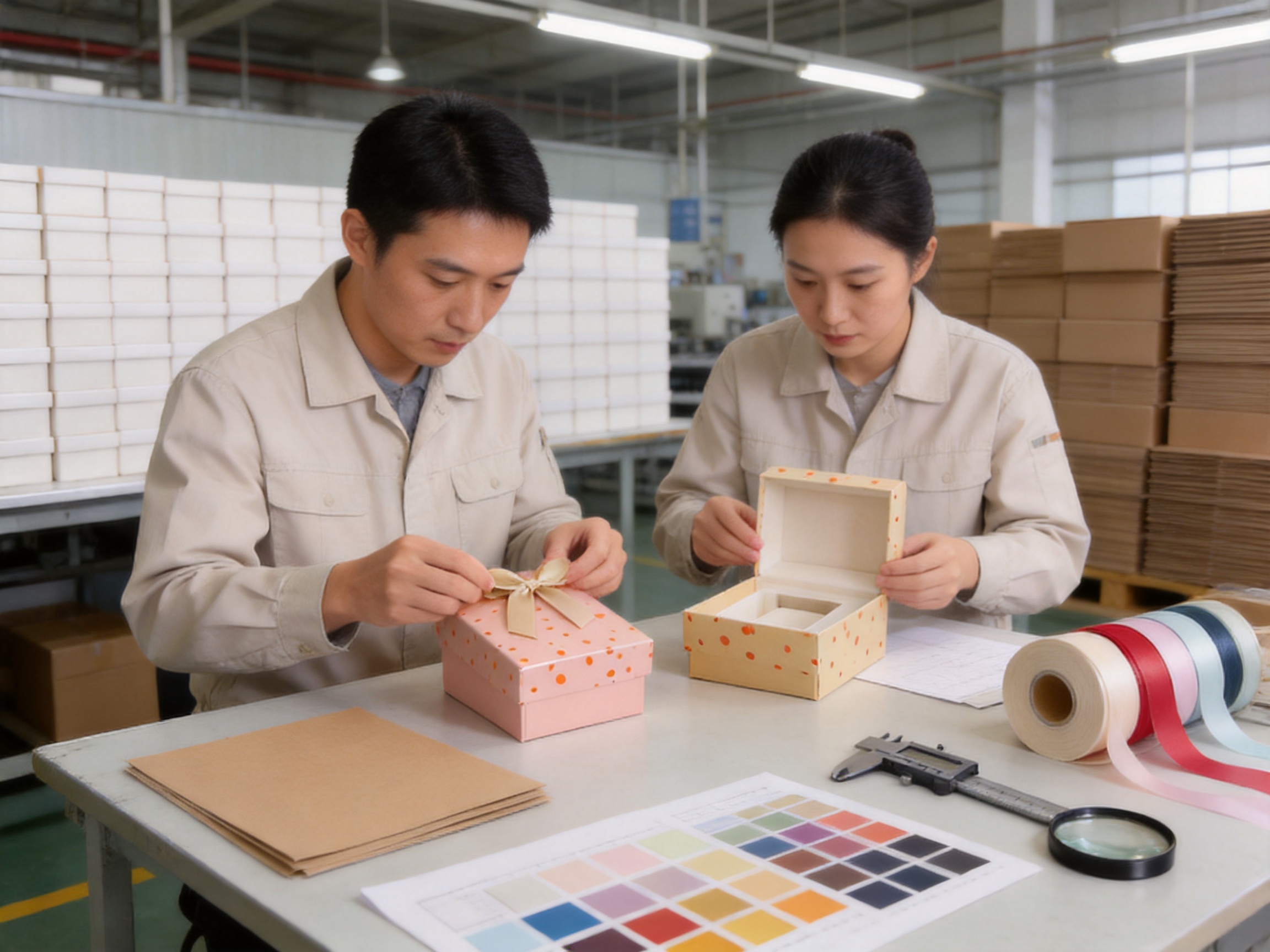
The quality of a decorative gift box depends on more than its artwork. Paper selection, printing accuracy, cutting, folding, adhesive application, ribbon placement, assembly, and inspection all influence the final result. A strong manufacturer must coordinate these stages carefully to ensure that the finished box is visually attractive and structurally reliable.
Zhejiang Shihao Gift Packaging Co., Ltd. is an export-oriented manufacturer specializing in paper gift packaging. With more than fifteen years of experience, the company has developed capabilities across production, research and development, design, and sales. This integrated experience supports efficient communication between product concepts and manufacturing requirements.
The company operates from a facility covering approximately 20,000 square meters and employs around 300 people. This scale provides production resources for both recurring orders and customized projects. A workforce of this size can support specialized functions such as artwork preparation, material purchasing, production scheduling, assembly, quality control, packing, and export coordination.
The reported average daily production capacity is approximately 5,000 sets of gift boxes. Capacity at this level is valuable for customers who need dependable replenishment, seasonal production, or larger commercial orders. It also indicates that the manufacturer is equipped to move beyond small sample production and support more structured supply programs.
A packaging manufacturer with an internal design team can help customers develop packaging that is practical as well as attractive. The design process may involve selecting a suitable box style, preparing artwork, adjusting pattern placement, determining ribbon treatment, and coordinating the interior insert with the jewelry item.
The company updates dozens of products weekly, demonstrating an active approach to product development. For buyers, this can mean access to a broader range of current packaging concepts and faster inspiration when developing a new collection. It also suggests that the manufacturer understands changing preferences in gift packaging, including the demand for fashionable patterns, seasonal designs, and customized brand presentation.
Advanced equipment supports consistency in the repeated manufacturing stages required for paper boxes. Cutting equipment must create accurate dimensions and clean edges. Printing equipment must reproduce colors and patterns with uniformity across production batches. Folding and forming equipment must help maintain stable shapes. Assembly processes must ensure that bows, lids, inserts, and other components are positioned correctly.
Process consistency is particularly important for a box such as the A-7 because its decorative value depends on neat alignment. A misaligned pattern, uneven fold, loose ribbon, or poorly fitted lid can reduce the premium impression. Reliable equipment and trained operators work together to minimize these issues.
Quality control can begin with paperboard, decorative paper, ribbon, adhesives, and interior materials. These components should be checked for suitability before entering production. During manufacturing, operators can inspect printing, cutting, folding, bonding, and assembly. Finished boxes can then be reviewed for appearance, dimensional consistency, structural condition, and packaging accuracy.
A systematic quality approach is important for export orders because products may travel long distances and pass through multiple handling points. Consistent construction helps the box retain its intended appearance from the factory to the distributor, retailer, and final recipient.
Zhejiang Shihao Gift Packaging Co., Ltd. has passed BSCI and FSC certifications. BSCI is associated with social compliance and responsible working conditions in supply chains, while FSC certification supports responsible forest-related material sourcing when the relevant certified materials and chain-of-custody requirements are applied.
These certifications can be meaningful for buyers that evaluate suppliers according to social responsibility, sustainability, and procurement standards. Customers should confirm the specific certification scope, product applicability, and documentation requirements for each order. Even so, the company’s certification profile demonstrates attention to internationally relevant manufacturing expectations.
Packaging is one of the most visible physical expressions of a retail brand. It can reinforce a company’s desired position before a customer reads a label or examines a product detail. A well-made jewelry box can suggest care, reliability, fashion awareness, or premium service.
The A-7 gives brands a recognizable base on which to build. The pattern can be maintained as a signature visual element or modified for a particular collection. Logo printing, brand colors, custom labels, paper cards, stickers, and interior messages may be considered depending on the order requirements and production method.
For small jewelry businesses, customized packaging can help create a professional appearance without requiring a completely new structural design. The existing rectangular format can reduce development complexity, while customized surface artwork gives the brand a more personal identity.
For established retailers, the box can be incorporated into a broader packaging system. It may be paired with shopping bags, tissue paper, product cards, certificates, or shipping cartons. Consistency across these elements can make the customer experience feel more coordinated and intentional.
The bow also has branding potential. A ribbon color can be selected to complement the company’s visual identity or a seasonal campaign. A neutral ribbon may support an elegant jewelry line, while a brighter color may be suitable for youthful fashion accessories. Small visual decisions can influence how customers remember the packaging.
Customization is an important advantage when purchasing packaging directly from a manufacturer. Rather than selecting a completely generic box, buyers can discuss modifications that align the product with their jewelry, market, and sales channel.
The polka-dot pattern can serve as a starting point for color and artwork discussions. Buyers may request adjustments to the background color, dot scale, dot spacing, contrast, or overall visual balance. It is important to consider how the pattern interacts with the jewelry and the desired brand personality.
A logo can be added to strengthen brand recognition. Depending on the design and material, additional information may include a website name, short message, product collection, care reminder, or social media handle. Printing should remain balanced so that the box retains its decorative quality and does not appear visually crowded.
The interior is one of the most important customization areas because jewelry types vary greatly in size and shape. Buyers can provide product samples or measurements to help determine the correct insert. The objective is to hold the item securely while making it easy for the customer to remove and view.
Ribbon color, width, knot style, and placement may influence the overall character of the package. A subtle ribbon can create an elegant appearance, while a contrasting ribbon can make the gift box more energetic. The finishing details should be evaluated together with the printed surface and intended customer group.
Although the A-7 is designed as a compact rectangular box, custom orders may require adjustments for different jewelry dimensions. Buyers should consider the product size, interior clearance, lid movement, shipping method, and desired display angle. Structural modifications should be reviewed through samples before mass production.
Jewelry brands can use the A-7 to create a more complete product presentation. The box can help standardize packaging across a collection while leaving room for logo printing and customized inserts. A consistent box also simplifies fulfillment because staff can package similar products using an established process.
Physical retailers can use the box for counter presentation, gift wrapping, and customer collection. Its decorative appearance may reduce the need for additional wrapping materials and improve the speed of service during busy periods. The box can also be displayed beside the jewelry to show customers how the final purchase will be presented.
E-commerce businesses depend heavily on customer impressions after delivery. The package is often the first physical contact a customer has with the brand. A patterned box with a bow can make a mail-order purchase feel more personal and gift-like. It may also encourage customers to share unboxing photographs or videos, creating additional organic visibility.
Small jewelry and accessories are frequently used as event favors, commemorative gifts, or promotional items. The A-7 can be customized for weddings, anniversaries, product launches, seasonal campaigns, and corporate celebrations. A coordinated box can make a modest gift appear more complete and carefully prepared.
Wholesalers need products that appeal to multiple retail customers. A flexible, attractive gift box can be included in packaging catalogs and offered for different jewelry categories. The manufacturer’s production capacity and export experience can support recurring supply programs for distributors serving several markets.
Although exact production details may vary according to material and customization requirements, a professional paper gift box commonly passes through several coordinated stages. Understanding these stages helps buyers evaluate quality and communicate effectively with a supplier.
The process begins with the product specification. The manufacturer reviews the box dimensions, paper material, color requirements, printing artwork, ribbon treatment, insert design, order quantity, packing method, and delivery expectations. At this stage, the customer should provide clear jewelry measurements and identify any special handling needs.
Paperboard and covering materials are selected according to the required appearance and strength. The surface must support the desired printing and finishing results. Interior components should be chosen according to the jewelry’s shape and protection requirements. Ribbon and adhesive materials must also be compatible with the intended production process.
Artwork files are prepared for production, with attention to color, pattern repeat, logo placement, bleed, and cutting margins. A proof or sample may be reviewed before mass production. This stage is especially important for polka-dot packaging because pattern spacing and alignment influence the overall visual result.
The selected artwork is printed onto the appropriate paper surface. Additional finishing processes may be considered if required by the design. These can include surface treatments, special effects, or additional printed elements. The final choice should balance appearance, durability, budget, and production volume.
Printed materials are cut into the required components and prepared for folding or forming. Accurate cutting supports clean edges and stable box geometry. Folding lines must be positioned correctly so that the structure assembles without distortion.
Box components are assembled, and interior supports are fitted. The ribbon bow is attached according to the approved design. Operators check that the bow is secure, visually centered where required, and consistent across the production batch.
Finished boxes are inspected for surface quality, shape, assembly, ribbon placement, and order quantity. Products are then packed for transport in a way that helps reduce crushing, moisture exposure, and unnecessary movement. Export packing should be discussed according to the destination, shipping method, and expected handling conditions.
Buyers often compare decorated paper gift boxes with plain folding cartons, plastic cases, fabric pouches, and rigid premium boxes. Each format has a different balance of cost, appearance, protection, and environmental considerations.
| Packaging Type | Main Strength | Possible Limitation | Best Use |
|---|---|---|---|
| A-7 polka-dot jewelry gift box | Combines decoration, gift readiness, organization, and compact storage | Requires suitable sizing and insert selection for each jewelry type | Retail jewelry, personal gifts, boutique presentation, online orders |
| Plain paper carton | Simple and often economical | May provide limited emotional or visual appeal | Basic product protection and high-volume utility packaging |
| Fabric pouch | Soft, lightweight, and reusable | Provides less structural protection and may not display the item as clearly | Lightweight jewelry and informal packaging |
| Plastic case | Can provide visibility and rigid protection | May offer less gift warmth and may conflict with sustainability goals | Specialized display or protective applications |
| Premium rigid box | Strong structure and luxury appearance | May require more material, storage space, and shipping cost | High-value jewelry and luxury collections |
The A-7 occupies a useful middle position. It offers more visual personality than a plain carton while remaining more compact and potentially more economical than a heavy rigid box. It also creates a more formal presentation than a simple pouch. The most suitable choice depends on jewelry value, brand positioning, shipping conditions, budget, and customer expectations.
Paper-based packaging is frequently considered by brands seeking alternatives to unnecessary plastic or excessive composite materials. The sustainability profile of a gift box depends on the complete material structure, printing process, coatings, adhesives, ribbon, insert, and end-of-life conditions. Buyers should evaluate the full packaging specification rather than assuming that every paper product has the same environmental impact.
The company’s FSC certification is relevant to buyers who prioritize responsible forest-related material sourcing. Customers should request current documentation and confirm whether the specific paper materials used in a particular order fall within the certified scope.
Material efficiency is another consideration. A compact rectangular box can reduce unused internal space compared with an oversized package. Efficient dimensions may help reduce storage requirements and transport volume. The correct size should still provide sufficient clearance and protection for the jewelry.
Durability can also contribute to responsible use. If a box is attractive and structurally sound, the recipient may reuse it for storing jewelry, small accessories, buttons, keepsakes, or other personal items. A package that serves a second purpose may remain useful beyond the initial gift occasion.
For a more responsible packaging program, brands should consider right-sizing, recyclable paper components, appropriate printing methods, reduced unnecessary inserts, and shipping cartons that fit the product efficiently. These decisions can be discussed with the manufacturer during product development.
Customers planning to order the A-7 should begin by defining the jewelry products that will be placed inside. Important information includes the item’s length, width, height, weight, shape, fragility, surface finish, and whether it is sold individually or as part of a set.
The next step is to define the desired presentation. Buyers should decide whether the box should look playful, elegant, seasonal, youthful, classic, or minimalist. The polka-dot pattern can support different moods depending on color and scale, while the ribbon can reinforce the same message.
Artwork should be supplied in a suitable production format. Logo files, color references, pattern files, and text should be checked carefully before approval. Buyers should also request a physical sample when color, size, insert fit, or ribbon placement is especially important.
Order quantity and delivery schedule should be discussed early. Seasonal packaging often requires production before the selling period begins, and customized components may require additional preparation. A realistic schedule should include artwork confirmation, sample approval, production, inspection, packing, and transportation.
Buyers should also clarify packing quantities, carton dimensions, shipping marks, inspection procedures, and replacement policies for any quality concerns. Clear communication at the beginning of the project helps reduce delays and supports more predictable results.
An unboxing experience begins before the lid is opened. The recipient first notices the package’s size, surface, weight, pattern, and finishing details. The A-7 uses these elements to create a sequence of positive impressions.
The rectangular structure gives the package a clear and orderly shape. The polka-dot pattern adds visual interest. The bow signals that the box is a gift. When the lid is opened, the organized interior guides attention toward the jewelry. Each stage supports the next, making the presentation feel intentional rather than accidental.
This sequence can be especially valuable for online purchases. The seller may not be present when the recipient receives the order, so the package must communicate care on the seller’s behalf. A decorated jewelry box can help close the emotional distance between a digital transaction and a personal gift exchange.
For physical retailers, the unboxing experience can extend the service encounter. The salesperson can place the jewelry into the box, adjust the insert, tie or present the ribbon, and hand the finished package to the customer. The box becomes part of the final moment of purchase.
A positive unboxing experience can also support customer loyalty. While packaging alone cannot compensate for poor jewelry quality or unreliable service, thoughtful presentation can strengthen an already good purchase. Customers may remember the brand more favorably when the product arrives clean, secure, attractive, and ready to give.
When reviewing a sample, buyers should examine the alignment of the lid and base. The box should open and close smoothly without excessive looseness or resistance. Edges should appear neat, and the surface should be free from obvious wrinkles, stains, scratches, or printing defects.
The polka-dot pattern should be evaluated for consistent color and spacing. If the design includes a logo or other printed element, its position should match the approved artwork. Buyers should also inspect whether the pattern appears distorted at corners or folded areas.
The ribbon bow should be securely attached and visually balanced. Loose ends, uneven loops, or inconsistent placement can affect the perceived quality. If the ribbon is intended to function as a carrying or opening detail, its durability should be tested through normal handling.
The interior insert should hold the intended jewelry without causing excessive pressure. The item should remain visible and should not fall out when the box is gently moved. At the same time, the jewelry should be easy for the recipient to remove without damaging the product or the insert.
Finally, the buyer should inspect the complete package under realistic conditions. A sample should be placed in a shipping carton, handled, opened, closed, and displayed. This practical review can reveal issues that are not obvious when the box is examined only on a table.
The box is designed for small jewelry and accessories, including rings, earrings, pendants, charms, brooches, pins, and selected small bracelets. The correct interior configuration should be confirmed according to the product’s exact dimensions and shape.
Yes. The polka-dot surface and ribbon bow give the box a gift-ready appearance suitable for birthdays, holidays, anniversaries, celebrations, and other personal occasions.
Yes. The rectangular format is easy to arrange on counters and shelves, while the decorative exterior can help create a more attractive customer presentation. It can also support a consistent packaging style across a jewelry collection.
Customization may be available for artwork, colors, logo printing, ribbon details, dimensions, and interior inserts. The final options depend on the project specification, materials, order quantity, and production requirements.
Yes. Interior supports can be reviewed according to whether the package will hold a ring, earring pair, pendant, bracelet, or another small accessory. Customers should provide product measurements or samples for accurate development.
The rectangular shape creates a stable package that is easy to stack, store, transport, label, photograph, and display. It also provides a defined interior area that can help prevent small jewelry items from moving unnecessarily.
Yes. Its decorative appearance can improve the delivery experience and make the order feel more suitable for gifting. A neat box may also enhance product photography and encourage customers to share unboxing content.
The manufacturer has more than fifteen years of experience in paper gift packaging, a facility of approximately 20,000 square meters, around 300 employees, advanced equipment, an internal design team, and an average daily production capacity of about 5,000 gift box sets.
The company is an export-oriented manufacturer whose products are supplied to Europe, the United States, the Middle East, and other regions. Buyers should confirm current shipping arrangements, order terms, documentation, and delivery schedules for their destination.
The company has passed BSCI and FSC certifications. Buyers should request current certification information and verify the scope and applicability of the certification to the specific materials and order under consideration.
Yes. If the box remains in good condition, it can be reused to store jewelry, accessories, keepsakes, buttons, hair items, or other small objects. Its reuse potential may extend the practical life of the packaging.
Useful information includes the jewelry type, product dimensions, desired box dimensions, quantity, artwork, logo files, material preferences, ribbon requirements, insert requirements, destination, target delivery date, and packing expectations.
The A-7 Rectangular Polka Dot Small Jewelry Gift Box with Bow Ribbon offers a balanced combination of visual appeal and practical packaging performance. Its rectangular format supports organized storage and efficient display. Its polka-dot decoration gives the box a distinctive appearance. Its ribbon bow makes the package feel ready for gifting and adds a memorable finishing touch.
Compared with plain jewelry cartons, the A-7 provides a stronger emotional and visual message. Compared with soft pouches, it offers a more structured presentation. Compared with larger rigid boxes, it can provide a compact alternative for small jewelry products and everyday gift occasions. These advantages make it suitable for brands and retailers seeking packaging that is attractive without being unnecessarily complex.
The product is further strengthened by the manufacturing resources of Zhejiang Shihao Gift Packaging Co., Ltd. The company’s long industry experience, large production facility, trained workforce, design resources, equipment, export background, and certification profile support its ability to produce standard and customized paper gift packaging.
For buyers, the most important success factors are accurate product measurements, appropriate interior support, clear artwork, careful sample approval, and early production planning. When these elements are coordinated, the A-7 can do more than hold jewelry. It can shape the customer’s first impression, make a gift feel more meaningful, and help a jewelry brand present itself with greater consistency.
In a competitive market, small details often influence perceived value. A neat box, attractive pattern, secure interior, and well-finished ribbon can turn a simple jewelry purchase into a more complete experience. That is the central advantage of the A-7: it combines the practical purpose of packaging with the emotional purpose of gifting.
1. Product specification and descriptive materials for the A-7 Rectangular Polka Dot Small Jewelry Gift Box with Bow Ribbon.
2. Zhejiang Shihao Gift Packaging Co., Ltd. company profile and manufacturing capability information.
3. General principles of paperboard packaging design, structural packaging, and retail presentation.
4. General guidance on jewelry packaging, product protection, and unboxing experience design.
5. FSC principles concerning responsible forest-related material sourcing and certified paper products.
6. BSCI-related principles concerning social compliance and responsible supply chain management.
7. General packaging quality control practices covering printing, cutting, folding, assembly, inspection, and export packing.
8. General retail merchandising principles for gift packaging, jewelry presentation, and customer experience.
Recommended Products

Contact Us

No. 15, Xiayang Road, Huangzhai Town, Jinhua, Zhejiang, China

(+86) 579-84230069

(+86) 13085675766


Products

Gift Box Packaging Manufacturer
 English
 Français
 Español
 عربى