2026-10-16
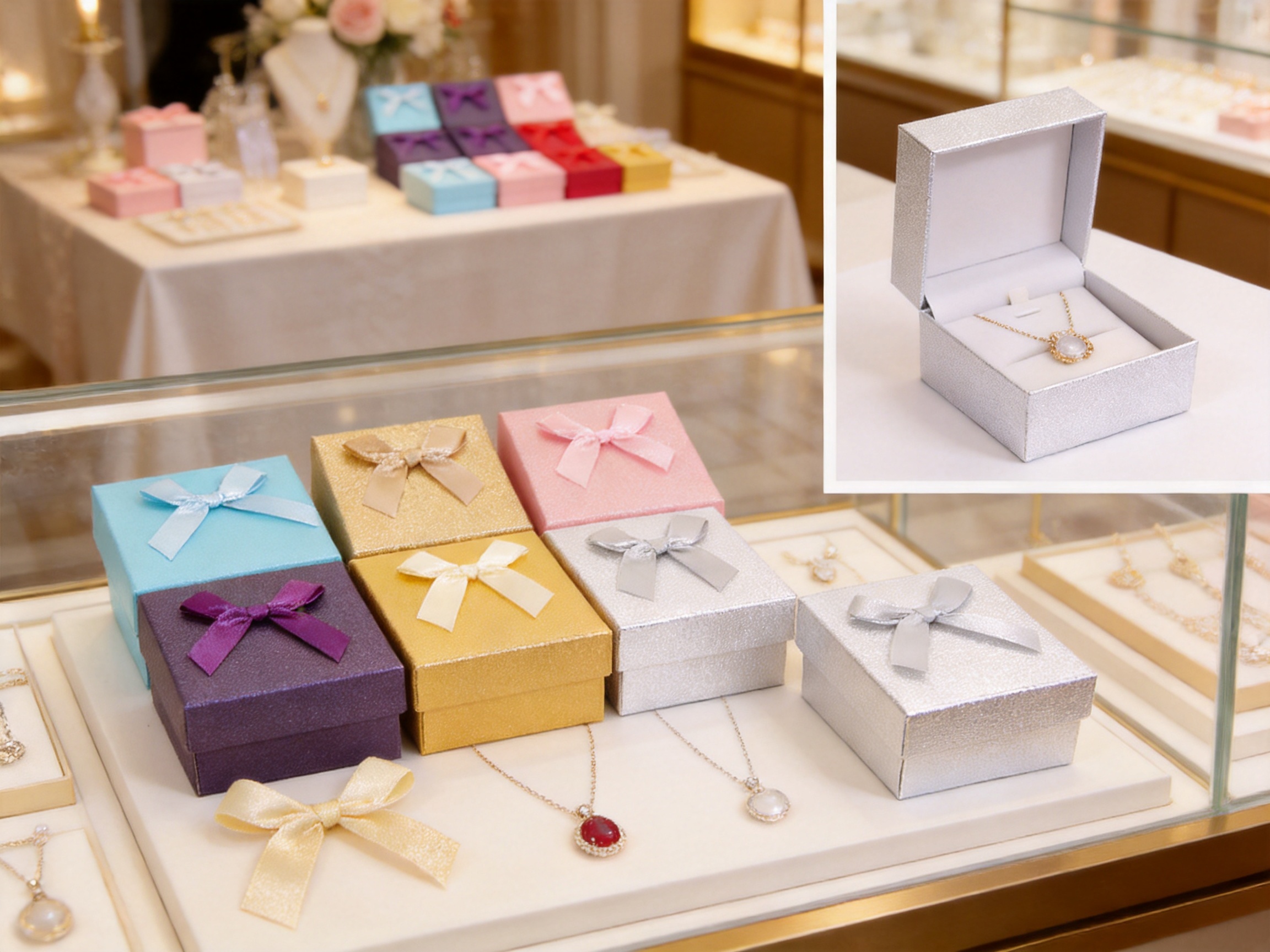
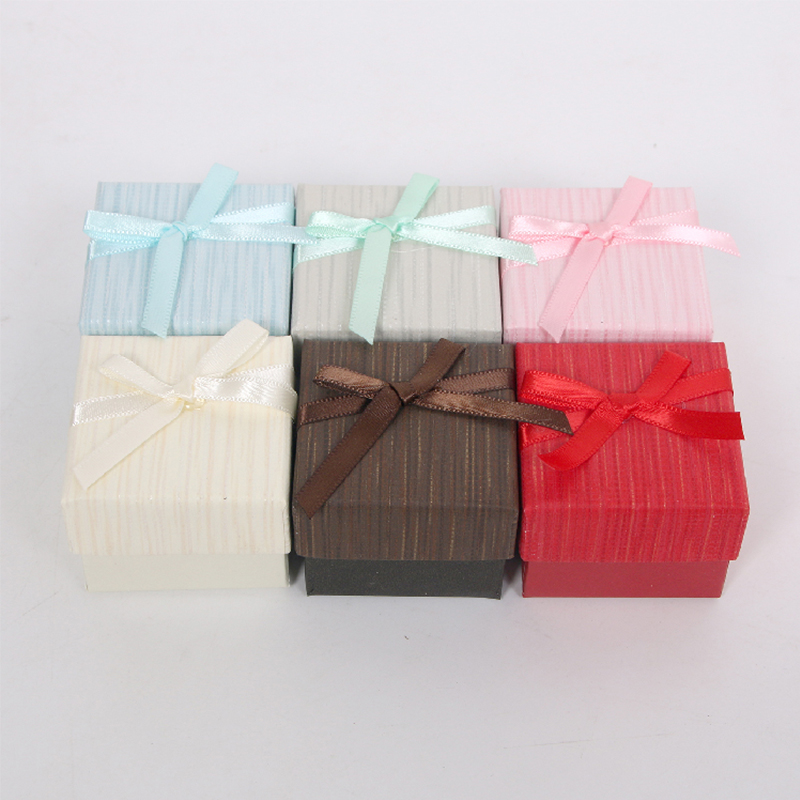
Packaging is often the first physical expression of a jewelry brand, retailer, designer, or gift-giving occasion. Before a recipient sees the jewelry inside, they see the box, feel its surface, assess its construction, and respond to the way it opens. A well-designed package can make a modest item feel more considered, while a poorly selected package can weaken the perceived value of even a beautifully crafted piece. The HY-1 square top-and-bottom-cover glitter paper jewelry gift box is designed for precisely this moment. It combines a structured square format, a separate lid and base, a sparkling paper exterior, and a central ribbon bow to create a polished presentation for jewelry and small precious gifts.
This type of box belongs to a packaging category where appearance, usability, protection, and customization must work together. It is not simply a container. It is part of the gift experience, a visual extension of the product, and a practical solution for presenting jewelry in a neat and organized manner. Its glitter paper surface creates immediate visual impact, while the rigid top-and-bottom construction gives the package a stable and substantial feel. The ribbon bow adds a ceremonial detail that encourages anticipation during unboxing.
For buyers seeking a reliable packaging partner, product quality is only one part of the decision. They also need to evaluate manufacturing capability, customization support, production consistency, supply capacity, certifications, communication, and the ability to serve different markets. Zhejiang Shihao Gift Packaging Co., Ltd. is an export-oriented paper packaging manufacturer with more than 15 years of experience, a production area of approximately 20,000 square meters, a workforce of around 300 employees, and an average daily production capacity of about 5,000 sets of gift boxes. These resources support the development and manufacture of jewelry boxes, gift boxes, folding boxes, storage boxes, and other paper packaging products.
The following article examines the structure, visual appeal, practical benefits, customization possibilities, manufacturing considerations, quality advantages, and commercial applications of the HY-1 jewelry gift box. It also explains why a specialized gift box manufacturer can offer advantages over general packaging suppliers and how businesses can evaluate this product for their own jewelry, gifting, and retail requirements.
The HY-1 design is based on a classic square box structure with a separate top and bottom cover. The lid fits over the base and can be removed easily, creating a straightforward opening experience. Unlike a folding carton that is formed from a single flat sheet, a top-and-bottom-cover box has a more substantial presence and can be used for presentation-focused packaging.
The square format is especially useful for jewelry because it provides a balanced footprint and a visually symmetrical appearance. Rings, earrings, bracelets, pendants, small accessories, and carefully arranged gift sets can be placed inside according to the required insert or internal support system. The shape also makes the box easy to stack, display, store, and coordinate with other packaging components.
The box is covered with glitter paper. This material contains a decorative surface that reflects light and creates a delicate shimmer. The effect changes according to viewing angle and lighting conditions, giving the package a lively appearance without requiring an overly complex exterior pattern. Glitter paper is particularly suitable for jewelry packaging because its visual character complements the brightness and refinement associated with metal, gemstones, pearls, and other decorative materials.
A ribbon bow is positioned at the center of the lid. This detail turns a functional package into something that resembles a finished present. It can communicate celebration, affection, luxury, romance, or seasonal warmth depending on the selected ribbon color and the overall color scheme. Because ribbon materials and colors can be customized, the bow can be coordinated with a brand identity, wedding palette, holiday collection, or special event theme.
The result is a gift box that combines a structured form with decorative finishing. The top-and-bottom construction provides an orderly opening sequence, the glitter paper delivers visual attraction, and the ribbon bow provides an immediate emotional cue. Together, these features help the package stand apart from plain paper cartons and simple unprinted boxes.
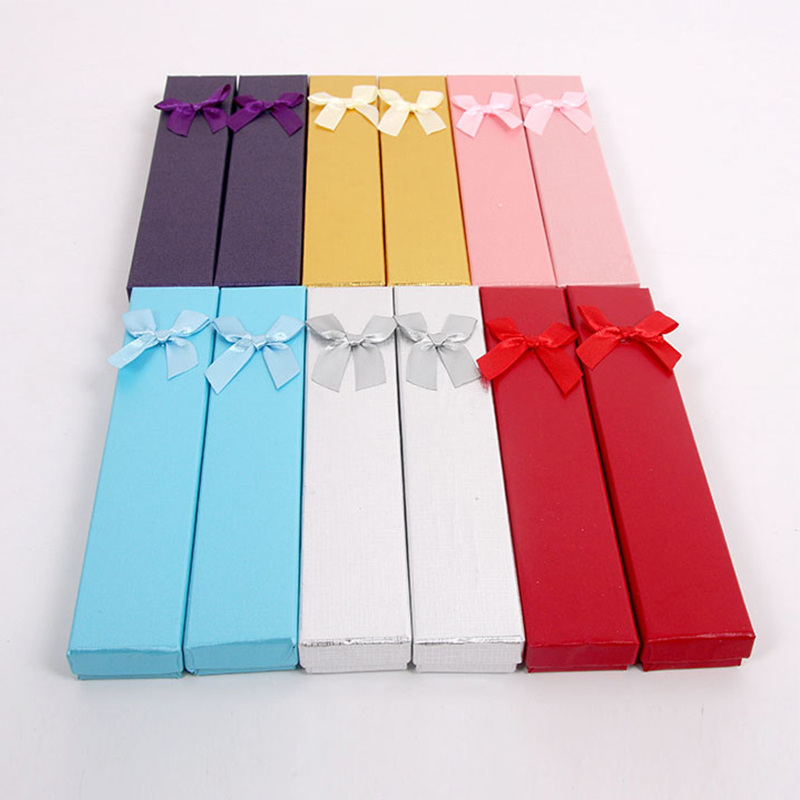
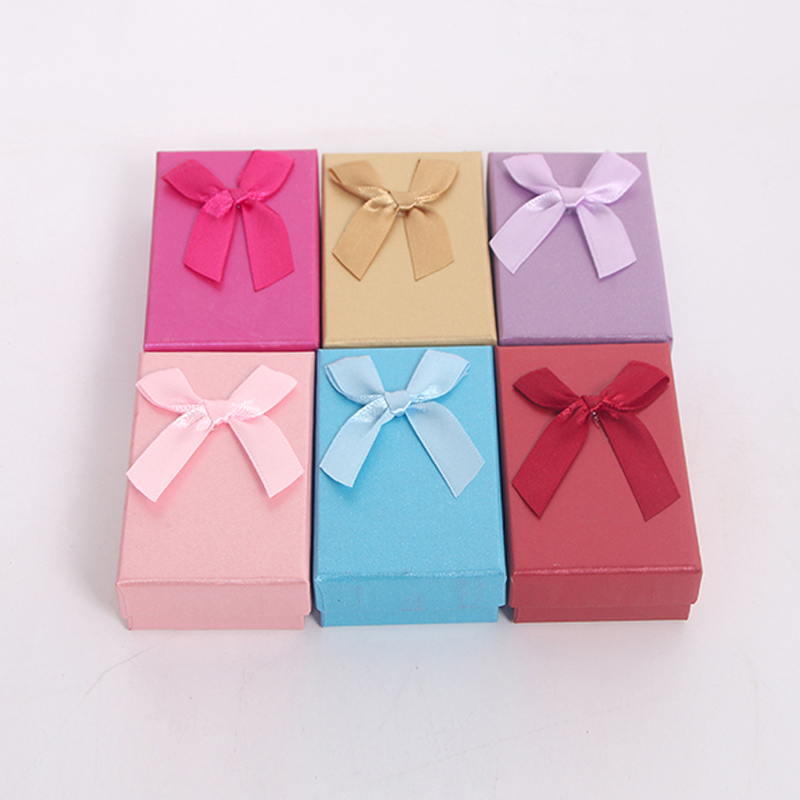
HY-1 Square Top and Bottom Cover Glitter Paper Jewelry Gift Box with Ribbon Bow
Jewelry is usually small in physical size but high in emotional and perceived value. The package must therefore support several objectives at the same time. It should protect the product from everyday handling, keep the contents visually organized, reinforce the value of the item, and make the recipient feel that the gift has been prepared with care.
Basic protection is important, but a package that only prevents damage may not create a strong retail or gifting experience. Jewelry buyers frequently respond to details such as color, texture, opening action, shape, and finishing. When a box is attractive before it is opened, the recipient is more likely to preserve it, reuse it, or associate it with the brand or occasion.
The HY-1 design addresses this broader role of packaging. Its separate lid and base help create a deliberate opening process. The recipient lifts the top rather than tearing through a disposable carton, making the unboxing experience slower and more anticipatory. The ribbon bow gives the lid a recognizable focal point and can make the box appear gift-ready without requiring additional wrapping.
The interior may be adapted with suitable inserts, cushions, trays, compartments, or other holding solutions according to the jewelry type. A ring needs a different support arrangement from a necklace or a collection of earrings. Although the exact internal structure must be confirmed during product development, the square outer format provides a convenient foundation for a range of presentation concepts.
For retailers, packaging also influences shelf presentation. A group of coordinated square boxes can create a consistent visual identity in a display cabinet, showroom, online product photography setup, or event gift table. For e-commerce sellers, a refined package can improve the moment when the customer receives an order and opens it at home. For corporate and event gifting, the ribbon and glitter exterior can make a small package feel more complete and intentional.
Plain paper boxes can be economical and practical, but they often provide limited visual differentiation. The glitter paper exterior of the HY-1 box introduces surface movement and reflective detail. Under retail lighting, photography lighting, or natural light, the finish can create a soft sparkle that attracts attention.
This visual effect can be valuable for jewelry categories because jewelry itself is often purchased for its brilliance, elegance, and symbolic meaning. A box with a subtle shimmer supports those associations. It can make a product launch appear more festive, help a seasonal collection look more distinctive, and increase the perceived completeness of a gift set.
The separate lid and bottom cover provide a familiar and dependable box experience. The structure is easy to understand, simple to open, and suitable for repeated handling. It also avoids the visually unfinished appearance that can occur when a gift is placed in a basic open tray or a thin folding carton.
Compared with some lightweight packaging formats, a well-constructed top-and-bottom box can create a stronger tactile impression. The recipient can feel the relationship between the lid and base as the box is opened. This physical interaction is an important part of premium packaging because it makes the product presentation feel more deliberate.
A ribbon bow reduces the need for additional decorative wrapping. The bow is immediately visible on the lid and communicates that the box is prepared for presentation. This is convenient for retailers, gift shops, jewelry brands, wedding planners, and event organizers that need attractive packaging without adding a separate wrapping stage for every order.
The bow can also be used to differentiate collections. For example, a brand may select one ribbon color for bridal jewelry, another for holiday gifts, and a third for everyday premium products. Matching the ribbon to printed graphics, paper color, labels, or interior inserts can create a coordinated packaging system.
The square shape offers a balanced interior area that can accommodate different types of jewelry arrangements. It can be used for a single statement piece, a coordinated pair, or a compact jewelry set. With appropriate internal components, the box can help prevent items from appearing loose or disorganized.
A well-planned interior also improves presentation efficiency. Jewelry can be positioned in a way that makes the product visible immediately after opening. The box can support a layered experience in which the exterior attracts attention, the lid opens smoothly, and the jewelry appears centered and carefully arranged.
The design is suitable for weddings, birthdays, holidays, anniversaries, celebrations, and personal gifting. Its versatility comes from the fact that the structure is classic while the surface and ribbon provide opportunities for variation. The same basic box concept can be adapted for romantic, festive, elegant, youthful, or corporate applications.
This flexibility is a practical advantage over highly specialized packaging that can only be used for one season or one product category. A business may be able to use the same box platform across multiple collections while changing the paper finish, ribbon color, insert, or printed details.
Glitter paper is selected primarily for its decorative effect, but its importance extends beyond appearance. Surface texture affects how a package is perceived in the hand. A shimmering paper can make the box feel more special than an ordinary matte sheet, especially when combined with a structured construction.
The reflective particles or decorative elements in glitter paper interact with light in different ways. A box may appear softer in diffuse lighting and more brilliant under focused display lighting. This allows the packaging to remain visually interesting in a retail environment, at a wedding reception, or in an online unboxing video.
For branding purposes, the paper can help establish a recognizable packaging language. If a jewelry seller consistently uses a particular glitter tone, ribbon style, and box shape, customers may begin to identify the packaging before reading the logo. This kind of visual consistency is useful for building memory and supporting a premium positioning strategy.
At the same time, glitter paper should be selected carefully. The surface must be compatible with the intended printing, finishing, folding, gluing, and handling requirements. The manufacturer needs to evaluate the paper’s thickness, surface behavior, adhesion characteristics, color stability, and suitability for the planned box structure. A professional packaging supplier can guide the buyer toward an appropriate combination of materials and production methods.
Glitter paper also requires attention during inspection and packing. Excessive abrasion, poor storage, or unsuitable handling may affect the visual uniformity of a decorative surface. Consistent production procedures help ensure that finished boxes reach customers with a clean and attractive appearance.
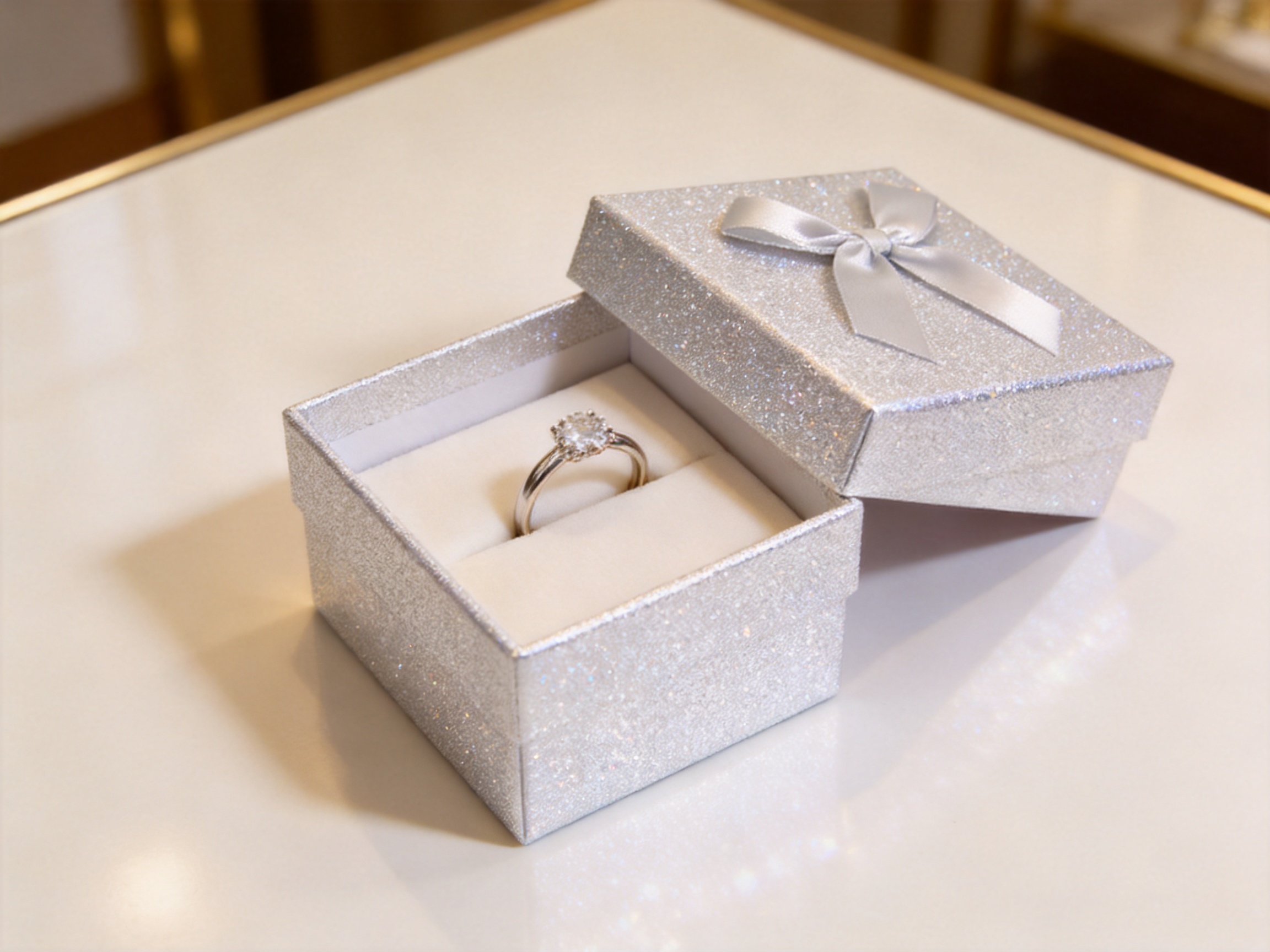
The ribbon bow is one of the most recognizable symbols of gift presentation. It immediately suggests that the package contains something intended to be given, celebrated, or remembered. On the HY-1 box, the bow is positioned on the lid, where it becomes the first decorative feature seen by the recipient.
Opening a box with a bow can create a more ceremonial experience than opening an unembellished package. The recipient may pause to examine the decoration, touch the ribbon, and remove the lid with greater anticipation. This sequence can increase the emotional impact of the jewelry inside, even before the product is fully revealed.
Ribbon selection affects the character of the box. Satin-like ribbons can suggest smoothness and elegance. Deeper colors may create a formal or luxurious impression, while lighter shades can communicate softness and romance. Metallic or contrasting ribbons can add a festive accent. The appropriate option depends on the jewelry collection, target audience, season, and brand image.
Ribbon customization also supports event-specific packaging. A wedding planner may request colors that match the ceremony palette. A retailer may coordinate the bow with a holiday campaign. A jewelry brand may use a signature ribbon shade to make its packages instantly recognizable. These details can be incorporated into a broader packaging program rather than treated as isolated decoration.
The bow must be attached securely and positioned consistently. Uneven placement, loose attachment, or inconsistent proportions can reduce the perceived quality of the box. This is why ribbon assembly and final inspection are important parts of the production process. Decorative components require the same attention to accuracy as the paper structure itself.
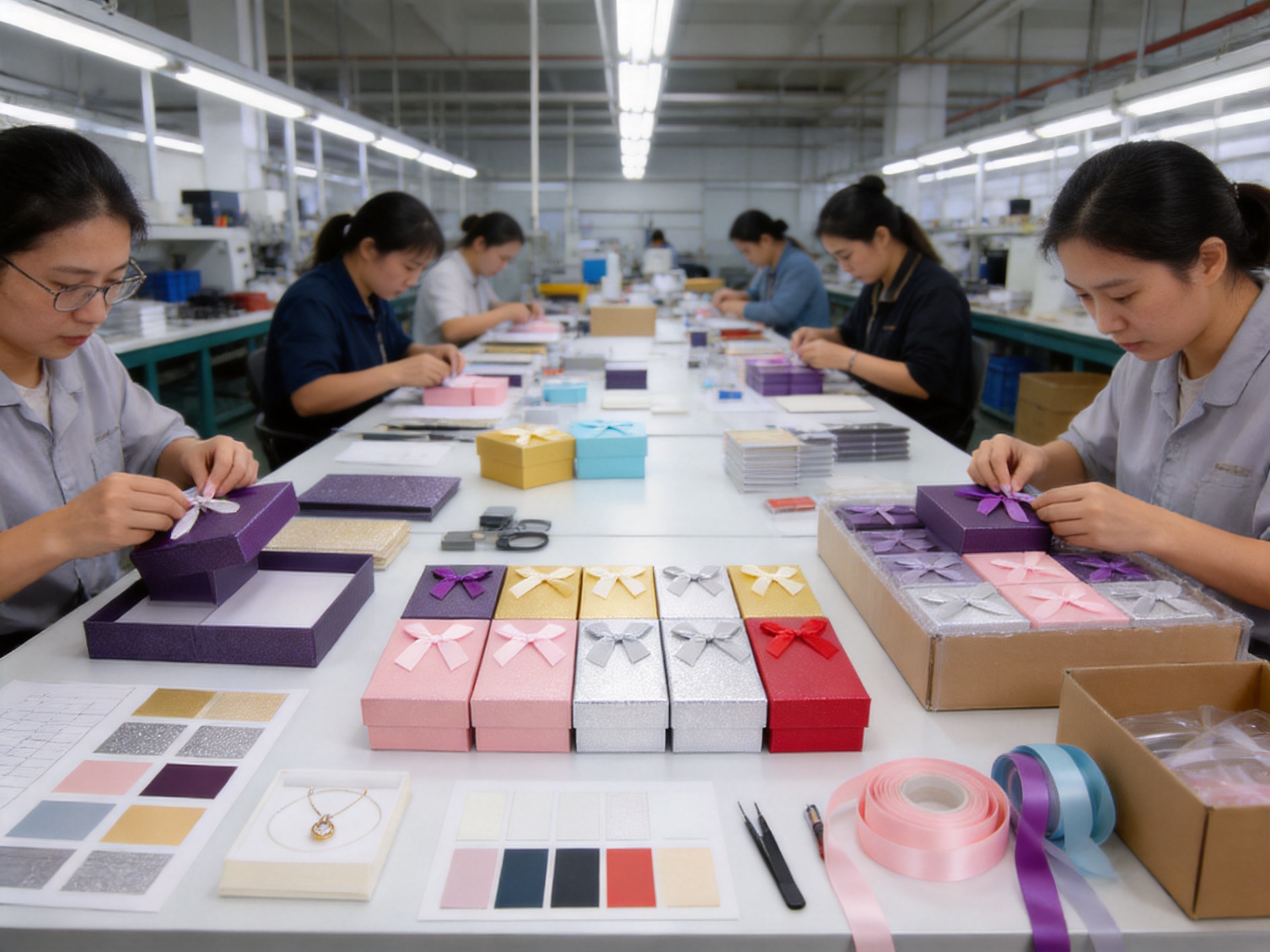
The performance of a jewelry gift box depends on the interaction of many production stages. A visually attractive concept can fail if the paper is poorly selected, dimensions are inaccurate, adhesive is inconsistent, or finishing is not inspected carefully. A specialized manufacturer must therefore coordinate design, material preparation, forming, decoration, assembly, and packaging.
Production generally begins with an evaluation of the product brief. The manufacturer reviews the desired box dimensions, paper type, color, ribbon requirements, internal arrangement, branding needs, order quantity, and target market. A sample or prototype can then be developed to verify the proportions and opening experience.
Sampling is particularly important for a square lid-and-base box because the fit between the two components must be balanced. The lid should be secure enough to stay in place during normal handling while remaining easy to remove. The relationship between the lid depth, base height, paper thickness, and internal components needs to be considered together.
Samples also allow buyers to assess the glitter paper under actual lighting, inspect the bow, review color combinations, and confirm whether the jewelry fits comfortably inside. Adjustments made at this stage can prevent larger problems during mass production.
Material selection includes the paper surface, structural board or supporting layers, adhesive materials, ribbon, and any interior components. The selected materials must work together rather than being judged individually. A beautiful paper is not suitable if it cannot be bonded reliably to the structure. A ribbon may look attractive but require a different attachment method from a lighter decorative trim.
For export packaging, material preparation also needs to consider handling, storage, transportation, and climate variation. Paper products may travel long distances and encounter changes in humidity and temperature. Proper production controls help reduce the risk of warping, surface damage, or adhesive failure.
Depending on the customer’s requirements, the box may include printed information, logos, patterns, labels, or other decorative elements. The glitter paper surface can be used as the primary visual finish, or it can be combined with additional printing and finishing techniques.
Color management is important when the exterior paper and ribbon are intended to match a brand palette. The manufacturer may need to compare printed samples, paper swatches, and ribbon selections before approving bulk production. This process helps create a more unified appearance across different materials.
Paperboard and related components are cut according to the approved dimensions and structural pattern. Accurate cutting supports clean edges, consistent corners, and reliable assembly. Forming and shaping then create the lid and base elements of the box.
In a square box, small dimensional differences can become visible at the corners or along the lid seam. Precision in cutting and forming is therefore important not only for strength but also for appearance. Consistent geometry allows the boxes to align neatly during storage and display.
The decorative paper is applied to the prepared structure, with attention given to corners, edges, seams, and surface tension. Adhesive must be applied consistently so that the paper remains securely attached without visible overflow or uneven areas.
Assembly may involve several manual and machine-supported steps. The appropriate balance depends on the box design, order volume, customization requirements, and production schedule. Skilled workers are especially valuable for decorative packaging because they can identify surface irregularities and correct small assembly issues before final inspection.
The ribbon bow is prepared and attached after the lid structure is ready, or at another stage determined by the production method. The center position, bow size, ribbon tension, and attachment security should be controlled across the production run.
Because the bow is a prominent feature, it can strongly influence the customer’s first impression. A consistent bow helps the packaging appear professionally manufactured and ensures that the decorative language remains uniform across a large order.
Finished boxes should be inspected for dimensions, lid fit, surface cleanliness, paper adhesion, corner quality, ribbon placement, color consistency, and overall appearance. Defective or damaged items should be separated before packing.
Packaging for shipment must protect the finished boxes from crushing, moisture, abrasion, and deformation. Proper inner packing and outer cartons help preserve the appearance of the glitter paper and bows during transportation. For international customers, export packing is particularly important because the products may pass through multiple handling environments before reaching the final destination.
Zhejiang Shihao Gift Packaging Co., Ltd. provides a combination of experience, equipment, production capacity, and product development support that is relevant to jewelry gift box buyers. The company has specialized in paper gift packaging for more than 15 years, giving it experience with the practical requirements of different box structures and decorative finishes.
The company’s approximately 20,000-square-meter facility and workforce of around 300 employees provide a broader operating base than a small workshop. This scale can support material coordination, sample development, production scheduling, assembly, inspection, and shipment preparation under one manufacturing organization.
Its advanced equipment and research and development capabilities support the production of different packaging formats. These include kits, storage boxes, folding boxes, jewelry boxes, and gift boxes. A supplier with a wider product range can often help customers compare structures and select the most appropriate format instead of forcing every project into a single standard design.
The reported average daily production capacity of about 5,000 sets of gift boxes is another important strength for buyers with recurring or larger-volume requirements. Capacity does not replace quality control, but it can help support stable supply when production planning is handled carefully. It may also provide greater flexibility for businesses that need to expand a successful packaging program.
The company maintains its own design team and updates dozens of products weekly. This product development activity can benefit customers that want current styles, new decorative concepts, or packaging variations for different market segments. It also suggests an ability to work beyond fixed catalog products and develop customized solutions.
Shihao has passed BSCI and FSC certifications according to the supplied company information. BSCI is associated with social compliance evaluation, while FSC certification relates to responsible forest management and chain-of-custody requirements when applicable to the certified materials and products. Buyers should confirm the exact scope and validity of certifications for their specific order, but these credentials provide useful indicators when evaluating a responsible packaging supply chain.
Customization is one of the main reasons to work with a specialized manufacturer instead of purchasing generic gift boxes. The HY-1 platform can serve as a starting point for a tailored packaging program. The final specification may include adjustments to size, paper color, ribbon color, printed elements, interior support, and packing configuration.
The square format can be adapted for different jewelry products and gift sets, subject to manufacturing feasibility. A compact version may suit a pair of earrings or a ring. A larger version may be suitable for a necklace, bracelet, or coordinated set. The dimensions should be selected based on the product, insert, shipping requirements, and desired visual proportions.
Color selection can help distinguish collections and communicate brand personality. Soft metallic shades may create an elegant appearance, while bold colors may attract younger customers or support seasonal campaigns. Glitter paper itself may be used as the main statement, or additional printing may be applied to create a more recognizable brand presentation.
Ribbon color, width, texture, and bow proportion can be customized to match the box and the occasion. A restrained bow may suit everyday retail packaging, while a more prominent bow may be appropriate for wedding favors, holiday gifting, or luxury presentation.
Businesses may request logos, product names, patterns, messages, or other printed elements, depending on the selected materials and production process. Brand placement should be carefully planned so that it complements rather than competes with the glitter paper and ribbon.
The interior can be developed around the jewelry’s shape, size, and display needs. Inserts may help position the product, prevent movement, and create a cleaner reveal when the lid is removed. An insert can also provide a consistent visual background for product photography and retail presentation.
The HY-1 jewelry gift box is suitable for jewelry stores, online brands, boutique retailers, wholesalers, wedding planners, event organizers, gift shops, and corporate gifting programs. Its decorative appearance allows it to function in both direct-to-consumer and business-to-business environments.
In jewelry retail, the box can support the sale of rings, earrings, pendants, bracelets, and small jewelry sets. A consistent box design can strengthen the appearance of a display cabinet and help customers recognize a store’s products after purchase.
For e-commerce brands, the package becomes part of the delivery experience. Customers often share unboxing photos or videos when the presentation feels attractive and intentional. A glitter surface and ribbon bow can create a recognizable visual moment that supports customer satisfaction and social sharing.
For weddings, the box can be used for jewelry gifts, bridal-party presents, guest favors, or commemorative accessories. Ribbon customization makes it easier to coordinate the packaging with the event’s color palette.
For birthdays and anniversaries, the box is suitable for presenting meaningful jewelry in a format that already feels gift-ready. During holidays, the glitter paper can reinforce a festive atmosphere, while customized colors can support different seasonal campaigns.
Corporate gifting programs may use the box for branded accessories, recognition gifts, commemorative jewelry, or promotional sets. In these cases, the packaging must balance decoration with brand professionalism. A carefully selected paper color, discreet logo, and coordinated ribbon can create a refined result.
Every packaging format has an appropriate use. A folding carton may be economical, lightweight, and efficient for high-volume distribution. A fabric pouch may be compact and reusable. A plain rigid box may offer structure but lack decorative impact. The HY-1 box occupies a middle ground in which presentation and structure are both important.
| Packaging format | Main advantage | Potential limitation | Why the HY-1 may be preferred |
|---|---|---|---|
| Basic folding carton | Lightweight and economical | May provide a less substantial unboxing experience | Offers a more structured lid-and-base presentation with decorative glitter paper |
| Plain paper jewelry box | Simple and practical | Limited visual differentiation | Adds shimmer and a ribbon bow for stronger gift appeal |
| Fabric pouch | Compact and flexible | May not display jewelry as neatly | Provides a stable square form and organized presentation area |
| Generic rigid box | Strong and reusable | May require additional wrapping | Combines structure with a gift-ready bow and decorative surface |
| Highly specialized molded case | Precise product positioning | Can be less flexible for different products | Allows broader customization of paper, ribbon, and interior presentation |
The most important competitive advantage is not that one box format is universally better than all others. Rather, the HY-1 is well suited to situations in which the buyer wants an elegant presentation, an organized interior, a recognizable gift appearance, and the flexibility of a paper-based custom product.
Compared with an undecorated box, the HY-1 requires fewer additional wrapping steps. Compared with a simple pouch, it can create a stronger display and more deliberate opening sequence. Compared with a heavily specialized case, it may provide more freedom to adjust exterior colors, ribbon details, and branding elements for different collections.
Buyers should evaluate more than photographs when selecting jewelry gift packaging. A professional assessment should consider the complete product specification and the manufacturer’s ability to reproduce it consistently.
Important points include the accuracy of the box dimensions, the fit between lid and base, the quality and uniformity of the glitter paper, the cleanliness of corners and seams, the security of the ribbon, and the absence of visible adhesive marks. The box should also be checked for surface scratches, dents, color variation, and deformation.
Functional testing can include repeated opening and closing, evaluation of the lid’s holding force, inspection after packing, and examination of the box under different lighting conditions. If the box will be shipped through e-commerce channels, buyers should also consider how it performs inside the intended shipping carton.
Samples should be reviewed before bulk production. When customization is required, the approved sample should be treated as the reference standard for color, proportions, finishing, and ribbon placement. Clear approval procedures help reduce misunderstandings between the buyer and manufacturer.
For larger orders, buyers may request production photographs, inspection records, packaging details, or pre-shipment samples. These steps are especially useful when the boxes will be distributed across multiple retail locations or used as part of a major seasonal campaign.
Paper packaging can support sustainability goals when materials are responsibly sourced, designs are efficient, and production waste is managed appropriately. The FSC certification information associated with the manufacturer is relevant for buyers who require certified paper sourcing, although the exact certification scope should be verified for the selected product and materials.
A responsible packaging program should consider the full product life cycle. This includes the origin of the paper, the amount of material used, the need for plastic components, the durability of the box, the possibility of reuse, and the disposal or recycling conditions in the target market.
The HY-1 box may be reused for storing jewelry or small personal items after the original gift has been opened. Its structured form and decorative appearance can encourage recipients to keep it rather than discard it immediately. Reuse extends the functional life of the package and can create an ongoing association with the brand or gift occasion.
Buyers should also discuss the use of adhesives, coatings, decorative particles, ribbons, and mixed materials if recyclability is a priority. A qualified manufacturer can help identify practical options that balance appearance, durability, and environmental expectations.
Sustainability should be addressed realistically. A decorative gift box may require more material or finishing than a minimal carton, but it may also provide greater reuse value and a more memorable experience. The best choice depends on the product, market, customer expectations, and overall packaging strategy.
A clear project brief helps the manufacturer provide an accurate recommendation. Buyers should identify the jewelry dimensions, desired box size, estimated order quantity, target delivery schedule, preferred paper color and finish, ribbon requirements, internal support needs, branding information, and destination market.
It is also helpful to explain the intended use. A box for a jewelry store display may prioritize visual consistency and shelf stacking. A box for e-commerce may require stronger shipping protection. A wedding order may prioritize color matching and a specific event date. Different applications can lead to different material and packing decisions.
Sample review should focus on both appearance and performance. Buyers should open and close the box, place the jewelry inside, inspect the bow from several angles, and check how the surface looks under the lighting used in the final sales environment.
Order planning should include allowances for production time, material procurement, sampling, approval, manufacturing, inspection, and shipping. Customized ribbons, special papers, and printed components may require additional preparation. Early communication reduces the risk of rushed decisions.
It is also valuable to discuss future orders. If the packaging may become a long-term brand standard, the buyer should maintain approved specifications, color references, artwork files, and sample records. A stable documentation process helps preserve consistency when the design is reordered or adapted for a new collection.
Packaging production involves many details that are difficult to judge from a finished product photograph. Experienced manufacturers understand how paper, board, adhesives, decorative surfaces, structural tolerances, and labor processes interact. This knowledge can help prevent design choices that look attractive in theory but perform poorly in production.
More than 15 years of specialization in paper gift packaging gives Zhejiang Shihao Gift Packaging Co., Ltd. a foundation for handling different product types and customer requirements. Its product range includes gift boxes, jewelry boxes, folding boxes, storage boxes, and kits, which indicates experience across multiple paper packaging structures.
The company’s design team can contribute during the early development stage, while its equipment and production organization support the transition from sample to bulk manufacturing. This combination is important because a successful prototype must be reproducible at the required quantity and quality level.
Export experience is also valuable. Products shipped to Europe, the United States, the Middle East, and other regions may need to meet different customer expectations related to materials, presentation, documentation, packing, and delivery. A manufacturer familiar with international orders can help buyers anticipate practical requirements earlier in the project.
The HY-1 is designed as a jewelry gift box, but its square interior can also support small accessories, compact gift items, and selected presentation products. The final suitability depends on the item’s dimensions and the interior insert or support system.
Its main distinguishing features are the square top-and-bottom-cover construction, glitter paper exterior, and central ribbon bow. These elements create a more decorative and gift-ready appearance than a plain paper box.
Yes. The supplied product information indicates that the ribbon material and color can be customized. Buyers should confirm available options, minimum order quantities, and color matching requirements during product development.
Customization may include colors, printed elements, logos, and other decorative details, subject to the selected paper and production process. Artwork, placement, and finishing should be reviewed during sampling.
Yes, the square format can be adapted to different jewelry presentations, including rings, earrings, pendants, bracelets, and small sets. The appropriate insert and internal dimensions should be determined according to the specific product.
Yes. The ribbon bow and glitter paper make the design suitable for weddings, birthdays, anniversaries, holidays, and other celebratory occasions. Customized colors can help coordinate the box with an event theme.
Zhejiang Shihao Gift Packaging Co., Ltd. is described as a manufacturer offering customized packaging solutions. Its design team, product development activity, equipment, and experience with different paper packaging products support custom project discussions.
The company operates a facility of approximately 20,000 square meters, employs around 300 people, and reports an average daily capacity of about 5,000 sets of gift boxes. It also has advanced equipment and research and development capabilities.
The supplied company information states that Shihao has passed BSCI and FSC certifications. Buyers should request current certification details and confirm that the relevant certification scope applies to their specific materials and order.
Yes. Its structured square form can make it suitable for storing jewelry, keepsakes, letters, accessories, or other small items. Reusability depends on the user’s needs and the condition of the box after opening.
Buyers should review a physical sample, confirm dimensions, test the lid fit, inspect the glitter paper and ribbon, verify the interior arrangement, approve colors and artwork, discuss packing requirements, and establish a clear production and inspection process.
Sampling allows the buyer to confirm the visual effect, structural proportions, lid fit, bow placement, jewelry compatibility, and material combination before bulk production. It is an effective way to reduce avoidable production issues.
The HY-1 square top-and-bottom-cover glitter paper jewelry gift box is designed for businesses that want more than basic containment. Its strongest qualities come from the combination of a balanced square structure, decorative glitter paper, and a central ribbon bow. These features make the box attractive for jewelry retail, personal gifting, weddings, seasonal promotions, e-commerce orders, and special event packaging.
Its advantages over plain cartons and undecorated jewelry boxes include a stronger visual impression, a more ceremonial opening experience, improved gift readiness, and flexible customization potential. The box can also support a consistent brand presentation when its color, ribbon, printing, and interior arrangement are developed as part of a broader packaging system.
The manufacturer’s experience adds further value. Zhejiang Shihao Gift Packaging Co., Ltd. combines more than 15 years of industry experience with a sizable facility, an approximately 300-person workforce, advanced equipment, design resources, international export experience, and reported daily production capacity of about 5,000 gift box sets. Its range of paper packaging products and stated BSCI and FSC certifications provide additional points for buyer evaluation.
For the best result, customers should treat the box as a complete packaging project rather than a single decorative object. The product, insert, paper, ribbon, logo, shipping method, target audience, and occasion should all be considered together. With appropriate sampling and quality control, the HY-1 can help transform a small jewelry item into a more polished, emotionally engaging, and memorable gift presentation.
1. Product specification and descriptive materials for the HY-1 square top-and-bottom-cover glitter paper jewelry gift box.
2. Company profile and manufacturing information supplied by Zhejiang Shihao Gift Packaging Co., Ltd.
3. General packaging development principles concerning paperboard structures, decorative finishing, sampling, assembly, and quality inspection.
4. General guidance on FSC-certified materials and responsible paper sourcing.
5. General guidance on social compliance evaluation in international manufacturing supply chains.
6. General retail and e-commerce packaging practices related to product presentation and unboxing experience.
Recommended Products

Contact Us

No. 15, Xiayang Road, Huangzhai Town, Jinhua, Zhejiang, China

(+86) 579-84230069

(+86) 13085675766


Products

Gift Box Packaging Manufacturer
 English
 Français
 Español
 عربى