2026-09-20
604 Square High-End Specialty Paper Gift Box with Yuppie Texture
Premium packaging is no longer limited to protecting a product during storage and transport. It is now a central part of brand communication, customer experience, and perceived product value. A carefully designed gift box can establish expectations before the package is opened, communicate quality through its materials and construction, and leave a lasting impression after the product has been removed. For businesses selling jewelry, watches, electronics, ornaments, crafts, cosmetics, business gifts, and seasonal products, the right packaging can make an ordinary transaction feel memorable.
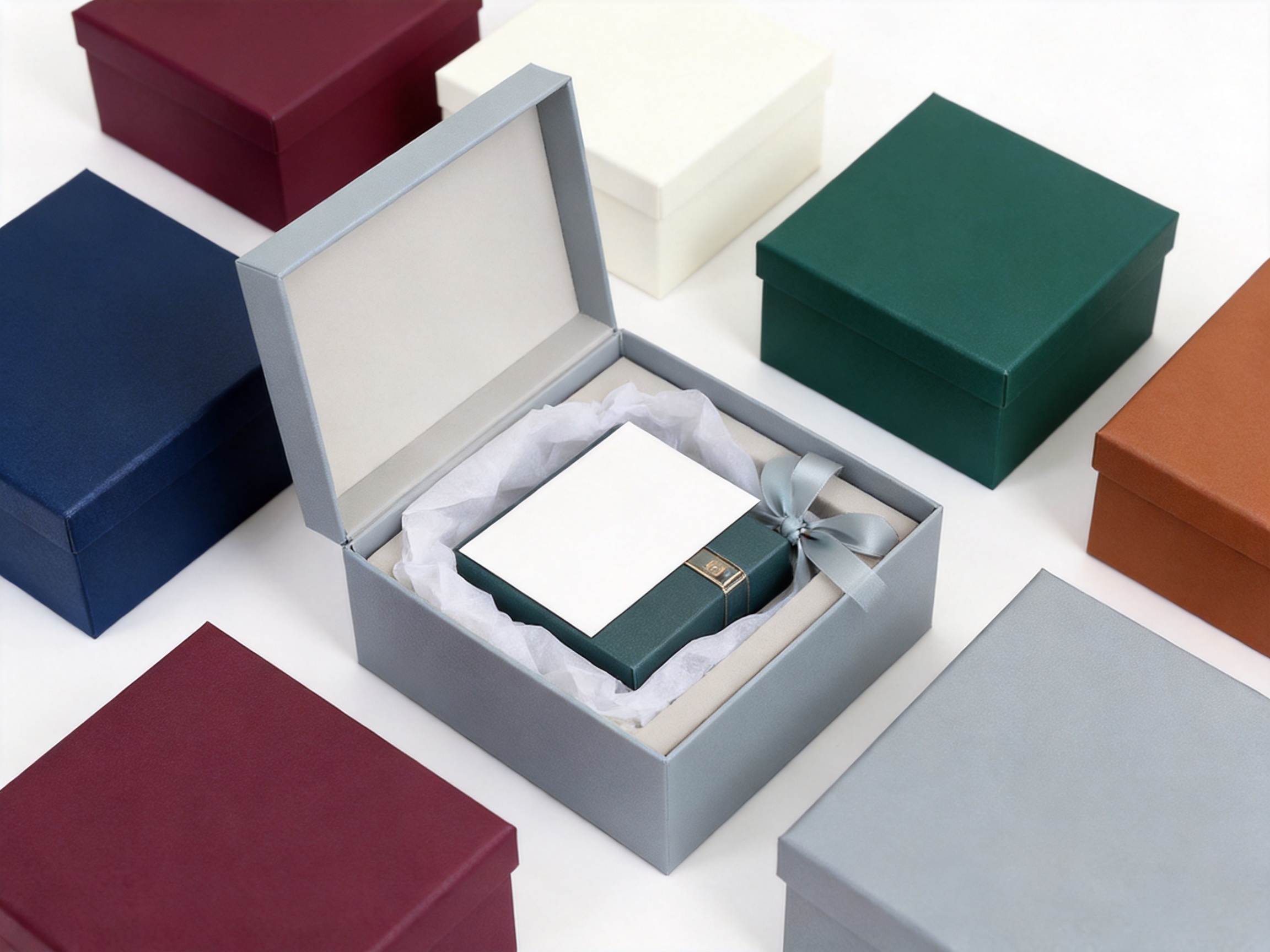
The 604 Square High-End Specialty Paper Gift Box with Yuppie Texture is designed for precisely this purpose. It combines a clean square structure, premium art paper-coated cardboard, a distinctive leather-like specialty paper texture, customizable dimensions, and flexible color and design options. The result is a packaging solution that looks refined while remaining practical for commercial production and brand customization.
Unlike basic folding cartons or plain paperboard boxes, this product is intended to create a stronger sense of occasion. Its textured surface provides tactile interest, while the square silhouette delivers a balanced and contemporary appearance. It can be used as a presentation box for a high-value product, a storage box for personal items, or a gift package for retail and corporate applications.
This article examines the product’s design advantages, material qualities, applications, customization possibilities, manufacturing strengths, quality considerations, logistics, sustainability characteristics, and purchasing value. It also explains why working with an experienced gift packaging manufacturer can produce better results than selecting a generic stock box from a limited catalog.
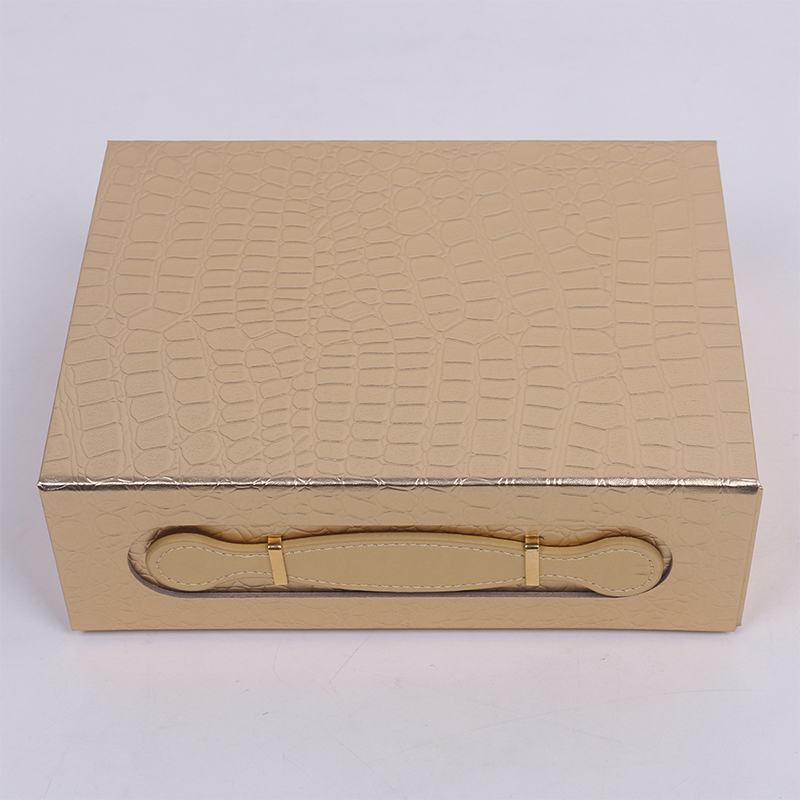
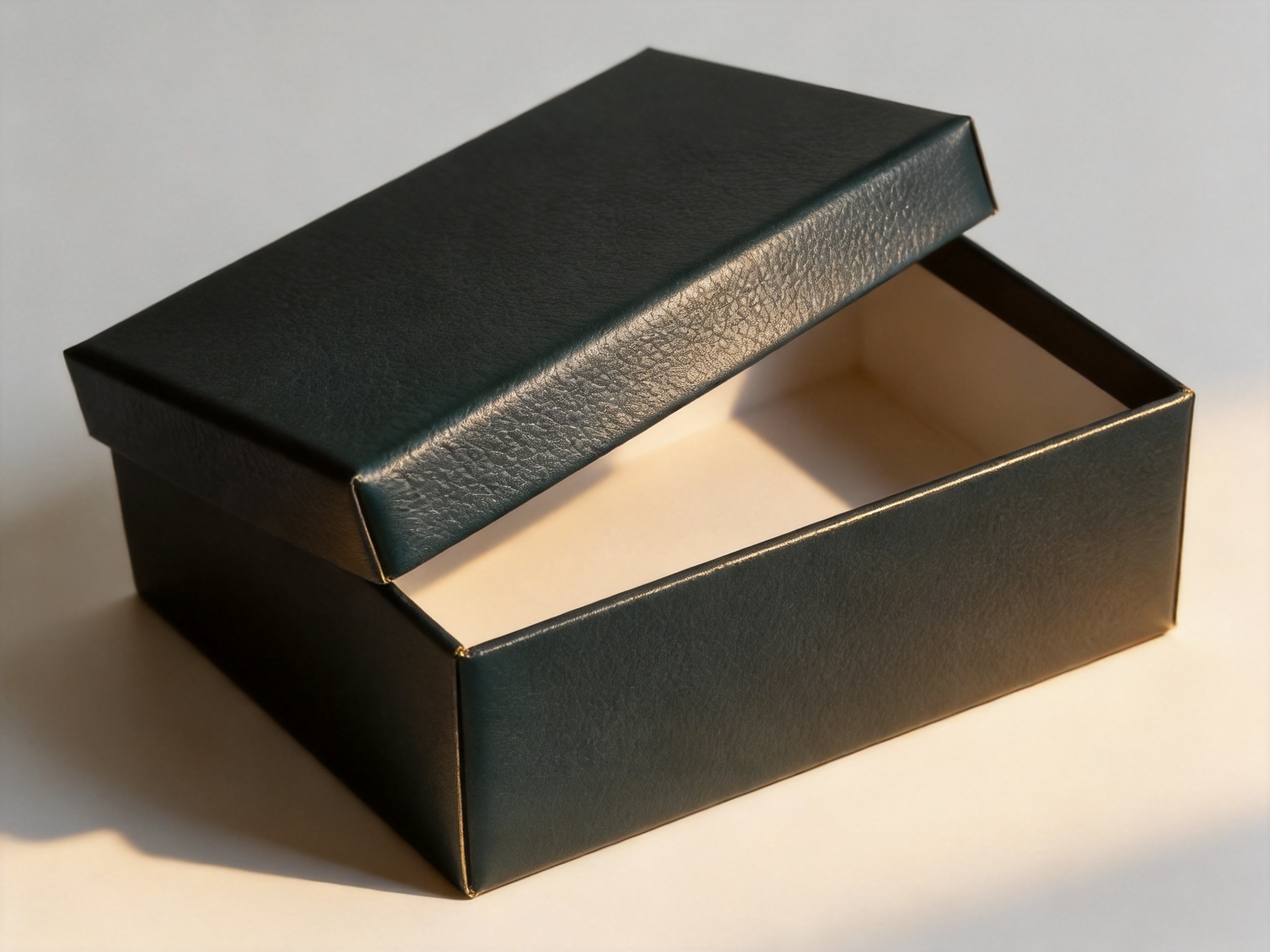
The 604 series is a collection of square, high-end specialty paper gift boxes developed for customers seeking a polished appearance and a more distinctive tactile experience. Its defining characteristic is the use of specialty paper with a yuppie texture. In practical packaging terms, this texture resembles the subtle grain and touch of leather without requiring genuine leather or synthetic leather as the primary exterior material.
The textured paper creates visual depth across the box surface. Under ordinary lighting, it appears understated and elegant. Under angled or decorative lighting, the grain becomes more noticeable, adding dimension to the package. This balance is valuable for premium packaging because it offers sophistication without relying solely on glossy coatings, excessive decoration, or complicated structural details.
The square format provides a strong visual foundation. Equal or near-equal proportions allow the package to appear stable, symmetrical, and easy to display. Square boxes work particularly well for jewelry sets, watches, accessories, candles, small electronics, ornaments, crafts, and gift assortments. They are also suitable for organizing products in storage environments or for presenting multiple small items as a coordinated collection.
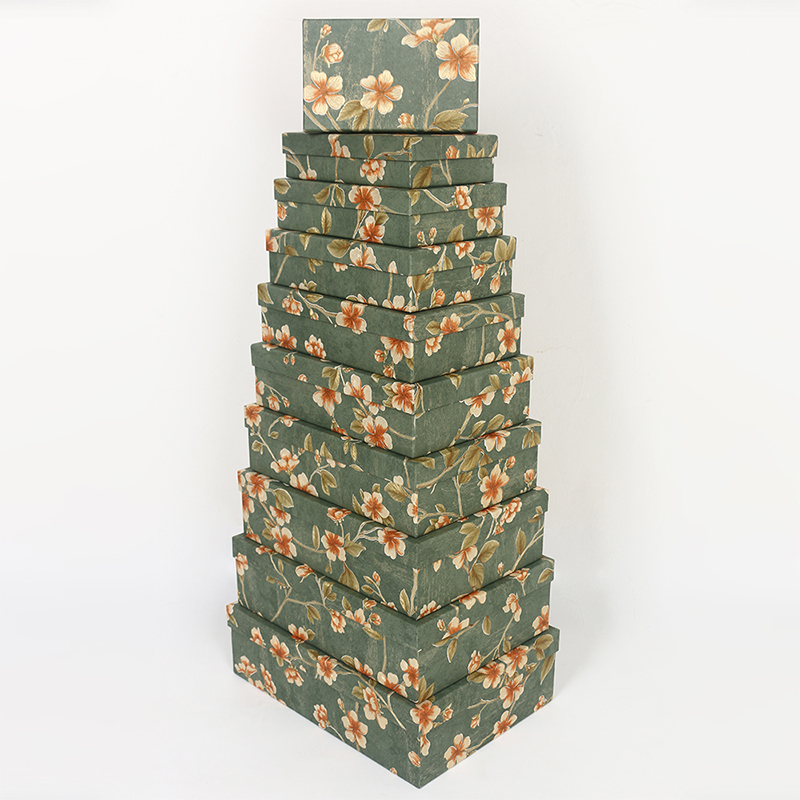
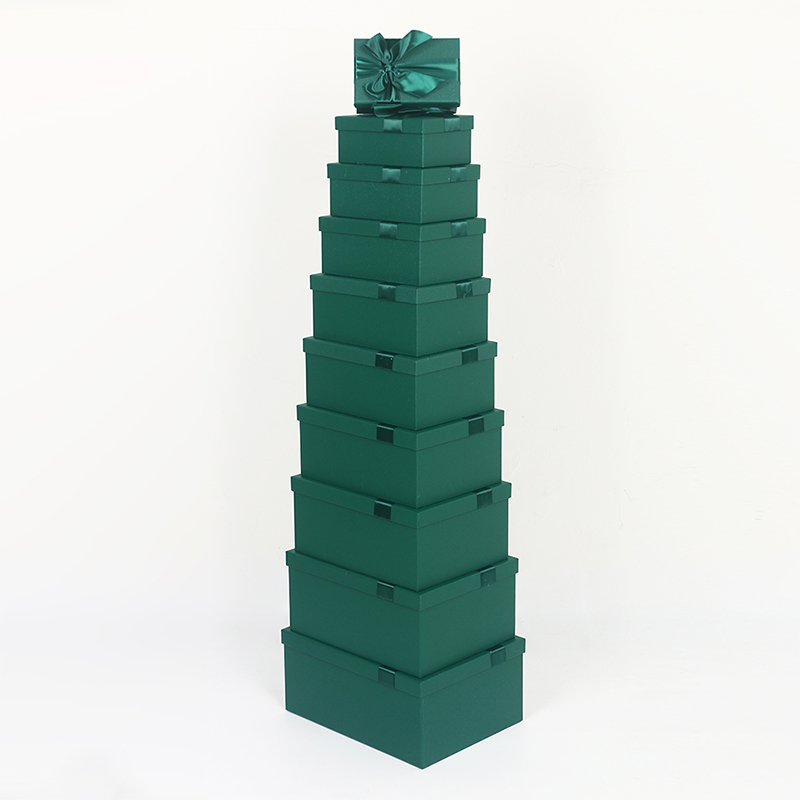
The product is available in multiple size options and can also be customized according to the customer’s product dimensions. Listed sizes range from approximately 34 × 26 × 15.3 centimeters to 16.8 × 10.8 × 6.5 centimeters across the numbered options. Because products differ considerably in height, width, and internal protection requirements, custom sizing is an important advantage for brands that do not want to compromise their product fit.
The box is produced using art paper-coated cardboard. This material combination supports a smooth and attractive printed surface while providing the rigidity required for a premium gift box. The cardboard core gives the structure stability, and the paper covering creates the visible decorative finish. Depending on the project, the exterior can be developed using custom colors, CMYK printing, Pantone colors, or other approved specifications.
Texture is one of the most effective ways to differentiate packaging in a crowded retail environment. Many low-cost boxes use plain coated paper with a uniform visual finish. Although such packaging can be functional, it may not communicate the quality expected from a high-value product. A textured exterior offers a more immediate sensory signal: the package feels considered, substantial, and more personal.
The yuppie-textured paper used for the 604 box provides a leather-like tactile quality. When a customer picks up the box, the surface is not completely flat or anonymous. Instead, it creates a subtle tactile response that reinforces the impression of craftsmanship. This is especially important for products that depend on luxury positioning, including watches, jewelry, accessories, premium gifts, and corporate merchandise.
Texture can also support a brand’s visual identity. A minimalist logo printed on a textured surface may appear more sophisticated than the same logo placed on an ordinary smooth carton. Likewise, a restrained color palette can benefit from the depth provided by the paper grain. Dark tones may look more luxurious, while neutral or warm shades can create a refined and welcoming presentation.
Compared with highly glossy packaging, a textured finish can be easier to position across different product categories. Glossy boxes often communicate brightness, youthfulness, or mass-market energy. A leather-like paper texture, by contrast, can communicate maturity, reliability, professional quality, and understated luxury. This makes it suitable for both consumer gifts and business-oriented packaging.
The surface also helps reduce the visual impact of minor handling marks that may be more noticeable on a perfectly smooth, high-gloss surface. This does not eliminate the need for careful packing and quality control, but it can help the box maintain an attractive appearance throughout normal handling, display, and delivery.
The square form is one of the product’s most practical advantages. Its geometry supports efficient visual presentation and allows the box to be placed neatly on shelves, counters, display tables, and gift sets. A square package can be oriented in multiple directions without appearing unbalanced, which is helpful for retailers and brands that regularly change their merchandising layouts.
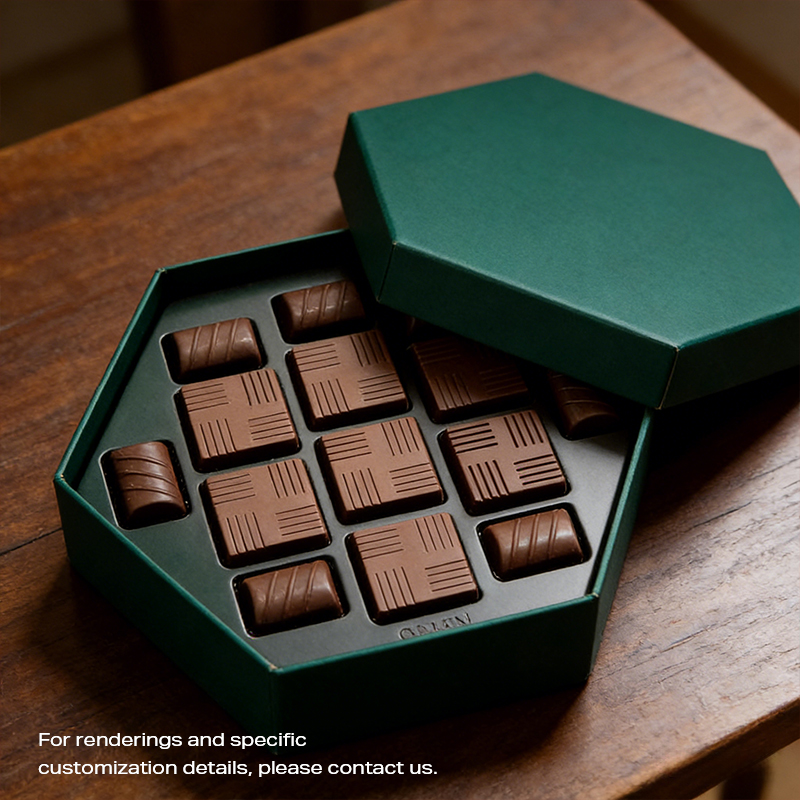
A well-designed square box also offers flexibility in internal organization. Depending on the product, the interior may accommodate a molded insert, paperboard divider, fabric lining, foam support, or a simple protective wrap. The regular shape makes it easier to position the product centrally and maintain consistent spacing around it. For gift assortments, the available space can be divided into compartments or used to arrange several coordinated items.
The structure is appropriate for both individual products and grouped presentations. A small version may hold a ring, bracelet, pendant, watch, ornament, or compact accessory. A larger size may be suitable for a gift set, handcrafted item, electronic accessory, or collection of promotional products. The same overall design language can therefore be applied across a product range.
Square boxes also provide a broad top surface for branding. This area can support a logo, product name, pattern, seasonal graphic, message, or decorative artwork. A brand does not need to cover the entire lid with printing to create recognition. In many cases, a carefully positioned logo on a high-quality textured surface is enough to communicate the desired identity.
Another advantage is the box’s suitability for gift-giving occasions. Its proportions are naturally associated with presentation packaging rather than ordinary shipping cartons. This makes it appropriate for festivals, anniversaries, weddings, business events, employee recognition programs, product launches, and retail gift purchases.
The 604 gift box uses art paper-coated cardboard as its principal material structure. Art paper is valued for its smooth printability and refined appearance, while cardboard provides body and stiffness. When combined with a specialty textured exterior, these materials create a balance between decorative quality and structural performance.
The cardboard core helps the box resist ordinary compression and handling during display and delivery. It also gives the package a more substantial feel than a lightweight paper carton. This heavier, firmer sensation can influence how customers judge the product inside. Packaging that feels stable and well constructed often creates greater confidence in the product’s value.
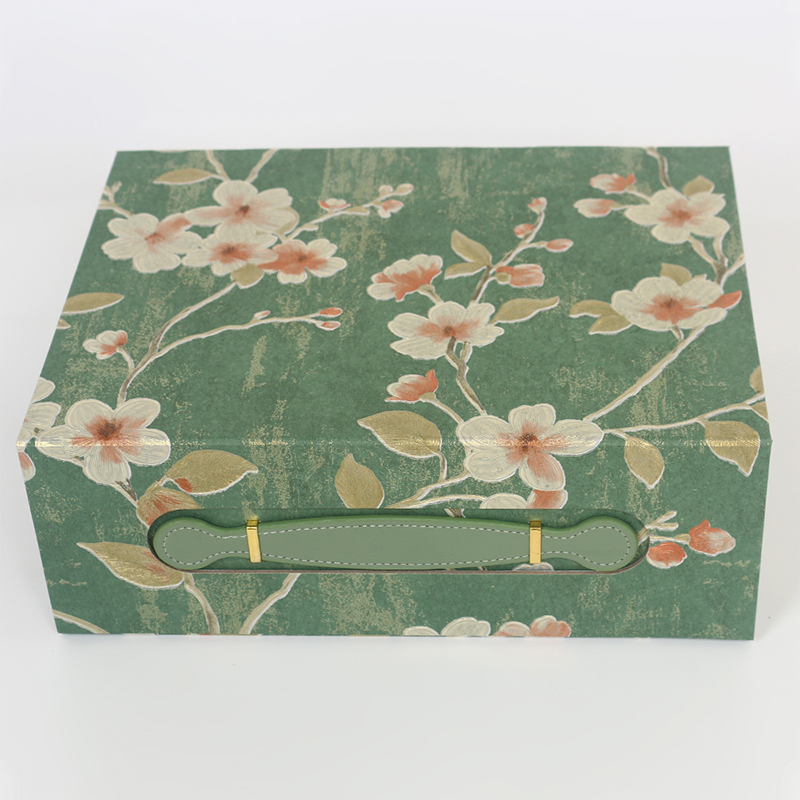
The coated paper surface supports sharp visual reproduction. Brands can use CMYK printing for detailed graphics and photographic artwork or specify Pantone colors when accurate color matching is important. Custom colors are also available for projects that require a specific brand palette, seasonal shade, or coordinated packaging system.
The exterior texture adds an additional design layer without depending entirely on complex printing. Even when the artwork is minimal, the specialty paper contributes character. This is useful for brands that prefer a clean and restrained appearance but still want the package to feel premium.
Material selection should always be matched to the product and intended distribution environment. The 604 box is designed for gift packaging, storage, gifts, and crafts. If the product requires special moisture resistance, heavy impact protection, or long-distance export packaging, the box may be combined with suitable inner protection and outer shipping cartons. The manufacturer can advise on structure and packing based on the product’s weight, dimensions, and transportation conditions.
One of the strongest advantages of this gift box is its adaptability. A standard box may fit only one narrow group of products, whereas a customizable design can be modified for different dimensions, printing requirements, and presentation goals. This allows the same fundamental packaging concept to serve multiple categories while maintaining a consistent brand identity.
Jewelry and watches require packaging that reflects value without overwhelming the product. The textured square box can be paired with a fitted insert, soft lining, or shaped support. The interior can hold a single item, a coordinated set, or a product with accompanying documentation. The square exterior provides a compact and elegant presentation format suitable for retail counters, e-commerce shipments, and special occasions.
Small electronics, headphones, charging accessories, smart devices, and other technology-related items can benefit from a presentation box that looks more refined than standard protective packaging. The box can be sized to accommodate the product and its accessories, while internal supports help reduce movement. Branding can be applied through printed lids, custom color schemes, and coordinated inserts.
Handmade products and decorative crafts often require packaging that communicates originality. A textured paper box provides a suitable background for artisan goods, seasonal ornaments, collectibles, and handcrafted accessories. The packaging can be designed to complement the character of the product rather than appearing generic.
Business gifts need to look professional and intentional. A square textured gift box can be customized with a company logo, campaign message, event theme, or corporate color. It is suitable for client gifts, employee recognition packages, conference merchandise, holiday promotions, and partnership celebrations. Because the surface has an understated luxury, it can work across industries without looking overly decorative.
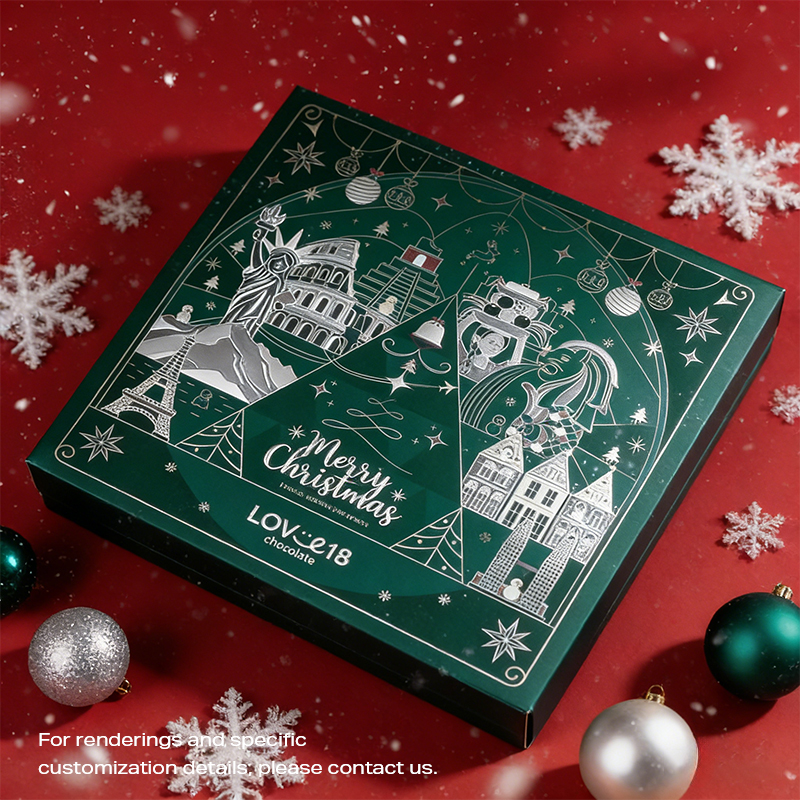
Gift boxes are frequently used for seasonal promotions. The 604 design can be adapted through color, printed patterns, ribbon combinations, seasonal messages, or special artwork. A brand may use a consistent structure throughout the year while changing the graphics for holidays, anniversaries, limited editions, or product launches. This approach reduces the need to develop a completely different packaging concept for every campaign.
Packaging is often the first physical brand touchpoint a customer experiences. A well-designed box communicates visual identity through color, typography, logo placement, surface finish, and proportions. The 604 series supports custom printing and color development so that the package can be adapted to the brand rather than forcing the brand to accept a generic appearance.
CMYK printing is appropriate for artwork that includes multiple colors, gradients, illustrations, photographs, and detailed patterns. Pantone colors are useful when a particular brand color must be reproduced consistently across packaging materials and marketing materials. Custom color development can be considered when a project requires a specialized shade or a coordinated packaging system.
Design files can be supplied in commonly used professional formats, including Adobe Illustrator and CorelDRAW files. Customers can submit their own artwork, or they can collaborate with the manufacturer’s in-house design team. Professional design support is particularly valuable when a project involves structural adjustments, dielines, print limitations, surface texture, or the coordination of multiple packaging components.
Good packaging design is not simply a matter of placing a logo on a lid. The artwork must account for folds, edges, corners, overlaps, print direction, and the relationship between the exterior and interior. A professional packaging team can help prevent common production issues such as misaligned graphics, unreadable text near folds, incorrect color expectations, or artwork that does not suit the box structure.
The textured exterior should also be considered during artwork development. Fine details, very small text, and subtle low-contrast graphics may appear differently on a textured surface than on smooth paper. A design team can recommend suitable line weights, contrast levels, logo sizes, and finishing choices to ensure that the final box looks clear and balanced.
The market includes many basic gift boxes made from thin paperboard, standard coated stock, or pre-designed formats with little opportunity for customization. While these products may offer a lower initial price, they may not deliver the same level of tactile appeal, structural stability, or brand differentiation as a specialty textured box.
The first advantage of the 604 product is its surface identity. Generic boxes often look similar to one another because they use common paper finishes and limited decoration. The yuppie texture creates a recognizable visual and tactile signature that can help a product stand out in a retail environment or during an unboxing experience.
The second advantage is its premium material impression. Art paper-coated cardboard provides a more substantial foundation than lightweight folding paper. Customers can feel the difference when handling the package. This supports a stronger connection between the box and the perceived quality of the item inside.
The third advantage is design flexibility. Many stock boxes are available in only a few sizes and colors. The 604 series supports custom dimensions, CMYK printing, Pantone colors, and custom color requirements. This allows businesses to develop packaging that fits the product closely and aligns with a specific brand identity.
The fourth advantage is application breadth. The same box concept can be used for jewelry, watches, electronics, crafts, business gifts, holiday products, and storage. A supplier that can produce multiple sizes and variations makes it easier for a customer to standardize packaging across a product range.
The fifth advantage is manufacturer support. A packaging factory with an internal design team can help convert a concept into a production-ready package. This reduces the risk of selecting a box that looks attractive in a photograph but performs poorly when manufactured, filled, stacked, or transported.
The sixth advantage is the combination of presentation and sustainability awareness. The product uses paper-based materials that can support recyclable packaging strategies when appropriate local recycling systems are available. Brands seeking to reduce dependence on unnecessary plastic can use premium paper packaging while still achieving a high-end appearance.
| Feature | 604 Textured Specialty Paper Gift Box | Basic Generic Gift Box |
| Exterior appearance | Leather-like specialty paper texture with a premium tactile finish | Usually smooth standard paper or plain board |
| Structure | Art paper-coated cardboard designed for a firm presentation | May use thinner paperboard with limited rigidity |
| Customization | Custom sizes, CMYK, Pantone colors, custom colors, and custom artwork | Often limited to available stock sizes and colors |
| Applications | Jewelry, watches, electronics, gifts, crafts, storage, and corporate packaging | Generally suited to basic gift or retail applications |
| Branding potential | Large printable surfaces and textured presentation for stronger brand impact | More limited differentiation and visual identity |
| Design support | Professional advice and in-house design assistance available | May require the customer to manage design independently |
A premium box is only as reliable as the manufacturing process behind it. Design, material selection, printing, laminating, cutting, forming, inspection, and packing must work together to create a consistent finished product. Zhejiang Shihao Gift Packaging Co., Ltd. is an export-oriented manufacturer specializing in paper gift packaging boxes, with more than 15 years of experience in production, research and development, and sales.
The company operates across approximately 20,000 square meters and employs around 300 people. This scale provides the resources needed to handle product development, sample preparation, production scheduling, quality control, and export packing in an organized way. An established manufacturing base is especially valuable for customers who require repeated orders, multiple sizes, or coordinated packaging programs.
Reported average daily production capacity is approximately 5,000 sets of gift boxes. Production capacity at this level supports both regular commercial orders and larger seasonal requirements. It can also help customers plan campaigns with greater confidence, provided that specifications, quantities, approvals, and delivery schedules are confirmed in advance.
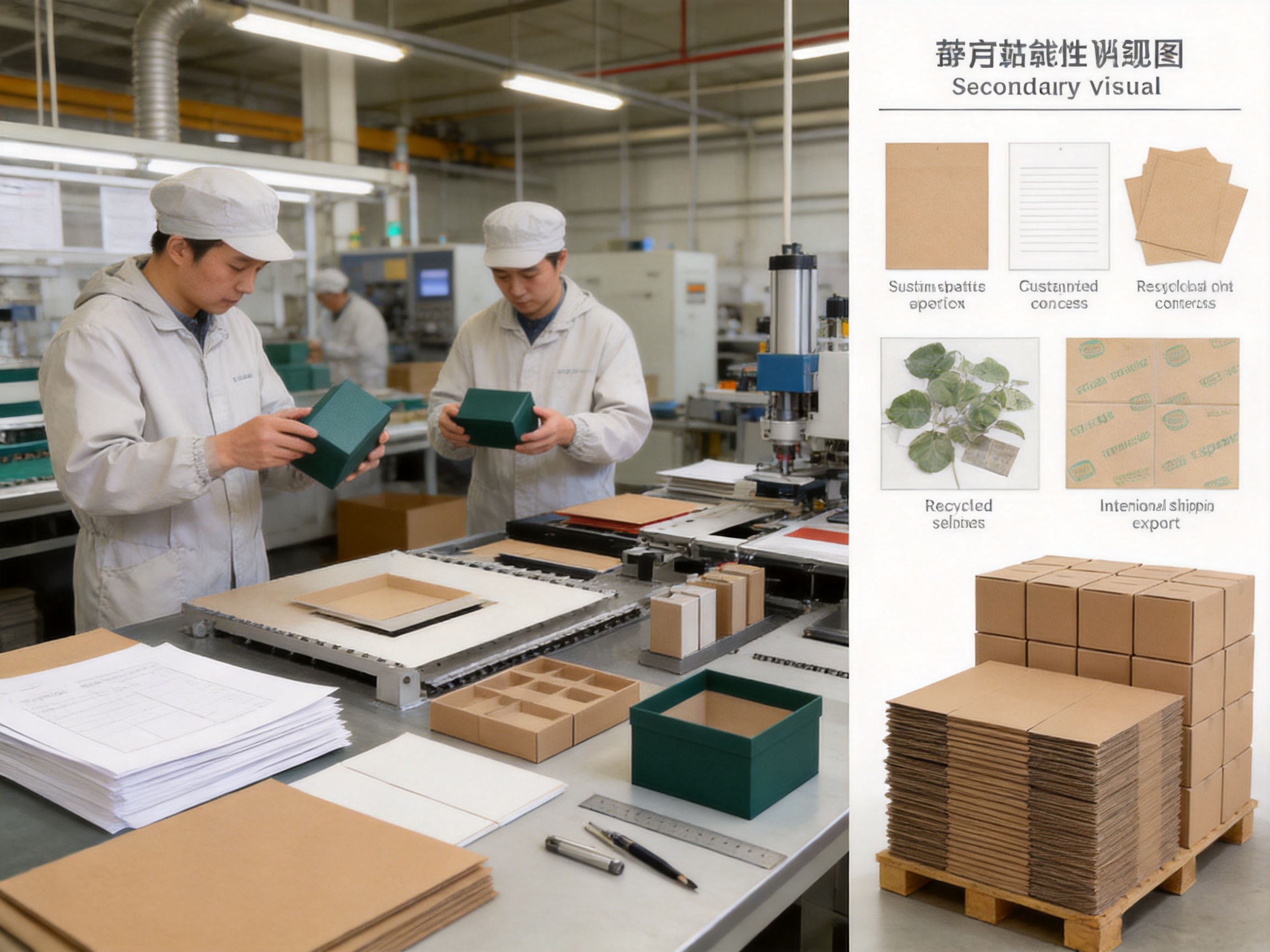
The manufacturing process begins with design and technical review. Customer artwork and product dimensions are examined to determine whether the proposed box structure is suitable. The design team may recommend changes to dimensions, paper selection, printing methods, inserts, or opening mechanisms. This stage helps prevent avoidable production problems later.
After design approval, the paper and cardboard materials are prepared according to the project specifications. Printing is carried out using the agreed color system and artwork. The printed sheets are then processed for coating, laminating, texturing, cutting, or other finishing steps required by the product design.
Die-cutting and forming must be controlled carefully because even small dimensional errors can affect the appearance of corners, lids, seams, and edges. For a premium square box, consistent alignment is particularly important. Uneven corners or irregular gaps can reduce the perceived quality, so production teams must monitor both machine settings and manual assembly.
Assembly and finishing transform flat components into the completed gift box. Depending on the final structure, this may include wrapping the board, forming the box, fitting inserts, attaching lids or components, and checking the surface. Manual inspection remains important for premium packaging because visual defects may not always be detected by machinery alone.
Final packing is arranged according to the approved shipping configuration. The listed packaging information indicates 10 pieces per set and four sets per carton, with a carton dimension of approximately 54 × 35 × 33 centimeters. Actual packing details should be confirmed for each order because dimensions, accessories, inserts, and customized structures can change the final carton arrangement.
Quality control for textured paper gift boxes involves more than checking whether the box has the correct color. A complete inspection should cover material quality, dimensions, surface texture, print clarity, structural strength, assembly accuracy, and packing condition.
Material inspection verifies that the selected cardboard and specialty paper meet the approved specifications. The surface should be consistent in texture, without excessive variation, tearing, visible contamination, or unacceptable creasing. Because natural-looking textures may contain slight visual variation, customers and manufacturers should agree in advance on acceptable standards.
Color inspection compares production samples with the approved proof or color reference. CMYK artwork should be checked for overall balance, registration, and image clarity. Pantone or custom colors should be evaluated against the agreed reference under suitable lighting. It is important to remember that color may appear different on a monitor than on printed paper, so physical samples are valuable for approval.
Dimensional inspection confirms that the box matches the agreed length, width, height, and internal capacity. This is especially important when the box contains a fitted insert or a product with limited tolerance. A box that is too tight can damage the product or make packing difficult, while a box that is too loose may allow movement during transportation.
Structural inspection focuses on the rigidity of the cardboard, the integrity of corners and seams, the fit of the lid, and the ability of the box to remain stable during normal handling. If the box is intended for heavier products, the manufacturer should be informed at the beginning of the project so that the construction can be evaluated appropriately.
Surface inspection checks for scratches, stains, wrinkles, bubbling, exposed board, uneven wrapping, and other visible issues. Since the textured surface is one of the product’s main selling points, its consistency should receive particular attention.
Packaging inspection verifies that finished boxes are protected during shipment. Individual units should be arranged to reduce friction, compression, and movement. Outer cartons should be suitable for the planned transportation method and handling conditions. Clear packing records also help buyers manage receiving inspections and inventory counts.
Environmental considerations are increasingly important in packaging decisions. The 604 box uses a paper-based construction that can support more responsible packaging strategies than solutions relying heavily on plastic or mixed materials. The specialty paper and cardboard format is aligned with the preference for recyclable paper packaging, subject to local recycling infrastructure and the specific coatings, adhesives, inks, and finishing materials used in the final product.
Paper packaging can also support a more efficient end-of-life process when components are designed with recycling in mind. Brands should discuss material combinations with the manufacturer if recyclability is a priority. For example, unnecessary plastic laminates, difficult-to-separate components, or excessive decorative materials may affect how easily a package can be processed after use.
The company reports FSC and BSCI certifications. FSC certification is associated with responsible forest management and supply-chain oversight, while BSCI relates to social compliance and responsible working conditions within the supply chain. Customers should request current certification documentation and confirm that the relevant materials and production facilities are covered by the applicable certificates.
Sustainability also includes reducing material waste through accurate sizing. A box that is appropriately matched to the product can reduce unnecessary empty space, limit the need for excessive protective fill, and improve shipping efficiency. Custom dimensions therefore provide not only a visual and functional advantage but also a potential resource-efficiency benefit.
Durability is another part of responsible packaging. A well-made box that can be reused for storage has a longer practical life than a fragile package that is discarded immediately. The square design and firm paperboard structure make the 604 box suitable for continued storage of small personal items, accessories, crafts, or product components after the initial gift-giving experience.
Unboxing has become a significant part of customer perception, particularly for e-commerce brands and premium consumer products. The package is often the first physical object a customer encounters after placing an order online. A textured specialty paper box can make this moment feel more deliberate and rewarding.
The exterior establishes anticipation. The customer sees a carefully finished surface rather than an ordinary shipping container. Once the box is opened, the product can be presented through an insert, tissue paper, card, or other internal element. Even a simple opening process can feel elevated when the outer box has weight, texture, and a clean structure.
A strong unboxing experience can support customer loyalty and social sharing. Customers are more likely to remember packaging that feels distinctive, attractive, and consistent with the product. If the box includes a recognizable logo or coordinated brand color, the packaging can also contribute to repeat recognition.
For corporate and seasonal gifts, the emotional effect is equally important. Recipients may retain the box for storage, which allows the brand to remain visible in the home or office. A reusable presentation box therefore has value beyond the first opening.
Successful custom packaging begins with a clear project brief. Buyers should provide the product’s dimensions, weight, quantity, intended use, preferred opening style, desired surface appearance, artwork requirements, color references, and delivery expectations. Photographs or physical samples of the product may also help the design team understand how the package should support and present it.
The manufacturer can then recommend a suitable size and structure. If a listed 604 size is appropriate, the buyer may proceed with that option. If not, custom dimensions can be developed. The design team can advise on internal clearance, insert requirements, lid fit, edge spacing, and the balance between appearance and production efficiency.
Artwork is supplied in professional design files, such as Adobe Illustrator or CorelDRAW formats. The manufacturer reviews the artwork for printability and structural compatibility. Any required adjustments should be approved before mass production begins.
A sample or pre-production proof is strongly recommended for high-end packaging. The sample allows the buyer to check the texture, color, dimensions, logo placement, product fit, and overall appearance. It is much more efficient to correct an issue at the sampling stage than after a large production run has been completed.
The minimum order quantity for the listed product is 300 sets. This quantity is suitable for many retail launches, promotional campaigns, corporate gifting projects, and product introductions. The delivery time is stated as approximately 7 to 45 days or according to customer requirements. The final schedule depends on design approval, material availability, order quantity, production complexity, sampling, and shipping arrangements.
Payment, production, and delivery terms should be confirmed in a formal quotation or sales agreement. Buyers should also confirm whether the quoted price includes artwork preparation, sampling, inserts, special finishing, inner packing, outer cartons, and transportation. Clear documentation helps prevent misunderstandings during production.
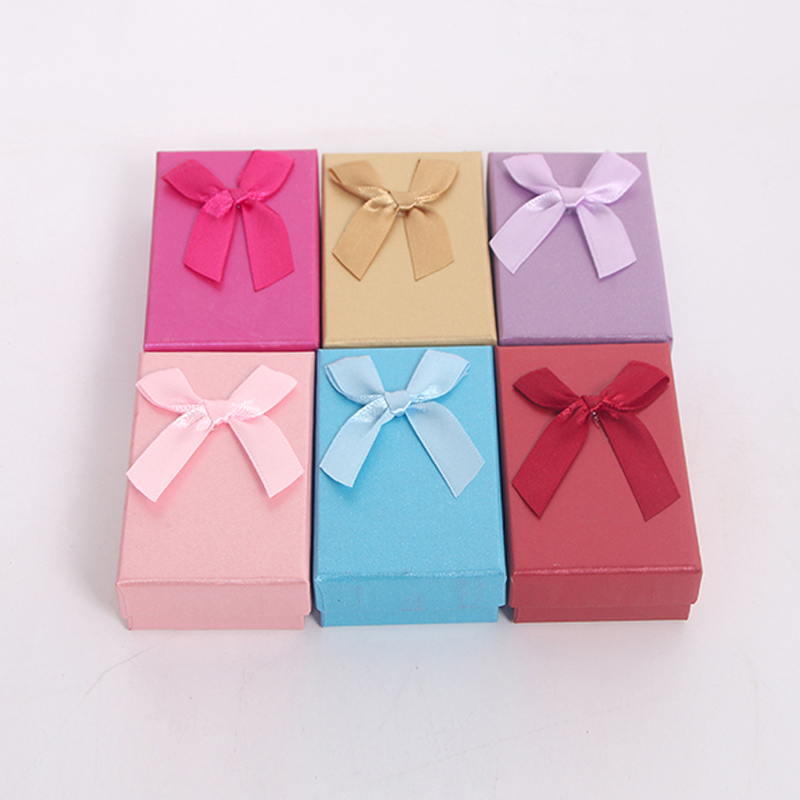
The available size range gives buyers flexibility when selecting packaging for different products. Smaller versions are appropriate for compact jewelry, ornaments, small accessories, and individual gift items. Medium sizes may accommodate watches, electronic accessories, cosmetics, crafts, or coordinated product pairs. Larger versions may be used for gift sets, display collections, and business gift combinations.
Product dimensions should be measured carefully, including any protective sleeve, inner tray, pouch, instruction card, or accessory that will be packed inside. The box should provide enough clearance for easy insertion and removal but should not leave excessive empty space. When necessary, a custom insert can maintain the product’s position and improve the presentation.
For e-commerce use, the gift box may be placed inside an additional shipping carton or protective mailer. The presentation box is not necessarily a substitute for transportation packaging, particularly when the product will travel through multiple distribution stages. Combining a premium inner gift box with suitable outer protection can preserve both appearance and product safety.
Stock packaging can be useful when a customer needs a small quantity quickly and does not require a distinctive brand appearance. However, stock boxes often involve compromises. The available size may not fit the product precisely, the color may not match the brand, and the material may not communicate the intended level of quality.
Custom packaging requires more planning, but it can provide stronger long-term value. A correctly sized box reduces product movement, supports a better presentation, and helps create a consistent identity across a product line. Custom printing also allows the package to communicate information, brand values, seasonal themes, or campaign messages directly at the point of delivery.
The 604 series offers a middle path between a completely generic stock box and a fully new structural concept. Its established square format and specialty paper finish provide a tested design foundation, while custom dimensions and artwork allow the buyer to adapt it to a specific product or brand. This can shorten the development process compared with creating a new box structure from the beginning.
A major benefit of working with an established packaging manufacturer is the ability to combine design, development, production, and export support in one supply relationship. Zhejiang Shihao Gift Packaging Co., Ltd. maintains its own design team and updates dozens of products weekly, indicating an active approach to product development and market trends.
Integrated design support can improve communication. Instead of transferring technical questions between separate designers, printers, converters, and assemblers, the customer can work with a team familiar with the entire production process. This can reduce delays and make it easier to evaluate alternatives.
The company’s product range includes kits, storage boxes, folding boxes, jewelry boxes, and gift boxes. This breadth suggests experience with different structures, product categories, and presentation requirements. Buyers seeking a broader packaging program may benefit from working with a supplier capable of developing several related products under one quality and design system.
Export experience is another important strength. The company serves customers in Europe, the United States, the Middle East, and other markets. International packaging orders require attention to communication, documentation, packing, production schedules, and shipping coordination. Familiarity with export business can make the ordering process more predictable for overseas buyers.
The company’s stated production philosophy emphasizes innovation, quality, practicality, and benefit. These principles are relevant to premium packaging because an attractive box must also be manufacturable, cost-conscious, durable, and suitable for commercial use. The objective is not decoration alone, but a complete packaging solution that creates value for both the brand and the end customer.
Before placing an order, buyers should confirm the exact product dimensions and determine whether the standard listed sizes are appropriate. If the box will hold an insert, ribbon, card, or additional accessory, those components must be included in the dimensional planning.
The desired paper texture and color should be approved through a physical sample where possible. Texture can vary in appearance depending on lighting and viewing angle, so physical evaluation provides a more reliable reference than digital images alone.
Artwork should be checked for logo proportions, color accuracy, text legibility, and placement around edges and folds. Buyers should also specify whether the design requires CMYK printing, Pantone matching, or a custom color reference.
The intended product weight and distribution conditions should be shared with the manufacturer. This information helps determine whether the standard structure is adequate or whether reinforcement, a stronger insert, or additional protective packaging is advisable.
Buyers should verify the minimum order quantity, sampling arrangements, production lead time, packing quantity, carton dimensions, delivery terms, and payment schedule. They should also establish how quality claims will be handled and what inspection standard will apply to the finished goods.
Finally, customers should consider the entire customer experience. The box should coordinate with the product, inner packaging, shipping carton, printed materials, and retail display. Consistency across these elements can significantly strengthen the brand impression.
The main distinguishing feature is its specialty paper exterior with a yuppie texture. The leather-like grain provides a refined tactile and visual finish that is more distinctive than ordinary smooth paperboard packaging.
The box is suitable for jewelry, watches, electronics, ornaments, crafts, accessories, business gifts, holiday gifts, and various small to medium-sized products. The final application depends on the selected dimensions and any required interior insert.
Yes. The product is available in multiple listed sizes, ranging from approximately 34 × 26 × 15.3 centimeters to 16.8 × 10.8 × 6.5 centimeters, and custom sizes can be developed according to the customer’s product and packaging requirements.
The listed material is art paper-coated cardboard with a specialty textured paper exterior. This combination provides a printable surface and a firm structure suitable for premium gift presentation.
Customers can request CMYK printing, Pantone colors, and custom colors. Final color selection should be confirmed through approved artwork and, where necessary, a physical sample.
Yes. The manufacturer has an in-house design team that can provide professional advice. Customers may submit their own design files, with Adobe Illustrator and CorelDRAW formats identified as suitable options, or request assistance in developing a production-ready design.
The listed minimum order quantity is 300 sets. The exact commercial terms should be confirmed in the quotation because special structures, inserts, finishing requirements, or customized packing may affect the order arrangement.
The supplied information indicates 10 pieces per set and four sets per carton. The stated carton dimensions are approximately 54 × 35 × 33 centimeters. Packing details should be reconfirmed for each customized order.
The stated delivery time is approximately 7 to 45 days or according to customer requirements. The actual schedule depends on artwork approval, sampling, order quantity, materials, production complexity, and shipping arrangements.
The box uses paper-based materials and is positioned as an environmentally friendly and recyclable packaging option. Actual recyclability depends on the final materials, coatings, adhesives, local recycling systems, and the separation of components. Buyers with specific sustainability requirements should confirm the complete material specification.
It can serve as presentation packaging, but it may need to be placed inside a protective outer shipping carton or mailer for e-commerce and long-distance transportation. The appropriate outer protection depends on the product, shipping route, and handling conditions.
A sample allows the buyer to confirm the size, texture, color, print placement, product fit, structure, and overall appearance. Sampling can identify problems early and reduce the risk of costly changes after mass production begins.
The 604 Square High-End Specialty Paper Gift Box with Yuppie Texture combines premium appearance, tactile differentiation, practical structure, and broad customization potential. Its leather-like specialty paper surface creates a distinctive presentation, while the art paper-coated cardboard construction provides the firmness expected from a high-end gift package.
The square design is versatile enough for jewelry, watches, electronics, crafts, ornaments, corporate gifts, and seasonal products. Custom sizing helps businesses achieve a closer product fit, and flexible printing options allow the package to reflect a specific brand identity. The box can also support reusable storage after the initial presentation, extending its practical life.
Compared with basic generic boxes, the product offers stronger visual identity, greater tactile appeal, more substantial material quality, and broader customization possibilities. These advantages are supported by an established manufacturer with more than 15 years of experience, an in-house design team, substantial production capacity, export experience, and reported FSC and BSCI certifications.
For brands seeking packaging that is elegant without being excessive, distinctive without being impractical, and customizable without requiring an entirely new structure, the 604 series is a compelling option. With careful material selection, accurate sizing, professional artwork, appropriate inserts, and a well-managed production process, it can turn ordinary packaging into a meaningful part of the product experience.
1. Product specification sheet for the 604 Square High-End Specialty Paper Gift Box with Yuppie Texture.
2. Packaging material and structural design principles for paperboard gift boxes.
3. General guidance on CMYK, Pantone color matching, and printed packaging approval.
4. Forest Stewardship Council principles for responsible paper and board sourcing.
5. Business Social Compliance Initiative guidance for responsible supply-chain practices.
6. General quality-control practices for printed, laminated, and formed paper packaging.
7. Sustainable packaging design considerations for recyclable paper-based products.
Recommended Products

Contact Us

No. 15, Xiayang Road, Huangzhai Town, Jinhua, Zhejiang, China

(+86) 579-84230069

(+86) 13085675766


Products

Gift Box Packaging Manufacturer
 English
 Français
 Español
 عربى