2026-08-09
Gift packaging performs two jobs at the same time. It protects the product inside, and it communicates the value, mood, and identity of the brand presenting it. A box may be structurally sound yet visually ordinary, or it may look attractive while failing during transportation, storage, or display. The Z326 single rectangular matte cardboard heart-shaped window folding gift box is designed to balance these needs through a combination of rigid paperboard construction, a refined matte finish, a decorative viewing window, and a space-saving folding structure.
With dimensions of 39 × 28 × 17.8 centimeters and a packing quantity of 72 pieces, this folding box is intended for businesses that need a presentation-oriented package in practical quantities. It can be used for single long-stemmed flowers, small bouquets, lightweight gifts, aromatherapy products, jewelry, seasonal merchandise, and other items that benefit from an elegant exterior and partial product visibility. Its rectangular format provides useful internal capacity, while the heart-shaped window creates an immediate emotional connection with the recipient.
More importantly, the product is not limited to appearance. Its high-density matte cardboard is processed to improve rigidity, surface quality, resistance to fingerprints, and tolerance during handling. The foldable construction allows units to be stored flat before use, helping reduce warehouse occupation and freight inefficiencies. When needed, the package can be assembled into a stable three-dimensional form through its designed folds and snap-lock structure.
This article examines the product’s construction, visual appeal, functional advantages, manufacturing process, customization potential, commercial applications, and quality considerations. It also explains why a specialized packaging manufacturer with large-scale production capabilities can offer a stronger alternative to generic paper boxes, improvised packaging, and lower-grade folding cartons.
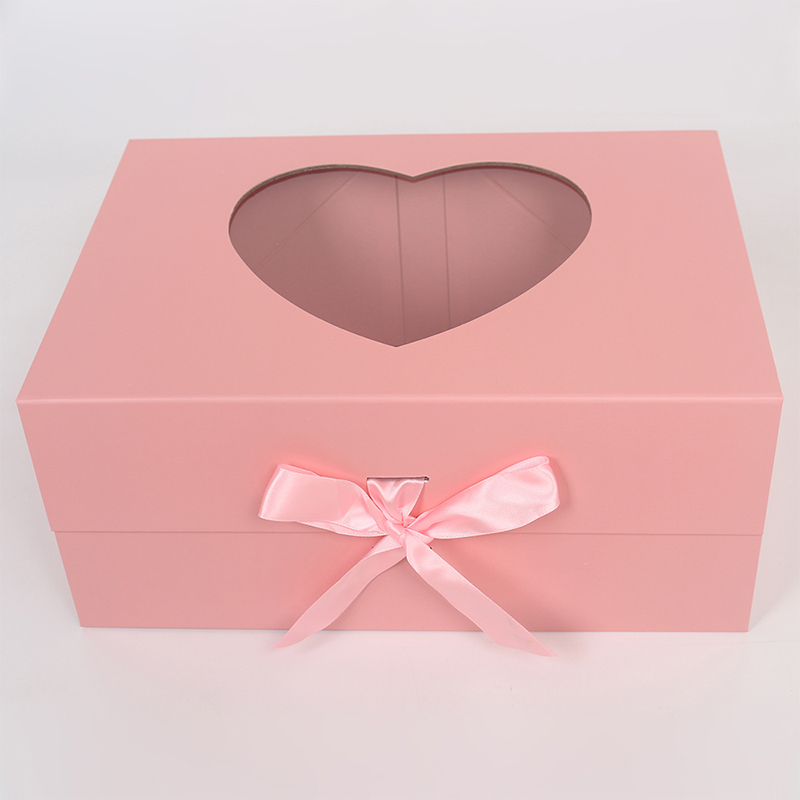
Z326 Single Rectangular Matte Cardboard Heart-Shaped Window Folding Gift Box
The Z326 is a single rectangular folding gift box featuring a heart-shaped window and a matte cardboard exterior. The product name also identifies a perforated ribbon element and references a Z229-size configuration, while the listed product dimensions are 39 × 28 × 17.8 centimeters. These proportions create a package with enough length and depth for floral arrangements, carefully selected gift items, or a combination of lightweight products.
| Specification | Details |
| Product model | Z326 |
| Product type | Single rectangular heart-shaped window folding gift box |
| Material | High-density matte cardboard |
| Surface treatment | Matte lamination with embossing and related finishing processes |
| Window design | Heart-shaped die-cut viewing window |
| Structure | Foldable construction with snap-lock assembly |
| Dimensions | 39 × 28 × 17.8 cm |
| Packing quantity | 72 pieces |
| Primary applications | Flowers, small bouquets, aromatherapy products, jewelry, and lightweight gifts |
| Customization | Bulk customization of sizes and colors, with options for labels and decorations |
The rectangular form is commercially useful because it supports efficient placement on shelves, counters, display tables, and transport pallets. In contrast with highly irregular packaging shapes, the rectangular profile is easier to stack and organize. At the same time, the heart-shaped window prevents the package from looking like a standard shipping carton or anonymous storage container.
The box is intended to be supplied and stored in a folded or flat condition. This format is especially valuable for florists, gift shops, packaging distributors, online sellers, and seasonal retailers that may need to hold a considerable number of boxes before orders are received. Flat storage can simplify inventory planning and help businesses make better use of limited warehouse space.
Because the box is designed for lightweight contents, it should be matched with the weight, shape, and fragility of the product being packed. For flowers, the interior may be paired with an appropriate insert, moisture barrier, or protective support depending on the arrangement and distribution method. For dry gifts, the package can be used with tissue paper, shredded paper, molded inserts, or other interior components that prevent movement.
Paperboard quality strongly affects the performance of a folding gift box. Low-density or poorly processed cardboard can lose its shape when exposed to pressure, humidity, repeated handling, or overfilled contents. Once the walls bend or soften, the package may no longer close properly, and the overall presentation can deteriorate before it reaches the customer.
The Z326 uses high-density matte cardboard to address these common weaknesses. Higher-density board provides a firmer base for scoring, folding, die-cutting, and surface finishing. It also helps the assembled box retain a more stable shape. For commercial users, this stability can reduce the number of packages rejected because of crushed corners, sagging panels, or distorted openings.
Material rigidity is particularly important for a box with a window. A large decorative opening removes some material from the front panel, so the remaining structure must be sufficiently strong to resist flexing. The combination of dense board and controlled die-cutting helps the window maintain its intended form while the surrounding panel continues to support the box.
The matte surface contributes a second type of value. Glossy packaging can create strong visual impact, but it may also show fingerprints, reflections, and minor surface marks. A matte laminated finish creates a softer visual effect and is more restrained in bright retail environments. It can make colors appear refined and tactile, which is useful for products positioned as thoughtful, premium, romantic, or artisanal.
Matte lamination also creates a protective surface layer. It is not a substitute for waterproof packaging or heavy-duty industrial coating, but it can improve resistance to ordinary handling, light rubbing, and minor abrasion. This is useful when boxes are moved through warehouses, displayed repeatedly, or handled by staff and customers before purchase.
Compared with ordinary uncoated cardboard, the finished Z326 offers a more controlled surface appearance. Compared with extremely rigid rigid boxes, it can offer greater logistical flexibility because it is foldable and less demanding to store. This combination of presentation and efficiency is one of the product’s principal competitive advantages.
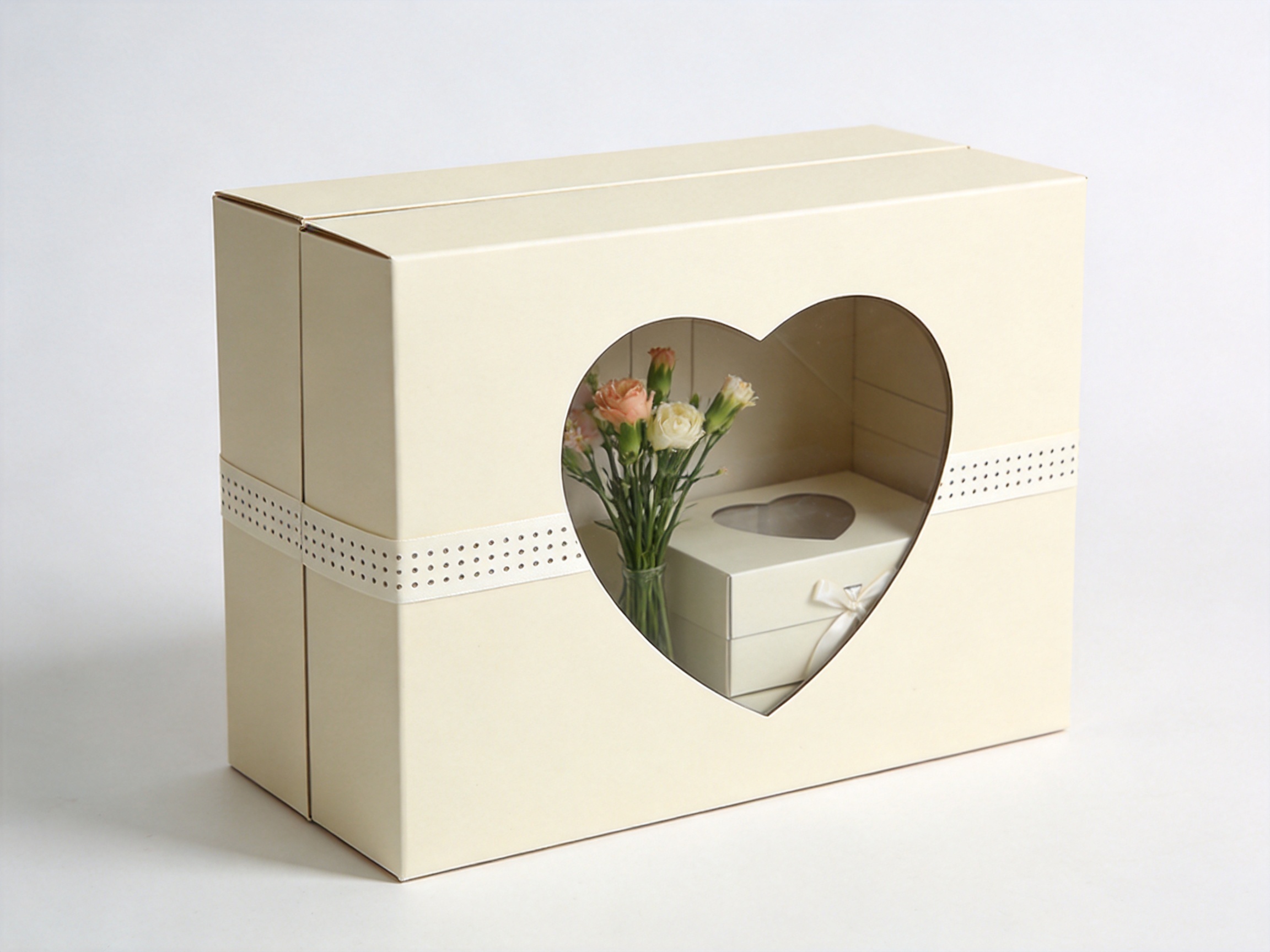
A viewing window changes the way a gift box communicates. Instead of hiding the contents completely, it gives the customer a preview. This can be particularly effective for flowers, decorative products, and carefully arranged gifts where the appearance of the item is part of the purchase decision.
The heart-shaped window has a clear emotional association. It can support occasions such as Valentine’s Day, anniversaries, weddings, engagements, birthdays, Mother’s Day, romantic celebrations, and seasonal gifting. Even when the product is not specifically romantic, the shape adds warmth and personal expression to the packaging.
Window packaging also helps retailers present products with less opening and closing. A customer can inspect the general appearance of a bouquet or gift without removing it from the package. This reduces unnecessary handling and helps preserve the arrangement. For online sellers, product photography can also benefit from the distinctive window, which gives the package a recognizable silhouette in promotional images.
The quality of the window edge is crucial. Rough, uneven, or visibly frayed edges can make a package appear inexpensive. The Z326 uses precise die-cutting technology to create smooth, burr-free edges around the heart shape. Accurate cutting supports a cleaner appearance and reduces the risk of loose paper fibers catching on ribbons, tissue paper, or the product inside.
The semi-transparent window preserves a degree of mystery while still revealing the contents. This is different from a completely open package, where the product is exposed to dust and handling, and different from a fully closed package, where the recipient cannot see the gift until opening it. The result is a middle ground that combines product visibility with presentation value.
Businesses can use the heart-shaped window as part of a larger visual identity. For example, a florist may coordinate the window with ribbon color, flower wrapping, and printed care instructions. A gift retailer may use it to display coordinated product sets. A jewelry or aromatherapy seller may place a small insert behind the window to create a layered presentation.
The folding structure is one of the most practical features of the Z326. A conventional rigid gift box usually arrives in its finished three-dimensional form. This creates an attractive package but consumes more space during storage and transportation. Folding packaging addresses this issue by allowing the product to remain flat until it is needed.
For wholesalers and retailers, flat storage can improve stock capacity. More units may fit into a warehouse, back room, or delivery vehicle than would be possible with fully assembled boxes. Businesses can also purchase packaging in larger quantities without immediately requiring additional storage equipment.
The foldable construction is based on pre-designed crease lines and structural panels. When the box is assembled, these panels move into their intended positions. A snap-lock mechanism then helps secure the form without requiring extensive adhesive application at the point of use. This can make preparation faster for retail staff and packaging workers.
Efficient assembly is valuable during periods of high demand. Florists and gift shops may need to prepare many orders within a short time before holidays or special events. A box that is difficult to form can increase labor costs and lead to inconsistent presentation. A properly engineered folding box can make the workflow more predictable.
The folding format can also reduce packaging waste associated with damaged empty boxes. If a fully assembled box is crushed in storage, it may be unusable. Flat-packed units are generally easier to protect and organize before assembly. Staff can assemble only the number required for immediate orders, keeping the remaining inventory compact.
Storage efficiency is not only a cost issue. It can also support more responsible logistics. When packaging occupies less volume before use, transport may be organized more efficiently, and businesses may reduce the need for excessive secondary cartons or additional warehouse movements. The exact environmental benefit depends on shipping conditions, material selection, reuse, and disposal practices, but the folding structure creates a favorable starting point.
Generic folding cartons often focus on basic containment. They may use plain board, simple printing, and standard rectangular panels. The Z326 adds multiple presentation features, including a matte finish, embossing potential, a heart-shaped window, and a decorative folding structure. These details help transform the package from a basic container into part of the product experience.
Ordinary cardboard may become soft or lose its form after repeated movement. The high-density board and matte surface treatment of the Z326 are intended to improve resistance to fingerprints, light scuffing, and minor abrasions. This is useful for products that pass through several hands before reaching the consumer.
Some decorative gift boxes look attractive but are inconvenient to store because they are permanently assembled. The Z326’s folding design provides a compromise between the appearance of a premium package and the logistics of a flat-packed carton. Retailers can maintain greater stock without filling their storage areas with empty three-dimensional boxes.
The heart-shaped window gives the package a distinctive message without requiring elaborate graphics. It can create an immediate association with affection, celebration, and personal gifting. This may help retailers differentiate similar products on a crowded display.
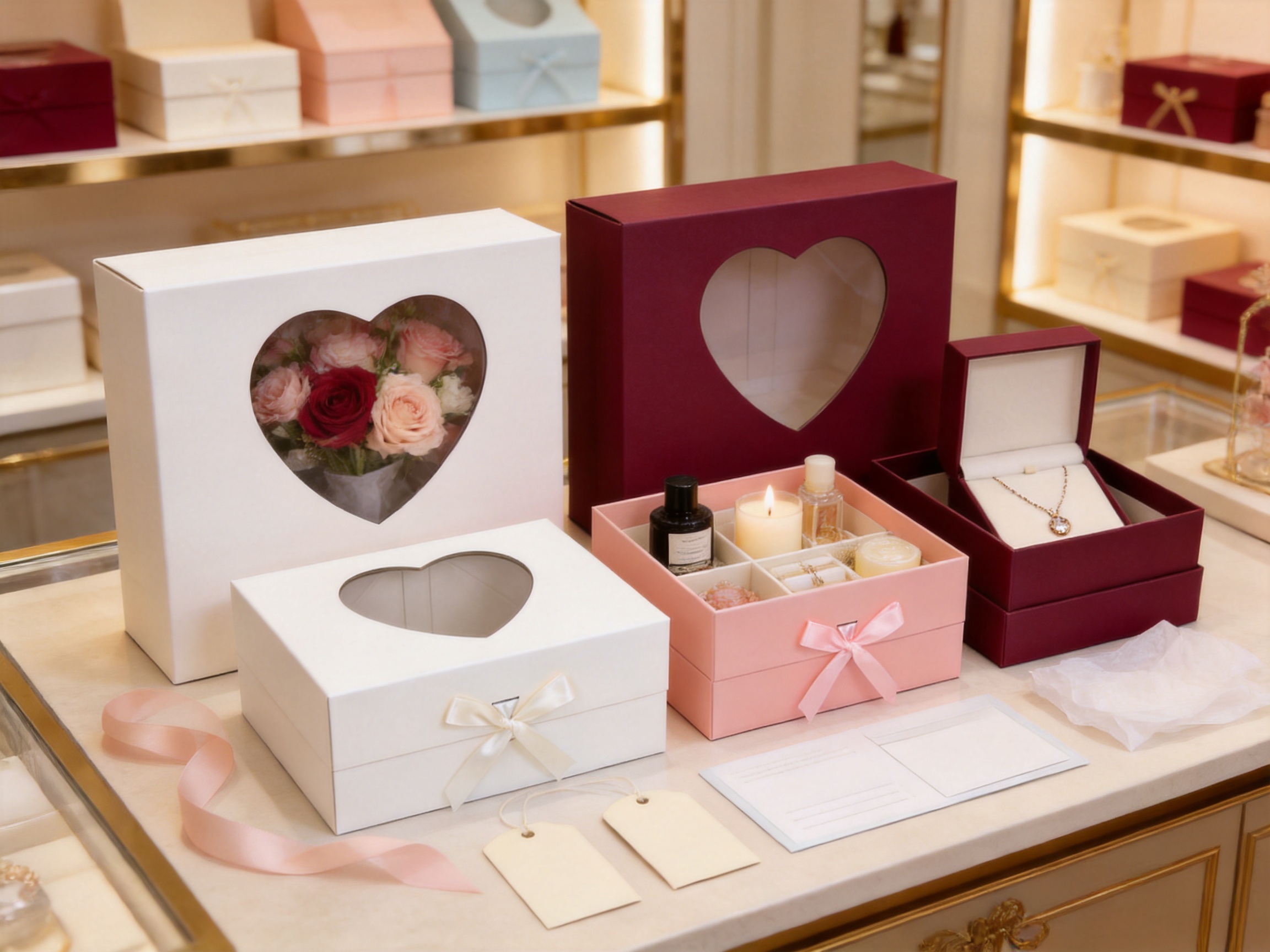
The same basic package can support several markets. Florists can use it for flowers and bouquets. Gift shops can use it for small gift sets. Aromatherapy brands can place candles, essential oil accessories, or related lightweight products inside. Jewelry sellers can use inserts to position smaller items. The box’s adaptable exterior also allows businesses to add labels, stickers, cards, ribbons, and other decorations.
High-density matte cardboard provides a stable surface for branding elements. Depending on the required specification, businesses may request custom colors, printed graphics, labels, embellishments, or other finishing details. A consistent material and manufacturing process can make it easier to maintain a uniform appearance across multiple product lines.
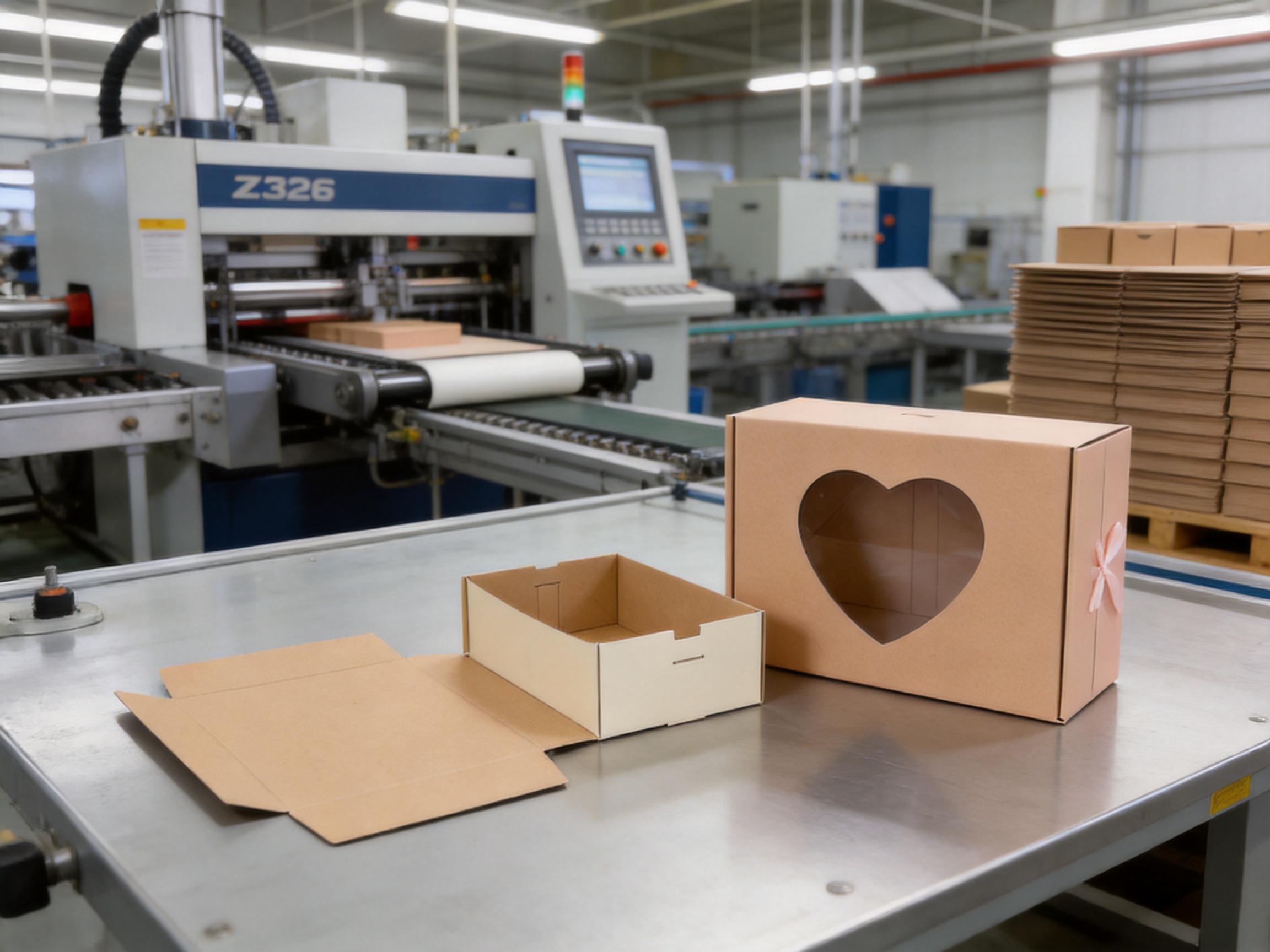
The final quality of a folding gift box depends on a sequence of coordinated manufacturing operations. Material selection alone is not enough. The board must be converted, printed or finished, laminated, embossed, die-cut, creased, inspected, and packed with suitable tolerances. A weakness in any stage can affect the assembled result.
Production begins with the selection of paperboard according to the target structure, dimensions, surface requirements, and intended use. For the Z326, high-density matte cardboard is selected to provide a combination of firmness, foldability, and finishing compatibility. The board must be strong enough to support the window panel but flexible enough to fold along the designed crease lines.
The matte surface is developed through controlled finishing and lamination. Lamination can improve the tactile feel and help protect the printed or decorated surface. The goal is to achieve a consistent appearance across the sheet, avoiding visible bubbles, uneven adhesion, cloudiness, or unwanted gloss variation.
Embossing can be used to add texture or emphasis to selected areas. Depending on the customization plan, embossing may support a logo, pattern, decorative border, or thematic design. Tactile details can increase perceived quality because the customer experiences the package through both sight and touch.
For customized orders, color management is important. A brand may require a specific tone across packaging, labels, cards, and promotional materials. Paperboard absorbency, lamination, lighting conditions, and printing method can all influence the final appearance. A professional factory uses standardized procedures and samples to reduce variation between production batches.
The heart-shaped window is produced through die-cutting. The die must be aligned accurately with the printed artwork, surface finish, and folding structure. Poor alignment can cause the window to appear off-center, interfere with internal components, or leave an uneven border. Proper tooling and inspection help create smooth edges and repeatable dimensions.
Crease lines guide the board during assembly. If the creases are too shallow, the box may be difficult to form. If they are too deep, the board may crack, weaken, or show unwanted whitening along the fold. The production team must balance pressure, board characteristics, and folding direction to produce clean, reliable creases.
Before mass production is completed, samples can be folded and assembled to evaluate fit, locking behavior, window position, panel alignment, and overall appearance. Testing the finished form is essential because a flat sheet may appear correct while the assembled box reveals problems such as lifted corners, loose locks, or uneven walls.
Quality control may include checks for dimensions, surface defects, lamination consistency, die-cut accuracy, crease quality, color uniformity, and packing quantity. The stated packing quantity for this product is 72 pieces. Proper counting and protective packing help reduce errors during warehouse receiving and shipment preparation.
A standardized inspection process is particularly valuable for bulk buyers. When thousands of units are used across retail locations, small inconsistencies can become visible to customers and create additional labor for sorting. Process control helps businesses receive packaging that is more consistent from one production run to the next.
The product is manufactured by Zhejiang Shihao Gift Packaging Co., Ltd., an export-oriented paper gift packaging manufacturer with more than 15 years of experience. The company specializes in the research, development, production, and sales of paper gift boxes and related packaging products.
The manufacturer operates across approximately 20,000 square meters and employs around 300 people. This scale provides a broader resource base than a small workshop that depends on a limited number of manual operations. It can support material purchasing, design development, production scheduling, quality inspection, packing, and export coordination within an organized supply chain.
The reported average daily production capacity is approximately 5,000 sets of gift boxes. Capacity of this level can be important for buyers managing seasonal demand, promotional campaigns, or recurring retail programs. It may also help reduce the risk that a large order will be delayed because the supplier lacks sufficient equipment or personnel.
An in-house design team updates dozens of products weekly and develops customized packaging solutions for different markets. This design capability is relevant to the Z326 because packaging requirements often vary by country, product type, retail channel, and occasion. A buyer may need different colors, dimensions, printing layouts, inserts, or decorative elements while retaining the same basic package structure.
The company reports BSCI and FSC certifications. BSCI relates to social compliance auditing and responsible workplace practices, while FSC certification is associated with responsible forest-based material sourcing when the relevant certified materials and chain-of-custody requirements are applied. Buyers should confirm the exact certification scope and documentation for each order, but these credentials can support supplier evaluation and responsible procurement procedures.
Export experience is another important strength. The company serves customers in Europe, the United States, the Middle East, and other regions. International packaging orders require attention to communication, documentation, packing standards, production schedules, and transportation conditions. A supplier familiar with export requirements can help buyers manage these details more effectively.
The manufacturer’s stated business philosophy emphasizes innovation, quality, practicality, and benefit. These principles are reflected in the product’s design: the box combines a decorative appearance with flat storage, a distinctive window with structural support, and a premium surface with practical handling resistance.
The Z326 is particularly suitable for floral packaging because flowers are visual products. Customers often select bouquets based on color, fullness, freshness, and arrangement style. A package that allows part of the arrangement to remain visible can support the sales process while protecting the bouquet from unnecessary contact.
The 39-centimeter length can accommodate certain single long-stemmed flowers and compact arrangements, subject to the actual flower dimensions and internal support method. Florists should test the package with the intended bouquet before placing a large order. Stem length, flower head size, wrapping materials, moisture protection, and arrangement density all affect compatibility.
For fresh flowers, packaging planning must consider water and condensation. The matte cardboard box is a paper-based package and should not be treated as a waterproof vessel. A florist may need to use a sealed water pack, internal liner, absorbent material, protective sleeve, or other moisture-control solution. These components should be selected according to delivery duration and flower-care requirements.
The heart-shaped window can enhance occasion-based floral sales. Red, pink, cream, white, and pastel color schemes may be used for romantic holidays, wedding favors, anniversary gifts, or spring celebrations. A printed care card or branded sticker can be added without covering the central viewing area.
Because the box can be stored flat, a florist may keep multiple seasonal colors or designs without occupying the same space as finished packages. Staff can assemble the required quantity as orders arrive. This is useful for shops with limited back-room storage and for online florists that experience demand fluctuations.
Beyond flowers, the box can hold a variety of lightweight gifts. Aromatherapy products are one possible category. A small collection of candles, fragrance accessories, bath products, or essential-oil-related items can be arranged inside with suitable separators or cushioning. The visible contents can create a coordinated gift presentation before the package is opened.
Jewelry is another possible application, although jewelry should generally be placed in an inner jewelry case, pouch, tray, or insert rather than directly against the paperboard. The outer heart-window box can act as a secondary presentation layer for necklaces, bracelets, earrings, or small gift sets.
The box can also be used for handmade products, artisan accessories, cosmetics, greeting-card sets, small textiles, wedding favors, and seasonal merchandise. Its suitability depends on weight and dimensions. Products that are sharp, excessively heavy, oily, wet, or fragile may require an internal protective system or a different package structure.
Retailers can use the package for gift-with-purchase campaigns and limited-edition collections. Because the box has a recognizable visual feature, it can help a temporary promotion stand out without requiring a completely new structural design. Seasonal artwork or color changes may refresh the package while maintaining familiar dimensions.
For e-commerce sellers, the box can serve as a branded inner presentation package placed inside a protective shipping carton. The folding format helps merchants store packaging efficiently, while the assembled box creates a more memorable unboxing experience. A separate outer shipping box may still be necessary to protect the gift box from compression, moisture, and impact during parcel delivery.
Bulk customization of sizes and colors is supported for this product category. Size customization allows businesses to adjust the structure for a specific bouquet, gift set, or retail display requirement. Any dimensional change should be reviewed through a prototype because altering the length, width, height, window size, or panel proportions can affect folding behavior and structural stability.
Color customization can align the box with a brand identity or a particular selling season. A florist may choose colors associated with wedding themes or holidays. A cosmetics or aromatherapy brand may prefer muted, natural shades. A jewelry company may select a darker tone with metallic accents. Matte lamination can help create a sophisticated appearance across different color palettes.
Labels and decorations can be added after production or incorporated into the printed design. Stickers, ribbons, hang tags, foil details, printed messages, paper seals, and care cards can all contribute to the final presentation. Businesses that require frequent design changes may prefer applying labels locally, while brands seeking a fully integrated appearance may request printed customization during manufacturing.
Embossing can be used selectively rather than covering the entire surface. A raised logo, border, heart motif, or small decorative pattern may create a premium touch while keeping the design visually clean. The most appropriate technique depends on the artwork, order quantity, budget, and desired tactile effect.
Customization should be managed through a clear approval process. Buyers should provide artwork in an agreed format, confirm dimensions, approve color samples, review a physical prototype when necessary, and specify packing requirements. The more complex the structure or finishing, the more important pre-production confirmation becomes.
Businesses considering a bulk purchase should evaluate both the flat blank and the assembled box. The flat blank reveals the quality of printing, lamination, die-cutting, and creasing. The assembled sample reveals whether the structure is easy to form, whether the lock holds, and whether the panels align as intended.
Check the window edge carefully. It should be smooth and free from visible burrs, tearing, or excessive paper fibers. The transparent or semi-transparent window material should be securely attached and should not have major wrinkles, lifting edges, or cloudy areas that interfere with product visibility.
Examine the matte surface under different lighting conditions. Minor variations may become more obvious under strong retail lighting. Buyers should look for scratches, bubbles, uneven lamination, color differences, and areas where the coating has separated from the board.
Test the folding lines several times. A quality folding package should form naturally along the intended creases. Repeated opening and closing of a sample can reveal whether the board cracks, the surface whitens, or the locking tabs loosen prematurely.
Place a representative product inside the box. Do not test only with an empty package. The actual product may shift the center of gravity, place pressure on the window, or interfere with the top closure. For floral applications, test both dry and moisture-protected configurations if the package will be used with fresh flowers.
Finally, assess the package after simulated handling. Place assembled samples in an outer carton, move them through normal warehouse conditions, and inspect the corners, surface, and closure. This type of practical evaluation is more useful than judging the box solely from photographs.
Flat-packed boxes should be stored in a clean, dry environment away from direct water exposure and extreme humidity. Paperboard responds to environmental conditions, and prolonged moisture can affect rigidity, adhesive performance, surface appearance, and folding accuracy.
Boxes should be kept on pallets, shelves, or another raised surface rather than directly on the floor. This reduces exposure to accidental spills and makes inventory movement easier. Heavy items should not be placed on top of the packaging unless the stacking limits have been confirmed.
Warehouse staff should avoid dragging individual sheets or bundles across rough surfaces. Although the matte lamination improves resistance to minor abrasion, sharp edges and excessive friction can still damage the finish. Handling instructions are especially important for customized boxes with dark colors, metallic details, or large unprinted matte areas.
When assembling the package, workers should follow the crease lines and use moderate pressure on the locking tabs. Forcing a tab at an incorrect angle may cause tearing or deformation. A short assembly guide can help maintain consistency when many employees are preparing orders.
For fresh flowers, moisture protection should be installed before the bouquet is placed in the box. Any water-containing component should be secured to prevent leakage. The window should remain clear, and the flower heads should not press excessively against the front panel.
Paper-based packaging can support sustainability goals when it is responsibly sourced, efficiently designed, and properly managed after use. The Z326’s folding format may reduce the volume occupied during storage and transportation before assembly. Lower storage volume can contribute to more efficient handling, although the overall environmental result depends on shipping distances, manufacturing energy, coatings, inks, and end-of-life systems.
The reported FSC certification is relevant to buyers that require responsibly sourced forest-based materials. Procurement teams should request current certification details and verify whether the specific materials used for the order are covered by the applicable chain-of-custody documentation.
Matte lamination improves surface durability, but laminated paperboard may require specific recycling conditions depending on the local recycling system. Businesses should communicate appropriate disposal guidance when necessary. If the box includes plastic window film, ribbons, adhesive labels, or mixed-material inserts, these components may need to be separated before recycling.
Responsible packaging design should also avoid unnecessary oversizing. The box should be matched to the product so that excess interior space does not require excessive filling material. A properly sized package can improve product stability and reduce the amount of secondary packaging used for protection.
Buyers may also consider durability as part of sustainability. A box that remains attractive through handling and display is less likely to be discarded before use. For gift packaging, a recipient may reuse the box for storage or another presentation purpose, extending the useful life of the material.
International buyers typically evaluate more than the product itself. They also consider whether the supplier can maintain consistent quality, communicate clearly, manage production schedules, and prepare goods for export. A manufacturer with established production systems can provide advantages in these areas.
The supplier’s reported factory area, workforce, equipment base, design team, and daily capacity indicate an operation designed for commercial-scale production rather than occasional small-batch manufacturing. This can be beneficial for buyers who need repeat orders or multiple packaging models within the same product family.
Export experience across Europe, the United States, the Middle East, and other markets suggests familiarity with different customer expectations. Packaging may need to comply with specific labeling, material, packing, or documentation requirements depending on the destination. These requirements should be confirmed for every project rather than assumed, but an experienced export supplier can help identify the information needed.
Quality control should remain measurable. Buyers can specify acceptable tolerances for dimensions, color, window alignment, surface defects, assembly performance, and packing quantity. A pre-shipment inspection or third-party inspection may be arranged for larger orders when required by the purchasing agreement.
Communication is also important for customized packaging. Drawings, samples, artwork, production schedules, and packing instructions should be documented. Clear communication reduces the risk that a seemingly minor change, such as adjusting the window position or changing the board finish, will affect the final result.
For florists, the Z326 can support a premium product presentation without requiring permanently rigid packaging. The box may be stored flat, assembled quickly, customized by season, and decorated to match the bouquet. The heart-shaped window provides a recognizable feature that can help a gift arrangement stand out in photographs and retail displays.
For gift shops, the box can function as a flexible package for several product categories. Rather than stocking separate rigid containers for every small gift, a retailer may use the same basic structure with different inserts and labels. This can simplify purchasing and make seasonal merchandising more manageable.
For wholesalers, the 72-piece packing quantity offers a defined unit for inventory planning. Wholesale customers can calculate approximate order volumes, warehouse requirements, and replenishment cycles more easily when the packing configuration is known.
For brands, custom colors, labels, and printed surfaces can strengthen recognition. Packaging is often one of the first physical brand touchpoints experienced by a customer. A consistent box design can support repeat purchases and create a more unified appearance across retail and online channels.
No folding gift box is suitable for every product. The Z326 is intended for lightweight items and should not be overloaded with dense or heavy goods. Excessive weight may stress the locking tabs, crease lines, window panel, or base structure.
The package should not be used as a direct liquid container. Fresh flowers require moisture-control measures, and products that may leak should be sealed or placed inside a suitable inner container. The matte laminated surface provides protection against minor handling marks but does not make the package fully waterproof.
Extremely fragile items may require molded inserts, foam, pulp trays, or additional cushioning. The outer box provides presentation and basic structural containment, but the internal protection must be designed around the product’s fragility and shipping conditions.
Buyers should also confirm the exact product dimensions when ordering customized versions. The listed dimensions are 39 × 28 × 17.8 centimeters, while the product name references a related size designation. A physical sample or approved technical drawing should be used as the final reference for production.
A reliable project typically begins with a discussion of the intended product, target market, quantity, dimensions, color, finishing, and delivery requirements. The buyer should explain whether the box will be used for retail display, local delivery, e-commerce shipment, event gifting, or another purpose.
The next step is structural confirmation. The buyer and manufacturer should verify the internal capacity, window position, closure method, ribbon or decoration requirements, and compatibility with any insert. If the box will hold flowers, the expected stem and bloom dimensions should be included.
Artwork and material details can then be prepared. The buyer should identify the desired matte finish, color references, logo placement, text, labels, and decorative elements. A prototype or pre-production sample is recommended for customized projects.
After the sample is approved, production standards should be documented. These may include board type, surface finish, printing details, die-cut tolerance, folding behavior, packing quantity, carton markings, and inspection criteria.
During production, the manufacturer can conduct process checks before final packing. For larger orders, the buyer may request progress updates, sample approvals, or inspection records. Once production is complete, the goods should be packed to prevent crushing, moisture exposure, and surface rubbing during transportation.
This structured process reduces uncertainty and helps ensure that the final packaging performs as expected in the buyer’s actual operating environment.
The Z326 is a single rectangular folding gift box made from high-density matte cardboard. It includes a heart-shaped viewing window and a foldable snap-lock structure.
The listed dimensions are 39 × 28 × 17.8 centimeters, measured as length × width × height. Buyers should confirm the usable internal dimensions before ordering products with tight size requirements.
The stated packing quantity is 72 pieces. This quantity can be used for wholesale inventory calculations and shipment planning.
It can be used for suitable fresh flowers and small bouquets, provided the flowers fit the internal dimensions and an appropriate moisture-control solution is used. The cardboard box itself should not be treated as a waterproof container.
The box can accommodate lightweight products such as aromatherapy items, jewelry placed in an inner case, small gift sets, handmade goods, wedding favors, and decorative merchandise. Product weight, shape, fragility, and moisture requirements should be evaluated before use.
The window is described as semi-transparent. It allows the contents to be viewed while maintaining a degree of enclosure and presentation. The exact transparency may depend on the selected window material and customization specification.
Matte lamination creates a refined, low-reflection appearance and can help the surface resist fingerprints, light scuffing, and minor abrasions. It also improves the tactile impression of the package compared with untreated cardboard.
Yes. The folding construction allows the boxes to be stored in a flat condition before assembly. This can reduce warehouse space and improve transportation efficiency.
The design uses a snap-lock assembly structure intended to simplify formation. Specific production versions may include pre-glued areas or additional components, so the final assembly method should be confirmed with the supplier.
Bulk customization of sizes and colors is supported. Any size change should be tested because it may affect the window proportion, folding strength, and closure performance.
Yes. Businesses may add labels, stickers, ribbons, printed artwork, embossing, and other decorations. The best method depends on the desired appearance, order quantity, budget, and production schedule.
The supplier reports more than 15 years of experience, a factory area of approximately 20,000 square meters, around 300 employees, an average daily capacity of about 5,000 gift box sets, an in-house design team, export experience, and BSCI and FSC certifications.
The product is intended for lightweight gifts. Heavy or unusually dense products may place excessive stress on the folding structure and should be tested carefully or packed in a stronger box design.
Store it in a dry, clean location away from direct water, excessive humidity, sharp objects, and excessive top loading. Keeping the cartons raised from the floor is recommended.
Buyers should request or approve a technical drawing, sample, color reference, and packing specification before mass production. The approved sample should be treated as the reference for the finished order.
The Z326 single rectangular matte cardboard heart-shaped window folding gift box is designed for businesses seeking a balance between visual appeal, structural reliability, and logistical efficiency. Its high-density cardboard supports a firmer assembled form, while matte lamination improves the tactile quality and helps the surface withstand ordinary handling. The precisely die-cut heart-shaped window gives customers a view of the contents and adds emotional value to the gifting experience.
Its folding construction is equally important. The ability to store units flat can reduce warehouse demands, simplify inventory management, and support more efficient transportation before use. Once assembled, the snap-lock structure provides a practical package for flowers, small bouquets, aromatherapy products, jewelry in inner cases, and other lightweight gifts.
Compared with basic uncoated cartons, the Z326 offers a more refined presentation. Compared with permanently rigid gift boxes, it offers greater storage flexibility. Compared with purely decorative packaging, it provides a more practical structure for commercial handling. These combined advantages make it suitable for florists, gift shops, online retailers, distributors, event suppliers, and brands developing customized gift packaging programs.
The manufacturing capabilities of Zhejiang Shihao Gift Packaging Co., Ltd. further support the product’s commercial potential. The company’s reported production scale, design resources, export experience, quality systems, and certification background provide a foundation for bulk orders and customized packaging solutions. Through careful sampling, specification approval, material confirmation, and inspection, buyers can adapt the box to their products and markets while maintaining consistent quality.
For companies that want gift packaging to protect the product, display it attractively, and contribute to a memorable unboxing experience, the Z326 offers a versatile and commercially practical solution.
1. Product specification sheet for the Z326 single rectangular heart-shaped window folding gift box.
2. Manufacturer-provided information regarding high-density matte cardboard, embossing, lamination, die-cutting, and snap-lock folding construction.
3. Manufacturer profile and production capability statement for Zhejiang Shihao Gift Packaging Co., Ltd.
4. FSC principles and guidance for responsible forest-based material sourcing and chain-of-custody management.
5. BSCI social compliance framework and supplier assessment principles.
6. General packaging engineering guidance for paperboard folding cartons, creasing, die-cutting, and structural testing.
7. General retail packaging practices for floral presentation, gift merchandising, product visibility, and protective inner packaging.
Recommended Products

Contact Us

No. 15, Xiayang Road, Huangzhai Town, Jinhua, Zhejiang, China

(+86) 579-84230069

(+86) 13085675766


Products

Gift Box Packaging Manufacturer
 English
 Français
 Español
 عربى