2026-09-04
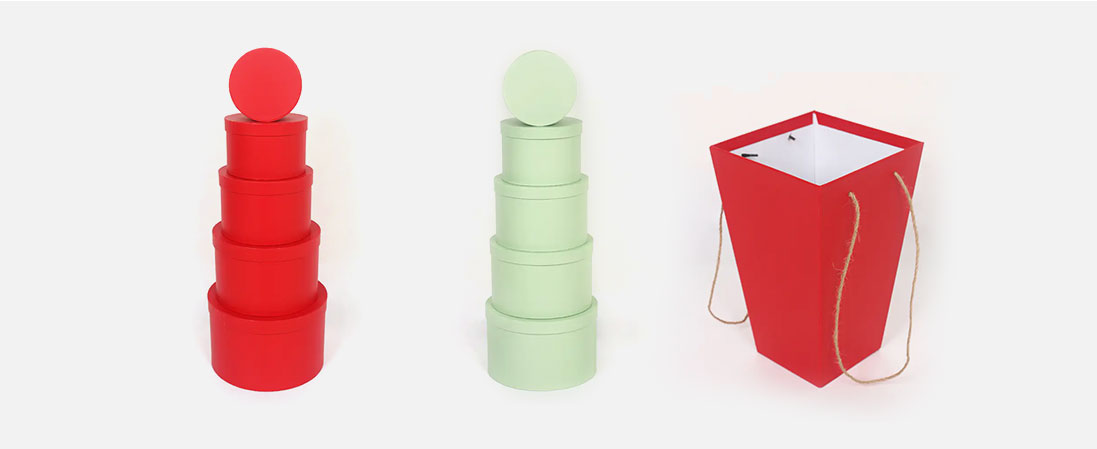
A bouquet is not judged by flowers alone. The container surrounding the arrangement can influence its visual balance, perceived volume, and even the way customers view the flowers from different angles. This is why Round Flower Bouquet Cardboard Boxes have become an interesting packaging format for florists, gift retailers, and event suppliers.
A circular box creates a different visual relationship between the bouquet and its packaging compared with rectangular or square formats. Rather than directing attention toward corners and straight edges, the curved profile creates a continuous outline around the flowers. The result can make a compact arrangement appear fuller while giving taller bouquets a more defined vertical silhouette.
Flower arrangements have different widths, heights, and stem structures. A box that looks attractive on its own may not produce the same result after flowers are placed inside. The internal diameter and height need to work with the arrangement rather than simply follow a standard packaging size.
Commercial examples show how varied these dimensions can be. Some round flower boxes are around 25 cm in diameter and 10 cm high, while other suppliers offer combinations such as 7.8-inch diameter × 9.5-inch height or larger formats. This range demonstrates why box dimensions should be linked to the intended floral arrangement.
| Design Factor | Round Box | Square Box |
| Visual outline | Soft, continuous profile | Defined corners and edges |
| Flower positioning | Supports radial arrangements | Works well with structured layouts |
| Perceived volume | Can make compact blooms appear fuller | Creates a more geometric appearance |
| Brand impression | Gift-oriented and decorative | Clean and structured |
The difference becomes particularly noticeable with roses, peonies, hydrangeas, and mixed seasonal bouquets. Radial flower placement naturally follows a circular boundary, allowing the outer blooms to form a rounded visual frame.
Presentation is connected to structure. A decorative exterior cannot compensate for a weak base or poorly matched dimensions. Current flower-box designs commonly use rigid board or reinforced paperboard, with reinforced bases available to support the weight of real floral arrangements. Water-resistant liner options can also be incorporated for fresh flowers.
Some commercial constructions combine art paper with a rigid board layer, such as 157 gsm art paper laminated onto 2 mm grey board. This type of layered structure demonstrates how exterior appearance and structural performance can be developed together.
The circular silhouette also changes the way a recipient approaches the gift. A traditional rectangular package tends to reveal its contents through a front-facing orientation. A round flower box offers a more open visual composition, allowing blooms to extend across the entire upper profile.
This characteristic is useful for retail flower gifts, birthdays, weddings, seasonal promotions, and preserved-flower displays. The box itself can become part of the presentation rather than acting merely as a temporary container. Some commercial flower packaging formats also add ribbons, printed logos, decorative lids, or customized finishes to reinforce the gift character.
The flowers themselves remain unchanged, but their visual presentation can change considerably through packaging geometry. A round structure can complement radial arrangements, create a softer silhouette, and give compact bouquets a fuller appearance. Square and rectangular boxes remain useful for structured compositions, larger accessories, or arrangements that require defined internal sections.
The practical lesson is simple: box shape should follow the flower arrangement, not exist separately from it. Diameter, height, base construction, interior protection, and decorative finish all contribute to the final presentation. With carefully matched dimensions, Round Flower Bouquet Cardboard Boxes can function as both protective packaging and an important visual element of the floral gift.
Recommended Products

Contact Us

No. 15, Xiayang Road, Huangzhai Town, Jinhua, Zhejiang, China

(+86) 579-84230069

(+86) 13085675766


Products

Gift Box Packaging Manufacturer
 English
 Français
 Español
 عربى
عربى