2026-10-09
Shipping damage does not always begin with a weak outer carton. A gift box with a poorly fitted lid, insufficient board rigidity, or inadequate internal support can also experience pressure, movement, and deformation during distribution. These issues become particularly important for brands shipping cosmetics, jewelry, glass bottles, electronics accessories, and other gift products that require both physical protection and attractive presentation.
At Shihao, we consider lid dimensions and board thickness together during packaging development. Our rigid cardboard boxes with lids can be customized according to product dimensions, packaging structure, surface finishing, and intended use. By reviewing these details before production, we help customers develop packaging that supports the product while maintaining a consistent appearance throughout handling and delivery.
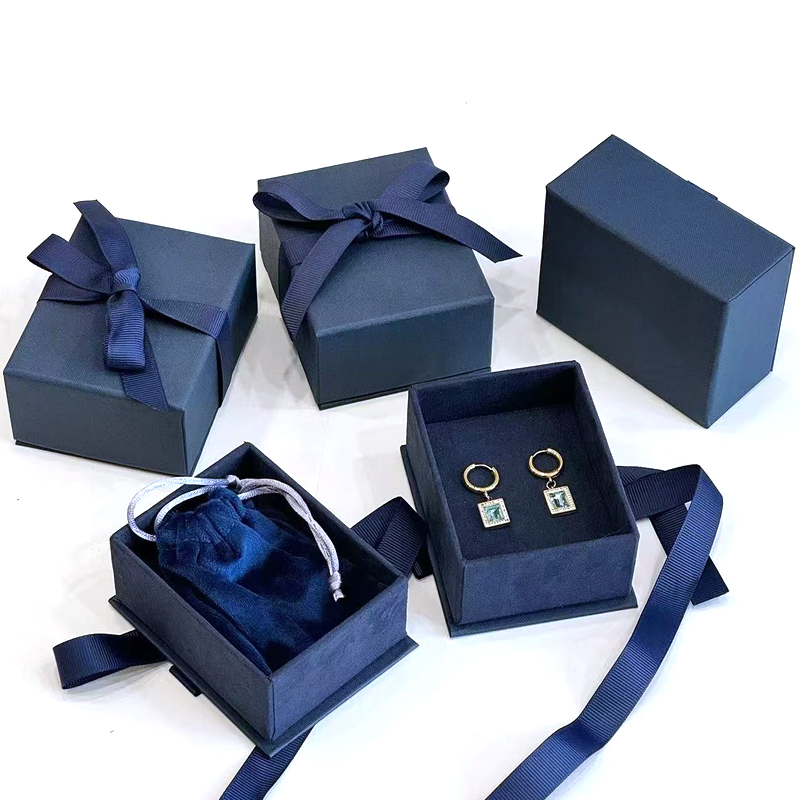
The relationship between the lid and box base affects how the package behaves during storage, stacking, loading, and transportation. A lid that fits poorly may shift during handling, while an excessively tight fit can place unnecessary pressure on the box walls and edges.
At Shihao, we recommend evaluating the finished box rather than calculating the lid dimensions from the bare greyboard alone. Wrapping paper, lamination, adhesive layers, and internal lining can all change the final dimensions. The lid and base should therefore be measured after these materials have been applied.
Board thickness affects panel stiffness, edge resistance, and the ability of a box to retain its shape under handling pressure. However, increasing thickness alone does not guarantee reliable shipping performance. Box dimensions, product weight, panel span, corner construction, and outer-carton protection also influence the result.
Rigid gift boxes commonly use greyboard in the approximate range of 1.5 mm to 3.0 mm. The following table provides preliminary reference points for packaging development at Shihao. These ranges are not universal load ratings, and the finished structure should be verified through sampling and testing.
| Greyboard Thickness | Potential Application | Design Consideration |
| 1.5 mm | Compact jewelry boxes and lightweight gifts | Suitable for relatively small formats with limited panel spans |
| 2.0 mm | Standard gift boxes and cosmetic packaging | Provides a practical starting point for balancing rigidity and material use |
| 2.5 mm | Larger gift sets and moderately heavy contents | Offers additional panel stiffness, subject to structural verification |
| 3.0 mm | Large presentation boxes and demanding packaging applications | Requires careful consideration of weight, dimensions, and lid clearance |
A compact box and a large presentation box can behave differently even when they use identical greyboard. Larger panels have a greater unsupported span and may flex more readily under concentrated pressure. A wide lid can also experience bending during stacking or careless handling.
Our approach at Shihao is to match the board specification to the complete packaging structure. This helps avoid unnecessary material use while providing the support required by the intended application.
The clearance between the lid and base must account for the finished exterior dimensions of the base and the finished interior dimensions of the lid. A design based solely on nominal board measurements may not account for the additional thickness of decorative paper or surface treatments.
For an initial design discussion, a clearance of approximately 1–2 mm per side may be considered for some rigid box constructions. The actual allowance depends on the box format, board thickness, wrapping materials, dimensions, and desired opening feel. We do not recommend applying a single clearance value to every packaging project.
Surface finishing also deserves attention. Matte lamination, textured specialty paper, foil stamping, and other decorative treatments can influence the finished dimensions or the way surfaces respond to friction. Shihao can review these details during customization so the appearance and functional fit are considered together.
No. Lid fit and board thickness address important structural concerns, but they cannot independently protect a gift box against every impact or compression force encountered during transportation. A rigid presentation box is not necessarily designed to replace a corrugated shipping carton.
Shipping protection depends on the complete packing configuration, including the outer carton, internal cushioning, product positioning, stacking arrangement, and handling conditions.
At Shihao, we pay attention to the relationship between the gift box structure and its protective packaging. The appropriate combination depends on the product category, shipping route, expected handling, and presentation requirements.
A sample that looks attractive on a display table may perform differently during packing and distribution. Before confirming a large order, we recommend agreeing on measurable inspection points and evaluating a representative sample of the complete packaging configuration.
| Inspection or Test | Purpose | What to Record |
| Dimensional inspection | Verifies lid and base compatibility | Finished dimensions, clearance, and alignment |
| Opening and closing test | Checks repeated handling performance | Opening resistance, surface wear, and structural changes |
| Compression test | Evaluates resistance to applied pressure | Test load, deformation, and visible damage |
| Drop test of the packed unit | Assesses impact protection during distribution | Test conditions, product movement, and damage findings |
| Visual inspection | Checks finishing and assembly quality | Corner integrity, wrap adhesion, scratches, and panel warping |
Compression and drop tests should be designed around the actual distribution environment and the complete packed unit. Buyers can refer to relevant procedures, such as ASTM D642 for compression testing of shipping containers and applicable ISTA distribution test protocols, to establish a suitable testing plan. The specific procedure should match the package type and intended shipping conditions.
At Shihao, we encourage customers to establish acceptance criteria before approving production samples. Agreed dimensions, material specifications, visual standards, and test conditions provide a clear basis for checking production consistency.
Accurate project information helps us evaluate the relationship between box dimensions, board thickness, lid fit, and shipping protection. Buyers preparing a customized gift box inquiry can organize the following details before requesting a quotation.
Based on these details, our team can discuss material combinations, structural adjustments, customization options, and sample evaluation requirements. The final specification should be confirmed through an approved sample rather than relying on nominal board thickness alone.
Lid fit and board thickness can influence shipping damage, but their effects depend on the entire packaging design. A lid with insufficient clearance may create friction and assembly problems, while excessive clearance can allow unwanted movement. Thin board may flex across a large panel, yet simply increasing thickness will not compensate for poor internal support or inadequate shipping cartons.
At Shihao, we approach gift packaging as a combination of structural design, material selection, dimensional control, and practical testing. By confirming the finished lid dimensions, choosing board thickness according to the product, and matching the inner box with suitable transport protection, buyers can make more informed packaging decisions.
Planning a customized gift packaging project? Contact Shihao with your product dimensions, weight, preferred box style, and shipping requirements. Our team can help review the proposed structure and discuss a suitable specification for your packaging needs.
Recommended Products

Contact Us

No. 15, Xiayang Road, Huangzhai Town, Jinhua, Zhejiang, China

(+86) 579-84230069

(+86) 13085675766


Products

Gift Box Packaging Manufacturer
 English
 Français
 Español
 عربى
عربى