2026-10-02
A jewelry box does more than keep a ring, necklace, or bracelet in place. Its dimensions influence what the customer sees at the moment the lid opens, how easily the piece can be removed, and how much attention the jewelry receives. A compact box can create an intimate presentation, while a larger format may provide more room for layered inserts and supporting accessories.
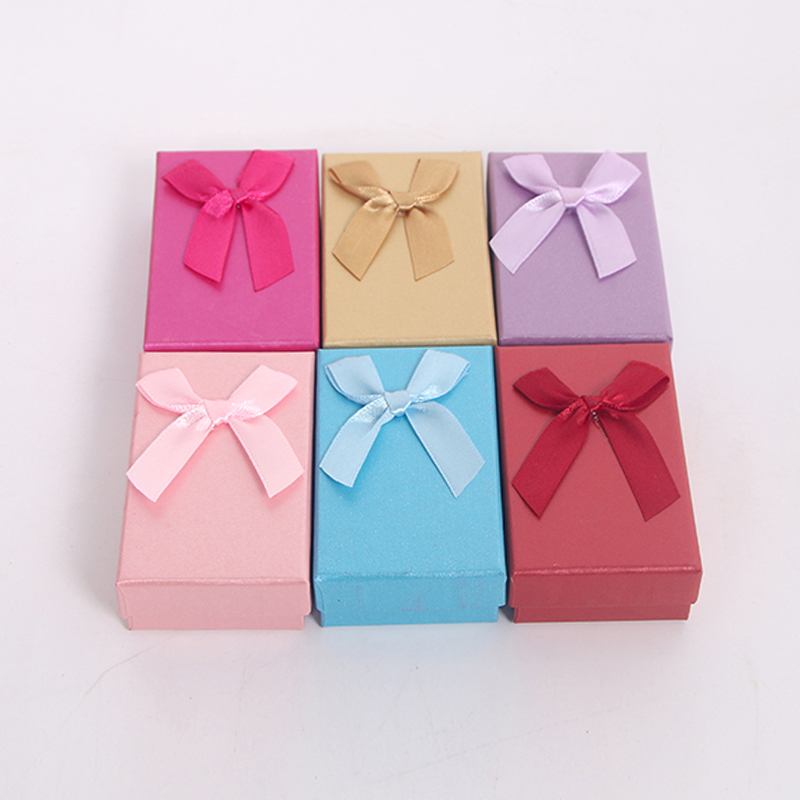
This makes sizing an important part of Cardboard Jewelry Paper Boxes. The outer dimensions, internal cavity, insert thickness, and product position need to work together to create a controlled presentation rather than simply leaving empty space around the jewelry.
Small jewelry pieces often benefit from a compact presentation. A ring placed inside a large cavity can appear visually lost, while a closely fitted ring slot directs attention toward the gemstone and setting.
These figures are reference points rather than universal specifications. Jewelry packaging suppliers emphasize that the cavity should be developed around the actual product dimensions and insert requirements.
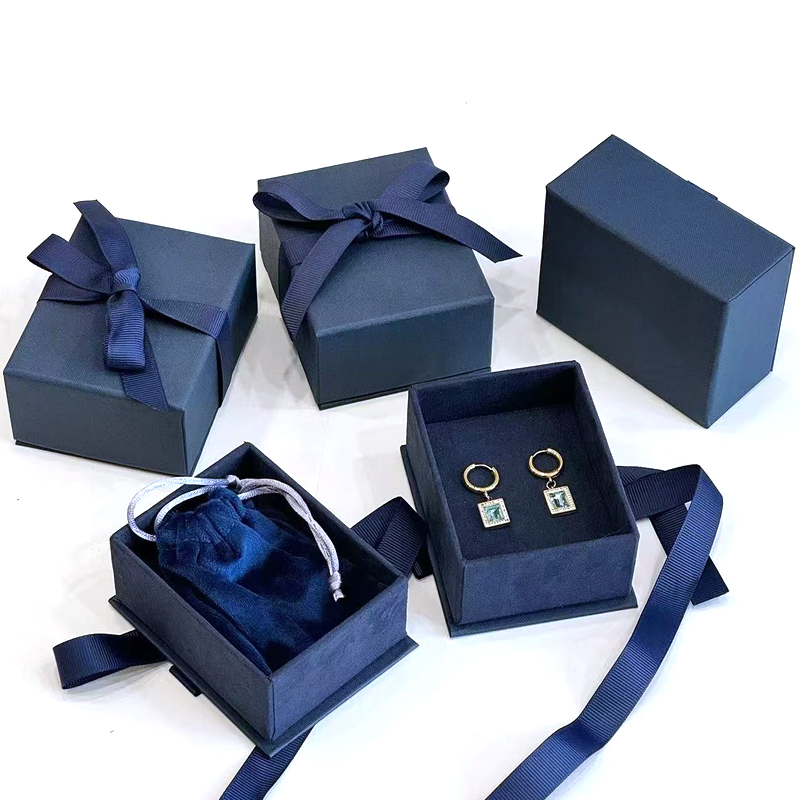
| Jewelry | Reference Box Size | Typical Insert | Presentation Goal |
| Ring | 50 × 50 × 40 mm | Vertical ring slot | Focus attention on the setting |
| Earrings | 70 × 70 × 35 mm | Paired slots or pad | Keep both pieces aligned |
| Necklace | 90 × 90 × 30 mm+ | Chain channel and pendant support | Prevent tangling during reveal |
| Bracelet | 220 × 55 × 30 mm+ | Curved tray or pillow | Create a horizontal display |
Commercial packaging references show considerable variation in dimensions because jewelry profiles are highly different. A long necklace, for example, may need a much wider or longer internal layout than a small pendant.
A larger box is not automatically excessive. Additional space can become useful when the package contains multiple pieces, a certificate, care card, polishing cloth, or several compartments.
However, empty space changes how the jewelry is perceived. A small pair of earrings placed in an oversized cavity may look less substantial because the product occupies only a small portion of the visible interior. This is why the relationship between product footprint and box footprint deserves attention during packaging development.
The external box dimension tells only part of the story. Foam, velvet, flocked paperboard, satin, and other inserts occupy internal volume. A box must therefore be designed around the product and insert together.
A useful sizing relationship is:
Product dimensions + insert requirements + clearance = required internal dimensions
Packaging specialists also point out that insert geometry, compression, retention points, and lid clearance can influence the final box dimensions.
Too little clearance can place pressure on delicate settings or make the jewelry difficult to remove. Excessive clearance allows the product to move inside the cavity, reducing the neat appearance after transportation.
Some packaging specifications use approximately 1–2 mm adjustment between an insert and the interior cavity to allow smooth placement without distorting the box walls. Other suppliers recommend tighter product-specific tolerances around the jewelry itself.
Box height can change what the customer sees immediately after opening. A shallow box presents the jewelry closer to the lid opening, creating a direct visual reveal. A deeper structure can accommodate thicker cushions, layered inserts, or taller jewelry components.
Ring packaging illustrates this clearly. A vertical ring slot can position the band and gemstone upright, while a flat insert produces a completely different visual angle. The same jewelry can therefore create different impressions depending on its internal orientation.
Dimensions should also account for movement during delivery. A box that looks attractive on a display shelf may produce a weaker experience after the jewelry shifts during transportation.
Custom jewelry packaging suppliers commonly offer paperboard, foam, velvet, satin, flocked, and molded inserts, allowing the internal structure to be matched with the jewelry rather than using the same cavity for every product type.
Yes, provided the proportions are carefully controlled. A compact box can make a small piece feel deliberately framed, especially when the insert positions the jewelry at the center of the opening.
Premium perception comes from the coordination of several elements rather than box size alone. Board thickness, surface paper, lid movement, insert texture, cavity accuracy, and interior printing can all contribute to the experience.
Rigid jewelry boxes commonly use approximately 1.5–3 mm chipboard, with some commercial specifications ranging from 800 to 2000 GSM depending on the construction. Larger boxes may require additional structural support to maintain lid stability and wall rigidity.
The question is not simply whether a jewelry box should be small or large. The more useful question is whether its dimensions create the right relationship between the product, insert, and opening sequence.
Cardboard Jewelry Paper Boxes can deliver very different unboxing experiences through relatively small changes in width, height, depth, and internal positioning. A 50 mm ring box, a long bracelet box, and a multi-piece jewelry case may use the same basic paperboard concept, yet each requires a different internal layout.
For brands developing new packaging, product dimensions should therefore be measured before the box is finalized. Once the jewelry profile, insert thickness, clearance, and desired viewing angle are established, the outer box can be sized around that experience. The result is packaging that feels intentional from the moment the lid opens to the moment the customer lifts the jewelry from its insert.
Recommended Products

Contact Us

No. 15, Xiayang Road, Huangzhai Town, Jinhua, Zhejiang, China

(+86) 579-84230069

(+86) 13085675766


Products

Gift Box Packaging Manufacturer
 English
 Français
 Español
 عربى
عربى