2026-08-15
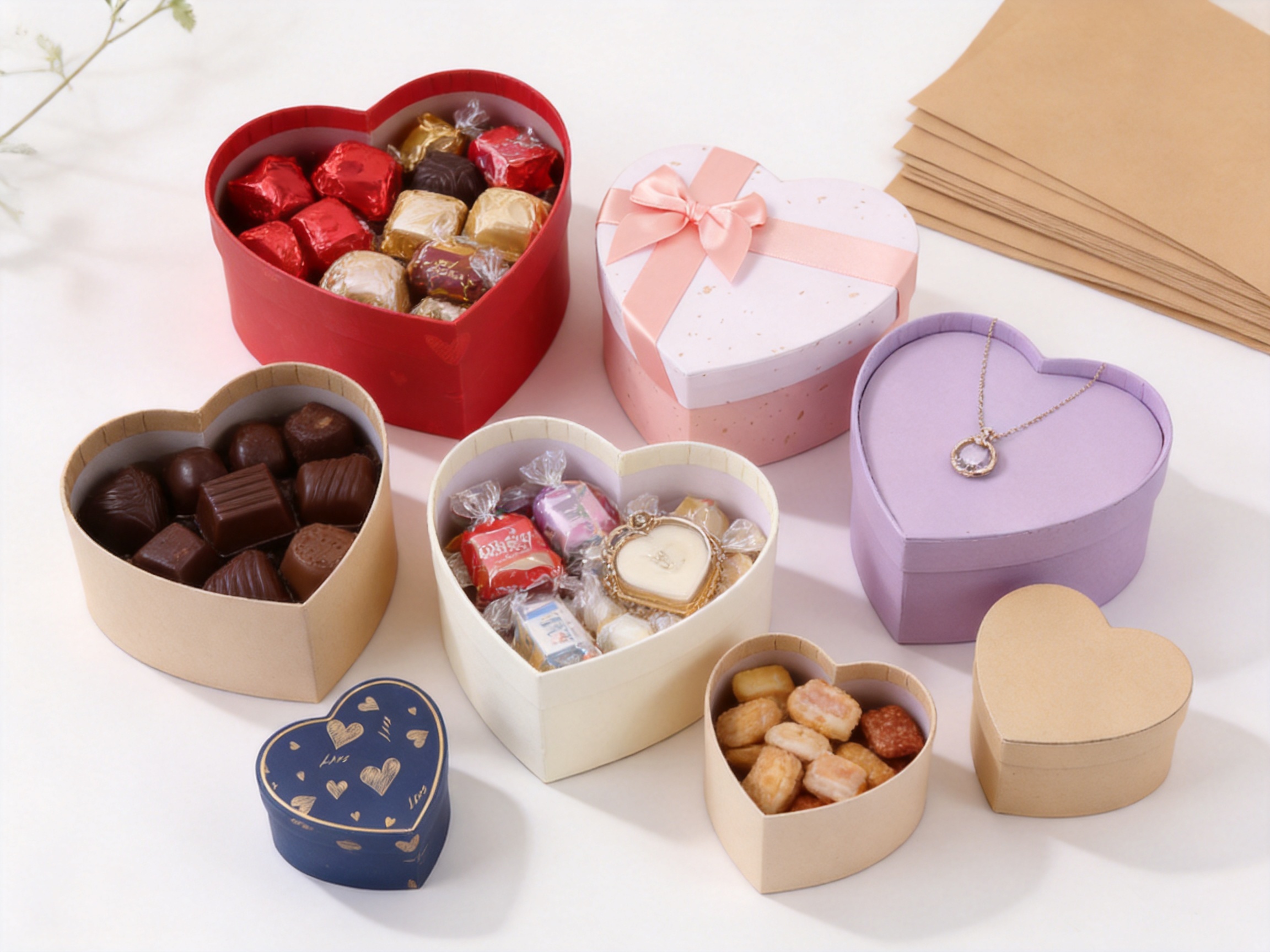
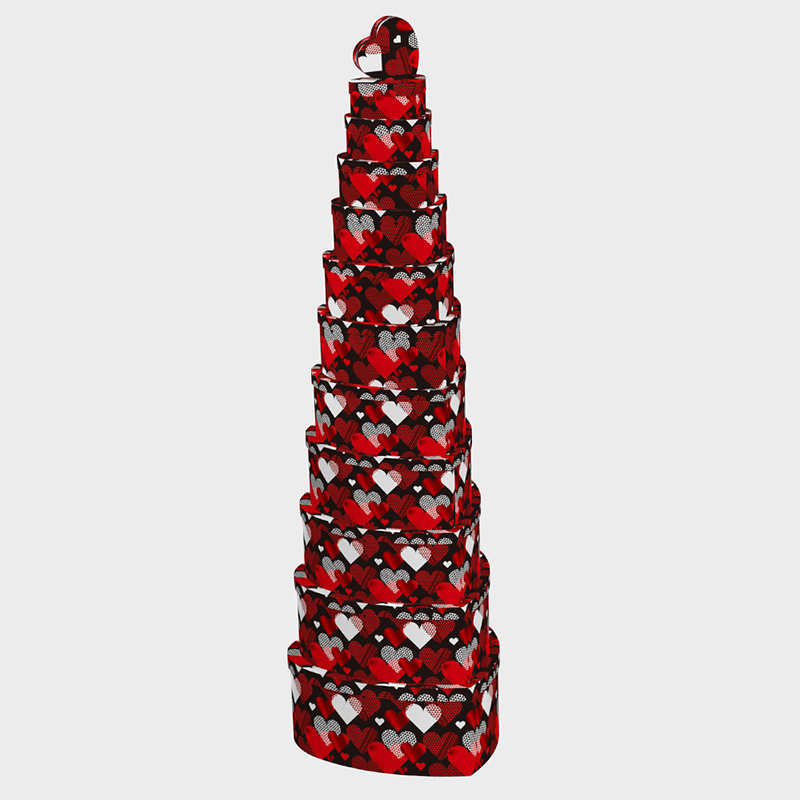
Valentine’s Day packaging is more than a container for sweets. It is part of the emotional experience surrounding the gift. A well-designed box can communicate affection before the recipient opens it, create a memorable first impression, and help a product stand out in a crowded seasonal display. The 1001 Decorative Cardboard Valentine’s Day Heart-Shaped Candy Box is developed for precisely this purpose. Its heart-shaped structure, decorative cardboard construction, flexible sizing, and suitability for customized production make it a practical and visually distinctive packaging solution for candy brands, retailers, gift suppliers, event planners, and promotional programs.
Unlike ordinary rectangular candy cartons, this heart-shaped box uses a form strongly associated with love, care, and celebration. The shape gives the package an immediate emotional identity while remaining suitable for professional manufacturing and transportation. Its decorative exterior can be adapted to different visual themes, colors, logos, messages, and market preferences. As a result, the box can support both seasonal Valentine’s Day collections and broader applications such as anniversaries, weddings, birthdays, romantic proposals, and special promotional campaigns.
The product is manufactured by an experienced paper packaging company with more than 15 years of industry involvement, a substantial production facility, dedicated design resources, and export experience across several international markets. These capabilities are important for buyers who require more than an attractive sample. A successful packaging supplier must also provide stable quality, repeatable production, responsible material choices, efficient assembly, and dependable order fulfillment. This product combines decorative appeal with those practical requirements.
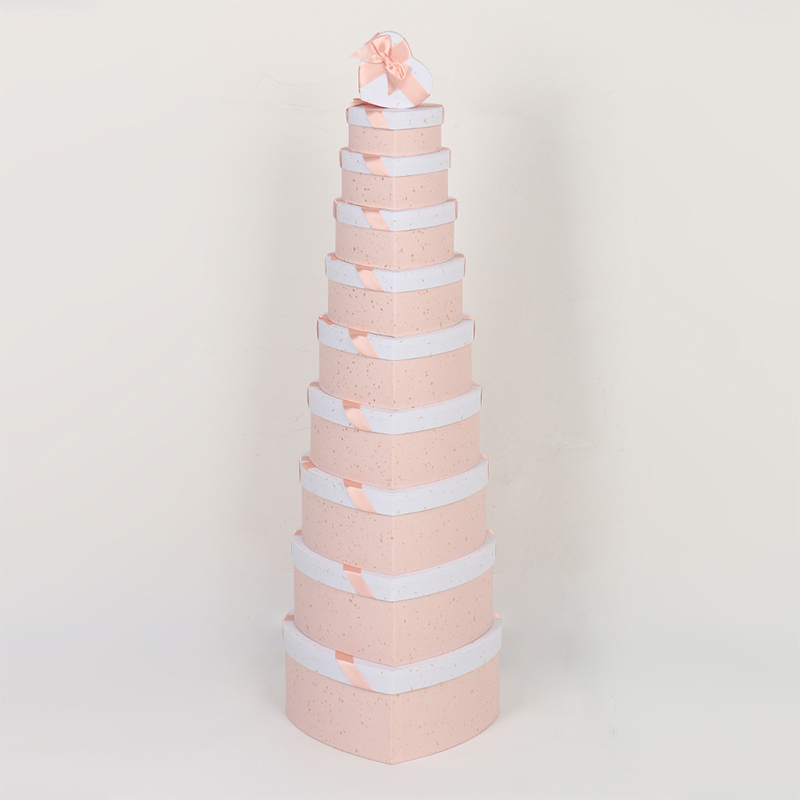
1001 Decorative Cardboard Valentine's Day Heart-Shaped Candy Box
Packaging communicates meaning through shape, color, surface treatment, and structure. In the case of Valentine’s Day products, the heart is one of the most recognizable symbols of affection. A heart-shaped candy box therefore helps consumers understand the purpose of the gift without relying entirely on printed text. This instant visual message can be valuable in retail environments, online product photography, corporate gifting, and seasonal promotional campaigns.
The 1001 box uses a framed heart-shaped design that gives the package a more decorative appearance than a basic folding carton. The frame creates a visual border around the central area and can be used to support printed patterns, romantic illustrations, brand marks, greetings, or coordinated Valentine’s Day artwork. The result is a package that feels more intentional and presentable, particularly when compared with plain boxes that require additional ribbons, labels, or external decorations.
Heart-shaped packaging can also enhance the perceived value of the contents. Candies, chocolates, small toys, jewelry, and other compact gifts may be relatively simple products, but an attractive package gives them a more complete presentation. The box can transform a collection of sweets into a ready-to-give gift, reducing the need for additional wrapping. For brands, this creates an opportunity to position everyday products as premium seasonal offerings without changing the contents themselves.
The shape is also highly suitable for visual marketing. A heart-shaped box can be photographed from multiple angles and used in product displays, gift guides, social media campaigns, and holiday catalogues. Its silhouette remains recognizable even when shown at a distance or surrounded by other seasonal products. This can support stronger shelf visibility and more distinctive online presentation.
The product is identified as Item Number 1001 and is categorized as a Valentine’s Day gift box, decorative cardboard box, and candy packaging solution. It is designed to hold sweets and other small presents while providing an attractive external presentation. The product information indicates that it is also suitable for toys, jewelry, and various types of gifts. This versatility allows buyers to use the same basic structural concept for multiple seasonal or promotional product lines.
The available dimensions range from approximately 33 × 32.3 × 14 centimeters for the largest listed option to approximately 11 × 10 × 5 centimeters for the smallest listed option. Ten sizes are available within this range. This selection allows buyers to match the box to different quantities of candy, gift assortments, jewelry pieces, small toys, or promotional items. It also helps reduce unnecessary empty space, which can improve presentation and limit excess material use.
The minimum order quantity is listed as 500 sets. This quantity is suitable for retailers, wholesalers, importers, candy companies, gift brands, event suppliers, and distributors preparing a seasonal collection. Buyers can select an appropriate size and discuss custom requirements according to their target market, product dimensions, artwork, and order plan.
For logistics planning, the listed outer package dimensions are approximately 64 × 34 × 45 centimeters, with six sets packed in cardboard boxes. Packaging details should be confirmed during quotation and production discussions, especially when a buyer selects a different size, requests modified packing, or needs a specific export carton configuration.
| Product Feature | Available Information | Buyer Benefit |
|---|---|---|
| Product type | Decorative cardboard heart-shaped gift box | Combines gift presentation with functional packaging |
| Main application | Valentine’s Day candy and small gifts | Supports seasonal retail and promotional collections |
| Additional applications | Toys, sweets, jewelry, anniversaries, birthdays, and special gifts | Allows use across multiple product categories |
| Size range | Ten sizes, approximately 33 × 32.3 × 14 cm to 11 × 10 × 5 cm | Helps match packaging to different products and quantities |
| Customization | Size and color can be customized | Supports brand identity and market-specific requirements |
| Minimum order | 500 sets | Accessible for medium-sized seasonal programs and wholesale orders |
| Material | Decorative cardboard | Provides a lightweight, printable, and recyclable packaging base |
| Shipping pack information | Six sets in cardboard boxes; listed carton size approximately 64 × 34 × 45 cm | Assists preliminary warehouse and freight planning |
Cardboard is widely used in gift packaging because it offers a balanced combination of strength, light weight, printability, and processing flexibility. For a seasonal gift box, these characteristics are particularly useful. The package must look attractive, support its shape during handling, and remain economical enough for commercial production. Decorative cardboard helps address all three requirements.
The material provides a stable surface for color printing, graphics, text, patterns, and brand elements. A buyer can develop an artwork theme that matches a candy flavor, a retail collection, or a particular customer group. Romantic red and pink palettes may be suitable for traditional Valentine’s Day products, while pastel, metallic-inspired, floral, or minimalist artwork may appeal to different markets. Custom color selection also helps brands maintain consistency with their existing visual identity.
Cardboard is also considerably lighter than many rigid packaging alternatives. Lower package weight can reduce handling difficulty and may contribute to more efficient transportation. At the same time, the material can be formed and assembled into a structured box that protects the contents from ordinary crushing and abrasion during carrying and delivery. Packaging performance will depend on the selected board specification, internal structure, product weight, and shipping conditions, so these factors should be reviewed when placing an order.
The decorative surface contributes to a more finished appearance. In many cases, a plain carton requires additional wrapping paper, ribbon, stickers, or an outer bag before it can be presented as a gift. A printed decorative box can reduce the need for those additional elements. This can simplify packing operations for retailers and improve the consistency of the final presentation.
The most visible advantage of the product is its heart-shaped format. Standard square or rectangular candy boxes are practical, but they may appear interchangeable when displayed beside competing products. The heart shape creates a stronger visual point of difference. It immediately connects the package with affection and Valentine’s Day, allowing the product to communicate its emotional purpose before the customer reads the label.
Many ordinary candy cartons are designed mainly for storage and transportation. They may protect the contents effectively but offer limited decorative value. The 1001 box is designed as a presentation package as well as a protective container. Its framed heart structure gives it a gift-oriented appearance that can make the product feel more complete and thoughtful.
A package designed only for one specific candy assortment may become difficult to use after a seasonal campaign ends. This product can be used for candies, chocolates, jewelry, small toys, and other presents. The ability to apply the box to different items makes it more adaptable for wholesalers and gift companies. A buyer may also use different sizes for several product lines while keeping a consistent overall design language.
Generic packaging limits a brand’s ability to build recognition. With customizable colors and dimensions, buyers can adjust the box to suit their logo, campaign, product range, or local market. Additional printing and finishing requirements can be discussed during the design stage. This creates greater control over the final appearance than purchasing an unbranded, off-the-shelf box.
Cardboard is widely recognized as a recyclable packaging material when properly sorted and processed. For brands seeking to communicate a more responsible packaging approach, a paper-based box can be more suitable than packaging that relies heavily on non-recyclable plastic components. Sustainability claims should always reflect the specific board, ink, coating, and recycling conditions used in the final product, but the cardboard construction provides a useful foundation for environmentally conscious packaging strategies.
Valentine’s Day products often depend on a limited selling window. A recognizable and emotionally appropriate package can help retailers communicate the seasonal message quickly. The heart-shaped design supports point-of-sale displays, gift bundles, online campaigns, and promotional photography. It can also be coordinated with shopping bags, cards, sleeves, and other paper products to create a complete collection.
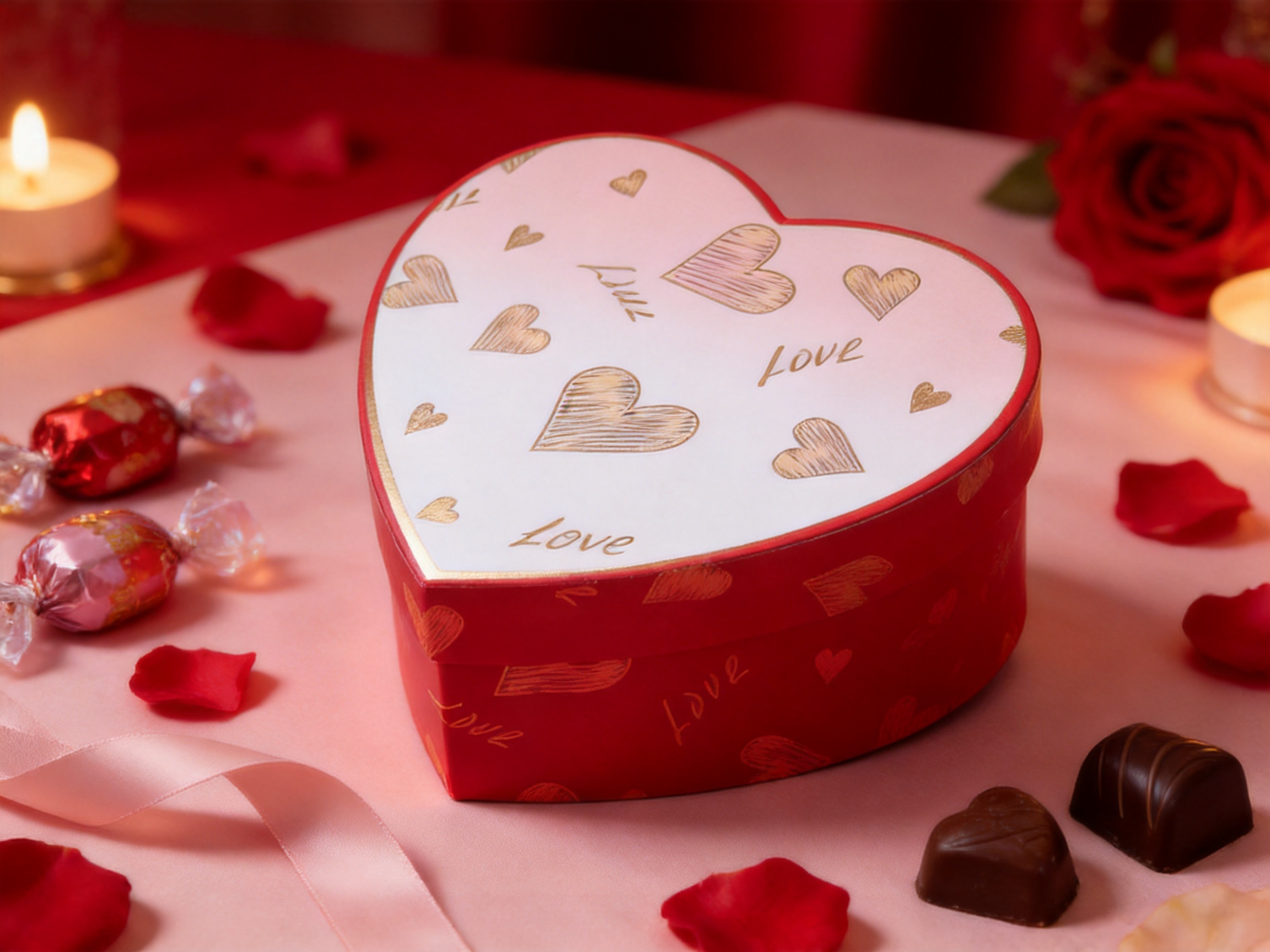
Although the product is specifically associated with Valentine’s Day, its design can be adapted to suit different audiences and occasions. A traditional romantic collection may use red, pink, white, gold, or rose-themed artwork. A contemporary collection may use simple typography, soft neutral colors, geometric patterns, or a single central symbol. A children’s candy line may use illustrated characters and brighter colors, while a premium chocolate collection may focus on restrained printing and elegant contrast.
The heart frame can become a central design element rather than merely a structural feature. It may contain a brand logo, a greeting, a product name, a window-like printed effect, or a decorative pattern. The surrounding area can be used for supporting information such as flavor, quantity, ingredients, or a seasonal message. The exact artwork layout should be developed together with the manufacturer so that important graphics remain correctly positioned after cutting, folding, and assembly.
Color customization is particularly important for international customers. Consumer preferences, local holiday traditions, and retail expectations vary across regions. Some markets may prefer bold and vivid Valentine’s Day colors, while others may favor soft tones or premium-looking neutral palettes. A supplier with export experience can help buyers organize artwork and production details for different market requirements.
Size selection also affects the visual impression. A small box can be suitable for a few premium chocolates or a jewelry item, while a larger version can hold a mixed candy assortment or a more substantial gift. Matching the internal capacity to the product helps prevent movement and improves the appearance when the package is opened. Buyers should provide accurate product dimensions and, where possible, physical samples or detailed drawings during the development stage.
The quality of a decorative gift box depends on more than the initial design. It also depends on how consistently the design is converted into finished products. Zhejiang Shihao Gift Packaging Co., Ltd. operates as an export-oriented manufacturer specializing in paper gift packaging boxes, including kits, storage boxes, folding boxes, jewelry boxes, and gift boxes. Its experience across these categories provides a broad production base for customers seeking coordinated packaging solutions.
The company has been involved in the industry for more than 15 years and operates a facility covering approximately 20,000 square meters. A large production site can support organized material storage, multiple processing stages, assembly operations, quality checks, and packing activities. This is valuable for seasonal orders, where production timing is especially important and delays can reduce the available selling period.
The company employs approximately 300 people and reports an average daily production capacity of about 5,000 sets of gift boxes. Capacity figures may vary according to product structure, finishing requirements, order mix, and production scheduling, but the stated scale indicates that the supplier is equipped to handle commercial orders rather than only small sample quantities. Buyers can benefit from discussing realistic lead times early, particularly before Valentine’s Day demand reaches its annual peak.
A dedicated design team is another important manufacturing strength. The company updates dozens of products weekly and develops customized packaging solutions for different markets. For the 1001 box, design support can assist with artwork adaptation, size selection, structural adjustments, and collection development. This can shorten the distance between a buyer’s concept and a production-ready package.
Advanced equipment supports the repeatability of printing, cutting, creasing, forming, and assembly. Each stage affects the final appearance of a heart-shaped package. Inaccurate cutting can produce uneven edges, while inconsistent creasing can make the box difficult to assemble or cause the heart shape to appear distorted. Stable production equipment, combined with process supervision, helps maintain uniformity across a larger order.
Production begins with selecting suitable decorative cardboard and defining the structural requirements. The board must provide enough stiffness for the intended size and contents while remaining suitable for cutting and folding. The manufacturer can evaluate the relationship between board thickness, box dimensions, product weight, and shipping conditions. This step is especially important for larger sizes or products that will be transported over long distances.
Customer artwork must be prepared according to the dieline and printing specifications. The design team can help identify the cutting line, folding line, safe area, bleed area, and positioning of logos or text. Proper prepress preparation reduces the risk of important design elements being placed too close to an edge or crossing an assembly seam. It also helps maintain color consistency across repeat orders.
Printing gives the cardboard its decorative identity. The selected colors, illustrations, messages, and branding elements are transferred to the board according to the approved artwork. Depending on the customer’s requirements, additional surface treatments may be considered. The appropriate finish depends on the desired appearance, budget, product positioning, and recycling objectives. Buyers should confirm all finishing details in the approved specification before mass production.
Heart-shaped packaging requires precise cutting because the curved outline is a major visual feature. Die-cutting creates the external shape and any necessary structural components. Creasing establishes the folding lines that guide assembly. The accuracy of these operations directly affects the symmetry, fit, and overall presentation of the finished box.
After cutting and creasing, the components are formed and assembled. Adhesive placement must be sufficient to create a secure bond without leaving visible excess on the decorative surface. Assembly workers or equipment must also ensure that the heart frame, panels, and edges align correctly. Careful assembly is essential because even a well-printed component can appear low quality if the final structure is uneven.
Finished boxes should be checked for printing quality, structural accuracy, surface damage, adhesive performance, and packing condition. Inspection may include visual checks and sampling according to the agreed quality standard. The products are then packed into protective cardboard cartons for storage and transportation. Buyers with special export, warehouse, or retail requirements should communicate those requirements before packing begins.
Wholesale buyers need consistency across hundreds or thousands of units. A single attractive sample is not enough if the mass-produced boxes vary significantly in color, shape, or assembly quality. A structured manufacturing process helps reduce these differences and supports more predictable receiving inspections.
For the 1001 heart-shaped box, important quality points include the symmetry of the heart outline, accuracy of the dimensions, cleanliness of the printed surface, strength of the folded joints, and stability of the finished package. The box should also be appropriate for the intended product weight and handling conditions. Buyers should confirm whether the packaging is intended for direct food contact or whether an inner food-safe bag or liner will be used for candies. Packaging specifications should reflect the buyer’s local regulatory requirements.
Export experience can also contribute to reliability. The company supplies customers in Europe, the United States, the Middle East, and other regions. International shipments require attention to carton protection, labeling, documentation, dimensional planning, and communication across different time zones and business practices. A supplier familiar with export orders is better positioned to identify common logistics questions before production is completed.
The company has passed BSCI and FSC certifications according to the provided company information. BSCI relates to social compliance practices, while FSC certification concerns responsibly sourced forest-based materials under the applicable certification system. Buyers should request current certification details and verify that the specific materials and production arrangements used for their order are covered by the relevant requirements.
Packaging sustainability involves material sourcing, production efficiency, transport, use, and end-of-life recovery. A cardboard gift box can support a more responsible packaging strategy because paper-based materials are commonly recyclable where appropriate collection and processing systems are available. The box is also designed to serve as both a protective package and a gift presentation, which may reduce the need for additional wrapping materials.
The use of an appropriately sized box can further improve material efficiency. Ten available sizes allow buyers to select a format that better matches the product. A well-matched package may require less filler and create less unused volume during transportation. It can also improve the customer’s opening experience by preventing candies or small gifts from moving excessively inside the box.
Environmental performance should be evaluated as a complete system. Printing inks, coatings, adhesives, inserts, windows, ribbons, and laminated materials can affect recyclability. Customers seeking specific environmental claims should define their requirements clearly and ask for material documentation. A manufacturer with FSC-related capabilities and experience in paper packaging can help buyers consider these factors during product development.
Durability also contributes to sustainability. If a box protects its contents effectively during handling and shipping, it can help reduce damage-related waste and replacement shipments. The objective is not simply to use less material, but to use an appropriate amount of material that performs its intended function throughout the supply chain.
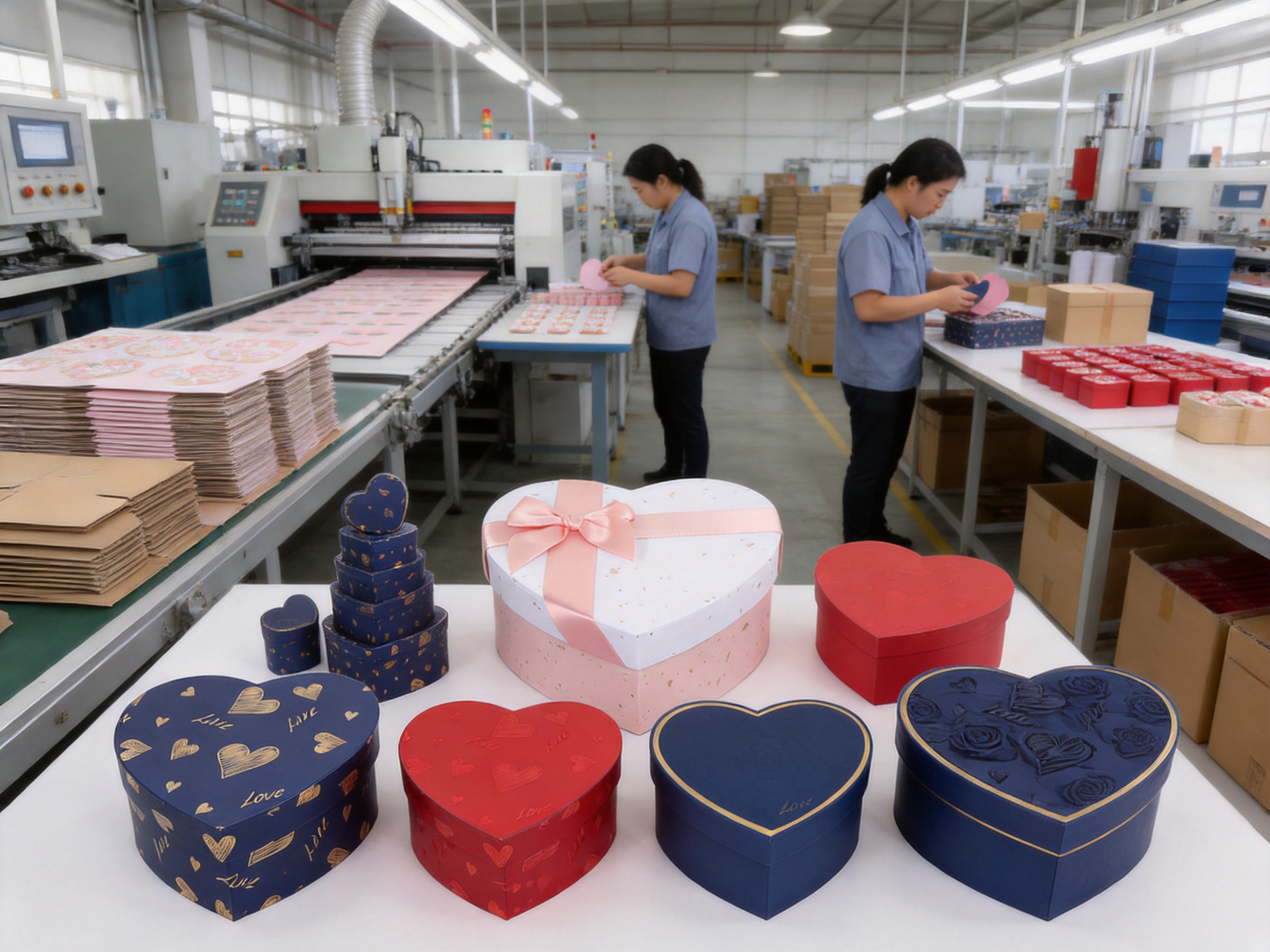
The heart shape is naturally suitable for wedding anniversaries, relationship milestones, and romantic celebration products. A buyer can customize the printed message and colors to create a collection for different anniversary years or customer segments.
Small heart-shaped boxes can be used for wedding candies, mints, chocolates, or thank-you gifts. Coordinated printing can match invitations, table decorations, and wedding colors. The compact sizes may be particularly suitable for event planners and hospitality suppliers.
Although the box is described primarily as candy packaging, the product information also identifies jewelry as a suitable application. Small jewelry pieces can be placed inside an appropriate insert or protective pouch. The decorative exterior can make the package suitable for romantic jewelry promotions, proposal gifts, and seasonal retail collections.
A heart does not need to be limited to Valentine’s Day. It can represent friendship, appreciation, family affection, or celebration. By changing the artwork, a buyer can use the box for birthdays, Mother’s Day, thank-you gifts, or other occasions where a warm emotional message is appropriate.
Companies can use customized heart-shaped boxes for employee appreciation, client gifts, hospitality campaigns, and seasonal promotions. A logo, slogan, or campaign message can be integrated into the decorative design. This transforms the box into a branded touchpoint that remains visible after the contents have been consumed.
A gift box should be considered as part of the complete unboxing experience. The exterior creates anticipation, the structure determines how easily the package opens, and the interior presentation reveals the product. Brands can improve this experience by selecting suitable internal arrangements, coordinating the box with the product colors, and adding a message or greeting that supports the occasion.
For candy products, the contents should be arranged so that the box looks full without being overcrowded. If the candies are loose, an inner bag, tray, or food-safe insert may be required. If the candies are individually wrapped, the packaging can be arranged in a pattern that follows the heart shape. The manufacturer should receive clear information about the product so the structure can be evaluated accurately.
Brands should also consider how the package will be handled in retail stores and during shipping. A box that looks attractive but is difficult to stack may create problems for retailers. Buyers can discuss carton packing, display orientation, and protective measures during order planning. The decorative design should be supported by practical logistics rather than treated separately from them.
A successful custom order usually begins with a clear product brief. The buyer should identify the intended contents, preferred box size, target quantity, color requirements, artwork, desired delivery date, and destination market. Providing these details early allows the manufacturer to recommend an appropriate structure and prepare a more accurate quotation.
The next stage is sample development or artwork confirmation. Buyers may request a physical sample or a digital proof, depending on the complexity of the project. A sample can help evaluate the heart shape, color appearance, assembly, internal capacity, and overall gift presentation. Any changes should be completed before mass production approval.
Once the specification is approved, the manufacturer can arrange material preparation and production scheduling. Buyers should confirm the minimum order quantity, packing method, carton dimensions, shipping marks, inspection standards, and payment terms in writing. Seasonal projects should be planned well in advance because production capacity and transportation space may become limited before major holidays.
For repeat orders, maintaining the same artwork files, color references, structural drawings, and approved samples can help improve consistency. If a brand plans to use the box for multiple products, it may be efficient to develop a coordinated family of sizes rather than creating unrelated designs for each item.
Experience matters because gift packaging involves many interconnected details. A supplier must understand how a design behaves when printed, cut, folded, glued, packed, and shipped. Manufacturers that produce several categories of paper packaging can apply knowledge from folding boxes, jewelry boxes, storage boxes, and other structures to new projects.
The company’s reported production scale, design team, export experience, and broad product range support a comprehensive service model. Customers can work with one supplier for development, customization, manufacturing, and packing rather than coordinating several separate vendors. This can simplify communication and make it easier to maintain a consistent visual standard across a product collection.
The company’s stated business philosophy emphasizes innovation, quality, practicality, and customer benefit. These principles are relevant to the 1001 product because a successful Valentine’s Day box must combine attractive design with production feasibility and commercial value. Decorative features should enhance the product without making the package unnecessarily difficult or expensive to manufacture.
Its focus on research and development also supports continued product improvement. Seasonal packaging trends change quickly, and buyers may need new colors, structural variations, or market-specific designs each year. A manufacturer that regularly develops new products is better positioned to support these updates.
The main use is packaging candies and small Valentine’s Day gifts. It can also be used for toys, jewelry, chocolates, anniversary gifts, birthday presents, wedding favors, and promotional items, depending on the selected size and internal arrangement.
The product information lists ten available sizes. The approximate range extends from 33 × 32.3 × 14 centimeters to 11 × 10 × 5 centimeters. The correct size should be selected according to the dimensions and weight of the intended contents.
Yes. The size and color can be customized. Buyers can also discuss artwork, printing, structural details, surface finishing, internal inserts, and packing requirements with the manufacturer. All customization should be confirmed in an approved specification before mass production.
The listed minimum order quantity is 500 sets. The final order requirements may depend on the selected size, artwork, materials, and customization level.
The product is described as candy packaging, but direct food contact requirements depend on the complete material and production specification. Buyers should confirm whether candies will be placed in an inner food-safe bag, tray, or wrapper and should request suitable documentation for their destination market.
Cardboard is commonly recyclable and can support a paper-based packaging strategy. Actual recyclability depends on the specific board, coatings, inks, adhesives, inserts, and local recycling facilities. Buyers with sustainability targets should review the complete specification and request relevant material information.
Yes. The heart shape is appropriate for anniversaries, weddings, birthdays, romantic gifts, jewelry, thank-you presents, and corporate appreciation campaigns. Changing the colors and artwork can make the package more suitable for different occasions.
The heart shape offers stronger emotional recognition and a more distinctive gift presentation. A rectangular box may be easier to stack and more conventional, but the heart-shaped design can create greater visual impact and help a seasonal product stand out.
The buyer should provide the intended product, product dimensions, required quantity, preferred box size, artwork or logo, color expectations, destination country, desired delivery schedule, packing requirements, and any food-contact or sustainability requirements.
The available information lists six sets packed in cardboard boxes, with an outer package dimension of approximately 64 × 34 × 45 centimeters. Packing details should be reconfirmed because they may change according to the selected size and order configuration.
The 1001 Decorative Cardboard Valentine’s Day Heart-Shaped Candy Box combines emotional design with practical packaging performance. Its heart-shaped frame creates immediate romantic recognition, while decorative cardboard provides a printable, lightweight, and structured base. Ten available sizes help buyers match the package to different candies and small gifts, and customization options allow brands to create packaging that reflects their own identity.
Compared with ordinary candy cartons, the product offers stronger gift appeal, more distinctive shelf presence, broader seasonal flexibility, and greater opportunities for brand storytelling. Its applications extend beyond Valentine’s Day to anniversaries, weddings, birthdays, jewelry, corporate promotions, and other occasions centered on affection or appreciation.
The manufacturing capabilities behind the product are equally important. More than 15 years of industry experience, a large production facility, approximately 300 employees, a reported daily capacity of about 5,000 gift box sets, export experience, design resources, and paper packaging expertise provide a solid foundation for customized orders. Combined with cardboard’s potential recyclability and the company’s stated BSCI and FSC certifications, these strengths make the product suitable for buyers seeking attractive and commercially practical gift packaging.
For retailers, candy companies, wholesalers, event suppliers, and gift brands, the heart-shaped box offers a way to turn a simple product into a more complete and memorable present. With accurate product information, careful artwork preparation, suitable size selection, and early seasonal planning, it can support an appealing packaging program from initial concept through final delivery.
1. Product specification for Item Number 1001, Decorative Cardboard Valentine’s Day Heart-Shaped Candy Box.
2. Manufacturer-provided information regarding product dimensions, minimum order quantity, packing details, and customization options.
3. Manufacturer-provided company profile covering production capacity, facility size, staffing, export markets, design resources, and product categories.
4. General packaging design principles concerning structural presentation, product protection, material selection, and seasonal merchandising.
5. General guidance on paper-based packaging, recycling considerations, responsible sourcing, and supply-chain communication.
6. General quality-management considerations for printed, die-cut, folded, glued, and assembled paper gift boxes.
Recommended Products

Contact Us

No. 15, Xiayang Road, Huangzhai Town, Jinhua, Zhejiang, China

(+86) 579-84230069

(+86) 13085675766


Products

Gift Box Packaging Manufacturer
 English
 Français
 Español
 عربى