2026-09-01
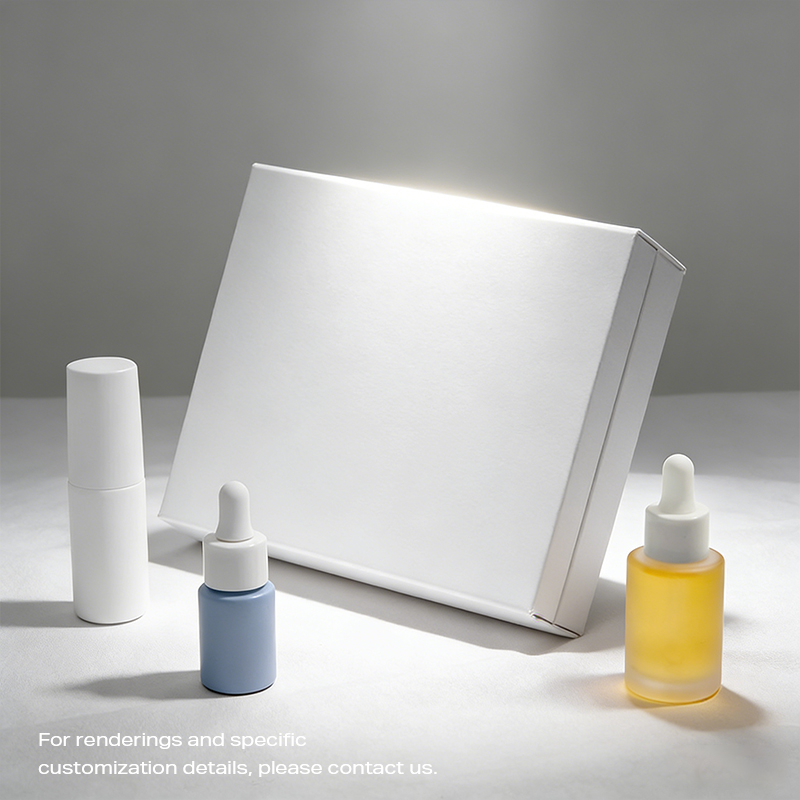
Packaging is no longer a secondary detail in the presentation of a product. It has become an important part of the customer experience, a practical layer of protection, and a visible expression of a brand’s values. For retailers, gift companies, event planners, and manufacturers, the right box must combine appearance, structural reliability, efficient logistics, and commercial flexibility. The 1201 Monochrome UV-Coated Recycled Cardboard Laminated Holiday Gift Box is designed to meet these requirements through a balanced combination of recycled materials, refined surface finishing, customizable dimensions, and professional manufacturing support.
This gift box belongs to the holiday gift packaging category and is suitable for Valentine’s Day, Christmas, New Year’s celebrations, corporate gifting, personal collections, and general gift presentation. Its simple monochrome appearance creates a modern visual identity, while UV coating and lamination improve the surface quality and durability of the recycled cardboard structure. The result is a packaging solution that looks polished without relying on excessive decorative complexity.
Manufactured by Zhejiang Shihao Gift Packaging Co., Ltd., the box reflects more than 15 years of experience in paper gift packaging production, research, development, and export. The company operates from a 20,000-square-meter facility in Jinhua, Zhejiang, China, employs approximately 300 people, and maintains an average daily production capacity of about 5,000 sets of gift boxes. Its production capabilities, in-house design resources, international market experience, and sustainability-oriented certifications help support both standard and customized orders.
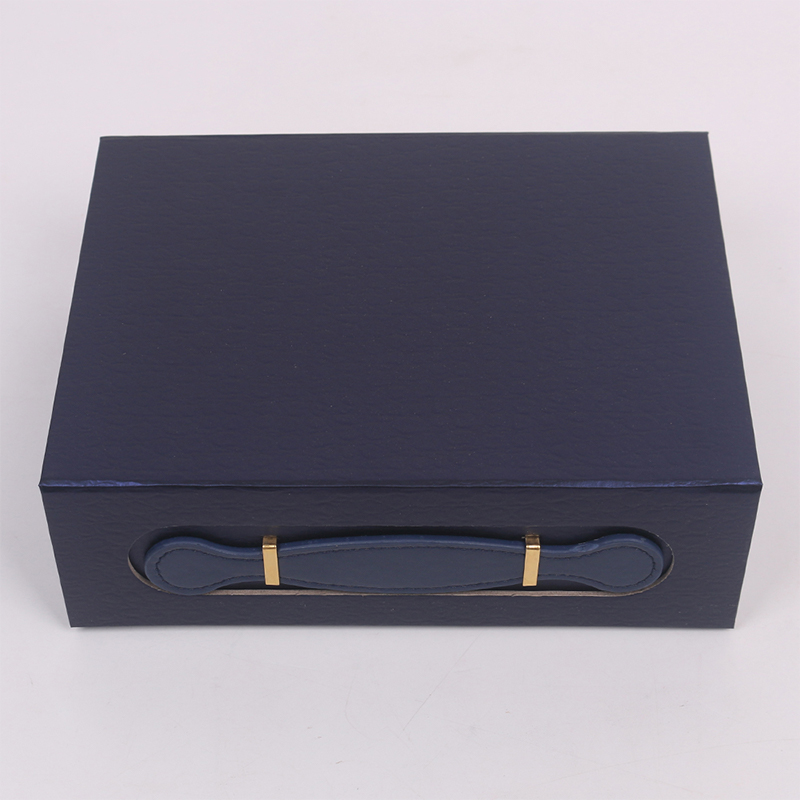
The 1201 gift box is a laminated cardboard packaging product with an art paper-coated cardboard surface. It is designed to provide an attractive and practical presentation for products that require a premium-looking package without the weight or cost associated with rigid plastic, metal, or heavily constructed alternatives.
The box uses recycled cardboard as a primary structural material. This choice helps reduce dependence on newly produced paper fibers and supports packaging strategies that place greater emphasis on material responsibility. The external surface can be produced in CMYK colors, Pantone colors, or custom colors, allowing customers to match the package to a seasonal theme, brand palette, promotional campaign, or event identity.
The surface treatment combines monochrome UV coating with lamination. UV coating can improve visual depth and contribute to resistance against scuffing, abrasion, and light moisture exposure. Lamination adds a smooth outer layer and can improve the perceived rigidity of the package. Together, these processes produce a cleaner and more refined finish than untreated cardboard.
Available dimensions range from approximately 33 × 32.3 × 14 centimeters for the largest listed size to approximately 11 × 10 × 5 centimeters for the smallest listed size. This size range makes the product suitable for different gift categories, from larger seasonal assortments to compact jewelry, confectionery, accessories, stationery, and small personal gifts.
| Product name | 1201 Monochrome UV-Coated Recycled Cardboard Laminated Holiday Gift Box |
| Project number | 1201# |
| Primary material | Recycled cardboard with an art paper-coated surface |
| Surface treatment | Monochrome UV coating and lamination |
| Color options | CMYK, Pantone colors, and custom colors |
| Size range | Approximately 33 × 32.3 × 14 cm to 11 × 10 × 5 cm |
| Main applications | Gift wrapping, storage, gifts, crafts, seasonal packaging, and business gifts |
| Minimum order quantity | 300 pieces |
| Sampling time | 1–3 working days |
| Standard delivery time | 7–45 days or according to customer requirements |
| Design support | In-house design advice and custom design development |
| Design file formats | Artificial Intelligence and CorelDRAW files |
| Production location | Jinhua, Zhejiang, China |
Recycled cardboard is increasingly important in the packaging industry because customers and businesses are paying closer attention to the environmental impact of disposable materials. Gift packaging is often used for a short period, yet it can consume significant resources when produced from materials that are difficult to recycle or recover. Recycled cardboard provides a more responsible foundation for boxes intended for seasonal and promotional use.
Using recycled cardboard does not mean that a gift box must look plain or fragile. With suitable coating, lamination, printing, folding, and quality-control processes, recycled paperboard can achieve a clean appearance and a dependable structure. The 1201 design demonstrates how sustainability and presentation can work together rather than being treated as opposing goals.
The material also supports a more favorable end-of-life pathway than many mixed-material packaging formats. Paper-based packaging is generally easier to sort and recycle when it does not contain excessive plastic components, permanent metal parts, or complicated non-paper inserts. Actual recyclability depends on local recycling systems and the final construction, but a paper-focused structure gives brands a stronger basis for developing responsible packaging programs.
For companies communicating environmental values, the material selection can become part of the product story. A recycled cardboard box can help demonstrate that a business is considering resource use, material efficiency, and packaging waste. This is especially relevant for brands that sell handmade products, natural goods, ethical gifts, stationery, personal-care products, and environmentally conscious merchandise.
The material can also help reduce shipping weight compared with heavier packaging options. Lower package weight may support more efficient handling and storage, although the final logistics impact depends on box size, product weight, packing method, and shipping distance. Because the 1201 box is available in multiple sizes, customers can select a format that reduces unnecessary empty space and avoids oversizing.
Monochrome packaging uses a controlled color direction to create a clear and recognizable appearance. Instead of relying on many colors, complicated illustrations, or large decorative elements, the design can use one dominant color or a carefully coordinated tonal treatment. This approach gives the box a modern and orderly appearance that can work across different product categories.
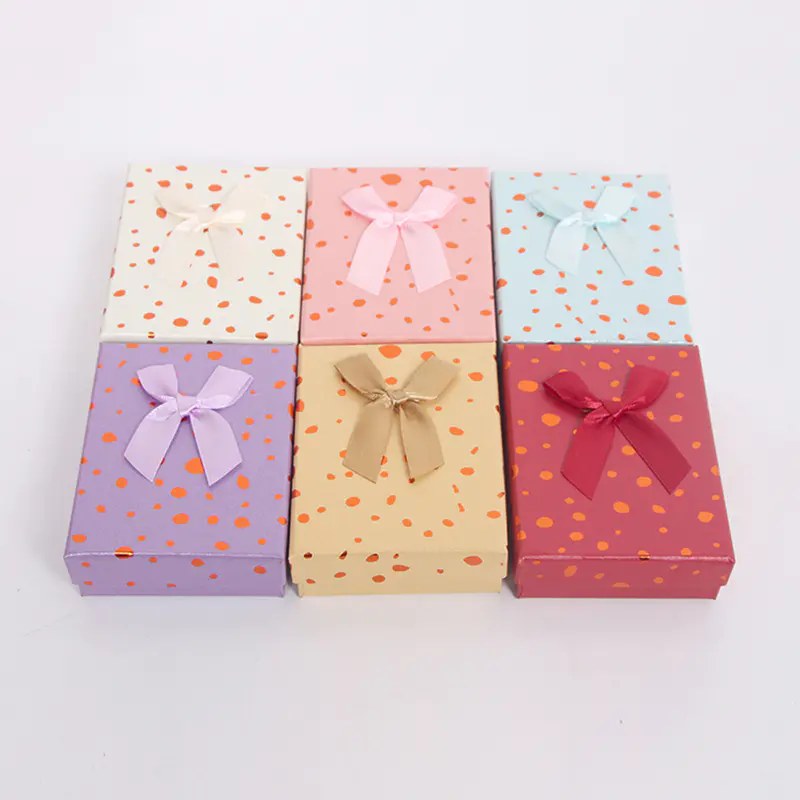
A monochrome box is particularly useful for brands that want a calm, elegant, or premium visual identity. Black, white, ivory, deep red, soft pink, navy, forest green, and other custom tones can be selected according to the occasion and target audience. For Valentine’s Day, a brand may choose romantic red, burgundy, blush, or pink. For Christmas, it may select green, red, white, or metallic-inspired tones. For corporate gifts, a restrained brand color may provide a more professional presentation.
The design is also adaptable because it does not depend entirely on a single holiday. A box originally used for Valentine’s Day can be customized for anniversaries, weddings, birthdays, product launches, customer appreciation programs, or year-round gift collections. This flexibility may help reduce the need for separate packaging inventories for every campaign.
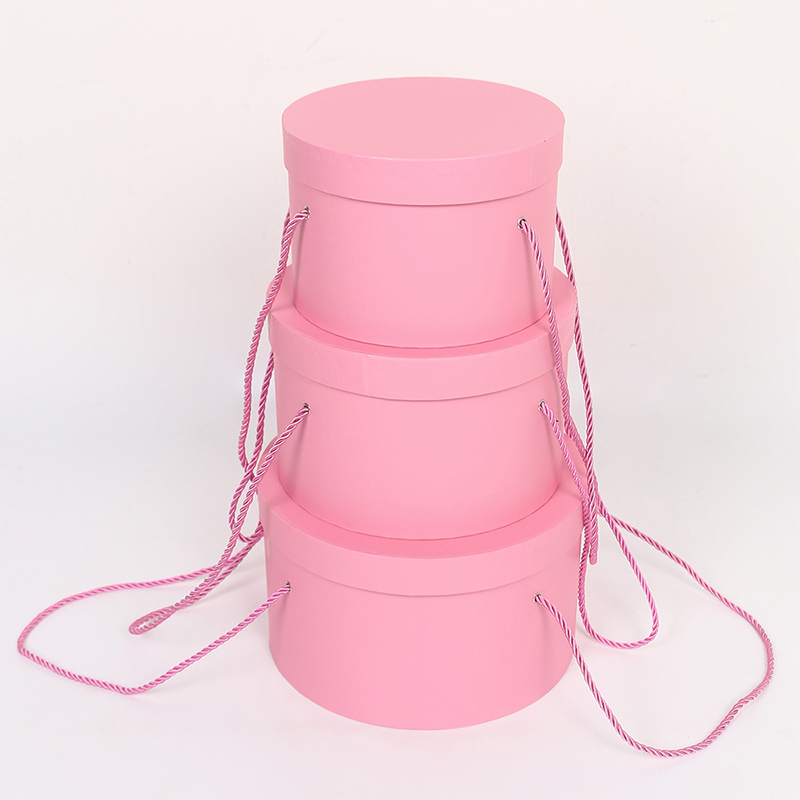
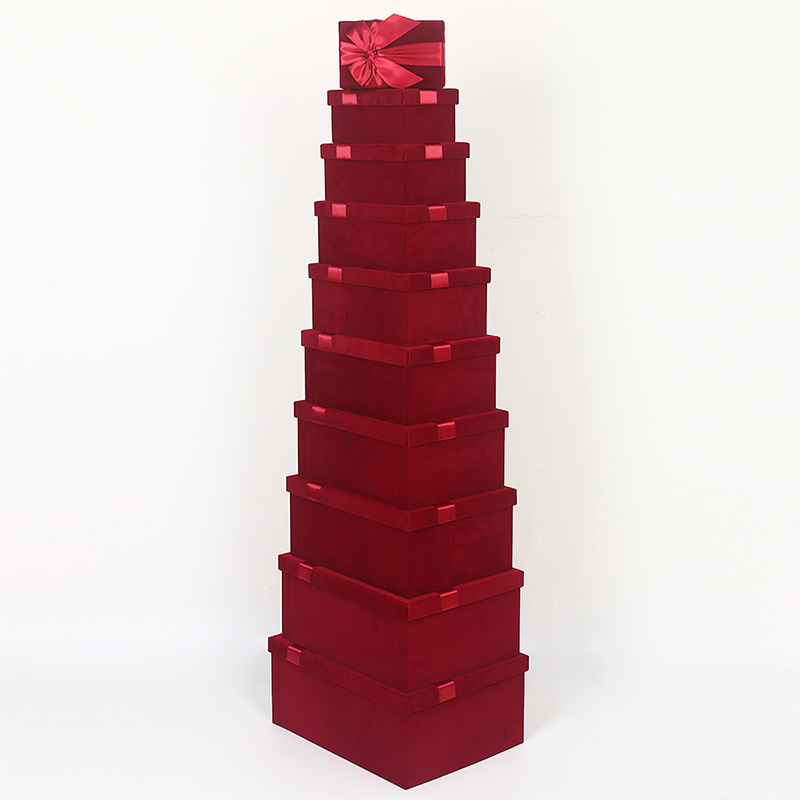
From a retail perspective, a simple color system can improve visual consistency across a product range. Several box sizes can be produced in the same color and finish, allowing small, medium, and large packages to appear as one coordinated collection. This can strengthen shelf presentation and make a brand easier to recognize in online product photographs and physical retail displays.
The smooth laminated surface also provides a suitable background for logos, typography, symbols, and other printed elements. A brand can choose a minimalist design with a small logo or create a more expressive pattern while retaining the overall monochrome character. The packaging can therefore be restrained or decorative according to the customer’s marketing objectives.
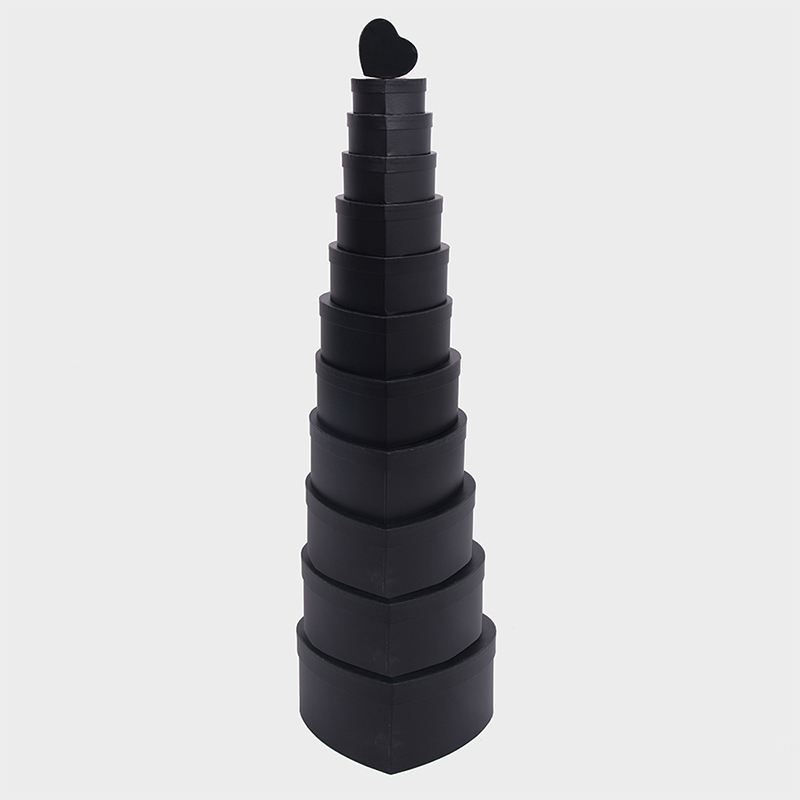
1201 Monochrome UV Coated Recycled Cardboard Laminated Holiday Gift Box
Surface finishing is one of the most important factors distinguishing an ordinary paper box from a more refined gift package. The 1201 model uses UV coating and lamination to improve both appearance and practical performance.
UV coating is cured using ultraviolet light to create a hardened surface layer. On gift packaging, this finish can increase surface smoothness and visual intensity. It may also improve resistance to everyday scuffing and abrasion that can occur during packing, transportation, retail handling, and consumer use.
The coating can make printed colors appear more vivid and defined. When used on a monochrome design, it can create a strong, even tone with a clean professional appearance. Depending on the selected finish and artwork, UV treatment can also create subtle differences between coated and uncoated areas, although the specific effect should be confirmed during sampling.
UV coating can offer some resistance to light moisture and surface marks. It should not be treated as a waterproof barrier, particularly when the box is exposed to prolonged moisture, condensation, or direct contact with liquid. However, for ordinary handling and short-term protection, the coating can help the package remain presentable for longer than untreated paperboard.
Lamination adds a thin protective layer to the printed cardboard surface. It can make the exterior feel smoother and more substantial while helping protect the printed surface from rubbing and minor handling damage. Lamination also contributes to the perceived rigidity of the box, which is important when the package is used to present a valuable or carefully made gift.
A laminated surface can improve the consistency of the box during transportation. Edges and panels may be less vulnerable to superficial marks than untreated paperboard. The final level of protection depends on the cardboard thickness, box construction, folding method, product weight, and packing conditions, but lamination is a valuable part of a multi-stage packaging solution.
When UV coating and lamination are used together, the package benefits from a layered approach to surface protection. The cardboard provides the basic structure, the printed art paper creates the visual foundation, lamination improves smoothness and surface resilience, and UV finishing contributes to a refined appearance and additional resistance to handling wear.
This combined process helps the product compete with packaging formats that appear more expensive but may be heavier, less sustainable, or less convenient to customize. It offers a practical middle ground between basic folding cartons and highly engineered rigid boxes.
Many low-cost gift boxes use thin untreated paperboard, limited printing methods, or generic dimensions. These products may be adequate for short-term use, but they can show creases, scratches, color inconsistency, or structural weakness during storage and transport. The 1201 box is differentiated by its emphasis on material quality, surface finishing, design flexibility, and production support.
The laminated and UV-coated surface gives the box a cleaner and more polished appearance than many uncoated paper packages. This makes it appropriate for products that depend on perceived value, including jewelry, fashion accessories, cosmetics, confectionery, personal gifts, corporate presents, and premium stationery.
Gift boxes often pass through several stages before reaching the end user. They may be stacked in a warehouse, placed into cartons, transported over long distances, unpacked by a distributor, displayed in a store, and handled by a shopper. Surface finishing helps the box withstand ordinary contact during these stages while maintaining a more attractive appearance.
A recycled cardboard structure provides a sustainability advantage over packaging made entirely from virgin material or non-recyclable plastic. While no packaging decision should be judged solely on one material characteristic, recycled paperboard can support broader goals related to responsible sourcing and reduced material impact.
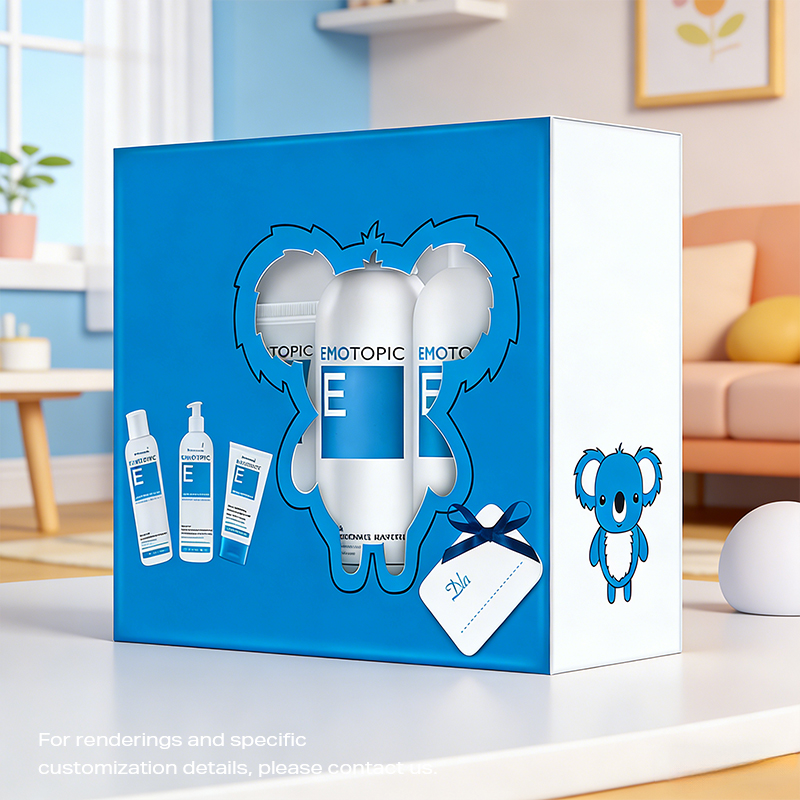
Generic boxes limit the ability of a brand to create a unique presentation. The 1201 product supports CMYK, Pantone, and custom colors, as well as customized size and pattern options. This gives customers more control over the final product and makes the box suitable for different industries and markets.
Some holiday boxes can only be used for one event because the graphics are highly specific. The monochrome design of this model offers greater flexibility. The same basic format can be adapted for Valentine’s Day, Christmas, New Year’s Day, birthdays, business gifts, wedding favors, and everyday premium packaging.
Paperboard is relatively light and can be stored efficiently compared with heavy rigid packaging materials. When box sizes are matched correctly to the contents, customers may reduce unused space and improve warehouse organization. The exact shipping efficiency depends on the packaging configuration and whether the boxes are supplied folded, assembled, or packed in sets.
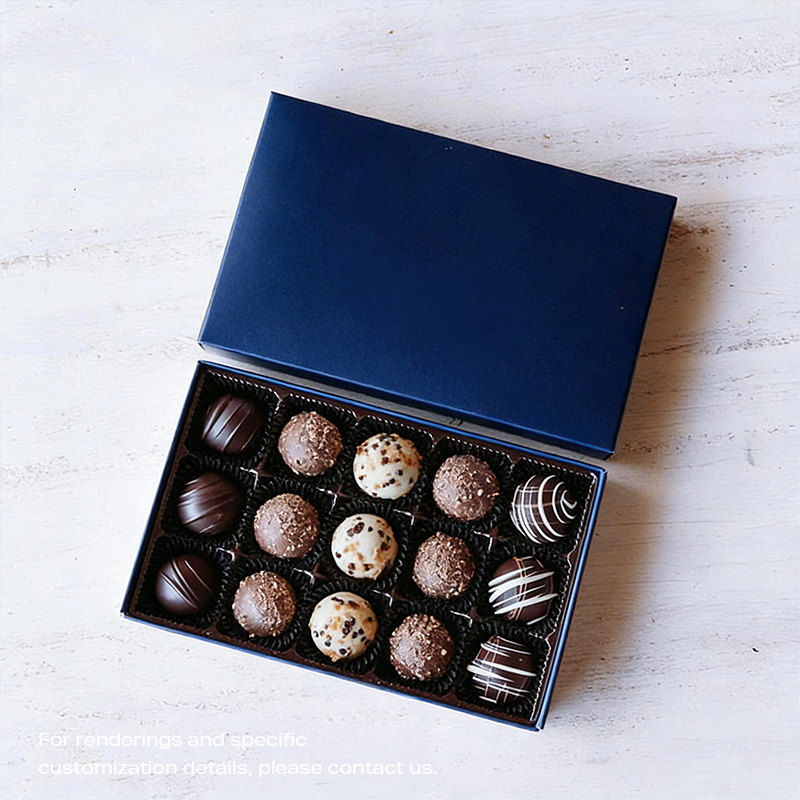
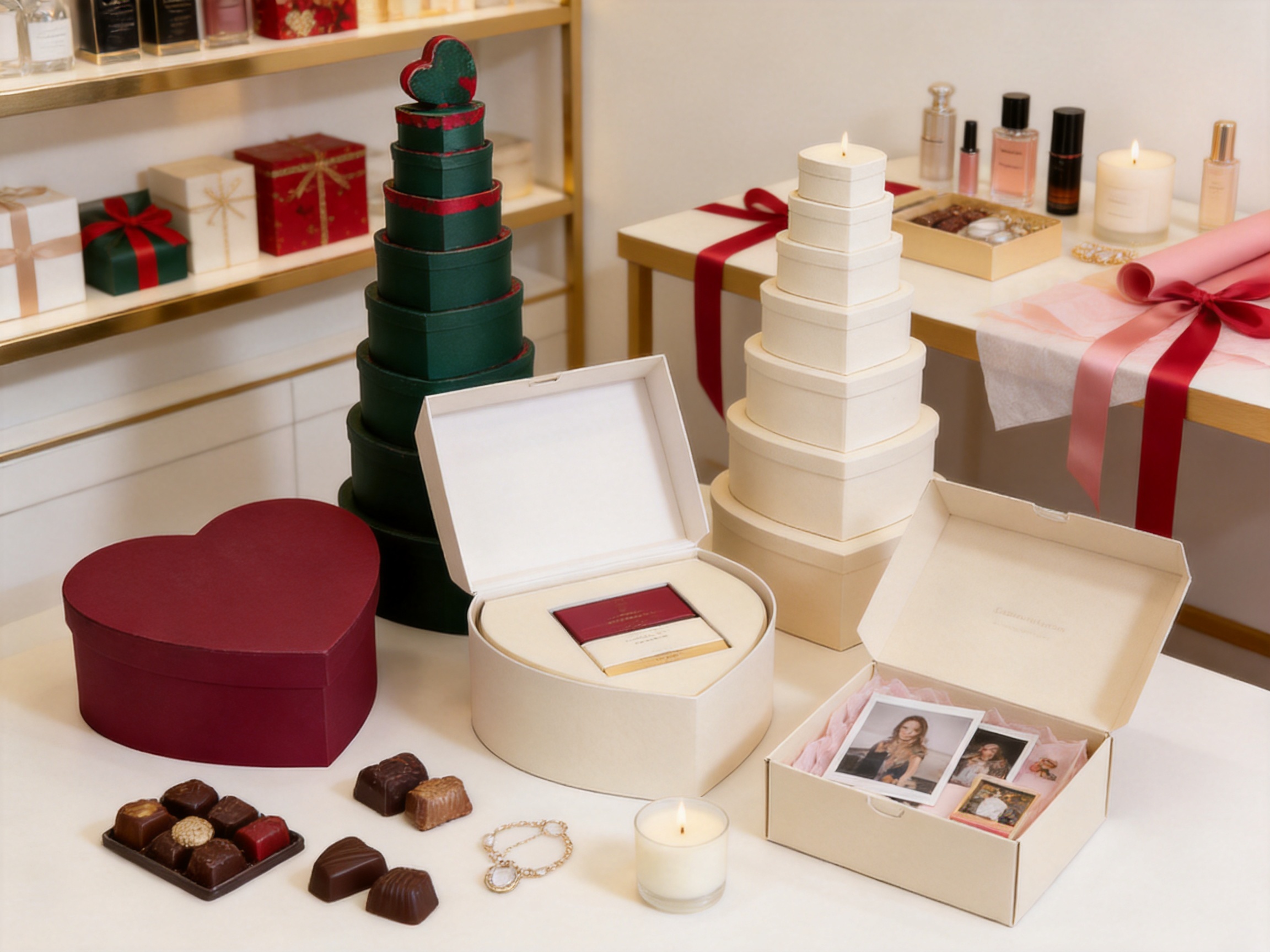
The product is listed as a Valentine’s Day gift box and is especially suitable for romantic gift collections. It can package chocolates, candles, small accessories, jewelry, beauty products, handwritten notes, and other tokens of affection. A red, pink, burgundy, or customized monochrome finish can reinforce the seasonal message without requiring a complicated printed illustration.
Retailers can use multiple dimensions to build coordinated Valentine’s Day collections. Smaller sizes may be used for individual items, while larger formats can hold gift combinations. Adding a paper insert, ribbon, card, or custom label can further enhance the unboxing experience, subject to the customer’s design and production requirements.
Holiday packaging is often needed in large quantities and within strict delivery windows. The 1201 box can be adapted for Christmas and New Year collections through color selection, seasonal typography, custom patterns, and coordinated accessories. A monochrome green, red, gold-inspired, silver-inspired, or white design can support different retail styles.
Because the box is not restricted to a single printed character or illustration, it can be reused across annual campaigns with updated labels or sleeves. This may help brands maintain a consistent basic packaging format while refreshing the artwork for each season.
Corporate gifts require packaging that appears professional and reflects the organization’s standards. A customized monochrome box can present employee gifts, customer appreciation items, event merchandise, promotional products, and business-to-business packages in a coordinated way.
Companies may choose a brand color, add a restrained logo, and select an appropriate size for the contents. The recycled material can also support corporate sustainability communication, particularly when the packaging is part of an environmental or responsible procurement initiative.
The product category includes stationery storage boxes and other paper products, making this type of package suitable for notebooks, pens, art supplies, greeting cards, craft tools, and small creative products. The surface provides a useful area for color coding, product information, logos, and collection names.
The combination of a smooth surface and durable cardboard construction makes the box suitable for storage after the initial gift-giving event. Consumers may reuse it for photographs, letters, accessories, cards, small collectibles, or seasonal decorations. A reusable package can remain visible in the home for longer than disposable wrapping, extending the value of the original design.
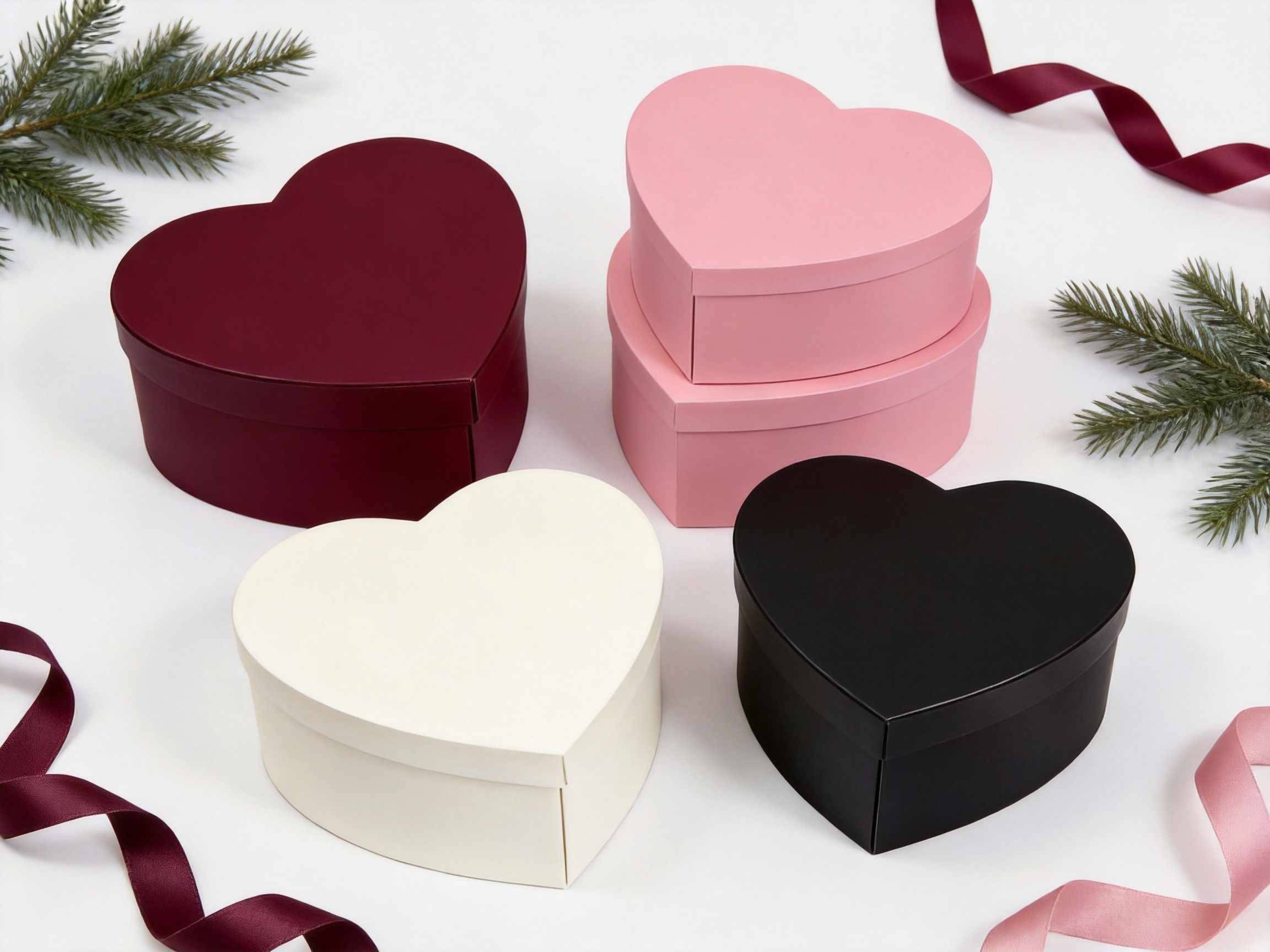
Customization is essential when packaging must perform a marketing role as well as a protective role. Zhejiang Shihao Gift Packaging Co., Ltd. has an in-house design team that can provide professional advice and support customer-developed artwork. This is useful for customers who know their target market but need assistance converting an idea into a manufacturable box.
Design support may involve selecting suitable dimensions, adjusting artwork to panel layouts, checking folding and glue areas, choosing colors, and considering how the printed design will appear after lamination and UV treatment. Early technical review can help reduce production errors and ensure that the artwork is suitable for the chosen material and finishing process.
Customers may submit design files in Artificial Intelligence or CorelDRAW formats. The design team can work with supplied files or help develop a new concept. Custom patterns, logos, color systems, and seasonal artwork can be incorporated according to order requirements.
Size customization is particularly important because packaging that is too large may waste material and shipping space, while packaging that is too small may damage the product or create an unattractive presentation. A correctly sized box can improve internal stability, reduce the need for excessive filler, and make the final package more efficient.
Customers should provide product dimensions, weight, fragility, arrangement, and intended presentation style during the design stage. If the product includes multiple components, the box may require an insert or compartment structure. These details should be evaluated before mass production to ensure that the packaging solution is practical.
The quality of a gift box depends not only on the chosen material but also on the consistency of the manufacturing process. Zhejiang Shihao Gift Packaging Co., Ltd. has more than 15 years of industry experience and focuses on the production, research, development, and sales of paper gift packaging boxes.
The company’s facility covers approximately 20,000 square meters and supports a workforce of around 300 employees. This scale provides resources for production planning, design development, quality management, order coordination, and export preparation. The reported average daily capacity of approximately 5,000 sets of gift boxes allows the company to support both developing brands and larger seasonal programs.
Its product range includes kits, storage boxes, folding boxes, jewelry boxes, and gift boxes. This broader product experience is valuable because different box types require different structural approaches, surface treatments, assembly methods, and packing considerations. Experience across categories can help the manufacturer recommend a suitable format rather than forcing every project into a single standard design.
The company also updates dozens of products weekly, indicating an active approach to product development. For buyers, this can provide access to new structures, finishes, and presentation ideas. It may also help brands respond to changing retail trends and seasonal demands.
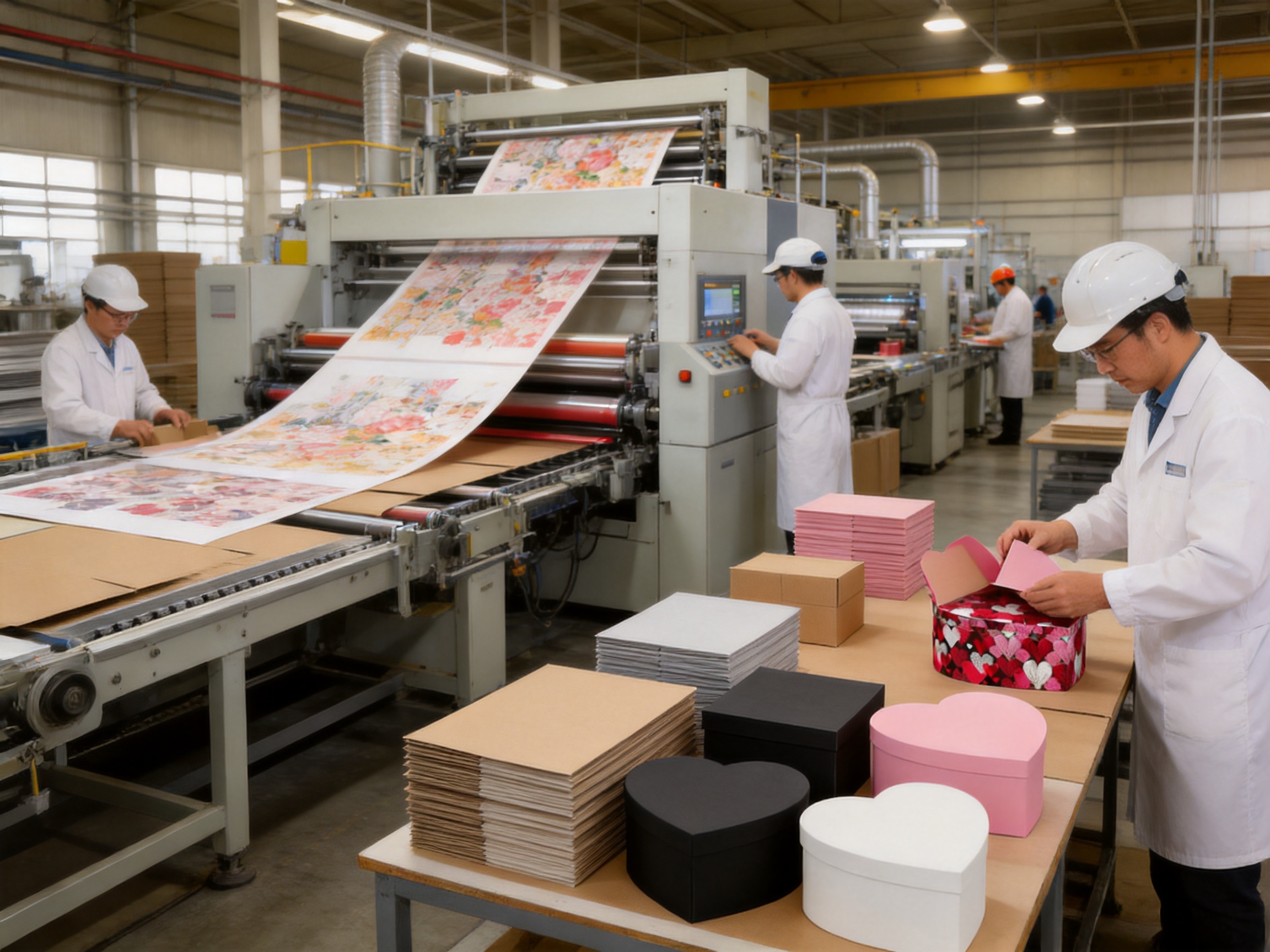
Production begins with the selection and preparation of paperboard, coated paper, printing materials, and finishing components. Material specifications should be matched to the box size, intended contents, desired rigidity, and packaging environment. Recycled cardboard forms the structural base, while the art paper-coated exterior provides a smooth surface for printing and finishing.
Printing may use CMYK, Pantone, or custom color specifications. CMYK is suitable for many full-color designs, while Pantone references can help achieve more controlled brand colors. Custom color requirements should be reviewed through samples because the final appearance may be influenced by the paper surface, ink, lamination, lighting, and UV finish.
Accurate color management is especially important for monochrome packaging. When a design uses a single dominant tone, small variations may be more noticeable across panels or production batches. Professional prepress review and sample approval help establish an agreed visual standard before mass production.
After printing, the paper surface can be laminated and treated with UV coating according to the selected specification. These processes must be applied consistently to avoid uneven gloss, bubbles, wrinkles, poor adhesion, or surface defects. Proper curing and handling are important because a finish that has not stabilized may be vulnerable to marks during subsequent converting.
The printed and finished sheets are converted into box components through die-cutting, creasing, folding, and gluing. Accurate die-cutting ensures that panels align correctly and that the box maintains its intended shape. Crease quality is also important because poorly formed folds can lead to cracking, misalignment, or a weak finished appearance.
Depending on the selected structure, boxes may be supplied flat or assembled. During assembly, workers and quality-control personnel check the shape, edge alignment, surface finish, color, adhesive bonding, and overall appearance. Inspection helps identify defects before the product is packed for shipment.
Finished boxes are packed into cartons to protect them during transportation. The listed packaging information includes configurations of 10 pieces per set and four sets per carton, with carton dimensions noted as approximately 66 × 34 × 30 centimeters or 66 × 34 × 45 centimeters depending on the configuration. The supplied information lists approximate carton volumes of 0.066 and 0.1 cubic meters. Final packing details should be confirmed for the selected size, assembly method, and order quantity.
International packaging buyers require reliable quality and responsible business practices. Zhejiang Shihao Gift Packaging Co., Ltd. has passed BSCI and FSC certifications according to the supplied company information. These certifications can support buyer confidence in areas such as social compliance and responsible forest-related sourcing, although customers should request current documentation and confirm the scope of each certification for their specific project.
Quality management should cover the full production chain rather than focusing only on the final visual inspection. Important checkpoints include raw material condition, color accuracy, artwork alignment, coating consistency, lamination adhesion, cutting accuracy, folding performance, glue strength, box dimensions, and carton packing.
Sampling is an important part of this process. The listed sampling time is 1–3 working days, subject to project details and material availability. A physical or digital sample enables customers to review the size, color, structure, surface effect, and product fit before approving mass production.
For seasonal orders, buyers should allow sufficient time for design confirmation, sampling, production, inspection, and transportation. The stated delivery time is 7–45 days or according to customer requirements. The actual schedule may depend on order quantity, customization complexity, peak-season capacity, shipping arrangements, and approval speed.
Holiday packaging programs require early preparation because demand often rises sharply before major events. Valentine’s Day, Christmas, and New Year campaigns may involve tight retail deadlines, promotional launches, and coordinated product shipments. Buyers should begin by estimating sales volume, selecting box sizes, confirming artwork, and identifying the required arrival date.
The minimum order quantity is listed as 300 pieces, which creates an accessible starting point for small and medium-sized brands. Larger companies can combine several sizes or colors into a broader packaging program, subject to the supplier’s production conditions and quotation.
Customers should also consider whether the boxes will be shipped flat or assembled. Flat-packed packaging may require less storage volume, while assembled boxes can save time during fulfillment. The best option depends on warehouse space, labor costs, shipping conditions, and the design of the box.
It is advisable to order samples before confirming a large quantity. Sample review should examine the fit of the product, the appearance under actual retail lighting, the durability of the surface, the accuracy of the printed color, and the ease of opening and closing the package.
Buyers should also define acceptable tolerances for color, dimensions, printing position, surface marks, and assembly. Clear specifications improve communication and make quality inspection more objective.
Gift box logistics involve more than the transportation of the finished product. The package must also be protected from compression, impact, moisture, and abrasion during handling. Carton dimensions, internal arrangement, stacking method, and palletization can all influence the condition of the boxes when they arrive.
The 1201 model uses lightweight paper-based materials, which may provide an advantage in handling and freight planning compared with heavier packaging formats. However, customers should calculate the total shipment based on the selected dimensions, number of pieces, carton configuration, and destination.
The listed port is Ningbo, subject to customer request. Buyers should confirm the final shipping terms, export documentation, carton markings, loading plan, and transportation method during order negotiations. Payment is generally handled through T/T, although other methods may be discussed with the supplier.
Because the company exports to Europe, the United States, the Middle East, and other regions, it has experience serving international customers. Nevertheless, every destination has its own requirements regarding labeling, materials, documentation, product safety, packaging waste, and import procedures. Buyers remain responsible for confirming the regulations that apply to their market.
Packaging is often the first physical contact a customer has with a product. A well-finished gift box can establish expectations before the contents are seen. The smooth surface, coordinated monochrome design, and carefully selected size can communicate order, quality, and attention to detail.
For e-commerce brands, packaging also influences the unboxing experience. Customers may photograph the package, share it on social media, or reuse it for storage. A visually consistent box can therefore create additional exposure after delivery. This is particularly valuable for lifestyle, beauty, handmade, fashion, and gift-oriented brands.
The box can also support a brand’s sustainability message. Recycled cardboard, responsible design choices, and reduced visual excess may appeal to customers who prefer products with a more considered environmental profile. The claim should always be communicated accurately and supported by appropriate documentation, but the package provides a visible platform for responsible brand storytelling.
Customization further increases brand value. A generic package may protect a product, but a customized package can distinguish it. A logo, signature color, seasonal message, or recognizable pattern helps customers associate the box with a specific business. Consistent use across different product lines can create a stronger overall brand system.
Monochrome design is strongest when the chosen color supports the intended emotional response. Soft colors may communicate delicacy and warmth, while deep colors may communicate luxury and sophistication. Bright colors can attract attention in seasonal retail displays, while neutral tones may support year-round use.
A restrained logo placement can make the box appear more premium. Excessive text or crowded graphics may weaken the clean visual effect. Designers should allow sufficient negative space around the logo and key information, particularly when working with a single-color or tonal design.
The outside of the box should attract attention, but the interior should also be considered. A coordinated interior color, printed message, tissue paper, insert, or product card can extend the visual experience. These additions should be evaluated for compatibility with the box structure and the intended budget.
The selected dimensions should provide enough room for the product and any protective or decorative components without creating unnecessary movement. If the product is fragile, an insert or cushioning structure may be needed. If the product is soft or flexible, the box may require a different internal arrangement to maintain a neat appearance.
Digital artwork cannot fully show how a finished UV-coated and laminated surface will look or feel. A sample gives the buyer an opportunity to review color, gloss, texture, folding, and product fit. It is an essential step for premium or highly customized orders.
Businesses frequently need to balance environmental objectives with commercial realities. Packaging must be attractive enough to support sales, strong enough to protect the contents, affordable enough to meet margin requirements, and practical enough to store and ship. The 1201 gift box addresses this balance through a paper-based structure enhanced with functional finishing.
Recycled cardboard supports a material-reduction strategy, while the lightweight format can contribute to efficient handling. UV coating and lamination increase the usable life and presentation quality of the package, helping prevent it from appearing damaged after ordinary transport. Custom sizing can reduce unnecessary material and empty volume when properly engineered.
There is no single packaging solution that is perfect for every application. Buyers should consider the full life cycle of the box, including material sourcing, production energy, transportation, consumer use, and end-of-life disposal. They should also evaluate whether the box can be reused and whether local recycling systems can process its specific combination of paperboard and finishing layers.
The manufacturer’s FSC and BSCI certifications provide useful points for responsible sourcing and social compliance discussions. Customers should request relevant certificates, audit information, and material documentation when these records are required by their procurement policies or customers.
Working with an experienced manufacturer can simplify the process from initial concept to final delivery. A factory with design, production, finishing, inspection, and export capabilities can coordinate more stages internally. This may reduce communication gaps between separate suppliers and help maintain consistency across materials and processes.
Zhejiang Shihao Gift Packaging Co., Ltd. combines manufacturing experience with an in-house design team. Its product range and international customer base provide experience with different packaging applications and market expectations. The company’s reported production capacity is also suitable for customers planning larger seasonal orders.
Factory-direct cooperation may provide more control over customization than purchasing generic stock packaging through multiple intermediaries. Customers can discuss dimensions, materials, colors, printing, surface finishing, packaging methods, and delivery requirements directly with the production source.
The company’s stated business philosophy emphasizes innovation, quality, practicality, and benefits. These principles are relevant to buyers seeking packaging that is not only visually attractive but also manufacturable, durable, and commercially viable.
The first step is to define the product that will be placed inside the box. Provide its length, width, height, weight, shape, fragility, and any additional components. This information allows the design team to recommend a suitable size and internal structure.
The second step is to define the visual direction. Customers should identify the preferred color, logo, artwork, finish, seasonal message, and intended customer group. Pantone references are useful when color accuracy is important, while physical samples may be necessary for final approval.
The third step is to review the structural design. Confirm the opening method, folding lines, closure style, internal space, and assembly requirements. If the box is intended for retail display, also consider how it will be stacked, photographed, and presented.
The fourth step is sampling. Review the sample carefully and communicate any required changes before mass production. The sample should be checked against the actual product rather than evaluated only as an empty box.
The fifth step is production confirmation. Agree on quantity, packaging configuration, delivery schedule, payment terms, inspection requirements, and shipping arrangements. Written confirmation helps prevent misunderstandings.
The final step is shipment and post-delivery review. Inspect the cartons when they arrive, record any issues, and evaluate the package during actual fulfillment. Feedback from customers and warehouse staff can help improve future orders.
The box uses recycled cardboard as its primary structural material and features an art paper-coated cardboard surface. The exact board specification should be confirmed according to the selected size, structure, and customer requirements.
Yes. The product is listed under Valentine’s Day Gift Boxes and can be customized with suitable colors, patterns, logos, and messages. It can package chocolates, jewelry, cosmetics, accessories, stationery, and other Valentine’s Day gifts.
Yes. Its monochrome and customizable design can be adapted for Christmas, New Year’s Day, birthdays, anniversaries, weddings, corporate events, and general gift packaging.
Color options include CMYK, Pantone colors, and custom colors. Final color results should be reviewed through a sample because paper, ink, lamination, lighting, and UV coating can influence appearance.
Yes. Customized size and pattern options are available. Buyers should provide the dimensions and weight of the intended product so the factory can recommend an appropriate box size.
The listed dimensions range from approximately 33 × 32.3 × 14 centimeters to approximately 11 × 10 × 5 centimeters. Specific available sizes and tolerances should be confirmed for the final order.
UV coating improves surface smoothness and visual impact and can contribute to resistance against ordinary abrasion and minor surface moisture. It is not a substitute for waterproof packaging in prolonged or severe wet conditions.
Lamination creates a smoother and more protective outer surface. It can improve the perceived rigidity of the box and help protect the printed surface during handling and transportation.
The listed minimum order quantity is 300 pieces. The final order arrangement may depend on the selected dimensions, colors, structure, and customization requirements.
The listed sampling time is 1–3 working days. Actual timing may depend on artwork complexity, material availability, sample type, and project confirmation.
The listed delivery time is 7–45 days or according to customer requirements. The schedule should be confirmed after reviewing quantity, customization, seasonality, and shipping arrangements.
Yes. The company has an in-house design team that offers professional advice and supports custom designs. Design files can be supplied in Artificial Intelligence or CorelDRAW formats.
Yes. The company is an export-oriented manufacturer whose products are exported to Europe, the United States, the Middle East, and other regions. Buyers should confirm destination-specific documentation and compliance requirements.
The supplied company information states that Zhejiang Shihao Gift Packaging Co., Ltd. has passed BSCI and FSC certifications. Buyers should request current certificates and verify their applicable scope before using certification claims in marketing materials.
Yes. Its cardboard structure and finished surface make it suitable for secondary storage of small items such as letters, photographs, accessories, stationery, or keepsakes. Reuse depends on how the box is handled and the weight of the stored contents.
No paperboard gift box should automatically be described as fully waterproof. UV coating and lamination can improve resistance to minor surface moisture, but the box should be protected from prolonged exposure to water, condensation, and high humidity.
The manufacturer is located at No. 15, Xiayang Road, Huangzhai Town, Jinhua, Zhejiang, China. The listed port is Ningbo, subject to customer request.
The 1201 Monochrome UV-Coated Recycled Cardboard Laminated Holiday Gift Box offers a practical combination of sustainability, modern appearance, durability, and customization. Its recycled cardboard base supports responsible material planning, while the art paper surface, lamination, and UV coating create a more refined and resilient presentation.
Compared with ordinary untreated gift boxes, the product provides stronger visual appeal, improved handling resistance, greater color flexibility, and broader seasonal usability. Compared with heavier rigid packaging, it offers a lighter paper-based alternative that can be easier to store, transport, and customize.
Its value is strengthened by the manufacturing capabilities of Zhejiang Shihao Gift Packaging Co., Ltd. The company provides in-house design assistance, custom production, professional finishing, quality-control support, international export experience, and a reported daily capacity of approximately 5,000 sets. With more than 15 years of industry experience, a 20,000-square-meter facility, approximately 300 employees, and BSCI and FSC certifications, the manufacturer is positioned to support both small customized projects and larger seasonal programs.
For buyers, the best results will come from early planning, accurate product measurements, clear artwork, sample approval, and detailed communication about packaging and delivery. When these steps are properly managed, the 1201 box can become more than a container. It can protect the product, strengthen the gift-giving experience, support a sustainability message, and create a consistent visual connection between the brand and its customers.
1. Product specification sheet for the 1201 Monochrome UV-Coated Recycled Cardboard Laminated Holiday Gift Box.
2. Company information supplied by Zhejiang Shihao Gift Packaging Co., Ltd., including manufacturing capacity, facility size, export markets, product categories, and design services.
3. General principles of paperboard packaging design, structural protection, printing, lamination, and surface finishing.
4. General guidance on recycled paperboard, responsible packaging material selection, and packaging life-cycle considerations.
5. General guidance on BSCI social compliance and FSC responsible forest-related sourcing certification.
Recommended Products

Contact Us

No. 15, Xiayang Road, Huangzhai Town, Jinhua, Zhejiang, China

(+86) 579-84230069

(+86) 13085675766


Products

Gift Box Packaging Manufacturer
 English
 Français
 Español
 عربى