2026-09-25
Gift packaging has evolved from a temporary covering into an important part of the product experience. Customers increasingly judge a gift not only by what is inside, but also by how the item is presented, opened, stored, and remembered. A well-designed package can communicate quality before the recipient sees the product. It can also extend the useful life of the purchase by becoming a storage container, decorative accessory, or keepsake box.
The 813 Cylindrical Velvet Fabric Storage Gift Box responds to these changing expectations with a combination of distinctive geometry, tactile materials, practical storage capacity, and flexible customization. Its cylindrical profile offers a visual alternative to conventional rectangular gift boxes, while its soft velvet fabric exterior creates a warm, refined, and premium impression. Beneath the decorative surface, a rigid paperboard structure provides the support required for presentation, transportation, and repeated use.
This product is suitable for gift packaging, storage, gifts, crafts, retail presentation, seasonal collections, promotional programs, and customized brand packaging. Available in several sizes and a broad range of colors, it can be adapted to different products, target markets, and occasions. Its reusable nature further strengthens its value, helping businesses offer packaging that is attractive at the point of sale and useful after the gift has been opened.
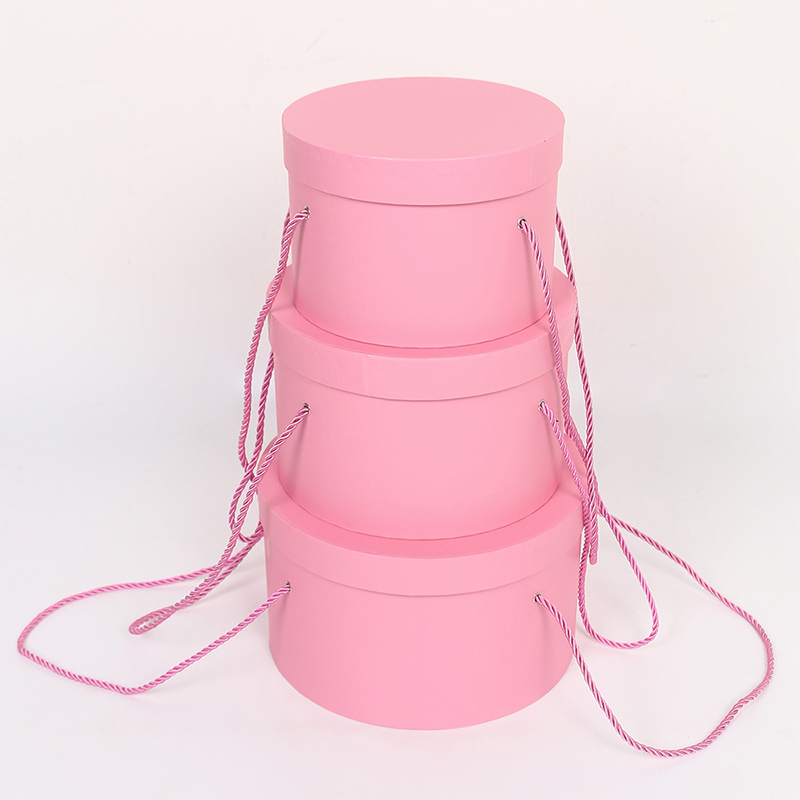
The 813 Cylindrical Velvet Fabric Storage Gift Box is a coordinated set of cylindrical containers designed to combine decorative presentation with everyday functionality. The standard configuration includes three pieces per set, allowing retailers and brands to present a graduated collection or offer multiple packaging options in one package.
The cylindrical form is one of the product’s most visible advantages. Unlike a conventional square or rectangular box, a round package creates a softer visual impression and immediately distinguishes itself on shelves, display tables, and online product photography. It is especially appropriate for products that benefit from a sense of elegance, celebration, softness, or craftsmanship.
The structure also supports efficient stacking. Cylindrical boxes can be arranged vertically or grouped in coordinated sets, helping retailers create a more interesting display without requiring complicated fixtures. Their rounded form is convenient to carry and can be used for products whose shape, presentation, or brand story does not naturally fit a standard rectangular package.
The product surface is described as velvet fabric, while the specification identifies an art paper-coated cardboard surface as the structural and finishing material. In practical production terms, this indicates a rigid cardboard or paperboard body combined with an outer decorative treatment designed to provide a velvet-like tactile appearance. Final surface construction, lining, edge treatment, and color should be confirmed during the sampling stage according to the buyer’s intended application.
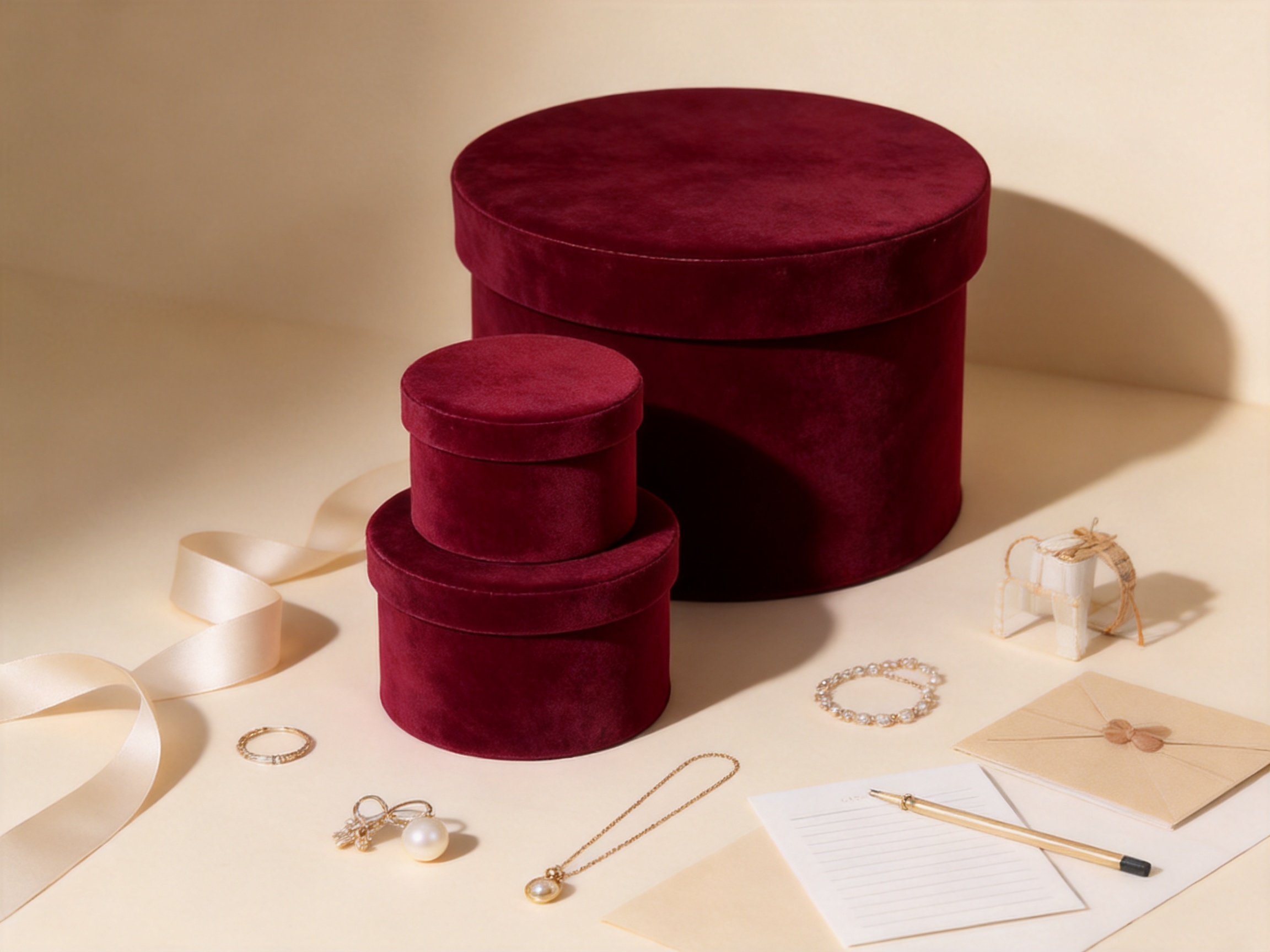
The velvet exterior contributes more than visual decoration. Its soft touch gives the package a high-end sensory quality, making the act of holding and opening the box more memorable. This tactile effect can be particularly valuable for jewelry, cosmetics, accessories, crafts, holiday gifts, hospitality items, and premium promotional products.
| Product model | 813# |
| Product type | Cylindrical velvet fabric storage gift box |
| Material specification | Art paper-coated cardboard structure with velvet fabric finish |
| Available colors | CMYK, Pantone colors, and custom colors |
| Available dimensions | 3#: 13.5 × 13.5 cm; 2#: 16 × 15 cm; 1#: 18 × 17 cm |
| Standard set configuration | 3 pieces per set |
| Carton packing | 24 sets per carton |
| Minimum order quantity | 300 sets |
| Typical delivery time | 7–45 days or according to customer requirements |
| Applications | Gift packaging, storage, gifts, crafts, retail presentation, and promotional packaging |
| Production support | In-house design team and custom design service |
The dimensions represent three coordinated sizes: 13.5 by 13.5 centimeters, 16 by 15 centimeters, and 18 by 17 centimeters. Because the listed dimensions do not specify every internal measurement, lid clearance, wall thickness, or usable interior height, buyers should request a technical drawing or physical sample before finalizing a product fit. This is especially important when packaging fragile, irregularly shaped, or high-value goods.
The three-size arrangement supports visual hierarchy. The largest box can hold a primary gift, the medium size can contain a related accessory, and the smaller box can be used for add-ons, samples, jewelry, notes, or decorative details. A coordinated set may also be used as a display arrangement, with the boxes nested, stacked, or positioned as a group.
Many gift boxes rely on familiar square and rectangular formats. These shapes are efficient and widely used, but they can make products look similar when placed next to competing items. The cylindrical design of the 813 model creates immediate differentiation without requiring complicated structural decoration.
A cylindrical box breaks up the straight lines of traditional retail displays. Its curved profile attracts attention from several viewing angles and can make a collection look more dynamic. For brands selling in crowded categories, this visual difference may help a product become easier to recognize and remember.
The rounded silhouette is also advantageous in photography. Product images can emphasize the box’s contours, layered sizes, fabric texture, and color coordination. When presented as a set, the three sizes provide opportunities for composition, depth, and storytelling in catalogs, online stores, social media content, and seasonal marketing campaigns.
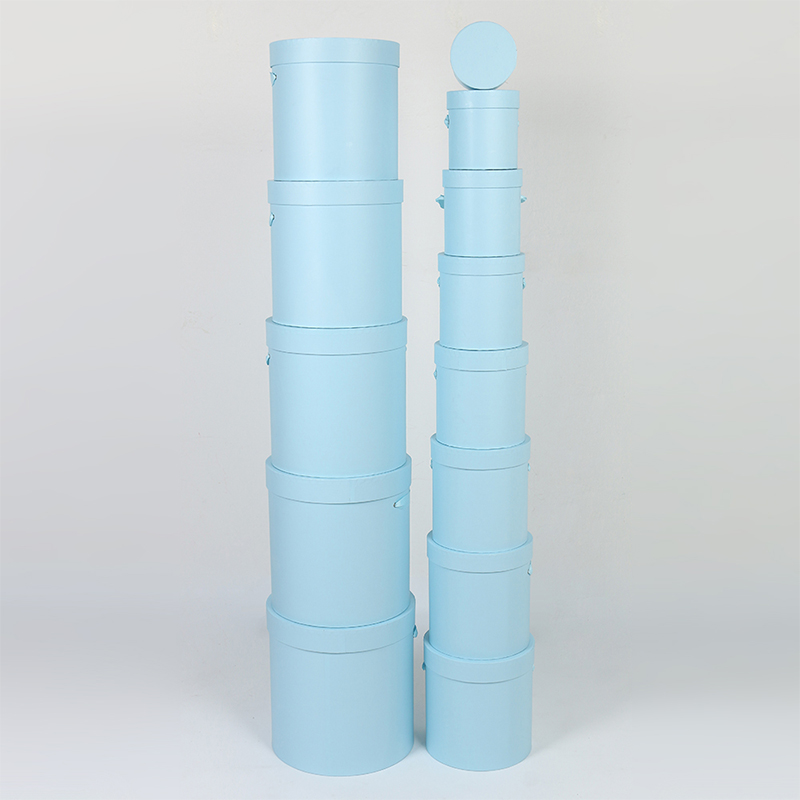
The cylindrical structure is well suited to vertical stacking. Retailers can arrange boxes in a tower, a tiered group, or a mixed display with other decorative packaging. This can help make better use of limited counter or shelf space, especially in boutiques, gift shops, hotels, craft stores, and temporary event displays.
Although packaging efficiency depends on the exact diameter, height, and carton configuration, the product is designed with storage and transport practicality in mind. The supplied carton configuration of 24 sets per carton and the stated carton dimensions of approximately 74 by 38 by 55 centimeters provide a basis for logistics planning. Buyers should verify final packing details after the design, surface material, and accessory configuration have been confirmed.
Round containers can be suitable for products that feel less natural in a rectangular box. Examples include scarves, candles, handmade crafts, decorative objects, soft accessories, gift assortments, seasonal products, and selected beauty or lifestyle items. The shape can also reinforce a product theme based on celebration, nature, softness, tradition, or luxury.
The cylindrical format does not limit the box to a single use. After the original product has been removed, the container can hold small accessories, craft materials, stationery, cosmetics, keepsakes, household items, or personal belongings. This extended usefulness gives the packaging a stronger value proposition than a disposable package that is immediately discarded.
Material selection strongly influences how a customer perceives packaging. Velvet is associated with softness, comfort, richness, and ceremonial presentation. Applying a velvet fabric finish to a rigid cylindrical body creates a contrast between structural stability and tactile softness. The box feels substantial in the hand while retaining an inviting surface.
The texture can support premium positioning in several ways. First, it increases the sensory appeal of the package. Second, it provides a visually rich background for coordinated colors, labels, ribbons, hangtags, or other branding elements. Third, it can make the packaging feel more appropriate for occasions where presentation matters, including birthdays, weddings, anniversaries, holidays, corporate gifts, and product launches.
Velvet finishes can also soften the visual impression of cardboard. While paperboard is essential to the box’s rigidity and manufacturability, a carefully applied decorative exterior gives the finished product a more elevated character. The result is a package that can offer the structural benefits of paper-based packaging without appearing ordinary or industrial.
The product supports CMYK colors, Pantone colors, and custom colors. This gives buyers several ways to coordinate packaging with brand guidelines, seasonal campaigns, product collections, and specific event themes. Pantone references can be useful when color consistency is important across multiple production runs, while custom color development may be suitable for a distinctive visual identity.
Color selection should account for the texture and reflectivity of the finished surface. A velvet fabric or velvet-like finish may not reproduce color in exactly the same way as smooth coated paper. The perceived color can change under different lighting conditions and viewing angles. For this reason, a physical color sample is recommended when the box must match a logo, garment, printed insert, or existing packaging system.
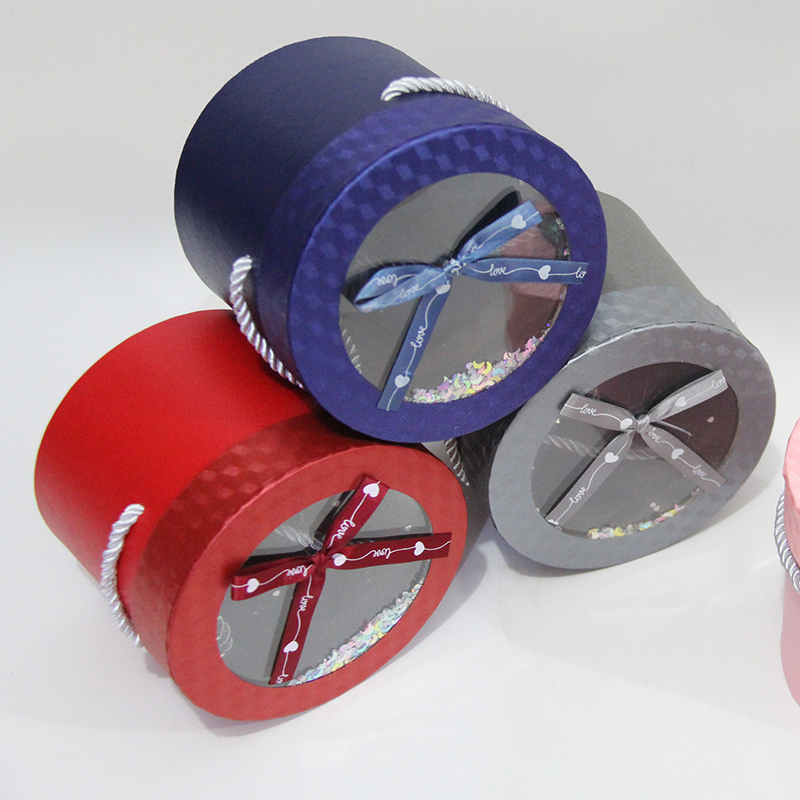
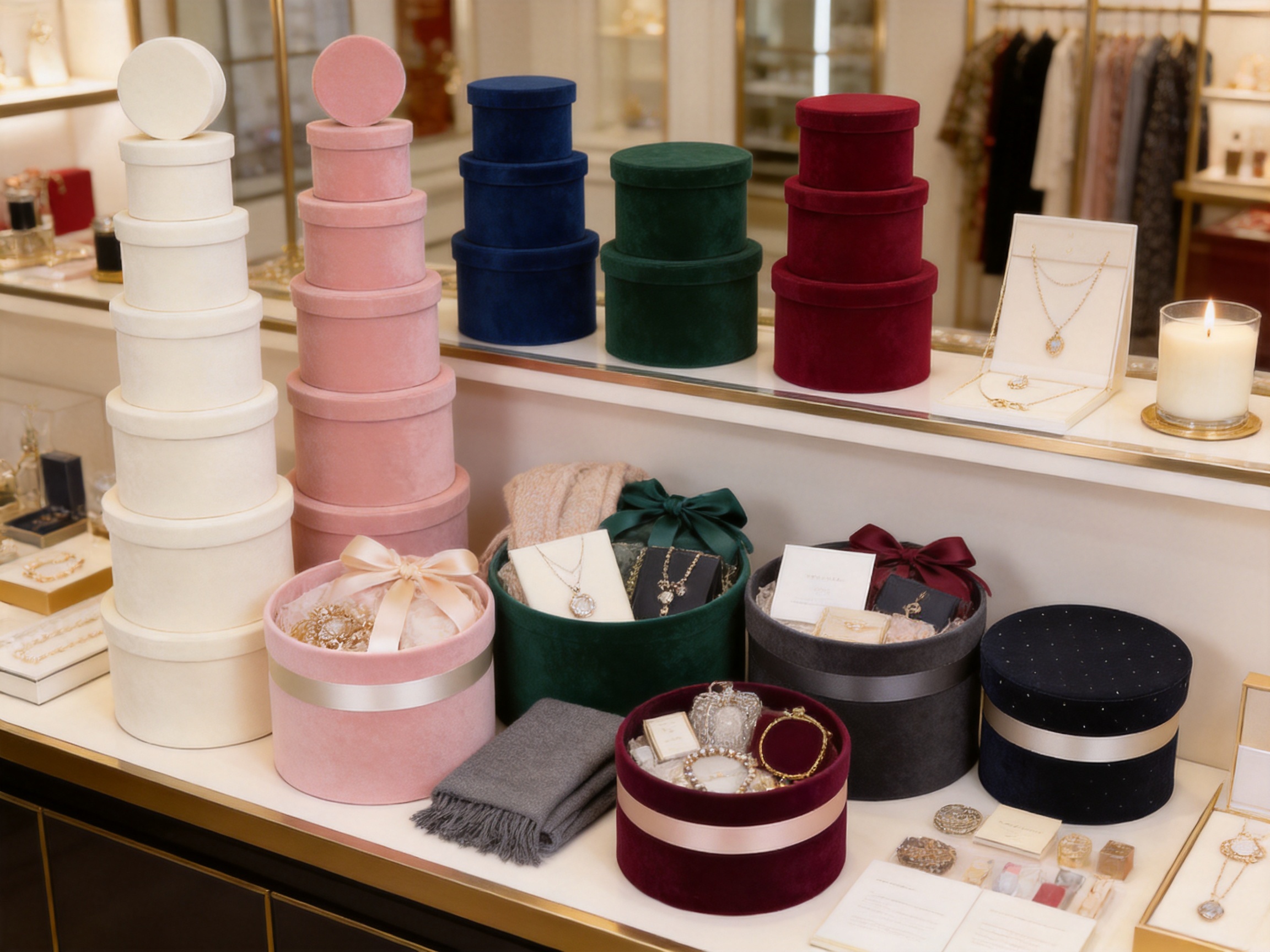
Dark colors such as black, deep blue, burgundy, forest green, and charcoal can emphasize luxury and formality. Light tones such as ivory, blush, cream, pale blue, and soft gray can support a delicate or contemporary presentation. Metallic accents, contrasting ribbons, printed labels, or interior color combinations can further distinguish the package.
A gift box should protect its contents during handling while also maintaining its appearance through the presentation process. The art paper-coated cardboard structure provides a stable base for the cylindrical form. The outer fabric finish adds decorative value and, when properly manufactured and maintained, can support repeated handling.
The product is intended to be wear-resistant, durable, and relatively easy to clean and maintain. As with all textile-finished packaging, care should be taken to avoid excessive moisture, rough abrasion, sharp objects, and prolonged exposure to dirt or direct sunlight. A dry, soft cloth or gentle surface cleaning method is generally more appropriate than soaking or aggressive chemical treatment.
Reusability is one of the product’s strongest practical advantages. A recipient may continue using the box for storage after the original gift has been removed. This helps extend the product’s life and can increase the perceived value of the original purchase. Reusable packaging may also encourage positive brand associations because the brand’s package remains visible in the customer’s home or workspace.
For businesses seeking more sustainable packaging solutions, reuse is an important consideration. A reusable package does not eliminate all environmental impacts, since production, transportation, adhesives, coatings, and disposal still matter. However, a box that remains in service for a longer period may offer a better practical outcome than packaging designed for one-time use only.
The 813 cylindrical boxes can be used for birthdays, festivals, weddings, anniversaries, holiday programs, and corporate gifting. A coordinated set makes it possible to build a complete gift presentation with several layers or product components. The package can be supplied in colors selected for a particular season or event.
For holiday collections, different colors can be used to identify product variants while maintaining a consistent shape. For weddings and formal events, neutral, pastel, or metallic-accented finishes can create a refined presentation. For corporate programs, custom colors and printed elements can help align the box with a company’s identity.
The soft outer texture can complement jewelry, scarves, hair accessories, small leather goods, and other fashion items. Additional internal inserts may be added to improve product protection and presentation. Since internal requirements vary considerably, buyers should specify whether the box will include foam, paperboard dividers, fabric cushions, molded inserts, or other protective components.
The cylindrical shape can make a gift feel more ceremonial. A recipient may open the package with greater anticipation because the container looks different from a standard carton. This emotional effect is valuable for products where gifting and brand experience are closely connected.
Round packaging is naturally compatible with candles, fragrance products, decorative containers, and selected wellness items. The velvet exterior can support a warm, sensory presentation that complements products associated with relaxation, comfort, and personal care.
For products with oils, waxes, liquids, or strong fragrances, the packaging design should include appropriate internal protection and barrier considerations. The box should not be treated as a substitute for a sealed primary container. Instead, it functions as an attractive secondary package that enhances presentation while the product’s primary packaging provides containment.
The product category includes stationery storage boxes and other paper products, making the box suitable for pens, cards, ribbons, sewing accessories, craft materials, decorative clips, and small office supplies. The three sizes can organize items by type or help retailers create a coordinated storage collection.
Reusable storage also supports educational, creative, and hobby-related applications. Customers may use the containers for beads, buttons, brushes, small tools, photographs, or keepsakes. A package that remains useful after purchase provides an additional reason for customers to choose a product over a similar item in disposable packaging.
Businesses can use the cylindrical boxes for promotional kits, employee gifts, influencer packages, event invitations, product samples, and customer loyalty programs. The box offers a stronger unboxing moment than a plain shipping carton and can be designed as part of a wider campaign.
For promotional programs, the set configuration enables different products to be distributed together. The largest container can hold the main item, the medium box can present supporting merchandise, and the smaller box can contain a message card, accessory, or sample. This layered presentation helps turn a collection of products into a complete experience.
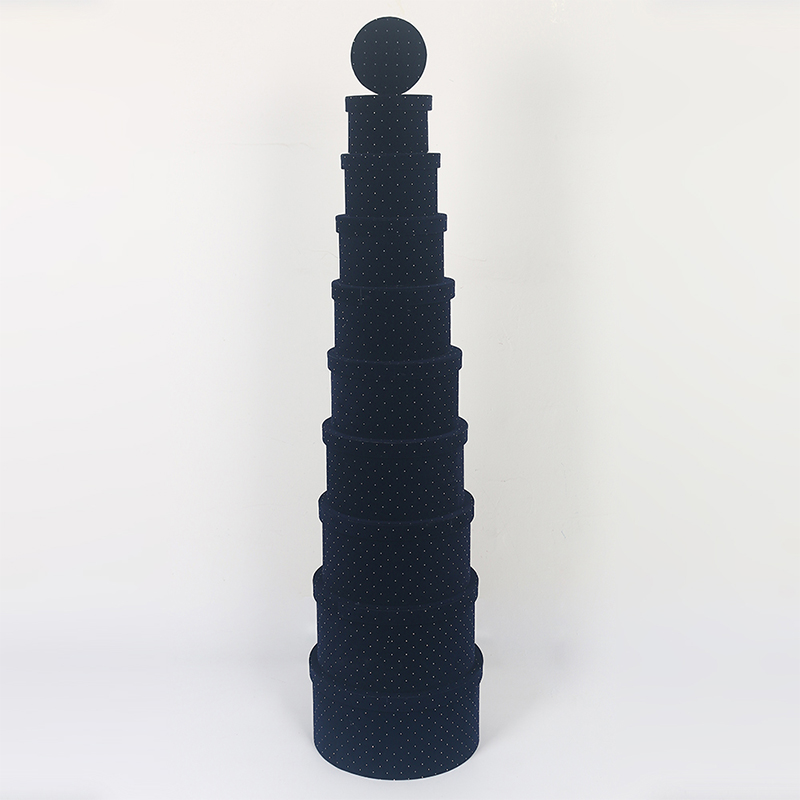
813 Cylindrical Velvet Fabric Storage Gift Box
Customization is central to the value of professional gift packaging. The 813 model provides a foundation, but the final package can be adjusted to suit the buyer’s product, market, budget, and distribution method.
Structural choices may include the number of pieces in a set, the relationship between the three sizes, lid construction, interior fittings, base reinforcement, and storage arrangement. Buyers may request variations according to the size and weight of the packaged product, provided that the proposed changes are technically feasible and confirmed during design review.
Because cylindrical packages require accurate control of diameter, roundness, lid fit, and seam alignment, structural tolerances should be discussed early. A small change in diameter can affect product fit, material consumption, carton packing, and shipping volume. Professional design support helps coordinate these factors before mass production.
The exterior can be developed in selected fabric colors or other approved surface treatments. Color can be matched to Pantone references, CMYK artwork, or a custom visual standard. The surface may also be coordinated with ribbons, labels, paper sleeves, stickers, hangtags, and interior components.
When artwork includes fine lines, small text, or detailed logos, buyers should consider the visual limitations created by a curved surface. The company’s design team can advise on artwork placement, scale, orientation, and file preparation. A logo intended for a flat box may need to be resized or repositioned to look balanced on a cylinder.
Custom branding can be added through printed labels, surface graphics, branded inserts, decorative bands, or other approved methods. The most suitable option depends on the fabric type, box construction, order quantity, desired appearance, and budget.
Branding should be planned together with the tactile character of the package. Overloading a velvet surface with too many graphics can reduce its elegance, while a restrained logo or carefully placed label may create a more premium effect. The design team can help balance brand visibility with material expression.
The manufacturer provides professional advice through an in-house design team. This capability is valuable because gift packaging design involves more than creating an attractive drawing. The package must also be manufacturable, dimensionally accurate, suitable for the intended product, efficient to pack, and consistent with the buyer’s logistics requirements.
Custom designs are welcome, and design files can be prepared using Artificial Intelligence or CorelDRAW formats. Buyers should provide clear information about the product to be packaged, including dimensions, weight, fragility, desired presentation, required accessories, color preferences, branding guidelines, and expected order quantity.
The design process should normally include a concept review, structural confirmation, artwork review, sample approval, production planning, and final quality inspection. Early communication is particularly important for cylindrical products because curved structures can affect label alignment, lid fit, and visual balance.
A professional design team can also advise on how the three sizes should work together. The boxes may be designed for nesting, independent use, coordinated retail display, or a specific product assortment. This ensures that the set is not only attractive but also meaningful for the customer’s sales strategy.
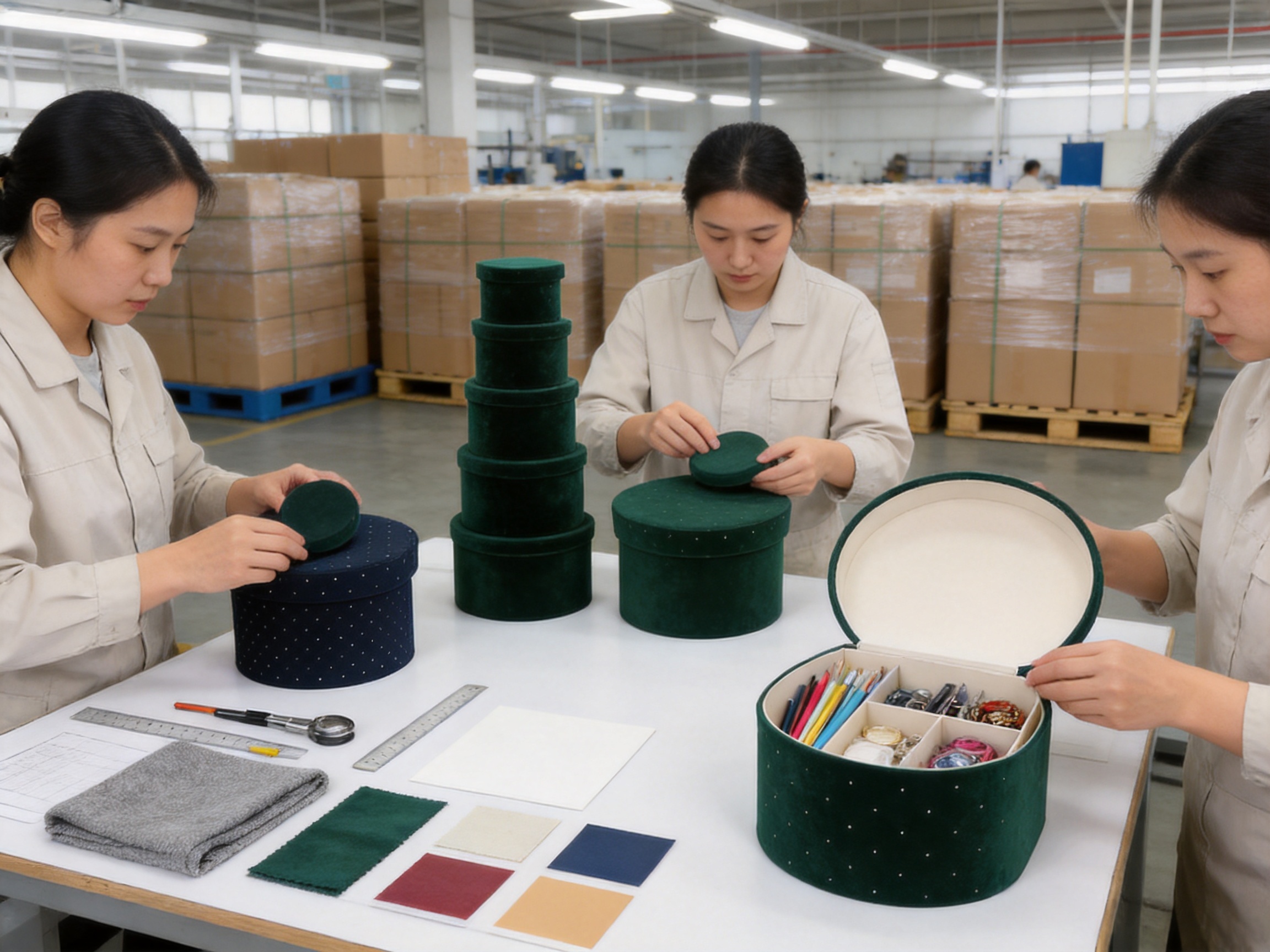
Zhejiang Shihao Gift Packaging Co., Ltd. is an export-oriented manufacturer specializing in the production, research and development, and sales of paper gift packaging boxes. The company has more than 15 years of experience in the field and operates from a facility covering approximately 20,000 square meters.
The company employs around 300 people and has advanced equipment supporting product development and production. Its reported average daily production capacity is approximately 5,000 sets of gift boxes. This scale provides the infrastructure needed to handle both regular product programs and customized orders.
Manufacturing scale is important for buyers that require stable quality and dependable repeat production. A supplier with established production resources can better coordinate material purchasing, sampling, production scheduling, assembly, packing, and export preparation. It can also provide more practical support when a buyer needs several product types or sizes within one packaging program.
The company maintains its own design team and updates dozens of products weekly. This ongoing development activity indicates a strong focus on market responsiveness. Packaging trends change rapidly, especially in gift, lifestyle, retail, and e-commerce categories. Regular product development allows the manufacturer to explore new materials, structures, colors, decorative treatments, and practical applications.
For customers, access to active research and development can shorten the path from an initial idea to a finished package. Instead of adapting a concept without technical guidance, buyers can work with a supplier familiar with paperboard structures, decorative surfaces, storage boxes, folding boxes, jewelry packaging, and gift packaging.
The company has passed BSCI and FSC certifications according to the supplied company information. BSCI is associated with social compliance and responsible workplace practices, while FSC certification relates to responsible forest-based material sourcing within the applicable certified supply chain.
Certification does not remove the need for project-specific quality control, but it provides useful evidence of a structured approach to social responsibility and material management. Buyers should request current certification documents and confirm the scope of certification for the specific order and materials being purchased.
The products are exported to Europe, the United States, the Middle East, and other regions. International experience can help a supplier understand the importance of documentation, carton packing, port arrangements, delivery schedules, and customer-specific requirements.
The standard port is Ningbo, or another port according to customer requirements. Payment is generally made by T/T, while other payment methods may be negotiable. Delivery is stated as 7 to 45 days or according to customer requirements, with the final schedule depending on design approval, material availability, order quantity, production planning, and shipping arrangements.
Production begins with a review of the customer’s product, target market, dimensions, quantity, colors, use scenario, and budget. At this stage, the manufacturer confirms whether the standard 813 configuration is suitable or whether structural modifications are required.
The review should identify important details such as the product’s center of gravity, sensitivity to pressure, need for cushioning, opening experience, and expected storage conditions. For fragile items, the packaging must be designed with suitable internal protection rather than relying only on the outer box.
The design team develops the cylindrical body, lid, base, and any internal components. Accurate circular forming is essential to achieve an even silhouette and reliable lid fit. Prototype development allows the customer to check the physical appearance and product compatibility before committing to mass production.
A sample should be evaluated for roundness, height, diameter, seam appearance, surface tension, lid alignment, opening force, stability, and stacking behavior. If the product is sold as a three-piece set, the complete set should be reviewed together rather than evaluating only one size.
Art paper-coated cardboard and the selected outer fabric or velvet finish are prepared according to the approved specifications. Material preparation includes checking color, thickness, surface condition, and quantity. Any interior paper, lining, insert, ribbon, label, or accessory is also coordinated at this stage.
Material selection affects strength, appearance, weight, production speed, and shipping cost. The manufacturer’s experience helps balance these factors. A heavier structure may improve rigidity but increase freight costs, while a lighter structure may require additional reinforcement for heavier products.
Paperboard components are cut to the required dimensions and formed into the cylindrical structure. The forming process must control curvature and alignment so that the completed box remains stable and visually consistent.
For a premium package, small construction details matter. Uneven edges, visible seams, loose coverings, wrinkles, or inconsistent diameters can reduce the perceived quality of the entire product. Skilled operators and suitable equipment help minimize these issues.
The velvet fabric or decorative outer layer is applied to the formed structure. Careful tension control is required to create a smooth surface without wrinkles, bubbles, excessive overlap, or exposed edges. The surface application process also determines how consistently the fabric texture appears across different production batches.
The application method should be selected according to the material and intended use. Adhesive selection, drying time, edge finishing, and handling conditions all affect the final result. Professional production control is particularly important when the exterior uses a soft or textured material.
After the outer covering is applied, the lid, base, lining, inserts, labels, and other components are assembled. The box is then checked for appearance, functionality, and consistency. A completed sample should be compared against the approved reference before the production line proceeds at full scale.
Quality inspection may cover dimensions, color, surface condition, structure, lid fit, cleanliness, accessories, quantity, and carton packing. The three pieces in each set should be matched correctly, and the final cartons should be packed to prevent movement or compression during transportation.
The listed packaging arrangement is three pieces per set and 24 sets per carton. Carton dimensions are given as approximately 74 by 38 by 55 centimeters, with a reported CBM of 0.155. Since final packing can vary with material thickness, inserts, and order-specific components, the shipping data should be confirmed on the final packing list.
The 813 model offers several advantages compared with ordinary rectangular paper boxes or basic disposable cartons.
The cylindrical profile immediately creates a different visual identity. This can help a product stand out in a crowded market where many competitors use similar square packaging.
The velvet surface provides a soft, premium touch that ordinary printed cardboard may not offer. Tactile appeal can influence how customers evaluate quality and can make the opening experience more memorable.
Unlike packaging intended only for transport, the 813 box can become a storage container. Reuse adds functional value and may improve customer satisfaction while reducing the likelihood that the packaging is discarded immediately.
CMYK, Pantone, and custom color options allow the product to support different brand identities, seasons, and sales channels. The in-house design team can also help adapt artwork and structure to the cylindrical format.
The three-piece configuration supports coordinated collections and layered presentations. This can be useful for gift sets, promotional kits, product bundles, and retail displays.
The combination of more than 15 years of manufacturing experience, an approximately 20,000-square-meter facility, around 300 employees, advanced equipment, daily production capacity of about 5,000 sets, and export experience provides a strong foundation for commercial orders.
The minimum order quantity is 300 sets. This quantity is suitable for many retail launches, seasonal programs, promotional projects, and wholesale orders, although buyers should confirm whether different colors, sizes, or designs require separate minimum quantities.
Before requesting a quotation, buyers should prepare the following information:
1. Product name, dimensions, and weight.
2. Required box size and whether the standard three-piece set is appropriate.
3. Preferred velvet or fabric colors.
4. Pantone references or brand color standards.
5. Logo files and artwork in suitable design formats.
6. Required inserts, dividers, cushions, ribbons, labels, or accessories.
7. Target order quantity and estimated repeat-order schedule.
8. Destination country, preferred port, and delivery expectations.
9. Packaging, carton, and labeling requirements.
10. Required certifications or documentation.
Providing complete information at the beginning reduces the risk of repeated revisions. It also allows the manufacturer to provide a more realistic quotation and delivery estimate.
A physical sample is strongly recommended before mass production. The sample should be reviewed under normal retail lighting and tested with the actual product. Buyers should examine the surface, color, structure, lid fit, interior space, stability, and overall presentation.
If the box is intended for e-commerce fulfillment, the sample should also be evaluated inside its shipping carton. The buyer should check whether the product remains protected after handling and whether the package can be packed efficiently for delivery.
Quality requirements should be documented in advance. Acceptable tolerances for dimensions, color variation, surface marks, fabric alignment, logo position, and assembly should be agreed upon. A clear approved sample can serve as the primary visual reference for production.
For repeat orders, buyers should maintain records of the approved color, materials, artwork, packaging method, and inspection criteria. This helps preserve consistency when the same product is manufactured again.
To preserve the velvet finish, the box should be stored in a clean, dry environment away from excessive humidity, direct sunlight, and sharp objects. During warehouse handling, cartons should not be overloaded or stacked beyond the recommended limit.
Customers can maintain the surface by keeping it free from dust and avoiding liquids. A soft brush or dry cloth may be used for light cleaning. Any cleaning method should first be tested on an inconspicuous area, particularly when the fabric is a dark or highly saturated color.
For retail presentation, boxes should be arranged so that the fabric surface is not rubbed repeatedly against rough shelves or metal fixtures. The cylindrical form allows attractive vertical and grouped displays, but stability should be checked when boxes are stacked at height.
Packaging sustainability involves material selection, production efficiency, transportation, reuse, and end-of-life management. The 813 box contributes primarily through its reusable design. A customer who uses the package for storage extends its functional life beyond the first gifting occasion.
The paperboard structure is also relevant to responsible packaging discussions because paper-based materials can be incorporated into established recycling systems where local facilities accept the specific combination of coatings, adhesives, and fabric components. Since the velvet surface may complicate recycling compared with plain paperboard, buyers should request detailed material information when recyclability is a central requirement.
The company’s stated FSC certification provides support for responsible forest-based material sourcing within the relevant certified chain. Buyers should confirm the applicable certificate, claim, and material scope for the particular order. Sustainable claims should always be based on verified project documentation rather than general assumptions.
Using a reusable box, optimizing carton packing, reducing unnecessary accessories, and selecting an appropriate box size can all help improve the overall packaging profile. A professional manufacturer can help balance luxury appearance with practical material use.
Packaging is a physical touchpoint between a brand and its customer. The 813 box can support brand value by creating a recognizable shape, a consistent color system, and a memorable tactile experience.
A brand may use one color for a core product line and additional colors for seasonal editions. Alternatively, the three sizes can represent product tiers, gift levels, or different product categories. A consistent cylindrical form across a collection can become a recognizable packaging signature.
The reusable nature of the box can extend brand visibility beyond the original purchase. When customers use the container on a desk, shelf, dressing table, or craft area, the package may remain part of their everyday environment. This does not guarantee repeat purchases, but it creates more opportunities for continued positive brand association.
For premium products, packaging also helps justify a higher perceived value. A carefully manufactured fabric-covered box can make the product feel more complete and gift-ready. The package becomes part of the product story rather than a simple shipping layer.
It is a cylindrical gift and storage box made with an art paper-coated cardboard structure and a velvet fabric or velvet-style outer finish. It is designed for presentation, storage, gifts, crafts, and customized packaging programs.
The standard configuration includes three pieces per set. The three coordinated sizes are listed as 13.5 by 13.5 centimeters, 16 by 15 centimeters, and 18 by 17 centimeters.
Yes. The available color options include CMYK, Pantone colors, and custom colors. A physical color sample is recommended when precise matching is important.
Custom designs are welcome. Buyers can discuss sizes, set arrangements, interior components, surface treatments, branding elements, and other requirements with the manufacturer’s in-house design team.
The box can be used for gifts, accessories, crafts, stationery, small lifestyle products, promotional items, and storage applications. The exact suitability depends on the product’s dimensions, weight, fragility, and internal protection requirements.
Yes. Its rigid construction and storage-oriented design allow it to be reused for stationery, accessories, craft materials, keepsakes, household items, and other small belongings.
The surface is intended to be durable and maintainable. It should be kept dry and cleaned gently with a soft cloth or brush. Harsh chemicals, excessive moisture, and abrasive handling should be avoided.
The stated minimum order quantity is 300 sets. Buyers should confirm whether separate colors, structural variations, or artwork versions affect the final minimum quantity.
The standard information lists three pieces per set and 24 sets per carton. The stated carton dimensions are approximately 74 by 38 by 55 centimeters, with a reported CBM of 0.155. Final details should be confirmed after production specifications are approved.
The stated delivery time is 7 to 45 days or according to customer requirements. The actual schedule depends on design approval, material preparation, order quantity, production planning, inspection, and shipping arrangements.
Yes. The manufacturer has an in-house design team and offers professional advice. Custom design files can be prepared using Artificial Intelligence or CorelDRAW formats.
The company information states that the manufacturer has passed BSCI and FSC certifications. Buyers should request current documents and verify the scope and applicability for the specific order.
The manufacturer is located in Jinhua, Zhejiang, China. Ningbo is listed as the standard port, although another port may be arranged according to customer requirements.
Yes. The manufacturer exports products to Europe, the United States, the Middle East, and other regions. International customers should confirm labeling, documentation, carton specifications, import requirements, and shipping terms before placing an order.
The 813 Cylindrical Velvet Fabric Storage Gift Box combines distinctive form, soft tactile appeal, practical reuse, and flexible customization. Its cylindrical design helps products stand apart from standard rectangular packaging, while the velvet finish creates a more premium and memorable presentation. The three-piece set configuration provides additional flexibility for gift collections, product bundles, retail displays, and promotional programs.
Its advantages extend beyond appearance. The rigid paperboard structure supports durability, the reusable design adds long-term value, and the available CMYK, Pantone, and custom colors make it adaptable to different markets. The box can be used for gift packaging, storage, stationery, crafts, accessories, lifestyle products, and branded promotional kits.
Behind the product is an established manufacturing organization with more than 15 years of experience, an approximately 20,000-square-meter facility, around 300 employees, advanced equipment, an in-house design team, reported daily capacity of about 5,000 sets, BSCI and FSC certifications, and export experience across multiple international markets. These capabilities provide a practical foundation for buyers seeking consistent quality, custom development, and scalable production.
For the best result, customers should provide complete product information, confirm dimensions carefully, approve a physical sample, verify materials and certifications, and establish clear quality standards before mass production. With the right customization and manufacturing controls, the 813 cylindrical velvet box can become more than a container: it can serve as a durable storage product, a distinctive brand touchpoint, and a memorable part of the customer experience.
1. Product specification sheet for the 813 Cylindrical Velvet Fabric Storage Gift Box, including dimensions, materials, packing configuration, applications, and ordering information.
2. Company profile and manufacturing capability information for Zhejiang Shihao Gift Packaging Co., Ltd.
3. General packaging design principles concerning structural packaging, tactile materials, product presentation, and reusable packaging.
4. FSC principles and guidance concerning responsible forest-based material sourcing and chain-of-custody practices.
5. BSCI-related guidance concerning social compliance assessment and responsible supply-chain practices.
6. General logistics and packaging quality-control practices for export gift boxes and paper-based packaging products.
Recommended Products

Contact Us

No. 15, Xiayang Road, Huangzhai Town, Jinhua, Zhejiang, China

(+86) 579-84230069

(+86) 13085675766


Products

Gift Box Packaging Manufacturer
 English
 Français
 Español
 عربى