2026-11-19
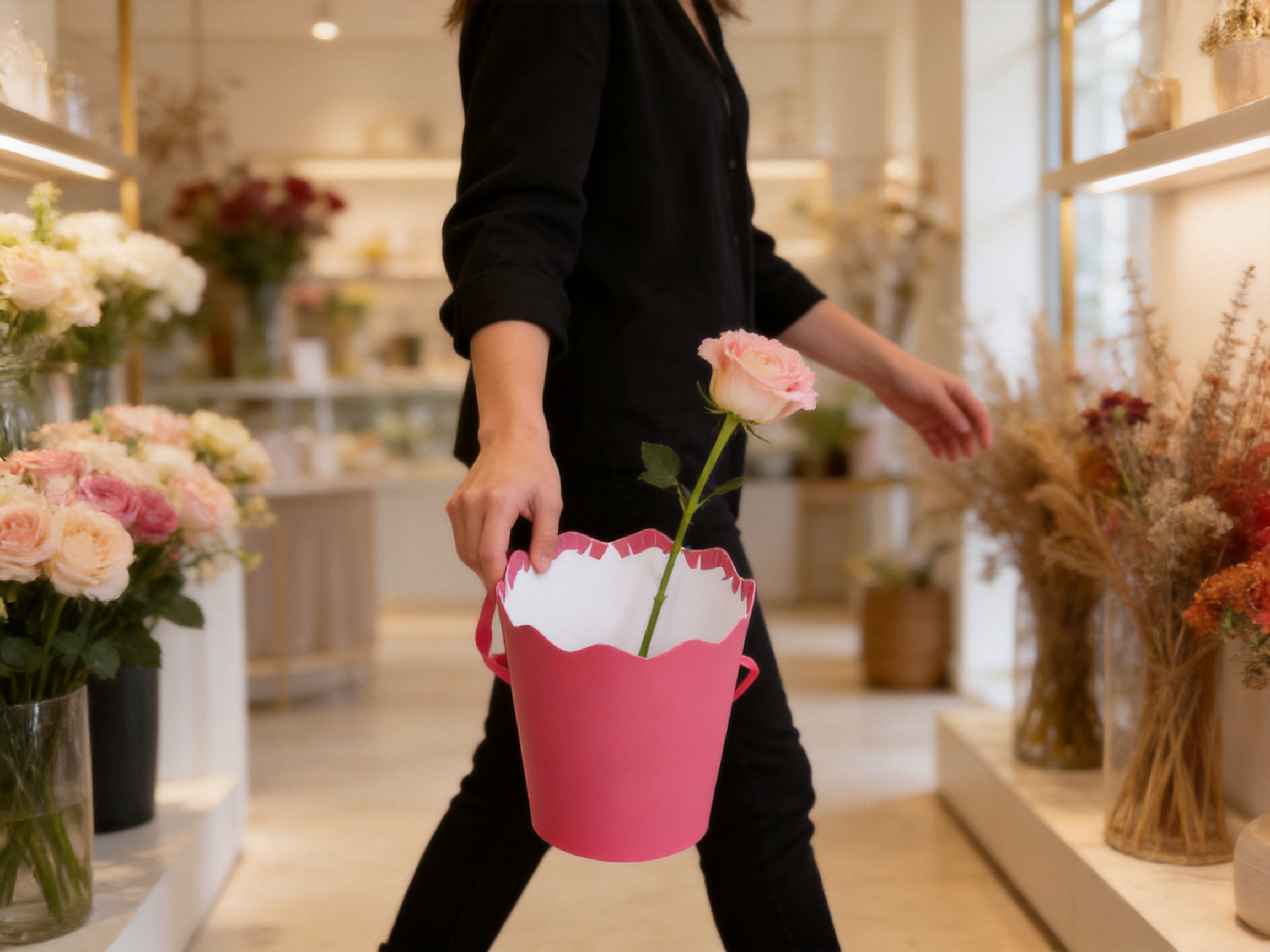
Flower presentation is no longer limited to placing a bouquet in a conventional paper sleeve. Today, customers expect floral packaging to protect the product, support convenient transportation, communicate an attractive visual message, and create an engaging unboxing experience. For florists, gift retailers, event planners, and packaging distributors, the right flower box must therefore combine structural reliability with distinctive styling. The S159 single matte laminated flower gift box responds to these needs with a compact single-flower format, an expressive wavy opening, and a practical carrying strap.
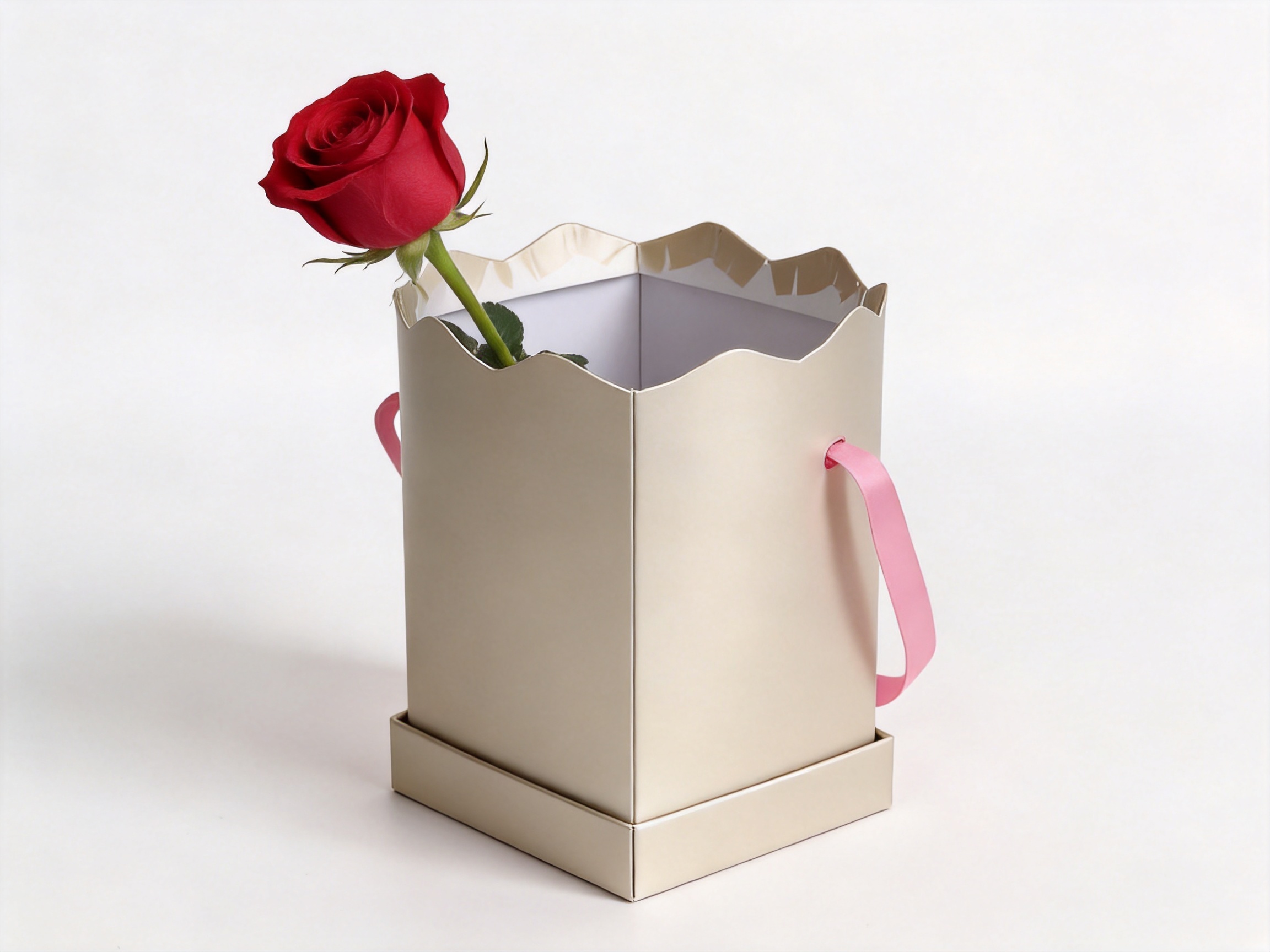
Designed for single-stem flowers, small bouquets, and lightweight floral arrangements, this gift box offers a refined alternative to ordinary rigid cartons and basic paper bags. Its matte laminated surface provides a smooth, understated appearance while helping reduce the visibility of fingerprints. The wavy top opening introduces movement and layered visual interest, allowing the flower to remain the central focus while giving the package a more memorable silhouette. A matching side handle improves portability and adds a useful decorative element.
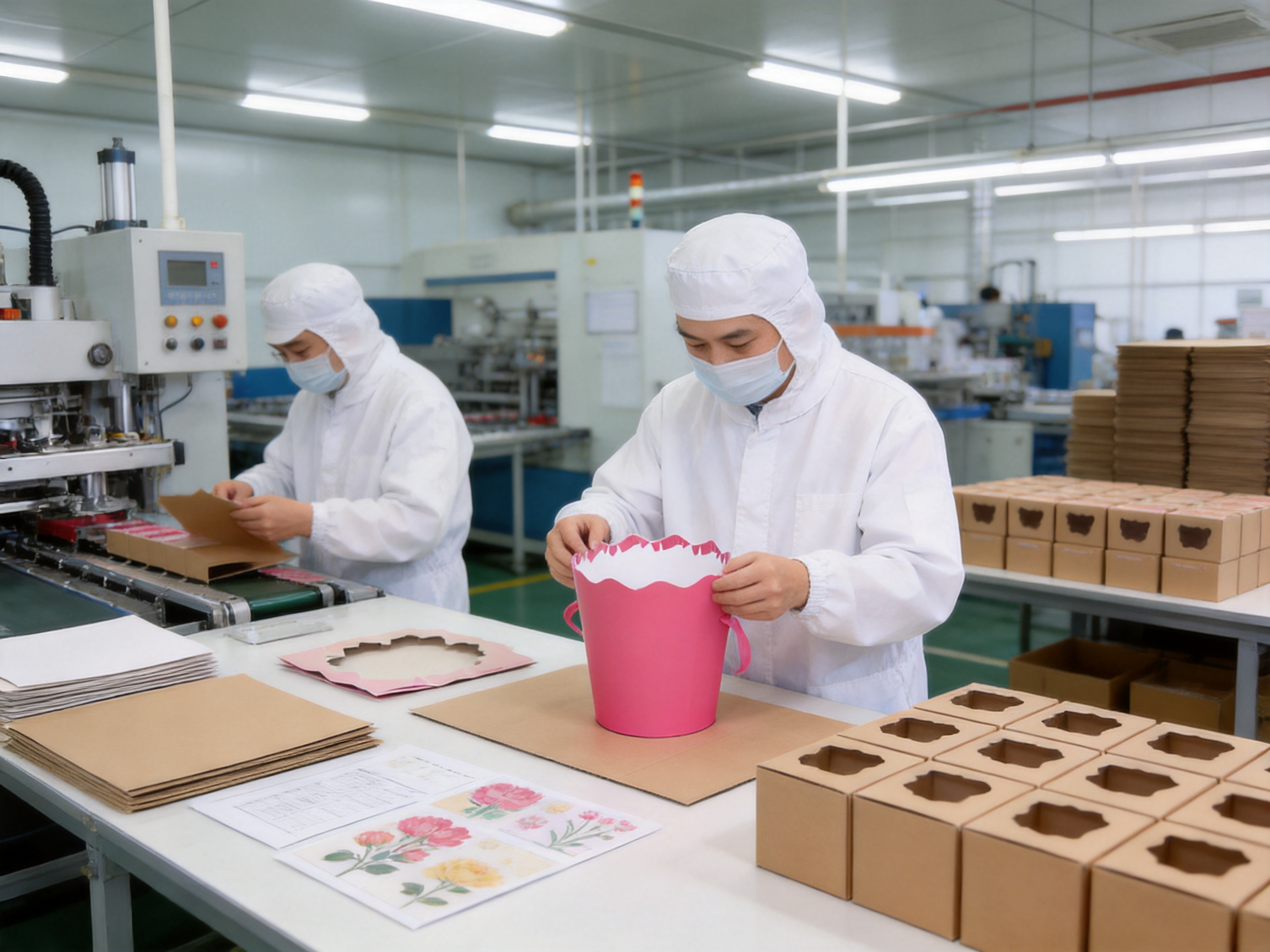
Behind the product is an established paper packaging manufacturer with extensive experience in gift box development, production, export management, and customized packaging solutions. Zhejiang Shihao Gift Packaging Co., Ltd. operates an integrated manufacturing business serving customers in Europe, the United States, the Middle East, and other markets. Its production capabilities, design resources, certifications, and daily output provide a foundation for supplying consistent packaging at commercial scale.
A flower is naturally delicate, emotional, and highly visual. The package surrounding it should reinforce these qualities rather than conceal them. A plain carton may protect a product, but it may not communicate the same sense of care as a thoughtfully designed presentation box. In contrast, a well-proportioned flower gift box can make a single stem appear more intentional, more premium, and more suitable for gifting.
Packaging also influences how a recipient handles the flower. A box with a secure base can help keep the arrangement upright. A top opening can frame the bloom and create a controlled display area. A handle can reduce the difficulty of carrying the gift from a florist, retail counter, event venue, or delivery vehicle. These functional details directly affect the customer experience.
The S159 design addresses all three requirements: display, protection, and portability. The single-flower format avoids excessive space around a small gift, while the wavy opening prevents the package from appearing rigid or generic. The result is a compact container that can support the emotional value of a flower without adding unnecessary complexity.
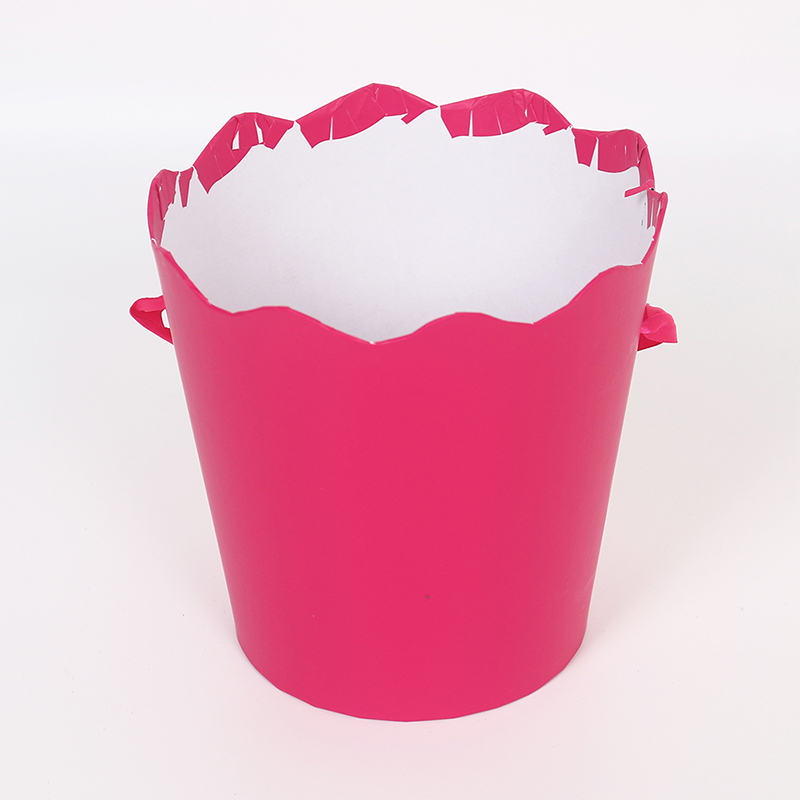
The S159 is a single-stem matte laminated flower gift box with a wavy opening and carrying strap. It is classified as a flower gift box and can be used for individual roses, seasonal flowers, small floral gifts, dried flowers, and selected aromatherapy products. Its compact format is particularly suitable when the retailer wants to package one meaningful flower rather than a large bouquet.
The box uses a matte laminated exterior. Matte lamination gives the surface a soft, low-gloss appearance that is often associated with modern luxury packaging. Unlike a highly reflective finish, it does not compete strongly with the flower inside. It provides a calm background that allows the color and texture of the bloom to stand out.
The top includes a distinctive wavy opening. This is more than a decorative cutout. It creates an irregular visual frame around the stem and flower, making the package look more dynamic when viewed from the front or at an angle. The wave can also help reveal different layers of the floral arrangement, rather than presenting a single straight edge.
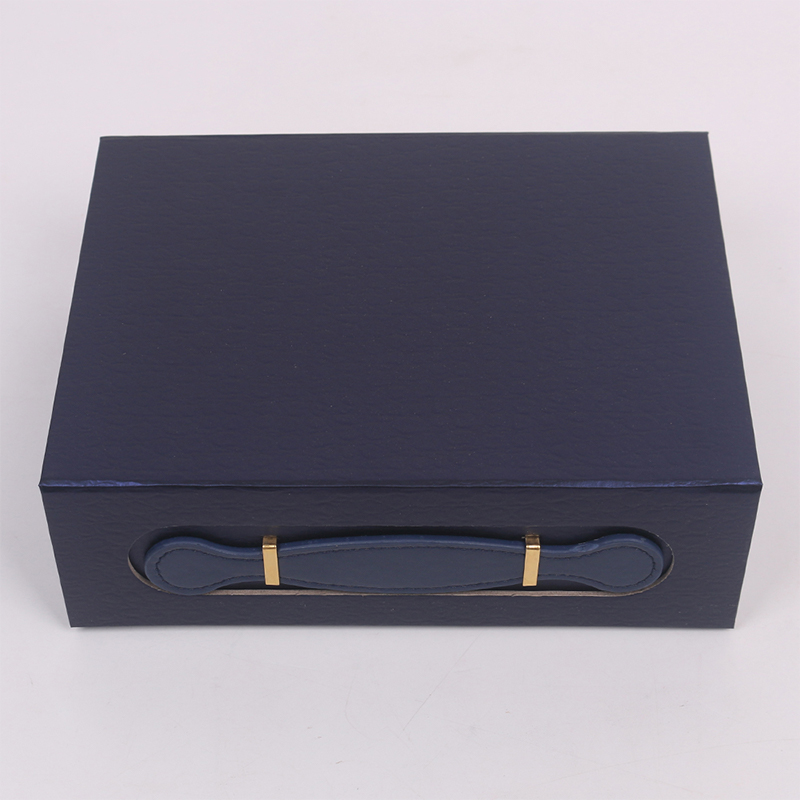
A side carrying strap supports convenient handling. The strap allows the recipient to carry the gift more comfortably and can make the box feel closer to a small handbag or presentation carrier than a conventional carton. For retailers, the handle may also reduce the need for an additional shopping bag for lightweight purchases.
| Product Item | S159 |
| Product Name | Single flower box |
| Primary Category | Flower Gift Box |
| Top Opening | 17 × 17 cm |
| Bottom Opening | 13 cm |
| Quantity per Listed Unit | 60 pieces |
| Listed Outer Length | 86 cm |
| Listed Outer Width | 37 cm |
| Listed Outer Height | 31 cm |
| Listed Volume per Piece | 0.099 |
| Packaging Note | 60 cm, 6 per medium pack as supplied in the specification |
Dimensions and packing data should be confirmed with the supplier before final order placement, especially when the figures are being used for freight planning, shelf design, or automated fulfillment. The top opening of 17 × 17 cm and the 13 cm bottom opening provide a useful reference for selecting suitable stems and inner support materials, while the listed outer carton data can assist logistics teams in estimating storage and shipping requirements.
Many flower boxes depend on a square, rectangular, or circular opening. These formats are practical, but they can produce a repetitive visual language across a retail display. The S159 wavy opening introduces a more expressive outline. Its curved edge can make the box appear softer and more connected to the organic form of a flower.
The contrast between the structured box and the flowing opening is especially effective. The box gives the arrangement stability, while the wave adds movement. This combination can make a single-stem gift feel more substantial without requiring a large container or excessive decorative material.
The opening may also improve visual communication at the point of sale. When several styles of flowers are arranged in similar boxes, the wavy silhouette helps the S159 stand apart from standard packaging. A retailer can use this distinction to create a recognizable gift category for birthdays, thank-you gestures, celebrations, and spontaneous flower purchases.
From a branding perspective, an unusual opening can also become part of the product identity. The box may be photographed from the front, held by its strap, or displayed on a counter with the flower visible above the wave. These presentation possibilities create more opportunities for attractive merchandising and social media content without requiring complex additional decoration.
Surface treatment influences both appearance and daily handling. Gloss finishes can create bright reflections, while uncoated paper may absorb oils, moisture, or color unevenly. Matte lamination offers a balanced alternative: it maintains a refined appearance while helping the package resist the most obvious signs of handling.
For a flower gift box, this matters because the package may pass through several hands before reaching the recipient. Florists assemble the product, sales staff may move it across a counter, customers may carry it outdoors, and recipients may place it on a table or shelf. A surface that helps minimize visible fingerprints supports a cleaner presentation throughout this process.
The matte finish also works well with modern color palettes. Soft neutrals, deep tones, muted pastels, and minimalist printed graphics can all be paired with a matte base. Since the finish is not excessively reflective, it allows the flower’s natural color to remain the visual focal point. This makes the box adaptable to roses, tulips, lilies, carnations, dried arrangements, and seasonal botanical styles.
Matte lamination should not be viewed only as a decorative choice. It can contribute to the perceived quality of the package by creating a smoother touch and more consistent surface. Customers often judge a gift product through multiple senses, including sight and touch. A delicate matte feel can make a compact box seem more carefully made than a basic, untreated paper container.
The S159 is sized for a focused floral presentation rather than a large, expansive bouquet. This gives it several practical advantages. A single flower or small arrangement can be held in a controlled position, reducing the visual emptiness that sometimes occurs when a small gift is placed inside an oversized box.
A correctly selected inner support system can help stabilize the stem. Floral foam may be used inside the box to retain moisture and support the flower, provided that the florist selects an appropriate foam type and protects the paper structure from excess water. Moisture management is essential: the foam should be prepared carefully, and any water-resistant liner or inner insert should be used when needed.
The box’s structure is intended to remain sturdy and resist deformation under normal handling. This is particularly important when a flower gift is transported from the shop to a celebration or presented directly to another person. A deformed package can make even a beautiful flower appear less polished, whereas a stable box supports a more confident presentation.
The compact structure may also simplify inventory organization. Retailers can stack flat or assembled units according to their operating method, group them by color or print, and reserve them for quick gift assembly. Because the design is not limited to one flower variety, the same packaging format can support multiple product lines throughout the year.
Compared with a standard paper sleeve, the S159 provides a more complete presentation. A sleeve may be lightweight and economical, but it generally offers less structural support and fewer carrying options. The S159 creates a defined container around the flower, allowing the gift to look more finished and intentional.
Compared with a plain square gift box, the S159 offers stronger visual differentiation. The wavy opening adds a signature feature without relying entirely on elaborate printing, metallic foil, or complicated accessories. This can help a retailer achieve a premium impression through form and proportion rather than through excessive decoration.
Compared with a large bouquet box, the single-flower format can reduce unnecessary material use and empty interior space. It is better suited to small gestures, impulse purchases, promotional gifts, and occasions where one carefully selected flower carries the message. A compact gift can be easier to display, carry, and store.
Compared with a transparent plastic container, the matte paper structure offers a warmer and more tactile presentation. Paper-based packaging can better support a handcrafted, natural, or premium positioning, particularly when paired with fresh flowers, dried botanicals, or aromatherapy products.
Compared with packaging that has no handle, the side carrying strap creates a more convenient customer experience. It also gives the box an additional design feature that can be used in merchandising photographs and retail displays. The handle does not merely improve utility; it contributes to the package’s overall identity.
Fresh single-stem flowers are the primary application, but the S159 can support several related product concepts. Dried flowers are one example. Because dried arrangements do not require water, the box can serve as a display container for preserved stems, grasses, small bouquets, and seasonal botanical compositions.
The package can also be used for selected aromatherapy products. Small fragrance accessories, sachets, or giftable scent items may be presented inside the box when the dimensions and product weight are appropriate. The matte exterior can support a calm, wellness-oriented visual identity, especially when combined with soft colors and restrained printing.
Other possibilities include party favors, thank-you gifts, boutique merchandise, and small promotional packages. Businesses should verify product dimensions, weight, odor compatibility, and inner protection requirements before using the box for non-floral products. The intended advantage is versatility, not unrestricted substitution.
For event planners, the box could be used as a coordinated favor container at weddings, engagement parties, corporate gatherings, or seasonal celebrations. One flower per guest can be both decorative and symbolic. The carrying strap makes distribution simple, while the wavy opening gives each place setting or welcome table a distinctive visual detail.
Birthdays are a natural application for the S159. A single flower can communicate affection or congratulations without the cost or visual scale of a large bouquet. The box can be prepared in different colors or paired with a small card to create a quick, gift-ready product.
Everyday flower giving is another important use. Not every purchase needs to be associated with a major holiday. Customers often buy flowers to express appreciation, encouragement, friendship, apology, or simple affection. A compact box allows florists to offer a polished product for these spontaneous moments.
Party favors can benefit from the box’s manageable size and portable handle. A flower may be placed at each guest’s seat or handed out at the end of an event. The package can also be coordinated with an event palette through customized printing, color selection, labels, or ribbons, subject to production requirements.
Retailers may position the S159 as an entry-level premium product. It can sit above an ordinary wrapped stem while remaining more accessible than a large arrangement. This creates a tiered merchandising strategy: loose stems for casual purchases, boxed single flowers for ready-to-gift occasions, and larger arrangements for major celebrations.
Commercial buyers often need packaging that reflects their own market, brand style, and product positioning. The S159 format can serve as a base for customization discussions. Depending on order quantities, production conditions, and material availability, options may include printed artwork, color adjustments, logo placement, labels, inserts, ribbons, and coordinated accessories.
Customization should begin with the intended customer and sales channel. A flower shop may prefer a soft, elegant design with a discreet logo. A wedding supplier may require coordinated colors for a specific event. A subscription service may want a consistent package that can be shipped or handed over at regular intervals. A gift retailer may need several seasonal graphics based on one structural format.
Artwork should account for the wavy opening, folding areas, handle position, and visible front panels. A design that looks attractive on a flat template may appear different after assembly. Professional structural and graphic review can help ensure that important text, logos, and decorative elements remain visible and properly aligned.
Buyers should also discuss paper specifications, lamination requirements, color tolerance, moisture protection, inner support, packing method, and quality inspection standards. Clear specifications reduce misunderstandings and help the manufacturer create a repeatable product suitable for ongoing orders.
Zhejiang Shihao Gift Packaging Co., Ltd. is an export-oriented manufacturer specializing in the research, development, production, and sales of paper gift packaging boxes. The company has more than 15 years of industry experience and operates from a facility covering approximately 20,000 square meters.
Its workforce includes around 300 employees, supporting a broad range of functions such as design, material preparation, printing, finishing, assembly, quality management, packing, and international order coordination. This scale is valuable for buyers who need more than a one-time sample. It provides a production organization capable of handling repeat programs, product updates, and different packaging categories.
The company reports an average daily production capacity of approximately 5,000 sets of gift boxes. Capacity figures should always be matched with product specifications, current production schedules, and order requirements, but the stated output indicates a manufacturing operation designed for commercial supply rather than purely small-batch craft production.
Shihao’s product range includes kits, storage boxes, folding boxes, jewelry boxes, and various gift boxes. This breadth can benefit buyers seeking multiple packaging types from one manufacturing partner. Experience across different box structures may also support more practical recommendations for materials, assembly, protection, and presentation.
Distinctive packaging depends on more than machinery. It requires product development, structural understanding, visual judgment, and the ability to convert an idea into a stable production item. The manufacturer has its own design team and updates dozens of products weekly, according to the supplied company information.
This ongoing development approach is relevant to products such as the S159, where the opening profile, handle placement, proportions, and surface treatment all contribute to the final result. A wavy opening must be visually balanced with the box body. The handle must be positioned for comfortable carrying while maintaining a neat appearance. The laminated material must support both the intended look and the required structural performance.
A design team can also help buyers adapt the format for different markets. Floral preferences, color trends, gifting customs, and retail expectations vary by region. A manufacturer with export experience may be better positioned to discuss how packaging should be adjusted for different sales environments while maintaining the main product identity.
Regular new product development can support seasonal planning as well. Retailers may need fresh packaging concepts for spring flowers, wedding seasons, holidays, or promotional campaigns. A capable supplier can help explore new colors, print treatments, formats, and accessory combinations without abandoning established manufacturing knowledge.
The process begins with a product concept and structural plan. At this stage, the manufacturer evaluates the intended contents, opening dimensions, box proportions, handle design, folding or assembly method, and required visual surfaces. For the S159, the single-flower application and wavy opening are central design considerations.
Structural planning helps determine how the box will support the flower, how the package will be handled, and how it will be packed for transport. It also helps identify potential stress points, such as the handle attachment and the curved or irregular top opening.
Paperboard or related paper packaging materials are selected according to the desired stiffness, finish, print quality, and application. The material must provide enough body for the box to remain presentable while also allowing the package to be produced efficiently.
Matte lamination is then considered as part of the surface system. The chosen film, adhesive compatibility, and finishing conditions can influence the tactile quality and appearance of the final product. Consistency is important because uneven lamination, bubbles, scratches, or color variation can reduce the perceived quality of a premium gift box.
For customized versions, printing transfers the approved visual identity onto the packaging material. Color control is particularly important for retail programs that require repeated production. Logos, text, patterns, and illustrations must be positioned according to the structural template.
Additional finishing processes may be discussed when suitable for the project. These can include selective decoration, special labels, ribbons, or inserts. The most effective approach is not always the most decorated one. Because the S159 already includes a distinctive opening and matte surface, restrained design may better support its elegant character.
Die-cutting creates the required panels, openings, curves, and attachment points. The wavy opening requires accurate cutting so that the edge remains smooth and consistent across units. Poorly controlled cutting could create rough edges or uneven wave patterns, which is why tooling accuracy and inspection are important.
After cutting, the parts are folded, glued, assembled, or otherwise formed according to the approved structure. The side carrying strap must be securely connected and aligned with the box body. Assembly quality affects both appearance and practical performance, particularly when the box is lifted by the handle.
Finished boxes should be reviewed for surface defects, structural deformation, print alignment, opening accuracy, handle attachment, and general cleanliness. Packing protects the units during internal handling and international transportation. The listed specification indicates a quantity of 60 pieces, with additional packing notes that should be clarified during order confirmation.
For large commercial orders, buyers may establish inspection samples, acceptable quality limits, carton labeling requirements, and packing photographs. These steps support consistent communication between the manufacturer, logistics providers, distributors, and receiving warehouses.
Flower packaging faces conditions that ordinary gift boxes may not encounter. Fresh flowers can introduce moisture, stems can create pressure, and floral foam can become heavy when saturated. Retailers should therefore select an inner configuration appropriate to the intended flower and handling process.
The S159 can accommodate floral foam for moisture retention, but the foam should not be allowed to leak into the paper structure. A suitable liner, tray, or waterproof barrier may be needed. Florists should also avoid overfilling the container, forcing stems into the opening, or placing an arrangement whose weight exceeds the practical capacity of the box.
Quality checks should include a visual review of the matte surface, examination of the wavy opening, inspection of the handle, and confirmation that the base remains stable. If the box is sold with a fresh flower, a test should be conducted under realistic conditions: assembly, hydration, carrying, display, and customer handover.
For dried flowers or aromatherapy products, moisture concerns may be lower, but dimensional fit and product weight remain important. A package that is too loose may allow movement, while one that is too tight may damage the contents or place unnecessary pressure on the opening.
The listed outer dimensions of 86 cm in length, 37 cm in width, and 31 cm in height, together with the stated quantity of 60 pieces and volume per piece of 0.099, provide a starting point for logistics planning. Because packaging records can use different measurement conventions, buyers should confirm whether the dimensions refer to a master carton, a packing configuration, or another shipping unit.
Storage conditions should be clean, dry, and protected from excessive humidity. Paper packaging can be affected by moisture, pressure, and rough handling. Keeping cartons off the floor and away from direct water exposure can help preserve the material and finish before assembly.
Retail staff should be trained to lift the package by the intended strap and avoid dragging it across rough surfaces. If the box is pre-filled with a flower, it should be stored upright when appropriate. Clear handling instructions can reduce damage and maintain the premium appearance customers expect.
For distributors, efficient carton packing can make the product easier to count and allocate. The supplier’s stated packing note should be reviewed carefully, especially the reference to six pieces per medium pack. Buyers should request a confirmed packing list showing units per inner pack, inner packs per carton, carton dimensions, gross weight, net weight, and pallet information where applicable.
Paper gift packaging is often selected because it provides a printable, tactile, and versatile alternative to certain plastic-based presentation formats. However, responsible packaging decisions require consideration of the entire product system, including material sourcing, coatings, inks, adhesives, transport, reuse, and end-of-life handling.
Zhejiang Shihao Gift Packaging Co., Ltd. reports BSCI and FSC certifications. Buyers should verify the scope, validity, and applicability of any certification for a specific order, material, factory location, or supply chain. Certification documentation can help procurement teams evaluate supplier practices and responsible sourcing requirements.
The compact single-flower format may support material efficiency when it replaces an unnecessarily large bouquet container. The box is designed around a focused product rather than a large empty interior. Nevertheless, sustainability should be assessed based on actual use. If a waterproof insert, plastic sleeve, or additional protective layer is necessary for fresh flowers, the full packaging system should be reviewed rather than considering the paper box alone.
Customization can also support responsible merchandising. A durable and attractive package may be reused by the recipient for small dried flowers, keepsakes, or household items. Reuse is not guaranteed, but a box with a practical shape and appealing finish has a better chance of remaining useful after the original flower has faded.
A gift box communicates a brand before the recipient sees the product in detail. The S159’s combination of matte texture, wavy opening, and carry strap supports a positioning based on elegance, convenience, and modern floral presentation.
For a florist, the box can help transform a single stem into a recognizable signature product. For a gift retailer, it can create a visually distinct shelf item. For a wedding or event supplier, it can become part of a coordinated presentation system. For a distributor, it can offer a differentiated product with broad application potential.
Branding does not require covering every surface with a logo. A well-designed color, a subtle mark, a small message, or a coordinated label may be enough. The structure itself becomes part of the brand experience. The wave and handle can help customers recognize the product even when the printed artwork changes for a new season.
Because the box is suitable for both fresh and dried flowers, the same format can support a broader product portfolio. A retailer may use fresh roses for everyday gifting, dried flowers for longer-lasting décor, and aromatherapy accessories for wellness-themed collections. Consistent packaging can make these products feel related while allowing different contents and price points.
Before placing an order, buyers should define the intended flower types, average stem length, arrangement width, moisture requirements, sales channels, and expected carrying conditions. These details help determine whether the standard S159 configuration is suitable or whether customization is needed.
Requesting a physical sample is recommended. A sample allows the buyer to examine the matte finish, test the top opening, evaluate the handle, place an actual flower inside, and observe the box during carrying and display. It also provides an opportunity to test labels, inserts, ribbons, and other accessories.
Artwork should be supplied in an agreed professional format and reviewed against the final structural template. Buyers should approve a pre-production sample or color proof when print accuracy is important. Any changes to dimensions, paperboard, lamination, opening shape, or handle design should be documented before mass production.
Commercial terms should clarify minimum order quantity, sample charges, lead time, production schedule, payment terms, packing details, inspection procedure, shipping terms, and responsibility for artwork approval. International buyers should also discuss export documents and destination-market requirements.
Since the product is intended for gifting, appearance consistency is especially important. A small color shift or uneven opening may be noticeable when several boxes are displayed together. Establishing reference samples and inspection standards helps protect the finished retail presentation.
Working with an experienced manufacturer can reduce the risks associated with developing specialized paper packaging. A supplier with more than 15 years of experience can draw on knowledge from multiple product categories, material combinations, and export markets.
The company’s approximately 20,000-square-meter facility and workforce of around 300 employees indicate the organizational resources needed to manage design, production, quality control, and shipment coordination. Its stated daily production capacity of about 5,000 sets provides a basis for discussing larger programs, although actual availability should be confirmed for every project.
International export experience may also help buyers communicate requirements across different markets. Packaging sold in Europe, North America, the Middle East, or other regions may involve different expectations for labeling, materials, dimensions, and delivery. A manufacturer familiar with export processes can help identify these questions earlier in the project.
The combination of in-house design, multiple product categories, customization capability, and reported BSCI and FSC certifications gives buyers several factors to evaluate beyond unit price. For packaging that directly affects product presentation, consistency and development support can be as important as the initial quotation.
The S159 is designed primarily for a single stem or a small floral arrangement. Roses, carnations, tulips, seasonal flowers, and similar lightweight arrangements may be suitable, provided that the stem length, bloom size, and total weight fit the box. Buyers should test their specific flower variety before large-scale use.
The supplied specification lists a top opening of 17 × 17 cm and a bottom opening of 13 cm. These measurements should be compared with the intended flower and inner support system. The supplier should confirm how the bottom opening is measured and whether the figure refers to an internal or external dimension.
The wavy opening creates a more dynamic visual frame than a straight-edged opening. It helps reveal the flower with greater visual layering and gives the box a distinctive appearance. It can also help the product stand out among conventional square or rectangular flower boxes.
Yes. The design includes a matching side carrying strap. The handle supports portability and contributes to the decorative appearance of the package. Buyers should confirm the handle material, attachment method, and carrying capacity for their specific application.
Floral foam can be used to retain moisture and stabilize a flower, but it must be prepared and contained properly. Because wet materials can affect paper packaging, a suitable liner or moisture barrier may be required. Florists should test the complete assembly for leakage, weight, and stability.
Yes. The product description identifies small dried flowers as a possible application. Dried flowers eliminate the need for water, although the arrangement still needs to fit securely and remain within the practical weight capacity of the box.
It may be suitable for lightweight aromatherapy products or fragrance accessories when the dimensions, weight, and product compatibility are appropriate. Buyers should test whether oils, scents, or containers require additional inner protection.
Matte lamination provides a soft, low-gloss surface with a refined tactile quality. It can help reduce the visibility of fingerprints and allows printed colors to appear more understated. It also supports a premium appearance without relying on a highly reflective finish.
Customization should be discussed with the manufacturer. Potential options may include printed artwork, colors, logo placement, labels, inserts, ribbons, or coordinated packaging components. Availability depends on order quantity, material selection, production requirements, and the approved design.
The supplied product information lists a quantity of 60 pieces. Buyers should confirm whether this represents the minimum order quantity, the number of pieces per packing unit, or another commercial measurement.
Buyers should confirm the meaning of the listed length, width, height, volume, and packing note. They should request a final packing list containing carton dimensions, unit count, gross weight, net weight, inner pack configuration, and pallet details if applicable.
Yes. Its compact size, carrying strap, and distinctive opening make it suitable for lightweight floral favors and small gift presentations. Event planners should test the box with the chosen flower, event color palette, labels, and transportation method before the event date.
A realistic test should include flower preparation, moisture retention, inner support, assembly, carrying, temporary storage, and final display. The test should confirm that the flower remains stable and that moisture does not damage the matte laminated paper structure.
The S159 provides a structured container, a shaped wavy opening, a matte laminated exterior, and a carrying strap. Together, these features create a more complete gift presentation and may offer better visual differentiation than a basic sleeve.
The manufacturer is located in Huangzhai Town, Jinhua, Zhejiang, China. The company serves export markets and specializes in paper gift packaging products.
The S159 single matte laminated flower gift box combines several features that are valuable in modern floral retail: a compact single-stem format, a refined matte surface, a distinctive wavy opening, a convenient carrying strap, and compatibility with fresh or dried floral presentation. Its greatest advantage is the way these elements work together. The box is not simply a container; it is a display frame, a carrying solution, and a visual part of the gift.
Compared with ordinary sleeves, rigid plain cartons, oversized bouquet boxes, or highly reflective packaging, the S159 offers a balanced alternative. Its design creates differentiation through structure and proportion, while its matte finish supports an elegant, contemporary appearance. The format is flexible enough for birthdays, everyday gifting, party favors, floral retail collections, dried flower displays, and selected aromatherapy applications.
For wholesale buyers, the product is supported by a manufacturer with reported experience in design, research and development, large-scale production, export supply, and customized packaging. The company’s facility, workforce, production capacity, design team, broad product portfolio, and reported BSCI and FSC certifications provide important points for supplier evaluation.
As with any paper packaging product, successful implementation depends on confirming dimensions, material specifications, moisture protection, packing details, customization requirements, and quality standards. With proper testing and clear communication, the S159 can help florists and gift retailers turn a single flower into a more distinctive, portable, and memorable gift experience.
S159 Single Matte Laminated Flower Gift Box With Wavy Opening And Carrying Strap
1. Product specification sheet for the S159 single matte laminated flower gift box, including dimensions, quantity, packing information, and application notes.
2. Supplier-provided company profile for Zhejiang Shihao Gift Packaging Co., Ltd., including facility size, workforce, production capacity, export markets, certifications, and product categories.
3. General packaging design principles concerning structural stability, surface finishing, die-cutting, assembly, moisture control, and retail presentation.
4. General floral merchandising practices for single-stem arrangements, floral foam use, dried flower presentation, and gift-ready packaging.
5. General procurement guidance for custom printed packaging, including sample approval, artwork review, inspection standards, carton verification, and international order coordination.
Recommended Products

Contact Us

No. 15, Xiayang Road, Huangzhai Town, Jinhua, Zhejiang, China

(+86) 579-84230069

(+86) 13085675766


Products

Gift Box Packaging Manufacturer
 English
 Français
 Español
 عربى