2026-10-04
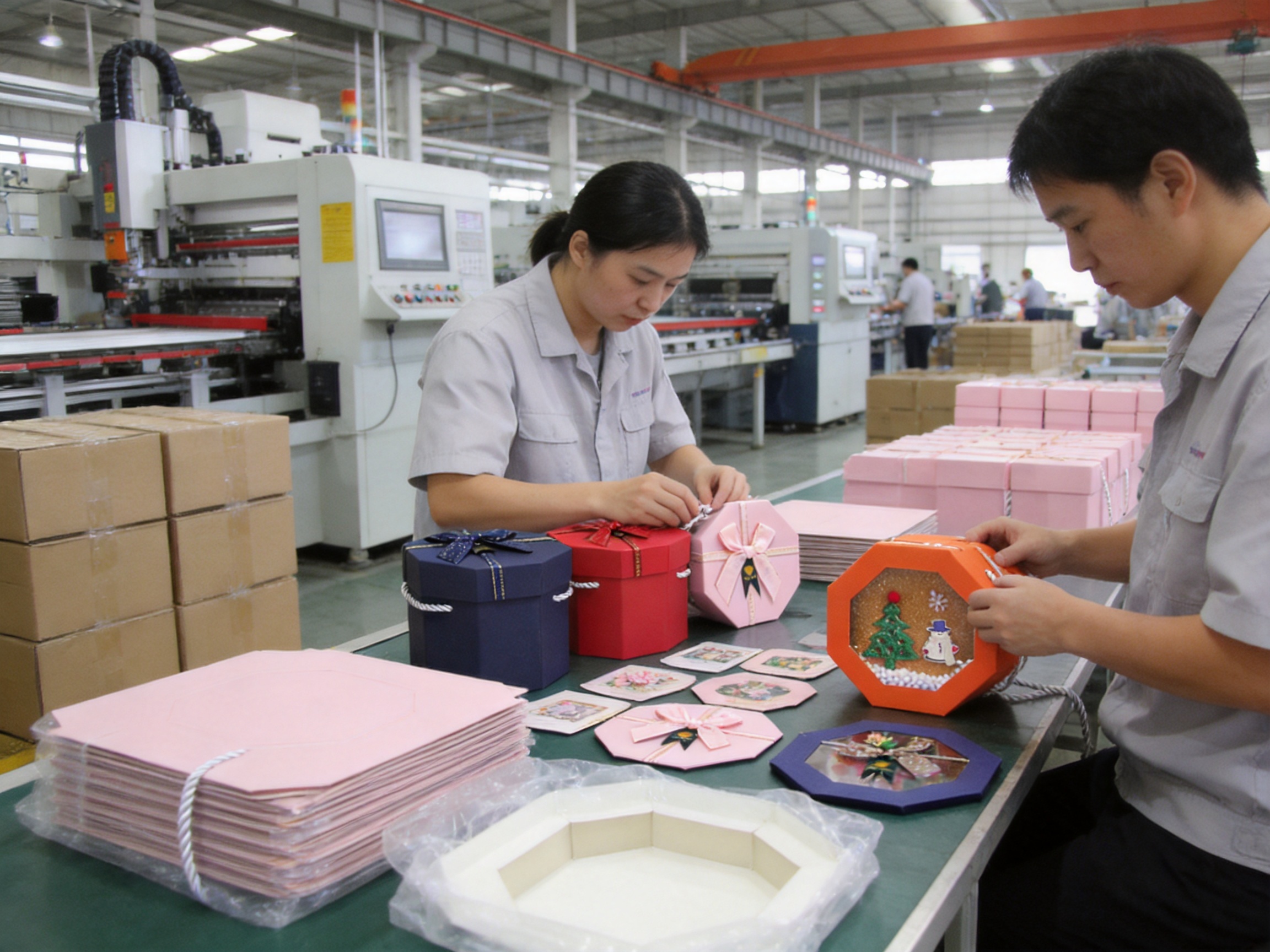
Gift packaging is no longer viewed merely as a protective outer layer. For weddings, holidays, retail promotions, corporate events, and seasonal celebrations, packaging has become part of the gift itself. The right box protects its contents, communicates the event theme, improves presentation, and creates a memorable moment when the recipient receives or opens it. The 4007 octagonal 3D holiday wedding candy gift box with hanging rope is designed around these multiple functions.
With its distinctive octagonal form, three-dimensional construction, hanging cord, and compact capacity, this candy gift box provides an attractive alternative to ordinary square cartons, flat favor bags, and simple folding packages. It is suitable for candies, chocolates, small wedding favors, party gifts, promotional items, and other lightweight products that benefit from decorative presentation. Its structure makes it especially suitable for occasions where packaging needs to serve as both a container and part of the decoration.
This article examines the product’s design, construction, applications, commercial advantages, customization potential, packaging performance, and manufacturing background. It also explains how an experienced gift packaging manufacturer can support buyers with design development, production management, quality control, and export preparation.
The 4007 gift box is an octagonal, three-dimensional candy box created for holiday and wedding use. Unlike a conventional rectangular carton, its multi-sided silhouette gives the package a more decorative and dimensional appearance. The form can attract attention on a display table, at a wedding reception, inside a gift basket, or on a decorated Christmas tree.
The box includes a hanging rope, allowing it to be carried by hand or suspended from a suitable support. This feature increases the product’s versatility. It can function as a conventional favor box placed on a table, a hanging ornament filled with candy, a gift decoration attached to a chair or backdrop, or a small promotional package displayed in a retail environment.
The product specification identifies the item as No. 4007. Its listed size is 13 x 13 x 12.8, with 96 pieces per carton. The listed carton measurement is 82.5 x 55.5 x 54, and the gross and net weights are stated as 13 and 12 respectively. The supplied specification does not identify the measurement units, so buyers should confirm whether the dimensions are expressed in centimeters, millimeters, or another unit before placing a production or shipping order.
| Product Item | Specification |
| Product number | 4007 |
| Product type | Octagonal 3D candy gift box with hanging rope |
| Primary applications | Holiday gifts, wedding favors, candy packaging, party decorations, promotional packaging |
| Product size | 13 x 13 x 12.8, unit to be confirmed |
| Quantity per carton | 96 pieces |
| Carton measurement | 82.5 x 55.5 x 54, unit to be confirmed |
| Gross weight | 13, unit to be confirmed |
| Net weight | 12, unit to be confirmed |
These specifications make the 4007 a practical option for wholesale buyers, event planners, wedding supply distributors, seasonal retailers, party product importers, and brands searching for a distinctive small-format package. Its carton quantity supports organized bulk purchasing while the individual box size remains appropriate for table favors and small gift items.
The most immediate advantage of the product is its octagonal design. Many standard candy boxes use square, rectangular, or cylindrical forms. These formats can be useful, but they are also common and may not create a strong visual impression. An octagonal package introduces additional facets, angles, and surfaces, giving it greater visual interest without requiring an excessively large footprint.
The multi-sided shape produces a three-dimensional appearance that can make a small package feel more substantial. When placed among conventional boxes, the octagonal form is easier to distinguish. This is valuable for wedding favors and holiday gifts, where many individual packages may be arranged together and need to look attractive from different viewing angles.
The structure also provides multiple printable or decorative surfaces. A design can use one unified pattern across the box, place a monogram on a central panel, apply alternating colors to emphasize the facets, or use metallic accents to highlight the geometry. For seasonal programs, the panels can feature snowflakes, stars, ornaments, leaves, bells, or other festive artwork. For weddings, the package can display initials, names, a ceremony date, floral motifs, lace-style patterns, or a carefully coordinated color palette.
Compared with a flat pouch, the octagonal box has stronger shelf presence and a more formal appearance. Compared with a basic folding carton, it can deliver a more specialized and celebratory impression. Compared with a rigid luxury box, it can offer a lighter and potentially more economical format for high-volume events.
The shape is also suitable for group presentation. Several boxes may be arranged in a circular or radiating display, placed in a tiered arrangement, or hung at different heights. This creates opportunities for event decorators and retailers to use the packaging as part of a broader visual installation rather than treating each unit as an isolated container.
Packaging affects the recipient before the product inside is even revealed. A three-dimensional box communicates care and preparation. It can make a small quantity of candy, chocolate, nuts, or another favor feel more thoughtfully presented. This is especially important for weddings and milestone events, where guests often take home a small gift as a reminder of the occasion.
The 4007 box is designed to support a positive unboxing experience. The recipient can see the shape, color, graphics, and hanging rope before opening the box. Once opened, the box provides convenient access to its contents. The three-dimensional structure offers more interior volume than a flat package with a similar front-facing area, although the actual usable capacity depends on the internal construction and closure design.
A well-designed favor box should be easy to fill during event preparation. When hundreds of pieces are needed, complicated assembly or narrow openings can increase labor costs. The 4007 concept emphasizes convenient filling and retrieval, making it suitable for professional event preparation as well as smaller personal celebrations. Buyers should confirm the exact opening method, folding sequence, and closure style during sampling because these details may vary according to the final construction and customization requirements.
The visual experience can be enhanced with tissue paper, a small insert, a ribbon, a printed message, or individually wrapped candy. Since the box itself provides a decorative foundation, additional accessories can be selected according to the customer’s budget and event theme. The package therefore supports both simple and premium presentations.
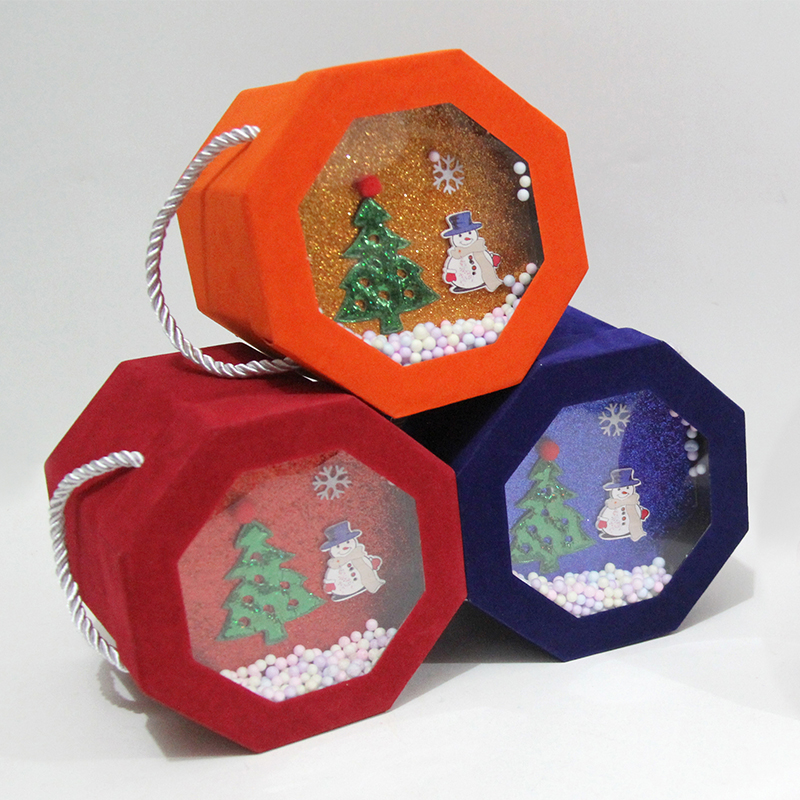
4007 Octagonal 3D Holiday Wedding Candy Gift Box with Hanging Rope
The hanging rope is one of the key features that differentiates this model from an ordinary candy carton. A rope or cord can serve as a carrying handle, a display loop, or an attachment point for additional decorations. This creates several possible use scenarios without requiring a separate holder or bag.
At weddings, the box may be suspended from a welcome display, placed on the back of a guest chair, attached to a favor board, or hung from a decorated branch or backdrop. At Christmas and other holidays, it may be used as a tree ornament containing sweets or a small present. At retail events, it can be arranged on hooks or display structures to improve visibility and make the package easier for customers to pick up.
The cord also contributes to the tactile impression of the product. A suitable cord color can complement the printed design, while a contrasting color can draw attention to the package’s shape. Depending on the intended market, buyers may select a simple paper cord, textile cord, braided string, ribbon-like material, or another compatible option. The precise material and attachment method should be confirmed with the manufacturer to ensure that the rope is appropriate for the intended load.
Because the package is compact, the hanging rope should be considered part of the overall structural system. The attachment points need to be aligned, secure, and compatible with the box material. During product development, manufacturers can evaluate the connection between the rope and the box, the distribution of weight, and the expected handling conditions. This is particularly important if the box will be hung for extended periods or filled with relatively heavy contents.
The hanging design expands the product’s decorative possibilities. A group of matching boxes can create a visual rhythm when suspended at an event. Different colors can be used to distinguish wedding tables, holiday themes, product variants, or gift categories. A printed message can face outward while the box remains suspended, making the package a small advertising or commemorative display.
The rope also enables the box to be integrated into gift hampers and seasonal arrangements. It can be attached to a larger gift basket, tied to a bottle, or placed on a decorative stand. These applications help distributors sell the box not only as an empty package but also as part of a complete gift solution.
The primary use of the 4007 is candy packaging. Suitable contents may include individually wrapped sweets, chocolate pieces, mints, fruit candies, jelly products, coated nuts, small cookies, and other lightweight treats. It may also hold small non-food favors such as key rings, badges, jewelry-style accessories, miniature candles, small toys, or promotional samples, provided that the contents are compatible with the material and the box is not overloaded.
When the box is used for food, the contents should normally be individually wrapped or separated from the printed outer surface by an appropriate inner package. Buyers should confirm the intended food-contact requirements before using the box for unwrapped food. The packaging manufacturer can advise on material selection, inner liners, inserts, or other measures when a specific application requires them.
The three-dimensional form can provide useful capacity while maintaining a compact external size. However, the visual volume of an octagonal box does not automatically define its exact filling capacity. Candy size, wrapping style, insert design, closure clearance, and internal folds all affect how much product can be placed inside. For accurate planning, buyers should conduct a filling test using the actual candy or favor item before approving mass production.
A filling test can answer several practical questions. It can show whether the contents move excessively inside the box, whether the lid or closure remains secure, whether the package can be carried by the rope, and whether the overall appearance remains attractive after filling. It can also identify whether additional tissue, a paper insert, or a small transparent bag is needed.
Gift packaging buyers increasingly evaluate environmental impact alongside appearance and cost. The 4007 is described as using high-quality paper or plastic materials according to product requirements, and many comparable gift boxes can be produced with recyclable or biodegradable material options. The correct choice depends on the desired appearance, strength, printing performance, moisture resistance, food-use conditions, and end-of-life expectations.
Paper-based construction can offer an appealing tactile surface, efficient printing, and a familiar recycling profile in markets with suitable collection systems. Paperboard can also be folded, die-cut, laminated, embossed, or finished in many ways. If the design is intended to be recycled, buyers should review the use of coatings, foils, adhesives, ropes, and mixed materials, because these elements may influence recycling compatibility.
Plastic components may be selected where additional moisture resistance, transparency, flexibility, or durability is required. However, the material should be identified clearly and selected with the customer’s sustainability objectives in mind. If a plastic element is used, the buyer may request information about its composition, recyclability, and recommended disposal route.
Sustainability is not limited to the base material. Efficient packaging design can reduce material consumption, optimize carton loading, and lower transportation volume. A three-dimensional box that folds flat before assembly may offer logistical advantages over a permanently rigid box. Bulk packing of 96 pieces per carton can also support organized shipping, although the final transportation efficiency depends on the packaging configuration and protective methods.
Manufacturers with experience in customized packaging can help buyers balance environmental goals with performance. They may recommend thinner but sufficiently strong paperboard, water-based inks, reduced finishing layers, recyclable rope alternatives, or designs that minimize unnecessary components. Such decisions should be made during the development stage rather than after production begins.
Customization allows the same base structure to serve many different markets. For weddings, buyers may add the couple’s names, initials, wedding date, venue name, or a short thank-you message. A monogram can be printed on a central panel, while the remaining panels carry coordinated floral, geometric, lace, or botanical artwork.
Holiday packaging can use colors and graphics associated with a specific celebration. Red, gold, silver, green, white, and other seasonal tones can be combined to create traditional or contemporary themes. Christmas designs may include snowflakes, stars, ornaments, trees, or gift motifs. Other holiday programs may use colors, symbols, and messages appropriate to the relevant cultural or commercial event.
Retail and corporate buyers may require a more commercial design. A logo, slogan, product message, QR-style printed element, or campaign identity may be incorporated into the artwork. The box can then function as a promotional sample package, customer appreciation gift, seasonal giveaway, or limited-edition product presentation.
Customization may involve more than printing. Buyers can request changes to the rope color, closure method, surface finish, internal insert, paper weight, dimensions, or decorative accessories. Some programs may require a window, while others may prefer a fully printed surface that keeps the contents concealed. Each change should be reviewed for its effect on cost, lead time, structure, and minimum order quantity.
Common options include custom color matching, offset or digital printing, logo printing, foil accents, embossing, debossing, spot coatings, matte or gloss lamination, textured paper, ribbons, tags, stickers, printed liners, and personalized messages. The most suitable combination depends on the intended price point and the visual character of the event.
For a premium wedding presentation, a restrained palette with textured paper, metallic details, and a coordinated cord may be effective. For a children’s celebration, brighter colors and playful illustrations may be more appropriate. For a corporate gift, a simple brand-color layout with a clean logo treatment can communicate professionalism. The octagonal form provides a stable base for each of these approaches.
Buyers should request a pre-production sample or digital proof. A physical sample is especially important when the design includes multiple panels, precise alignment, metallic details, or a rope attachment. It allows the buyer to assess color, folding, size, filling convenience, and overall appearance before approving a larger quantity.
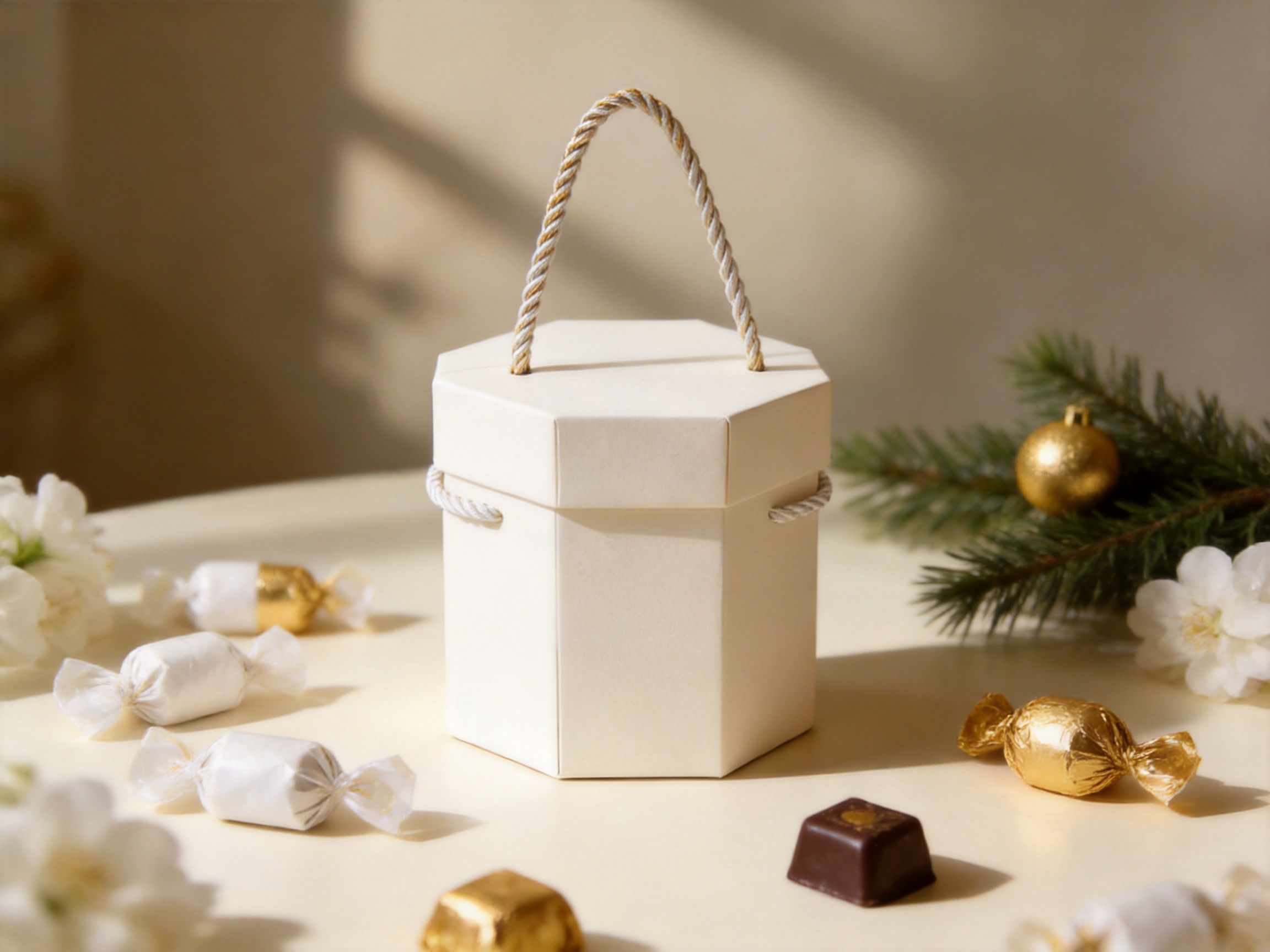
The 4007 competes with several types of small gift packaging, including paper bags, rectangular folding cartons, pillow boxes, plastic pouches, rigid favor boxes, and cylindrical containers. Each alternative has a place in the market, but the octagonal 3D box offers a particular combination of visual distinction, functionality, and event suitability.
| Alternative Format | Typical Strength | Potential Limitation Compared with the 4007 | 4007 Advantage |
| Flat paper bag | Low weight and simple filling | Less rigid and often less distinctive in presentation | Three-dimensional form and stronger decorative presence |
| Standard rectangular carton | Efficient production and stacking | Common shape with limited visual differentiation | Octagonal silhouette and multi-panel presentation |
| Pillow box | Recognizable shape and compact storage | May offer less stable display and limited hanging functionality | More stable event presentation with an integrated hanging rope |
| Plastic pouch | Visibility and flexibility | May provide a less formal or less premium appearance | Structured gift presentation and greater print area |
| Rigid luxury box | Strong premium impression | Higher weight, storage volume, and potential cost | Decorative appearance with a lighter, more event-friendly format |
| Cylindrical container | Distinctive profile | May be less efficient for panel-based personalization | Multiple flat surfaces for graphics and messaging |
The most important competitive advantage is not that the octagonal box replaces every other package. Instead, it fills a specific market need: an attractive and adaptable favor package that stands out from ordinary cartons while remaining suitable for bulk event use. Buyers can use it when visual impact matters but a heavy rigid box would be unnecessarily expensive or difficult to transport.
The hanging rope adds another point of differentiation. Many standard candy boxes are designed only to sit on a table. The 4007 can be carried, displayed, or suspended. This creates additional uses and may reduce the need for separate display accessories.
The multi-sided shape also supports more creative branding. A rectangular box generally has a front, back, top, and bottom. An octagonal design presents several visible facets, allowing buyers to create a continuous pattern, distribute information around the package, or use alternating graphics. This can be particularly valuable for event designers who want the package to look attractive from multiple directions.
Of course, the buyer should compare the product against competitors based on the full specification, not only the appearance. Important comparison points include paperboard weight, printing method, finishing quality, rope attachment, closure reliability, carton packing, sample approval, order flexibility, production lead time, and quality-control procedures.
The manufacturer behind the product is an export-oriented producer specializing in paper gift packaging boxes. According to the supplied company information, the business has more than 15 years of experience, covers approximately 20,000 square meters, employs around 300 people, and has advanced equipment supporting research, development, and production.
The stated average daily production capacity is approximately 5,000 sets of gift boxes. This level of capacity is relevant to wholesale buyers who need reliable volume production for seasonal launches, wedding distribution networks, retail campaigns, or promotional programs. Capacity alone does not guarantee quality, but it indicates that the manufacturer has developed organized systems for purchasing, production scheduling, assembly, packing, and shipment coordination.
An experienced factory can also be valuable when a product requires several operations. An octagonal box may involve structural design, paperboard preparation, printing, surface finishing, die-cutting, creasing, folding, gluing, rope attachment, inspection, and carton packing. Coordination among these stages is important because a small error in one process can affect the final appearance or assembly.
The company maintains its own design team and is reported to update dozens of products weekly. This suggests an active product-development approach rather than reliance solely on fixed catalog items. For buyers, a design team can help adapt the 4007 structure to new themes, dimensions, graphic styles, and seasonal requirements.
Research and development support may include structural improvements, artwork adaptation, sample preparation, material selection, finishing recommendations, and production problem solving. For example, a buyer may need a different internal capacity, a stronger hanging point, a new closure style, or a modified panel layout. A factory with in-house development resources can evaluate these changes more efficiently than a trading intermediary with no direct production capability.
Large-scale gift box production requires careful planning because event packaging is often time-sensitive. Wedding orders may be linked to a fixed ceremony date, while holiday programs must arrive before a specific retail season. Production organization therefore includes raw-material preparation, artwork confirmation, sample approval, scheduling, process coordination, and final packing.
The factory’s reported export experience to Europe, the United States, the Middle East, and other regions indicates familiarity with international order requirements. Export experience may include carton labeling, packing lists, commercial documentation, product inspection coordination, and communication with overseas buyers. These capabilities can reduce friction for importers who need a supplier able to manage more than the manufacturing step alone.
Quality control should cover both appearance and function. For a decorative box, print registration, color consistency, clean edges, accurate folding, and surface condition influence the customer’s impression. For a functional package, closure performance, dimensional accuracy, rope attachment, and structural stability are equally important.
Incoming-material inspection can verify paperboard quality, color, thickness, rope condition, adhesive suitability, and printed components. During printing, operators can monitor color, positioning, text accuracy, and surface defects. During die-cutting and creasing, the factory can check whether panels, tabs, folds, and attachment openings are correctly formed.
Assembly inspection should confirm that the box maintains its intended octagonal shape. If the folds are inaccurate or the adhesive application is inconsistent, the finished box may lean, open incorrectly, or show uneven panels. A quality-control process can identify these issues before the products are packed into export cartons.
Final inspection may include random sampling from completed cartons. Inspectors can check quantity, packaging condition, dimensions, visual consistency, and the presence of the hanging rope. If the customer has approved a reference sample, the production batch can be compared against that sample for shape, color, finish, and function.
For buyers, it is useful to define acceptance criteria before production. These may include permitted color variation, allowable minor paper marks, minimum rope strength, carton quantity tolerance, packaging method, and labeling requirements. Clear specifications help the factory and the buyer evaluate the order using the same standards.
The supplied company information states that the manufacturer has passed BSCI and FSC certifications. These certifications can be relevant to buyers seeking more transparent supply chains and responsible sourcing. BSCI is associated with social-compliance assessment, while FSC certification relates to responsibly sourced forest products under applicable certification systems.
Certification claims should always be confirmed with current documentation, certificate numbers, scope, and validity dates before being used in marketing or procurement decisions. The exact certificate scope matters because it may apply to certain facilities, materials, or production activities rather than every possible product or process.
Responsible manufacturing also includes workplace management, traceability, material control, waste reduction, energy use, and consistent quality systems. Buyers may request factory information, audit documents, material declarations, or production photographs when their internal compliance procedures require them.
For the 4007 product, environmental and social considerations can be integrated into the design stage. A buyer may request responsibly sourced paperboard, suitable inks, reduced plastic components, efficient flat packing, and documentation that supports the customer’s sustainability communication. These requests should be discussed before the quotation is finalized because they can affect material availability, pricing, and production time.
The listed packing quantity is 96 pieces per carton. This information helps buyers estimate order quantities, warehouse space, shipping volume, and distribution requirements. If the buyer’s target quantity is not an exact multiple of 96, the factory should confirm whether a partial carton is possible and how the remaining units will be protected.
The listed carton measurement of 82.5 x 55.5 x 54 provides a starting point for logistics planning. However, buyers should verify the final carton dimensions after artwork, assembly method, protective packaging, and packing orientation have been confirmed. Changes to folding configuration or accessories may affect the carton volume.
Carton packing should protect the boxes from crushing, moisture, abrasion, and deformation. The factory may use inner polybags, dividers, tissue, paper separators, or other protective methods depending on the construction. The hanging ropes should be arranged so they do not become tangled or place pressure on the box panels during transport.
International shipments may involve long storage periods and multiple handling stages. Buyers should consider the destination climate, warehouse conditions, container loading, and expected delivery route. Paper packaging can be affected by high humidity, so suitable moisture protection and dry storage are important. The manufacturer and buyer should also agree on shipping marks, carton labels, pallet requirements, and documentation.
For seasonal products, logistics planning should begin well before the event or selling period. Artwork approval, sample development, production, inspection, export handling, and inland or ocean transportation all require time. Early planning gives buyers more opportunity to correct a design issue without risking a missed seasonal deadline.
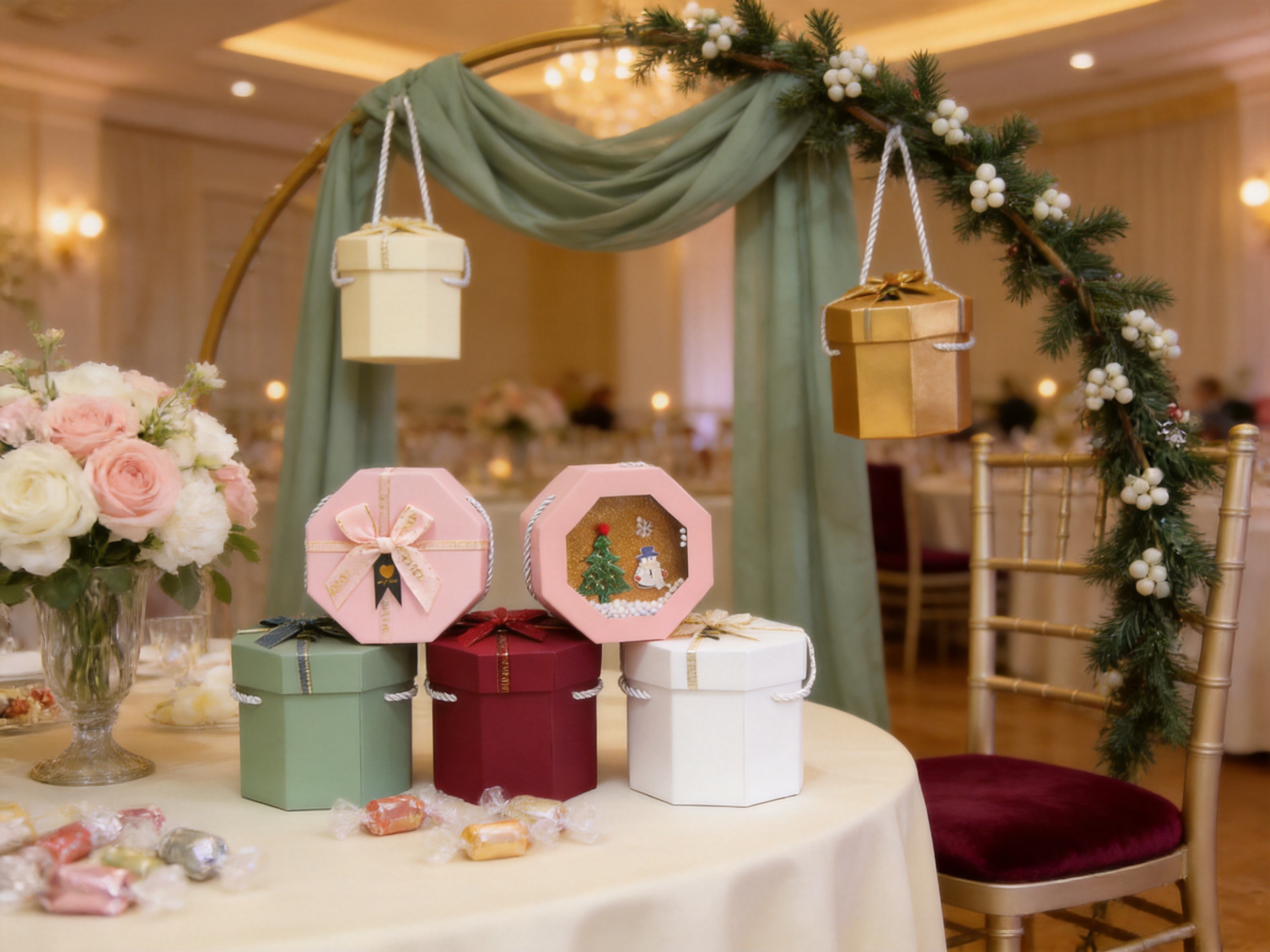
A well-organized ordering process reduces avoidable delays. The first step is to define the intended use. A wedding planner may need a small personalized order, while a distributor may require several colorways and a larger annual program. The buyer should communicate the event type, estimated quantity, filling contents, target delivery date, destination market, and expected price range.
The next step is to confirm the product specification. Buyers should verify size, unit of measurement, material, rope type, closure method, carton quantity, carton dimensions, gross weight, net weight, and whether the product is delivered flat, partially assembled, or fully assembled. These details influence both cost and logistics.
Artwork preparation follows specification confirmation. The buyer may provide finished artwork or request assistance from the factory’s design team. All text, logos, names, dates, colors, and legal information should be checked carefully. Personalized wedding orders require particular attention because a spelling error or incorrect date can make the entire batch unusable.
A sample or proof should be reviewed before mass production. The sample evaluation should consider print color, alignment, structure, folding, opening, filling, rope attachment, and presentation. If the product will contain a specific candy or favor, that item should be used during the filling test.
After sample approval, the buyer and manufacturer should confirm the purchase order, production schedule, payment terms, packaging instructions, inspection requirements, and shipping details. The factory can then arrange materials and begin production according to the approved reference.
Important questions include whether the listed dimensions are in centimeters, whether the size refers to the assembled box, what paper or plastic material is recommended, whether the rope is included in the quoted price, and whether the box is supplied flat or assembled. Buyers should also ask about minimum order quantity, sample charges, mold or tooling costs if applicable, printing method, color standards, and the estimated lead time.
It is also useful to confirm the recommended filling weight. The box is intended for candies and small gifts, but the maximum safe load may depend on material thickness and rope attachment. A test with the actual contents can help prevent overloading or deformation.
The 4007 is suitable for more than one event category. Its main markets include wedding favors, holiday packaging, party gifts, retail displays, corporate promotions, hospitality amenities, and seasonal gift programs.
For weddings, the box can be placed at each guest’s seat, arranged on a favor table, given to guests at the reception entrance, or used as part of a dessert display. The hanging rope provides additional placement options, especially when the event design includes suspended decorations.
For holiday retail, the box can hold chocolates, sweets, small ornaments, gift cards, or promotional samples. Stores may offer it as a ready-to-fill package or use it as part of a pre-filled seasonal gift set. Its octagonal form can make a product line look more specialized than one using ordinary cartons.
For corporate events, the box can communicate appreciation to employees, customers, distributors, or business partners. A company logo and campaign message can be printed on the panels, while the contents can be selected according to the occasion. A small branded favor can support a larger product launch, conference, trade-show activity, or customer loyalty campaign.
For hospitality businesses, the box may be used for welcome sweets, room gifts, wedding packages, or special-event amenities. Hotels, resorts, restaurants, and banquet venues can coordinate the box with their interior design or event branding.
For party suppliers and distributors, the product can be sold in multiple colorways or offered as a customizable base package. Distributors may target wedding planners, event decorators, confectionery businesses, gift shops, online sellers, and seasonal retailers.
The octagonal form should guide the artwork rather than be treated like a flat rectangular label. Designers should consider how the graphics move across each panel and how the package will look when viewed from different angles. A continuous pattern can emphasize the three-dimensional structure, while a central emblem can create a focal point.
High-contrast colors can make the facets more visible, but excessive contrast may create a visually busy appearance. Metallic colors such as gold and silver can reinforce a festive or premium theme, while soft neutrals, pastel tones, and botanical colors can create a refined wedding style.
Typography should remain legible on the available panel width. Names and dates should be positioned away from folds and attachment points. If the box includes a logo, the designer should determine whether it should face forward, repeat around the box, or appear on a hanging tag.
Finishing should support the purpose of the package. Matte surfaces may provide an elegant, understated appearance and reduce glare in event photography. Gloss finishes can make colors appear brighter and may be suitable for festive retail products. Foil and embossing can increase perceived value, but they should be used selectively to control cost and maintain visual clarity.
The rope color should complement the printed design. A matching rope creates a unified look, while a contrasting rope can function as a visual accent. For formal weddings, neutral, metallic, or soft-toned cords may be preferred. For holidays, red, green, gold, silver, or patterned cords may create a more recognizable seasonal effect.
Event organizers often need packaging that is attractive, easy to prepare, simple to distribute, and reliable under time pressure. The 4007 addresses these needs through a combination of structured form and convenient handling.
The box can be prepared in advance and filled according to a standardized process. Its compact size makes it suitable for storage before the event, while the hanging rope simplifies placement and distribution. A consistent design across all units can help the event appear more coordinated and professionally planned.
The package can also serve multiple purposes within the same event. Some units may be placed on tables, others may be attached to chairs, and additional units may be used as decorative elements. This flexibility allows planners to create a unified visual concept without purchasing several unrelated packaging styles.
Personalization can increase the emotional value of the favor. A guest may be more likely to keep a box that includes the couple’s names, date, or a thoughtful message. For corporate events, a branded box can extend the visual identity of the event beyond the venue and into the recipient’s home or office.
A product with a distinctive shape requires more than a basic printing service. The manufacturer must understand the relationship between artwork, die-cutting, folding, gluing, rope attachment, packing, and transportation. A factory with integrated development and production capabilities can help coordinate these requirements.
Manufacturer support is especially important when the buyer wants to change the standard product. A modification to the size may affect the die, material usage, internal volume, rope position, carton loading, and unit cost. A change in paperboard thickness may influence folding and assembly. A new finish may affect color reproduction or production speed. These relationships should be evaluated before the change is approved.
The stated experience, design team, production workforce, advanced equipment, and export background provide a foundation for this type of support. The company’s product range also includes kits, storage boxes, folding boxes, jewelry boxes, and other gift boxes, indicating familiarity with different packaging structures and market applications.
For international buyers, direct communication with a specialized manufacturer can simplify the process of discussing samples, specifications, artwork, packaging, and delivery. It can also help the buyer develop a repeatable product program rather than treating every order as a separate project.
Before ordering the 4007 octagonal 3D candy gift box, buyers should prepare a concise checklist. First, confirm the exact product size and measurement units. Second, identify the intended contents and test the filling capacity. Third, select the material, color, finish, and rope style. Fourth, prepare accurate artwork and personalization information.
Next, confirm the minimum order quantity, carton quantity, sample process, production schedule, shipping terms, and inspection requirements. Ask whether the supplied price includes printing, rope, assembly, accessories, and export packing. Confirm the final carton measurement and weight after all details are approved.
For food-related use, verify whether the contents will be wrapped and whether any additional liner or inner bag is required. For suspended use, confirm the recommended filling weight and rope attachment strength. For sustainability claims, request current material and certification documentation before making public statements.
Finally, approve a physical sample whenever possible. A sample provides a much more accurate understanding of the finished product than a digital image alone. It allows the buyer to assess shape, color, texture, opening, filling, carrying, and display performance.
The main use is packaging candies, chocolates, and small favors for weddings, holidays, parties, and promotional events. It may also hold other lightweight small gifts when the contents are compatible with the box material and dimensions.
The box has an octagonal three-dimensional structure and includes a hanging rope. The multi-sided form provides a more decorative appearance, while the rope allows the package to be carried, displayed, or suspended.
Yes. Possible customization may include printed names, dates, logos, colors, messages, patterns, finishes, rope colors, dimensions, and internal components. The exact options, minimum quantities, and costs should be confirmed with the manufacturer.
Yes. Its size and decorative structure are suitable for guest favors, reception table gifts, welcome gifts, dessert-table packaging, and suspended wedding decorations. Personalized names, initials, and dates can add commemorative value.
The hanging rope makes tree display possible when the box is filled with a suitable lightweight item and the attachment point is properly secured. Buyers should confirm the recommended filling weight and test the finished package before using it as a long-term hanging ornament.
The listed product size is 13 x 13 x 12.8. The supplied information does not specify the measurement unit, so buyers should confirm the unit and whether the dimensions refer to the assembled product.
The listed carton quantity is 96 pieces. Buyers should confirm whether the final packing quantity changes when accessories, assembly requirements, or protective packaging are added.
The listed carton measurement is 82.5 x 55.5 x 54. The final carton measurement should be reconfirmed after the product construction and packing method are approved.
The product can be evaluated using recyclable or biodegradable material options, depending on the final design. Environmental performance also depends on coatings, adhesives, rope materials, inks, and local recycling systems. Buyers should request specific material information before making sustainability claims.
Yes. A physical sample is recommended for checking color, structure, size, rope attachment, closure, filling capacity, and overall appearance. This is particularly important for personalized wedding packaging and multi-panel artwork.
The supplied company information states that the manufacturer has its own design team. Buyers may request assistance with structural adaptation, artwork preparation, product personalization, color selection, and packaging development, subject to the project requirements.
The manufacturer reports an average daily production capacity of approximately 5,000 sets of gift boxes. Large-order suitability still depends on the required quantity, customization level, seasonal schedule, material availability, and approved delivery date.
Buyers should not assume that the outer box is suitable for direct contact with unwrapped food. Individually wrapped contents or a suitable inner liner may be required. Food-contact requirements should be discussed with the manufacturer before production.
Buyers should compare material quality, dimensions, structural accuracy, print consistency, rope attachment, sample approval, customization support, production capacity, certifications, inspection procedures, carton packing, export experience, lead time, and total delivered cost.
The 4007 octagonal 3D holiday wedding candy gift box with hanging rope is a versatile packaging solution for occasions where presentation matters as much as containment. Its multi-sided structure provides a distinctive alternative to common rectangular cartons, while its hanging rope enables carrying, display, and decorative suspension.
The box is suitable for candies, chocolates, wedding favors, holiday gifts, promotional samples, and other small items. Its multiple panels support creative printing and personalization, including names, dates, logos, seasonal artwork, and event messages. Its compact form makes it practical for bulk event preparation, retail programs, and distribution through gift and party suppliers.
Its competitive value comes from the combination of visual differentiation, three-dimensional capacity, customizable surfaces, and integrated hanging functionality. It can provide more decorative impact than a simple bag or pouch, more individuality than a standard carton, and a lighter, more manageable format than a rigid luxury box.
The manufacturer’s reported experience, design resources, production workforce, equipment, export background, daily capacity, and BSCI and FSC certifications provide important support for buyers seeking a stable packaging partner. As with any customized packaging project, buyers should confirm dimensions, material, food-use conditions, rope strength, carton specifications, certifications, and production details before final approval.
With careful artwork development, accurate sampling, appropriate material selection, and organized quality control, the 4007 can become more than a container. It can serve as a wedding keepsake, a holiday ornament, a retail presentation tool, or a branded expression of appreciation. That combination makes it a strong option for buyers looking for memorable, adaptable, and commercially practical gift packaging.
1. Product specification for No. 4007 octagonal 3D holiday wedding candy gift box with hanging rope, supplied product information.
2. Manufacturer profile and company capability information, supplied corporate materials.
3. BSCI social-compliance framework and responsible supply-chain guidance.
4. FSC principles and criteria for responsible forest-product sourcing.
5. General packaging design principles for folding cartons, gift boxes, event favors, and retail presentation.
6. General quality-control practices for printed paper packaging, die-cut structures, folding cartons, and export packing.
Recommended Products

Contact Us

No. 15, Xiayang Road, Huangzhai Town, Jinhua, Zhejiang, China

(+86) 579-84230069

(+86) 13085675766


Products

Gift Box Packaging Manufacturer
 English
 Français
 Español
 عربى