2026-08-05
Gift packaging is no longer limited to protecting an item during transportation. Modern consumers expect packaging to create anticipation, communicate quality, support a memorable unboxing experience, and reflect the values of the brand or occasion. The Z225 ribbon rigid magnetic closure folding gift packaging paper box is designed around these expectations. It combines a firm paperboard structure, a convenient magnetic closure, an elegant ribbon detail, and a folding construction that helps reduce storage requirements.
With dimensions of 20 × 18.2 × 8 cm, the box provides a useful format for a broad selection of products, including toys, sweets, shoes, jewelry, stationery, crafts, and general presents. Its rigid appearance gives it a premium visual identity, while its folding design offers practical advantages during warehousing and distribution. This balance between presentation, durability, convenience, and logistics makes it suitable for retailers, gift companies, e-commerce businesses, event organizers, and brands seeking customized packaging.
The product is manufactured by Zhejiang Shihao Gift Packaging Co., Ltd., an export-oriented paper packaging manufacturer with more than 15 years of experience. The company integrates product development, design, production, quality management, and sales support. Its production facilities cover approximately 20,000 square meters, and its workforce includes around 300 employees. With advanced equipment, an in-house design team, FSC and BSCI certifications, and an average daily output of approximately 5,000 sets of gift boxes, the manufacturer is equipped to support both standard products and customized packaging projects.
This article examines the structure, functionality, appearance, manufacturing strengths, customization possibilities, commercial applications, sustainability considerations, and purchasing value of the Z225 folding gift box. It also compares the practical advantages of this format with ordinary paper cartons, conventional rigid boxes, and less refined gift packaging options.
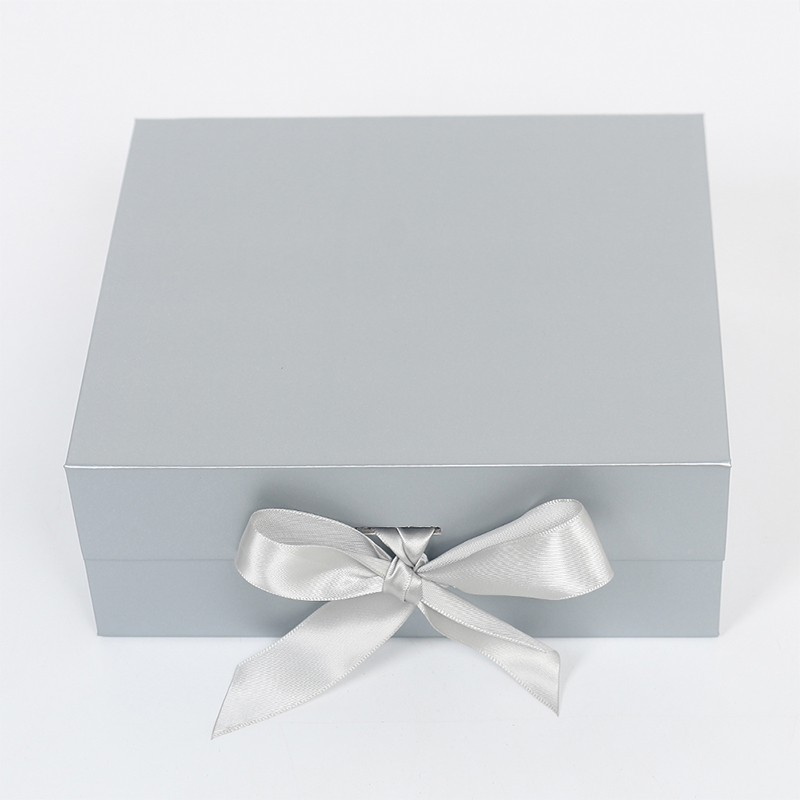
Z225 Ribbon Rigid Magnetic Closure Folding Gift Packaging Paper Box
The Z225 is a folding gift box made from grey paper and art paper. Its construction is intended to provide the visual impression and structural stability of a rigid gift box while retaining the logistical advantages of a foldable format. When assembled, the box presents a clean, substantial form that can elevate the perceived value of the contents. When not in use, the folding structure can help reduce the amount of space needed for storage and transportation.
The product combines four principal design elements: a rigid paperboard body, a magnetic closure, a ribbon accent, and a folding structure. Each element contributes a different benefit. The rigid body supports the product and helps the package retain its shape. The magnetic closure allows the lid to open and close smoothly. The ribbon adds a decorative and tactile feature while also offering a convenient point for handling. The folding design makes the box easier to store before final assembly or use.
Unlike a basic folding carton, the Z225 is intended to function as part of the gift itself. Its appearance can support premium positioning in retail displays, seasonal campaigns, promotional programs, and direct-to-consumer deliveries. The package does not rely solely on printing or decorative graphics to create a high-end impression. Its physical construction, opening action, and carefully coordinated details all contribute to the overall presentation.
The 20 × 18.2 × 8 cm format offers a balanced internal volume. It is compact enough for efficient handling but large enough for many everyday gift products. Depending on the selected insert or interior arrangement, the box can accommodate products such as confectionery assortments, jewelry, small footwear items, toys, personal accessories, craft products, stationery, and branded promotional goods.
Rigid gift boxes are often associated with strength and luxury, but traditional rigid constructions may require more warehouse space because they are delivered fully assembled. The Z225 addresses this logistical concern through its folding construction. The box can be stored and transported in a more compact condition before use, helping buyers manage inventory more efficiently.
This feature is especially useful for brands that operate seasonal product lines. A retailer may need to purchase packaging well before a holiday campaign begins. Foldable packaging can reduce the pressure on storage areas during the period between delivery and final packing. It can also support more efficient movement of packaging materials between factories, distribution centers, stores, and fulfillment locations.
Once opened and formed, the box is designed to provide a firm and organized presentation. The foldable structure does not mean that the final package must look temporary or weak. Instead, the design seeks to combine the compact logistics of a folding carton with the visual confidence of a rigid presentation box.
The magnetic closure is one of the most important functional characteristics of the product. It allows the lid to close without depending on glue, tape, or complicated external fasteners. The opening action is quick and intuitive, while the closing action helps keep the package secure during normal handling.
From a customer experience perspective, magnetic closure can make the unboxing process feel more deliberate and refined. A lid that opens smoothly encourages the recipient to interact with the package rather than immediately discard it. The closure also allows the box to be reopened and closed, which can be useful when the packaging is reused for storage or when a recipient wants to protect the contents after opening.
Compared with adhesive closures, a magnetic mechanism can provide a cleaner exterior appearance. Tape may leave visible seams, while glue can affect the presentation if applied unevenly. A properly integrated magnetic closure keeps the front of the box visually organized and supports repeated use. It also reduces the need for disposable sealing materials during final packing.
The ribbon element adds a decorative contrast to the paper structure. It can be coordinated with the box color, printed design, brand identity, or seasonal theme. A ribbon may make the package appear more festive for holidays, more delicate for jewelry, or more distinctive for corporate gifting.
The ribbon is not only an ornamental feature. It can also assist with handling and opening, depending on the selected configuration. A recipient may use it as a practical grip when lifting or opening the lid. This combination of appearance and utility makes the ribbon a valuable design component rather than a purely decorative addition.
In a competitive packaging market, small tactile details can influence how a product is perceived. A smooth paper surface, a firm lid, a coordinated ribbon, and a controlled magnetic closure can communicate care and attention to detail. These details are particularly important for gifts, where the packaging forms part of the emotional presentation.
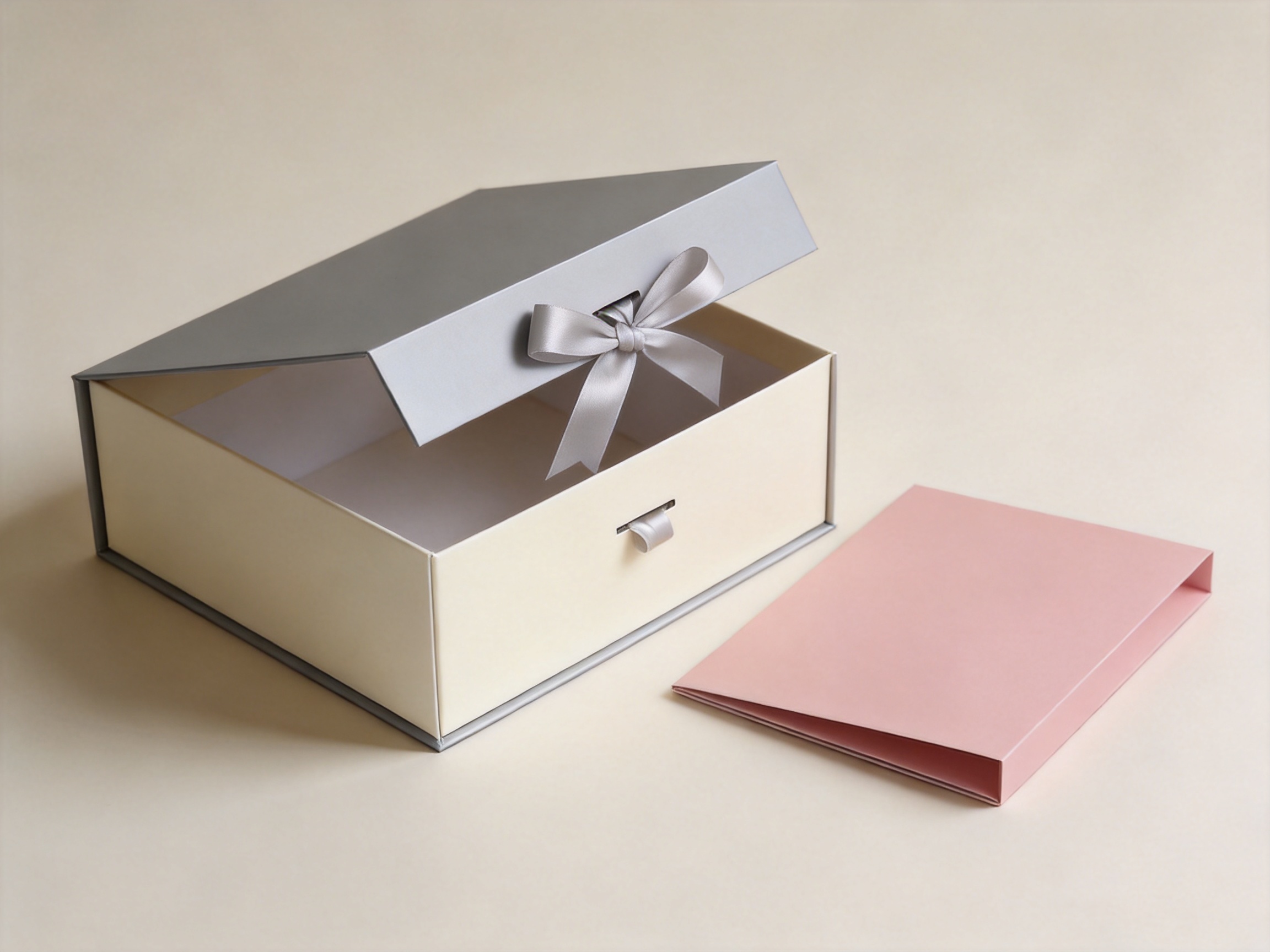
The Z225 offers several advantages when compared with ordinary folding cartons, simple paper bags, basic storage boxes, and fully assembled rigid boxes. Its value comes from the way multiple functions are integrated into one design. Rather than treating protection, presentation, storage, and convenience as separate concerns, the product brings them together.
Standard folding cartons are often selected for their low cost and efficient shipment, but they may not provide the same level of structure or presentation. They can be suitable for mass-market goods, yet they may appear too ordinary for premium gifts, promotional products, or products that rely on a high-quality first impression.
The Z225 offers a more substantial appearance through its rigid paper construction. Its magnetic closure and ribbon finish further distinguish it from a basic tuck-end or glued carton. A business can use this format to create a more elevated presentation without necessarily choosing a fully rigid box that takes up considerable storage space.
Adhesive closures can be inconvenient during packing and may be difficult to reopen without damaging the package. Tape can also interfere with visual presentation. The magnetic closure used in the Z225 is intended to simplify the closing process and provide a neat front surface.
For fulfillment operations, a closure that does not require separate tape can reduce the number of packing materials needed at the workstation. For the end customer, the box can be opened without cutting tools or tearing. These benefits improve convenience for both the business and the recipient.
A conventional rigid box may deliver excellent structural strength but occupy nearly its full final volume throughout shipping and storage. When a buyer needs thousands of boxes, this difference can become significant. The folding design of the Z225 can help reduce the space consumed before the box is formed.
Space efficiency can support better warehouse organization and may help buyers plan seasonal inventory. It can also improve the practicality of exporting packaging to international markets. While actual freight savings depend on shipping conditions, packing configuration, and order volume, a folding design generally provides a useful logistical advantage over fully assembled packaging.
The magnetic closure and sturdy paperboard construction allow the box to remain useful after the initial gift has been opened. Recipients may reuse it to store jewelry, stationery, accessories, small toys, keepsakes, or household items. Reusability extends the practical life of the package and can increase the perceived value of the original purchase.
A package that remains useful after delivery may also support stronger brand recall. Instead of becoming immediate waste, it can continue to appear in the customer’s home or office. This creates additional opportunities for the packaging to remain associated with the product, retailer, or gifting occasion.
The Z225 is not limited to one narrow application. Its listed uses include gift packaging, storage, gifts, and crafts. The product description also identifies toys, sweets, shoes, jewelry, and many other presents as suitable contents.
This versatility allows importers and distributors to use one box format across several product programs. A brand may change the printing, ribbon, insert, or surface finish while keeping the basic structural format. Such flexibility can simplify packaging development for businesses that sell multiple categories or launch limited-edition campaigns.
The product uses grey paper and art paper. These materials can provide a suitable foundation for a structured gift box, particularly when combined with accurate wrapping, folding, and finishing processes. Grey paper is commonly valued for its supporting structure, while art paper can provide a smooth and attractive printable surface.
Material selection affects more than appearance. It influences the box’s rigidity, folding behavior, surface quality, print compatibility, assembly performance, and overall durability. A well-designed paper box must balance these factors. If the board is too flexible, the box may lose its shape. If it is too rigid for the folding structure, creasing and assembly may become difficult. The selected materials must work together with the product’s dimensions and closure design.
The Z225 is described as sturdy and capable of maintaining its shape. This characteristic is important for gift packaging because a deformed box can reduce customer confidence even when the contents remain undamaged. A stable structure helps the box sit properly on retail shelves, in gift displays, and inside shipping cartons.
Structural stability is also important when the box is opened and closed repeatedly. The lid, side panels, base, and folding joints must work as a coordinated system. Proper construction supports a cleaner appearance and reduces the likelihood of misalignment during normal use.
Art paper can offer a suitable surface for customized graphics, logos, colors, patterns, and promotional messages. This gives buyers the ability to adapt the package to a specific market or campaign. Depending on the project requirements, a customized surface may include brand colors, seasonal artwork, product information, illustrations, or simple minimalist designs.
The visual quality of the finished product depends on more than the paper itself. It also depends on artwork preparation, color management, printing control, wrapping accuracy, and finishing inspection. The manufacturer’s in-house design team can provide professional advice and support custom design projects, helping customers move from an initial concept to production-ready files.
The standard dimensions are 20 × 18.2 × 8 cm. This format is broad enough for many small and medium-sized presents while remaining manageable for handling and display. Buyers should confirm the product dimensions, interior clearance, closure position, and any required inserts before placing a production order.
For products with irregular shapes, fragile surfaces, or multiple components, the internal arrangement may be just as important as the external dimensions. Custom inserts can help keep contents in position, separate individual items, and improve the presentation when the lid is opened. The manufacturer’s design resources may assist with evaluating these requirements.

The product is supported by a manufacturer with an established focus on paper gift packaging. Zhejiang Shihao Gift Packaging Co., Ltd. has more than 15 years of experience in production, research and development, and sales. This experience is valuable because gift packaging requires coordination across design, material selection, structural engineering, printing, finishing, assembly, packing, and export documentation.
The company operates across approximately 20,000 square meters and employs around 300 people. This scale provides a foundation for handling commercial orders while maintaining specialized teams for different stages of the production process. The company’s average daily production capacity is approximately 5,000 sets of gift boxes, supporting the needs of businesses that require regular replenishment or large campaign volumes.
An integrated production model can simplify communication between the customer and the factory. Instead of working with separate companies for structure, artwork, sampling, and mass production, a buyer can coordinate these stages with one packaging manufacturer. This may help reduce delays caused by transferring technical information between suppliers.
The company has its own design team and updates dozens of products weekly. This indicates an active approach to product development and market response. Buyers can seek professional advice on structural choices, visual design, paper selection, and customization. Custom designs are welcome, allowing the standard Z225 format to serve as a starting point rather than a fixed limitation.
The manufacturer is described as having advanced equipment and strong research and production capabilities. For a product such as the Z225, production equipment and process organization are important for maintaining consistency across many units. Cutting, creasing, printing, folding, wrapping, ribbon application, and magnetic closure installation must be coordinated carefully.
Consistent equipment settings can help control dimensions, fold positions, edge alignment, and surface quality. Organized production planning can also support delivery schedules, particularly for orders connected to holidays, retail launches, or promotional events. The stated delivery period is 7–45 days or according to customer requirements, with the actual schedule depending on design approval, order quantity, material availability, production planning, and shipping arrangements.
The company has passed BSCI and FSC certifications. These certifications can be important to buyers that evaluate social responsibility, responsible forestry, supply-chain standards, or sustainability policies. Certification requirements and scope should always be confirmed for the specific order and current production arrangements, but the company’s stated certifications provide a useful foundation for responsible procurement discussions.
FSC-related sourcing can support buyers that want paper packaging connected to responsible forest management systems. BSCI-related standards can be relevant to businesses that assess working conditions and ethical sourcing. Together with the use of paper-based materials and a reusable format, these credentials help position the product as a more sustainability-conscious option than packaging designed only for single-use disposal.
The manufacturer exports products to Europe, the United States, the Middle East, and other regions. Export experience can help a supplier understand the importance of protective packing, production documentation, communication across time zones, and buyer-specific requirements. International customers may also have different expectations concerning dimensions, materials, artwork, labeling, testing, and delivery schedules.
For an overseas buyer, the ability to communicate with a factory that regularly serves international markets can reduce uncertainty during product development. It is still important for the buyer to provide complete specifications and approve samples, but an experienced export manufacturer can offer a more structured path from inquiry to shipment.
Customization is one of the main commercial advantages of a professional gift box manufacturer. The standard Z225 design can be adapted through artwork, color, ribbon selection, interior arrangements, surface treatment, and other project-specific details. Customization enables the same structural format to serve different industries and brand identities.
Customers can develop artwork that reflects their logo, brand colors, product story, seasonal campaign, or target market. A jewelry company may prefer refined colors and restrained graphics, while a confectionery brand may select bright illustrations and celebratory patterns. Corporate buyers may require a formal layout with a logo and event message.
The design team can provide professional advice during the artwork stage. Customers should submit appropriate design files and clarify color expectations before sampling. Digital proofs or physical samples can help identify issues related to text size, image quality, panel orientation, and the placement of the magnetic closure or ribbon.
The ribbon can be selected to complement the printed design and product category. Color, width, texture, and placement all influence the final appearance. A subtle ribbon may suit premium stationery or business gifts, while a brighter ribbon may be appropriate for holiday packaging or children’s products.
Ribbon coordination is especially useful for creating product families. A business may use one box structure with different ribbon colors to distinguish product tiers, seasonal collections, or customer segments. This approach can create visual consistency while allowing individual products to remain recognizable.
Some products require additional protection or organization inside the box. Inserts can help position jewelry, separate sweets, support small toys, or arrange several promotional products. Interior components may be developed according to the shape, weight, fragility, and presentation requirements of the contents.
A well-planned interior can improve the unboxing experience. The recipient should see the product in an intentional arrangement rather than finding it loose or poorly positioned. Buyers should provide accurate product samples or dimensional drawings when requesting a custom insert, since even small variations can affect fit.
Although the listed Z225 dimensions are 20 × 18.2 × 8 cm, customized projects may require different dimensions. Changes to length, width, height, lid proportions, panel structure, or closure location should be discussed with the manufacturer before production. Structural changes may affect material usage, folding performance, magnetic placement, ribbon length, carton packing, and minimum order planning.
Custom structural development is most effective when the buyer provides clear information about the product, expected loading method, distribution environment, desired appearance, and target price. The manufacturer can then evaluate the most appropriate construction and recommend practical adjustments.
The Z225 can be used in a wide range of commercial and personal gifting situations. Its combination of practical size, protective structure, and decorative finish makes it suitable for both product packaging and standalone gift presentation.
Jewelry and small accessories benefit from packaging that communicates precision and value. The magnetic closure and ribbon can create a refined presentation for bracelets, necklaces, watches, scarves, hair accessories, or other personal items. An interior insert can keep each item organized and help prevent movement during handling.
For jewelry retailers, reusable packaging may also support customer loyalty. A recipient can continue using the box to store small personal items after the original gift has been opened. The external design can be customized to match a luxury, contemporary, traditional, or artisanal brand identity.
The box can be considered for sweets and other gift-oriented food products when the internal packaging and applicable food-contact requirements are properly addressed. Wrapped confectionery, seasonal assortments, and promotional treats can benefit from a presentation box that feels more special than a standard carton.
Food businesses should confirm whether an internal barrier, tray, bag, or other protective layer is necessary. The paper gift box should be selected and used according to the relevant product safety, hygiene, and moisture-control requirements of the destination market.
For toys and children’s gifts, the box can provide an appealing presentation and an organized way to package small products. Colorful printed artwork, themed ribbons, and custom inserts can make the package more engaging. The box may also be reused for storing small toys, cards, craft supplies, or collectibles.
When packaging children’s products, buyers should review applicable safety requirements, including any concerns related to small components, ribbons, magnets, and intended age groups. Product design and compliance review should be completed according to the destination market and the specific contents.
The dimensions may be appropriate for certain small footwear items, fashion accessories, folded apparel, or related gifts, subject to actual product size. A gift box can help fashion businesses create a coordinated brand experience from the point of purchase through delivery.
For e-commerce brands, the exterior can carry printed branding and handling information, while the interior can be arranged to prevent movement. A sturdy box can also help preserve the appearance of the product during ordinary distribution, although the shipping system should include an appropriate outer carton when needed.
The product category includes stationery storage box applications, and the Z225 format can be useful for notebooks, pens, cards, small craft kits, art tools, and creative gift sets. The reusable structure is particularly appropriate for items that benefit from organized storage after purchase.
Craft and stationery brands may use custom printing to communicate a handmade, educational, premium, or environmentally conscious identity. The box can also be used for workshop kits, corporate stationery gifts, event materials, and limited-edition collections.
Corporate gifts require packaging that looks professional and is easy to distribute. A customized magnetic gift box can carry a company logo, event theme, or seasonal message without relying on additional wrapping materials. The ribbon can be matched to corporate colors or a holiday palette.
For large campaigns, the minimum order quantity of 3,000 pieces may be suitable for regional promotions, annual events, employee appreciation programs, and retail launches. Businesses should plan design approval, production, and delivery early when packaging is required for a fixed holiday or event date.
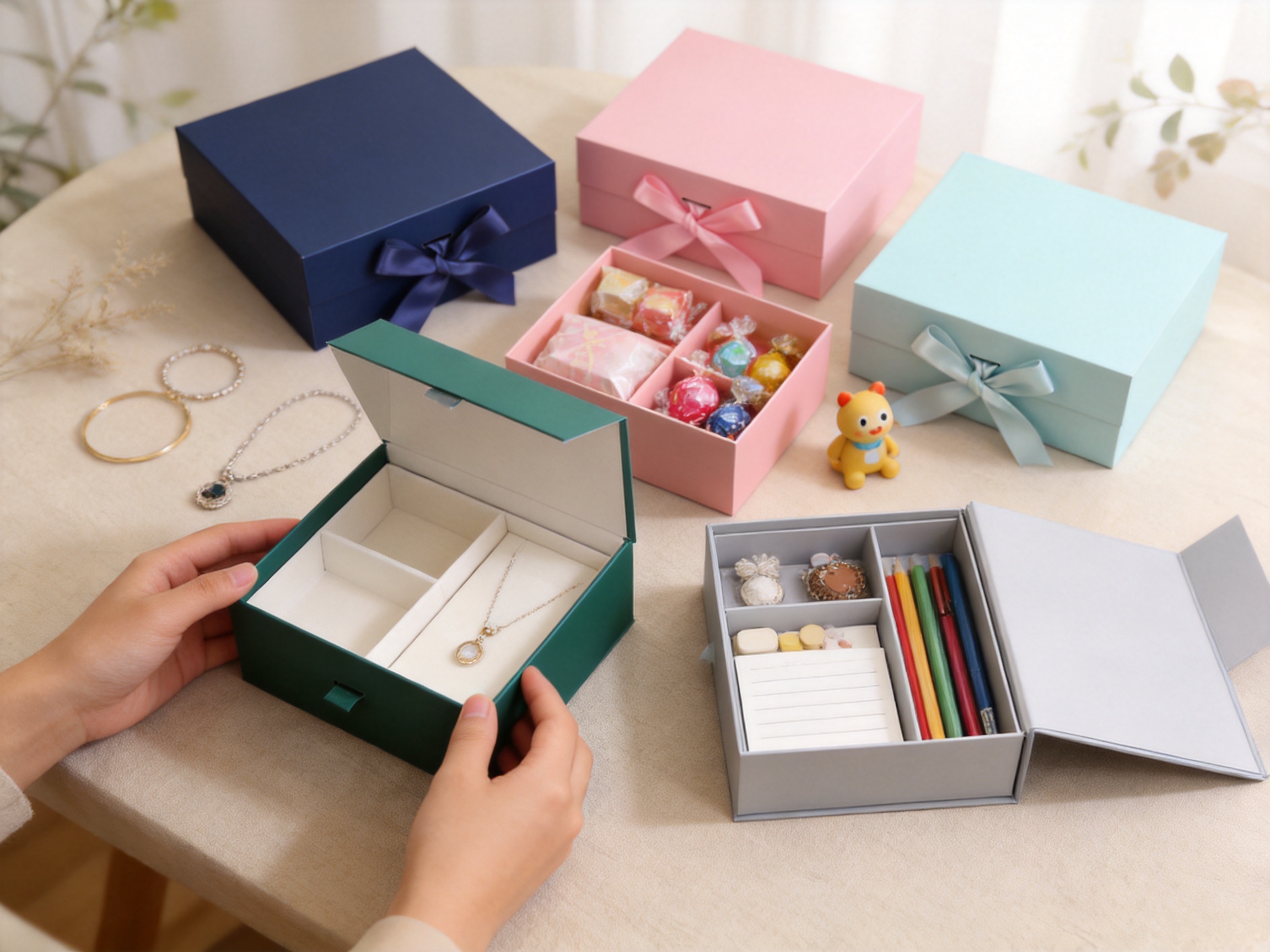
Environmental considerations have become increasingly important in packaging procurement. The Z225 is paper-based and includes a folding design that may help reduce storage volume before use. Its sturdy construction and reusable magnetic closure can also extend the life of the package beyond the initial gifting occasion.
These features do not eliminate the need for responsible disposal or careful material selection, but they can contribute to a more considered packaging strategy. Buyers should evaluate the complete packaging system, including coatings, ribbons, magnets, inserts, inks, adhesives, and outer shipping cartons. End-of-life recycling depends on the final material combination and the facilities available in the destination market.
Paper is widely used in packaging because it can provide structure, printability, and a familiar recycling pathway. The use of grey paper and art paper supports a paper-centered design. Buyers seeking specific environmental performance should confirm paper sourcing, recycled content, coatings, inks, and certification documentation for the actual production order.
FSC certification stated by the manufacturer may be relevant to buyers that require responsibly sourced paper. However, certification should be reviewed in relation to the specific materials and supply-chain documentation used for the project. Clear communication during procurement helps ensure that environmental claims are accurate and appropriately supported.
Because the box can be folded, it may require less storage space than a fully assembled rigid box. More efficient storage can help reduce warehouse pressure and improve packaging inventory management. It may also support more efficient shipment planning, although freight performance depends on carton dimensions, stacking method, order quantity, and destination.
A reusable box can be used for storage of small household items, stationery, jewelry, crafts, photographs, or keepsakes. Reuse gives the package a longer functional life and helps the recipient see it as an object with continuing value rather than disposable wrapping.
Designing for reuse also encourages brands to think about durability and appearance together. A package that remains attractive after opening is more likely to be retained. The magnetic closure is particularly helpful because it supports repeated opening and closing without requiring replacement tape.
The minimum order quantity for the Z225 is 3,000 pieces. This quantity is appropriate for many commercial packaging programs but should be considered carefully by smaller businesses. A buyer should estimate sales volume, seasonal demand, storage capacity, and the likely duration of the design before confirming the order.
The listed packaging arrangement is 72 pieces per carton. This information helps buyers estimate warehouse requirements and shipping quantities. Before final production, the buyer should confirm the carton dimensions, gross weight, palletization method, shipping marks, and any destination-specific requirements.
A complete inquiry should include the intended product, target dimensions, quantity, artwork requirements, ribbon preferences, closure expectations, insert requirements, delivery destination, and desired delivery date. Product samples or accurate dimensional drawings are helpful when the package must fit a particular item.
Buyers should also identify whether the box will be used for retail display, direct shipping, event distribution, or gift presentation. Each application may require different levels of surface protection, interior support, and outer-carton protection.
Sampling is an important stage before mass production. A physical sample can help the buyer evaluate the paper feel, box rigidity, folding action, magnetic closure, ribbon placement, color appearance, lid alignment, and internal fit. It can also reveal problems that may not be obvious in a digital drawing.
Customers should approve the final artwork, dimensions, materials, and sample condition in writing. Any changes made after approval may affect the production schedule and cost. A clear approval process protects both the buyer and the manufacturer by establishing an agreed reference standard.
The stated delivery time is 7–45 days or according to customer requirements. The shorter end of this range may apply to products with approved designs, available materials, and suitable production capacity. Customized structures, special finishes, large quantities, or holiday demand may require additional planning.
International buyers should allow time for sampling, artwork confirmation, production, inspection, export handling, and transportation. A realistic schedule is particularly important for seasonal packaging, since delays close to a campaign launch can create significant commercial pressure.
Available payment methods include wire transfer, letter of credit, PayPal, and other arrangements subject to agreement. Buyers should confirm payment terms, deposit requirements, balance timing, currency, banking details, and documentation before placing an order.
When evaluating the Z225 or a customized version, buyers can use a structured checklist to assess both appearance and function. This approach helps ensure that packaging performance matches the intended application.
| Evaluation Area | Points to Review | Commercial Importance |
|---|---|---|
| Dimensions | External size, internal clearance, lid fit, and insert compatibility | Ensures the product fits securely and presents correctly |
| Structure | Rigidity, panel alignment, folding performance, and shape retention | Supports protection, display quality, and customer perception |
| Magnetic Closure | Closing strength, alignment, opening action, and repeated use | Influences convenience and the unboxing experience |
| Ribbon | Color, position, attachment, length, and appearance | Contributes to decoration and handling |
| Surface | Color consistency, print clarity, scuff resistance, and finish | Protects brand presentation and retail appeal |
| Interior | Product support, insert fit, cleanliness, and presentation | Reduces movement and improves the opening experience |
| Carton Packing | Quantity per carton, protection, marks, and stacking arrangement | Supports safe storage and export transportation |
| Documentation | Material details, certifications, approvals, and shipping information | Supports procurement, compliance, and supply-chain management |
Choosing a gift packaging supplier involves more than comparing unit prices. The supplier’s ability to manage design changes, maintain quality, meet deadlines, communicate clearly, and support future product development can have a major effect on the total value of the project.
An experienced manufacturer can identify potential production problems before mass manufacturing begins. For example, the supplier may recommend a different board combination, adjust a fold line, reposition a magnet, modify a ribbon attachment, or revise an insert to improve fit. Early technical advice can prevent costly changes later.
Zhejiang Shihao Gift Packaging Co., Ltd. offers a combination of manufacturing scale, design support, export experience, and product variety. Its portfolio includes kits, storage boxes, folding boxes, jewelry boxes, and gift boxes. This range can benefit buyers that want to develop several packaging formats with one supplier.
Businesses often begin with one packaging order and later require repeat production, new sizes, or related designs. A manufacturer with substantial facilities and regular output may be better positioned to support this growth. Consistency between production batches is especially important when packaging is used across multiple retail locations or product launches.
The stated daily production capacity of approximately 5,000 sets provides an indication of the company’s ability to manage ongoing production. Actual capacity allocation should be confirmed for each project, particularly during peak seasons.
Packaging should evolve as products and consumer preferences change. An in-house design team can help develop fresh graphics, new structures, seasonal variants, and coordinated product families. The company reports updating dozens of products weekly, which suggests an active product-development environment.
For brands that do not have extensive internal packaging expertise, professional supplier guidance can shorten the path from concept to finished box. The buyer remains responsible for approving the final result, but expert recommendations can make the development process more practical.
Exporting to Europe, the United States, the Middle East, and other regions exposes a supplier to varied customer expectations. International market awareness can be useful when discussing packaging dimensions, documentation, delivery planning, and responsible sourcing. Buyers should still communicate all destination-market requirements clearly, but an experienced export supplier may be familiar with many common procurement processes.
The Z225 occupies a useful position between low-cost disposable packaging and highly rigid luxury packaging. It is more visually distinctive and functionally refined than a basic paper carton, while its folding structure can make it more practical to store than a fully assembled rigid box.
This positioning is attractive to businesses that need premium presentation but also care about logistical efficiency. A retailer may want a gift box that looks substantial on a shelf without dedicating excessive warehouse space. An e-commerce company may want a reusable package with a secure closure. A corporate buyer may need a customized box that can be ordered in commercial quantities and distributed across multiple events.
The product’s competitive advantages are therefore not limited to one feature. Its strength comes from the combination of rigid construction, magnetic closure, ribbon styling, folding storage, customizable artwork, reusable design, and manufacturer support. Competitors may offer one or two of these features, but the integrated format can provide a more balanced solution for buyers with multiple requirements.
Packaging value should be measured through the entire supply chain and customer experience. A box that is inexpensive but difficult to assemble, easy to deform, or visually unappealing may create hidden costs. Conversely, a well-designed package can support product positioning, reduce the need for additional wrapping, improve customer satisfaction, and encourage reuse.
The magnetic closure can reduce dependence on tape, while the folding construction may assist storage. The ribbon can combine decoration and handling. The rigid paper body can support presentation and product organization. These combined functions may create value that is not visible in a simple price-per-piece comparison.
Successful customization begins with a clear design objective. Buyers should decide whether the box is intended to communicate luxury, sustainability, playfulness, tradition, modernity, simplicity, or corporate professionalism. The visual direction should be consistent with the product inside and the expectations of the target customer.
Artwork should be prepared with careful attention to panel orientation. The lid, front panel, side panels, base, and ribbon area may have different visual priorities. Text should remain readable, and important graphics should not be placed too close to folds, edges, magnets, or ribbon attachments.
Color selection should also consider the material surface and printing process. A color viewed on a monitor may appear different when printed on paper. Physical sampling is recommended for important brand colors, especially when packaging must match other printed materials.
Minimalist designs can highlight the box’s shape, ribbon, and closure. More decorative designs can use patterns, illustrations, foil effects, or thematic artwork where appropriate. The most successful design is not necessarily the most complex. It is the one that makes the product recognizable, attractive, and consistent with the intended occasion.
Before use, the boxes should be stored in a clean, dry environment away from excessive moisture, direct sunlight, and sources of heat. Paper packaging can be affected by humidity, and prolonged exposure may influence surface appearance, structural performance, or adhesive components.
Cartons should not be overloaded or stacked beyond the recommended arrangement. Buyers should confirm pallet and carton handling instructions with the manufacturer. During assembly, operators should unfold the box carefully and ensure that the panels are properly aligned before placing products inside.
The magnetic closure should be operated through the intended lid movement rather than forced from an angle. Ribbons should be kept free from sharp edges or excessive tension. If the box is used for a heavy product, the buyer should verify the load-bearing performance during sampling and product testing.
The Z225 is a ribbon-sealed rigid magnetic closure folding gift packaging paper box. It combines a sturdy paper structure with a foldable design, decorative ribbon, and magnetic lid closure.
The listed dimensions are 20 × 18.2 × 8 cm. Buyers should confirm whether these are external or internal dimensions for their specific project and should request a sample when precise product fit is important.
The listed materials are grey paper and art paper. The final material combination, paper thickness, surface treatment, and any additional components should be confirmed during the quotation and sampling process.
The magnetic closure is designed to allow the box to open and close without glue or tape at the point of use. Other manufacturing components may still involve adhesives depending on the construction, wrapping, ribbon, or assembly method.
Yes. Custom designs are welcome. Buyers can discuss printed artwork, colors, ribbon details, dimensions, inserts, structural changes, and other packaging requirements with the manufacturer’s design and sales teams.
The box is suitable for many gifts and small products, including toys, sweets, shoes, jewelry, stationery, craft products, accessories, and promotional items. Actual suitability depends on product size, weight, shape, fragility, and any applicable safety or food-contact requirements.
The stated minimum order quantity is 3,000 pieces. Buyers should confirm whether the minimum changes for special materials, customized dimensions, additional inserts, or other non-standard requirements.
The listed packaging arrangement is 72 pieces per carton. Carton dimensions, weight, and loading details should be confirmed before shipment planning.
The listed delivery time is 7–45 days or according to customer requirements. The final schedule depends on artwork approval, sampling, order quantity, materials, production planning, and transportation.
Yes. The manufacturer is export-oriented and reports shipments to Europe, the United States, the Middle East, and other regions. International buyers should provide destination, documentation, labeling, and delivery requirements at the inquiry stage.
The company reports having passed BSCI and FSC certifications. Buyers requiring certification documentation should request current and order-relevant supporting information before making sustainability or compliance claims.
Yes. Its sturdy paper construction and magnetic closure make it suitable for secondary storage of stationery, jewelry, crafts, accessories, keepsakes, and other small items, provided that it is used in a dry and suitable environment.
Buyers should inspect the dimensions, rigidity, folding action, lid alignment, magnetic closure, ribbon placement, print quality, surface finish, interior fit, and carton packing. A sample should be evaluated with the actual product whenever possible.
Customized dimensions may be possible, but changes can affect the structure, material usage, ribbon length, magnetic placement, insert design, carton packing, and production schedule. These details should be reviewed with the manufacturer before artwork approval.
The Z225 ribbon rigid magnetic closure folding gift packaging paper box is designed to meet the needs of businesses that want attractive, functional, and adaptable gift packaging. Its rigid paper construction supports a premium appearance, while the folding format can improve storage and distribution efficiency. The magnetic closure provides a convenient opening and closing experience, and the ribbon adds both decorative appeal and practical handling value.
Compared with ordinary folding cartons, the product offers a more elevated presentation. Compared with traditional fully assembled rigid boxes, it can provide a more space-conscious logistics solution. Its reusable format, paper-based construction, customization potential, and broad application range make it suitable for jewelry, sweets, toys, stationery, crafts, accessories, corporate gifts, holiday products, and many other presents.
The manufacturer strengthens the product proposition through more than 15 years of industry experience, approximately 20,000 square meters of facilities, around 300 employees, advanced equipment, an in-house design team, export experience, FSC and BSCI certifications, and an average daily production capacity of about 5,000 gift box sets. These capabilities can support buyers from initial design consultation through sampling, mass production, packing, and international delivery.
For companies seeking customized gift box packaging, the most effective approach is to define the product requirements clearly, review the structural design carefully, approve a physical sample, confirm material and certification details, and plan production well ahead of the desired delivery date. When these steps are managed properly, the Z225 can provide a dependable packaging platform that protects products, enhances presentation, supports brand identity, and creates a more memorable gifting experience.
1. Product specification and description for the Z225 ribbon rigid magnetic closure folding gift packaging paper box.
2. Manufacturer-provided information regarding materials, dimensions, applications, delivery time, minimum order quantity, carton quantity, and payment methods.
3. Manufacturer-provided company profile covering production facilities, workforce, product development, export markets, certifications, and production capacity.
4. General packaging design principles concerning rigid paperboard construction, magnetic closures, folding packaging, reusable gift boxes, and product presentation.
5. General procurement considerations for customized packaging, including sampling, artwork approval, quality inspection, storage, transportation, and responsible material sourcing.
Recommended Products

Contact Us

No. 15, Xiayang Road, Huangzhai Town, Jinhua, Zhejiang, China

(+86) 579-84230069

(+86) 13085675766


Products

Gift Box Packaging Manufacturer
 English
 Français
 Español
 عربى